WHEN ZERO-DIVISOR GRAPH OF SOME SPECIAL IDEALIZATION RINGS ARE DIVISOR GRAPHS
1
Manal Al-Labadi,
1Departments of Mathematics,
2Departments of Mathematics, Faculty of Basic Sciences and Humanities,
ARTICLE INFO ABSTRACT
Let be a ring with unity and let the -module
graphs.
Copyright©2019, Manal Al-Labadi et al. This is an open use, distribution, and reproduction in any medium, provided
INTRODUCTION
In this article, all rings are a commutative principal ideal ring with unity. Let the graph whose vertices are the element of
a divisor graph if there is a set of positive integers
studied in 9,11,12. In a directed graph , a vertex is called a receiver if its out transmitter is a vertex having positive out-d egree and zero in
degree is transitive if whenever → and
Some results are listed below:
1. No divisor graph contains an induced odd cycle of length
2. An induced subgraph of a divisor graph is a divisor graph (proposition 3. Complete graphs and bipartite graphs are divisor graphs (proposition 4. A graph is a divisor graph if and only if there is an orientation transitive (Theorem 3.1).
Divisor graphs are also studied in 1,2.
Another concept of interest in recent years in the concept of zero divisor graph which was introduced by I. Beck in [7] then studied by D. D. Anderson and M. Naseer in [4] in the context of coloring. The definition of zero
given by Anderson and Livingston in 5, Theorem
A zero-divisor graph of a commutative ring
adjacent if ≠ and = 0. In [5], Anderson and Livingston proved that the graph
The zero divisor graph of a commutative ring has been studied extensively by several authors
For each , let ( ) be the set of all zero-divisors of
ISSN: 0975-833X
Article History:
Received 16th April, 2019
Received in revised form 17th May, 2019
Accepted 20th June, 2019 Published online 31st July, 2019
Citation: Manal Al-Labadi, Wasim Audeh and Anwar Alboustanji
International Journal of Current Research, 11, (07), 5695
Key Words:
The idealization rings , Divisor graph, Zero-divisor graph.
*Corresponding author: Manal Al-Labadi
RESEARCH ARTICLE
DIVISOR GRAPH OF SOME SPECIAL IDEALIZATION RINGS ARE DIVISOR GRAPHS
Labadi,
1Wasim Audeh and
2Anwar Alboustanji
Mathematics, Faculty of Art and Sciences, University Of Petra, Amman, Jordan
Faculty of Basic Sciences and Humanities, German Jordanian University, Amman, Jordan
ABSTRACT
be a ring with unity and let be an -module. Let (+) module . In this article, we investigate when Γ( (+) graphs.
open access article distributed under the Creative Commons Attribution provided the original work is properly cited.
In this article, all rings are a commutative principal ideal ring with unity. Let be a nonempty set of positive integers and let . Two distinct vertices , are adjacent if and only if
a divisor graph if there is a set of positive integers such that ≅ . For = {1,2, . . . , }, the length o , a vertex is called a receiver if its out-degree is zero and its in
d egree and zero in-degree. A vertex with a positive in
→ are edges in , then → is an edge in . In 8
1. No divisor graph contains an induced odd cycle of length 5 or more (proposition 2.1). 2. An induced subgraph of a divisor graph is a divisor graph (proposition 2.2).
3. Complete graphs and bipartite graphs are divisor graphs (proposition 2.5 and Theorem, 2.7).
is a divisor graph if and only if there is an orientation of in which every vertex is transmitter, receiver, or
in the concept of zero divisor graph which was introduced by I. Beck in [7] then studied by D. D. Anderson and M. Naseer in [4] in the context of coloring. The definition of zero-divisor graphs in its present form was
Theorem 2.3.
divisor graph of a commutative ring is the graph Γ( ) whose vertices are the nonzero zero
. In [5], Anderson and Livingston proved that the graph Γ( ) is connected with diameter at most 3. The zero divisor graph of a commutative ring has been studied extensively by several authors 3,6,.
divisors of and ( ) = ( ).
International Journal of Current Research Vol. 11, Issue, 07, pp.5695-5699, July, 2019
DOI: https://doi.org/10.24941/ijcr.35200.07.2019
Labadi, Wasim Audeh and Anwar Alboustanji, 2019. “When zero-divisor graph of some special idealization rings are divisor graphs 5695-5699.
DIVISOR GRAPH OF SOME SPECIAL IDEALIZATION RINGS ARE DIVISOR GRAPHS
Anwar Alboustanji
University Of Petra, Amman, Jordan
German Jordanian University, Amman, Jordan
be the idealization of the ring by ) and Γ( (+) ) are divisor
Attribution License, which permits unrestricted
be a nonempty set of positive integers and let be are adjacent if and only if | or | . A graph is called , the length of longest path in is degree is zero and its in-degree is positive. A ve in-degree and a positive
out-8, divisor graph are investigated.
in which every vertex is transmitter, receiver, or
in the concept of zero divisor graph which was introduced by I. Beck in [7] then studied divisor graphs in its present form was
whose vertices are the nonzero zero-divisors of , with and is connected with diameter at most 3.
INTERNATIONAL JOURNAL OF CURRENT RESEARCH
Let be an - module. Consider (+) = {( , ): (+) } and let ( , ) and ( , ) be two elements of (+) . Define
( , ) + ( , ) = {( + , + )} and ( , )( , ) = ( , + ). Under this definition (+) becomes a commutative ring with unity. Call this ring the idealization ring of in . For more details, one can look in [10].
Let be a graph with the vertex set ( ). The degree of a vertex in a graph is the number of edges incident with . The degree of a vertex is denoted by deg( ). The complete graph of order is denoted by , is a graph with vertices in which any two distinct vertices are adjacent. A star graph is a graph with a vertex adjacent to all other vertices and has no other edges. Recall that a graph is connected if there is a path between every two distinct vertices. For every pair of distinct vertices and of , let ( , ) be the length of the shortest path from to and if there is no such a path we define ( , ) =∞. The diameter of ,
( ), is the supremum of the set { ( , ): and are distinct vertices of }.
In our investigation, we start with the following result.
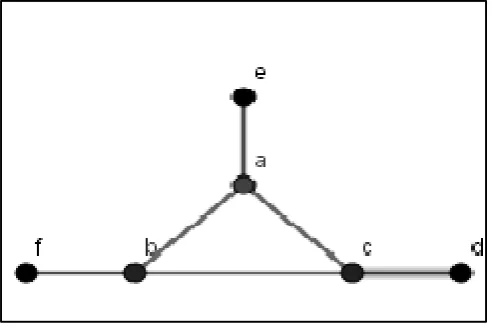
[image:2.595.176.423.229.393.2]The following result (Figure 1) which was given in 8 as example of a graph which is not divisor graph.
Figure 1. A graph which is not a divisor graph
2 Divisor graph of ( (+) )
In this section, we give when Γ( (+) ) is a divisor graph, where = (+) is called the ring of dual numbers over the ring
of integers. It is clear that ≅ is a -module with the modulo operation defined by ( + ) = .
We start with the following Lemma which was given in 3.
Lemma 1 The zero divisor graph of (+) , ∗( (+) ) = ⋃ ⋃ , where = {(0, ): ∈ ∗}.
= {( , ): ∈ ∗ , ∈ ∗ and for some ∈ ∗ we have = 0}.
= {( , ): ∈∗( ), ∈ }
In our investigation, when ≅ , where , and are three distinct primes.
Theorem 1 If is isomorphic to , then ( [ ](+) ) is not a divisor graph.
Proof. Assume that ≅ . Then we have the following induced subgraph of Γ( (+) ) (Figure 1). Let = (0, ),
= ( , 0), = (0, ), = ( , 0), = (0, ) and = ( , 0). Then Γ( (+) ) is not a divisor graph.
Corollary 1 If is isomorphic to , , , ≥ 2, then ( (+) ) is not a divisor graph.
Theorem 2 If is isomorphic to , , ≥ 2, then ( (+) ) is not a divisor graph.
Proof. Assume that ≅ . Then we have the following induced subgraph of Γ( (+) ) (Figure 1). Let =
(0, ), = ( , 0), = (0, ), = ( , 0), = (0, ) and = ( , 0). Then Γ( (+) ) is not a divisor graph.
Theorem 3 If ≅ , then ( (+) ) is a divisor graph.
Proof. If ≅ , then Γ( (+) ) = ⋃ ⋃ . Where = {(0, ): ∈ ∗}
, = {( , ): ∈ ∗, ∈ }, =
{( + , ): , ∈ ∗, ∈ }
( , ) = ⎩ ⎪ ⎪ ⎪ ⎨ ⎪ ⎪ ⎪
⎧ 2 , ( , ) = (0, )
2 ×
∞
5 , ( , ) = ( , )
2 ×
∞
, ( , ) = ( + , )
Then is a one to one function such that ( , )( , ) = (0,0) if and only if ( , ) divides ( , ) or ( , ) divides ( , ).
Hence Γ( (+) ) is a divisor graph.
Theorem 4 If ≅ , then ( (+) ) is a divisor graph.
Proof. If ≅ , then Γ( (+) ) = ⋃ ⋃ . Where = {(0, ): ∈ ∗ )}, = {( , ): ∈ ∗, ∈ }, =
{( + , ): , ∈ ∗, ∈ }. Let be a unit in and is an arbitrary element in and let , . . . , , . .. be distinct odd
primes. Then define the function : ( ) → by
( , ) = ⎩ ⎪ ⎪ ⎪ ⎪ ⎪ ⎪ ⎨ ⎪ ⎪ ⎪ ⎪ ⎪ ⎪
⎧ 2 , ( , ) = (0, )
2 ×
∞
3 , ( , ) = ( , )
∞ , ( , ) = ( + , ) 2 × ∞ , ( , ) = ( + , ) 2 × ∞ 3 × ∞ × ∞
, ( , ) = (0, )
Then is a one to one function such that ( , )( , ) = (0,0) if and only if ( , ) divides ( , ) or ( , ) divides ( , ).
Hence Γ( [ ](+) ) is a divisor graph.
Corollary 2 If ≅ ≥ 2, then ( (+) ) is a divisor graph.
Theorem 5 If isomorphic to , then ( (+) ) is a divisor graph.
Proof. If ≅ , then Γ( (+) ) = ⋃ ⋃ . Where = {(0, ): ∈ ∗ , = {( , ): ∈ ∗, ∈
}, = {( + , ), + , ): , ∈ ∗, ∈ }. Let is a unit in , arbitrary element in , let , . ..,
, . .. and , . .. be distinct odd primes and is arbitrary element in . Then define the function : ( ) → by
( , ) = ⎩ ⎪ ⎪ ⎪ ⎪ ⎪ ⎪ ⎪ ⎪ ⎪ ⎨ ⎪ ⎪ ⎪ ⎪ ⎪ ⎪ ⎪ ⎪ ⎪
⎧ 2 , ( , ) = (0, )
2 × 3 , ( , ) = (0, )
2 × 3 ×
∞
5 , ( , ) = ( , )
2 × ∞ , ( , ) = ( + , ) 2 ∞ , ( , ) = ( + , ) ∞ , ( , ) = ( + , )
2 × 3 ×
Then is a one to one function such that ( , )( , ) = (0,0) if and only if ( , ) divides ( , ) or ( , ) divides ( , ).
Hence Γ( (+) ) is a divisor graph.
Theorem 6 If isomorphic to , then ( (+) ) is a divisor graph.
Proof. By the same procedure in the previous theorem.
3 Divisor graph of ( (+) )
In this section, we give when Γ( (+) ) is a divisor graph. It is clear that is a -module with the modulo
operation defined by ( + ) = if and only if | .
In our investigation, we start the following Lemma which was given in 3.
Lemma 2 The zero divisor graph ∗( (+) ) = ⋃ ⋃ , where = {(0, ): ∈ ∗}
.
= {( , ): ∈ ∗ , ∈ ∗ and for some ∈ ∗ we have = 0}.
= {( , ): ∈ ∗( ), ∈ }
Theorem 7 If = = , then ( (+) ) is a divisor graph.
Proof. If = = , then Γ( (+) ) = ⋃ ⋃ . Where = {(0, ): ∈ ∗}
, = {( , ): ∈ ∗ , ∈ }
. then
Γ( (+) ) is complete graph which is a divisor graph.
Theorem 8 If = and = , then ( (+) ) is a divisor graph.
Proof. If = and = , then Γ( (+) ) = ⋃ ⋃ . Where = {(0, ): ∈ ∗)}, = {( , ): ∈ ∗ , ∈
}, = {( + , ): ∈ ∗ , ∈ and ∈ }. Let , . .. be distinct odd primes. Then define the function : ( ) →
by
( , ) =
⎩
⎪
⎪
⎪
⎪
⎪
⎪
⎪
⎨
⎪
⎪
⎪
⎪
⎪
⎪
⎪
⎧
2
,
( , ) = (0,
)
2 ×
3
,
( , ) = (
, )
2 × 3 ×
7
,
( , ) = (
, )
2 × 3 ×
5
,
( , ) = (
+
, )
2 × 3 ×
,
( , ) = (
+
, )
Then is a one to one function such that ( , )( , ) = (0,0) if and only if ( , ) divides ( , ) or ( , ) divides ( , ).
Hence Γ( (+) ) is a divisor graph.
Theorem 9 If = and = , then ( (+) ) is a divisor graph.
Proof. If = and = , then Γ( (+) ) = ⋃ ⋃ . Where = {(0, ): ∈ ∗ )}, = {( , ): ∈ ∗ ,
∈ }, = {( + , ): ∈ ∗ , ∈ and ∈ }. Let ≠ and ≠ are elements in and , . .. be
( , ) =
⎩ ⎪ ⎪ ⎪ ⎪ ⎪ ⎪ ⎪ ⎪ ⎨ ⎪ ⎪ ⎪ ⎪ ⎪ ⎪ ⎪ ⎪
⎧ 2 , ( , ) = (0, )
2 × 3 , ( , ) = (0, )
2 × 3 × 7 , ( , ) = ( , )
2 × 3 × 7 × 11 , ( , ) = ( , )
2 × 3 × 7 × 5 , ( , ) = ( + , )
2 × 3 × , ( , ) = ( + , )
Then is a one to one function such that ( , )( , ) = (0,0) if and only if ( , ) divides ( , ) or ( , ) divides ( , ).
Hence Γ( (+) ) is a divisor graph.
Corollary 3 If = , = where ≥ ≥ 3, then ( (+) ) is a divisor graph.
REFERENCES
Al Addasi S, Abu Ghnaim OA, Al-Ezeh H. Futher new properties of divisor graphs. J. Combinatorical Mathmatics and Combinatorical Computing. 2012; 81: 261-272.
Al Addasi S, Abu Ghnaim OA, Al-Ezeh H. Characterizing powers of cycles that are divisor graphs. Ars Combin. 2010; 97:
447-451.
Allabadi M. Futher results on the diameter of zero-divisor graphs of some special idealizations. International Journal of Algebra. 2010; (4)12: 609-614.
Anderson DD, Naseer M. Beck’s coloring of a commutative ring. J. Algebra. 1993; 159: 500-514. Anderson DF, Livingston PS. The zero-divisor graph of a commutative. J. Algebra. 1999; 217: 434-447.
Axtell M, Stickles J. The zero-divisor graph of a commutative rings. Jornal of Pure and Applied Algebra. 2006; 204: 235-243. Beck I. Coloring of a commutative ring. J. Algebra. 1988; 116: 208-226.
Chatrand G, Muntean R, Saenpholphat V, Zhang P. Which graph are divisor graphs?. Conger. Number. 2001; 151: 189-200.
Erdos P, Freud R, Hegavari N, Arithmatical properties of permutations of integers. Acta Math. Hungar. 1983; 41:169-176.
Huckaba J. Commutative rings with zero divisors. in Monographs Pure Applied Mathmatics, Marcel Dekker, Basel, New York,
1988.
Pollington AD. There is a long path in the divisor graph. Ars Combin. 1983; 16-B: 303-304. Pomerance C. On the longest simple path in the divisor graph. Conger. Number. 1983; 40: 291-304.