warwick.ac.uk/lib-publications
Original citation:
Ennis, Stuart, Lobley, Grace, Worrall, Sandra, Powell, Richard, Kimani, Peter K., Khan, Amir Jahan, Banerjee, Prithwish, Barker, Thomas and McGregor, Gordon (2018) Early initiation of post-sternotomy cardiac rehabilitation exercise training (SCAR) : study protocol for a randomised controlled trial and economic evaluation. BMJ Open, 8 (3). e019748. doi:10.1136/bmjopen-2017-019748
Permanent WRAP URL:
http://wrap.warwick.ac.uk/100514
Copyright and reuse:
The Warwick Research Archive Portal (WRAP) makes this work of researchers of the University of Warwick available open access under the following conditions.
This article is made available under the Creative Commons Attribution-NonCommercial 4.0 (CC BY-NC 4.0) license and may be reused according to the conditions of the license. For more details see: http://creativecommons.org/licenses/by-nc/4.0/
A note on versions:
The version presented in WRAP is the published version, or, version of record, and may be cited as it appears here.
Early initiation of post-sternotomy
cardiac rehabilitation exercise training
(SCAR): study protocol for a
randomised controlled trial and
economic evaluation
Stuart Ennis,1,2 Grace Lobley,1 Sandra Worrall,1 Richard Powell,1 Peter K Kimani,3 Amir Jahan Khan,4 Prithwish Banerjee,4,5 Thomas Barker,6 Gordon McGregor1,4
To cite: Ennis S, Lobley G, Worrall S, et al. Early initiation of post-sternotomy cardiac rehabilitation exercise training (SCAR): study protocol for a randomised controlled trial and economic evaluation. BMJ Open
2018;8:e019748. doi:10.1136/ bmjopen-2017-019748
Received 22 September 2017 Revised 13 February 2018 Accepted 23 February 2018
1Department of Cardiac
Rehabilitation, Centre for Exercise and Health, University Hospital, Coventry, UK
2Cardiff Centre for Exercise and
Health, Cardiff Metropolitan University, Cardiff, UK
3Statistics and Epidemiology,
Division of Health Sciences, Warwick Medical School, University of Warwick, Coventry, UK
4Health and Life Sciences
Research Centre, Coventry University, Coventry, UK
5Department of Cardiology,
University Hospitals, Coventry, UK
6Department of Cardiothoracic
Surgery, University Hospital, Coventry, UK
Correspondence to
Dr Gordon McGregor; gordon. mcgregor@ uhcw. nhs. uk
AbstrACt
Introduction Current guidelines recommend abstinence from supervised cardiac rehabilitation (CR) exercise training for 6 weeks post-sternotomy. This practice is not based on empirical evidence, thus imposing potentially unnecessary activity restrictions. Delayed participation in CR exercise training promotes muscle atrophy, reduces cardiovascular fitness and prolongs recovery. Limited data suggest no detrimental effect of beginning CR exercise training as early as 2 weeks post-surgery, but randomised controlled trials are yet to confirm this. The purpose of this trial is to compare CR exercise training commenced early (2 weeks post-surgery) with current usual care (6 weeks post-surgery) with a view to informing future CR guidelines for patients recovering from sternotomy.
Methods and analysis In this assessor-blind randomised controlled trial, 140 cardiac surgery patients, recovering from sternotomy, will be assigned to 8 weeks of twice-weekly supervised CR exercise training commencing at either 2 weeks (early CR) or 6 weeks (usual care CR) post-surgery. Usual care exercise training will adhere to current UK recommendations. Participants in the early CR group will undertake a highly individualised 2–3 week programme of functional mobility, strength and cardiovascular exercise before progressing to a usual care CR programme. Outcomes will be assessed at baseline (inpatient), pre-CR (2 or 6 weeks surgery), post-CR (10 or 14 weeks post-surgery) and 12 months. The primary outcome will be change in 6 min walk distance. Secondary outcomes will include measures of functional fitness, quality of life and cost-effectiveness.
Ethics and dissemination Recruitment commenced on July 2017 and will complete by December 2019. Results will be disseminated via national governing bodies, scientific meetings and peer-reviewed journals. trial registration number NCT03223558; Pre-results.
IntroduCtIon
Every year, approximately 35 000 patients undergo coronary artery bypass graft (CABG) or aortic/mitral valve replacement surgery in the UK.1 Functional limitation is common
and persistent after surgery, mediated by chest wall pain, respiratory complications, fatigue and anxiety concerning the resump-tion of daily activities.2–4 At 12 months,
previous studies have reported sternal wound pain in nearly 50% of patients2 and
‘unsatis-factory’ functional status and quality of life in a third of patients.5 These issues can delay
return to work, particularly for those with physically demanding jobs, and the financial consequences can be significant.6 7
The benefits of cardiac rehabilitation (CR) exercise training after sternotomy are well documented. A recent Cochrane review reported reduced cardiovascular mortality and hospital readmissions, in addition to improved quality of life.8 Higher fitness
levels following CR exercise training also predict better outcomes and lower mortality rates.9 Historically, supervised CR exercise
training does not commence until 42 days (6 weeks) after surgery, during which time functional capacity can deteriorate rapidly.8
This guideline emanates from concerns that exercise may slow healing or increase the like-lihood of sternal instability and infection.6
These concerns may be justified given that serious complications, such as mediastinitis,
strengths and limitations of this study
► This trial will be conducted in a ‘real-world’ commu-nity cardiac rehabilitation environment, ensuring a high degree of ecological validity.
► Randomisation and blinding will minimise any po-tential bias.
Open Access
are associated with significant mortality.10 11 To date,
however, there is no evidence directly linking early post-operative physical activity to an increased risk of sternal complications.6
Existing sternal precautions are likely the product of expert opinion and anecdotal evidence. Consequently, practice varies considerably in hospitals and CR centres around the world.7 Sternal precautions, which often lack
individualisation, may be overly restrictive, reinforcing fear of activity and delaying recovery.12 13 Indeed, long
periods of inactivity, particularly in the elderly, can slow healing and promote muscle atrophy. The Dallas bed rest studies demonstrated that 3 weeks of total inactivity had a more profound impact on exercise capacity than 30 years of ageing.14 15 Cardiac muscle mass has also been shown
to decrease by 8% after 6 weeks of bed rest.15 Additionally,
inactivity of 10–12 days is sufficient to lead to a loss of skeletal muscle mass of 0.5%–0.6% per day.16 This
avoid-able muscle wasting is likely to be accelerated in elderly patients, with potentially significant consequences. The increased risk of falls associated with muscle atrophy can lead to hip or pelvic fractures, for which the 1 year mortality rate can be as high as 40%.17
Evidence for the safety of earlier CR (<6 weeks post-sur-gery) exercise training in sternotomy patients is accumu-lating.18 Studies have shown that inpatient walking and
cycling, 1–7 days post-surgery, is safe and effective.19 20
Further, no difference was found in hospital readmissions, infection rates or sternal instability between patients who started CR exercise training 10 days or 4–7 weeks postdis-charge.21 Consequently, current post-sternotomy activity
restrictions may be overly cautious. On the grounds of safety, surgical patients are commonly advised to avoid lifting more than 2 kg for 12 weeks after surgery. Adams and colleagues, however, reported that the forces gener-ated by sneezing and coughing (commonly endured without incident) far exceed that of upper body dumb bell exercise and other restricted daily activities such as lifting a coffee pot and pushing a lawn mower.7 12 There is little
empirical evidence to support universal restriction of such activities for 12 weeks poststernotomy.
A number of studies have highlighted the detrimental effects of delayed enrolment on CR programmes following cardiac surgery. In the UK, the National Audit for Cardiac Rehabilitation (NACR), recently reported that, for every 1 day increase in CR wait time, patients were 1% less likely to improve across all fitness-related measures.22
This finding is supported by Canadian data, which, in an analysis of 6497 CABG patients, found that longer wait times before CR initiation were associated with lesser improvement in cardiovascular fitness.23 Attendance on
CR programmes is also negatively impacted by extended waits. Studies have consistently determined that patients are less likely to attend and adhere to CR, the longer they are required to wait postcardiac event.24 25
Evidence to support the earlier initiation of post-ster-notomy CR exercise training is, therefore, apparent in a number of areas. Muscle mass and cardiovascular fitness
decline rapidly with postsurgical inactivity, and when CR programme initiation is delayed, attendance is lower and the benefits of exercise training are reduced. More-over, there is insufficient evidence to support the current guideline of a 6-week wait post-surgery, and safety does not appear to be compromised by earlier CR. While the growing evidence base for earlier post-sternotomy CR exercise training is relatively compelling, good quality prospective trials have not been performed. As such, randomised controlled trials are required to confirm benefit, safety and cost-effectiveness. Results of such studies are essential before national guidelines can be established, allowing policy-makers and clinicians to be confident in altering practice.
The early initiation of post-sternotomy cardiac reha-bilitation exercise training (SCAR) trial is a single-centre randomised controlled trial, and economic evaluation, comparing supervised exercise training commenced at 2 weeks (early CR) with exercise training commenced at 6 weeks (usual care CR) post-sternotomy. The main objec-tives of the trial are:
1. To assess the effect of early CR on functional fitness; 2. To assess the effect of early CR on anxiety, depression
and health-related quality of life (HR-QoL). 3. To assess compliance and adherence to early CR; 4. To conduct a cost-effectiveness analysis of early CR
compared with usual care CR; 5. To assess the safety of early CR.
In cardiac surgery patients recovering from sternotomy, our primary hypothesis is that early CR will improve walking distance to the same extent as usual care CR. With limited data on early CR in this population, particularly in the UK, we propose a holistic investigation including the following secondary hypotheses: early CR will (1) be as effective as usual care CR in improving functional fitness; (2) be as effective as usual care CR in improving anxiety and depression; (3) be as effective as usual care CR in improving HR-QoL; (4) demonstrate equivalent adher-ence and compliance to usual care CR; (5) be as cost-ef-fective as usual care CR and (6) be as safe as usual care CR.
Methods and analysis
The SCAR study is an assessor-blind parallel group, randomised controlled trial and economic evaluation. Participants will be randomly allocated to 8 weeks of CR exercise training commencing at either 2 weeks (early CR) or 6 weeks (usual care CR) post-surgery. Outcomes will be measured at baseline (within 7 days of surgery), start of CR (2 or 6 weeks), end of CR (10 or 14 weeks) and at 12 months. Assessors will be blinded to group allocation. The trial protocol adheres to the Standard Protocol Items: Recommendations for Clinical Trials guidelines.26
sEttIng
Coventry and Warwickshire (UHCW) National Health Service (NHS) Trust, (1) Atrium Health, Centre for Exercise and Health, Coventry and (2) Hospital of St Cross, Rugby. Both CR programmes are certified by the British Association of Cardiovascular Prevention and Rehabilitation (BACPR), thus, providing the neces-sary infrastructure and expertise for the delivery of the SCAR intervention. All cardiac surgery will be performed at University Hospital, Coventry, a national specialist tertiary cardiac centre. One hundred and forty patients will be recruited over a 2-year period, commencing 15 July 2017.
PArtICIPAnts
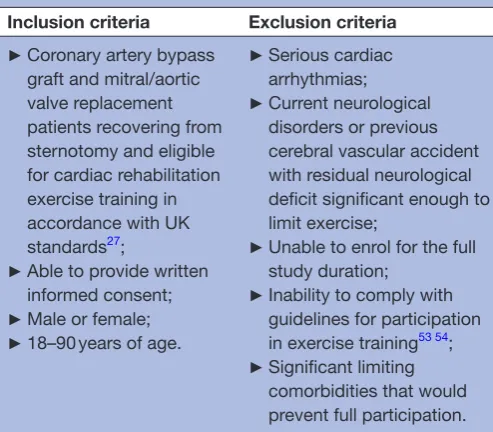
All patients who are to undergo elective or emergency sternotomy for coronary artery bypass graft surgery or mitral/aortic valve replacement will be screened for eligi-bility. Inclusion and exclusion criteria are summarised in
table 1.
study ProCEdurEs
The participant study pathway is illustrated in figure 1. All cardiac surgery patients will be screened and assessed for eligibility by the research team in consultation with the trial clinical lead. Patients meeting the inclusion criteria will be informed of the study at the first available opportunity. For elective patients, this will take place at either the preoperative assessment clinic appointment (approximately 2 weeks prior to surgery) or on admission for surgery. For emergency admissions, patients will be informed of the study early in the postoperative period if it is inappropriate for the study to be discussed presur-gery. Those who may be interested in participating will be given the patient information leaflet and permitted a minimum of 24 hours to consider their involvement
prior to a follow-up phone call or inpatient visit from the research team. Non-English speaking patients will have access to translation services. Informed consent will be obtained on admission for surgery or early in the postoperative period. Baseline data collection will include clinical examination, 6 min walk test (6-MWT), five times sit-to-stand test (FTSTS), hand grip strength and isometric leg muscle strength. Instruments to assess anxiety and depression, HR-QoL and health and social care use, will also be administered. Subsequently, partic-ipants will be randomised to twice weekly CR exercise training, commencing at either 2 weeks post-surgery (early CR) or 6 weeks post-surgery (usual care CR). All measures will be repeated immediately prior to starting CR (2 or 6 weeks post-surgery), on completion of 8 weeks of CR exercise training (10 or 14 weeks post-surgery) and at 12 months follow-up. Transport to and from the CR venues will be offered to patients who are not permitted to drive due to postsurgical Driving and Vehicle Licensing Agency restrictions.
IntErvEntIons
Participants in both groups will attend 8 weeks of twice-weekly supervised CR exercise training. Both groups will exercise at the same time, in the same facility, with equal levels of supervision and each session will last approxi-mately 1 hour. The usual care CR group will adhere to current UK standards (BACPR/ACPICR, Association of Chartered Physiotherapists in Cardiac Rehabilitation),27
commencing exercise training at 6 weeks post-surgery. In brief, a 15 min warm-up will incorporate light cardio-vascular and mobility exercises (<40% heart rate reserve, HRR). The subsequent cardiovascular exercise compo-nent (cycle ergometer, rowing ergometer, treadmill, arm ergometer, cross-trainer) will involve 20 min of moderate intensity interval training (1–2 min intervals), progressing to 20–40 min of continuous cardiovascular exercise at 40%–70% HRR. After a 10 min cool down, a full programme of functional muscular strength, flexi-bility and proprioception exercises will be undertaken (eg, resistance machines, free weights, multiplane func-tional daily living exercise). Care will be taken to ensure upper body exercises are performed in such a way to avoid sternal and leg wound pain/complications. Exer-cise intensity will be prescribed using estimated metabolic equivalents from the 6-MWT. Duration and workload will be increased, as tolerated, based on heart rate and patient reported rating of perceived exertion. Written home exer-cise guidance will be provided for the 6 weeks preceding CR enrolment. This guidance has been produced locally and recommends short bouts (5 min) of light–moderate intensity walking, progressing in duration each week after surgery. In addition, a series of shoulder mobility exercises will be completed, with the advice to avoid pain and/or undue postexercise fatigue.
[image:4.595.41.288.61.277.2]Currently, there are no specific exercise prescrip-tion guidelines for outpatient CR in patients who have
Table 1 Inclusion and exclusion criteria
Inclusion criteria Exclusion criteria
►Coronary artery bypass graft and mitral/aortic valve replacement patients recovering from sternotomy and eligible for cardiac rehabilitation exercise training in accordance with UK standards27;
►Able to provide written informed consent;
►Male or female;
►18–90 years of age.
►Serious cardiac arrhythmias;
►Current neurological disorders or previous cerebral vascular accident with residual neurological deficit significant enough to limit exercise;
►Unable to enrol for the full study duration;
►Inability to comply with guidelines for participation in exercise training53 54; ►Significant limiting
Open Access
undergone recent sternotomy (<6 weeks). In the first 2–3 weeks of early CR, participants will follow a highly indi-vidualised exercise programme dictated by their current level of fitness and post-surgery symptoms/limitations. General guidance will be taken from previous explor-atory work7 aimed at maintaining and increasing mobility
and functional strength. Shoulder and chest mobility/ strength exercises will be performed when they can be completed with minimal discomfort, and moderate intensity cardiovascular interval training will be gradually introduced. By weeks 2–3 of early CR, participants will progress towards achieving current UK standards as above (BACPR/ACPICR).27 Initially, warm-up and cool down will
be specifically tailored to the planned exercises, without adhering to current guidelines. Box 1 provides an overview of the early CR exercise intervention.
Extension of the CR programme beyond 8 weeks will be permitted in both groups where two or more consecutive exercise sessions are missed. This is in keeping with stan-dard practice in UK cardiac rehabilitation programmes and the pragmatic nature of the trial. Sufficient adherence to the study protocol will be determined by the following criteria:
► A minimum of 66% of sessions completed (12 of 18); ► 20 min continuous cardiovascular exercise achieved
[image:5.595.125.462.43.520.2]by week 4 of the CR programme.
randomisation and blinding
Trial participants will be allocated to early CR or usual care CR, on a 1:1 basis, via block randomisation. The random allocation sequence will be generated by the trial statistician, implemented by an independent CR team member, and compliance will be ensured by UHCW NHS Trust R&D department. Randomisation requests will only be submitted further to completion of all baseline assess-ments, thus ensuring allocation concealment. At all time points, outcome assessors will be blinded to group alloca-tion, as will the cardiac surgeons. Due to the nature of the trial, it will not be possible to blind the CR staff involved in the delivery of the exercise training interventions. Likewise, participants cannot be blinded.
study outcome measures
The primary outcome measure is the change in 6-MWT distance at the end of the CR exercise training programme. Secondary outcomes will include measures of (1) functional fitness; (2) anxiety and depression; (3) HR-QoL; (4) compliance and adherence; (5) cost-effec-tiveness and 6) safety. Table 2 outlines the full schedule of outcome assessments.
PrIMAry outCoME
The 6-MWT is a general measure of functional capacity and an important prognostic indicator in cardiac surgery populations.28–30 Tests will be conducted in accordance
with American Thoracic Society guidelines.31 Participants
will be instructed to walk as far as possible along a 30 m, flat, obstacle-free corridor, turning 180° every 30 m, in the allotted time of 6 min.
FunCtIonAl FItnEss
The FTSTS test is often used in clinical and research
settings32 for the measurement of functional
lower extremity muscular strength and power. To complete the FTSTS, the participant will be instructed to stand up and sit down five times as quickly as possible without using their arms for assistance. To ensure good
test–retest reliability,33 standardised foot placement and
chair height will be required for each participant. A Jamar hand dynamometer (Sammons Preston, Bollingbrook, Illinois, USA) will be used to evaluate hand grip strength in the dominant hand. The position of the participant's arm will adhere to American Society of Hand Therapists recommendations,34 and participants will be instructed
to maintain maximal grip contraction for 2–5 s. Isometric quadriceps strength will be assessed using a handheld dynamometer (MicroFET2 Torque/Force indicator, Hoggan Health Industries, Utah, USA).35 While sitting
in an elevated chair, with hips and knees aligned at 90° and the lower leg vertical, participants will exert maximal force against equal and opposite resistance provided by the assessor.
Anxiety, depression and Hr-Qol
The seven-item Generalised Anxiety Disorder assess-ment and nine-item Patient Health Questionnaire are well validated for the assessment of anxiety and depres-sion.36 37 Both are widely used as brief diagnostic tools
[image:6.595.306.556.68.412.2]and measures of severity. Furthermore, they are routinely recorded in the CR population as part of standard clinical
Table 2 Outcome measures and schedule of assessments
Measure Instrument
Assessment time point
Primary outcome
Walking
distance 6 min walk test Baseline, start CR, end CR, 12 months
Secondary outcomes
Functional
fitness Five times sit-to-stand Baseline, start CR, end CR, 12 months Handgrip strength Baseline, start CR, end CR, 12 months Isometric leg
strength Baseline, start CR, end CR, 12 months Anxiety and
depression GAD-7 Baseline, start CR, end CR, 12 months PHQ-9 Baseline, start CR, end CR, 12 months HR-QOL SF-12 Baseline, start CR, end CR, 12 months Compliance,
adherence
Compliance/ adherence/ drop-out rates
Continuous
Cost-effectiveness
EQ-5D Baseline, start CR, end CR, 12 months CSRI Start CR, end CR,
12 months Safety Adverse event
monitoring Continuous
CR, cardiac rehabilitation; CSRI, Client Service Receipt Inventory.; EQ-5D, 5-Item EuroQol; GAD-7, Generalised Anxiety Disorder assessment; HR-QoL, health-related quality of life; PHQ-9, Patient Health Questionnaire; SF-12. 12-Item Short Form Survey.
box 1 general principles of exercise training for early cardiac rehabilitation (Cr; first 2–3 weeks of Cr)
► Highly individualised programme based on current limitations, mo-bility, fitness and symptoms.
► Shortened warm-up and cool down where required, appropriate to the main exercise component.
► Focus on improvement of posture, mobility, proprioception and func-tional strength.
► Range of movement dictated by sternal and leg wound pain—pain-free exercise advised.
► Low–moderate intensity cardiovascular exercise (excluding rowing machine and arm ergometer for 2 weeks) that is, treadmill, cycle ergometer, step-ups.
Open Access
practice with the results reported in the NACR.38 The
12-Item Short Form Survey (SF-12) will be used to eval-uate HR-QoL.39 The 12 items of the questionnaire are
summarised in two weighted summary scales; mental health score and physical health score, where lower scores indicate more severe disability.
Compliance and adherence
Compliance and adherence is an important outcome in patients commencing CR exercise training early post-sur-gery. Attendance at CR exercise sessions will be closely monitored along with compliance to the prescribed exer-cise regimen. The number of sessions attended will be documented, as will the number of sessions successfully completed. Detailed reasons for incomplete sessions and dropout will be recorded where the participant is happy to provide this information.
EConoMIC EvAluAtIon
The 5-Item EuroQol (EQ-5D) questionnaire is a commonly used generic measure of health status. A key feature is the availability of ‘value sets’ to weight the EQ-5D health states reported by participants and populations. The UK value set reported by Dolan40 is recommended by National
Institute for Health and Care Excellence for use in its health technology appraisal process.41 An adapted Client
Service Receipt Inventory (CSRI), based on examples in the Database of Instruments for Resource Use Measure-ment (DIRUM) database42 will be administered at each
time point to capture participant health and social care service use since the last time point. The cost of delivering early CR and usual care CR (ie, staff, equipment, facility) will be recorded throughout the CR programme.
sAFEty
To verify the safety of early CR exercise training, all adverse and serious adverse events will be carefully moni-tored, recorded and reported. In line with the principles of Good Clinical Practice, the nature and severity of the event, in addition to its potential association with study participation, will be recorded.43 As with current usual
care, the local CR team, in conjunction with the trial clini-cian, will decide if participants with sternal instability or wound infection should be delayed or withdrawn.
sAMPlE sIzE
The sample size calculation is based on the primary anal-ysis of change in 6-MWT distance post-CR from baseline. Based on a recent systematic review and meta-analysis of CR patients,44 we assume a SD of 65 m. Assuming that mean
changes in 6-MWT distances at the end of CR sessions for both early CR and usual care CR are equal, 60 patients are required in each group (120 in total) to conclude non-in-feriority (non-innon-in-feriority margin of 35) with 90% power. To
allow for approximate dropout rate of 15%, 70 patients will need to be randomised to each group (140 in total).
data collection and management
Data will be collected by research staff on case report forms at four time points; baseline, pre-CR, post-CR and 12 months follow-up. Local policy and national data protec-tion guidance will be followed with study data anonymously recorded on a bespoke trial database using unique study identification numbers.
stAtIstICAl AnAlysIs
The primary analysis will test non-inferiority of the early CR group compared with usual care CR based on changes in 6-MWT distances. The non-inferiority margin has been set at 35 m based on the previously reported minimally important clinical differences.45–47 Early CR will be concluded
non-in-ferior to usual care CR if the lower bound of the 95% CI for the mean difference of changes at the end of CR is less than 35 m. If the lower bound of the 95% CI for the mean difference in changes at the end of CR is above 0, early CR will be concluded superior to usual care CR. The 95% CI will be based on the t-distribution for the mean difference in changes between early and usual care CR.
In secondary analysis, a linear mixed model will include all 6-MWT distances taken from each patient at different time points, from baseline (at randomisation) to 14 weeks. Fourteen weeks is the time point at which CR exercise training will be complete in the usual care CR group. The model will include terms for group (early or usual care CR) and time (baseline, pre-CR, post-CR, 12 months). To assess if the trends for early CR and usual care CR are different, an interaction term for group and time will be included in the linear mixed models.
All data will be summarised and reported in accor-dance with the Consolidated Standards of Reporting Trials guideline.48
EConoMIC EvAluAtIon
Economic evaluation will complement the trial’s clinical effectiveness results and inform decision-making on the commissioning of early CR. We will conduct a cost-effec-tiveness analysis to estimate cost per unit of health gains due to early CR compared with usual CR (eg, cost per additional distance covered in the 6-MWT). The costs and effects for participants in each group will be compared for the economic evaluation of the intervention. Given that the primary outcome is measured in natural units, and that the trial lasts 12 months, a cost-effectiveness (CE) approach is preferred for the economic evaluation.49 A service provider
perspective will be adopted: a CSRI, administered pre-CR, post CR and at 12 months, will collect data for participants’ health and social care resource use (direct medical and non-medical resources) since the last data collection point. Health outcome measures for effectiveness, reported in
be measured as per the recommendations of the Expert Delphi Consensus Survey.50 The collected resource use and
effects data will be handled with Stata software version15 for statistical analysis of economic evaluation.51 The missing
values will be analysed through multiple imputation. The incremental cost and effectiveness ratios will be estimated for early CR and obtained by dividing the incremental cost by the incremental gain in metres from the 6-MWT. Incre-mental cost and effectiveness ratios and cost-effectiveness acceptability curves will be used to evaluate if the health benefit generated by early CR is worth any additional cost associated with the intervention. A non-parametric boot-strap technique will be employed to report uncertainty around CE measures. The CE analysis will adhere to the Consolidated Health Economic Evaluation Reporting Stan-dards statement for the reporting of published economic evaluations.52
Patient and public involvement
Patient and public involvement (PPI) has shaped the study design. Our patient forum endorsed the acceptability of early CR exercise training after surgery and stressed the importance of returning to work/activities of daily living as soon as possible. Our PPI coinvestigator, with lived experi-ence of cardiac surgery, met with several surgical patients,
each of whom was sent an overview of the early research protocol. The feedback helped researchers select outcome measures that were relevant to patients’ daily experiences and, that crucially, would not unduly inconvenience participants. Multiple, time-consuming, invasive outcome measures were considered unethical so early after major surgery.
dissemination and impact
Research findings will be presented at scientific meetings and published in peer-reviewed journals. All authors will approve the prepared manuscripts and authorship will be agreed based on international recommendations (ICMJE). The trial is anticipated to influence the direction of future research into CR in sternotomy patients. It is also expected that results from this trial will influence national CR guide-lines. As such, findings, relating to both scientific outcomes and CR service provision will be disseminated among national governing bodies and associated organisations, via newsletters and conferences.
Contributors SE is the chief investigator for the trial, leading on protocol development and the research ethics application. SE, GL, SW, TB, GM, PKK, AJK, RP and PB all contributed fully to the study design. TB (cardiothoracic surgery), PKK (statistics) and AJK (health economics), provided discipline specific expertise and authored the relevant sections of the protocol and manuscript. GM prepared the manuscript which was edited by SE, TB, PKK and AJK. All authors read and approved the final version of the manuscript.
Funding This work was supported by the Jeremy Pilcher Memorial Fund (UHCW), the Medical & Life Sciences Research Fund and Atrium Health Ltd, Coventry.
Competing interests None declared.
Patient consent Obtained.
Ethics approval West Midlands—Edgbaston Research Ethics Committee (17/ WM/0057).
Provenance and peer review Not commissioned; externally peer reviewed.
open Access This is an Open Access article distributed in accordance with the Creative Commons Attribution Non Commercial (CC BY-NC 4.0) license, which permits others to distribute, remix, adapt, build upon this work non-commercially, and license their derivative works on different terms, provided the original work is properly cited and the use is non-commercial. See: http:// creativecommons. org/ licenses/ by- nc/ 4. 0/
© Article author(s) (or their employer(s) unless otherwise stated in the text of the article) 2018. All rights reserved. No commercial use is permitted unless otherwise expressly granted.
rEFErEnCEs
1. Page RD MJ, Kinsman S. econd National Thoracic Surgery Activity & Outcomes Report on behalf of the Society for Cardiothoracic Surgery in Great Britain & Ireland. Henley-on-Thames: Published by Dendrite Clinical SystemsLtd, 2011. ISBN 978-0-9568154-1-5.
2. King KM, Parry M, Southern D, et al. Women's Recovery from Sternotomy-Extension (WREST-E) study: examining long-term pain and discomfort following sternotomy and their predictors. Heart
2008;94:493–7.
3. Kehlet H, Jensen TS, Woolf CJ. Persistent postsurgical pain: risk factors and prevention. Lancet 2006;367:1618–25.
4. Moon MH, Kang JK, Kim HW, et al. Pain after median sternotomy: collateral damage or mitigatable byproduct? Thorac Cardiovasc Surg
2013;61:194–201.
5. Falcoz PE, Chocron S, Stoica L, et al. Open heart surgery: one-year self-assessment of quality of life and functional outcome. Ann Thorac Surg 2003;76:1598–604.
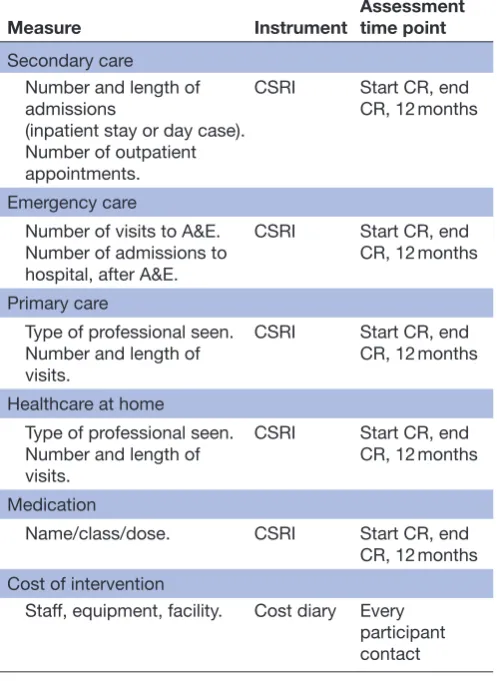
[image:8.595.41.290.69.410.2]6. Cahalin LP, Lapier TK, Shaw DK. Sternal Precautions: Is It Time for Change? Precautions versus Restrictions - A Review of Literature Table 3 Resource use and intervention cost measures
Measure Instrument
Assessment time point
Secondary care Number and length of
admissions
(inpatient stay or day case). Number of outpatient
appointments.
CSRI Start CR, end CR, 12 months
Emergency care
Number of visits to A&E. Number of admissions to
hospital, after A&E.
CSRI Start CR, end CR, 12 months
Primary care
Type of professional seen. Number and length of
visits.
CSRI Start CR, end CR, 12 months
Healthcare at home Type of professional seen. Number and length of
visits.
CSRI Start CR, end CR, 12 months
Medication
Name/class/dose. CSRI Start CR, end CR, 12 months Cost of intervention
Staff, equipment, facility. Cost diary Every participant contact
Open Access
and Recommendations for Revision. Cardiopulm Phys Ther J
2011;22:5–15.
7. Adams J, Lotshaw A, Exum E, et al. An alternative approach to prescribing sternal precautions after median sternotomy, “Keep Your Move in the Tube”. Proc 2016;29:97–100.
8. Anderson L, Thompson DR, Oldridge N, et al. Exercise-based cardiac rehabilitation for coronary heart disease. Cochrane Database Syst Rev 2016;1:CD001800.
9. Barons MJ, Turner S, Parsons N, et al. Fitness predicts long-term survival after a cardiovascular event: a prospective cohort study.
BMJ Open 2015;5:e007772.
10. Losanoff JE, Richman BW, Jones JW. Disruption and infection of median sternotomy: a comprehensive review. Eur J Cardiothorac Surg 2002;21:831–9.
11. Ridderstolpe L, Gill H, Granfeldt H, et al. Superficial and deep sternal wound complications: incidence, risk factors and mortality. Eur J Cardiothorac Surg 2001;20:1168–75.
12. Adams J, Cline MJ, Hubbard M, et al. A new paradigm for post-cardiac event resistance exercise guidelines. Am J Cardiol
2006;97:281–6.
13. Parker R, Adams JL, Ogola G, et al. Current activity guidelines for CABG patients are too restrictive: comparison of the forces exerted on the median sternotomy during a cough vs. lifting activities combined with valsalva maneuver. Thorac Cardiovasc Surg
2008;56:190–4.
14. McGuire DK, Levine BD, Williamson JW, et al. A 30-year follow-up of the Dallas Bedrest and Training Study: I. Effect of age on the cardiovascular response to exercise. Circulation 2001;104:1358–66. 15. Perhonen MA, Franco F, Lane LD, et al. Cardiac atrophy after bed
rest and spaceflight. J Appl Physiol2001;91:645–53.
16. Wall BT, Dirks ML, van Loon LJ. Skeletal muscle atrophy during short-term disuse: implications for age-related sarcopenia. Ageing Res Rev 2013;12:898–906.
17. Berry SD, Samelson EJ, Bordes M, et al. Survival of aged nursing home residents with hip fracture. J Gerontol A Biol Sci Med Sci
2009;64:771–7.
18. Eder B, Hofmann P, von Duvillard SP, et al. Early 4-week cardiac rehabilitation exercise training in elderly patients after heart surgery.
J Cardiopulm Rehabil Prev 2010;30:85–92.
19. Hirschhorn AD, Richards DA, Mungovan SF, et al. Does the mode of exercise influence recovery of functional capacity in the early postoperative period after coronary artery bypass graft surgery? A randomized controlled trial. Interact Cardiovasc Thorac Surg
2012;15:995–1003.
20. Højskov IE, Moons P, Hansen NV, et al. Early physical training and psycho-educational intervention for patients undergoing coronary artery bypass grafting. The SheppHeart randomized 2 × 2 factorial clinical pilot trial. Eur J Cardiovasc Nurs 2016;15:425–37.
21. Pack QR, Dudycha KJ, Roschen KP, et al. Safety of early enrollment into outpatient cardiac rehabilitation after open heart surgery. Am J Cardiol 2015;115:548–52.
22. Fell J, Dale V, Doherty P. Does the timing of cardiac rehabilitation impact fitness outcomes? An observational analysis. Open Heart
2016;3:e000369.
23. Marzolini S, Blanchard C, Alter DA, et al. Delays in Referral and Enrolment Are Associated With Mitigated Benefits of Cardiac Rehabilitation After Coronary Artery Bypass Surgery. Circ Cardiovasc Qual Outcomes 2015;8:608–20.
24. Johnson DA, Sacrinty MT, Gomadam PS, et al. Effect of early enrollment on outcomes in cardiac rehabilitation. Am J Cardiol
2014;114:1908–11.
25. Russell KL, Holloway TM, Brum M, et al. Cardiac rehabilitation wait times: effect on enrollment. J Cardiopulm Rehabil Prev
2011;31:373–7.
26. Chan AW, Tetzlaff JM, Altman DG, et al. SPIRIT 2013 statement: defining standard protocol items for clinical trials. Ann Intern Med
2013;158:200–7.
27. ACPICR. Standards for physical activity and exercise in the cardiac population. 2015 http:// acpicr. com/ sites/ default/ files/ ACPICR Standards 2015_ 0. pdf
28. Ross RM, Murthy JN, Wollak ID, et al. The six minute walk test accurately estimates mean peak oxygen uptake. BMC Pulm Med
2010;10:31.
29. Opasich C, De Feo S, Pinna GD, et al. Distance walked in the 6-minute test soon after cardiac surgery: toward an efficient use in the individual patient. Chest 2004;126:1796–801.
30. Beatty AL, Schiller NB, Whooley MA. Six-minute walk test as a prognostic tool in stable coronary heart disease: data from the heart and soul study. Arch Intern Med 2012;172:1096–102.
31. Holland AE, Spruit MA, Troosters T, et al. An official European Respiratory Society/American Thoracic Society technical standard: field walking tests in chronic respiratory disease. Eur Respir J
2014;44:1428–46.
32. Ng S. Balance ability, not muscle strength and exercise endurance, determines the performance of hemiparetic subjects on the timed-sit-to-stand test. Am J Phys Med Rehabil 2010;89:497–504. 33. Bohannon RW. Test-retest reliability of the five-repetition sit-to-stand
test: a systematic review of the literature involving adults. J Strength Cond Res 2011;25:3205–7.
34. Fess EE. Grip strength. In. Casanova JS, ed. Clinical Assessment Recommendations. 2nd edition. Chicago: American Society of Hand Therapists, 1992:41–5.
35. Hansen EM, McCartney CN, Sweeney RS, et al. Hand-held Dynamometer Positioning Impacts Discomfort During Quadriceps Strength Testing: A Validity and Reliability Study. Int J Sports Phys Ther 2015;10:62–8.
36. Spitzer RL, Kroenke K, Williams JB, et al. A brief measure for assessing generalized anxiety disorder: the GAD-7. Arch Intern Med
2006;166:1092–7.
37. Kroenke K. Depression screening is not enough. Ann Intern Med
2001;134:418–20.
38. Rehabilitation NAoC. Annual Report. York, UK, 2016.
39. Ware J, Kosinski M, Keller SD. A 12-Item Short-Form Health Survey: construction of scales and preliminary tests of reliability and validity.
Med Care 1996;34:220–33.
40. Dolan P. Modeling valuations for EuroQol health states. Med Care
1997;35:1095–108.
41. NICE. Guide to the methods of technology appraisal. London: National Institute of Health and Clinical Excellence, 2013. 42. Ridyard CH, Hughes DA. Methods for the collection of resource
use data within clinical trials: a systematic review of studies funded by the UK Health Technology Assessment program. Value Health
2010;13:867–72.
43. ICH Harmonised Tripartite guideline - guideline for good clinical practice E6 (R1). 1996 http://www. ich. org/ products/ guidelines/ efficacy/ efficacy- single/ article/ good- clinical- practice. html
44. Wyrwich KW, Tierney WM, Babu AN, et al. A comparison of clinically important differences in health-related quality of life for patients with chronic lung disease, asthma, or heart disease. Health Serv Res
2005;40:577–92.
45. Bohannon RW, Crouch R. Minimal clinically important difference for change in 6-minute walk test distance of adults with pathology: a systematic review. J Eval Clin Pract 2017;23:377–81.
46. Shoemaker MJ, Curtis AB, Vangsnes E, et al. Clinically meaningful change estimates for the six-minute walk test and daily activity in individuals with chronic heart failure. Cardiopulm Phys Ther J
2013;24:21–9.
47. Gremeaux V, Troisgros O, Benaïm S, et al. Determining the minimal clinically important difference for the six-minute walk test and the 200-meter fast-walk test during cardiac rehabilitation program in coronary artery disease patients after acute coronary syndrome. Arch Phys Med Rehabil 2011;92:611–9.
48. Moher D, Hopewell S, Schulz KF, et al. CONSORT 2010 explanation and elaboration: updated guidelines for reporting parallel group randomised trials. BMJ 2010;340:c869.
49. Drummond MF, Sculpher MJ, Claxton K, et al. Methods for the economic evaluation of health care programmes: Oxford University Press, 2015.
50. Thorn JC, Brookes ST, Ridyard C, et al. Core Items for a Standardized Resource Use Measure (ISRUM): Expert Delphi Consensus Survey. Value in Health 2017.
51. Deb P, Norton EC, Manning WG. Health Economeytrics Using Stata: Stata Press, 2017.
52. Husereau D, Drummond M, Petrou S, et al. Consolidated Health Economic Evaluation Reporting Standards (CHEERS) statement.
BMJ 2013;346:f1049.
53. AACVPR. Guidelines for cardiac rehabilitation and secondary prevention programs. 4th Edition. Champaign: IL: Human Kinetics, 2003.
economic evaluation
and
protocol for a randomised controlled trial
study
rehabilitation exercise training (SCAR):
Early initiation of post-sternotomy cardiac
Gordon McGregor
Kimani, Amir Jahan Khan, Prithwish Banerjee, Thomas Barker and Stuart Ennis, Grace Lobley, Sandra Worrall, Richard Powell, Peter K
doi: 10.1136/bmjopen-2017-019748
2018 8:
BMJ Open
http://bmjopen.bmj.com/content/8/3/e019748 Updated information and services can be found at:
These include:
References
http://bmjopen.bmj.com/content/8/3/e019748#ref-list-1
This article cites 43 articles, 8 of which you can access for free at:
Open Access
http://creativecommons.org/licenses/by-nc/4.0/
non-commercial. See:
provided the original work is properly cited and the use is
non-commercially, and license their derivative works on different terms, permits others to distribute, remix, adapt, build upon this work
Commons Attribution Non Commercial (CC BY-NC 4.0) license, which This is an Open Access article distributed in accordance with the Creative
service
Email alerting
box at the top right corner of the online article.
Receive free email alerts when new articles cite this article. Sign up in the
Collections
Topic
Articles on similar topics can be found in the following collections (874)Cardiovascular medicine
Notes
http://group.bmj.com/group/rights-licensing/permissions To request permissions go to:
http://journals.bmj.com/cgi/reprintform To order reprints go to: