University of Warwick institutional repository: http://go.warwick.ac.uk/wrap A Thesis Submitted for the Degree of EdD at the University of Warwick
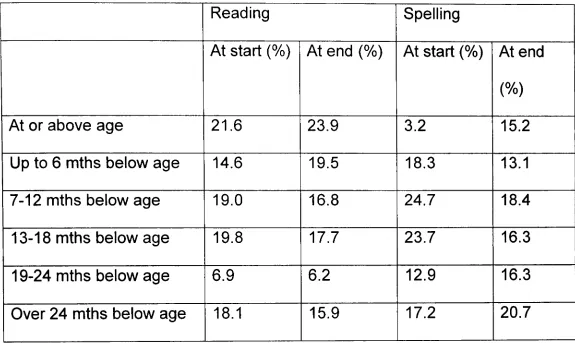
http://go.warwick.ac.uk/wrap/3530
This thesis is made available online and is protected by original copyright. Please scroll down to view the document itself.
The Effectiveness of Additional
Interventions for Children with
Literacy Difficulties in Years 3
&
4.
by
Timothy Kenneth Bunn
A thesis submitted in partial fulfilment of the
requirements of the degree of Doctor of
Education
University of Warwick, Institute of Education
Table of Contents
page
T able of contents 2
List of charts and tables 8
Acknowledgements 14
Declaration of authorship 15
Abstract 16
List of abbreviations 17
1.lntroduction 19
1.1 Origins of this study 19
1.2 Brief Outline of the 5 Chapters 25
1.2.1 Chapter 2: Review of the Literature 26
1.2.2 Chapter 3: Research Methodology 26
1.2.3 Chapter 4: Results 27
1.2.4 Chapter 5: Discussion 28
2. Review of the Literature 29
2.1 Introduction 29
2.2 Literacy Development and Difficulties 30
2.2.1 Child factors predicting literacy achievement 30
2.2.2 Specific difficulties associated with literacy
difficulties, including dyslexia 34
2.2.3 Family and School Influences on literacy 37
2.3 National and local policy development on literacy
difficulties in England and Wales since the early 1990's 44
2.3.1 The recent policy context 44
2.3.2 The Three Waves model 48
2.4 Interventions to help children with literacy difficulties 51
2.4.1 The recent American approach 51
2.4.2 Synthetic study of interventions for literacy
difficulties in England
&
Wales: the aims and scopeof Brooks' study 52
2.4.3.Critique of Brooks' methods 54
2.4.4.Conclusions from Brooks about Intervention
schemes in England on which this study provides
evidence
2.4.5 What can be concluded about intervention
schemes?
3. Methodology
3.1 Implications from the literature for research on literacy
interventions
3.2 Research Aims
3.3 Research Design
3.4 Key variables •
56
60
64
64
66
71
75
3.4.1 Reading and spelling levels 75
3.4.2 Qualities of children 78
3.4.3 Qualities of the intervention programmes 82
3.4.5 Class and school factors 88
3.5 The sample of schools 90
3.6 The data collection process 92
3.7 Ethical considerations 93
3.8 Specific questions 95
4. Results 98
4.0 Introduction 98
4.1 Data inclusion and exclusion policy 99
4.1.1 Additional Help database 99
4.1.2.The Classes database 101
4.1.3 Overlap between the Classes and Additional
Help databases 102
4.1.4 Staff ratings of programmes 103
4.1.5 Children's ratings of the programmes 103
4.1.6 Questionnaires about class teaching 104
4.2 Attainments in reading and spelling ages and in
National Curriculum levels: can the two types of data be
unified?
4.2.1 Measures of reading and spelling gain from age
scores from the classes database
4.2.2 Comparing age-score and NC data
4.3 Differences between gain scores: are age-scores and NC 104
104
106
levels measuring different things? 108
4.4 Comparing outcomes between those who did and did not
extra help? 112
4.5 Do children who receive extra help catch up equally
quickly? 119
4.6 Comparisons between types of help 122
4.7 Selection for different types of intervention 126
4.8 Individual child and gender differences: do these differences
help to explain differences between types of help? 128
4.9 Do school factors help to explain differences in
outcomes?
4.10 The delivery of additional help:
4.10.1 Summarizing the amount of help, number of
programmes and where help was delivered
4.10.2 Interventions classified into 6 types
4.10.3 Staff ratings of programmes
139
144
145
153
155
4.10.4 Children's ratings of programmes 157
4.10.5 Staffing factors in the delivery of programmes 160
4.11 Explaining outcomes: do a combination of school, child
and delivery factors explain the results?
5. Discussion of Results
5.1 Commentary on the results
5.1.1 Which is more important, class teaching or
166
170
170
additional interventions? 170
5.1.2.Comparing different interventions and types of
5.1.3.Why did differences in children's qualities have
very little bearing on outcomes?
5.1.4 How important is the school?
176
181
5.1.5.Summary quantitative measures of additional help:
do location, number of programmes and time per week
matter? 183
5.1.6 Does it matter that most additional help is delivered
by Teaching Assistants? 186
5.1.7 Why were variables used in this study relatively
powerless to explain reading and spelling gains? 187
5.2 Methodological issues 190
5.2.1 Rates of progress and the appropriateness of
annualization 191
5.2.2 Can reading and spelling measures be harmonized?
What are the most appropriate measures of reading and
spelling progress? 192
5.2.3 Was the sample large enough? 194
5.2.4.Assessing pupil qualities 195
5.2.5 Assessing school and teacher qualities 197
5.2.6 Delivering additional interventions: how should the
boundaries between additional interventions and
classroom differentiation be drawn?
5.2.7 How should we analyse intervention
programmes?
199
5.2.8 What would an experimental design have achieved
that a quasi experimental design could not? 202
5.2.9 Studying literacy interventions in context: two
directions for future research 203
5.3 Implications of this study for national education policy 207
6. Conclusions 213
6.1 What sort of conclusions are possible? 213
6.2 Evaluation of progress in literacy of children identified as
having difficulties 214
6.3 Comparing progress of those receiving additional help
with below average children not receiving additional help 214
6.4 Comparing progress using ALS with other materials 216
6.5 Do differences in children's qualities interact with differences
in methods and materials?
6.6 Do class teaching and the ways in which additional
interventions are delivered make a difference?
6.7 Did particular materials or combinations of materials lead
to greater progress?
6.8 The implications of this research for national policy on
217
218
221
literacy difficulties 222
6.9 Using easily available data to evaluate "everyday" literacy
interventions 224
List of tables and charts
Page
Table 3.1 Effect sizes for phonics instruction for children in
different categories (from NRP 2000) 78
Diagram 4.1.3.1 Pupil Representation in Classes and Additional
Help Databases 103
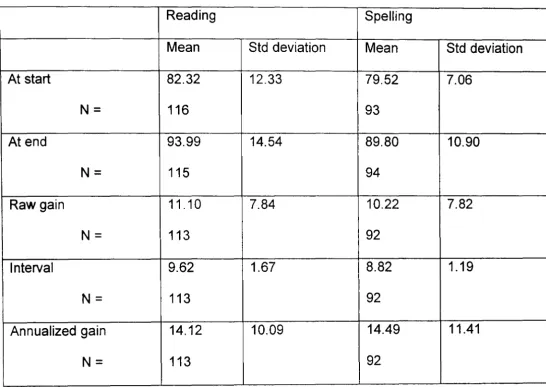
Table 4.2.1 a Reading age scores at start and end, raw gain
and annualised measures, in months, from the
Classes database.
Table 4.2.1 b Spelling age scores at start and end, raw gain
and annualised measures, in months, from the
105
Classes database. 105
Table 4.2.2a Correlations between age-score and National
Curriculum (NC) variables for reading 106
Table 4.2.2b Correlations between age-score and National
Curriculum (NC) variables for spelling 107
Table 4.2.2c Correlations between annualised reading age
and spelling age gain scores and NC reading and
spelling gain scores 108
Chart 4.3.1 a Reading ages and NC levels at the start and
end from the Classes database (Y axis in months,
X axis in NC points score 1-9)
Chart 4.3.1 b Spelling ages and NC levels at the start and
end from the Classes database (Y axis in months,
X axis in NC points score 1-9)
109
Chart 4.3.1 c Reading and spelling annualised gains in
terms of reading and spelling ages and NC levels
(Y axis in months, X axis in NC points score 1-9)
Table 4.4.1 Mean gains in reading for children who did and
110
did not receive additional help 112
Table 4.4.2 Mean gains in spelling for children who did and
did not receive additional help 113
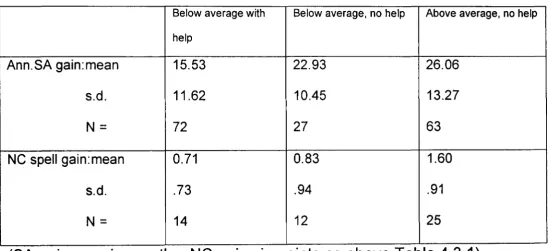
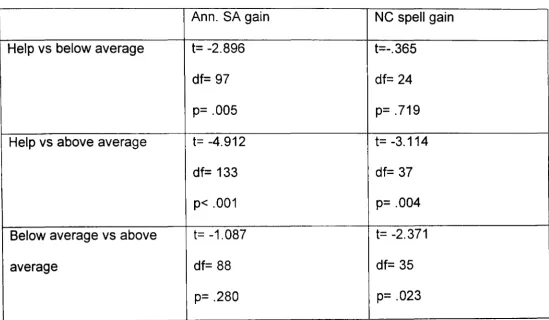
Table 4.4.3 Results from t-tests (independent samples)
Comparing 3 groups from the classes database in
Spelling gains 114
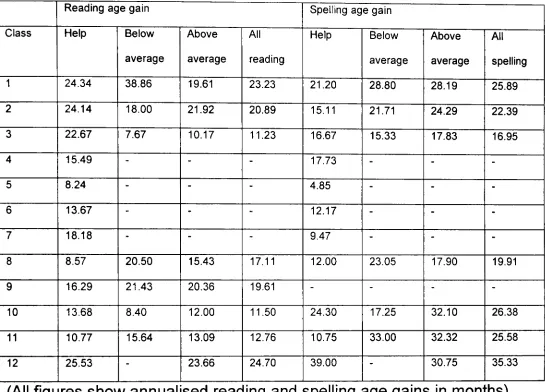
Table 4.4.4 Reading and spelling age gains by classes and
groups receiving help, below average who did not
receive help, and above average who did not
Table 4.4.5 2-way analysis of variance with annualised
reading gain as dependent variable and class and
whether or not help was given as "treatments"
Table 4.4.6 2-way analysis of variance with annualised
Spelling gain as dependent variable and class and
116
117
whether or not help was given as "treatments" 118
Table 4.5.1 Reading and spelling age scores at start and end,
raw gain and annualised scores in months, from the Additional
Help database 120
Table 4.5.2 Percentages of children above and below actual ages at
Table 4.6.1 Reading and spelling gains by type of help
from the Additional Help database 122
Table 4.6.2 Annualised reading and spelling gains from the
Additional Help database by class and main type of
help 123
Table 4.6.3 2-way analysis of variance on annualised reading
gain with class and type of help (ALS alone, ALS &
other, and other alone) as "treatments"
Table 4.6.4 2-way analysis of variance on annualised spelling
gain with class and type of help (ALS alone, ALS & other,
124
and other alone) as "treatments" 125
Table 4.7.1 Differences in starting reading and spelling
measures by type of help using the Additional Help
database 127
Chart 4.8.1 Pie Chart showing the distribution of SEN ratings
from the Additional Help database 129
Table 4.8.2 Gender distribution on the Additional Help database 130
Table 4.8.3 Percentages of SEN in sample at 3 levels by type of
Table 4.8.4 Statistically significant relationships between SEN
variables and starting and gain measures of reading &
spelling 133
Chart 4.8.5 Scatterplot showing children at each SEN level by
type of help 135
Table 4.8.6 Distribution of SEN by classes 137
Table 4.8.7 One-way analysis of variance with SEN ratings as
dependent variable and classes as "treatments" 138
Table 4.9.1 Numbers on roll, SAF and mean and median SEN
scores for each school in the Additional Help database 139
Table 4.9.2 Means, minima and maxima for number on roll, SAF
and SEN scores 140
Table 4.9.3 Correlations between Number on Roll, Class Size,
Social Advantage Factor, SEN ratings and reading and
spelling gains from the AH database 141
Table 4.9.4 Types of interventions favoured by schools 142
Table 4.9.5 Annualised reading and spelling gains by school 143
Table 4.9.6 Results of one-way ANOVA on reading and
Spelling gains by classes and schools 144
Chart 4.10.1.1 The amount of help in minutes per week 145
Table 4.10.1.2 Mean amounts of help by type of help 145
Table 4.10.1.3 Pearson correlations between annualised reading
and spelling gains, starting reading and spelling ages and
total time given for individual help
Chart 4.10.1.4 Number of programmes used
146
Table 4.10.1.5 Mean annualised reading and spelling gains by
the number of sessions over which programme 1 was
delivered 148
Table 4.10.1.6 Mean annualised reading and spelling gains by
the location of additional help 149
Table 4.10.1.7 Group size and mean reading and spelling gains
(in months) 151
Table 4.10.1.8 Months of reading and spelling gain per man hour
of help by type of help 152
Table 4.10.2.1 Interventions classified into 6 types 153
Table 4.10.2.2 Mean annualised reading gain by type of
Intervention for each of the 6 programmes in months 154
Table 4.10.2.3 Mean annualised spelling gain by type of
Intervention for each of 6 programmes in months 155
Table 4.10.3 1 Ratings of 6 programmes by teaching assistants in
terms ease of use, interest and effectiveness, using a 5
point scale with 1 =very poor and 5 = very good 157
Table 4.10.4.1 Ratings of 8 programmes by children in terms of
enjoyment and how helpful they were, using a three point
scale, where 1 =No [it wasn't enjoyable/helpful] to 3 =
Yes [it was enjoyable/helpful] 158
Table 4.10.4.2 Mean actual reading and spelling gains in months
for children responding to questions about how much progress
Table 4.10.5.1 Mean annualised reading and spelling gains
associated with Teaching Assistant or Qualified Teacher
delivery
Table 4.10.5.2 Mean, median and modal years of experience in
schools for teachers and TAs by each of the 6 programmes
161
taught 162
Table 4.10.5.3 Results of one-way analysis of variance on annualised
reading and spelling gains compared across years of
experience of teachers and TAs 163
Table 4.10.5.4 Pearson correlations between annualised reading and
spelling gains and years of experience of teachers and TAs 164
Table 4.10.5.5 Results of one-way analysis of variance on annualised
reading and spelling gains compared across three categories
of training 165
Table 4.10.5.6 Kendall's tau correlations between annualised reading
and spelling gains and three categories of training 165
Table 4.11.1 Results of linear regression to predict annualised reading
gain from school, child and delivery factors 167
Table 4.11.2 Results of linear regression to predict annualised spelling
gain from school, child and delivery factors 168
Chart 5.1.5.1 Annualized reading gain against total time for additional
Acknowledgements
I should like to express my great respect and thanks to all the staff at the
University of Warwick Institute of Education who have tutored and
supported me throughout the six years of the EdD programme. lowe a
particular debt of gratitude to my supervisor, Dr Jonathan Solity, who has
guided and above all encouraged me when analysis and writing of this
thesis seemed to me to have become almost impossible.
I should also like to thank Derek Lucas, former Principal Educational
Psychologist for Northamptonshire County Council, for financial support in
my first year of study, and subsequent Education Officers, especially Gary
Sturgess, who continued to encourage me to continue the research in the
face of the demands of the "day job".
During the data collection phase of the research I received substantial
help and support from my then personal assistant, Mrs Jacqui Henry,
whose thoroughness and positive support were always very much
appreciated.
I could not have embarked on the EdD programme without the support of
my wife, Carol Passing ham, to whom I am more grateful than I usually
admit, and whose direct and indirect help through listening, gentle
Finally, I should like to thank the teachers and teaching assistants who
gave me considerable time and whose data forms the basis for this
research. I did not realize when I sought their help how long it would take
to reach conclusions but I hope their contributions will ultimately lead to
the development of better help for children with literacy difficulties.
Declaration of Authorship
The contents of this thesis include nothing which has previously been
published, other than quotations and references to the work of other
authors or researchers which are stated in the references section. These
references include those to the author's previous published and
unpublished work, but this work does not form part of the present thesis.
The research has not involved collaboration with others.
Abstract
This study compared the progress in reading and spelling of 256 children in 11 classes in 9 English primary schools in Years 3 and 4, and a partially overlapping sample of 126 children who received additional help with
literacy during one year. Teachers and teaching assistants used either Additional Literacy Support (ALS), a highly structured set of small group teaching materials devised by the English National Literacy Strategy, or a wide variety of other materials including other published intervention
programmes, reading scheme based, computer based and individually designed interventions, or a combination of ALS and other interventions. The influence of a broad range of contextual factors were investigated, especially whether children's qualities, school factors such as
Socio-Economic Status and class size, and delivery differences made significant differences to the outcomes of the different interventions. The study used a naturalistic quasi-experimental design, in which teachers were asked to record details of their children and interventions without altering their professional decisions, which has not been used before in investigating literacy difficulties in context.
ALS was marginally more effective than other interventions in the majority of classes, but was clearly superior in value for money terms. Children's qualities did not appear to affect outcomes. Although children receiving additional help made better than average progress, below average
children receiving only class teaching made more progress. Overall catch-up was limited, especially in spelling. There appeared to be a larger
influence of class teaching than expected. A tentative theory of how class teaching and additional interventions combine is suggested. The study considers how research of this type could be advanced, the need for further development of both class literacy teaching and additional
ALS AN OVA BAS BPS COP CVA DfE DfEE DfES DISTAR EAL ELS ERR FLS GCSE HI ICT ILS IQ KS1,2,3 LEA NC NLS NRC
List of abbreviations:
Additional Literacy Support
Analysis of Variance
British Ability Scales
British Psychological Society
Code of Practice for Special Educational Needs
Contextual Value Added
Department for Education
Department for Education and Employment
Department for Education and Skills
Direct Instructional System for Teaching
&
Remediation English as an Additional LanguageEarly Literacy Support
Early Reading Research
Further Literacy Support
General Certificate of Secondary Education
Hearing Impairment
Information
&
Communications Technology Integrated Learning SystemIntelligence Quotient
Key Stage 1,2,3
Local Education Authority
National Curriculum
National Literacy Strategy
NRP OFSTED OISE ORT PA PhAB PAT PAT PIRLS QCA RAN RITA SAF SAT SEN SES SLI SpLD SPELLIT SPSS TA THRASS USA
National Reading Panel
Office for Standards in Education
Ontario Institute for the Study of Education
Oxford Reading Tree
Phonological Awareness (occasionally also Phonemic
Awareness)
Phonological Abilities Battery
Phonological Abilities Test
Phonological Approaches to Teaching
Progress in International Reading and Literacy Study
Qualifications and Curriculum Authority
Rapid Automatic Naming
Reader's Intelligent Teaching Assistant
Social Advantage Factor
Standard Assessment Task/Test
Special Educational Needs
Socio-Economic Status
Specific Language Impairment
Specific Learning Difficulty
Study Programme to Evaluate Literacy Learning through
Individualised Teaching
Statistics Package for the Social Sciences
Teaching Assistant
Teaching Handwriting, Reading and Spelling Skills
Chapter 1: Introduction
"In the area of learning disabilities, there are no empirically validated answers to the question of what intervention(s) work best for which children in what setting(s) for what duration and for what reason. " (Foorman et al 1997)
1.1 The origins of this study
The kernel of this study is an investigation into whether a particular
intervention, Additional Literacy Support (ALS), is effective in helping
children to catch-up in reading and spelling in their middle primary years in
England. ALS was the first in a series of small group interventions
delivered mainly by Teaching Assistants (TAs) designed to deal more
efficiently than previous interventions with the very long-standing problem
of children falling behind in reading and spelling at primary school. The
others were Early Literacy Support (ELS) for younger primary children and
Further Literacy Support (FLS) for early secondary children. It was part of
the National Literacy Strategy (NLS), which was introduced in England
&
Wales in 1998 to try to raise educational standards, a very prominent part
of the New Labour Government's programme. After decades of wrangling
about what type of schools England and Wales should have, the New
Labour slogan "standards not structures" seemed to many educationalists
to be a very significant turning point. At last we would start to try to teach
all children better rather than simply sorting them into different social
The NLS itself began the Herculean task of reforming the teaching of
reading and writing in English primary schools. Schools were not obliged
by law to use the new methods of the NLS, but it was clear that only very
brave schools would stand out against it. It was based on the National
Literacy Project (Sainsbury 1998), which tried out a combination of new
methods of teaching literacy in primary classrooms, most notably a daily
Literacy Hour including whole-class instruction, small group practice and a
plenary, without the previous emphasis on teachers spending much of
their time on hearing children read. It concerned many teachers and
researchers that the project only ran for a year, and that it seemed that
NLS was being written before the project was completed. Although
evidence based policy development was much talked about, the political
necessity for results in time for the next election seemed to put its
effectiveness at risk because there was not enough time to iron out all the
problems.
ALS was the first of the second stage initiatives, part of a "Three Waves"
model for dealing with literacy difficulties. The first wave was class
teaching, reformed and improved through the NLS. The second was the
series of small group interventions, ALS, ELS and FLS, intended to deal
with the majority of catching up problems which were seen as a largely a
result of socio-economic deprivation. The third would be a series of more
individually delivered interventions intended to help the small minority of
children who had not made sufficient progress through the first two waves,
research was being conducted, the Government of England & Wales
introduced its approach to third wave interventions, "Targeting Support"
(DfES 2003), which inevitably affected this study, by widening its scope
and raising further questions about the 3 waves strategy and how
interventions should be evaluated.
ALS itself was developed quickly by NLS on the basis of current research
ideas and intervention practice, especially the work of Marie Clay on
Reading Recovery (Clay 1985). It was introduced in 1999, but had not
been properly validated through research. This study was intended to do
that job.
Immediately a number of questions were raised: what sort of evidence
was needed, what sort of research methods should be used, how broad
should the scope of a study be? These questions were bound to be
coloured by practical questions: what sort of study be conducted by a
researcher working full-time as an education officer for a Local Education
Authority, with no dedicated time and no possibility of research funding?
The epistemological and methodological stance of any researcher is
probably determined (or should it be "chosen"?) more by background and
training than by conscious analysis. My first degree was in a psychology of
an exclusively empirical, experimental, quantitative type. My dissertation
was a joint paper on ecological influences on the behaviour of baboons in
psychologist, and again the training was in a hard-science tradition. I spent
two years researching literacy teaching and pupil outcomes in Year 2 in
the 1990s in Leicester, but did not succeed in bringing substantial data
gathering and analysis to publishable conclusions. In retrospect, I was
trying in a very limited way to raise the kind of questions that the National
Literacy Project put forward about class teaching of literacy. Currently as
an education officer for a Local Education Authority (LEA) I am concerned
with broad questions of how to achieve better results for children with
special educational needs (SEN).
But balancing these influences, I had also studied philosophy. I worked as
a teacher of primary and secondary children, and with children with severe
learning difficulties. As an educational psychologist, I worked with many
children with literacy difficulties. Their problems and often their suffering
seemed to call for both much greater effort to collect good and systematic
information about what might be causing their difficulties and a more
personal engagement with their struggle. I had studied the sociology of
special education in its early stages (Bunn 1987) at a time when special
educational systems seemed to be becoming increasingly mechanical.
And I had trained in family therapy and worked in Child Guidance within a
loosely dynamic orientation. And as an education officer, I not infrequently
received strong and distressing accounts from parents about how their
It may be impossible to be sure whether a decision to focus on a particular
type of question is based on objective "real-world" conditions or upon
subjective meaning constructions. The decision to focus on "product"
rather than "process", the product being as large a scale evaluation as
possible of the results of using ALS, rather than the processes by which
TAs and teachers might support children of 8 and 9 to develop their
understanding of how to read and spell, seemed to be made by objective
conditions. The English education community seemed to need to know
much more urgently how well ALS worked. It was not crying out to know
what inter-subjective or intra-individual cognitive processes were involved
in using ALS. Researchers, especially those in training, need to answer
questions that other people beside themselves will find interesting. This
does not mean that qualitative methods are without interest or value in this
particular field. In the final analysis, there probably is a greater role for
research on how special educational processes take place in mainstream
schools, because of limitations which may, perhaps, be inherent in
experimental and quasi-experimental research paradigms in literacy
interventions. These questions will be taken up again in the final chapter.
Research on how children learn to read and spell and on what might be
causing difficulties has made great progress in the last 30 years
(Stanovich 2000). Researchers mainly using correlational and
experimental methods based on cognitive psychology have been able to
resolve divisive questions about how children learn to read (called
efforts has reinforced the influence of researchers who advocate a
stronger experimental scientific influence upon policy, especially in the
United States (see Reid-Lyon 2004, for example). It would have been odd
not to base understanding and explanation on the most successful
research tradition available.
The most important determinants of the ways in which this research was
conducted may have been practical, however. It was almost impossible to
find time during the working day to collect data directly about children, and
nearly as difficult to make time to interview or observe teachers or TAs.
Much of the work of an education officer is reactive. A school finds it is
having major difficulties dealing with a child's behaviour. A parent fells that
they have been let down by recent decisions by a school. Or helping a
child to progress looks as though it is going to cost more - is there any
alternative? It can become extremely difficult to set aside time to indulge
an interest in research when there are immediate crises to attend to.
LEAs do in fact collect data on paper files about students with literacy
difficulties, and have been doing so for years. Unfortunately, the data is
collected unsystematically and in ways that do not allow evaluation of the
effectiveness of interventions to be made, except in quite broad and
probabilistic terms. They have been collecting data electronically for about
10 years, biographical and financial details, but not what interventions
children receive. The results of SATs and GCSEs are not in a form that
or the kinds of difficulties that they have been identified as having. I have
always felt that a huge amount of effort is wasted in collecting and holding
information about children which cannot be used to ask questions about
what kinds of teaching really did help the children make progress. Would it
be possible to obtain, in a form that could be analysed, information about
children's literacy difficulties (the most common educational difficulty)
without expecting schools to do unreasonable amounts of extra work? If it
was possible, could LEAs begin to collect and distribute back to schools
information that would help them make better decisions about helping
children?
It might then be possible to use an obvious and serious limitation on what
time I could give directly to data collection as a source of strength: only the
most important data would be asked for, and its value would be tested in
the utility of the conclusions which came out.
Thus this study took the form it did because of a combination of an
objective demand for evidence about the effectiveness of ALS, a personal
history, a powerful and successful international research effort to
understand how children learn to read, and an opportunity to collect data
in a way that might open doors from research onto the LEA shop-floor.
1.2 Brief outline of the 5 chapters
In the light of these questions and issues about how to tackle the key
standard empirical science sequence of literature review, research
methods, results, discussion of the results and conclusions.
1.2.1 :Chapter 2: Review of the Literature.
The review covers three main areas, the early development of literacy and
the nature of the difficulties which some children experience, including
within-child and context factors, national and local policy development in
the last 10 years in dealing with literacy difficulties, and interventions in
England and Wales, with a particular focus on a landmark synthetic study
of interventions by Greg Brooks (Brooks 2002).
1.2.2: Chapter 3: Research Methodology
Two possible research designs were considered: experimental and
quasi-experimental. Practicality, cost and validity issues were all relevant to the
decision to use a naturalistic rather than a truly experimental design.
The key variables included two types of measures of reading and spelling
gain, which it was hoped could be integrated, a specially designed
measure of children's qualities, school factors such as size and SES, and
how interventions are delivered in schools.
The sample of schools from a single English Local Education Authority
(LEA) was very important in shaping the study, and its rationale is
discussed, as well as the unexpected problems in data collection
research aims, and concludes with a detailed set of research questions,
the answers to which structure the next chapter.
1.2.3: Chapter 4: Results
The study collected outcome data into two overlapping databases,
"Classes" and "Additional Help", intended to complement each other. The
chapter explains the differences in the databases. The larger but less
detailed Classes is used to examine differences between children who
received additional interventions and those who did not.
The intended integration of the two main types of gain measure, age
scores and NC levels, seemed at first to be possible. But when the
outcomes of interventions were compared, the results did not support
integration. Answers to the two main questions, the effectiveness of ALS
compared to other interventions, and the role of class teaching compared
with additional interventions, nevertheless emerge, but are somewhat
qualified.
The search then begins for explanations for the differences between
interventions, looking at selection for different types of help, differences
between children and between schools, and between classes. A different
way of analysing types of interventions is used to further explore the
relationship between interventions and outcomes. Delivery factors,
including staffing, are also considered. Staff and children'S views of the
Finally, multiple regression is used to examine how much delivery, school
and pupil factors explain the outcomes of the interventions.
1.2.4: Chapter 5: Discussion
A comparison of class teaching and additional interventions was one of
the key questions in this study. A theory is suggested based on the
findings about the relationship between these two ways of helping children
with literacy difficulties. Brooks' conclusion about the role of class teaching
in helping children catch up is called into question. Comparison between
interventions gave only qualified answers in terms of outcomes. But when
"value for money" analysis is used, the answers were much clearer. The
role of pupil qualities continues to tease and surprise by its elusiveness.
Although the study was not designed to consider school processes in
general, the ways in which interventions were delivered were significant.
As the implications of the results became clear, the methodological and
technical limitations of the study also became clearer. Two complementary
ways in which the study could be improved are considered: technical
improvements on the design and sample, and new work on the school and
class processes through which intervention decisions are made.
Chapter 2: Review of the Literature
2.1 Introduction:.
This study focuses on the most "mechanical" end of the literacy
continuum, especially decoding print and encoding it in writing. This is
mainly because a working assumption was made that until the possible
value of a narrow focus is shown to be exhausted, more progress in
research can be made here than by working with value, motivation and
other harder to measure features of school and child performance. There
is a substantial research tradition which questions approaches to literacy
intervention that appear to involve only technical issues (see for example,
Wearmouth 2002), but it is not considered here.
The agenda for this chapter is therefore to review what is most relevant to
understanding interventions for children with literacy difficulties from
1) Literature about the early development of literacy and the nature of
children's literacy difficulties, including dyslexia;
2) National and local policy options on literacy development and
interventions to deal with difficulties, particularly in England and
Wales, but with some comparisons with the United States of
America (USA);
3) Interventions in England and Wales in the last 25 years, with a
particular focus on a recent synthetic analysis of methodologically
2.2 Literacy development and difficulties:
2.2.1 Child factors predicting literacy achievement
Research in Britain, the USA and Europe has been converging for some
time towards a consensus about which within-child factors on school entry
predict later reading achievement. By the late 1980s letter knowledge,
phonological awareness, vocabulary knowledge and verbal reasoning, and
knowledge about print were seen as the most important prerequisites, in
roughly that order (Adams 1990, Ch4). Towards the end of the 1990s, the
picture had altered only slightly, with more specific aspects of language
skills, including receptive and expressive language, receptive and
expressive vocabulary and verbal memory all having independent effects
(Snow et al 1998). Most recently this evidence has been subjected to
meta-analysis (Scarborough 1998) and review (Elbro
&
Scarborough 2004). The main factors have not changed but some subtleties in thelanguage domain (for example about the role of rapid naming) have
emerged, which raise questions about the links between different factors.
The best predictor is probably letter identification, with average
correlations of between r=.52 and r=.57 (depending on how narrowly letter
identification is defined) across 21 (letter sound knowledge) and 24
(naming letters) studies (Elbro & Scarborough 2004). But as Adams
(Adams 1990, pp 61-64) pointed out, it has also proved unproductive to
specifically train children in letter identification as a way of preventing
Over the last 20 years, phonological awareness (PA) has been shown to
be the most crucial prerequisite for literacy achievement. Scarborough
found that the average correlation between phonological awareness and
later reading achievement over 27 studies was r=.46, second only to letter
identification (Elbro
&
Scarborough 2004). Unlike letter identification, training in phonological awareness does have a major effect on readingachievement. Phonemic Awareness training has been extensively
investigated and was the subject of the first subgroup of the American
National Reading Panel (NRP) investigation into how to help children with
reading difficulties (NRP 2000). Clear benefits have been found for
combining PA with work on letter-sound correspondences (Bradley &
Bryant 1983). A similar result was obtained using Teaching Assistants with
slightly older children (seven year olds) by Hatcher, Hulme and Ellis
(Hatcher, Hulme
&
Ellis 1994). Their groups were given PA alone, reading practice alone (similar to the Marie Clay Reading Recoveryprogramme, Clay 1985) or PA with reading practice and explicit
letter-sound correspondence practice. The third group made the greatest
progress.
Receptive vocabulary knowledge, measured using tests which require
children to identify which of a set of pictures corresponds best to a spoken
word, was not as strong a predictor as expressive vocabulary, measured
by asking the child to name a series of pictures (correlations of r=0.33 and
probably a better measure of the extent of a child's word knowledge,
which in turn is important in reading because children almost certainly find
it harder to read words whose meaning they do not know (see Adams
1990, p140), the latter is probably a better measure of accurate retrieval of
phonological representations of words and of their production in speech
Children's familiarity with the mechanics of how meaning is encoded in
print in books (especially the concept of "word") is an important predictor
(7 studies with an average correlation of r=0.46 in Scarborough 1998).
However, its predictive power declines with age.
General language abilities are important, with 7 studies in Scarborough's
meta-analysis showing an average correlation of r=0.46 with reading
achievement (Scarborough 1998). Children with Specific Language
Impairment (SLI) have been studied extensively, because they have a
particularly strong risk of reading difficulties. Interventions, particularly
early speech therapy, while effective in overcoming speech difficulties,
may not prevent later reading difficulties (Huntley et al 1988). It remains
unclear precisely what aspects of SLI are most important in causing
reading difficulties (Dockerell
&
Lindsay 2004). There are some indications that milder difficulties which do not affect the earlier stages of literacyacquisition might be linked to under achievement later, as comprehension
Grammatical knowledge and especially children's ability to spell
morphological features have been studied quite recently by Bryant, Nunes
and colleagues (Bryant, Nunes and Bindman 1998, Kemp & Bryant 2003,
Bryant and Nunes 2004), who have suggested a stage model for the
development of spelling in which morphological features such as the final
"ed" past tense spelling in English is achieved correctly only after an
earlier phonological stage (in which letter-sound correspondences are
learned). There is evidence that alongside PA, grammatical awareness is
a continuing predictor of reading achievement at the later primary stage.
Muter and Snowling (Muter & Snowling 1998) found reading accuracy at 9
was best predicted by "grammatical and phonemic awareness, which,
along with vocabulary, accounted for 70% of the total variance in reading
accuracy skill" (p327). They argue (following Tunmer 1989 ) that
grammatical awareness may have a significant role in reading as well as
spelling, because it may function to improve decoding through the use of
context cues, especially at the middle primary stage of education.
The role of verbal short-term memory in reading acquisition remains
controversial. Digit span has for a considerable time been considered the
best measure of short-term memory limitations in reading (for example,
Miles 1983) but recently Scarborough (Scarborough 1998) suggested that
sentence or story recall may be a better measure, and others (Muter &
Snowling 1998) have suggested that non-word repetition may be a better
Finally, rapid automatic naming (RAN) has recently been suggested by
Wolf and colleagues as a separate and important predictor of reading
difficulties. Scarborough found an average correlation of r=0.38 across
fourteen studies (Scarborough 1998). Stanovich and many other had
argued that RAN was one aspect of phonological processing (Stanovich
1986) and RAN was included in tests of phonological abilities such as
PhAB (Frederickson et al 1996). However Wolf and her colleagues have
found evidence that phonology and RAN constitute independent
difficulties, and that phonological and RAN difficulties constitute a "double
deficit"(Wolf
&
O'Brien 2001). In particular there is considerable evidence that in languages with more regular letter sound correspondences thanEnglish such as German and Spanish that RAN is a more powerful
predictor as phonology becomes less significant (Landerl & Wimmer
2000). Snowling and Griffiths (Snowling
&
Griffiths 2004) have recently speculated that a "speed of processing" factor, which they link to RAN,may be involved in impeding some children's ability to learn reliable
mappings between orthography and phonology.
2.2.2 Specific disabilities associated with literacy difficulties, including
dyslexia
Children with SLI are particularly at risk of later literacy difficulties, as we
have discussed above. Children with hearing impairment (HI) or deafness
are also particularly vulnerable to literacy difficulties. Population studies by
Oi Francesca in the US (Oi Francesca 1972) and Conrad in England and
15 to 16 were 9:2 years and 9:0 years respectively. More recent research
has not altered the pattern (Allegria 2004, p 460-461).
The largest group of children whose literacy difficulties are associated with
a disability are dyslexics. Dyslexia itself remains a controversial, confusing
but very extensively researched area (see the Fourth, Fifth and Sixth
British Dyslexia Association International Conference Reports, Hulme
&
Snowling 1997, Fawcett 2001 and Reid & Fawcett 2004). The key
questions for dyslexia are very similar to those for literacy difficulties in
general: what are its causes, and what can or should be done to help
children who experience it. The concept of dyslexia itself adds further
questions: is there a distinct group of children with literacy difficulties who
have significant differences from other children (that is, children with a
developmental disorder rather than delay), and are there distinct methods
of helping such children?
A turning point for research came when Stanovich argued (Stanovich
1991) that the identification of children as dyslexic had been based on
unproven assumptions. He went on to show (Stanovich
&
Seigel 1994) using large samples from previous studies that there were no goodgrounds for distinguishing between children identified as reading disabled
because of low achievement rather than a discrepancy between their IQ
and achievement. Fletcher and colleagues (Fletcher et aI1994), using
new data, confirmed the that, "although differences between children with
differences between those children with impaired reading who met
10-based discrepancy definitions and those who met low reading
achievement definitions were small or not significant." Stanovich labelled
these two groups "garden variety" and "discrepancy" dyslexics. Both
groups had difficulties which were predominantly associated with
phonological processing difficulties.
Vellutino, Scanlon and Sipay supported this finding in a longitudinal
intervention study, in which children were classified into 6 groups
according to how well they responded to remedial interventions based on
1:1 tutoring (4 groups from "Very Good Growth" to "Very Low Growth", with
two "normal" reader groups of average and above average 10) (Vellutino
et al 1997). They were able to compare the cognitive abilities of children
who responded well to remediation and those who did not: "we found that
phonologically based skills - such as phoneme segmentation; rapid
naming; and memory for words, sentences and nonsense syllables
-reliably and robustly differentiated not only the normal readers from the
tutored children who were the most difficult to remediate, but, in many
instances, the most difficult and the most readily remediated children as
well" (p372). Children who do not respond to remediation are sometimes
called "treament resistors" (Torgeson 2001, Blachman 1997). Torgeson
has argued that the best response may be to increase the intensity of
However, Fletcher, Morris, Reid Lyon, Stuebing, Sally Shaywitz,
Shankweiler, Katz and Bennett Shaywitz have conducted a series of
methodologically sophisticated studies using different types of cluster
analysis, in which stable subtypes do emerge (Fletcher at al 1997).
Fletcher and colleagues raise the important possibility that subtypes may
respond differently to different reading interventions. They suggest, for
example, that subtypes with verbal short-term memory difficulties may
require more drill and repetition than others. They point out that "it is
possible that a treatment on the average looks ineffective, but actually
works well with some subjects and not others." (Fletcher at al1997, p
112).
2.2.3 Family and School influences on literacy.
Twin studies have shown substantial genetic influence on reading
performance, especially on phonemic awareness, non-word-reading and
rapid naming (Grigorenko 2001, p108). However, the relative importance
of genetic and environmental influences remains unclear, because of the
interpretation of sampling issues. Bishop, for example has recently argued
the possibility that "the environmental cause is much more common than
the genetic cause, but that the genetic cause leads to much more severe
and extensive problems, which are likely to attract parental and clinical
concern" (Bishop 2001,
P
196). Both types of influence are likely in studies of familial effects upon dyslexia. Prospective studies in which parentalabilities are identified first are probably the strongest evidence of the
37% of children of dylexic parents had significant reading difficulty after
one year of schooling, compared with 5-10% of the Danish population.
Across a number of studies, parents' reading disabilities predict between
31% and 620/0 (Snow et a11998, p120). Once parental abilities are
accounted for, home experience factors are probably only modestly
important. Two recent meta-analyses on studies of parents reading to their
pre-school children showed average correlations of r=.28 (Bus et al 1995;
Scarborough
&
Dobrich 1994).Socio-economic status (SES) is measured from some combination of
variables such as household income, parents' education and occupation.
Typically, a proxy variable such as the percentage of children receiving
free school meals in an area is used in educational studies, because direct
measurement of variables such as parental income is difficult and time
consuming. Generally, there has been agreement from research that
reading achievement is correlated with SES. But multi-level modelling has
shown that correlations between low SES and reading achievement are
stronger at a school level (average correlation size across 93 samples of
0.68) and substantially weaker at an individual level (average correlation
size across 174 samples of 0.23) (White 1982). The National Research
Council team in the US (Snow et al 1998, p 126) argued that this
difference is likely to be a result of the quality of school experiences:
children from low SES families will tend to attend schools with similar
children, whose schools are less likely to be able to deliver effective
In England
&
Wales, the role of schools in affecting achievement has been highly controversial and at times highly politicised. In the late 80's it hadbecome clear that schools overall achievement levels were influenced by
the SES of their pupils, but that there is a consistent "school effect",
generally estimated at between 8% to 12% of the variance in pupil
achievement (Reynolds 1997). There was also evidence that some
schools were able to overcome the disadvantages of lower achieving
intake. This led to the creation of a regime of school inspection, testing
and school league tables which was intended to put pressure on teachers
and Local Education Authorities to improve schools which were "failing".
This focus on schools and teaching methods will be considered below in
discussing national policy development, and the particular issue of
additional interventions in England
&
Wales will be considered in the third section of this chapter. However, it is important to draw attention to anumber of factors at the school level which may affect literacy
ach ievement.
Class size is one of the most apparently straightforward factors that might
affect achievement. The STAR project in Tennessee, USA, used an
experimental methodology, in which children were randomly assigned to
either small (average size 17) or "regular" (average size 23) classes, with
and without extra classroom assistants (TAs) (Finn
&
Achilles 1999). They found clear advantages on attainments of small classes in young children.built on the work of Finn
&
Achilles, but used a non-experimental design over three years to try and replicate the STAR project findings and to seekexplanations for the classroom processes that might underlie class size
effects (Blatchford 2003). They found that there was a clear class size
effect on literacy and numeracy in the first (reception) year of English
schooling, which was still evident in Year 1 but which had dissipated by
the end of Year 2. In the Reception year, there was also a greater effect of
class size on less able pupils in literacy, though not in maths.
The study also looked closely at the effects on attainment of TAs. As the
STAR project had found, Blatchford concluded "There was no clear
evidence for any year, for either literacy or maths, that additional staff or
additional adults in the class had an effect on children's progress, and
there was no apparent 'compensation effect' [in larger classes] of having
extra adults in the class" (Blatchford 2003, p147).
There are of course continuing and broader issues about teacher quality
and training and how these factors might affect achievement, and
identifying key qualities remains problematic. Blatchford, for example, did
not find that headteacher or self-ratings of teacher quality in his sample (of
330 classes) were related to pupil achievements. Teacher quality remains
extremely difficult to capture or measure either qualitatively or
quantitatively. Wragg et ai, for example relied on nominations by Local
Authority advisors for their small sample of expert literacy teachers (Wragg
achievement data and classroom observation. Wragg and his team were
unable to distil a small set of teacher qualities that were essential to
effective literacy teaching in the primary school.
By contrast, researchers in the school improvement tradition have focused
on whole-school changes, which might be expected to alter the skills and
expectations about literacy of all teachers. Perhaps the most notable is the
"Success for All" project (eg Slavin et al 1996), in which the school as a
whole was taken as the unit within which a number of initiatives were
taken with the aim of preventing academic deficits appearing and
intervening intensively to deal with any deficits that do appear, with a joint
emphasis on strong class teaching and individual tutoring of children by
qualified additional teachers, who also take part in group teaching. The
project achieved positive effect sizes at schools participating in the project
compared with control schools over a number of years, and was taken as
a model for the development of more effective literacy teaching by the
English National Literacy Strategy, especially in its emphasis on a "literacy
hour" and group reading activities within the literacy hour (Beard 1998).
2.2.4 Individual and social factors in the prediction of reading difficulties
The relative importance of individual children, families, and schools
(including teacher and method variables) in the prediction of reading
difficulties matters because it affects the type of intervention chosen to try
to improve reading achievement. The National Research Council
be of practical value for predicting reading difficulties. In combination,
however, measures of various kinds of risk - individual, familial and
demographic - can provide useful estimates of future reading
achievement levels" (Snow et a11998, p 131).
Scarborough in 1998 found that 57% of variance could be accounted for
by combining predictions using multiple regression across seven studies
(Scarborough 1998). Elbro and Scarborough in 2004 suggest that
background factors such as parental income, educational level and
occupation are not strongly associated with children's later reading
achievement, at an individual level. The recent focus has been on how
parents influence their children's reading achievement, but its effects are
no more than modest: parental reading ability, which may have a genetic
link with children's achievement, is the strongest factor, but then " ..
probably no more than 8% of the variance in early literacy skills is directly
accounted for by differences in home literacy environments" (Elbro
&
Scarborough 2004, p343). Overall, differences between individual children
on school entry, especially in language related abilities, are considered by
current research to be the most important predictors of children's reading
difficulties.
The importance of differences in children's qualities after some years of
schooling are much less well understood. In his pivotal article on Matthew
might be less than commonly supposed, because of the effects of success
and failure in reading over time (Stanovich 1986): He argued that (p381):
"The effect of reading volume on vocabulary growth, combined with
large skill differences in reading volume, could mean that a 'rich-get
richer' or cumulative advantage phenomenon is almost inextricably
embedded within the developmental course of reading progress.
The very children who are reading well and who have good
vocabularies will read more, learn more word meanings, and hence
read even better. Children with inadequate vocabularies - who read
slowly and without enjoyment - read less, and as a result have
slower development of vocabulary knowledge, which inhibits further
growth in reading ability."
He also suggested that reading failure may itself have effects upon a
broader range of cognitive and motivational processes, perhaps from
around the middle primary stage (if not before), and that this process of
"reciprocal causation" may help to explain the wide range of correlations
between reading difficulty and cognitive processes.
This suggests that some important relationships at later stages of literacy
development may not be linear (Elbro
&
Scarborough 2004) and that we should expect the analysis of within-child explanations for readingdifficulties in the middle years of development to be complex, perhaps
interventions begin to be as or more important than qualities which
children bring to their learning.
2.3 National & local policy development on literacy difficulties in England and Wales since the early 1990s
2.3.1 The recent policy context
Looking back to the early 90's, it is clear there were a number of policy
options to deal with "literacy difficulties" (if the problems to be addressed
were conceived at the individual or small group level) or "raising standards
in literacy" if the problems were conceived at population level. These
options were something like this, placing them in rough order of
magnitude:
• Reorganize the English National Curriculum
• Change the ways in which mainstream teaching of literacy is practised
• Positively discriminate towards children from socially and linguistically
disadvantaged backgrounds
• Intervene systematically at the Foundation Stage for children "at risk" of
literacy difficulties
• Intervene systematically with children who have fallen behind in the
initial year of teaching
• Intervene intensively with children with severe difficulties in literacy
learning.
Although there remained some scope for LEAs to develop local teaching
Wakefield) and to set up local volunteer or parental involvement projects
(such as "Better Reading Partnerships" in Durham, Redcar, Cleveland and
Worcestershire), decisions about most options were largely at the national
government level.
In the early 1990's there was much political enthusiasm for setting up
"Reading Recovery" as a national "second wave" system. The "Three
Waves" model was originally put forward by Marie Clay in New Zealand
(Clay 1985), and was intended as a framework for intervention with all
children, most of whom would make sufficient progress from ordinary class
teaching, some from individual interventions using Reading Recovery, and
a small minority, who did not benefit sufficiently from Reading Recovery,
from longer term individual interventions. But the incoming Labour
Government in 1997 chose instead to pursue a reform of mainstream
teaching through the National Literacy Strategy (NLS). With the benefit of
hindsight, it seems that the successive governments of England & Wales
began with the most far-reaching options, and have gradually narrowed
their focus.
Sir Ron Dearing's review of the National Curriculum in 1994 (Dearing
1994) produced a somewhat simpler and more manageable version of the
English curriculum in 1995 (DfE 1995). A pilot National Literacy Project
was set up in 1996 by the government to give direct advice on teaching
literacy to mainstream teachers (Sainsbury 1998), and this was adopted in
a clear decision that the first option, curriculum revision, was insufficient
and that the greatest priority was to alter mainstream teaching practice.
The National Literacy Strategy has occupied centre stage for several
years, and has brought about significant improvements. Recent
evaluations show (OFSTED 2002, OISE 2003) a plateau was reached in
overall national results in 2001-2 on which we remain.
The government has introduced substantial positive discrimination towards
children experiencing social disadvantage through the "Sure Start",
"Excellence in Cities" and "Education Action Zones" initiatives. Such
interventions are necessarily long-term and link with the government's
broader strategies for the elimination of child poverty (OFSTED 2003)
In 1999 the government began to introduce new materials to help children
who had not made a good start, beginning with Additional Literacy Support
(ALS) at KS2 (DfES 1999), and extending this to Early Literacy Support
(ELS) at KS 1 and then Further Literacy Support (FLS) at KS3. These
initiatives effectively took the place of intensive 1: 1 interventions such as
Reading Recovery, which was the original and perhaps the leading model
for remedial intervention in the 80's and early 90's. Reading Recovery
requires the use of individual teachers who have been trained for a year in
its delivery, and is therefore expensive and slow to introduce. By the mid
90's, evaluations of its effectiveness had cast doubts on its ability to
for example, had found that children successfully completing Reading
Recovery programmes did not maintain their gains much better than
similar children who had not followed the programme. At the same time
evaluations of interventions involving trained and supported volunteers or
teaching assistants (such as the American "Book Buddies"), which were
heavily influenced in the type of curriculum and delivery methods by
Reading Recovery, suggested that good progress could be made for much
lower costs.
No thorough evaluations of the ALS/ELS/FLS approach have yet
appeared. OFSTED's evaluation of the NLS (OFSTED 2002) has
commented positively on these interventions, but it remains important to
clarify what benefits they bring, and whether they are the best methods for
"second wave" intervention.
Changes have been made at broader levels of intervention (the national
curriculum, national teaching methods, social disadvantage, and initial
interventions). Not all possible improvement has been exhausted at these
broader levels, and some possible approaches have not been attempted,
especially preventative intervention at the Foundation stage. Further
improvement is expected in the development of methods of mainstream
teaching, especially the use of phonics.
It is encouraging that improvement is now being sought on different fronts
by the NLS becomes only one of a number of policy initiatives, it will
become harder to identify what has and has not worked.
2.3.2 The Three Waves model:
The "Three Waves" model is summarized in "Targeting Support" (DfES
2003):
"Wave 1 The effective inclusion of all children in a daily and high
quality literacy hour
Wave 2 Additional small-group intervention for children who can be
expected to catch up with their peers as a result of the intervention
Wave 3 Specific targeted approaches for children as requiring SEN
support (on School Action, School Action Plus or with a Statement
of special educational needs)"
The three waves model derives from the work of Marie Clay, who argued
that slow and reluctant identification of children with literacy difficulties as
dyslexic or socially disadvantaged, as they progressed haltingly through
the school system, would inevitably be ineffective and inadequate (Clay
1985). She argued that all children who had fallen behind in the first year
of mainstream teaching should receive daily individually delivered teaching
help from specially trained teachers using Reading Recovery methods,
until they reached the attainments of the class average. The small minority
who did not reach the average level during the second year would
continue to need individual help. This effectively divided children into three