AN ASSESSMENT OF THE KNOWLEDGE AND PRACTICE OF LASSA FEVER PREVENTION IN
Cuttington University Graduate School, Department of Public Health, Tubman Boulevard,
ARTICLE INFO ABSTRACT
Lassa fever is endemic to West Africa. It is a zoonotic disease first described in the 1950’s in Sierra Leone but was not
world over. In Liberia there is an annual increase of the Lassa fever cases reported at the only Lassa fever treatment center, the Phebe Hospital, in Suakoko District, Bong Coun
challenge to the health of the people as a result of limited knowledge of the disease. The researcher has identified the Phebe Community in Suakoko District, Bong County as a case study because of the proximity of the community to the
target population of one thousand four hundred and ten (1410) residents has knowledge of Lassa fever and its prevention. The research further revealed that the educational level of the responde significant determining factor for the limited knowledge of the disease. Of the highly educated people (college level) sampled in this research study, 42.70% is knowledgeable of the disease. A major contributing factor to the prevalence of the dis
awareness of the disease. This research proved it through the statistics gathered from the Phebe Community on public health awareness. Only about 0.7 % of the sample size indicated that there was some form of
conducted the public health awareness and how many times was said activity carried out in the community.
Copyright©2016, Hasipha C. Tarpeh. This is an open access article
distribution, and reproduction in any medium, provided the original work is properly cited.
CHAPTER ONE
1.0 INTRODUCTION
Lassa, a viral hemorrhagic fever, is an acute
weeks duration that occurs in West Africa. Though first described in the I950s, the virus causing the disease was not identified until 1969. It was first identified in the town of Lassa, in Borno State, Nigeria located in the Yedseram River Valley at the south end of Lake Chad. Clinical cases of the disease had been known for over two decades.
zoonotic disease, meaning that humans become infected from contact with infected animals. The animal reservoir, or host, of the Lassa virus is a rodent of the genus Mastomy5, commonly known as the “multimammate rat.” Mastomys infected with Lassa virus do not become ill, but they can spread the virus
*Corresponding author: Hasipha C. Tarpeh
Cuttington University Graduate School, Department of Public Health, Tubman Boulevard, Congo Town, Monrovia, Liberia
ISSN: 0975-833X
Article History:
Received 04th March, 2016
Received in revised form 24th April, 2016 Accepted 05th May, 2016
Published online 30th June,2016
Key words:
Knowledge and Practice.
Citation: Hasipha C. Tarpeh, 2016. “An assessment of the knowledge an
of Current Research, 8, (06), 33399-33417.
RESEARCH ARTICLE
AN ASSESSMENT OF THE KNOWLEDGE AND PRACTICE OF LASSA FEVER PREVENTION IN
BONG COUNTY, LIBERIA
*Hasipha C. Tarpeh
Cuttington University Graduate School, Department of Public Health, Tubman Boulevard,
Congo Town, Monrovia, Liberia
ABSTRACT
Lassa fever is endemic to West Africa. It is a zoonotic disease first described in the 1950’s in Sierra Leone but was not recognized until 1969. It causes over five thousand (5000) deaths annually the world over. In Liberia there is an annual increase of the Lassa fever cases reported at the only Lassa fever treatment center, the Phebe Hospital, in Suakoko District, Bong Coun
challenge to the health of the people as a result of limited knowledge of the disease. The researcher has identified the Phebe Community in Suakoko District, Bong County as a case study because of the proximity of the community to the only treatment center. This case study revealed that 8% of the target population of one thousand four hundred and ten (1410) residents has knowledge of Lassa fever and its prevention. The research further revealed that the educational level of the responde significant determining factor for the limited knowledge of the disease. Of the highly educated people (college level) sampled in this research study, 42.70% is knowledgeable of the disease. A major contributing factor to the prevalence of the disease in Liberia is the lack of community health awareness of the disease. This research proved it through the statistics gathered from the Phebe Community on public health awareness. Only about 0.7 % of the sample size indicated that there was some form of awareness carried out in the Phebe Community, but could not even identify who conducted the public health awareness and how many times was said activity carried out in the community.
is an open access article distributed under the Creative Commons Attribution License, which distribution, and reproduction in any medium, provided the original work is properly cited.
Lassa, a viral hemorrhagic fever, is an acute illness of 1-4 weeks duration that occurs in West Africa. Though first described in the I950s, the virus causing the disease was not identified until 1969. It was first identified in the town of Lassa, in Borno State, Nigeria located in the Yedseram River Valley at the south end of Lake Chad. Clinical cases of the disease had been known for over two decades. Lassa fever is a zoonotic disease, meaning that humans become infected from contact with infected animals. The animal reservoir, or host, of virus is a rodent of the genus Mastomy5, commonly known as the “multimammate rat.” Mastomys infected with Lassa virus do not become ill, but they can spread the virus
ment of Public Health, Tubman Boulevard, Congo Town, Monrovia, Liberia.
through their excreta (urine and feces).
endemic in the West African countries, and causes 300,000 500,000 cases annually with approximately 5,000 deaths. Outbreaks of the disease have been observed in Nigeria, Liberia, Sierra Leone, Guinea, and the Central African Republic. It is also believed that human infections also exist in the Democratic Republic of the Congo, Mali, and Senegal. Its primary animal host is the
(Mastomys natalensis), an animal indigenous to most of Sub Saharan Africa. Although the rodents are also a source of protein for peoples of these areas, they are dangerous to the health of the people because the virus is transmitte
contact with the feces and urine of these animals accessing grain stores in residences. The virus is a single
virus belonging to the virus family Arenaviridae. Lassa fever exists in other countries beyond the West African region as demonstrated in the work done by Dr. Jordi Casals (see figure 1 below), who became infected with the virus after studying samples from the original Nigerian ca se. As shown by the
International Journal of Current Research Vol. 8, Issue, 06, pp.33399-33417, June, 2016
INTERNATIONAL
“An assessment of the knowledge and practice of Lassa fever prevention in bong county, Liberia”,
AN ASSESSMENT OF THE KNOWLEDGE AND PRACTICE OF LASSA FEVER PREVENTION IN
Cuttington University Graduate School, Department of Public Health, Tubman Boulevard,
Lassa fever is endemic to West Africa. It is a zoonotic disease first described in the 1950’s in Sierra recognized until 1969. It causes over five thousand (5000) deaths annually the world over. In Liberia there is an annual increase of the Lassa fever cases reported at the only Lassa fever treatment center, the Phebe Hospital, in Suakoko District, Bong County. Lassa fever is a challenge to the health of the people as a result of limited knowledge of the disease. The researcher has identified the Phebe Community in Suakoko District, Bong County as a case study because of the only treatment center. This case study revealed that 8% of the target population of one thousand four hundred and ten (1410) residents has knowledge of Lassa fever and its prevention. The research further revealed that the educational level of the respondents is a significant determining factor for the limited knowledge of the disease. Of the highly educated people (college level) sampled in this research study, 42.70% is knowledgeable of the disease. A major ease in Liberia is the lack of community health awareness of the disease. This research proved it through the statistics gathered from the Phebe Community on public health awareness. Only about 0.7 % of the sample size indicated that there was awareness carried out in the Phebe Community, but could not even identify who conducted the public health awareness and how many times was said activity carried out in the
ribution License, which permits unrestricted use,
through their excreta (urine and feces). The infection is endemic in the West African countries, and causes 300,000— 500,000 cases annually with approximately 5,000 deaths.
of the disease have been observed in Nigeria, Liberia, Sierra Leone, Guinea, and the Central African Republic. It is also believed that human infections also exist in the Democratic Republic of the Congo, Mali, and Senegal. Its primary animal host is the Natal Multimammate Mouse (Mastomys natalensis), an animal indigenous to most of
Sub-Although the rodents are also a source of protein for peoples of these areas, they are dangerous to the health of the people because the virus is transmitted by the contact with the feces and urine of these animals accessing The virus is a single-stranded RNA virus belonging to the virus family Arenaviridae. Lassa fever exists in other countries beyond the West African region as monstrated in the work done by Dr. Jordi Casals (see figure 1 below), who became infected with the virus after studying samples from the original Nigerian ca se. As shown by the INTERNATIONAL JOURNAL OF CURRENT RESEARCH
diagram below, serological evidence of human infection exists in Congo in addition to Mali and Senegal.
Figure 1 (below) is a diagrammatic illustration of Lassa fever outbreak and serological evidence of human infection. (From www.stanford.edu)
Figure 1. An Illustration of Lassa fever Outbreak and Serological Evidence of Human Infection
Lassa virus is a member of the Old World Arenaviruses, and, as such, is endemic in Western Africa. However, the full extent of Lassa’s endemicity is unknown due to poor mean of contact and communication with the rural villages where Lassa is surely seen, a factor that prevents both reporting and treatment of infection. Some researchers estimate the number of cases of Lassa infection at 100,000-300,000, though the number of cases reported and treated in hospitals is significantly lower. This is primarily because most of the cases occur in the rural settings where access to health facilities is very difficult, the low reporting of cases is due also to limited knowledge of the disease. This research therefore was focused on the assessment of the knowledge and practice of Lassa fever prevention in the Phoebe Community, in Suakoko District, Bong County. This is a case study using the Phebe Community which hosts the only treatment center for Lassa fever in Liberia The knowledge gained from this research will serve as a tool for future research works.
1.1.Background
About 80% of human infections appear to be asymptomatic, the remaining cases have severe multi-system disease, where the virus affects several organs in the body, such as the liver, spleen and kidneys. The incubation period of Lassa fever ranges from 6-21 days. The disease is endemic in the West African region (Infectious Control Report 2007). The onset of the disease is usually gradual, starting with fever, general weakness, and malaise. After a few days, headache, sore throat, muscle pain, chest pain, nausea, vomiting, diarrhea, cough and abdominal pain may follow. Severe cases may progress to show facial swelling, fluid in the lung cavity, bleeding from mouth, nose, vagina or gastrointestinal tract, and low blood pressure. Protein may be noted in the urine. Shock, seizures, tremor, disorientation, and coma may result in the late stages. Deafness occurs in 25% of patients of whom half
recover some function after 1-3 months. Transient hair loss and gait disturbance may occur during recovery. Health statistics indicate that there had been outbreaks of Lassa fever in many countries in West Africa and even beyond. Some of the countries where there had been outbreaks are Guinea, Sierra Leone, Liberia, Nigeria and Central African Republic, In the Central African Republic Lassa fever outbreak was reported twice between 1997 and 2004. In Nigeria, more than five times since 2001. Most of the cases occurred in northern Nigeria where it is reported that people prey on rodents. Research revealed that in 2003, 2 13 cases of Lassa fever were reported in northern Nigeria, Records show also that 97 persons of the 213 died; this represents 45% of the reported total case load.
All the facts mentioned above point to the fact that there is lack of knowledge of Lassa fever, especially in rural communities where people prey on rodents. The lack of knowledge of Lassa fever therefore poses a serious challenge to the health of the people.
Humans usually become infected with Lassa virus from exposure to excreta of infected Mastomys. both direct exposure, (touching the excreta) and Lassa virus may also be spread between humans through direct contact with the blood, urine, feces, or other bodily secretions of a person with Lassa fever. There is no epidemiological evidence supporting airborne spread between humans. Person-to-person transmission occurs in both community and health care settings, where the virus may be spread by contaminated medical equipment, such as re-used needles. Clinically, Lassa fever infections are difficult to distinguish from other viral hemorrhagic fevers such as Ebola and Marburg, and from more common febrile illnesses such as malaria and typhoid.
The Lassa is a single-stranded RNA virus belonging to the virus family Arenaviridae. It is an acute illness of about 4 week’s duration. The carrier of the disease is the Multimammate Mouse (Masiornys natalensis) that is prevalence in West Africa. Where Lassa fever is found, the fatality rate is usually 50%. The main reason is the lack of knowledge of the disease; most cases of Lassa fever are reported to health facilities very late as a result of which chances of survival are slim. This is due to limited knowledge of the disease. The symptoms are easily misconstrued for other illnesses such as malaria, pneumonia, typhoid, and the like. In Liberia treatment is not easily available. Currently, there is no vaccine anywhere in the world for Lassa fever.
1.2 Statement of the Problem
According to medical records (2003-2010) available at the Phebe Hospital, there are increasing numbers of reported Lassa fever cases annually. This health report indicates that Lassa fever is prevalent in Liberia, specifically Bong County and its neighboring counties of Nimba, Lofa and Margibi; the health report also indicates that there is an annual referral of cases from those neighboring counties of Nimba, Lofa and Margibi for treatment at the Phebe Hospital in Suakoko District, Bong County. In view of this, the researcher has identified the Phebe Community as a case study to access the knowledge and practices of Lassa fever prevention among the dwellers of the
[image:2.595.40.288.134.300.2]Phebe Community, in Suakoko District, Bong County. This research was designed to ascertain the level of an awareness of the disease and possible practical measures for its reduction and prevention. Lassa fever is a challenge not only to the Phebe Community, but also to other communities as well as the bordering counties of Nimba, Margibi and Lofa. Lassa fever occurs in all age groups and in both men and women. Persons at greatest risk however, are those living in rural areas where Mastomys are usually found, especially in areas of poor sanitation or crowded living conditions. Health care workers are also at risk if proper barrier nursing and infection control practices are not maintained.
1.3 The Research Questions
This research provided an opportunity to address the following questions:
1. What is the community residents’ level of understanding (knowledge) on Lassa fever?
2. What is their knowledge on preventive measures of Lassa fever?
3. What are some of the methods used in Lassa fever prevention in the Phebe Community in Suakoko District, Bong County?
4. What method is most widely used in Lassa fever prevention in the Phebe Community in Suakoko, Bong County?
5. What are the reasons for the most widely used method in Lassa fever prevention in the Phebe Community in Suakoko, Bong County?
6. What percentage of the population of the Phebe Community in Suakoko District, Bong County is knowledgeable in Lassa fever prevention? And
7. What is the effort of the Phebe Hospital regarding health education and public awareness in the community?
1.4 Delimitation
The researcher has chosen to use the Phebe Community in Suakoko, Bong County for a case study because the community is accessible; and this community hosts the only referral hospital in Bong County and treatment center for Lassa fever in Liberia, where many of the cases of Lassa fever land year in-year -out for management. The data collection also included information from the Phoebe Hospital which is the treatment center for Lassa fever in Liberia. The Phebe Hospital is operated jointly by the Lutheran Church in Liberia and the Government of the Republic of Liberia. Over the years, the hospital has played, and continues to play an important role in the management of Lassa fever cases. One report indicates that a case of Lassa fever was even referred from Guinea to the Lassa fever treatment center, the Phebe Hospital in 2007. Of course this case survived. Statistical data information revealed that the Phebe Hospital receives at least 2 cases of Lassa fever each, from the neighboring counties of Lofa and Nimba annually. The Phebe Community which is the target community for this research work is highly populated thereby satisfying the target sample size and population requirement for data collection. The estimated population of the Phebe Community is about three thousand five hundred and thirty-
eight (3,538) inhabitants. Reliable information will be gathered for the data as was anticipated by the researcher. The Phebe Hospital Community comprises five (5) villages. Each community has a leader with his/her code of officers responsible to administer the affairs of the village. One of the villages is even headed by a female and co-chaired by a male. The researcher encouraged the participation of the community leaders for a successful data collection. The participation of the community leaders facilitated the full participation of the community residents during the data collection.
1.5 Limitation
The limitations of this research included cost for financing the work since it had to be personally borne by the researcher; the distance from Monrovia to the Phoebe Community where the research was conducted had significant cost implication; another limitation was the fact that the community had lot of semi-educated people some of whom could give misleading information only to prove that they were knowledgeable and were observing measures to prevent Lassa fever in their community. Even further limitation was the fact that the researcher had no strong financial capacity for motivation to attract the participation of more respondents. The only surest way to attract the full participation of the community residents was to rely on the influence of the community leaders. Many persons declined to give information due to the lack of motivation. This factor had the potential to prolong the data collection. The data collection that could have been done in two days was done in five days.
1.6 Significance of the Study
This study proved very significant in that it provided an opportunity to determine the knowledge of Lassa fever and the practical measures taken by the residents in the Phebe Community in Suakoko, Bong County to help minimize possible outbreaks and the spread of the Lassa fever disease and to what extent is the population able to practice Lassa fever prevention. The knowledge from this research therefore serves as a fundamental tool for public awareness campaign on Lassa fever prevention. This study also serves as a resource document for other researchers who may be interested in conducting research in similar areas. It provides an opportunity for health workers accessing this document to understand and observe the practical measures for Lassa fever prevention. It is anticipated that the use of the knowledge gained from this research will benefit the public, especially in the event that it will be utilized as a resource document for public awareness. The significance of this research thus, cannot be overemphasized.
Terms and Definitions
There are associated terms and corresponding definitions which are very important to the researcher and that need to be brought into focus. The terms are:
2. Symptoms — A subjective evidence of disease or physical disturbance; something that indicates the existence of something else.
3. Sign — An objective evidence of plant or animal disease; something that serves to indicate the presence of something else.
4. Transmission — An act or process of passing on from one person, place or thing to another.
5. Diagnosis — Finding as a result of laboratory analysis 6. Disease — A disorder of the body or mind. Diseases affect
all forms of life, including animals, plants and one-celled organisms.
7. Virus — A microscopic organism that lives in a cell of another living thing. Viruses are extremely small and simple; they are a major cause of diseases.
8. Prophylaxis - Measures designed to preserve health and prevent the spread of disease.
9. Mortality — The proportion of deaths to population; number of death in a given time or place; the number lost, or the rate of loss or failure.
10. Morbidity — The relative incidence of disease
11. Definitive — Serving to define or specify precisely; fully differentiated or developed; serving to provide a final solution; authoritative and apparently exhaustive.
12. Treatment the substance or technique used in treating; the act or manner or incidence treating someone or something. 13. Fever — A rise of body temperature above the normal(3
7° C)
14. Endemic — Belonging or native to a particular people or country; peculiar to a locality region.
15. Aibuminuria — The presence of albumin in the urine often symptomatic of kidney disease.
16. Zoonotic disease — A disease communicable from animals to humans under natural conditions.
17. Leukocytes — White Blood Cells 18. Myalgia — Pain in one or more muscles
19. Know1ede — Cognizance; the act or condition of knowing.
20. Hazardous — A source of danger; dangerous 21. Surveillance — To watch over; watchful
22. Hemorrhagic- A copious discharge of blood from the blood vessels.
1.8 Organization of the Study
This research document contains five chapters
Chapter one of this research document deals with the introduction, background, problem statement, research questions, delimitations, and limitations as well as the significance of the study, definitions and organization of the study. Chapter two of this research work deals with the literature review and it considers information from other research works carried out in the area. Chapter three on the other hand deals with the research methodology, the design, and overall estimated community population; it also deals with the sample size, sampling techniques and data collection instruments.
Chapter four deals with data presentation and interpretation, whilst chapter five deals the summary, conclusion and recommendations.
CHAPTER TWO
1.0 Review of Related Literature
During April 2007 there were media reports of cases of Lassa fever in Liberia. Many cases have been reported from Nimba, Bong and Lofa. Lassa fever is endemic to Liberia, and an outbreak was last reported by the media during September 2006. Prior to that, between January and June 2006, the Liberian Ministry of Health and Social Welfare had reported between one to five cases per month. Lassa fever is also endemic in Guinea, Sierra Leone and parts of Nigeria and may occur in other countries in West Africa. The Health Protection Agency (HPA) has published risk maps for Lass?, fever in Liberia and other countries in the region (www.hpa.org.uk).
The literature review considers transmission, morbidity & mortality; diagnosis, treatment and prophylaxis. Prevention, infection control and International Public Health Implications are also considered. Case study review data for two cases are also considered in this chapter. in Liberia, on 13th April 2007. officials of the Ministry of Health and Social Welfare confirmed 13 cases of Lassa fever in Nimba County, close to the border with Guinea and Cote d’Ivoire; seven (7) of these cases were referred to the Phoebe Hospital. Nine (9) cases were also reported in Bong County in central Liberia, and six (6) in Lofa County in the north. All six died of the disease. (MOH weekly surveillance report 2007) Liberia’s last registered Lassa fever outbreaks occurred in Nimba County in September 2006 at the interval of five months in different parts
of the county. A total of 67 cases were reported.
Thirty-four (34) of these were females between the ages of 1.1 years and 52 years old. This represents about 51 % of the case load. This might have been a result of exposure, rather than a tendency toward greater susceptibility in women to the disease. (MOH Surveillance Report 2007) Scientists are at work in Sierra Leone studying the rat-carried Lassa fever with the aim of developing a speedy and uncomplicated process for diagnosing the virus in the event of a bioterrorism attack. A laboratory in Sierra Leone’s southeast is conducting U.S-funded research on Lassa fever, which is classified as a “category A” pathogen, a designation given to biological agents such as botuli5m and anthrax that can produce significant health threats. The disease is found in a particular species of rat that is widespread in sub-Saharan Africa and regularly consumed for protein. It is estimated to cause between 300,000 and 500,000 infections annually and roughly 5,000 deaths. There’s been a renewed emphasis on those tropical diseases that government health officials consider bio-threats. The Ministries of Health of Guinea, Liberia and Sierra Leone, WHO, the Office of United States Foreign Disaster Assistance, the United Nations, and other partners have worked together to establish the Mano River Union Lassa fever Network. The program supports these three countries in developing national prevention strategies and enhancing laboratory diagnostics for Lassa fever and other dangerous diseases. Training in laboratory diagnosis, clinical management, and environmental control is also included. (WHO health surveillance report 2008)
1.1Transmission
Humans usually become infected with the Lassa virus from exposure to the excreta of infected Mastomys. Both direct exposure, (touching the excreta) and Lassa virus may also be spread between humans through direct contact with the blood, urine, feces, or other bodily secretions of a person with Lassa fever. There is no epidemiological evidence supporting airborne spread between humans. Person-to-person transmission occurs in both community and health care settings, where the virus may be spread by contaminated medical equipment, such as re-used needles Sexual transmission of Lassa virus has also been reported. This is because virus particles have been isolated from the semen of infected individuals up to six weeks following acute symptoms, and transmission via sexual contact has been implicated in several cases of New and Old World arenaviruses. It is important to capture the mode of transmission to create the necessary awareness for the public to take appropriate measures for the prevention of Lassa fever.
2.2 Morbidity and Mortality
Some studies indicate that 300 000 to 500 000 cases of Lassa fever and 5000 deaths occur annually across West Africa. The overall case-fatality rate is 1% to 15% among hospitalized patients. Death usually occurs within 14 days of onset in fatal cases. The disease is especially severe late in pregnancy, with maternal death and/or fetal loss occurring in greater than 80% of cases during the third trimester.
2.3 Diagnosis
Limited knowledge on Lassa fever is a serious challenge even among health workers. In clinical diagnosis (laboratory analysis) many times the disease is wrongly diagnosed thereby resulting into wrong treatment protocols. Because the symptoms of Lassa fever are so varied and non-specific, clinical diagnosis is often difficult, especially in the early course of the disease. Lassa fever is difficult to distinguish from many other diseases which cause fever, including malaria, shigellosis, typhoid fever, yellow fever and other viral hemorrhagic fevers. Even the usual traditional laboratory tests provide little help due to limited knowledge in the way of diagnosis. Leukocyte levels and platelet counts are not useful means of diagnosis yet, laboratory technicians tend to use the leukocyte levels and platelet counts due to inadequate knowledge. Albuminuna is common. AST levels parallel the amount of virus in the blood, which is a useful factor in determining prognosis. The greater the amount of virus in the blood, the more likely the associated disease will be fatal. Chest X-rays may show some abnormalities, such as pleural effusions, but are most commonly normal. Lassa virus is easily isolated from the blood during the febrile stage of the illness, and CF, WA, and ELJSA may all be used for detecting viral antibodies. This information is important for both clinicians and laboratory technicians to provide a means of accurate diagnosis. Definitive diagnosis therefore, requires testing that is available only in highly specialized laboratories. Laboratory specimens may be hazardous and must be handled with extreme care. Lassa fever is diagnosed by detection of Lassa
antigen, anti-Lassa antibodies, or virus isolation techniques. It is necessary to capture diagnosis to help improve the information reservoir of clinicians and technicians who themselves may be misled as a result of inadequate information.
2.4 Treatment and prophylaxis
The information on treatment and prophylaxis is important to explore in this research to help improve the knowledge of health care providers who themselves may not be well knowledgeable in the type of care and /or treatment required for the management of Lassa fever. The antiviral drug ribavirin is an effective treatment, for Lassa fever if given early on in the course of clinical illness. There is no evidence to support the role of ribavirin as post-exposure prophylactic treatment for Lassa fever. As indicated earlier, there is no vaccine available for Lassa fever. People in rural communities in West Africa, especially Sierra Leone, Nigeria and Liberia hold the belief that rodents provide a good source of proteins; as such, they consume rodents. It is believed also that once the food is properly boiled, any germ found in the food is killed by the heat. For this reason, rodents are allowed in the residential areas. This is because of the lack of the knowledge that the excreta of Maslomys natalensis on food, water, kitchen utensils may lead to direct exposure to the Lassa virus.
2.5 Prevention
The prevention of Lassa fever at the community level centers on promoting good “community hygiene” to discourage rodents from entering homes. Effective measures include storing grain and other foodstuffs in rodent-proof containers, disposing of garbage far from the homes, maintaining clean households and keeping cats for the purpose of destroying rodents. Because Mastomys are so abundant in endemic areas, it is not possible to completely eliminate them from the environment. Preventive measures are the surest way to maintain a healthy environment. Control of the Mastomys rodent population is impractical, so measures are limited to keeping rodents out of homes and food supplies, as well as maintaining effective personal hygiene. The use of protective clothing such as gloves, masks, laboratory coats, and goggles, etc, is advised while in contact with an infected person. Health care service providers need the knowledge of Lassa fever prevention measures to effectively discharge their duties. As was indicated in a local daily, “Nigeria Times” of March 20, 2009, in Nigeria in the article written by Garba Deen Auhammad, under the caption: Lassa Fever And Criminal Denials ,. ..it is hunger and the need for protein supplement that drive Nigerians to hunt for rats (from where they get the Lassa fever virus). (WHO surveillance report 2009). In Nigeria, research workers confirmed that the uncontrolled outbreak of the epidemic of Lassa fever or any other chronic and live threatening disease will be worse and more expensive than a war of any sort, if and when preventive measures are not put in place to save the population.
2.6 Infection Control
Family members and health care workers should always be careful to avoid contact with blood and body fluids while caring for sick persons. Routine barrier nursing precautions probably protect against transmission of Lassa virus in most circumstances. For added safety however, patients suspected to have Lassa fever should be cared for under specific “isolation precautions,” which include the wearing of protective clothing such as masks, gloves, gowns, and face shields, arid the systematic sterilization of contaminated equipment.
2.7 International Public Health Implications
On rare occasions, travelers from areas where Lassa fever is endemic export the disease to other countries. Although malaria, typhoid fever, and many other tropical infections are much more common, the diagnosis of Lassa fever should be considered in febrile patients returning from West Africa, especially if they have had exposures in rural areas or hospitals in countries where Lassa fever is known to be endemic. Health care workers seeing a patient suspected to have Lassa fever should immediately contact local and national experts for advice and to arrange for laboratory testing. In line with public health practice, Lassa fever is a notifiable disease.
2.8.0 Case Review
Since 1969 five (3) cases of Lassa fever have been imported from West Africa to the United States. This is as a result of the lack of knowledge about the disease, the mode of transmission and the like. The mention of case study below therefore, is intended to show the evidence of the danger of lack of knowledge of Lassa fever on the part of other nationals outside of Africa. The report below indicates symptoms of the patient with the second imported case and the symptoms and long-term follow-up on the patient with the third case. Vertigo in this patient has persisted for 30 years. Lassa fever is a viral hemorrhagic fever caused by a rodent-borne arena virus, endemic in West Africa is usually mistaken for other diseases. In 2004, the Center for Disease Control and Prevention (CDC) reported a fatal case of Lassa fever in New Jersey. The CDC noted that [approximately equal to 20 imported cases of Lassa fever had been seen outside West Africa. Five patients with imported disease have been hospitalized in the United States (Table below). The report shows signs and symptoms of the second patient in this group of 5 patients and the signs and symptoms and long-term follow-up of the third patient, both aid workers who became ill in 1975 while serving in Sierra Leone. Their clinical courses were complicated by severe neurologic dysfunction, including unilateral sensor neural deafness and vertigo.
Below are two cases for review. The two cases occurred in Sierra Leone involving 26 — year old arid 43 — year old Americans all of whom were aids workers. The subjects were all females.
2.8.1 Case I
In February 1975, a 26-year-old American aid worker in Sierra Leone was hospitalized with severe abdominal pain. No cause was determined, and she was discharged. In March 1975,
watery diarrhea, fever, chills, headache, myalgia, arthritis, and conjunctival injection developed. She was hospitalized, and physical examination showed posterior cervical, axillary and inguinal lymphadenopathy. She was empirically treated for malaria and amebiasis.
Nevertheless, the fever persisted, and she lost 2.7 kg, and pleuritic chest pain developed. In April 1975, she was air evacuated and admitted to a hospital in Washington, DC. Although she was afebrile, generalized lymphadenopathy was still present, and a chest radiograph showed left-sided pleural effusion. Thoracentesis fluid was remarkable for eosinophilia, and examinations of blood showed 3[degreesj, 435/, peripheral eosinophilia. Knott’s preparation of blood showed 3 sheathed microfllariae with nuclei extending into the tail, presumed to be Loa ba. A cervical lymph node biopsy showed follicular hyperplasia. She was convalescing in the hospital when suddenly, while speaking on the telephone, she lost hearing unilaterally.
An audiogram demonstrated unilateral sesonneural deafness. A serum specimen collected in May 1975 was sent to CDC, where an indirect fluorescent antibody (IFA) titer of 256 was demonstrated against Lassa fever virus (E Rollin, pers. comm.). She was discharged with residual unilateral deafness.
2.8.2 Case 2
In December 1975, abdominal cramps, nausea, vomiting, diarrhea, fatigue, headaches, orbital retroorbital pain, aching shoulders, and severe low back pain developed in a 43-year-old American aid worker in Sierra Leone. Her aching progressed to total body pain, which she described as “severe pain in her bones, as if they were breaking” (from patient’s medical chart). Her symptoms persisted, and in February 1976, nocturnal fevers and sweats developed. She experienced dizziness and syncope and was hospitalized. She was hypotensive with blood pressure as low as 70/40mm Hg (compared to 120/80mm Hg in June 1975) and experienced insomnia. She was empirically treated for malaria and discharged. Her symptoms reappeared, accompanied by persistent vomiting, shooting pain in the right ear, neck pain, paresthesias, and alopecia. She lost 4 kg. In March 1976, she was air evacuated and admitted to a hospital in Washington, DC. During her hospitalization in Washington, D.C., she was afebrile. However, fatigue, headache, neck pain, nausea, low back pain, and insomnia persisted. She had costochondral and diffused abdominal tenderness and ecehymoses at intramuscular injection sites (antiemetics). She was unable to read for more than a few minutes, as her eyes would tire and begin to hurt. She experienced dysmorphopsias, difficulty with hearing, severe depression, and numerous episodes of lightheadedness, unsteadiness, dizziness, and vertigo. Vertigo occurred in both supine and standing positions up to 5 times per day. Although she was hypotensive, she was not orthostatic. Neurologic examination found left-sided facial weakness, right-sided Babiuski reflex, and the Weber test lateralized to the left. Audiometry and positional and caloric nystagmography results were unremarkable. A serum specimen obtained on March 1 showed an IFA titer of 64 against Lassa virus. Lassa virus was recovered from a March 3
urine specimen. On March 10, a serum specimen demonstrated a complement fixation antibody titer of 16, a 4-fold rise compared to a titer <4 in a February 25 specimen drawn in Sierra Leone. (www.hpa.org.uk) Although her vertigo persisted, she became normotensive (120/80 mm Hg) on March 28, 1976, and was discharged. However, during the next 30 years, she continued to experience fatigue, generalized weakness, headache, insomnia, depression, dysmorphopsias, paresthesias, lightheadedness, dizziness and syncope, and labile hypotension. She describes “fatigue so severe that I have no energy for days,”“staggering when getting up,”“inability to produce words at times,” and “spells of loss of consciousness” (up to 15 minutes in duration, as noted by her husband). In 1992, a magnetic resonance imaging scan of the brain demonstrated periventricular hyperintense signals.
Essentially, auditory or vestibular dysfunction may develop in patients with Lassa fever, and tinnitus, autophony, hearing loss, dizziness, vertigo, nystagmus, and ataxia have been reported. In their review of a 1 939 nosocomial Lassa fever outbreak in a Nigerian hospital, Fisher-Hoch et al. noted a high fever in the index patient, who was taken to surgery on February 25. The patient bled profusely and died later that night. The surgical nurse and a student nurse who washed blood-soaked cloths both became ill with febrile illnesses on March 7. Both became serologically positive for Lassa fever virus. The surgical nurse was traced to her village, where she was found to be almost totally deaf and severely ataxic. It can be concluded that onset of deafness among patients with Lassa fever is a feature of the convalescent phase rather than the acute phase of the illness. Deafness was first reported as a complication of Lassa fever by White and Henderson in 1972. White noted that during a 1970 nosocomial hospital outbreak in Jos, Nigeria, deafness occurred in 4 of23 hospitalized patients; a fifth patient reported intermittent tinnitus, and 3 patients experienced dizziness.
2. 9. Advice for Travelers
Lassa fever is an acute viral haemorrhagic fever caused by Lassa virus, a member of the arenavirus family. It is most commonly transmitted to humans following contamination of broken skin or mucous membranes with the urine or droppings of rats that live around homes in rural areas of tropical Africa. Person to person transmission can occur after contact with bodily fluids of persons who have Lassa fever. There is no vaccine available to protect against Lassa fever. The risk of Lassa fever in tourists is extremely low; only six (6) cases have been imported into the UK since 1980, with no onward transmission. These cases have been in high risk individuals such as those working in the medical or aid sectors. Travelers to endemic countries should avoid contact with rodents and use personal protection measures when caring for persons suspected to have Lassa fever.
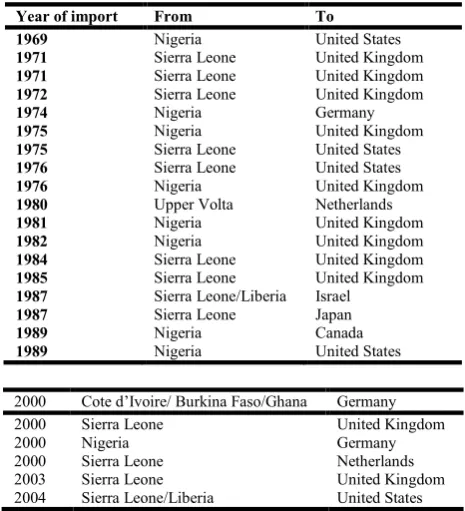
The below tables (indicated in the appendix) show evidence of the spread of Lassa fever from West Africa to other parts of the world. These tables indicate that the disease was imported into other countries as a result, probably, of limited knowledge on Lassa fever. These tables give details such as the year of import, the country of origin, destination, clinical
manifestations and occupation of each infected person. This is an attempt to further explain that the disease is deadly and can affect any person, irrespective of status, sex or age. There are four such tables presenting data on patients with imported Lassa fever, worldwide, since 1969 to 2004, indicating various parameters to further provide knowledge of Lassa fever. More interestingly, table 2 (clinical outcomes), shows twenty —four (24) cases of imported Lassa fever; the data information clearly points out the number of the persons that died and those that survived the disease after the exposure. In said report, a total of seven (7) patients died, whilst seventeen (17) patients survived the disease. The number of patients that survived represents a percentage of 70.83 %, while the number of patients that died according to the report represents 29 17 %. Some reasons for the survival of more Patients are:
1 Early detection and / or diagnosis of the disease; 2. Availability of advanced treatment center; and 3. Availability of drugs for the treatment of the disease.
Clinical manifestations for five (5) patients are illustrated in appendix table 4. Careful review of the table shows a wide range of signs and symptoms which are also similar to symptoms of other diseases. Four citizens of the United States were exposed to the disease as indicated in the appendix. In the clinical manifestations, at least three symptoms are common to all the patients. The tables above are meant to further provide knowledge on the clinical manifestations of the disease. The tables further illustrate the evidence that the disease can affect human life irrespective of status. Signs and symptoms of Lassa fever are similar to those of other diseases. Diagnosis of the disease therefore, requires a careful laboratory analysis to ensure correct treatment of the disease. The information provided is very important for clinicians and laboratory technicians in that it will help in the diagnosis and treatment of the disease.
CHAPTER THREE
3.0 Research Methodology
At least twenty (20) questionnaire forms were administered to hospital staff, irrespective of status, age, sex, position or category of the staff.
3.1 Research Design
The choice of research designs ranges from simple observational studies which require relatively little time, and generally manageable resources, to complex experimental studies which require several years to complete and the use of excessive resources. The guiding principle in making a good selection of a design is parsimony. This implies that the need is met by a tool that does the job very well without going beyond that which is necessary. Quasi-experimental designs, however are often than not, necessary in health promotion, as certain intervention programs or structural-level interventions limit the ability to randomize. In the practical term therefore, this research was designed as a descriptive study targeted at collecting information on the knowledge and practices of Lassa fever prevention in the Phebe Community in Suakoko District, Bong County. The design was intended for a case study in the Phebe Community using two (2) out of the five (5) villages that constitute the Phebe Community.
3.2 Population
Given the fact that the elimination of health disparities is a priority, health promotion typically seeks to find solutions to problems that disproportionately exist among members of a clearly defined population. Furthermore, the fact that population is abroad term that can be defined in many different ways, it is the responsibility of the researcher to clearly specify the parameters that sufficiently describe the population of a given target community. For example, the researcher may choose to define the population as “low income earners who are youth between the ages of fourteen (14) years and eighteen (18) years of age residing in rural, cane producing areas.” Additionally, in any research work the process of defining the target population should be based on known epidemiology (scientific discipline concerned with the distribution of disease in human populations) of disease of health risk behavior under consideration. Generally speaking, health promotion programs should be delivered to epidemiologically defined populations on a prioritized basis. The researcher therefore, has defined the target population as the residents in two villages of the Phebe Community in Suakoko District, Bong County. The Phebe Community comprises five (5) villages. According to information gathered from the leadership of the community, the total population size of the entire Phebe Community (Population of all five villages combined) is three thousand five hundred and thirty-eight (3,538) inhabitants. The majority of the total population falls within the age range of 0 to 48 years. The majority of the female population falls in the age range of 16 years to 41 years.
The female population in the community is higher than the male population most of whom are married either by traditional means or by the western culture where rings are exchanged between the couples and formal marriage certificates are duly signed by relevant stakeholders. The estimated female population in the entire community is two
thousand three hundred and twelve (2,312) this represents 65% of the community population.
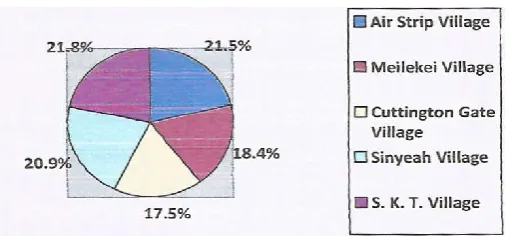
[image:8.595.308.563.279.397.2]The five (5) villages that make up the Phebe Community include the Air Strip village, S.K.T. Village, Cuttington Gate Village, Meliekei Village, and Sinyeah Village. The population statistical distribution is as follows:
Table 3.1: Population Distribution by Villages
Nam of village Population % distribution
AirStrip Village* 760 21.48%
Meilekei Village 650 18. 37 %
Cuttington Gate Village 618 17. 47%
Sinyeah Village 740 20.92 %
S.K.T. Village 770 21.76 %
Total 3,538 100%
* Villages utilized for the data collection
Population Distribution by Villages
The percentage distribution indicated in the table above shows that S.K.T. Village has the highest population (770; 21.76%), while the Cuttington Gate Village has the least population (618; 20. 92%). Two of the villages, namely, Air Strip Village with a population of 760 and Meliekei Village with a population of 650 were targeted for the data collection to be used for the sample size; the combined population size of the two villages therefore is one thousand four hundred and ten (1410) which was used as the target population for the research study. The sample size used for the purpose of this research thus, was four hundred and twenty-three (423) respondents. This represents at least 30% of the sample size, which is the combined population of the two villages. The researcher visited the two villages with his team of data collectors, over a few- day period to collect data A comparative analysis of the data with respect to age, sex and educational level from the two villages was carried out to further test the reliability of the data.
The two villages selected formed part of the Phebe Community in Suakoko District, Bong County. The selection of the two villages was based on the following reasons:
1. They are in close proximity of the Phebe Hospital, the only treatment center for Lassa fever in Liberia, where Lassa fever patients are usually referred,
2. It was presumed that most of the residents would have some knowledge about Lassa fever and would practice preventive measures to an appreciable level;
3. It was presumed also that many residents of the community had seen Lassa fever patients before;
4. The targeted villages are accessible by vehicles;
5. The combined population of the two villages (Air Strip village and Meleikei) provided an appreciable population size, strong enough for the purpose of the research; and 6. It was presumed that there would be a high degree of
cooperation from the villagers.
3.3 Sample Size and Sampling Techniques
There are numerous sampling techniques that can be employed in health promotion research. Sampling exists across a continuum of complexity and rigor. Sampling must however, include specifying the number of study participants. This number is usually based on a power analysis; otherwise stated as the estimated ability of a statistical test to find the true differences between variables or between groups of study participants. Though study’s power is determined by multiple factors, sample size is one of the most important determinants. The target sample size for this research thus, was four hundred and twenty-three (423) respondents between the ages of 1 3 years and 62 years, both males and females. The researcher utilized primary data collection techniques for the sampling technique during the data collection. [n this research, structured questionnaires were developed and administered for on —the- spot data collection. The data was tested for reliability through repeated visitations to the two villages (Air Strip Village & Maleikei Village) where informal discussions were carried out and facts finding was done to determine the authenticity of the data collected; keen observations were carried out and notes were taken as to the practice of preventive measures being taken against Lassa fever, by the residents of the Phebe Community in Suakoko District, Bong County. During the period of observation for the reliability test of the data, at least twenty (20) households during each trip were visited and at least one hundred (100) persons were informally interviewed in total. This exercise provided an opportunity to ascertain a clear picture of the knowledge and practice of Lassa fever prevention in the Phebe Community, Suakoko District, Bong County.
Random sampling, (a method of non-systematic data collection), was carried out during the data collection process in the two villages selected for the research study in the Phebe Community to ensure the total of 423 respondents were contacted during the process. This afforded the researcher an opportunity to have a cross sectional information about the knowledge and practices of Lassa fever prevention in the Phebe Community in Suakoko District, Bong County.
3.4 Data Collection Instrument
The researcher utilized well structured questionnaires with the assistance of four data collection specialists for the data collection. The questionnaires were administered to respondents between the ages of I 3years and 62 years randomly irrespective of sex and status. The respondents were encouraged to fully participate and give accurate and reliable information to help make the research a credible one. Residents cooperated very well with the researcher in
providing useful information for the research data. Generally, the questionnaires were made simple to the level of the community dwellers to ensure quality information from the respondents. The questionnaires were designed to collect personal data information (i.e. sex, age, level of education, etc.), knowledge and prevention of the Lassa fever disease as well as data on the conduct of public health awareness in the community. For reliability of the data the two villages selected were visited twice after the data had been collected and an observation carried out, targeting at least twenty (20) different households for each visit.
CHAPTER FOUR
4.0 Data Presentation and Interpretation
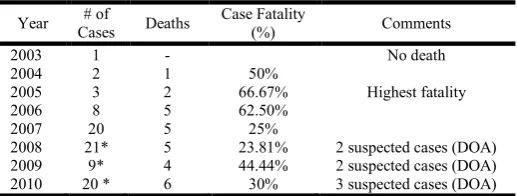
[image:9.595.304.563.537.635.2]Chapter four discusses the data presentation and interpretation accompanied by the research findings and discussion of the findings. The data collection for this research was carried out at two levels: the Phebe -1ospital (the only Lassa fever treatment center in Liberia), and two villages of the Phebe Community in Suakoko District, Bong County. Well structured questionnaire forms were administered to four hundred and twenty three (423) respondents including health workers. Respondents interviewed were both males and females from the age of 13 years old to 62 years old. A quick review of the trend of reported Lassa fever cases at the Phebe Hospital was also carried out. The records show that from January, 2003 to December, 2010 there had been an annual increase in the number of Lassa fever cases reported at the Phebe Hospital, the only treatment center for Lassa fever in Liberia. Eighty-five (85) cases of Lassa fever were reported at the Phebe Hospital between January, 2003 and December, 2010. Table 4.1 below shows the annual distribution of the reported cases at the Phebe Hospital along with corresponding case fatality (%). This distribution of the reported cases at the Phebe Hospital generally shows an annual upward trend of Lassa fever cases.
Table 4.1. Trend of the Yearly Reported Lassa Fever cases at the Phebe Hospital (2003- 2(110)
Year # of
Cases Deaths
Case Fatality
(%) Comments
2003 1 - No death
2004 2 1 50%
2005 3 2 66.67% Highest fatality
2006 8 5 62.50%
2007 20 5 25%
2008 21* 5 23.81% 2 suspected cases (DOA)
2009 9* 4 44.44% 2 suspected cases (DOA)
2010 20 * 6 30% 3 suspected cases (DOA)
* Including suspected cases reportedly dead on arrival.
in 2008 at the treatment center. In 2004, the fatality rate showed 50 % death. Based on the available data above, it is clear that there is an annual increase in the number of Lassa fever cases reported at the Phebe Hospital from 2003 to 2010. This upward trend indicates that Lassa fever poses a serious challenge to the health of the population, especially to rural dwellers that sometimes prey on rodents for protein source. The sanitary conditions in the rural settings are not guaranteed. Most rural dwellers dispose of their garbage close to dwelling homes. This act creates an opportunity for rodents to have access to the dwelling homes.
4.1.1; Sex Distribution of Respondents
[image:10.595.307.563.305.417.2]The sample size for the research was 423 respondents, both males and females. The female population within this sample size was 236 and the male population utilized was 187. There were more female respondents than the male respondents. This was due to the fact that at the time of data collection most of the males were out in the field to work in search for daily bread for their families. Furthermore, in the villages women spend more time in the home than men. And during the season (December — February) men are actively engaged into farm brushing. It was during this time the data collection was carried out. It was not possible therefore, for the researcher to have gotten more male respondents in the villages at the time than the number captured in this research. The survey was carried out between the hours of 8 am. and 6 pm; these are active working hours for farmers in the rural areas. The data collected however, was strong and reliable enough for the purpose of this research. The percentage of male respondents is 44.21% and that of the female respondents is 55.79%.
Table 4.2 Sex Distribution of Respondents
Sex Population % of respondents by sex
Males 187 44.20%
Females 236 55.79%
Total 423 100 %
Sex Distribution
Table 4.2 above shows the distribution of sex of the respondents in the Phebe Community, specifically, the Meliekei Village and the Air Strip Village. The distribution indicates one hundred and eighty-seven (187) males and two hundred and thirty-six (236), with the respective percentages of 44% and 56% as expressed in the pie chart.
4.1.2; Knowledge of Lassa fever by sex Distribution
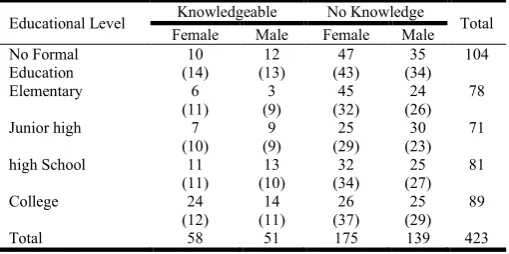
The researcher captured the sex of each respondent to ascertain the fact about which sex is more knowledgeable of Lassa fever prevention. Table 4.3 below illustrates the knowledge of Lassa fever in the Phebe Community by sex.
The percentages of males and females knowledgeable and no knowledge are expressed: males (41), 21.93 % knowledgeable, 146, (78.07 %) no knowledge. For the females (68), 28.81% knowledgeable, and 168, (71.19%) no knowledge. This is further illustrated in the pie charts below.
Percentage of Males Knowledgeable on Lassa Fever
Percentage of Females Knowledgeable on Lassa Fever
[image:10.595.308.563.451.556.2]The analysis shows 41 male respondents as knowledgeable, and this represents 21.93 % of the total male respondents. This is 10 % of the total sample size (both males and females combined). Furthermore, 68 female respondents are knowledgeable; and this represents 2881 % of’ the total female respondents. This is 16 % of the total sample size both males and females combined). This is probably due to the fact that there were more female respondents than male respondents, and not necessarily because females have more knowledge on Lassa fever than the males.
Table 4.3; Knowledge of Lassa fever by Sex Distribution
Sex Knowledgeable No Knowledge Total % of Knowledgeable % no Knowledge % Tot.
Males 41 146 187 21.93% 78.07% 100%
Females 68 168 236 28.81 % 71.19% 100%
Total 109 314 423 N/A N/A N/A
[image:10.595.72.522.719.762.2]4.1.2; Age Group Distribution of Respondents
The age group distribution for the respondents is categorized into three. It also captures the sex by age group respondents. This distribution is meant to determine the age group that has more knowledge on Lassa fever prevention. The percentage for each category is indicated in table 4.4 below.
Age Group Distribution (13-25
The number of respondent in the age group betweenl3 to 25 years old is 153; this represents 36.17% of the sample size. The respondent population between age group 26 and 45 years old is 156; this represents 36.88 % of the sample size. And the respondent population between the ages of 46 and 62 years old is 114 and this represents 26.95 % of the sample size. The number of males or females per age group constitutes a specific percentage as factored in the table above. The percentage for the male population for age group 13 to 25 is
[image:11.595.38.291.244.639.2]56.2 1%; female percentage for the same age group is 43.79%; the percentage for the male population in the group from age 26 to age 45 is 42 % while that of the female population is 58.33%. The age group from 46 to 62 years old constitutes population percentage of 31.58 %, and that of the females is 68.42%. The table below illustrates knowledge of Lassa fever as per age group distribution. It is intended to determine which age group in the community is more knowledgeable of Lassa fever, irrespective of sex and academic level.
Table 4.5 : Knowledge of Lassa fever as per age group (irrespective of sex)
Age group (years)
Knowledgeable No
Knowledge total
% Knowledgeable
% no knowledge
13- 25 31 122 153 20.26% 79.74%
26—45 49 107 156 31.41% 68.59%
46—62 29 85 114 25.44% 74.56%
[image:11.595.313.558.290.761.2]Total 109 314 423 N/A N/A
Table 4.4: Age Group Distribution
Age Group (yeans’) Males Females Total %of males per age group % of females per age group % of total (Males and females)
13 – 25 86 67 153 56.21% 43.79% 36.17%
26—45 65 91 156 41.67% 58.33% 36.88%
36.88% 36 78 114 31.58% 68.42% 26.95%
The age group between 26 and 45 years old presents the highest number (49) of respondents with knowledge on Lassa fever, representing 3 1 .41 % of the 156 respondents in this age group, while the age group between 46 and 62 years old has the least number (29) of respondents with knowledge on Lassa fever, representing 25.44 % of the 114 respondents in this age group. The indication is also true that the age group between 26 and 45 years old has the highest number of college level education. This further supports the argument that the more educated a person, the higher the probability of possessing some knowledge on Lassa fever as illustrated in table 4.7 below.
4. 1.3: Educational Levels of Respondents
The respondents were categorized according to their levels of education in order to analyze and determine what impact the level of education has on their knowledge and prevention of Lassa fever in the Phebe Community in Suakoko District, Bong County. The educational levels are:
1. None (No formal education) 2. Elementary Education 3. Junior High Education 4. Senior High education 5. College Education
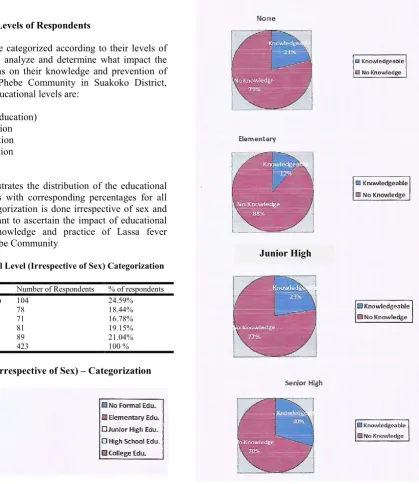
[image:12.595.122.542.184.669.2]Table 4.3 below illustrates the distribution of the educational levels of respondents with corresponding percentages for all categories. This categorization is done irrespective of sex and age because it is meant to ascertain the impact of educational exposure on the knowledge and practice of Lassa fever prevention in the Phebe Community
Table 4.6. Educational Level (Irrespective of Sex) Categorization
Level of Education Number of Respondents % of respondents
None (no formal education) 104 24.59%
Elementary education 78 18.44%
Junior High Education 71 16.78%
High School Education 81 19.15%
College Education 89 21.04%
Total 423 100 %
Educational Level (irrespective of Sex) – Categorization
The bio-data of the respondents show five (5) educational levels indicated in Table 4.6 above. The number of respondents with no formal education (none) is 104, and this represents 24.59 %. The number of respondents with elementary level education is 78, and this represents 18.44 %, 71 respondents possess Junior High Education, and this represents 16.78 %; 81 respondents possess Senior High School Education, and this represents 19.15 % of the total number of respondents; and 89 respondents of the sample size possess College Education, which represents 21.04 % of the sample population size.
[image:12.595.28.297.468.538.2]Junior High
Table 4.7; Knowledge on Lassa fever and its prevention
Educational Level Knowledgeable No knowledge Total % of respondents with knowledge % of respondents with no knowledge on Lassa fever No Formal
education (None)
22 82 104 21.15% 78.85%
Elementary 94 69 78 11.54% 88.46%
Junior High 16 55 71 22.54% 77.46%
Senior High 24 57 81 29.63% 70.37%
College 38 51 89 42.70 % 57.30 %
[image:12.595.50.549.701.779.2]Out of the sample size of four hundred and twenty-three (423) respondents, only one hundred and nine (109) respondents possess knowledge of Lassa fever and its prevention. This represents 25.77 % of the total sample size while three hundred fourteen (314) respondents possess no knowledge on Lassa fever and its prevention; this represents 74.23 % of the sample population.
4.1.4 Lassa fever Awareness Campaign
The data collection considered information about health education on Lassa fever in the community. In this, age and sex were not featured. Rather, educational levels of the respondents were utilized. Table 4.8 below illustrates the conduct of public health awareness in the Phebe Community.
College Education
Only about 4 % of the respondents testified that some form of public health awareness on Lassa fever was conducted in the Phebe Community by some groups (not identified).
This percentage however is negligible.
4.2 Data Analysis
[image:13.595.58.270.490.761.2]The data collection was carried out at two levels, namely, Phebe Hospital and the Phebe Community. Four hundred and twenty-three (423) respondents were generous to provide information as required for the purpose this research. The respondents were both males and females between the ages of
Table 4.8. Conduct of 1assa fever Awareness Campaign in the Phebe Community
Educational Level Yes, awareness conducted No awareness conducted/
(don’t know) Total of respondents % of Yes % of No % Total
None (no formal education) - 104 104 0% 100% 100%
Elementary 2 76 78 2.57 % 97.44 % 100 %
Junior High - 71 71 0% 100% 100%
Senior High 1 80 81 1.23% 98.77% 100%