The effectiveness of structured teaching programme on knowledge
regarding fluid and electrolyte management in preterm neonates among
staff nurse
Laisy Varghese Lecturer, Child Health Nursing
Sreesudheendra College of Nursing, Ambalamedu, Ernakulam, Kerala - 682303 Email - [email protected]
1. INTRODUCTION:
A preterm infant or neonate especially one born before the thirty seventh completed week of gestation.Preterm neonates face longtime potential health problems imposing a huge burden on parents and hospital staff. The requirements for fluids and electrolytes of the new born infant are unique. Disorders of fluid and electrolyte are common in neonates and a proper understanding of the physiological changes in body water and solute after birth is essential to ensure a smooth transition from the aquatic in –utero environment.The most constant features of neonatal physiology and pathophysiology is ‘change’ .To meet the needs of each individual baby we must first arm ourselves with knowledge of neonatal physiology and pathophysiology. Next the effects of the applied fluid programme are continually monitored and the programme accordingly readjusted. We must “read the book” and then “read the baby”. At birth, there is an excess of extra-cellular water (ECW) and this decreases over the first few days after birth. Furthermore, ECW at birth and insensible water loss decreases as birth weight and gestational age increases. Several days after birth, fluid and
Abstract:
Fluid management in the preterm infant is challenging, necessitating frequent clinical
assessment. This study aims at assessing the effectiveness of structured teaching programme (STP) on
fluid and electrolyte management in preterm neonates among staff nurses
Objectives :
To determine the pre existing knowledge score of staff nurses regarding fluid and electrolyte management in
preterm neonates using a structured closed ended knowledge questionnaire.
To find out the effectiveness of structured teaching programme on fluid and electrolyte management in
preterm neonates among staff nurses using the same structured closed ended knowledge questionnaire.
To find out the association between pretest knowledge score of staff nurses on fluid and electrolyte
management in preterm neonates with their selected demographic variables.
Method :
A pre experimental research design of one group pre and post test design with an evaluative approach was used. It was conducted in RAPCC hospital at Mangalore. The researcher developed a demographic proforma, structured closed ended knowledge questionnaire and Structured Teaching Programme on fluid and electrolyte management in preterm neonates. The sample comprised of 50 staff nurses. Convenience sampling technique was used to select samples
Results :
Pre-test assessment revealed that most (70%) of staff nurses had poor knowledge and 30% had average knowledge on fluid and electrolyte management in preterm neonates. Whereas, post-test revealed that 84 % had gained very good knowledge, and 16 % of them gained good knowledge. The total mean knowledge score (10.96±2.64) which is 39.14% was found in the pre-test whereas the total mean knowledge score (23.7±2.45) which is 84.64% was found in the post-test knowledge showing an effectiveness with the mean score (12.74±3.68) which is 45.5%.
Interpretation and conclusion :
Analysis data shows that post test knowledge score has significantly higher than the pretest knowledge score at p < 0.05 level of significance i.e., Significance of difference between pre-test and post-test was
statistically tested by using paired ‘t’ test and it was found highly significant (t=40.83, p<0.05).Thus
investigator concluded that structured teaching programme was a good method of conveying information to clients and it is very effective in order to gain knowledge.
electrolyte requirements increases as the infant starts to grow. Therefore, appropriate management of fluids and electrolytes in preterm infants must take into consideration the birth weight, gestational age and age after birth. Fluid and electrolyte requirements are also influenced by a variety of medical conditions that affect preterm infants (e.g., RDS, patent ductus arteriosus, necrotizing enterocolitis).
Fluid and electrolyte management is particularly challenging for very preterm neonates in whom water loss is large, highly variable and whose kidney’s ability to compensate for water and electrolyte imbalances is more limited than even the term newborn’s. Moreover, major changes in total body fluid and electrolyte balances occur with the transition from fetal to neonatal life in the pre term infant.
Management of the critically ill hypotensive preterm infant remains challenging and requires a better understanding of the pathophysiology of neonatal shock and improvements in our ability to evaluate cardiac output, organ blood flow, and tissue perfusion at the bedside.
2. NEED FOR THE STUDY:
Fluid and electrolyte management is an important and challenging part of the initial management of a preterm. The transition from fetal to neonatal life is associated with major changes in water and electrolyte homeostasis. Before birth, the fetus has a constant and ready supply of water and electrolytes from the mother across the placenta; fetal water and electrolyte homeostasis is largely a function of maternal and placental homeostatic mechanisms. This transition from fetus to neonate requires major changes to maintain physiological equilibrium and is critical to their survival. Disorders of fluid and electrolyte balance are common in preterm and critically ill neonates. In these cases, close monitoring of these levels is essential4.
Water metabolism is a major problem in very low birth weight preterm and critically ill neonate’s. Their surface is proportionally larger they have a relatively low intracellular water volume and high extracellular and total body volume. Advances in providing care for infants of very low birth weight preterm and sick neonates have improved their survival status. Because the fundamental problem for these infants is physical immaturity, the balance of fluids and electrolytes is a complex phenomenon to assess and manage .In managing the major problems of fluid and electrolyte balance for these infants, the controversy of fluid restriction versus fluid replenishment has persisted to the present .Thus the challenge of decade, providing chances for nurses to expand their role in neonatal intensive care units. They will become more involved and will take on supervisory roles in managing the fluid and electrolyte balance of these neonates.
A retrospective study was conducted in Tokyo among 32 neonates to determine the effectiveness of fluid and electrolyte balance in extremely preterm neonates in the first week of life. Among the 32 neonates, 17 neonates with no severe complications were examined and 72 appropriate for dates infants at 24 -28 weeks of gestation were taken as controls. The subjects were managed in closed incubators in a highly humidified environment and fluid and electrolyte balance were monitored in retrospective .The result shows that the subject had higher urine content while the insensible water loss was higher than in controls. Due to the relatively higher urine output and insensible water loss in extremely preterm infants during post natal week one , higher fluid intake was required.
Thirty years ago less than 25% of the tiniest preemies or preterm neonates were surviving, now almost 90% of them are surviving because of the identification of unique needs of the preterm and advancement in the management. Highest rate of preterm birth occurs in Africa and lowest in Europe. Worldwide incidence of preterm birth reported by WHO is 9.6%, In Asia 10.7%, in India it is approximately 21% and in Karnataka it is approximately 12%.
A retrospective study was conducted in Mizoram among 265 premature neonates to determine the electrolyte
disturbances occur in neonates with acute diarrhea. Bolus of 20 ml /kg has given to the neonate’s .The result shows that 74 of the neonates 28% were clinically dehydrated. Abnormal laboratory values were found mainly 38/47 Among these neonates the majority 68-92% had isonatremic dehydration. The researcher concluded that most of the abnormal laboratory values normalized after proper fluid and electrolyte management.
Maintaining adequate fluid and electrolyte balance is an important aspect of all patient care. The intravenous nurses skill and expertise in starting and maintain intravenous access is extremely vital to providing adequate fluids and electrolytes. Neonates and infants present unique problem in the management of fluid and electrolyte balance. Differences in rate of metabolism and body surface area are just two examples of special circumstances that affect diagnosis and management .An awareness of predisposing factors, early recognition of signs and symptoms that may be indicative of a developing problem and knowledge of medical and nursing interventions help provide safe patient care. 15
Many of the studies and researcher’s own experience reveal an inadequate knowledge among the staff nurses. Hence the researcher wants to improve the knowledge of staff nurses regarding fluid and electrolyte management in preterm neonates by using a structured teaching programme.
3. OBJECTIVES :
To find out the effectiveness of structured teaching programme on fluid and electrolyte management in preterm neonates among staff nurses using the same structured closed ended knowledge questionnaire. To find out the association between pretest knowledge score of staff nurses on fluid and electrolyte
management in preterm neonates with their selected demographic variables.
4. MATERIALS AND METHODS:
One group pre-test, post-test design with pre-experimental approach was found to be appropriate to evaluate the effectiveness of Structured Teaching Programme (STP) on fluid and electrolyte management in preterm neonates among staff nurses. No comparison with the control group is provided. The study was conducted in RAPCC Hospital, Mangalore among 50 staff nurses .Convenience sampling technique was used.The tool was validated from 9 experts.
The tool was found reliable and the reliability coefficient as 0.90 .After obtaining administrative permission and ethical clearance, pilot study was conducted in five samples .The study was found feasible and amenable to statistical analysis. Then the study was conducted for 50 staff nurses who met the sampling criteria. To assess the knowledge, the structured knowledge questionnaire on fluid and electrolyte management in preterm neonates was distributed to staff nurses with an instruction to complete and return them. Structured teaching on fluid and electrolyte management in preterm neonates was administered on the same day following pre-test. A post-test was conducted by administering the same knowledge questionnaire after seven days of STP. The completed questions were collected after 20 minutes. The collected data was analyzed by using descriptive and inferential statistics.
5. RESULTS:
Part I: Description of demographic characteristics of staff nurses.
Part II: Distribution of pre-test knowledge level of the staff nurses regarding fluid and electrolyte management in preterm neonates.
Table No 1: Pre-test knowledge level of staff nurses regarding fluid and electrolyte management in preterm neonates. n=50
Pretest
Score Grade frequency %
0-11 Poor 35 70
12-17 Average 15 30
18- 22 Good Nil Nil
23-28 Very good Nil Nil
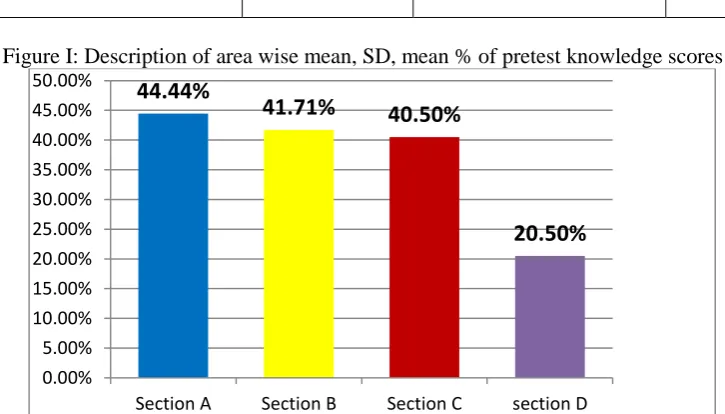
Figure I: Description of area wise mean, SD, mean % of pretest knowledge scores
Table No. II Post-test knowledge level of staff nurses regarding fluid and electrolyte management in preterm neonates. n=50
Post test
Score Grade Frequency %
0-11 Poor Nil Nil
12-17 Average Nil Nil
44.44%
41.71%
40.50%
20.50%
0.00% 5.00% 10.00% 15.00% 20.00% 25.00% 30.00% 35.00% 40.00% 45.00% 50.00%
18-22 Good 8 16
23-28 Very good 42 84
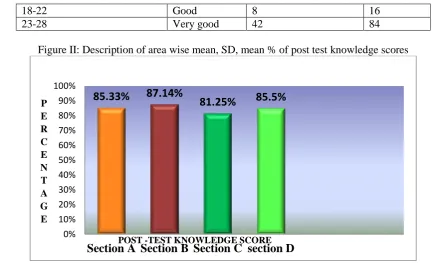
Figure II: Description of area wise mean, SD, mean % of post test knowledge scores
Table No.III: Chi square values showing association between pre-test knowledge scores and sample characteristics.
Sl
No: Sample characteristics ≤Median >Median x
2 Level of
Significance
1. Age in years a) 21-30 yrs b) 31 -40 yrs c) 41 and above
7 17 10
4 7 5
0.197 Not Significant
2.
educational qualification
a) General
nursing and midwifery. b) Post certificate
BSc Nursing c) BSc Nursing
30
3
1
14
2
0
0.61 Not Significant
3. Years of experience a) <1 year b) 1-3 years c) >3 years
3 11 20
2 4 10
0.36 Not Significant
4. a. Inservice Education b. a) Yes
c. b) No
7 27
0 16
3.83 Not Significant
2
1 = 3.84, 22=5.99; P < 0.05, M = 11
The chi square values of demographic variables like age, educational qualification, years of experience, attended in any inservice educational programmes on fluid and electrolyte management in preterm neonates were (0.197,0.61,0.36,3.83) not significant at 0.05 level of significance. Thus it concluded that there is no significant association between pre-test knowledge score of staff nurses and their age, educational qualification, years of experience, attended in any inservice educational programmes on fluid and electrolyte management in preterm neonates. The study findings had shown that there was a significant increase in the post test knowledge scores compared to pre test knowledge scores. Chi square value indicated that there was no significant association between pre-test knowledge score of staff nurses and their selected demographic variables.
85.33%
87.14%
81.25%
85.5%
Section A Section B Section C section D
0%10% 20% 30% 40% 50% 60% 70% 80% 90% 100%
POST -TEST KNOWLEDGE SCORE P
Figure III: Quartile distribution of staff nurses regarding fluid and electrolyte management in preterm neonates.
The data presented in the O give shows significant difference between the pre-test and post-test knowledge score. The pretest median was 11 whereas post-test median score was 23 showing a difference of 12. The O give plotted shows that the first quartile score of post-test was higher than the third quartile score of pre-test. It reveals that there is a significant increase in knowledge of staff nurses regarding fluid and electrolyte management in preterm neonates after the administration of structured teaching program. Hence the structured teaching program was effective.
6. DISCUSSION:
A significant increase in the post-test score was observed in staff nurses on the overall knowledge of fluid and electrolyte management in preterm neonates. Hence the research hypothesis “the mean post-test knowledge score of the staff nurses will be significantly higher than the mean pre-test knowledge scores was accepted (t= 40.83, p<0.05). It revealed that STP was very effective in improving the knowledge level of the staff nurses regarding fluid and electrolyte management in preterm neonates.The finding of the study is consistent with the study conducted to evaluate the effectiveness of STP on knowledge and attitude about complementary feeding among mothers of infants. Its shows significant difference between the pre-test and post-test knowledge and attitude scores of mothers on complementary feeding and the ‘t’ (t49=13.25;p<0.05) value obtained. So STP was found to be effective.
7. CONCLUSION:
The difference between the pre-test and post-test knowledge scores was very highly significant (t=40.83, p<0.05) indicating the effectiveness of the structured teaching program in improving knowledge of the staff nurses regarding fluid and electrolyte management in preterm neonates.
8. RECOMMENDATIONS:
Keeping in view the findings of the present study, the following recommendations are made for further study: A similar study can be conducted on a larger sample which may help to draw more definite conclusions and make
generalizations.
An experimental study could be undertaken with a control group.
A follow-up study of the structured teaching programme could be carried out to find the effectiveness in terms of retention of knowledge.
A comparative study between the institutional practices on fluid and electrolyte management in preterm neonates could be done.
A study can be conducted at private and government hospitals and the results of the study may be compared to find out the knowledge on fluid and electrolyte management in preterm neonates.
REFERENCES:
1. Marlow, Redding. Pediatric nursing. 6th ed. Philadelphia: Elsevier publishers: 2001.
2. Chawla D, Agarwal R, Deorari AK, Paul V K. Fluid and electrolyte management in term and preterm neonates. J of pediatrics.2006:68(12)1139-42.
0 10 20 30 40 50 60 70 80 90 100
4
8
12
16
20
24
28
Cum
u
lative
P
er
ce
n
tage
Knowledge score
Pre-test
M
=
11
M =
23
Q
1Q
1
Q
2Q
23. Intensive Care Nursery House Staff Manual [Cited 2010] Available From Www.University of california.org. 4. Lorenz MJ. Fluid and Electrolyte therapy in the very low birth weightneonate. J of American Academy of
Pediatrics[abstract].2008[cited 2008, March 1]9(3).102-108. Available from www. http://neoreviews.aappublications.org
5. Istavan Seri , circulatory support of the sick preterm infant , seminars in fetal and neonatal, 2010, June 6 (1),page no 85-95.
6. Friss Hansen B. Water the major nutrient. J of acta pediatrica.2004; 40(5): 270-7.
7. Rowe MI, Kinderchir Z. A dynamic approach to fluid and electrolyte management of newborn[serial online] 2004[cited 2004] Available from: URL: http://www. fluidmanagement.com
8. Wada M, Kusuda S. Fluid and electrolyte balance in extremely preterm infants. J of pediatric nursing.2008; 50(3):331-6.
9. Shingairai, siobon AF, Godfrey DH. Statistics by country of preterm birth. International j of epidemiology.2004:33(3) 1194-1201
10. Takahashi N, Hoshi J, Nishida H. Water electrolyte acid base balance in extremely premature infants. J of pediatric nursing. 2003; 36 (3) 250-5.
11. Saeidi R, Heydarian F. J of American Academy of pediatrics.2009; 30 (9):1176-9.
12. Tjon A Ten WE. Electrolyte disturbances in preterm neonates.[cited 2005] Available from: URL:http://www.pretermelectrolyte disturbance.com
13. Agren J, Sedin G .Ambient humidity influences the rate of skin barrier maturation in extremely preterm infants, J pediatrics,2006, May 148 (5),613-7.
14. De Buys J, Rakza T,Penneforte T. hemodynamic effects of fluid restriction in preterm with significant patent ductus arteriosus, J American J of Pediatrics,2012,March 4 (32), 243-32.
15. Wiley J.Lactase Treated feeds to promote growth and feeding tolerance in preterm infants. J pediatrics 2009, January 21(16), 156-158
16. Shane A L, Hanson N I, Stole B J .Methycillin resistant and susceptible staphylococcus aureus bactremia an meningitis in preterm infants. J Indian Academy of Pediatrics, 2012, April 129(4)914-922.
17. Tan K, MingHai N, Sharma A.Surfactant for bacterial pneumia in late preterm and term infants. J ofAmerican Academy of Pediatrics, 2012, February186(2), 812-820
18. Rocha G,Ribeiro O,Guimaraes H. Risk of bronchopulmonary dysplasia in the preterm neonates.J of clinical pediatrics.2010; 65(7):663-74.
19. Sumplelmann R, Mader T, Eich C,Witt L,Osthaus WA. Intraoperative fluid therapy in neonates with 1% glucose. J of pediatric anesthesiology.2010; 20(11):977-81.
20. Becrra M, Cifuents J, Saldfas M I et al. Continuous gastric drip verses fluids in low birth weight infants. J Pediatrics 2009, January 91(4), 430-433
21. Holler B,Omar SA, Farid MD,Patterson MJ. Effects of fluid and electrolyte management on amphotericine B induced neprotoxicity among extremely preterm neonates. J of American academy of pediatric.2004;13(6):608-16.
22. John D. Hansen L. Clement A et al. Effects of withholding fluid in the immediate postnatal period. J of AA Pediatrics[serial online] 2008[cited 2009 Aug 1] 12(2), 99-113.
23. Crossley J K, Effects of caffeine on renal and pulmonary function in preterm newborn, J BMC Pediatrics, 2012, August 47(82), 812-820
24. Freedman N J, Risk of acute hyponatremia in hospitalized neonated receiving maintenanace intravenous fluids. J Pediatrics and International Child Health, 2013, January1(12), 117-123.
25. Lawrence M J, Leonard T, Markarian K et al, Phases of fluid and electrolyte homeostasis in the extremely low birth weight infant, New England J of Medicine, 2008, Oct 6(32), 412-430.
26. Muraskas J, D Gregoris L. Effects of computerizing fluid administration order in the composition of fluid therapy, J Clinical Pediatrics, 2010, Dec 10(38), 726-730.
27. Washburne J F, Chairhan S P, Magann E F, Neonatal electrolyte response to amino infusion with lactated ringer solution, J of JAMA Pediatrics, Aug17(22), 10-16.
28. Hand H. The use of intravenous fluid therapy. J of nurse standards.2007; 15(43):47-52.
29. Hans MD, Pylipow M. Nutritional practice in the neonatal intensive care unit. J of AA Pediatrics[serial online] 2009[cited 2009 Jan 1]123(1).51-57.
30. Sharma A. Care of the late preterm infants- Evidenced based clinical practice guidelines[cited 2010], Available from www.pediatricanddevelopmentalpathology.com
31. D’souza R J. Efffectiveness of SIM on learning needs of staff nurses regarding care of children receiving fluid and
oxygen therapy, 2002, unpublished MSc Thesis, RGUHS, Bangalore.
32. Das B S. Effectiveness of STP on incubated care among NICU nurses in selected hospital, Delhi, 2007, unpublished