VOLUME 37, ARTICLE 28, PAGES 889
−
916
PUBLISHED 5 OCTOBER 2017
http://www.demographic-research.org/Volumes/Vol37/28/ DOI: 10.4054/DemRes.2017.37.28
Research Article
The timing of abortions, births, and union
dissolutions in Finland
Heini Väisänen
© 2017 Heini Väisänen.
This open-access work is published under the terms of the Creative Commons Attribution NonCommercial License 2. 0 Germany, which permits use, reproduction, and distribution in any medium for noncommercial purposes, provided the original author(s) and source are given credit.
1 Introduction 890
2 Background 891
2.1 Births and union dissolutions 891
2.2 Abortions and union dissolutions 891
2.3 Abortions and previous births 892
2.4 Other determinants of abortions, births, and union dissolutions 892
2.5 The Finnish context 893
2.6 Aim of the study 893
3 Data and methods 894
3.1 Data 894
3.2 Methods 895
3.3 Analytic strategy 897
3.3.1 The hazard of pregnancy outcomes 897
3.3.2 The hazard of union dissolution 898
3.3.3 The three-process model of all outcomes 899
4 Results 899
4.1 Descriptive statistics 899
4.2 Unobserved characteristics 901
4.3 Observed characteristics and the hazard of abortion 903 4.4 Observed characteristics and the hazard of birth 905 4.5 Observed characteristics and the hazard of union dissolution 905
5 Discussion 906
5.1 Summary of findings 906
5.2 Abortions and union dissolutions 907
5.3 Abortions and births 907
5.4 Births and union dissolutions 908
5.5 Limitations of the study 908
5.6 Conclusions 909
6 Acknowledgements 910
The timing of abortions, births, and union dissolutions in Finland
Heini Väisänen1
Abstract
BACKGROUND
People make fertility decisions within the wider context of their lives. Previous studies have shown that there are factors that drive both relationship transitions and childbearing decisions. However, there is a lack of research on whether these factors also drive abortion decisions and decisions to end a romantic relationship, and whether their effect depends on being in a cohabitating or marital union.
OBJECTIVE
To study whether the factors that influence relationship transitions and childbearing decisions are also associated with abortion decision-making.
METHOD
I analysed nationally representative register data of Finnish women born in 1965–1969 (N=17,666) using multi-level multi-process event history models.
RESULTS
Women’s unobserved characteristics affected union dissolution, abortion, and childbearing decisions: Women with a tendency towards unstable relationships were more likely to have an abortion and less likely to give birth. The observed likelihood of abortion was lower for married than cohabiting women in the early years of a relationship, but became similar over time.
CONCLUSIONS
Characteristics such as personality and religiosity may partly explain these results. In line with previous research on other union characteristics, the likelihood of abortion in long-term cohabitation becomes similar to marriage over time.
CONTRIBUTION
This study is the first to jointly estimate these three decision-making processes using reliable longitudinal data.
1
1. Introduction
The association between union instability and childbearing has been examined, for instance, in the United States (Lillard 1993; Lillard and Waite 1993), the United Kingdom (Aassve et al. 2006; Steele et al. 2005), and Brazil (Leone and Hinde 2007). These studies conclude that people make childbearing decisions together with decisions to continue or to leave a romantic relationship. In other words, these decision-making processes are correlated, and thus the processes should be modelled simultaneously to avoid bias in the estimates of the model (Steele et al. 2005). A shortcoming of previous studies is that due to underreporting of induced abortions (from now on ‘abortions’), they were not able to take pregnancy terminations into account, even though doing so would have provided more information about the dynamics of union dissolution and fertility behaviour (Berrington 2001; Leone and Hinde 2007; Steele et al. 2005). This is an important gap in the literature, as relationship problems are among the most common reasons women give for having an abortion (Bankole, Singh, and Haas 1998; Chibber et al. 2014; Finer et al. 2005; Kirkman et al. 2009). This implies there are factors that drive both processes, the decision to end or continue a romantic relationship and the decision to have an abortion.
This study aims to fill this gap in the literature by using longitudinal data from Finnish population registers to study whether there are shared factors that drive decisions to terminate a pregnancy, to end a romantic relationship, and to have children. I interpret union dissolution as an indicator of a difficult period in the relationship preceding it and am interested in whether such difficulties are associated with abortion decisions. There might be factors also driving childbearing decisions and the other two processes. Abortions can be used to postpone, space, or avoid births (Bankole, Singh, and Haas 1998), and childbearing may be less likely during the period preceding a union dissolution if the couple wants to avoid high emotional and other separation costs in the presence of children (Lillard and Waite 1993).
2. Background
2.1 Births and union dissolutions
The factors that drive childbearing and union dissolution decisions may differ depending on the culture around romantic relationships and childbearing. For instance, Lillard and Waite (1993) theorise that, in the United States, having children increases the costs of a break-up, and thus couples that suspect they will separate choose not to start childbearing, whereas those who are committed to their relationship are more likely to have children. In Brazil, women in consensual unions, which typically are less stable than marriages, may think childbearing decreases the chances of the union dissolving and thus want to have children with their current partner (Leone and Hinde 2007). In the United Kingdom, childbearing seems to stabilise relationships, but the effect is weaker for cohabiting than for married couples (Steele et al. 2005).
The level of commitment in a relationship may differ between marital and cohabiting unions, particularly in the early stages of the relationship (Perelli-Harris 2014). Whether women see cohabitation as a good setting for childbearing depends on their personal characteristics and the culture of the country they live in. A study in eight European countries shows that although cohabitation has become popular in Europe, its meaning varies by country (Perelli-Harris et al. 2014). For example, in Italy cohabitation is seen as low-level commitment, whereas in Norway few differences are found between cohabitation and marriage (Lappegård and Noack 2015; Perelli-Harris et al. 2014). A common finding among the countries, however, is that the first stages of cohabitation are seen as a minor step beyond dating (Perelli-Harris et al. 2014), even though long-term cohabiting unions often become like marriages in terms of level of commitment, as the couple buys property, joins finances, and/or has children (Hoem, Jalovaara, and Muresan 2013; Holland 2011; Lyngstad, Noack, and Tufte 2011).
2.2 Abortions and union dissolutions
concern was that their relationship might soon dissolve, leading to a lack of resources to take care of the child (Finer et al. 2005). Less than 40% of women in the United States who were in a romantic relationship when they sought to terminate a pregnancy were together with the same man two years later (Mauldon, Foster, and Roberts 2015). Although carrying an unwanted pregnancy to term was associated with a postponement of relationship dissolution compared to women who had an abortion, approximately two years after conception there was no difference in the proportion of women still in a relationship with the man involved (Mauldon, Foster, and Roberts 2015). Thus, abortions do not cause union dissolutions, but they often occur during a difficult period in a relationship.
The factors driving the decision to have an abortion or leave a romantic partner may differ to some extent depending on whether a woman is cohabiting or married (Perelli-Harris et al. 2014). The likelihood of abortion may be higher in the early years of cohabiting than in a marital union, but they become similar over time, just as with time cohabiting unions tend to resemble marriages in other ways (Hoem, Jalovaara, and Muresan 2013; Holland 2011; Lyngstad, Noack, and Tufte 2011).
2.3 Abortions and previous births
The decision to continue or terminate a pregnancy also depends on the timing of previous births and childbearing intentions. Abortions may be used to postpone, space, stop, or avoid childbearing (Bankole, Singh, and Haas 1998). The costs of childbearing for young women may be great if they have not yet completed their education, formed stable partnerships, or had time to accumulate economic resources (Becker 1991; Hansen et al. 2009; Kreyenfeld 2010; Oppenheimer 1994; Väisänen and Murphy 2014). Some women are concerned that a new child will deprive existing children of parental and economic resources (Finer et al. 2005; Kirkman et al. 2009).
2.4 Other determinants of abortions, births, and union dissolutions
these types of transition here, but I did control for socioeconomic characteristics in my models.
2.5 The Finnish context
In Finland there are no substantial limitations on obtaining an abortion within the first trimester of pregnancy. Legislation changed in June 1970 to allow abortion for social and economic reasons in addition to medical reasons, incest, and rape (FINLEX 2013). Since then, an early abortion (up to the end of 12 weeks of gestation) is routinely granted when women apply on social grounds (Knudsen et al. 2003). Sex education has been compulsory in schools since 1970 (Kontula 2010). All municipalities have been required to provide family planning services since 1972 (Kosunen 2000).
Abortions that occur soon (up to 18 months) after a birth are relatively common in Finland, probably due to ineffective contraceptive use and attempting to use lactation as a method of pregnancy prevention (Vikat, Kosunen, and Rimpelä 2002).
Policies that reduce the cost of childbearing have been implemented in Finland since the late 1940s, when the government started paying universal child benefit (Forssén, Laukkanen, and Ritakallio 2003). In the mid-1970s parental leave was increased from three to seven months and then to nine months in 1981. The parent who stays at home receives an allowance of around 70% of his/her income prior to childbearing (KELA 2012). Since the mid-1980s a home care allowance has allowed a parent to stay at home after the end of parental leave without losing their job until the youngest child is 3 years old, and to receive a benefit of approximately €300 per month (Haataja 2006; Vikat 2004). Daycare for children (under age 3 since 1985 and under age 7 since 1996) is a universal right guaranteed by law, and public nurseries are inexpensive and high-quality (Haataja 2006; Vikat 2004). A high-quality education system is free of charge at all levels and further decreases the costs of childbearing.
2.6 Aim of the study
My aim is to examine whether there are observed or unobserved factors that drive having an abortion, the timing of births, and union dissolution, using data on Finnish women born in 1965–1969. I estimate a model measuring the timing and outcome of pregnancies (birth or abortion) simultaneously with a model estimating the risk of union dissolution. If there are factors that affect women’s decision-making regarding all these issues, these decisions are said to have been made jointly. If these decisions are made jointly due to characteristics not observed in this study, the unobserved components of the models for each process will be correlated (Steele et al. 2005). Thus, finding such correlations in this study would indicate that these processes should be modelled simultaneously. I also test whether the likelihood of terminating a pregnancy changes by length and type of the relationship (marriage or cohabitation).
I do not include other types of union transition in my models, such as translating cohabitation into marriage, because my focus is understanding when women have abortions. Pregnancy terminations often take place while women are experiencing problems in their romantic relationships (Bankole, Singh, and Haas 1998; Finer et al. 2005), whereas pregnancies leading to childbirth are likely to be associated with, for instance, converting cohabitation into marriage (Steele et al. 2005). In this study almost 6% of conceptions leading to abortion took place in the same year as union dissolution, compared to less than 2% of conceptions leading to births. Including other types of transition would greatly increase the complexity of the models, making interpretation challenging and greatly increasing the time needed for the models to run (see also Steele et al. 2005).
3. Data and methods
3.1 Data
subsample I used in this study forms a simple random sample of 19,166 women born in these years. I excluded those who were not born in Finland because their union and pregnancy histories were incomplete. There were 17,666 women in the final analytical sample, who experienced 5,839 abortions, 32,020 births, and 13,771 union dissolutions during the study period.
I defined anyone who was cohabiting or married as being ‘in union’ or ‘in relationship’ (used interchangeably). As I had no information on the partner’s identity, if a woman transitioned directly from cohabitation to marriage I assumed this happened with the same partner. Similarly, I assumed any consistent period of cohabitation or marriage happened with the same partner. I defined union dissolution as transitioning from cohabitation to single, from married to cohabitation, or from married to divorced or widowed. (There were only 122 widows in the sample, and sensitivity analyses showed that including or excluding them did not make much difference to the results, which are available on request.) In my dataset, relationship status was recorded on the last day of each year, and thus I assumed that the relationship status of each woman stayed constant throughout each calendar year. Consequently, if an abortion or a birth was recorded in the same year as union dissolution, I did not know which happened first. Not knowing when exactly these events took place is a shortcoming of this data and should be kept in mind when interpreting the results of the study.
The month and year of all live births and abortions were recorded, but data on stillbirths or miscarriages was not available. I calculated the age of the youngest child based on the time since last live birth and parity of each woman based on the number of live births. Using this information, I created a variable measuring the number and age of children using five categories: no children, one child aged less than 18 months, one child aged 18 months or more, two or more children of whom the youngest is aged less than 18 months, and two or more children of whom the youngest is aged 18 months or more. Preliminary analyses showed that using this variable rather than two separate variables measuring the number and age of the children eased model convergence. I chose the age of 18 months as the cut-off point, as it has been shown that in Finland the risk of abortion is high up to 18 months after a birth (Vikat, Kosunen, and Rimpelä 2002).
3.2 Methods
As each woman may experience more than one union, birth, and abortion, these events are nested within individuals. The duration between these events is typically correlated within each individual, because there may be characteristics jointly impacting a woman’s likelihood of experiencing these events. This hierarchical structure is best handled using a multi-level model, which takes into account any unobserved time-invariant woman-level characteristics affecting the likelihood of the outcome of interest by adding a woman-specific random effect to the model (Steele et al. 2005; Steele, Goldstein, and Browne 2004).
If pregnancy decisions are made jointly with union dissolution decisions, the indicators of pregnancy outcomes will not be independent of the residuals of the union dissolution model, which leads to a risk of biased parameter estimates if the events are modelled separately (Steele et al. 2005). Thus, I estimated three equations simultaneously – one for each outcome of interest (conception leading to abortion, conception leading to birth, and union dissolution) – allowing the woman-level random effects specified in the respective multi-level models to correlate freely across equations. Finding such correlation would imply that pregnancy decision-making is endogenous with respect to union dissolutions (Steele et al. 2005).
The three equations were all discrete-time event history models. Multi-level multi-process modelling of continuous-time event history models was first outlined by Lillard (1993), but others have applied these models to discrete-time event history models since (Steele et al. 2005; Steele, Goldstein, and Browne 2004).
I assumed all correlation in the random parts of the models was taken into account by allowing the woman-level random effects to correlate across equations. Thus, I assumed that these unmeasured characteristics remained constant throughout the study period. This is a limitation of the model, as it does not allow for selection on time-varying unobserved characteristics. However, it is only an issue if there is a change in the relevant unobserved characteristics due to an unobserved event. If there is a change in (one of) the time-varying observed characteristics, the model controls for these changes (such as pregnancy intentions changing after the birth of a child) (Steele et al. 2005). I conducted the analyses using Bayesian estimation (Markov chain Monte Carlo (MCMC))2 (see e.g., Browne 2009; Leckie and Charlton 2013) in MLwiN (Rasbash et al. 2009) through therunmlwin command in Stata 14 (Leckie and Charlton 2013).
2
3.3 Analytic strategy
I measured the duration of time in the birth and abortion models as years since age 15 until the estimated time of first conception, and as years since the end of each pregnancy after that. If a woman had no pregnancies the duration was measured until year 2010. As the length of gestation was not recorded in my dataset I assumed the time of conception was three months before an abortion and nine months before a birth. As timing of abortions and births were measured at monthly intervals, I divided the duration under risk of an event (conception) during each one-year interval by the number of months the woman was at risk during that year, to prevent loss of information compared to having used monthly intervals. The duration variable in the union dissolution analyses was years spent in each union.
I included all pregnancies in the models for pregnancy outcomes, as it is likely that previous birth and abortion experiences affect future pregnancy decisions regardless of whether they took place within a union. These models also include women who have never been pregnant. The union dissolution model only includes the episodes women spent in relationships; therefore, it only includes women who ever entered a relationship. When interpreting the results of all three processes jointly I focus on episodes when women were either married or cohabiting, even though the pregnancy equation still includes the episodes women spent without a partner.
3.3.1 The hazard of pregnancy outcomes
As a conception can lead to an abortion or to a birth, the hazard of pregnancy outcomes is best examined using a competing-risks model. The competing-risks model for pregnancy outcomes consists of two logistic regression models with correlated random effects.
I chose which variables to include in the model based on preliminary analyses. Time-varying covariates indicating whether a woman was single, cohabiting, or married at each point in time were included in the models and interacted with the relevant variables. I also included time-varying indicators of divorce or dissolution of a cohabiting union as explanatory variables to see whether a union dissolution is associated differently with the hazard of abortion in cohabiting and marital unions. The model equation is as follows (omitting the subscripts for women and episodes):
(ℎ ) = + + + +
+ × + + +
+ + (1),
whereℎ is the hazard of abortion within time intervalt, in episodei for individualj; is length of time in years since age 15 or for second and higher order pregnancies since the end of last pregnancy; is the woman’s age (centred around the grand mean); is the length of the current union in years; is type of relationship status (single, married, or cohabiting); × is an interaction term between the two; is a time-varying categorical variable indicating the number and age of existing children (reference group being childless women); is a time-varying indicator of the woman having had a previous abortion; is a time-varying indicator telling whether a union dissolution took place within the year of interest and whether it was a divorce or dissolution of a cohabiting union; represents a vector of exogenous covariates; and is the woman-level random effect, assumed to be normally distributed: ~ (0, ). I specified the duration since last pregnancy and length of the current union as quadratic functions and woman’s age as a linear function. Preliminary analyses confirmed these functions as the most appropriate formulations (results available on request). All variables included in the model vary in time.
The model for the hazard of birth ℎ consists of the same elements as that of abortion. Its woman-level random effect, , is assumed to be normally distributed,
~ (0, ), and allowed to be correlated with .
3.3.2 The hazard of union dissolution
I first estimated the hazard of union dissolution in a single-process multi-level model, then simultaneously with the competing-risks model of pregnancy outcomes. I combined cohabitations and marriages into one ‘union’ state and included a time-varying indicator of whether a woman’s current union was a cohabitation or a marriage. I interacted it with the relevant variables, allowing the results to differ depending on the type of union the women were in. The equation for the union dissolution model is as follows (omitting the subscripts for women and episodes):
(ℎ ) = + + + × + +
where ℎ is the hazard of union dissolution within time interval t, in union i for individualj;Ltd is the length of the current union in years; is type of union (marriage
or cohabitation); × is an interaction between the two; is the number of previous unions; is the woman’s age at the start of the union; is a categorical variable indicating the number and age of existing children (reference group being childless women); is an indicator of the woman having ever had an abortion; represents a vector of exogenous covariates; and is the woman-level random effect, assumed to be normally distributed, ~ (0, ), and allowed to be correlated with and in the three-process model. I specified the length of current union as a quadratic function based on preliminary analyses (results available on request). All variables included in the model vary in time.
3.3.3 The three-process model of all outcomes
In the results section I first show the results of the single-process model for union dissolution and the competing-risks model for pregnancy outcomes. Next, I present the results of a joint three-process model of all outcomes. I highlight some results of the fixed part of the model (i.e., the observed variables) using population median predictions, that is, the average of predicted probabilities of experiencing the outcome of interest calculated for each individual while fixing the random effect of the equation of interest to its mean of zero.
4. Results
4.1 Descriptive statistics
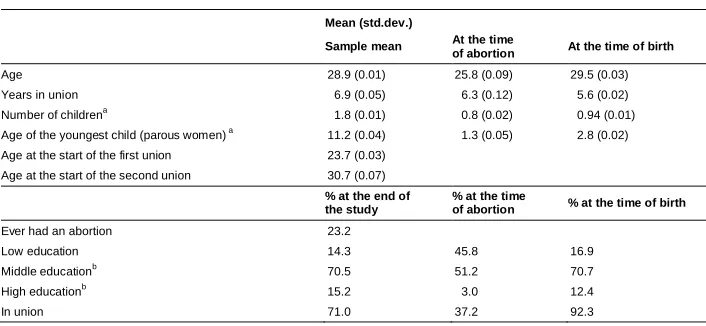
Table 1: Distribution of variables in the sample and at the time of abortions and births (N=17,666)
Mean (std.dev.)
Sample mean At the time
of abortion At the time of birth
Age 28.9 (0.01) 25.8 (0.09) 29.5 (0.03)
Years in union 6.9 (0.05) 6.3 (0.12) 5.6 (0.02)
Number of childrena 1.8 (0.01) 0.8 (0.02) 0.94 (0.01)
Age of the youngest child (parous women) a 11.2 (0.04) 1.3 (0.05) 2.8 (0.02)
Age at the start of the first union 23.7 (0.03)
Age at the start of the second union 30.7 (0.07)
% at the end of the study
% at the time
of abortion % at the time of birth
Ever had an abortion 23.2
Low education 14.3 45.8 16.9
Middle educationb 70.5 51.2 70.7
High educationb 15.2 3.0 12.4
In union 71.0 37.2 92.3
Notes:a Measured at the end of the study period;b In the multivariate models these categories were combined into one category of ‘at least middle education.’
Source: Register of Induced Abortions, Medical Birth Register, and the Population Register of Finland.
Table 1 shows that 23% of the women ever had an abortion. Almost half of these women only had low education at the time of abortion. At the end of the study period only 14% of the entire sample were in this category. It may indicate many women obtained abortions when they were relatively young and only completed their education after the event. Around 37% of women were in union at the time of abortion, compared to 92% in union at the time of births.
Table 2: Sequencing of partnership events and pregnancy outcomes, % and N
Partnership history % N (women)
Never in union (% of women) 8.6 1,526
Cohabitation only (% of women) 21.0 3,703
Marriage only (% of women) 16.4 2,888
Several cohabiting unions (% of women) 29.9 5,257
Several marriages (% of women) 2.6 451
Direct marriage (% of unions) a 20.8 5,256a
Ever union dissolution (% of women) 48.1 8,407
Pregnancy history ( % of ever pregnant women) N (events)
Births only 71.7 10,345
Abortion(s) then birth(s) 12.2 1,764
Birth(s) then abortion(s) 5.1 729
Abortions only 4.7 675
Birth(s), abortion(s), birth(s) 2.8 408
Abortion(s), birth(s), abortion(s) 1.7 250
More complex sequences 1.8 258
Ever pregnant (% of all women) 81.2 14,369
Notes:a Or unions which became marriages the same year cohabitation started; N of unions. Source: Register of Induced Abortions, Medical Birth Register, and the Population Register of Finland.
Table 2 also shows that most women in the sample who ever got pregnant (N=14,549, 81% of women) only experienced pregnancies ending in birth (72% of ever pregnant women). Approximately 5% of them only experienced abortion(s). Around 12% postponed childbearing by terminating their first pregnancy (or first pregnancies) but later had birth(s), and 5% first had birth(s) that were followed by abortion(s). The rest of the women experienced more complex pregnancy histories.
4.2 Unobserved characteristics
not shown) than for the model where the correlations were restricted to zero (DIC=344,768, not shown).
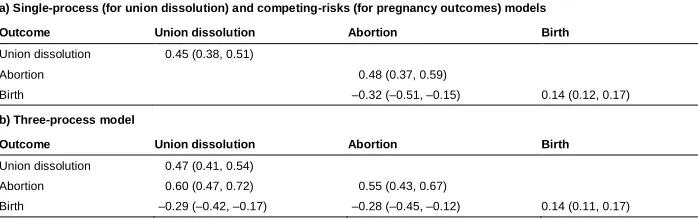
Table 3: The variances of the random effects and their correlations across equations (95% credible intervals (CI) in parentheses)
a) Single-process (for union dissolution) and competing-risks (for pregnancy outcomes) models
Outcome Union dissolution Abortion Birth
Union dissolution 0.45 (0.38, 0.51)
Abortion 0.48 (0.37, 0.59)
Birth –0.32 (–0.51, –0.15) 0.14 (0.12, 0.17)
b) Three-process model
Outcome Union dissolution Abortion Birth
Union dissolution 0.47 (0.41, 0.54)
Abortion 0.60 (0.47, 0.72) 0.55 (0.43, 0.67)
Birth –0.29 (–0.42, –0.17) –0.28 (–0.45, –0.12) 0.14 (0.11, 0.17)
Notes: Diagonals show the variance (95% CI) of the random effect and off-diagonals the respective correlations between the random effects (95% CI).
Source: Register of Induced Abortions, Medical Birth Register, and the Population Register of Finland.
The correlation between the random effect of the abortion model and that of the birth model was moderately strong and negative in the competing-risks and the three-process models (–0.32 and –0.28, respectively) (Table 3). This suggests that women with above average risk of an abortion had a below average risk of giving birth due to time-invariant unobserved characteristics.
The correlation between the random effects of the abortion and the union dissolution models was strong and positive (0.60), suggesting women with an above average risk of a union dissolution due to unobserved characteristics also had an above average risk of an abortion (Table 3). In other words, women in unstable unions also had a higher likelihood of abortion due to unobserved woman-specific characteristics affecting both the probability of her union dissolving and her likelihood of terminating a pregnancy.
4.3 Observed characteristics and the hazard of abortion
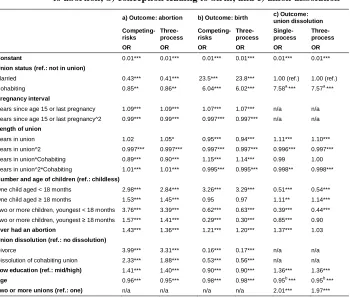
The fixed parts of the competing-risks and the three-process models were similar (Table 4). Thus, the results I report below refer to the three-process model, but in most cases also hold for the single-process and competing-risks models. As expected, the estimates changed the most for covariates measuring aspects similar to those in the added third process; that is, variables measuring births, abortions, and relationship events.
Table 4: Odds ratios of MCMC models (single-process/competing-risks and three-process models) estimating the hazards of a) conception leading to abortion; b) conception leading to birth; and c) union dissolution
a) Outcome: abortion b) Outcome: birth c) Outcome: union dissolution Competing-risks Three-process Competing-risks Three-process Single-process Three-process
OR OR OR OR OR OR
Constant 0.01*** 0.01*** 0.01*** 0.01*** 0.01*** 0.01***
Union status (ref.: not in union)
Married 0.43*** 0.41*** 23.5*** 23.8*** 1.00 (ref.) 1.00 (ref.)
Cohabiting 0.85** 0.86** 6.04*** 6.02*** 7.58a*** 7.57a***
Pregnancy interval
Years since age 15 or last pregnancy 1.09*** 1.09*** 1.07*** 1.07*** n/a n/a
Years since age 15 or last pregnancy^2 0.99*** 0.99*** 0.997*** 0.997*** n/a n/a
Length of union
Years in union 1.02 1.05* 0.95*** 0.94*** 1.11*** 1.10***
Years in union^2 0.997*** 0.997*** 0.997*** 0.997*** 0.996*** 0.997***
Years in union*Cohabiting 0.89*** 0.90*** 1.15*** 1.14*** 0.99 1.00
Years in union^2*Cohabiting 1.01*** 1.01*** 0.995*** 0.995*** 0.998** 0.998***
Number and age of children (ref.: childless)
One child aged < 18 months 2.98*** 2.84*** 3.26*** 3.29*** 0.51*** 0.54***
One child aged ≥ 18 months 1.53*** 1.45*** 0.95 0.97 1.11** 1.14***
Two or more children, youngest < 18 months 3.76*** 3.39*** 0.62*** 0.63*** 0.39*** 0.44***
Two or more children, youngest ≥ 18 months 1.57*** 1.41*** 0.29*** 0.30*** 0.85*** 0.90
Ever had an abortion 1.43*** 1.36*** 1.21*** 1.20*** 1.37*** 1.03
Union dissolution (ref.: no dissolution)
Divorce 3.99*** 3.31*** 0.16*** 0.17*** n/a n/a
Dissolution of cohabiting union 2.33*** 1.88*** 0.53*** 0.56*** n/a n/a
Low education (ref.: mid/high) 1.41*** 1.40*** 0.90*** 0.90*** 1.36*** 1.36***
Age 0.96*** 0.95*** 0.98*** 0.98*** 0.95b*** 0.95b***
Two or more unions (ref.: one) n/a n/a n/a n/a 2.01*** 1.97***
Notes:a ref: married;b age at the start of the union; n/a= not applicable; Ref.= Reference category; ***p<0.001; **p<0.01; *p<0.05; All variables are time-varying.
Figure 1 shows the population median predicted probability of abortion by union length and type based on the three-process model. Married women had a low likelihood of abortion throughout their union. Women in cohabiting relationships had a higher probability of abortion at the beginning of the union than married women, but it declined over time, reaching the levels of married women after around five years of cohabitation. The tendency for cohabiting unions to become more like marriages over time has also been found in other studies (Hoem, Jalovaara, and Muresan 2013; Holland 2011; Lyngstad, Noack, and Tufte 2011; Perelli-Harris et al. 2014).
Figure 1: Predicted population median estimates of number of abortions per 1,000 woman-years among married and cohabiting couples by union length in years
Note: Probabilities calculated based on the three-process model presented in Table 4.
Source: Register of Induced Abortions, Medical Birth Register, and the Population Register of Finland
Those who experienced a divorce had three times higher odds of experiencing a conception leading to abortion within the same year than those who did not. The odds were 88% higher among women who experienced the dissolution of a cohabiting union than among those who experienced no dissolution (Table 4).
also higher than for women with older children. Although the odds were quite different depending on the age of the youngest child, the risk did not vary as much depending on whether the woman only had one child or at least two children. The high risk of abortion among mothers with young children is consistent with earlier findings that abortions soon after a birth are relatively common in Finland (Vikat, Kosunen, and Rimpelä 2002).
Having had a previous abortion increased the odds of having another one by around 36%. As suggested by previous studies (e.g., Regushevskaya et al. 2009; Väisänen 2015, 2016), low education was associated with a higher likelihood of abortion. The odds of abortion were negatively associated with age (Table 4).
4.4 Observed characteristics and the hazard of birth
Married women had more than 20 times the odds of experiencing a conception leading to a live birth than single women, whereas cohabiting women were in between the two groups with six times the odds of single women (Table 4). A divorce was associated with lower odds (OR=0.17 compared to those who experienced no dissolution) of experiencing a conception leading to birth within the same year than among women who experienced dissolution of a cohabiting union (OR=0.56).
Mothers of one child under the age of 18 months had higher odds of experiencing a conception leading to birth than those whose children were older, those with at least two children, and those with no children. This perhaps reflects a desire to have one’s children relatively closely spaced but to stop childbearing after having two children. Having had an abortion in the past was associated with 20% higher odds of conceiving and subsequently giving birth than among those who had never had an abortion. The association between low education and the likelihood of birth was negative (Table 4).
4.5 Observed characteristics and the hazard of union dissolution
from their partners than women with children who were at least 18 months old and women who had no children. The highest odds of union dissolution were observed among those who had one child older than 18 months. Higher education was associated with a lower risk of union dissolution.
5. Discussion
5.1 Summary of findings
I examined whether there were unobserved shared factors driving the decision-making processes regarding abortions, births, and union dissolutions by estimating these three processes simultaneously and testing whether the unobserved (random) parts of these models were correlated. All the random effects correlations were statistically significant, confirming there were mutual unobserved factors driving these processes. Ignoring such correlation and estimating the models separately may lead to bias in the estimates of the observed part of the model (Lillard 1993; Steele et al. 2005). Estimating the three processes simultaneously also shows how they are intertwined and helps to understand the possible mechanisms behind these findings. This is the first study to examine this issue.
5.2 Abortions and union dissolutions
Women more inclined to have unstable relationships were also more likely to have an abortion due to characteristics unobserved in this study. It may be that religious women, who are more likely to express negative attitudes towards abortion (Ellison, Echevarría, and Smith 2005; Hess and Rueb 2005), are also less likely to approve of divorce, making them less likely to experience either of these events. Perhaps the personality traits associated with the planning status of pregnancies (Berg et al. 2013) can also be associated with the likelihood of union dissolution.
The fixed part of the models shows that likelihood of abortion was higher among women who had experienced a union dissolution than among those who had not. Interestingly, the effect was stronger for divorce than it was for dissolution of a cohabiting union. If union dissolution is an indicator of problems in the relationship in the period preceding the dissolution, the finding is consistent with previous studies that show that having relationship problems is a commonly cited reason for having an abortion (Bankole, Singh, and Haas 1998; Chibber et al. 2014; Finer et al. 2005; Kirkman et al. 2009). Women in relationships that are likely to dissolve soon may be less likely to want children due to the added cost of breaking up if children are involved (Lillard and Waite 1993), and thus are more likely to terminate an unintended pregnancy than those in a stable relationship.
The likelihood of abortion was higher for women who were cohabiting than for women who were married during approximately the first five years of the union. Perhaps some abortions within cohabiting unions were obtained because the women felt that the pregnancy happened too early in the relationship (Chibber et al. 2014; Kirkman et al. 2009), whereas it may be less likely for married women to think the relationship is not yet ready for childbearing. After the first five years the risks were at a similar level in both groups. This is in line with studies showing cohabitations tend to become similar to marriages over time, despite the differences in the early stages of the unions (Hoem, Jalovaara, and Muresan 2013; Holland 2011; Lyngstad, Noack, and Tufte 2011; Perelli-Harris et al. 2014).
5.3 Abortions and births
abortion (Ellison, Echevarría, and Smith 2005; Hess and Rueb 2005), and preference for high fertility (Frejka and Westoff 2007; McQuillan 2004).
5.4 Births and union dissolutions
The random effects correlation between the union dissolution and birth models was negative. A positive correlation, which has been found previously (e.g., Leone and Hinde 2007) would have implied that women who due to time-invariant unobserved characteristics were more likely to experience union dissolutions were also more likely to have above average fertility. This may happen if couples in each new partnership wish to have a child together in order to show commitment to each other or to stabilise an otherwise precarious relationship, resulting in higher fertility compared to those with fewer partnerships (Balbo, Billari, and Mills 2013; Leone and Hinde 2007). Evidence of such mechanisms was not found here. This may be because marrying more than once was rare in this dataset, and most often women who had more than one union had first cohabited, followed by cohabitation and/or marriage with a new partner. Perhaps the women’s first unions happened early in the life course (average age 23.7) and were not as committed as later unions.
5.5 Limitations of the study
There were limitations to this study. The reasons for abortion are complex and there is rarely only one reason for the decision (Bankole, Singh, and Haas 1998; Kirkman et al. 2009). I focused on two aspects, romantic relationships and timing of births, but I did not separately address other aspects women commonly cite when having an abortion, such as economic concerns (Bankole, Singh, and Haas 1998; Finer et al. 2005). Estimating education and career trajectories simultaneously with pregnancy and relationship transitions was not possible due to lack of appropriate data on education and career transitions ‒ it would have been necessary to know, for example, when exactly women completed their education and transitioned into employment. Future studies should address this issue.
effect, and moving out from a shared home may take months. Thus, with register data the timing of these types of events is always imprecise. However, the advantage of the superior reliability of register data in a study of abortion is sufficiently large to justify its use.
While the discussion of possible shared factors driving the three processes in this study was restricted to description of the time-invariant woman-level characteristics that may drive the three processes, it may be that the random effects of these processes were also correlated due to other reasons. It is likely, for instance, that women consider the implications of one decision (e.g., to leave a romantic relationship) on other decisions (e.g., whether to continue a pregnancy). In order to test this assumption statistically it would be necessary to fit a full structural model that allows for the structural effects of the hazard of one outcome to affect the other (see e.g., Lillard and Waite 1993). Fitting such a model requires using instrumental variables, which are associated with one outcome but not the other(s). Lillard and Waite (1993) achieved this by exploiting the differences in US state-level policies and characteristics, but such differences do not exist in Finland. Future studies should address this issue using data that includes suitable instrumental variables.
5.6 Conclusions
Time-invariant unobserved woman-level characteristics jointly affected the likelihood of experiencing an abortion, a birth, or a union dissolution. Such characteristics may include, for instance, personality, attitudes, and beliefs (Berg et al. 2013; Ellison, Echevarría, and Smith 2005; Hess and Rueb 2005; Johnson-Hanks et al. 2011). The likelihood of obtaining an abortion was higher for cohabiting than for married women during the first five years of the union, after which few differences were observed between the two groups. While experiencing a union dissolution was associated with a higher risk of abortion within the same year, the effect was stronger for divorce than for dissolution of a cohabiting union. These results are in line with studies showing that while cohabiting relationships may be less committed than marriages in the early stage of the union, cohabitations tend to become similar to marriages over time (Hoem, Jalovaara, and Muresan 2013; Holland 2011; Lyngstad, Noack, and Tufte 2011; Perelli-Harris et al. 2014).
6. Acknowledgements
References
Aassve, A., Burgess, S., Propper, C., and Dickson, M. (2006). Employment, family union and childbearing decisions in Great Britain. Journal of the Royal Statistical Society: Series A (Statistics in Society) 169(4): 781–804.doi:10.1111/ j.1467-985X.2006.00432.x.
Balbo, N., Billari, F.C., and Mills, M. (2013). Fertility in advanced societies: A review of research. European Journal of Population 29(1): 1–38. doi:10.1007/s10680-012-9277-y.
Bankole, A., Singh, S., and Haas, T. (1998). Reasons why women have induced abortions: Evidence from 27 countries. International Family Planning Perspectives 24(3): 117–152.doi:10.2307/3038208.
Becker, G.S. (1991).A treatise on the family. Cambridge: Harvard University Press.
Berg, V., Rotkirch, A., Väisänen, H., and Jokela, M. (2013). Personality is differentially associated with planned and non-planned pregnancies. Journal of Research in Personality 47(4): 296–305.doi:10.1016/j.jrp.2013.01.010.
Berrington, A. (2001). Entry into parenthood and the outcome of cohabiting partnerships in Britain. Journal of Marriage and Family 63(1): 80–96.
doi:10.1111/j.1741-3737.2001.00080.x.
Browne, W.J. (2009). MCMC estimation in MLwiN v2.1 [electronic resource]. Bristol: University of Bristol.http://www.bristol.ac.uk/cmm/software/mlwin/
Browne, W.J. (2015). MCMC estimation in MLwiN [electronic resource]. Bristol: University of Bristol. http://www.bristol.ac.uk/cmm/media/software/mlwin/ downloads/manuals/2-33/mcmc-web.pdf
Browne, W.J., Steele, F., Golalizadeh, M., and Green, M.J. (2009). The use of simple reparameterizations to improve the efficiency of Markov chain Monte Carlo estimation for multilevel models with applications to discrete time survival models. Journal of the Royal Statistical Society: Series A (Statistics in Society)
172(3): 579–598.doi:10.1111/j.1467-985X.2009.00586.x.
Ellison, C.G., Echevarría, S., and Smith, B. (2005). Religion and abortion attitudes among U.S. Hispanics: Findings from the 1990 Latino National Political Survey.
Social Science Quarterly 86(1): 192–208. doi:10.1111/j.0038-4941.2005. 00298.x.
Finer, L.B., Frohwirth, L.F., Dauphinee, L.A., Singh, S., and Moore, A.M. (2005). Reasons U.S. women have abortions: Quantitative and qualitative perspectives.
Perspectives on Sexual and Reproductive Health 37(3): 110–118.doi:10.1363/ 3711005.
FINLEX (2013). Laki raskauden keskeyttämisestä [Act on pregnancy termination] 24.3.1970/239 [electronic resource]. http://www.finlex.fi/fi/laki/ajantasa/1970/ 19700239
Forssén, K., Laukkanen, A.-M., and Ritakallio, V.-M. (2003). Policy: The case of Finland. Paper presented at Welfare Policy and Employment in the Context of Family Change, Utrecht, the Netherlands, October 8–9, 2003.
Frejka, T. and Westoff, C.F. (2007). Religion, religiousness and fertility in the US and in Europe. European Journal of Population 24(1): 5–31. doi:10.1007/s10680-007-9121-y.
Haataja, A. (2006).Nordic breadwinner–caretaker models: Comparison of Finland and Sweden. Helsinki: Ministry of Social Affairs and Health.
Hansen, M.-L.H., Mølgaard-Nielsen, D., Knudsen, L.B., and Keiding, N. (2009). Rates of induced abortion in Denmark according to age, previous births and previous abortions.Demographic Research 21(22): 647–680.doi:10.4054/DemRes.2009. 21.22.
Heaton, T., Jacobson, C., and Holland, K. (1999). Persistence and change in decisions to remain childless. Journal of Marriage and Family 61(2): 531–539. doi:10. 2307/353767.
Hess, J.A. and Rueb, J.D. (2005). Attitudes toward abortion, religion, and party affiliation among college students. Current Psychology 24(1): 24–42. doi:10. 1007/s12144-005-1002-0.
Holland, J.A. (2011). Home and where the heart is: Marriage timing and joint home purchase. European Journal of Population 28(1): 65–89. doi:10.1007/s10680-011-9242-1.
Jalovaara, M. (2012). Socio-economic resources and first-union formation in Finland, cohorts born 1969–81.Population Studies 66(1): 69–85.doi:10.1080/00324728. 2011.641720.
Johnson-Hanks, J., Bachrach, C.A., Morgan, S.P., and Kohler, H.-P. (2011).
Understanding family change and variation. Dordrecht: Springer Netherlands.
doi:10.1007/978-94-007-1945-3.
KELA (2012). Social insurance institution: Parental allowance [electronic resource].
http://kela.fi/web/en/parental-leave_parental-allowance
Kirkman, M., Rowe, H., Hardiman, A., Mallett, S., and Rosenthal, D. (2009). Reasons women give for abortion: A review of the literature. Archives of Women’s Mental Health 12(6): 365–378.doi:10.1007/s00737-009-0084-3.
Knudsen, L.B., Gissler, M., Bender, S.S., Hedberg, C., Ollendorff, U., Sundström, K., Totlandsdal, K., and Vilhjalmsdottir, S. (2003). Induced abortion in the Nordic countries: Special emphasis on young women.Acta obstetricia et gynecologica Scandinavica 82(3): 257–268.doi:10.1034/j.1600-0412.2003.00006.x.
Kontula, O. (2010). The evolution of sex education and students’ sexual knowledge in Finland in the 2000s. Sex Education 10(4): 373–386. doi:10.1080/14681811. 2010.515095.
Kosunen, E. (2000). Family planning services. In: Lottes, I. and Kontula, O. (eds.).New views on sexual health: The case of Finland. Helsinki: Väestöliitto: 70–84.
Kravdal, Ø. (2001). The high fertility of college educated women in Norway: An artefact of the separate modelling of each parity transition. Demographic Research 5(6): 187–216.doi:10.4054/DemRes.2001.5.6.
Kreyenfeld, M. (2010). Uncertainties in female employment careers and the postponement of parenthood in Germany.European Sociological Review 26(3): 351–366.doi:10.1093/esr/jcp026.
Lappegård, T. and Rønsen, M. (2005). The multifaceted impact of education on entry into motherhood. European Journal of Population 21(1): 31–49. doi:10.1007/ s10680-004-6756-9.
Leckie, G. and Charlton, C. (2013). runmlwin: A program to run the MLwiN multilevel modelling software from within Stata. Journal of Statistical Software 52(11): 1–40.
Leone, T. and Hinde, A. (2007). Fertility and union dissolution in Brazil: An example of multi-process modelling using the Demographic and Health Survey calendar data.Demographic Research 17(7): 157–180.doi:10.4054/DemRes.2007.17.7.
Lillard, L.A. (1993). Simultaneous equations for hazards. Journal of Econometrics
56(1–2): 189–217.doi:10.1016/0304-4076(93)90106-F.
Lillard, L.A. and Waite, L.J. (1993). A joint model of marital childbearing and marital disruption.Demography 30(4): 653–681.doi:10.2307/2061812.
Lyngstad, T.H., Noack, T., and Tufte, P.A. (2011). Pooling of economic resources: A comparison of Norwegian married and cohabiting couples. European Sociological Review 27(5): 624–635.doi:10.1093/esr/jcq028.
Lyngstad, T.H. and Skardhamar, T. (2011). Nordic register data and their untapped potential for criminological knowledge. Crime and Justice 40(1): 613–645.
doi:10.1086/658881.
Mauldon, J., Foster, D.G., and Roberts, S.C.M. (2015). Effect of abortion vs. carrying to term on a woman’s relationship with the man involved in the pregnancy.
Perspectives on Sexual and Reproductive Health 47(1): 11–18. doi:10.1363/ 47e2315.
McQuillan, K. (2004). When does religion influence fertility? Population and Development Review 30(1): 25–56.doi:10.1111/j.1728-4457.2004.00002.x.
Nisén, J., Martikainen, P., Kaprio, J., and Silventoinen, K. (2013). Educational differences in completed fertility: A behavioral genetic study of Finnish male and female twins. Demography 50(4): 1399–1420. doi:10.1007/s13524-012-0186-9.
Oppenheimer, V.K. (1994). Women’s rising employment and the future of the family in industrial societies. Population and Development Review 20(2): 293–342.
doi:10.2307/2137521.
Perelli-Harris, B. (2014). How similar are cohabiting and married parents? Second conception risks by union type in the United States and across Europe.European Journal of Population 30(4): 437–464.doi:10.1007/s10680-014-9320-2.
Perelli-Harris, B., Mynarska, M., Berrington, A., Berghammer, C., Evans, A., Isupova, O., Keizer, R., Klärner, A., Lappegård, T., and Vignoli, D. (2014). Towards a new understanding of cohabitation: Insights from focus group research across Europe and Australia. Demographic Research 31(34): 1043–1078.doi:10.4054/ DemRes.2014.31.34.
Rasbash, J., Charlton, C., Browne, W.J., Healy, M., and Cameron, B. (2009). MLwiN Version 2.1 [electronic resource]. Bristol: University of Bristol. http://www. bristol.ac.uk/cmm/software/mlwin/
Regushevskaya, E., Dubikaytis, T., Laanpere, M., Nikula, M., Kuznetsova, O., Haavio-Mannila, E., Karro, H., and Hemminki, E. (2009). Risk factors for induced abortions in St Petersburg, Estonia and Finland: Results from surveys among women of reproductive age. The European Journal of Contraception and Reproductive Health Care 14(3): 176–186.doi:10.1080/13625180902916038.
Steele, F., Goldstein, H., and Browne, W. (2004). A general multilevel multistate competing risks model for event history data, with an application to a study of contraceptive use dynamics. Statistical Modelling 4(2): 145–159. doi:10.1191/ 1471082X04st069oa.
Steele, F., Kallis, C., Goldstein, H., and Joshi, H. (2005). The relationship between childbearing and transitions from marriage and cohabitation in Britain.
Demography 42(4): 647–673.doi:10.1353/dem.2005.0038.
Väisänen, H. (2015). The association between education and induced abortion for three cohorts of adults in Finland. Population Studies 69(3): 373–388. doi:10.1080/ 00324728.2015.1083608.
Väisänen, H. (2016). Educational inequalities in repeat abortion: A longitudinal register study in Finland 1975–2010. Journal of Biosocial Science 48(6): 820–832.
doi:10.1017/S002193201600016X.
Vikat, A. (2004). Women’s labor force attachment and childbearing in Finland.
Demographic Research S3(8): 177–212.doi:10.4054/DemRes.2004.S3.8.
Vikat, A., Kosunen, E., and Rimpelä, M. (2002). Risk of postpartum induced abortion in Finland: A register-based study. Perspectives on Sexual and Reproductive Health 34(2): 84–90.doi:10.2307/3030211.
White, L. and McQuillan, J. (2006). No longer intending: The relationship between relinquished fertility intentions and distress. Journal of Marriage and Family