Students’ perspective on the effectiveness of the
third-year accounting project in developing SAICA
competencies
By
Qondeni Penelope Khumalo
200278408
Submitted in partial fulfilment of the requirements of
the Masters of Accountancy degree at the University
of KwaZulu-Natal
Supervisors:
Shazia Essa
&
Professor Mabutho Sibanda
2019
Declaration
I, Qondeni Penelope Khumalo, declare that:
a) the research reported in this dissertation, except where otherwise indicated, is my original research;
b) this dissertation has not been submitted for any degree or examination at this university or any other university;
c) this dissertation does not contain other persons’ data, pictures, graphs or other information, unless specifically acknowledged;
d) this dissertation does not contain other persons’ writing, unless specifically acknowledged as being sourced from other researchers;
e) where other written sources have been quoted, then:
(i) their words have been re-written, but the general information attributed to them has been referenced;
(ii) where their exact words have been used, their writing has been placed inside quotation marks, and referenced;
f) where I have reproduced a publication of which I am author, co-author or editor, I have indicated the part of the work I wrote alone and have fully referenced such publications;
g) this dissertation does not contain text, graphics or tables copied and pasted from the Internet, unless specifically acknowledged, and the source being detailed in the bibliography section.
Signed: ……… Date: ………
Acknowledgements
I would like to express my thanks and appreciation to the following people for their contributions to this thesis:
• My source of strength, Almighty God.
• My husband (Sthembiso), my children (Lilitha and Mvuselelo), my helper for their support and my mom (Mrs Mabuyakhulu) for encouraging me to register every year and achieve what I always wanted.
• Professor Mabutho Sibanda and Shazia Essa for their guidance and encouragement. • My colleague Msizi Gwala for working with me and be the motivation I needed.
• The students at the University of Zululand
“Don’t compare yourself with others.
Just look at your own work to see if you have done anything to be proud of.
You must each accept the responsibilities
that are yours”
Abstract
Examiners have identified gaps in certain pervasive and technical skills when analyzing students’ answers for the South African Institute of Chartered Accountants’ (SAICA) Initial Test of Competency (ITC). It has been observed that students are not able to apply logical thinking, argue and reach conclusions on issues, which are some of the skills expected from the profession. This results in newly-qualified chartered accountants (CAs) being under-prepared to work in the industry. This study aimed to establish students’ perceptions of how the University of Zululand’s (UniZulu) third-year Bachelor of Commerce in Accounting Studies project enhanced these competencies in preparation for the CA qualification. The project aims to develop the personal attributes and professional skills set out in the SAICA Competency Framework. Personal attributes include working effectively as a team, planning, effectively managing the project and treating others professionally. Professional skills involve gathering, analyzing and critically interpreting information and ideas in order to make sound decisions to solve problems and communicate effectively. A quantitative approach was employed and the study population consisted of third-year UniZulu Accounting students. A questionnaire was developed to address the identified issues. The study’s results that are supported by the literature indicate that working on projects is a more effective tool than lectures in developing these competencies and enhancing students’ understanding of the profession’s requirements.
Table of contents
Chapter 1: Introduction ... 9
1.1 Introduction... 9
1.2. Background to the study ... 9
The UniZulu Accounting Project ... 10
1.5. Objectives of the study ... 12
1.6. Research questions ... 12
1.7. Significance of the study... 12
1.8. Outline of the dissertation ... 13
1.9. Chapter Summary ... 13
Chapter 2: Literature Review ... 14
2.1. Introduction ... 14
2.2. Theoretical framework ... 14
2.3. Empirical evidence ... 16
2.3.1 Competencies required ... 16
2.3.2. Using projects for learning ... 19
2.3.3 Learning and Accounting students ... 21
2.4 Conclusion ... 23
2.5. Chapter Summary ... 23
Chapter 3: Methodology ... 24
3.1 Introduction... 24
3.2 Research approach/ paradigm ... 24
3.3 Population ... 25
3.4 Sampling technique and sample size ... 25
3.5 Data Collection ... 27
3.5.1 Research instrument ... 27
3.5.2 Data collection procedure ... 28
3.6 Data analysis ... 28
3.7 Data reliability... 29
3.8 Data validity ... 29
3.9 Chapter Summary ... 29
Chapter 4: Data presentation and analysis ... 30
4.2 Presentation and Analysis of the Results... 30
4.3 Further Data Analysis ... 37
4.4 Chapter Summary ... 40
Chapter 5: Summary, Conclusions and Recommendations ... 42
5.1 Introduction... 42
5.2 Summary ... 42
5.3 Findings ... 43
5.3.1 Conclusions ... 44
5.5 Recommendations ... 45
5.6 Limitations of the study ... 45
5.7 Suggestions for further research ... 45
5.8 Possible limitations for a broader study ... 45
References ... 46
Appendices ... 48
Appendix A: Questionnaire ... 48
Appendix B: Gatekeepers letter ... 51
Ethical clearance C: Ethical clearance ... 51
List of tables
Table 4. 1 Results for the first objective on the effectiveness of the project in developing SAICA competencies. ... 30 Table 4. 2 Results for the second objective on whether the project improved the
students’ understanding of the skills and competencies required by SAICA………31 Table 4. 3 Results for the third objective to ascertain students’ perspectives on whether the project assisted in developing the skills and competencies required by SAICA. ... 33 Table 4. 4 Analysis of students’ age vs. project being the best tool to develop
competencies. ... 37 Table 4. 5 Analysis of student’s age vs. students’ understanding of the link between Financial Accounting, Auditing, Financial Management and Taxation after participating in the project. ... 38 Table 4. 6 Analysis of students’ age vs. understanding the importance of working in teams as a result of participation in the project. ... 38 Table 4. 7 Analysis of students’ age vs. ability to prepare a good business report. ... 39 Table 4. 8 Analysis of students’ age vs. project developing the ability to communicate points effectively. ... 39 Table 4. 9 Analysis of students’ age vs. understanding the importance of ethics in the real business world... 40
List of Abbreviations and Acronyms
APC – Accounting Professional Competence B.Com. – Bachelor of Commerce
CA – Chartered Accountant ITC – Initial Test of Competency
PAAB – Public Accountants and Auditors Board
SAICA – South African Institute of Chartered Accountants UniZulu – University of Zululand
Key terms
Competency framework; Chartered Accountant profession; Bachelor of Commerce; Accounting curriculum
Chapter 1: Introduction 1.1 Introduction
This chapter presents the background to the study, the problem statement and the study’s objectives, research questions and assumptions. The structure of the dissertation is also outlined.
1.2. Background to the study
The South African Institute of Chartered Accountants (SAICA) Competency Framework states that students studying to become Chartered Accountants (CAs) should display certain competencies by the time they complete their academic program (SAICA, 2016). SAICA (2016) adds that, aside from competencies, a combination of academic study, training and professional assessment is required to ensure that candidates have the intellect, aptitude and ability to apply themselves in demanding situations. Smit and Steenkamp note that competency can only develop from knowledge and understanding of specific competencies; hence, SAICA sets out the knowledge levels required for each specific competency. It is also understood that competencies, knowledge and understanding alone cannot create a proficient professional. SAICA (2016) thus includes pervasive skills among those to be developed by the academic program leading to the CA qualification. Universities offering the CA program are required to develop their curriculum based on the detailed guidelines in SAICA’s Competence Framework, with each learning outcome linked to a competency (SAICA, 2016).
It would seem that students studying to become CAs pass the Initial Test of Competency (ITC), the first SAICA Board Examinations, without having interacted with a full set of company financial statements except for certain sections used for teaching and assessment purposes. Given that the skills required of a CA are diverse and require different methods to acquire, the University of Zululand’s (UniZulu) Accounting Department introduced an Accounting Project that aims to develop and build pervasive and technical competency skills among Accounting students pursuing the SAICA accredited Bachelor of Commerce in Accounting (B.Com.) qualification. This study aimed to determine students’ perceptions on how well this project enhances their competencies and skills in preparation for the ITC examinations, and subsequently the CA qualification. The following section discusses the nature and structure of the project.
The UniZulu Accounting Project
The project consists of the Financial Accounting, Financial Management and Auditing components of the B.Com. curriculum.
Financial Accounting and Financial Management
The project requires students to work in teams of five (5) to acquire two (2) recent sets of financial statements for two (2) companies in the industry of their choice. They are required to analyse the income statement, statements of financial position, and the cash flow statement, together with the disclosures. The analysis should capture company performance and whether they agree with the company’s investment and financing strategy. It should also identify any items that were excluded from the financial statements that would assist a potential investor to decide which of the two companies to invest in and why. This analysis is expected to develop both the pervasive and technical competencies required to develop a proficient trainee CA.
Auditing Component
The project also aims to develop auditing specific competencies. Working in the same groups and using the two companies selected for the Accounting project, students are required to select one company, obtain its latest (integrated) annual report and conduct research to obtain more information about the company and the industry in which it operates. They are required to document the research process and sources of information, and perform a detailed analysis of the following issues in relation to the selected company and industry: business risks; audit risks; corporate governance; and ethical issues.
The project also targets the following pervasive skills recommended by the SAICA Competency Framework:
(i) Personal attributes which include working effectively as a team member, planning and effectively managing projects, and treating others in a professional manner.
(ii) Professional skills which range from acquiring information, to critically analysing and interpreting information and views (critical thinking, problem solving and making decisions, communicating effectively and efficiently, and
understanding how Information Technology (IT) impacts a CA’s daily functions) (SAICA, 2016).
Guided by SAICA (2016), the project aims to integrate competencies as students are expected to sharpen their external reporting skills, financial management and auditing as well as the pervasive skills in the SAICA Competency Framework (SAICA, 2016).
1.3. Problem statement
The SAICA Competency Framework sets out the pervasive and technical competencies students require to qualify as a CA. These pervasive, professional skills and competencies should be covered by students before they complete their university academic program (SAICA, 2016). In summary, the competencies of a CA comprise the technical ability to operate at a strategic and executive level. In order to demonstrate this ability, the candidate must demonstrate sound understanding of the competitive and economic environment within which the business operates, its competitive positioning, and the business’ operational, governance, organisational and reporting structures. The CA (SA) should be able to evaluate and identify potential strategies and their financial implications and contribution to the value of the business. He/she should also be able to evaluate the risks involved and the business’ ability to implement and deliver considering the available systems and controls (SAICA, 2016).
The accounting program at UniZulu does not provide students with adequate opportunities to develop these professional and pervasive skills. The weaknesses of the program include the fact that students do not interact with a full set of company financial statements during the course of their studies. This is required for all four competencies, namely, Financial Management, Financial Reporting, Auditing and Taxation. Furthermore, no plan is in place to develop and assess the pervasive skills (ethical behaviour and professionalism, personal attributes and professional skills (SAICA, 2016)) required by the profession.
This problem has been identified by examiners when analysing students’ answers in the Initial Test of Competency (ITC) and Assessment of Professional Competence (APC)
examinations. Examiners observed that students are not able to apply logical thinking, argue and reach conclusions on issues which are some of the skills expected of the profession (Smit and Steenkamp, 2015). It would seem that students focus on passing and moving to the next level rather than understanding the expectations of the profession they are preparing for. This has resulted in accounting and auditing trainees that are ill-equipped to enter the profession and are therefore not able to perform at the expected level (Abeysekera, 2011).
1.4. Aim of the study
The aim of this research study was to establish students’ perceptions on how effective the third-year Accounting project at UniZulu is in developing the competencies required by SAICA to enter practical training towards the CA qualification in South Africa.
1.5. Objectives of the study
The objectives of this study were to:
• Investigate whether the project created by UniZulu is effective in developing SAICA competencies in third-year Accounting students.
• Establish students’ perceptions on whether the project improved their understanding of the skills required by SAICA competencies.
• Ascertain students’ perceptions on whether the project assisted them in developing the skills and competencies required by SAICA.
1.6. Research questions
This study sought to answer the following questions based on students’ perspectives: • Is the project created by UniZulu effective in developing SAICA competencies? • Did the project improve students’ understanding of skills required by SAICA? • Did the students develop their skills and competencies by participating in the
project?
1.7. Significance of the study
The SAICA (2016) Competency Framework states that students are expected to acquire a number of skills and competencies while preparing to write the ITC, an assessment
conducted by SAICA for students studying towards the CA qualification. These include technical as well as pervasive skills. The findings of this research study will provide UniZulu and other universities with feedback on whether the project created to develop these pervasive and technical skills among third-year Accounting students has achieved its objectives.
The results are also expected to motivate students to give this project their full attention in the future as they will understand its significance for their professional development and what is expected of them by the time they complete their academic studies. This study is expected to add to the debate on whether pervasive skills development can be achieved through projects created by universities. Finally, the study’s findings will inform Accounting educators’ efforts to craft teaching strategies that address pervasive skills, rather than relying on a single project.
1.8. Outline of the dissertation
Chapter one introduces the dissertation. It includes the background to the study, its objectives and research questions and its significance. Chapter two presents the theoretical framework adopted for this study and reviews the relevant empirical literature.
Chapter three discusses the research methodology employed to conduct the study, while chapter four presents and analyses the data collected. Finally, chapter five presents the study’s conclusions, recommendations, limitations and suggestions for further research.
1.9. Chapter Summary
This chapter introduced the study by discussing its background which is the under-preparedness of CA candidates at the time they complete their academic program. It also set out the study’s aims and objectives and research questions and discussed its significance.
Chapter two presents the theoretical framework employed for this study and a review of the relevant empirical literature.
Chapter 2: Literature Review 2.1. Introduction
Chapter one discussed the background to the study, the problem statement and the study’s objectives and research questions. This chapter presents the theoretical framework adopted for this study and reviews the relevant empirical literature. The review addresses three areas, firstly, the competencies required by students studying to become CAs (SA); secondly, projects for learning; and, thirdly, learning and Accounting students.
2.2. Theoretical framework
This study on the effectiveness of the UniZulu Accounting project in developing SAICA competencies is informed by Kolb and Kolb’s (2009) experiential learning theory that conceives of learning as follows:
• Learning is best conceived as a process rather than outcomes, meaning that students must be involved in the learning process in order for it to be effective.
• Learning is more effective if it draws on what students already know and builds on it with new knowledge.
• Learning should encourage thinking through opposing ideas, calling for reflection. • Learning involves moving from a scientific method to more practical problem solving,
creativity and decision making.
• Learning results from a synergy between personal experiences and the environment. • Learning is the process of developing knowledge (Kolb and Kolb, 2009).
The experiential learning theory states that learning involves grasping and transforming knowledge. It links management as a learning process to the development of deep learning, learning spaces and learning styles. Kolb and Kolb (2009) add that people have different learning styles.
Canboy et al. (2016) emphasize the importance of universities endowing their students with more than just technical knowledge. Students require practical skills and competencies in order to become employable. Educational institutions should thus focus on students’ learning needs, which calls for student-centred methodologies such as
experiential learning (Canboy et al., 2016). It should be noted, however, that the lower level accountant displays more convergent abstract and active learning styles; this is even more so among middle-level accountants, reflecting highly technical specialization. Senior level accountants adopt a more accommodative learning style, integrating their non-dominant concrete learning orientation (Canboy et al., 2016).
Canboy et.al. (2016) explored management as a learning process, which encompasses decision making, problem solving, creativity and team learning. In problem-solving, the emphasis is on clearly understanding the problem, so that creativity can emerge and decisions can be made. Team learning involves reflection and discussing issues within a group of people with similar interests.
Different types of personalities play different roles in team learning. They include standard setters, compromisers, encouragers and group observers. While the focus is on building and maintaining the team, if the focus is on task accomplishment, the roles played by different personalities might differ and could include the initiator, contributor, information seeker, coordinator and group observer (Kolb and Kolb, 2009). This is relevant to this study that sought to determine whether a group project offers students a platform for decision making, creativity, team work and problem solving.
As Kolb and Kolb (2009) note, Accounting students are trained for management roles which involve the above-mentioned skills. This study is interested in the experience students gain through seeking information, reflecting on issues in relation to the task and applying their creativity to solve it. This is expected to enhance deep learning.
Kolb and Kolb’s theory has been critiqued by Hedin (2010) who maintains that those who use experiential education should ensure proper planning and follow-through of experiences. Hedin adds that, while projects facilitate experiential learning, students should not only engage in such experiences, but reflect on them in deep and thoughtful ways in order to construct meaning.
This study also drew on critical thinking theory that describes critical thinking as the process of analysing and evaluating thinking with the aim of improving it. Critical thinking
assumes knowledge of the foundational structures in thinking (the elements of thought) and the foundational intellectual standards for thinking (universal intellectual standards). The most important element of the creative side of critical thinking (improving thought) is restructuring thinking as a result of analysing and effectively evaluating it (Paul and Elder, 2005). The project assessed in this study aims to develop students’ thinking across a wide range of subjects and domains. An Accounting student studying to become a CA is expected to reason across all four modules, namely, Financial Reporting, Financial Management and Costing, Auditing and Taxation. The critical thinking theory stipulates that deep understanding give rise to competencies, which connects with the experiential learning theory.
2.3. Empirical evidence
This section discusses the findings of existing studies on competency skills acquisition by prospective CAs. The discussion covers a diverse range of literature in order to gain in-depth insight. The review covers the competencies required, learning through projects, and learning and Accounting students.
2.3.1 Competencies required
2.3.1.1 Students’ understanding of SAICA expectations
Harden (1995) describes competencies as a sense of effective performance. Powel et al. (2014) define competencies as the underlying qualities of a person that are associated with superior performance. A competency framework offers precise yet flexible guidelines to ensure that emerging practices are well integrated into student development and training for a specific occupation (Powel et al., 2014). Boritz and Carnaghan (2003) support this approach, but identify some weakness when it comes to clearly defining competencies in terms of educational outcomes among students as well as assessing them. They add that while in the long-run, it is possible to create competence-based education outcomes in the form of a competence model for all stakeholders, this could prove a challenge in the short-run, as it would make for a very large document (Boritz and Carnaghan, 2003). A competency model can be described as a number of competencies grouped together, namely, the factors that include the key behaviors required for excellent performance in a particular role (Mkhize, 2017).
Many Accounting professional associations have moved to competency-based professional attributes which Boritz and Carnaghan (2003) refer to as competency-based qualifications. These specify outcomes rather than a person’s knowledge and what he/she can do. This is believed to improve transparency as well as accountability in a particular profession (Boritz and Carnaghan, 2003). Powel et al. (2014) concur that clearly defined competencies assist in enabling the different stakeholders in a profession to clearly understand its demands (Powel et al., 2014). Practitioners should be able to demonstrate the required competencies; hence, the emphasis on a competency-based approach at both academic and practical training levels (SAICA, 2016).
However, Parsley and Parsley (1996) are of the view that the competency-based approach to teaching Accounting assumes a standardized approach where one moves from one level of development to another. They state that this is too mechanistic and does not promote the development of managerial skills due to the fact that it does not embrace the complexity of managerial work, namely, problem-solving, leadership, decision-making and creativity (Paisey and Paisey, 1996).
In SAICA’s (2016) view, a CA should be a responsible citizen and a leader; it is hence critical that certain leadership competencies are developed by the time a newly qualified CA enters the workplace (SAICA, 2016). It is for this reason that Harden (1995) emphasizes the importance of educators developing the communication, personal and social skills required by students through integrating them in their courses.
Harden (1995) identified two groups of competencies that are required for a specific occupation, namely, personal attributes and the characteristics associated with effective performance and achievement of the expected outcomes (Harden, 1995).
Štrba and Roodt (2005) investigated the attributes of a successful Accounting graduate. Like Harden (1995), they concluded that certain personality traits predispose success in a given environment. There is thus a correlation between an employee’s personality and the given environment, interpersonal skills and abilities where the graduate is able to behave in a mature manner to create a professional working environment, and technical abilities which refer to analytical and numerical ability. These are referred to as the knowledge level, intellectual ability and academic achievement (Strbac and Roodt, 2005).
According to Smit and Steenkamp (2015), the SAICA Competency Framework emerged because certain competencies were excluded from the training program. These included the ability to manage, ethical behavior, communication, professional skills and leadership abilities and effective use of IT (Smit and Steenkamp, 2015). SAICA (2016) thus included the pervasive skills of ethics, professionalism, personal attributes and professional skills in its detailed guidelines for academic programs.
The examiners’ comments on Part 1 of the Qualifying Examination (QE 1) in 2012 highlighted the need to change the way Accounting is taught. They included (Smit and Steenkamp, 2015):
• Candidates do not have the ability to answer discussion questions – they reach conclusions without identifying the relevant issues and addressing all considerations, using inappropriate language and ‘sms’ messaging style.
• Presentation and layout are not up to standard.
• Candidates do not demonstrate logical thinking and tend to engage in generic dumping of theory. There is a lack of knowledge application.
• Candidates are unable to make a judgement when asked to make suggestions and justify using their arguments.
These comments emphasize the lack of the soft skills (communication, logical thought, problem solving and innovation) and generic business skills (understanding the business environment) that are important in the professional working environment. The pervasive skills required by the guidelines should be incorporated into the academic syllabus, but the question for the academic is how to nurture these skills (Smit and Steenkamp, 2015). Powel et al. (2014) state that the Competency Framework should be regarded as the foundation that is a starting point rather than the ceiling, as the document is evolving and continually changing in response to what works and does not work in line with the needs of the evolving market.
Employers have also noted that newly graduated Accounting students lack report writing skills (Kellogg, 2008). Kellogg notes that writing a text requires deep understanding of the subject matter, and understanding who one is writing for and the problem one is trying to solve. Writing thus requires that critical thinking be integrated with problem solving and decision making.
Students that participated in Smit and Steenkamp’s (2015) survey suggested more projects and assignments to develop communication, innovation, understanding of the environment and team work.
2.3.2. Using projects for learning
2.3.2.1 The effectiveness of the project in developing SAICA competencies
Chin and Chia (2005) highlight that students generally lack passion for learning and that they aim to achieve high grades through memorizing rather than understanding. While this enables them to move to the next level of their studies, it does not prepare them to make a meaningful contribution in the real economy. The economy requires critical thinkers that are creative and able to apply themselves to problem solving (Chin and Chia, 2005).
Learning through projects in higher education creates students of solving problems as opposed to students of disciplines (Morgan, 1976). Disciplines were classified mainly for teaching allocation and administrative issues. Problems cut across the borders of disciplines. The student thus focuses on solving problems rather than on the subject matter. However, one requires knowledge of subject matter in order to solve a problem. According to Barker (1993), learning through projects is active learning which involves learning from experience while sharing the experience with others and learning from others’ experiences. Barker adds that, the project must be real or close to reality in order for students to learn problem solving skills for the future (Barker, 1993). Burrak and McKenzie (2005) observed that separating knowledge into different disciplines limits deep understanding which usually results from interaction and the intersection of disciplines. They add that it is important to identify legitimate relationships between disciplines that aim to achieve the same learning outcomes. It is, however, critical for each discipline to maintain its own integrity. Students’ involvement in this cross-discipline project led to
deeper understanding through the connections revealed through collaboration that promote creativity (Burrack and McKenzie, 2005).
Burrak and McKenzie (2005) agree with Kolb and Kolb (2009) that learning occurs at a faster rate and can be remembered for longer when constructed in a meaningful context that establishes connections among ideas. Morgan (1976) noted that in Architecture, projects are used to prove and apply knowledge, create knowledge and integrate areas of knowledge with the aim of finding a solution to the identified problem. He notes that at the end of the project, various solutions are discussed and constructive criticism is encouraged in order to take an objective view. Deeper learning is enhanced while students find solutions on their own through working on projects (Morgan, 1976). Morgan (1976) thus concluded that, although such architectural projects might be a simulation, the problem should be real as should the solutions in order to promote effective learning.
2.3.2.2 Using group projects to learn Accounting Benefits of the project to students
Stainbank’s (2013) study examined a group project using annual reports for accounting students at the University of KwaZulu-Natal. It was found that the project helped students to understand their four modules through integrating them. According to Stainbank, such projects also provide practical experience of working with an annual report. The student participants reported that the project gave them the opportunity to work in teams, which developed interpersonal skills, and also offered experience of real accounting and how it is done in the real world.
Group projects offer a number of benefits. Razzouk et al. (2015) note that they develop the ability to work in a team. However Stainbank (2013) notes that it is difficult to assess whether all team members engage in meaningful participation as an average mark is awarded (Stainbank, 2013). Furthermore Razzouk et al. (2015) observe that while some students embrace group work, some do not engage in a meaningful way. Razzouk et al. (2015) highlighted that students tend to participate more in projects that they regard as relevant to their careers.
Group work may be resisted by students who feel that they are being held back by slower students and less assertive students may feel uncomfortable working with more out-going ones (Tsay and Brady, 2010).
Stainbank (2013) asserts that projects offer students an opportunity to communicate at a professional level through presenting the project when it is complete. While some students complained that the Accounting project at the University of KwaZulu-Natal took too much time, the fact that it integrated the four modules enabled them to gain a more practical understanding of Accounting (Stainbank, 2013). Stainbank (2013) thus concluded that students benefitted from the project and that it met some of the SAICA and Public Accountants and Auditors Board (PAAB) educational objectives.
Jorge et al. (2014) examined medical students’ learning through an extra-curricular project. They described the project as an enriching learning experience where a different teaching method and learning space were provided. It stimulated the development of management competencies, leadership and interpersonal skills as well as team work. The authors highlight the need to develop leaders to play administrative and political leadership roles in the globalized environment (Jorge et al., 2014). Given that accounting professionals are expected to take up a responsible position in society, they also need to develop these skills. Jorge et al. (2014) add that students become more confident when they conduct research and find answers themselves than when they are taught by a lecturer. Putting students in a situation where they need to acquire and apply knowledge in their day-to-day activities while applying scientific theories and comparing results enhances the development of critical thinking. The aim of the project was to develop competent medical students that are able to integrate acquired knowledge and practice in an ethical and socially responsible manner. The curriculum is thus supported by educational programs that promote critical thinking, effective management and problem solving skills, making for more effective doctors (Jorge et al., 2014).
2.3.3 Learning and Accounting students
Abeysekera (2011) is of the view that accounting education at tertiary institutions has not responded effectively to changes in the business environment, highlighting the need to shift from traditional teacher-centred instructional methods to active learning. Active
learning promotes student involvement by participating and asking questions in class. His analysis reflected that students preferred the active learning method that involves real life examples (Abeysekera, 2011). It makes sense for students to use real life situations and role play one of main users while being taught to analyze and evaluate companies. Iqbal, Ishaq, Habibah, Sidra and Ismail (2017) argue that one of the reasons a student registers at university is to access learning and intellectual development that will guarantee a good job in the future (Iqbal et al., 2017). They add that a student’s expectations of success and sound academic performance enhance their confidence. Providing students with sufficient information to improve their performance would therefore enhance their confidence in the Chartered Accountancy profession. Although this study was based on the views of first-year students, it highlights the motives and expectations of Accounting students.
Turner and Baskerville (2013) state that it is important to develop critical thinking among Accounting students and that this calls for deep learning. Their survey of 81 undergraduate final-year students found that it is possible for Accounting students to experience deep learning in the initial years of study; however, this must be encouraged by presenting them with real life scenarios and real companies. The methods used by Turner and Baskerville (2013) enabled students to gain deep understanding of the accounting statistics provided and to make economic sense of them rather than taking the numbers at face value. They also found that, for students to achieve deep learning they need to have confidence in their own learning capabilities (Turner and Baskerville, 2013).
Van der Berg (2000) conducted a study on critical thinking skills in higher education modules. Critical thinking is defined as the use of analytical abilities, observation and thorough reasoning to perceive problems (van der Berg, 2000). Furthermore, the necessary skills need to be developed to process information from a number of different sources and view them critically with the aim of solving a problem or making a decision. More than 70 percent of the students that participated in Van der Berg’s (2000) study defined critical thinking as arguing points and evaluating critically, with 20 percent of the view that it means finding fault with what others say. Evaluating a company’s
performance requires critical thinking using information gathered from different sources. However, Chin et.al. (2005) caution that the inquisitive mind that learning through projects is expected to nurture in students might be diluted if well-structured questions with known expected solutions are posed (Chin and Chia, 2005).
2.4 Conclusion
This literature review examined the competencies required by Accounting graduates aiming to enter the chartered accountancy profession, focusing on projects for learning in higher education, projects for Accounting students and learning for Accounting students. The literature highlights the importance of competencies and the value of learning through projects among students in general and Accounting students in particular.
2.5. Chapter Summary
This chapter presented the theoretical framework employed by this study and reviewed empirical evidence on the importance and application of competencies using project-based learning. It also identified the gap in the literature that the current study aimed to fill. The following chapter sets out the research methodology employed to conduct this study.
Chapter 3: Methodology 3.1 Introduction
The previous chapter presented the theoretical framework that underpinned this study and a review of the relevant empirical literature. This chapter discusses the research methodology employed, including the research approach and instruments and data collection and analysis.
3.2 Research approach/ paradigm
Ontology and epistemology are two different methods to view a research philosophy (Morehouse and Maykut, 2002). Ontology can be defined as the study of how things are and it deals with the nature of reality. It reflects an individual’s interpretation of what constitutes a fact while epistemology is the way we understand things. The function of epistemology is to reveal the methods used in everyday life to develop an agreed upon or negotiated social system (Tuli, 2010). This study adopted the positivist paradigm which is quantitative in nature. The positivist ontology assumes that reality is driven by natural laws, whereas the positivist epistemology posits that the investigator and the investigated are independent of one another (Tuli, 2010)
The positivist and post-positivist paradigms are based on the same ontological principle that there is only one reality. It follows that their epistemology holds that it is up to human beings to interpret that reality and that they have to be as objective as possible in order to reach it. However, post-positivism considers the probability of other realities; being objective thus requires that other realities also be considered. This is referred to as critical realism. It accepts that we cannot observe the world as totally objective and disinterested spectators. While it is not possible to uncover the true reality, we must try to approximate it as best we can, acknowledging that our own subjectivity shapes that reality. In contrast, positivism holds that research can yield certain results (Ryan, 2006).
This study adopted a positivist, quantitative approach. According to Creswell (2014), quantitative research seeks to explain the relationship between variables or describe a trend in the field. The study’s results can be used to explain the attitude of the broader population towards an issue. Quantitative research generally involves collecting numerical data from a large population using a questionnaire (Creswell, 2014). Qualitative research is best suited to studies where one is not sure of the variables to be
explored. Data is collected from a small group to obtain their views and personal interviews are a common data collection instrument. Creswell (2014) adds that qualitative research seeks to uncover deeper meaning.
Quantitative research explores phenomena by gathering numerical information that is analysed using mathematical methods (Muijs, 2011). According to Muijs (2011), a phenomenon is something or a particular object the researcher seeks to explain. This study aimed to determine third-year students’ perspectives on an Accounting project designed to assist them to gain the competencies required by the profession. A questionnaire was administered to gather data. The students were asked to answer the questions based on a five-point scale and the responses were compared using mathematical methods in order to reach conclusions (Alzheimer, 2009).
According to Creswell (2014), in quantitative research, specific questions are posed to obtain measurable and observable information on the variables. It is desirable to conduct an extensive literature review at the beginning of the study in order to justify the need to investigate a particular issue. This approach was used by Morgan (1997), Smit and Steenkamp (2015) and Stainbank (2013) in related fields of study.
3.3 Population
The research population is the group the researcher seeks to generalise his/her findings to (Muijs, 2011). Creswell (2014) defines a population as a group of people with the same characteristics. It is important to note that the results will be significantly affected by the choice of the target population (Lohr, 2009). The population for this study was all third-year Accounting students at UniZulu that are required to do the Accounting project as an assessment. The population size was thus 210 students.
3.4 Sampling technique and sample size
A sample is a subgroup of the target population that the study is based on in order to reach conclusions about the population (Creswell, 2014). It is thus part of the population (Etikan, 2016). Creswell (2014) identifies the different types of sampling that can be used to select a sample. In probability sampling, the researcher selects individuals from the population whom he/she feels represent the population. In simple random sampling,
every individual has an equal chance of being selected. In systematic sampling, every nth individual is chosen until the desired sample size is reached. Stratified sampling involves dividing the population based on specific characteristics and then using random sampling from each subgroup of the sample. In convenience sampling, participants are selected based on their availability and willingness to be part of the study (Creswell, 2014). Finally, snowball sampling is an alternative to convenience sampling and involves the researcher asking participants to identify others who might be willing to be part of the study (Lohr, 2009).
The criteria employed in convenience sampling include accessibility and research participants that are available at a certain time or in a particular location (Etikan, 2016). This study employed convenience sampling to select all Unizulu third-year Accounting students involved in the Accounting project as they were located in one venue and were accessible for the purposes of administering the research questionnaire.
Although convenience sampling is classified as non-probability sampling, it is most useful when the population is not well defined. It is also less expensive and time-consuming than probability sampling. Some scholars refer to it as purposive sampling as the researcher draws on his/her knowledge of the population (Dattalo, 2008). According to Creswell (2014), using a formula to calculate the sample size is the most efficient method as it eliminates guesswork. He adds that the sample size can be defined in a number of ways, including a designated sample size, that is, the number of units selected for data collection and a final sample size, that is, the number of people who answered the questionnaire (Lavrakas, 2008). The sample size was calculated as follows:
𝑠𝑎𝑚𝑝𝑙𝑒 𝑠𝑖𝑧𝑒 =𝑧
2× 𝑝(1 − 𝑝)
𝑒2 ÷ 1 + (
𝑧2× 𝑝(1 − 𝑝)
𝑒2𝑁 )
Where N= Population, e= Margin of error and z= z-score
The sample size based on random sampling of a population of 210 third-year Accounting students using a 95% confidence level with a 5 percent margin of error is 137. However, in line with convenience sampling, the research instrument was distributed to all students
in class on a particular day. Thus, the sample size was 210 students, which is the same as the population. This approach was adopted in order to improve the response rate.
3.5 Data Collection 3.5.1 Research instrument
A questionnaire was developed to determine the students’ perspectives on the issues identified in the research objectives. A questionnaire is a form of structured questioning where all participants are asked the same questions and are asked to use the same rankings to answer them (Hofstee, 2010). While the disadvantage of this method is that the researcher does not interact with the participants, questionnaires ensure confidentiality, which can yield more objective results. The data are also easy to analyse (Creswell, 2014). The questionnaire was structured as follows:
Section A – Participants’ biographical information.
Section B (Questions 5-6) – Addressing research question one:
Investigate whether the project created by UniZulu is effective in developing SAICA competencies in third-year Accounting students.
Section C (Questions 7-15) – Addressing research question two:
Establish students’ perceptions on whether the project improved their understanding of the skills required by SAICA competencies.
Section D (Questions 16-30) - Addressing research question three:
Ascertain students’ perceptions on how the project assisted them in developing the skills and competencies required by SAICA.
With the exception of the biographical information, the questionnaire was based on a Likert scale ranging from 1 (strongly disagree) to 5 (strongly agree). The respondents were required to tick one of the five choices, i.e. strongly disagree, agree, neutral, agree and strongly agree.
3.5.2 Data collection procedure
According to Lavrakas (2008), questionnaires and interviews are common data collection methods. As discussed above, this study employed a questionnaire that was distributed to students by the research assistant at the beginning of the lecture. The research assistant was employed prior to commencing the research. The first 15 minutes of the lecture were set aside to complete the questionnaire.
3.6 Data analysis
The questions were coded, captured on Microsoft Excel and exported to the Statistical Package for the Social Sciences (SPSS) version 25 for analysis. Descriptive statistics were used and frequency distribution, mean and cross tabulations – the relationship between two variables – were determined. Inferential statistics like standard deviation were also determined. The relationship between variables was tested for statistical significance using Chi square.
x̅ =∑𝑁𝑥
Where x̅ = represents mean∑ represents the sum of scores, x represents the scores and N represents the number of scores.
Frequencies
Frequency % =𝑓
𝑁x 100
Where % = percentage, f represents frequency and N represents number of cases. Standard deviation
𝜎=√∑(𝑥 −x̅)2÷ 𝑛
Where σ represents standard deviation, ∑ represents the sum of each value in the data set, x represents each value in the data set, x̅ mean values in the data set and n represents the number of values in the data set.
Chi square
Where x2 represents Chi square, d represents the expected deviation from the ratio, e
represents the expected ratio and ∑ represents the sum.
3.7 Data reliability
To ensure reliability, the research questions were the basis for the research instrument. This was consistently applied as a common thread throughout the data collection process. The fact that the survey questions centred on the research questions ensured that responses were equitable. The researcher also followed accepted procedures for questionnaire design and administering a questionnaire. Measures were adopted to ensure the integrity of the data provided by students and an appropriate analysis strategy was employed. The data were captured electronically for detailed statistical analysis of the results. From the data analysis and through the action research, the research assistant ensure that students responded to the research questions correctly. This increased the degree to which the test measured students’ perceptions of the effectiveness of the project in developing SAICA competencies (Stainbank, 2013)
To enhance reliability of the study, copies of the research questionnaire were forwarded to the Head of the Auditing Section at UniZulu as well as other academic staff in the Accounting and Auditing Department for their review and comments. The questionnaire was also reviewed by the two supervisors.
3.8 Data validity
The data were validated using a pilot test with ten academic staff. In addition, Cronbach’s alpha was used to test the validity of related questions in the survey. This statistic is reported in chapter 4.
3.9 Chapter Summary
This chapter presented the research methodology employed to conduct this study. A quantitative positivist approach was adopted. The population was all third-year students registered at the University for the B.Com. Accounting degree. The sample size was based on students’ accessibility and availability. Data was collected by means of a questionnaire.
Chapter 4: Data presentation and analysis 4.1 Introduction
The previous chapter presented the research methodology employed to conduct this study. This chapter presents, analyses and interprets the data collected using the research instrument discussed in chapter three. The data is analysed based on the three research objectives stated in chapter one.
4.2 Presentation and Analysis of the Results
The research instrument was distributed to a class of 210 and 118 questionnaires were returned, representing a response rate of 56 percent. This is considered adequate, especially for population-based surveys (Spiegel, 2007). Such surveys only require approximate estimates of the relative size of the population units sampled; no mention of individuals is required as in simple random or systematic sampling (Spiegel, 2007). In terms of gender, 47.5 percent of the respondents were male and 52.5% were female. Eight-six percent of the respondents were between the ages of 18 and 25 and 13 percent were aged 25 to 30. Ninety-nine percent of the respondents are South African, which is in line with the make-up of the class and 95 percent are Zulu-speaking and two percent Xhosa-speaking, with the remainder speaking other languages.
With the exception of the biographical information, the questionnaire was answered using a Likert scale of 1 to 5.
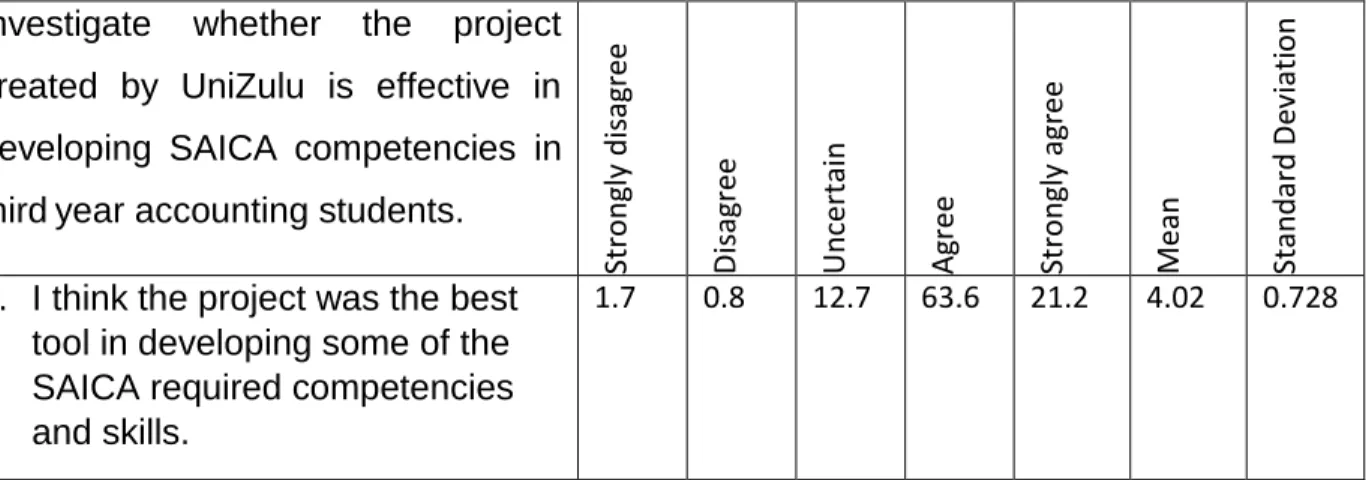
Table 4.1: Results for the first objective on the effectiveness of the project in developing SAICA competencies
Investigate whether the project created by UniZulu is effective in developing SAICA competencies in thirdyear accounting students.
1. Stro n gly d isag ree 2. D isag ree 3. Un cert ain 4. Ag ree 5. Stro n gly ag ree M ean Stan d ard D ev iati o n
5. I think the project was the best tool in developing some of the SAICA required competencies and skills.
6. I think the project covered most of the competencies and skills required by SAICA as I
understand them.
0.00 5.1 22.9 59.3 12.7 3.80 0.723
Eighty-five percent of the respondents agreed that the project was the best tool to develop some of the competencies and skills required by SAICA. This is further confirmed by the mean of 4.02 and a relatively low standard deviation of 0.728 shown in the above table. It is consistent with Stainbank’s (2013) finding that group Accounting and Auditing projects assist students in acquiring the skills required in the Accounting profession. Asked whether the project covered most SAICA competencies and skills, 72 percent of respondents agreed, with a mean of 3.8 and a standard deviation of 0. 723.
Cronbach’s alpha was used to test for the validity, reliability and internal consistency of the data. The Cronbach’s alpha reliability coefficient normally ranges between 0 and 1. There is no lower limit; however the closer the coefficient is to 1, the more reliable and consistent the items on the scale (Gliem and Gliem, 2003). For the first objective the coefficient was 60.1 percent which indicates consistency as it is to closer to one (1).
Table 4.2: Results for the second objective on whether the project improved students’ understanding of the skills and competencies required by SAICA
Establish students’ perceptions on whether the projects improved their understanding of skills required by SAICA competencies. 6. Stro n gly d isag ree 7. D isag ree 8. Un cert ain 9. Ag ree 10. Stro n gly ag ree M ean Stan d ard D ev iati o n
7. Participating in this project has given me an idea of what is expected of me as a future Chartered Accountant.
0.8 5.1 13.6 61.0 19.5 3.93 0.782
8. I understand the importance of developing these skills and competencies during my academic programme.
9. I have been exposed to the SAICA competency framework document.
0.8 13.6 37.3 33.9 14.4 3.47 0.931
10. I understand the link between Financial Accounting, Financial Management, Auditing and Tax.
0.8 5.9 44.1 49.2 4.42 0.645
11. Participating in the project has assisted me in understanding my strengths as per SAICA
requirements.
0.8 5.1 25.4 55.1 13.6 3.75 0.784
12. Participating in the project has assisted me in understanding my weaknesses as per SAICA requirements.
2.85 14.4 55.1 22. 3.91 0.837
13. Participating in the project has provided guidance on how I should learn as a future Accountant.
0.80 4.2 16.1 60.2 18.6 3.92 0.769
14. I understand SAICA’s competencies and skills
expected from me to become a successful Chartered Accountant (SA).
7.6 16.1 50.8 25.4 3.94 0.850
15. I understand the importance of working in teams.
1.7 2.5 10.2 36.4 49.2 4.29 0.878
Nine questions were posed to fulfill objective two which was to determine whether the project improved students’ understanding of the skills required by SAICA competencies. The respondents responded positively with a mean of more than three and the lowest standard deviation. Eight-one percent agreed that participation in the project gave them a clear understanding of what is expected of them as an accountant; this was confirmed by a mean of 3.93 with a standard deviation of 0.782. Ninety-two percent of the respondents agreed that the project assisted them in understanding the importance of developing these competencies for the profession, with the highest mean and the lowest standard deviation. According to Lindner et al. (2009), a student must have certain
knowledge, abilities and skills in order to complete a certain qualification (Lindner et al., 2009). However, it is important that they also understand the expected outcomes or expectations, Power et al. (2014) highlighted the importance of students being aware of such expectations in order to achieve high levels of performance.
Stainbank (2013) found that the group project for Accounting and Auditing at the University of KwaZulu-Natal assisted students in understanding the relationship between Financial Management, Financial Reporting, Auditing and Tax. Similarly, in the current study, 69 percent of the respondents affirmed that the project assisted them in understanding the relationship between these four subjects, with a mean of 3.75 and a standard deviation of 0.769. Kolb and Kolb (2009) state that a higher level of learning is achieved when connections are made between ideas.
Eight-six percent of the respondents agreed that the project helped them to understood the importance of working in teams, with a mean of 4.29 and a standard deviation of 0.878. This is supported by Razzouk et al. (2015) who observe that group work develops team work skills among higher education students, although they also noted that not all students are willing to work as part of a team.
Seventy-nine percent of the respondents agreed that participating in the project provided guidance on how they should learn as a future Accountant, with a mean of 3.92 and a lower standard deviation. This is consistent with Abeysekera’s (2011) statement that active learning should be encouraged in Accounting as students learn more by doing and this equips them for the business environment.
Finally, 76 percent of the respondents affirmed that they understand the competencies and skills required by SAICA to become a successful CA (SA), with a mean of 3.94 and a lower standard deviation.
The Cronbach Alpha coefficient is 72 percent which is closer to one (1). There is thus internal consistency and validity in the given data.
Table 4.3: Results for the third objective to ascertain students’ perspectives on whether the project assisted in developing the skills and competencies required by SAICA
Ascertain students’ perceptions on whether the project assisted them in developing the skills and competencies required by SAICA.
11. Stro n gly d isag ree 12. D isag ree 13. Un cert ain 14. Ag ree 15. Stro n gly ag ree M ean Stan d ard D ev iati o n
16. I understand the importance of making decisions in the business world.
15.3 50.0 34.7 4.19 0.683
17. I have seen the full annual report of the real company. (Do not consider small sections from book or class examples).
0.80 8.5 32.2 58.5 4.48 0.689
18. I have been exposed to a full annual report of the real company.
4.2 6.8 36.4 52.5 4.37 0.793
19. I have been exposed to a good written business report.
1.7 4.2 11 49.2 33.9 4.99 0.877
20. I can write a good written business report.
4.2 16.1 39.8 33.9 5.9 3.21 0.932
21. I can communicate my points efficiently.
1.7 5.9 25.4 62.7 4.2 3.62 0.739
22. I can use Microsoft Word with ease to write a business report
3.4 5.1 26.3 42.4 22.9 3.76 0.976
23. I find working in teams easy. 12.7 20.3 21.2 33.9 11.9 3.12 1.235
24. I believe working in teams is the most effective way to achieve best results.
5.1 7.6 14.4 48.3 24.6 3.8 1.059
25. It is easy for me to make
decisions about the performance of the company based on the information provided by the annual report.
1.7 7.6 19.5 55.1 16.1 3.76 0.874
26. I can make a decision on
whether to invest or not to invest in the company based on its annual report.
27. I can tell whether the company’s position is improving, stable or deteriorating by examining the company’s set of financial statements.
0.8 1.7 12.7 51.7 33.1 4.14 0.765
28. I am able to identify the risks faced by the company by examining the set of financial statements.
10.2 14.4 56.8 18 3.84 0.847
29. I understand the importance of Corporate Governance in the real world.
1.7 0.8 15.3 39.8 42.4 4.2 0.853
30. I understand the importance of ethical matters in the real business world.
2.5 9.3 3.9 4.32 0.846
The table shows that 85 percent of the respondents agreed that the project assisted them in understanding the importance of making decisions in the business world, with only 15 percent uncertain. The mean is 4.19 and the standard deviation is lower at 0.683. This concurs with Morgan (1976) who states that projects equip students with problem solving skills. Problem solving and decision-making work together and Turner and Baskerville (2013) note the need to develop such skills as well as critical thinking in the Accounting curriculum.
Ninety-one percent of the respondents agreed that they had seen the full annual report of a real company through the project, with a mean of 4.5 and a lower standard deviation. Morgan (1976) observes that learning is effective when students are exposed to real life situations in the form of a project.
Furthermore, 40 percent of the respondents agreed that the project developed their report writing skills, with a mean of 3.21. The mean was a bit lower than the other questions; however, it should be acknowledged that this skill is expected to develop on an on-going basis, as one gains experience in report writing. The standard deviation is low at 0.932 with 40 percent of the respondents remaining neutral. This question goes together with the one on developing the ability to communicate points effectively. According to
Casner-Lotto and Barrington (2006), report writing skills, is one of the deficiencies identified by employers among new entrants to the job market. They add that writing and advanced reporting at professional level not only requires understanding of language and the ability to put words together, but critical thinking and deep understanding of the subject matter (Casner-Lotto and Barrington, 2006). It integrates problem solving and the ability to decide what needs to be communicated (Kellogg, 2008). Kello thus observes that learning to write should be regarded as something which matures with experience in a specific field. It should also be noted that English was a second language for all the study respondents. According to Kroll (1990), among second language speakers, writing in English is seen as an act of habit formation, with the learner simply manipulating previously learned language structures (Kroll, 1990).
Only 65% of the respondents affirmed that they could use Microsoft Word with ease to write a business report. This is acceptable considering the high mean of 3.76 and a standard deviation of 0.739. According to SAICA (2016), it is vital that CA candidates are adequately trained to use IT and understand its impact on the life of a CA.
The findings show that only 46 percent of the respondents agreed that they found it easy to work in teams, while 33 percent disagreed with this statement and 21 percent were unsure. This concurs with Razzouk et al.’s (2015) observation that not all students embrace team work; it is hence difficult for the assessor to assess group participation. Tsay and Brady (2010) state that people’s attitudes to team work are influenced by many factors, including background, socio-economic status and cultural beliefs and that competitiveness among team members also demotivates students. However, 72 percent of the respondents agreed that working in teams is one of the most effective methods to achieve results even though they might find it difficult to do so.
Seventy-one percent of the respondents agreed that it is easy to make decisions about the performance of a company based on the information provided in the annual report, with a mean of 3.76 and a lower standard deviation. This concurs with Stainbank’s (2013) finding that students felt that the group project made it easier to analyse the company based on the annual report.
Seventy-one percent of the respondents also agreed that they could make a decision on whether or not to invest in a company based on its annual report, with a mean of 3.89 and a standard deviation of 0.941. Abeysekera (2011) and SAICA (2016) note that Accounting students need to be trained to be able to make decisions that are critical in the real business world. Furthermore, 85 percent of the respondents agreed that the project equipped them to tell whether or not a company’s position is improving, stable or deteriorating by examining its financial statements.
Seventy-five percent of the respondents agreed that they were able to identify the risks faced by the company by examining the set of financial statements, with a mean of 4.14. According to SAICA (2016), a CA must be trained to analyse financial statements, identify the risks and devise appropriate risk management strategies to assist the company and increase shareholders’ value.
Eighty-two percent of the respondents agreed that the project assisted them in understanding corporate governance. This is one of the competencies that SAICA requires the academic program for CAs to cover.
Finally, only 4% of the respondents agreed that they understood the importance of ethical matters in the real business world. This is of concern as, according to SAICA (2016, p. 34), candidates are expected to adhere to the law, professional standards and the rules of professional conduct when exercising professional judgement. All professionals are expected to abide by the ethical rules of their organisation (SAICA, 2016).
The Cronbach Alpha coefficient is 78 percent, indicating internal consistency and validity as it is closer to one (1).
4.3 Further Data Analysis
Table 4.4: Analysis of students’ age vs. project being the best tool to develop competencies
Strongly
Disagree Disagree Neutral Agree
Strongly
Agree Total
Age 18-21 0 0 9 33 12 54
22-25 2 1 5 30 10 48
Above 30 0 0 0 1 0 1
Total 2 1 15 75 25 118
In the age category 18-21, 45 of the 54 respondents (83 percent) agreed that the project was the best tool to develop the competencies required by SAICA. In the age group 22-25, 40 of the 48 respondents (83 percent) agreed with this statement. However, the relationship between the age group and the project being the best tool to develop the competencies required by SAICA is statistically insignificant with a p-value of 0.886.
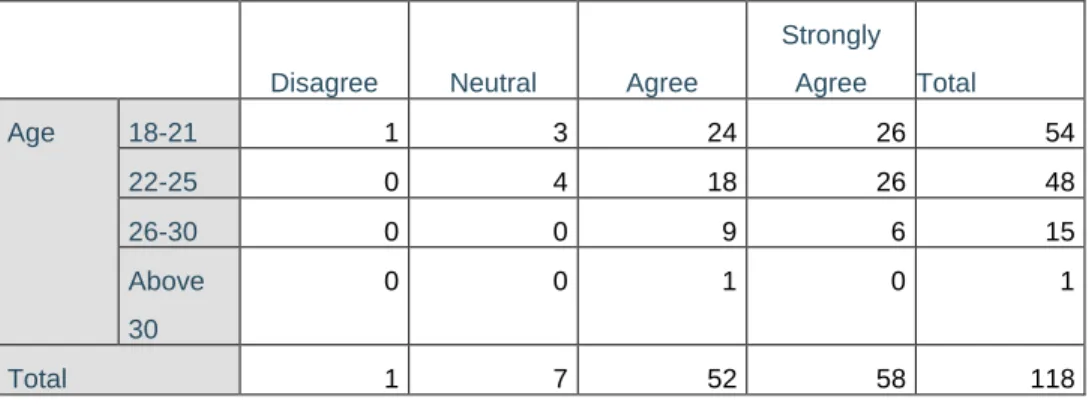
Table 4. 5 Analysis of student’s age vs. students’ understanding of the link between Financial Accounting, Auditing, Financial Management and Taxation after participating in the project
Disagree Neutral Agree
Strongly Agree Total Age 18-21 1 3 24 26 54 22-25 0 4 18 26 48 26-30 0 0 9 6 15 Above 30 0 0 1 0 1 Total 1 7 52 58 118
In the 18-21 age category, 50 of the 54 respondents (93 percent) agreed that the project improved their understanding of the link between Financial Accounting, Financial Management, Auditing and Tax. In the 22-25 age group, 44 of the 48 respondents (92 percent) agreed with this statement. However, the relationship between the age group and understanding the link between the four modules is statistically insignificant with a p-value of 0.773.
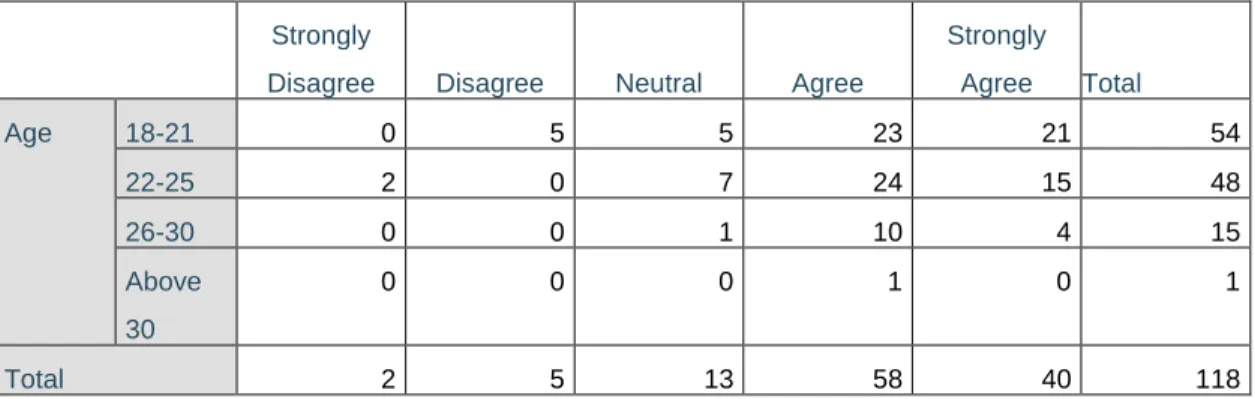
Table 4. 6 Analysis of students’ age vs. understanding the importance of working in teams as a result of participation in the project
Strongly
Disagree Disagree Neutral Agree
Strongly
Agree Total
Age 18-21 1 2 4 15 32 54
22-25 1 1 6 22 18 48