ScholarWorks
Walden Dissertations and Doctoral Studies Walden Dissertations and Doctoral StudiesCollection
2018
Strategies for Developing and Implementing
Information Technology Systems for EHRs
Priscilla RiddleyWalden University
Follow this and additional works at:https://scholarworks.waldenu.edu/dissertations Part of theBusiness Commons, and theHealth and Medical Administration Commons
This Dissertation is brought to you for free and open access by the Walden Dissertations and Doctoral Studies Collection at ScholarWorks. It has been accepted for inclusion in Walden Dissertations and Doctoral Studies by an authorized administrator of ScholarWorks. For more information, please [email protected].
Walden University
College of Management and Technology
This is to certify that the doctoral study by
Priscilla Riddley
has been found to be complete and satisfactory in all respects, and that any and all revisions required by
the review committee have been made.
Review Committee
Dr. D’Marie Hanson, Committee Chairperson, Doctor of Business Administration Faculty
Dr. Karin Mae, Committee Member, Doctor of Business Administration Faculty Dr. Neil Mathur, University Reviewer, Doctor of Business Administration Faculty
Chief Academic Officer Eric Riedel, Ph.D.
Walden University 2018
Abstract
Strategies for Developing and Implementing Information Technology Systems forElectronic Health Records
by
Priscilla Riddley
MS, Walden University, 2012 BS, Johnson C. Smith University, 1985
Doctoral Study Submitted in Partial Fulfillment of the Requirements for the Degree of
Doctor of Business Administration
Walden University April 2018
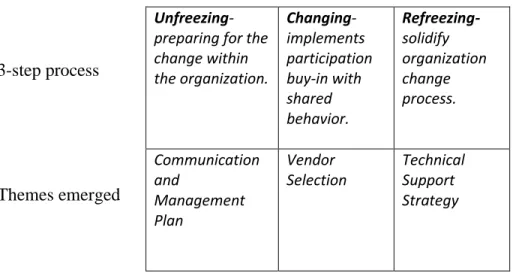
Some hospital leaders lack the technical expertise to implement electronic health records (EHRs) even though the healthcare industry has a government mandate. The purpose of this single case study was to explore strategies healthcare executives use to develop and implement information technology systems for processing EHRs. The target population consisted of healthcare leaders and managers successful in implementing EHR systems in a healthcare organization. Lewin’s 3-step change theory was used as the conceptual framework for this study with data collected from observations (5), semistructured interviews (5), and organizational documents. Descriptive coding was used to identify 3 themes that emerged from observations, document analysis, recording and analyzing the interview transcripts of research participants. The themes included communication and management plan for EHR implementation, information technology EHR vendor
selection, and EHR implementation technical support strategy. The findings benefit both the patients and clinicians with the potential to improve healthcare service delivery utilizing electronic technology for documenting physician visits. Study results may assist healthcare providers with identifying implementation strategies successful for EHR adoption and assisting with speeding the process. The research findings may contribute to social change through increasing patient access to treatment along with community engagement in using EHRs by information sharing to reduce healthcare cost.
forElectronic Health Records by
Priscilla Riddley
MS, Walden University, 2012 BS, Johnson C. Smith University, 1985
Doctoral Study Submitted in Partial Fulfillment of the Requirements for the Degree of
Doctor of Business Administration
Walden University April 2018
First, I give praises to my Lord and Savior for empowering me to complete my doctoral degree. For I can do everything through Christ, who gives me strength. Philippians 4:13 NLT. I dedicate this research study to my parents (Walter & Priscilla), my husband (Corey), and my sons (Austin & Kyle). Thank you for all your support and encouragement during this enormous task.
First and foremost, I would like to thank my doctoral committee for their support, encouragement, and guidance during this DBA journey. To my outstanding chairperson Dr. Cheryl McMahan, who provided scholarly academic excellence during this process along with Dr. Dorothy Hanson. Also, thank you to my second committee member Dr. Karin Mae for the positive contributions and input for this study. To my URR, Dr. Neil Mathur, thank you for your scholarly reviews of my study. Finally, to my family and friends thank you for allowing me to lean on you when I became tired and overwhelmed. Lastly, thank you to the research participants that made this research study possible and successful. This doctoral accomplishment was a great milestone in my life with the wonderful assistance of Australia Walker and Kevin Hooks.
i
List of Figures…..…….……….……….iv
Section 1: Foundation of the Study ...1
Background of the Problem ...1
Problem Statement ...2
Purpose Statement ...3
Nature of the Study ...4
Research Question ...5
Interview Questions ...5
Theoretical or Conceptual Framework ...6
Operational Definitions………..8
Assumptions, Limitations, and Delimitations ...9
Assumptions ... 9
Limitations ... 9
Delimitations ... 10
Significance of the Study ...10
Contribution to Business Practice ... 10
Implications for Social Change ... 11
A Review of the Professional and Academic Literature ...11
Conceptual Framework Theory...…….………….……….………...13
Analysis of the Conceptual Framework.………....16
Supporting and Contrasting Theories...……….…16
ii
Healthcare Delivery and Quality for EHR's...….……….……….…25
Potential Themes……….……….……….30
Leadership Implementation Controls for Change………….………...31
EHR Technology Project Vendor………...………35
Implementing the EHR system……….….………...……….…39
Context of Implementing EHR as a system…… ….……….…………44
Literature Review Summary………….….……….………...46
Transition ...46
Section 2: The Project ...48
Purpose Statement ...48
Role of the Researcher ...49
Participants ...51
Research Method and Design ...53
Research Method ... 53
Research Design... 54
Population and Sampling ...57
Ethical Research...59
Data Collection Instruments ...62
Data Collection Technique ...63
Data Organization Technique ...67
Data Analysis ...68
iii
Validity ... 73
Transition and Summary ...74
Section 3: Application to Professional Practice and Implications for Change...75
Introduction ...75
Presentation of the Findings...76
Theme 1: Communication and Management………...79
Theme 2: Vendor Selection……….….……..…...81
Theme 3: Technical Support strategy.…...83
Summary of Themes ...84
Application to Professional Practice ...86
Implications for Social Change ...88
Recommendations for Action ...88
Recommendations for Further Research ...90
Reflections ...91
Conclusion ...92
References ...93
Appendix A: Interview Protocol ...120
Appendix B: National Institute of Health Certificate ...122
Appendix C: Letter of Cooperation……….……….………...123
iv
Figure 1. The three steps of Lewin’s change theory……….………...7 Figure 2.The NVivo 11 data themes evolved from the word tree………....84
Section 1: Foundation of the Study
The purpose of this qualitative single case study was to determine strategies healthcare executives used to develop and implement information technology systems for processing electronic health records. This section begins with a background of the
problem followed by the problem statement. The purpose statement includes the intent for the research. This section also includes nature of the study and the research method and design that I used to support the research question. I present the interview questions that I used to address the research question. The section also includes a list of operational definitions and assumptions, limitations, and delimitations. I conclude the section with a statement of the significance of this study and a review of the professional and academic literature.
Background of the Problem
Healthcare professionals continue to create innovative ways to complete clinical documentation to transfer to an electronic system using information technology systems. Being in the healthcare industry, I have challenges in sharing data electronically for care coordination. Birken et al. (2015) suggested “implementing even seemingly simple healthcare innovations has proven to be challenging” (p. 159).When any interdisciplinary team (multiple medical specialties including the doctor, nurse, clinician, therapist, and counselor) meet to collaborate or discuss an individual’s healthcare, it requires
documentation from each disciple to analyze and determine the steps for the general treatment process. Some healthcare executives continued to struggle with processing electronic health records, due to the lack of strategies to develop and implement an
information technology system. By implementing an information technology system, the struggle of sharing information with other providers would provide quicker, more
efficient processing of coding, billing, and diagnosis.
Where treatment practices are elaborated on for interdisciplinary collaborations by clinicians, and involving the active contribution of multiple medical specialties, handling distribution of large amounts of data is important, but challenging (Kessel et al., 2014). Change is a part of the development and implementation process required by healthcare management to create strategies for being successful. The physician’s
treatment of the patient and for research itself ensures appropriate strategies with access to the information needed. The clinical environment requires documentation and data management systems that integrate while enhancing the electronic data capture for all disciplines (Birken et al., 2015). Combining patient data by healthcare professionals from all involved information technology systems is certain to happen for analysis purposes (Kessel et al., 2014).
Problem Statement
The inability to implement health information technology tools in North Carolina has resulted in delayed clinical documentation and workflow (Sequist, 2015). In 2012, coding 656 medical records took 219 hours (20 minutes per file) and inputting the same records into the system added an additional 219 processing hours (DeAlmeida et al., 2014). The general business problem was that some healthcare organizations’ documentation delayed negatively affect service delivery productivity. The specific
business problem was that some healthcare executives lacked strategies to develop information technology systems for processing electronic health records.
Purpose Statement
The purpose of this qualitative single case study in Charlotte, North Carolina was to determine strategies healthcare executives used to develop and implement information technology systems for processing electronic health records in the Fall of 2017. Five participants for the single case study included clinicians, managers, and executives who supported the use of computerized provider order entry and clinical decision-making support. I selected The Charlotte, North Carolina human services healthcare organization due to the organization's successful strategies to develop and implement electronic health records (EHR) at the participant work site increasing service delivery. Findings from the study may result in the positive social change of improving healthcare service delivery using electronic technology for documenting physician visits. While making office visits more efficient for each clinical discipline accessing and using health care records. The clinical data would be readily available for assessing and avoiding delays in coordination of care. Patients and their families could benefit by spending less time in the doctor’s office for community healthcare.
Nature of the Study
Qualitative research was the best method for exploring strategies from the
healthcare executive’s perspective using multiple data resources. Researchers who used a quantitative approach use numerical data to measure results and test hypotheses, and researchers who use a qualitative approach to interpret the findings during the review
process caused a change (Plotnikov & Vertakova, 2014). I selected the qualitative research method for the in-depth collection of data and analysis which was best for this study. The quantitative method entails digital data collection along with exhibiting a deductive view of the relationship between research and theory (McCusker & Gunaydin, 2015). The depth of data sought from this study is through a qualitative method using open-ended questions to collect data. Mixed method researchers focus on using multilevel perspectives which included using both the qualitative and quantitative methods for the real-life contextual understanding of a phenomenon (Hughes, 2016). A mixed method approach was not considered appropriate for this research study due to intense data collection process and time constraints. I chose a qualitative research method, using open-ended interview questions, documents, and observation notes.
I used a single case study design to explore strategies to develop and implement information technology systems for processing electronic health records. Multiple
employees contributed to exploring a real-life event using a single case study design with one organization providing in-depth data collection (Yin, 2014). Employing a case study is useful to analyze a complex real business situation (Hyett, Kenny, & Dickson-Swift, 2014). Participant interview responses to my study from the open-ended questions of why and how aboutstrategies used to develop and implement information technology systems for processing EHR ensured data collection relating to the phenomenon (Hyett et al., 2014). More extensive amounts of evidence are provided through the case study design than other qualitative designs (Yin, 2014). I used a qualitative case study research design to explore my study topic providing a complex, in-depth, and detailed perspective.
Qualitative designs possible to use for research include ethnographic,
phenomenological, and case study. I did not use an ethnographic design because my topic does not address a culture’s characteristics or relations among groups through
interactions with participants and direct observations (Hyland, 2016). The
phenomenological design is not appropriate for my study due to not focusing on human experiences from the view of living the phenomenon (Yin, 2014). I selected the case study design to gather data for exploring strategies for developing information
technology systems for processing electronic health records. A single case study design was most appropriate for this research due to in-depth data collection from multiple data sources and experiences of participants in one organization’s facility.
Research Question
The research question for the study was: What strategies did healthcare executives use to develop information technology systems for processing EHRs?
Interview Questions
1. What strategies did you use to develop the information technology systems for processing electronic health records?
2. What did you do to contribute to the implementation or designing the system for processing electronic health records?
3. How did you ensure appropriate actions are selected for developing and
integrating information technology systems to process your organization’s EHRs? 4. What challenges did you experience when developing and implementing the
5. How did you address the barriers to implementing the strategies to develop information technology systems for processing EHRs?
6. What additional information would you like to add to strategies for developing and implementing information technology systems for processing EHRs?
Conceptual Framework
I used Lewin’s (1951) change theory of nursing as the conceptual framework for this study. This theory includes a model defining the phases in explaining the incremental change process in an organization (Pettigrew, 2013). I used conceptual framework
theories to make comparisons between scholarly literature, making connections with methodology, and finding outcomes with results of the study (Borrego, Foster, & Froyd, 2014).
Determining the nature of change management strategies involves stakeholders with change agents playing an important role (Hossan, 2015). Lewin’s change theory of nursing concepts consists of addressing implementation, motivation, and adherence to organizational change (Lewin, 1951). Implementing change could have be an ongoing process or a one-time occurrence for the organization, and with the continuous change, the process omits the refreezing phase. In the case of one-time change, the process begins with unfreezing, then moves to a new state and refreezes or consolidates the new state (Lewin, 1951). Creating the content of strategic change includes managing its context and process (Pettigrew, 2013). Describing the process of change is vital when documenting the steps of events or actions which lead an organization to adopt the content of a new
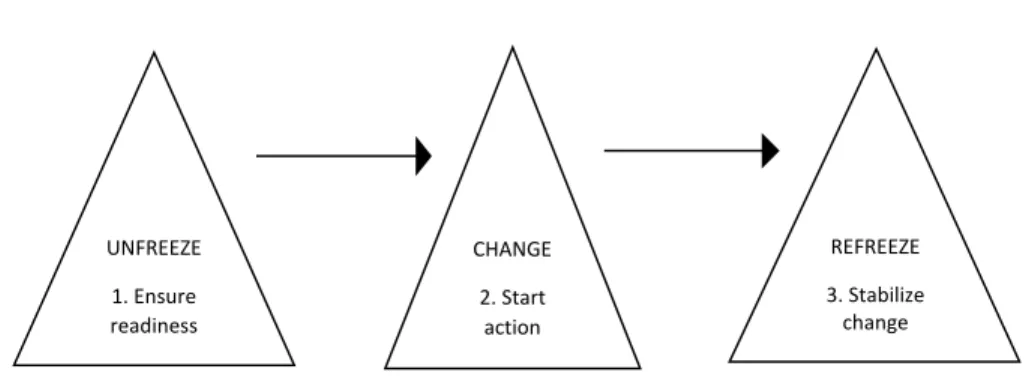
initiative and the initiative’s implementation (Pettigrew, 2013). I created a visual aid of Lewin’s change theory showing the three-step process (see Figure 1.).
Generally, successful change improved organizational effectiveness during the change management process approach, when one section implemented change other sections changed (Robbins & Barnwell, 1998). Lewin’s change theory of nursing treated an otherwise peaceful world as an occasional disturbance when referencing change (Cummings, Bridgman, & Brown, 2015). My case study participants described the strategies their organization used to develop information technology systems for
processing electronic health records; using Lewin’s three-step change theory of nursing provided a means for interpreting the key themes that evolved from the study and identified appropriate actions.
Figure 1. The three steps of Lewin’s change theory of nursing.
Lewin’s change theory of nursing was relevant to this study because the implementation is complex for EHR. Changes in government regulations focused on
CHANGE 2. Start action UNFREEZE 1. Ensure readiness REFREEZE 3. Stabilize change
healthcare organizations to implement EHR to create a platform to share decision making between the healthcare provider and consumer (NCDHHS, 2016). In general, the
development and quick response to change regarding internal and external environments will keep the healthcare organization in a competitive marketplace with structure and delivery of services.
Operational Definitions
Electronic health record (EHR): An EHR is a repository of patient health data in an electronic form, stored and transmitted securely, and can be accessed by multiple authorized users to support integrated healthcare (Goveia et al., 2013).
Health information technology (HIT): Health information technology is a useful method for information processing for data entry, storage, sharing, and retrieval which uses both computer software and hardware for the utilization of health care information (Wears, 2015).
Information Technology Systems (ITS): Computerized techniques with a wide range for processing large amounts of information rapidly which enables communication with several related applications in software (Lee et al., 2015).
Leadership: Leadership references an individual who uses interpersonal skills to influence, inspire and motivate team members to follow goal visions by encouraging and developing new problem-solving methods for reaching objectives (Kaiser, McGinnis, & Overfield, 2012).
Provider: Health care providers are practitioners trained and educated to deliver services using administrative and clinical support to beneficiaries, which includes all healthcare disciplines (Smith, Saunders, Stuckhardt, & McGinnis, 2013).
Strategy: The definition of strategy is a long-term plan and approach towards achieving the optimum goal for the success of the organization specific visions and objectives to meet end results (Mahdi, Abbas, Mazar, & George, 2015).
Assumptions, Limitations, and Delimitations Assumptions
Dusick (2014) defined assumptions as statements of realistic expectations researchers accept these as true or possible without proof. One of my assumptions was that regarding the perceptions and meaning the questions present concerning the
participants’ experiences were relatable. My central assumption was that participants are prepared to provide sufficient insightful information for the essence of the lived
experience real world meaning. I assumed the participants gave open responses during the confidential interviews. I assumed participants had the necessary experience to explore strategy effectiveness for implementing information technology.
Limitations
Silverman (2016) defined limitations as uncontrollable contexts, stimuli, and insufficiencies that confine research studies. Researcher bias is another limitation in the process of qualitative data collection. Limitations included a small sample size within one organization. This specific organization management developed and implemented EHRs successfully which is the reason for the selection of this organization for my study. The
interviews sessions, due to the healthcare clinicians work schedules and timeframes had restriction limits.
Delimitations
Delimitations are defined by the researcher’s boundaries of the study or selection of the scope (Dusick, 2014). The study’s sample size and participant population along with the location setting narrowed the scope of the study. Time was a delimitation
dependent on conditions over a particular period intentionally imposed and introduced by me. The scope of this study was limited to North Carolina, with healthcare executives participating at their organization worksite.
Significance of the Study Contribution to Business Practice
Findings from the study provide healthcare leaders with strategies to develop and implement information technology systems to process electronic health records. The prospect of change is challenging for small and big organizations. Health care business leaders might use results of my study to improve the practice of processing electronic health records. The results and findings of this qualitative single case study may advance understanding and minimize clinical disruption in overcoming barriers during the process of developing and implementing information technology systems for electronic health records. Additionally, my findings could support identifying and adopting models for creating a successful transition for processing electronic health records.
Exploring the strategies healthcare provider organizations use to develop information technology systems for processing EHRs may create change for providing better healthcare. Business practitioners and researchers can use study results to
understand how management may align business strategies with information technology developments for processes and techniques. Healthcare organizational performance can be enhanced by implementing and using EHRs. Reducing operational and
implementation cost may be identified by management using the strategies from this study. The implications create a positive social change in the community by an increase of patients being seen at office visits with documentation readily available to the
healthcare professional. The findings from this study may be of significance providing a smoother transition for implementing technology systems to enhance data collection for EHR improving organization morale during the process. All communities need successful healthcare organizations to provide a broad range of services to meet their requirements to document for treatment, code and bill correctly, along with coordinating health care service delivery.
A Review of the Professional and Academic Literature
The purpose of this literature review was to explore the strategies used to develop and implement information technology systems for processing electronic health records. The conceptual framework for this study is Lewin’s change theory-three step model for change. Onwuegbuzie & Weinbaum (2016) stated reviewing current literature of topic demonstrates awareness. I provided continuous up to date awareness of the research topic using literature. Literature reviews inform analysis and interpretation of sources for the
research process (Onwuegbuzie & Weinbaum, 2016). The literature sources for this study includes peer-reviewed articles, scholarly journal articles, seminal books, and published dissertations.
I reviewed 175 sources, with peer-reviewed sources constituting 161 or 92%. In the literature review, I reviewed 71 sources with 67 or 94% peer-reviewed articles from journals. The study references include 162 current references or 93% and the literature review contains 63 current references or 89%. The primary databases review includes health sciences, business, and management on online databases in the Walden University Library and Google Scholars. I searched online databases including ProQuest
Dissertation, Electronic Business Source Complete, ProQuest Central, and EBSCOhost. Additional online sources include the Cochrane Reviews, PubMed, and Web Knowledge databases.
I used the following keywords to search for literature: healthcare implementation, electronic health record development, health information technology, electronic medical record, computerized physician order entry, computerized patient record, strategic change challenges, information technology systems, healthcare mandates, Lewin’s change theory, provider adoption, and clinical documentation. I retrieved some resources from books or special reports on studies regarding developing andimplementing
information technology systems forelectronic health records. The literature review covers the conceptual framework - Lewin’s change theory, analysis of the conceptual framework, supporting and contrasting theories for the framework, strategies for developing and implementingEHR’s, healthcare delivery and quality for EHR’s. The
review covers change strategies and addresses potential barriers for EHR implementation from the organizational perspective. The potential themes from the study include
leadership implementation controls for change, EHR technology project vendor, implementing the EHR system, and context of implementing EHR as a system.
Conceptual Framework: Change Theory of Nursing
Lewin published the change theory of nurse in 1951 (Lewin, 1951). How change is managed varies depending on the business nature, the change, and the individuals involved (Inokuchi et al., 2014). Organizations having the capability of managing change appear to prosper (Fritz et al., 2015). The key element is how individuals within the organization understand, as well as deal with the process of change (Worley & Mohrman, 2014). Lewin developed a three-step change model that is an appropriate conceptual framework for understanding the strategies for developing and implementing information technology systems forelectronic health records. Using Lewin’s change model is simple and critical in different phases of the change management application referred to as the unfreeze-change-refreeze (Eden et al., 2016).
Lewin’s first step regarding the change behavior process entails unfreezing the current situation or the status quo. Researchers stated that the status quo is the
equilibrium state which is when opposing forces are balanced (Eden et al., 2016). Unfreezing is vital in overcoming the strains of personal resistance to change, as well as the group conformity to change (Fritz et al., 2015). There is an achievement of unfreezing through the application of three diverse methodologies which include increasing the forces that direct away from current situation, decreasing restraining forces which
negatively affect change, and find a combination of both methods (Eden et al., 2016). Researchers suggested Lewin’s change model is critical to raising the driving forces that direct the behavior away from the current situation or the status quo and causes a change to occur (Hossan, 2015). Behavior as defined in the change model is forces being
balanced working in opposite directions (Hossan, 2015). Decreasing the limiting forces that negatively impact the movement from the current equilibrium causes opposition to change (Eden et al., 2016). When driving forces are the same as restraining forces, this is an equilibrium state of being which brings about no change (Fritz et al., 2015). Some actions that can aid in the step of unfreezing include the motivation of the participants by preparing them for change, developing trust and recognition for the change need, and actively participating in recognizing challenges and coming up with solutions within a group (Nguyen, Bellucci, & Nguyen, 2014).
The second step of Lewin’s model in the change behavior process is the movement that involves being more liberating or productive. In this step, the change behavior process is critical to moving the target system to a new equilibrium level (Mitchell, 2013). This action aids in the movement process including the persuasion of the management in agreeing that the status quo was not beneficial to them and
encouraging them to perceive the challenge from a fresh viewpoint (Nguyen et al., 2014). Moving into a new state of being allows working together on a search for novel
applicable information successful for transitioning. Connecting the group’s views through communication to the powerful leaders who also support the change becoming reality
(Nguyen et al., 2014). This step of the change model assists organizational leaders with introducing change in a way that is strategic and systematic (Nguyen et al., 2014).
Refreezing is the third step of Lewin’s model of three-step change. Step three should take place after the implementation of the change so the process can be sustained over a given period (Eden et al., 2016). If this step is not undertaken, there is a possibility for the change to be short-lived and the workers will revert to their old equilibrium (behavior) (Worley & Mohrman, 2014). Researchers have shown freezing is the actual integration of the novel values into the community values, as well as the traditions organization’s use to reinforce an acceptable new state (Mitchell, 2013). Being repetitive and educating the organization on the new norm solidifying the change. The main aim of freezing is stabilizing the novel equilibrium coming from change through balancing both the driving, as well as the limiting forces (Emmanuel, 2014). One activity that can be applied in implementing Lewin’s third step is through reinforcing the novel patterns, as well as institutionalizing them through formal and informal mechanisms such as the policies and procedures (Mitchell, 2013).
Lewin’s change model indicates the effects of forces that either enhance or inhibit the process of change (Cummings, Bridgman, et al., 2015). The driving forces enhance the change process while the limiting forces oppose the change (Cummings, Bridgman, et al., 2015). Change happens when the combined strength of one force is greater in
comparison to the strengths of the opposing set of forces (Emmanuel, 2014). Research studies examining the occurrence of change within the Lewin’s change theory have similar findings (Emmanuel, 2014; Cummings, Bridgman, et al., 2015).
Analysis of the Conceptual Framework
Lewin’s change model is rational and goal- and plan-oriented. The main concepts of Lewin’s change theory are addressing implementation, motivation, and adherence to organizational change (Lewin, 1951). Driving and restraining forces and equilibrium stabilizing are required processes for Lewin’s change model to be effective for sustaining organizational change (Eden et al., 2016).
Healthcare facilities continue to integrate new technologies and software to manage the challenge of change with stakeholders buy in giving the organization a competitive advantage for successful implementation. Careful planning and structured execution provide a smooth transition for organizations using Lewin’s change theory. Employee participation is an effective strategy for driving change in the desired direction with knowledge sharing to drive forces with minimum resistance. Limiting forces such as organizational processes impede change because they push the employees in the opposite direction (Mitchell, 2013). Lewin’s change theory of nursing model indicates the impacts of the forces that either promote or inhibit the organizational change process (Worley & Mohrman, 2014). There is an occurrence of change when one force’s combined strength is more than the pooled strength of the opposing sets of forces (Mitchell, 2013). Lewin’s change theory of nursing model is vital for managing change and guiding the process to engage all stakeholders in successfully creating change within the organization whether planned or unplanned.
The social cognitive theory created by Albert Bandura in 1963 is interpersonal and addresses how the change of behavior is impacted by the environmental influences, individual aspects, and behavior attributes (McLeod, 2016). Social cognitive theory uses behavior change interventions to explain why interventions are successful or fail based on both employee motivation and behavior (Mitchell, 2013). Organizational environment complexity represents the level of performance standards enhancing changeability for the employee. Lewin’s change theory of nursing model makes rational sense because it considers both the external, as well as internal environmental situations not behavior (Worley & Mohrman, 2014). With the social cognitive theory, focus is on the internal and external factors that expose and align with behavior change for employees. This theory does not address change processes for implementing information technology systems for EHR but provides a range of interaction from a cognitive perspective
including mediational processes for attention, retention, and motivation (McLeod, 2016). Lippitt’s theory of planned change involves an agent of change instead of the change process itself (Al-Haddad & Kotnour, 2015). Lippitt’s theory of planned change (1958) is an extension of the Lewin’s three-step change theory of nursing which is based on recruiting an external change agent to create a plan to effect change (Lippitt, Watson, & Westley, 1958). An exchange of information is continuous throughout the change process by the change agent with all stakeholders. Lippitt’s change model has a cyclical process with a concentration on the change agent that includes seven steps that include exploring and examining the organizational problem, planning and establishing change action to be taken, apply and stabilize the change, lastly evaluate the change (Al-Haddad
& Kotnour, 2015). The seven steps for Lippitt’s change model include diagnosing the problem, make assessment of motivation, evaluate change agent’s resources, change objects selection, assign change agent role, stabilize change, and terminate relationship with change agent (Lippitt et al., 1958). Specifically, Lippitt’s theory of planned change focuses more on the role and the responsibility of the change agent than on the change evolution. In comparison, Lippitt’s change theory steps one-three relate to Lewin’s unfreezing phase, next Lippitt’s steps four-six relate to Lewin’s changing phase, while Lippitt’s step seven is comparable to refreezing Lewin’s last phase.
The transtheoretical model of behavior change by Prochaska and DiClemente’s (1983) is different from the Lewin’s change model (Clark et al., 2015). This model of behavior change represents five stages of change: pre-contemplation, contemplation, action, maintenance, and relapse with progression being cynical not linear using single steps (Davis, Campbell, Hildon, Hobbs, & Michie, 2014). The transtheoretical model of behavior change takes the relapse or the failure for converting to the preferred behavior (Davis et al., 2014). Change can require several approaches and the actions or stages for
behavior change may be deemed appropriate by leadership (Clark, Heiderscheidt, & Peel,
2015). Using the transtheoretical model of behavior change, the individuals who may relapse, failing to meet their change efforts can revisit the stage of contemplation, and make plans for future actions (Clark et al., 2015). Upon review of this model structure which takes failures to convert to desired behavior, the transtheoretical model of behavior change as described by Davis et al. (2014) would not provide the change approach for implementing information technology systems for processing electronic
health records. Lewin’s change theory of nursing does not involve behavior change and is appropriate for the EHR implementation process. Transtheoretical model of
behavior change references only individuals and their readiness for staging change. The theory of planned behavior (TPB) developed by Ajzen (1991) for predicting and understanding how intentions of an individual reflects on their actions. With TPB, the key component is behavioral intent which includes perceived control over the skills required for performing an action with the desired behavior (Kautonen, van Gelderen, & Fink, 2015). Ajzen (1991) posits the theory of planned behavior applies to evaluate diverse behavior patterns through the use of three constructs: individual attitude,
subjective norms, and the perceived behavior control. Kautonen, van Gelderen, and Fink (2015) states that both intention and behavioral control will determine behavioral
achievement influenced by attitude. The theory of planned behavior was not appropriate for this study because I am not exploring the individual’s behavioral intentions but
looking at the strategies used in developing and implementingtheinformation technology systems for processing electronic health records.
The three opposing theories for this study include social cognitive theory, Lippitt’s theory of planned change, and the transtheoretical model of behavior change which offer explanations for understanding each theory regarding the phenomenon. Improving the chances of success for implementing change in organizations requires planning carefully and building the foundation. The following section provides an overview of alternative theories including Kotter’s change management model and
Prosci’s Awareness, Desire, Knowledge, Ability, and Reinforcement (ADKAR) change model as they relate to and support the conceptual framework.
Implementing EHR requires more than the application of technology. Kotter’s eight-step change model (1995) developed by John Kotter indicates an organizational change has both emotional and situational components that can be managed with a dynamic, nonlinear eight-stage approach (HRSA, 2013). Kotter’s change model includes these eight steps: create a sense of urgency, form a
powerful coalition, create a vision for change, communicate the vision, remove obstacles, create short-term wins, build on the change, and anchor the changes in corporate culture (Hornstein, 2015). Being logical and consistent, the three phases for Kotter’s change model may create short-term successes while requiring
leadership to be engaged with supporting the change process for the organization. Phase one is creating a climate for change which include steps one, two, and three, phase two is engaging and enabling the whole organization which includes step four, five, and six, and phase three is implementing and sustaining the change which includes steps seven and eight (Hornstein, 2015). Leaders can manage the challenges for the change initiative using this organized three-phase process (HRSA, 2013) along with the eight-step approach.
Phases are consistent to Lewin’s change theory which represents the unfreeze, movement, and refreeze process (Hornstein, 2015; Worley & Mohman, 2014). Kotter’s phase one included steps 1, 2, and 3 (create a sense of urgency, form a powerful coalition, and create a vision for change), then phase two includes steps 4, 5, and 6 (communicate
the vision, remove obstacles, and create short-term wins), and phase three has steps 7 and 8 (build on the change and anchor the changes in corporate culture) (Hornstein, 2015). Lewin’s change theory model is less flexible than Kotter’s eight-step change model (Hornstein, 2015).
The principles and strategies of change management should be integrated into the development and implementation process during all phases to create an alignment
(Worley & Mohrman, 2014). Other researchers have modified theories from the original Lewin’s change theory of nursing for the creation of modified theories (Hornstein, 2015; Worley & Mohman, 2014) providing a rigorous, complex, and time-consuming
change management process. While Kotter’s change model theory has similarities to Lewin’s change theory of nursing, the content and predictors differ with Kotter being an eight-step approach and Lewin a three-step approach.
Change management manages the change process by identifying the ambiguous, structure, and direction. The Prosci’s Awareness of the need for change, Desire to support and take part in the change, Knowledge of how to change and what to do, Ability to implement the change on a day-to-day basis, Reinforcement to sustain the change (ADKAR) change model developed in 2003 by Jeff Hiatt and focuses on goal-oriented change management for organizations and individuals (Worley & Mohrman, 2014). ADKAR change model fails to demonstrate the difference between organizational and individual changes, and fails to label change as complex (Hornstein, 2015). Most scholars found ADKAR change model to focus on results from change management tactics or approaches.
ADKAR change model is a systemic phenomenon which involves multiplicity of variables with interdependence; each alphabet refers to the following stages: awareness of the need to change, desire to support and participate in the change, knowledge of how to change, ability to implement required skills and behaviors, and reinforcement to sustain the change (Hornstein, 2015). Using the ADKAR change model allows various goals for change management teams to focus on steps, outcomes, and results that can be sustained and implemented (Saulnier, 2017). This ADKAR change model provides help and support to transitioning employees during the change process, also to diagnose and treat change resistance by employees (Saulnier, 2017). Recognizing disruptions by introducing data and information showing discrepancies between behaviors desired by the organization to engage in the change process (Worley & Mohrman, 2014). Similarly, “awareness and desire (A and D in the ADKAR model) reflect unfreezing, knowledge and ability (K and A in the ADKAR model) reflect moving, and reinforcement (R in the ADKAR model) reflects refreezing” (Worley & Mohrman, 2014, p. 4).
“Action research extended this model by suggesting that change was more cyclical than that implied by the refreezing stage but still held to the basic change logic” (Worley & Mohrman, 2014, p. 4). The ADKAR change model makes it possible to identify and evaluate reasons why changes are not working but ADKAR change model does not provide organizational continuous improvement while offering solutions to identify barrier points at each stage of change process (Worley & Mohrman, 2014). The ADKAR change model focuses on outcomes and does not provide a framework to
examine strategies for developing and implementing information technology systems for electronic health records.
Strategies for Developing and Implementing EHR’s
Acknowledgment of the significance of the implementation and application of the health information technology in improving the healthcare delivery has been increasingly widespread. EHRs continue to undergo transformation due to innovative computer technologies altering the definition of meaningful use and presaging continued changes for healthcare. The Health Insurance Portability and Accountability Act (HIPAA) of 1996 and the Patient Protection and Affordable Care Act (ACA) set national standards to reduce paperwork along with streamlining business processes for EHR’s (Adler-Milstein et al., 2014; Zhang et al., 2013). National study data from CMS showed many healthcare facilities will be assessed a penalty for not meeting adoption criteria for EHR meaningful use by the fiscal year 2015 (Adler-Milstein et al., 2014). Hospital adoption of EHR continues to increase with 59% currently for having at least basic EHR. In 2011 in the United States, only 20%-25% of hospitals kept medical records electronically (Zhang et al., 2013). The change has accelerated since the 2009 Health Information Technology for Economic and Clinical Health Act (HITECH), which increased the usage of EHR
information technology with a $30 billion effort to transform healthcare delivery (Zhang et al., 2013).
The key responsibility of the health information technology is in the reshaping of the health care system (Riddell et al., 2014). Automation of the clinical, financial, and administrative transactions through the application of information technology is critical in
improving the overall quality of care by increasing efficiency, eliminating errors, and enhancing consumer confidence in the healthcare system (Amarasingham et al., 2014). To facilitate clinical and management processes and reduce the cost of healthcare, numerous healthcare institutions have implemented EHR systems to enable the accessibility of clinical information at the patient care point (Riddell et al., 2014). Electronic access will create a reduction of patient medical errors resulting from gaps in health information due to poor communication among providers regarding past medical history (Amarasingham et al., 2014; Wears, 2015). The system of EHR provides access to the progress notes or procedure data and may aid other functions as well including computerized provider order entry (CPOE) and clinical decision support systems (Amarasingham et al., 2014). In addition, tools that aid management procedures including scheduling and billing are becoming common features of the EHR systems (Amarasingham et al., 2014).
The strategies of developing and implementing information technology systems for EHR have been increasingly discussed. The strategies encompass both the human and the organizational aspects of EHR implementation including the poor usability of EHR interfaces, the resistance of clinicians to adopting EHR use, and the reactions of the patients to the EHR (Miotto & Weng, 2015). The key to successful implementation of EHR projects is how well the technology is implemented and how it can be applied in improving the clinician’s performance (Miotto & Weng, 2015). Measuring the volume of patient visits, laboratory turnaround times, and work productivity is important factors for determining successful implementation of the EHR system (Nguyen et al., 2014). The
implementation of EHR systems is complex and entails a wide range of organizational and technical aspects (Amarasingham et al., 2014).Healthcare executives need to have an understanding of thestrategies in developing information technology systems for
processing EHR. Physicians presented factors that limit adoption of EHRs include complex computer screens, a lack of standards for data exchange, and unexpected system crashes while in use (Kessler & Hitt, 2016). Research by Sheck, Hefner, Sieck, and Huerta (2015)shows only about 59% of healthcare providers are functioning with a partial or full EHR system, although the implementation is increasing. Clinical practice environments are considered complex and unpredictable, and EHR is disruptive
technologies with slow, problematic implementation despite evidence that shows EHR provide improved service delivery and positively influence organizational performance (Birken et al., 2015). Researchers found change management is the key characteristic for EHR implementation in complex organizations that deal with unpredictable
contingencies (Boonstra, Versluis, & Vos, 2014).
Healthcare Delivery and Quality for EHR’s
Healthcare delivery can be more beneficial with efficient and effective
information technology. EHR allow all providers to focus on an individual’s treatment by providing total care across each discipline (NCDHHS, 2016). There is a need for
effective development and implementation of information technology systems for health records not based only on cost savings but also with a focus on improved health care (Ben-Assuli, 2015). Most physicians with EHR reported the use enhanced patient care overall (78%), helped them access a patient’s chart remotely (81%), and alerted them to a
potential medication error (65%) and critical lab values (62%) (King, Patel, Jamoom, & Furukawa, 2014). Between 30% and 50% of physicians reported: “EHR use was
associated with clinical benefits related to providing recommended care, ordering appropriate tests, and facilitating patient communication” (King et al., 2014, p. 392). Though the healthcare information system is not the only avenue for addressing issues of quality in the healthcare industry, it can be one of the controlling and drive components for improving the delivery of healthcare (Ben-Assuli, 2015). Quality information is the outcome of the quality information system (Boonstra et al., 2014). Strategic health information system developments to improve the performance of an organization is needed (Ben-Assuli, 2015; Boonstra et al., 2014). Prior to choosing a model of operation, an assessment should be completed (Ben-Assuli, 2015; Boonstra et al., 2014). The qualitative significance of the health information system in clinical, along with
management applications benefits the investment (Ben-Assuli, 2015). EHR is the main element in improving the quality of healthcare through the incorporation of interoperable healthcare systems (Jones & Furukawa, 2014). The major aspects of implementing EHR usually involve systems integration, time constraints, cooperation in training,
interoperability, and technical team support (Nguyen et al., 2014). Sharing clinical information between hospitals and providers using an electronic health information exchange improves sources of care coordination (Jones & Furukawa, 2014; King et al., 2014). The service delivery and quality of information technology for EHR’s
management application should improve the organizational performance for all stakeholders.
Presently, when a patient is treated by several practitioners of healthcare, the patient often doesn’t have comprehensive information regarding their illness or medication previously prescribed (Brovman et al., 2016). The majority of the clinical errors are not because of an individual’s carelessness but rather due to the organizational and management errors of the healthcare system (Brovman et al., 2016). Independent investigations completed by the U. S. Department of Health and Human Services (HHS) have cited numerous circumstances of the medical practices that did not attain the needed forms, which led to the errors resulting in millions lost each year. Using EHR would reduce healthcare cost for the patient.
Technology has a possibility of improving healthcare quality, safety, efficiency, timeliness, and effectiveness while providing better patient-centered care (Anderson et al., 2015; Brovman et al., 2016). Sources of medical error cited include numerous physicians treating the same patient without all having access to the patient’s comprehensive medical record with each storing distinct, partial medical records in different places (Anderson et al., 2015). Most physicians (65%) reported they were alerted to potential medication errors by EHR that enhanced patient care overall (Jones & Furukawa, 2014). Studies show incorporating health information system will improve the quality of healthcare delivery (Anderson et al., 2015). Experts in the health care industry agree that an EHR-based health information system would provide greater coordination of information, minimize errors due to handwritten prescriptions, and lead to higher health care quality (Anderson et al., 2015). Health information systems were typically proprietary products, obtained in separate modules, and expanded ad hoc (Clark et al.,
2015). This resulted in “stovepipe” systems; each collected patient care data differently, and the majority had duplicated a large amount of data and contained noninteroperable functions (Clark et al., 2015). Currently, the health information systems must connect hospitals, offices of physicians and other units of business that are mutually dependent but located at diverse places, each with dissimilar business functions (Clark et al., 2015). Health care professionals and providers would provide better health care operating and using the HIS to achieve the purpose and benefit of the EHR (Schoville & Titler, 2015). Managing patient data, which traditionally involved paper charts, could be replaced by EHR to reduce wait time for patients and enhance clinical decision-making.
Point of care charting is one of the strategies for developing and implementing information technology systems for EHR (Green & Cifuentes, 2015). Stakeholders need to be involved in the process of system development and implementation, particularly with regard to the data entry template’s configuration. They also need to provide support for clinical decisions as well as how the systems will be introduced (Wears, 2015). For example, staff should be offered effective training on how the system is configured and how it will be used (Green & Cifuentes, 2015). Nevertheless, the optimizing point of care charting with EHR should begin and continue after training to ensure effective
application of the system (Wears, 2015). To accomplish this, studies have shown a need to map the workflow and processes as they are being practiced currently (Cifuentes et al., 2015). A regular discussion should be arranged with the people using the EHR system to determine problem areas and develop strategies to aid in the adoption of new workflow procedures or to adopt the EHR system to ensure optimal application (Wears, 2015). For
example, study data from 203 doctors regarding workflow indicated a significant increase in productivity once EHR implementation was completed (Nguyen et al., 2014).
Observing directly how employees are applying EHR is needed (West, Borland, & Hammond, 2014). Any number of aspects can cause issues, many of which can be
corrected easily with additional training or a slight alteration of the system (Wears, 2015; West et al., 2014).
Clinicians are likely to collect and record much more data in the EHR than when they used paper charts (Ratwani, Zachary Hettinger, Kosydar, Fairbanks, & Hodgkins, 2016). The relative lack of data collection in the past has caused challenges that increased documentation in the EHR has mitigated (Cifuentes et al., 2015). A team of clinicians should undertake the review, as well as make decisions on the data requirements uses (Ratwani et al., 2016). Furthermore, there is a need to assess if alternative data sources would minimize the burden of data entry (Ratwani et al., 2016). Healthcare service can be simplified with a portable treatment process using shared clinical data securely
accessed by diverse health care centers (Prabhakaran, Balamurugan, & Charanyaa, 2015). EHR share patient medical information and permits medical information to follow easily through different modalities of care providers (McCowan et al., 2015). The cross sharing of information is facilitated for authorized health care providers in real time using EHR, allowing the individual and provider access to the complete treatment plan.
Collected data does not need to be reentered for each office visit by the clinician once the EHR system is implemented, which saves time. The gender of the patient, date of birth, family history, history of the past medical, and other data that rarely changes do
not need to be collected again (Green & Cifuentes, 2015). If there is a need to recollect data, the vendor must discuss this system problem with the leadership. In some
circumstances, there is a need to assess if the system allows the patients or the caregivers to enter the data (Green & Cifuentes, 2015). In addition, the collected data can appear worthless if the clinicians needed to enter data don’t know any clear purpose (Ratwani et al., 2016; Wells, Rozenblum, Park, Dunn, & Bates, 2014). For instance, a hospital may decide to improve the prevention of disease in a community through the collection of data on whether patients have had their seasonal flu shot, vaccination against pneumonia, as well as mammography (Wells et al., 2014). If most of the patients decline such kind of procedures at their hospitalization period, there is a possibility for the clinicians to question the value of data collection (Wells et al., 2014). Studies have shown a need exists for the clinicians to be involved in making a decision regarding data collection and should be given the aggregate result (Krist, 2015). If the results do not indicate little value, there is a need for the practice to be fine-tuned to be more practical, which may need a modification to the electronic health records (Krist, 2015).
Potential Themes
The potential themes I expected to emerge from the interview questions include strategies for developing and implementing information technology systems for
processing EHR. Potential themes include leadership implementation controls for change, EHR technology project vendor, implementing the EHR system, and context of
that may also create patterns and or trends on the research topic applying Lewin’s change theory as the conceptual framework.
Leadership implementation controls for change. The involvement of senior
management is vital in the successful developing and implementing information technology systems for electronic health records. Most frequently, the executive team may be involved in the process of selection and negotiation of price, but fall to the sidelines during the implementation stage because of implementation complexities (Bajwa, Singh, & De, 2017). The need for a senior executive, preferably a clinical executive, should take on the project sponsor’s responsibility and ensure the full support from the CEO (Ruffin et al., 2015). Furthermore, the project should be seen as a top-driven strategic priority. The interdepartmental steering committee should consist of three or more members and is critical to the EHR implementation success as suggested by the Health Information Technology Research Center (Dolezel & Moczygemba, 2015). Senior executives need to demonstrate the electronic health records implementation is not just an information technology project, but instead a transformation of business which
encompasses foundational alterations in achieving the designated goals (Bajwa et al., 2017; Ruffin et al., 2015). The basic goal is explicit improvements to care of the patient and safety, which will frequently need the organization to streamline the delivery of care in meeting the changing needs of the healthcare system reforming (Ohno-Machado, 2014).
Studies have shown the need to have a good understanding regarding the project risks at the executive level (Bajwa et al., 2017). In the provision of suitable management
visibility, the need to have efficient management controls is vital. Executive management needs to consider developing a risk matrix in addressing both the project risk
management and the operations risk management (Ruffin et al., 2015). Both project risk and operations risk management are tools which can be invaluable in the management of the system of electronic health records toward a knowledgeable launch (Bajwa et al., 2017). An expectation of challenges exists, nevertheless, if a plan put in place which encompasses effective tools, and the plan is accurately executed, simply those challenges become part of the process (Middleton et al., 2013). Studies have indicated project risk management encompasses management of the project activities’ risks through having a good understanding regarding the outstanding challenges, ensuring fixes, and including the suitable workarounds, are in place in a sensible way and evaluating the risks and their influence on the project (Middleton et al., 2013). Operations risk management
encompasses having a good understanding regarding the operations risks prior to the activities of the project that can impact the operations and mitigating risks making the businesses sense (Ruffin et al., 2015). Operational and project risk will include coming up with the approaches of detecting impact and early warning systems, developing the workarounds, triggering times for the workarounds’ implementations, and creating risk management ownership across the enterprise, and the project team (Middleton et al., 2013; Ruffin et al., 2015).
The need to validate the commitment of the company to the project is real (Cole et al., 2015). Having a yes nod from the executives to the idea 6 to 12 months before the key individuals are notified of their duties and commitment does little in ensuring
resources will be there when required (Mitchell, 2013). Executives need to be aware of the timelines that will impact their units and commitments (Cole et al., 2015). Studies have shown that if there is not backup regarding the committed individual’s loss from a given unit, there is a possibility of challenges in getting a replacement when required (Cole et al., 2015). Senior executives should be assisted with the templates of planning that recognize any additional resources that might be missing at a given point and aid in identifying a game plan for securing those resources (Middleton et al., 2013). The
company’s A team should be available since the plan is one of the most critical aspects of the successful strategies to develop and implement information technology systems for processing electronic health records (Cole et al., 2015; Middleton et al., 2013).
In addition to the change orders, the other enormous change intrinsic with the implementation of electronic health records is the change to the flows of the business, and processes that considerably impact the workers (Bae & Encinosa, 2016). Clinical documentation workflow is a critical area addressed by change management Chung and Basch (2015) imply that a big part regarding the management of change is integrating clinical processes for expectation management alignment. Leaders need to explain the expectations and benefit of the change, including the improved safety of the patient, better productivity opportunities, richer research data, and the clinical uses to staff.
Management plays a critical role in communicating expectations to the vendor product efficacy, support implementation, needed investment and resources, scope and schedule management, alternate approaches to the flows of businesses, and processes (Chung & Basch, 2015). The messaging should come from the executive team, not the
information technology department (Bae & Encinosa, 2016). Sharing the implementation process details and benefits with all the stakeholders from the selection of products should satisfy EHR adoption (Boonstra et al., 2014), during the implementation of the resolutions of post-implementation regarding issues is critical to successful deployment of electronic health records technology. Strong support from the senior management is significant to the project, along with vendor management and equally critical for the process of change management. Variables considered for implementing the EHR system, that shape organizational change includes time, change approach and management (Boonstra et al., 2014). The physicians, and nurses are more willing in embracing the change if the senior management is involved actively in the process that creates socio-technical negotiation (Cucciniello, Lapsey, Nasi, & Pagliari, 2015). There is no turning back message must be communicated early and frequently by the executive team.
Stakeholders should be reminded that the adoption of the electronic health records is not an option, but a requirement (Campion et al., 2014). EHR adoption elements
include the following: promote the vision, create a quality case, time management,
manage the process expectations, acknowledge the transition, recruit experienced leaders, communication, training, improve functionality, and acknowledge other priorities (Sheck et al., 2015). Initially, during the stages of learning and training, the novel electronic health records will be slower. Acquiring new skills for training, communication, and increasing knowledge are important as indicated from Fritz et al. (2015). Staff needs to learn not only the survival techniques but to look for workflow, and process changes that
take advantage of the novel functionality given by the electronic health records system (Cifuentes et al., 2015).
Novel functionality needs to be viewed as an improvement opportunity for the healthcare organization (Campion et al., 2014). Studies reveal new or upgraded system implementation is the perfect time in modifying the existing flows, and processes to be more efficient (Cifuentes et al., 2015). Incentive payments need meaningful use. For that reason, the training should not educate users just on the system’s basic functionality but should emphasize an expectation regarding the system’s efficient use (Campion et al., 2014). Whenever possible, the new process’s benefits should be communicated clearly. Involvement and interaction of the physician are critical for EHR development (Kessler & Hitt, 2016). Successful development and the implementation of the electronic health records frequently involves at least one physician to take an important role in the whole process (Cole et al., 2015). The physicians listen to and learn best from other physicians (Cole et al., 2015).
EHR technology project vendor. Vendor scope and budget creep are critical
factors in the successful development and implementation of information technology systems for EHR. Previous studies have indicated that the definition of service is of significance in an EHR agreement whether the agreement is priced as a fixed-fee
transaction or in terms of time and materials (Kessler & Hitt, 2016). To achieve success, organizational leaders must fairly evaluate the skills of all internal participants and compensate to ensure they develop skills they lack (Boonstra et al., 2014).
A great deal of in-flight modifications affects the implementation of EHR (Boonstra & Broekhuis, 2010. If the change is not minimized and adequately controlled in the process of developing and implementing information technology systems for EHR, the installation can be expensive. A wide services’ definition is helpful in restricting vendor claims for out-of-scope actions, as well as requesting additional money
(Watjatrakul, 2014). Essentially, the vendors take the position that any duty not included in the applicable statement of work (SOW) is a change and the vendor has no obligation to work on a change if it does not comply with the prices and adjustments in the schedule (Ratwani et al., 2016). Thus, each statement of work must provide a complete and
detailed account of the services (Watjatrakul, 2014). An organization needs to maintain a budget for the implementation of information technology for the processing of EHR.
Most high-level SOWs will not work effectively in the framework of an EHR implementation agreement (Jones & Furukawa, 2014). When the vendor requests a change, usually the SOW does not include tasks with an above-average detail level (Watjatrakul, 2014). An illusory protection frequently from the vendor typically requires the customer’s agreement to make changes. As a project progresses, the right to disagree with any changes frequently involves the decision to stop work (Jones & Furukawa, 2014). Often, the vendor needs to continue working to address legitimate disagreements regarding necessary changes to stay on schedule (Jones & Furukawa, 2014).
Vendors need to manage employee turnover and have the right subject matter experts to successfully develop and implement information technology systems for EHR (Olayiwola, Rubin, Slomoff, Woldeyesus, & Willard-Grace, 2016). Management of
vendor staff continuity is important in light of the increasing demand for the
implementation of EHR (Boonstra et al., 2014). Health care providers face competition in finding enough information technology staff to complete successful and timely
implementation of EHR projects (Chung & Basch, 2015). Assuring sufficient vendor staffing on the front end and managing staff turnover as the project progresses are
important factors in project creation and cost containment for organizations (Olayiwola et al., 2016).
Project progress is aggravated by the incentives phasing that puts a premium on the quick movement towards the implementation of EHR (Cifuentes et al., 2015). The issue is not just the timing of when incentives are paid but also the cumulative amount providers qualify to obtain for more overall impetus funding (Ratwani, Fairbanks,
Hettinger, & Benda, 2015). Consequently, studies show a need for organizations to adopt contract language requiring vendors to use properly trained qualified personnel and limiting vendors’ ability to reassign key personnel (Olayiwola et al., 2016). As part of their contracts, vendors offer organizations the right to reassign poorly performing vendor staff, with the vendor absorbing the ramp-up costs, and transfer of knowledge from reassignments (Green & Cifuentes, 2015).
The brand list maintained by the Office of the National Coordinator for Health Information Technology (ONC) provides tested EHR technology products that meet their standards (NCDHHS, 2016). At the outset of EHR implementation, the acceptance
testing tactic, along with other approaches to the success of the project, should be in place (McAlearney et al., 2015). Contract agreement should comprise a comprehensive default