A Framework for Discovering Temporal
Coherent Rules
R. Ratchambigah1, R.Swetha2, R. Anuradha3,
1,2
B.E Student, Department of Computer Science and Engineering, Sri Ramakrishna Engineering College, Coimbatore, Tamilnadu, India
3Assistant Professor,Department of Computer Science and Engineering, Sri Ramakrishna Engineering College
Coimbatore, Tamilnadu, , India
ABSTRACT: Data mining is the procedure of extracting patterns and knowledge from large dataset. Using different membership functions for different levels, the quantitative data is converted into fuzzy values. In quantitative dataset interesting rules are mined using minimum support and minimum confidence. These threshold values are difficult to set for each dataset. To overcome the above problem, the fuzzy temporal coherent rule mining algorithm has been introduced for a predefined taxonomy. The association in the same level items isfound using coherent logic. Fuzzy value is generated for each level using different low, middle and high membership values (Fig. 1). Positive and negative coherencies are found using coherency formula. Coherency is found between level-wise items which include items at the same level and cross level. In this methodology, both positive and negative coherent rules are mined for same level in a taxonomical dataset. From the resultant data, the maximum number of coherent rules for the items among the levels in different time periods isalso found. The rules mined gives knowledge on association of items without the usage of interesting measure.
KEYWORDS: temporal coherent rules; membership function; quantitative dataset; I. INTRODUCTION
Data mining is used to discover valuable information which eventually helps in decision making.Theactualdatamining taskisfullyautomaticorsemi-automaticanalysisoflarge volumesofdatato extricatepreviouslyunknowninteresting patternssuchasgroupsofdata records(clusteranalysis),uncommonrecords(anomalydetection)anddependencies(association rule mining). In data mining, association rules are useful for analyzing and predicting customer behavior, credit card fraud detection, decision making and genomic analysis. It also plays an important part in market basket data analysis, product clustering, and catalog design and store layout.
Association rule mining is a process of efficiently mining both positive and negative rules. Most of association rule mining techniques used binary data for extracting information. But the real world scenario includes quantitative data. Fuzzy learning methodologies are used in deriving membership functions and rule generation. Fuzzy association rule mining techniques are discovered to mine significant rules from quantitative data.
In actual scenario, the knowledge that is utilized for helping decision-making is always time fluctuating. For supporting better decision making, it is favorable to have the capacity to really identify the temporal features with the interesting patterns or rules. It focuses on finding all interesting contiguous time intervals during which a specific association holds.
appropriate temporal patterns demonstrating the periods in which they are legitimate. In this way, we are not just interested in mining association rules which are actually valid but also those rules that we have to apply for only limited time intervals. Additionally, we are keen on deciding all the frequent item sets in the transaction data alongside the maximal time interims for which they are applicable.The idea used in this paper is to extend the concept of fuzzy coherent mining for taxonomical data associated with temporal data mining.
II. REVIEW OF RELATED WORKS
This section analyses related works in the field of temporal rules, fuzzy association rule mining and coherent rule mining.
The concept of association rule was first introduced and discovery of association rules has been extensively studied [1] [2]. Association rule mining is a well-established method of data mining which identifies significant correlations between the data items in large databases [3]. For finding out the frequency of the desired association rules using frequent pattern growth algorithm has been discussed [4].Transaction data in real-world applications usually consist of fuzzy and quantitative values. The designof sophisticated data-mining algorithms able to deal with various types of data.The concepts and techniques of some fuzzy mining are along with association-rule discovery [5].
The frequent fuzzy pattern tree (fuzzy FP-tree) is found for getting frequent fuzzy itemsets from the transactions with quantitative values. There are few issues in mining association rules and related time intervals, where an association rule holds either in all or portion of the interims. To confine to valid time intervals, some calendar based examples is been utilized with the assistance, the processing turn out to be a great deal than the original since fuzzy intersection in each transaction should be taken care of. The fuzzy FP-tree construction algorithm is hence composed, and the mining process based on the tree is displayed [6].
In some mining techniques, the complexity and efficiency has not been considered, which will lead to a great drawback in algorithms. The effectiveness and efficiency of Fuzzy Association Rules Mining from Ubiquitous Data Streams is been evolved by developing a new technique named Fuzzy Frequent Pattern Ubiquitous Stream (FFP_USTREAM) [7]. It includes the discovery of Temporal Association of finding efficient algorithms for this mining problem by extending the well-known Apriori algorithm with effective pruning techniques [8].
In emerging trend, transactions may include quantitative values and each item may have a life expectancy from a temporal database. The data mining algorithm converts each quantitative value into a fuzzy set utilizing the given membership functions. The algorithm then figures the scalar cardinality of each linguistic term of everything. A mining procedure based on fuzzy numbers and item lifespans is then performed to discover fuzzy temporal association rules [9].
The calendar-based pattern [10] has already been proposed by researchers to restrict the time-based association-ships. It proposes a novel algorithm to discover association rule on time dependent data utilizing efficient T tree and P-tree data structures. The algorithm explains the noteworthy advantage in terms of time and memory while joining time dimension. This approach of filtering in light of time-intervals yields small dataset for a given valid interval along these lines reducing the running time.
Fig. 1. The membership functions
III. FUZZY TEMPORAL COHERENT RULE MINING ALGORITHM (FTCRM)
The proposed algorithm first mines level-wise fuzzy coherent rules and cross-level fuzzy coherent rules for a predefined taxonomy. Later it retrieves the irregular coherent rules that exist in the database.
INPUT: A body of n temporal quantitative transaction data, a given item y, and a given set of membership functions.
OUTPUT: A set of fuzzy temporal coherent rules (FTCR).
STEP 1: Transform the temporal quantitative value v(i)j of each transaction datum D (i)
, i = 1 to n, for each temporal item Ij, j
= 1 to m, into fuzzy values represented as 𝑓 (𝑖)𝑗 1
𝑅𝑗 1 +
𝑓 𝑖 𝑗 2
𝑅𝑗 2 + . . . +
𝑓 (𝑖)𝑗𝑙
𝑅𝑗𝑙 using the given membership functions, where
the fuzzy region Rjk is defined as item. It means the kth fuzzy region of item Ij. The fuzzy value f (i)jk is v(i)j ’s fuzzy
membership value in region Rjk, k = 1 to 𝑙, and 𝑙 is the number of linguistic terms for Ij. A fuzzy region is defined as item
term.
STEP 2: Record the number of temporal transactions in time period pt, denoted as |pt|, and the starting period of each
temporal item, denoted as 𝐻(𝐼𝑗), into a Temporal Information table, denoted as TI table. Each item in a transaction thus has its own life time.
STEP 3:Calculate the scalar cardinality of each fuzzy region (linguistic term) Rjk in the temporal transaction data:
𝑐𝑜𝑢𝑛𝑡𝑗𝑘 = 𝑓𝑗𝑘
(𝑖) 𝑛
𝑖=1 .
STEP 4: For each fuzzy region Rjk, calculate its complement value according to the definition of fuzzy complement which
is: If f (i)jk is the fuzzy value of kth fuzzy region for item Ij, then its fuzzy complement is calculated as (1 − 𝑓 (𝑖)𝑗𝑘 ). The
result is represented as follows 1−𝑓 𝑖 𝑗 1
𝑅𝑗 1 +
1−𝑓 𝑖 𝑗 2
𝑅𝑗 2 +
1−𝑓 𝑖 𝑗𝑙
𝑅𝑗𝑙 ,where i is the transaction id number, the f (i)
jk is v(i)ꞌj s
membershipvalue in fuzzy region Rjk.
STEP 5: Collect all fuzzy regions into the set B. In other words, the 𝑠𝑒𝑡 𝐵 = {𝑅11, 𝑅12, . . . , 𝑅1𝑙, 𝑅21, . . . , 𝑅𝑗𝑘, . . . , 𝑅𝑚𝑙}, where j ranges from 1 to m and k ranges from 1 to 𝑙, m is the number of items and l is the number of linguistic terms in the given membership functions.
STEP 6: Collect all fuzzy regions of the given item y into the set P. In other words,
the 𝑠𝑒𝑡 𝑃 = {𝑅𝑦1, 𝑅𝑦2, . . . , 𝑅𝑦𝑘, . . . , 𝑅𝑦𝑙}.
STEP 8: Set g = 1, where g means the length of antecedent X and form candidate fuzzy coherent rule 𝑋 → 𝑌, where X is an element of K, and Y is an element of P.
STEP 9: Execute the following sub-steps to generate fuzzy temporal coherent rules:
STEP 9.1: Calculate the contingency table for antecedent X and consequent Y belonging to a same period. Here, four count values will be found out by calculating it, including Q1:countXY, Q2:countX∼Y, Q3:count∼XY and Q4:count∼X∼Y. From the
above calculations,𝑐𝑜𝑢𝑛𝑡𝐻 = 𝑓𝐻 (𝑖) 𝑛
𝑖=1 ,where the fuzzy value of an item set H in each transaction is calculated as f (i)H=f (i)
H1
˄f (i)
H2˄...˄f (i)Hm , and f (i)Hjis the membership value of fuzzy item Hj in ith transaction. If the minimum operator is used for
the intersection, then:𝑓𝐻(𝑖) =𝑀𝑖𝑛𝑗 =1𝑚 𝑓𝐻𝑗 (𝑖)
.
STEP 9.2: Check the candidate fuzzy coherent rule meets the four conditions, which are 𝑄1 > 𝑄2, 𝑄1 > 𝑄3, 𝑄4 >
𝑄2 𝑎𝑛𝑑 𝑄4 > 𝑄3 or not. If yes, let 𝐹𝑇𝐶𝑅𝑎𝑙𝑙 = 𝐹𝑇𝐶𝑅𝑠 ∪ (𝑋, 𝑌), go to STEP 9.1 to calculate the contingency table of
next candidate fuzzy coherent rule. If all candidate rules are checked, go to STEP 9.3. Otherwise, back to STEP 9.1.
STEP 9.3: Check the FTCRg is empty or not. If yes, go to STEP13.Otherwise, go to STEP 10.
STEP 10: Collect the fuzzy regions of antecedent and consequence parts of the derived fuzzy temporal coherent rules in FTCRg to form new set K and P, respectively.
STEP 11: Set 𝑔 = 𝑔 + 1.Form candidate fuzzy coherent rule 𝑋 → 𝑌 according to P and K, where the length of X is g. Note that fuzzy regions with the same item cannot be used to form candidate fuzzy coherent rules.
STEP 12: If there is null candidate fuzzy coherent rule, go to STEP 13. Otherwise, go to STEP 9.1.
STEP 13: Output the Fuzzy Temporal Coherent rules FTCRall.
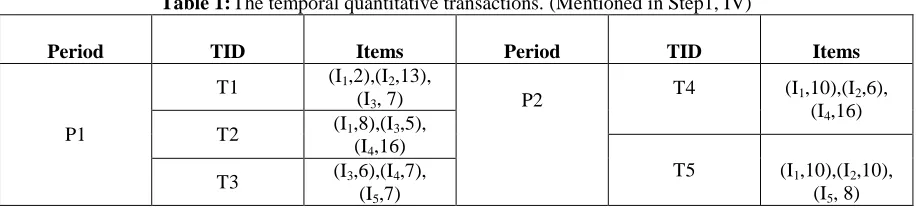
Table 1: The temporal quantitative transactions. (Mentioned in Step1, IV)
Period TID Items Period TID Items
P1
T1 (I1,2),(I2,13),
(I3, 7) P2
T4 (I1,10),(I2,6),
(I4,16)
T2 (I1,8),(I3,5),
(I4,16)
T5 (I1,10),(I2,10),
(I5, 8)
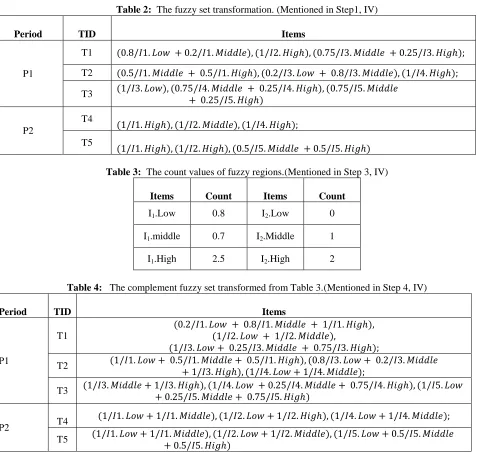
Table 2: The fuzzy set transformation. (Mentioned in Step1, IV)
Period TID Items
P1
T1 (0.8/𝐼1. 𝐿𝑜𝑤 + 0.2/𝐼1. 𝑀𝑖𝑑𝑑𝑙𝑒), (1/𝐼2. 𝐻𝑖𝑔), (0.75/𝐼3. 𝑀𝑖𝑑𝑑𝑙𝑒 + 0.25/𝐼3. 𝐻𝑖𝑔);
T2 (0.5/𝐼1. 𝑀𝑖𝑑𝑑𝑙𝑒 + 0.5/𝐼1. 𝐻𝑖𝑔), (0.2/𝐼3. 𝐿𝑜𝑤 + 0.8/𝐼3. 𝑀𝑖𝑑𝑑𝑙𝑒), (1/𝐼4. 𝐻𝑖𝑔);
T3 (1/𝐼3. 𝐿𝑜𝑤), (0.75/𝐼4. 𝑀𝑖𝑑𝑑𝑙𝑒 + 0.25/𝐼4. 𝐻𝑖𝑔), (0.75/𝐼5. 𝑀𝑖𝑑𝑑𝑙𝑒
+ 0.25/𝐼5. 𝐻𝑖𝑔)
P2
T4
(1/𝐼1. 𝐻𝑖𝑔), (1/𝐼2. 𝑀𝑖𝑑𝑑𝑙𝑒), (1/𝐼4. 𝐻𝑖𝑔);
T5
(1/𝐼1. 𝐻𝑖𝑔), (1/𝐼2. 𝐻𝑖𝑔), (0.5/𝐼5. 𝑀𝑖𝑑𝑑𝑙𝑒 + 0.5/𝐼5. 𝐻𝑖𝑔)
Table 3: The count values of fuzzy regions.(Mentioned in Step 3, IV)
Items Count Items Count
I1.Low 0.8 I2.Low 0
I1.middle 0.7 I2.Middle 1
I1.High 2.5 I2.High 2
Table 4: The complement fuzzy set transformed from Table 3.(Mentioned in Step 4, IV)
Period TID Items
P1
T1
(0.2/𝐼1. 𝐿𝑜𝑤 + 0.8/𝐼1. 𝑀𝑖𝑑𝑑𝑙𝑒 + 1/𝐼1. 𝐻𝑖𝑔), (1/𝐼2. 𝐿𝑜𝑤 + 1/𝐼2. 𝑀𝑖𝑑𝑑𝑙𝑒),
(1/𝐼3. 𝐿𝑜𝑤 + 0.25/𝐼3. 𝑀𝑖𝑑𝑑𝑙𝑒 + 0.75/𝐼3. 𝐻𝑖𝑔);
T2 (1/𝐼1. 𝐿𝑜𝑤 + 0.5/𝐼1. 𝑀𝑖𝑑𝑑𝑙𝑒 + 0.5/𝐼1. 𝐻𝑖𝑔), (0.8/𝐼3. 𝐿𝑜𝑤 + 0.2/𝐼3. 𝑀𝑖𝑑𝑑𝑙𝑒
+ 1/𝐼3. 𝐻𝑖𝑔), (1/𝐼4. 𝐿𝑜𝑤 + 1/𝐼4. 𝑀𝑖𝑑𝑑𝑙𝑒);
T3 (1/𝐼3. 𝑀𝑖𝑑𝑑𝑙𝑒 + 1/𝐼3. 𝐻𝑖𝑔), (1/𝐼4. 𝐿𝑜𝑤 + 0.25/𝐼4. 𝑀𝑖𝑑𝑑𝑙𝑒 + 0.75/𝐼4. 𝐻𝑖𝑔), (1/𝐼5. 𝐿𝑜𝑤
+ 0.25/𝐼5. 𝑀𝑖𝑑𝑑𝑙𝑒 + 0.75/𝐼5. 𝐻𝑖𝑔)
P2 T4
(1/𝐼1. 𝐿𝑜𝑤 + 1/𝐼1. 𝑀𝑖𝑑𝑑𝑙𝑒), (1/𝐼2. 𝐿𝑜𝑤 + 1/𝐼2. 𝐻𝑖𝑔), (1/𝐼4. 𝐿𝑜𝑤 + 1/𝐼4. 𝑀𝑖𝑑𝑑𝑙𝑒);
T5 (1/𝐼1. 𝐿𝑜𝑤 + 1/𝐼1. 𝑀𝑖𝑑𝑑𝑙𝑒), (1/𝐼2. 𝐿𝑜𝑤 + 1/𝐼2. 𝑀𝑖𝑑𝑑𝑙𝑒), (1/𝐼5. 𝐿𝑜𝑤 + 0.5/𝐼5. 𝑀𝑖𝑑𝑑𝑙𝑒
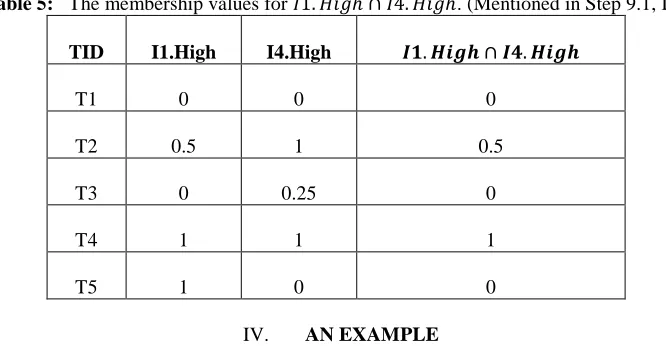
Table 5: The membership values for 𝐼1. 𝐻𝑖𝑔 ∩ 𝐼4. 𝐻𝑖𝑔. (Mentioned in Step 9.1, IV)
TID I1.High I4.High 𝑰𝟏. 𝑯𝒊𝒈𝒉 ∩ 𝑰𝟒. 𝑯𝒊𝒈𝒉
T1 0 0 0 T2 0.5 1 0.5 T3 0 0.25 0 T4 1 1 1 T5 1 0 0
IV. AN EXAMPLE
In this section, an example is given to get an idea of how the proposed fuzzy temporal coherent rule mining algorithm works. This is a simple example to demonstrate how the proposed algorithm can be used to generate coherent rules from temporal quantitative transactions. The dataset includes five transactions (Table 1) and it will be used to illustrate the proposed approach. In this example, we assume that each itemhas its own membership functions.
Step 1: The temporal quantitative transactions in two time periods, P1 and P2 are collected (Table 1). Each quantitative transaction in the database is transformed into corresponding fuzzy sets. Temporal item 1 of T1 in time period P1 will be used as an example. The quantitative value “2” is converted into a fuzzy set (0.8/1. 𝐿𝑜𝑤 + 0.2/1. 𝑀𝑖𝑑𝑑𝑙𝑒) using the given membership functions. This step is followed for all transactions and time periods. The results are shown in Table 2.
Step 2: The number of temporal transactions in each time period and the starting period of each temporal item are recorded in a Temporal Information (TI) table. Time period P1 will be taken as an example. The number of transactions is five, and the starting period of temporal items I1, I2, I3, I4 and I5 is time period P1.
Step 3: The scalar cardinality of each fuzzy region in the temporal transaction data is calculated. Here by taking I1.Middle,
the scalar cardinality can be calculated as 0.2 + 0.5 + 0.0 + 0.0 + 0.0 𝑖𝑠 0.7. This step will be same for all fuzzy regions. The results are shown in Table 3.
Step 4: The complement fuzzy set is derived from the transformation of fuzzy values. Take an example of the second item in transaction T3 using the membership functions. The fuzzy region (0.75/𝐼4. 𝑀𝑖𝑑𝑑𝑙𝑒 + 0.25/𝐼4. 𝐻𝑖𝑔) item I4 is then
converted into the complement fuzzy set (1/ 𝐼4. 𝐿𝑜𝑤 + 0.25/ 𝐼4. 𝑀𝑖𝑑𝑑𝑙𝑒 + 0.75/ 𝐼4. 𝐻𝑖𝑔). The same steps will be followed for each item. The results are shown in Table 4.
Step 5: All fuzzy regions are then collected into a set B, which is B = {I1.Low, I1.Middle, I1.High,I2.Low, I2.Middle,
I2.High,I3.Low, I3.Middle, I3.High,I4.Low, I4.Middle, I4.High,I5.Low, I5.Middle, I5.High}. Step 6: The fuzzy regions of item I1 are collected to form the setP = {I1.Low, I1.Middle, I1.High}.
Step 7: The set K is generated from the set B by removing fuzzy regions of item I1, which is K =
Step 8: Let g=1, the candidate fuzzy coherent rule set is generated as follows:(𝐼1. 𝐿𝑜𝑤 → 𝐼2. 𝐿𝑜𝑤), 𝐼1. 𝐿𝑜𝑤 → 𝐼2.𝑀𝑖𝑑𝑑𝑙𝑒… 𝐼4.𝐻𝑖𝑔 → 𝐼5.𝐻𝑖𝑔.
Step 9:The fuzzy coherent rules are derived by the following substeps:
Step 9.1: Take a candidate fuzzy coherent rule “(I1.High → I4.High)” as an example. Since the consequence part is
I4.High and the antecedent part is I1.High, the contingency table of (I1.High, I4.High) is then calculated. For instance, the count value of count (I1.High, I4.High) is 1.5 = (0 + 0.5 + 0 + 1 + 0) is shown in Table 5. Similarly all candidate fuzzy set is calculated in the same way.
Step 9.2: From the Table 5, based on the count value of all the candidate fuzzy sets, Check out this four conditions,
𝑄1 > 𝑄2, 𝑄1 > 𝑄3, 𝑄4 > 𝑄2 𝑎𝑛𝑑 𝑄4 > 𝑄3. Thus, (I1.High → I4.High) is put into the FTCR1 and FTCRall.
Step 9.3: After Step 9.2, there are two fuzzy coherent rules are generated which are
FTCR1={(𝐼1. 𝐿𝑜𝑤 → 𝐼3. 𝑀𝑖𝑑𝑑𝑙𝑒), (𝐼1. 𝑀𝑖𝑑𝑑𝑙𝑒 → 𝐼3. 𝑀𝑖𝑑𝑑𝑙𝑒)}. Since the FTCR1 is not empty, it then go to STEP 10.
Step 10: From the derived FTCR1, the sets K and P is renewed as 𝐾 = {𝐼3. 𝑀𝑖𝑑𝑑𝑙𝑒, 𝐼3. 𝐻𝑖𝑔}and
𝑃 = {𝐼1. 𝐿𝑜𝑤, 𝐼1. 𝑀𝑖𝑑𝑑𝑙𝑒}.
Step 11: set g=2.Since there are only two fuzzy regions with the same item in the set K, it cannot be used to form any candidate fuzzy coherent rule in this step.
Step 12: Because there is no candidate rule be formed, it then go to STEP 13.
Step 13: In this example, totally two fuzzy coherent rules are outputted in Table 6.
Table 6: The fuzzy temporal coherent rules.
V. EXPERIMENT EVALUATION
In our experiment, we have generated a synthetic dataset contains five thousands of transactions including 18 items in this proposed methodology. The items are used along with their purchase quantity. The membership function is used for generating fuzzy regions low, middle and high for each item.
Period TID FTCRall countx̰̰̰̰y countx̰̰̰̰~y count~xy count~x~y
P1 T1 (𝐼1. 𝐿𝑜𝑤 → 𝐼3. 𝑀𝑖𝑑𝑑𝑙𝑒) 0.75 0.25 1 3.4
Fig. 2.The difference in the number of coherent rules between the FTCR approach and previous approach.
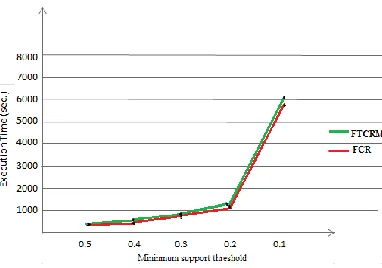
Fig. 3.The execution times of proposed and previous methodology.
The number of coherent rules obtained with the given minimum support threshold by the comparison of our proposed method with Fuzzy Coherent approach is shown in Fig.2. The execution time variations of each transaction with the given minimum support threshold of two approaches is displayed in Fig. 3.
VI. CONCLUSION AND FUTURE WORKS
In this paper, we have proposed a fuzzy temporal coherent rule mining algorithm from quantitative transactions without giving minimum support threshold. In this algorithm, initially converts quantitative transactions into fuzzy sets using the predefined membership functions. After, those fuzzy sets are gathered to produce candidate fuzzy coherent rules. For each candidate fuzzy coherent rule, the contingency table is then calculated and checks whether it satisfies the four conditions or not.
ACKNOWLEDGMENT
The authors like to thank the anonymous referees for their valuable comments and Sri Ramakrishna Engineering College for providing resources for our experiments.
REFERENCES
1. R. Agrawal, T. Imielinski, A.N. Swami, Mining association rules between sets of items in large databases, Proceedings of the ACM-SIGMOD 1993 International Conference on Management of Data, pp. 207–216, 1993.
2. R. Agrawal, R. Srikant, Fast algorithm for mining association rules, The International Conference on Very Large Data Bases, pp. 487–499, 1994. 3. A. Savasere, E. Omiecinski, S.B. Navathe, An efficient algorithm for mining association rules in large databases, in: Proceedings of the 1995
International Conference on Very Large Data Bases, pp. 432–444, 1995.
4. MeeraNarvekar. ShafaqueFatma Syed, An Optimized Algorithm for Association Rule Mining Using FP Tree, Procedia Computer ScienceVol. 45, pp. 101-110, 2015.
5. C.C. Chan, W.H. Au, Mining fuzzy association rules, in: The Conference on Information and Knowledge Management, Las Vegas, pp. 209–215, 1997.
6. Chun-Wei Lin, Tzung-Pei Hong, Wen-Hsiang Lu, Linguistic data mining with fuzzy FP-trees, in: Expert Systems with Applications, Vol. 37, Issue 6, pp. 4560-4567, 2010.
7. AmalMoustafa, BadrAbuelnasr, Mohamed Said Abougabal, Efficient mining fuzzy association rules from ubiquitous data streams, in: Alexandria Engineering Journal, Vol. 54, pp. 163–174, 2015.
9. Chun-Hao Chen, Guo-Cheng Lan, Tzung-Pei Hong, Shih-Bin Lin, Mining fuzzy temporal association rules by item lifespans in : Applied Soft ComputingVol. 41, pp. 265–274, 2016.
10. K. Verma, O. P. Vyas, and R. Vyas, Temporal approach to association rule mining using T-tree and P-tree , Lecture Notes in Computer Science, pp. 651-659, 2005.
11. Chun-Hao Chen, Ai-Fang Li, Yeong-Chyi Lee, A fuzzy coherent rule mining algorithm in: Applied Soft Computing 13, pp. 3422–3428,2013.
BIOGRAPHY
R.Ratchambigah and R.Swetha are currently pursuing Final year Computer Science and Engineering in Sri Ramakrishna Engineering College, Coimbatore.