Pag. 1 of 21
Menaquinone 7 stability of formulations and its relationship with purity profile
Patrick ORLANDOa, Sonia SILVESTRIa, Fabio MARCHEGGIANIa, Ilenia CIRILLIb and Luca TIANOa
a Department of Life and Environmental Sciences, Polytechnic University of Marche, Ancona, Italy b Department of Clinical Sciences, Polytechnic University of Marche, Ancona, Italy
Correspondig author: Prof. Luca Tiano DISVA-UNIVPM Via Brecce Bianche 60131 Ancona, Italy [email protected]
Pag 2 of 23
Abstract:
Menaquinone-7 is a member of the vitamin K family whose interest has considerably increased over the last decade due to its beneficial role in human health mainly in respect to bone and cardiovascular health leading to a growing use in different nutritional supplement. Menaquinone-7 can be produced by synthesis or fermentation and its purity profile can differ depending on methodologies and extraction procedures. Finished formulation show a large heterogeneity of purity profiles as well as frequent discrepancies in the nominal content compared to the actual title. In the present study we compared purity profiles of different raw material and we related them to stability assay in normal (12months/25°C/60%RH) and accelerated conditions (6 months/40°C/75% RH) in order to test their performance in presence of different common excipients. Results show that higher purity profile correlates with enhanced stability and this could explain title discrepancies found in finished products found on the market worldwide.
Pag 3 of 23
1. INTRODUCTION
Vitamin K constitute a family of compounds with a common chemical structure, 2-methyl-1,4-napthoquinone (Fig. 1.1). Despite their different molecular structure, the molecules of these family
share a common function as specific cofactor in the formation of -carboxyglutamyl (Gla) from specific glutamate residues in Vitamin K dependent proteins (VKDP). The Gla residues confer calcium-binding properties; this common pattern characterizes different functions of vitamin K-dependent proteins [1]. Today seventeen VKDP are known and their function range from blood coagulation to bone, cardiovascular health and lately there is a growing interest on even wider functions of the molecule involving anti-inflammatory and cell cycle regulatory effects [2,3,4,5]. The ‘‘vitamin K’’ family comprises three subtypes of molecules, among them of nutritional relevance in humans are Phylloquinone, or vitamin K1, of plant origin is the predominant dietary form of vitamin K [6]; abundant in green leafy vegetables contributing to ~60% of total phylloquinone intake [7,8].
The second main components of the vitamin K family are menaquinones, or vitamin K2, primarily of bacterial origin and differ in structure from phylloquinone in their lipophilic side chain. Major menaquinones contain 4–10 repeating isoprenoid units, (MK-4 to MK-10). Menaquinones can be either produced by the microflora of the digestive tract or associated to dietary menaquinones present in the diet contributing for 25% of the total vitamin K intake.
Long chain menaquinone (up to 13 isoprenoid units) are present in traces in some cheeses [9] generally do not represent a significant source for human nutrition, whereas the most relevant menaquinones in the diet are MK-4 and MK7. Menaquinone-4 (MK-4) is not a major constituent of bacterial production; instead it is mainly alkylated from menadione (synthetic vitamin K3) present in animal feeds or is the product of tissue-specific conversion directly from dietary phylloquinone [10,11]. Poultry feed are highly enriched in menadione hence poultry and eggs are a major source of menadione as MK-4 in human diet. Menaquinone-7 (MK-7) is the menaquinone of fermentative origin traditionally found in Japanese traditional food natto, a soybean product fermented using Bacillus subtilis natto.
Pag 4 of 23
the form of spinach, has a peak height difference of more than 10-fold and a half-life of 56 h compared to 7.5 h for phylloquinone [9] but also higher than MK-4. Different chemical characteristic between K-1 And K-2, and among the latter an higher lypophilicity of MK-7, appear also to influence tissue distribution and biological function of Vit K. While all vitamin K molecule absorption appear to be initially associated with triglyceride rich lipoproteins (TRL), the longer chain menaquinones, are also associated with low-density lipoprotein (LDL). The evidence has implications for MK-7 transport to extrahepatic tissue, such as bone and vasculature that are confirmed by a consistent number of clinical evidences regarding the role of MK-7 in bone and vascular health [14].
Due to its clinically confirmed biological efficacy MK-7 is an emerging molecule in the nutritional supplements market where is often used in association with minerals and vitamins that complete its role, in particular calcium salts and vitamin D3 that is a potent inducer of the major vit-K dependent protein in the bone, osteocalcin.
These studies employed natural MK-7 produced by fermentation, which characteristic have been recently summarized by a US-pharmacopeia monograph, and consist of no less then (NLT) 96% and no more than (NMT) 101% of active all-trans MK7. And NMT 2% ofMK-6 a characteristic marker of natural fermentation from B. subtilis natto that might be present in small amounts in natural product. Moreover, it is known that biologically inactive cis isomers can be formed as by-products in the chemical synthesis as well as following geometrical isomerization due to physical and chemical stress during technological processing or storage. In this respect cis isomer content defined by the USP monograph on K2 should be NMT 2%.
Pag 5 of 23
USP methodology when products are not highly purified. Notably the same authors show that MK-7 was unstable in forced degradation experiments, in particular to alkaline conditions, suggesting that instability during storage or in formulation might be the cause of large variations in the content of MK-7 in the studied dietary supplements and observed discrepancies between nominal and actual content. In particular, its use in formulation raised the question of potential instabilities of complex formulas, such as in combination with minerals or oxidising agents that might alter the stability of the formulation.
These evidences raise some serious concerns on the application of appropriate guidelines to guarantee quality and safety of dietary products. In fact, stability studies should include testing of those attributes that are susceptible to change during storage and formulation that are likely to influence quality, safety and efficacy. In recent years good manufacturing practices (GMP) has become mandatory also for dietary supplements and guidelines originally intended for new drugs and active pharmaceutical ingredients have been mutuated from the International Conference for Harmonisation of Technical Requirements for Pharmaceuticals for Human Use (ICH) For this reason it is very important to use standardized conditions and specific analytical methods to generate data also for food supplement applications where quality attributes may sometime not being fully defined in the product specifications or in the product label.
In this respect, in order to clarify whether the purity profile may play a role in the stability of complex 7 formulations, in the present study we have conducted a stability assay on formulation of MK-7 from different origin and purity profiles. In particular, we used two naturally fermented MK-MK-7 and a synthetic one that are commercially available. All the active ingredients were independently formulated with minerals largely used on the market in combination with MK-7 and stability was measured in standard and accelerated conditions.
Pag 6 of 23
2 RESULTS
2.1 Analysis of the assay of different MK-7 containing powders
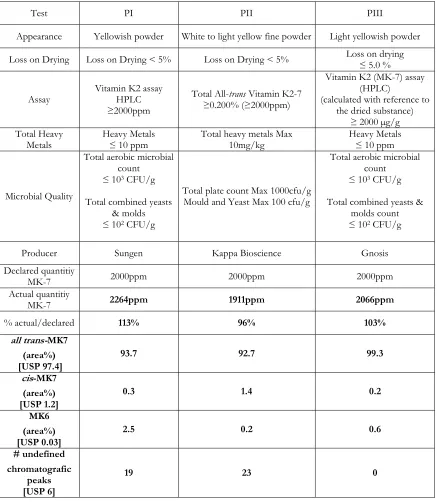
Three nominally identical 7 powder containing 2000 ppm were preliminarily tested for their MK-7 content. Powders were manufactured by different suppliers and with different production processes (i.e. PI-PII were natural products from fermentation origin and PIII was a synthetic product). Quantitative analysis reported in Tab 1 shows that the content was in agreement with the nominal value, with a slight excess for PI. According to actual measurements formulations of MK-7 and mineral excipients were prepared at a concentration of 100 µg/g.
The three product specifications do not show apparently major differences and the quality attributes are reported in Table 1. Since the products where compliant with the specifications the mixtures with the excipients were prepared consequently for long-term and accelerated conditions stability testing.
2.2 Analysis of the stability of MK-7 and mineral containing formulations:
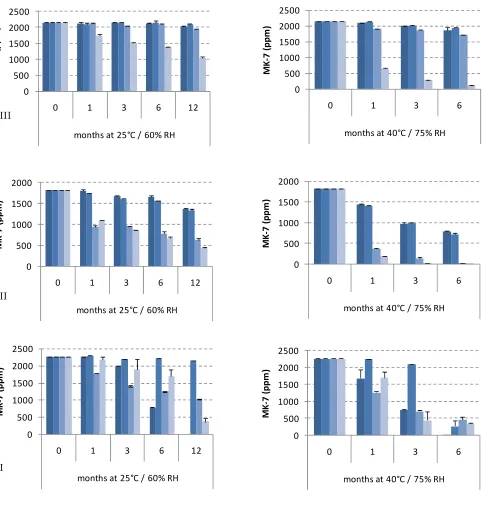
Stability, summarized in figure 2, was conducted up to twelve months at long-term (25°C/RH 60%) and six months accelerated conditions (40°C/RH 75%) in duplicate samples analyzed independently. Analysis did show that while calcium salts either citrate and carbonate formulations are in general more stable, L-Arginine (L-Arg) and magnesium oxide (MgO) might promote degradation of the sample, although product specific differences were observed with variations of the assay. In particular, while in the natural all trans product (PIII), the stability was consistently higher for both calcium salts and arginine, magnesium oxide showed a significant destabilizing effect in particular in the accelerated stability conditions. In general menaquinones, while showing a very high thermal stability, may be degraded following exposure to UV radiation and alkaline compounds. Very likely Magnesium oxide-associated instability is due to a pH lowering effect that appears to be remarkably effective in accelerated stress conditions in presence of higher relative humidity (75%).
Pag 7 of 23
after one month in standard condition. In accelerated stress conditions, the profile of stability of synthetic MK-7 is worsened showing a decrease of vit MK-7 also in presence of calcium salts. Enhanced degradation was also observed for the natural fermented MK-7 (PI). Also in this case degradation was particularly evident for all minerals in particular at40°C/75 RH, with the minor exception of Calcium carbonate that remained relatively stable up to 3 months in accelerated stress conditions.
2.3 Analysis of the purity profile of different MK-7 containing powders
Following the observed differences in stability behaviour in products with identical specifications we further analyzed the purity profile of the vitamins using the methodology developed by Jedynak et al. [16] in order to detect any characteristics that may explain the differences in stability.
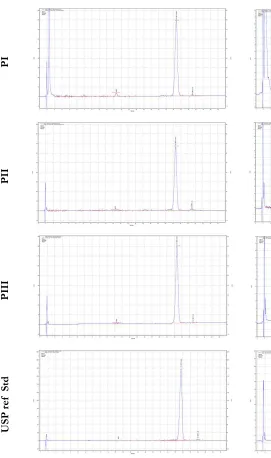
The results of the HPLC analyses show very different chromatographic profiles as reported in figure 1. Analysis summarized in table 1 shows that while all producers comply with the general USP definition they show a very heterogeneous composition in impurities ranging qualitatively in the natural fermented products from absence of undefined peaks (0% unknown components ) in PIII to 19 undefined peaks (3.52% unknown components ). Synthetic MK7 PII showed the lowest purity profile, characterized by 23 species accounting for 5.67% of unknown components.
2.4 Analysis of the content and purity profile of MK-7 supplement formulations on the market:
Vitamin MK-7 actual content and purity profile was estimated in seven different supplements chosen among those available on the international market from suppliers declaring the source of menaquinone. Chromatograms are reported in figure 3 and quantitative and purity data are summarized in table 1. Analysis, conducted with the combined used of HPLC UV-visible for purity profile and fluorescent detection for sensitive menaquinone title definition, confirmed the presence of a variable number of undefined chromatographic peaks that ranged from 2 up 19 compounds, in analogy to what we observed in MK-7 powder.
Pag 8 of 23
the claimed content in the label, shape of peak corresponding to menaquinone 7 retention time is broad, this might suggest co-elution of multiple unresolved peak. Moreover, the chromatographic profile shows 14 undefined peaks. Chromatographic profile is very poor not allowing a precise identification of the origin of the active ingredient apart from its very low purity, for this reason a magnified chromatogram was not included as for the other products analysed.
S2 product contains VITAMK-7® and calcium carbonate, which corresponds to one of the binary mixture involved in the stability study. Content of vitamin MK-7 is in line with label claim, with a slight excess.
Chromatographic profile is characterized by five peaks, the major one corresponding to trans MK-7, of the remaining two correspond to cis isomer and MK-6 (RT~ 21 min) that are known to be present in vitamin produced by fermentation, while the other two are undefined.
S3 product contains calcium citrate that corresponds to one of the binary mixture involved in the stability study. Calcium citrate demonstrated an impact on the stability for one of the active ingredients tested, this could justify the lower content found on this product compared to claimed value on the label (39%). The chromatographic profile is characterized by the presence of a total of 12 unidentified peaks.
S4 product contains a complex mixture of different minerals mainly as citrate salts. Vitamin MK7 used in formulation is MENAQ7®. Similar considerations made for S3 product also apply to this formulation. In particular, a lower content of MK-7 compared to the claimed value on the label (36%) which is likely associated to interactions with excipients present in the formulation. Regarding the purity profile
13 unidentified peaks are noticeable, remarkably the unretained peak eluting at solvent front show intensity comparable to the vitamin peak.
S5 product does not contain any of the minerals involved in the stability study, Vitamin MK7 assay is in line with the amount claimed on the label with a slight excess (106%).
Pag 9 of 23
According to the label, S6 product should contain VITAMK-7® and none of the minerals tested in the stability study, however the chromatographic profile is not consistent with this claim suggesting that is formulated using a synthetic vitamin. This is made evident by the presence of a high number of MK-7 related peaks, that suggest the presence of multiple combination of cis isomers and a second cluster of related peaks eluting earlier, that could be related to a low purified intermediate having less isoprene groups. The MK-7 content appears to be in line with label claimed values, but the purity profile show that just 23% of the assay value can be associated with the active form of vitamin MK-7.
No information about vitamin source were available on the lable for S7 product, Vitamin MK7 content is remarkably lower than claimed values (5%) but none of the excipient used for the stability study are present in the formulation. There are a total of 15 unidentified peaks visible in the purity profile, including an un-retained unidentified peak that has an intensity comparable to Vitamin MK7 peak that is visible at solvent front.
Presence of impurities was associated in four of the samples with a remarkable decreased menaquinone content ranging from 5% (S7) to 55% (S1) of the nominal value. Only three of the tested supplements showed content of menaquinone in agreement with the declared content, however the percentage of active all-trans form was above 97%, in agreement with USP guidelines, only in one supplement (S2).
Pag 10 of 23
3. DISCUSSION
In the present scenario of globalized manufacturing and distribution of dietary supplements implementation of appropriate systems to ensure quality of the products is of paramount importance. In fact, in absence of appropriate quality testing may lead to serious health consequences for the consumers. This concept is consolidated in the development and manufacturing of drugs for medical use where good manufacturing practice (GMP) guidelines defined by ICH are mandatory. In the dietary supplement industry GMP regulations were promulgated by the FDA almost a decade ago (21 CFR Part 111), however according to recent results of FDA GMP inspections [17], several manufacturers are not fully complying with cGMPs, often due to lack of specifications for ingredients and finished products. The consequences of presence of unknown components in the finished products should not be underestimated since they could influence the stability of the formulation and most importantly their safety is not guaranteed in absence of appropriate toxicity tests.
Following these consideration in this study we applied this concept evaluating the purity profile and its relevance to stability of formulation in different Menaquinone 7 (MK-7) raw materials and formulations either prepared in laboratory condition or available on the market. MK-7 is a bioactive quinone of fermentative origin belonging to the Vit K family increasingly employed in the food supplement market due to its diverse health-related effects and superior bioavailability over other K vitamers. Previous analysis of MK-7 formulations available on the market have shown a high variability in the content of the active compound, that has been reported to be higher, lower and even completely absent in certain formulas as well as in the presence of inactive cis isomers with unknown toxicity profiles [15]. These inconsistence is likely due to the above mentioned weakness in the regulatory requirements in the food supplement sector of the market being much less restrictive in comparison to pharmaceutical drug regulation.
In particular our combined comparative analysis of stability and purity of different MK-7 products reinforced the concept that materials that equally comply to minimal assay and composition characteristic, as detailed by the official US Pharmacopeia (USP) quality standard for dietary ingredients, may be different in terms of purity profile due to the presence of cis isomers and other impurities.
Pag 11 of 23
and dietary supplements are recognized in U.S. federal law and are enforceable by FDA. However, although it is mandatory for drug product manufacturers to comply with USP standards, dietary supplement standards developed by USP are voluntary.
An official USP quality standard for a dietary ingredient referred to as a monograph, sets forth the article’s name, definition, specifications (i.e., tests, test procedures and acceptance criteria) and other requirements related to packaging, storage and labeling. USP monographs include specifications for identity, assay, strength, composition, limits for contaminants, specific tests and/or performance criteria (primarily for finished dosage units). In general, USP monographs do not refer to “purity” as a test in a monograph, but rather refer to an “Assay” or “Content” test procedure that is not suitable to measure the overall purity as referred to in FDA’s cGMPs when applied to an ingredient. The test for strength in a USP monograph is used to measure the amount of a dietary ingredient per unit of measure in a dietary supplement, and it has the same meaning as in FDA’s cGMPs.
The same applies to Menaquinone-7 USP monograph but to our knowledge no one of the active ingredients manufacturers do reference any test for measuring the overall purity in their current specifications.
Therefore, we decided to verify whether observed differences in the purity profile of the three active ingredients could contribute to different stability behaviour. In fact, we show that different purity profiles correspond to different stability profiles with pure products showing in general the highest stability. Some of the tested excipients such as Magnesium oxide, promote menaquinone degradation independently of the purity profile. This is likely due to a significant influence of this salt on alkalinity of the formula. Nonetheless, the use of low purified ingredients has been shown to further trigger degradation once formulated with excipients.
Pag 12 of 23
and underestimation of the assay, despite the fact that an overage of the supplement formula is a common practice to minimize the risk of degradation and consequent lower assay of the formula
4.MATERIAL AND METHODS
4.1 Materials:
Chemicals used in the study were Menaquinone 7: vitaMK7 - Vitamin K2 powder 2000 ppm – (Gnosis, Italy) lot 0001700112; NATTO K2 – Vitamin K2 powder 2000 ppm – (Sungen Bioscience Co., China) lot YK20160305a01; K2VITAL – Vitamin K2 powder 2000 ppm – (Kappa Bioscience, Norway) lot PH-MCC2000-15-06; USP reference Standard lot R059X0. Calcium Citrate tribasic USP (ACEF SpA, Italy); Calcium carbonate for direct compression (ACEF SpA, Italy); L-Arginine (Nutraceutica s.r.l, Italy); Magnesium oxide heavy Ph.Eur.(ACEF SpA)
MENAQ7 – Vitamin K2 powder 2000ppm (Nattopharma, Norway) was not available at the time of the study therefore was not included in the evaluation
Final products purchased on the market for comparison: Tabilaç - OmePa DK2 (Turkey); Searle Ostegem (Pakistan); BaricolBariatrics – Baricol® Complete (Sweden); SWISSE – Bones (Australia); DOCTOR'S BEST - NATURAL VITAMIN K2 (USA); LABORELL – Z-NATTO (Poland); SOLGAR – VITA K2 (Italy). Complete description of formulation composition is reported in table 3.
4.2 HPLC Assayof vitamin MK-7
Menaquinone MK-7 purity profile analysis was conducted according to USP monograph.
Pag 13 of 23
4.3 HPLC Analysis of vitamin MK-7 purity profile
Menaquinone MK-7 purity profile analysis was conducted according to [16]. Briefly MK-7 solutions were prepared dissolving 5 mg USP Menaquinone-7 RS or 1mg MK-7 equivalent of powders representative of different production process (I-III), in tetrahydrofuran and isopropanol (1:9); dissolved solutions were brought to a concentration of 0.1 mg/mL of MK-7 using the same solvent and finally filtered through RC 0.45 µm filter.
8 µl of diluted samples were directly injected in a HPLC (Agilent 1260 Infinity I) equipped with a Acclaim C30 250mm x 2.1mm x 3um at a flow rate 0.400 ml/min kept at 15°C using as mobile phase a solution 98%methanol : 2% water. Detection was conducted with a UV - 248 nm and the analysis time lasted 50 min.
Moreover, the method was also modified for the analysis of commercial formulas available on the market by inserting a post-chromatographic reducing column (Shiseido RC-10 30mm x 4.0mm) and a fluorescent detector (Agilent technologies G1321A FLD detector). Analysis of fluorescence (Ex 245nm / Em 430nm) allowed to discriminate menaquinone chromatographic peaks from that of other 254 light absorbing substances such as impurities or other ingredients.
4.4 Preparation of formulations and storage conditions for stability study:
Pag 14 of 23
This Guideline provides recommendations on stability testing protocols including temperature, humidity and study duration and the purpose of stability testing is to provide evidence on how the quality of the active ingredients varies with time under the influence of a variety of environmental factors such as temperature, humidity and light.
5.CONCLUSIONS
In conclusion, although these data are preliminary and limited to the number of samples tested, the present study suggests that purity profile aspects should be taken into account while choosing MK7 for formulation purposes in order to guarantee efficacy, safety and stability of the product.
In fact, the trans forms is the only active form of menaquinones able to act as a cofactor for carboxylation, on the contrary cis isomers are associated to lack of activity unknown toxicity profile and may contribute to promote instability.
The current USP monograph for Menaquinone-7 can serve as useful resource to help dietary ingredients manufacturers comply with cGMP’s when setting quality specifications. Manufacturers can benchmark their tests, analytical procedures, and acceptance criteria against those in USP monograph when setting a specification for Menaquinone-7 but an update of the current procedure may be required since there are no explicit requirements to characterize all the impurities contained in the products and no one manufacturer seems indicating they follow this monograph in setting their product specifications.
ICH Quality Guidelines can also offer manufacturers a scientifically valid means of supporting compliance with the specification requirements described in the cGMP, application of an approach in line with principles expressed ICH Q3A for the classification of impurities in by-products, intermediates and degradation products, can help enhance the quality and the safety of the dietary supplement marketplace and protect public health.
Pag 15 of 23
6.BIBLIOGRAPHY
[1] Tie, J.K.; Stafford, D.W. Structural and functional insights into enzymes of the vitamin K cycle, J Thromb Haemost. 2016,14, 236-47.
[2] Manna, P. ; Kalita, J. Beneficial role of vitamin K supplementation on insulin sensitivity, glucose metabolism, and the reduced risk of type 2 diabetes: A review, Nutrition, 2016, 32,m 732-9.
[3] Horie-Inoue, K.; Inoue, S., Steroid and xenobiotic receptor mediates a novel vitamin K2 signaling pathway in osteoblastic cells, J Bone Miner Metab. , 2008, 26, 9-12l.
[4] Shearer, M.J.; Newman, P. Metabolism and cell biology of vitamin K, Thromb Haemost. 2008, 100, 530-47.
[5] Hafizi, S. ; Dahlbäck, B. Gas6 and protein S, Vitamin K-dependent ligands for the Axl receptor tyrosine kinase subfamily, FEBS J. 2006, 273, 5231-44.
[6] Gross, J. ; Cho, W.K.; Lezhneva, L. ; Falk, J.; Krupinska, K.; Shinozaki, K.; Seki, M.; Herrmann, R.G.; Meurer, J.; A plant locus essential for phylloquinone (vitamin K1) biosynthesis originated from a fusion of four eubacterial genes, J. Biol. Chem. 281; 2006, 17189–17196.
[7] McKeown, N.M.; Jacques, P.F.; Gundberg, C.M.; Peterson, J.W.; Tucker, K.L.; Kiel, D.P.; Wilson, P.W.; Booth, S.L. Dietary and nondietary determinants of vitamin K biochemical measures in men and women, J. Nutr. 2002, 132, 1329–1334.
[8] Thane, C.; Paul, A.; Bates, C.; Bolton-Smith, C.; Prentice, A.; Shearer, M. Intake and sources of phylloquinone (vitamin K-1): Variation with socio-demographic and lifestyle factors in a national sample of British elderly people, Br. J. Nutr. 2002, 87 605–613.
[9] Schurgers, L.J.; Vermeer, C. Determination of phylloquinone and menaquinones in food. Effect of food matrix on circulating vitamin K concentrations, Haemostasis. 2000, 30, 298–307.
[10] Davidson, R.T.; Foley, A.L.; Engelke, J.; Suttie, J.W. Conversion of dietary phylloquinone to tissue menaquinone-4 in rats is not dependent on gut bacteria, J. Nutr. 1998, 128, 220–223.
Pag 16 of 23
[12] Gast, G.C.M.; de Roos, N.M.; Sluijs, I.; Bots, M.L.; Beulens, J.W.J.; Geleijnse, J.M. A high menaquinone intake reduces the incidence of coronary heart disease, Nutr Metab Cardiovasc Diseases. 2009, 19, 504–510.
[13] Geleijnse, J.M.; Vermeer, C.; Grobbee, D.E.; Schurgers, L.J. ; Knapen, M.H.J.; van der Meer, I.M. Dietary intake of menaquinone is associated with a reduced risk of coronary heart disease: the Rotterdam study, J. Nutr., 2004, 134, 3100–3105
[14] Schwalfenberg G.K., Vitamins K1 and K2: The Emerging Group of Vitamins Required for Human Health, J Nutr Metab. 2017, 2017:6254836.
[15] Szterk, A.; Zmyslowski, A.; Bus, K.; Identification of cis/trans isomers of menaquinone-7 in food as exemplified by dietary supplements, Food Chem. 2018, 243, 403-409.
[16] Jedynak, L.; Jedynak, M.; Kossykowska, M.; Zagrodzka J., A novel method for the determination of chemical purity and assay of menaquinone-7. Comparison with the methods from the official USP monograph, J Pharm Biomed Anal. 2017, 135, 116-125.
[17] U.S. FOOD & DRUG administration. Department of Health and Human Services,
Pag 17 of 23 FIGURE AND TABLES
Figure 1 Chromatographic purity profile of commercially available MK-7 products either from fermentation PI-(Sungen Bioscience) and PIII (Gnosis) or from chemical synthesis PII (Kappa Biosciences). The USP reference standard is also included.
P
I
P
II
P
II
I
U
SP
r
ef
S
Pag 18 of 23 0 500 1000 1500 2000 2500
0 1 3 6
months at 40°C / 75% RH
M K-7 (p pm ) 0 500 1000 1500 2000 2500
0 1 3 6 12
months at 25°C / 60% RH
M K-7 (p pm ) 0 500 1000 1500 2000
0 1 3 6
months at 40°C / 75% RH
M K-7 (p pm ) 0 500 1000 1500 2000
0 1 3 6 12
months at 25°C / 60% RH
M K-7 (p pm ) 0 500 1000 1500 2000 2500
0 1 3 6 12
months at 25°C / 60% RH
M K-7 (p pm ) 0 500 1000 1500 2000 2500
0 1 3 6
months at 40°C / 75% RH
M K-7 (p pm )
Figure 2 Title of commercially available MK-7 products either from fermentation PI-(Sungen Bioscience) and PIII (Gnosis) or from chemical synthesis PII (Kappa Biosciences) and stability assesment in long term condition (25°C/60% RH) and accelerated conditions (40°C/75% RH). At each time are reported in sequence formulation of MK-7 with Calcium citrate; Calcium carbonate; L-Arginine; Magnesium oxide.
PIII
PII
Pag 19 of 23
Figure 3 Purity profile of MK-7 supplement formulations on the market
S1
S2
S3
S4
S5
S6
Pag 20 of 23
Table 1 - Active Ingredients Assay and Specifications and purity profile
Test PI PII PIII
Appearance Yellowish powder White to light yellow fine powder Light yellowish powder
Loss on Drying Loss on Drying < 5% Loss on Drying < 5% Loss on drying ≤ 5.0 %
Assay Vitamin K2 assay HPLC
≥2000ppm
Total All-trans Vitamin K2-7 ≥0.200% (≥2000ppm)
Vitamin K2 (MK-7) assay (HPLC)
(calculated with reference to the dried substance)
≥ 2000 µg/g Total Heavy
Metals Heavy Metals ≤ 10 ppm Total heavy metals Max 10mg/kg Heavy Metals ≤ 10 ppm
Microbial Quality
Total aerobic microbial count ≤ 103 CFU/g
Total combined yeasts & molds ≤ 102 CFU/g
Total plate count Max 1000cfu/g Mould and Yeast Max 100 cfu/g
Total aerobic microbial count ≤ 103 CFU/g
Total combined yeasts & molds count ≤ 102 CFU/g
Producer Sungen Kappa Bioscience Gnosis
Declared quantitiy
MK-7 2000ppm 2000ppm 2000ppm
Actual quantitiy
MK-7 2264ppm 1911ppm 2066ppm
% actual/declared 113% 96% 103%
all trans-MK7 (area%) [USP 97.4]
93.7 92.7 99.3
cis-MK7
(area%) [USP 1.2]
0.3 1.4 0.2
MK6 (area%) [USP 0.03]
2.5 0.2 0.6
# undefined chromatografic
peaks [USP 6]
Pag. 21 of 23 Table 2 – Finished products assay and purity profile
Suppl. producer brand ingredient active
Alltrans -MK7 (area%) cis-MK7 (area%) MK6 (area%) # undefin ed chromat ografic peaks Label claim (µg/unit) Actual content (µg/unit) %
S1 Tabilaç OmePa DK2 MenaQ7 7.4 - - 14 100 55 55%
S2 Searle OSTEGEM VitaMK-7 97.8 0.8 0.3 2 90 105 117%
S3 SWISSE BONES K2VITAL 90.6 1.7 - 12 30 12 39%
S4 BaricolBariatrics BARICOL Complete MenaQ7 48.9 0.3 - 13 25.7 9.3 36%
S5 DOCTOR'S BEST
NATURA L VITAMI
N K2
MenaQ7 81.8 0.8 4.2 13 100 116 116%
S6 LABORELL NATTO Z- VitaMK-7 23.4 5.3 4.1 19 200 212 106%
S7 SOLGAR VITA K2 declared Not 52.7 0.6 1.2 15 100 5 5%
Table 3 - Finished product composition (from product labels)
S1 S2 S3 S4 S5 S6 S7
Fish oil CaCO3 Ca citrate Ca citrate Microcrystalline
Cellulose Gelatin vegetable origin CaHPO4 Gelatin
animal origin
Mg citrate Modified
Cellulose Microcrystalline Cellulose Dextrin
Glycerol Fe citrate SiO2 Hydroxypropyl
methyl cellulose Other
Vitamins Zn citrate Glycerol monostearate Magnesium stearate
MnSO4 Other Vitamins SiO2
Cu citrate Na
carboxymethyl cellulose KI
Cr(C6H4NO2)3 Na2SeO4
Na2MoO4 Other Vitamins