ABSTRACT
JEON, WOO RAM. Assessment of the Effectiveness of an Adaptive Virtual Reality-Based Simulation for Motor Skill Training. (Under the direction of David B. Kaber and Chang S. Nam).
Adaptive training methods aim to accommodate individual differences in abilities
while helping persons develop knowledge and skills required to perform a new task. Methods
that adjust levels of training task difficulty as a function of how well a trainee performs, and
that sustain trainee motivation, may be significant from a learning productivity perspective.
In contemporary motor rehabilitation applications, therapists use robots or virtual reality (VR)
systems to assist in delivery of various training conditions in real-time and to provide
multimodal performance feedback to patients. Virtual reality can also allow for flexible and
dynamic adaptation of task difficulty to facilitate specific learning algorithms. However,
there is a lack of research on adaptive training techniques involving manipulation of task
difficulty in VR for motor skill development. The integration of adaptive training methods in
VR is expected to increase levels of patient learning and promote more efficient skill training.
The objective of this research was to implement and assess the effectiveness of an
adaptive VR-based haptic simulation for motor skill training in a real-world psychomotor
task, as compared with static and random training modes. The simulation was prototyped
based on a block design (BD) pattern reconstruction test from a well-known commercial
psychomotor test battery, the Wechsler Adult Intelligence Scale, and programmed to apply
modifications in the level of task difficulty based on user performance. Otherwise, the level
of difficulty held fixed across training trials or randomly changed.
Results revealed the adaptive condition to be superior to static training in terms of
performance improvement between pre- and post-testing (considering both speed and
accuracy). In addition, adaptive training was found to produce performance improvements
comparable to a random condition but in significantly less training time. With respect to
participant performance during training trials, the maximum level of difficulty achieved
under the adaptive condition revealed a linear relationship with post-training retention test
performance. In addition, results also indicated a linear association of the number of stimuli a
trainee required to move to the first level of difficulty and pre-test performance. Results also
revealed VR BD task performance to be significantly correlated with native BD performance
in both pre- and post-testing.
The findings of this study support use of adaptive training schemes for improving
motor skill learning and accelerating rate of skill development when using VR simulation, as
compared with static and random training schemes. Findings also reveal adaptive training to
yield diagnostic information on trainee motor ability extending beyond common task
performance measures. The study also demonstrated VR simulations of standardized
psychomotor tests can be designed and prototyped to support levels of user performance
similar to observations on native tasks. VR systems also provide benefits over standardized
© Copyright 2013 Woo Ram Jeon
Assessment of the Effectiveness of an Adaptive Virtual Reality-Based Simulation for Motor Skill Training
by Woo Ram Jeon
A dissertation submitted to the Graduate Faculty of North Carolina State University
in partial fulfillment of the requirements for the degree of
Doctor of Philosophy
Industrial Engineering
Raleigh, North Carolina
2013
APPROVED BY:
_______________________________ ______________________________
David B. Kaber Chang S. Nam
Co-Chair Co-Chair
________________________________ ________________________________
BIOGRAPHY
During the completion of this dissertation, Woo Ram Jeon worked as a research
assistant in the Human Factors and Ergonomics (HFE) Area of the Edward P. Fitts Industrial
& Systems Engineering Department at North Carolina State University under the guidance of
Dr. David B. Kaber. His research was supported in part by a grant from the National Science
Foundation (Grant No. IIS-0905505). He also received support from The Ergonomics Center
of North Carolina. Prior to this, Woo Ram Jeon received his Master’s degree from the
department of Industrial & Operations Engineering at the University of Michigan, Ann Arbor
in 2009 and his Bachelor’s degree from the department of Electrical Engineering at Korea
University (Seoul, Korea) in 2006. His major research interests include human computer
ACKNOWLEDGMENTS
I would like to express my deepest appreciation to Professor Dr. David Kaber for his
continuing encouragement and advice through the course of this work. Dr. Kaber helped me
in every aspect of my education. I am greatly honored to have had the opportunity to work
under his guidance. I would like to express my greatest appreciation to Dr. Nam as serving as
a co-advisor. I would also like to thank the members of my committee, Dr. Healey and Dr.
Currie for their trust during my work and providing sources of confidence.
My heartfelt appreciation also goes to my esteemed and dear colleagues in the
Ergonomics Lab. Especially, I thank Michael Clamann and Wenqi Ma for their
whole-hearted support and invaluable assistance. I also wish to express my appreciation to my
Korean friends at NCSU and all of the members of the group Nehemiah of Duraligh
Presbyterian Church. I am deeply indebted to them for providing encouragement and
spiritual support during a challenging period. Lastly, I give all my love to my family for their
sacrifice. Continuing support from my parents, In Pyong Chun and Hyesuk Aum,
mother-in-law, Woo Yeon Chung were the compelling force to pursue my goal. I also thank my son,
Aaron Hajoon Jeon, who never allowed me to give up and surprised me, cheered me up, and
made me smile through this. He is my reason to live. In addition, I cannot possibly express
enough appreciation for my wife, Sehyung Choi, who is my heart and soul. Her patience and
love have been sources of my motivation. I dedicate my dissertation to her.
Finally, I am sincerely thankful to God. God’s grace has been sufficient for me. It is the most
TABLE OF CONTENTS
LIST OF TABLES ... vii
LIST OF FIGURES ... viii
1. Introduction ... 1
2. Motor Learning Theory ... 3
2.1. Definition of Motor Learning ... 3
2.2. Stage Theories of Learning ... 4
2.3. Assessing Motor Learning ... 5
2.4. Learning and Performance Variables ... 7
2.4.1. Amount of Practice and Variability in Performance ... 8
2.4.2. Task and Goal Difficulty ... 12
3. Motor Skill Rehabilitation ... 19
3.1. Robot-based Rehabilitation ... 20
3.1.1. Advantages and Disadvantages of Robot-based Rehabilitation ... 22
3.1.2. Robot-assisted Rehabilitation Systems ... 23
3.1.3. Summary... 29
3.2. VR-based Rehabilitation ... 32
3.2.1. Advantages and Disadvantages of VR for Rehabilitation ... 32
3.2.2. Existing VR-based Rehabilitation Systems and Research ... 37
3.2.3. Summary... 46
4. Adaptive Training ... 49
4.1. Adaptive Training Techniques and Models ... 50
4.2. Adaptive Training vs. Non-adaptive Training ... 52
4.3. Why use Adaptive Training in VR? ... 54
5.1. Literature Review Summary and Problem Statement ... 57
5.2. Research Objectives ... 60
5.3. Hypotheses ... 61
6. Pilot Study Methodology ... 65
6.1. Objectives ... 65
6.2. Pilot participants ... 66
6.3. Apparatus ... 66
6.4. Block Design Task ... 68
6.5. Task Difficulty Manipulation ... 73
6.6. Experiment Design and Variables ... 79
6.6.1. Experiment Procedure ... 79
6.6.2. Independent Variables ... 83
6.6.3. Dependent Variables ... 84
7. Pilot Data Analysis and Results ... 87
7.1. Descriptive Statistics ... 87
7.2. Power Analysis on Performance ... 87
7.3. Performance Under the Adaptive Condition ... 88
8. Full Experiment Methodology ... 90
8.1. Participants ... 90
8.2. Task and Apparatus ... 91
8.3. Expected Outcomes ... 92
9. Full Experiment Results ... 94
9.1. Data Analyses ... 94
9.2. Analysis on Pre- and Post-testing ... 95
10. Discussion on Full Experiment ... 108
10.1. Training Schemes and Motor Skill Retention ... 108
10.2. BD Task Training Time ... 110
10.3. Achievement in Level of Task Difficulty ... 113
10.4. VR-based BD Training and Native BD Training ... 114
11. Conclusion ... 115
11.1. Research Limitations ... 116
11.2. Future Work ... 118
LIST OF TABLES
Table 3.1. Summary of robot-based rehabilitation system ... 31
Table 3.2. Summary of VR-based rehabilition system ... 48
Table 6.1. Steps of difficulty determining the 9 levels of task difficulty ... 75
Table 6.2. Example of level of task difficulty changes among design patterns within a training trial under each of the training schemes ... 84
Table 7.1. Descriptive statistics on performance improvement by condition ... 87
Table 9.1. Descriptive statistics grouped by condition ... 96
Table 9.2. Number of BD stimuli with error or incompletion ... 96
Table 9.3. Descriptive statistics of performance improvement ... 97
Table 9.4. Post-hoc analysis of BD task performance improvement ... 100
Table 9.5. Descriptive Statistics of the BD training time grouped by trial or training condition ... 101
Table 9.6. Simple effects and Post-hoc analysis of BD training time across trials ... 103
Table 9.7. Level achievement of the adaptive training condition (N=8) ... 103
Table 9.8. Linear fitting of the retention performance by achieved maximum level ... 105
Table 9.9. Linear fitting of the pre-teseting performance by number of stilmuli to advance to the first level ... 105
Table 9.10. Spearman’s correlation analysis for level and performance responses under adaptive condition ... 106
LIST OF FIGURES
Figure 3.1. Typical industrial robot; an IRB 2400 (ABB, Zurich, Switzerland; http://www.abb.com)
... 20
Figure 3.2. MIT-MANUS (Krebs et al. 2004) ... 25
Figure 3.3. MIME (Lum et al., 2006) ... 26
Figure 3.4. ARM Guide (Reinkensmeyer et al., 2000) ... 28
Figure 3.5. Bi-Manu-Track (Hesse, Schulte-Tigges et al., 2003) ... 29
Figure 3.6. GestureTek’s Interactive Rehabilitation and Exercise System (IREX) (GestureTek official website - http://www.gesturetekhealth.com) ... 40
Figure 3.7. VR rehabilitation system with RMII glove (Jack et al., 2001) ... 42
Figure 3.8. VRmotion (Piron et al., 2005) ... 44
Figure 3.9. Gentle/s with HapticMASTER (Amirabdollahian et al., 2007) ... 46
Figure 6.1. Original Stylus (left) and Customized Block-type Control (right) ... 68
Figure 6.2. BD task (left: native task, right: basic form VR) ... 70
Figure 6.3 Visual aids ... 71
Figure 6.4. Flow chart for level adaptation ... 77
Figure 6.5. Timeline for the experiment ... 82
Figure 7.1. Plot of difficulty level change of two pilot participants under the adaptive condition ... 89
Figure 9.1. Improvement in the native BD time between pre- and post-testing across conditions ... 98
Figure 9.2. Improvement in the BD score between pre- and post-testing across conditions ... 99
Figure 9.4. VR-based BD training time across four trials ... 101
1.
Introduction
Research in motor control and motor learning has recently begun to have an impact on
rehabilitation practice and technology. Virtual reality (VR) technology offers many
advantages over real environments for motor learning. For example, simulation designs
based on principles derived from motor learning research can accelerate trainee motor skill
development (Holden, 2001). Adaptive training paradigms have been found to optimize
learning of motor skills by interactively advancing subject performance toward a targeted
skill level (Lintern & Gopher, 1978). Virtual reality-based applications integrated with such
paradigms allow for flexibility to facilitate specific training regimens. VR systems can also
support methods for adjusting levels of motor task difficulty and sustain trainee motivation.
The integration of such adaptive training methods in VR may increase levels of individual
learning and promote more efficient skill training.
The advantages of VR may benefit both therapists and patients as compared with
traditional physical training techniques. In the same manner, manual assembly workers and
industrial managers may improve productivity and reduce training costs, respectively,
through reduced learning time required to develop new occupational skills in using advanced
VR training systems.
Previous motor learning studies suggest that adaptive training that accounts for
individual differences can be expected to promote efficient skill training (V. Shute & Towle,
2003). Some prior work has also attempted to determine optimal training schemes to
Gordon, & Schweighofer, 2008; Onla-or & Winstein, 2008). In reality, however, these (and
other) studies have manipulated goal difficulty as a performance requirement rather than task
difficulty. That is, task outcome expectations have been varied vs. posing trainees with
different movement challenges during task performance (see details in Chapter 2).
Over the past decade, many different types of robotic or VR-based rehabilitation
systems have been proposed and evaluated empirically. Although VR offers flexibility when
presenting training schemes, there is no study that combines the strengths of VR with an
adaptive training regimen in order to present varying levels of task difficulty that optimize
training efficiency. Therefore, there is a lack of empirical research on adaptive training for
motor skill involving adaptive task difficulty manipulations using VR.
The objective of this research was to assess the effectiveness of an adaptive VR-based
haptic simulation of a real-world psychomotor task, as compared with a static VR trainer, for
motor skill training. The results of this study could be used as bases for redesigning current
rehabilitation training systems, as well as gaining insight into the advantages of similar
2.
Motor Learning Theory
This section reviews fundamental motor learning theories relevant to motor skill
training system design with a focus on the impact of practice schemes and task difficulty
manipulations on user performance. The section also provides a foundation for the design
and assessment of VR-based rehabilitation systems and a basis for identifying learning
outcome variables. In general, motor learning theory is important for VR system
development with adaptive training tools as part of the present study.
2.1. Definition of Motor Learning
As defined by Schmidt and Lee (2005), motor learning is “a set of processes associated
with practice or experience leading to relatively permanent changes in the capability for
movement”. Four distinct characteristics of motor learning can be derived from this
definition. (1) Motor learning is always a process of acquiring the capability to produce
skilled actions. Learning is not a single event, but motor skill development is associated with
a set of internal events, occurrences or processes as part of practice that enables people to
become more proficient at performing some task. (2) Learning occurs as a direct result of
practice or experience and produces an acquired capability for performance. However,
changes in strength or endurance from physical training, which can contribute to certain
kinds of skills (e.g., weightlifting), have little to do with the motor learning process. (3)
Learning cannot be observed directly. Therefore, understanding the processes of internal
events is more important than observing changes in terms of training performance. This
produce relatively permanent changes in the capability for skilled behavior. It leads to
automaticity and consistency in motor planning and control (Schmidt & Lee, 2005). This
definition suggests that learning is not equivalent to training performance but occurs over
time as a product of repeated practice.
Unfortunately, many prior human factors studies have attempted to assess motor skill
learning in terms of training performance (Schmidt & Lee, 2005). The present study focused
on motor learning responses, specifically performance in post-training tests for retention of
skill. Performance data were collected during such tests as a basis for measuring learning
with a VR-based motor skill training system.
2.2. Stage Theories of Learning
Previous research has revealed that people tend to pass through distinct phases of
learning as they practice and increase proficiency in a particular task (Schmidt & Lee, 2005).
One of the most widely used learning stage theories is Anderson’s three phases of practice,
which includes cognitive, associative and autonomous phases (Anderson, 1982; Anderson &
Robert, 2000). According to Anderson, when a new task is performed, learners begin in the
cognitive phase in which considerable mental effort is required. During this phase, learners
need to develop an understanding of what actions must to be taken to achieve the task goal.
Performance is usually inconsistent because the learner may try many different ways to
perform a task before determining an appropriate strategy. The second phase is the
associative phase in which learners develop the capability to associate environmental cues
performance, subtle adjustments are made in how the skill is performed. Performance in the
associative phase improves gradually and movements become more consistent. After
substantial practice time, learners enter the third or autonomous phase in which skill becomes
largely automatic in the sense that the performance of the task is generally performed without
interference and attentional demands are low. High-level skill is achieved and can persist for
a long period of time, which allows learners to process information from other aspects of the
task or other tasks performed in parallel.
The goal of motor skill rehabilitation is not the same as the automatic or habituated
skill performance goals described above. Instead, it has been proposed that the primary goal
of physical rehabilitation is to support patients in planning, predicting, and forming an
internal mental model of movement behavior (Krakauer, 2006). Although motor learning
may progress to the autonomous phase of Anderson’s theory, rehabilitation systems typically
focus on the cognitive and associative phases of learning (actions required to perform the
task and how the environment can be used to support performance). The present study
focused on the associative phase of learning and attempted to train participants in associating
VR cues with particular patterns of movement in psychomotor task performance and to
assess any resulting effects on motor learning.
2.3. Assessing Motor Learning
Learning motor skills is dependent upon memory of the acquired capability for
to the loss of such capability. Therefore, the design of systems to improve motor learning
requires some way to measure the persistence or loss of motor memory through performance.
There are several well-known learning assessment methods at the behavioral level
(Magill, 2007; Magill, 2007; Schmidt & Lee, 2005). A retention test is the most basic and
widely used form of motor learning assessment. It requires a learner to train in a task and
then perform the task again following some retention interval. Independent variables can be
manipulated during the training period and evaluated during the retention test. If retention
test performance levels are similar to those observed at the end of the original training, it can
be concluded that there was no loss of learning. However, if the performance level after the
retention period is lower, it can be concluded that some degree of learning might have been
lost. The length of a retention period affecting motor learning can be short or long. Christina
and Shea (1993) suggested general approaches for immediate and delayed retention tests.
The retention interval for an immediate retention test should be the same as the inter-trial
interval during the skill-training phase of an experiment. A delayed retention interval can
range from as little as 5 min. to many days, depending on the study (Christina & Shea, 1993).
Delayed retention test performance levels that are the same as immediate retention levels
indicate no memory loss during the retention period. On the other hand, if performance
following a delayed retention period decreases, it can be concluded that certain motor
memory was lost. Performance degradation may also occur due to factors other than motor
Transfer tests are similar to retention tests except that learners are tested under a new
condition in retention trials. These tests examine the adaptability of performance changes
related to learning. Transfer tests can be characterized by the availability of feedback and
changes in the physical task environment. For example, a soccer coach can give a soccer
player detailed constructive verbal feedback for “shootout” training. During a routine training
session, the player may shoot a ball into a goal area without a goal-keeper. It is expected that
such feedback will transfer to a competitive setting. In this case, a transfer task can be an
actual shootout, facing a goalkeeper (a change in the physical environment), implemented
without any additional verbal feedback during the competition.
2.4. Learning and Performance Variables
As stated previously, performance is an observable behavior, whereas learning is
defined as permanent improvement in performance based on motor memory (Schmidt & Lee,
2005). Consequently, learning cannot be accurately determined through observation of
performance during practice but must be evaluated over time using post-training tests. With
this in mind, when designing systems for motor skill learning, it is necessary to distinguish
learning variables from performance variables. According to Schmidt and Lee (2005),
learning variables represent long-term skill retention; whereas, performance variables
represent more temporary skill acquisition. Since the processes associated with learning and
performance acquisition may not be the same, it is also important to carefully identify which
In the present study, performance data in retention tests were collected as a basis for
measuring learning. Many different performance variables can be identified in retention tests,
including time-to-task completion (J. B. Shea & Morgan, 1979), accuracy in performance
(Zhu et al., 2011), number of errors (Hikosaka et al., 2002), etc. Therefore, there is a need to
review measurable relationships between post-training test performance and learning.
2.4.1. Amount of Practice and Variability in Performance
Practice is generally considered to be the single most important factor responsible for
permanent improvement (learning) of motor skill (Magill, 2007; Schmidt & Lee, 2005). The
amount of practice (or time on task) is generally considered to be positively related to skill
improvement. One popular formal technique for the study of motor learning involves the
analysis of performance measures as a function of number of trials or time (Prinz &
Bridgeman, 1996). Practice not only leads to improved performance, but the rate of
improvement also changes over time, and the rate of improvement during early stages is
typically substantially higher than rates occurring later (Schmidt & Lee, 2005). This
phenomenon has come to be referred to as the log-log linear learning law (Crossman, 1959;
Prinz & Bridgeman, 1996). In Crossman’s (1959) research, the performance time of female
operators using a cigar-making machine was collected for 20 million trials. Power law
parameters were derived from log-log linear data (i.e., number of trials against time),
although over time the performance curve deviated from log-log time due to physical
performance limitations. (There was a known lower bound for performance time introduced
by the cycle time of the machine.) In general, power functions have been demonstrated to be
Learning is not only dependent on how much a skill is practiced but also on how the
skill is practiced. An individual may waste substantial effort during many hours of inefficient
practice. Another practice characteristic that increases the chances for future performance
success is, therefore, the quality of practice sessions. Trainers must organize and structure
practice sessions in an effective manner in order to promote skill development (Schmidt &
Wrisberg, 2000). One way a trainer can affect the structure of practice session is by
implementing a practice schedule. Two variations of practice scheduling have been shown to
lead to effective learning. These include blocked and random practice. Blocked practice
refers to a practice sequence in which trainees repeatedly rehearse the same task. When there
are several different tasks to learn, the blocked practice approach devotes a fixed block of
time for a learner to practice the first task before moving on to the next. In random practice,
on the other hand, learners perform a number of different tasks in no particular order
(Schmidt & Lee, 2005).
Numerous experiments have been conducted to identify the effects of blocked and
random practice schedules. For example, J. B. Shea and Morgan (1979) asked subjects to
learn to respond to visual signals and make corresponding movements to specific targets.
Subjects were separated into a blocked practice condition or random practice condition. In
the blocked practice condition, subjects completed all trials of one movement trajectory
before attempting a second trajectory; whereas, the movement trajectory was switched on
each trial in the random condition. Results revealed subjects in the random practice condition
blocked practice (J. B. Shea & Morgan, 1979). Therefore, it was argued that random practice
is a better scheme for complex motor skill acquisition than blocked practice.
Different from Shea and Morgan’s results, other research found blocked practice in the
early stages of motor task training, combined with gradual increases in context variability,
leads to better learning (Magill & Hall, 1990). This finding has been reproduced a number of
times in additional studies (Hanlon, 1996; T. D. Lee & Magill, 1983; C. H. Shea, Kohl, &
Indermill, 1990). Related to this research, C. H. Shea et al. (1990) studied skill acquisition
practice (blocked trials) combined with random practice. The benefits of blocked practice
occurred early in practice with response production becoming more rigid, while random
practice benefits surfaced later (C. H. Shea et al., 1990).
In the rehabilitation area, Hanlon (1996) studied the effect of different motor learning
schedules on stroke patients’ rate of acquisition and retention of upper limb movement
capability. The result from 24 chronic stroke patients provided support for random practice
being more effective than blocked practice (Hanlon, 1996). Hanlon (1996) attributed the
effectiveness of random practice to contextual interference (CI); that is, the task being trained
changes from time to time and there are contextual variations. Random practice results in
high CI while blocked practice has low CI. Contextual interference may increase the
difficulty of task performance, which translates into greater retention. Motor skill learning
appears to benefit from random practice and CI rather than fixed practice.
Despite the results of random practice studies, such practice scheduling does not
2004): the difficulty of the task itself (i.e., the nominal task difficulty), which is
learner-independent, and the skill level of the learner (i.e., functional task difficulty), which improves
with learning. In addition, it does not account for differences in difficulty between tasks; that
is, all tasks being learned are typically treated as equally challenging for all learners at all
times. These limitations of random practice methods lead to the expectation that structured
adaptive practice may be more beneficial to motor learning than random practice (see
Chapter 5).
Returning to CI, the degree of task interference is dependent upon the order in which
an individual repeats different training tasks. Practice variability is different in that it
involves variations in the characteristics of the context or environment in which users
perform a particular task, as well as variations in the skill they are practicing (Magill, 2007).
For example, trainers could have trainees repeatedly rehearse one variation of a given type of
task during a session. This form of practice is referred to as constant practice. On the other
hand, if the goal is to produce a variety of movements in a task, it makes sense to have the
trainee attempt different versions of the task. Such practice is referred to as varied practice.
Practice variability has been studied broadly in the field of sports science and
kinesiology. For example, the context of throwing may vary greatly (e.g., the size and weight
of the ball, the size of the target, distance to the target). Therefore, if the goal is to be skilled
at throwing, in general, a learner must develop the capability to throw the object under
different contexts. Shoenfelt et al. (2002) investigated constant and variable practice for
assigned to a constant practice condition or one of three variable conditions. The constant
practice group, which practiced only from the free-throw line, improved during a 3 week
practice period, but returned to pretest skill levels of performance 2 weeks later (in a
retention test). However, the three variable practice groups, which experienced random
shooting distances from the foul line, improved during practice and continued to perform at
higher skill levels than pretest (Shoenfelt, Maue, & Nelson, 2002).
As the above studies have shown, the amount of practice is a fundamental factor for
motor skill learning. In addition, the structure of practice is influential in learning with
random assignment of multiple tasks appearing to enhance motor skill but the method suffers
from consideration of individual skill levels. Beyond this, task difficulty appears to be
another significant variable responsible for motor learning. Training effectiveness appears to
be dependent on practice variability or changes in task context and/or adjustments in
difficulty to challenge trainees appropriately and promote learning.
2.4.2. Task and Goal Difficulty
Task difficulty can be defined in terms of the degree of skill required to accomplish a
task (Capa, Audiffren, & Ragot, 2008). It is related to the objective characteristics of the task,
which include a set of constraints that limit possible actions. Consider the example of a youth
baseball player at batting practice with a pitching machine. On practice Day 1, the machine
throws the ball at 60 mph and on practice Day 2, the pitch speed is increased to 90 mph. The
task difficulty in the practice session on Day 2 becomes higher than the difficulty on Day 1.
consistency as on Day 1. One reason for this is that a 90 mph fastball pitch may be difficult
for a youth player to hit. Although increases in task difficulty may increase learning potential,
difficulty is also expected to degrade training performance.
The importance of task difficulty in motor control rehabilitation was identified by
Descarreaux et al. (2010). Nineteen chronic neck-pain patients and 20 healthy participants
were recruited and asked to move their head as quickly and precisely as possible to a target
under four different experimental conditions. The four conditions were described by Fitts’
index of difficulty (ID). The head-aiming task was considered to be a Fitts’ task (discrete
movement). The main finding of this study was that significantly decreased motor
performance occurred in the chronic patient group during the most difficult task condition. It
was concluded that an optimum level of task difficulty should be identified in order to
promote performance-based outcomes (Descarreaux, Passmore, & Cantin, 2010).
Many studies have supported setting specific and challenging motor task goals to
improve performance in industrial and organizational settings. For example, Locke et al.
(1968) found evidence of a linear relation between goal difficulty and task performance.
Yukl and Latham (1978) also presented a study demonstrating that harder goals can lead to
better performance than easy goals. Forty-one female typists participated in the study and
either set their own weekly productivity goals or worked to goals assigned by a supervisor.
Results showed that difficult goals led to higher performance. The researchers concluded that
goal setting led to greater overall performance improvements for employees assigned to
Another previous study showed that selection of the level of task difficulty is important
to learning a complex athletic skill. French (1991) compared the effectiveness of different
practice regimens during volleyball training. Subjects were divided into three groups,
including a progressive practice group, a criterion group and an experiment group. The
progressive group practiced under four levels of increasing difficulty while the criterion
group began practice at the lowest level of difficulty and advanced to the next level only after
achieving an 80% success rate in the task. The last group was an experiment group,
following a given practice scheme, which was the American Alliance for Health, Physical
Education, Recreation, and Dance (AAHPERD) volleyball skill test. Results revealed that the
progressive and criterion groups had higher post-training test scores when using the
AAHPERD test. In addition, no condition was effective from a training perspective when the
task difficulty was too high or low for trainees.
Guadagnoli and Lee (2004) suggested that task difficulty can be divided into two broad
categories, including nominal task difficulty and functional task difficulty (as referred to
above). Nominal task difficulty represents a constant amount of difficulty, regardless of who
is performing the task and the conditions under which it is being performed. Functional task
difficulty is applied relative to the skill level of the individual performing the task and to the
conditions under which the task is being performed. Although studies have been conducted
on the influence of practice variability and CI factors (see Section 2.4.2) on training
effectiveness, variability in difficulty as well as the schedule of such conditions has not been
accounted for in prior work. These limitations of prior research also provide a basis for the
Difficulty is perceived not only based on the nature of tasks but also based on the goals.
In general, goal difficulty refers to the degree of task proficiency required as compared to
some standard (Locke, Shaw, Saari, & Latham, 1981). It is also defined as an outcome
standard for a given level of task difficulty. As previously mentioned, both goal difficulty
and task difficulty affect motor performance. For a given task difficulty, difficult goals
generally lead to better performance than easy goals. Conversely, for a given goal difficulty,
performance is poorer in difficult tasks rather than in easy tasks (Delignières, 1998).
An example of goal difficulty is a swimmer increasing his hourly distance from 1000
to 1500 yards from one month to the next. (This is different than the task difficulty example
provided above regarding baseball batting practice.) The task, which is swimming for an
hour, is not changed during the training. Regardless of the goal difficulty, the swimmer is
able to complete the task; however, a goal of the task (i.e., 1000 yards within an hour) can
affect a trainee’s intrinsic motivation to perform the task. Manipulations of goal difficulty
primarily influence trainee motivation rather than performance and learning (Anshel,
Weinberg, & Jackson, 1992).
Some researchers use the terms goal difficulty and task difficulty interchangeably. For
example, Onla-or et al.’s (2008) motor learning study involving Parkinson’s disease (PD)
patients was conducted to define the optimal difficulty level for a practice task. Twenty PD
patients and 20 unimpaired persons practiced goal-directed arm movements over 2 days. A
between-groups (PD, nondisabled) 2-factor design compared three levels of task difficulty
was defined in terms of required movement time and the type of practice was defined in
terms of the frequency of feedback on performance. Results showed that adults with PD
produced better learning under the low-demand practice condition than the control group
when the level of task difficulty was low. The author determined the optimal level of
difficulty for the PD patient rehabilitation and concluded that the feedback frequency was
critical in determining the level that yielded the greatest motor learning among individuals
with PD (Onla-or & Winstein, 2008). Unfortunately, the manipulation of required movement
time in the study (900, 1200, and 1500 ms) actually represents a goal difficulty manipulation
and not the level of task difficulty. Since time is not a characteristic of the task itself but an
outcome that was defined by the researchers, the experimental manipulation addressed goal
difficulty. Unfortunately, such confusion of types of difficulty is not uncommon in the motor
learning literature.
Related to manipulation of task difficulty in motor skill training, the Challenge Point
Framework (CPF) was recently proposed as a means for determining the optimal challenge
point in a task to promote learning (Guadagnoli & Lee, 2004). According to the CPF,
learning is directly related to the information available and interpretable by a trainee. In other
words, both the nominal task difficulty and the learner’s skill level create a level of
functional task difficulty that determines how much information may be available for motor
learning. As the level of nominal task difficulty increases, there may be fewer cues available
to trainees as a basis for task performance due to pace or other factors. However, as a
learner’s skill level increases, functional difficulty may decrease as trainees may have greater
assumes that learning is a problem-solving process and that the information available during
and after each attempt to solve the problem is remembered and forms the basis for learning.
Too much or too little information would inhibit learning. It was proposed that task difficulty
in training systems should be maintained near the optimal challenge point for an individual in
order to enhance learning effectiveness (Vygotsky, 1978). Related to this, Choi and
colleagues (2008) developed an algorithm to determine an optimal level of task difficulty for
learners to support the CPF. The researchers asked whether the benefits of CI could be
increased by implementing a varying task schedule that takes into account the skill level of
the learner and the difficulty of individual tasks (Choi et al., 2008). That is, the optimal
challenge point was empirically determined by manipulating practice factors as well as task
and functional difficulty levels in order to maximize learning outcomes. This line of inquiry
is similar to that proposed for the present research. The practice schemes investigated by
Choi et al. (2008) involved manipulating goal difficulty vs. task difficulty. Furthermore, their
study was not performed using a VR-based simulation for motor skill learning. The present
study focused on task difficulty manipulations for optimizing learning using a VR-based
training simulation.
In summary, matching task difficulty to a learner’s skill level, both initially and as
learning progresses, has the potential to enhance the learning effectiveness of a motor
training task. The level of skill learning may be promoted over time by increasing the degree
of difficulty posed to the learner. Training time is often a key constraint to learning and task
practice should be organized in a way that maximizes the amount of potential learning. If
may be effective for addressing such constraints. The task difficulty level should also be
determined based on the goal of the motor skill development.
The manipulation of training task difficulty is a fundamental feature of adaptive
training systems to be studied in the present research. From a research perspective, the
constraints of time and cost also provide some basis for defining training schedules and
3.
Motor Skill Rehabilitation
This section provides a review of existing robotic and VR-based rehabilitation systems
and research. It is important to identify the characteristics of existing systems and why such
systems have been used for motor rehabilitation purposes. The section also further motivates
the present study in terms of assessment of the combination of adaptive training with a
robotic or VR-based rehabilitation system.
Motor learning mechanisms are operative in all persons, including those recovering
from a stroke or minor traumatic brain injury (mTBI), and such mechanisms interact with
rehabilitative training to produce new skills. Motor rehabilitation emphasizes the importance
of repeated task performance as well as task specificity for skill development. There is strong
evidence that repetition, intensity and task specificity are primary drivers in an effective
motor rehabilitation therapy program (see above review of practice time, variability and task
difficulty). In general, training should be repetitive, functional, meaningful, and challenging
for a patient. Structuring therapeutic training in this manner can be complemented by
isolating muscle actions and focusing on individual movements with the objective of
maximizing strength and use of specific motor units (Kwakkel, Kollen, & Krebs, 2008).
However, budget constraints (costs of therapists) can often limit the feasibility of intensive
programs for single movement development. Therefore, robotic machines or intelligent
systems may offer a solution to accessibility of such therapy and training tasks. Furthermore,
there is a need to develop advanced robotic and VR-based methods for motor skill training in
different levels of task challenge. The flexibility of VR systems for such training presentation
is promising for effective rehabilitation and motor skill development.
3.1. Robot-based Rehabilitation
A robot is defined as a machine capable of carrying out a complex series of actions
automatically and extending human capabilities or replacing them in some activities.
Hardware robots are comprised of a mechanical structure with a certain number of degrees of
freedom (DOF) or joints for achieving physical movements and actions. Modern robots are
often associated with manufacturing. Robots in this domain are controlled by
reprogrammable automation and are capable of a variety of movements. Typical applications
of industrial robots include welding, painting, assembly, pick and place, product inspection,
and testing; all of which are accomplished with high endurance, speed, and precision (Nof,
1999). Figure 3.1 presents a typical industrial robot with 6-DOFs.
Robot-based or robot-assisted motor rehabilitation has emerged since the 1990s and is
rapidly developing. Robot-based rehabilitation is distinguished from conventional manual
therapy by the use of a robot that is electrically controlled and programmable. For example,
the MIT-MANUS was designed to provide physical therapy to the upper-limbs of patients.
The robot has 2-DOF and a programmable controller similar to an industrial robot. However,
the MIT-MANUS is configured for safe, stable and compliant operation required for close
physical contact with humans (Krebs, Hogan, Aisen, & Volpe, 1998). The MIT-MANUS
system is further described and shown below in Section 3.1.3. The fundamental idea is that
the robot is ideal for handling relatively simple therapies that are repetitive and
labor-intensive in nature. Such systems can be used to reduce the amount of time that an actual
therapist needs to devote to patient training.
During the past two decades, most robot-assisted rehabilitation research has been
focused on building replicas of conventional therapy paradigms, such as repetitive movement
training or massed practice, using robotic systems (Brewer, McDowell, &
Worthen-Chaudhari, 2007). For example, Khan et al. (2006) replicated manual training techniques for
a stroke-impaired arm, as traditionally performed by a therapist by using the programmable
force-producing capabilities of the Assisted Rehabilitation and Measurement (ARM) Guide
(Reinkensmeyer et al., 2000). As compared with VR-based systems, such robotic systems
focus more on assistive or resistive force feedback and may be more precise in movement
control and effective for immersing users in task performance (i.e., providing them with the
3.1.1. Advantages and Disadvantages of Robot-based Rehabilitation
The main advantages of robot use in rehabilitation include reductions in therapist
workload and their associated costs, with the added benefits of unlimited stamina and
accuracy. Physical strain and professional injury of therapists can be minimized. Repetition
(or practice) has been found to be important for motor learning. Repeated training is highly
correlated with success in retention tests when learning is the goal. (Prange, Jannink,
Groothuis-Oudshoorn, Hermens, & IJzerman, 2006) found that success in learning can be
achieved through trial and error in repeated practice with specific feedback on the success or
failure of performance. In rehabilitation research, robot technology has been used to
repeatedly guide or restrict patient movements (a form of physical feedback), which can
provide specific direction to patients to aid learning. The level of repetition that can be
achieved with a robot-based rehabilitation system is only limited by hardware characteristics.
Stroke rehabilitation can be very labor-intensive and typically requires one-on-one
manual interactions between patients and therapists. For some patients with severe paresis
(Lotze, Braun, Birbaumer, Anders, & Cohen, 2003), robots can be used to support the weight
of a limb against gravity to assist patient movements. This provides mobility to patients who
do not possess sufficient sensorimotor control for practicing target movements. The
movement of the robot also provides feedback on optimal motion trajectories for the target
tasks. In addition, patient observation of robot movements may be motivating for motor
control performance. For persons with severe motor dysfunction due to stroke, repetitive
movement therapy with robots may represent a lone alternative in the case that therapists
In terms of disadvantages, although robot-use can reduce the cost of therapy labor, the
initial cost of robotic devices is often high. In addition, some rehabilitation devices can only
be used in large rehabilitation centers due to the size of equipment, required maintenance,
and power issues (Harwin, Rahman, & Foulds, 1995; Krakauer, 2006). In addition, a lack of
positive verbal reinforcement from a person during patient performance may reduce the
effectiveness of robotic-based rehabilitation, as compared with traditional manual therapy.
The motivation of patients is another key issue in the success of therapy regimens. For
sustaining motivation and engagement, therapists are better at observing a patient’s physical
and emotional states, providing appropriate feedback, or adjusting the difficulty of a therapy
exercise, accordingly, than a robotic system. However, patient status monitoring systems
(e.g., physiological variable monitors) can be integrated with robots for rehabilitation in
order to trigger augmented verbal or visual feedback during exercises. Such feedback
systems have generally not been developed as part of robotic-based rehabilitation systems
and those that do exist may seem artificial to patients due to repetitive cues. In the following
sections, detailed features and research on the designs of existing rehabilitation robotic
systems are described.
3.1.2. Robot-assisted Rehabilitation Systems
Several robotic rehabilitation devices for upper limb motor skill recovery have been
developed and tested in clinical settings. The MIT-MANUS (Krebs et al., 1998), InMotion2
(Daly et al., 2005) and the Mirror-Image Motion Enabler (MIME) robot (Lum, Burgar, Shor,
bilateral shoulder and elbow movement. These systems have been shown to consistently
provide superior motor impairment recovery as compared with traditional physical training.
The ARM guide (Reinkensmeyer et al., 2000) is another system that assists reaching in a
straight-line trajectory. The Bi-Manu-Track (Hesse, Schulte-Tigges, Konrad, Bardeleben, &
Werner, 2003) system enables bilateral practice of forearm and wrist movement. Both of
these systems are currently being tested for motor skill training.
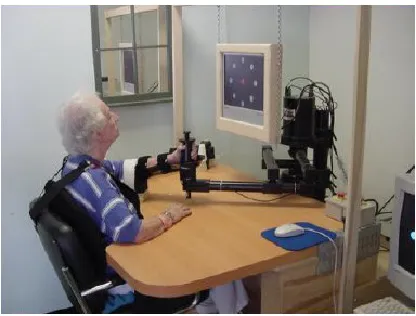
The MIT-MANUS (commercially available as the InMotion2 Shoulder Elbow Robot;
Krebs et al., 1998, see Figure 3.2) is a 2 DOF robot that can move, guide or perturb the
movement of a patient’s upper limb achieved using impedance-control. It is one of the most
famous clinical robots and has been the object of many clinical studies (Fasoli, Krebs, &
Hogan, 2004; Volpe, Krebs, & Hogan, 2001). The MIT-MANUS allows patients to displace
the elbow and shoulder during hand movements made in a horizontal plane. The method of
‘impedance’ control allows for elastic deviation around pre-programmed movement
trajectories. For example, in Krebs et al.’s (1998) study, 20 stroke patients were enrolled in
either a robot-aided therapy group or control group. The training task for the robot-aided
group consisted of gaming components, including drawing circles, stars, squares, diamonds,
and navigating through computer displays. The tasks were designed to maximize correlated
sensory feedback, including visual, audio and proprioceptive cues from a computer screen.
The robot-aided group received four to five 1-hour sessions a week for up to 9 weeks with
the MIT-MANUS system. A control group received 1-hour a week of standard plus “sham”
(false) aided therapy, which did not pose adverse effects. Following therapy, the
control group. This finding was also supported by chronic stroke subjects with the same
sample size (Krebs et al., 1998, Fasoli, Krebs, Stein, Frontera, & Hogan, 2003).
Figure 3.2. MIT-MANUS (Krebs et al. 2004)
The MIME system (Lum et al., 2002) is a bimanual, mirror-image 6 DOF device for
reaching and tracing tasks. A patient’s hands are attached to robot end-effectors during the
training (see Figure 3.3). The robot moves a patient’s forelimb continuously to a
mirror-image position in 3D space. MIME implements several modes of robot-assisted movements,
such as passive, active-assisted, and active assistance constrained by interaction forces and
moments applied to the patient’s arm. A study was conducted to assess the clinical
effectiveness of the MIME system, as compared with a conventional motor rehabilitation
therapy regimen. Twenty-seven chronic stroke subjects received twenty four 1-hour therapy
sessions over a 2-month period (Lum et al., 2002). The robot-aided group practiced
upper-limb movement assisted by the MIME system while the control group received conventional
did not provide an explanation as to why the control group received minimal robot exposure.
It is possible that this exposure confounded the comparison of control group performance
with that of the robot-aided group. As a result, the robot-aided group produced statistically
significant improvements over the control group, which the authors noted as being directly
linked to the automated training approach. In Lum et al.’s (2006) later study, the specific
effects of bilateral training were explored using the MIME system with 30 subjects classified
into four groups. All subjects received 50 min. of rehabilitation therapy over a 4 week period
with either traditional rehabilitation or one of three MIME conditions, including unilateral,
bilateral or a combined mode. Only the combined training group showed significant
improvements over the control group, as indicated by increased Fugl-Meyer scores. However,
this difference from other groups was lost after 6 months (Lum et al., 2006). These results
indicated that the system was effective for promoting training performance but had a
transient effect on motor learning.
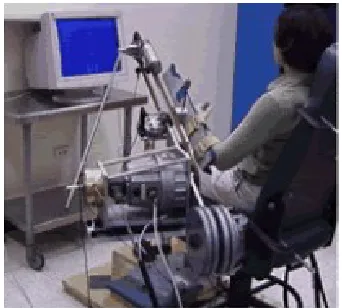
The ARM Guide robot system (Reinkensmeyer et al., 2000) includes 3 (controlled)
DOFs. In this system, a servo-motor assists the movement of a subject’s arm in a linear path
along the X, Y and Z axes. A patient’s forearm is strapped to a splint that slides along a
linear constraint, while the motor assists or resists arm movement. The device is statically
counterbalanced so that a patient does not feel the weight of the arm. In initial clinical testing
of the ARM Guide system, three chronic stroke subjects underwent three therapy sessions per
week over a 2-month period (two of three subjects) or 1-month period. As a result, all
impaired subjects greatly improved their active range and peak velocity of movement along
the ARM Guide. Another study compared traditional rehabilitation over 8 weeks with the
same period of robotic-based rehabilitation with the ARM Guide system (Kahn, Lum, Rymer,
& Reinkensmeyer, 2006). Patients in the robot group were provided with movement
assistance if they were unable to complete the movement or experienced difficulties in
completing given movement tasks, while the control group completed the training without
robot assistance. Results showed that there was no difference between groups in task
completion time and path straightness. However, the robot group showed significant
Figure 3.4. ARM Guide (Reinkensmeyer et al., 2000)
The Bi-Manu-Track robotic arm trainer (Hesse, Schmidt, Werner, & Bardeleben, 2003)
was designed to work specifically on distal arm movement training by facilitating practice of
bilateral pronation and supination at the elbow and flexion and extension at the wrists (see
Figure 3.5). These types of distal movements are an integral part of many daily activities.
The robot enabled 1 DOF bimanual passive and active practice. Hesse et al. (2005)
performed a clinical assessment of the Bi-Manu-Track with 12 hemi-paretic patients (stroke
patients with motor unilateral disability). Subjects received a 15-minute treatment with the
trainer every workday for 3 weeks in addition to participating in an ongoing comprehensive
rehabilitation program. As a result, all patient impressions of the therapy were positive.
Elbow, wrist and finger spasticity and motor control ability improved in most patients. It was
concluded that the trainer made intensive bilateral elbow and wrist training possible for
Figure 3.5. Bi-Manu-Track (Hesse, Schulte-Tigges et al., 2003)
3.1.3. Summary
The majority of the above studies have involved assessing the effects of repetitive
robotic training of patient arm, shoulder or elbow movements for various periods of time.
Data on motor control, muscular-skeletal performance, functional abilities and independence
in task performance have been recorded and compared with control groups (e.g., traditional
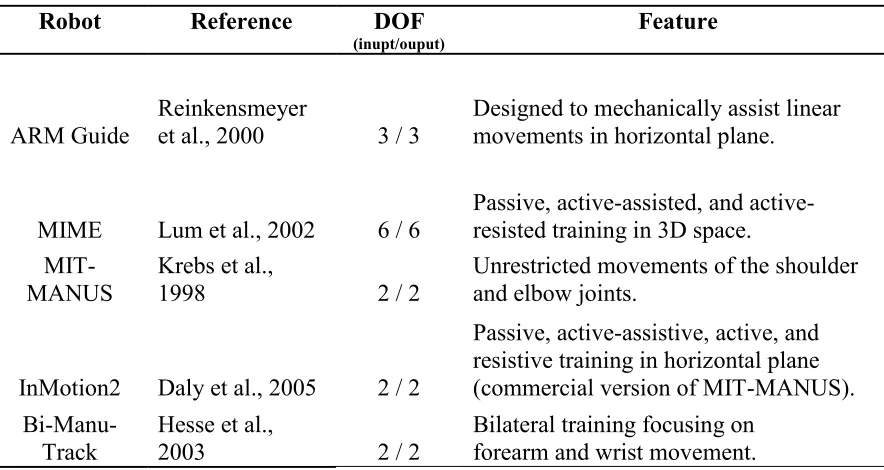
training). Table 3.1 presents a summary of the six robots for motor rehabilitation reviewed
above. The robots are attached to patient shoulders and elbows and provide less than 6 DOFs.
A limited number of DOFs at shoulder and elbow joints cannot be directly generalized to
therapy for the human wrist and hand, which involves more DOFs in joint space. The general
conclusion of the existing robot-based rehabilitation studies is that robot therapy has an effect
on motor control; however, it is not necessarily more effective than traditional therapy with
the same intensity. Robots are principally used for their capability to provide a large number
of repetitions (Kwakkel et al., 2008). In other words, the robotic systems do not provide
accepted that increasing intensity of training is a significant factor for effective rehabilitation,
although the degree of increase in effectiveness is uncertain. Therapist adjustment of levels
of difficulty of rehabilitation exercises is often easily achieved; however, such training
Table 3.1. Summary of robot-based rehabilitation systems
Robot Reference DOF
(inupt/ouput) Feature
ARM Guide Reinkensmeyer et al., 2000 3 / 3 Designed to mechanically assist linear movements in horizontal plane.
MIME Lum et al., 2002 6 / 6
Passive, assisted, and active-resisted training in 3D space.
MIT-MANUS
Krebs et al.,
1998 2 / 2
Unrestricted movements of the shoulder and elbow joints.
InMotion2 Daly et al., 2005 2 / 2
Passive, active-assistive, active, and resistive training in horizontal plane (commercial version of MIT-MANUS).
Bi-Manu-Track
Hesse et al.,
2003 2 / 2
Bilateral training focusing on forearm and wrist movement.
Coupling of rehabilitation robots with interesting and motivating VR interfaces has
been observed to be a promising method for automatically increasing the intensity of
rehabilitation exercises (Holden, 2005). If robots are capable of delivering a higher number
of therapeutic trials than a therapist, this provides an obvious advantage for patients.
However, the capability to promote patient engagement and training task performance
represents an additional benefit that may serve to make robotic-based therapy superior to
conventional therapist methods. Recent robotic systems present such advantages over
conventional therapy, as well as flexibility in task condition delivery. The use of VEs and
augmented feedback with robotic-based systems to deliver unconventional therapies has been
found to be enjoyable for patients (Holden, 2005). The next section describes research on
3.2. VR-based Rehabilitation
Virtual reality (VR) is a simulation of a real-world environment that is created through
a computer system and is experienced by a user through a human–machine interface (Holden,
Dyar, Schwamm, & Bizzi, 2005). The human-machine interface is typically capable of
providing information specific to the human senses (e.g., vision) through a specialized output
device, such as a stereoscopic display screen. The design of the interface (itself) is often
intended to make the control or display “transparent” to a user. VR technology has been
commercially available since the late 80’s. Recently, due to dramatic advances in computer
technology, the field of VR research has grown. One of the newest fields to benefit from this
growth is the use of VR technology in medical rehabilitation. In the same fashion of
robot-based rehabilitation, the advance of VR-robot-based rehabilitation focuses on key concepts of
motor learning, as mentioned in Section 3.1, which are repetition, feedback and motivation.
As compared to robot-based rehabilitation or motor learning, many motor learning studies
have paid attention to augmented feedback and found better performance in VR than
real-world training (Merians et al., 2002; Todorov, Shadmehr, & Bizzi, 1997; Weghorst, 1997). In
addition, some studies have investigated motivation to tolerate extensive practice periods
(Bryanton et al., 2006; Gordon, Roopchand-Martin, & Gregg, 2012). In this section, a brief
overview of existing VR systems is provided along with details of VR rehabilitation that
differentiate it from traditional or robot-based rehabilitation.
3.2.1. Advantages and Disadvantages of VR for Rehabilitation
The specific technologies used to present a VR, the degree of realism and the type of
rehabilitation. As mentioned previously, rehabilitation therapy should be repetitive and of
sufficient intensity for patients to achieve motor learning (Kwakkel, Kollen, & Wagenaar,
1999). However, during practice, trainees must be motivated to tolerate task repetition.
Furthermore, they should be provided with some form of feedback on performance progress.
Kwakkel et al. (1999) reported that stroke patients typically spend only 20–60 min. per day
in formal therapy. Common issues influencing patient involvement in therapy include the
degree of interaction with training systems, boredom, fatigue, and lack of motivation for
attending therapy sessions (Tinson, 1989). VR-based therapy provides potential solutions to
such problems associated with traditional therapy techniques. VR can provide novel forms of
feedback and motivate stroke patients to endure practice.
Related to this, children often do not follow through with conventional home
rehabilitation exercise programs because they consider the exercises meaningless and
uninteresting. However, video game-based approaches may be effective for these patients.
Seven children with cerebral palsy received therapy by playing sports games with a Nintendo
Wii™ twice weekly for 6 weeks. This form of training resulted in perfect attendance and
completion of the full training regimen by all participants. Results revealed improvements in
gross motor function and confirmed the efficacy of the Wii as a potential rehabilitation tool
(Gordon et al., 2012). In another study, motivation was assessed in physical, 2D VR, 3D VR,
and video game forms of motor skill training tasks by 20 healthy participants. These
participants rated the video gaming environment and 3D VR as being the most and second
Another advantage of VR is flexibility in application (Burdea, 2003). The same VR
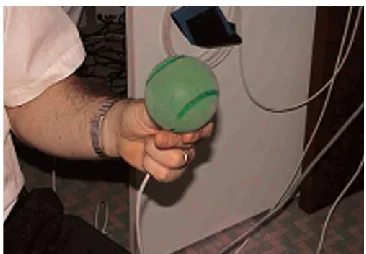
hardware can be used for various types of rehabilitation. For example, a sensing glove can be
used to train musculo-skeletal patients to squeeze virtual “rubber balls” or to complete a
pegboard puzzle. Squeezing a rubber ball is a typical hand strengthening exercise prescribed
after hand surgery. The pegboard exercise is a procedure commonly conducted to improve
hand-eye coordination. This type of interface control can be integrated with a head-mounted
display (HMD) for immersive experience of exercise by patients suffering from different
types of ailments, including TBI with attentional implications or children with attention
deficits. That is, VR is flexible in terms of the type of task that can be simulated as well as
the target user group. Beyond this, VR simulations, like robotic-based rehabilitation, also
support repetition of task training by users and do not present the disadvantage of therapist
fatigue.
Providing augmented feedback is one of the most important advantages of a use of VR
for rehabilitation. During VR practice, feedback can be augmented to provide supplemental
information about the task beyond the inherent feedback available in the physical world
(Schmidt & Lee, 2005). During rehabilitation, patients typically perceive cues on many
aspects of their own movements through sensory channels, such as the eyes. In VR,
additional feedback can be provided such as a real-time demonstration of proper execution of
arm movements by using a visualization of a patient’s own movements (Krakauer, 2006).
That is, augmented feedback in VR can be designed to complement real-world training
feedback in a more salient form. Moreover, augmented feedback provides information about
type of feedback has also been found to motivate patients by providing information about
actions that have been performed correctly. For example, augmented feedback, including
knowledge of performance (KP) or knowledge of results (KR) of patient actions, has been
found to enhance motor skill learning (T. D. Lee, White, & Carnahan, 1990; Swanson & Lee,
1992). In Piron et al. (2003) study, assistive augmented feedback was provided to
participants by a VR system. The feedback was a visual representation of a desired trajectory
of movement. The feedback was found to produce significant motor skill improvement.
VR may also benefit adaptive training approaches to motor learning due to its
flexibility in accommodating various applications and feedback capabilities. As previously
mentioned, VR can be used to present different types of motor tasks and manipulation of
levels of task difficulty is easily achieved. Since VR systems can provide real-time feedback,
closed-loop control of a simulation can also be achieved. Such control allows for accurate
system adaptation based on a learner’s skill level (Henderson, Korner-Bitensky, & Levin,
2007; Holden & Dyar, 2002; Holden et al., 2005). This topic will be addressed further in
Section 3 of Chapter 4.
Contrary to the above advantages, a disadvantage of VR-based rehabilitation systems
is that users often show acceptance issues due to the immersiveness of simulations. It may be
true that high-fidelity and more immersive VEs can increase the benefits of motor training.
However, immersive VRs has been found to cause cyber-sickness symptoms, such as nausea
and headache, particularly for persons over 65 years (Crosbie, Lennon, Basford, &
cyber-sickness potentially limits the usability of immersive VR for rehabilitation purposes,
especially for older people in home environments. Another problem with immersive VR
systems is delay between body movements and the presentation of appropriate task images
through display devices (e.g., HMD). That is, due to system data processing capabilities and
image rendering loads, delays in the response of a simulation to user actions may occur.
These delays can lead to an asynchronous vestibular motor reaction to visual stimuli
(Gövercin, Missala, Marschollek, & Steinhagen-Thiessen, 2010)
Another disadvantage of VR systems is that most control and display interfaces
currently in use are not designed as medical equipment (Burdea, 2003). The VR equipment is
mostly general-purpose and not intended for clinical use. For example, a sensing glove,
designed for a normal population, would need to be modified to accommodate special needs
of patients who have undergone hand surgery or stoke patients. In addition, VR equipment
cost is still prohibitive for many health clinics even though the cost has dropped significantly
in recent years. Accommodating clinical use would also further increase VR costs. Although
many advanced VR systems for rehabilitation are not commercially available, such systems
can be expected to be expensive when they become available. The cost of some of the more
immersive commercial VR systems is also prohibitive for clinical use and such technologies
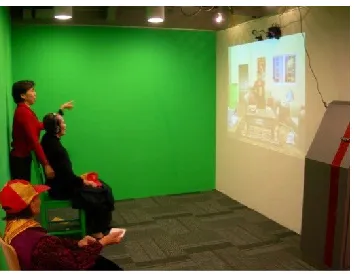
are often only used by universities for investigative studies. For example, the Interactive
Rehabilitation and Exercise System (IREX; GestureTek, Toronto, Canada), a commercial VR
physical therapy system, which uses immersive video gesture control technology to place