Teachers'Perceptions of Discourse Usage in Elementary and Middle Grades Mathematics
A Dissertation submitted to the Graduate School Valdosta State University
in partial fulfillment of requirements for the degree of
DOCTOR OF EDUCATION
in Curriculum and Instruction
in the Department of Curriculum, Leadership, and Technology of the Dewar College of Education and Human Services
May 2018
Beth A. Tuck
Ed.S., Valdosta State University, 2012 M.Ed., Armstrong Atlantic State University, 2009
© Copyright 2018 Beth A. Tuck All Rights Reserved
FAIR USE
This dissertation is protected by the Copyright Laws of the United States (Public Law 94-553, revised in 1976). Consistent with fair use as defined in the Copyright Laws, brief quotations from this material are allowed with proper acknowledgment. Use of the material for financial gain without the author's expressed written permission is not allowed.
DUPLICATION
I authorize the Head of Interlibrary Loan or the Head of Archives at the Odum Library at Valdosta State University to arrange for duplication of this dissertation for educational or scholarly purposes when so requested by a library user. The duplication shall be at the user's expense.
Signature
I refuse permission for this dissertation to be duplicated in whole or in part.
ABSTRACT
This dissertation is motivated by the research question “do years of teaching experience, educational status, and grade of instruction affect teachers' perceptions of univocal
discourse usage, dialogic discourse usage, and general discourse usage”? This research is a survey design with foundations from Truxaw, Gorgievski, and DeFranco's (2008) instrument on classroom discourse usage. The goal of this study was to assess group differences in teachers' perceptions of univocal, dialogic, and general discourse, as well as differences due to the level of experience and education were explored. There were two statistically significant main effects for teaching experience as well as one
statistically significant effect for grade band. For teaching experience and the dialogic discourse score, teachers with 11 or more years of experience had a mean dialogic discourse score (M = 35.85, SD = 5.30) that was significantly higher on average than teachers with 0 to 10 years of experience (M = 34.14, SD = 5.93). The mean of the elementary group (M = 34.78, SD = 5.65) was significantly lower than the mean of the middle grade level band group (M = 38.00,SD = 4.15). For teaching experience and the general discourse score, teachers with 11 or more years of experience had a mean general discourse score (M = 12.46, SD = 1.76) that was higher on average than teachers with 0 to 10 years of teaching experience (M =11.83,SD = 2.05). The results and future research were discussed, and the findings support a need for further change centered on dialogic discourse.
TABLE OF CONTENTS
Chapter I: INTRODUCTION ... 1
Statement of the Problem ...2
The Gap in the Current Literature ... 3
Purpose of the Study ...4
Original Contribution ... 4
The Significance of the Study ...5
Advancing Theory ... 5
Advances in Practice ... 7
Background of the Study...8
Conceptual Framework for the Study / Theoretical Foundation...11
Research Questions ...13
Definition of Terms ...13
Procedures ...17
Limitations of the Study...18
Organization of the Study ...18
Chapter II: REVIEW OF THE LITERATURE ... 19
Concept Map with Explanation...21
Conceptual Understanding of Discourse and Constructivism...21
Discourse Defined ...30
Univocal Discourse versus Dialogic Discourse ...34
Discourse and Student Achievement...36
Explanation versus Justification...37
Discourse Outside of the United States...38
Reform-Mathematics and Classroom Shifts ...40
Student-Centered Mathematics ...45
Mathematical Mindset...48
The Inductive Model of Discourse...49
Standards for Mathematical Practice...50
Classroom Environment...52
Learning Environment and Classroom Norms...54
Student's Role in Discourse...55
The Teacher's Role in Discourse...56
Effective Questions ...59
Worthwhile Mathematical Tasks...60
Chapter III: METHODS ... 64
Research Design and Rationale...64
Population, Participants, and Setting...65
Instrumentation and Operationalization of Constructs...67
Validity and Reliability ...68
Content Validity ... 69
Construct Validity... 69
Reliability ... 70
Threats to Internal Validity... 70
Procedures ...71
Participation, Data Collection (Primary Data), and Management...72
Data Analysis ...73
Descriptive Statistics ... 73
Study Variables... 74
Ethical Procedures and Anticipated Ethical Issues in the Study...75
Summary ...76
Chapter IV: RESEARCH FINDINGS ... 77
Participants ...77
Instrumentation...78
Study Variables ...80
Data Collection and Management ...80
Data Screening ...81
Research Question 1 ... 84 Research Question 2 ... 85 Research Question 3 ... 85 Additional Findings...86 Classroom Observations ... 87 Summary ...91
Chapter V: CONCLUSIONS, DISCUSSIONS, AND SUGGESTIONS FOR FUTURE RESEARCH... 92
Summary of the Findings and Conclusions...93
Summary of the Survey ... 93
Finding 1 ... 93
Finding 2 ... 94
Conclusions from the Survey ... 95
Finding 1 ... 95
Finding 2 ... 96
Summary of the Classroom Observations ... 96
Finding 1 ... 96
Finding 2 ... 97
Finding 3 ... 97
Finding 1 ... 98
Finding 2 ... 99
Finding 3 ... 100
Limitations of the Study...100
Self-Reported Survey Data... 100
Generalizability of Study... 101
County-Mandated Curriculum... 101
Recommendations for Future Research ...101
Conclusion...103 REFERENCES ... 104 APPENDIX A... 121 APPENDIX B ... 124 APPENDIX C ... 127 APPENDIX D... 130 APPENDIX E ... 132 APPENDIX F... 134 APPENDIX G... 138
LIST OF FIGURES
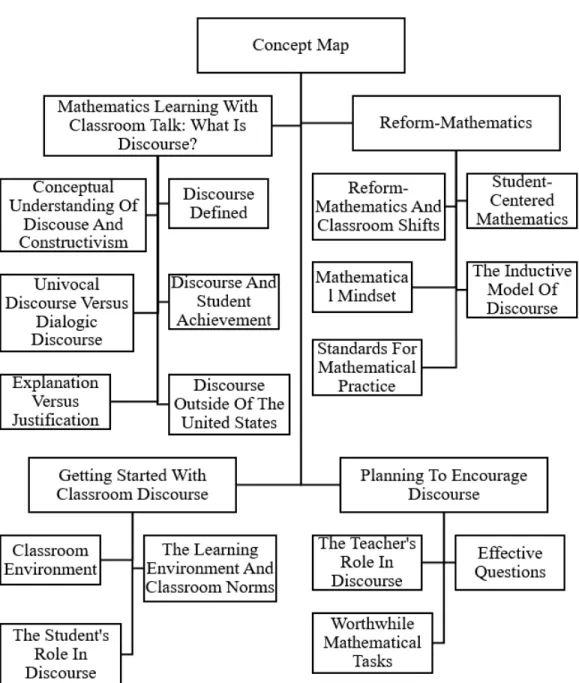
Figure 1: Conceptual Map with An Explanation. ... 20
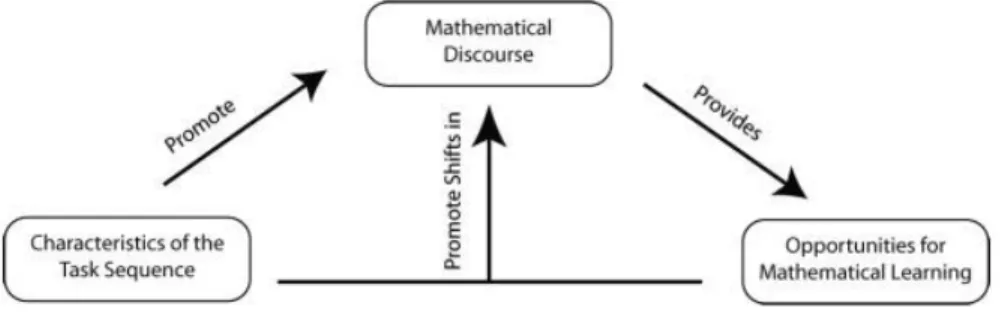
Figure 2: Discourse-Rich Mathematical Tasks... 62
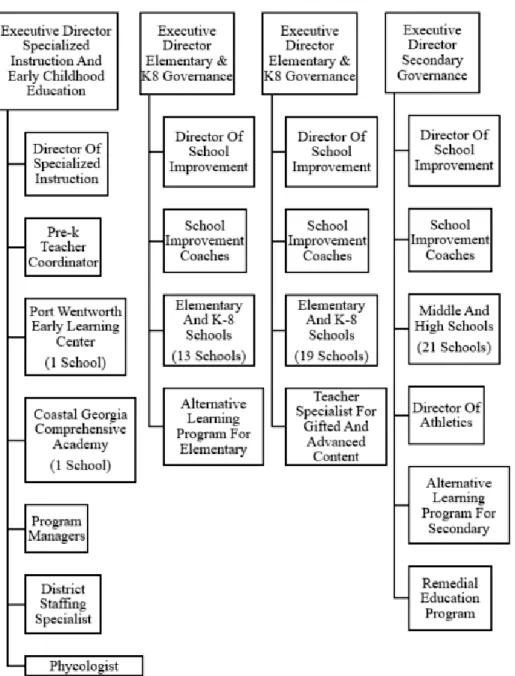
Figure 3: Academic Affairs Organizational Flowchart for Executive Director Tiers. ... 67
LIST OF TABLES
Table 1: Levels of Mathematical Discourse………..27
Table 2: Frequencies of Subgroups of Participants………...78
Table 3: Item Total Statistics……….79
Table 4: Descriptive Statistics for Subscales……….80
Table 5: Tests of Normality for Total Sum Scores for The Dependent Variables………83
Table 6: Levene's Test of Equality of Error Variances (Based on Mean)……….84
ACKNOWLEDGMENTS
This work would not have been possible without the support of the faculty and staff at Valdosta State University. To the entire faculty in the Curriculum, Leadership, and Technology department, I am grateful for your mentorship along my journey. I am especially grateful to Dr. Gibson, Dr. Fiester, and Dr. Trowell. Thank you for serving on my committee and for your sponsorship in this adventure. I would also like to thank my fellow doctoral students for their support, feedback, and friendship. Thank you to those who responded to my survey, without you this would not have been possible. To all my teachers, professors, colleagues, family, friends, and loved ones, thank you for supporting my dream.
DEDICATION
To my parents, Marshall and Linda Tuck, thank you for instilling in me that education is a lifelong journey. Thank you for continuous, late night, edits. I am forever indebted.
To my brother, Mark, thank you for your constant support, understanding, and encouragement.
Finally, to Maui dog, you kept me company on study days, late nights, and always seemed to know which book or article to lay on.
Chapter I INTRODUCTION
The NCTM's (2000) Principles and Standards for School Mathematicsclaim it is beneficial to have students engaged in rich discussions, not merely explaining steps they took to solve a problem (NCTM, 2000a; NCTM, 2000b; NCTM, 2014). Mathematics classrooms need less monologue and more engaging dialogue. Current classrooms have an overabundance of univocal discourse, and a need for dialogic discourse. Discourse enables students and teachers to reflect on their own understanding, while making sense of others' thinking. This supports student achievement and higher order thinking skills, which are a critical requirement of the Common Core State Standards Initiative. The United States is in dire need of workers who can persevere and attend to precision. The National Council of Teachers of Mathematics (NCTM) defines classroom discourse as the mathematical communication that develops in a classroom. Effective discourse “happens when students articulate their own ideas and seriously consider their peers' mathematical perspectives as a way to construct mathematical understandings” (NCTM, 2010a, p. 1). Teaching with an emphasis on discourse and argumentation is a powerful tool, which can transfer to many subject areas including mathematics (NCTM, 2000b; NCTM, 2014; Rumsey & Langrall, 2016).
The NCTM (2000b) outlines six principles for educational decision makers within school mathematics, which include equity, curriculum, teaching, learning, assessment, and technology. The NCTM suggests using these principles to guide decisions for school
mathematics, and they highlight the basic characteristics of high quality mathematical instructional programs. The teaching principle, according to the NCTM, presents an additional set of six standards for teaching mathematics. The additional six standards within the teaching principle address “worthwhile mathematical tasks; the teacher's role in discourse; the student's role in discourse; tools for enhancing discourse; the learning environment; and the analysis of teaching and learning” (NCTM, 2000b, p. 17). Children cannot solve problems without understanding and using the mathematical content. Discourse is a highly effective way for students to generate an understanding of such content during problem-solving tasks.
Statement of the Problem
Effective Mathematics teaching calls for a deep commitment to the development of students' understanding of mathematics (NCTM, 2000b; NCTM, 2014). As Galileo once declared, “you cannot teach a man anything, you can only help him find it within himself” (Malone, 2003, p. 97). The problem is that mathematics classrooms focus on the content standards with slight emphasis on the process standards (Boaler, 2015; McGatha & Bay-Williams, 2013). The process standards, according to the NCTM
(2000b), include problem-solving, reasoning and proof, communication, connections, and representation. Communication in the mathematics classroom is vital to students sharing their understanding of concepts and procedures. Students engage in extraordinary levels of communication every day (Barnes & Toncheff, 2016; Steele, 1995). In most
traditional mathematics classes, the prevailing discourse is univocal (Truxaw & DeFranco, 2007), therefore the teacher's questioning and feedback are used to convey information to students, leading towards the teacher's point of view.
Communication can have great education impact. Hattie et al. (2016) claim discourse and classroom communication have an effect size of .82. Hattie et al. (2016) use a Cohen's d to measure effect size. Each Cohen's d effect size measure is calculated by taking the difference between two means and dividing that by a standard deviation for the data. An effect size of .4 is typical, and anything above encourages greater impact on student achievement. This means classroom discussion allows students to improve communication skills by voicing their opinions and thoughts (Hattie et al., 2016). Discourse and classroom dialogue can have a positive impact on student learning. In fact, discourse is found within what Hattie refers to as the Zone of Desired Effects. With an effect-size this large, discourse results in two years of learning gains for a year of schooling. Teachers “would be wise to focus their energy on building classroom discourse rather than attempting to teach test-taking” (Hattie et al., 2016, p. 41).
According to research by Hattie et al. (2016), direct instruction had an effect size of 0.59, while classroom communication had an effect size of 0.82. The issue should not be direct versus dialogic but rather “the right approach at the right time to ensure learning” (Hattie et al., 2016, p. 62).
The Gap in the Current Literature
There is a gap in the existing literature because current literature encompasses many case studies of exceptional teachers, but there is little quantitative data regarding teacher perceptions for an entire district. This project adds to current research in mathematics education by contributing a quantitative view of teachers' perceptions of discourse practices in a school district in southeastern Georgia. Mathematics education continues to generate new knowledge, tools, and ways of doing and communicating
mathematics (NCTM, 2000a) and this research will support the ongoing evolution in mathematics education.
Purpose of the Study
The NCTM recommends communication and mathematical discourse since they are essential to building mathematical understanding (NCTM, 2014). The goal of this study will be to assess group differences in teachers' perceptions of univocal, dialogic, and general discourse as this is constant with NCTM's recommendation regarding communication in mathematics classrooms. In addition, differences due to the level of experience and education will be explored. Results of this research can provide a helpful step toward enhancing teaching practices for mathematics classrooms.
Original Contribution
The original contribution this study will make is an understanding of current practices and perceptions of the use of discourse in kindergarten through eighth-grade mathematics classrooms in southeastern Georgia. Much of the current literature focuses on case studies of single or multiple teachers (Bennett, 2010; Blanke, 2009; Rolle, 2008). Several studies offer a case study approach of one classroom and the discourse patterns within. One such case study focuses on classroom structure for teachers implementing discourse to support student learning. Other studies focus on communication in higher-level coursework and some of the current research focuses on writing as discourse for learning mathematics. Current research highlights positive aspects of appropriate discourse in mathematics classrooms.
The Significance of the Study Advancing Theory
This research will offer teachers an opportunity to understand current practices and encourage positive social change. One of the most powerful ways to raise student achievement is through professional learning and teachers understanding effective
instructional practices (DuFour & Mattos, 2013). Intensive professional development for teachers has the potential to lead to increases in student achievement, the goal of all educators (Garet et al., 2016). Social interaction “provides us with the opportunity to use others as resources, to share our ideas with others, and to participate in the joint
construction of knowledge” (Smith & Stein, 2011, p. 1).
Research supports that mathematics achievement is associated with classroom communication and discourse (Hufferd-Ackles, Fuson, & Sherin, 2004; Whitenack & Yackel, 2002). However, researchers revealed that teachers in the United States continue to state information, rather than allow students to develop ideas through discourse
(O'Brian, 1999). Mathematics plays an important role throughout the lives of children, and the findings from this study can lead to positive social change by influencing teachers' perceptions of their current discourse practices.
As stated by the vision of the NCTM (2000b), there is a need for continued improvement of mathematics education. Findings may also offer new insights or approaches to research. McGatha and Bay-Williams (2013) advocate seven shifts to occur in mathematics classrooms that would be beneficial. The seven shifts according to McGatha and Bay-Williams (2013) include:
Shift 1: From same instruction toward differentiated instruction. Shift 2: From students working individually toward the community of learners. Shift 3: From mathematical authority coming from the teacher or textbook toward mathematical authority coming from sound student reasoning. Shift 4: From teacher demonstrating “how to” toward teacher
communicating expectations for learning. Shift 5: From content taught in isolation toward content connected to prior knowledge. Shift 6: From a focus on correct answer toward a focus on explanation and understanding. Shift 7: From mathematics made easy for students toward engaging
students in the productive struggle. (p. 167)
When any or a combination of these shifts occur, the teacher and the students benefit. The teachers and students become co-constructors of knowledge and the students are more motivated which increases student achievement.
Shift 1 for classroom practices focuses on the same learning outcome for all but the differentiated instruction to achieve the same learning outcome (McGatha & Bay-Williams, 2013). Shift 2 focuses on a community in which students judge the
reasonableness of their strategies and solutions. Shift 3 focuses on the accuracy of a solution being based on reasoning about the strategy to the solution. Shift 4 focuses on the teacher sharing learning goals and expectations. Shift 5 has a focus on making mathematical connections to prior knowledge. Shift 6 takes the focus and places the discussion to focus on student explanations and why an answer is, or is not, correct. Shift 7 focuses on perseverance and multiple attempts to a teacher posed task.
One shift this research may encourage is the change from a focus on correct answers to a focus on discussions (McGatha & Bay-Williams, 2013). We must evolve from students explaining steps they completed to solve a (known) procedure and toward rich discussions that focus on how, why, and when a certain approach might work
(McGatha & Bay-Williams, 2013). Future mathematics classrooms will focus on student explanation addressing why the answer is or is not correct(McGatha & Bay-Williams, 2013). Knowing mathematics is empowering and satisfying (NCTM, 2000b).
Mathematics underpins everyday life. I interpreted the findings to see if specific subgroups vary in their perceptions of discourse types.
Advances in Practice
Teacher leaders need this research to differentiate professional development based on teacher perceptions of their use of discourse types. Teachers' perceptions and beliefs play a significant role in how they experience learning and their perceptions influence strongly what they will or will not do in their classrooms (Carnegie, 2014). Educators can use the results to reflect upon and improve their own practice as mathematics teachers. Teachers shape their thoughts by their background knowledge and life experiences (Yero, 2016). When teachers do not have a strong foundation in current pedagogy, students are negatively affected (Hill, Rowan, & Ball, 2005; Polly et al., 2015). This research supports professional practice by guiding professional development needs and decisions as discovered in the results. The results inform teacher practice and implementation of teacher professional development that focuses on discourse in
elementary and middle grades mathematics instruction. Teachers with little information about the different discourse may naturally form perceptions, some of which may be
negative towards including discourse in their classroom. This can lead to misperceptions of information.
The United States needs highly trained personnel who can grapple with complex problems (Battista, 1994). Core competencies are no longer yielding high paying jobs nor do basic skills allow for an acceptable standard of living. Compelling students to have mathematical discussions about content is one of the best ways to engage in formative assessment (Chapin, O'Connor, & Anderson, 2009). Effective teaching requires repeatedly seeking improvement in mathematical pedagogy (NCTM, 2000b; NCTM, 2014). According to the vision for school mathematics “orally and in writing, students communicate their ideas and results effectively. They value mathematics and engage actively in learning it” (NCTM, 2000b, p. 3). Because NCTM recommends communication and notes it as important to help students build meaning about mathematics, this project enhances teachers' practice by driving professional
development opportunities. Many researchers support the importance of mathematics teachers allowing for student discussions and leading discussions themselves (Gonzalez & DeJarnette, 2013; Hufferd-Ackles, Fuson, & Sherin, 2004; Otten, Cirillo, & Herbel-Eisenmann, 2015; Otten, Engledowl, & Spain, 2015).
Background of the Study
Researchers of national and international mathematics assessments suggest a need for improvement in math achievement among students within the United States (Garet et al., 2016). The 2011 Trends in International Mathematics and Science Study (TIMSS) results justify the importance of this study (NCES, 2015). The study is an international longitudinal research project to measure trends in math and science, which suggests other
countries in mathematics constantly outscore the United States. In the 2011 study, the following systems outperformed the United States average in fourth and eighth grade: Chinese Taipei, Flemish Belgium, Hong Kong-China, Indiana, Japan, Korea,
Massachusetts, Minnesota, North Carolina, Northern Ireland, Quebec-Canada, and Russian Federation.
In the NCES 2015 study, over 60 countries took part. According to the National Center for Education Statistics (NCES) on the National Assessment of Educational Progress (NAEP), the United States is below the following countries in fourth and eighth-grade mathematics: Hong Kong, Russian Federation, Finland, Singapore, and Northern Ireland. The NAEP is another longitudinal nationally represented assessment of American students' achievement (The Nation's Report Card, 2016). Approximately 13,200 American students took the NAEP mathematics assessment in 2015.
Unfortunately, the 2015 average United States mathematics score was lower than the 2013 mathematics score for both fourth and eighth-grade students (The Nation's Report Card, 2016). For the 2015 assessment, 40% of fourth graders and 33% of eighth graders in the United States performed at or above the proficient level in mathematics NAEP.
Loucks-Horsley (2010) asked if students will meet the learning goals we have established, what new knowledge, practices, and beliefs do teachers need, and how will they gain them? Unfortunately, the teachers teaching mathematics often know limited mathematical content. Researchers have linked teacher content knowledge in
mathematics and science with higher student performance (Loucks-Horsley, 2010). To best help students learn, students rely on teachers to be current on content. Only twenty-five percent of twelfth-grade students performed at or above the proficient level (The
Nation's Report Card, 2016). Georgia's fourth graders placed thirty-eighth with a score of 236, while Georgia's eighth-graders placed thirty-fourth with a score of 279 (The Nation's Report Card, 2016). The average score for fourth and eighth graders were 240 and 281 respectively (The Nation's Report Card, 2016). It must also be kept in mind that test scores do not always predict innovation.
Shifts in classroom practice should include focusing on explanations and understanding as opposed to an emphasis on the correct answer (McGatha & Bay-Williams, 2013; NCTM, 2014). One such shift involving discourse includes a change from the teacher showing how to correctly compute a math problem to the teacher communicating the expectations for learning (McGatha & Bay-Williams, 2013) and supporting students as they theorize potential pathways toward a solution (Kimani, Olanoff, & Masingila, 2016). In this current model of best practices, the teacher becomes the facilitator and allows students to share their thinking (McGatha & Bay-Williams, 2013).
Discourse, in its most basic form, as defined by the NCTM is the mathematical communication that occurs in the classroom (NCTM, 2010a) and is effective when students can articulate their own thinking and consider peers' perspectives. The goal of embedding classroom discourse in a mathematics classroom is conceptual understanding. When promoting discourse in a mathematics classroom, the teacher plays a special role in facilitating and steering discourse (Springer & Dick, 2006). “The decisions a teacher makes about what to say or do next during a class period may follow a carefully laid out plan” (Springer & Dick, 2006, p. 106). Rarely does classroom discourse play out as the teacher envisions. Teachers can use scripted moves (planned out in advance) to set the
context of the example, teachers can also use provisional moves which are anticipated and changed on cues from the students. Additionally, teachers can use improvisational moves which are made up in response to unanticipated developments in the classroom discourse (Springer & Dick, 2006).
Such discourse moves can be influences by the intentional type of discourse the teacher is choosing. Univocal discourse is one-way communication in which the listeners should all receive the same message. Dialogic discourse is two-way communication, which varies from conversation to conversation. Dialogic discourse is used to construct new meaning whereas univocal discourse is used to convey information. O'Connor and Michaels (2007) note dialogic discourse “connotes social relationships of equal status, intellectual openness, and possibilities for critique and creative thought” (p. 477). General discourse can be understood as evaluative, generic discussion, rather than
discussion intended to create understanding or construct new meaning (Otten, Engledowl, & Spain, 2015; Truxaw, Gorgievski, & DeFranco, 2008).
Conceptual Framework for the Study / Theoretical Foundation
A well-developed conception of mathematics teaching is critical for teachers to understand their role as educators (Simon, 1995). Teachers need access to relevant and current research of mathematical thinking, curriculum materials, and ongoing
professional development to become a successful mathematics teacher. Constructivism (often called social constructivism) is one worldview grounded in understanding, multiple participant meanings, social and historical construction, and theory generation (Creswell, 2014).
It is not surprising that social constructivism is on the forefront of mathematics education. Social constructivism allows students to create a path to understanding. Social constructivism challenges the view that the teachers are the givers of knowledge (Brickhard, 1997). Through social constructivism, students can explore and develop their understanding of topics. Social constructivism addresses how students learn and what teachers can do to facilitate students' understanding and suggests that mathematical understanding results from people forming their models in response to questions and ideas and not simply taking information from others (Simon, 1995; Stiff, 2001). Social constructivism challenges the procedures by which individual students construct their knowledge (Brickhard, 1997).
Constructivist mathematics classes have students talking with one another, and teachers questioning students' understanding of mathematical relationships, concepts, and processes. Some critics believe this is not an appropriate way for mathematics to be taught and learned. The critics of reform mathematics agree that teachers arrange
students in rows and that teacher lectures should dominate instruction (Stiff, 2001). “The constructivist teacher, by offering appropriate tasks and opportunities for dialogue, guides the focus of students' attention, thus unobtrusively directing their learning” (Clements & Battista, 2009, p. 7).
Constructivist teachers pose problems and encourage students to think deeply about their solutions. These teachers promote and encourage students to make connections to previous learning in mathematics and other content disciplines.
Constructivist teachers ask students to explain the mathematics (Stiff, 2001). This type of teacher belief directly aligns with standards-based mathematics classrooms.
Constructivism addresses how students learn and what the teacher can do to facilitate understanding. Constructivist philosophies focus on what students can do to integrate new knowledge with existing knowledge to create a deeper understanding of the mathematics (Stiff, 2001).
Research Questions
Teaching experience, the highest level of education completed by the participants, and grade of teaching will be the independent variables for this study. The dependent variables will be the total score for the rating scale items for univocal discourse, the total score for the rating scale items for dialogic discourse, and the total score for the rating scale items for general discourse. The dependent variables are continuous on an interval measurement scale from 3 to 15 (general discourse), 6 to 30 (univocal discourse), and 9 to 45 (dialogic discourse). Since the total score is used, participants will each have a univocal discourse score ranging from 6 to 30 points, a general discourse score from 3 to 15 points, and a dialogic discourse score ranging from 9 to 45 points.
(1) Do years of teaching experience, educational status, and grade of instruction affect teachers' perceptions of univocal discourse usage?
(2) Do years of teaching experience, educational status, and grade of instruction affect teachers' perceptions of dialogic discourse usage?
(3) Do years of teaching experience, educational status, and grade of instruction affect teachers' perceptions of general discourse usage?
Definition of Terms
Univocal Discourse: Univocal discourse is communication characterized by meaning conveyed in one direction from one person to another (Knuth & Peressini,
2001). In univocal discourse, everyone receives the same message (Knuth & Peressini, 2001). Univocal discourse transmits information directly with little chance of
misinterpretation (Knuth & Peressini, 2001). Teachers can view univocal discourse as a lecture where there is only one speaker and everyone else is a listener with interruptions to the speaker's delivery being prohibited or discouraged. Univocal discourse in a classroom can lead to the dialogic discourse.
Dialogic Discourse: In contrast to univocal discourse, dialogic discourse allows students to have two-way communication and interactions. The teacher does not always send and receive the same message with dialogic discourse and this allows the teacher to understand what students are thinking and enable students to generate new meanings through the process of interacting. The dialogic discourse has meaning that is negotiable and uses spoken words as thinking devices to generate new meanings.
General Discourse: General discourse as a reflection in the survey questions refers to discourse and communication based on teacher beliefs. These items can also be
considered half dialogic and half “other” (univocal and general). The potential for varied interpretations of “verbal assessment by the respondents made the general discourse category seem a better fit than either dialogic or univocal” (Truxaw et al., 2008, p. 63).
Educational Level: One of the independent variables for this research study was educational level. The categories used for education level are Associate's degree, Bachelor's degree (T-4), Master's degree (T-5), and Sixth year (T-6) and above. These levels were chosen because they mirror the teaching certificate type offered by the Georgia Professional Standards Commission (Georgia Professional Standards
Georgia Department of Education in their salary schedule. Level 4 is equivalent to a bachelor's degree, or the commissions determined degree equivalent. Level 5 is the completion of a master's degree or the commissions determined degree equivalent. Level 6 is completion of an Education Specialist's Degree or the commission's determined degree equivalent or completion of 36 semester hours of coursework required for a level seven doctoral degree. Level 7 is the completion of a Doctor of Philosophy or a Doctor of Education program or the commissions determined degree equivalent.
Experience Level: The second independent variable I used is the years of
experience a teacher has had. This variable was categorized from 0-5 years, 6-10 years, 11-15 years, and 15+ years. This research added to the current connection between a teacher's experience level in years and their teaching quality.
The National Council of Teachers of Mathematics: The NCTM, founded in 1920, is the largest mathematics education organization. The NCTM has over 80,000 members throughout the United States and Canada. The NCTM is the public voice and global leader in mathematics education.
Standards for Mathematical Practice (SMP): The eight Standards for
Mathematical Practice are a guide for good mathematics instruction with a focus on what it means to be mathematically proficient. The eight Standards for Mathematical Practice are: (a) Make sense of problems and persevere in solving them, (b) Reason abstractly and quantitatively, (c) Construct viable arguments and critique the reasoning of others, (d) Model with mathematics, (e) Use appropriate tools strategically, (f) Attend to precision, (g) Look for and make use of structure, and (h) Look for and express regularity in repeated reasoning (NCTM, 2014). These standards describe ways in which students
should engage with mathematics as they grow in mathematical maturity and expertise throughout their kindergarten to twelfth-grade education. The Standards for
Mathematical Practice are the heart and soul of mathematics. These standards are the overarching behaviors of a mathematician. If students are to construct viable arguments and critique the reasoning of others, “Students need guidance in building and weighing arguments with warranted evidence, which requires that they clearly explicate their reasoning so that others can understand and build upon or critique their ideas” (O'Connor & Michaels, 2007, p. 284).
Reform-Mathematics or Reform-Based Mathematics: Reform mathematics is a suggested approach to teaching that differs from the sit-and-get model which was used until the NCTM published its call for changes in mathematics education in 1989 (Boaler, 2002). Such changes began with the NCTM document titled Curriculum and Evaluation Standards for School Mathematics, which was published in 1989. Reform mathematics pertain to deemphasizing algorithms and focusing on discovering knowledge and conceptual understanding (Boaler, 2002).
Standards-Based Mathematics Classroom: A standards-based classroom, characterized by cooperative teaching and learning, allows students to take ownership and accountability for their learning outcomes (NCTM, 2000b; Stiff, 2001). Educators tie learning outcomes to the content standards, and teachers expect all students to meet proficiency. The environment for a standards-based classroom allows students adequate time, materials, and structure to learn. Students achieve equity when all teachers have high expectations and allow for a variety of learning experiences.
Inductive Classrooms: Inductive classrooms are classrooms in opposition to deductive classrooms. Inductive classrooms have a focus on inquiry and discovery and are often student-centered. Deductive classrooms, in opposition, are more teacher-centered. Inductive classrooms allow students to focus on conclusions drawn from examples and experiences. Yopp (2009) stated, “When students learn strategies for identifying key ideas in inductive arguments, these ideas can be extended to provide more formal proofs” (p. 287).
Justification: Justifying a solution entails having students provide how or why they solved the problem in a way (Wagganer, 2015). Teachers embed justification within the Standards for Mathematical Practice, which are a requirement in the reform-based mathematics and standards-based mathematics classrooms. Students who “are involved in discussions in which they justify solutions, especially in the face of disagreement, will gain better mathematical understanding as they work to convince their peers about differing points of view” (NCTM, 2000b, p. 59). In a math classroom, justification involves convincing others that a statement is valid (Lannin, Barker, & Townsend, 2006).
Explanation: Wagganer (2015) defined explaining as students telling the steps to solve a problem. Justification differs from explaining because justification requires the students to tell how or why they chose a strategy or reached a solution. Explaining the thinking process is an important learning goal of mathematics education reform (Hiebert & Wearne, 1993; NCTM, 2000b).
Procedures
I used a survey design with foundations from Truxaw, Gorgievski, and DeFranco's (2008) instrument (Appendix A). The sample included teachers from a
school system in a southeastern state A school system in a southeastern state, and the expected sample size was approximately 1,400. I sent the survey three separate times to distribution lists from the school system. After I gathered data using Qualtrics, I
analyzed the data using three factorial ANOVAs in Statistical Package for the Social Sciences (SPSS). Each factorial Analysis of Variance (ANOVA) pertained to a different dependent variable. Additionally, post hoc tests determined significantly diverse groups.
Limitations of the Study
Limitations are features of the study, which may negatively affect the results of the survey or the ability to generalize the results (Roberts, 2010). This study has three main limitations, self-reporting, a lack of generalizability, and a prescribed curriculum. One limitation pertains to the fact the teachers were self-assessing their perceptions using self-reported data. The second limitation imbedded in the structure of the study was a small amount of generalizability of the results. The third limitation is that teachers are following a county mandated pacing, with limited flexibility in choosing which
mathematical tasks they wanted to use.
Organization of the Study
This study is a five-chapter quantitative dissertation. Chapter 1 included an introduction to the study, with the subsections of background, the problem statement, conceptual framework, purpose, and research questions. Chapter 2 comprises a thorough review of the literature. Chapter 3 describes the methodology and methods used in the survey study. Chapter 4 contains the research findings organized by research question and hypotheses, and Chapter 5 includes the conclusions, discussions, and suggestions for future studies.
Chapter II
REVIEW OF THE LITERATURE
The NCTM is tenacious in their advocacy for reform-based mathematics. The teaching principle from the NCTM (2000b) refers to reform ideas, which the NCTM has been influencing since 1989. The belief that ambiguity can exist in mathematics is counter-intuitive. Mathematics is a precise language which is used to answer
mathematical problems. The body of literature reviewed for this study encompassed numerous diverse and related topics. To clarify the relationships between these diverse topics, I provided a concept map. Figure 1 displays the concept map, which represents the organization of the body of the literature review enclosed.
The shifts, since 1989, have been suggesting changes on mathematics education from rote computation and algorithms to classrooms becoming communities of learning. The authors of the 1991, 1995, and 2000 Professional Standards for Teaching
Mathematics discusses three key ideas for discourse: (a) the teacher's role in discourse, (b) the student's role in discourse, and (c) tools for enhancing discourse (NCTM, 2000b). The Principals and Standards for School Mathematicsfrom 2000 reflected having
teachers using meaningful tasks in the learning environment (NCTM, 2000b). The teaching principle, outlined inPrincipals and Standards for School Mathematics, encourages effective math teaching (NCTM, 2000b). The authors of the additional six standards within the teaching principle addressed “worthwhile mathematical tasks; the
the learning environment; and the analysis of teaching and learning” (NCTM, 2000b, p. 17).
Concept Map with Explanation
The literature review encompasses a comprehensive taxonomic overview of discourse regarding mathematics classrooms. I organized the literature review into four overarching categories: discourse, reform-mathematics, getting started with classroom discourse, and planning to encourage discourse. The topic flow chart (as expressed in a concept map) (Figure 1) outlines the literature review topics of the study. This concept map is a sense-making tool that connects numerous ideas and current research topics into four overarching topics: What is Discourse, Reform-Mathematics, Getting Started with Discourse, and Planning to Encourage Discourse.
Conceptual Understanding of Discourse and Constructivism
The concept of constructivism is in sharp contrast to the view that many teachers have towards learning mathematics. Students do not absorb mathematical structures (Clements & Battista, 2009). Teaching must rely on more than simply being the transmission of established facts, skills, and concepts. According to Clements and Battista (2009), five major ideas characterize constructivist mathematics:
1. Children from the learning environment actively create, not passively absorb, knowledge.
2. Children create new mathematical understanding by reflecting on actions and integration of existing structures and knowledge.
3. Individuals have their interpretations of the world. Experiences and
interactions shape these interpretations. Learning mathematics is a process of adapting one's world.
4. Learning is a social process. Mathematical understanding is cooperative and mature. Understanding mathematics in the classroom culture involves educators providing students with the time to discover and invent. 5. Sensemaking is a requirement. If the teacher requires students to use a
process, students must have an activity to make sense of the method.
The social aspect of constructivism is the specific conceptual foundation for this project. The constructivist teacher, “by offering appropriate tasks and opportunities for dialogue, guides the focus of students' attention, thus unobtrusively directing their learning”
(Clements & Battista, 2009, p. 7). Teachers who have constructivist classrooms understand their responsibility as a learning facilitator. Additionally, convincing evidence shows that even young students can explore problems and invent strategies to solve them (NCTM, 2010b).
Dialogic discourse occurs when the teacher intends to understand the students' thinking and uses that thinking as devices for learning. The constructivist teacher is open to students' ideas and will pursue unexpected approaches to a problem to allow students to generate new mathematical understanding socially (Kitchen, 2016; Knuth & Peressini, 2001). In the dialogic model of discourse, students must:
(a) Actively engage in new mathematics, persevering to solve novel problems; (b) take part in a discourse of conjecture, explanation, and argumentation; (c) engage in generalization and abstraction, developing efficient problem-solving strategies and relating their ideas to
conventional procedures; and to achieve fluency with these skills, (d) engage in some amount of practice. (Hattie et al., 2016, pp. 58–59)
An example of dialogic discourse is a teacher re-voicing a student's speech on a specific strategy or structure to a problem. Specifically, teachers can find dialogic discourse at the “stage the summarization through connecting students' mathematical ideas emerged in the classroom” (Saengpun, 2013, p. 198).
Underlying the use of discourse in the mathematics classroom is the “idea that mathematics is about reasoning, not memorization” (Maguire & Neill, 2006, para. 5). Procedures without conceptual understanding are one of many obstacles the NCTM attempts to overcome with its constructivist approach to learning mathematics (NCTM, 2014). The NCTM emphasized shared themes throughout the literature, including the use of mathematical discourse between students and teachers (NCTM, 2000b, 2014).
Mathematical discourse encourages productive struggle from students (Boaler, 2016a; NCTM, 2000b, 2014). Productive struggle, as outlined by NCTM, encourages students to grapple with mathematical ideas and relationships. In contrast to productive struggle, “unproductive struggle occurs when students make no progress towards sense-making, explaining, or proceeding with a problem or task at hand” (NCTM, 2014, p. 48).
Teaching with productive struggle leads to long-term benefits, with students more able to apply their learning to new problem situations (NCTM, 2014). The productive struggle is evident in a classroom when students ask questions related to the source of the struggle, which helps them progress in understanding and solving tasks. They can help one another without simply giving the answer.
Teachers can implement argumentation and discourse to develop mathematically proficient students. One key instructional strategy for discourse is to introduce false claims. Doing so allows the shift of the mathematical authority to go from the teacher or
textbook to the students. Additionally, false claims allow students to understand that invalid claims can be changed and improved (Rumsey & Langrall, 2016). Rumsey and Langrall (2016) suggested, “As students became more adept at using mathematical argumentation, they were better able to support their claims with examples and to challenge others' claims with counterexamples” (p. 418).
Educators often see the productive struggle of students as a weakness, but productive struggle leads to durable proficiency in mathematics content. Incorporating dialogic discourse and rich mathematical tasks allow students to turn such struggles into mathematical discussions, which lead to achievement. Productive struggle helps students build connections to different ideas (Boaler, 2015; McGatha & Bay-Williams, 2013). When students struggle productively, they feel a sense of accomplishment and apply their knowledge (Boaler, 2015; McGatha & Bay-Williams, 2013). Students can subsequently develop a strong self-efficacy for doing mathematics (McGatha & Bay-Williams, 2013). Students in the 21stcentury must represent problems and justify their conclusions. These
skills are learned over time from experiencing productive struggle and discourse within a mathematics classroom (Boaler, 2015).
Dominant cultural beliefs about teaching and learning of mathematics are
consistent with ineffective teaching (NCTM, 2014). Many parents and educators believe students should be taught as they were, through memorization and procedures (NCTM, 2014). Too often, parents and teachers are not convinced straying from these beliefs will be more efficient for student learning (Boaler, 2016a; NCTM, 2014). In sharp contrast is the belief that mathematics should center on engaging students in solving and discussing tasks, which promotes reasoning and sense-making (Boaler, 2015; NCTM, 2014).
Teachers who believe this to be true plan lessons that encourage student interactions and discourse to better help students make sense of mathematics concepts (Brickhard, 1997; NCTM, 2014; Stiff, 2001).
A range of cognitive benefits occurs when teachers embed discourse in mathematics lessons. These benefits can include making conjectures, presenting evidence, voicing concerns, agreeing, disagreeing, and supporting one's own thinking (Battista, 1994; Chapin et al., 2009; McGatha & Bay-Williams, 2013). Cognitive
learning is an individual's internal representation of learning. Teachers and students may never realize their knowledge is complete, shallow, or passive unless teachers put
students in a situation where they must talk or write about a mathematical concept (Chapin, O'Connor, & Anderson, 2009).
Social aspects also play a role in student discourse in mathematics classrooms (Sammons, 2012), which allows students to remember the content. If a teacher makes a claim, a student is less likely to remember that claim. If a student makes the claim, the learning event becomes more memorable due to its social significance. Socially, when students talk in class, they learn about respect and kindness. Students learn to understand to respect someone's point of view and someone's reasoning.
According to Boaler (2016a), a prominent scholar in the field of mathematics education, babies and infants love mathematics. One of the most mathematical acts of all is patterning. Children happily and easily make patterns in colored blocks (Boaler, 2016a). Therefore, students innately enjoy problem solving and puzzles. Enjoyment occurs when discovering and uncovering content takes precedence over teachers covering and recovering content. According to Boaler (2016a), “the best starts we can give our
students is to encourage them to play with numbers and shapes, thinking about what patterns and ideas they can see” (p. 34). Following this idea of engaging mathematical concepts through play, children will enjoy mathematics more if the concepts are challenging.
Effective, productive talk must occur in a three-part cycle (Chapin et al., 2009; Weaver et al., 2005). “Student questions lead to explanations and justifications that may be challenged and subsequently defended, which might, in turn, lead to the formation of new generalizations or conjectures, thereby initiating a new cycle” (Weaver et al., 2005, p. 2). The first section of the cycle is planning and projecting, the second part of the cycle is improvising and responding, and the third part of the cycle is summarizing and solidifying (Chapin et al., 2009). During Phase 1 of the cycle, the teacher plans for a specific lesson, spending time on what mathematical concepts are to be learned and misconceptions the students may have. The teacher also needs to plan which types of the talk will be included (whole group, small group, or partner). Phase 2 occurs during the lesson and often includes improvisation and uncertainty about what students will say (Chapin et al., 2009). Last, during the third phase, teachers need to summarize key points and reflect on the lesson. It is critical as a teacher to review, clarify, and solidify
important ideas for students to be prepared for the next day's lesson.
Throughout the cycle of discourse, several types and levels of discourse occur (Weaver et al., 2005). These types can reflect a scale or levels of discourse (Weaver et al., 2005). Answering a question, for example, is Level 1 discourse, whereas relating one's thinking to another's is Level 6 discourse (Table 1). Answering, making a statement or sharing, explaining, questioning, challenging, relating, predicting or
conjecturing, justifying, and generalizing represent the different levels of mathematical discourse that can occur throughout the cycle of discourse (Weaver et al., 2005, pp. 2–3) Table 1
Levels of Mathematical Discourse
Level Definition Explanation
1 Answering A student gives a short answer to a direct question from the teacher or another student. 2
Making a Statement or Sharing
A student makes a simple statement or assertion or shares his or her work with others and the statement or sharing does not involve an explanation of how or why. For example, a student reads what she wrote in her journal to the class.
3 Explaining
A student explains a mathematical idea or procedure by stating a description of what he or she did, or how he or she solved a problem, but the explanation does not provide any justification of the validity of the idea or procedure.
4 Questioning A student asks a question to clarify his or her understandingof a mathematical idea or procedure. 5 Challenging
A student makes a statement or asks a question in a way that challenges the validity of a mathematical idea or procedure. The statement may include a counterexample. A challenge requires someone else to reevaluate his or her thinking. 6 Relating A student makes a statement indicating he or she has made a connection or sees a relationship to some prior knowledge or
experience.
7 Predicting or Conjecturing
A student makes a prediction or a conjecture based on his or her understanding of the mathematics behind the problem. For example, a student may recognize a pattern in a sequence of numbers or make a prediction about what might come next in the sequence or state a hypothesis regarding a
mathematical property they observe in the problem. 8 Justifying
A student provides justification for the validity of a
mathematical idea or procedure by providing an explanation of the thinking that led him or her to the idea or procedure. The justification may be in defense of the idea challenged by the teacher or another student.
9 Generalizing A student makes a statement that is evidence of a shift from a specific example to the general case. Note. Adapted from “Oregon Mathematics Leadership Institute's classroom observation protocol,” by D. Weaver, T. Dick, K. Higgins, K. Morromgelle, L. Foreman, N. Miller, and N. Rigelman, 2005, RMC Researcher Corporation, pp. 1–16.
History of Discourse within the National Council of Teachers of Mathematics One of the most defining events shaping the current mathematics education was the launching of the Sputnik 1 by the Soviet Union in 1957. Some scholars began thinking the United States was falling behind in areas of math and science education. This concern spurred changes in mathematics education during the 1960s and 1970s (Burris, 2014). After several failed attempts, the NCTM in 1975 published an outline which would soon lead to a set of content standards.
In 1980, the NCTM published An Agenda for Action (NCTM, 1980). This publication outlined 10 recommendations for kindergarten through twelfth grade
mathematics programs (NCTM, 1980). Next, in 1989, the council released and published a revolutionary document, Curriculum and Evaluation Standards for School
Mathematics, which focused on a shift towards critical thinking in mathematics
education. This document is sometimes referred to as the NCTM Standards. Throughout this document the NCTM stresses problem solving, communication, connections, and reasoning. Emphasis on communication (among other things) began to increase.
Eventually, this original document was expanded in 1991, 1995, and again in 2000 with NCTM's book,Principles and Standards for School Mathematics. The 1991 version was titledProfessional Standards for Teaching Mathematics,and the 1995 version was titled, Assessment Standards for School Mathematics.
The NCTM book,Principles and Standards for School Mathematics,is still one of the most accepted sets of mathematics standards from pre-kindergarten through twelfth grade. Such standards align with college and career readiness standards for the twenty
first century. This NCTM published this book as a resource guide for any decision maker or stakeholder in math education (NCTM, 2000b).
The 2006 Curricular Focal Pointsbuilds on the 2000 document and “this new publication is offered as a starting point in a dialogue on what is important at levels of instruction and as an initial step toward a more coherent, focused curriculum in this country” (Schielack et al., 2006). The 2006 Curriculum Focal Pointsoutlines the most important mathematical topics for each grade level which influenced the publication of the Common Core State Standards.
One principle in the NCTM's 2000 book Principles and Standards for School Mathematicsis the teaching principle. The teaching principle, embedded in the NCTM (2000b) Principles and Standards for School Mathematicsmakes the case that students must have opportunities to learn important mathematics under the guidance of competent and committed teachers (NCTM, 2000b). Math teaching “requires understanding what students know and need to learn and then challenging and supporting them to learn it well” (NCTM, 2000b, p. 369). Additionally, the Principles to Actions(NCTM, 2014) notes teachers must take the following actions regarding the teaching principle:
x Consistently implement the eight Mathematics Teaching Practices (SMP);
x Elicit, value, and celebrate varied approaches and solution paths that
students take to solve mathematics problems, explain their thinking, and critique the arguments of others;
x Give priority to the mathematical practices, including
problem-solving, reasoning, and constructing viable arguments in every aspect of classroom practice—including teaching, assessment, curriculum decisions, and the use of tools and technology;
x Plan and implement units and lessons that promote positive
dispositions toward the study of mathematics, including curiosity, self-confidence, flexibility, and perseverance. (p. 114)
Discourse Defined
According to the NCTM (2014), effective math teachers facilitate discourse among students. This discourse builds a shared understanding of mathematical ideas and allows students to analyze and compare ideas. Teachers and parents learned mathematics through memorizing facts, formulas, and procedures and then practicing skills repeatedly. The NCTM noted straying from this notion establishes a more efficient mathematics learning environment. “Effective mathematics teaching engages students in discourse to advance the mathematical learning of the whole class. Mathematical discourse includes the purposeful exchange of ideas through classroom discussion, and through other forms of verbal, visual, and written communication” (p. 29). Additionally, Otten et al. (2015) defined discourse as communication to convey a message by written and spoken
language.
Mathematical classroom discourse includes the persistent exchange of ideas through classroom discussion and through other forms of communication (NCTM, 2014). Mathematics-talk communities are places where students can have meaningful math discussions to construct knowledge and support learning of others in the group. In a math
community, teachers guide the learning and extend understanding through facilitating inquiry with students. Through questioning, teachers can scaffold students' education (Kimani et al., 2016). Math communities share a common goal of learning mathematics and foster student communication of mathematical ideas (Hufferd-Ackles, Fuson, & Sherin, 2004).
Before productive mathematical discussions, teachers should first establish a clear and accurate goal for learning, and then teachers should select a high-level mathematical task to match the learning target(Smith & Stein, 2011). According to the beliefs of reform mathematics, it would be counterproductive to begin a lesson to tell students exact definitions, formulas, or rules because doing so does not allow the students to construct meaning (NCTM, 2014).
Learning mathematics is a social endeavor achieved through using classroom discourse (Sammons, 2012). Griffin, League, Griffin, and Bae (2013) collected data describing the practices of mathematics instruction used to monitor learning of the students with disabilities. The study results suggest math teaching supports learning of students with disabilities and other struggling students, if the teaching includes strategy instruction, offers frequent opportunities for review and practice, and entails concept development (Griffin et al., 2013).
Moreover, a productive belief is establishing a classroom in which the teacher engages students in tasks that promote reasoning and problem solving toward a shared goal of mathematics understanding (NCTM, 2014). An effective mathematics teacher “facilitates discourse among students to build a shared understanding of mathematical
ideas by analyzing and comparing student approaches and arguments” (NCTM, 2014, p. 29). Time spent on definitions is a lower level demand (Smith & Stein, 2011).
Nonetheless, the first step to creating mathematical discourse is to create an open classroom that allows students to express their ideas (Hufferd-Ackles et al., 2004). This development is a critical first step in achieving a community of learners and discourse in the mathematics classroom. Hufferd-Ackles et al. (2004) suggested an active
mathematics-talk community could occur in an urban classroom. Additionally, teachers found it beneficial to collaborate with one another during after-school meetings and noted that the experiences students have in math class involved critical thinking and reasoning (Kilic et al., 2010). Under the new standards, students can accurately communicate their mathematical thinking to others and instruction can pertain to mathematical awareness and independence. Kilic et al. (2010) defined discourse as asking questions, making conjectures, and checking for reasonableness.
For discourse to work efficiently in a mathematics classroom, students must begin their conversations with a theory and express their own ideas. Students can then hear opinions of others to make sense of mathematics. Students are required to explain their claims (Kilic et al., 2010). Students and educators practice actively listening to the thinking of others, and students are encouraged to test multiple hypotheses with various strategies. Teachers must listen to students without testing the students (Kilic et al., 2010). Summative and formative evaluation does not occur at this point in the discourse. Students are encouraged to offer alternative solutions and expose classmates to other ways of thinking about the same task (Kilic et al., 2010).
Some teachers feel discourse begins when students share ideas and talk in class. This discourse, however, is not a true learning community because a learning community contains an environment where everyone is involved in an effort of understanding the topic under study (Manouchehri & St. John, 2006). When discourse becomes a learning community, discourse requires participation, commitment, reciprocity, content, and purpose (Manouchehri & St. John, 2006). In a learning environment, the structure of discourse differs from old methods of teaching mathematics.
In traditional methods of teaching, discourse transfers information (Manouchehri & St. John, 2006). The structure of a learning community is multidirectional and
responsive, and during the verbal exchange, discourse requires reflection and action. The content of a learning environment where discourse occurs involves seeking connections to other ideas. The direction and destination of discourse are not always predictable (Manouchehri & St. John, 2006). Discourse in a learning community allows the students and the teacher to learn more about the content (Manouchehri & St. John, 2006).
Classroom moves include building a positive classroom community, allowing equal talk time, and asking open-ended questions (Rawding & Willis, 2012). If students are struggling with a topic, it is standard practice for teachers to ask students, “How do you know?” The consistent practice allowed students to learn how to interact in a way that keeps them focused on the mathematics (Rawding & Willis, 2012). A discourse move is “a deliberate action taken by a teacher to encourage, facilitate, take part in, or influence the discourse in the mathematics classroom” (Springer & Dick, 2006, p. 106).
After working with 110 students and four teachers from fifth-grade classrooms in a Midwestern school district, Kilic et al. (2010) found asking students to explain their
reasoning encouraged them to consider multiple methods to a solution. Having students explain their work allows the teacher to evaluate student understanding. Kilic et al. (2010) suggested teachers offer feedback for informal assessment to guide thinking and encourage an alternative solution besides supporting testing hypotheses. Facilitation of discourse may promote further discussion or may derail student thinking. Kilic et al. (2010) suggested requiring explanations and justification from students and for teachers to offer feedback pertaining to the students' thinking. Techniques for improving small group discourse include requiring explanations from the students, offering feedback, and encouraging alternative solutions. The teacher should assist in focusing students'
thinking and listen to their students without testing them.
Univocal Discourse versus Dialogic Discourse
Univocal discourseemphasizes sending an exact message. Blanton, Berenson, and Norwood (2001) analyzed linkages between classroom discourse and learning to teach mathematics. Additionally, univocal discourse can be referred to as “a maximally accurate transmission of a message” (Truxaw & DeFranco, 2008, p. 489). Discourse provides a path of interaction between students and teachers (Blanton et al., 2001). Discourse in the mathematics classroom has a dualistic structure as the sender and the receiver. In other words, discourse is used twofold: to convey meaning and to generate meaning (Blanton et al., 2001; Knuth & Peressini, 2001; Truxaw & DeFranco, 2008). Teachers use univocal discourse to convey meaning. Dialogic discourseis the term used to generate meaning (Blanton et al., 2001; Knuth & Peressini, 2001).
Univocal discourse is characterized by communication “in which the listener receives the ‘exact' message that the speaker intends for the listener to receive” (Knuth &
Peressini, 2001, p. 321). Knuth and Peressini (2001) pointed out that once meaning is conveyed, univocal communication is considered successfully finished. An exchange between teacher and student can be regarded as univocal when the teacher does not try to understand the student's method (Knuth & Peressini, 2001). Interactions are univocal when the teacher's intention is to convey a message that students should use an approach to a problem (Knuth & Peressini, 2001). However, in most classrooms, the teacher's point of view dominates and reflects an overuse of univocal discourse (Truxaw & DeFranco, 2007). In contrast, dialogic discourse is characterized by give-and-take or two-way communication (Truxaw & DeFranco, 2007, 2008; Knuth & Peressini, 2001). The listener receives the same message, but at this point, the univocal discourse ends, and the dialogic discourse begins (Knuth & Peressini, 2001). Communication mismatch can be a springboard for inquiry (Knuth & Peressini, 2001). Student understanding deepens when students can use their statements to make meaning of mathematics.
Consequently, all dialogic discourse must contain some univocal discourse for clear communication to take place (Blanton et al., 2001; Knuth & Peressini, 2001). Classrooms, in which teachers incorporate dialogic discourse, involve questioning, validating, and justifying (Blanton et al., 2001) and these are embedded within process standards of the NCTM (2000a). The essence of dialogic discourse includes the students' solution approaches, teacher comments, and task choice (Knuth & Peressini, 2001). The visions of the NCTM denote classrooms in which both faculty and students use dialogic discourse, and both are responsible for contributing to discussions (Knuth & Peressini, 2001; NCTM, 2000b, 2014). Different discourse types emerge as students solve various
tasks. Both univocal and dialogic become appropriate forms of discourse, depending on the daily instructional goals (Knuth & Peressini, 2001).
Often, univocal discourse and dialogic discourse are referred to as passive or active interpretation, respectively (Blanton et al., 2001). The quality of discourse and type of discourse are critical for promoting mathematical understanding (Truxaw & DeFranco, 2007, 2008). “Dialogic Discourse connotes social relationships of equal status, intellectual openness, and possibilities for critique and creative thought” (O'Connor & Michaels, 2007, p. 277).
Discourse and Student Achievement
Vygotsky (1978) encouraged the use of discourse to develop interest between learners and teachers. Students who identify strongly as mathematically competent demonstrate higher achievement on assessments and classwork (Hung, 2015). Teachers can ask questions throughout the lesson, not just at the end to check for understanding (Marzano, Pickering, & Pollock, 2001). “‘Higher level' questions produce deeper learning than ‘lower level' questions” (Marzano et al., 2001, p. 113). Higher-level questions tend to produce deeper levels of knowledge (Marzano et al., 2001). Hung (2015) noted a link between his students' self-perceptions, participation in discussions, and achievement in mathematics. Researchers have determined a direct relationship between students who engage actively in mathematics and achievement at elevated levels (Boaler, 2002, 2008; Boaler, Williams, & Confer, n.d.). Scholarly disagreement is beneficial and needed for academic growth and achievement (Stinson, 2012). If students are not given opportunities to be challenged and given challenging work, they do not achieve at elevated levels (Boaler, 2015).