Sentiment Analysis as a Service
A thesis submitted for the degree of Doctor of Philosophy
Kashif Ali
Master of Science - Computer Software Engineering - National University of Sciences and Technology, Islamabad, Pakistan
Bachelor of Science - Computer Science - Pir Mehr Ali Shah Arid Agriculture University, Rawalpindi, Pakistan
School of Science
College of Science, Engineering, and Health
RMIT University
Melbourne, Victoria, Australia
Declaration
I certify that except where due acknowledgement has been made, the work is that of the author alone; the work has not been submitted previously, in whole or in part, to qualify for any other academic award; the content of the thesis is the result of work which has been carried out since the official commencement date of the approved research program; and, any editorial work, paid or unpaid, carried out by a third party is acknowledged.
Kashif Ali School of Science RMIT University 28 March 2019
ii
Acknowledgments
This journey of my PhD has been an incredible experience for me, not only in developing the research skills, but also helped me to sharpen my personality.
First, I would like to sincerely thank my supervisory team, Associate Professor Mar-garet Hamilton, Senior Lecturer Dr. Charles Theyvathann and Associate Professor Xiuzhen (Jenny) Zhang, for their unlimited support and guidance during the pursuit of my PhD candidature.
Secondly, I am truly thankful to the School of Science at RMIT University, Australia, for their financial assistance through scholarship and travel grants which helped a lot to just focus on my research and academic activities without any financial worries.
I am also grateful to the staff members of College of Science, Engineering, and Health, and in particular to the School of Science, who assisted me in every possible way to resolve any administration issues throughout my candidature.
Finally, I am immensely thankful to my mother Ms. Wajida Shaheen, for her unlimited love, support and continuous prayers which never let me give up.
iii
Dedication
I dedicate this thesis to my beloved mother Ms. Wajida Shaheen, a brave woman, who re-gardless of living in a developing country and facing countless economic and social challenges in her life, put me on the right path and motivated me to pursue my dreams through the power of knowledge and education.
iv
List of Publications
Portions of the work presented in this thesis have previously appeared or are to appear in the following publications:
• Kashif Ali, Dong, H., Bouguettaya, A., Erradi, A., Hadjidj, R.: Sentiment analysis as a service: A social media based sentiment analysis framework. In International Conference on Web Services (ICWS), pp. 660-667, IEEE (2017).
• Kashif Ali, Hamilton, M., Thevathayan, C., Zhang, X.: Social Information Services: A Service Oriented Analysis of Social Media. In International Conference on Web Services (ICWS), (pp. 263-279), Springer (2018).
• Kashif Ali, Hamilton, M., Thevathayan, C., Zhang, X.: Big Social Data as a Ser-vice: A Service Composition Framework for Social Information Service Analysis. In International Conference on Web Services (ICWS), (pp. 487-503), Springer (2018).
• Kashif Ali, Hamilton, M., Thevathayan, C., Zhang, X.: Meta-Information as a Ser-vice: A Big Social Data Analysis Framework. In 22nd Pacific Asia Conference on Information Systems (PACIS), (2018).
Contents
Abstract 2
1 Introduction 3
1.1 Motivation . . . 4
1.2 The Problem Statement . . . 7
1.3 Limitations of Existing Solutions . . . 9
1.4 Research Questions . . . 10
1.5 Contributions . . . 12
1.6 Thesis Structure . . . 14
2 Background 16 2.1 Social Information Services . . . 16
2.2 Social Information Service Applications . . . 18
2.3 Sentiment Analysis . . . 20
2.3.1 Sentiment Analysis Techniques . . . 21
2.3.2 Spatio-Temporal Sentiment Analysis . . . 23
2.4 Service Oriented Architecture (SOA) . . . 24
2.4.1 Cloud Computing . . . 26
2.4.2 Cloud Services and Models . . . 27
2.4.3 Service Composition . . . 29
2.5 Big Data. . . 31
2.5.1 Big Social Data. . . 32
2.5.2 Big Data and Cloud Services . . . 33
CONTENTS vi
3 Service Composition For Spatio-Temporal Sentiment Analysis 35
3.1 Introduction. . . 35
3.2 Motivating Scenario . . . 37
3.3 Related Work . . . 38
3.4 The Framework Overview . . . 41
3.5 System Models . . . 42
3.5.1 Component and Composite Service Model . . . 42
3.5.2 Social Information Service Classification Model . . . 44
Social Information Service Types . . . 45
Social Information Service Features. . . 46
3.5.3 Social Information Service Quality Model . . . 47
3.6 Dynamic Service Composition Approach . . . 49
3.6.1 Human Centric Tag Based Semantic Model . . . 49
3.6.2 Social Information Service Classification Based Concept Tagging . . . 50
3.6.3 Classification-Driven Service Composition . . . 51
3.7 Experiments and Evaluation of Proposed Framework . . . 53
3.7.1 Experimental Setup . . . 54
3.7.2 Health Surveillance: Case Study . . . 54
Data Collection . . . 55
Noise Removal . . . 55
Geo-Tagging . . . 56
Sentiment Analysis . . . 57
Prototype Results . . . 57
3.7.3 Evaluation of Service Composition Approach . . . 59
3.8 Chapter Summary . . . 60
4 Social Information Services: The Service-Orientation of Social Media 61 4.1 Introduction. . . 62
4.2 Motivating Scenario . . . 63
4.3 Related Work . . . 65
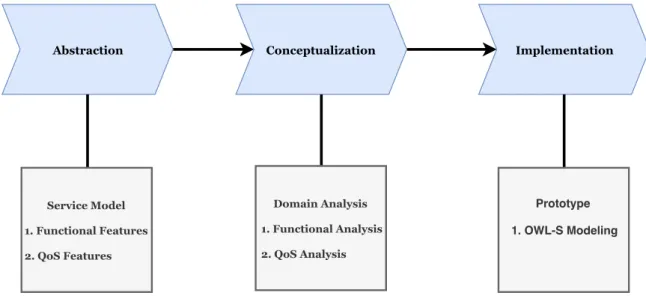
4.4 Methodology . . . 68
4.5 Abstraction: Social Information Services . . . 70
4.5.1 Meta-Service Model . . . 70
CONTENTS vii
4.5.3 Quality of Service Model . . . 72
4.6 Conceptualization: Functional and Non-Functional Analysis . . . 73
4.6.1 Functional Properties Analysis . . . 73
4.6.2 Non-Functional Properties Analysis . . . 74
4.7 Implementation: Social Information Service . . . 80
4.7.1 Service Profile . . . 81
4.7.2 Service Model. . . 83
4.7.3 Service Grounding . . . 84
4.8 Chapter Summary . . . 86
5 QoS Driven Service Composition For Big Social Data 88 5.1 Introduction. . . 89
5.2 Motivating Scenario . . . 90
5.3 Related Work . . . 92
5.4 Extended Sentiment Analysis as a Service Framework . . . 95
5.4.1 Data Model . . . 95
5.4.2 Service Composition Layer . . . 99
QoS Model: Social Information Service . . . 100
Quality of Service Driven Composition Approach . . . 101
Quality of Service Driven Composition Approach . . . 103
5.5 Experiments and Evaluation. . . 107
5.5.1 Evaluation of Data Collection Service Layer . . . 108
5.5.2 Evaluation of Preprocessing and Location Extraction Service Layer. . 109
5.5.3 Evaluation of Data Analysis Service Layer . . . 113
5.5.4 Evaluation of Data Integration Service Layer . . . 116
5.6 Chapter Summary . . . 118
6 Efficient Composition of Reusable Sentiment Analysis Results 120 6.1 Introduction. . . 121
6.2 Motivating Scenario . . . 123
6.3 Related Work . . . 124
6.4 The Solution Overview: Meta-Information Composition . . . 126
6.4.1 Meta-Information Model. . . 126
CONTENTS viii
Analysis Result Data Model. . . 127
6.4.2 Service Request Validator . . . 129
6.4.3 Meta-Information Service Composition. . . 130
6.5 Experiments and Evaluation. . . 131
6.5.1 Meta-Information Model Implementation . . . 132
6.5.2 Meta-Information Composition Performance Evaluation . . . 134
6.6 Conclusion . . . 136
7 Conclusion 137 7.1 Summary of Contributions. . . 137
7.2 Future Research Directions . . . 140
List of Figures
1.1 Data Analysis Process . . . 4
1.2 Overview of Sentiment Analysis as a Service . . . 6
2.1 Service Oriented Architecture Components [Endrei et al.,2004] . . . 25
2.2 Cloud Service Layers . . . 28
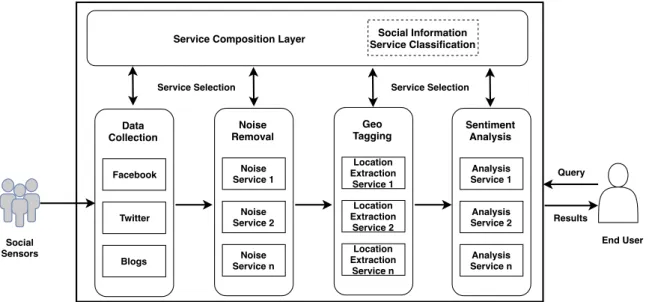
3.1 Service Composition Framework For Sentiment Analysis . . . 38
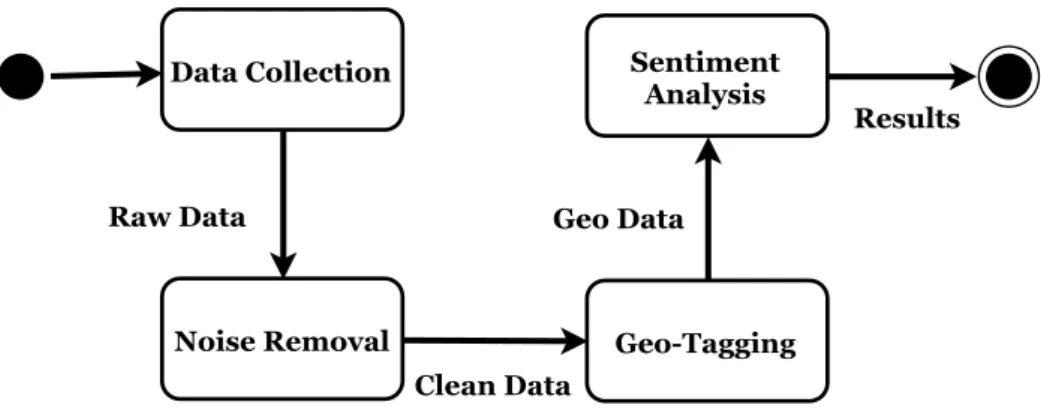
3.2 Flow of Data Between System Components . . . 41
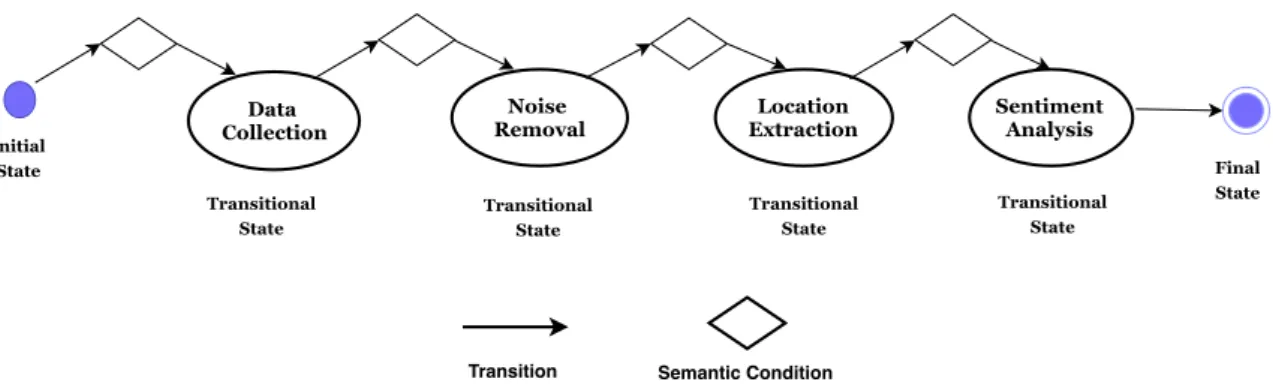
3.3 Sentiment Analysis Service Composition Process . . . 52
3.4 Hayfever Surveillance Map: Detected Social Sensors With Hayfever . . . 58
3.5 Aggregated Sentiment Analysis Results of Social Sensors . . . 58
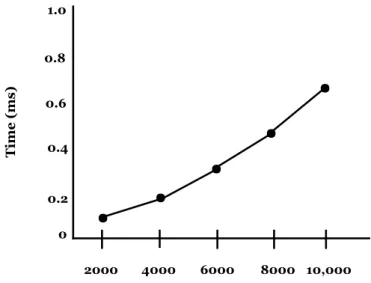
3.6 Performance of Service Computation Algorithm . . . 59
4.1 Workflow Composition for Social Information Services Analysis . . . 64
4.2 The Service-Orientation Process of Social Information Services . . . 68
4.3 Irrelevant Data In Three Social Information Services by Topic . . . 75
4.4 Unique Social Sensors in Social Information Services by Topic . . . 76
4.5 Data Time-line in Social Information Services by Topic. . . 77
4.6 The OWL-S Ontology Structure . . . 81
4.7 Service Profile Class . . . 82
4.8 Composite Service Process Model: Search Tweets . . . 83
4.9 Deployment Model For Service Groundings of Twitter . . . 84
4.10 Twitter Service Grounding For Twitter Streaming API. . . 85
5.1 Sentiment Analysis System Design Scenario . . . 91
LIST OF FIGURES x
5.3 The Facebook Data Pipeline Composition Using Graph Planning . . . 106
5.4 Data Volume to Unique Social Sensor Ratio . . . 108
5.5 (a)Throughput: Data Collection Services (b) Throughput: Unique Social Sen-sor Sorting . . . 109
5.6 Freshness: Data Time-line of Social Information Service Data . . . 110
5.7 Data Classification Results of Formal and Informal Text Types . . . 111
5.8 Execution Time of Data Filtering Services . . . 112
5.9 Throughput: Comparison of Data Analysis Services . . . 113
5.10 Average Data Integration Throughput of Integrator . . . 117
5.11 (a) Sentiment Visualization on Map (b) Composite Sentiment Analysis Results118 6.1 Meta-Information Service Composition Scenario. . . 123
6.2 Meta-Information Service Composition Scenario. . . 128
6.3 Analysis Request Structure . . . 133
6.4 Analysis Response Structure. . . 133
6.5 Meta-Information Transformation Time . . . 134
List of Tables
3.1 Social Information Service Classification Model . . . 46
3.2 Noise Filtering Results . . . 55
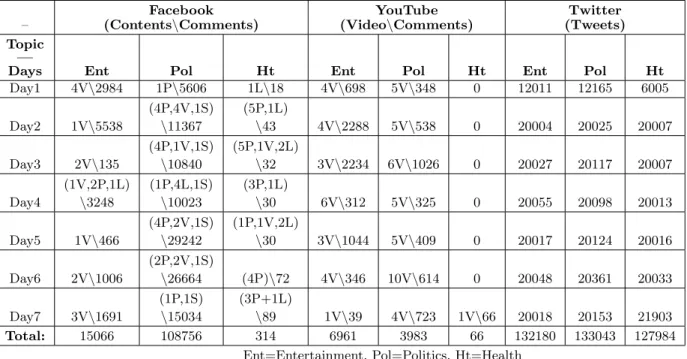
4.1 Dataset Details (By Topic of Interest) . . . 70
4.2 Social Information Service Functional Classification. . . 71
4.3 Functional Analysis: Data Sharing of Social Information Services by Topic. . 74
4.4 Signal to Noise Ratio (SNR) of Spatial Information . . . 78
4.5 Formal To Informal Data Ratio . . . 78
4.6 Lexical Analysis of Social Information Services by Topic . . . 79
4.7 Meta-Data Analysis of Social Information Services . . . 80
5.1 Summary of QoS Model Notations . . . 100
5.2 Summary of Composition Notations . . . 103
5.3 Summary of Dataset: Collected Data Items . . . 107
5.4 Evaluation of Data Filtering Results . . . 112
5.5 Evaluation of Data Analysis Results . . . 115
6.1 Summary of Meta-Information Models Notations . . . 127
Abstract
This research focuses on the design and development of a service composition based frame-work that enables the execution of services for social media based sentiment analysis. Our research develops novel analytical models, composition techniques and algorithms which use services as a mean for sentiment abstraction, processing and analysis from large scale social media data. Current sentiment analysis techniques require specialized skill of data science and machine learning. Moreover, traditional approaches rely on laborious and time-consuming activities such as manual dataset labelling, data model training and validation. This makes overall sentiment analysis process a challenging task. In comparison, services are ‘ready-made’ software solutions that can be composed on-demand for developing complex appli-cations without indulging in the domain specific details. This thesis investigates a novel approach that transforms traditional social media based sentiment analysis process into a service composition driven solution.
In this thesis, we begin by developing a novel service framework that replaces the tradi-tional sentiment analysis tasks with online services. Our framework includes a new service model to present services required for sentiment analysis. We develop a semantic service composition model and algorithm that dynamically composes various services for data col-lection, noise filtering and sentiment extraction. In particular, we focus on abstracting senti-ment based on location and time. We then focus on enhancing the flexibility of our proposed service framework to compose appropriate sentiment analysis services for highly dynamic and changing features of social media platforms. In addition, we aim to efficiently process and analyze large scale social media data.
In order to enhance our service composition framework, we propose a novel approach to formalize social media platforms as cloud enabled services. We develop a functional and qual-ity of service (QoS) model that captures various dynamic features of social media platforms. In addition, we devise a cloud based service model to access social media platforms as services
by using the Ontology Web Language for Service (OWL-S). Secondly, we integrate the QoS model into our existing composition framework. It enables our framework to dynamically assess the QoS of multiple social media platforms, and simultaneously compose appropri-ate services to extract, process, analyze and integrappropri-ate the sentiment results from large scale data. Finally, we concentrate on efficient utilization of the sentiment analysis extracted from large scale data. We formulate a meta-information composition model that transforms and stores sentiment obtained from large streams of data into re-usable information. Later, the re-usable information is on-demand integrated and delivered to end users.
To demonstrate the performance and test the effectiveness of our proposed models, we develop prototypes to evaluate our composition framework. We design several scenarios and conduct a series of experiments using real-world social media datasets. We present the results and discuss the outcomes which validate the performance of our research.
Chapter 1
Introduction
Social media platforms (i.e., social information services) such as Facebook, Twitter, and YouTube have emerged as powerful and free public tools for online data sharing [Dingli et al.,2015; Baruah, 2012]. Social information service users utilize these platforms for var-ious purposes such as personal, professional and leisure. Regardless of the usage intention of these services, the data shared by social information service users contains valuable infor-mation such as different opinions and sentiments [Pak and Paroubek,2010a;Vinodhini and Chandrasekaran,2012]. Social information service users continuously express their opinions on various topics of interests such as politics, health, and entertainment. In case of any sud-den or unexpected event, these users act as information sensors, and start pushing large data streams in the forms of text, images, and videos, on social information services. Therefore, these users can be interpreted as social sensors [Takeshi et al., 2010]. In addition, social information services enable social sensors to embed their data with geographical locations by using geo-tagging facilities. As a result, geo-tagged data provides a promising opportunity to acquire insights of social sensors based on location and time (i.e., spatio-temporal) features [Hu et al.,2013a].
The increasing popularity of social information services has attracted researchers and practitioners to leverage their data for multiple applications [Maynard et al.,2012]. Specif-ically, there is a significant interest in harvesting opinions and sentiments from social infor-mation service data. However, the data is available in unstructured format. Transforming this data into useful information is a challenging task and requires various techniques. One mechanism to abstract meaningful information from textual data is sentiment analysis [Pang and Lee, 2008;Liu and Zhang, 2012]. A typical social information service based sentiment
CHAPTER 1. INTRODUCTION
analysis process comprises of three steps as shown in Figure1.1. Firstly, the data is collected from various social information services. Secondly, the data is preprocessed by using vari-ous noise filtering steps and converted into analyzable format. Finally, the data is analyzed and the required information such as sentiment is extracted. There are several applications of sentiment analysis including market and FOREX rate prediction, box office prediction, business analytics, recommender systems, marketing intelligence and political crisis coverage [Ravi and Ravi,2015].
Data Collection Data Preprocessing Information Extraction
Figure 1.1: Data Analysis Process
In this chapter, we elaborate the motivation behind this research, with information about the issues and research challenges. We discuss the limitations of existing approaches. We define the research questions and how we will address them in the thesis. Finally, we highlight our contributions, and give an overview of the organization of the thesis chapters.
1.1 Motivation
Service oriented architecture (SOA) has emerged as a software design pattern where services are used as software components which are assembled to develop new applications [Brown et al.,2002]. In SOA, services are considered as building blocks for developing an application. A service is defined as a self-describing, discoverable and platform independent computational elements that can be accessed on network via its programmable interfaces [Papazoglou,2003]. A SOA based application consists of one or more services. It is possible that these services are hosted in a distributed network at different physical locations. In order to formulate a single application in a distributed network, services communicate and exchange data through messages by using multiple protocols [Arsanjani,2004]. Moreover, services are utilized as a delivery mechanism to transport the data to end users and legacy applications [Wu et al., 2007].
CHAPTER 1. INTRODUCTION
details from the service end users and application developers [Neiat et al.,2014]. The end users are not concerned with how the data is stored and processed by a service. This enables end users to visualize a service as ‘black box’ with respect to inputs and outputs. Thus, end users focus on using services in different applications without knowing the underlying technical complexities. In addition, SOA enables to develop an application in loosely coupled layers [Papazoglou et al., 2007]. Each layer constitutes a set of component services capable of completing specific tasks. This layering mechanism allows developers to design their application with great flexibility. Another major benefit of SOA is the re-usability of services. Existing services are binded based on the application requirements [Pautasso and Alonso, 2005]. Similarly, as the requirements of end users change, new services can be rapidly added in the existing application to enhance its capabilities. Last but not least, services can be classified based on their functional and quality of service (QoS) or non-functional features (e.g., price, response time). Hence, an end user can develop an application by satisfying multiple functional and QoS requirements [Zhai et al.,2009]. As a result, the growth of SOA has facilitated in building complex applications without indulging into the particular domain specific technical details.
Cloud computing has originated as an evolutionary form of SOA. Cloud computing pro-vides a computational model where resources such as software and hardware are delivered as services that can be supplied to end users through Internet in an on-demand fashion [Zhang et al.,2010]. Cloud computing leverages from the design principle characteristics of ‘Service-Orientation’ which makes a reciprocal relationship between service oriented computing and cloud computing [Wei and Blake,2010]. With the flexibility of leasing resources as services, cloud computing has given birth to the ‘as a service’ model. The ’as a service’ model allows various service providers to develop and deploy their services in a cloud environment [Buyya et al., 2009]. On the other hand, end users can discover and compose these services as an application based on their requirements.
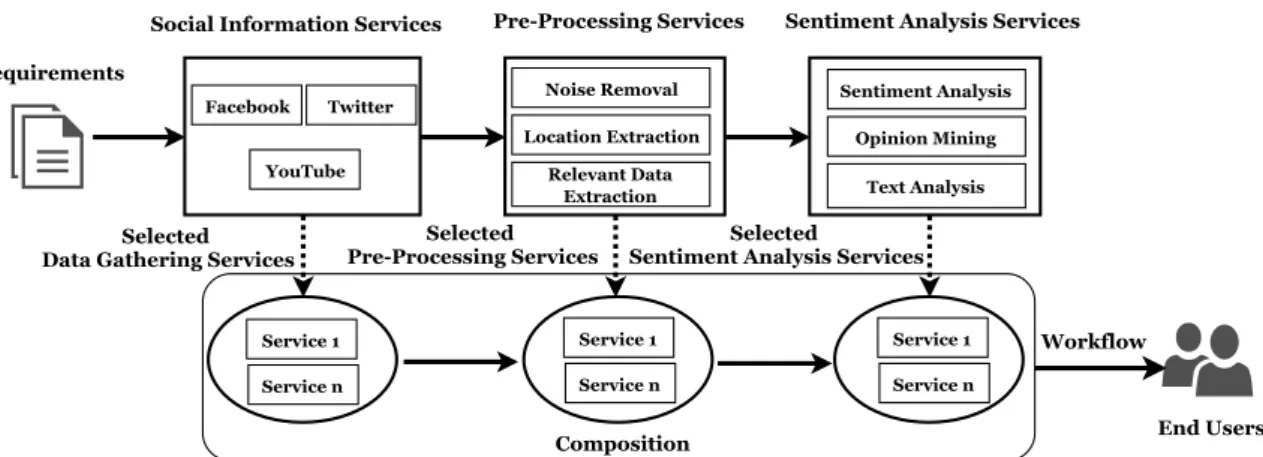
In our research, we propose a service-oriented sentiment analysis framework that is es-tablished on the principles of service oriented paradigm. We aim to harness the power and the ability to dynamically compose cloud services for abstracting sentiment from social infor-mation services. In this regard, we formulate the sentiment analysis processes into a service based architecture. In this architecture, the traditional processes required for sentiment anal-ysis are replaced with the cloud services. In addition, sentiment analanal-ysis results are delivered to end users as a service. Therefore, we term this service oriented approach for sentiment analysis asSentiment Analysis as a Service - (SAaaS). The proposed framework is comprised
CHAPTER 1. INTRODUCTION
Figure 1.2: Overview of Sentiment Analysis as a Service
of multiple service layers as shown in Figure 1.2. Each service layer has a set of task spe-cific services provided by various providers. These services are composed based on end user requests. The details of the service layers is as follows:
• Data Gathering Service Layeroffers a set of data gathering services (e.g., APIs, crawlers) which are required to collect data from multiple social information services based on the end user’s sentiment analysis query.
• Data Preprocessing Service Layer receives the raw data from the data gathering service layer and removes noise by using different types of preprocessing services.
• Information Extraction Service Layer obtains the refined data from previous layer and extract the required information such as sentiments and opinions. In particular, we focus on abstracting the information based on spatio-temporal features. Finally, it delivers the extracted results into different presentation formats alike maps, charts,
CHAPTER 1. INTRODUCTION
1.2 The Problem Statement
A SOA based application requires resources such as software components to be exposed as services. In order to access a service, it should be discoverable and must have an interface [Elfatatry, 2007]. As a result, an application can discover and compose a set of services based on functional and QoS requirements. Similarly, the SAaaS approach necessitates the resources required for sentiment analysis to be exposed, discovered and composed as services in a distributed environment. In this regard, we have identified following research challenges:
• Efficient Multi-Layered Service Model For Sentiment Analysis: Sentiment analysis is a multi-step problem that requires data gathering, data preprocessing and information analysis. Each step is further divided into various sub-steps. For instance, there are multiple data collection services available online to capture data from social informa-tion services [Lomborg and Bechmann, 2014]. Likewise, there are multiple techniques available for filtering relevant information from collected data [Grossman and Frieder, 2012]. These techniques are often applied in different combinations to extract relevant data. For more complex analysis scenarios, the utilization of various types of infor-mation extraction techniques are needed. Hence, an efficient and robust multi-layered service access model is required to formulate sentiment analysis steps as service lay-ers, and sub-steps as component services. Moreover, there are different QoS attributes associated with component services, and these services are needed to be dynamically selected for sentiment analysis upon end user requests. Therefore, the QoS of each service layers must be explicitly captured.
• Sentiment Analysis Service Composition Model: The composition mechanism is a pow-erful means to aggregate a set of services. However, the service composition is a chal-lenging task [Sivasubramanian et al.,2009]. Although the service composition is well established, the composition of sentiment analysis services pose many research chal-lenges. In traditional service composition approaches, the user defined constraints and QoS play decisive role in service selection and composition [Tian et al., 2003; Rajen-dran et al., 2010]. In comparison, for sentiment analysis, services are also required to cater the diversity of social information services and process their highly dynamic data. Therefore, a new service composition model is required on the top of existing composition mechanisms to cope with the various types of social information services for sentiment analysis.
CHAPTER 1. INTRODUCTION
• Efficient Interpretation of Social Information Services Diversity: There are various types of social information services available online for data sharing. Their data sharing mechanisms and social sensor engagement vary by platforms [Dai et al., 2007]. For instance, Twitter restricts its users to write text messages with limited number of characters. Meanwhile, Facebook does not have such restriction. As a result, the data produced by these services has dissimilar features in terms of size, text length, and quality. Furthermore, these features may change with respect to domains or topics of interest such as sports, politics, etc. Current sentiment analysis approaches are mainly data-oriented that require extensive data training [Kontopoulos et al.,2013; Prabowo and Thelwall,2009]. These approaches do not differentiate distinct features of various social information services. In order to efficiently analyze multiple social information services for sentiment analysis, it is essential to understand their diversity at service level. Thus, social information services are required to be formalized as cloud services with functional and QoS features. Also, it is necessary to analyze the impact of various domains (e.g., politics) on these features.
• On-Demand Service Composition For Large Scale Data Analysis: Social information services generate a large amount of data at an unprecedented speed [Tang and Liu, 2012]. The processing of increasing volumes of social information service data (i.e., big social data) is an extremely difficult task [Cambria et al.,2016]. The dynamic features such as level of noise, size, of different social information services make the analysis of big social data difficult. For instance, the data collected from Facebook and Twitter differs in terms of structure and quality [Ochieng et al., 2016]. Hence, the same noise filtering service may not be applicable to both platforms for relevant data extraction. Similarly, one information extraction or sentiment classification service may work better on one platform when compared to another. Adding more to the complexity, a service composition for a specific domain of entertainment, for example, may not be applicable to another domain such as finance. Thus, a flexible service composition framework is essential that assesses the diverse big social data features, and on-demand composes appropriate services for sentiment analysis based on dissimilar features.
• Efficient Re-usable Information Composition Model: The information extraction from big social data collected from social information services requires a dedicated amount of time and resources [Hashem et al.,2015]. With the arrival of distributed technologies
CHAPTER 1. INTRODUCTION
the volume of data increases, the cost of infrastructure resources in terms of storing and processing grows [Katal et al.,2013]. Public political sentiment analysis, a typical sentiment analysis scenario, requires continuous data collection and storage for a long duration before the information can be extracted and presented to the end users. Re-ducing the resource utilization and service composition cost (i.e., throughput) of such scenarios require efficient information composition model capable of transforming large amounts of data as re-usable information.
1.3 Limitations of Existing Solutions
In this section, we underline the limitations of the existing approaches for social media based sentiment analysis. These limitations are further elaborated in the respective related work sections of Chapters 3 to 6 concerning individual research questions in a chronological order.
• Data Centric Sentiment Analysis: There are mainly two types of sentiment anal-ysis approaches: 1) Machine Learning Approach. 2) Lexicon Based Approach. The machine learning based techniques [Medhat et al., 2014] are generically established using statistical methods. In machine learning techniques, the data is collected from various sources and stored in a repository. Next, the collected data is divided into training and testing datasets. The data items in the datasets are then manually la-belled with the relevant classes (e.g., positive, negative). Later, an algorithm driven classifier model is trained with the training dataset and its accuracy is validated with the testing dataset. This process is repeated untill desired accuracy of classifier is achieved. On the other hand, lexicon based approaches [Annett and Kondrak, 2008] rely on developing special corpus or dictionaries by collecting and categorizing words and phrases which are used for semantic matching for sentiment classification. Despite the differences between these two methodologies, both approaches are time-consuming and comprise of various rigorous tasks (e.g., data collection, manual labeling, algorithm training) and require specialized skills of machine learning and data science [Li et al., 2010].
• Commercial Tools Based Sentiment Analysis: In contrast to data centric ap-proaches, there are several online tools and applications available for social information services based analytics and sentiment analysis. Although some of these tools provide the facility for analyzing sentiments, the majority of tools focus on social information
CHAPTER 1. INTRODUCTION
service monitoring and general-purpose information search and analysis. Among these tools some are specifically designed to analyze data of a single social information service like Twitter or Facebook and do not allow to analyze a set of social information services in an integrated environment. As a result, end users have to simultaneously use mul-tiple analysis tools in an ad-hoc manner to analyze social information services of their choice [Wan and Paris, 2014]. Using multiple tools simultaneously is time-consuming and provides inconsistent perspectives of social sensor data.
• Lack of Cloud Services Utility in Big Social Data Analysis: The emergence of cloud service infrastructure has provided a viable platform to develop automated processes including big data collection, manipulation, and analysis [Demchenko et al., 2013]. However, existing efforts for big data analysis are mostly focused on infrastruc-ture modeling [Horey et al.,2012] and high level of cloud service conceptualization [Vu and Asal,2015;Ming et al.,2016]. The proposed approaches describe the outline of big data processing components and their relationships in the cyberspace of cloud services at process levels, rather investigate their formulation and composition at service levels. Moreover, the suggested big data processing components are highlighted as conceptual ideas rather concrete implementations. Another limitation is that the proposed frame-works do not distinguish between big data and big social data. Consequently, there is no abstraction provided to separate big social data from big data and process it by utilizing cloud services for information analysis scenarios such as sentiment analysis and opinion mining.
1.4 Research Questions
The main research goal of this thesis is to develop a service-oriented framework that can be used as a substitute for the traditional sentiment analysis approaches. In this proposed framework, instead of using data centric approaches, third party services provided by different service providers are composed to perform sentiment analysis. The proposed framework shall provide the means of abstraction to encapsulate the technical complexities of various sentiment analysis processes. At the same time, it utilizes the service oriented architecture of cloud services to collect, process and deliver sentiment analysis to end users.
In order to achieve our goal and overcome the above challenges, we have established following research questions.
CHAPTER 1. INTRODUCTION
1) How to design a service composition framework capable of composing services for sentiment analysis?
In this question, we first address the challenge of devising a service based architecture that formulates the traditional sentiment analysis process into a service composition driven senti-ment analysis process. In this regard, we aim to achieve two objectives: 1) Design a formal service model that represents the structures of composite and component services with their relevant features necessary for sentiment analysis. 2) Develop a service composition mecha-nism that is capable of composing services for various types of social information services. In particular, this question focuses on composing services for spatio-temporal sentiment analysis of social information services.
2) How does the framework recognize the dynamic changes to social information services affected by different domains?
In the first question, we ascertain the baseline sentiment analysis process as a service compo-sition problem. However, the fluid nature of social information services and different domains such as politics, entertainment and health, constantly affect the data features (e.g., noise, text length). Consequently, compositions of services for sentiment analysis demand to cater the changing characteristics of the data. Thus, it is essential to devise techniques capable of interpreting and adapting to dynamic nature of social information services. In our second research question, we explore a novel approach to analyze and detect the variability of social information services. We develop a mechanism that formulates the dynamic changes of social information services in terms of functional and QoS models comprising of various properties. As a result, we aim to extend the existing framework that can cope with the dynamic changes in social information service features for composing sentiment analysis services.
3) How to efficiently analyze big social data for sentiment analysis with dynamic QoS features?
In the third question, we aim to develop a dynamic service composition framework that can handle on-demand requests by simultaneously composing services for processing and ana-lyzing multiple social information services for sentiment analysis scenarios. In this context, we expand our initial service composition framework (designed in research question 1) with the integration of social information service QoS model (devised in research question 2). In this question, we first focus on how to dynamically assess the QoS features of different
CHAPTER 1. INTRODUCTION
social information services for a given sentiment analysis scenario. Secondly, we investigate how the evaluated QoS measures can be utilized to concurrently compose appropriate data collection, preprocessing and data analysis services for multiple social information services. Finally, this question also looks into the aggregation of sentiment analysis results produced by simultaneous service compositions.
4) How to effectively reuse the sentiment analysis results of big social data for reoccurring analysis scenarios?
Forming a service composition plan for sentiment analysis is a complex task. Secondly, the big social data processing via services is both resource and time consuming. The previous research questions establish a framework that provides multi social information service based sentiment analysis through service composition. In this research question, we extend our framework and explore an effective approach that is able to preserve the sentiment analysis results for reoccurring service composition scenarios. In this regard, the sentiment analysis re-sults are modeled and stored as meta-information, and on-demand the rere-sults are composed for repeating queries. We aim to eliminate the need of re-initiating the service composi-tion and resource utilizacomposi-tion for big social data processing, in case of repeating sentiment analysis requests. Moreover, the proposed technique will enable to integrate the existing meta-information (i.e., sentiment analysis results) with new sentiment analysis outputs. The objective of this question is to develop an efficient technique for re-utilizing the previously extracted sentiment analysis results.
1.5 Contributions
In this section, we discuss the the details of our research contributions made in this thesis to address the research questions.
A Service Oriented Framework For Social Information Services Based Sentiment Analysis
In our first contribution, we devise a service-oriented framework that avoids the need for hu-man involvement for performing social information services based sentiment analysis through service driven data collection, preprocessing, location extraction and data analysis. The main novelty of our framework is the formulation of a service oriented based solution which serves
CHAPTER 1. INTRODUCTION
as an alternative for the traditional data centric sentiment analysis methods. In our frame-work, we first develop a novel classification model for social information services based on their generic features. Secondly, we propose a semantic matching driven service composition mechanism to compose the appropriate sentiment analysis services based on the classification of social information services. Our framework allows users to collect and aggregate sentiments of social sensors from any combination of social information services without indulging in the complexities of typical sentiment analysis techniques. Moreover, the framework specif-ically focuses on the sentiment analysis to be performed based on social sensors time and location. The implementation of our framework for identifying the flu outbreak by using the spatio-temporal properties of social sensors sentiments shows the effectiveness of our approach.
Service Orientation Of Social Media
The second contribution is a service oriented modeling of social media. By using the service-orientation, we formalize social media platforms as conventional Web/cloud services (i.e., social information services). The novelty of utilizing service-orientation is that a social infor-mation service can be described by its functional and non-functional (i.e., QoS) properties. Moreover, these properties will also allow to reflect the dynamic characteristics (e.g., spa-tial, temporal) a social information service may offer. In addition, treating social media as a homogeneous data source rather heterogeneous services with varying features in the past prevented the dynamic selection, composition and analysis of social information services. We apply Ontology Web Language for Service (OWL-S) to describe a Web based access model for social information services. We test the proposed model by analyzing the functional and QoS features of three different types of social information services with respect to three different topics of interests. The results show that the service-oriented model is a feasible approach to capture the dynamic features of social information services.
A QoS-aware Service Composition Framework For Big Social Data Analysis Our third contribution is a dynamic service selection and composition approach for extracting sentiment analysis from big social data collected from different social information services. The extraction of sentiments from exponentially growing big social data volume and dy-namically changing features is a challenging task. In this contribution, we develop a novel approach which ’on-the-fly’ assesses QoS features of big social data obtained from multiple
CHAPTER 1. INTRODUCTION
types of social information services, and simultaneously composes appropriate services re-quired for sentiment analysis based on the extracted QoS features. The proposed approach contains a new QoS-aware service composition algorithm which uses the Graph-Planning technique. The Graph-Planning based composition algorithm provides the ability to validate the selection of processing and analysis services based on QoS features of large streams of social information services data. The experiments using the new technique on real datasets and comparing it with existing sentiment analysis techniques demonstrates the efficacy of the proposed approach.
An Efficient Information Model For Re-utilizing Sentiment Analysis Results The fourth contribution is an information modeling mechanism that enables the reuse of sentiment analysis results obtained from big social data. The novelty of this approach is the utilization of meta-information modeling for transforming and storing the extracted senti-ments as reusable information, which can be on-demand integrated and delivered as a service. The proposed approach is suitable for sentiment analysis scenarios (e.g., customer sentiment patterns detection) which require to store and analyze large amounts of data, and where the similar sentiment analysis requests are frequently repeated. Such analysis scenarios demand time and resource intensive computation for information extraction. The significance of our proposed model is that it allows information to be reused or combined with newly processed information to meet the required analysis needs at the same time reduces the computa-tional costs. The experiments on real-world data demonstrate the efficiency of our proposed approach especially where sentiment analysis requests are heavily repeatedly.
1.6 Thesis Structure
The remainder of the thesis is organized as below:
In Chapter 2, we present a comprehensive review of core concepts included in this thesis. We include social information services and the significance of its applications. We discuss the area of sentiment analysis and its current approaches, and explain their particular character-istics. In addition, we review the combination of spatio-temporal approaches used in social information services based applications. We then review the domains of service composition and cloud computing. Finally, we discuss the existing approaches for utilizing cloud services for big social data analysis.
CHAPTER 1. INTRODUCTION
for data collection, preprocessing and extracting sentiments based on spatio-temporal prop-erties. It includes formal service models of component and composite services. It defines a classification model of social information services. We devise a classification model driven service composition mechanism for sentiment analysis. A prototype of the proposed approach is evaluated with a real dataset to show the applicability of our proposed framework.
In Chapter 4, we present a novel technique to formulate and analyze social media. we formally model social information service as cloud enabled services which are discoverable and accessible in Web environment by end users. We also propose functional and QoS models with respect to various features. The service orientation of social media provides the basis to manipulate, select and compose them in different analysis scenarios. We also present the experiment results and quantify the impacts of different domains on the proposed functional and QoS properties.
In Chapter5, we extend our proposed service oriented framework with QoS driven service composition approach. In our initially proposed framework presented in Chapter 3, we used the social information service classification model to compose services for sentiment analysis. In this approach, we utilize the QoS model proposed in Chapter 4 to dynamically compose services for sentiment analysis of large-scale data. This extension of framework allows to simultaneously devise composition for a multi-platform analysis. We present the evaluation of the proposed approach through experiments.
In Chapter6, we introduce a reusable information composition technique as an increment to our QoS driven service composition framework developed in Chapter 5. The proposed technique converts and stores the sentiment analysis of large streams of social information service as reusable information named as meta-information. The meta-information is com-posed on-demand and delivered as a service for reoccurring sentiment analysis queries. We devise a novel QoS model for meta-information composition service. Finally, we showcase the experiments and their results.
In Chapter 7, we present the summary of our all contributions and key findings. In addition, we discuss the potential future directions and some of the limitations of developed methods.
Chapter 2
Background
Our research work is focused at the intersection of the research areas of social information services, sentiment analysis and cloud service composition. To the best of our knowledge, there is no service composition framework for sentiment analysis in the literature. Therefore, this chapter provides the relevant constructs and the ideas of different research domains we leveraged in our work. In this chapter, we provide the background information and overview of concepts that form the foundations of our proposed framework. Section 2.1 covers the introduction and the earlier classifications of social information services. In Section 2.2, we review the application usage of social information services for different domains. We present the overview of sentiment analysis and its various techniques in Section 2.3. In addition, we provide a summary of spatio-temporal application with respect to social information service based sentiment analysis. Section 2.4 discusses the key concepts of SOA, cloud computing paradigms and models, and existing service composition techniques. The fundamentals of big data and previous studies of big data in the domain of cloud service computing is discussed in Section 2.5. Finally, the summary of this chapter is presented in Section 2.6.
2.1 Social Information Services
The term social information service is coined to define social media platforms (e.g., Twitter, Facebook, YouTube) as online services which provide information for different applications [Musaev et al., 2014]. On the other hand, the social media users are described as social sensors - who use social information services for information sharing. However, social media itself is not a new idea. The concept of social media originates from social networks where
CHAPTER 2. BACKGROUND
2011]. In recent times, the adaptation of digital media technologies (e.g., Web, Internet) has changed the dynamics of social networks into social media Web sites. The Oxford Dictionary1 defines social media as: “Web sites and applications that enable users to create and share content or to participate in social networking”. The Internet driven social media Web sites such as SixDegrees, AsianAvenue, and BlackPlanet started appearing in the 1990s [Boyd and Ellison,2007]. In this research, we associate the terminology of Social Information Services to the notion of Social Media.
With the cheap availability of Internet access across the globe, social information ser-vices have gained a tremendous amount of popularity. Many social information serser-vices have surfaced on the Internet over time. These services encompass a wide range of online fo-rums, blogs, chat rooms, file sharing platforms (including audio, video, images), networking, bookmarking sites [Mangold and Faulds, 2009; Hanna et al., 2011]. There is plethora of online accessible social information services by social sensors. However, these services have many distinct as well as overlapping functionalities. Social sensors choose social information services based on their functional features and personal interests [Kietzmann et al., 2011]. Based on the several similar features, the following six types of social information services [Kaplan and Haenlein,2010] can be classified:
1. Collaborative Projects: enable the creation of content by social sensors in a combined and simultaneous effort. The groups of social sensors can contribute by adding, remov-ing or updatremov-ing content on collaborative Web-sites (e.g., Wikipedia).
2. Blogs: are the earliest and simplest form of social information services. Blogs such as TechCrunch are Web pages which are generally managed by one social sensor usually the owner. However, other social sensors can still interact through posting online comments at the end of the content.
3. Content Communities: are services (e.g., YouTube, Instagram) which allow social sen-sors to share contents (e.g., files, images, videos) with others.
4. Social Networking Sites: provide the ability to social sensors for creating personal profiles and inviting friends and family to access their information (e.g., text messages, videos, images). Social information services like Facebook and Myspace are prime examples of social networking sites.
CHAPTER 2. BACKGROUND
5. Virtual Game Worlds: are online gaming services (e.g., World of Warcraft) in which social sensors appear as personalized avatars in a three dimensional environment and interact with others according to the rules defined for the game.
6. Virtual Social Worlds: are virtual worlds (e.g., Second Life) where social sensors live as “residents” by using digital avatars. They interact with or without any rules in a virtual three dimensional environment which simulates real life settings.
2.2 Social Information Service Applications
The increasing popularity and public nature of various types of social information services has successfully attracted a large number of social sensors. As a result, social information services provide an exponentially growing source of public data. This phenomenon has attracted people from academia and industry to extract information from the public data and utilize it in a range of application scenarios [Naaman,2012]. Some applications of social information services in different domains are discussed below:
Business
Social information services are providing new avenues for business firms to satisfy their exist-ing customers and help them acquire new ones. For instance, social information services help marketing and sales departments by providing a medium to promote products and services [Culnan et al.,2010]. Social sensors may share novel ideas and different opinions about prod-ucts they consume which are valuable input for product manufacturers [Liu et al., 2013b]. For instance, Xiaomi, a mobile phone manufacturing company, modifies their new versions of cell phones based on social sensor discussion related to their products. Business competitors in the food industry are gaining a commercial edge by analyzing their communications with social sensors gathered from multiple social information services [He et al.,2013].
Civic
Social information services have become a prominent tool for the public voice. Social sensors point out and discuss social and public issues [Papadopoulos et al., 2012]. For instance, social sensors contemplate their countries’ political situation on different social information services which forecast the electoral results [Ceron et al., 2014]. Similarly, social sensors
CHAPTER 2. BACKGROUND
social information services [Obar et al., 2012]. Moreover, several government departments and agencies are taking initiatives to draw awareness and engage with public through different social information service based campaigns [Lee and Kwak,2012].
Public Security
The easily accessible nature of social information services provide a possible source to track down criminals and violent people. For instance, social sensor issue alerts and warnings to others regarding an offense (e.g., car robberies) taking place [Featherstone, 2013]. At the same time, propagating these alerts can help to track offenders. In addition, the content analysis of social information services can help identify the radical behaviors and intentions of potential violent actions [Cohen et al., 2014]. Many governments and law enforcement agencies are now taking advantage of social information services to provide safety for their public by identifying malicious activities.
Crisis Management
Social information services are becoming an important instrument of communication for so-cial sensors in emergency situations [Alexander, 2014]. During any natural disaster (e.g., earthquakes, floods), social sensors continuously share information by uploading text mes-sages, videos, etc. This information helps authorities to locate missing people, and alert about the different aspects of the emergency [Hjorth and Kim, 2011]. In addition, social information services also lay the backbone for the crowd sourced based crisis mapping plat-forms built for disaster management [Gao et al.,2011]. The data produced by social sensors is collected from different social information services to carry out relief activities.
Media and Journalism
The age of the Internet and social information services has altered many traditional aspects of human life. One such impact can be observed on journalism. Social information services are helping to shape conventional methods of journalism such as print media and television broadcasting into citizen journalism [Hermida,2012]. Social sensors are broadcasting news and reporting incidents by using the streaming capabilities of social information services [Poell and Borra, 2012]. Moreover, the growing consumption of social information services helps mainstream news organizations to expand their network coverage, as it can assist in gathering news and disseminating information from conflict zones [Ali and Fahmy,2013].
CHAPTER 2. BACKGROUND
Despite the several benefits and application scenarios of social information services, har-vesting information from social information services is a complicated task. Social information services often contain a lot of noise and irrelevant data. In addition, the diversity among social information services and their data makes the information analysis more complex task.
2.3 Sentiment Analysis
Sentiment analysis is one of the mechanisms for extracting meaningful information from social information services. The domain of sentiment analysis is the intersection of three re-search disciplines: Information Retrieval, Natural Language Processing (NLP), and Artificial Intelligence [Schouten and Frasincar,2016]. Sentiment analysis was considered as a classifi-cation problem where a document or piece of text is classified into three categories: Positive, Negative, and Neutral [Pang et al., 2002]. However, lately the term sentiment analysis has become synonymous for ‘opinion mining’. In broader context, sentiment analysis or opinion mining is considered as a task of extracting and analyzing subjective information such as sentiments, opinions, attitudes, emotions and appraisals towards different topics, products, individuals, entities, and services [Serrano-Guerrero et al.,2015].
The growth of social information services have influenced many small and big companies, and other organizations (e.g., governments) to adapt sentiment analysis on a commercial basis [Castellanos et al., 2011]. Their main aim is to inquire about what the public says about their policies, products and people. Consequently, the sentiment analysis helps them to convert public opinion into actionable insights and improve their competitiveness. Social information services based sentiment analysis has been used in many applications such as market and FOREX rate prediction [Ozturk and Ciftci, 2014], box office prediction [Jain, 2013], business intelligence [Chen et al.,2012], recommender systems [Zhang et al.,2014] and political sentiment analysis [Wang et al.,2012].
Sentiment analysis can be carried out on different levels. Sentiment analysis is further divided into four types of sub-problems [Feldman,2013]. These types are explained bellow:
1. Document Level Sentiment Analysis is the simplest form of sentiment analysis where a document is assumed to have an opinion. Thus, the sentiment polarity of the document is calculated as a whole.
CHAPTER 2. BACKGROUND
atomic sentences and sentiment polarity is extracted. This type of analysis aims to determine sentiment at a fine-grained level.
3. Aspect Level Sentiment Analysis focuses on extracting the sentiment about an entity based on its different aspects (i.e., attributes). For instance, the aspect level senti-ment of a mobile phone would require extracting the sentisenti-ments about components like camera, battery, color, etc.
4. Comparative Sentiment Analysis targets to discover opinions from a document which provide comparison between two or more entities (e.g., comparison between two mobile phones). Furthermore, the preferred entities are extracted from each opinion.
2.3.1 Sentiment Analysis Techniques
There are various techniques available for sentiment analysis. These techniques can be di-vided into two main types: Machine Learning Methods, Lexicon Based Methods. There are also hybrid techniques formed amalgamating the two main approaches [Maynard and Funk, 2011]. Although hybrid techniques combine the features of both sentiment analysis methods, lexicons based approaches forms the core of hybrid techniques. In addition, both main senti-ment analysis methods have their own advantages and disadvantages. Generally, a sentisenti-ment analysis technique requires performing additional tasks known as feature selection [Medhat et al., 2014]. A feature selection process may comprise of different steps such as parts of speech (POS), stemming, term frequency count. In the remainder of this subsection, we give an overview of both sentiment analysis methods.
Machine Learning Methods
Machine learning methods are also known as statistical methods for sentiment classification. These methods consist of different algorithms that are trained by an example data (i.e., training data) gathered to learn the underlying patterns. In the example data, each instance is labeled or provide with a class (e.g., positive, negative), and later, the trained algorithm is used to classify an unlabeled data [Pak and Paroubek,2010b], making it a classification problem. The machine learning methods are further categorized into two sub-categories: Supervised Learning, Semi or Unsupervised Learning.
The supervised learning methods are dependent on the existence of training documents which are pre-labeled or annotated with different types of classes. Within the supervised
CHAPTER 2. BACKGROUND
learning, four types of classifiers are used for sentiment detection.
1. Probabilistic classifiers predict the probability of data item as input belonging to a specific class. These classifiers are generally trained with different classes. Each class is a mix of terms, and the probability of a data item’s class is calculated by sampling the terms of training data. Commonly used probabilistic classifiers are Naive Bayes Classifier (NB) [Liu et al.,2013a] and Bayesian Network (BN) [Ortigosa-Hernndez et al., 2012].
2. Linear classifiers convert an input into a vector space and predict the classification of the vector based on given linear combination of the training features or characteristics. There are many variations of linear classifiers; two of the most famous are Support Vector Machines (SVM) [Mullen and Collier,2004], and Neural Network (NN) [Santos and Gatti,2014].
3. Decision tree classifiersprovide a hierarchical decomposition of the training or example data based on a conditional value [Quinlan,1986]. The condition is usually occurrence or absence of one or more words. The division process is conducted recursively until the leaf nodes contain a minimum number of the records which determine the classification.
4. Rule-based classifiers define a set of rules for data space. The rules comprise of con-ditions applied on the feature set. Each condition has a respective class label as an output. The conditions are generally based on word(s) presence [Ma and Liu, 1998]. Rule-based classification models [Gilbert and Liu,2014;Kim and Hovy,2006] are de-veloped with the conjunction of large lexical resources.
The supervised learning methods mainly rely on large training datasets. As a result, gather-ing large datasets and labelgather-ing the data items is a time consumgather-ing task. In comparison, there are several unsupervised and semi-supervised learning techniques available [Hu et al.,2013b; He and Zhou,2011]. The unsupervised learning derives the classification by using set of rules and heuristics obtained from existing or previously known language knowledge [Balazs and Velsquez, 2016]. In contrast, semi-supervised learning methods incorporate a sentiment lex-icon as a labeled feature set into the model classifier before predicting the class of unlabeled data items. Semi-supervised learning also encapsulates the self-training approach. In this approach, a classifier is first trained with a small set of labeled data, and then it is used to classify unlabeled data. The newly labeled values with high level of confidence index are
CHAPTER 2. BACKGROUND
Lexicon Based Methods
The lexicon based approaches are known as semantic methods. These approaches rely on sentiment lexicons which are a collection of manually pre-compiled terms or words [Taboada et al., 2011]. The pre-compiled terms are then used to analyze the text to generate the sentiment classifications and their polarities. There are mainly two types of lexicon based sentiment analysis methods: Dictionary Based Approach, Corpus Based Approach.
The dictionary based approaches [Hu and Liu,2004;Kim and Hovy,2004] first manually collect a set of opinion words ‘seeds‘ with their orientations (e.g., positive, negative) and relevant extents (e.g., high, moderate, low). Secondly, the seed set is expanded by searching synonyms and antonyms from well-defined corpora such as WordNet [Miller, 1995]. These new words are then added to the seed list. This process is repeated till no new words can be found. However, the dictionary based approaches do not perform well in different domains (e.g., crime, sports, politics) where context specific orientations are changed.
The corpus based approaches extend the solution strategy of dictionary driven techniques by adding the context specific orientations to the seed words [Abdulla et al.,2013]. Thus, it allows one to define corpus for multi-domains (e.g., sports) [Godbole et al.,2007]. The corpus based approaches also consider the syntactic language patterns that may occur along with the dictionary words. Although corpus approaches are applicable to multiple domains for sentiment classification, it is difficult to develop huge language corpus for variable nature of social information services. Other than the semantic methods, the corpus based approaches are often combined with statistical methods to train classifiers [Pak and Paroubek, 2010b; Melville et al.,2009].
2.3.2 Spatio-Temporal Sentiment Analysis
The advancements in the sensor and wireless communication technologies have enabled to accurately determine the location of users and objects [Gruteser and Grunwald,2003]. In ad-dition, the emergence of location sensing mobile devices and Web applications has encouraged users to share the information about their geographical locations with other users. There is a great interest in exploiting the users’ geographical locations for various applications [Rao and Minakakis,2003].
Over time, many social information services such as Twitter, Facebook, Flicker, etc., have enabled social sensors to embed their geographical location information (e.g.., longitude and latitude, point of interests) in their data by using geo-tagging or location check-ins options.
CHAPTER 2. BACKGROUND
At the same time, social information services have the inherent feature to store the social sensor data based on the time of generation and sharing. The presence of these two features: time (i.e., temporal), and geographical location (i.e., spatial), in the social sensor data makes it more valuable. Consequently, it allows one to understand the social sensor activities (e.g., mobility) based on time and space [Cao et al.,2015]. The combination of sentiment analysis with spatio-temporal features enables the visualization and break down of social sensors public opinion in more depth. For instance, sentiment of social sensors can be represented at multiple levels such as states, cities, etc. There are several efforts available that show the potentials of spatio-temporal sentiment analysis of social information services. For instance, a surveillance system is designed to monitor the Dengue epidemic in Brazil which collects the social sensor data to identify the disease effected regions [Gomide et al., 2011]. In [Mazumder et al., 2013], a visual map is developed that shows the radical sentiment of social sensors from different Indonesian states. In addition, social sensors’ sentiment and locations are analyzed together to develop a personalized location recommendation system [Yang et al., 2013]. Despite the provision of location sharing in many social information services, some social information services do not provide geo-tagging or check-ins facilities. In such circumstances, the geographical locations of social sensors are extracted by Named Entity Recognition (NER) methods [Malmasi and Dras, 2015]. The NER techniques work similar to corpus based approaches for location identification which require developing special corpus that contain the names of geographical locations. The NER techniques use time intensive semantic techniques of text parsing to retrieve geographical location names by matching the location specific corpus.
Overall, the domain of sentiment analysis is a broad area of research. However, both main types of sentiment analysis approaches and their subsequent methods are classified as ‘data-oriented’ techniques. These techniques have two main limitations. First, in order to perform sentiment analysis, one has to grasp multiple specialized skills such as statistical data modeling, machine learning and lexicon development. Secondly, both approaches require la-borious and time-consuming tasks which include data collection, data preprocessing, manual data labelling, data model (i.e., algorithm) training, and model testing and validation.
2.4 Service Oriented Architecture (SOA)
CHAPTER 2. BACKGROUND
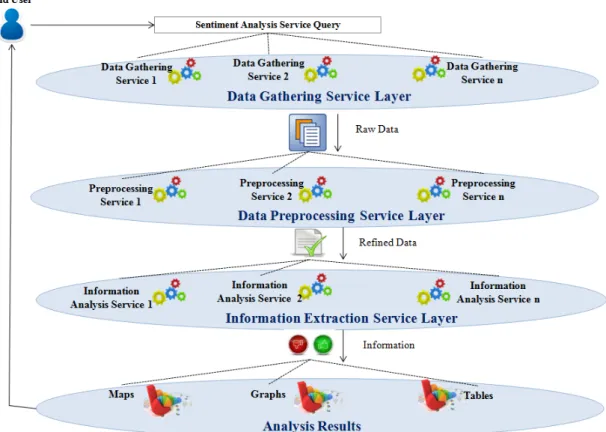
Figure 2.1: Service Oriented Architecture Components [Endrei et al.,2004]
allows software to expose their functionality as services to other applications or services [Erl, 2008]. In contrast, The Open Group defines SOA as an architectural style that supports service orientation, whereas service orientation is a way of thinking in terms of services and service-based development, and the outcomes of services. Despite the variation in definitions and conceptualization of SOA, services are considered as pillars of SOA. Similar to the notion of SOA, the definition of ‘what is a service?’ is also presented differently by researchers and professionals. For instance, in [Sprott and Wilkes, 2004], a service is described as a component capable of performing a task. Similarly, in [Uleman,2006], researchers defined a service as a well-defined, repeatable business task that can be performed by an application. In comparison, the organization for the Advancement of Structured Information Standards (OASIS) defines a service as a mechanism to enable access to one or more capabilities using a prescribed interface [MacKenzie et al., 2006]. In general, the design of SOA (see Figure
2.1) is realized in the following three components:
1. Service Consumer is a software or another service needing to perform a task. It finds the required service from a service registry and invokes the service function(s) execution at service provider’s end through service interface.
2. Service Provider is an entity that accepts and executes the service invocation requests from service consumers. Service provider publishes description of a service in the
ser-CHAPTER 2. BACKGROUND
vice registry. The service description contains the information for service consumer to discover and access the service.
3. Service Registry is a repository which contains the descriptions of available services. It allows service consumers to query and locate the interfaces of required services.
SOA is a technology independent design pattern which does not rely on a specific set of frameworks, protocols and programming languages. It can be implemented via multiple technologies such as REST, Web services and Remote Procedure Calls (RPC) [Pautasso et al.,2008]. Each of the implementation strategies have their own features and underlying technical complexities. Most commonly used approach to realize SOA is through Web ser-vices. Web service based architecture is based on open source technologies such as eXtensible Markup Language (XML), Simple Object Access Protocol (SOAP), Universal Description, Discovery and Integration (UDDI), Web Services Description Language (WSDL) [Curbera et al., 2002]. SOAP is an XML-based protocol that uses existing transport protocols such as Hyper-Text Transfer Protocol (HTTP) to transport data. WSDL provides a computer readable description of a Web service. It includes the details of how to interact with the service such as data messages (i.e., input/output), communication protocol (e.g., HTTP), and service endpoints (i.e., Uniform Resource Locator (URL)). UDDI works as a service reg-istry that contains the Web services descriptions. It enables service consumers to find service providers through a centralized repository of services.
2.4.1 Cloud Computing
The concept of service orientation computing (SOC) and SOA has different objectives. While SOA focuses on developing software applications in which software components are orga-nized as services; SOC concentrates on utilizing services to support the rapid and low-cost development and easy composition of distributed applications in heterogeneous environments [Papazoglou et al.,2008]. In this regard, SOA is considered as a sub-component of SOC. The flexibility of SOC to encapsulate and integrate decentralized components (e.g., software) by using standardized protocols across the Internet has produced a new computing paradigm called cloud computing [Dillon et al.,2010].
Similar to the phenomenon of SOA and services, there are multiple definitions of cloud computing [Abdel-Basset et al., 2018]. For instance, the cloud computing paradigm is de-scribed as the Internet based on-demand assembling and delivery of resources (e.g., CPU,
CHAPTER 2. BACKGROUND
et al., 2010]. Similarly, in [Foster et al., 2008], researchers defined cloud computing as a large-scale distributed computing paradigm driven by economies of scale, in which a pool of abstracted, virtualized, dynamically-scalable, managed computing power, storage, platforms, and services are delivered on demand to external customers over the Internet. On the other hand, theNational Institute of Standards and Technology (NIST) defines the cloud comput-ing as a model for enablcomput-ing ubiquitous, convenient, on-demand network access to a shared pool of configurable computing resources (e.g., networks, servers, storage, applications, and services) that can be rapidly provisioned and released with minimal management effort or service provider interaction. Following are the five essential characteristics [Mell and Grance, 2009] of cloud computing:
1. On-Demand Self-Service enables a cloud consumer to unilaterally and automatically provision resources as required without the human interaction with resource providers.
2. Broad Network Access provides access to cloud capabilities over the network via stan-dard mechanisms by using thin or thick client platforms (e.g., mobile phones, laptops).
3. Resource Poolingallows providers to pool their resources to serve multiple consumers by using a multi-tenant model. This model can dynamically assign and reassign different physical and virtual resources according to consumer demands. Also, it gives a higher level of abstraction where consumers are not aware of the actual location of resources.
4. Rapid Elasticity resources are elastically provisioned and released and can be rapidly scaled outward and inward based on demand. For consumers, resources are usually presented in unlimited capacity that can be assembled in any quantity at any time.
5. Measured Service different types of resources are automatically controlled and opti-mized by pay-per-use or charge-per-use basis. The resource consumption can be trans-parently monitored, controlled, and reported by both the provider and consumer.
2.4.2 Cloud Services and Models
The resources in the cloud are shared with the clients as services. The cloud services are classified into three cloud service layers, and these services can be deployed in four models [Jadeja and Modi,2012]. The details of cloud service layers and models are discussed below:
![Figure 2.1: Service Oriented Architecture Components [Endrei et al., 2004]](https://thumb-us.123doks.com/thumbv2/123dok_us/1989102.2795458/37.892.213.698.138.460/figure-service-oriented-architecture-components-endrei-et.webp)