0.1 2014 in Review and Outlook
3
INTRODUCTION 4 REPORT BY THE PRESIDENT AND CEO 8
SUPERVISORY BOARD REPORT 10
DEVELOPMENT OF KEY SEGMENTS 14
Sales by region 14
Brand development 21
Product development and design 23 Production 24 Purchasing 25 Supply chain management and complexity 26
RISK MANAGEMENT 27
CORPORATE GOVERNANCE STATEMENT 37 CREATING VALUE FOR THE SHAREHOLDERS 50
SUSTAINABLE DEVELOPMENT 53
Responsibility towards the employees 53 Responsibility to natural environment 57 Responsibility to users of our products 58 Responsibility to local and broader environment 58
0.2 Business Report
59
BUSINESS PERFORMANCE 60
FINANCIAL PERFORMANCE 63
BUSINESS PLAN FOR THE YEAR 2015 65
0.3 Accounting Report
67
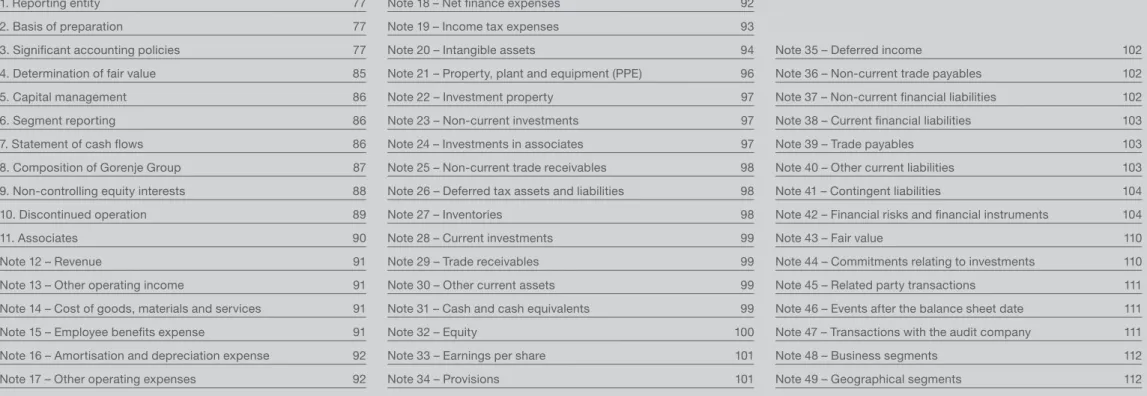
ACCOUNTING REPORT OF THE GORENJE GROUP 69 Consolidated financial statements 69 Notes to the consolidated financial statements 77
Independent auditor’s report 113
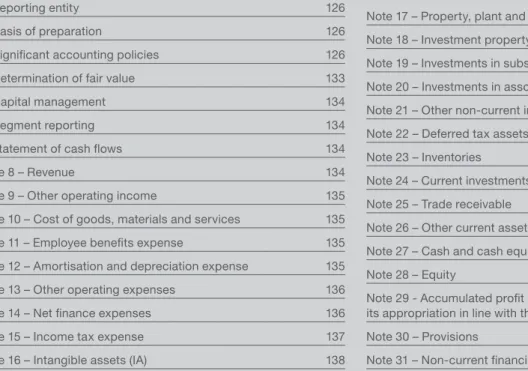
ACCOUNTING REPORT OF GORENJE, D.D. 119
Financial statements 119
Notes to the financial statements 126
Independent auditor’s report 164
2014 in review and outlook
0.1
Rising up to
INTRODUCTION
2014 PERFORMANCE HIGHLIGHTS
REVENUE GROWTH +0.4% Group revenue (in EUR million)
1,500 1,000 500 0 2015 plan 2013 2014 2012 2011 1,422.2 1,263.1 1,240.5 1,245.6 1,216.1
The Group increased its revenue over the 2013 figure by higher core activity revenue in Germany, Austria, Czech Republic, Slovakia, Hungary, Slovenia, Bosnia and Herzegovina, Romania, Bulgaria, markets of the Caucasus region, Australia, North America, and Russia. Moreover, sales of upmarket appliances rose by 2 percentage points. Thus, premium ap-pliances accounted for 16.4% of total major appliance sales. Performance of our portfolio companies also contributed to the revenue growth.
EBIT GROWTH +19.8%
EBIT (in EUR million) and EBIT margin
50.0 40.0 30.0 20.0 10.0 0.0 4.0 % 3.0 % 2.0 % 1.0 % 0.0 % 2015 plan 2013 2014 2012 2011 36.5 44.9 36.3 43.5 43.1 2.6 % 3.6 % 2.9 % 3.5 % 3.5 %
EBIT EBIT margin
Improvement in EBIT by 19.8% relative to 2013 is a result of improved sales structure by products and regions, restructuring of manufacturing operations and sales network that resulted especially in lower labour costs, lower costs of services, and sound management of raw and processed material prices.
IMPROVEMENT IN TERMS OF NET PROFIT Net profit or loss (in EUR million) and ROS
20.0 10.0 0.0 -10.0 -20.0 -30.0 1.0 % 0.5 % 0.0 % -0.5 % -1.0 % -1.5 % -2.0 % -2.5 % 2015 plan 2013 2014 2012 2011 9.1 0.3 -25.0 1.2 6.1 0.6 % 0.02 % -2.0 % 0.1 % 0.5 %
Net profit or loss ROS
Despite the dramatic aggravation of conditions in Russia and Ukraine, both of which are important markets for us in terms of sales volume and return on sales, we improved our net result and wrapped up the year 2014 with a net profit of EUR 1.2 million.
DECREASE OF NET DEBT BY EUR 27.1 MILLION Total and net financial liabilities (in EUR million)
600 500 400 300 200 100 0 2015 plan 31. 12. 2013 31. 12. 2014 31. 12. 2012 31. 12. 2011 484.1 432.7 397.4 367.6 342.9 382.5 379.2 358.8 331.8 321.2
Total fin. liabilities Net fin. liabilities
With improved cash flow from operating activities, lower investment, third capital increase, and lower working capital, we cut our net debt to EUR 331.8 million. As the EBITDA im-proved by 10.6% to EUR 86.5 million, the net debt to EBITDA ratio was cut to 3.8, a low of several years. This year, we are looking to bring the indicator down to 3.5.
REVENUE GROWTH OF 10.7% IN MARKETS BEYOND EUROPE
Our revenue in markets beyond Europe amounted to EUR 109,0 million in 2014. The strong, nearly 11-percent growth is a result from higher sales in the markets of North America, Australia, and the Far East.
MORE INVESTMENT INTO NEW PRODUCT DEVELOPMENT
Our investment into new appliance development was increased by 0.4 percentage point to 2.9% of total core activity revenue. New launches included the new generation of ovens, cooking hobs, and other cooking appliances under our main brand Gorenje, under the global premium brand Asko, and under the local premium brand Atag. New generation cooking appliances remain the key new products that consolidate our market position.
CALENDAR FOR THE YEAR 2014
JANUARY
Symbolical launch of dishwasher production in Velenje
The symbolical launch of the five-station sheet metal pro-cessing conveyor line marked the successful completion of the transfer of dishwasher production from Sweden to Velen-je and the completion of the proVelen-ject of strategic relocation of manufacturing operations that took place in 2012 and 2013. Dishwashers have been produced in Velenje since Septem-ber 2013.
FEBRUARY
Distribution partnership with the American manufactur-er Sub-Zmanufactur-ero Group Inc.
We signed a long-term distribution agreement with the lead-ing US premium home appliance manufacturer Sub-Zero Group Inc., for our premium brand Asko. Thus, Sub-Zero Group Inc. has been the exclusive distributor of Asko wash-ing machines, dryers and dishwashers in North America since April 1, 2014. The partnership is a part of our strategic activities aimed at boosting the Group's presence beyond Europe and promoting the sales of our upmarket products.
Design awards
The exceptional quality of design of our appliances was again recognized at the international Red Dot design contest. The forty-member expert jury was impressed twice: by the de-sign of the built-in oven with interactive colour touch screen of the Gorenje brand, and the design of the built-in oven of the Asko ProSeries™ line of kitchen appliances. In 2015, we received as many as 8 Red Dot awards for our appliances.
Issue of commercial paper
On March 25, we successfully issued 9-month commercial paper with a total face value of EUR 35 million and an interest rate of 4 percent.
APRIL
Asko Pro Series™ Asko premièred
Our new line of kitchen appliances Asko Pro Series™ was unveiled at the Milan Design Week. The line expands our of-fer under the Asko brand which has thus far enjoyed a repu-tation of a wet appliance specialist.
MAY
Gorenje among the most trusted brands in Slovenia
Gorenje was again voted the most trusted home appliance brand in Slovenia. Such was the decision of the Reader's Digest magazine. Gorenje brand received this flattering title again in 2015, for the ninth consecutive year.
JUNE
Plus X Award for the 11th year in a row
We received the Plus X Award for the eleventh year in a row. The expert jury, consisting of representatives from 25 differ-ent industries, was impressed by the latest combined steam oven of the Gorenje+ line. This appliance won the award in the categories of quality, design, user-friendliness, and func-tionality.
JULY
Completion of the third capital increase
We carried out the last of the three capital increases approved by the shareholders at the Assembly in 2013. A debt-to-eq-uity swap agreement for 1,005,020 newly issued shares was signed with the International Finance Corporation (the IFC). Before that, Gorenjska banka also converted its receivables into 1,315,166 Gorenje shares which it subsequently sold.
Cooking appliance plant celebrates 50 years
On July 3, 1964, Gorenje held a festive opening ceremony for the cooking appliance factory in Velenje. Production of cook-ers had started in 1958, but they were initially manufactured in the village of Gorenje, and – after 1960 – in leased facilities in Velenje. To date, over 30 million cooking appliances have been made in Velenje.
Asko awards in Australia and France
Asko D5894 washing machine ranked second in the »What to Buy?« section of the most recent test by Australian inde-pendent consumer advocacy group Choice. The brand also won the French innovation award for the Asko IQcook cook-ing hob.
AUGUST
Gorenje the best choice from ethical standpoint
Gorenje brand is the winner of three recommendations for the so-called »best choice« as presented by the Ethical Consum-er magazine, in the categories of dishwashConsum-ers, fridge freezConsum-ers, microwave ovens, and washing machines.
SEPTEMBER
Back at the IFA tradeshow
During our appearance at the world's leading consumer electronics and home appliance tradeshow IFA in Berlin, which celebrated 90 years, we unveiled the latest generation of built-in cooking appliances of the Gorenje brand. We also exhibited our new line of kitchen appliances Pro Series™ Asko and other new launches.
Gold for innovative refrigerators
We won the gold award presented by the Slovenian Chamber of Commerce and Industry for the new generation of free standing fridge freezers.
European Works Council
We are the first international corporation headquartered in Slovenia to have a European Works Council. It consists of 17 employees from our major subsidiaries in Slovenia and other EU member states (Germany, Austria, Czech Republic, the Netherlands, Denmark, Sweden, and Croatia), and one employee from Serbia. The founding session of Gorenje's European Works Council took place on September 25, 2014, in Velenje.
OCTOBER
First issue of bonds
We issued 5-year bonds in the total nominal amount of EUR 73 million. This was out first issue of bonds since our trans-formation into a public limited (joint stock) company.
NOVEMBER
The best financial report
Our financial report for the 2013 fiscal year is the best in Slovenia. Such was the decision by the expert jury of the Finance daily paper, evaluating the annual reports by Slo-venian companies. We also received the award in the 2013 contest.
Energy Saving Award in Hungary
Washing machines W8824I and W7543L, fridge freezer RK-6193KX, and vacuum cleaner VCK1622AP-ECO won the »E.On Energy Saving Award 2014« at the contest held in Hun-gary by the energy company E.ON. Thus, they were recog-nized as appliances that, owing to low power consumption, bring savings to their users.
DECEMBER
Award for innovation in sustainable development
In Britain, the RK6193 fridge freezer won the Designer Kitch-en & Bathroom Award for innovation in sustainable develop-ment.
REPORT BY THE PRESIDENT AND CEO
Dear shareholders,
Gorenje Group considerably improved the profitability of its operations and strengthened
its financial structure in 2014. Economic and political conditions in the world were highly
unstable, with the Russian-Ukrainian crisis and major currency fluctuations being of
particular relevance for our operations. As with many major companies this had an impact.
Gorenje Group entered the year 2014 ready and in good form, after completing extensive strategic relocations of manufacturing operations in the previous two years. Cooking appliance production was moved from Finland to the Czech Republic; production of Asko washing machines, dryers, and dishwashers was transferred from Sweden to Slovenia; and most of cold appliance production was shifted from Slove-nia to Serbia. Thus, the number of manufacturing sites was reduced from five to three, which allowed optimizing the la-bour and other costs in the current strategic locations. The effects of manufacturing operations restructuring were a key element of our results in 2014.
Simultaneously with the relocations of manufacturing opera-tions, we also partly restructured our sales network. This in-volved merging the sales organizations in the Czech Republic and Slovakia, and adjusting the operations to new business models in markets like the USA and France. With restructur-ing, operating costs were optimized in this field as well. In 2014, Gorenje Group notably reduced its debt and strength-ened its equity. Deleveraging thus de-risking was particularly substantial in the last quarter of the year when we also saw record-breaking positive free cash flow. Moreover, lower debt is also a result of sound working capital management, divest-ment of non-operating assets, and capital increases.
Based on these achievements and forecasts of growth of demand for home appliances in our key markets, we were planning even higher growth for 2014 and a stronger turna-round in terms of profitability. However, the events in some markets took a different turn than expected and forecasted by relevant institutions at the start of last year.
Especially the sudden and dramatic turmoil in Ukraine and Russia prevented us from ful-ly attaining our goals. Our home appliances and brands are well-known in both markets and for a number of years, we had seen excellent results contributing notably to Gorenje Group’s growth and profitability. In the first months of last year, the condi-tions in Ukraine worsened as war broke out in the eastern part of the country, which in turn more than halved the demand for home appliances. In the second half of the year, the Russian economy started to slow down, and we witnessed the most dramatic depreciation of the rouble in recent years. In the course of 2014, the rouble dropped 37% relative to the euro. Depreciation was the strong-est in the last quarter of the year when sales are typically the strong-est and which is very important in terms of our profitability.
Gorenje Group promptly responded to the changes and risks resulting from the developments in these two markets by adopting the measures that at least partly alleviated the negative effects of hostile business environment in Russia and Ukraine.
By boosting our sales in other markets, especially beyond Europe, where we have been working over the last few years, improving our product structure with new product develop-ment, optimization of costs, and restructuring our manufac-turing operations as described above, we succeeded in no-tably improving the 2014 results relative to the year before. This is an important achievement of the entire managerial team and all Gorenje employees, as well as members of the Supervisory Board and all of its committees, whose clear and critical views were very helpful in our quest to attain the specified targets.
EBIT was improved by nearly 20% to EUR 43.5 million; prof-it before taxes amounted to EUR 4.9 million; and net profprof-it reached EUR 1.2 million. We shaved nearly EUR 30 million off of our debt and brought the net debt to EBITDA ratio down to 3.8.
One highlight of our financing activities was the highly suc-cessful issue of 5-year bonds in the amount of EUR 73 mil-lion. This was our first issue of bonds since Gorenje had be-come a public limited company, and the demand for them exceeded our expectations. Maturity profile of our debt was improved considerably in 2014; our long-term liabilities ac-counted for nearly three quarters of overall debt at the end of the year.
We are pleased to see our revenue from home appliance sales in 2014 increase in many European markets, as well as in markets beyond Europe where our revenue rose by 10.7% relative to 2013. Revenue from non-European markets thus account for over 10% of our total core activity revenue, which is consistent with one of our major strategic goals.
It is also very important that we sold more premium appli-ances and our upmarket appliappli-ances of the Atag and Asko brand than in 2013. Revenue from these appliances was in-creased by 2 percentage points to 16.4% of total Gorenje Group major appliance sales.
Our focus on brand management is showing early results. The increase of premium appliance sales remains a key stra-tegic goal for us in 2015. The increase of the share of this price segment in our sales structure will also be based on the new generation of ovens and other built-in cooking appli-ances developed for several brands and unveiled already in last year. Moreover, Asko brand, defined as our global pre-mium brand, will also play an important part in this respect. Further development of the brand has been supported with a new organizational structure and experienced international experts have been added to the team.
Especially due to the uncertain situation in Eastern Europe, the year 2015 remains very challenging and unpredictable. For the first time after a decade of continuous growth, we are not planning growth in Russia. Due to the economic slow-down and lower consumer confidence in this market, we also developed different versions of our business plan. According to the realistic scenario, we are planning somewhat lower revenue at the Group level. However, we will do our best to continue to improve our performance indicators. We are looking to attain this, as described above, by increase in pre-mium appliance sales and sales beyond Europe, especially in the Middle and Far East, Australia, and the USA. In these two markets, our market position is strong especially with the Asko brand. In Australia, we are introducing the Gorenje brand as well. We also continue our inventory and complexi-ty management activities, and we are looking to cut all complexi-types of costs, including material, logistics and other services, and labour costs.
Cooperation with our strategic partner Panasonic will also have a positive effect on our operating volume. We have com-pleted the joint development of a new generation of washing machines, and their production has been launched this year. This is the third product category produced for Panasonic. The project was all the more important as we were tasked with managing the development activities.
Major projects of this year involve in particular the improve-ment of business process efficiency, supported by a reputa-ble international consultancy, and introduction of lean man-ufacturing.
Dear shareholders,
Gorenje Group is not merely Slovenia’s largest manufactur-ing company and one of the top two exporters in the country. In recent years, it has strongly developed the international aspect of its identity. We have internationalized our manu-facturing, increased the number of our markets, carried out three acquisitions within the industry, expanded the offer of our brands, and welcomed international investors into our ownership structure. All this, paired with continuous invest-ment into developinvest-ment of new products that stand out with innovative solutions and superior design has allowed us to grow and to stand side-by-side with the top players in the industry. Conditions in global markets remain challenging and highly unpredictable in 2015, especially in the first half of the year. With the broad team of colleagues and all Gorenje Group employees, and with further development of corpo-rate governance at all levels of our international corporation, we shall continue to gear all our activities and efforts to-wards the provision of permanent and sustainable compet-itive edge of Gorenje Group in order to generate maximum value of our shareholders, customers, employees, and other Gorenje Group stakeholders.
We remain confident in the future of the company.
Franjo Bobinac
SUPERVISORY BOARD REPORT ON THE
AUDIT OF THE 2014 ANNUAL REPORT
Dear shareholders,
The war in Ukraine and strong rouble depreciation relative to the euro had a profound
impact on the region in last year, and thereby also affected the Gorenje Group operations
and performance. Gorenje Group wrapped up the first three quarters with the net
profit still at EUR 4 million; by the end of the year, the figure was down to EUR 1.2
million. Historically, last quarter performance improved the overall profit for the year,
in addition to the third quarter. Last year, however, last quarter results were negative
due to the dramatic depreciation of the Russian currency. On the other hand, the
Group improved its operations notably in last year. Despite the dramatic aggravation
of conditions in Ukraine and Russia, the Group ended the year 2014 with a positive
result that is a considerable improvement over 2013. Revenue was up by 0.4% to EUR
1.24 billion, and EBIT was increased by 19.8% to EUR 43.5 million. The Group also
deleveraged by EUR 27.1 million to cut its net debt and improve its financial stability.
Investment into development was beefed up by 0.4 percentage points to 2.9% of core
activity revenue, and new products were launched, including the latest ovens and other
cooking appliances that boost the Group’s reputation and market positioning. The
Supervisory Board supports the Management Board in the measures geared towards
further improvement of competitiveness and focusing on Gorenje Group’s core activity,
which we expect to result in improved profitability in the future.
SUPERVISING THE MANAGEMENT OF COMPANY AFFAIRS AND MANAGEMENT BOARD REPORTS TO THE SUPERVISORY BOARD
In 2014, the Supervisory Board supervised the operations of the company Gorenje, d.d., and the Gorenje Group within the powers and authorizations specified by the relevant legislation, company Articles of Association, Supervisory Board resolu-tions, and Code of Conduct, as well as performed other tasks. Since the approval of the 2013 Annual Report, the Supervi-sory Board has held eleven sessions, of which seven were regular sessions and four were correspondence meetings. Up to and including July 19, 2014, the Supervisory Board consisted of the following members: chairman Uroš Slavi-nec, deputy chairwoman Maja Makovec Brenčič, Marcel van Assen, Bachtiar Djalil, Keith Miles, and Bernard Pasquier as shareholder representatives, and deputy chairman Krešimir Martinjak, Peter Kobal, Drago Krenker, and Jurij Slemenik as employee representatives. As of July 20, 2014, the Supervi-sory Board consists of: Marko Voljč, chairman; Uroš Slavi-nec, deputy chairman; Bernard Pasquier, deputy chairman; Bachtiar Djalil, Corinna Graf, Keith Charles Miles, Toshibumi Tanimoto (shareholder representatives); and Krešimir Martin-jak, deputy chairman, Peter Kobal, Drago Krenker, and Jurij Slemenik (employee representatives).
All Supervisory Board members representing capital signed a written statement that they are entirely independent in their work and free from any conflict of interest, which the compa-ny has publicly announced on its website.
The new Supervisory Board has continued the practice of keeping up to date with major business events, benchmark studies comparing the Group to its competition, sales con-ditions in the markets, changes in the prices of raw and pro-cessed materials, and risk management. The Management Board informed the Supervisory Board about its activities on a monthly basis, either in the form of a report on Man-agement Board meetings or in a letter by the President and CEO, describing to the Supervisory Board the current events in major areas of business. In my view, communication be-tween the Supervisory Board and the Management Board is suitable. The Management Board has provided information in a timely fashion and we have always received replies to our questions, which allowed the Supervisory Board to fully perform its function consistently with the relevant legislation and best practices.
On July 20, the Supervisory Board started its new term of office in a slightly different and extended line-up. At our first session held in August, we appointed the Supervisory Board chairman and deputy chairmen, as well as the Supervisory Board committees and their respective chairpeople. Thus, we took very little time before fully committing to our duties entrusted to us by the shareholders. At the first session, we started the induction process for new Supervisory Board members and reviewed the key documents and processes at the company. In the future, we will carry on this process to learn about the company from even more aspects.
We received regular reports on performance and company activities
Based on Management Board proposal and Shareholders Assembly resolution we approved the increase of share cap-ital by just under EUR 10 million by debt-to-equity swap that involved Gorenje’s creditor banks. This allowed immediate decrease of the Group’s debt by the above amount.
The Management Board presented in detail the entire pro-cess of investment approval at the Group. In our view, the procedure is appropriate and transparent. Monitoring returns on the projects carried out is of particular importance in this respect as it allows the company to clearly see whether and to what extent the business plan, of which the investment plan is a part, is being implemented and accomplished and whether the assumptions upon the approval of the business plan were realistic. Such practice is surely suitable and it al-lows the responsible persons at the Group to improve further business plans.
It is a fact that the future is always difficult to predict and there-fore, it is important for the companies to be prepared to man-age respective risks as well as possible. We were presented the Gorenje Group risk management model and we found it ap-propriate. We also believe a major step ahead has been done in this respect in the last year. Risks are being monitored in a systematic manner and in all fields. Moreover, the risk manage-ment team was strengthened, which we also welcomed. We approved the rules on the membership of Management Board members and other Gorenje Group executives, di-rectors, or senior officials in supervisory bodies beyond the Group. We certainly find it appropriate for Gorenje Group’s broad management to be focused on their work at Gorenje as much as possible. Challenges abound at all times. The company is operating in a highly competitive environment
and saturated industry, in nearly every global market. There-fore, it is essential that all employees are fully devoted to their work at the Group.
The Supervisory Board was also presented the Management Board policy on the Group’s portfolio investments. The Super-visory Board agrees with the Management Board’s view of this segment, subject to the caveat that is of utmost importance for the company to be focused as closely as possible on its core activity, i.e. home appliances production. A good business opportunity can certainly arise outside the company’s core ac-tivity and pursuit of such opportunities should not be excluded from the Group’s activities; however, such pursuits should in no way stand in the way of the company’s core activity.
Strategic partnership with the Panasonic Corporation is surely of immense importance for the future of the Group. We have been regularly informed about the progress of cooperation which probably has not reached the desired level yet. The Su-pervisory Board is fully aware that it is essential to consolidate the cooperation gradually, as well as of the stringent legislation preventing any restriction of competition.
As we reviewed the results, we were pleased to see the im-provement in working capital management and reduction of operations complexity. Progress has been noted, although we are aware we still have a long way to go to be on a par with the best in the industry. We were somewhat less pleased about the sales growth in new markets. The Management Board has to make efforts for faster penetration and growth in new markets. This will be the easiest way to offset the loss of revenue in Rus-sia and Ukraine and potentially on other traditional markets. Early in the year, the Supervisory Board adopted the 2015 An-nual Plan which involves slightly lower sales than in the year before, due to uncertain future in Russia and Ukraine. On the other hand, profitability is planned to improve on account of better structure of sales in terms of products and geographical segments, adjustment of pricing policy, and improved cost effi-ciency. Moreover, we are planning further deleveraging and to maintain a stable maturity profile of our financial liabilities. We regularly monitored the implementation and fulfilment of the resolutions adopted at our sessions, and we found that the Management Board observed and implemented them suc-cessfully. As the new Supervisory Board commenced its term in July last year, self-evaluation procedures have not yet been carried out; this will be done in the next period.
Gorenje Group must improve its competitiveness
The Supervisory Board was informed in detail about the project to optimize the business processes at the Gorenje Group and it fully supports it. The process is managed and steered by the company Management Board, with consult-ing service provided by the globally renowned Boston Con-sulting Group. Benchmark with competitors and the best players in respective fields was of particular interest. There is certainly a lot of untapped potential for improvement of performance and processes at the Gorenje Group. Individual projects are already in place at the company, the results of which will be palpable to some extent in this year, and espe-cially in the years ahead. This includes the entire procedure of new product development, more accurate sales planning, optimization of logistics routes and sales network, and other business process optimization, which is a part of the most recent project.
Supervisory Board committees contribute notably to the efficiency of the Supervisory Board’s work
Supervisory Board hereby commends the Supervisory Board committees for their work. There are many issues that are be-ing addressed by the committees and we can see that their continuous and diligent work has contributed to improvement of Group operations. The Supervisory Board is regularly pre-sented the reports reviewed by respective committees. The committees are meticulous in their work and they are exam-ining their respective fields in an in-depth manner and with a high standard of expertise. We are again proud to find that no circumstances are present with regard to any of the Super-visory Board members or committee, which would lead to a conflict of interest or dependence, and that the composition of the Supervisory Board is appropriate.
The Audit Committee, consisting of chairman Bachtiar
Djalil, Keith Miles, Drago Krenker, and Aleksander Igličar, acted pursuant to the powers granted to it by the relevant legislation. The Audit Committee reviewed the compliance with the principle of prudence and consistency of reporting in quarterly reports, and resolved most ambiguities in these reports by raising relevant questions before they were dis-cussed at a Supervisory Board session.
Since the approval of the most recent Annual Report, the Audit Committee has held six sessions. In addition to review-ing the periodic or interim reports, the Committee regularly reviewed the compliance with the covenants laid down in the loan agreements signed with respective banks, periodic re-ports on the work of the Internal Audit, and other financial and accounting issues related to the Group’s operations. It was constantly monitoring the risk management process as well. It also reviewed the implementation of the auditors’ recommendations provided in the Management Letter, and received a presentation of Gorenje Group’s policy on cur-rency and loan management. Pursuant to the Code of Con-duct, the Audit Committee is – in addition to the Manage-ment Board secretary – the body that may be addressed by every employee if she or he has reasonable doubts about the compliance of operations with the legislation and ethical standards. In 2014, the Audit Committee discussed several cases in this respect. The Supervisory Board believes such method of identifying any non-compliance is suitable. The Audit Committee is a body inseparable from the Supervisory Board. Constant care for improvement of performance and detailed analyses of reports received by the Audit Commit-tee and the Supervisory Board are of great assistance in the Supervisory Board’s work.
Benchmark Committee consists of chairman Keith Miles,
Corinna Graf, Bernard Pasquier, Toshibumi Tanimoto, Peter Kobal, and Maja Makovec Brenčič as an independent mem-ber. In recent period, the Benchmark Committee has ex-panded the fields that they monitor and held seven sessions. In addition to regular monitoring of events and developments in the markets, efforts to reduce complexity, improvement of operational excellence, faster launch of new appliances, and entering new markets, which was the scope of work of the previous Benchmark Committee, the new Committee also requires regular financial benchmarks and comparative information on cost cutting, IT, logistics, efficiency of pro-duction etc. As a result, the Supervisory Board is more eas-ily presented the benchmarks in a number of fields, and it makes it easier to identify the strengths and opportunities of the Group for closing the gap to the biggest and best players in the industry.
Corporate Governance Committee did not hold any
ses-sions last year. The Committee played its key role in 2011 when it selected the Roland Berger consulting company to work with Gorenje Group on the required changes to its or-ganization. In the period ahead, the Committee will hold ses-sions in case of any major changes in corporate governance, either within the parent company or the entire Group.
Human Resource and Remuneration Committee,
con-sisting of chairman Bernard Pasquier, Keith Miles, Uroš Slav-inec, Marko Voljč, Drago Krenker, and Jurij Slemenik held one session in the last year, to evaluate the work of the Man-agement Board in the year 2014 and to propose to the Su-pervisory Board the payment of rewards to the Management Board for the fiscal year 2014, consistently with the adopted Management Board Performance Criteria.
The Supervisory Board Nomination Committee is currently not active as the current Supervisory Board members com-menced their terms of office on July 20, 2014. Last year, the Committee consisting of chairman Bernard Pasquier, Uroš Slavinec, Tadeja Čelar, Hiroyuki Furumura, Eric Stupp, and Mitja Svoljšak nominated, evaluated, and interviewed the Supervisory Board candidates. At the end of the process, the Committee proposed to the Supervisory Board the list of candidates for Supervisory Board members, and the Su-pervisory Board approved the proposal and proposed the candidates for appointment to the Shareholders Assembly.
ANNUAL REPORT REVIEW AND APPROVAL
On April 16, 2015, the company Management Board presented to the Supervisory Board for adoption the audited Annual Re-port of Gorenje, d.d., and the Gorenje Group, for the year 2014. The Supervisory Board reviewed and discussed the Annual Re-port at the meeting held on April 22, 2015.
The Annual Report of the company Gorenje, d.d., and the Gorenje Group for the year 2014 was audited by the auditing company Deloitte Revizija, d.o.o. The audit was also conducted at all subsidiaries of the Gorenje Group. On April 13, 2015, the auditing company issued an unqualified opinion on the Annual Report of Gorenje, d.d., and the consolidated Annual Report of the Gorenje Group for 2014.
Pursuant to the sound practice to date, the Audit Committee examined with due diligence before the Supervisory Board session the 2014 Annual Report, complete with Audit Report and Management Letter, to propose amendments and put forth their positions and opinions, which were observed.
Had it not been for the crisis in Ukraine and the dramatic de-preciation of the Russian rouble relative to the euro, Gorenje Group’s annual plan would have been met. The Management Board adopted in due time the measures to alleviate the un-expected impact occurring in particular in the last quarter of last year. In light of this, the Supervisory Board finds the Group performance successful, especially considering the very harsh conditions at the end of last year. The Group again managed to deleverage significantly. Moreover, the manufacturing oper-ations relocoper-ations completed in recent years also contributed to the Group’s results. Recently, the focus has been on cutting the inventories and complexity, and the results of these efforts are already visible as well. In addition, maturity profile of Goren-je Group’s debt has been improved notably, too. Next year, Gorenje has to be more profitable. It should be noted, however, that it is impossible to predict the end of crisis in the countries of the former Soviet Union and any crises elsewhere..
The Supervisory Board’s Human Resource and Remuneration Committee reviewed in detail the goals laid down by the Man-agement Board and compared them against the adopted cri-teria for determining the variable reward to the Management Board members. The Human Resource and Remuneration Committee proposed to the Supervisory Board to approve the payment of a bonus in the amount of three and a half salaries to Management Board members for their performance in 2014; the Supervisory Board approved the proposal.
The Supervisory Board confirmed that the 2014 Annual Report prepared by the Management Board and audited by a certi-fied auditor was compiled in a clear and intelligible manner and in compliance with the provisions of the Companies Act and effective International Accounting Standards. The Supervisory Board reviewed and confirmed the Auditor’s Report to which no objections were made. Therefore, the Board finds that the An-nual Report presents a true and fair account of the property, li-abilities, financial position, and income, as well as a fair account of the development of operations and the business position of the parent company and the Gorenje Group.
Based on these findings the Supervisory Board approved at the session held on April 22, 2015 the Annual Report for the company Gorenje, d.d., and the consolidated Gorenje Group Annual Report for the fiscal year 2014, as presented by the Management Board.
DETERMINATION OF DISTRIBUTABLE PROFIT
In the determining the distributable profit for the year 2014, the Management Board and Supervisory Board observed the ef-fective provisions of the Companies Act and Gorenje’s Articles of Association.
Net profit of the company Gorenje, d.d., for 2014 amounts to EUR 6,333,707.34, and distributable profit amounts to EUR 4,219,490.55. The proposal on the allocation of distributable profit for the year 2014 will be announced in the convocation of the Shareholders Assembly where the decision on this propos-al will be made.
The Supervisory Board compiled this report in compliance with the provisions of Article 282 of the Companies Act (ZGD-1); it is intended for the Shareholders Assembly.
Velenje, April 22, 2015
Marko Voljč
DEVELOPMENT OF KEY
SEGMENTS
SALES BY REGION
GENERAL INDUSTRY OVERVIEW BY REGIONS WESTERN EUROPE, SCANDINAVIA, AND BENELUX
Characteristic features of region include presence of many home appliance brands, excess manufacturing capacity, and strong pressure on downstream pricing. Highly energy-effi-cient and user-friendly appliances with quality design are in highest demand by the users. In 2014, home appliance sales were up by 4% relative to the year before. Growth of sales volume was the highest in Portugal, Italy, Greece, and Spain, which had all seen drops in white goods demand in the years before. Home appliance demand was slightly higher in Germany as well, where sales have been increasing for a few years in a row. White goods sales in Scandinavia were on a par with the 2013 figures.
Following is the information for Western Europe, Scandinavia, and Benelux combined*.
Basic characteristics of the region
Population 356 million
Average number of persons per household 2.3
Share of urban population 78%
GDP growth in 2014 (estimate) 1.2%
Number of major home appliances sold in the region (in millions)
60 59 58 57 56 55
Value of major home appliances sold in the region (in EUR million)
26,000 25,500 25,000 24,500 24,000 2013 2014 2012 2011 24,945.8 24,881.7 24,864.6 25,892.5
Major appliance market penetration in Germany in 2014 (in %)
100 80 60 40 20 0 washing machines
cooking hobs cooker hoods
ovens micr owave ovens dishwashers fridge fr eezers freezers refrigerators dryers cookers
EASTERN EUROPE AND COMMONWEALTH OF INDEPENDENT STATES
In terms of purchasing power and major appliance market development, this is a highly diverse region. Moreover, some countries in the region are also very politically unstable. In Eastern Europe, the major appliance market has grown in 2014 by 7% by volume. The growth was mostly fuelled by the exceptional sales increase in Romania, Slovakia, Hunga-ry, and the Baltic countries. Poland saw positive growth as well. The only two markets with a slight drop in sales by volume in 2014 were Slovenia and Serbia.
Major appliance sales volume in the Commonwealth of Independent States rose by 5% in 2014, mostly due to the increase in Russia, especially in December when consumption rose by over 50%, spurred by the rapid depreciation of the rouble as the consumers sought ways to protect their income from the failing currency. Other markets of the Commonwealth of Independent States saw considerable decreases, with Ukraine seeing the biggest drop. In 2015, the market is expected to shrink by 20-percent, including in our key markets of Russia and Ukraine.
Following are the highlights for the Eastern Europe and Commonwealth of Independent States combined*.
Basic characteristics of the region
Population 391 million
Average number of persons per household 2.9
Share of urban population 63%
GDP growth in 2014 (estimate) 1.2%
Number of major home appliances sold in the region (in millions)
30 25 20 15 10 5 0 2013 2014 2012 2011 22.96 24.76 26.07 27.55
Value of major home appliances sold in the region (in EUR million)
8,500 8,000 7,500 7,000 6,500 6,000 2013 2014 2012 2011 7,161.2 7,859.3 8,088.8 8,074.0
Major appliance market penetration in Russia in 2014 (in %)
100 80 60 40 20 0
washing machines fridge freezers washing machines
micr
owave ovens
refrigerators
freezers cooking hobs cooker hoods ovens
dishwashers
OVERSEAS COUNTRIES
This is an extensive and diverse region consisting of highly developed economies like Aus-tralia, underdeveloped countries, and developing countries and emerging markets (like China) characterized by a rapid pace of urbanization. Just like the regions and segments differ, so do the trends in home appliance demand. In 2104, home appliance sales volume in Eastern and Southeastern Asia increased, especially on account of its largest markets. In China, major appliance sales volume was up 2% relative to 2013 while in India, sales by volume rose by as much as 12%. The trend in Australia was negative in 2014 and the num-ber of major appliances sold decreased by 6%. Drop of demand for home appliances was also seen in South America, especially due to the largest markets of Brazil and Argentina. In Africa, sales were up in the Northwestern part, while e.g. Egypt and Republic of South Africa saw a negative trend.
Basic characteristics of the region*
Population 3,307 million
Average number of persons per household 3.5
Share of urban population 52%
GDP growth in 2014 (estimate) 3.8%
*Data source: Gfk and Gorenje Group company estimates
Number of major home appliances sold in the region (in millions)*
250 200 150 100 50 0 2013 2014 2012 2011 216.93 193.46 207.37 211.54
Major appliance market penetration in Australia in 2014 (in %)*
100 80 60 40 20 0 washing ma -chines micr owave ovens fridge fr eezers cooker hoods ovens
dishwashers cooking hobs
dryers freezers cookers
REVIEW OF GROUP PERFORMANCE AND OPERATIONS BY REGIONS
Operations in 2014 were negatively affected by the Ukrainian political turmoil and the aggravation of economic conditions in Russia.
However, 2014 was also the year when our revenue outside Europe rose by 10.7% relative to the year before; when our sales also rose in
many European markets (including Russia); when we launched new products that consolidate our market position; and when we signed
a distribution agreement for the Asko brand in the USA. Following is a summary of the core activity operations and performance by
regions as specified internally by Gorenje.
WESTERN EUROPE AND SCANDINAVIA
The region of Western Europe and Scandinavia includes the following countries: Austria, Germany, Italy, Spain, Portu-gal, France, Great Britain, Ireland, Lithuania, Latvia, Estonia, Sweden, Norway, Finland, Denmark, Belgium, Switzerland, and Greece.
Operations and performance in 2014
In 2014, we saw improvement in the basic economic indica-tors for the Western European markets, leading to stronger demand for home appliances. However, increasingly strin-gent competition in the industry and in retail resulted in fur-ther drops of average downstream prices.
As in previous years, we continued to note an increase in online home appliance sales which now account for one fifth of total technical consumer goods spending in Europe. We further explored this channel and provided promotion of our innovative and designer appliance lines in all product cate-gories. As we expect further growth in the online sales chan-nel, we adjusted our sales and marketing strategies to allow research of this dynamic channel and boosting of our market position in this segment. Sales within construction projects and at kitchen studios still account for only a small part of our overall sales structure; however, these two channels re-main in the centre of our attention in terms of development of our further business activities. Thus, we considerably up-graded the line-up of our Gorenje+ brand offered in kitchen studios. New products were added in the categories of built-in ovens, cookbuilt-ing hobs, and cooker hoods, thus takbuilt-ing even better care of our customers in this growing segment.
Supported by all this, we further expanded our operations and increased our market shares in the traditionally key mar-kets of Western Europe, i.e. in Germany, Austria, and Den-mark. In Germany, Europe's largest white goods market (over 15 million major appliances are sold each year in this coun-try), our market share in terms of volume rose to 4.2%; in Austria it now amounts to 5.2%; and in Denmark it is at 7.2%. Our position in other markets was still affected by the opti-mization process involving our sales structure, brands, and sales channels. Our sales and brand management activities at the Benelux countries were coordinated and optimized. In Scandinavian countries, we are pursuing our business re-structuring path which involves re-focusing our sales activi-ties to our global brands Asko and Gorenje.
Plans for 2015
Expert forecasts for 2015 anticipate further growth of de-mand in Western Europe, with Germany, an important mar-ket for us, remaining among the leading marmar-kets by sales vol-ume. As European households are already highly equipped with home appliances, replacement purchases are the most robust source of demand in the market. Along with energy savings, this continues to drive most purchase decisions of the consumers.
In order to improve the efficiency of our sales teams and make their work easier, we will gradually start to implement at our sales companies the advanced »Salesforce CRM« customer relationship management system in 2015. It use is expected to relieve the information retrieval process, activity planning, and other administrative work in sales by 30%. The system has already been implemented at our sales company in Germany.
BENELUX
The region consists of Belgium, the Netherlands, and Lux-embourg. This description pertains to sales under local brands Atag, Pelgrim, and Etna.
Operations and performance in 2014
In 2014, growth of the Dutch and Belgian economy was limit-ed. Although consumer confidence and willingness to spend improved in the Netherlands, indexes were still below zero while in Belgium they continued to drop.
Lower economic growth, constantly decreasing prices of our competitors' products, and ever stronger online sales result-ed in a huge pricing pressure on our regional brands (Atag, Pelgrim, and Etna). Both in the Netherlands and in Belgium, business in the kitchen retail channel which represents an important part of our activity was difficult. Nevertheless, we succeeded in maintaining our position.
The new line of Pelgrim built-in ovens, added to our offer in 2014, was well-received in the market. A new line of premium built-in ovens, called Magna, will be introduced under the Atag brand in late April 2015. Laundry care appliances are picking up pace, as are the added service concepts offered in 2014. In the electronic retail channel, our sales increased relative to the year before despite the aggressive competition. In this channel as well, excellence of our operating processes, such as reliable and rapid product delivery and efficient after-sales services, is also of key importance. In the construction pro-ject channel, stagnation in new property development led to poorer results than in 2013, which was an exceptionally good year, after 2011. In general, customers within property devel-opment projects are becoming more demanding regarding supply and after-sales services.
Plans for 2015
Considering the positive changes in the construction indus-try, we expect our position in 2015 to improve. Taking into account the changes in the consumer journey, we are adapt-ing our marketadapt-ing efforts to build our brands with top-class digital presence.
EASTERN EUROPE
The Eastern European region extends from Poland to the Mediterranean to include Poland, Czech Republic, Slovakia, Hungary, Slovenia, Croatia, Serbia, Bosnia and Herzegovi-na, Montenegro, Macedonia, Kosovo, Albania, Bulgaria, and Romania. These countries vary considerably in terms of the level of economic development. On the one hand, there are highly developed economies strongly integrated into inter-national trade (Czech Republic, Slovakia, Poland, Hungary, Slovenia); on the other hand, there are countries with feeble economies (Albania, Montenegro, Macedonia). In addition to economic development, the countries differ considerably in terms of general population's purchasing power as well.
Operations and performance in 2014
The home appliance sales trend was positive as volumes rose in virtually all countries of the region relative to the year before. However, along with the increase in demand, the downward pressure on prices mounted as well. Particular countries are highly challenging regarding pricing aggres-siveness. This applies especially to Poland which is Europe's second biggest home appliance manufacturer as most major players in the industry built or acquired home appliance fac-tories in this country. On the other hand, pricing is also highly aggressive in the Balkans region.
In 2014, our sales in the region increased in terms of both vol-ume and value, compared to 2013. We also attained a higher profit margin and regained our market shares where we had lost them the year before. In some countries, our sales net-work was reorganized (Croatia, Slovenia, Serbia, Poland) to cut operating costs. We also launched the restructuring of logistics processes. The restructuring process is not com-plete yet and it is carried on in 2015.
Our position in the region differs from country to country. Our market share exceeds 30 percent in some countries despite the strong competition (Slovenia, Serbia, Croatia, Bosnia and Herzegovina); there are a few countries where our mar-ket shares are between 10 and 20 percent (Czech Republic, Hungary, Slovakia, Macedonia); and there are some where our market shares are below 10 %. The latter are the coun-tries where we see our growth potential in the years ahead. We market our main Gorenje brand in all countries of the re-gion. A uniform product range was specified for this region in order to cut complexity on the one hand while increasing the range of appliances available in each country on the other. In the markets of Czech Republic, Slovakia, and Hungary, we also market the Mora brand, which is considered a domes-tic brand in the former two. The appliances offered under this brand afford reasonable strong sales and high market shares. In Croatia and Slovenia, we also offer appliances of the entry-level brand Körting, in addition to the Gorenje brand.
Plans for 2015
Early in the year, we launched a new generation of built-in cooking appliances (ovens, hobs, hoods) which are expected to improve our sales and profit margins. We are also carrying on the processes of reorganization by which we are adjust-ing the operatadjust-ing costs and improvadjust-ing our services for our customers. Relying on marketing support, we are planning to boost our sales in Poland which we see as a promising market on account of its sheer size, although it is, as noted, also a highly challenging market with formidable domestic competition. Our Czech sales team has started to use the advanced customer relationship management system called »Salesforce CRM« which is improving the efficiency of our sales teams.
COMMONWEALTH OF INDEPENDENT STATES (CIS)
The region of Commonwealth of Independent States (CIS) includes the following countries: Russia, Belarus, Ukraine, Moldavia, Kazakhstan, Kyrgyzstan, and the countries of the Caucasus region (Armenia, Georgia, Azerbaijan, Tajikistan, Turkmenistan, and Uzbekistan). Characteristic challenges of the region include political instability, currency fluctuations, import customs duties and other charges, requirement for special appliance certificates, and particularly strong com-petition as some major Western players manufacture their products locally in this region.
Operations and performance in 2014
Performance in this region was strongly challenged by some external circumstances in 2014. Early in the year, political turmoil in Ukraine aggravated to the point of war in the east-ern part of the country. This also affected home appliance demand. While the GDP dropped by about 7.5 percent, the major appliance market plummeted in value terms by near-ly 25%. Many of our business customers went bankrupt, or supply to the areas of crisis was cut. Pressure on reduction of prices mounted and we also faced currency risks and risks of default. Our revenue in Ukraine in 2014 was 50% below the 2013 figure. In Ukrainian market, our presence includes the Gorenje brand, and, to a lesser extent, the Asko brand. We are present in all sales channels (retail, wholesale, kitchen studios, and online sales). Our Kiev representative office also manages sales activities in Moldavia.
Russia is one of our most important markets both in terms of volume and profitability of sales. In this country, we mostly market the Gorenje and Mora brands, while a smaller share of revenue is generated with the brands Asko and Körting. Sales involve all channels: retail stores, wholesalers, kitchen studios and specialists, and online stores which already ac-count for 22% of total major appliance sales. Last year, 9% of our major appliances were sold online.
In 2014, we faced currency risks throughout the year, which presented an additional challenge for us, compared to some of our competitors who manufacture their products locally. The rouble depreciated by 37% relative to the euro in 2014, with the largest drop taking place in the last quarter of the year, when sales typically peak. The climax of rouble depre-ciation occurred in December, spurring the population into a spending frenzy in which Gorenje was among the most sough-after brands among white goods products. Despite the rouble depreciation and aggravation of macroeconomic conditions, we succeeded in increasing our revenue in 2014 relative to 2013; however, the revenue was considerably low-er than planned.
Currency depreciation was also a problem in Kazakhstan where the local currency tenge depreciated by 30% early in the year and sales value in euro terms dropped by 9.1%. Competition, especially from China and South Korea, intro-duced additional pressure on prices. As a result, our rev-enue in this market was lower in 2014 than it was in 2013. The brands marketed in this country include Gorenje and Mora. In 2014, we expanded our cooperation with business customers, especially retail stores, and we also won a new wholesale partner who now manages the supply of our ap-pliances to kitchen studios. Our Kazakhstan office also man-ages our operations in Kyrgyzstan.
In the Caucasus region, our 2014 revenue was higher than in the year before despite the depreciation of local curren-cies ranging from 9 to 23 percent. Tajikistan was the only country where our revenue dropped, especially because the purchasing power in this market depends on influx of money from economic emigrants working in Russia.
Gorenje brand is positioned in the mid or upper-mid price segment in all markets of this region. In 2014, we successful-ly launched new IonGeneration cold appliances with a height of 200 and 185 cm; in the third quarter, we started to launch the new generation of built-in cooking appliances in Russia and Ukraine (in other countries, new ovens, hobs, and hoods will be introduced in 2015), in addition to Classico and Sim-plicity microwave ovens, and new dishwashers. In Russia, we offered our customers a new line of built-in cooking ap-pliances and cold apap-pliances of the Asko brand.
Plans for 2015
In 2015, we expect a strong decline in home appliance sales in the region. After a decade of continuous revenue growth, we are expecting our revenue in Russia to drop this year. We are focusing on the improvement of our market position, which we are looking to accomplish with new appliances that are being launched or that are scheduled for launch by the end of the year. New generation cooking appliances play a particularly important part in this respect. We are also revis-ing the offer of fridge freezers and washrevis-ing machines, and we will also add some niche products (Classico refrigerator and built-in microwave ovens).
OVERSEAS COUNTRIES
The region includes the following territories: North America, Australia and the Pacific region, Middle East and Africa, Far East, and South America.
Operations and performance in 2014
Compared to 2013, revenue in non-European markets rose by 10.7% in 2014.
USA are one of our most important markets in the region, in which we have been present for a number of years with the Asko brand, under which we offer dishwashers, dryers, and washing machines to American customers. In April last year, distribution of these appliances was taken over for us by the manufacturer of premium refrigerators and ovens SubZero Group Inc., which allowed us to enter a much broader distri-bution network than before. By assigning the distridistri-bution of appliances to the SubZero Group Inc., our operations in the USA was rationalized to the level that supports our new busi-ness model. In the USA, the white goods market expanded by 2.2% in 2014 relative to the year before. The Group also generated more revenue.
In boosting our revenue beyond Europe, we are also count-ing on Australia where, like in the USA, we had only marketed Asko washing machines, dryers, and dishwashers. In 2014, our offer was expanded with Asko cooking and cooling ap-pliances. Preparations are under way to beef up our pres-ence in Australia with the Gorenje brand. In Australia, our revenue in 2014 was higher than in 2013.
We also saw our revenue grow in the Middle East and North Africa, despite the highly unstable business environment. We specified our key markets (Saudi Arabia, United Arab Emir-ates, Iran, Iraq, and Egypt) and we worked with our business partners in charge of our distribution in these markets to re-vise our sales strategy to pave the way for further growth in these markets. Our sales company in Dubai, in charge of sales in the Middle East and North Africa, started to build its own infrastructure to support our sales plans.
In the Far East, our activities are focused on sales in the sec-tor of contractual supplies and construction projects where we have the status of a European premium home appliance provider. Our key markets in this region are Hong Kong, Sin-gapore, China, and Taiwan. We also operate our own sales company in Shanghai. In 2014, our revenue rose relative to the year before. However, the biggest challenge for us in the near future is the slowdown in property development. In Chi-na, we signed a contract with a new distributor who will be able to support our plans for the future.
In South America, we operate a representative office in Bra-zil. Due to the arduous import and certification procedures, we entered the Brazilian market with the strategy of focusing exclusively on the premium segment. This is a market where we have only been present for a short period of time and where our revenue is rather low.
Plans for 2015
Consistently with our strategic goals, we are looking to boost our sales in these markets. In 2015, we are planning a 2.2-percent growth of our revenue relative to 2014, counting on particular on the Middle and Far East, and Australia.
Sales by value under own brands by countries in 2013 Russia 13.8% Germany 12.1% Scandinavia 11.1% the Netherlands 10.4% Other countries 8.5% Serbia 6.3% Ukraine 5.5% Croatia 4.4% Czech Republic 4.3% Slovenia 3.4% Australia 3.4% USA 2.6% Poland 2.6% Austria 2.5%
Bosnia and Herzegovina 2.3%
Belgium 2.1%
Hungary 1.4%
Romania 1.2% Great Britain 1.1% Slovakia 0.9%
Sales by value under own brands by countries in 2014
Russia 13.3% Germany 13.2% the Netherlands 10.3% Serbia 8.2% Slovenia 5.2% Czech Republic 4.5% Croatia 4.4% Denmark 4.3% Australia 3.5% USA 3.0% Ukraine 2.7%
Bosnia and Herzegovina 2.6%
Austria 2.5% Poland 2.1% Belgium 2.0% Hungary 1.9% Finland 1.6% Norway 1.5% Romania 1.4% Slovakia 1.3% Sweden 1.2% Bulgaria 1.2% Great Britain 1.2% Other countries 6.9%
BRAND DEVELOPMENT
In recent years, we have expanded our portfolio of own brands, which allows us to address the customers of varying demands and
desires, in a number of markets. We are building our global presence with the Gorenje and Asko brands, while also developing our
local brands, such as Atag, Pelgrim, Mora, Etna, Upo, and Körting. Majority of our revenue is generated with the Gorenje brand which
accounted for 70% of our total major appliance sales in 2014. This is followed by Atag with 8 percent share and Asko with 4 percent of
the total major appliance sales.
In the last period, the sales under our own brands were increased. In 2004, the Group's in-house brands accounted for 72% of total
revenue; today, this share is at 95%.
GORENJE
Gorenje is our main brand present in the vast majority of the countries of our operations. It also includes our designer lines upon which we are building our distinction and compet-itive edge relative to the competition. It is also the only brand that includes the entire range of home products, including major and small domestic appliances, HVAC equipment, and kitchen furniture. The markets with the highest revenue un-der this brand in 2014 were Russia, Germany, and Serbia; our revenue generated with Gorenje brand appliances also rose in the markets beyond Europe.
The central new launch of the last year was the new gener-ation of built-in cooking appliances unveiled at the world's largest consumer electronics and home appliance tradeshow IFA in Berlin. Our offer of appliances was expanded with an updated range of free standing cookers, free-standing refrig-erators with a height of 200 cm, and a brand new generation of refrigerators and freezers with a height of 185 cm in all en-ergy efficiency classes. In the segment of washing machines and dryers, we continued to market the dryer with a heat pump which ranks in the A+++ energy class, and new high-ly energy-efficient washing machines with an inverter motor in the A+++ energy class. Moreover, we entirely revised the offer of the Gorenje+ line which is marketed especially in the kitchen studio channel. The line was extended with new
in-novative built-in ovens, compact cooking appliances, cook-ing hobs, and cooker hoods. Pursuant to the requirements of the European directive on power consumption, we revised our offer of vacuum cleaners. In addition, we also revised our range of HVAC equipment. This included launching a new generation of Aerogor Compact air-water heat pumps, new generation of inverter heat pumps Aerogor Eco Inverter, new generation of air conditioners, tankless gas water heater, and a medium-capacity domestic hot water heat pump.
In 2015, our offer under this brand is further expanded with new home appliances resulting from in-house development. This involves new fridge freezers of the IonGeneration, while the key new launch in 2015 is the new generation of built-in ovens, cooking hobs, and cooker hoods, as noted above. Last but not least, a revised Gorenje brand image will be in-troduced in all markets under the slogan Life Simplified.
ASKO
Asko brand ranks in the premium segment. It generates the most revenue in Australia, USA, and Scandinavia. Asko had previously been reputed in particular as a dishwasher, wash-ing machine, and dryer specialist; in 2014, we expanded the range offered under this brand with ProSeries™ kitchen ap-pliances that were premièred at the Tortona Design Week in Milan, and showcased at the international consumer elec-tronics and home appliance tradeshow IFA in Berlin. Re-sponse by our business partners was good, and the expert jury of the international Red Dot design contest awarded the design of the oven from this line. Furthermore, we took a major step forward in expanding the presence of our Asko brand in the USA by signing the American premium refriger-ator and cooking appliances manufacturer SubZero Group Inc. as our distributor for the Asko dishwashers, washing ma-chines, and dryers.
We entered the year 2015 with an entirely revised organiza-tion and a beefed up internaorganiza-tional team in charge of further development of the brand. We continue to introduce the Pro Series™ appliances, and our offer will be further extended with a new line of designer kitchen appliances. We are also launching a new generation of dishwashers which still rep-resent the largest share in Asko brand sales. The most Asko dishwashers are sold in the key markets for this brand, i.e. Australia, USA, and Scandinavia.
GLOBAL BRANDS LOCAL BRANDS
PREMIUM
MID
BUDGET
ATAG
Atag is a premium brand of built-in kitchen appliances mar-keted in the Benelux countries. Appliances under the Atag brand are mostly available in kitchen studios and the brand is reputed as a specialist for high-quality gas hobs. In the pe-riod ahead, we are looking to build our reputation and stress our competencies in other product categories as well. In 2014, we launched under this brand a new line of design-er kitchen appliances called Magna which won the Red Dot award in 2015, as well as a new line of gas hobs Matrix and a new induction hob with expandable induction zones. We also improved our offer of refrigerators, dishwashers, and cooker hoods in high energy-efficiency classes. Recognition of Atag as a kitchen appliance specialist was supported by a new multimedia marketing campaign.
In 2015, the key new launch under the Atag brand will be the new line of Matrix ovens which is to increase our market shares in this very important product segment.
PELGRIM
Pelgrim brand has been an important player in the offer of kitchen appliances in the Dutch market for over a decade. The brand includes an entire range of kitchen appliances in the mid price segment, and the appliances stand out in terms of simplicity of use.
In 2014, we reached a new milestone in this brand's develop-ment as we increased its market shares in the electro retail stores and kitchen studios by introducing a new line of ov-ens. Revised gas hob with a burner in the A+ energy class was very well received by the customers.
MORA
Key markets for the Mora brand are the Czech Republic and Slovakia, where it is considered a local brand. The brand is also marketed in Russia and Hungary. In 2014, we expanded our offer with small domestic appliances.
We also conducted a brand reputation survey in 2014, which showed that the brand is powerful and recognized as a tra-ditional brand trusted by the consumers. In order to bring it closer to the target group and to win new customers, we have developed a revised brand identity which is to be introduced, along with the revised visual identity, in 2015. To this end, we also beefed up our market communication activities.
ETNA
The Etna brand is the leading entry-level home appliance brand marketed in electro retail and DIY stores. The brand's market share in terms of volume in the segment of built-in and free standing cooking appliances is on the rise, and we are consolidating its position in the sales channels of kitch-en studios and property developmkitch-ent projects. In 2014, the brand's offer was extended with new gas hobs and com-bined microwave ovens. We also specified more precisely the brand's pricing position, defining it as the first-choice budget brand in the Netherlands.
UPO
Upo is a traditional Finnish brand with a strong recognition rate. Customers in Finland perceive it as a reliable brand of-fering a good price-to-quality ratio. In 2014, its offer was ex-tended with new models of refrigerators and freezers, wash-ing machines, and built-in ovens, and we updated the brand's visual identity. In 2015, we continue to add new products in order to make use of the brand's power in the local market and to retain our market shares. Our marketing activities will be aimed at convincing the end buyers to purchase Upo ap-pliances for their technical features rather than for their price.
KÖRTING
Our budget brand Körting is marketed in Greece, Slovenia, Croatia, and Russia. In 2014, we maintained the product structure and no major changes in the range of products are planned. The share of sales under this brand in our total revenue from own major appliance brands has decreased slightly; this share was offset by sales under other brands, ranked in higher price segments.