Center
Center
Doctor of Nursing Practice (DNP) Projects Theses, Dissertations, Capstones and Projects
Fall 12-13-2019
Implementation of a Mentor Program to Support Nurse Retention:
Implementation of a Mentor Program to Support Nurse Retention:
A Pilot Project
A Pilot Project
Lucy CamarenaFollow this and additional works at: https://repository.usfca.edu/dnp
Part of the Critical Care Nursing Commons, Other Mental and Social Health Commons, and the
Pediatric Nursing Commons
Recommended Citation Recommended Citation
Camarena, Lucy, "Implementation of a Mentor Program to Support Nurse Retention: A Pilot Project" (2019). Doctor of Nursing Practice (DNP) Projects. 178.
https://repository.usfca.edu/dnp/178
This Project is brought to you for free and open access by the Theses, Dissertations, Capstones and Projects at USF Scholarship: a digital repository @ Gleeson Library | Geschke Center. It has been accepted for inclusion in Doctor of Nursing Practice (DNP) Projects by an authorized administrator of USF Scholarship: a digital repository @ Gleeson Library | Geschke Center. For more information, please contact [email protected].
Implementation of a Mentor Program to Support Nurse Retention: A Pilot Project
Lucy Camarena, RN, DNP(c), MSN, CCRN, CNL, CPN, PHN University of San Francisco
Committee Members:
Elena Capella, EdD, MSN/MPA, CNL, CPHQ, LNCC
Acknowledgments
I would like to thank Dr. Capella and Dr. Maxworthy for their expert advice and encouragement throughout this project. I would like to thank my colleagues for their amazing collaboration and support. I would like to thank the educators who supported me greatly since the beginning of this project and were always willing to help me. I would like to thank my nurse manager who has mentored me since day one. This project was made possible with the support of the President’s Innovation Fund. Thank you to my amazing family and friends for their emotional support throughout this journey.
TABLE OF CONTENTS Section I. Title and Executive Summary
Title ... 1
Acknowledgments ... 2
Abstract ... 7
Section II. Introduction Problem Description ... 10
Available Knowledge ... 11
PICOT Question ... 11
Systematic Review of Literature ... 11
Summary of the Evidence ... 18
Rationale ... 19
Frameworks ... 19
Specific Aims ... 20
Section III. Methods Context ... 21
Interventions ... 21
Gap Analysis ... 23
Gantt Chart / Work Breakdown Structure ... 24
Responsibility / Communication Matrix ... 24
SWOT Analysis ... 24
Study of the Interventions ... 25
Program Budget ... 25
Cost Avoidance ... 26
Outcome Measures ... 26
Evaluation Design ... 26
Analysis ... 28
Ethical Considerations ... 28
Jesuit Values ... 29
American Nurses Association Code of Ethics ... 29
Section IV. Results ... 30
Nurse Self-Concept ... 31
Job Satisfaction ... 32
Confidence in Providing Safe Patient Care ... 33
Intent to Stay ... 34 Section V. Discussion Summary ... 36 Sustainability ... 37 Interpretation ... 37 Limitations ... 38 Conclusions ... 39
Section VI. Other Information Funding ... 41
Section VII. References ... 42
Section VIII. Appendices Appendix A. Johns Hopkins Evidence-Based Evaluation Table ... 46
Appendix B. Signed Statement of Non-Research Determination ... 52
Appendix C. Organization Letter of Support ... 54
Appendix E. Pilot Project: Mentor Program Post-Intervention Survey ... 63
Appendix F. Gap Analysis ... 70
Appendix G. PDCA Plan ... 72
Appendix H. Gantt Chart ... 73
Appendix I. Work Breakdown Structure ... 74
Appendix J. Responsibility / Communication Matrix ... 75
Appendix K. SWOT Analysis ... 76
Appendix L. Program Budget and Cost Avoidance ... 77
Appendix M. Verbatim Responses ... 78
Appendix N. Nurse Self-Concept ... 79
Appendix O. Job Satisfaction ... 81
Appendix P. Confidence in Providing Safe Patient Care ... 82
List of Figures
Figure 1. Nurse self-concept ... 31
Figure 2. Job satisfaction ... 32
Figure 3. Confidence in providing safe patient care ... 33
Abstract
Problem: Nurse retention is vital in healthcare settings for providing safe patient care. Primary factors affecting nurses’ decisions to stay at an organization include nurse self-concept, job satisfaction, and professional growth. A high turnover rate of nurses poses a risk to patients’ safety and healthcare outcomes. The implementation of mentor programs in institutions that employ new nurses has been shown to reduce turnover rates, increase the quality of patient care, and empower nurses in professional development. The existing literature supports the use of mentor programs and encourages their implementation in healthcare institutions.
Context: The project lead planned, implemented, and evaluated a pilot nurse mentor program in the pediatric, neonatal intensive care, and acute care units. After project planning, mentor
recruitment occurred, followed by project implementation in March 2019 and final evaluation in September 2019. Data analysis and dissemination of data will occur in December 2019.
Interventions: The aim of the DNP project was to create, implement, and evaluate a nurse mentor program. The project’s goal was to identify effective methods of promoting positive nurse self-concept and increasing job satisfaction and confidence in providing safe care to patients, with the objective of increasing nurse retention through a mentor program. Measures: Mentors and mentees were asked to participate in a pre- and post-intervention
assessment to evaluate the effectiveness of the project. The assessments collected data on nurses’ self-concept, perceived job satisfaction, intent to stay working at their organization, and
confidence in providing safe care to patients.
Results: The common theme identified in the participants’ responses was a dedication and desire to care for and help others. These desires promoted positive nurse self-concept, increased job satisfaction, increased confidence in providing patient care, and increased intent to stay.
Conclusions: Organizational attention to nurse job satisfaction and retention rates is crucial to reduce nurse turnover in specialty areas. Quick solutions are not sufficient to address high turnover and low job satisfaction, both of which impinge on providing safe patient care. An investment must be made to truly support nurses, not only in their first years but throughout their entire careers. A mentor program is only one element of the necessary support.
Section II: Introduction
Nurse retention is vital to ensure that healthcare organizations have a sufficient number of nurses who are confident and knowledgeable in providing safe patient care. Nurse turnover (i.e., nurses leaving their jobs or the profession) has received recent attention due to the size of the problem, the consequences for the provision of safe patient care, and its contribution to a potential nursing shortage. Mills, Wood, Harrison, Chamberlain-Salaun, and Spencer (2017) identified a lack of a nurse self-concept (NSC) as one of the biggest contributors to nurses leaving the field in the first five years of their careers. Mills et al. defined NSC as the nurse’s professional identity, comprising perception of professional self, work performance, and confidence. Additional factors that influence nurses to leave their jobs include self-care,
relationships with peers, interprofessional communication, knowledge base, leadership team, and professional development (Jones & Ramsbottom, 2017; Mills et al., 2017). Hayes et al. (2012) acknowledged that NSC and job satisfaction depend on each nurse’s prioritized needs, which correlate with the generation to which the nurse belongs. In developing plans or programs that help organizations retain nurses, Hayes et al. pointed out the importance of providing
interventions appropriate to different generations.
The cost of training new nurses and the cost of losing a nurse to a different unit, different employer, or from the profession altogether is concerning to healthcare organizations. The average cost of replacing a bedside nurse in the United States is $36,000 to $48,000, and the average cost of replacing a specialty nurse in the United States is between $82,000 and $88,000 (Trossman, 2013). The money used to train new nurses as a consequence of high turnover rates could be better used to improve nurse education and patient outcomes (Trossman, 2013).
Recent literature supports the need to retain nurses in their chosen careers in order to ensure a sustainable workforce that can deliver safe patient care (Trossman, 2013). Trossman (2013) explored mentor programs as a means to reduce the percentage of nurses who leave their job early in their careers. Trossman argued that a mentor program in an institution helps the new nurse acclimate to his or her new environment, while also learning the clinical skills needed for the job, saving the institution money through increased job satisfaction and reduced turnover.
Problem Description
One of the largest teaching medical centers in Northern California is a Level 1 Pediatric Trauma Center, which treats pediatric patients, with over 30 pediatric specialties. Because of its location and the demographics of the community it serves, many of this hospital’s pediatric patients live at or below the poverty level for the San Francisco Bay Area. Although part of a much larger organization, this hospital operates as a separate entity, with facilities, nurse salaries, and compensation structures not comparable to other hospitals in the same organization. The lack of equivalence between these hospitals poses challenges for nurse recruitment and retention.
The hospital’s sister hospital has implemented a nurse residency program that helps educate, support, and transition new nurses into practice. However, the current administration does not presently foresee a nurse residency program as part of its organization. Currently, new nurses are oriented to their unit for six to eight weeks with a preceptor before being expected to complete a patient assignment independently. In contrast to their sister hospital, this hospital does not have an organized program for supporting new nurses in their first year on the unit. Part of this discrepancy comes from budgetary concerns of the hospital administration, while another aspect is the need for a cultural change recognizing the value of mentoring programs. Nurses at this hospital are unionized, and with every new contract negotiation, the nurses’ top priorities are
an increase in salary and training. A program to help new nurses transition from new graduate to one who is confident in providing safe patient care, while seen as beneficial, has never been a priority of the union or the hospital administration. This DNP project evaluated how the
implementation of a pilot nurse mentor program could impact job satisfaction and nurse retention at this medical center. If successful, the project could help build a case for sustained
implementation on a larger scale.
Available Knowledge PICOT Question
For new nurses on the unit, how does the implementation of a nurse mentor program in the Pediatric Intensive Care Unit (PICU), Neonatal Intensive Care Unit (NICU), and Acute Care Unit (ACU), compared to no nurse mentor program, affect job satisfaction and nurse retention during the first year?
Systematic Literature Review
A review of current evidence in the literature was performed using the Cumulative Index to Nursing and Allied Health Literature (CINAHL), OVID, and Pubmed. Key terms included in the search were: nurse, nurse retention, job satisfaction, nurse retention, and job satisfaction, nurse turnover, nurse turnover and job satisfaction, and nurse self-concept. Inclusion was limited to English language articles published between 2006 and 2018. The articles reviewed were chosen if they demonstrated a correlation between job satisfaction and nurse turnover,
demonstrated a methodology to retain nurses in any specialty, demonstrated positive outcomes of an intervention, and if results could be generalized to nurse populations internationally. The Johns Hopkins Non-Research and Research Evidence Appraisal (Dearholt & Dang, 2017) and U.S. Preventive Services Task Force (2018) Grade Definitions were used to appraise the strength
of evidence and quality of the studies included in this review. These tools assisted with the critique of the level and quality of evidence, indicating the relevance of the literature to the research question. The studies included in the study demonstrated Level II strength of the evidence, with overall appraisal scores of B. From the initial yield of 100 articles, 10 were selected for their relevance to the PICOT question and were reviewed (See Appendix A).
Factors influencing nurse retention. Several studies explored why nurses leave their jobs. Some factors identified by Trepanier, Early, Ulrish, and Cherry (2012) included NSC, work environment, opportunity for advancement, group cohesion, leader empowerment, and nursing competency. Even when personal factors, such as age, educational level, and prior work experience, were excluded, nurse turnover was correlated with feelings of disconnect between nursing career and reality. To better understand the implications of turnover, Trepanier et al. conducted a cost-benefit analysis for the implementation of a nurse residency program. They found that new nurses were likely to leave their new jobs within 12 months if they did not receive proper social support or if they felt they were not adequately prepared to transition adequately from the classroom to a clinical setting (Trepanier et al., 2012).
Hayes et al. (2012) conducted a literature review to identify factors that influence nurse retention. They identified job satisfaction as the biggest indicator of a nurse’s intent to leave a current job. The authors included organizational climate, workload and burnout, management style, employee empowerment, role perceptions, and personal factors as contributors to job satisfaction. Additionally, Hayes et al. revealed that younger nurses were more likely to leave their current job early in their career because of work climate, lack of personal challenge, and a high workload. Older nurses were more likely to stay in their jobs if they had dependents. Another contributor to intent to leave the organization was job embeddedness—the factors that
keep nurses in their current jobs. External factors not related to the particular organization that contributed to turnover included the possibility of other opportunities or the chance for
advancement. The authors identified younger nurses as more likely to leave their organization because of their own goals rather than elements of the organization (Hayes et al., 2012).
Additionally, Hayes et al. (2012) observed that the workforce is often made up of three generations (Baby Boomers, Generation Xers, and Millennials) and recognized the need to retain nurses through individualized programs focused on the needs of each generation. Baby Boomers are characterized by job commitment and placing a high value on a match between a person and organizational values. They are most likely to leave the organization because of high workload, perceived role discrepancy, and inability to delegate tasks. These factors can be influenced by the organization or unit leadership, which Baby Boomers tend to have high respect for. If Baby Boomers feel their role is being valued, they are more likely to leave the organization. Compared to Baby Boomers, Generation Xers and Millennials experience their work settings as less
consistent with their personal values, display more indicators of job burnout, and are less inclined to participate in knowledge sharing. They are most likely to leave their organization because of an imbalance between work and life or for lack of autonomy, recognition, and intellectual stimulation. The authors’ research demonstrated that the generation with which one identified shaped the values, attitudes, expectations, career aspirations, and work ethic of the individual (Hayes et al., 2012).
Approaches to increasing nurse retention. Spector and Echternacht (2010) discussed the importance of developing a regulatory model for transitioning newly licensed nurses to practice. The authors explored five modules to complement information learned in nursing school: experiential learning, patient-centered care, communication and teamwork,
evidence-based practice, quality improvement, and informatics. In addition, they observed that new graduate nurse residency programs typically had nurses who identified as Generation X and Millennial, or Generation Y. These two generations were seen as more adept at using technology in their everyday lives and were found to benefit from residency programs that incorporated more technology. Spector and Echternacht suggested that organizations interested in increasing nurse retention needed to invest in nurse retention programs that helped prepare new nurses for the demands of the job by building on information the nurse had learned in school. By using this information about knowledge learned in nursing schools and the generational makeup of the new nurses, the authors proposed the transition-to-practice regulatory model, which they suggested could be used at any organization and with all educational levels of nurses. The model relies heavily on the presence of a preceptor-nurse relationship to help the new nurse transition from student to nurse. Spector and Echternacht also recommend obtaining feedback and reflections from those involved in the model through the first six months of the transition program and then six months post-transition program. The authors noted that no national regulations exist in the United States for transitioning student nurses to the workforce; although, regulations exist for other healthcare professions. Currently only Kentucky has set regulations on how new nurses are supported upon entering the workforce. Spector and Echternacht strongly advocated for the standardization of a transition-to-practice program that could be independently adapted by each organization.
Cowin and Hengstberger-Sims (2006) conducted a longitudinal survey with a descriptive correlation design to assess NSC and retention plans. The authors identified NSC as the
perception people have of themselves that affects their thoughts, emotions, and behaviors. A positive self-concept was associated with high performance. In new nurses, NSC can be low after
transitioning from student to graduate nurse. Cowin and Hengstberger-Sims stated that support in three areas, which included professional socialization, interpersonal relationships, and the
workplace environment, was found to be instrumental for new nurses in order to foster positive NSC. The aim of this study was to explore how NSC develops in the graduate nurse and if NSC and retention plans were linked. Participants were asked to respond to the same two surveys three times (nurse self-concept questionnaire [NSCQ] and nurse retention index [NRI]) during their first year as graduate nurses. These surveys included questions on nurse general
self-concept (NGSC), care, staff relations, communication, knowledge, and leadership. The results of the study indicated that the relationship between NGSC and retention plans was significant. Cowin and Hengstberger-Sims suggested to future researchers that the creation of NSC enhancement programs will have a flow-on effect on improving nurse retention.
In their quasi-experimental and retrospective study, Schroyer, Zellers, and Abraham (2016) explored different stages of nurse advancement using Benner’s stages of clinical competence: novice, advanced beginner, competent, proficient, and expert. Although not all nurses may reach an expert level, all nurses start as novices. Therefore, fostering each nurse’s education and clinical competence is essential for progressing through the levels to expert. The study included the implementation of a mentor program created with Benner’s stages of clinical competence theory as a foundation. This study was conducted in three units of a 325-bed acute care hospital in Indiana. Measurements and evaluations were taken six months before and after the implementation of the mentor program. Seventy registered nurses, newly hired to a specialty area, were selected for the study. For this study, a mentee was a new graduate nurse, a
transitioning nurse, or a re-entry nurse. A chi-squaretest of independence was conducted; the result was 6.873. The authors expected a result of 7.5, p = .009, with a confidence level of 95%.
The data evaluation upheld the alternate hypothesis, indicating that nurses who participated in a mentor program were retained at a higher rate.
Moreover, Schroyer et al. (2016) recognized that there were other factors that could have influenced the positive correlation between the mentor program and nurse retention, such as policy changes in mandatory overtime, floating increments, and shift length. The policy changes included eliminating shifts beginning at off times, floating increments were increased to six hours from four hours to decrease the number of patient handoffs, and mandatory overtime was eliminated. The authors took these factors into account when evaluating the success of the mentor program. Another limitation of the study included not having data on why previous nurses who did not have a mentor had left the specialty units. Because the study was done on retrospective quantitative data, valuable information on other factors affecting nurse retention could not be collected. Schroyer et al. maintained that while a new nurse’s preceptor provides the beginning stages of support and guidance, it is the continued relationship with a mentor that truly builds the new nurse’s clinical confidence.
Cottingham, DiBartolo, Battistoni, and Brown (2011) conducted a study on a mentor program, Partners in Nursing (PIN), created by hospitals, schools, and the community to support new nurses. PIN started as a nationally-funded program and was used as a pilot to test the theory of whether a mentor program in the community would be beneficial in reducing nurse turnover rates. The program not only aided new nurses in feeling more confident in their new role but also helped the mentors build professional development and leadership skills. Cottingham et al. asserted that implementing a mentor program helps the nursing profession to grow its own while promoting collaboration, education, and networking in the nursing field. During the study, data were hard to collect, and measurements difficult to make as the evaluation tools were being
modified. However, the study achieved its primary goal of increasing nurse retention.
Additionally, the mentor program positively affected nurses’ motivation in the workplace and enhanced their confidence in a desirable career pathway.
Lastly, Fox (2010) maintained that “retention is key in nurse satisfaction and patient safety” (p. 311). In this study, a pilot program of 12 registered nurses and 12 protégés was
undertaken. Fox found that institutions that had implemented a mentor program had significantly lower turnover rates than those with no mentor programs. New nurses were less likely to leave their unit when they did not feel overwhelmed during critical times and had someone to talk to about their experiences. In the study, mentors were chosen based on their level of education, communication skills, ability to maintain current practices, and level of expertise on the unit in which they worked. Mentors were paired with protégés based on similar schedules and education levels. The goal of the mentor was to encourage the protégé to feel empowered and to have autonomy, self-confidence, and responsibility (Fox, 2010). Pre- and post-evaluation surveys were collected from all mentors and protégés to measure the effectiveness of the mentor program. Meetings were held at 4- to 6-week increments to touch base on the progress the protégé was making. The initial cost of the mentoring program was $291,000. One year after implementing the mentoring program, there was a 6.29% decrease in turnover rate, equivalent to a savings of $1,040,153. Beyond the financial benefit, Fox demonstrated the positive effect of a mentor program in being able to publicize the institution’s success in having more registered nurses with higher work satisfaction.
Trepanier et al.’s (2012) cost-benefit analysis demonstrated that although the initial cost of implementing and running a program that helps new nurses acclimate to their jobs and
the long run. Nurse residency or transition programs should be seen as investments by
organizations rather than expenses because of their positive influence on NSC, job satisfaction, and nurse retention.
Summary of the Evidence
The research and review of evidence consistently identified job satisfaction, nurse self-concept, and generational differences as factors for nurses’ decisions to leave the profession or transfer to another organization. The articles reviewed in this literature review demonstrated that the implementation of transition-to-practice and mentor programs in institutions that employ new nurses was proven to reduce turnover rates, increase the quality of patient care, and empower nurses in professional development. Nurses surveyed about job satisfaction, clinical confidence, interprofessional communication, and social support in the workplace cited lack of resources available to them when they transition from a student to a registered nurse as a source of dissatisfaction (Jones & Ramsbottom, 2017; Mills et al., 2017). Overall, the articles reviewed advocated for organizations to invest in the nurses currently in practice and new nurses with a program to enable nurses to build a strong foundation for their careers. Any quick solution for decreasing turnover rates, increasing job satisfaction, and improving patient care will be insufficient. Rather, an investment must be made to truly support nurses throughout their entire careers.
In summary, the literature surrounding nurse retention addressed contributing factors to turnover, the risk factors impacting retention, and strategies for increasing nurse retention rates. While an exact monetary value cannot be directly calculated from an individual nurse’s
experience and knowledge, comparisons of the costs of retaining a nurse with the high cost of losing a nurse and hiring and training replacements have been demonstrated in the studies
included in this literature review. The financial savings of a nurse mentoring and support
program is attributed to a decrease in nurse turnover, once time and money have been invested in ensuring the nurse is not only clinically capable of caring for patients but also has the necessary support to foster job satisfaction and combat burnout. Across all research examined, job
satisfaction (or lack thereof) is one of the biggest indicators of turnover. Retention plans, like transition-to-practice and mentor programs, can help the new nurse adapt to life post-graduation.
Rationale Frameworks
Patricia Benner (1984) created a conceptual framework for nursing practice that outlined a progression of clinical competency and skills that should be obtained in order to go from a new to an experienced nurse. Benner drew from the Dreyfus model of skill acquisition and applied it to nursing. She defined five stages that each nurse should use as a guide in advancing their career: novice, advanced beginner, competent, proficient, and expert nurse (Benner, 1984). Benner’s theory defines the expert nurse as one who provides excellent nursing care and not the most senior or highest-paid. Since the publication of Benner’s framework, institutions have created clinical development programs to aid new nurses in gaining the knowledge and experience needed to properly care for their patients, including mentor programs that pair
experienced and novice nurses. Benner, Tanner, and Chesla (2009) acknowledged the complexity of nursing practice, thus encouraging the implementation of development and orientation
programs for nurses who have just graduated and are starting their careers and for nurses who are looking to start a new specialty.
Zey’s mutual benefits model is a theoretical framework originally developed for mentoring in the corporate world that has been adapted for nursing practice (Weese, Jakubik,
Eliades & Huth, 2015). This model, adapted by Jakubik (2012) for nursing, describes the
mentoring relationship as a triad relationship among the mentor, protégé, and the organization in which they work. Jakubik developed six mentoring practices from Zey’s triad relationship model: welcoming, mapping the future, teaching the job, supporting the transition, providing protection, and equipping for leadership. The mentoring benefits for each of these practices are belonging, career optimism, competence, professional growth, security, and leadership readiness, respectively.
The use of a mentor program, guided by Benner’s framework and Zey’s framework, enables the novice nurse to confide in the expert nurse and grow in the profession and provides the mentor a guideline for mentoring the novice. The mentee learns from the experiences,
including the mistakes of the mentor. The mentor supports the new nurse in belonging to the unit and increasing competence. The overall goal is to mentor novice nurses to eventually become mentors themselves.
Specific Aims
The aim of this evidence-based pilot project was to create, implement, and evaluate a nurse mentor program within a 9-month period. To achieve this aim, effective methods were identified to promote positive NSC, increase job satisfaction, and raise confidence in providing safe patient care, with the goal of increasing nurse retention by implementing a mentor
program. This program was intended to help improve patient safety and quality of care, which would positively affect patients, nurses, and the hospital.
Section III. Methods Context
As the project lead, the DNP candidate planned, implemented, and evaluated a pilot nurse mentor program in the PICU, NICU, and ACU. The project was implemented in collaboration with the shared governance committee of each unit. Shared governance is a professional practice model that brings together nursing staff and leadership teams to collaborate on improving the delivery of patient care and enhancing nurse work-life (Taylor, 2016). By partnering with shared governance, the project lead had the support of more nurses in project implementation and nurse leaders who recommend nurses for the program. After project planning, mentor recruitment occurred, followed by project implementation in March 2019 and final evaluation in November 2019. Data analysis and dissemination of data will occur in December 2019. Qualtrics software was used for data collection and analysis.
The stakeholders for this project are the chief nurse officer, nurse managers of the PICU, NICU, and the ACU; the nurse educator of each unit; staff nurses, nurse preceptors, nurse mentors, and nurse mentees; and the hospital. All of the stakeholders acknowledged the need for a change in the organizational culture of how new nurses are transitioned to practice at the hospital. The project lead obtained permission from the managers of the PICU, NICU, and ACU prior to project implementation. As the biggest stakeholder, the hospital supports evidence-based interventions that will aid in reducing nurse turnover and increasing the presence of nurses in their units who are experienced and satisfied with their jobs.
Interventions
An evidence-based, quality improvement, pilot nurse mentor program was implemented at a teaching medical center in Northern California in the PICU, NICU, and ACU. The design of
the intervention was guided by the pilot program objective: reduce the amount of turnover in the three participating units. The University of San Francisco Doctor of Nursing Practice Department (USF DNP) approved this project as a non-research project. The hospital gave agency approval (See Appendices B and C).
The program included a formal orientation to discuss topics relevant to new nurses transitioning to practice or acclimating to a new unit and to inform participants of program expectations. For the project implementation, which began in March 2019, two or more new nurses from each unit, each with less than two months post-orientation completion on their unit, were chosen to participate as mentees. For mentors, the project lead advertised the program to experienced nurses on each unit and asked for volunteers. Those interested in mentoring were asked to attend an orientation to review expectations and to be briefed on successful mentorship. Mentors were chosen for their expertise, leadership, and communication skills. The goal for the pilot was to have two to three mentor-mentee pairs from each unit. Once the project lead had information for all mentees and mentors, the mentee was matched with a mentor on the same shift. All mentors and mentees were required to separately attend a one-hour training detailing their role expectations. At the trainings, the mentors and mentees completed a pre-intervention assessment on demographic information, NSC, job satisfaction, mentoring benefits, and intent to stay (See Appendix D). After the training, the mentors and mentees in each pair were expected to communicate with each other at least once a week, with the mentor responsible for initiating the conversation.
The project lead applied for and was awarded one of the inaugural awards from the President’s Innovation Fund, a program financed by philanthropic funds. The project lead was awarded a budget of $16,740 to be used to compensate the program participants. Mentors and
mentees were paid for one hour of work at their hourly rate for each week they participated in the program. Additionally, mentees were required to meet with their respective unit managers twice during the program. This meeting gave the managers the opportunity to assess how the mentees were feeling about their jobs, and if they perceived the leadership team was supportive of their goals. In November 2019, mentors and mentees completed post-intervention assessments on NSC, job satisfaction, mentoring benefits, and intent to stay (See Appendix E). Answers to both the pre- and post-intervention assessments were anonymized by the project lead by assigning each participant a number.
Gap Analysis
A gap analysis was conducted upon a review of the interventions found in the critical appraisal of evidence. From this gap analysis, opportunities for improvements were identified and used to develop the mentor program (See Appendix F). The review of the literature
demonstrated that transition-to-practice and nurse mentor programs were successful in bridging the gap between new hires’ expectations and the reality of their work unit. The gap analysis conducted at the hospital demonstrated a deficit in new nurse support in the PICU, NICU, and ACU. The gap identified in the literature review demonstrated that new nurses lack the support of an experienced nurse on a regular basis once their clinical training has been completed, which leads to an increase in new nurses leaving the field in the first five years of their career (Mills et al., 2017). The implementation of a nurse mentor program could address this gap by providing continued support for new nurses as they transition into practice. The plan, do, check, act (PDCA) model was used for ongoing evaluation and program improvement (See Appendix G).
Gantt Chart / Work Breakdown Structure
Because of the complexity, size, and scope of the project, a Gantt chart and work breakdown structure (WBS) were developed to detail the components of the project and to identify who was in charge of each task. The Gantt chart shows the general timeline for the project that was revised after each evaluation (See Appendix H). The WBS gives a more detailed step-by-step outline of the general task categories and the specific tasks for each category (See Appendix I). Each task in the WBS was assigned to a member of the implementation team. The main milestones for this project included the development of the mentor program, defining the mentor role, defining the mentee role, selecting educational meeting topics, and the
implementation of the mentor program. Some of the tasks outlined in the WBS were developing the role expectations for the mentor and mentee, defining the roles and responsibilities of the mentor and mentee, developing the mentor program, defining the project scope, and developing a budget for the project.
Responsibility / Communication Matrix
The DNP candidate was the project lead. The University of San Francisco advisory leader for this DNP project was Dr. Elena Capella. Dr. Juli Maxworthy was a member of the DNP student’s advisory committee. Feedback from Dr. Capella and Dr. Maxworthy was solicited and acted on throughout this project. The DNP project stakeholders were part of the operations and aided in conducting the needs assessment, defining the project scope, approving the project plan, and planning for sustainability of the mentor program (See Appendix J).
SWOT Analysis
Before the development of the mentor program, an analysis of the strengths, weaknesses, opportunities, and threats (SWOT) of the organization in the context of implementing a mentor
program was conducted (See Appendix K). The strengths identified were positive teamwork, managers and educators supportive of professional growth, and a program providing a safe transition from classroom to practice. The weaknesses were no current budget for the project, difficulty in matching mentors and mentees based on shift, possible lack of interest by nurses in participating, and ineffective communication between mentors and mentees. Another weakness is the mentees not being invested in the mentoring relationship. The opportunities identified
included potential for increased job satisfaction, increased nurse retention, increased safe patient care, and opportunity for a new culture of mentorship. The threats included other hospitals competing for nurses by offering higher salaries, the potential for the project to be canceled by leadership due to conflicting priorities, and negative media publicity concerning the hospital.
Study of the Interventions Program Budget
The budget for this mentor program included money to pay mentors and mentees for the mandatory initial training and the monthly meetings between each pair. The mentor program was nine hours of pay total for mentors and mentees. The mentor salaries vary from $70 to $90 per hour. The program had seven mentors, which made the cost for the mentors between $4,410 and $5,670. The mentee salaries vary from $55 to $65 per hour. The program had eight mentees, which made the cost for the mentees between $3,960 and $4,680. The average cost of paying a mentor-mentee pair was $9,360. The project lead was compensated for 12 hours of work for the program. The hospital stakeholders involved in this project, exclusive of mentors and mentees, are compensated through their salaries and receive no additional payments (See Appendix L).
Cost Avoidance
The implementation of the mentor program helped the hospital avoid the costs of turnover. On average, the cost of hiring and training a new nurse is between $27,520 and
$33,920. This cost includes the new nurse’s organizational new hire orientation, general nursing orientation, computer training, and the shifts they spend working with a preceptor on the floor. The hiring and training costs also include the preceptor cost during the orientation. While the initial cost of implementing a mentor program, which included seven pairs of mentor and mentee, was $9,360, the net savings for one new hire is $18,160 to $24,560.
Overall, the benefit of increasing nurse retention outweighs the cost of the mentor program. The longer nurses stay on the unit, the greater the return on the initial investment of hiring them, and the benefit of having them participate in a mentor program. The cost of incorporating a mentor program at the hospital is minimal compared to the projected savings.
Outcome Measures
Through creating, implementing, and evaluating a nurse mentor program over an 11-month period, this program aimed to (a) improve positive NSC, (b) increase job satisfaction, (c) increase nurses’ confidence in providing safe patient care, and (d) increase nurse retention. The mentor program focused on mitigating the problems identified: (a) NSC as an indicator of intent to stay, (b) a decrease in job satisfaction, (c) nurses’ confidence in providing safe patient care, and (d) an increase in nurse turnover.
Evaluation Design
A comprehensive evaluation of the mentor program was conducted using quantitative and qualitative methods. A formative evaluation was used to assess program effectiveness during
implementation. This type of evaluation allows the program to be adjusted during ongoing operations and after program completion.
Instruments and Data Sources
Data were collected on mentor and mentee demographics, NSC, job satisfaction, and intent to stay working at the organization. The instruments used were adapted from the NCS instrument (NSCI; Cowin & Hengstberger-Sims, 2006) and the Mueller and McCloskey
satisfaction scale (MMSS; Eckerson, 2018). Approval to use these instruments was obtained by the project lead.
Demographic data collection survey. This survey was designed to collect demographic information on all mentors and mentees chosen for the mentor program. The questions included the nurse’s role in the mentor program, years in nursing, previous career to nursing, level of education, and why nursing was chosen as a career (See Appendix D).
Nurse self-concept instrument. The NSCI measured nurses’ professional self-concept by evaluating care, knowledge, staff relations, and leadership. Items were measured on an 8-point Likert scale ranging from 1 (definitely false) to 8 (definitely true). The NSCI has a Cronbach’s alpha coefficient of 0.94, indicating a high level of internal consistency. The reliability analysis validates that all scales are reliable for domestic and international nurses (Cowin & Hengstberger-Sims, 2006).
Job satisfaction. The MMSS was used to measure nurses’ satisfaction with their positions. The instrument has eight subscales: satisfaction with extrinsic rewards, scheduling, family/work balance, co-workers, interaction, professional opportunities, praise/recognition, and control/responsibility. The MMSS was adapted for the mentees to complete four subscales of the instrument: satisfaction with co-workers, satisfaction with professional opportunities, satisfaction
with praise and recognition, and satisfaction with control and responsibility. The Cronbach alpha and reliability are 0.98 and 0.79, respectively (Eckerson, 2018).
Analysis
Quantitative and qualitative data were collected and analyzed in this project. Qualtrics software was used for data management and analysis. Demographic data are presented
descriptively, with an analysis that includes percentages and means. Repeated measurements were used to analyze the effect of the program on NSC, job satisfaction, confidence in providing safe patient care, and intent to stay.
Ethical Considerations
The USF’s School of Nursing and Health Professions department has approved this project as a quality improvement project. Quality improvement projects are not subject to review by the Institutional Review Board (See Appendix B). The hospital has provided support for this quality improvement project (See Appendix C).
An ethical consideration to acknowledge in this project was the privacy rights of the mentors and mentees. Mentors and mentees did not want their supervisors to know the answers they gave on the assessments used to evaluate the effectiveness of the program. To accommodate their desire for privacy and ensure anonymity, the project lead was the only one to receive and have access to completed assessments. The project lead anonymized the results and removed any potential identifiers before sharing any information with mentors and mentees, unit managers, or any other stakeholders. Mentors and mentees were given the option of using their personal emails for mentor program correspondence.
Jesuit Values
The Jesuit value that applies to this project is forming and educating agents of change (Jesuit Values, n.d.). This value emphasizes educating self and others to increase awareness and growth. The Jesuit values are used in everyday life by leaders to drive and guide their roles and actions. The relationship that forms between a mentor and mentee fosters professional growth. The mentor uses his or her experiences to support the mentee, who is building his or her own NSC.
American Nurses Association Code of Ethics
Provision 5 of the American Nurses Association (ANA, 2015) Code of Ethics aligns with the purpose of the mentor program at the hospital. The provision states, “The nurse owes the same duties to self as to others, including the responsibility to promote health and safety, preserve wholeness of character and integrity, maintain competence, and continue personal and professional growth” (ANA, 2015, p. 19). Nurses have the same duty to themselves as to their patients. The nurse leader should encourage nurses to balance their wellbeing and professional growth. The implementation of a mentor program allowed the mentor to support the mentee in transitioning to the unit so that the mentee could find a work-life balance.
Section IV. Results
Data were collected and analyzed using Qualtrics. The pilot program initially had a total of seven mentors and nine mentees. One mentee was unable to meet job requirements and was no longer employed at the 3-month evaluation; this mentee’s data were excluded from the analysis. An analysis of the data shows that there were 15 participants who ranged in years worked from 0 to 20 plus years. Most of the participants had worked less than five years, and one nurse had worked more than 20 years as a registered nurse, with mean working years of 2.1 for mentors (n = 7) and 1.1 for mentees (n = 8). Only one of the 14 participants had an Associate Degree in Nursing; the remainder had a Bachelors Degree in Nursing. During the
pre-intervention survey, participants were asked, “Why did you choose nursing?” The common response from the 15 participants was “the desire to help others.” See Appendix M for detailed responses.
The measurable objectives in determining the success of the mentor program included a comprehensive evaluation of the whole program. First, a formative evaluation was used to assess program implementation. The project lead, in collaboration with the hospital stakeholders, completed program effectiveness evaluations that led to minor adjustments during the 9-month program. First, monthly meetings with all the participants and the project lead were unsuccessful because of time conflicts between mentors’ and mentees’ shifts. The project lead found that it was very difficult to bring all participants together for monthly meetings. In addition, the project lead found that mentors and mentees preferred to meet on their own time and independently. Due to these findings, the project lead re-evaluated the method of communication and checked in with each participant independently throughout the nine months. A summative evaluation method was used to assess the program’s outcomes and impact. Both pre- and post-intervention surveys
were distributed to mentors and mentees to complete. Equally, the assessments asked the same questions regarding positive NSC, job satisfaction, confidence in providing safe care to patients, and intent to stay.
As mentioned previously, one mentee could not complete the program, bringing the number of participants down to 15 from 16. Participants were given a 2-week window to complete the post-evaluation. Unfortunately, only 10 out of 15 post-intervention surveys were submitted. The post-survey results informed the project lead whether the mentor program was successful in increasing positive NSC, job satisfaction, self-confidence in caring for patients, and intent to stay. The results from the pre- and post-intervention surveys were compared to evaluate the impact of the pilot nurse mentor program on nurse retention by asking participants to answer questions on the four factors being tested for influence on nurse retention. The goal was to determine if the mentor program influenced a positive change in perceived NSC, an increase in job satisfaction, mentors’ and mentees’ higher confidence in providing safe patient care, and an increase in intent to stay.
Nurse Self-Concept
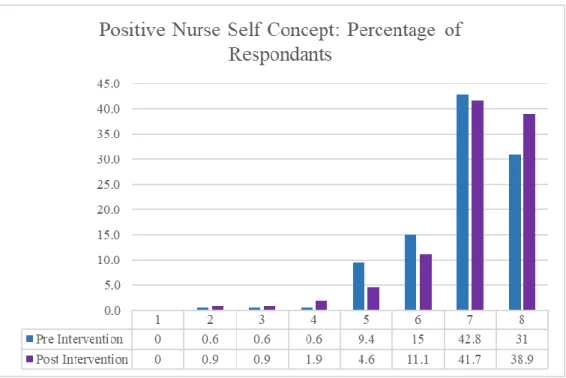
The NSCI evaluated NSC by asking about NGSC, staff relations, communication, knowledge, and leadership. The questions used to evaluate NSC were asked using a Likert scale from 1 to 8 (1 – definitely false, 2 – false, 3 – mostly false, 4 – more false than true, 5 – more true than false, 6 – mostly true, 7 – true, 8 – definitely true). All items are positively worded (See Appendix N). The pre-intervention results revealed that 42.8% of the participants felt the
positively worded items to be true, and 31% felt the positively worded items to be definitely true. The remaining 26.2% of participants’ answers ranged from definitely false to mostly true. The post-intervention results revealed that 41.7% of the participants felt the positively worded items
to be true, 38.9% felt the positively worded items to be definitely true, and 11.1% felt the positively worded items to be mostly true. The remaining 8.3% of participants’ answers ranged from definitely false to more true than false. These results demonstrate a positive shift to feeling the items were true or definitely true pre-intervention (73.8%) to post-intervention (80.6%). (See Figure 1).
Figure 1. Nurse self-concept.
Job Satisfaction
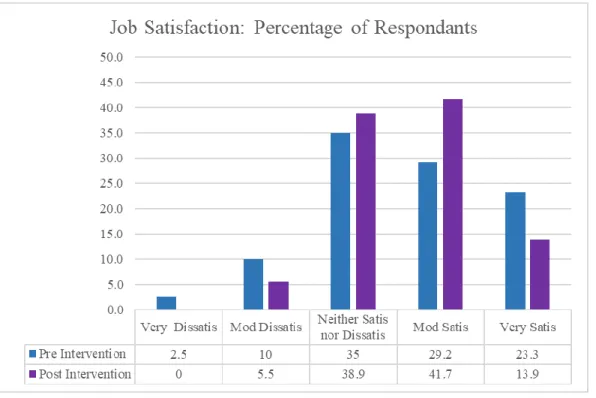
The MMSS instrument was used to evaluate job satisfaction using four subscales: satisfaction with interaction opportunities, satisfaction with professional opportunities, satisfaction with praise and recognition, and satisfaction with control and responsibility. The questions used to evaluate job satisfaction were asked using a Likert scale from 1 to 5 (1 – very satisfied, 2 – moderately satisfied, 3 – neither satisfied nor dissatisfied, 4 – moderately
dissatisfied, and 5 – very dissatisfied). The pre-intervention results revealed that 23.3% of
nor dissatisfied. The post-intervention results revealed that only 13.9% of participants felt very satisfied with their jobs. Additionally, 41.7% felt moderately satisfied, and 38.9% felt neither satisfied nor dissatisfied. Of note, pre-intervention results revealed that 2.5% of participants were very dissatisfied, yet in the post-intervention results, 0% felt this way (See Figure 2). These results do not demonstrate clear positive or negative influence of the nurse mentor program on the participants’ job satisfaction, although the percentage that were moderately or very satisfied went up from the pre-intervention (52.6%) to post-intervention (55.6%). (See Appendix O).
Figure 2. Job satisfaction.
Confidence in Providing Safe Patient Care
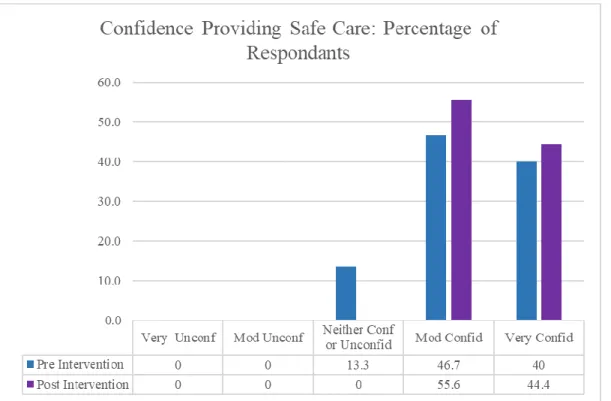
Another of the project’s aims was to determine if the mentor program influenced a positive change in participants’ confidence in providing safe patient care (See Appendix P). This was evaluated in the pre- and a post-intervention survey by asking, “How confident are you in providing safe patient care?” This was asked using a Likert scale from 1 to 5 (1 – very confident,
2 – moderately confident, 3 – neither confident not unconfident, 4 – moderately unconfident, 5 – very confident). Pre-intervention results revealed that 46.7% of the participants felt moderately confident, while 40% were very confident, and 13.3% were neither confident nor unconfident. The post-intervention results revealed that 55.6% were moderately confident, 44.4% were very confident, and 0.0% were neither confident nor unconfident (See Figure 3). These results are favorable in influencing a positive outcome because the responses to confidence in providing safe patient care that were scored moderately and very confident went from a pre-intervention of 86.7% to a post-intervention of 100%.
Figure 3. Confidence in providing safe patient care. Intent to Stay
Lastly, the NRI was used to evaluate the participants’ intent to stay at their current job (See Appendix Q). The NRI uses six declarative type items and uses a Likert scale from 1 to 8 (1 – definitely false, 2 – false, 3 – mostly false, 4 – more false than true, 5 – more true than false, 6
– mostly true, 7 – true, 8 – definitely true). There are four positively worded items and two negatively worded items. Cowin and Hengstberger-Sims (2006) had previously determined the construct validity and reliability of the NRI to be statistically through the use of exploratory and confirmatory factor analysis. In this project, the pre-intervention results revealed that 30.2% of the participants felt the positively worded items to be true, and 46.5% felt the positively worded items to be definitely true. The remaining 23.3% of participants’ answers ranged from definitely false to mostly true. The post-intervention results revealed that 26% of the participants felt the positively worded items to be true, 48.2% felt the positively worded items to be definitely true, and 18.5% felt the positively worded items to be mostly true. The remaining 7.3% of
participants’ answers ranged from definitely false to more true than false. These results
demonstrate a positive shift regarding intent to stay for the answers true and definitely true from a pre-intervention (56.2%) to post-intervention (74.2%). (See Figure 4).
Figure 4. Intent to stay. Def False .False Most-ly False More False Than True More True Than False Most-ly True .True Def True Pre Intervention 0 2.4 1.1 1.1 4.7 14 30.2 46.5 Post Intervention 0 1.8 0 1.8 3.7 18.5 26 48.2 0.0 5.0 10.0 15.0 20.0 25.0 30.0 35.0 40.0 45.0 50.0
Section V. Discussion Summary
The aim of this evidence-based pilot project was to create, implement, and evaluate a nurse mentor program within a 9-month period. To achieve this aim, effective methods were identified to promote positive NSC, increase job satisfaction, and raise confidence in providing safe patient care, with the goal of increasing nurse retention by implementing a mentor program. This program was intended to help improve patient safety and quality of care, which would positively affect patients, nurses, and the hospital. This quality improvement project supports evidence found in the literature indicating nurse mentor programs can improve NSC, job satisfaction, confidence in providing safe patient care, and intent to stay.
The adaptation of the NSCI measured nurses’ professional self-concept by evaluating care, knowledge, staff relations, leadership, and intent to stay. The 18 questions addressing these measures showed an overall increase in how nurses positively viewed themselves and how they care for their patients. The results, in general, revealed that specific dimensions of NSC rose, while others fell. These results were synonymous with the theme of the open-ended question of why the participants chose nursing as a career. Appendix M shows graphic representations of the shift in post-intervention responses towards the positive end of the scale, with the exception of job satisfaction. Independent t-tests were performed on the pre- and post-intervention surveys and showed no significant differences in positive NSC (t = 1.23, p = 0.05), job satisfaction (t = 1.01, p = 0.05), confidence providing safe care (t = 0.71, p = 0.05), and intent to stay (t = 0.67, p = 0.05). Mann-Whitney U tests were performed using an alpha of .05 and power of .80, which suggest larger sample sizes are needed to establish a significant difference between pre- and post-intervention groups. The analysis showed that a total of 53 participants would be needed to
support a significant increase in positive NSC, 92 for job satisfaction, 102 for confidence in providing safe care, and 95 for intent to stay. More data collection and a larger sample size are needed to establish that the mentor program improved novice nurses’ positive NSC, job satisfaction, confidence in providing safe care, and intent to stay.
Sustainability
In order to ensure the sustainability of this change of practice project, more mentors and mentees should be recruited. The stakeholders will meet to evaluate the results of the pilot project, then make appropriate changes so that the program can continue year-round and in all units of the hospital. In order for the nurse mentor program to successfully continue, ownership of the program will be passed on to the unit educators. The educators are already tasked with assigning new nurse preceptors and will be able to match them with mentors.
Interpretation
Overall, the intent of implementing a mentor program to help positive NSC, increase job satisfaction, increase nurses’ confidence in providing safe patient care, and increase nurse retention in three units throughout the hospital was promising based on feedback from the participants. One participant stated, “My mentor has become my best friend at work!” Another participant stated, “I feel comfortable asking my mentor for advice, even when I feel like I should already know the answer.” Overall, the participants expressed enthusiasm about having the opportunity to help one another while also helping their patients. The results of this pilot project are similar to findings from other researchers. For example, the post-intervention survey identified improper social support and confidence in performing the nursing role as potential indicators of job satisfaction. These results were similar to those found by Trepanier et al. (2012) during their study on factors influencing nurse retention. Implications of the findings in this pilot
project support the need for a formalized program that aids new nurses to transition into the workforce, beyond their initial orientation, because even though the results are not noteworthy, the program was successful in maintaining current perceptions of the participants on their NSC, job satisfaction, confidence in providing safe patient care, and intent to stay. Finally, this project acknowledges the work of Spector and Echternacht (2010), who drew attention to the need for national healthcare regulations on how new nurses are transitioned from student nurse to clinical nurse. They argue for standardized programs that support nurses in their new careers, regardless of the organization in which they work. While the sample size in this pilot project was small compared to similar projects, comparable themes and responses were found in the publications reviewed in the summary of evidence (See Appendix A). The need to retain competent nurses who are confident in their patient care and who are happy professionally is vital to an
organization, as evidenced by the consistently positive results of mentor programs. Limitations
As a non-research, quality improvement project targeted to a unique population, there are inherent limitations to the application of the results or the conclusion that can be drawn from them. In addition, the mentor program was implemented as a pilot project with a small group of nurses, potentially impacting the reliability of the data and transferability of the program to other healthcare organizations. Another limitation of this project was the initial lack of funds to
sufficiently compensate nurses who chose to be mentors. The project lead was awarded funds after the initial implementation of the pilot project. Once nurses were aware of this award, they were more interested in becoming mentors, which could have helped increase participation in the pilot project and have helped make results more noteworthy. In order to overcome this limitation and be more attractive to both mentors and mentees, future programs could propose to offer
continuing education credits, in addition to monetary compensation, and plan to apply for grants early on in the planning phase. Offering the program through shared governance may be
effective in securing support for future mentoring programs. Obtaining a grant or other financial support would enable the project to expand beyond the small size and limitations of this pilot. This project lead will continue with the pilot project and plans to recruit more mentors using the grant awarded for the project.
Conclusions
The literature surrounding nurse retention addresses contributing factors to turnover, the risk factors impacting retention, and strategies for increasing nurse retention rates. While an exact monetary value cannot be directly calculated from an individual nurse’s experience and knowledge, comparisons of the costs of nurse retention and the high costs of losing nurses and hiring and training replacements are well documented in the published literature and were used to support the premise of this evidence-based, quality improvement project. The short-term financial benefits of a nurse mentoring and support program, as demonstrated by the pilot mentoring program at the hospital, can potentially accrue to increased spending on nursing education, training, and other measures to support nurses’ job satisfaction and retention. Mentor programs have proven, in several studies, to fill the gap that can be left when a novice nurse transitions from being a student to a new nurse on a new unit, learning new skills and acquiring competencies. Both short term and long term, an investment in new nurses through a mentoring program can be expected to increase retention and job satisfaction.
Organizational attention to nurse job satisfaction and retention rates is crucial to reduce nurse turnover in specialty areas. Quick solutions are not sufficient to address high turnover and low job satisfaction, both of which impinge on providing safe patient care. An investment must
be made to truly support nurses, not only in their first years but throughout their entire careers. A mentor program is only one element of the necessary support, but as this DNP project has
demonstrated, it can be effective even over the short term and on a small scale. For a mentor program to be sustainable, it must become part of the culture of the organization, a formal process, and an integral part of the healthcare organization.
Section VI. Other Information Funding
Funding for this intervention came from the inaugural President’s Innovation Fund and existing pay structures at the hospital. The funding source did not dictate or influence the interpretation and reporting of the data.
VII. References
American Nurses Association. (2015). Code of ethics for nurses: with interpretive statements. Washington, DC: Author.
Benner, P. (1984) From novice to expert: Excellence and power in clinical nursing practice. Menlo Park, CA: Addison-Wesley.
Benner, P., Tanner, C., & Chesla, C. (2009). Expertise in nursing practice: Caring, clinical judgment & ethics (2nded.) New York, NY: Springer.
Cottingham, S., DiBartolo, M. C., Battistoni, S., & Brown, T. (2011). Partners in nursing: A mentoring initiative to enhance nurse retention. Nursing Education Perspectives, 32(4), 250-255. doi:10.5480/1536-5026-32.4.250
Cowin, L. S., & Hengstberger-Sims, C. (2006). New graduate nurse self-concept and retention: A longitudinal survey. International Journal of Nursing Studies, 43(1), 59-70.
doi:10.1016/j.ijnurstu.2005.03.004
Dearholt, S. L., & Dang, D. (2017). Johns Hopkins nursing evidence-based practice: Model and guidelines (3rd ed.). Indianapolis, IN: Sigma Theta Tau International.
Eckerson, C. M. (2018). The impact of nurse residency programs in the United States on improving retention and satisfaction of new nurse hires: An evidence-based literature review. Nurse Education Today, 71, 84-90. doi:10.1016/j.nedt.2018.09.003
Fox, K. (2010). Mentor program boosts new nurses’ satisfaction and lowers turnover rate. Journal of Continuing Education in Nursing, 41(7), 311-316. doi:10.3928/00220124-20100401-04
Hayes, L. J., O’Brien-Pallas, L., Duffield, C., Shamian, J., Buchan, J., Hughes, F., … North, N. (2012). Nurse turnover: A literature review – An update. International Journal of Nursing Studies, 49(7), 887-905. doi:10.1016/j.ijnurstu.2011.10.001
Jakubik, L. D. (2012). Development and testing of the Jakubik mentoring benefits questionnaire among pediatric nurses. Journal of Nursing Measurement, (2), 113. doi:10.1891/1061-3749.20.2.113
Jesuit Values. (n.d.). Leader tips. Retrieved from
https://www.creighton.edu/fileadmin/user/StudentServices/SLIC/LEAD_Center/Jesuit_V alues_PDF.pdf
Jones, T., & Ramsbottom, H. (2017). Increasing staff retention by facilitating neonatal nurse development to an enhanced level. Infant, 13(4), 159-161. Retrieved from
http://www.infantjournal.co.uk/default.html
Mills, J., Woods, C., Harrison, H., Chamberlain-Salaun, J., & Spencer, B. (2017). Retention of early career registered nurses: The influence of self-concept, practice environment and resilience in the first five years post-graduation. Journal of Research in Nursing, 22(5), 372-385. doi:10.1177/1744987117709515
Schroyer, C., Zellers, R., & Abraham, S. (2016). Increasing registered nurse retention using mentors in critical care services. Health Care Manager, 35(3), 251-265.
doi:10.1097/HCM.0000000000000118
Spector, N., & Echternacht, M. (2010). A regulatory model for transitioning newly licensed nurses to practice. Journal of Nursing Regulation, 1(2), 18-25. doi:10.1016/S2155-8256(15)30346-X
Taylor, K. (2016, January 11). Using shared governance to empower nurses. Nursing Times, 112(1/2), 20-23. Retrieved from
https://www.nursingtimes.net/clinical-archive/leadership/using-shared-governance-to-empower-nurses-11-01-2016/
Trepanier, S., Early, S., Ulrich, B., & Cherry, B. (2012). New graduate nurse residency program: A cost-benefit analysis based on turnover and contract labor usage. Nursing Economic$, 30(4), 207-214. Retrieved from www.nursingeconomics.net/
Trossman, S. (2013). Better prepared workforce, better retention: Programs illustrate the value of mentoring. American Nurse, 45(4), 1, 12.
U.S. Preventive Services Task Force. (2018). Grade definitions. Retrieved from https://www.uspreventiveservicestaskforce.org/Page/Name/grade-definitions Weese, M. M., Jakubik, L. D., Eliades, A. B., & Huth, J. J. (2015). Mentoring practices
benefiting pediatric nurses. Journal of Pediatric Nursing, 30, 385-394. doi:10.1016/j.pedn.2014.07.011
Appendix A. Johns Hopkins Evidence-Based Evaluation Table Citation Conceptual Framework Design/ Method Sample/ Setting Major Variables Measurements Data Analysis Findings Appraisal: Worth to Practice Trepanier et al. (2012) Beecroft model and Benner’s model Cost-benefit analysis Purpose: To assess the economic outcomes of a NGRN residency program utilizing turnover rate and contract labor usage data from a multi-site healthcare corporation. Setting: Multi-site healthcare corporation. Sample characteristics: 524 nurses IV = % of NGRN resident penetration & individual characteristics DV = Turnover Focus group interview Stepwise regression 12-month turnover across hospitals went from a mean of 36.8% pre-residency to a mean of 6.41% post-residency.
Annual contract labor dollars per average daily census went from a mean of $19,099 pre-residency to $5,490 post-residency. Strengths: Allowed 45 characteristics to determine positive impact of a nursing residency program in community-based hospitals. Demonstrated positive impact on contract labor dollars spent for nursing services. Limitations: Study used secondary data analysis of a healthcare corporation’s community-hospital database and may not be applicable to other healthcare settings.
Critical
Appraisal Tool & Rating:
Johns Hopkins Evidence-Based: Level 2; good quality of evidence, B USPSTF: Level B, Class I Hayes et al. (2012) None Literature review Purpose: To examine recent findings related to the issue of nurse turnover and its causes and characteris-tics and identify methodolo- gical challenges and implications of new evidence on future studies. Sample characteristic: 68 studies IV = nurse self-concept, job satisfaction DV1 = nurse turnover Retention plans should take generational needs into account. Most studies measured internal factors for turnover not external factors. Literature review Nurse turnover presents serious challenges at all levels of healthcare. Longitudinal research is needed to produce new evidence of relationships between nurse turnover and related costs. Strengths: Articles reviewed were relevant to nurse turnover. Limitations:
Need clear set of definitions on turnover intention. Missing longitudinal data on actual turnover. Critical
Appraisal Tool & Rating: Johns Hopkins Evidence-Based: Level 2; good quality of evidence, B USPSTF: Level B, Class I Spector & Echterncht (2010)
None A review for a regulatory model for transitioning newly licensed Sample characteristic: 51 studies IV = transition-to-practice programs Need for transition-to-practice program. Literature review No-blame model assumes educational programs are adequately preparing our Strengths: Demonstrate success of transition programs internationally.