By
Jeanne Cilliers
Thesis
presented to the University of Stellenbosch in fulfilment of the requirement for the degree of Master’s of Commerce
in Economics
Supervisor: Johan Fourie
University of Stellenbosch Department of Economics
i
Declaration
By submitting this thesis electronically, I declare that the entirety of the work contained therein is my own, original work, that I am the sole author thereof (save to the extent explicitly otherwise stated), that reproduction and publication thereof by Stellenbosch University will not infringe any third party rights and that I have not previously in its entirety or in part submitted it for obtaining any qualification.
Date: 30 October 2012
Copyright © 2013 Stellenbosch University
ii
Abstract
Despite the importance of studying marriage patterns for a better understanding of colonial life, the subject has received little attention from a purely economic perspective. In his seminal work, European Marriage Patterns in Perspective (1965), J. Hajnal introduces the notion of a European Marriage Pattern (EMP) emerging in the late Middle Ages which became characteristic of Western European society in the early modern period. Hajnal points out several distinct aspects to distinguish Western European marriages from all other societies of the time. While existing literature in this field has typically focussed on the demographic features of marriage patterns, such as the average age of marriage, the share of the population that had never married, and the effects of the EMP on fertility and resulting population growth, little attention has been paid to the underlying mechanisms and causes of the EMP.
Using genealogical records to track the ancestry of colonial settlers in South Africa, this study will investigate the evolution of marriage in the Cape Colony. The focus is primarily on the persistence of the EMP and attempt to determine whether it continued to characterise the marriages of European descendents outside of Europe, or whether a distinct marriage pattern emerged in the Cape Colony in the eighteenth and early nineteenth century. It will explore the effect that such patterns may have historically had on family size, standards of living and life chances for European settlers at the Cape, with an aim to shed new light on the underlying causes of the EMP, by critically evaluating De Moor and van Zanden’s (2010) three hypotheses of the origins of this distinct marriage pattern.
iii
Uittreksel
Ten spyte van die bydrae wat ’n studie van huwelikspatrone tot ’n beter begrip van die ekonomiese ontwikkeling en sosiale konteks tydens die koloniale era kan maak, ontvang hierdie onderwerp min aandag vanuit 'n suiwer ekonomiese perspektief. In John Hajnal se bekende publikasie, European Marriage Patterns in Perspective (1965), stel hy die konsep van 'n Europese Huweliks Patroon (EHP) voor. Hierdie patroon het waarskynlik in die laat-Middeleeue verskyn en die Wes-Europese samelewing in die vroeë-moderne tydperk gekenmerk. Hajnal beskryf sekere unieke aspekte wat Wes-Europese huwelike van alle ander samelewings van hierdie tydperk onderskei. Bestaande literatuur oor hierdie onderwerp fokus tipies op di e demografiese kenmerke van huwelikspatrone, soos die gemiddelde ouderdom waarop individue trou, die gedeelte van die bevolking wat nooit trou nie en die gevolge wat die EHP op f ertiliteit en bevolkingsgroei het. Min aandag is dus aan die onderliggende oorsake van die EHP gegee.
Deur gebruik te maak van die Suid-Afrikaanse Geslagregisters is dit moontlik om die herkoms van koloniale setlaars in Suid-Afrika na te spoor. Hierdie studie fokus dus op die ontwikkeling van ’n huwelikspatroon in die Kaapkolonie. Die vraag is of die EHP die huwelike van Europese afstammelinge buite Europa steeds gekenmerk het en of daar ’n ander huwelikspatroon in die agtiende en vroeë-negentiende eeu in die Kaapkolonie na vore gekom het. Die vraag word beantwoord deur ’n kritiese analise van De Moor en van Zanden (2010) se drie hipoteses oor die oorsprong van hierdie eiesoortige huwelikspatroon.
iv
Acknowledgements
It would not have been possible to write this thesis without the help and support of the kind people around me, only some of whom it is possible to give particular mention here.
First and foremost I wish to say a word of thanks to the Genealogical Institute of South Africa for kindly allowing me to make use of the South African Genealogical Registers, which forms the primary data source for this study. These registers represents over a century’s effort by South African genealogists, many of whom devoted their entire lives to creating and expanding this vast database. In doing so they have, perhaps unintentionally, provided economic historians with a rich source for exploring South African settler demographic history, and for this I am extremely grateful.
Then to my supervisor, Johan Fourie at the University of Stellenbosch, I express my sincere gratitude for his continued insight, support and patience, as always, for which my mere expression of thanks likewise does not suffice.
Special thanks to my sister, Marie Cilliers, for the custom-design and creation of the data-manipulation programme, without which, the compilation of the dataset for this study would not have been possible
Last but not least, I want to thank my parents and friends, for bringing me endless encouragement and happiness during the past year.
For any errors or inadequacies that may remain in this work, of course, the responsibility is entirely my own.
1
Contents
List of Figures ... 3 List of Tables ... 4 Chapter 1: Introduction ... 5 1.1 Orientation ... 51.2 Statement of the Problem ... 5
1.3 Research Objectives and Methodology ... 6
1.4 Chapter Outlay ... 6
Chapter 2: Literature Review ... 8
2.1 Contextualization ... 8
2.2 The cultural differences hypothesis ... 10
2.3 Overview of the European Marriage Pattern ... 13
2.4 A review of the literature since the detection of the EMP ... 17
2.5 Addressing the causes of the EMP... 21
2.6 Concluding Remarks ... 25
Chapter 3: Cape Colony Marriage in Perspective ... 27
3.1 A unique colonial case study ... 27
3.2 European heritage, religion and social structure ... 28
3.3 Early Cape marriage customs ... 32
3.4 Huguenot marriage... 34
3.5 Some benchmark results ... 36
3.6 New data sources ... 39
3.7 New results: expanding our knowledge of settler marriage ... 45
3.8 Concluding remarks ... 47
Chapter 4: Revisiting the EMP ... 48
2
4.3 Accessibility to, and the size of, the labour market ... 54
4.4 Explaining the Pseudo-EMP at the Cape ... 57
Chapter 5: Conclusion ... 59
Reference List ... 61
Appendices ... 66
Appendix A: Tables and Figures ... 66
3
List of Figures
Figure 1: Comparison of sample size and population estimates………..42
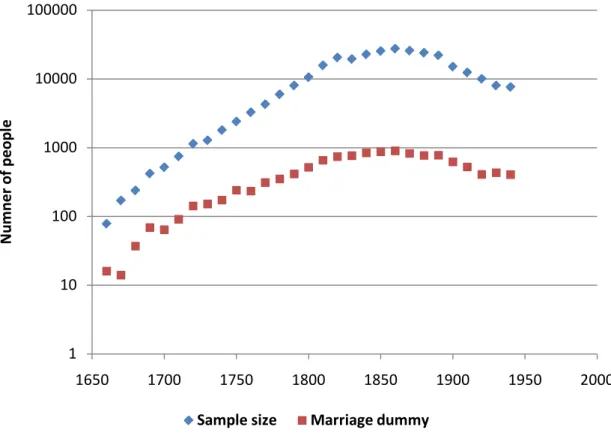
Figure 2: Comparison of sample size and marriage dummy………42
Figure 3: Gender pyramid by age at death, 1700-1749………44
Figure 4: Gender pyramids by age at death, 1749-1799………..44
Figure 5: Gender pyramid by age at death, 1800-1849………45
Figure 6: Age at first marriage and household size at the Cape, 1700-1850…………..…….58
Figure A1: Median life span of settlers by decade of death with 95 per cent confidence bands: 1700 -1940………....68
4
List of Tables
Table 1: Single population as per cent of total population in age group………..14
Table 2: Mean ages at first marriage for countries displaying the EMP………..16
Table 3: Mean ages at first marriage for countries displaying the non-EMP………...17
Table 4: Mean age at first marriage in English dioceses……….…….19
Table 5: Age at marriage of first-time married settlers at the Cape……….37
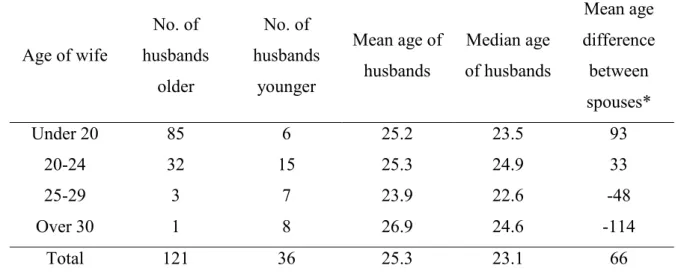
Table 6: Age of husbands by age of wives at first marriage at the Cape, before 1760………37
Table 7: Length of marriage of first-time married settlers………...38
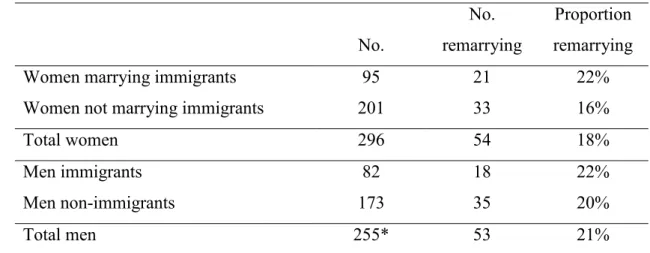
Table 8: Remarriage rates at the Cape before 1760……….…39
Table 9: Summary of new age at first marriage results at the Cape, 1700-1850……….46
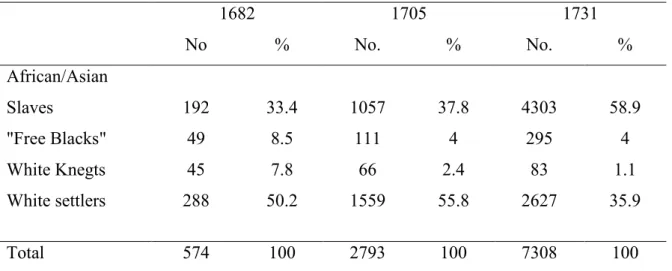
Table A1: Census Population: White Settlers, African and Asian Slaves, Free Blacks and Knechts. Summary of Totals………66
Table A2: Life span of adult settlers………66
Table A3: Average number of children of adult settlers………..67
Table A4: Fertility of female settlers………...68
5
Chapter 1: Introduction
The neglect of marriage by economists is either a major oversight or persuasive evidence of the limited scope of economic analysis – Gary Becker (1973).
1.1 Orientation
Despite the obvious importance of marriage patterns for an understanding of colonial life, the subject has received little attention from economists. The age at which persons, especially women, first marry is a subject of considerable interest, since a woman is seldom able to bear children for more than the thirty years between ages fifteen and forty-five. A ge at first marriage for women therefore plays a vital role in determining how many children she can bear and thus directly affects family size and the growth rate of the population (Wells, 1972: 415). In addition, higher female age at marriage allows women to enhance their human capital both formally and informally in the years before childbearing, resulting in an increase in human capital acquisition for the population, as more educated women will generally raise more skilled children (Foreman-Peck, 2011:292).
In his seminal work, European Marriage Patterns in Perspective (1965), John Hajnal introduces the notion of a European Marriage Pattern (EMP) emerging in the late Middle Ages which became characteristic of Western European society in the early modern period. Hajnal points out several distinct aspects that he argues, distinguishes Western European marriages from all other societies of the time, namely (i) high age at first marriage, particularly for women and (ii) a large percentage of the population who never marry. The increase in the stock of human capital that resulted from this unique demographic trend directly contributed to Western Europe’s developmental success (Foreman-Peck, 2011:292).
1.2 Statement of the Problem
Existing literature in this field has typically focussed on t he demographic features of this marriage pattern, such as the average age of marriage, the share of the population who never married, and the effects of the EMP on f ertility and resulting population growth. Little attention has been paid to the underlying mechanisms and causes of the EMP until recently. De Moor and van Zanden (2010) are the first to formally present an explanation for the emergence of the EMP. Their argument rests on a combination of three socio-economic and ideological factors namely (i) the shift towards consensus instead of parental authority in the
6
formation of a marriage, (ii) the position of women in the transfer of property between husband and wife and between parents and children and (iii) the accessibility to, and the size of, the labour market.
1.3 Research Objectives and Methodology
This study aims to add to this literature in three ways: Firstly, by using genealogical records to track the ancestry of colonial settlers in South Africa, this investigation will provide for the first time, descriptive statistics of Cape Colony marriage patterns for the late eighteenth and early nineteenth century. It will focus on t he evolution of marriage in the Cape Colony, looking primarily for the persistence of the EMP in an attempt to determine whether it continued to characterise the marriages of European descendents outside of Europe, or whether a distinct marriage pattern emerged in the Cape Colony.
Secondly, it will provide an argument for the Cape Colony as a more suitable testing ground to display the unique features of the EMP. It will further provide a critical discussion of the validity and potential shortcomings of the three De Moor and van Zanden hypotheses, and the underlying causes of the EMP will be scrutinised against the new knowledge of Cape Colony marriage patterns.
Finally, it will explore the effect that such marriage patterns may have historically had on family size and standards of living for European settlers in the Cape, as well as provide a benchmark upon w hich comparisons with marriage patterns in other colonial settler populations can be made.
1.4 Chapter Outlay
Chapter two contextualizes this study within the European economic history discourse in its broadest sense. A detailed introduction to the European Marriage Pattern: its origin, characteristics and significance is provided. An overview of the literature subsequent to the detection of the EMP is undertaken, highlighting the want for a concentrated effort on the part of scholars in the field over the last four decades to provide a unified explanation for the underlying causes of the EMP.
Chapter three presents an overview of the existing knowledge on early Cape Colony marriage patterns together with a discussion of the implications of these marriage patterns on e arly settler life. Secondly it will provide the necessary expansion, both in size and scope of these results using the latest genealogical registers as primary data source. Estimates of age at first
7
marriage for male and female settlers for the eighteenth to mid-nineteenth centuries are calculated. Finally an assessment of whether these patterns conform to the characteristics of the EMP is undertaken.
A discussion of the validity and potential shortcomings of the three De Moor and van Zanden hypotheses for the causes of the EMP are scrutinised against new knowledge of Cape Colony marriage patterns in chapter 4. Chapter 5 concludes.
8
Chapter 2: Literature Review
2.1 ContextualizationWhy Europe? Why did a relatively small and backwater periphery on the western fringes of the Eurasian continent, burst out into the world in the sixteenth century and by the nineteenth century had become a dominant force in almost all corners of the earth?
This simple question, posed by Gale Stokes in her 2004 Review of Recent Macrohistories, remains without a simple explanation. Indeed, the question has chronically been revisited over the last half century, but a consensus has yet to be reached as to the underlying causes of northwestern Europe’s developmental success.
Attempts to explain “why Europe and not the rest” are not in short supply. Notable scholars include Diamond (1997), Acemoglu, Johnson and Robinson (2001), Easterly and Levine (2002), Rodrik and Subramanian (2003), and Landes (2006), all of whom have taken somewhat contrasting views by placing greater emphasis on c ertain factors over others in their respective accounts of the workings of the past. A ccording to Stokes (2004), these views can be divided into two main camps: Those who maintain that there was “something unique in the European past lay behind its eventual economic development and power”, and those who believe that there was ultimately “nothing particularly special about Europe and that its rise to dominance in the nineteenth century was not due to any exceptional qualities but to its good fortune at being able to seize vast amounts of gold and silver in the New World and to create other forms of wealth through colonial trade” (Stokes, 2001:509).
The latter is broadly in line with what is commonly referred to as the geography hypothesis. With a large following, both in the popular imagination and in academia, this hypothesis maintains that the “geography, climate and ecology of a society shape both its technology and the incentives of its inhabitants” (Acemoglu, 2003:27).Yet among those who are unsatisfied with an explanation that relies almost entirely on luck, most have taken to investigating what set north-western Europe apart from the rest of the world at the time – in the hope of uncovering a unique set of conditions that presided in this region alone, that were particularly conducive to an economic take-off. One of the prominent scholars in this group is David Landes, who in his exploration of The Wealth and Poverty of Nations (1999) makes strong
9
arguments for three unique and nonmaterial aspects of European society that fortified its developmental fate.
The first explanation offered by Landes is a somewhat paradoxical combination of factors that on the one hand portrays Europe divided: as a result of ethnic heterogeneity and lack of a unified political centre, without which the resulting competition would not have led to the race to conquer the Atlantic that characterised Europe in the fifteenth and sixteenth centuries. On the other hand, Landes offers a view of Europe united by a common academic language (Latin), which succeeded in facilitating the prevailing adversarial discourse, through which scholars were able to share technological advancements, disseminating new scientific knowledge across the continent with relative ease. The result was the “development of science as an autonomous method of intellectual inquiry that succeeded in disengaging itself from the social constraints imposed by organised religion and from the political constraints of centralised authority” (Stokes, 2001:510).
The second factor that Landes suggests set Europe apart was the prevailing work ethic that emphasised resourcefulness and empowerment. In his words: “What counts is work, thrift, honesty, patience, [and] tenacity. The only route to economic success for individuals or states is working hard, spending less than you earn, and investing the rest in productive capacity” (1999:523). In short, the fact that Europeans have historically prospered is simply down to the fact that they have consistently followed these fundamental practices.
Landes’ third explanation centres on t he indigenous technology (for example the water wheel, spectacles, the mechanical clock, the printing press and gun powder). However, possessing superior technology in itself is not sufficient in explaining the kind of developmental success Europe enjoyed. Even if Europe did benefit from better technology, which Landes believes it did, the talent that distinguished Europe from the rest was their capacity to integrate knowledge from other cultures, like adopting gun powder and paper from the Chinese through the Muslim world. Landes suggests that a “systematic resistance to learning” from other cultures was China’s greatest obstacle before the Eighteenth century. Although Landes does not stress property rights (the most powerful discussion of that aspect of Western development remains the domain of Douglas C. North and Robert Paul Thomas)1, one could categorise Landes’ arguments with what Acemoglu refers to as institutional
10
hypotheses, in that they centre around human influences. Very simply stated, according to this view, “some societies have good institutions that encourage investment in machinery, human capital and better technologies, and consequently these countries achieve economic prosperity” (Acemoglu, 2003:27).
Acemoglu qualifies his definition of good institutions by requiring them to possess three key characteristics, namely: (i) the enforcement of property rights for a broad cross section of society, so that a variety of individuals have incentives to invest and take part in economic life, (ii) constraints on t he actions of elites, politicians and other powerful groups, so that these people cannot expropriate the incomes and investments of others or create a h ighly uneven playing field, and (iii) some degree of equal opportunity for broad segments of society, so that individuals can make investments, especially in human capital and participate in productive economic opportunities (Acemoglu, 2003:27).
While this study situates itself firmly within this body of literature, it i s by no means an attempt to confront such mega-economic questions. It is therefore necessary to refine our investigation to a large extent. F or this we turn to a demographic, or perhaps more appropriately labelled, domestic explanation for an increase in the stock of human capital that underpins both the geography and institutional hypotheses.
2.2 The cultural differences hypothesis
Our attention therefore shifted to the cultural differences which have, in addition to Landes’ arguments, been used to explain why the Europeans rose to power in the nineteenth century. The economic effect of one such important cultural difference is clearly illustrated by the example of the cotton industries in China and Europe respectively.
Referring to China, Stokes (2001:518) notes that during the Ming dynasty in spite of a thriving cotton trade industry, spinning and weaving technologies were never adopted in cotton production. Developments of this nature that would elsewhere have been attributed to capitalist-style systems of production never took root in China. Jack Goldstone (1996:7) proposes that this failure on the part of the cotton industry to evolve and adapt new technology as actively as the Europeans did can be attributed to the unavailability of a female labour force in China. This he argues, is a result of the difference in family structure that existed in Europe and China respectively.
11
Recent research into family patterns confirms that European families supposedly exhibited a greater affinity for “economically rational behaviour”, evident by later marriage and smaller households, contrasted with China where early marriage and larger families were the norm. Goldstone suggests that as a result of the traditional Chinese family structure, the so called “life path” of women was altered. In Europe women between their teenage years and marriage were typically wage earners, be it as a servant in a larger household or in a factory. The important cultural difference here was that women were viewed in society as individuals, capable of labour under the supervision of a non-family member. While their pay may have been less than that of their male counterparts, it was significantly more than they could have earned had they remained at home.
In China however, the practice of spinning and weaving remained within the confines of the household and were viewed as women’s errands. While the final products of their labour may well have ended up en route to one of China’s trade partners, women did not receive the kind of compensation for their labour in the form of a wage like their European sisters. Most importantly, Chinese women were not viewed in society as individuals but rather as members of their family, and would remain so until marriage when they would become members of their husband’s family.
Entrepreneurs in the Chinese cotton industry therefore did not have access to the kind of cheap female and child labour that was available in Europe. These entrepreneurs would have been forced to hire more expensive male labour, increasing the cost of cotton production to a point where they were not competitive to trade with. Disincentivised Chinese entrepreneurs chose not to relocate cotton production out of the household domain and into cotton mills, or to invest in more productive technology in cotton production (Goldstone, 1996:8).
Our primary investigation is thus transformed into a far narrower question that asks: How was the demographic transition that historically set Europe apart from the rest of the world unique? One possible explanation, or what Mary Hartman (2004:3) refers to as an “extraordinary development [that] has long been known but remains hidden in plain sight”, is detection of the European Marriage Pattern in the mid-1960’s by John Hajnal. This atypical and still unexplained household-formation system, featuring late marriage dominated north-western Europe from the 1500’s and distinguished the region from all other major agricultural regions of the world.
12
While existing literature in this field has typically focussed on the demographic features of this marriage pattern, such as the average age of marriage, the share of the population that had never married, and the effects of the EMP on fertility and resulting population growth, according to De Moor and van Zanden (2010:3) little attention has been paid to the underlying mechanisms and causes of the EMP. Hartman does not find it surprising that a solid connection has yet to be established between the discovery of this idiosyncrasy in marriage and household arrangements and the distinctive ways Western history evolves after the middle ages for a number of reasons. One such reason, she suggests, hinges on t he priority historical texts have traditionally placed on the contributions of societal elites and are typically based on t he roles and responsibilities of men. Standard historical interpretation relies on results that are derived exclusively from extra-domestic sites, the focus of which has remained largely confined to political and economic spheres.
Despite Hartman’s criticisms of the historical literature for perpetuating this “ingrained view” that denies any real role for women’s agency, domestic or otherwise, in contributing towards major developments in Europe’s socio-economic history and ultimately an account of global economic development, historians’ themes and approaches have slowly been evolving. Serendipitously timed with Hajnal’s publication dispelling the prevailing misconceptions about European marriage ages, the 1960’s witnessed not only the emergence of a new social history, but a new women’s history, that for the first time contested the exclusivity of elite men in economic development explanations by arguing that ordinary citizens’ actions, including the actions of women, must factor into explanations of how history unfolds (Hartman, 2004:4).
Hartman tries to rectify this by arguing that the more extra-domestic arenas along with the course of modern history itself, owe their most noteworthy features to the still largely overlooked European marriage and household system. She suggests that within the households of north-western Europe, women’s behaviour mattered at least as much as men’s – not only for creating unique gender and power arrangements within those households but also for shaping major developments beyond them (Hartman, 2004:4).
The recurring theme of this and the following chapters will be the still unexplored ramifications for Western historical development of the irregular north-western European system of late marriage.
13
2.3 Overview of the European Marriage Pattern
In order to appreciate the uniqueness of the EMP, it is useful to distinguish its most general characteristics from traditional marriage patterns elsewhere in the world for the same time period. While marriage patterns across the world do vary widely, the agricultural societies of Southern and Eastern Europe, India, China, Africa and the Middle East are characterised by early marriage particularly for women and large age differences between spouses, with grooms typically being seven to ten years older than brides. M arriages were traditionally arranged by the couples’ parents and it was not uncommon for a newly married couple to move into the home of the groom’s parents. Furthermore, it was rare to find a person who had remained single throughout their entire life.
But at least since the late Middle Ages, young persons in north-western Europe began to deviate from these traditional marriage patterns. In England, the Low Countries, much of Scandinavia, northern France, and the German-speaking lands, most men and women adopted relatively late marriages and the age difference between spouses became significantly reduced. This is the first distinctive feature of Hajnals’ EMP that characterised marriages west of an imaginary line drawn roughly from Saint Petersburg (formerly Leningrad) in the former USSR to Trieste in Northern Italy. Hajnal refers to those countries east of this line as the “Eastern European Pattern” (EEP).
While it is true that the gentry continued to uphold early and family arranged marriage practices, they did not comprise the majority of the European population.
From medieval times until the late eighteenth century or so, young persons in their late teens and twenties played the major role in selecting their own partners; and they usually did so as agricultural servants or apprentices residing in their employer’s households. At marriage, these couples typically pooled their resources and created a simple or nuclear household of their own, which meant that most residences in north-western Europe housed just one married couple (Hartman, 2004:6).
The second distinctive feature of the EMP is that a substantial portion of the population remains single throughout their lives, contrasted with almost universal marriage occurring in Eastern Europe. For example, by age 20-24 some three-quarters of women were still single in the European pattern while in Eastern Europe three quarters were married in this age group.
14
This is not to say that there were not significant differences between the marriage patterns of various western European countries; however, a distinct cleavage between any of them and the Eastern European pattern of Bosnia, Bulgaria, Russia or Serbia for instance was clear. This cleavage is particularly striking for women. Hajnal reports that in Western European countries fewer than 5 percent of women remained single around their 50th birthday. “In the European pattern unmarried life for an adult woman was accepted as a normal (if perhaps exceptional) alternative to marriage. In Eastern Europe this alternative scarcely existed” (Hajnal, 1965:103).
Table 1 below is constructed from Hajnal’s data on the single population as a per cent of total population in the age group, shown here for two countries displaying the EMP – Belgium and Sweden; and two countries displaying the Eastern European Pattern – Bulgaria and Serbia2. The difference is striking, particularly for women. In those countries displaying the EMP the share of unmarried men and women in the youngest cohort was relatively large (above 70 per cent), implying that the majority of men and women remained single before the age of 25. This is contrasted with the Non-EMP countries in which over half of the men in the 20 to 24 year old age cohort are already married and a staggering 16 per cent of women between the age of 20 to 24 remained single. More interesting is that in Bulgaria and Serbia only 1 percent of women remain unmarried after the age of 45 compared to 17 percent and 19 per cent in Belgium and Sweden respectively.
Table 1: Single population as per cent of total population in age group
Men Women
Country 20-24 25-29 45-49 20-24 25-29 45-49
"European Pattern"
Belgium 85 50 16 71 41 17
Sweden 92 61 13 80 52 19
"Eastern European Pattern"
Bulgaria 58 23 3 24 3 1
Serbia 50 18 3 16 2 1
Source: Hajnal (1965).
2 These countries were chosen arbitrarily for illustrative purposes; however, the trend is equally clear for
15
A review of the published information before 1800 on distributions of population by marital status suggests the general conclusion that the European pattern originated before the eighteenth century. The European pattern of age at marriage can be traced back in many countries to the first half of the eighteenth century or even earlier. Before the latter half of the seventeenth century, there is almost no statistical evidence on marriage, at least so far as unselected data (i.e. covering all inhabitants of an area) are concerned.
Hajnal concludes that the EMP is unique for all large populations for which data exist or reasonable surmises can be made: “In non-European civilizations there are scarcely any single women over 25” (Hajnal, 1965:107). Furthermore, little direct information on t he distribution of marriage by age for countries where the marriage pattern is non-European exists. Hajnal reasons that this may be attributed to the fact that in such countries in many cases formal marriage registration institutions were inadequate, if in existence at all. Even in cases where registration may have accounted for the bulk of marriages, statistics of age are often unreliable since many people do not know their ages.
To overcome this record-keeping deficiency, Hajnal (1965:108) employs an indirect method of calculating age at first marriage statistics. This method involves calculations from the proportions of single persons by age cohorts. His calculations reveal that a non-European pattern implies a mean age for marriages of single women below 21 whereas according to the European pattern the mean age for the marriages of single women must have been above 23, and has in general been above 24. Studies have rarely made use of age statements at the time of the marriage registration, since statements of age are generally not given or are too incomplete to be of much use in parish registers for the eighteenth century (Hajnal, 1965:109).
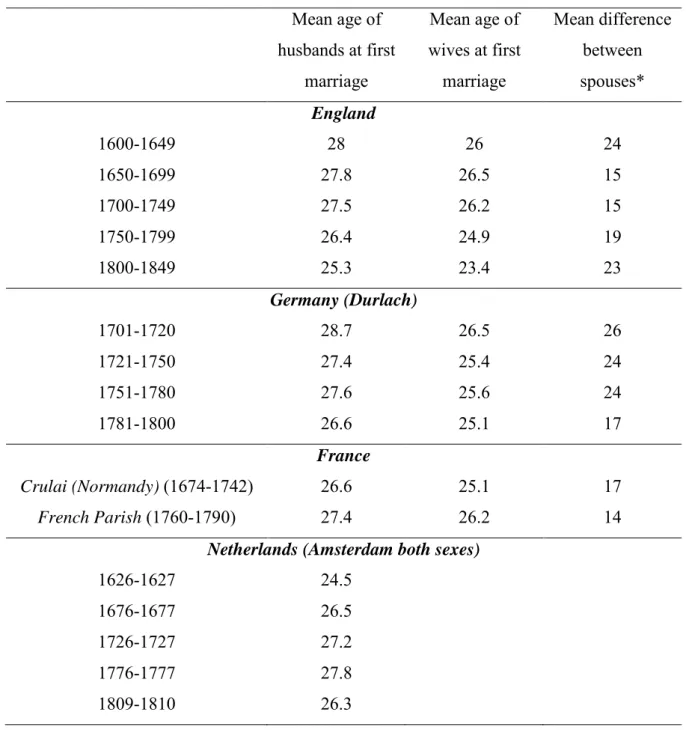
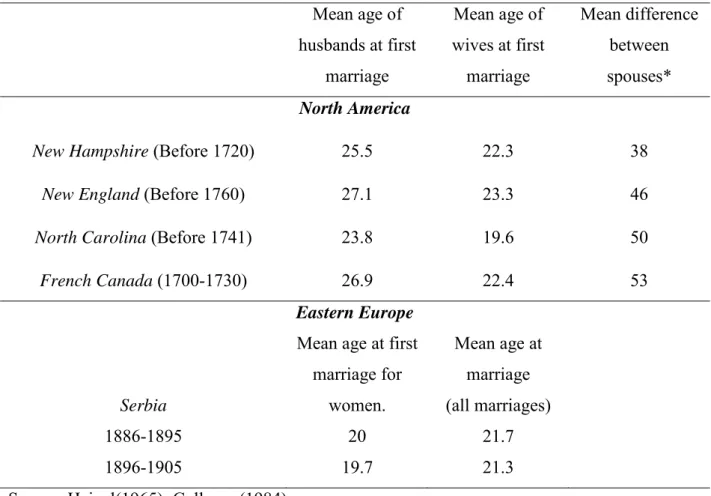
An alternative method of determining age at marriage is the somewhat painstaking process of matching each marriage certificate with the baptismal certificates of the spouses so that their ages can be determined directly from their date of birth. Table 2 provides a summary of mean ages at first marriage calculated using the above method, for countries displaying the EMP, including England, Germany, France, and the Netherlands, all of which have a mean age at first marriage for men and women generally over 24. In addition, the mean difference in ages between spouses is relatively small, with husbands being on average less than two years older than their wives. In contrast, Table 3 shows mean ages at first marriage for those countries displaying non-EMP. In all cases, the mean age of marriage for women is below 24 and the
16
mean difference in ages between spouses is significantly more pronounced than in the EMP, with husbands generally being over three years older than their wives.
Table 2: Mean ages at first marriage for countries displaying the EMP.
Mean age of husbands at first marriage Mean age of wives at first marriage Mean difference between spouses* England 1600-1649 28 26 24 1650-1699 27.8 26.5 15 1700-1749 27.5 26.2 15 1750-1799 26.4 24.9 19 1800-1849 25.3 23.4 23 Germany (Durlach) 1701-1720 28.7 26.5 26 1721-1750 27.4 25.4 24 1751-1780 27.6 25.6 24 1781-1800 26.6 25.1 17 France Crulai (Normandy) (1674-1742) 26.6 25.1 17 French Parish (1760-1790) 27.4 26.2 14
Netherlands (Amsterdam both sexes)
1626-1627 24.5
1676-1677 26.5
1726-1727 27.2
1776-1777 27.8
1809-1810 26.3
*Age in months. Positive values indicate that the husband was older Source: Hajnal (1965).
17
Table 3: Mean ages at first marriage for countries displaying the non-EMP.
Mean age of husbands at first marriage Mean age of wives at first marriage Mean difference between spouses* North America
New Hampshire (Before 1720) 25.5 22.3 38
New England (Before 1760) 27.1 23.3 46
North Carolina (Before 1741) 23.8 19.6 50
French Canada (1700-1730) 26.9 22.4 53
Eastern Europe
Serbia
Mean age at first marriage for women. Mean age at marriage (all marriages) 1886-1895 20 21.7 1896-1905 19.7 21.3
Source: Hajnal(1965); Gallman (1984).
2.4 A review of the literature since the detection of the EMP
Unfortunately, Hajnal’s work was largely overshadowed by the publication in the same year of distinguished Cambridge scholar Peter Laslett’s ground-breaking book The World We Have Lost: England before the Industrial Age (1965). While his exposition of pre- and post-industrial English society focuses far more on the nuclear composition of households, Laslett does attempt to debunk some of the more commonly held misbeliefs about marriage and extended family households, to shed new light on the, until then, relatively unexplored link between domestic relationships and economic development. While Laslett never directly cites Hajnal’s work on t he EMP, he does make use of similar demographic records and his argument undoubtedly supports Hajnals’ conclusions about northwestern European marriage patterns:
It is not true to say that in earlier times, in the world we have lost, as we have called it, people, either ordinary or privileged, married much younger than we marry now. In fact, they were very much older in relation to their expectation of life.
18
Laslett creatively illustrates this common misconception by referring to frequent appearance of teen-brides in Shakespeare’s work, which one could argue, offers readers a form of social commentary on 16th century England. He quotes from the famous second scene of Romeo and Juliet in which Capulet beseeches the eager bachelor Paris, to delay his marriage proposal to his daughter:
My child is yet a stranger in the world
She hath not seen the change of fourteen years Let two more summer’s whither in their pride Ere we think her ripe to be a bride.
Laslett (1965:84) goes on to cite a number of instances of teen-brides appearing throughout Shakespeare’s work to demonstrate the notion that English women of Shakespeare’s day might have married in their early teens, or even before. Yet after examining all available records and evidence of marriages in Elizabethan and Jacobean England, Laslett finds that this is simply not the case. Instead he reports that marriage at these early ages was rare and not nearly as common in late teens as it was in the first half of the twentieth century.
In addition, the Church of England would not permit the marriage of persons under the age of the 21 w ithout the consent of both partners’ parents. Given that marriage licences were granted upon application to the bishop of the diocese which required the documentation of applicants’ ages, Laslett’s team was able to review a thousand licences containing the ages of applicants issued by the diocese of Canterbury between 1619 and 1660 to people marrying for the first time. Here follows a summary of their findings:
One woman gave her age as 13, four as 15, twelve as 16: all the rest were 17 and over, and 966 of the women got married for the first time after the age of 19, that is nearly 85 per cent. The commonest age of first marriage for women in this sample was 22, and the median age was about 22¾ and the mean age about 24. Bridegrooms were something like three years older than brides, though some of the unions recorded showed an extraordinary discrepancy in age. Only ten men married below the age of 20, two of them at 18, and the most common age was 24; the median age was 25½ and the mean age over 26¾.
19
Laslett also considers the difference between ordinary citizen’s marriage tendencies against those of the gentry – after all Romeo and Juliet were not ordinary people. While difficult to make broad generalizations given the small sample sizes at his disposal, he finds that gentle brides were younger than others in this area in the mid-seventeenth century but bridegrooms were of much that same age as the rest of the population. He concludes that no class of the population, as far as their results show, married at anything like the ages suggested by popular literature throughout the centuries3. Table 4 presents Laslett’s findings of marriage ages in English dioceses.
Table 4: Mean age at first marriage in English dioceses
Mean age of Bridegrooms
Mean age of Brides All applicants for licences, Diocese of Canterbury,
1619-1660 (1007 bridegrooms 1007 brides) 26.65 23.58
Standard deviation 4.61 4.12
Gentry only amongst Canterbury applicants
(118 bridegrooms, 118 brides) 26.18 21.75
Standard deviation 4.41 3.60
Marriage of nobles,* from about 1600-1625
(325 brides, 313 bridegrooms) 19.39 24.28
Marriage of nobles,* from about 1625-1650
(510 brides, 403 brides) 20.67 25.99
SOURCES: P. Laslett. 1965. *from T. H. Hollongsworth of the University of Glasgow
Laslett’s work in this field continued later in the 1960’s when he led a group of demographers from the Cambridge Group for the History of Population and Social structure, to launch the famous comparative global study entitled Household and Family in Past Time: Comparative Studies on the Size and Structure of the Domestic Group Over the Last Three Centuries in England, France, Serbia, Japan and Colonial North America, with further Materials from Western Europe. The study was embarked upon with two primary goals in mind. Firstly, the Cambridge scholars wanted to test whether the small size of northwestern European households had some effect on Europe’s industrialisation and secondly, they wanted to see
3 For an excellent discussion of the misrepresentation of bride age in modern literature see Chapter 4 of “The World We Have Lost” by Peter Laslett, 1965.
20
whether “the liberal political theory which emerged in seventeenth-century England was related both with the political theory which it replaced and with the actual structure of the society which gave its birth” (Laslett, 1972).
This decision by the Cambridge group to focus on the size and structure of nuclear families rather than building on Hajnal’s EMP work fundamentally changed the course of which all subsequent work in this field would follow (Hartman, 2004). By the time Hajnal’s work had been published in 1965, the Cambrigde group had already launched their study and although their final text (Household and Family In Past Time, 1972) does cite Hajnal in the bibliography there is no real discussion of the European Marriage Pattern in the text. It seems like Laslett and the Cambridge scholars never took seriously the implications of Hajnal’s results until after he actually visited Cambridge later in the 1970’s.
Instead, the group’s main results confirm the dominance of nuclear household formation in preindustrial Europe. The study succeeded in challenging the prevailing sociological wisdom that multifamily households were actually much larger than nuclear ones. They found that in pre-modern contexts both household types usually contained just 4-6 people, but for different reasons. In the nuclear households of northwestern Europe, large household size was being driven by unrelated adolescent servants living with the family, and in multifamily settings elsewhere, household size was reduced by the splitting of households at various stages of evolution. However, the results of the study were largely inconclusive in determining whether or not nuclear households had an effect on economic or political change and the theory that the Western family pattern had a cau sal effect on north-western Europe’s path to industrialisation as resulting from smaller average household size, seemed refuted.
The group was also widely criticised for their use of computer-generated data series which some argued were not representative of European households over time and space. The group addressed these issues a decade later in a second set of comparative essays on family structure (1983).
Later work by scholars in the Cambridge group featured the use of new family reconstruction techniques using rich information collected from numerous untapped English parish registers as well as for some regions in Europe for which similar information was available between 1580 and 1837. Most noteworthy among these are E. A. Wrigley, R. S. Davies, J. E. Oeppen, & R. S. Schofield, eds. “English Population History from Family Reconstruction, 1580-1837” (Cambridge, 1997) and John E. Knodel, “Demographic Behaviour in the Past: A Study of
21
Fourteen German Village Populations in the Eighteenth and Nineteenth Century” (Cambridge, 1988). These studies are the first to offer an overview of the scope of marriage ages for males and females, as well as changes in fertility and mortality changes in the pre-industrial era and validate in more detail than ever before, earlier theories that point to marriage as the impetus for demographic shifts.
Hartman (2004:14) points out that, ironically by the time these results had been published the interest in investigations of this nature had largely petered out amongst historical demographers and had “long since lost the large and enthusiastic audience of social historians that they had enjoyed in the 1970’s and early 1980’s”. Most importantly, however, the authors themselves had avoided tackling the more interesting questions about the underlying causal relationships. In 1997 the Cambridge scholars presented their final volume of 25 years of demographic studies, publicly admitting that the “wider issues linking demographic with economic and social change [had] been almost entirely neglected, though they are ultimately of greater significance than they attempt to publish the facts on population history” (Wrigley, Davies, Oeppen, Schofield, 1997:550).
Astoundingly, after more than four decades since the detection of the EMP, not John Hajnal, nor Peter Laslett, nor any of the demographers from the Cambridge Group for the History of Population and Social structure who under Laslett’s leadership advocated the North-western European family pattern, endeavoured to discover when or why the pattern appeared in the first place or the extent of its effect on E urope’s economic development path (Hartman, 2004:11).
2.5 Addressing the causes of the EMP
It was not until the 2010 publication by De Moor and van Zanden that new interest in these old questions was reignited. For the first time, an attempt at providing an explanation for the emergence of the EMP was formally presented. While their account remains tentative in many of its core arguments, it does provide an incredibly valuable point of departure from which new work on the subject can take root.
Their argument for the emergence of the EMP rests on a combination of three socio-economic and ideological factors namely (i) the shift towards consensus instead of parental authority for the formation of a marriage, (ii) the position of women in the transfer of property between husband and wife and between parents and children and (iii) the accessibility to, and the size of, the labour market (De Moor & van Zanden, 2010:4).
22
Their first motivation builds on the idea alluded to but never fully qualified by Hajnal, that focuses on t he power relationships between spouses when entering into marriage. In the early middle ages marriage was a somewhat rudimentary institution, constituted merely by the “handing over of a girl, by her father, to the groom, the exchanging of gifts, and perhaps the girl’s deduction in domum, her being brought into the house of the groom or the family” (Biller quoted in De Moor & van Zanden, 2010:5). This definition of marriage slowly began to change as the Church took over responsibility for defining marriage. As De Moor and van Zanden highlight, the emergence of the EMP in North-western Europe coincided with the evolution of Roman Catholic doctrine that emphasised consent by both spouses rather than marriages that were formed against the wishes of both partners.
This argument suggests that as a result of this changing definition of marriage and the equalizing effect this had on the relative power status of consenting spouses, the bargaining power of women within marriages became stronger. Women were for the first time able to have some say in who they would eventually marry and parents of young couples had less and less authority to control the unions of their children. The power of the male household head in Europe was thus significantly diminished in comparison with other truly patriarchal societies at the time4 .
Those who would criticise this explanation typically argue that the emergence of the EMP cannot be explained by the Catholic Church’s doctrine on m arriage practices because the EMP arose in north-western Europe while other parts of Europe that were equally subject to Catholicism retained strong patriarchal family arrangements and non-EMP traits. While De Moor and van Zanden acknowledge the importance of this argument, they maintain the fact that the EMP ultimately dominated marriage throughout all of Western Europe west of an imaginary line from St Petersburg to Trieste that roughly corresponded with the presence of the Catholic Church in Medieval times is unlikely to be entirely coincidental. They concede however, that critics of this argument are correct in pointing out that other factors must have determined the origin of the EMP in north-western Europe, particularly in England and in the Low Countries. They therefore turn their attention to factors which they argue could have contributed to this formation and that explain why its birth place was the North Sea area.
4 De Moor and Van Zanden refer here to the difference in marriage practices between Europe and China: “[Parents] therefore let [children] find their own way in the world and hired other people’s children to do the work that in China would have been done by their own children…differences in paternal authority – strong in China, weak in Europe-explain why in Europe children were allowed to choose their wedding partner and set up their own household”.
23
The first of these factors centres on the transfer of property between generations and within households that distinguished north-western Europe from the South, specifically a woman’s right to inherit and the ability to transfer property to and through women from husbands or relatives. De Moor and van Zanden stress the importance of timing for this kind of transfer to take place, noting that although there were many differences within Europe, brides and grooms both had property rights in their union and marriage played an important role in woman’s right to access her inheritance: “...the bulk if the daughter’s share of the inheritance was either transferred to her at the start of her marriage, in the form of a dowry, or at her parents’ death” (2010:8). They note that inheritance upon marriage was more common in the South of Europe, while inheritance upon the death of one’s parents was more prevalent in the North. In short intergenerational property transfer was more detached from marriage in the north than in the south.
De Moor and van Zanden argue that this difference in property transfer legislation in the north meant that women faced a different set of incentives that prompted them to increase their economic activities during their marriage, knowing that they had the ability to contribute towards the marital fund and could benefit financially from its appreciation. In addition, women in the north could enjoy certain financial benefits after marriage allowing for better opportunities for widows to start new businesses and potentially find new partners. This is contrasted with the incentives faced by women in the south whose personal wealth was essentially predetermined in spite of any economic activities they might have taken on during the marriage.
While the authors remain cautious about the kind of causal claims that can be made regarding the effects of property right customs on m arriage patterns, they assert that there is almost certainly a relationship between the two: “If a woman had a right to her parent’s inheritance without having to marry, there was no f inancial incentive for marriage. In contrast, the Southern dowry system created incentives for both parents and girls to arrange early marriages” arguable making it a far more paternal regime (2010:9). For these women, their share of the estate was in the form of a dowry (which would return to the wife in the event of her husband’s death), the size of which was determined entirely by her family’s financial status and willingness to support her, allowing for considerable control over her choice of marriage partner and marriage age by her parents. Furthermore, there was no incentive for these women to engage in any economic activities before the marriage that might make them
24
a more attractive to a prospective partner – a more common occurrence among their northern counterparts who could afford to wait before marriage.
Age at marriage also plays an important role here, since in the southern system a younger bride would have been easier to “sell” in the marriage market: “Her parents would have to pay a larger dowry to compensate the groom’s household for the smaller net positive contribution the bride would provide in the marital household...the younger the bride, the larger her net positive contribution to the marital household and therefore, the smaller the dowry her parents had to pay” (2010:10). In short, the south saw younger brides, earlier motherhood and less active participation of young women in the labour market as a result of the set of financial incentives designed by the more patriarchal system of property transfer rights.
The final and most fundamental explanation that De Moor and van Zanden offer builds on this notion of access to the labour market. While the abovementioned aspects of society, namely, consensus versus paternal authority and the distinction between property right customs, in all likelihood contributed to the spread of the EMP, the impetus for its establishment is ultimately fuelled by an exogenous shock namely, large population declines resulting from the Black Death after 1348.
This is not to say that prior to 1348 labour markets did not exist anywhere in Europe. All evidence suggests that well-developed labour markets already existed in some parts of Europe in which a substantial part of the population was employed in the late medieval period. However, the implications of the Black Death on t he working age population (approximately 1.5 million people out of an estimated total of 4 million people died from the disease between 1348 and 1350 in England), resulted in a rising labour market with an increasing demand for both male and female labour resulting in sharp increases in real wages, particularly for women. This caused an increase in women’s earnings with the result that in some cases women were paid the same as men for the same kind of work.
De Moor and van Zanden suggest that the increased access to employment after the Black Death and the bourgeoning labour market for women played a critical role in fostering a unique set of conditions under which EMP-characteristics could flourish.
25
2.6 Concluding Remarks
De Moor and van Zanden suggest that the EMP emerged from the unique power balances between husband and wife and between parents and children which differed significantly from traditional family relations elsewhere in the world at the same time. They argue that “the traditional inequalities between the sexes and the generations are caused by socioeconomic, ideological, and institutional factors” and “as women ha[d] a relatively large say in the marriage itself (as it is based on the consent of both spouses)—specifically when the women contributed to the income of their households, the particular features of the EMP—late and non-universal marriage—are the result of its relatively ‘democratic’ character”.
This study will echo the strategy of De Moor and van Zanden’s paper that suggests that the uniqueness of the more general features of the EMP are best displayed when contrasted with marriage patterns elsewhere in the world for the same time period. They do this by comparing EMP results to that of marriage patterns in China, but whether this is the most appropriate region given the nature of the comparison is debatable. Europe and China are culturally irreconcilable. That is to say, in the fundamental societal institutions of organised religion, class structure and property rights, the two differ greatly. It is questionable whether the EMP ought to be compared with China at all, given that in all likelihood, underlying cultural differences could conceal the distinct features of the EMP.
This paper compares a more culturally similar society. The Cape Colony provides an experiment in which we can view Europeans of the same cultural upbringing, constrained by similar laws governing their daily lives and divided by comparable class barriers to those found in Europe. It creates an opportunity to test De Moor and van Zanden’s three hypotheses for the underlying causes of the EMP. If valid, when confronted with similar social institutions namely, consensus versus paternal authority in the formation of marriage; distinct property rights governing the transfer of property between parents and children and between husbands and wives; and the access to and size of the labour market, particularly the involvement of women in the labour market; the Cape Colony ought to display a similar emergence of EMP-like marriage patterns. Where these institutions do hol d but marriage patterns differ, new explanations must be sought.
26
Using genealogical records to track the ancestry of colonial settlers in South Africa the following chapter will focus on the evolution of marriage in the Cape Colony for the period 1652-1850. It will look primarily at the persistence of the EMP and attempt to determine whether it continued to characterise the marriages of European descendents outside of Europe, or whether a distinct marriage pattern emerged in the Cape Colony in the eighteenth, nineteenth and early twentieth century.
27
Chapter 3: Cape Colony Marriage in Perspective
3.1 A unique colonial case studyWhat sets South Africa’s economic history apart from similar colonial settlements, according to Charles Feinstein (2005:1), is its unique endowment of human and natural resources. Other societies typically possess one or two of the factors that Feinstein stresses are so important in creating a developing societ. South Africa, he argues, possessed all three, the combination of which proved to be particularly valuable. These factors are (i) the presence of a large indigenous population, which in the case of South Africa was embodied by Khoisan and African natives that already occupied the Southern tip of Africa prior to the arrival of any European colonists, (ii) the mounting presence, from the nineteenth century in particular, of a large and increasing European settler population and (iii) rich mineral resource deposits particularly gold and diamonds, discovered in late nineteenth century, prior to which the economy depended almost entirely on agriculture with large parts of the country lacking adequate rainfall and other requirements for successful farming.
With such a unique historical endowment, it is astonishing that little empirical investigation into the demographic characteristics of European settlers in the Cape exists (Cilliers & Fourie, 2012). All of the empirical evidence on Cape Colony Marriage patterns (often cited in South African historian’s accounts of Cape Colony societal development) currently stems from two studies. The first is the pioneering work of Robert Ross (1975) entitled The ‘White’ Population of South Africa in the Eighteenth Century and the second is The Anatomy of a Colonial Settler Population: Cape Colony 1657-1750 by Leonard Guelke (1988). Ross and Guelke differ in their choice of primary data: Guelke makes use of the annual opgaaf, or the census of the Cape Colonial population, while Ross makes use of those individuals who were assessed for opgaaf and also appeared in the second edition of C. C. de Villiers’s volumes of genealogies entitled Geslags-registers van Ou Kaapse Families as well as those included in J. A. Heese’s Die Herkoms van die Afrikaner.
Perhaps due to limitations in their respective data sources these demographic estimates are only calculated from settlement in 1652 until the mid eighteenth century (1760 in Ross’s study and 1750 i n Guelke’s study). Little is known about what marriage looked like for typical settlers in the latter part of the eighteenth century or nineteenth century and how events over these centuries might have affected the way in which households were formed.
28
The aim of this chapter is, firstly, to provide an overview of the results of Ross and Guelke’s studies (these will hereafter be referred to as the benchmark results) together with a discussion of the implications of these marriage patterns on early settler life. Secondly, I will provide the necessary expansion, both in size and scope of the benchmark results using the latest genealogical registers as primary data source. Estimates of age at first marriage for male and female settlers for the eighteenth to mid-nineteenth century, using a dataset far greater than used by either of the benchmark studies will be calculated.
3.2 European heritage, religion and social structure
Notions of marriage, including the characteristics individuals might consider in their choice of spouse and decisions about family life and size amongst European settlers at the Cape, had to have derived from the cultural and religious practices of VOC employees’ homelands. Distinguishing exactly which customs might have come from which region of a culturally heterogeneous Europe, however, is not straightforward. VOC employees arriving at the Cape, who would eventually form the bulk of the settler population, typically came from the lowest class of North-western European society (Mitchell, 2007:3).
The end of Thirty Years War in 1648 saw European soldiers and refugees widely dispersed across the continent. Immigrants from Germany, Scandinavia, and Switzerland journeyed to Holland in the hope of finding employment, often lured by what would today be viewed as human trafficking organisations, in the form of crooked boarding house owners in Amsterdam (known as seelenverkäufers or soul-sellers), who worked as labour recruiters for the VOC:
Commonly impoverished migrants to the city found that the only alternative to starvation was to enjoy the hospitality of such individuals who in turn recouped their investments by selling the labour of their unsuspecting guests to the VOC (Dooling, 2007:18).
Beyond this, the company filled its ranks with farm labourers, artisans, and unskilled workers from both rural and urban areas who spoke a number of variations of French, Dutch, German and Scandinavian languages. Soldiers were contractually obliged to remain in the employment of the Company for a minimum of five years excluding the six months that the journey could have taken and were not permitted to return home during this time (Kearney, n/d.:2)
29
In their well-known account of the Shaping of South African Society, Richard Elphick and Hermann Giliomee (1989:524) raise the question as to whether ideas or institutions imported from the Netherlands could have played an influential role in the development of South African society. They suggest that similar to other imperial powers of the day, the Dutch believed themselves to be culturally and religiously superior to the rest of the world possessing a type of ingrained ‘cultural chauvinism’. Scholars of comparative race relations believe that the Dutch and English, who were the chief colonizing powers in South Africa, “moved beyond the spiritual unity of medieval Catholicism and the ordered hierarchy of feudalism, into the ferment of early capitalism, and hence that their populations had become more individualistic and more mobile, and their institutions more egalitarian and democratic” (Elphick & Giliomee, 1989:525).
According to Elphick and Giliomee colonial life was not made up of multifaceted social stratification but was characterized by a distinct cleavage in the population, namely, the hardworking citizens and the poor whom they detested. In most colonies, it is suggested that this type of ‘bifurcation’ became institutionalised into a two-tiered society in which Europeans dominated the rest. However, historians have generally emphasised religion rather than racism as the shaping force of societal inequalities in the Cape Colony. The VOC mandated Protestantism (although it also accepted Lutherans) amongst its employees and it is suggested that amongst Calvinists nearly all believed that Christian Europe was superior to members of any other race. In a discussion of the potential role religion may have played in South Africa’s legacy of racial discrimination, Patterson (1953) argues that:
It would seem that primitive Calvinism, as modified by two centuries of increasing isolation and dispersion, and the imported and increasingly ingrained habit of slave-owning played a particularly important role in the ordering of attitudes and relationships…and in fostering the development of a bi-racial white/non-white society instead of the more flexible, pluralistic one imported from the Far East.
Elphick and Giliomee question the extent to which Calvinism shaped early life at the Cape. They argue that the distinction between Calvinism versus Catholicism in terms of the emphasis placed on exclusivity with reference to non-European individuals is not clear. That is, Calvinist missionaries at the Cape did not prohibit intermarriage nor did they place less emphasis on the “equality of persons before God”. Furthermore, they argue, it is not clear as to how deeply Calvinism actually permeated society at the Cape or in which regions, classes,
30
and forms it became dominant. They suggest that it has not yet concretely been shown that Calvinism had any real impact on l ife at the Cape before 1830, d espite the inclination to assume that there would have been a higher level of Calvinist influence in the “pious” seventeenth century when most immigrants were from Holland or Huguenots from France fleeing to escape religious persecution. They conclude that it was the VOC rather than the Church that shaped Cape society at the outset, by “creating distinctive legal status groups that remained in place until the 1820’s and 1830’s” namely, Company servants; freeburghers; slaves; and ‘Hottentots” or Khoisan (Elphick & Giliomee, 1989:529)
Within the population of free settlers a vast disparity in wealth characterised the Cape. Leonard Guelke and Robert Shell (1983:265) argue that as early as the beginning of the eighteenth century, a “small, wealthy, economically active and politically powerful landed gentry” held the majority of wealth and controlled the authorities. Wayne Dooling (2007) qualifies the use of the term gentry stating that while the term typically denotes a society fractured along class divisions, in the Cape, these cleavages were reduced by ties of patronage, kinship and marriage:
A most important aspect of community life was the circulation of land and wealth. In this regard, Cape landlords constructed a durable political economy in which the rules governing the circulation of land and wealth were defined in community and family terms, not dictated by an informal market over which they had little control. Although slaveholders had of necessity to participate in a market economy, it was their membership of a moral community that protected them against the sometimes detrimental consequences of participation in that economy.
Otto Mentzel (1944:98), a resident of the Cape Colony between 1732 and 1740 provides a useful typology to describe the different class structures that evolved within the free burgher population at the Cape. He divides the Cape’s settler population into four classes. The first he calls the wealthy “absentee-landlords” who mostly lived in Cape Town. These men enjoyed a very comfortable life and did not partake in the day-to-day management of their many estates. Instead they employed knechten (white labourers) who cared for their rural properties which they would frequent only once or twice a year.
A second class of settlers consisted of landlords who resided on their farms and were largely responsible for the production that would supply the Cape Town market. They possessed ‘excellent farms, paid for and lucrative’. These individuals produced more than their