Krishna et al. World Journal of Engineering Research and Technology
EXPERIMENTAL EXAMINATION AND ANALYSIS ON
COMPRESSION IGNITION ENGINE USING SIMAROUBA
BIODIESEL, HIPPE BIODIESEL AND AL
2O
3NANO ADDITIVE
BLENDED BIODIESEL
Subhodh Suresh Ghadge1, Dr. S. A. Mohan Krishna*2, Praveen Harari3, G. V. Naveen Prakash4, K. B. Vinay4 and K. S. Ravi4
1
Mechanical Dept. SGOI, COE Affiliated to SPPU, Pune University, Pune, India.
2
Mechanical Dept, VVCE, Affiliated to VTU, Belgaum, Mysore, India.
3
Mechanical Dept. SGMCOE, Affiliated to Shivaji University, Kolhapur, India.
4
Department of Mechanical Engineering, Vidyavardhaka College of Engineering, Mysore 570002, India.
Article Received on 10/06/2019 Article Revised on 01/07/2019 Article Accepted on 20/07/2019
ABSTRACT
In this research work, experiments have been conducted to determine performance characteristics, emissions and combustion physiognomies of a single cylinder, four stroke VCR diesel engine using pure diesel, simarouba oil methyl ester(SOME) biodiesel, Hippe oil methyl ester (HpOME) biodiesel, and aluminium oxide nanoparticles were added to HpOME-20 as an additive in mass fractions of 25 ppm, 50 ppm and 75 ppm with the help of a mechanical Homogenizer and ultrasonicator with cetyl trimethyl ammonium bromide (CTAB) as the cationic surfactant. It was observed from results that HpOME(B20) biodiesel at 3.5kw Brake power(BP) gives 4.7% more BTE, 3.33% reduction in BSFC, 0.437% increase in Volumetric efficiency, reduced hydro carbon (HC) emissions(7.69%), reduction in Carbon Monoxide (Co) with slightly increased in Nox emissions in comparison with SOME (B20) biodiesel. Further experiments were conducted using different aluminium oxide nanoparticles ANP-blended biodiesel fuel (HpOME20 + ANP25, HpOME20 + ANP50 and HpOME20 + ANP75) and the results obtained were compared with those of pure diesel and Hippe oil methyl ester(HpOME20). The results shows a considerable augmentation in the brake
World Journal of Engineering Research and Technology
WJERT
www.wjert.org
SJIF Impact Factor: 5.218*Corresponding Author Dr. S. A. Mohan Krishna
Mechanical Dept, VVCE,
Affiliated to VTU,
thermal efficiency and a minimal reduction in the detrimental pollutants viz., CO, HC and sNox) for the nanoparticles blended biodiesel.
KEYWORDS: Aluminium oxide nanoparticle(ANP), Hippe oil methyl ester (HpOME), Simurouba oil methyl ester (SOME), Transesterification, Combustion, Emission, Mechanical Homogenizer.
I. INTRODUCTION
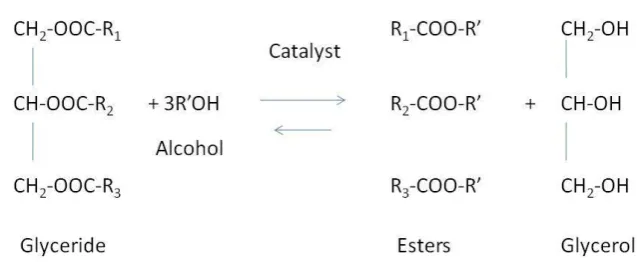
some disapproving physical and chemical properties, predominantly their viscosity and density. Because of higher viscosity, SVO causes imperfect combustion, poor fuel atomization and carbon unseating on the valve and injector seats subsequent in stark engine problems. When diesel engines are fuelled with conventional vegetable oil as fuel, it leads to unfinished combustion. The probable methods to surpass the problem of higher viscosity have been blending of vegetable oil with diesel fuel in the appropriate magnitudes and proper transesterification of vegetable oils to yield biodiesel.[6–8] The process of transesterification has been accomplished worldwide as a efficacious means for biodiesel production and viscosity lessening of vegetable oils.[9] Transesterification is the procedure, by means of an alcohol (e.g. either ethanol or methanol) in the occurrence of catalyst to pause the triglyceride molecules of the raw vegetable oil directly into ethyl or methyl esters (fatty acid alkyl esters) of the vegetable oil with glycerol as a by-product.[10] Ethanol is one among the chemical product preferred for the process of transesterification when compared to methanol since it is derived from renewable sources (agricultural waste) and is evidently and biologically non-detrimental for the environment. Mechanism of transesterification process is shown in Fig. 2.
Generally, methyl esters of vegetable oil propose the lessening of destructive consume emissions from the diesel engine such as CO, HC and smoke but it escalated the NOx emissions.[11–17] The NOx production is the most precarious stricture that has a strong outcome on the environment through acid rain, human diseases, etc. Additionally, CO and NO are principal pollutants in the formation of atmospheric ozone, which is an important conservatory gas.[18,19] Many academicians and researchers have found that the B20 biodiesel blend gives greater and better thermal efficiency and emission parameters when compared to other biodiesel blends.[22] Among the dissimilar techniques reachable to reduce exhaust emissions from the diesel engine while employing biodiesel, the use of fuel-borne metal catalyst is currently focused because of the benefit of enrichment in fuel efficiency while reducing unsafe exhaust emissions and health intimidating chemicals.[23] Aluminium oxide nanoparticles at high temperatures dissociate into Al2O and oxygen:
Al2O3 Al2O + 2O
Al2O3 is rickety at high temperatures during the process of combustion in the combustion chamber, so it also crumbles as follows:
Many researchers found that the combustion comportment of methyl esters with the accumulation of nanosize peppy materials as a colorant progresses the combustion and engine performance of diesel engines. In addition to the above, due to the trivial magnitude of nanoparticles, the constancy of fuel suspensions should be conspicuously improved [24–26]. In this examination, aluminium oxide nanoparticles have been added in various proportions (25, 50 and 75 ppm) to a biodiesel blend (HpOME20) which is found to be improved than SOME20 to examine the performance, emission and combustion of the single cylinder, four stroke VCR diesel engine without any variation.
II. BIODIESELPRODUCTION
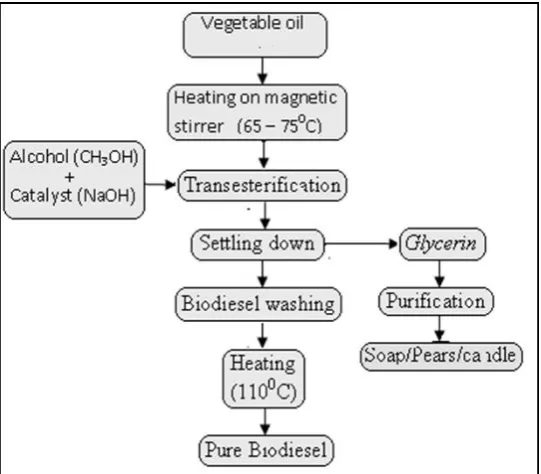
Simarouba oil and Hippe oil which is also referred to as Mahua oil is prevalently heated to a range of temperature of 100–120 0 C to eliminate water contents existent in raw vegetable oil which is monitored by the process of filtration. The raw vegetable oil is processed by one base-catalysed transesterification process where it is amagamated with 200 ml of methanol and 7 g of potassium hydroxide (KOH) pellets per litre of vegetable oil and is placed on a hot plate magnetic with a prominent stirring arrangement for 1–1.5 h up to 600C and then it is allowed to settle down for about 6–8 h to obtain biodiesel and glycerol. The biodiesel obtained is further washed with distilled water two to three times for the exclusion of acids and heated above 100 0C to eliminate the moisture existent in the biodiesel.
A. Process of extracting Biodiesel
B. Transesterification Process
Fig. 2: Transesterification of triglycerides with alcohol in presence of catalyst, where R is the alkyl group.
III.BLENDPREPARATION A. Biodiesel blends preparation.
The Simarouba oil methyl ester biodiesel obtained by transesterification is blended with neat diesel on volume basis as per the requirement to form blends like SOME10, also called as B10(10 % SOME + 90 % Diesel), B20(20% SOME +80 % Diesel), B30 and B40. Similarly blends of Hippe oil methyl ester biodiesel are prepared (HpOME10, HpOME20, HpOME30 and HpOME40).
B. Nanofluid preparation
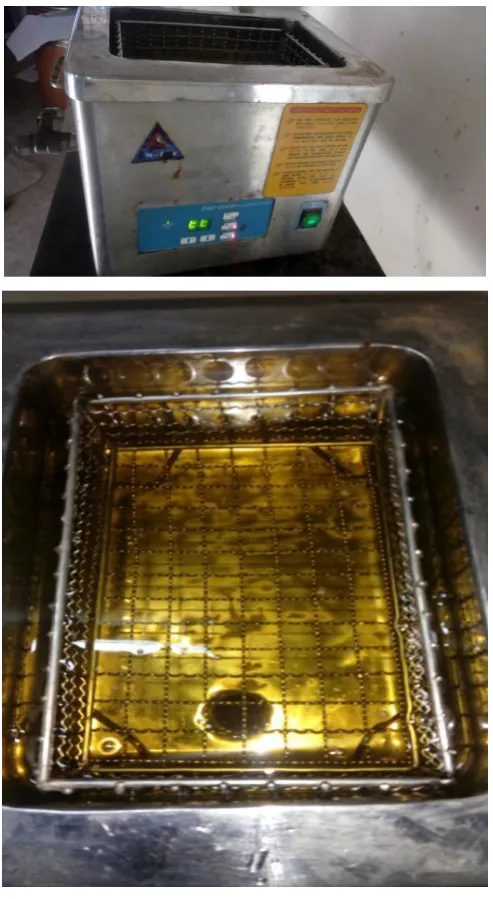
(100 ml for 1Lt) has been weighed and poured in the ethanol solvent and magnetically stirred for 2 h. Then it creates an even nanofluid.
Fig. 3 (a) & (b) Ultrasonicator setup
C. Hippe oil methyl ester-nanofluid blend preparation
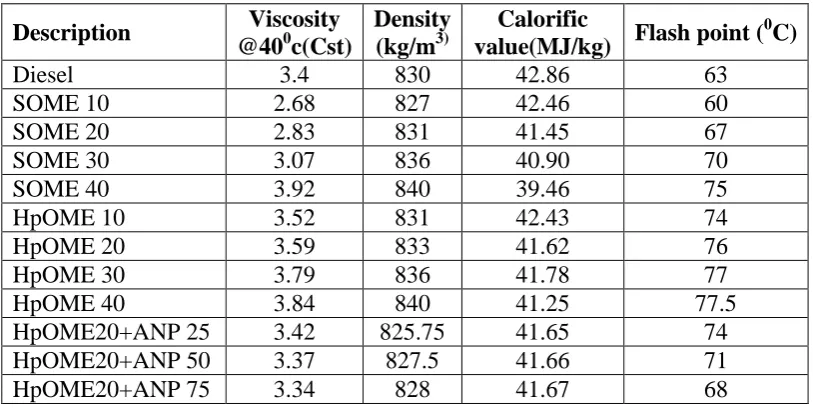
Table 1: Properties of Diesel, biodiesel and biodiesel nanoparticles blended samples. Description Viscosity
@400c(Cst)
Density (kg/m3)
Calorific
value(MJ/kg) Flash point (
0
C)
Diesel 3.4 830 42.86 63
SOME 10 2.68 827 42.46 60 SOME 20 2.83 831 41.45 67 SOME 30 3.07 836 40.90 70 SOME 40 3.92 840 39.46 75 HpOME 10 3.52 831 42.43 74 HpOME 20 3.59 833 41.62 76 HpOME 30 3.79 836 41.78 77 HpOME 40 3.84 840 41.25 77.5 HpOME20+ANP 25 3.42 825.75 41.65 74 HpOME20+ANP 50 3.37 827.5 41.66 71 HpOME20+ANP 75 3.34 828 41.67 68
IV.EXPERIMENTALSETUP
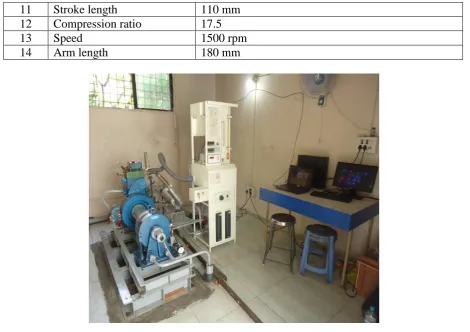
The experiments have been conducted in series on fully computerized Kirloskar TV1, four-stroke, single cylinder type, water cooled diesel engine. The rated power of the diesel engine has been 3.7 kW. The engine has been operated at a constant speed of 1500 rpm by maintaining the magnitude of injection pressure from 210 to 220 bar at numerous load conditions. The engine was at the commence fuelled with neat diesel to provide the baseline data, and then it was fuelled with SOME, HpOME biodiesel blends and then HpOME20, HpOME20 + ANP25, HpOME20 + ANP50 and HpOME20 + ANP75. The scrupulous details of the engine specification are given in Table 2. Eddy current dynamometer has been employed for loading the engine. HG-540 AIRREX (approved by ARAI) five-gas analyzer has been used to measure HC, CO and NOx emissions. In-cylinder pressure and heat release rate has been measured by the use of data acquisition system interfaced with dual core processor. The experimental setup is shown in Fig. 4.
Table 2: Engine Specification.
Sl. No. Parameter Specification
1 Engine Supplier Apex innovations Pvt. Ltd Sangli, Maharashtra, India 2 Type TV1 (Kirloskar made) VCR
3 Software used Engine soft 4 Nozzle Opening Pressure 200-205 bar
5 Governor type Mechanical centrifugal 6 No. of cylinder Single cylinder
11 Stroke length 110 mm 12 Compression ratio 17.5 13 Speed 1500 rpm 14 Arm length 180 mm
Fig. 4: Experimental Setup.
V.RESULTSANDDISCUSSIONS
A. Engine performance a. Brake thermal efficiency
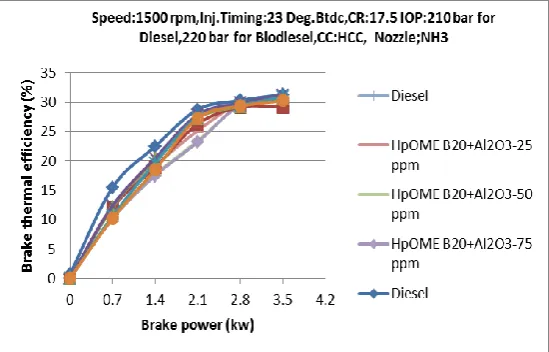
Fig. 5(a) BTE (%) against Bp (kw) for Diesel, SOME20 and HpOME20.
Fig. 5(b): BTE(%) against Bp (kw) for Diesel, HpOME20 +ANP25,HpOME20+ANP50 and HpOME20 + ANP75.
b. Brake Specific fuel consumption (BSFC)
Fig. 6(a) BSFC against BP for Diesel, HpOME20 and SOME20 biodiesel.
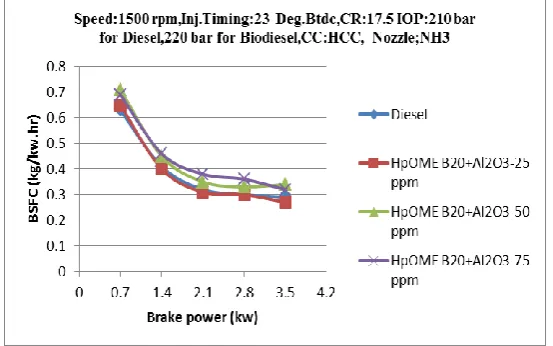
Fig. 6(b): BSFC against BP for Diesel, HpOME20 + ANP 25,HpOME20 + ANP 50 and HpOME20 + ANP 75.
BSFC has been observed to be increased with increasing proportion of biodiesel in the fuel. Brake thermal efficiency of pure biodiesel was highest among the fuels used It is observed from the above Fig. 6(a) the BSFC for HpOME20 is less than SOME20 and same as that of Diesel at full load condition. It is observed from Fig. 6(b) that with addition of ANP to HpOME20 there is marginal decrease in BSFC. For ANP25 BSFC is less compared to ANP50 and ANP75 at full condition.
c. Volumetric efficiency
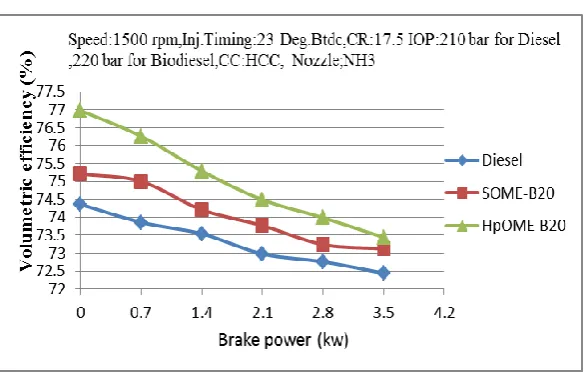
Fig. 7(a): Volumetric efficiency against BP for Diesel, SOME20 and HpOME20 biodiesel.
Fig. 7(b): Vol. efficiency against BP for Diesel,HpOME20 + ANP25,HpOME20 + ANP50 and HpOME20 +ANP75 ppm.
B. Emission parameters a. Hydrocarbon (HC)
Fig. 8(a): HC emissions against BP for Diesel,SOME20 and HpOME20 biodiesel.
Fig. 8(b): HC emissions against BP for Diesel,HpOME20 + ANP25, HpOME20 + ANP50 and HpOME20 + ANP75 ppm blended biodiesel.
b. Carbon monoxide (CO)
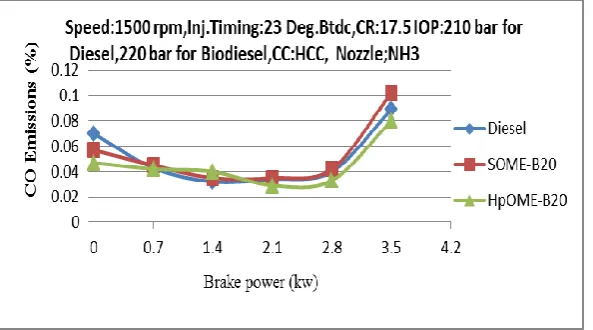
Fig. 9(a): CO emissions against BP for Diesel, SOME20 and HpOME20.
Fig. 9(b): CO emissions against BP for Diesel, HpOME20 + ANP25, HpOME20 + ANP50 and HpOME20 + ANP75 ppm blended biodiesel.
C. Oxides of nitrogen (NOx)
Fig. 10(a): NoX emissions against BP for Diesel, SOME20 and HpOME20.
Fig. 10(b): NoX emission against BP for Diesel, HpOME20 + ANP25, HpOME20 +
ANP50 and HpOME20+ANP75 ppm.
B. Combustion characteristics a. Cylinder pressure
220 240 260 280 300 320 340 360 380 400 420 440 460 480 500 0 10 20 30 40 50 60 C yl in d er Pr es su re (b ar
) Diesel HpOME-B10
HpOME-B20 HpOME-B30 HPOME-B40
Crank Angle (Deg.)
Speed:1500 rpm,Inj.Timing:23 Deg.bTDC,CR:17.5, IOP:210 bar for Diesel,220 bar for Biodiesel
Fig. 11(a): Cylinder pressure against crank Angle for Diesel and HpOME biodiesel.
220 240 260 280 300 320 340 360 380 400 420 440 460 480 500 520 0 10 20 30 40 50 60 C y lin d e r Pr e s s u re (b a
r) Diesel SOME-B10
SOME-B20 SOME-B30 SOME-B40
Crank Angle (Deg.)
Speed:1500 rpm,Inj.Timing:23 Deg.bTDC,CR:17.5, IOP:210 bar for Diesel,220 bar for Biodiesel.
220 240 260 280 300 320 340 360 380 400 420 440 460 480 500 -10 0 10 20 30 40 50 60 C yl in de r Pr es su re (b ar ) Diesel SOME B20 HpOME-B20
HpOME B20+Al2O3-25 ppm HpOME B20+Al2O3-50 ppm HpOME B20+Al2O3-75 ppm
Crank Angle (Deg.)
Speed:1500 rpm,Inj.Timing:23 Deg.bTDC,CR:17.5, IOP:210 bar for Diesel,220 bar for Biodiesel-B20.
Fig. 11(c): Cylinder pressure against crank Angle for Diesel and HpOME20 with different blends of ANP(25, 50 and 75 ppm) biodiesel.
Fig. shows the variation of the in-cylinder pressure of the engine with crank angle. From the figure 11(a), it is seen that the maximum pressure at 366o crank angle is 52.18 bar is obtained for HpOME20. From the figure 11(b), it is seen that the maximum pressure at 366o crank angle is 51 bar is obtained for SOME20. From the figure 11(c), it is seen that the maximum pressure at 366o crank angle is 58.0275 bar is obtained for HpOME20 + ANP25 ppm.
b. Heat release rate
330 340 350 360 370 380 390 400
-10 0 10 20 30 40 50 60 70 H ea t re le as e ra te (J /C A
) Diesel
HpOME-B10 HpOME-B20 HpOME-B30 HpOME-B40
Crank Angle (Deg.)
Speed:1500 rpm,Inj.Timing:23 Deg.bTDC,CR:17.5, IOP:210 bar for Diesel,220 bar for Biodiesel
330 340 350 360 370 380 390 400 -10 0 10 20 30 40 50 60 70 H e a t re le a s e r a te (J /C A ) Diesel SOME-B10 SOME-B20 SOME-B30 SOME-B40
Crank Angle (Deg.)
Speed:1500 rpm,Inj.Timing:23 Deg.bTDC,CR:17.5, IOP:210 bar for Diesel,220 bar for Biodiesel.
Fig. 12(a): Heat release rate against crank Angle for Diesel and SOME biodiesel.
330 340 350 360 370 380 390 400
-10 0 10 20 30 40 50 60 70 H ea t re le as e ra te (J /C A ) Diesel SOME B20 HpOME B20
HpOME B20+Al2O3-25 ppm HpOME B20+Al2O3-50 ppm HpOME B20+Al2O3-75 ppm
Crank Angle (Deg.)
Speed:1500 rpm,Inj.Timing:23 Deg.bTDC,CR:17.5, IOP:210 bar for Diesel,220 bar for Biodiesel-B20.
Fig. 12(c): Heat release rate against crank Angle for Diesel and HpOME20 + ANP(25,50 and 75 ppm) blends biodiesel.
can be noticed that, the heat release rate is maximum for neat diesel this is due to high value of calorific value. The heat release rate curves specify the available heat energy, which can be assimilated into useful work. Hippe Oil methyl ester (HpOME) includes a small amount of diglycerides having high magnitude boiling points as compared with the diesel fuel. The chemical reactions during the instillation of the Hippe oil methyl ester blend (HpOME20) at very high temperature eventually resulted in the breaking of the diglycerides. These chemical reactions yield the gases of monoglycerides. Gasification of these monoglycerides in the bobble of the spray spreads out the fuel jet, and the unpredictable combustion compounds present in the fuel are ignited in advance and reduced the ignition delay period. The magnitude of heat release rate in the combustion chamber during the starting of combustion is not enough to completely combust the fatty acids. The addition of ANP considerably aggrandizes the heat release rate of HPOME20.
VI. CONCLUSIONS
In this work, Simarouba oil methyl ester, Hippe oil methyl ester and ANP-mixed Hippe oil methyl ester mixture fuelled diesel engine performance, emission and combustion characteristics have been examined, and based on the experiments the following conclusions have been enumerated:
It has been found that, HpOME20 has better performance when compared to Simarouba
oil methyl ester20 blend.
ANP-blended biodiesel (HpOME20+ANP25 HpOME20+ ANP50 and HpOME20+
ANP75) portrayed an improvement in the magnitude of calorific value and a lessening in the flash point as compared to HpOME20.
Biodiesel has higher fuel consumption, because of its lower heating value. With the
addition of aluminium oxide nanoparticles, there is a substantial reduction in the value of fuel consumption as compared to biodiesel operation and for HpOME20+ANP25 ppm BSFC has been found to be 6.896% reduction to Diesel.
A minor decrease in BTE has been observed in all the cases with minimum of 0.38 %
(HpOME20 + ANP 25 ppm) with respect to diesel.
ANP reduced HC and CO emissions up to 17.77% and 29.21% as compared with a
The peak pressure increases with the accumulation of ANP. The totaling of ANP
minimizes the ignition delay period. The magnitude of heat release rate also increases with the addition of ANP. The addition of ANP accelerates the hydrocarbon combustion and is the strong reason for the higher heat release rate as compared to neat diesel and biodiesel blend (HpOME20 and SOME2).
REFERENCES
1. Demirba Ayhan, “Biodiesel from vegetable oils via transesterificationin supercritical methanol”, Energy Convers. Manage, 2002; 43: 2349–56.
2. Mofijur M, Masjuki HH, Kalam MA, Hazrat MA, Liaquat AM, Shahabuddin M, Prospects of biodiesel from Jatropha in Malaysia. Renew. Sustain. Energy Rev, 2012; 16: 5007–20.
3. Abbaszaadeh Ahmad, Ghobadian Barat, Omidkhah Mohammad Reza, Najafi Gholamhassan. Current biodiesel production technologies: A comparative review. Energy Convers. Manage, 2012; 63: 138–48.
4. Ghadge Shashikant Vilas, Raheman Hifjur. Biodiesel production from Mahua (Madhuca indica) oil having high free fatty acids. Biomass Bioenergy, 2005; 28: 601–5.
5. Van Gerpen Jon. Biodiesel processing and production. Fuel Process. Technol, 2005; 86: 1097–107.
6. Ahmed Waqas, Nazar Muhammad Faizan, Ali Syed Danish, Rana Usman Ali, Khan Salah Ud-Din. Detailed investigation of optimized alkali catalyzed transesterification of Jatropha oil for biodiesel production. J. Energy Chem, 2015; 24: 331–6.
7. Ma F, Hanna MA. Biodiesel production: a review. Bioresour. Technol, 1999; 70: 1–15. 8. Yusuf NNAN, Kamarudin SK, Yaakub Z. Overview on the current trends in biodiesel
production. Energy Convers. Manage, 2011; 52: 2741–51.
9. Sherma YC, Singh B, Upadhyay SN. Advancements in development and characterization of biodiesel: a review. Fuel, 2008; 87: 2355–73.
10.Basha Syed Ameer, Gopal K Raja, Jebaraj S. A review on biodiesel production, combustion, emissions and performance. Renew. Sustain. Energy Rev, 2009; 13: 1628– 34.
12.Murugesan A, Umarani C, Chinnusamy TR, Krishnan M, Subramanian R, Neduzchezhain N. Production and analysis of bio-diesel from non-edible oils – a review. Renew. Sustain. Energy Rev, 2009; 13: 825–34.
13.Patil PD, Deng S. Optimization of biodiesel production from edible and non- edible vegetable oils. Fuel, 2009; 88: 1302–6.
14.Shahir VK, Jawahar CP, Suresh PR. Comparative study of diesel and biodiesel on CI engine with emphasis to emissions – a review. Renew. Sustain. Energy Rev, 2015; 45: 686–97.
15.Sun J, Caton JA, Jacobs TJ. Oxides of nitrogen emissions from biodiesel-fuelled diesel engines. Prog. Energy Combust. Sci, 2010; 36: 677–95.
16. Szulczyk KR, McCarl BA. Market penetration of biodiesel. Renew. Sustain. Energy Rev, 2010; 14: 2426–33.
17.Qi D, Chen H, Geng L, Bian Y. Experimental studies on the Combustion characteristics and performance of a D I engine fuelled with biodiesel/diesel blends. Energy Convers. Manage, 2010; 51: 2985–92.
18.Balusamy T, Marappan R. Effect of injection time and injection pressure on CI engine fuelled with methyl ester of Thevetia peruviana seed oil. Int. J. Green Energy, 2010; 7: 397–409.
19.Sahoo P K, Das L M. Combustion Analysis of Jatropha, Karanja and Polanga based biodiesel as fuel in a diesel engine. Fuel, 2009; 88: 994–9.
20.Kim Hwanam, Choi Byungchul. The effect of biodiesel and bioethanol blended diesel fuel on nanoparticles and exhaust emissions from CRDI diesel engine. Renewable Energy, 2010; 35: 157–63.
21.Dhar Atul, Agarwal Avinash Kumar. Experimental investigations of the effect of pilot injection on performance, emissions and combustion characteristics of Karanja biodiesel fuelled CRDI engine. Energy Convers. Manage, 2015; 93: 357–66.
22.Mirzajanzadeh Mehrdad, Tabatabaei Meisam, Ardjmand Mehdi, Rashidi Alimorad, Ghobadian Barat, Barkhi Mohammad, Pazouki Mohammad. A novel soluble nano-catalysts in diesel–biodiesel fuel blends to improve diesel engines performance and reduce exhaust emissions. Fuel, 2015; 139: 374–82.
24.Lenin MA, Swaminathan MR, Kumaresan G. Performance and emission characteristics of a DI diesel engine with a nanofuel additive. Fuel, 2013; 109: 362–5.
25.Sadikbasha J, Anand RB. Performance, emission and combustion characteristics of a diesel engine using carbon Nanotubes blended Jatropha Methyl Ester Emulsions. Alex. Eng. J., 2014; 53: 259–73.
26.Selvan V Arul Mozhi, Anand RB, Udayakumar M. Effect of Cerium Oxide Nanoparticles and Carbon Nanotubes as fuel borne additives in Diesterol blends on the performance, combustion and emission characteristics of a variable compression ratio engine. Fuel, 2014; 130: 160–7.
27.Shaafi T, Velraj R. Influence of alumina nanoparticles, ethanol and isopropanol blend as additive with diesel-soybean biodiesel blend fuel: combustion, engine performance and emissions. Renewable Energy, 2015; 80: 655–63.