* Corresponding author. Ali Hussein Saleh Zolait is a Research Fellow at the Faculty of Business and Accountancy, University of Malaya, 50603 Kuala Lumpur, Malaysia, e-mail: [email protected].
** Ainin Sulaiman is a Professor in the Department of Operations and Management Information Systems, Faculty of Business and Accountancy, University of Malaya, 50603 Kuala Lumpur, Malaysia, e-mail: [email protected].
The Influence of Communication Channels on
Internet Banking Adoption
Ali Hussein Saleh Zolait* and Ainin Sulaiman**
Abstract
This paper addresses the influence of communication channels or source of information particularly, media norm (mass media) and personal norm (word of mouth) on the intention to use Internet Banking (IB) among Yemenis. Empirical data was collected using the survey questionnaire approach. Questionnaires were distributed randomly to 1000 bank customers in the Yemeni capital. A total of 369 completed questionnaires were used for the analysis. The study reveals that both norms influence the intention to use IB. It was also illustrated that the intention norms portrayed in mass media and word-of-mouth significantly influence the respondents’ decision to adopt Internet Banking.
Keywords: Internet Banking, Mass Media, Word of Mouth, Yemen
JEL Classification: M00, M30
1. Introduction
Canada (64 per cent), the Netherlands (51 per cent) and Sweden (47 per cent). The percentage of IB usage in a developing country like Yemen would be expected to be smaller.
There have been numerous studies (Awamleh & Fernandes, 2005; Khalfan & Alshawaf, 2004; Sathye, 1999) that focussed on IB adoption and usage using the Theory of Reasoned Action (TRA) and the Theory of Planned Behaviour (TPB). TRA is one of the behavioural theories that provide some insight into the social effects on human behaviour. According to this theory, human behaviour is affected by social environment. Fishbein and Ajzen (1975) and Ajzen and Fishbein (1980) proposed Subjective Norm (SN) as a construct which deals with the influence of the social environment on behavioural intention. SN is also one of the three determinants of an individual’s behavioural intention proposed by the Theory of Planned Behaviour (TPB). Both TRA and TPB assume that social pressure is embodied in SN and is one of the determinants of Behavioural Intention (BI).
This study, however, differs from the others as the aim is to analyse the influence of the different types of communication channels or source of information on the behavioural intention to use IB among Yemeni bank customers. There are many norms of communication channel or source of information. Among the more common ones are media norm and personal norm (Rogers, 1995). In this study, media norm refers to mass media which includes all the means of transmitting messages such as the radio, television, newspapers and the Internet whereas personal norm refers to ‘word of mouth’, i.e. the communication between individuals. In addition, this study also aims to illustrate the relevance of Word-of-Mouth and Mass Media to both SN and BI constructs. This study would be useful for the Yemeni banks as the findings would help them in strategising their promotional activities accordingly.
This paper consists of six sections including this Introduction. The following section discusses literature related to the area of study. Subsequently, the methodology adopted to obtain empirical data is explained in Section 3 followed by the analysis carried out on the empirical data (Section 4). Sections 5 and 6 contain the Discussion and Conclusion respectively.
2. Literature Review
Fishbein, 1980). SN has two separate components. The first component is normative beliefs, which are the actors’ perceptions that certain individuals want them to perform the behaviour. The second component is the motivation to comply, which represents the relative importance of the referent persons to the actor. These two elements of behavioural intentions are determined by the extent to which the actor believes the behaviour is desired by significant referent others, multiplied by the actor’s motivation to comply with those referents. All SN are added together to determine the overall position of salient others towards the behaviour (Ajzen & Fishbein, 1980).
In connection with this, the Diffusion of Innovation (DOI) theory by Rogers (1995) posited that an individual’s decision to adopt or reject an innovation is independent but, may still be influenced by the norms of the system and by interpersonal network. Bearden et al. (1986) and Karahanna et al. (1999) categorised social influence (normative belief) into informational-based influence and normative influence. According to Bearden et al. (1986) and Kelman (1961), both forms of social influence are thought to operate through the processes of internalisation, identification, and compliance. Rogers (1995) pointed out that information about innovation can be actively sought by individuals after they are aware that the innovation exists and also when they know which source or channel can provide further information about the innovation. Rogers (1995) argued that the importance of different channels or information sources of innovation is determined by their availability to the audience of the potential adopter. According to Bearden et al. (1986), informational influence occurs when individuals accept information as evidence of reality.
fundamental sources of information will be discussed in the following sections.
2.1 Norms of Mass Media Channels
The mass media are often the most rapid and efficient means of informing an audience of potential adopters about the existence of an innovation, that is, to create awareness-knowledge (Rogers, 1995). The mass media include all the media of transmitting messages such as the radio, television, newspapers and the Internet. The influence of this channel is “informational” in character as inferred from Aggarwal et al. (1998). In a study of electronic commerce adoption, Battacherjee (2000) utilised a similar construct called the external influence which is best exemplified by the influence of the mass media. The mass media have some advantages represented by their ability to reach a large audience rapidly, create knowledge, spread information and lead to changes in weakly held attitudes. In addition, the expected effects of mass media channels were generalised by Rogers (1995) as relatively more important at the knowledge stage of the innovation-decision process.
2.2 Norms of Interpersonal Channel
Interpersonal channels involve face-to-face contact. Rogers (1995) pointed out that interpersonal channels are more effective in persuading an individual to accept a new idea, especially if the interpersonal channel links two or more similar individuals. Battacherjee (2000) demonstrated that the SN is determined by interpersonal influence (e.g. word-of-mouth). The effects of interpersonal channels are generalised by Rogers (1995) as more relatively important at the persuasion stage of the innovation-decision process. Interpersonal channels provide “a two-way exchange of information” enabling greater effects on individuals at the persuasion stage. This study suggests three types of interpersonal referents that might have an influence on an individual’s behaviour towards the use of IB. These referents are opinion leaders, closer persons (friends, family, colleagues and peers), and the people of the bank with whom users have interaction when they need banking services. In line with Burnkrant and Cousineau (1975), this study reserves the term normative social influence for these credible sources which are believed to be experts or very knowledgeable people on the topic discussed.
opinion leaders as well as the referent that is relevant to banks’ employees. Opinion leaders are individual members of the social system in which they exert their influence and lead in influencing the opinion of others about innovation (Rogers, 1995). Therefore, this study introduces these new referents. There are several reasons to consider employees of the banks as important people to whom customers may refer to make decisions on related banking issues. The first reason is that potential adopters of IB might be subject to the influences of a bank’s employees rather than their friends and family in adopting new technology related to their financial affairs. The second reason is that the bank’s staff interacts most frequently with customers in their financial life or when they come to transact or use the bank’s services. The third reason is that a customer might perceive that the bank’s staff are knowledgeable, have expertise in banking affairs and want customers to interact with the bank electronically. Previous studies on the adoption of computers in Saudi Arabia conducted by Yavas et al. (1992) point out that when opinion recipients turn to leaders for advice and information, they usually do so because of their belief that opinion leaders are knowledgeable about the subject matter (Rogers, 1995).
Furthermore, Yavas et al. (1992) posited the view that when opinion leaders disseminate information about computers, the word-of-mouth communications will be favourable. Although the adoption of IB technologies is a voluntary decision, the normative pressure from superiors and peers during the early stages of behaviour is expected to weigh heavily on individual intent. In other words, the direct relationship between SN and intention can be explained as compliance where an individual accepts influence in order to gain a favourable reaction from another person or group (Warshaw, 1980; Venkatesh & Davis, 2000).
3. Methodology
The questionnaires were distributed at the various banks’ headquarters. 14 locations were identified and 50 forms were assigned to each one of the 14 locations and the remaining 300 questionnaires were self-administered. Hence, one thousand questionnaires were distributed (14x50= 700 questionnaires through the banks’ appointed people + 300 self-administered survey questionnaires). The total was based on Sathye’s (1999), and Zikmund’s (2003) work which stated that when the research population is 10,000 or more a sample of 1,000 is adequate. It must be noted here that the actual population (Yemeni bank customers) is not available due to confidentiality reasons however according to a Yemeni banker (who do not want to be identified); there are at least 250000 bank account holders.
Given the exploratory nature of this study, convenience sampling is suitable for this research as suggested by Zikmund (2003). The convenience sampling method is widely used in studies of electronic banking adoption such as in Lai and Li (2005), Brown et al. (2004), Al-Sabbagh and Molla (2004), Gerrard and Cunningham (2003), Mattila et al. (2003), Pikkarainen et al. (2004), Al-Ashban and Burney (2001), and Sathye (1999).
3.1 Survey Response
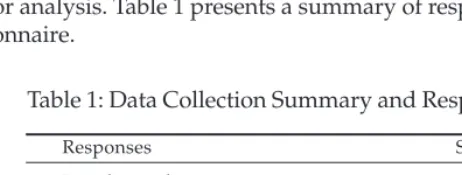
A total of 623 questionnaires were returned, however, only 369 could be used for analysis. Table 1 presents a summary of responses to the survey questionnaire.
Table 1: Data Collection Summary and Response Rate
Responses Statistics
Initial sample size 1000
Non-returned 377
Number of forms received 623
Response rate 62 %
Incomplete forms 254
Number of useable forms 369
Gross response rate 59.22 %
62 per cent (268 useable / 427 received). Based on this short review, the response rate for the present study is considered satisfactory.
3.2 Demographic Profile of Respondents
The respondents’ profile in the current study reveals that 81.8 per cent of the respondents are males. This is normally the case in a specified non-western context such as Yemen and it might be inferred that banks’ financial services in this country are mainly used by men rather than women. The majority of the respondents have Yemeni citizenship (94.9 per cent) and reside in the city of Sana’a (78.6 per cent). The majority of them are married with children (61.8 per cent), and more than half of them have a bachelor degree (55.0 per cent), 39.8 per cent and 36.3 per cent of the respondents are in their thirties and twenties respectively. Those with an average monthly income of Y.R 60001 to 120000 represent 37.9 per cent of the total. Almost 41.7 per cent of the respondents live in their own houses and the majority of them are employed in three business areas; namely, banking and finance (34.4 per cent), trading (26.8 per cent) and services (22.5 per cent).
4. Analysis
The SPSS program and multivariate techniques of factor analysis in the shape of Principle Component Analysis are employed to test both convergent and discriminate validity of the measurements. Factor analysis is an interdependence technique and the primary purpose of using it, according to Hair et al. (2006) and Zikmund (2003), is to define the underlying structure among the variables in the analysis. The aims that this study seeks to achieve from the factor analysis technique are: first, to analyse the scale items of each construct and verify their discriminant validity. According to Davis (1989), discriminant validity is concerned with the ability of a measurement item to differentiate between the objects being measured; second, to reduce the large number of interrelated variables to a smaller number of underlying factors that ensure the construct validity; third, to explain the relationship between the constructs and the variables measuring them; and fourth, to identify a smaller set of salient variables for use in subsequent multivariate analysis (Malhotra, 2004).
4.1 Factor Analysis of IB Norms
construct, the extraction method of Principal Component Analysis (PCA) with Varimax rotation was conducted to summariseand determine whether items measuring personal norms can discriminate items measuring media norms as well as the motive to comply with both norms. The result of the analysis indicates that:
I. Respondents involved in this study distinguished the variation among the three dimensions of normative beliefs whereby these findings are found to be moderately in line with the TPB classification of normative belief.
II. The assessment of the normative belief construct, according to the respondents, seemed to be through three dimensions; belief in personal norm, belief in the media norm and the motivation to comply with both beliefs.
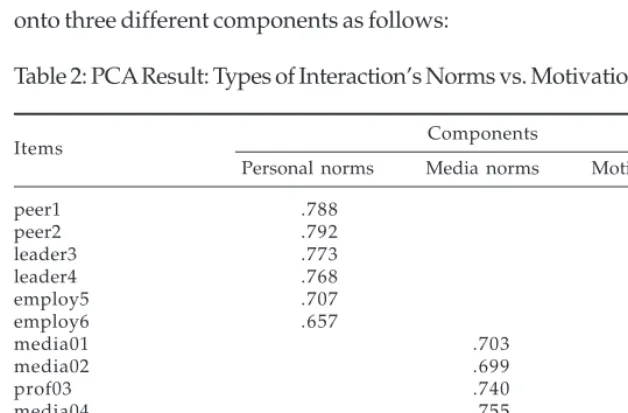
The findings also show that PCA is significantly appropriate with a Kaiser-Meyer-Olkin Measure (KMO) of the sampling adequacy of 0.902. Table 2 shows the items used to measure normative belief and their loading onto three different components as follows:
Table 2: PCA Result: Types of Interaction’s Norms vs. Motivation to Comply
Components Items
Personal norms Media norms Motive to comply
peer1 .788
peer2 .792
leader3 .773
leader4 .768
employ5 .707
employ6 .657
media01 .703
media02 .699
prof03 .740
media04 .755
mcpc1,2 .613
mcpc3,4 .667
mcpc5,6 .721
mcmm124 .714
Eigenvalue 7.221 1.537 1.146
Variance explained 48.137 10.243 7.641
Cronbach’s Alpha .907 .782 .740
Notes: (a) Total Variance Extracted by three factors 66.220 %; KMO = 0.902; Barlett’s Test <0.001 (b) Extraction Method: Principal Component Analysis
Table 2 presents the results obtained from conducting PCA and it shows that there are three factors underlying the normative belief obtained from the 14 items. Interestingly, all items expected to handle the personal belief norms are grouped under the first factor with an eigenvalue of 7.2 and can explain the variance of 48.137 per cent, while the items expected to handle media belief norms are grouped together under the second factor, which can explain 10.243 per cent of the variance. The third factor comprises the items which handle a respondent’s motivation to comply with both personal and media norms.
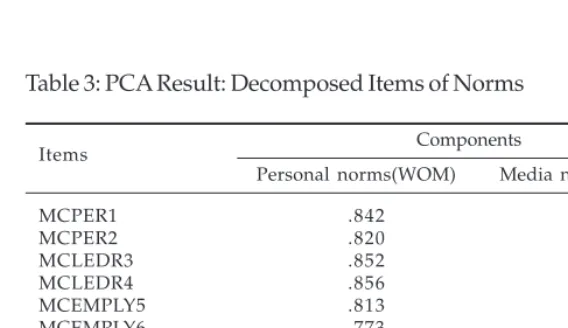
A total of 10 (Appendix 1B) decomposed items of personal norms and media norms were subjected to the Principle Component Analysis (PCA) inspection of the Kaiser-Meyer-Olkin (KMO) value which was 0.878 showing that sampling adequacy for factor analysis was appropriate. The Barlett’s Test of Sphericity also reached statistical significance, supporting the factorability of the correlation matrix. Factor analysis of PCA was conducted on the items after the process of multiplying each belief item by each motive item to get the decomposed output of the normative belief (Table 3). The result of the analysis indicates that:
i. Respondents involved in the study sample distinguished the
variation between the two dimensions of normative beliefs that are in line with Rogers’ (1995) two types of communication channel.
ii. The assessment of the normative belief construct according to the respondents, seemed to be measured through two dimensions; personal normative belief and media normative beliefs.
Table 3: PCA Result: Decomposed Items of Norms
Components Items
Personal norms(WOM) Media norms(MM)
MCPER1 .842
MCPER2 .820
MCLEDR3 .852
MCLEDR4 .856
MCEMPLY5 .813
MCEMPLY6 .773
MCMEDIA1 .875
MCMEDIA2 .877
MCPRFS3 .674
MCMEDIA3 .873
Eigenvalue 6.161 1.464
Variance explained 61.606 14.637
Cronbach’s Alpha .936 .863
Notes: (a) Total Variance Extracted by the two factors 76%; KMO = 0. 878; Barlett’s Test <0.001 (b) Extraction Method: Principal Component Analysis
(c) Rotation Method: Varimax with Kaiser Normalization
Figure 1: Regression Analysis of Normative Belief Model
Notes: *P<0.05 **P<0.001 ***R2
Numbers in parenthesis indicate zero-order correlation, other numbers are path coefficient.
Relationship met the Generalizability J
The Varimax rotation solution revealed that both components demonstrated a number of strong loadings with all variables loading substantially on only one component. The interpretation of the two components is consistent with the previous research of Rogers (1995).
4.2 Path Analysis Using Ordinary Least Square
Path analysis, according to Bryman and Cramer (2001), is an extension of multiple regression procedures. It was developed as a method for studying the direct and indirect effects of variables hypothesised as causes of variables treated as effects (Pedhazur, 1997). Path analysis and path coefficient are among the oldest terms in causal analysis where standardised β's are usually employed as estimates of causal effects (Cohen & Cohen, 1983).
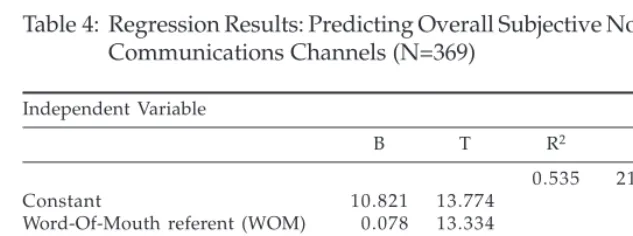
Table 4 shows the result of stepwise regression applied to SN as a criterion variable and a person’s personal and media interaction norms as independent variables. The findings show that both referents are significant in explaining 53 per cent of a person’s IB-use subjective norm.
Table 4: Regression Results: Predicting Overall Subjective Norms by Both Communications Channels (N=369)
Independent Variable
B T R2 F P
0.535 210.169 0.000
Constant 10.821 13.774 0.000
Word-Of-Mouth referent (WOM) 00.078 13.334 0.000
Media Mass referent (MM) 00.047 04.396 0.000
Summary Table
Model R R2 Adj. R2 F P
1 0.714 0.510 0.509 381.947 0.000
2 0.731 0.535 0.532 210.169 0.000
Note: Dependent variable is subjective norms
Furthermore, the result provides the following regression equations presented as follows:
(1) SN = 12.126 + 0.093 (WOM) + e
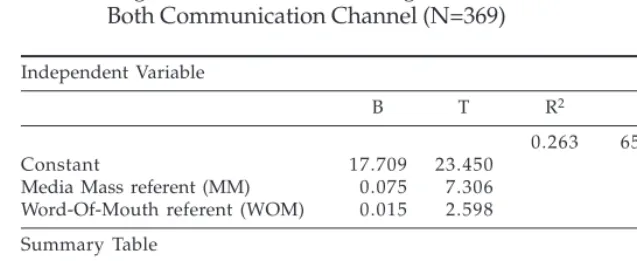
The findings (Table 5) also show that both referents are significant in explaining 26% of a person’s BI to use IB.
Table 5: Regression Results: Predicting Overall Behavioural Intention by Both Communication Channel (N=369)
Independent Variable
B T R2 F P
0.263 65.149 0.000
Constant 17.709 23.450 0.000
Media Mass referent (MM) 00.075 07.306 0.000
Word-Of-Mouth referent (WOM) 00.015 02.598 0.010 Summary Table
Model R R2 Adj. R2 F P
1 0.499 0.249 0.247 121.646 0.000
2 0.512 0.263 0.259 006.748 0.010
Note: Dependent variable is Behavioural Intention
Consequently, the result provides the following regression equations presented as follows:
(3) BI = 18.503 + 0.092 (MM) + e
(4) BI = 17.709 + 0.075 (MM) + 0.015 (WOM) + e
When SN and BI were treated as dependent variables and regressed separately against the WOM and Mass Media, the relationships as shown earlier in Figure 1 were obtained.
5. Discussion
The assessment of relationships of variables involved in the SN model and findings presented revealed that there is a positive and significant relationship between personal norms and both SN (r= .714) and BI (r=.394,) at the p < 0.01 level. In addition, a positive and significant relationship was found between an individual’s SN (r=.56, at the p < 0.01 level) and BI (r=.50, at the p < 0.01 level) interaction with their referents by means of Mass Media (MM) interaction. Moreover, the findings on SN determinants explain that both the variables of personal norms (WOM), and media norms (MM) together can explain 54 per cent of the variations of an individual’s SN with respect to IB-use. Furthermore, F-values indicate that the model obtained is highly significant in explaining normative belief. In addition, in the formative model of (Normative BeliefJSN) it was noted that word-of-mouth (β= 0.60, significant at P<0.001) is the best and most significant predictor of the SN because it can explain 51 per cent of the variance in the criterion variable on its own.
In contrast, the findings obtained by the formative model of (NormativeJBI) revealed that MM (β= 0.41, significant at P<0.001) is the best and most significant predictor of BI. The word-of-mouth (WOM) and Mass Media (MM) met the criteria of generalisability, therefore, both variables could be considered as prominent and important variables which contribute in a formative manner to an individual’s SN and BI. In addition, findings on the norms referred to as the “mass media norm” provide evidence of its role in forming the direct norms towards the use of IB. Although, the “mass media norm”, when compared to the norms of personal interaction, contributes less power in explaining SN, the finding is still valuable for this study and may form a very important focus in future research.
6. Conclusion
The significance of this current study represents two distinct areas for possible contribution to the body of knowledge. The first contribution is on the understanding of Internet banking adoption by giving insight on the role of both normative beliefs components (Word-of-Mouth and Mass Media) and subjective norm in explaining the behaviour of individuals. The researchers noted that, earlier studies of IB acceptance were concerned about the social effect in modelling behaviour, and did not take a holistic view of the different influencers.
The second contribution of this study is in providing new insights on the characteristics of subjective norms. Previous studies of innovation adoption, which sought to study the effect of the social norm on human behaviour, specifically study which employed TRA and TPB focused on one type of referents which is personal referents or word-of-mouth. In this study, the researchers have empirically proven that normative belief is made up of two components by adding the mass media as new referents component. Therefore, this study contributes to the body of knowledge by shedding light on the components of normative belief and their relative importance in studying human behaviour for innovation acceptance. Moreover, this study shows how important these two components are in explaining an individual’s subjective norms.
References
Aggarwal, P., Cha, T., & Wilemon, D. (1998). Barriers to the adoption of really-new products and the role of surrogate buyers. Journal of Consumer Marketing, 15(4), 358-371.
Ajzen, I., & Fishbein, M. (1980). Understanding attitudes and predicting social behaviour. Englewood Cliffs, NJ: Prentice-Hall, Inc.
Al-Ashban, A.A., & Burney, M.A. (2001). Customer adoption of tele-banking technology: The case of Saudi Arabia. International Journal of Bank Marketing, 19(5), 191-201.
Al-Sabbagh, I., & Molla, A. (2004). Adoption and use of internet banking in the sultanate of Oman: An exploratory study. Journal of Internet Banking and Commerce, 9 (2). Retrieved on 30 December 2009, from http:// www.arraydev.com/commerce/JIBC/0406-07.asp
Awamleh, R., & Fernandes, C. (2005). Internet banking: An empirical investigation into the extent of adoption by banks and the determinants of customer satisfaction in the United Arab Emirates.
Journal of Internet Banking and Commerce, 10(1), retrieved on 1 June 2010, from http://www.arraydev.com/commerce/JIBC/2005-02/ raedcedwyn1.HTM
Battacherjee, A. (2000). Acceptance of e-commerce services: The case of electronic brokerages. IEEE Transactions on Systems, Man and Cybernetics – Part A: Systems and Humans, 30(4), 411-420.
Bearden, W.O., Calcich, S.E., Netemeyer, R., & Teel, J.E. (1986). An exploratory investigation of consumer innovativeness and interpersonal influences. Advances in Consumer Research, 13(1), 77-82.
Brown, I., Hoppe, R., Mugera, P., Newman, P., & Stander, A. (2004). The impact of national environment on the adoption of internet banking: Comparing Singapore and South Africa. Journal of Global Information Management, 12(2), 1 26.
Bryman, A., & Cramer, D. (2001). Quantitative data analysis with SPSS release 10 for windows: A guide for social Scientists. Philadelphia: Routledge: Taylor & Francis Group.
Burnkrant, R.E., & Cousineau, A. (1975). Informational and normative social influence in buyer behaviour. Journal of Consumer Research, 2(3), 206-215.
Catell, R.B. (1966). The scree test for number of factors. Multivariate behavioural research, 1, 245-276.
Cohen, J., & Cohen, P. (1983). Applied multiple regression/correlation analysis for the behavioural sciences (2nd ed.). NJ: Lawrence Erlbaum Associates.
ComScore World Media Metrix (2008). Retrieved on 1 June 2010, from http://www.comscore.com/Press_Events/Press_Releases/2008/ 10/Online_Banking_in France/(language)/eng-US
Davis, F.D. (1989). Perceived usefulness, perceived ease of use, and user acceptance of information technology. MIS Quarterly, 13(3), 319–339. Davis, F.D., Bagozzi, R.P., & Warshaw, P.R. (1989). User acceptance of computer technology: A comparison of two theoretical models.
Management Science, 35(8), 982-1003.
Fishbein, M., & Ajzen, I. (1975). Belief, attitude, intention and behavior: An introduction to theory and research. Addison-Wesley, USA. Retrieved on 29 December 2009, from http://www.people.umass.edu/aizen/ f&a1975.html
Gerrard, P., & Cunningham, J.B. (2003). The diffusion of Internet banking
among Singapore consumers, The International Journal of Bank
Marketing, 21(1), 16-28.
doi: 10.1108/02652320310457776
Hair, J.F., Black, W.C., Babin, B.J., Anderson, R.E., & Tatham, R.L. (2006).
Multivariate data analysis (6th ed.). Upper Saddle River, NJ: Prentice
Hall International.
Howcroft, B., Hamilton, R., & Hewer, P. (2002). Consumer attitude and the usage and adoption of home-based banking in the United Kingdom.
International Journal of Bank Marketing,20(3), 111-121.
Karahanna, E., Straub, D.W., & Chervany, N.L. (1999). Information technology adoption across time: A cross-sectional comparison of pre-adoption and post-adoption beliefs. MIS Quarterly, 23(2), 183-213.
Kelman, H.C. (1961). Process of opinion change. Public Opinion Quarterly,
25(1), 57-78.
Khalfan, A., & Alshawaf, A. (2004). Adoption and implementation problems of e-banking: A study of the managerial perspective of the banking industry in Oman. Journal of Global Information Technology Management,
7(1), 47-64.
Lai, V.S.L., & Li, H.L. (2005). Technology acceptance model for internet banking: An invariance analysis. Information & Management, 42(2), 373–386.
Liao, S., Yuan, P.S., Huaiqing, W., & Ada, C. (1999). The adoption of virtual banking: An empirical study. International Journal of Information Management, 19(1), 63-74.
Luarn, P., & Lin, H. (2005). Toward an understanding of the behavioural intention to use mobile banking. Computers in Human Behaviour, 21(6), 873-891.
doi:10.1016/j.chb.2004.03.003
Malhotra, N.K. (2004). Marketing research: An applied orientation (4th ed.).
Upper Saddle River, NJ: Pearson Prentice Hall.
Mathieson, K. (1991). Predicting user intention: Comparing the technology acceptance model with the theory of planned behaviour. Information Systems Research, 2(3), 173-191.
Mattila, M., Karjaluoto, H., & Pento, T. (2003). Internet banking adoption among mature customers: Early majority or laggards. Journal of Services Marketing, 17(5), 514-528.
doi: 10.1108/08876040310486294
Pedersen, P.E. (2005). Adoption of mobile internet services: An exploratory study of mobile commerce early adopters. Journal of Organizational Computing & Electronic Commerce, 15(3), 203-222.
Pedhazur, E.J. (1997). Multiple regression in behavioral research: Explanation and prediction (3rd ed.). Florida: Thomson Learning.
Pikkarainen, T., Pikkarainen, K., Karjaluoto, H., & Pahnila, S. (2004). Consumer acceptance of online banking: An extension of the technology acceptance model. Internet Research, 14(3), 224-235. doi: 10.1108/10662240410542652
Polatoglu, V. N., & Ekin, S. (2001). An empirical investigation of the Turkish consumers’ acceptance of Internet banking services. The International Journal of Bank Marketing, 19(4), 156-165.
Rogers, E.M. (1995). Diffusion of innovations. NY, London: Collier Macmillan. Sathye, M. (1999). Adoption of internet banking by Australian consumers: An empirical investigation. The International Journal of Bank Marketing,
17(7), 324-334.
Shih, Y., & Fang, K. (2004). The use of a decomposed theory of planned behavior to study internet banking in Taiwan. Internet Research, 14(3), 213-223.
Taylor, S., & Todd, P.A. (1995a). Understanding information technology usage: A test of competing model. Information Systems Research, 6(2), 144-176.
Venkatesh, V., & Davis, F.D. (2000). A theoretical extension of the technology acceptance model: Four longitudinal field studies. Management Science,
45(2), 186-204.
Warshaw, P.R. (1980). A new model for predicting behavioral intentions: An alternative to Fishbein. Journal of Marketing Research, 17(2), 153-172.
Yavas, U., Luqmani, M., & Quraeshi, Z. (1992). Facilitating the adoption of information technology in a developing country. Information & Management, 23(2), 75-82.
Zikmund, W.G. (2003). Business research methods (7th ed.). Ohio: South
Appendix 1A
Questionnaire Items (7-Point Likert Scale)
Coding of Items and Constructs of the Normative Belief of IB
Constructs Coding Items Items’ Statements Coding
Personal Norms peer1 Peers/colleagues think I should use IB
PR peer2 Peers/colleagues think I should try out
IB
leader3 Opinion leaders think I should use IB leader4 Opinion leaders think I should try out
IB
employ5 Bank’s employees think I should use IB
employ6 Bank’s employees think I should try out IB
Mass Media Norms media01 Media suggests using IB is good idea
MM media02 Media consistently recommend using
IB services
prof03 For my profession, it is advisable to use Internet Banking services
media04 I read /saw news reports that using IB is a good way of managing my bank account.
Motive to Comply mcpc1,2 I will do what peers suggest I do
MC mcpc3,4 I will do what leaders suggest I do
mcpc5,6 I will do what bank’s people suggest I do
Appendix 1B
Questionnaire Items (7-Point Likert Scale)
Coding of Items and Constructs of Normative Belief of IB (weighted belief)
Items
Constructs Coding Coding Items’ Statements *axb = 47
Word-of-Mouth (MCPER1) Peers /colleagues think I should use IB (Personal referent) and I will do what peer/colleagues
suggest I do.
MCPER2 Peers/colleagues think I should try out IB and I will do what peer/colleagues suggest I do.
MCLEDR3 Opinion leaders think I should use IB and I will do what leaders suggest I do. MCLEDR4 Opinion leaders think I should try out IB and I will do what leaders suggest I do.
MCEMPLY5 Bank’s employees think I should use IB and I will do what bank’s people suggest I do.
MCEMPLY6 Bank’s employees think I should try out IB and I will do what bank’s people suggest I do.
Media Norms MCMEDIA1 Media suggests using IB is good idea
MM and I will do what the media suggest.
MCMEDIA2 Media consistently recommend using IB services and I will do what the media suggest.
MCPRFS3 For my profession, it is advisable to use Internet Banking services and I will do what it suggests.
MCMEDIA3 I read /saw news reports that using IB is a good way of managing my bank account and I will do what this media suggest.