Empowering the South African community's
AIDS intervention workforce:
an informetric study of HIV/AIDS research projects, with special reference
to masters and doctoral dissertations
and theses
By Omwoyo Bosire Onyancha
IDepartment of Library and Information Science
University of Zululand, Private Bag X I 00 I, KwaDlangezwa 3886 South Africa
b_
[email protected]
Received 14thJanuary 2006 Accepted 1stFebruary 2006
The prevalence rate of HIV in South Africa has maintained an alarmingly high level and has become a great concern for all stakeholders. The situation has demanded an increase in the number and strengthening of the HIV/AIDS intervention workforce to fight the pandemic. This has resulted in many individuals enrollingto undergo training in institutions of higher learning and the aftermath has been an increased number of graduates conducting research onvarious aspects of the disease. The purpose of this study is to generally assess the role that is being played by various institutions of higher leaning in South Africa in graduate preparedness as a means of empowering the country's HIV/AIDS intervention workforce. Using publication count, the study analyses research publications found indexed in SABINET's Current and Completed Research and the Union Catalog of Theses and Dissertations databases. Results are presented under the headings: empowerment trends: language of empowerment; institutions behind the empowerment: individuals behind the empowerment: "study leaders" and students; information sources for empowerment; purposes for which candidates were prepared (or empowered): and the areas/sectors of empowerment. Conclusions and recommendations as well as suggestions for further research are provided.
Keywords: HIV, Acquired Immunodetlciency Syndrome, Infonnetrics, South Africa, Empowerment
I INTRODUCTION
In the business circles, the term empowerment refers to a condition whereby employees have the authority to make decisions and take action in their work placeswithout prior approval
(www.asq.org/info/glossary/e.htm/)
while to empower a community means to increase its ability to do things for itself, resulting to more skills, more confidence, and more effective organization on the part of the empowered community. Health professionals, on the other hand, define empowerment as a process of adding vitality, energy, and new powerful resources to a person(www.neurosemantics.com/
Articles/Glossary.htm).
When these three definitions are put together, empowering a community and its labor force will mean enabling it to do things for itself through the allocation of financial resources, training of professionals in various fields of knowledge as well as the provision of relevant information that can aid in informed decision-making thereby enhancing a community's vitality, energy and human resources.Worldwide, universities are recognized for their role in human resources development. Countries all over the world do recognize the importance and role of universities and other institutions of higher learning such as diploma and certificate colleges in the promotion of research, training and community outreach and, in the process, have put in place mechanisms to improve research in various disciplines, including biomedicine. Policies have been formulated in countries such as South Africa in order to encourage as well as strengthen research in such areas as HIV/AIDS. For instance, in South Africa, the Ministry of Education - the government arm that is mandated to lead the education sector's strategic response to HIV/AIDS and to continually refine the response on the basis of emerging evidence, among other responsibilities - is required to:
• Develop appropriate policies and legislative frameworks to respond to HIV/AIDS across all levels of the system. • Provide the required technical input into the planningfor the Education system in the context of HIV/AIDS, at National
and Provincial levels.
• Facilitate research and collection of Education-specific data on HIV/AIDS in order to inform Departmental responses. • Coordinate the Department's collaborative activities across other Government Departments and all sub sectors. • Communicate the Education Responseto the public and lead the Education Campaign against HIV/AIDS.
• Monitor the implementation of the HIV/AIDS program and feed lessonsinto re-programming (Republic of South Africa. Ministry of Education, 2005)
I. The writer is a PhD student at the University of Zululand and an Assistant Librarian at the University of Eastern Africa, Baraton, P.O. Box 2500, ELDORET - KENYA.
Generally, it can be assumed that South Africa boasts one of the largest and well-developed education networks, especially in tertiary education, in Sub-Saharan Africa. The country, which is internationally highly rated in terms of research productivity and impact in relation to other African countries (Ocholla, 2000; He, 200 I; Narvaez-Berthelemot, Russell, Waast
&
Gaillard, 200 I), has 21 higher education institutions, consisting of I I universities, 6 technikons (now Universities/Institutions of Technology) and 4 comprehensive institutions (Republic of South Africa, Ministry of Education, 2002).Concerning HIV/AIDS intervention programs, it has been observed that institutions of higher learning in South Africa have designed programs to effectively respond to the "challenges of the disease by incorporating HIV/AIDS into the curriculum ... to promote more flexible graduate preparedness" (Dube
&
Ocholla, 2005: 198). In so doing, these institutions continually inject "new blood" into the South African community of workers, thereby, adding "vitality" and "energy" into the entire community in the fight against HIV/AIDS. Hence, the thrust of this work lies in examining how these and other institutions in South Africa have helped to reinforce the South African HIV/AIDS workforce and the entire citizenry, particularly in the preparation of graduate students.2 BACKGROUND
AND PROBLEM STATEMENT
It is approximately 25 years since HIV/AIDS was clinically diagnosed in Los Angeles, USA (Begley, Check, Wingert
&
Conway, 200 I; Konforti, 200 I; National Institute of Allergy and Infectious Diseases [NIAID], 2003). Since then, the disease has devastatingly spread to all corners of the world killing millions of people while leaving many children orphans and nowhere is its impact most felt as in southern Africa. HIV prevalence has continued to maintain alarmingly high levels in the general population across southern Africa (UNAIDS, 2003). UNAIDS further estimates that about 30% of people living with HIV/AIDS worldwide live in southern Africa, yet this region has less than 2% of the world's population. Currently, South Africa is ranked the fifth in the top 15 HIV prevalence countries in Africa (UNAIDS, 2004) with a prevalence rate of 21.5% behind Swaziland (38.8%), Botswana (37.3%), Lesotho (28.9%), and Zimbabwe (24.6%). In fact, it has one of the fastest-growing infection rates in the world (MacGregor 200 I, UNAIDS 2000,
&
UNESCO 2003 in Dube&
Ocholla, 2005).It is projected that by the end of this year (i.e. 2005), almost 250000 South Africans would have died from AIDS and that this figure will rise to half a million people by 2008 while the average life expectance is expected to fall from about 60 years to around 40 years between 1998 and 2008 (AIDS Foundation of South Africa, 2003). Impact-wise, the Foundation observes that within that time frame, H IV/AI OS will pose significant economic costs, slowing the economic growth (Gross Domestic Product - GOP) rate by I
%
per annum; HIV/AIDS care will become a substantial part of health care spending; education will be affected by the staff becoming infected; social and political instability will increase; and the pandemic will produce large numbers of orphaned children (approximately a million children under 15 years by the end of 2005).HIV/AIDS research has proliferated in the recent past and in the process, has attracted several researchers with no particular bias to any discipline. Evaluating and monitoring HIV/AIDS research, therefore, becomes a top priority especially considering that institutions have continued to spend so much money in funding these research activities. The Developed Countries (DCs) have made a great deal of developmental strides in that direction unlike Less Developed Countries (LDCs). For instance, several evaluative studies, using informetric approaches, have been conducted in the DCs in order to find out the most prolific researchers in HIV/AIDS (The Scientist, 1996), the growth of literature (Pratt, 1992; Mackenzie, 2000; Huber, Gillaspy
&
Fogel, 2000), and the publishing trend in the subject sub-fields (Bierbaum, 1995), just to mention a few. The LDCs are lagging behind as far as these evaluative studies are concerned with very little research being conducted, e.g. Latin America (Macias-Chapula, 2000; Macias-Chapula, Sotolongo-Aguilar & Solorio-Lagunas, 1999) and Sub-Saharan Africa, e.g. Central Africa (Macias-Chapula, C. A.&
Mijangos-Nolasco, A. 2002) and Kenya and Uganda (Onyancha&
Ocholla, 2004). These studies' focus, however, has been on HIV/AIDS research as it is published in books, conference proceedings, and journal articles. So far, according to own knowledge, no informetric study has been carried out on unpublished sources of HIV/AIDS information, using data from dissertations and theses, in Sub-Saharan Africa. However, an analysis of these sources of information was conducted by Ocholla (2000) with the aim of providing an awareness of the overall research potential and capacity in Library and Information Science in South Africa and, particularly, the potential of institutions in the country. The study was broad and did not address HIV/AIDS in particular.3 PURPOSE AND RESEARCH QUESTIONS
The purpose of this work is two-fold:I. The study presents preliminary findings of an informetric analysis of HIV/AIDS literature in eastern and southern Africa as reflected and indexed in renowned bibliographic databases.
2. The study also seeks to demonstrate the use of informetrics in evaluating HIV/AIDS research intervention programs at institutions of higher learning. In its audit of the HIV/AIDS intervention programs in the South African institutions of higher learning, the South African Universities Vice-Chancellors Association noted that, " ... the audit was unable to obtain detailed, quantitative information becauseof time constraints and limited availability of information from the institutions' heads of research. Moreover, the audit demonstrates that research outputs are difficult to track becauseof large number of departments in each HEI, and research may also be linked to contract services supplied by units based at HEls that are not linked to teaching" (The South African Universities Vice-Chancellors Association, Higher Education HIV/AIDS Programme, 2004:xii).
Specifically,this work analyzes HIV/AIDS research reflected in masters and doctoral theses and dissertations as well as other research publications in South African institutions in order to study how the universities, in particular, and other institutions, in general, in South Africa have helped to empower the South African community's HIV/AIDS workforce in the AIDS war. The study endeavors to identify the following: empowerment trends; language(s)of empowerment; institutions behind the empowerment; individuals behind the empowerment: "study leaders" and students; information sources for empowerment; purposes for which candidates were prepared (or empowered); and areas/sectors of empowerment.
4 METHODS AND MATERIALS
Informetrics is defined in Diodato (1994:ix) as methodologies that examine "patterns that show up not only in publications but also in many aspects of life, as long as the patterns deal with information". Hood & Wilson (200 I :294) observe that the term "comes from the German term 'informetrie' and was first proposed in 1979 by Nacke to cover that part of information science dealing with the measurement of information phenomena and the application of mathematical methods to the discipline's problems, to bibliometrics and parts of information retrieval theory, and perhaps more widely". The importance of bibliometrics/informetrics methods as tools for evaluating scientific impact is well stipulated by Moed (2002:731), thus:
Bibliometric/[informetric]
indicators provide useful supplementary
tools in the evaluation
of
academic research.
provided that they have
asufficiently high level
ofsophistication ... Their application can stimulate useful discussion
among scientists and research managers about publication strategies and research directions; help peer-reviewers
tomake quality judgments; and enable policy officials and science administrators to raise critical questions about many
aspects
of
scientific activity and to provide insight for policy (funding) decisions.
Informetrics consists of several methodologies such as bibliographic coupling, citation analysis, publication count, co-word analysis, co-citation analysisand webometrics/cybermetrics (Turnbull, 2000); Sternberg, 1995; Ungern-Sternberg, 2000). These evaluative/analyticaltechniques can be grouped into two broad areas, namely, descriptive or evaluative informetric res~arch methodologies (Nicholas & Ritchie, 1978; Hertzel, 1987). Descriptive studies (sometimes called productivity count studies) describe "the characteristics or features of a literature" while evaluative studies (called behavioral studies or sometimes known as citation studies, though not necessarily restricted to these) "examine the relationship formed between components of a literature" (Nicholas & Ritchie, 1978:10). Considering the type of data collected, this study adopted the use of publication count and analysisapproach to examine research productivity in institutions of higher learning in South Africa as reflected in two
South African Bibliographic Network
(SABINET) databases.The Current and Completed Research(C&CR) databasecontains South African research projects covering the social sciences,humanities, economic and management sciences.The databaseincludes masters and doctoral theses of South African universities, and technikons as well as information on research projects from non-governmental organizations, private sector and government departments. The database, which is updated monthly, covers research projects undertaken since 1950. On the other hand the Union Catalog of Theses and Dissertations (UCTD) - updated annually-is produced by the North-West University (formerly Potchefstroom University for Higher Education) and contains bibliographic records of theses and dissertations at master and doctorate level submitted to universities in South Africa since 1918. Honorary doctorates are also included.
A combination of several search terms/phrases (i.e. AIDS, ACQUIRED IMMUNODEFICIENCY SYNDROME,
ACQUIRED IMMUNE DEFICIENCY SYNDROME, ACQUIRED IMMUNO-DEFICIENCY SYNDROME, HUMAN
IMMUNODEFICIENCY VIRUS, HUMAN IMMUNE DEFICIENCY VIRUS, and HIV) was used to search for relevant records within the "Keywords" and "Subject" fields, accordingly. The retrieved records were then saved in HTML format. The records were thereafter cleaned of any duplicates and edited using Microsoft Word (@2000). Bibexcel, a toolbox that was developed by Olle Persson of Inforsk, Umea University, Sweden, was used to generate frequencies. Basically,the software is designedto assista user in analyzingbibliographic data, or any data of a textual nature formatted in a similar manner. It is meant to generate data files that can be imported to Excel, or any program that takes tabbed data
records, for further processing. The toolbox can be downloaded from
http://www.umu.se/injorsk/Bibexcel/.
Finally,data
was exported to Microsoft Excel (@2000), which assisted in the cleaning of data by removing HTML (mark-up) tags and
the presentation of data in graphs and tables.
A total of 105 records in the Union Catalog of Theses and Dissertations (UCTD) and 895 research projects from the
Current and Completed
Research (C&CR) were retrieved and downloaded. After the cleaning and editing of the
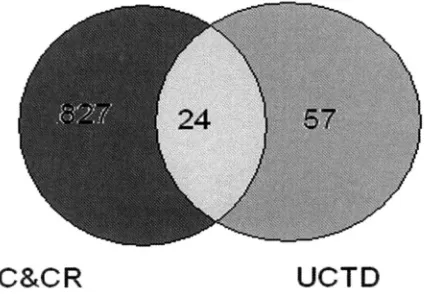
downloaded data, a total of 902 records were obtained and analyzed as shown in Fig. I.
C&CR
UCTD
Figure 1 Total number of records retrieved for analysis distributed by database
Of the total 902 records analyzed, C&CR yielded 85 I and UCTD produced 5 I. Twenty four titles were indexed in both
databases. There were 827 and 57 unique records indexed in C&CR and UCTD, respectively. Coverage overlap was 24
unique items resulting in coverage overlap ratio of 0.03.
Using descriptive informetrics, the study employed several analytical approaches
to analyze and present the
downloaded data. These approaches include:
I. A distribution of records by the institutions in order to determine the institutions behind the empowerment
of the South African AIDS workforce and the most prolific of these institutions.
2. A distribution of the records by the participating "study leaders" so as to identify and measure the
productivity of individuals behind the preparation of the graduates.
3. An analysis of the trend of productivity by year of commencement,
completion and publication of the
research projects in order to study the empowerment trends.
4. A study of the language of publication in order to identify the most commonly used language of
communicating research findings as well as the most commonly used language of empowerment.
5. An assessment of the main subject headings in order to check for interdisciplinary approaches to HIV/AIDS
research.
6. An analysis of the academic purpose and professional attainment so as to identify the sectors that are being
empowered and the professionalism of the candidates.
7. A study of the document types in order to examine the sources of information for empowerment.
5 RESULTS AND DISCUSSION
Results are presented in seven sub-headings as follows:
• Empowerment trends
• Language of empowerment
• Institutions behind the empowerment
• Individuals behind the empowerment: "study leaders" and students
• Information sources for empowerment
• Purposes for which candidates were prepared (or empowered)
• Areas/sectors of empowerment
5.1 Empowerment trends
In order to find out the trend of HIV/AIDSresearch and, consequently, the empowerment
trends of the South African
community, data were analyzed by the years that the research projects were began, completed and published. Of
particular emphasis, though, were the dates the projects were completed as this would indicate the years in which the
candidates graduated which in turn will indicate the period in which the community's workforce was re-energized. This
approach to analysis and argument assumes that whether the graduates were employed or not upon the completion of
their academic programs/projects, they nevertheless became HIV/AIDSintervention instruments in the community.
Oi=,!!!!9 .. I r
g
11986- 1988- 1990- 1992- '11994-I 1996- 1998- 2000- 2002-12004- I
I 1987 1989I 1991 1993 1995 I 1997 ' 1999 I 2001 I2003 2005
o
0 0: 3 0 > 0 . 1I
18r
72 112 5 23 I 49 49 59 57 I 97 1119' 3
4 J 6
_~~_L
48~22 ~ __~3.L!? _'
_1~~_l 173' 6Year of commencement/completion/publication
______
J
'0 Year FUblished
I
i.
Year corrpleted .LDye~r~orrrrenced l..
4001
350
~
...
3000 250
&l
...
.•..
2000
...
1l
150E
:J 100 .
Z
50 "
Figure 2 Total number of records by year of commencement, completion and publication
Results in Fig. 2 indicate that 219 projects were completed between 2000 and 2005 while the same period recorded 3 12
commenced projects. The 1990s yielded 237 and 238 completed and commenced projects. respectively and there were
only 7 completed and 10 registered projects between 1980-1989. It can be seen that much of the research activities were
centered around 2000 and 2003, which period recorded the highest number of current, ongoing and completed projects.
The number of research projects that were published before that period totaled 4 while 2000-2003 year-period
recorded a total of 101 publications.
Yea- PlJ:jished
1996- 1998- 20()(). 2002- 2Q04.. 1997 1999 2001 2003 2005
-- Yea- c.aTTrerC€d - Year carpleted
160
:L~-o
1986- 1988-1990-1987 1989 1991 140
120 100
Figure 3 Trends of productivity/empowerment
Fig 3 shows that the frequency with which the projects are being registered for commencement is always higher than that of completion and publication. It was also observed that the earliest projects to be conducted were two Masters Projects. Both were completed between 1986 and 1987 (one in each year). Assuming that the two projects that were completed by 1986 or 1987 were started two years backwards, it means that HIV/AIDS research in institutions of higher learning in South Africa began in the early eighties, i.e. 1984/5 or thereby. The time lapse between the diagnosis of the disease in 1981 and the commencement of research on HIV/AIDS (Le. 1984/5) was three to four years, which may have been caused by the traditional inhibitions and taboos that made many African people rarely discuss sexuality and more so about AIDS, at least openly. Intheir study of
Newspaper
coverage ofSARS,
Chan, jin, Rousseau, Vaughan & Yu (2003) also opine that "it is just human that the meaning of new phenomena is not immediately clear, and that it takes a whole process of understanding before the full significance of the new phenomena becomes clear".2CXlO/1
2001/2
2002/3
2003/4
25 April 2003
2004/5
2005/6
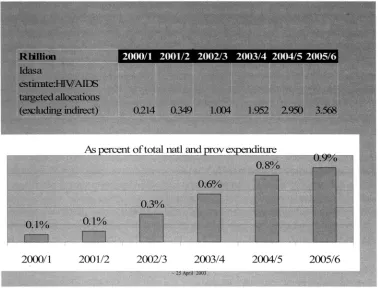
Figure 4 Funds set aside for HIV/AIDS interventions in national budget (Source: Hickey, 2003)
Generally, it can be observed that there has been an increase in the number of projects commenced and/or completed between 2000 and 2003 as shown in Fig 3, which provides a trend analysis of commencement, completion and publication of the research projects. A possible reason for such an increased interest on HIV/AIDS by researchers is the serious attention that the disease has lately generated from the government and foreign donors which has resulted in an increased funding that has been channeled to HIV/AIDS research. As shown in Fig. 4, South Africa has increasingly given attention to HIV/AIDS intervention programs. The amount of money allocated to HIV/AIDS intervention programs, for example, increased by RO.135 billion from RO.214 billion in 2000/200 I financial year to R0.319 billion in 2001/2002 financial year. The total expenditure on HIV/AIDS is expected to be R3.569 billion this financial year (Le. 2005/2006).
5.2 Language of Empowerment
Three languages, namely, Afrikaans, English, and Zulu were used to prepare the research projects. The results are as follows: Afrikaans (108), Afrikaans/English (I), English (765) and Zulu (I). It is interesting to note that despite the fact that IsiZulu is the most spoken home language in South Africa (Republic of South Africa, Department of Environmental Affairs and Tourism, 2003), it ranks third by recording the least number of records. The percentage distribution of home languages for the population of South Africa was estimated in 1994 to be as follows: isiZulu (22,4 %), isiXhosa (17,5 %), Afrikaans (15, I %), Sepedi (9,8 %), English (9, I %), Setswana (7,2 %), Sesotho (6,9 %), Xitsonga (4,2 %), siSwati (2,6 %), Tshivenda (1,7 %), isiNdebele (1,5 %), Afrikaans/English (0,2 %), and other non-official languages (1,8 %). Fig. 5 shows this distribution pattern.
7.2
1.8
0.2
1.5,
1.7 \
15.1
QIsiZUlu .Isi~a
o Afrikaans
oSepEdi
• Ergish
o SetSIll.6l1a
• Sesotho
o >4tsooga
• SiSvo.ati
• Tshi\€rda
o IsiN:lebele
o AfrikaansiErgiShj
I.Ohers
"---Figure 5 Distribution of home languages in South Africa (Source: Republic of South Africa, Department of Environmental Affairs and Tourism, 2003)
Ocholla (2000), too, noted an increase in the number of dissertations and theses prepared in Englishas opposed to those in other South African languages.He observed that English-basedprojects accounted for 80.28% while Afrikaans, which was on the decline, constituted 19.72%. The discrepancy can be attributed to the fact that Englishlanguage,which in this study was the most used languageof preparing the research projects, is the most common medium of communication and language of instruction in institutions of higher learning. Ocholla (2000) argues that "more South Africans seem to write theses and dissertations in English, perhaps because of its popularity with regard to publication and scientific communication". Secondly, HIV/AIDS is a topic that is rarely discussed in mother tongues due to its sexual orientation. Sex, for a long time in Africa, could not be discussedpublicly.
5.3 Institutions behind the empowerment
Academic institutions, which are in this case the universities in South Africa, do playa vital role in the fight againstAIDS. Not only are they involved in actual research to find the cure for AIDS but they are also engaged in the preparation of candidates who in turn will assist in educating and training the community on the dangers of the disease and the preventive measures that can be taken in the fight against the pandemic. This study analyzed the publications by the institutions behind HIV/AIDS research and found that the most prolific institution was the University of South Africa, which posted 140 records followed by the University of the Witswatersrand (123), RandAfrikaans University (108), and the University of Natal (106). The University of Pretoria ranked fifth with a total of 106 records while the University of Stellenbosch and Potchefstroom University of Christian Higher Education posted 80 and 62 records, respectively.
When categorized into two broad groups, notably the Historically Disadvantaged Institutions (HDI) and the Historically Advantaged Institutions (HAl), 9 out of the 10top-ranked institutions were in the latter category, i.e. (HAl) as shown in Table I. The data distribution has been done for individual institutions before the merger of universities and technikons, an activity that was going on at the time of capturing data. Technikons' visibility was noted with Port Elizabeth Technikon leading the group with 5 (0.53%) projects followed by Technikon Pretoria (2, 0.21%), Vaal Triangle Technikon (I, 0.1 1%) and Technikon South Africa is ranked number 20 with I project. Universities are therefore the leading producers of HIV/AIDS research projects most probably because research (both basic and applied) is commonly conducted at universities. Most universities require postgraduate masters and doctoral students to conduct research as one of the requirements for an award of the respective degrees.
Table I Distribution by Institution and Database
No. Rank Institution Status UCTD C&CR TOTAL 0/0
I I Univ. of South Africa HAl 5 135 140 14.57
2 2 Univ. of Wits HAl 123 123 12.80
3 3 Rand Afrikaans Univ. HAl 24 84 108 11.24
4 4 Univ. Of Natal HAl 106 106 11.03
5 5 Univ. of Pretoria HAl 19 61 80 8.32
6 6 Univ. of Stellenbosch HAl 19 43 62 6.45 7 7 Potchefstroom University for CHE HAl 3 45 48 4.99 8 8 Univ. of the Western Cape HDI 15 29 44 4.58
9 9 Univ. of Cape Town HAl 2 39 41 4.27
10 10 Univ. of Port Elizabeth HAl 7 33 40 4.16
II 10 Univ. of Zululand HDI 40 40 4.16
12 II University of the Orange Free State HAl 4 26 30 3.12 13 12 Univ. of Durban-Westville HDI 17 17 1.77 14 12 Medical Univ. of S.A HDI 17 17 1.77
15 13 Rhodes Univ. HAl 3 9 12 1.25
16 14 Univ. of the North-West HDI 7 7 0.73
17 14 Univ. of the North HDI 7 7 0.73
18 15 Univ. of Venda HDI 6 6 0.62
19 15 Human Sci. Research Council. n/a 6 6 0.62 20 16 Port Elizabeth Tecknikon HAl 5 5 0.52 21 17 Milpark Business School • n/a 4 4 0.42
22 18 Univ. of Transkei HDI 3 3 0.31
23 18 Medical Research Council. n/a 3 3 0.31
24 19 Vista Univ. HDI I 2 0.21
25 19 Tshwane University of Technology. n/a 2 2 0.21
26 19 Technikon Pretoria HAl 2 2 0.21
27 20 Vaal Triangle Technikon HDI I I 0.10
28 20 Univ. of Fort Hare HDI I I 0.10
29 20 Technikon SA HAl I I 0.10
30 20 South African law Commission. n/a I I 0.10
31 20 Foreign University. n/a I I 0.10
32 20 Durban Institute of Technology. n/a I I 0.10
TOTAL 102 859 961 100
.The classification used heretogroup the institutions into the two categories cannot be appliedto these institutions
5.4 Individuals behind the empowerment: "study leaders" and "students"
A total of 877 people participated in conducting HIV/AIDS research in South Africa between 1986 and 2004. These included the masters and doctorate students as well as individuals who conducted research for purposes other than qualification for an award of an academic degree.
Of particular interest to this study are the individuals who were behind the students' preparedness, otherwise known as supervisors or study leaders. Essentially, these persons are involved in all the stages of the research being conducted, right from the preparation of the research proposal to the compilation of the intended publication. In addition, they sometimes do influence the sponsorship of the research in terms of facilitating securing of grants and research funds. They can be said therefore to have fully participated in the actual research. In fact, they usually end up being co-authors of papers generated from such research activities (Ocholla, 2000). This study analyzed 416 records (in C&CR) that provided names of "study leaders". An integer (whole or complete) count approach was used to assign publications to individual "study leaders". Results indicate that there were a total of 364 study leaders as shown in Table 2 and Appendix I. Leading at the top of the two Tables is JPJTheron who has led, so far, in eight projects followed by AD Stuart, H Strydom and I Eloff who have each supervised as well as actively participated in 7 projects. Ranking 3rd and 4th in Table 2 are AA van Nierkark and HG Pretorius, each with 6 projects and E Kotze and JP Fouche who yielded 5 records each.
Table 2 Study Leaderswith two or more publications
Rank Name No. of projects Rank Name No. of projects Rank Name No. of projects
I Theron JPJ 8 6 Dorfling CS 3 7 Olivier MP 2
2 Stuart AD 7 6 DeWittMW 3 7 Nzimande 0 2
2 Strydom H 7 6 Alexander P 3 7 Noyoo N 2
2 Eloff I 7 7 Wolfraadt JA 2 7 Naude H 2
3 Van Niekerk AA 6 7 Willem-Belot PS 2 7 Morrell R 2
3 Pretorius HG 6 7 WillemP 2 7 Monama EN 2
4 Kotze E 5 7 Werner A 2 7 Mogotlane SM 2
4 FoucheJP 5 7 Ward ED 2 7 Manala MI 2
5 Potgieter EE 4 7 Vorster HH 2 7 Makhubela-Nkondo ON 2
6 Van Rensburg GH 3 7 Von der Marwitz J 2 7 Lubbe GJA 2
6 Van DykAC 3 7 Viljoen FJ 2 7 Louw B 2
6 van der Walt JA 3 7 Van Wyk C 2 7 Litheko SRS 2
6 Van der Wal DM 3 7 Van Rooyen C 2 7 Liebenberg A 2
6 Tomaselli KG 3 7 TshiwulaJL 2 7 Lawrence RB 2
6 Thornton RJ 3 7 Taute FM 2 7 Ichharam M 2
6 Samuel M 3 7 Sparks BLW 2 7 Hattingh SP 2
6 RouxJP 3 7 Spangenberg JJ 2 7 Groenewald PCN 2
6 Prinsloo E 3 7 Smit R 2 7 Greeff M 2
6 Pettifor J 3 7 SmitJA 2 7 Ganga-Limando M 2
6 Mendelow BV 3 7 Siopis PA 2 7 EbrahimAFM 2
6 Mavundla TR 3 7 Sibanda T 2 7 De Beer S 2
6 Maharaj P 3 7 Shefer T 2 7 Davel CJ 2
6 Lindegger G 3 7 Sekudu I 2 7 Cowling LJ 2
6 Kotze DJ 3 7 SchoemanJB 2 7 Chikte UME 2
6 King LJ 3 7 Schneider H 2 7 Carstens PA 2
6 JoubertJPR 3 7 RouxAA 2 7 Carbonatto CL 2
6 Herbst MS 3 7 Pienaar AJ 2 7 Botha NA 2
6 Ehlers VJ 3 7 Perold A 2 7 Botes AC 2
6 Du Plessis GE 3 7 Patel L 2 7 Asher A 2
6 Du Plessis E 3 7 Orr JP 2 7 Alberts UU 2
On overall, "study leaders" who produced two or more research projects numbered 90 while those with one project each totaled 274, meaning therefore that majority of the "study leaders" produced one publication (or candidate) each. It would be interesting to find out the reasons behind such a distribution by considering the participants' educational background, racial affiliation, occupation and even gender to find out if the disparity in their productivity is influenced or determined by any of these factors. According to O'Connor
&
Voos (1981) author productivity is a function of several influencing factors which can be grouped into two major conceptual areas, notably, an author's personal characteristics and the author's environment or situation. Personalcharacteristics would include such issuesas intelligence, achievement, personality and expectations while colleagues, availability of information, the problem under investigation and the author's field or discipline are environmental or situational factors that can causevariations in authors' productivity. Other internal motivational factors that can create differences in author productivity include "tenure and promotion requirements for college and university faculty" (O'Connor & Voos, 1981:13).This study, however, did not investigate the reasons that could have explained why some individuals were more prolific than the majority who produced one project each but it has been argued that any or several of the aforementioned factors can influence author productivity. For instance, Jacobs (2002) acknowledges that during the apartheid system of governance in the country, the HDI were discriminated againstespecially in the allocation of funds -and state support for various activities including research work in science -and technology - that were mostly allocated on racial grounds. She further observes that "most of these institutions were isolated physically,politically, and academically, hence it was far more difficult to establish an infrastructure for research or attract renowned academics to work in these institutions" and "consequently, the productivity in some of the scientific fields in some institutions lagged behind others".
Factors such as the academic position (Le. professor, associate professor, etc.) number of years in the field, and hope for promotion besidesthe prestige of the institution do influence productivity Uacobs,200 I).
Table 3
Studyleadersby their Institution (University) and Department of affiliationRank Name Institution Department
I TheronJPJ University of South Africa Dept of Practical Theology
2 Stuart AD Rand Afrikaans University Dept of Psychology
2 Strydom H Potchefstroom University for CHE School of Psychological Behavioral Sciences
2 Eloff I University of Pretoria Dept of Educational Psychology
3 van Niekerk AA University of Stellenbosch Centre for Applied Ethics
3 Pretorius HG Rand Afrikaans University Dept of Psychology
4 Kotze E University of South Africa Dept of Practical Theology
4 FoucheJP University of Port Elizabeth Dept of Psychology
5 Potgieter EE University of Port Elizabeth Dept of Psychology
6 Van Rensburg GH University of South Africa Dept of Health Studies
6 Van DykAC University of South Africa Dept of Psychology
6 van der Walt JA University of Port Elizabeth Faculty of Law
6 Van der Wal DM University of South Africa Dept of Health Studies
6 Tomaselli KG University of Natal Graduate Program in Cultural and Media Studies
6 Thornton RJ University of the Witwatersrand Dept of Social Anthropology
6 Samuel M University of Durban-Westville School of Educational Studies
6 RouxJP University of South Africa Dept of Practical Theology
6 Prinsloo E University of South Africa Dept of Educational Studies
6 Pettifor J University of the Witwatersrand Dept of Pediatrics and Child Health
6 Mendelow BV University of the Witwatersrand Dept of Molecular Medicine and Hematology
6 Mavundla TR University of South Africa Dept of Health Studies
6 Maharaj P University of Natal Faculty of Human Sciences. Program: Sociology
6 Lindegger G University of Natal School of Psychology
6 Kotze DJ University of South Africa Dept of Practical Theology
6 King LJ University of South Africa Dept of Health Studies
6 JoubertJPR University of South Africa Dept of Industrial and Organisational Psychology
6 Herbst MC University of South Africa Dept of Health Studies
6 Ehlers VJ University of South Africa Dept of Health Studies
6 Du Plessis GE University of South Africa Dept of Sociology
6 Du Plessis E University of Natal School of Psychology
6 Dorfling CS Rand Afrikaans University Dept of Nursing
6 DeWittMW University of South Africa Dept of Educational Studies
6 Alexander P Rand Afrikaans University Dept of Sociology
In his study on research capacity in library and information science in South Africa, Ocholla (2000), too, observed that a large proportion of graduate research was produced in LISdepartments located in the previously Historically Advantaged universities and that the white race was the most productive. These observations were also noted in the current study as shown in Table I. Table 3 makes similar revelations, i.e. individuals in the HAl were ranked higher than their counterparts in the HOI and that most individuals were from the white race. Names of study leaders from the black community are highlighted (in bold and underlined) in Tables I, 2 and 3. It can therefore be argued that situational or environmental factors (such as academic, colleagues, institution, etc.) can influence one's productivity. Further research, however, is recommended to determine to what extent these factors impact on HIV/AIDS researchers' productivity and impact in South Africa.
5.5 Information sources for empowerment
It has often been argued that information is power. Cliff (1999) opines that intentional, ongoing, expansive, many-to-many communication within the context of organized accurate, up-to-date information is power. Commenting about the power of information in firms, Knights (2004) observes that information is power that can be used to run one's plant and machines better and more profitably and because such information is very valuable, Knights explains that today's process and production monitoring systems have increasingly endeavored to put that information in the palm of our
hands. There is therefore
no limit to what anyone with the right information can do with it. Gupta (2000), while
investigating the approaches to empowering women in the AIDS era, says that educating women should also involve
providing them with the information they need about their bodies and sex since information is power and women have
the right to receive it. Finally,in his speech at the Media Leaders Summit in India on the
Role
of
the media for HIV/AIDS
prevention,
the then Indian Prime Minister summarized the importance of information in empowering an individual as well
as the entire community. He observed that:
'In this campaign the media plays an important and determining role in educating the public, creating awareness
among them and transmitting crucial information
sothat people become aware, remain alert and take measures to
prevent
its occurrence.
We
all know that information
is
power, and that awareness
therefore
empowers'
(AIDSRadio, 2005)
The current study analyzed documents by the intended publication or publication type to identify the type of publications,
as indexed in the two databases, that the South African community can use to find information that can empower it in the
AIDS war. Using a complete count approach, this study found that majority of the records were in form of dissertations
and theses (754) followed by reports (70), journal articles (25), conference papers (22), Books and chapters in books (9),
databases (5), and computer
software (2). Others were videos and posters, which recorded one (I) entry each.
Apparently and as expected, the theses and dissertations were the majority and this can be attributed to the usage of
UCTD and C&CR databases whose large percentage of the indexed items are theses and dissertations. Whereas the
UCTD indexes only theses and dissertations, C&CR contains masters and doctoral theses as well as information on other
research projects. The variety of documents that carried AIDS information augurs well for the HIV/AIDS intervention
workers, educators, counselors, researchers, and medical practitioners, just to name a few.
5.6 Purposes for which candidates were prepared/empowered
The purpose for which the research projects were undertaken was two-fold. The purpose was either for qualification for
an academic award or non-qualification or for purposes of an award of a masters or doctorate degree. This second
reason for data analysis provided data on the quality of the candidates. Quality here is measured by the level of study, i.e.
Masters or Doctorate. This study found that there were 147 non-qualification research projects whose findings were
presented in the form of training events, reports, journal articles, databases, conference papers, books and chapters in
books, software, videos and posters. Eight hundred thirty four research projects were taken for purposes of an award of
either a masters or doctoral degree. Research projects conducted at the Masters level were the majority (608) while
those conducted
at the Doctoral level numbered
122. Masters dissertations were the dominant publication types
followed by doctoral dissertations/theses and articles, in that order. Similar observations were made by Ocholla (2002).
The author noted that graduate research was dominated by master's work, which accounted for 82% of the total 218
records analyzed while doctoral research yielded 38 (18%) documents. The gradual growth of Masters Projects may be
attributed to the competitive job opportunities. Current job advertisements that require a first degree holder would add
the phrase "a higher degree or academic qualification will be an added advantage", a situation that has prompted first
degree holders to pursue further studies in order to compete favorably in the job market that is increasingly becoming
not only competitive but limited in the number of vacancies to be filled. There are an increasing number of first degree
holders who are presently enrolling for the Masters degree programs at various universities in and outside the continent
of Africa, hence the large number of Masters Dissertations indexed in the C&CR and UCTD as opposed to the doctoral
projects.
5.7 Areas/sectors of empowerment
Publications were analyzed according to the subject terms used to index the HIV/AIDSrecords in the UCTD and C&CR
databases, the subject codes, and subject sub-fields for three purposes, notably:
I. to determine the areas of empowerment,
2. to examine the type of professionals that are and would be involved in the fight against the disease and
3. to evaluate the multi-disciplinarity of HIV/AIDS
As expected and as shown in Table 4, majority of projects were conducted in the subject area of Medical Sciences, which
yielded 195 (22.49%) records followed by Psychology (173 or 19.95%), Education (76 or 8.77%) and Social work (72 or
8.30%) while Sociology, Health Sciences and Religion are ranked 5
th,6
thand 7
thwith 59 (6.81%), 56 (6.46%), and 49
(5.65%), respectively. Others - with 10 or more projects - in descending order - include Business Administration (33),
Law (26), Communication Science (19), Anthropology (15), and Economics (12). There were a total 41 subject fields in
which HIV/AIDSresearch was conducted.
The Fields that produced three and less records include Speech science, Microbiology, Library Science, Development
administration,
Cultural
studies,
Criminology, and
History. Others
include Human and
Regional Geography,
Environmental sciences, English literature, Zulu language, Town and regional planning, Sex psychology, Linguistics, Nursing with respect to specific diseases, Gender studies, Food science and technology, Engineering, Classics, Biotechnology, and Agriculture. An analysisof the records by subject/topic indicated that majority of the projects were conducted in the field of Medical and Health Scienceswhich, when combined, posted 25 I projects. This figure includes the projects that were undertaken for non-qualification purposes.
Table 4 Distribution of records by subject indicatingmultidisciplinarityof HIV/AIDS research
Subject Number of records % Subject Number of records %
Medical Sciences 195 22.49 Microbiology 3 0.35 Psychology 173 19.95 Library Science 3 0.35
Education 76 8.77 Development administration 3 0.35 Social work 72 8.30 Cultural studies 3 0.35
Sociology 59 6.81 Criminology 3 0.35
Health Sciences 56 6.46 History 2 0.23
Religion 49 5.65 Geography, human and regional 2 0.23
Business administration 33 3.81 Environmental sciences 2 0.23
Law 26 3.00 English literature 2 0.23
Communication Science 19 2.19 Zulu language I 0.12
Anthropology 15 1.73 Town and regional planning I 0.12
Economics 12 1.38 Sex psychology I 0.12
Mathematics 9 1.04 Nursing with respect to specific ... I 0.12
Political Science 8 0.92 Linguistics I 0.12
Philosophy 7 0.81 Gender studies I 0.12
Public Administration 5 0.58 Food science and technology I 0.12 Performing arts 4 0.46 Engineering I 0.12 Information Science 4 0.46 Classics I 0.12
Fine arts 4 0.46 Biotechnology I 0.12
Biochemistry 4 0.46 Agriculture I 0.12
Speech science 3 0.35
6. Conclusions
This study draws the following generalized conclusions based on the findings outlined in Section 5.
The number of the research projects has continued to increase over the years, seemingly, because of increased funding from governmental and non-governmental organizations and donors. Eachsubsequent year has recorded a higher number of candidates researching HIV/AIDS than the previous one. Production and training of candidates, therefore, has continued to grow, so is the revitalizing of the HIV/AIDS intervention workforce. However, the percentage increase has been surprisingly low when compared to the increasingtrend of the HIV infection prevalence.
Universities as compared to other institutions yielded most of research projects and therefore were the most productive. But even within the category of universities, research was mainly centered in the previously "Historically Advantaged" universities. Technikons (renamed Universities/Institutions of Technology) were fairly active in graduate preparedness.
The quality of the candidates (human resources) that are trained in or produced by the training institutions was measured by the level of education. It should be noted however, that the level of education (Bachelors, Masters, or PhD) is only one way of measuring the quality of candidates. Experience, skills, and intelligence are among the other indicators of quality that were not explored in this study. Nevertheless, it was found that majority of studies were conducted at Masters Level of education while there was a favorable representation from the Doctorate candidates. Although it is very important to concentrate research on HIV/AIDS in academic institutions as shown by the number of projects that are generated in these institutions, it is equally important to direct the government's resources to self-initiated projects for non-academic qualification purposes.
Publications are channels of communicating the research findings to the community and therefore form a strong component of the tools of empowering the community in the AIDS war. As sources of information for empowerment, publications were analyzed according to the document types in order to examine the role that they can play in arresting the increasing cases of HIV prevalence. We all know that AIDS awareness is the biggest challenge facing the AIDS campaigns. Stigmatization and other negative effects of HIV/AIDS can only be defeated through organized and
coordinated awareness campaigns. The provision of relevant publications such as videos, books, dissertations, and theses will supplement other campaign strategies that are geared towards the fight against HIV/AIDS. Information is power and if utilized efficiently and effectively can empower the South African community in several ways such as creating awareness and improving further research, just but to name a few. Most publications were in form of theses and dissertations. The introduction of the United Catalog of Theses and Dissertations is welcome but the records found indexed therein were a small percentage of those produced annually. The database publishers should endeavor to collect and index all theses and dissertations produced in the country. This study could not find out the reasons for the low coverage in UCTD, but if it is because most theses and dissertations are not published, then the institutions should consider formulating rules that require candidates to publish their theses and dissertations as a requirement for an award of the degree. This will go a long way to improving the quality of these works.
Most candidates (Le. masters and doctoral students) were being prepared to work in the medical and health sectors implying that the most empowered sector in the South African HIV/AIDS workforce is the medical and health sector. Other equally important sectors that have been re-energized or strengthened in the fight against the disease are culture and social services, education, and the judiciary (or the BAR). Concerning profession, candidates are being prepared to work as medical doctors, clinicians, health workers, community health nurses, nurses, pharmacists, medical laboratory technicians, etc. Besides the medical and health workers, other professionals that universities have prepared or are preparing include social workers, educationists (teachers, lecturers, curriculum developers and assessors, etc.), mathematicians and statisticians, economists, counselors, the clergy, lawyers/advocates, and Library and information scientists, among others. The identification of a sizable number of projects generated from such subject areas as social work and education implies that the country's emphasis may have been placed on social work with HIV/AIDS patients and in educating her people about the spread and prevention of the disease.
More candidates are registering for training in different disciplines and sub-disciplines in which HIV/AIDS research is becoming a research front, rendering the subject domain of HIV/AIDS a multidisciplinality impetus or outlook. Multi-disciplinarity of HIV/AIDS is reflected in the varied and several disciplines in which the masters and doctoral students are trained.
As regards the individuals behind the empowerment exercise, "study leaders" from the Historically Advantaged Institutions were the most productive. Even within this group, individuals from the White race were the most dominant as compared to their black counterparts.
The most preferred language of publication (and hence empowerment) was English. The local languages (numbering 10) are rarely used except for Afrikaans, which showed up more frequently than the rest of the languages.
In conclusion, an informetric analysis of research outputs can be used to determine the quality as well as the quantity of the research/educational outcomes at academic institutions at any given time frame. A country's top decision-making organs and her responsible departments may use such findings to project employment and evaluate her workforce capacity. Regarding the institutions that prepare the students, informetric analyses may assist in improving the quality of the educational programs on HIV/AIDS.
We therefore recommend the following:
I. Every university and institution of higher learning should be required to include HIV/AIDS education in its curriculum. As Otieno (2004) observes, "courses taught in universities and specialized seminars, as well as media efforts, can serve as a conduit for raising awareness".
2. Both academic and public libraries consider digitizing the theses and dissertations that are produced in the country. Apart from storing the bound research projects, they should endeavor to digitize especially the theses and dissertations as this would improve their visibility and usability and hence further research in HIV/AIDS. The libraries can deposit the digitized theses and dissertations in a publicly accessible website, preferably an Open Archives Initiative (OAI)-compliant E-print Archive, a process that is commonly referred to as self-archiving. Depositing involves a simple web interface where the depositors copy/pastes in the "metadata" (date, author-name, title, journal-name, etc.) and then attaches the full-text document (EPrints.org, 2005). Although the following statement applies to peer-reviewed research output, it nevertheless would apply to dissertations and theses.
"The purpose
ofself-archiving is
tomake the full text
ofthe peer-reviewed research output
of
scholars/scientists and their institutions visible, accessible, harvestable, searchable and useable by any potential
user with access
tothe Internet. The purpose
ofthus maximizing public access
toresearch findings online is that this
in turn maximizes its visibility. usage and impact -- which in turn not only maximizes its benefits
toresearchers and
their institution in terms
ofprestige, prizes, salary. and grant revenue but it also maximizes its benefits
toresearch
itself (and hence
tothe society that funds it) in terms
ofresearch dissemination, application and growth, hence
research productivity and progress. This is why open access is both optimal and inevitable"
(Eprints.org, 2005).3. In order to assist in the improvement of further informetric studies, the National Research Foundation of South Africa, which is responsible for indexing the C&CR, and the North-West University can take note of the following:
- Standardization of names of authors (both research leaders and followers)
- Construction of a database that specifically indexes HIV/AIDS research in South Africa. It was a bit problematic to extract all AIDS records since the index term '~IDS" is ambiguous.
- Re-edit and update the database regularly in order to clean the indexed data, e.g. removing the duplicates especially in the C&CR.
4. Further research is recommended to examine the quality and international visibility of the AIDS research projects as produced in South Africa. In addition, an analysis of HIV/AIDS research using other bibliographic databases (e.g. UMI ProQuest) that index theses and dissertations produced in other countries is highly recommended for purposes of comparison.
7.
Declaration
and acknowledgement
Versions of this paper were presented at the 6th DLlSLlSA Conference at the University of Zululand on 2nd September 2005 (see
http://www./is.uzulu.ac.za/research.html#d/is/isa)
and at the 8thAnnual L1ASAconference held at Nelspruit 26th_30th September 2005 (see
http://www./iasa.org.za/conferences/conference2005/retigsigyre-conference/Aids
_intervention_
Onyancha_2005.pdf).
Support from Prof. DN Ocholla, the University of Zululand and the University of Eastern Africa, Baraton is hereby acknowledged.8. References
AIDS Foundation of South Africa. (2003). AIDS in South Africa. Retrieved March 15th,2005 from
http://www.aids.org.za/
AIDSRadio.
(2005). Indian Prime Minister's speech on the role of media for HIV/AIDS prevention. Retrieved August 24th, 2005from
http://www.aidschannel.org/article/view/78650/
1/
Begley,S., Check, E., Wingert, P.,& Conway, F.(200 I). AIDS at 20.
Newsweek,
137:(24), 34Bierbaum, E.G., & Brooks, T.A. (1995). The literature of Acquired Immunodeficiency Syndrome (AIDS): continuing changesin publication patterns and subject access.
journal
of
the American Society for Information Science, 46(7):530-536
Chan, L. C. Y, Jin, B., Rousseau,R., Vaughan,L. & Yu, Y (2003). Newspaper Coverage of SARS:a comparison among Canada, Hong Kong, Mainland China and Western Europe.
Cybermetrics: International journal
of
Scientometrics,
Bib/iometrics and
Informetrics,
v. 6/7 (I), paper I. Retreived January 17th,2005, fromhttp://www.cindoc.csic.es/cybermetrics/articles/v6ilpl.html
Clift, S. (1999). Information is Power? Envisioningthe Minnesota Public Internet - Public service and community information and interaction in the public interest. Retrieved August 24th, 2005, from
http://www.pub/icus.net/present/public/
Diodato, V. (1994).
Dictionary
of
Bibliometrics.
New York: Haworth.Dube, L. & Ocholla, DN. (2005). Insight into the management and diffusion strategies of HIV/AIDS information in institutions of higher education in South Africa.
South African journal
of
Libraries and Information Science,
71(2): 187-200EPrints.org. (2005). EPrints - Self-Archiving FAQ. Retrieved August 25th, 2005, from
http://www.eprints.org/openaccess/self-faq/
#self-archiving
Gupta, G. R. (2000). Approaches for Empowering Women in the HIV/AIDS Pandemic: a gender perspective. Retrieved August 25th, 2005, from
http://www.un.org/womenwatch/daw/csw/hivaids/Gupta.htm/
He. S. (200 I). Geographic distribution of foreign authorship in LIS journals. A comparison between
jASIST
andjournal
of
Documentaion.
In: M. Davis & C.S. Wilson (eds.).Proceedings
of
the 8th International Conference on Scientometrics
and
Informetrics,
Sydney, 16-20July 200 I, 2, 235-243.Hertzel, D. (1987). Bibliometrics, history of the development of ideas in: statistical bibliography or bibliometrics? In: Kent, A. & Lancour H., (Eds).
Encyclopaedia
of
Library and Informotion Science,
42: 144-219.Hickey, A. (2003). Public expenditure on HIV/AIDS in South Africa. Retrieved August 24th, 2005, from
www.ksg.harvard.edu/cbg/
hiv-aids/ Durban/ Alison%2
OH
ickey.ppt
Hood,
w.w.
& Wilson, C.S. (200 I). The literature of bibliometrics, scientometrics, and informetrics.Scientometrics,
52(2):291-314Huber, J.T., Gillaspy, M.L. & Fogel, S.c. (2000). Evolution in the body of HIV nursing knowledge.
Medical Reference Services
Quarterly,
19(I):3 1-45.Jacobs, D. (200 I). A bibliometric study of the publication patterns of scientists in South Africa 1992-96, with special reference to gender difference. In: M. Davis & C.S. Wilson (eds.).
Proceedings
of
the 8th International Conference on Scientometrics and
Informetrics,
Sydney, 16-20July 200 I, 2, 275-285Jacobs, D. (2000). Institutional status, funding and grading in relation to faculty research productivity. In I. Wormell (ed.).
ProLISSA 2000. Proceeding
of
the Ist biennial ProLiSSAConference,
Pretoria, 26 - 27 October 2000. Pretoria: CID University ofPretoria, pp. 143 - 156. !
Knights, M. (2004). Information Is Power. Retrieved August 24th, 2005, from
http://www.plasticstechnology.com/articles/
200404fa I.html
Konforti, B. (200 I). Twenty years ago.
Nature Structural Biology,
8(7): 582Macias-Chapula, c.A. (2000). AIDS in Haiti: a bibliometric analysis.
Medical Library Association. Bulletin,
88( I):56-61.Macias-Chapula, C. A. & Mijangos-Nolasco, A. (2002). Bibliometric analysisof AIDS literature in Central Africa.
Scientometrics,
54 (2), 309-317.Macias-Chapula, c.A., Sotolongo-Aguilar, G.R., Magde, B.,
&
Solorio-Lagunas. (1999). Subject analysis of AIDS literature, as produced in Latin America and the Caribbean.Scientometrics. 46(3):563-574
Mackenzie, S. (2000). Scientific silence: AIDS and African-Americans in the medical literature.
American Journal
of
Public Health,
90(7): I 145-1 146.
Moed, H.F. (2002). The impact-factors debate: the lSI's uses and limits.
Nature. 415:731-732
Narvaez-Berthelemot, N., Russell, J. M., Arvanitis, R., Waast, R., & Gaillard, J. (200 I). Science in Africa: an overview of mainstream scientific output. In: M. Davis & C.S. Wilson (eds.).
Proceedings
of
the 8th International Conference
on
Scientometrics and Informetrics.
Sydney, 16-20 July 200 1,2,469-476.National Institute of Allergy and Infectious Diseases (NIAID). (2003). General Information about HIV/AIDS Treatment. Retrieved February 4th, 2005, from
http://www.niad.nih.gov/daids/therapeutics/geninfo/geninfo.htm#
I
Nicholas, D.&Ritchie, M. (1978).
Literature and bibliometrics.
London: Clive Bingley.Ocholla, D. N. (2000). Research capacity in Library and Information Science in South Africa - an overview. Paper delivered at the 66th IFLA Council and General Conference, Jerusalem, Israel, 13th-18th August 2000. Retrieved February 4th• 2005, from
http://www.i(la.org/lV/i(la66/papers/054-127e.htm
O'Connor, D.O. &Voos, H. (1981). Empirical laws, theory construction and bibliometrics.
Library Trends, 30:9-20
Onyancha, O.B. &Ocholla, D.N. (2004). A Comparative Study of the Literature on HIV/AIDS in Kenya and Uganda: a Biblio-metric Study.
Library
&Information Science Research,
vol. 26(2004): 434-447Otieno, A. (2004). The Role of Education in Promoting Health and Human Rights. Retrieved August 24th, 2005, from
http://
www.un.org/Pubs/chronicle/2004/issue2/0204p50.asp
Pratt, G.F. (1992). A Decade of AIDS Literature.
Bulletin
of
the Medical LibraryAssociation. 80(4):380-381
Republic of South Africa, Ministry of Education. (2002). Press statement by the Minister of Education, Professor Kader Asmal, Mp, on the transformation and reconstruction of the higher education system. Retrieved August 20th, 2005, from
http://
www.info.gov.za/speeches/2002/02053016111003.htm
Republic of South Africa, Ministry of Education. (2005). About - HIV/AIDS in Education. Retrieved August 12th, 2005, from
http://education .pwv.gov.za/mainActivities. asp?src=
dire&xsrc
=haai
Republic of South Africa, Department of Environmental Affairs and Tourism. (2003). Language distribution. Retrieved on 16th
March 2005 from
http://www.environment.gov.za/Enviro-Info/nat/lang.htm
The Scientist. (1996). Citation analysis reveals leading institutions, scientists researching AIDS.
The Scientist. 12-13
The South African Universities Vice-Chancellors Association, Higher Education HIV/AIDS Programme, (2004). HIV and AIDS audit: Interventions in South African Higher Education. Pretoria: Higher Education HIV/AIDS Programme.
Turnbull, D. (2000). Bibliometrics and the Worldwide Web. Retrieved March 18th, 2002, from
http://donturn.{is.utoronto.ca/
research/bibweb.html
UNAIDS. (2003). AIDS epidemic update, December 2003. Retrieved December 9th, 2003, from
http://www.unaids.org
UNAIDS. (2004). 2004 Report on the global AIDS epidemic. Retrieved March 4th, 2004, from
http://www.unaids.org
Ungern-Sternberg, S. (1995). Applications in teaching bibliometrics.
Proceedings
of
the 61
stIFLAGeneral Conference.
20th _ 25thAugust. Retrieved February 20th, 2002, from
http://www.i(la.org/IV/i(la61/6/-ungs.htm
Appendix I Study Leaders with one publication each
Abotsi EK De Kock DM Guy 10 Lessing N Myburgh CPH Robertson B Urbani G
AdejumoO De Ridder JH GuyO Lotter GA Myburgh NG Roestenburg W Uys F
Ahwireng-Obeng F De Ridder JH Haffajee S LouwJ Naidoo S RoganJ UysJM
AlaJ De Villiers L Hayes VM Luiz DM Naidoo Z Rogerson CM Van der Merwe A Alpaslan AH DeWetG Hemson C Macphail AP NairCH Roos SD Van der Meyden CH
Baloyi LI Dicker A Hess SB Madhi SA Naong MN Roos V Van derWal D
Barker R Dickinson D Hewlett L Makgatle PB Narismulu GP Ross E Van Heerden PR Barnes J Du Plessi E Hoberg SM Makhunga NV Nealer EJ Ross M Van Niekerk PJM
Basson NJ Du Plessis IMM Hochfeld T Makunga NV Neku RIN Sadie Y Van Niekerk R Basson PJ Du ToitCM HofmeyrGJ Marcus T NiemanGH Saffer DS Van Rooyen L Becker RW Du Toit M Hugo I Mare PG NiewoudtJM Saloojee H Van Rooyen RM
Bell FR DubeMW Human SP MareeJG NikodemVC Schurink WJ Van Schalkwyk A BennettJA Durrheim M Iccharam M MarxGL Ntusi T Seoighi C Van Schalkwyk FE Berry S Eales CJ Ingram C Mathenjwa LF Nyembe BT Shai-Mahoko NS VanWykJN
Beukes S Ebersohn L Isaacs DM May J Ogunbanjo GA Sichone OB Van ZylAW Beukes S Edwards SD Jackson A Mbombo NM Olivier DF Singh R Venter CS Bisschoff CA Elkonin DS Janse Rensburg E Mcinerney PA Oosthuizen C Smit BW Vergnani T
Bloem CHM Erasmus BJ Janse van Rensburg J Mcintyre DE Oosthuizen W Smith MS Vi edge C Bolton KD Esterhuizen HL Jansen ZL McintyreJA Patel M Smith S Von Kotze AELV Booyens B Evian C JoubertJMJ McKendrick BW Peltzer Snyders FJA Vos L
Bornman A Fatti LP Joubert KD McKenzie A Petersen NF Soderlund RN Waldman PL Bornstein L Finlayson R Kahn K McLennan AC Pettipher OR Solomon V Walker E
Collins A Glencross DK KokJC Meyer D Philippe X Solomon VP WalimachAK Cornwell L GowJ Kotze GJ MoolaMH Pillay J Sookrajh R Wassenaar DR
CronjeJC Graham-Jolly M Kotze HF MoutonJ ReekieWD Squelch JM Watson SFT Crous SFM Gravett SJ Kruger L-M Mugambi INK Reynolds PF ThsiwulaJL Weeks FH
De Beer SF Grobbelaar J Kruger P Muller JC Ribbens IR Tiemessen CT de Gruchy SM Groenewald MM Kunene PI Muller ME Richter LM Todes AE
De Klerk BJ GumbiTAP Lesch E MwabaK Ridder JH Trigaardt JD