(IJC)
ISSN 2307-4523 (Print & Online)
© Global Society of Scientific Research and Researchers
http://ijcjournal.org/
Focus on the Internet of Burkina: Measurement and
Characterization
Frédéric T. Ouédraogo
a*, Boureima Zerbo
ba
Université de Koudougou, BP 376 Koudougou Burkina Faso b
Université Ouaga 2, BP 7021,Ouagadougou, Burkina Faso a
Email: [email protected] b
Email: [email protected]
Abstract
Understanding the Internet topology and its modeling is important for many applications. In this paper we focus
on a local area of the Internet topology at the scale of a country, to study its properties and characterize this local
topology. We discuss our results compared to usual assumptions on the properties of Internet topology. Our
study shows non trivial results. As a fractal, we find on a small scale of the Internet topology, some properties of
the entire Internet like the power-law degree distribution and a weak density.
Keywords: Type Internet; Local topology; Clustering; Density; Dynamics.
1. Introduction
Internet is a worldwide complex network. An accurate map of the Internet is important for many applications for
the topology characterization and modeling, but remains challenging [5, 1, 9, 7, 10].
The Internet topology evolves without any central administration, but the parts of the Internet in each country or
region have an administration that has some control. These entities have their own technical management that
makes them interesting to study.
Some researches that concerned the topology at country scale have shown interesting characteristics of the local
Internet, for instance the structure due to the technical and political control of the Internet [12, 2].
---
In this work, we are interested to the local Internet at country scale that is less challenging to study, precisely at
the national Internet of Burkina Faso. We conduct several weeks of TRACETREE measurement. This
measurement consists in doing periodically a snapshot of the topology around single monitor. The fusion of
these snapshots gives a sample of the topology which we suppose representative of the internet of Burkina Faso.
We find that the Internet of Burkina have some usual properties of the Internet such as the degree distribution in
power-law, a weak density and a high coefficient of clustering.
Even if new IP addresses appear until the end of measurement, we observe less dynamics on the Internet
topology of Burkina comparatively to the entire Internet. This paper is organized as followed. First, we present
our approach and the measurement in section 2. The results and discussions are presented in Sections 3.
2. Approach and measurement framework
Our main goal in this paper is to study a local topology of the Internet. We focus on the Internet of Burkina Faso
as a local topology of the Internet. We present a description of its topology through statistical properties. The
most common properties are the distribution of degree in power-law, the small average and independent of the
size sample, the density goes to zero when the sample grows, a large clustering coefficient compared to the
density. These properties characterize most complex networks such as the Internet topology [7, 10].
We obtain a sample of the Internet of Burkina by merging many snapshots of the topology provided by the radar
tool that designed to get the dynamic of the topology. The radar tool performs TRACETREE measurement
periodically with 15 minutes between two consecutive rounds. A TRACETREE consists of a set of routes
between the monitor and the destinations and merging them gives a tree where the destinations are the leaves
and the monitor is the root. The other nodes in the tree are the IP addresses seen on the routes of destinations.
This tree represents an ego-centered view of the topology around the monitor.
The destinations are IP addresses chosen randomly among all those used on the Internet. They must respond to
ping request when they are chosen. The number of destinations must not exceed 3 000 to avoid overload the
network traffic near the monitor. For more description of the radar tool and measurements, see [8].
In this work where we measure a local topology of the Internet, we chose 2 000 destinations among IP addresses
located in Burkina Faso by using AFRINIC data that gives the IP addresses allocated to African countries.
We performed the measurement with a monitor located at the University of Ouagadougou during five months
and half (from August to December 2012). We obtained 8 057 snapshots of topology over the time and the data
is available [3].
3. Properties of the topology
Let G= (V, E) be the graph of Internet of Burkina. V is the set of vertices and represents the IP addresses and E
graph G of the Internet of Burkina is a subgraph of the graph G' of Internet.
Each round measurement gives a tree T
i that is a snapshot of the topology performed at the time i. The merger
of the trees T
i gives the graph G. G =⋃iTi, G is a sample that represents the topology of the Internet of
Burkina.
There are roughly 950 nodes in T
i at each round measurement. The graph G has 2 070 nodes and 4 246 links.
The sample obtained G is supposed to be closer to the real topology of the Internet of Burkina. For the relevance
of the properties estimation of the Internet of Burkina, we evaluate them gradually as that the sample G
grows [7].
3.1 Density and average degree
The density of a graph G = (V,E) denoted D is the cardinality of the set E divided by the number of possible
links |VxV|. The density can be seen as the probability of that a link exists between any two nodes. The density
of the Internet is low.
The degree of a node u of the graph G is defined as the number of links connected to it, denoted: d(u) =
∑i(u, vi) with (u, vi) ∈E. The degree of G denoted dG is obtained by doing the average of those of its nodes:
dG=∑u∈Vd(u)
n . The sum of the graph degrees ∑u∈Vd(u) is twice the number of its links, this implies a
relationship between the density D and the average degree dG: D =(n−1dG).
The equality above shows that the density tends to zero when the graph grows.
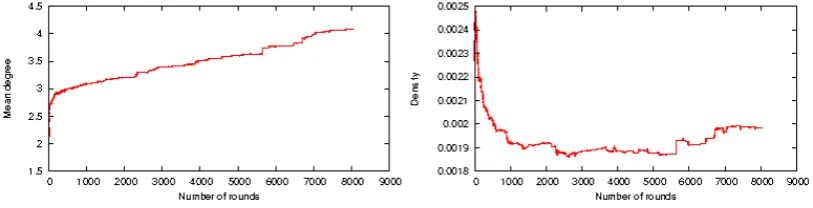
Figure 1 shows the evolution of the average degree and density as a function of the graph size. The average
degree is roughly 4. The value is small and seems to have a threshold meaning that the average degree tends to
be independent of the size of sample as observed with the Internet.
Figure 1: Average degree and Density as a function of the sample size.
The density is close to zero. This value decrease quickly when the sample grows. This same behavior of the
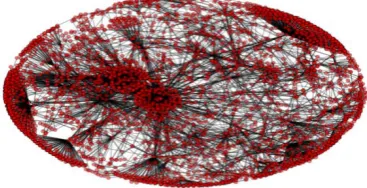
Figure 2: Graph of the national Internet of Burkina.
Figure 2 shows the graph of 2 070 nodes and 4 246 links of the Internet of Burkina Faso. We observe a weak
density and most nodes have a small degree.
3.2 Clustering
The clustering coefficient like the density measures the probability of existence of links between nodes of a
graph. There are two definitions of the clustering coefficient.
Global clustering
The global clustering coefficient also named transitivity ratio is the probability of two nodes to be connected
together, given that they are both connected to a same third.
From the definitions below computing the clustering is strongly related to counting the number of triangles and
the number of triples in the graph.
Local clustering
The local clustering coefficient of a node v (of degree at least 2) is the probability for any two neighbors of v to
be linked together: lc(v) = d(v2)(|EdN((vv))−1| ) Where EN(v)= E∩(N(v) × N(v)) is the set of links between neighbors
of v.
There are interesting characteristics of the clustering coefficients of the Internet topology. Firstly, the clustering
coefficients are independent of the sample size, as long as it is large enough. In addition, the two notions are
generally thought as equivalent. Secondly the clustering coefficients are significantly larger than the density.
We observe the same behavior of the clustering coefficient with the topology of the Internet of Burkina. Figure
At the beginning, the curves begin to zero and grow with size of the sample. The values tend to stabilize,
especially the local clustering coefficient. This shows that the clustering coefficients tend to become
independent of the sample size.
Figure 3: Global and local clustering as a function of the sample size
3.3 Degree distribution
The degree distribution of a graph is a set of values that are the proportions pd of nodes having exactly a given
degree d in the graph. Most complex networks like Internet have degree distribution in power-law. The form of
the distribution p
d in power-law is pd ~ d−α. The exponent α is as an indicator of how heterogeneous the
distribution is. The measurements of the Internet performed at different levels of the topology (interface, router,
AS) show that the degree distribution is highly heterogeneous and fellows a power-law. The degree distribution
is independent of the size of sample.
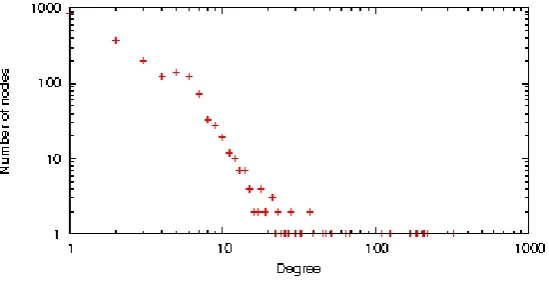
We made approximately the same observations on the Internet of Burkina. Figure 4 shows that the degree
distribution of the topology of the Internet of Burkina is highly heterogeneous. This is more than 95% of the
nodes that have a degree lower than 10 however few nodes have their degree greater than 200. The degree
distribution is well fitted by power-law.
Figure 4: Degree distribution of the national Internet of Burkina
This result on the Internet of Burkina is consistent with usual assumption on the degree: the degree distribution
small but we find a similar degree distribution like in the entire Internet.
4. Related work
Many studies on Internet concern mainly the mapping and the dynamics characterization [8, 11, 9]. Internet
mapping consists to characterize the topology by collecting information on the IP addresses and links between
them through a measurement. This measurement may be active with tool like TRACETREE or TRACEROUTE
[8, 4]. Despite these important contributions, a complete and accurate map of the Internet remains challenging to
achieve.
Some studies that have focused on parts of the Internet have shown interesting results. For instance, the authors
of this work [6] have studied the Internet of the Asia-Pacific region at different level of the topology. Recently,
another contribution in the same stream of studies has characterized the current state of Cuba’s access to the
wider Internet [2]. Our contribution in this paper consists to study the national Internet of Burkina by providing
these characteristics and analyzing the topology dynamics compared to the Internet.
5. Conclusion
We conducted a measurement of the Internet of Burkina in order to analyze and show its topology properties.
The measurements performed with TRACETREE tool have lasted four months and the data gathered concerns
both the map and the dynamics of the Internet of Burkina.
The analysis of the Internet of Burkina by using the usual properties of the complex networks has shown
interesting results. We observed similar properties to those of the entire Internet. For instance, the degree
distribution follows a power-law and the density is weak.
However, there are a few differences in their dynamics. The dynamics of the Internet is characterized a high
number of volatile IP addresses and small number of stable IP addresses. We observed the inverse in the
dynamics of the Internet of Burkina where there are small number of volatile IP addresses and high number of
stable IP addresses. This reflects a low dynamics of the Internet of Burkina.
Our work on the Internet of Burkina as a local topology of Internet is preliminary and aims to provide more
characteristics of the Internet and its dynamics. This study opens others directions for future work. For instance,
we have observed similar result with two other countries. It would be relevant to study more topologies and
formally identify these properties, in order in order to know if the Internet topology has some fractal properties.
This will be important for the modeling of the Internet.
References
[1] Beverly, R., Berger, A., Xie, G.G.: Primitives for active internet topology mapping: Toward
high-frequency characterization. In: Proceedings of the 10th ACM SIGCOMM Conference on Internet
http://doi.acm.org/10.1145/1879141.1879162.
[2] Bischof, Z.S., Rula, J.P., Bustamante, F.E.: In and out of Cuba: Characterizing cuba’s connectivity. In:
Proceedings of the 2015 ACM Conference on Internet Measurement Conference. pp. 487–493. IMC
’15 (2015).
[3] Data, R.: Http://data.complexnetworks.fr/Radar/
[4] Govindan, R., Tangmunarunkit, H.: Heuristics for internet map discovery. In: IEEE INFOCOM 2000,
pages 1371-1380, Tel Aviv (2000).
[5] Haddadi, H., Uhlig, S., Moore, A.W., Mortier, R., Rio, M.: Modeling internet topology dynamics.
Computer Communication Review 38(2), 65–68 (2008), http://doi.acm.org/10.1145/1355734.1355745.
[6] Huffaker, B., Fomenkov, M., Moore, D., Nemeth, E., claffy, k.: Measurements of the Internet topology
in the Asia-Pacific Region. In: International Networking Conference (INET) ’00. The Internet Society,
Yokohama, Japan (Jul 2000).
[7] Latapy, M., Magnien, C.: Complex network measurements: Estimating the relevance of observed
properties. In: INFOCOM 2008. 27th IEEE International Conference on Computer Communications,
Joint Conference of the IEEE Computer and Communications Societies, 13-18 April 2008, Phoenix,
AZ, USA. pp. 1660–1668. IEEE (2008).
[8] Latapy, M., Magnien, C., Ouédraogo, F.: A radar for the internet. In: Workshops Proceedings of the 8th
IEEE International Conference on Data Mining (ICDM 2008), December 15-19, 2008, Pisa, Italy. pp.
901–908. IEEE Computer Society (2008).
[9] Magnien, C., Ouedraogo, F., Valadon, G., Latapy, M.: Fast dynamics in internet topology:
Observations and first explanations. In: Proceedings of the 2009 Fourth International Conference on
Internet Monitoring and Protection. pp. 137–142. ICIMP ’09 (2009).
[10] Ouédraogo, F., Magnien, C.: Impact of sources and destinations on the observed properties of the
internet topology. Computer Communications 34(5), 670–679 (2011).
[11] Ouédraogo, T.F., Sié, O., Zerbo, B.: On the origin of the fast dynamics of the internet topology.
International Journal of Computer Science and Network 3(6) (December 2014).
[12] Roberts, H., Larochelle, D., Faris, R., Palfrey, J.: Mapping local internet control. Beckman Center,