http://www.ijorl.com pISSN 2454-5929 | eISSN 2454-5937
Original Research Article
A cross sectional study on the bacteriologic pattern of chronic otitis
media and its antibiotic sensitivity
Ramya Shree C., Prabakaran S.*, Rajasekaran S., Priya K., Namasivaya Navin R. B.
INTRODUCTION
Chronic otitis media (COM) is defined as a chronic infection of the middle ear and mastoid cavity. This is the most commonly occurring ear infection in children as well as adults. The disease usually presents as a chronic, intermittent or persisting ear discharge more than 2 weeks through a tympanic membrane perforation.1
The ascending infection through the eustachian tube remains the main source of infection to the middle ear.2
The other etiological factors include low socioeconomic status, poor hygiene, malnutrition and overcrowding.3
The spread of infection beyond the confines of the middle ear and its adjacent spaces depends upon the virulence of
the infecting organisms, antibiotic sensitivity and adequacy of antibiotic therapy. Inadequate treatment can result in persistent otorrhoea, mastoiditis, labyrinthitis, facial nerve paralysis to more serious intracranial complications.4 With the advent of antibiotics, the rate of
progression and complications of the disease has decreased. However, due to inappropriate and inadequate use of antibiotics, bacterial resistance has become very common. Frequently isolated bacteria are Pseudomonas aeruginosa, Staphylococcus aureus, Proteus species and
Klebsiella species.5
Hence isolation of the bacteria and use of prompt antibiotic therapy is essential to prevent the fatal complications.
ABSTRACT
Background:Chronic otitis media is the commonest middle ear and mastoid cavity disease, which has the tendency of causing morbidity to the patients ranging from deafness to intracranial complications. Hence this study was done to identify the local bacteriological pattern and its antibiotic sensitivity for treating them with appropriate antibiotic therapy.
Methods: This cross-sectional study was done retrospectively with reports of culture and sensitivity of chronic otitis media from microbiology department. The sample was sent from the department of otorhinolaryngology in Chettinad hospital and research institute, Chennai, during the period from January 2018 to January 2020.
Results: On assessing about 188 reports, 17 patients had no growth of organism. The commonest organism isolated was Pseudomonas species (33.0%) which was sensitive to imipenem (96.8%), followed by Staphylococcus (28.7%) which was sensitive to linezolid and teicoplanin (98.1%).
Conclusions: The study concludes imipenem for Pseudomonas species and linezolid/teicoplanin for Staphylococcus. The appropriate and adequate antibiotic therapy is always recommended for chronic otitis media to avoid complications.
Keywords: Chronic otitis media, Pseudomonas species, Staphylococcus
Department of Otorhynolaryngology, Chettinad Hospital and Research Institute, Chennai, Tamil Nadu, India
Received: 13 August 2020
Revised: 06 September 2020
Accepted: 07 September 2020
*Correspondence:
Dr. Prabakaran S.,
E-mail: [email protected]
Copyright: © the author(s), publisher and licensee Medip Academy. This is an open-access article distributed under the terms of the Creative Commons Attribution Non-Commercial License, which permits unrestricted non-commercial use, distribution, and reproduction in any medium, provided the original work is properly cited.
Objective
This study is aimed at finding the local pattern of bacteria involved, their antibiotic sensitivity pattern and to choose empirical antibiotic therapy in patients with chronic otitis media
METHODS
After obtaining approval from the ethical committee, the study was done with reports of culture and sensitivity of chronic otitis media from microbiology department. The sample was sent from the department of otorhinolaryngology in Chettinad hospital and research institute, Chennai, during the period from January 2018 to January 2020 was included. The culture and sensitivity reports of all chronic otitis media between the ages 5-50 years with a total of 188 reports were included in the study. For the collection of samples sterile cotton swab sticks were used. The swabs were cultured on Blood and MacConkey’s agar and overnight incubation was done at 37°C.6 According to standard microbiological methods,
the organisms were isolated. Kirby-Bauer disc diffusion method was performed to identify the antimicrobial susceptibility with the clinical and laboratory standards institute guidelines. The collected data was statistically analyzed with SPSS software and the most common bacteriological organism involved and their antibiotic sensitivity was identified.
RESULTS
The total numbers of reports collected were 188. Out of which 17 (9.05%) reported as no growth of any organisms. 188 reports comprising of 102 males (54.3%) and 86 females(45.7%) shown in (Table 1). Out of 188 reports, 167 (88.8%) were swabs of tubotympanic disease and 21 (11.2%) were swabs of attico antral disease (Table 1).
Table 1: Sex distribution and the type of otitis media (n=188).
Variables Frequency Percentage
Gender
Male 102 54.3
Female 86 45.7
Type of COM
Tubotympanic 167 88.8 Atticoantral 21 11.2
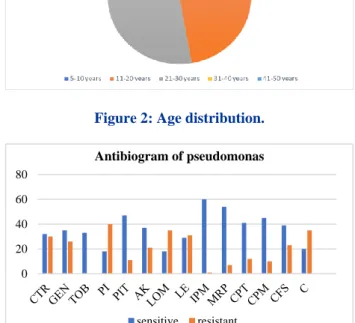
Age of the patients ranged from 5 to 50. The incidence decreased as the age advanced with maximum incidence was observed for second decade (30.9%) of life and less common in first decade with 19 reports(10.1%) (Figure 1).
In this study the bacteriological profile showed aerobic growth in 161 (85.6%) cases and anaerobic growth in 10 (5.3%) cases. Monomicrobial growth was observed in all
the cases. The most common organism isolated was
Pseudomonas aeruginosa seen in 62 (33.0%), followed by Staphylococcus aureus 54 (28.7%), methicillin resistant Staphylococcus aureus 11 (5.9%), Citrobacter freundii & Proteus mirabilis 8 (4.3%), Escherichia coli 6 (3.2%) of total 171 cases. Pseudomonas aeruginosa 62 (33.0%) being the most common aerobic and prevotella intermedia being the common anaerobic organism isolated (Figure 2).
Figure 1: Distribution of bacterial isolates.
Figure 2: Age distribution.
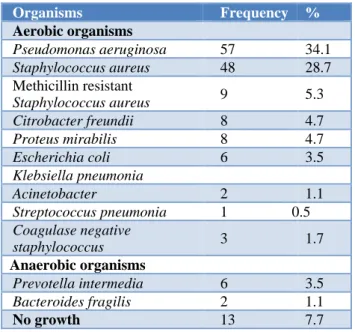
Figure 3: Geographic representation of antibiogram of Pseudomonas (n=62).
CTR: Ceftriaxone, GEN: Gentamycin, TOB: Tobramycin, PIT: Piperacillin-Tazobactam; CPT: Cefepime/Tazobactam; CFS: Cefoperzone/sulbactam; AK: Amikacin; Le: Levofloxacin; LOM: Lomefloxacin, IPM: Imipenem, MRP: Meropenem, C: Ciprofloxacin, CPM: Cefepime.
Pseudomonas aeruginosa Staphylococcus aureus Methicillin resistant…
Citrobacter freundii Proteus mirabilis Escherichia coli Klebsiella pneumonia Acinetobacter Streptococcus pneumonia
Coagulase negative… Prevotella intermedia
Bacteroides fragilis No growth
0 20 40 60 80
frequency
0 20 40 60 80
Antibiogram of pseudomonas
sensitive resistant
In tubotympanic disease out of 167 (88.8%) bacterial growth was observed in 154 (92.2%) with high prevalence of Pseudomonas aeruginosa 57 (34.1%), whereas 13 (7.7%) cases reported as no growth (Table 2). In attico antral disease, out of 21 cases (11.2%) staphylococcus was the most common organism isolated in 6 (35.2%) reports and no organism was isolated in 4 (19.1%) reports (Table 3).
The first and second most common organism and their antibiotic sensitivity has been explained in detail in this study. Pseudomonas aeruginosa was susceptible to imipenem in almost all 60 cases and resistance was observed to piperacillin-tazobactam 40 (64.5%) (Figure 4) followed by Staphylococcus (28.7%), the second most common bacterial isolate which was sensitive to linezolid and teicoplanin (98.1%).
Figure 4: Geographic representation of antibiogram of Staphylococcus (n=54).
PIT: Piperacillin-Tazobactam; CPM: Cefepime; CPT: Cefepime/Tazobactam; CXM: Cefuroxime; CFS: Cefoperzone/sulbactam; G: Gentamycin; CX: Cefoxitin; AK: Amikacin; TOB: Tobramycin; AS: Ampicillin/Sulbactam; LZ: Linezolid; Le: Levofloxacin; A: Ampicillin; DO: Doxycycline; MO: Moxifloxacin, E: Erythromycin; VA: Vancomycin; TEI: Teicoplanin; LOM: Lomefloxacin, IP: Imipenem, G: Gentamicin, MRP: Meropenem.
Table 2: Bacterial isolates in tubotympanic disease (n=167).
Organisms Frequency %
Aerobic organisms
Pseudomonas aeruginosa 57 34.1
Staphylococcus aureus 48 28.7 Methicillin resistant
Staphylococcus aureus 9 5.3 Citrobacter freundii 8 4.7
Proteus mirabilis 8 4.7
Escherichia coli 6 3.5
Klebsiella pneumonia 4 2.4
Acinetobacter 2 1.1
Streptococcus pneumonia 1 0.5
Coagulase negative
staphylococcus 3 1.7
Anaerobic organisms
Prevotella intermedia 6 3.5
Bacteroides fragilis 2 1.1
No growth 13 7.7
Table 3: Bacterial isolates in attico antral disease (n=21).
Organisms Frequency Percentage
Aerobic organisms
Staphylococcus aureus 6 35.2
Pseudomonas aeruginosa
5 29.4
Methicillin resistant staphylococcus aureus
2 11.7
Klebsiella pneumonia 1 5.8
Acinetobacter 1 5.8
Anaerobic organisms
Bacteroides fragilis 2 11.7
No growth 4 19.1
DISCUSSION
Chronic suppurative otitis media is the disease of middle ear which presents with persistent or recurrent discharge through a perforated tympanic membrane. The bacteria gain its access into the middle ear cavity via the tympanic membrane perforation. Subsequent infection results in ear discharge. This further leads to the development of more serious complications ranging from persistent ear discharge, labyrinthitis, petrositis, facial nerve paralysis to intracranial abscesses. These complications were reported to be more common in the pre antibiotic era, now with the advent of antibiotics the prevalence of these complications has drastically reduced.7
The disease is more common in pediatric age group due to their frequent episodes of upper respiratory tract infections, immature immunity and the nature of eustachian tube which is shorter and more horizontal when compared to adults. Hearing loss in pediatric age group has shown effect in childhood development.8
Surgery remains the mainstay of treatment for chronic otitis media with perforated tympanic membrane. Aural toileting, suction clearance, dry mopping along with topical antibiotic ear drops are the first line of management to control the disease progress in initial stage.9 Ototoxicity has been reported due to the use of
aminoglycosides containing topical antibiotics like gentamycin. Oral empirical antibiotics are also given along with topical antibiotic ear drops. Surgical management is planned once the organisms are under control. Inappropriate treatment can result in progression of irreversible complications.10 Therefore, early detection
of bacteria and appropriate treatment with antibiotics prevents the progression of the disease.
Many reports have been published regarding chronic otitis media-the most common organism and their antibiotic sensitivity in corresponding region, this study is done to see the most prevalent organism in our setting.
The incidence of disease is more common in 2nd decade
of life which was found similar to the studies conducted
LE MO
L
O
M
T
O
B
T
E
I
VA DO CX G AK CD E AS A
CPT CFS
CX
M
CPM LZ PIT
0 10 20 30 40 50 60
by Parveen et al and Chirwa et al.4,10 Male predominance
was seen in most of the studies Ahmed et al, Agrawal et al.11
In our study 17 cases reported no isolation of any organism and this might have resulted due to the use of prior antibiotic therapy. The most common organism isolated was Pseudomonas aeruginosa seen in 62 (33.0%), followed by Staphylococcus aureus 54 (28.7%), methicillin resistant Staphylococcus aureus 11 (5.9%),
Citrobacter freundii and Proteus mirabilis 8 (4.3%),
Escherichia coli 6 (3.2%) of total 171 cases similar to studies conducted by Sanjana et al, Hiremath et al, Mehta et al.13 Staphylococcus was found to be most common
organisim in the study conducted by Hailegiyorgis et al and methicillin sensitive Staphylococcus aureus in Ahmad observation.14,15Klebsiella was found common in
Malpani’sstudy and proteus in Chirwa et al.10,16
The bacterial growth of tubotympanic disease was observed more when compared to attico antral disease with prevalence of Pseudomonas in tubotympanic and
Staphylococcus in attico antral disease. The pattern of bacterial growth was observed like the study conducted by Mehta et al.13
Pseudomonas aeruginosa was susceptible to imipenem in almost all 60 cases in our study which was unique. Reviewing the literature, Pseudomonas was susceptible to tobramycin (93.2%), polymyxin B (98.4%), piperacillin (91.11%). Although many studies reported resistance to ciprofloxacin, the study conducted by John et al showed 90% sensitivity.17 Resistance was found
common with piperacillin-tazobactam 40 (64.5%) followed by lomefloxacin and ciprofloxacin 35 (56.5%).
In our study Staphylococcus species was sensitive to linezolid and teicoplanin (98.1%) followed by vancomycin and amikacin in 52 (96.3%) and tobramycin in 51 (94.4%). Resistance was maximum to lomefloxacin and ampicillin whereas in the study conducted by Kumar et al Staphylococcus aureus was sensitive 100% to linezolid and vancomycin followed by cefoperazone/ sulbactam.19
Among the topical antibiotic preparations available over the counter, ciprofloxacin is the potential antibiotic used in the management of chronic otitis media. John et al showed 90% sensitivity to ciprofloxacin but many recent studies has reported resistance to ciprofloxacin.17
The mainstay of treatment for chronic otitis media remains surgery but it is essential to know about the organism and their antibiogram for the appropriate management either before or after the surgery to prevent complications.
CONCLUSION
With the analysis of ear swab culture and sensitivity report of 188 chronic otitis media Pseudomonas
aeruginosa was found to be the most common organism which was susceptible to imipenem in almost all 60 cases and resistance was observed in piperacillin-tazobactam 40 (64.5%) followed by Staphylococcus (28.7%) which was sensitive to linezolid and teicoplanin (98.1%). Hence this study concluded that use of higher antibiotics is essential for the patients who are reporting with persistence of symptoms even after the use of topical antibiotics.
ACKNOWLEDGEMENTS
I would like to acknowledge all the members who guided and supported me to complete the study.
Funding: No funding sources Conflict of interest: None declared
Ethical approval: The study was approved by the Institutional Ethics Committee
REFERENCES
1. Ahmed SM, Kumar AS. Bacteriological study of patients with CSOM treated empirically using antibiotics and reporting to a teaching hospital of Northern Kerala. J Evolution Med Dent Sci. 2017;6(22):1763-6.
2. Basnet R, Sharma S, Rana JC, Shah PK. Bacteriological study of otitis media and its antibiotic susceptibility pattern. Journal of Nepal Health Research Council. 2017;15(2):124-9.
3. Hiremath B, Mudhol RS, Vagrali MA. Bacteriological profile and antimicrobial susceptibility pattern in chronic suppurative otitis media: a 1-year cross-sectional study. Indian J Otolaryngology Head Neck Surg. 2019;71(2):1221-6.
4. Prakash SK. Aerobic bacteriology of chronic suppurative otitis media (CSOM) in a tertiary care hospital in North India. J Med Sci clin Res. 2014;2:395-8.
5. Marrakchi J, Zainine R, Chahed H, Mediouni A, Beltaief N, Besbes G. Infection with acute otitis media caused by Pseudomonas Aeruginosa (MDR) And Staphylococcus Aureus (MRSA). Egyptian J Ear, Nose, Throat Allied Sci. 2013;14:51-3.
6. Rangaiah ST, Dudda R, Prasad MH, Balaji NK, Sumangala B, Gudikote MM. Bacteriological profile of chronic suppurative otitis media in a tertiary care hospital. Int J Otorhinolaryngol Head Neck Surg. 2017;3(3):601-5.
7. Worku M, Bekele M. Bacterial isolate and antibacterial resistance pattern of ear infection among patients attending at Hawassa university referral Hospital, Hawassa, Ethiopia. Indian J Otol. 2014;20(4):155.
9. Meyerhoff W. Pathology of chronic suppurative otitis media. Ann Otol Rhinol Laryngol Head Neck Surg. 1988;97(130):21-4.
10. Chirwa M, Mulwafu W, Aswani JM, Masinde PW, Mkakosya R, Soko D. Microbiology of chronic suppurative otitis media at queen Elizabeth central hospital, Blantyre, Malawi: a cross-sectional descriptive study. Malawi Medical J. 2015;27(4):120-4.
11. Agrawal A, Kumar D, Goyal A, Goyal S, Singh N, Khandelwal G. Microbiological profile and their antimicrobial sensitivity pattern in patients of otitis media with ear discharge. Indian J Otol. 2013;19:5-8. 12. Sanjana RK, Singh YI, Reddy NS. Aerobic
bacteriology of chronic suppurative otitis media (CSOM) in a tertiary care hospital: A retrospective study. J College Med Sci-Nepal. 2011;7(2):1-8. 13. Mehta M, Saha P, Kunkulol R, Simar H, Mehta N.
Microbiological profile and antibiotic sensitivity pattern of active mucosal chronic otitis mediaand active squamous chronic otitis media (with Cholesteatoma) in a tertiary care hospital of Hisar, (Haryana) India. Ann Clin Otolaryngol. 2017;2(3):1019.
14. Hailegiyorgis TT, Sarhie WD, Workie HM. Isolation and antimicrobial drug susceptibility pattern of bacterial pathogens from paediatric patients with
otitis media in selected health institutions, Addis Ababa, Ethiopia: a prospective cross-sectional study. BMC Ear, Nose Throat Disorders. 2018;18(1):8. 15. Ahmad S. Antibiotics in chronic suppurative otitis
media: A bacteriologic study. Egyptian J Ear, Nose, Throat Allied Sciences. 2013;14(3): 191-4.
16. MalpaniA M, AhireB GP, SahaC P, Sankhe K. bacteriological profile of chronic suppurative otitis media in a rural tertiary care hospital. National J Medical Dental Res. 2016;4:71-6.
17. John KK, Kumar R, Shrestha S, Chaudhari SR. Bacteriological implication of Antibiogram on Otitis Media: a cross sectional study. Sch J App Med Sci. 2017;5(7D):2756-62.
18. Kumar R, Srivastava P, Sharma M, Rishi S, Nirwan S, Hemwaniand K. Isolation and antimicrobial sensitivity profile of bacterial agents in chronic suppurative otitis media patients at NIMS Hospital. Int J Pharm Biol Sci.2013;3:265-9.