INFLUENCES ON DENTISTS’ ADOPTION OF NON-SURGICAL CARIES MANAGEMENT TECHNIQUES: A QUALITATIVE STUDY
Jennifer Durham Crisp
A thesis submitted to the faculty at the University of North Carolina at Chapel Hill in partial fulfillment of the requirements for the degree of Master of Science in Dentistry in the UNC
Adams School of Dentistry (Pediatric Dentistry).
Chapel Hill 2020
Approved by:
J. Timothy Wright
Kimon Divaris
ABSTRACT
Jennifer Crisp: Influences on Dentists’ Adoption of Non-Surgical Caries Management Techniques for Children: A Qualitative Study
(Under the direction of J. Timothy Wright)
Adoption of non-surgical caries management techniques (NSCMT) by dentists is arguably
slow and varied. This investigation sought to understand the influences on adoption of select
NSCMT, such as Hall crowns, silver diamine fluoride, and fluoride adjuncts, amongst dentists who
treat children in NC. A purposeful method of recruitment was used to recruit 14 pediatric dentists
and 6 general dentists who treat children. Interviews were conducted using a semi-structured
interview guide. Interviews were recorded digitally, transcribed verbatim and thematically
analyzed using MAXQDA software. Reporting was based on emerging and recurring themes and
insightful quotes. Factors related to clinical practice, family preference, patient safety, and
provider philosophy were major influences in the adoption of NSCMT. Characteristics of the
practice environment, patient population, communication with families, and financial
considerations were influential. These findings provide valuable insights into practitioners’
This thesis is dedicated to children of North Carolina- A testament to the hard work and commitment to ensure those children are protected in our care.
ACKNOWLEDGEMENTS
This project is the result of an idea brought to my thesis advisor, Dr. Tim Wright. He has
been influential in not only the success of this project, but in my path to pursue pediatric
dentistry. From our time spent working on this project to our time working together in clinic, I
will always cherish your insights about dentistry and life as a pediatric dentist. You are an
excellent model of serving mankind through dentistry.
I would also like to thank my thesis committee members, Dr. Kimon Divaris and Dr.
Anne Sanders. Dr. Divaris, thank you for your endless advice and hours spent helping me with
this project. Dr. Sanders, thank you for pushing me to think critically to make this project what it
is today.
Thank you Mr. Paul Mihas, for your commitment to this project. This project would not
have been successful without your expertise, advice and support. Thank you for making yourself
available and ensuring this project was a success.
Finally, thank you to my family and friends, especially to my wonderful husband, who
supported me throughout my residency and my work on this project. I could not have done this
TABLE OF CONTENTS
LIST OF TABLE ... vii
LIST OF FIGURES ... viii
LIST OF ABBREVIATIONS ... ix
CHAPTER 1: INTRODUCTION ...1
Section 1.1: Non-surgical caries management techniques ...2
Section 1.2: Clinical decision making ...5
Section 1.3: Adoption of clinical guidelines and techniques ...7
Section 1.4: The knowledge gap ...8
CHAPTER 2: METHODS ...10
Section 2.1: Study design ...10
Section 2.2: Study sample ...10
Section 2.3: Interview guide and development ...12
Section 2.4: Qualitative data analysis ...13
CHAPTER 3: RESULTS ...14
Section 3.1: Influences on decision making ...16
Section 3.2: Clinician- and practice-related factors to decision making ...21
CHAPTER 4: DISCUSSION ...26
Section 4.1: General Discussion ...26
Section 4.3: Anticipated impact ...33
Section 4.4: Future research ...34
CHAPTER 5: CONCLUSIONS ...35
LIST OF TABLES
Table 1. Characteristics of Study Participants ...11
Table 2. Illustrative quotes related to specific aim #1 ...20
LIST OF FIGURES
Figure 1. Geographical representation of study participants’ location of practice ...11
Figure 2. Schematic of frequency of NSCMT use in study participant sample (n=20)...15
Figure 3. Influences on Dentists’ Adoption of Non-Surgical
LIST OF ABBREVIATIONS
FDA Food and Drug Administration
GA General Anesthesia
NSCMT Non-Surgical Caries Management Techniques
OR Operating Room
SDF Silver Diamine Fluoride
CHAPTER 1: INTRODUCTION
With the paradigm shift in the early 1990’s from the traditional surgical approach of
dentistry established by G.V. Black’s principle of “extension for prevention” to minimally invasive
dentistry, caries management is moving towards treatments directed at conserving tooth structure
and the use of fewer surgical interventions. 1 An update from 2011 on the use of non-invasive
approaches to manage non-cavitated caries lesions discusses this paradigm shift and the new
approach of “minimally invasive dentistry”. 1 Minimally invasive approaches, such as fluorides,
sealants and preventive resin restorations, aim to conserve natural healthy tooth structure. The
update discusses how certain non-surgical caries management techniques aim to minimize the
operative procedure, with the goal of increasing tooth longevity. 1 A systematic review by Tellez
et.al. found Non-Surgical Caries Management Techniques (NSCMT) to be useful, especially to
arrest the progression of caries in early, noncavitated carious lesions. Early intervention during
initial lesion formation, before progression to cavitation, is critical with NSCMT and shown to be
useful in slowing and or arresting the progression of decay. 2
This shift in dentistry, moving from the traditional surgical approach to a more “biological”
or “medical” approach embraces a more minimally invasive approach through the use of a variety
of NSCMT. 3 Non-surgical caries management techniques (NSCMT) are strategies that focus on
none or selective caries removal with the hope of remineralizing tooth structure, and sealing and
arresting carious lesions. 3 NSCMT do not involve the use of local anesthesia or a high-speed
handpiece. These techniques are especially useful in the pediatric population as local anesthesia or
Section 1.1: Non-Surgical Caries Management Techniques
In a 2017 study investigating the potential of NSCMT as viable treatment options in
primary molars, these techniques were found to be particularly beneficial for controlling the
largely preventable chronic disease of dental caries, in which behavior change is key and patient
motivation is a common challenge. 4 More recently, the January 2020, publication of a three-arm
randomized clinical trial found that the use of NSCMT did not have any significant differences in
episodes of dental pain or sepsis compared to conventional surgical treatment. 5 NSCMT had
similar outcomes compared to surgical treatment, reinforcing the value in the clinical use of
NSCMT and its effectiveness in managing and treating dental caries.5
While the surgical approach to caries disease management focuses on removing affected
tooth structure and restoring the lost tissue, non-surgical caries management focuses on
understanding the disease process.1 The use of fluorides in non-surgical caries management
focuses on the cyclic process of demineralization and remineralization of tooth structure directed
at slowing or arresting the caries process.1 Cariology research shows that the caries process can be
halted and that the fluoride ion is the most effective agent for supporting remineralization and
slowing the progression of caries.1 This new paradigm shift of “minimally invasive dentistry” is a
philosophy based on conserving natural tooth structure through our understanding of the science
of caries progression and applying therapeutics directed at preventing and/or arresting lesion
progression. 1
There are a number of techniques and treatment modalities with the goal of
remineralization of tooth structure with fluoride serving as the best remineralization technique. 1
Although a decline in caries prevalence has been seen in industrialized countries in the past two
decades, the prevalence of caries remains high, especially in certain high risk populations.6 A
field. 6 In an investigation of the overall effectiveness of techniques to arrest caries progression,
NSCMT such as silver diamine fluoride (SDF) and fluoride varnish are clinically proven to be
effective in caries management.6
Fluoride can be delivered in a number of forms including varnishes, gels, toothpastes, and
mouth rinses. 1 Evidence shows that the fluoride ion interacts with the tooth mineral creating
soluble fluoride salts (e.g. calcium fluoride that continue to provide fluoride ions in the oral fluids)
long after the topical fluoride application. 7 A Cochrane review by Marinho et.al. in 2013
concluded that fluoride varnish application in children and adolescents is an effective means for
halting or slowing the caries disease process in both permanent and primary teeth. 8 When fluoride
is applied in the mouth, trace amounts of fluoride remaining in saliva are effective at the
remineralizing tooth structure. 7 The organic components in the saliva also can help in the
remineralization process. 7 Repeated application of fluoride varnish aids in remineralizing tooth
structure and increased caries reductions.2 Evidence strongly supports the continued and effective
use of fluoride as one approach in the armamentarium of NSCMT.
Two anticaries topical agents that contain silver, silver nitrate and silver diamine fluoride,
are being used to arrest or prevent the progression of carious lesions. 7 Silver diamine fluoride,
FDA-approved as a desensitizing agent,9 is being used off-label to slow or halt the progression of
caries. 10 The use of SDF to potentially delay the need for advanced behavior management
techniques and surgical intervention make it attractive for helping control caries, especially in the
very young pediatric population (less than 3 years of age). 10 SDF as a caries management tool
provides a painless procedure, and may serve as an aid in reducing the dental fear associated with
fear of injections and dental pain. 10 SDF could potentially reduce the use of protective stabilization
or the “papoose” in young children when surgical treatment is needed and would require some
Systematic reviews informed by multiple randomized controlled clinical trials conclude
that SDF in concentrations of at least 30% are highly effective in arresting dental caries in both
primary and permanent teeth. 11 In a clinical trial to determine the effectiveness of topical fluoride
and SDF in the management of early childhood caries, results showed SDF to be effective in
arresting carious lesions in primary teeth.12 A similar study comparing the efficacy of biannual
application of 25% silver nitrate and 5% fluoride varnish application with that of 38% SDF
application in young children, also found both interventions to be effective in carious lesion
arrest.13 Investigators have proposed that these techniques could be recommended as a viable
alternative treatment to surgical management of carious lesions, especially in the pediatric
population.13 In vitro studies found that SDF increases the pH of the biofilm, reducing dentin
demineralization, and semiannual applications of SDF are effective in arresting carious lesions and
has higher fluoride uptake than fluoride varnish. 11 Clinical studies indicate that semiannual
application of SDF is effective in arresting caries in children with ECC and other high risk
populations.11 Compared with other treatment modalities, such as ART and fluoride varnish, SDF
showed significantly higher caries arrest in clinical trials.11 In the clinical use of SDF, few reports
of adverse events were noted. Some adverse events noted were dental staining, oral soft tissue
irritation, and pulpal irritation. The black staining associated with SDF was the most common
adverse event reported and this is the required endpoint for caries arrest. 11
Silver diamine fluoride applied multiple times in a 38% concentration form, its most
effective concentration11,14, results in the carious lesion turning hard and black, one indication that
treatment is successful.10 However, esthetic concerns are raised due to the black staining associated
with its use. 10 SDF can also be applied without or with little removal of the carious lesion. 14 In a
2016 study, a survey of program directors of pediatric dentistry graduate training programs
barriers identified to its use.15 Lack of parental acceptance was identified as the largest barrier
(91.8%) in its use. 15
The Hall Stainless Steel Crown Technique, commonly referred to as “hall crowns”, is a
type of conservative nonsurgical restorative technique to manage while the natural tooth
structure is maintained.16 The technique was developed by Dr. Norma Hall in the 1980’s in the
treatment of carious primary molars, where there is no caries removal, crown preparation, or use
of local anesthetic.16 The prefabricated stainless steel crown is simply fitted and then cemented
over the carious tooth. Hall crowns are valuable in the pediatric population as an alternative to
traditional surgical caries management where behavior may be a barrier to completing surgical
treatment and when patients present with multiple and large carious lesions. 16 In a randomized
clinical trial to compare the acceptability of crowns placed by the Hall Technique, dentists,
patients and caregivers preferred the Hall Technique in terms of discomfort experienced by the
patient. 17 One clinical trial indicates that Hall crowns have equal clinical success compared with
stainless steel crowns placed using a conventional surgical approach. 16,17 Also, in a clinical trial
to compare the survival of crowns on primary teeth placed by the Hall Technique compared to
conventional placement, survival rate was greater than 90% for both types of crowns and there
was no statistically significant difference in their success.18 There were minimal failures in
crowns placed by the Hall Technique. In crowns placed with the Hall Technique, occlusion was
raised, but occlusion and periodontal health improved over time. 18 These findings show that the
Hall Technique is a promising NSCMT for use in the management of carious lesions.
Section 1.2: Clinical Decision Making:
Studies investigating the clinicians’ decision making and barriers to the development and
adoption of new techniques into clinical practice reveal common themes between disciplines and
decision making, however, naturalistic decision making has emerged as a more relevant way to
study clinical decision making. 19 Naturalistic decision making allows clinicians’ decision making
to be assessed during clinical practice.19 This technique of decision making can also be used to
study responses in rapid decision making. 19 This type of decision making is particularly important
in pediatric dentistry as clinical assessments and subsequent treatment options and decisions are
usually made rapidly. A study by Cioffi et.al. used naturalistic decision making and various
clinical cues in an investigation of midwives’ decision making in clinical practice. They found that
using this approach of decision making, clinicians’ decision cues and tasks in “real world settings”
can be investigated. 19
In a literature review to identify influences related to nurses’ decision making in acute care,
cultural influences, previous nursing experience, patient status, autonomy and education were cited
as primary influences in nursing practices. 20 For example, they found that nurses’ clinical decision
making is influenced more by previous experiences than the actual clinical situation. Also, more
time spent in nursing correlated with more self-confidence and higher likelihood to consider
various options in decision making. 20
A 2017 cross-sectional study evaluated whether anxiety and occupational stress affected
dentists’ clinical decision making. 21 Using a questionnaire, they found that dentists’ anxiety did
affect their decision making in various clinical situations. Their results showed that as self-esteem
regarding their decision increased, their level of anxiety decreased. 21 They found various stressors
affected dentists’ clinical decision making in regards to communication modification, treatment
plan modifications, referral to other clinicians, changes to procedures, and other aspects
encountered in clinical practice. 21 Interestingly, they noted that dentists seemed to lack awareness
in how anxiety affected their clinical decision making, suggesting that decision making processes
decision making also served as a source of anxiety.21 The study also mentioned that treating
anxious, phobic or uncooperative patients can be a source of stress and affecting clinical decision
making.21 This finding is particularly relevant to our study in that managing uncooperative
behavior in pediatric patients and high demands of caregivers may serve as stressors, affecting
clinicians’ decision making. These findings may provide insight into the complex decision making
process and influences in decision making amongst dentists.
There may be many reasons for the delayed time in the knowledge of a new technique to
its actual adoption and use in clinical practice. In a 2003 study by Anderson et.al, factors related
to decision avoidance across multiple disciplines was investigated.22 According to their findings,
negative emotions and the anticipated impact of those emotions can have an effect on delaying
decisions or behaviors. 22 Some potential emotions that contribute to decision avoidance are
anticipated regret and fear. 22 In the same way, we may expect that clinicians may avoid the
decision to adopt a new technique, such as NSCMT, because of similar emotions.
Section 1.3: Adoption of Clinical Guidelines and Techniques:
Although there is abundant evidence on the effectiveness of NSCMT, barriers to adoption
of these new techniques to manage carious lesions include, but are not limited to safety concerns,
lack of reimbursement, lack of clear treatment guidelines, and patient attitudes. 10 In a study by
Abboud, et.al., the barriers to adoption of clinical decision rules were investigated amongst
physicians. They found that physicians may lack confidence in their ability to adopt something
new or they may believe the new guideline or technique may not translate into positive patient
outcomes. 23 Also, previous practice or “old habits” may serve as a point of resistance or barrier to
adoption of new techniques and implementation of new guidelines.23 In a survey examining
pediatricians’ barriers to asthma guidelines, Cabana et.al., identified several factors associated with
lack of familiarity, lack of time, and lack of agreement with guidelines and recommendations. 24
They also noted that each clinical guideline may have a specific barrier associated with its lack of
adoption or disuse. However, across all guidelines, common barriers to adoption were found
including lack of time, lack of reimbursement, and lack of support staff. 24 While many studies
regarding decision making and influences to adoption of new techniques have been undertaken in
the medical field, few have investigated decision making in dentistry.
To investigate factors affecting the adoption of hospital information systems in the nursing
field, a survey was distributed to nurses that have the potential to use these information systems.25
They found that perceived usefulness of the product had a positive correlation to its acceptance
and subsequent adoption. One major barrier to nurses’ adoption of the new technology was lack
of awareness.25 Training, knowledge, and improved guidelines on the usefulness of the product
were discussed as targets to improve adoption of the new technology. 25 We can assume that
dentists’ adoption of NSCMT can be influenced by their perceived usefulness of the technique,
and their lack of adoption may be related to lack of awareness of the new technique. In another
study, investigators sought to understand the hesitancy and lag time in the adoption of health
information technology systems. 26 They analyzed factors contributing to acceptance of a new
technique and its adoption in clinical practice including performance expectancy, effort
expectancy, and social influence. They found performance expectancy and attitude on “intention
to use” to have the highest influence on clinical use and adoption. 26 These influences may also
translate to the dental profession and be applicable to the adoption of NSCMT.
Section 1.4: The Knowledge Gap:
Both general and pediatric dentists treating children have a wide array of treatment options
they can offer to patients. The effectiveness of these techniques is supported by best practice and
Pediatric Dentistry and most dental school curricula include these treatment approaches in their
training programs. 27 Yet several knowledge gaps regarding their use remain. For instance, it is
unclear as to what factors influence clinicians’ decision to offer these caries management
techniques as part of the available ‘menu’ of treatment options to their patients. Furthermore, there
is limited information regarding the decision-making process that clinicians follow to determine
whether these techniques are aligned with their practice philosophy or well-suited to individual
patients.
To address these knowledge gaps, the overarching purpose of this study was to identify
and describe the patterns, correlates, and determinants of using non-surgical caries management
techniques amongst pediatric and general dentists who primarily treat children in North Carolina.
To achieve this goal, we sought to address two specific aims: (1) to gain an in-depth understanding
of NC dentists’ experiences, motivations, influences and decision-making process in the utilization
of NSCMT for children and (2) to identify clinician and practice-type related factors that are
CHAPTER 2: METHODS
Section 2.1: Study Design:
This study was approved by the Institutional Review Board of the University of North
Carolina at Chapel Hill, NC, N.C., USA (#18-0218). This qualitative study was based on twenty
in-depth interviews with current practicing pediatric and general dentists (who see majority
pediatric patients) in the state of North Carolina. The purpose of the interviews was to gain an in-
depth understanding of the experiences, motivations, influences, decision making process, and
various clinician-, patient-, and practice-related factors related to the adoption and use of select
non-surgical caries management techniques for children.
Section 2.2: Study Sample:
Eligible participants were invited to take part in the study and were interviewed in person
and via telephone between September 2018 and January 2019. Current practicing pediatric and
general dentists (who primarily treat children) in North Carolina were eligible and were invited
to participate in the study. More specifically, interviewees were selected using
maximum-variation sampling, a type of purposive sampling where participants are selected based on the
range of characteristics of the population and the objectives of the study. Purposeful sampling is
a type of sampling technique commonly used in qualitative research where individuals are
selected and identified in order to obtain an information-rich sample. 28 More specifically, we
obtained a sufficiently diverse sample by stratifying by years in practice, geographic location,
and private vs. public health practice. Informed consent was used to acknowledge interviewees’
Adams School of Dentistry or ECU School of Dental Medicine, dentists not currently involved
in active clinical practice, or practitioners whose patient pool was not predominately comprised
of children ages 12 years or younger. We aimed to recruit a diverse sample of interviewees,
considering clinicians’ years in practice first in our recruitment, followed by geographic location,
type of dentist (general vs. pediatric), and type of clinical practice (private practice vs. public
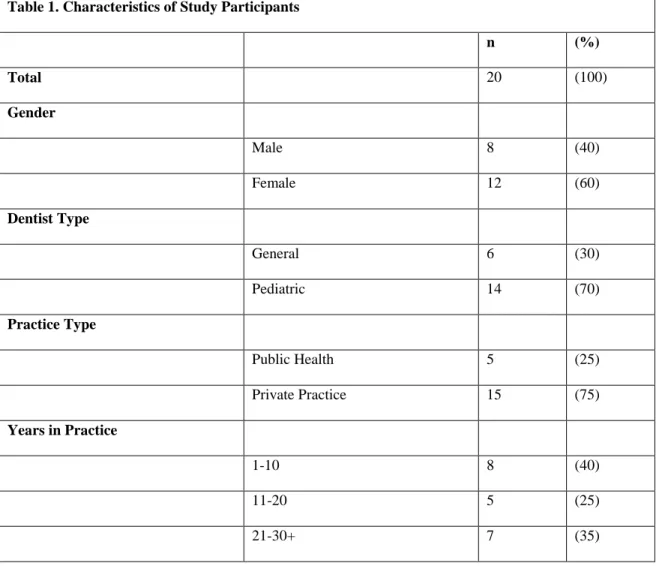
health). A summary of the participating practitioners’ characteristics is in Table 1. A
geographical representation of study participants’ geographic location of practice is included in
Figure 1.
Table 1. Characteristics of Study Participants
n (%)
Total 20 (100)
Gender
Male 8 (40)
Female 12 (60)
Dentist Type
General 6 (30)
Pediatric 14 (70)
Practice Type
Public Health 5 (25)
Private Practice 15 (75)
Years in Practice
1-10 8 (40)
11-20 5 (25)
Figure 1. A geographical representation of study participants’ location of practice recorded as
county level.
Section 2.3: Interview Guide and Development:
Interviews were conducted using a semi-structured interview guide that was pilot tested
and iteratively revised. The interview guide was developed based on research questions and
topics of interest for this study. The semi-structured interview guide consisted of approximately
eighteen questions related to practitioners’ training, clinical experiences, practice philosophies,
decision making processes, and various questions related to the clinical management of specific
non-surgical caries management techniques. The interview guide was structured to allow a more
open-ended and in-depth conversation between the interviewee and interviewer about the
research topic. The principal investigator (JC) under the guidance of a qualitative research expert
(PM) was the sole interviewer. Initially, two pilot interviews were conducted with members of
the research committee to provide feedback and any revision needed to the interview guide. The
interview guide was refined throughout the course of the study to allow a more fluid and in-depth
Section 2.4: Qualitative Data Analysis:
All interviews were digitally recorded and transcribed via an online service (rev.com).
Transcripts were then coded and thematically analyzed using software and an inductive content
analysis method that included deductive and inductive coding. The qualitative software to
manage the data and coding was MAXQDA Version 2018.1. A codebook was created based on
specific aims of the study, study questions, and recurring topics found throughout the interview.
A combination of deductive and inductive codes was used to capture both the researcher’s a
priori understanding as well as the participants’ framing of what mattered most to them,
expressed in their own words. Analysis of these codes (and related illustrative data) led to the
identification of patterns and themes. In sum, data interpretation was based on coding,
summaries of coding, emerging and recurring themes, and insightful quotes. Two interviews
were recoded and analyzed by another member of the research committee to ensure consistency
in coding (KD). Any major differences or disagreements in coding were compared and discussed
between KD and the principal investigator (JC). Reporting was based on emerging and recurring
themes and insightful quotes. Reporting of the qualitative analysis results followed the Standards
CHAPTER 3: RESULTS
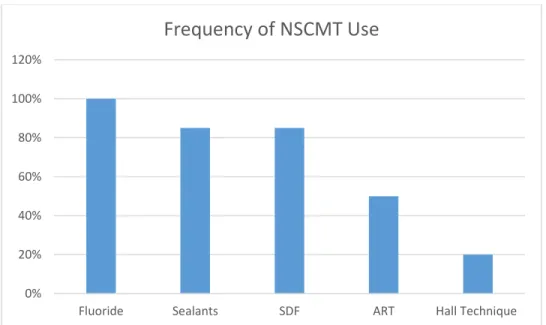
Overall, silver diamine fluoride (SDF) (85) and fluoride adjuncts (100%) such as varnish,
rinses and gels, were identified as the most frequently used NSCMT amongst all dentists
interviewed. Silver diamine fluoride and fluoride adjuncts were cited as easy to use, had high
prior success rates, and were easy to communicate its use and benefits with parents. However,
the black staining associated with SDF was cited as a barrier to acceptance amongst parents
across all socioeconomic statuses. The black staining associated with SDF was also discussed by
participants as a hindrance to practice reputation, leading clinicians to view this technique less
favorably. Despite this, SDF was still used and viewed as valuable by participants as SDF could
be used as a means to delay advanced behavior management techniques on young
pre-cooperative children, or patients with multiple treatment needs requiring GA and sedation. These
were all factors and experiences mentioned by dentists in their decision-making process.
The Hall Crown technique (20%) was reported as the least frequently used NSCMT
amongst all dentists interviewed. Its appeal in pediatric dentistry is that it does not involve
carious tissue removal, crown preparation, or the use of local anesthesia16, which was also cited
as an advantage in the pediatric patient population. Most practitioners in our study were aware of
the Hall Crown technique, but mentioned that they do not feel comfortable using this clinical
technique due to lack of experience and lack of knowledge on its clinical efficacy. Both more
and less experienced participants cited limited use of this technique. Only four dentists
interviewed mentioned having used the Hall Crown technique, while only two used them
practitioners preferred using the surgical approach as they felt their experience, efficiency and
speed play a role here. More experienced clinicians felt more comfortable placing crowns
surgically. Lack of knowledge on its use and efficacy were discussed as barriers to the use of the
Hall technique. Also, perceived lack of comfort to the patient was cited as a barrier to the use of
this technique. Most practitioners discussed not feeling confident in placing a crown comfortably
without the use of local anesthesia. Figure 2 demonstrates the frequency of the use of various
NSCMT that was discussed amongst our participants.
Figure 2. Schematic of frequency of NSCMT use in study participant sample (n=20)
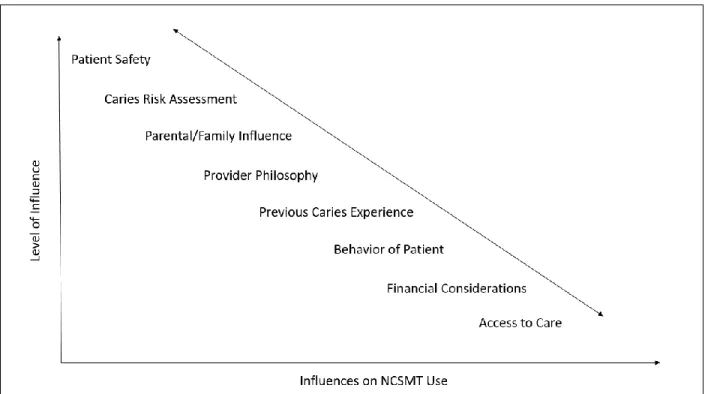
We found a number of considerations that influence the dentists’ decision-making
process to use NSCMT. For example, patient safety was reported as paramount in the
decision-making process, followed by a caries risk assessment. In general, dentists preferred to treat high
caries risk more surgically, and felt more comfortable treating low risk patients non-surgically.
Also, parental influence was central in decision making by providers. Across all types of
providers, after a caries risk assessment of patients, parents consistently remained important in
the decision-making process, especially when offering NSCMT. For all participants, it was
important that parents understand the use of NSCMT, and their implications for care at home and 0%
20% 40% 60% 80% 100% 120%
Fluoride Sealants SDF ART Hall Technique
possible surgical care in the future. Overall the influences in the decision making process were
diverse and varied depending on a number of provider characteristics. These influences and their
hierarchy of importance are presented in Figure 3.
Figure 3. Schematic showing influences on dentists’ adoption of NSCMT and hierarchy of
importance
Section 3.1: Influences on Decision-Making:
Four recurring major themes were identified regarding the experiences, motivations,
influences and decision-making process in the use of NSCMT for children.
Theme 1. Privileging Patient Safety:
Paramount amongst conversations with all study participants was the consideration of
patient safety. Although the U.S. Food and Drug Administration (FDA) has since removed their
black box warning on the use of general anesthesia and sedation drugs (issued in 2015 and
age,many clinicians continue to delay surgical intervention to limit the use of these advanced
behavior guidance techniques. 30 We found that participants offered NSCMT as a tool to delay
the use of general anesthesia. Participants mentioned that NSCMT are offered to halt or slow the
progression of decay until the patient is older and can tolerate treatment in the chair, or until the
patient is old enough for treatment under general anesthesia or conscious sedation. Overall, our
results showed that clinicians want to limit the health risks associated with general anesthesia
and conscious sedation. Participants also cited that offering NSCMT is valuable as it limits the
use of local anesthesia or a high-speed handpiece, two of the more anxiety producing tools used
in dentistry. Participants preferred NSCMT in this regard as these techniques can help limit
traumatic dental experiences in children, especially among those that are young and
uncooperative.
“Do we put kids at risk by putting them under deeper sedations to restore these teeth or do we use different techniques such as fluoride, silver diamine fluoride, etc., and buy a couple years to get the kid older and more trusting and more willing to sit in a chair and have things done?”
“And most of the time if we can get them a little bit older then we don't have to take them and put them to sleep to do the treatment. We don't have to do the sedation… just
thinking about the risks involved.”
“I think especially with the new FDA guidance about trying not to put kids asleep before the age of three for brain development…I was like thank you, thank the Gods because we need another tool besides fluoride varnish to bide time. So, certainly, I would say we're using it more on the younger kids to buy time for the OR.”
Theme 2. Evidence-Based Clinical Practice:
Research (specifically clinical trials), evidence-based dentistry, trusted colleagues,
personal clinical experiences and previous clinical outcomes were all identified as major
influencers in the adoption of NSCMT. Participants mentioned that sources of information
based on evidence-based research were the primary influences to adopt new techniques in
clinical practice. Most participants mentioned they prefer to have seen previous positive clinical
outcomes, either from trusted colleagues or research, before adopting a new technique in practice
themselves.
“You know I think the biggest is evidence based dentistry. I don't want to be the first person to jump out and try it…”
“I definitely feel that when I go to courses and see what is being presented that that makes it makes a difference.”
“Plus I don't live in a cave. I am out there hearing… it's those discussions at dinner with a bunch of pediatric dentists about what's working in your hands, what do you think of this, what do you think of ... and then people tell their case based stories…”
Theme 3. Philosophy-Guided Decision Making:
Our findings consistently showed that practitioners have adopted a more conservative
practice philosophy directed at tooth structure conservation over time. Clinicians who have
practiced for more than 20 years cite the most difference in their practice philosophy over time,
treating less aggressively and monitoring more carious lesions now compared to when they first
entered practice.Less experienced clinicians mentioned they have entered practice with a “more
conservative mindset” in terms of preserving natural tooth structure, while more experienced
dentists have adopted a more conservative philosophy over time. Clinicians who have practiced
for less than 20 years stated they feel comfortable treating more conservatively and were taught
NSCMT during their training in either dental school or residency. Less experienced practitioners
tend to follow recommendations taught during their training in their decision making, offering
NSCMT more frequently as a treatment option compared to their more experienced colleagues.
their “instincts” when making patient and parent assessments during decision making. All
participants valued treating non-surgically as more NSCMT have become available.
“I certainly have stopped believing that I have to restore every single tooth. And some of it is based on experience, and some of it is based on recent studies and newer
techniques.”
“If there is a way to manage a patient without having to treat the patient with giving them an injection and doing a traditional filling, I think that I try to figure that out.”
“I probably rushed to treat things immediately whereas sometimes now with a little more certain parents, education, fluoride, things like that, I can delay treatment”
Theme 4. Parents as Primary Influencers in Decision Making:
Participants felt that parental compliance and informed consent were pivotal for the
decision-making process when offering NSCMT. Making sure parents understand all treatment
options and having informed consent was reported as key. Ensuring parents understand that after
completing non-surgical treatment, surgical intervention may be needed in the future, was a
consistently reported influencer. Parental demand, societal norms, and what parents find
esthetically acceptable were described as major drivers in decision making. Our results found
that regardless of socioeconomic status, practitioners reported that most parents do not approve
of the black staining associated with SDF. However, participants stated that parents do like the
less invasive nature of treating non-surgically, still making it an attractive option to offer to
families. Also, participated stated that parents are willing to accept SDF if they understand it will
slow or halt the progression of decay, and if they have limited resources to have extensive
surgical treatment for children with multiple treatment needs.
“They like the fact that it doesn't involve getting numb and no injections- that's the biggest one- so they feel like their kids can do it, I think they're scared of hurting their kids. The fact that it's a painless process is really important.”
“Now I realize sometimes if I can really educate the parent, we can watch these occlusals for maybe six months to two years...”
Illustrative quotes demonstrating these four major themes are summarized in Table 2.
Table 2. Illustrative quotes demonstrating themes related to Specific Aim #1
Theme 1. Privileging Patient Safety “Do we put kids at risk by putting them under deeper
sedations to restore these teeth or do we use different techniques such as fluoride, silver diamine fluoride, etc., and buy a couple years to get the kid older and more trusting and more willing to sit in a chair and have things done?”
“And most of the time if we can get them a little bit older then we don't have to take them and put them to sleep to do the treatment. We don't have to do the sedation… just thinking about the risks involved.”
“I think especially with the new FDA guidance about trying not to put kids asleep before the age of three for brain development…I was like thank you, thank the Gods because we need another tool besides fluoride varnish to bide time. So, certainly, I would say we're using it more on the younger kids to buy time for the OR.”
Theme 2. Evidence-Based Clinical Practice “You know I think the biggest is evidence based
dentistry. I don't want to be the first person to jump out and try it…”
“I definitely feel that when I go to courses and see what is being presented that that makes it makes a difference.”
“Plus I don't like in a cave. I am out there hearing… it's those discussions at dinner with a bunch of pediatric dentists about what's working in your hands, what do you think of this, what do you think of ... and then people tell their case based stories…”
Theme 3. Philosophy-Guided Decision Making “I certainly have stopped believing that I have to
restore every single tooth. And some of it is based on experience, and some of it is based on recent studies and newer techniques.”
“If there is a way to manage a patient without having to treat the patient with giving them an injection and doing a traditional filling, I think that I try to figure that out.”
“I probably rushed to treat things immediately whereas sometimes now with a little more certain parents, education, fluoride, things like that, I can delay treatment”
their kids can do it, I think they're scared of hurting their kids. The fact that it's a painless process is really important.”
“My decisions are based on discussion with parents first and their willingness or unwillingness to take on their responsibility at home.”
“Now I realize sometimes if I can really educate the parent, we can watch these occlusals for maybe six months to two years...”
Section 3.2: Clinician- and Practice-Related Factors to Decision Making:
Four major factors were identified regarding the clinician and practice type-related
factors that are associated with the use of NSCMT for children.
Influencing Factor 1. Decision Making Influenced by Practice Setting:
Participants stated that they felt practice locations in higher socioeconomic status
locations used NSCMT more often as compliance and follow-up is more predictable. Parents
may be more likely to make positive changes at home, thereby increasing the clinical success of
NSCMT. Participants were more likely to offer NSCMT when they felt there would be a higher
likelihood of clinical success as an outcome. Also, societal norms and what is culturally
acceptable in their primary location of practice is a factor in decision making across participants.
Practitioners felt that community standards and norms had an influence on their clinical care in
decision making. Our results found that practice and provider reputation are considered in the
decision-making process. For example, we found that the staining associated with SDF was not
considered a practice builder amongst dentists in private practice. As our study included five
dentists working primarily in a public health facility, we found these dentists felt there is less
personal financial incentive in decision making as practice finances include outside influences,
“…They want every mouth to walk out of their practice beautiful, like it never had caries in the first place and they don't feel it represents them well and makes them look bad…I think reputation is probably a bigger thing than financially driven.”
“Referred providers will call you up and say things like, ‘Well, if I wanted to turn the teeth black, I could have done that.’…"
“We have the luxury here of being salaried [public health], so it's not ... We can do it and not have to worry about money.”
Influencing Factor 2. Financial Considerations in Decision Making:
Participants felt that NSCMT were a particularly good option for privately insured or
self-pay families with multiple treatment needs who cannot afford the high costs associated with
the hospital and operating room. NSCMT are offered as an option here to slow or halt progress
of decay if families cannot afford the high costs with surgical treatment. Clinicians practicing in
public health settings described fewer financial constraints in decision making as treatment does
not directly influence salary. Private practitioners discussed financial considerations playing a
larger role in decision making than those practitioners in public health as there are costs
associated with running a small business in private practice. However, most practitioners stated
they prefer to treat what is in the best interest of the patient, understanding NSCMT may increase
their financial burden in decision making.
“I think if they don't have insurance, and they have a ton of cavities, we wouldn't want to refer them to be sedated, they wouldn't be able to afford it- the only option is to do something conservative.”
“They're higher socio economic, they don't have the financial wherewithal to put a child to sleep, with all the associated costs with that. They're more likely to want to explore different alternatives versus a child that has Medicaid coverage.”
Influencing Factor 3. Assessing Risk in Patient Population:
Participants stated that the younger patient population (less than 3 years of age),
uncooperative children, special needs patients, older children with teeth near exfoliation, low
caries risk patients, patients with incipient or single lesions, or patients with minimal treatment
needs and good compliance are more likely to receive NSCMT. High caries risk patients, large
or multiple carious lesions, poor appointment and home care compliance, and patients more
likely to develop caries in the future tend to be treated more surgically. Oral hygiene and
insurance status were noted, but played smaller roles compared to overall caries risk and
previous caries experience of patients in decision making amongst participants.
“If you go to a place where patients have higher health IQs and higher dental IQs, you might feel more comfortable monitoring things or treating things atraumatically.”
“So postponing things until kids are older, more developmentally stable and all of this, I think that is really important.”
“… if they're really young and they are not cooperative then I may say, ‘Okay, we're gonna try something nonsurgical here.’ Or if they only have one little area ...”
“…it's the kids that don't even have their second molars in yet…and it's just anterior decay and it's only into the dentin slightly…we're gonna try to do the SDF to kinda keep things from getting bigger”
Influencing Factor 4. Ensuring Parents as Stakeholders in Care Outcomes:
Proper and thorough communication with parents was a major factor in the use of NSCMT.
Consistent with all participants in the study, explaining NSCMT required a more detailed
explanation of procedures, risks, benefits and options. They felt it was important to ensuring
parents are aware that surgical treatment may be needed in the future even after the use of
NSCMT. Ensuring parents will be compliant in appointment follow-ups, and practice proper diet
and oral hygiene at home, are were all reported as considerations when offering NSCMT to a
more predictable in their appointment scheduling and compliance at home, making NSCMT a
more favorable option to offer here.
“The parents who seem very engaged and want to learn or want to be more
educated…those ones I'm definitely more willing to say, ‘Okay, here's the plan then [non-surgical].’…”
“I think one of the things that makes the conservative route work is that the patient is also helping by keeping his or her teeth clean because if you have a patient that isn't going to cooperate as far as oral hygiene goes, then whatever you do conservatively probably isn't going to work.”
“You have to make sure the parents know that it's going to increase the time between then and when the tooth falls out or when you do a restorative treatment…it's not a definitive commitment and it's going to need to be reapplied.”
Illustrating quotes demonstrating these four major themes are summarized in Table 3.
Table 3. Illustrative quotes demonstrating themes related to Specific Aim #2 Influencing Factor 1. Decision Making Influenced
by Practice Setting
“…They want every mouth to walk out of their practice beautiful, like it never had caries in the first place and they don't feel it represents them well and makes them look bad…I think reputation is probably a bigger thing than financially driven.”
“Referred providers will call you up and say things like, ‘Well, if I wanted to turn the teeth black, I could have done that.’…"
“We have the luxury here of being salaried [public health], so it's not ... We can do it and not have to worry about money.”
Influencing Factor 2. Financial Considerations in Decision Making
“I think if they don't have insurance, and they have a ton of cavities, we wouldn't want to refer them to be sedated, they wouldn't be able to afford it- the only option is to do something conservative.”
“They're higher socio economic, they don't have the financial wherewithal to put a child to sleep, with all the associated costs with that. They're more likely to want to explore different alternatives versus a child that has Medicaid coverage”
“I know personally I've tried to not make decisions based on reimbursement. I'm not naive enough to think that it doesn't make a difference. I know that people will choose or not choose things based on
decisions that are not based on how much you're reimbursed.”
Influencing Factor 3. Assessing Patient Risk in Patient Population
“If you go to a place where patients have higher health IQs and higher dental IQs, you might feel more comfortable monitoring things or treating things atraumatically.”
“So postponing things until kids are older, more developmentally stable and all of this, I think that is really important.”
“… if they're really young and they are not cooperative then I may say, ‘Okay, we're gonna try something nonsurgical here.’ Or if they only have one little area ...”
“…it's the kids that don't even have their second molars in yet…and it's just anterior decay and it's only into the dentin slightly…we're gonna try to do the SDF to kinda keep things from getting bigger”
Influencing Factor 4. Ensuring Parents as Stakeholders in Care Outcomes
“The parents who seem very engaged and want to learn or want to be more educated…those ones I'm definitely more willing to say, ‘Okay, here's the plan then [non-surgical].’…”
“I think one of the things that makes the conservative route work is that the patient is also helping by keeping his or her teeth clean because if you have a patient that isn't going to cooperate as far as oral hygiene goes, then whatever you do conservatively probably isn't going to work.”
“You have to make sure the parents know that it's going to increase the time between then and when the tooth falls out or when you do a restorative
CHAPTER 4: DISCUSSION
Section 4.1: General Discussion:
In our study, we found that dentists’ experiences, influences, motivations and decision
making are highly individualized and largely based on personal and clinical experiences. We
identified multiple factors and influences related to the decision-making process and adoption of
NSCMT. Our study helps to illuminate the current practice landscape, shed light on the rationale
for use of non-surgical management of dental caries in pediatric patients, and highlight some of
the barriers to their greater adoption.
We found that most practitioners look to the evidence base before adopting new clinical
techniques in practice. We identified barriers to the use of NSCMT included previous clinical
experience, lack of knowledge on the use and efficacy of techniques, high risk caries population,
and perceived likelihood of negative outcomes. Previous studies have found similar barriers in
adoption of clinical guidelines, citing low outcome expectancy, lack of knowledge, and new
techniques being inconsistent with previously developed routines. 23,24 In our study, participants
mentioned minimal use of the Hall Technique (20%). Most participants were aware of the Hall
Technique, but had failed to adopt it into their clinical practice due to similar barriers in other
studies, such as lack of familiarity, lack of outcome expectancy, and lack of self-efficacy.24 For
example, participants discussed they did not feel comfortable placing a crown non-surgically
given their lack of experience in this procedure and lack of knowledge in its efficacy in treating
and managing caries. Practitioners discussed not feeling comfortable in their clinical abilities to
Few studies have investigated decision making in clinical practice. In a study by Shah
et.al. investigating the adoption of various clinical practices in endoscopic technologies among
physicians, practitioners can be classified into one of five groups based on their stage of
readiness to adopt a new technique. These five groups include “the innovators, early adopters,
early majority, late majority, and laggards”. 31 From “innovators” who are most ready to adopt
new practices, to “laggards” who are last to adopt these practices, our study found that most
practitioners fall into the “late majority” group. They were practitioners who look to clinical
practice guidelines and community standards before clinical adoption. 31
We found that fluoride and its adjuncts, such as silver diamine fluoride and fluoride
varnish, were the most frequently used NSCMT amongst our study population. Another study
using the Dental Practice-Based Research Network sought to investigate the use of caries
preventive agents in pediatric patients in various dental practice types and geographic regions. 32
The study found that sealants and in-office fluoride were the most used preventive methods in
pediatric patients, and most dentists offered some type of preventive agent to their pediatric
patients with fluoride being the most commonly used. 32
A recent study (2019) by Weintraub et.al. investigating determinants of implementation
of SDF protocol in safety net clinics across North Carolina found positive determinants of
implementation. 33 Positive influences on SDF’s implementation included clinicians finding the
protocol easy to use, training received on its use was adequate and evidence-based, and the work
environment supported its use.33 In the same way, participants in our study mentioned that
evidence-based dentistry illustrating the proper application technique and positive clinical
outcomes on SDF’s use were influencing factors in their adoption of the technique.
investigating parental acceptance of SDF in healthy children aged 12 years and younger, parents
were more accepting when SDF was placed on primary versus permanent teeth.34 Parents tended
to accept SDF if their child had a history of uncooperative behavior at dental visits.34 Parents
also tended to accept SDF if cooperation was an issue and more advanced behavior management
techniques would be needed, such as sedation and GA. 35 One study investigating parental
acceptance of SDF amongst sociodemographic and cultural influences of parents found that high
caries experience was associated with higher acceptance of SDF. 36 We found similar results in
that dentists were more likely to offer and use SDF for those patients with a history of poor
behavior at previous dental visits and multiple treatment needs. Both practitioners and parents
used NSCMT, such as SDF, as a means to avoid advanced behavior modification techniques for
young and uncooperative children.
Crystal et.al., surveyed parents of young children to determine how staining associated
with SDF influenced their acceptance of this treatment. They found that when a new technique is
offered, such as SDF, esthetics is a major concern amongst parents. 37 Parents tend to be more
accepting of the staining associated with SDF in posterior teeth than anterior teeth.37 Our study
found similar results with practitioners being more likely to offer SDF on posterior teeth.
However, our study did not specifically assess the location of carious lesions and its influence on
the decision making process in the use of NSCMT. Parents were more accepting of staining
associated with SDF when they perceived the likelihood to have treatment completed
conventionally to be difficult for the child, requiring them to have advanced behavior
management techniques.37 Our participants noted that although parents found the staining
associated with SDF to be unacceptable, they were willing to have this treatment if it was a
means to address behavior problems or delay the use of GA and sedation. In our study, dentists’
approve of the staining associated with SDF, they were more likely to accept this treatment if
more “difficult” procedures could be avoided, such as GA and sedation. They cited that parents
wanted treatment that would minimize traumatic dental experiences for their child.
Crystal et.al. also evaluated if socioeconomic status or education level of parents had any
influence on parents’ acceptance of the staining associated with SDF.37 Their results showed that
parental acceptance of SDF was higher in parents of low education level.37 While our study did
not specifically ask participants about the role of parents’ education level in decision making,
participants mentioned that the staining associated with SDF was a barrier across all
socioeconomic levels. Although parents did not prefer the staining associated with SDF, they
were accepting of SDF because of other benefits to its use, such as avoiding advanced behavior
modification techniques. In another study examining how parents’ opinion and preferences
influence dentists’ practice, esthetics was a major factor in their preferences of dental materials.38
They found dentists tend to follow the preferences of parents in their clinical practice.38 We
found similar results in our study where participants valued the perceptions and opinions of
parents, ensuring parents are accepting of treatment options.
Our study found that only 20% of participants have used the Hall Technique when
placing stainless steel crowns on primary molars. In a 2018 study evaluating the use of Hall
crowns in various clinical situations, practitioners use the Hall Technique on various types of
carious lesions, including cavitated occlusal and interproximal carious lesions and found value
and success in its use. 39 This previous study found that Hall crowns were not used amongst their
study population due to lack of evidence on its clinical efficacy, lack of training on its use, and
lack of self confidence in the use of the technique.39 Participants in our study reported similar
they feel the crown will have a better fit if placed surgically. Also, one participant has used the
Hall Technique before, but discontinued its use due to patient-reported discomfort in its
placement. This reported practitioner concern is not consistent with data from clinical trials in
that differences in patient comfort with the Hall Technique was not significant compared to
crowns placed conventionally.17
Few studies have examined the clinical decision-making process of dentists, especially in
those primarily treating children. In 2018, Meyer et.al. proposed a decision tree to aid
practitioners when discussing behavior and treatment options to families. 40 We found that many
practitioners also find using a type of algorithm-based decision tree in their decision making
when offering various treatment options to families. They find that, generally, their decision
making follows a methodology, like a decision tree, after assessing patients and offering
treatment options to families. One recent study (2018), used clinical vignettes to investigate
dentists’ decision-making strategies on suspicious occlusal caries lesions. It was found that
decision strategies are highly individualized based on practitioner preferences. 41 We found
similar results in our study that each patient and clinical situation motivates clinical decision
making, and can change over time as practitioner preferences and experiences change.
A recent study investigating parents’ perspectives and influences in choosing a pediatric
dentist found that both parents and children’s previous experience at dental visits played a large
role in the decision making process. 42 Parents’ previous personal experiences served as a major
influence in the decision making process for their own children.19 Also, information from
recommendations and personal experiences from friends and relatives was found to be another
important influence in parents’ decision making process.42 These findings draw parallels to the
revealed that “word of mouth” plays a large role in influencing a parent to choose a pediatric
dentist.19 In the same way, our findings showed that dentists rely on “word of mouth” or
conversations with trusted colleagues and information relayed at continuing education courses in
decision making and adoption of new techniques.
A 2013 qualitative study using clinical vignettes to assess barriers to the adoption of
recommendations in the treatment of noncavitated carious lesions in adult patients, found that
personal clinical experience was one of the factors in treatment decisions. 43 We found similar
results in our study showing clinicians often make decisions based on their personal clinical
experiences.For example, we found that participants were more likely to offer a NSCMT if they
had previous positive clinical experience with that particular technique. Also, similar clinical
situations with previous positive outcomes using a NSCMT may encourage participants to use
NSCMT more often in those situations.
Our study’s findings present similar themes with previous studies in regards to decision
making and practitioners’ years of experience. We found that less experienced dentists felt
comfortable treating non-surgically as these techniques had been introduced to them more
recently in their training. Less experienced clinicians were more likely to consider NSCMT
higher in their treatment options to patients. A survey of dentists’ knowledge, attitudes and
practices of preventive measures in pediatric patients, found that sealants and fluorides were
viewed as the best measures to prevent caries, but were underutilized in practice. 44 Younger
dentists, less than 35 years of age, seemed to show more knowledge towards preventive
techniques than more experienced dentists. 44 Ina 2011 study of general dentists who were
members of the Dental Practice-Based Research Network, various comparisons were made
caries management techniques. 45 Similarly, in a systematic review in clinical decision making in
acute care nursing, more experience in nursing correlated with more confidence, intuition and
positive influences on decision making. 20
From our study, we consistently found that practitioners value NSCMT as a viable
treatment option for patients. Practitioners valued NSCMT as a treatment option for varied
reasons ranging from a higher socioeconomic patient with multiple treatment needs who cannot
afford costs associated with the operating room, to a younger patient where they wish to halt or
slow the progression of decay so the risks of general anesthesia and sedation can be avoided. As
mentioned in the 2011 study by Dutra Borges et.al., each treatment is tailored to the individual
patient and there is less need to immediately surgically intervene with the emergence of
NSCMT. 1 The study also mentioned that with this changing paradigm shift, educational
institutions should be ready to update the body of evidence regarding caries management. 1 From
the findings in our study, we agree with these previous recommendations. We found that as
practitioners continue to treat patients based on their individual treatment needs and
characteristics, NSCMT are an efficacious treatment option for the management and treatment of
carious lesions in children. These non-surgical techniques have become increasingly useful, and
training programs should continue to showcase their efficacy and importance in caries
management in the pediatric population.
Section 4.2: Limitations:
One potential limitation of the study issubjects’ reporting biases, i.e., participants may
selectively report their practices and experiences, potentially reporting only more positive
experiences. Interviewees may be influenced by the Hawthorne effect, wherein their responses
viewed less favorably. The selection criteria for interview subjects has bias potential for those
subjects who are more willing and available to report their clinical and personal experiences.
Although we tried to interview subjects in various locations, practice settings and years of
experience, the limited number of dentists that were interviewed in this study may not be
representative of practicing clinicians in the state. However, we can assume if all dentists are
following the same general guidelines and seeing a diverse sample of patients, our results may be
generalizable to the larger population. Also, the clinicians who chose to participate in the study
may be more informed of practice guidelines. Lastly, the smaller sample size of our study can
serve as a limitation, but we did reach saturation level with our participant size.
Section 4.3: Anticipated Impact:
An anticipated impact of this study is an understanding of which types of non-surgical
caries management techniques are being used most or least often in the pediatric population and
why. This can help guide training programs on the education of non-surgical caries management
techniques. This information provides insight to practitioner familiarity and comfort using these
techniques and helps identify potential barriers in their use. We found that certain techniques are
used more often, such as SDF, while others are used less often, such as the Hall Crown
Technique. These findings can help guide insurance companies to promote better reimbursement
of those techniques that are used more often. For example, in our study, participants in private
practice did mention there is a financial burden to consider when offering NSCMT. We found
that newer graduates are more likely to use more non-surgical caries management techniques
than older graduates, with the expectation that more of these techniques will be used amongst
graduating dentists in our state in the future. Also, this is the first study of its kind, specifically