Educating Minority Boys:
Examining the Differences in Children’s Classroom Experiences
As a Result of Teacher-Child Relationships and a Professional Development
Intervention
Erin Brown Mason
A thesis submitted to the faculty of the University of North Carolina at Chapel Hill in partial fulfillment of the requirements for the degree of
Master of Arts in the Department of Education (Early Childhood, Intervention and Literacy).
Chapel Hill 2010
Approved by: Kathleen Gallagher, Ph.D.
Sharon Ritchie, Ed.D. Sharon Palsha, Ph.D.
ABSTRACT
Erin B. Mason
Examining the Differences in Children‘s Classroom Experiences
As a Result of Teacher-Child Relationships and a Professional Development Intervention (Under the direction of Kathleen Gallagher, Sharon Ritchie, and Sharon Palsha)
This study examined differences in classroom experiences for minority boys as a result of their teacher-child relationships and a professional development intervention. The Student Teacher Relationship Scale was used to categorize boys in 23 prekindergarten through 3rd grade classrooms to relationships high in conflict or high in closeness. A time-sampling observation measure was used to observe the two boys with the highest conflictual and two boys with the highest in closeness relationships pre and post a professional
development intervention. Independent samples t-tests and analysis of covariance tests were conducted to examine the differences in classroom experiences. Results indicate minority boys with conflictual relationships are less attentive than those with high in closeness relationships. Minority boys in the intervention group received more oral language
TABLE OF CONTENTS
Chapter 1: Background ...1
Chapter 2: Theoretical Foundations and Conceptual Models...5
Attachment Theory ...6
Sociocultural Theory ...7
Conceptual Models ...9
Explanation of Model 1 ...10
Explanation of Model 2 ...11
Research Questions and Hypotheses ...12
Chapter 3: Literature Review...15
Academic Engagement ...15
Teacher-child Interactions ...22
Professional development ...28
Chapter 4: Methodology ...34
Participants ...35
Measures ...39
Procedures ...44
Chapter 5: Results ...48
Descriptive Statistics ...51
Research Question 1 ...55
Research Question 3 ...65
Chapter 6: Discussion ...71
Research Question 1 ...72
Research Question 2 ...75
Research Question 3 ...76
Limitations and Implications for Future Research...78
Conclusion ...82
Appendices ...83 Appendix A: Letter to School Districts
Appendix B: Letter to Principal (Control Schools) Appendix C: Letter to Principal (Intervention Schools) Appendix D: Previsit Teacher Letter (Control Schools) Appendix E: Previsit Teacher Letter (Intervention Schools) Appendix F: PAS Flyer (Control Schools)
Appendix G: PAS Flyer (Intervention Schools) Appendix H: Teacher Consent (Control Schools) Appendix I: Teacher Consent (Intervention Schools) Appendix J: Teacher Questionnaire
Appendix K: Example of STRS Instructions Appendix L: Parent Letter (English)
Appendix M: Parent Letter (Spanish)
Appendix P: Student Teacher Relationship Scale
LIST OF TABLES
Table 4.1 Variables for Research Questions 1, 2, and 3 ...34
Table 4.2 Number of Child and Teacher Participants ...36
Table 5.1 Percent of Time Dependent Variables were Present, Collapsed by Relationship ...50
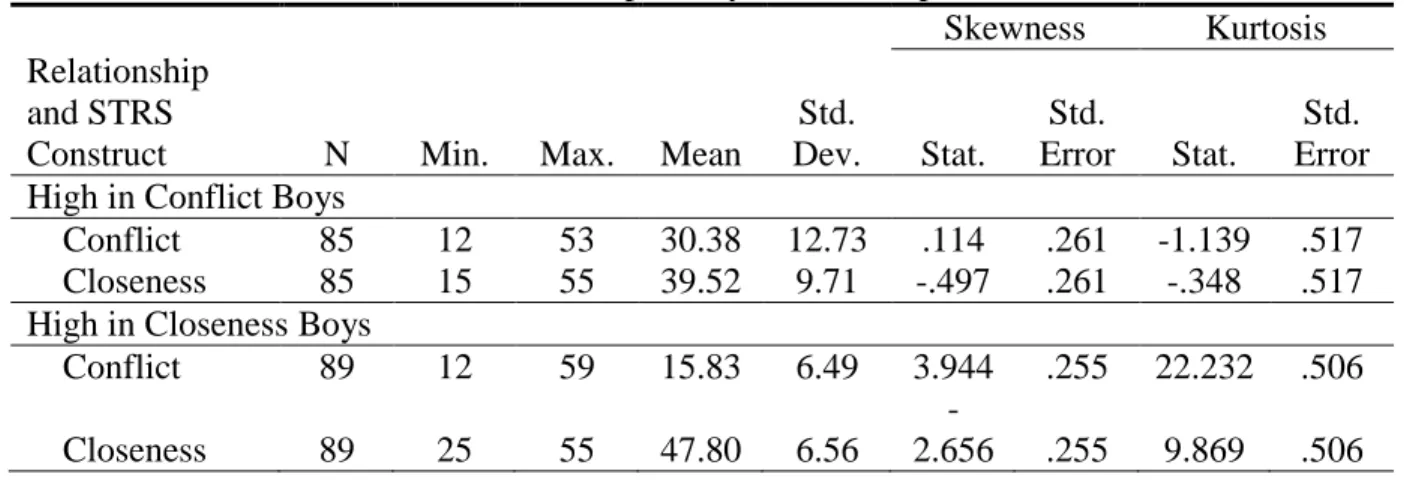
Table 5.2 STRS Results for Child Participants by Relationship...52
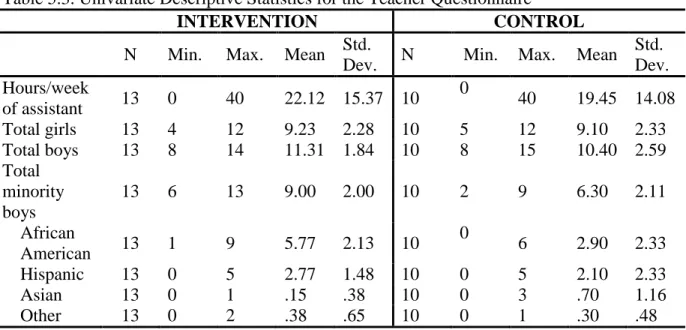
Table 5.3 Univariate Descriptive Statistics for the Teacher Questionnaire ...54
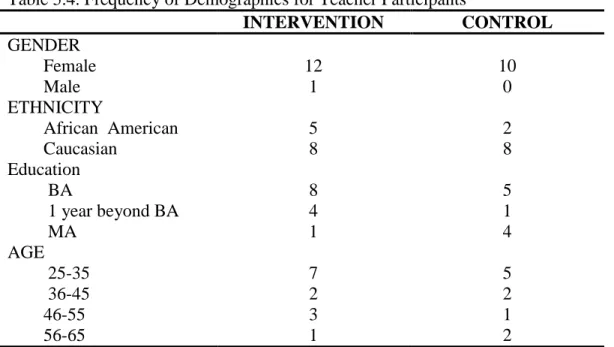
Table 5.4 Frequency of Demographics for the Teacher Participants ...55
Table 5.5 Independent and Dependent Variables for Research Question 1 ...55
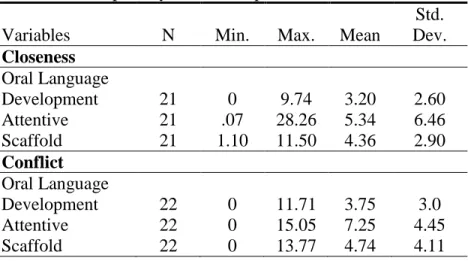
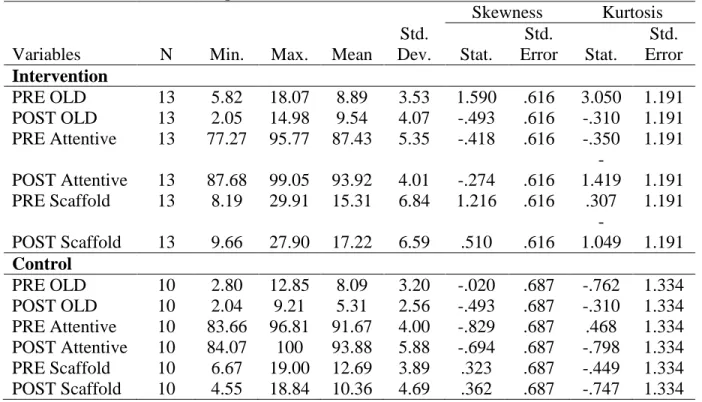
Table 5.6 Univariate Descriptive Statistics for Research Question 1 ...56
Table 5.7 Levene‘s Test for Equality of Variances: Oral Language Development ...57
Table 5.8 Levene‘s Test for Equality of Variances: Scaffolding ...58
Table 5.9 Levene‘s Test for Equality of Variances: Attentive ...58
Table 5.10 False Discovery Rate for Research Question 1...59
Table 5.11 Independent and Dependent Variables for Research Question 2 ...59
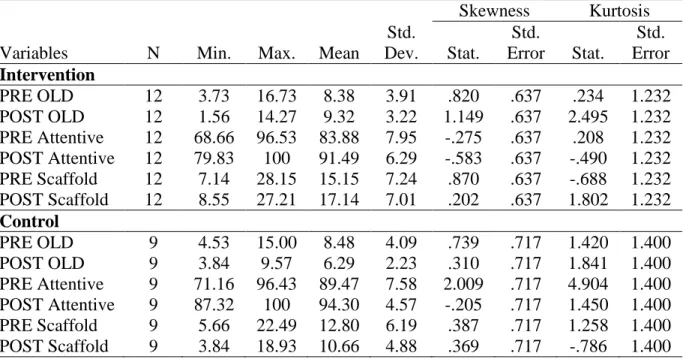
Table 5.12 Univariate Descriptive Statistics for Research Question 2 ...60
Table 5.13 False Discovery Rate for Research Question 2...65
Table 5.14 Independent and Dependent Variables for Research Question 3 ...65
Table 5.15 Univariate Descriptive Statistics for Research Question 3 ...66
LIST OF FIGURES
Figure 2.1 Conceptual Model: The Relationship between Teacher-child Relationships
and Classroom Experiences for Minority Boys ...10 Figure 2.2 Conceptual Model: The Relationship between a Professional Development
CHAPTER 1
BACKGROUND
Less than 1/3 of America‘s fourth graders are at or above grade level in literacy, indicating many students are leaving the fourth-grade without the skills necessary to succeed in subsequent schooling (Lee, Grigg, & Donahue, 2007). The difference between the
average score on standardized tests for Black students, Hispanic students, and White students is known as the national achievement gap. Though the gap has decreased in some areas during the last 30 years, specifically in both math and science at the fourth grade level, minority students are still underperforming across the board compared to their White peers (Lee, et al.). White and Black students together comprised three-fourths of the nation‘s public school students at fourth and eighth grade in 2007. However, Hispanic students have an increasing presence in the U.S. school system which makes the fact that the academic performance of Hispanic males is more similar to that of Black male students than to White male students even more of a concern. In 2007, White fourth-grade students had average scores in reading at least 26 points higher than their Hispanic peers and 28 points higher than Black students. Forty three percent of White students tested at or above ―proficient‖ in reading while only 14% of Black students and 17% of Hispanic students met the ―proficient‖ threshold (Lee, et al.).
2006, males were suspended at a rate nearly double that of female students (Vanneman, Hamilton, Anderson, & Rahman, 2009). Students who are suspended from school are more at risk for dropping out than students who are not suspended (Baker et al., 2001).
Gender also plays a role in the achievement gap. In 2007, Black females in the fourth grade made greater gains in mathematics over a 17 year time period than White female students, thus narrowing the gap. There was no significant change in the gap for Black male students during the same time frame (Vanneman, et al., 2009). Overall, 35% of female fourth-grade students were at or above ―proficient‖ in reading while only 29% of males reached the same level (Lee, et al., 2007).
As state and federal policies continue to fund and provide early education settings to children as young as three years of age, systems of accountability are being established to ensure that a high-quality early education is provided to all children. Evidence suggests the quality of instruction in many schools serving low-income students, who tend to also be minority students, is not as high as in those schools serving higher-income students. The disparity may be due to the lack of high-quality instruction and well-prepared teachers in the lower performing schools (Good & Nichols, 2001). Evidence suggests that educational professionals are not well prepared to teach diverse families (Gay & Howard, 2000; Hyun, 1996). Furthermore, research and census reports show that educational services are being provided by professionals that do not proportionally represent the diversity found in society: the vast majority of teachers are White women (Saluja, Early, & Clifford, 2002). In 2004, minority children made up 42% of public school children grades PreK-2nd grade
(KewalRamani, Gilberson, Fox, & Provasnik, 2007). During the same year, only 18% of
Among the concerns regarding ill prepared professionals is that many Caucasian teachers may unintentionally accept and/or promote forms of discrimination (Smith, Moallem, and Sherrill, 1997) which could result in providing environments that are not culturally responsive. Teachers often fear ―saying the wrong thing‖ or discussing the often taboo topic of racism, and as a result, take on an attitude of ―colorblindness‖ which devalues the individual students‘ contributions to the classroom environment. Teachers may not engage in important dialogue with children regarding race and thus never establish a safe community for children to reflect, learn, and appreciate racial differences (Howard & Denning del Rosario, 2000). Additionally, colorblindness can affect teachers‘ attitudes and expectations which in turn, affect the students‘ academic outcomes (Barnes, 2006, Howard & Denning del Rosario). This too is concerning because children‘s academic trajectories become more stable during their early school years and negative perceptions of competence and attitudes become stronger and harder to reverse as children progress through school (Veleski & Stipek, 2001).
Research suggests that teachers should, in fact, be engaged in the exact opposite of ―colorblindness‖ by providing culturally responsive learning environments that recognize, promote and support the differences between their students (Barnes, 2006). Culturally responsive teaching not only includes multicultural content, but using multicultural teaching strategies as well (Gay, 2002). Teachers should make school more interesting and
Fortunately, teacher behavior can be influenced by professional development and training (Ackerman, 2007, Mashburn, et al., 2008; Pianta, 2006). Professional development for early education teachers may provide the bridge for connecting classroom practice to research based standards of quality.
CHAPTER 2
THEORETICAL FOUNDATIONS AND CONCEPTUAL MODELS
As young children enter school, they are faced with expectations that they will be able to navigate peer interactions, adapt to teacher and classroom demands, become
autonomous and develop identities of their own (McIntyre, Blacher, & Baker, 2006). They begin to take on the formal role of student; a role that is unfamiliar to most children
(McIntyre, Eckert, Fiese, DiGennareo, & Wildenger, 2007). As part of their new student role, children interact with adults outside of their home on a regular basis. Children form attachments to their important adult caregivers, including teachers, and as a result, they begin to develop important relationships outside of the home (Howes & Ritchie, 2002).
Positive teacher-child relationships are formed in classrooms where both learning and social relationships are valued (Howes & Ritchie, 2002). The classroom becomes a place where children develop by being part of a community (Rogoff, 1994). Children and adults together structure shared activities and learning experiences. Because communities are continuously changing, children change their participation in the activities of their
classroom is rooted in two theoretical perspectives: attachment theory and sociocultural theroy.
Attachment Theory
Attachment theory was first conceptualized as a way to describe the deep bond between a mother and a child (Bowlby, 1982). Today the fundamental concepts described in Bowlby‘s early work are used to describe teacher-child relationships as well (Howes & Ritchie, 2002). Children develop deep early bonds with caregivers that shape developmental trajectories throughout their lives (Bowlby). Through interactions, children develop ―internal working models‖ of relationships. Overtime, the internal working models function as
―cognitive maps‖ in the brain and shape the way children understand and explore their world (Bowlby). Bowlby‘s emphasis on internal working models helped conceptualize attachment in terms of control systems that are constructed through experiences and play a role in organization of behavior and emotion in relationships beyond childhood (Waters & Cummings, 2000). In fact, with the onset of social learning in early childhood, children‘s attachment-related information expands greatly.
Essential to attachment theory and the development of positive teacher-child relationships is a child‘s ability to use a caregiver as a secure base (Ainsworth, 1978; Bowlby, 1982; Howes & Ritchie, 2002). Children who have developed internal working models resulting from interactions with dependable, responsive caregivers will be competent explorers in their environment and will seek comfort from caregivers in time of need
relationships is adaptive, meaning, if a child had a history of caregivers who were
unresponsive, he probably would not see a new caregiver as someone who could provide support and comfort. He may, in fact, avoid seeking help from a new caregiver (Ainsworth). Children tend to act towards new adults in ways that are consistent with their prior
relationship history (Howes & Ritchie).
Mary Ainsworth (1978) expanded upon Bowlby‘s work to further understand and classify the behaviors associated with attachment relationships. She categorized attachment into three styles: secure, ambivalent-insecure, and avoidant-insecure. The desired attachment category is secure. These attachment categories are used to describe mother-child as well as teacher-child relationships. Children with secure attachments trust adults who care for them and are able to use adults as secure bases (Ainsworth). Ambivalent-insecure attachments manifest in children who tend to be dependent and hard to comfort (Howes & Ritchie, 2002) and are characterized by a lack of trust between teachers and children (Ainsworth). Children with avoidant-insecure attachments tend to avoid caregivers due to their past experience with neglectful or insensitive adults (Ainsworth; Howes & Ritchie).
Sociocultural Theory
vital to recognize the various influences regarding student‘s mental, social, and academic development.
Teacher-child interactions are a fundamental aspect of sociocultural theory. Children are active participants in their acquisition of knowledge, but only with the support of others. Vygotsky believed a child‘s actions on objects were beneficial for development, but only when included in a social context and supported by communication with others (Bordrova & Leong, 2007). Additionally, Vygotsky believed one of the most advantageous social
contexts was formal schooling. Vygotsky recognized that humans construct mental tools or ―tools of the mind‖ that change the way they think and remember (Bordrova & Leong). Through language, teachers guide children‘s development of these tools and encourage them to use the tools creatively and independently, and eventually, develop tools on their own (Bordrova & Leong).
A final foundation of sociocultural theory is the idea that learning is not added to existing knowledge, but that learning modifies and builds upon prior knowledge (Bordrova & Leong, 2007). Teachers who teach to emerging skills rather than existing skills facilitate dialogue that guides children to build new meanings and concepts. This pocket of optimal learning where children teeter between what they can do on their own and what they can achieve with guidance is known as the ―zone of proximal development‖ (Vygotsky, 1978). This zone identifies the level of ―potential development‖ that is determined through adult guidance or collaboration (Bordrova & Leong). And it is within this zone of proximal development that close, positive teacher-child relationships become increasingly important.
academic and social development is best understood when the theories intertwine.
According to sociocultural theory, children learn through social interaction and collaboration with their teachers (Vygotsky, 1978). However, if children do not experience a secure attachment with their teachers, they will be less likely to seek out their teacher for interaction and support (Ainsworth, 1978), thus limiting the chances of having a meaningful interaction within the ―zone of proximal development‖.
Conceptual Model
This paper presents two conceptual models designed to address the achievement gap among minority boys. The first model addresses teacher-child relationships and the second model addresses professional development. To explore the various classroom experiences young children have in school, it is important to develop a model that defines the teacher-child relationships, teacher-teacher-child interactions, and teacher-child academic engagement that influence classroom experiences for minority boys (Figure 2.1). Research suggests teacher-child relationships may be associated with children‘s academic (Burchinal, et al., 2002; Hamre & Pianta, 2001; Pianta, et al., 1997; Pianta & Howes, 2002; Pianta & Stuhlman, 2004) and social development (Birch, & Ladd, 1997; Ladd, Birch, & Buhs, 1999; Peisner-Fineberg, et al., 1999; Peisner-Fineberg, et al., 2001). It is possible that children who see teachers as supportive are more likely to pursue goals valued by teachers, such as engagement in
academic activities (Hamre & Pianta, 2005) and children who trust and like teachers may be more motivated to succeed (Cicchetti & Lynch, 1993). This research suggests classroom experiences for minority boys differ depending on the type of teacher-child relationship.
(Figure 2.2). The intervention was aimed at improving conflictual teacher-child relationships by educating teachers about the impact of race and class on learning. An improved
understanding of these relationships will allow education programs to provide teachers the professional development necessary to form and establish teacher-child relationships that result in more positive early classroom experiences for minority boys.
Figure 2.1. Conceptual Model: The Relationship between Teacher-child Relationships and Classroom Experiences for Minority Boys.
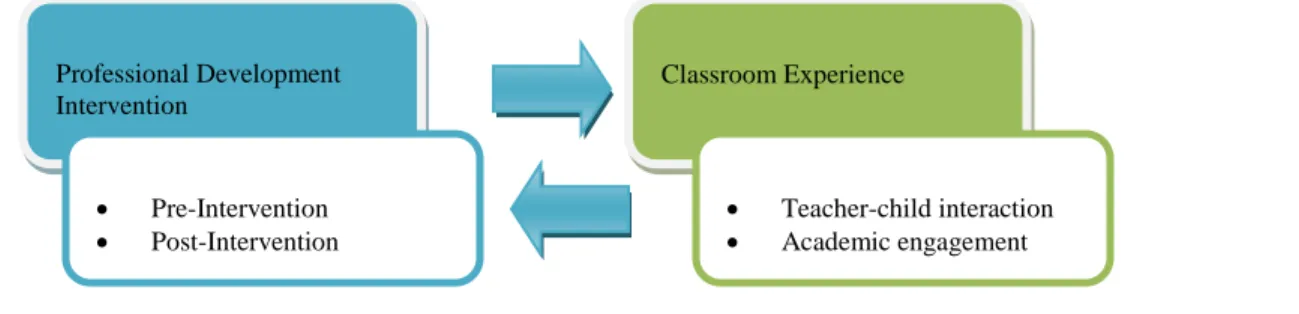
Figure 2.2. Conceptual Model: The Relationship between a Professional Development Intervention and Classroom Experiences for Minority Boys.
Explanation of Model 1
Model 1 (Figure 2.1) suggests that the relationships between minority boys and their teachers influence their experiences in the classroom, and the classroom experiences also influence the relationships. As defined by the student teacher relationship scale measure (Appendix P), the categorizations for teacher-child relationships are either high in conflict or high in closeness. The classroom experiences are categorized as teacher-child interaction
Teacher-child Relationship
High in Closeness
High in Conflict
Classroom Experience
Teacher-child interaction
Academic engagement
Professional Development Intervention
Pre-Intervention
Post-Intervention
Classroom Experience
Teacher-child interaction
and academic engagement. Teacher-child interactions reflect the manner in which teachers interact with children and are measured by the amount of oral language development and scaffolds the children experienced during the observation. In this model, academic engagement includes the most basic level of behavioral engagement and is measured as attentive in the current study. Such behavior is related to student conduct and on-task behaviors (Fredericks, Blumeneld, & Paris, 2004) such as active involvement (i.e. talking, doing), attention (i.e. listening, watching), and non-engagement (i.e. wandering, staring) (Powell, Burchinal, File, & Kontos, 2008; McWilliams, Scarborough, & Kim, 2003).
Therefore, this study examines the classroom experiences of minority boys related to teacher-interactions by measuring the boys‘ amount of oral language development and scaffolds. This study examines the classroom experiences of minority boys related to academic engagement by measuring the boys‘ amount of attentive.
Explanation of Model 2
Model 2 (Figure 2.2) suggests that the professional development intervention
the most basic level of behavioral engagement and is measured as attentive in the current study. Such behavior is related to student conduct and on-task behaviors (Fredericks, Blumeneld, & Paris, 2004) such as active involvement (i.e. talking, doing), attention (i.e. listening, watching), and non-engagement (i.e. wandering, staring) (Powell, Burchinal, File, & Kontos, 2008; McWilliams, Scarborough, & Kim, 2003). Therefore, this study examines the classroom experiences of minority boys related to teacher-interactions by measuring the boys‘ amount of oral language development and scaffolds. This study examines the
classroom experiences of minority boys related to academic engagement by measuring the boys‘ amount of attentive.
Research Questions and Hypotheses
Classroom experiences such as oral language development, scaffolded learning, and attentiveness may be linked to children‘s academic and social outcomes. Additionally, research suggests that the type of relationship children have with their teachers may influence how children explore their classroom, interact with their teachers, and form positive
1. Is there a difference in teacher interaction and child engagement for the high in conflict relationship and the high in closeness relationship?
Hypothesis 1a: Oral Language Development scores will be higher for the high in closeness relationship than the high in conflict relationship, pre-intervention.
Hypothesis 1b: Scaffolds scores will be higher for the high in closeness relationship than the high in conflict relationship, pre-intervention.
Hypothesis 1c: Attentive scores will be higher for high the in closeness relationship than the high in conflict relationship, pre-intervention.
2. Do the teacher interaction and child engagement scoresfor the high in conflict
relationship differ for teachers in the control group and teachers in the intervention group, assuming no prior differences in teacher interaction and child engagement scores among the two groups?
Hypothesis 2a: For the high in conflict relationship, teachers in the intervention schools will have higher Oral Language Development scores than teachers in the control schools.
Hypothesis 2b: For the high in conflict relationship, teachers in intervention schools have higher Scaffolds scores than teachers in the control schools.
Hypothesis 2c: For the high in conflict relationship, teachers in intervention schools will have higher Attentive scores in the intervention schools than the control schools. 3. Do the teacher interaction and child engagement scoresdiffer for teachers in the control group and teachers in the intervention group, assuming no prior differences in teacher interaction and child engagement scores among the two groups?
Hypothesis 3a: Teachers in the intervention schools will have higher Oral Language Development scores than teachers in the control schools.
Hypothesis 3b: Teachers in the intervention schools will have higher Scaffolds scores than teachers in the control schools.
Hypothesis 3c: Teachers in the intervention schools will have higher Attentive scores than teachers in the control schools.
4. A final hypothesis will be tested if the results indicate that there is a difference in teacher interaction and child engagement scores by relationship and by intervention status for the high in conflict relationship.
CHAPTER 3
LITERATURE REVIEW
Considerable research highlights the influence of positive teacher-child relationships on young children‘s academic and social development (Birch & Ladd, 1997; Burchinal, et al., 2002; Cicchetti & Lynch, 1993; Hamre & Pianta, 2001; Hamre & Pianta, 2005; Ladd, et al., 1999; Peisner-Fineberg, et al., 1999; Pianta, et al., 1997; Pianta & Stuhlman, 2004). As children interact with teachers, they continually modify or solidify their internal working models of adult relationships. Positive relationships characterized by warm, sensitive, responsive interactions can disconfirm a previous difficult working model and thus enable children to develop modified, trusting, working models of adult relationships (Howes & Ritchie, 2002). Establishing secure teacher-child relationships that allow children to explore classrooms and actively engage in learning opportunities is especially important during the early school years when significant achievement growth occurs. Pianta, Belsky, Vandergrift, Houts, and Morrison (2008) found that most of the change in children‘s reading and math scores occurred by the first grade, with virtually no change after third grade.
Academic Engagement
Additionally, dropout prevention programs and other interventions frequently use the term ―engagement‖ as an important component of their programs (Finn & Rock, 1997). Although there is substantial research into children‘s academic engagement, it is often difficult to compare links among studies due to the lack of consistency in the definition of engagement (Hughes, Luo, Oi-Man, & Loyd, 2008).
In an extensive review of school engagement research, Frederick, et al. (2004) divided school engagement into three categories: behavioral, emotional, and cognitive. The authors characterized behavioral engagement as participation and involvement in academic and social or extracurricular activities and considered this form of engagement crucial to achieving positive academic outcomes and preventing school dropout. Specifically, participation can include attending school and class, paying attention to the teacher, taking part in extracurricular activities, and responding appropriately to directions, questions, and assignments (Alexander, Entwisle, & Horsey 1997; Finn & Voelkl, 1993). Finn (1989) also categorized participation into different levels. At the most basic level-one, participation includes young children attending, being prepared, and responding to directions or questions initiated by the teacher (Alexander, et al., 1997; Finn). Most research on young and
who do well in school tend to use their time effectively, have talent-interest in the subject matter, have a sufficient attention span, and are active participants in the academic routine (Alexander, Entwisle, & Dauber, 1993). Not surprisingly, students who are interested and involved in the classroom spend more time on task (Alexander, et al., 1993).
Young children who show signs of disaffection with school not only perform lower academically during the school year than their more engaged peers, but may become increasingly at risk for school failure with additional years in school (Hughes et al., 2008), suggesting early intervention may be key to later school success. In a longitudinal study of inner-city children, Spivack and Cianci (1987) found significant relationships between behavior ratings in kindergarten through third grade and classroom misconduct at ages 14 and 15, as well as school disciplinary measures and police contacts by age 17 (as cited in Finn, 1989). Specifically, behavior ratings during early school years including ―classroom disturbances‖, ―impatience‖, ―disrespect-defiance‖, ―irrelevant responsiveness‖ and
―inattentive-withdrawn‖ were related to more problematic behavior as teenagers (Finn). As Finn and Voelkl (1993) and Finn and Rock (1997) suggest, level of classroom engagement may explain why some high risk students succeed in school while others do not. Since levels of classroom engagement can be changed and improved, it is important for educators to encourage active engagement during the early school years while young children are forming their school trajectories.
Academic trajectories seem to be formed along a linear path that begins with a child‘s clean slate quickly filling with self and teacher assigned labels. Alexander et al. (1997) found that once students‘ performance patterns and conduct habits are established, the students ideas about school and self take shape subsequently fueling others to make judgments on their competence and character and leading them to be assigned to ―niches‖ in the system. It is far more difficult for a student to become re-engaged in school when his early school
experiences included remedial courses, discipline and labeling. (Alexander et al., 1997). Many students are labeled as a result of their engagement or, more significantly, lack of engagement in classroom settings. One of the most consistent findings in classroom engagement research is that non-participation has a strong impact on academic achievement and when students are non-participants during early school years they are at an increased risk for a number of adverse consequences, including dropping out of school (Finn, 1989;
Fredericks et al., 2004). However, research suggests that types of non-participation may impact academic performance differently. Finn, Pannozzo, and Voelkl (1995) conducted a study in which non-participant students were categorized into inattentive, disruptive, or both inattentive and disruptive groups. Their findings show that students classified as inattentive were significantly impaired academically and scored below compliant students and disruptive students on norm-referenced tests. Additionally, students categorized as both inattentive and disruptive performed most similarly to students categorized as just inattentive suggesting inattentiveness may be more detrimental than disruptiveness. Inattentive students may become withdrawn from the classroom and have less access to the curriculum (Finn & Voelkl, 1993). Similarly, kindergarten and 1st grade children who displayed positive
reading skills than children who displayed such approaches less often (Denton & West, 2002).
Teacher-child relationships and classroom participation.
Academic engagement not only influences the labels children receive, academic trajectories, and long term risk behaviors, but may also influence and be influenced by teacher-child relationships. Children are not secure or insecure; rather their relationships with teachers can be secure or insecure. As a result, children may not have the same types of relationships with each individual teacher; teachers are not interchangeable (Howes &
Ritchie, 2002). Children experience feelings associated with teacher-child relationships. For example, children may experience anxiety and fear in an insecure relationship. These
feelings may transpire into classroom behaviors, such as aggression and/or disengagement (Birch & Ladd, 1997) and how teachers respond to such behaviors either promotes or mitigates conflictual relationships.
Ladd et al. (1999) examined how children‘s behaviors influence social and academic development and found classroom participation to be an important prerequisite for
participation. Furthermore, classroom participation was the strongest direct path to achievement (Ladd et al.). The findings from this study emphasize the importance of children establishing teacher-child relationships that encourage children to use teachers as secure bases from which to explore their classrooms (Ainsworth, 1978; Bowlby, 1982; Howes & Ritchie, 2002).
As revealed by Ladd et al. (1999), children‘s classroom participation includes how children interact socially with peers and teachers in their classrooms. Burchinal and colleagues (2002) found similar outcomes addressing social competence and academic achievement. They studied 511 children beginning in the second-to-last year of child care and continuing to the third year of elementary school. Children rated by their preschool teachers as more outgoing and friendly tended to have higher scores on academic
achievement tests and acquired reading and math skills more rapidly in elementary school than their less outgoing classmates. In addition, a close teacher-child relationship appeared to serve as an alternative pathway to competence for children who had academic risk factors. The teachers‘ perceptions of a close relationship with an individual child predicted better reading skills for children whose parents promoted authoritarian beliefs and enhanced language skills for minority children. This finding is consistent with Hamre and Pianta (2001) suggesting that teacher-child relationships may serve as protective factors that can buffer the unfavorable effects of risk factors for some children.
Specifically, the study found teacher-child relationships to be a stronger predictor of behavior than academic outcomes; and conflict was a better predictor of academic and disciplinary problems than were teachers‘ ratings of students‘ problem behaviors. Such findings indicate children who were able to form more positive relationships with their teachers, despite behavior problems, were able to avoid future behavioral difficulties than their peers who developed more conflictual teacher-child relationships.
Essentially, the close relationships buffered future behavior problems and those children demonstrated higher academic achievement, fewer disciplinary infractions, and fewer school suspensions through 8th grade (Hamre & Pianta, 2001). The authors suggested behavior problems alone do not predict school success, but the teacher-child relationships and specifically the levels of conflict within the relationships predict later school success. Pianta and Steinberg (1992), found a similar outcome while studying children who were retained by their teachers. They compared children who had referrals for retention but were promoted to the next grade level to children who had referrals for retention and were
retained. They found that children were differentially promoted based on the closeness of the teacher-child relationships, such that children who were promoted had closer teacher-child relationships than children who were retained (Pianta & Steinberg).
Hamre, Pianta, Downer, and Mashburn (2008) also attempted to distinguish between conflict and problem behaviors by studying teacher reports of 4 year olds. They found 53% of the variance in teacher reports of conflict in relationships was explained by teacher
teachers as having significant behavior problems did not have high conflict with teachers. This finding is similar to the previous findings of Hamre and Pianta (2001) suggesting some teachers are able to form positive relationships with children, despite high levels of problem behaviors. Hamre et al. found the opposite to be true as well. Some students had relatively high levels of conflict despite low levels of teacher-reported problem behaviors, possibly because they ―get on teachers‘ nerves‖ but do not have behavior problems.
Finally, findings from the Cost, Quality and Outcome study (Peisner-Fineberg et al., 1999; Peisner-Fineberg et al., 2001) address associations between children‘s problem behaviors, teacher‘s ratings of closeness, and children‘s social development. Ratings of teacher-child relationships related to both academic and social skills, had a stronger impact on social skills. Children‘s behavior seemed to affect teacher‘s ratings of closeness.
Teachers from preschool-2nd grade had closer relationships with children they rated as lower in problem behaviors. Additionally, these children were rated by their teachers as having better sociability through kindergarten. The authors concluded that ―early relationships with caregivers were the strongest longitudinal predictors of children‘s classroom behavior and social skills‖ (Peisner-Fineberg et al., 2001 p. 42).
Teacher-child Interactions
and sensitive interactions with children manifest. Oral language development.
Oral language development is fundamental to children‘s literacy development which includes listening, speaking, reading, and writing (Kirkland & Patterson, 2005). Developing oral language skills affords children a natural transition to reading and writing, as well as improved language fluency and confidence. Though oral language skills influence reading and writing development and mastery, oral language often refers specifically to the listening and speaking portion of language (Kirkland & Patterson). Vygotsky believed language was the actual mechanism for thinking, a mental tool (Bodrova & Leong, 2007). Furthermore, Vygotsky believed that language made thinking more abstract, flexible, and independent (Bodrova & Leong) making oral language development a keystone for academic and social achievement.
However, certain classroom conditions may be favorable to the development of oral language skills. Hall (1987 as cited in Kirkand & Patterson, 2005) identified conditions in which oral language emerges in children: ―(a) children construct language, (b) parents, teachers, and caregivers serve as facilitators, not transmitters, of language development; (c) language is embedded in the context of the daily life of a child; (d) children construct language in their pursuit of meaning and comprehension related to their world and print; (e) the conditions for developing language are identical to those for learning about the world; (f) social interaction is foundational to language development; (g) children understand the functions of language as they use it to clarify information about themselves and others; and (h) language is learned in a child-initiated, holistic manner‖ (Kirkand & Patterson, p. 391-392). By facilitating the language development process, as opposed to transmitting or giving children language, teachers can provide children with authentic learning opportunities. Facilitation opportunities can occur in the classroom through the environment, connections to literature, developmentally appropriate oral language activities, and engaging curricula (Kirkland & Patterson).
Though children develop oral language through these authentic mechanisms that create environments rich in language building opportunities, many classrooms have reduced oral language opportunities in order to focus class time on test items and academic content (Kirkland & Patterson, 2005). Powell et al. (2008) used a time-sampling observation method to examine teacher behaviors that co-occurred with children‘s active engagement in
child-teacher observational intervals. Such findings suggest child-teachers are not capitalizing on any grouping structure to elicit expressive language from children.
Scaffolding.
Effective learning experiences are those that build on what children already know and encourage children to stretch towards new skills (Copple & Bredekamp, 2009). Providing such learning experiences requires teachers to assess children‘s knowledge and skills, and to use that information to determine how to challenge children to accomplish next steps.
(Bodrova & Leong, 2007). The support that moves children from mastered skills to potential skills occurs through social interactions, and, as such, is most likely to occur during sensitive and responsive interactions (Bodrova & Leong) and is central to Vygotsky‘s ―zone of
proximal development‖. Wood, Brunner, and Ross (1976) metaphorically identified this type of instruction in which an expert helps a novice perform at a higher level as ―scaffolding‖. Aptly named, scaffolding is an intentional support that helps children accomplish tasks that they could not accomplish on their own and as the child takes more responsibility in
completing the task, the level of help gradually decreases (Wood, Brunner, and Ross). Thus scaffolding offers a nature of guidance and the zone of proximal development identifies when the guidance should occur in order for optimal learning to take place.
The boundaries of the ―zone of proximal development‖ are formed at two levels: independent performance and assisted performance (Bodrova & Leong,). Assisted
(Bodrova & Leong, p. 40). Support can also be indirect, including organizing an environment to facilitate the practice of a certain skill set. By taking part in such
interactions, teachers utilize Vygotsky‘s approach that focuses on the child ―to be‖ rather than on the ―present child‖ (Bodrova & Leong).
Research with both school aged children (Hamre & Pianta, 2001; Pianta, LaParo, Payne, Cox, & Bradley, 2002; Pianta, Belsky, Houts, Morrison, & NICHD, 2007) and prekindergarten children (Burchinal et al., 2008) reveal that children demonstrate greater academic gains when teachers build from the children‘s skill levels, enhance those skills, and provide positive, explicit feedback. Additionally, Burchinal et al. (2008) found that
academic gains were not only related to teachers‘ positive interactions with children, but also to the extent teachers promoted the use of language, provided scaffolding, provided coherent instruction, and provided contingent informative feedback, indicating the importance of both positive interaction and instructional quality. Burchinal et al. (2008) also found that
enriching interactions between children and teachers that encouraged children to
communicate and use language tended to occur when teachers interacted individually or with small groups of children. This finding echoes similar research suggesting an association between children‘s language and literacy gains and responsive and sensitive interactions with teachers (Early et al, 2005; Howes et al, 2008).
Teacher-child relationships and classroom emotional climate.
al., 2008). Children tend to perform better academically in classrooms that offer emotional support and include teachers who are responsive to individual needs, offer proactive behavior management, and create positive classroom environments (Hamre & Pianta, 2005). Hamre and Pianta (2005) identified children in kindergarten as being at risk for developing
conflictual teacher-child relationships, but found that the risk was moderated by the emotional support provided by the teachers. Not surprisingly, at risk children who were placed in classrooms with low emotional support were particularly vulnerable for developing conflictual teacher-child relationships (Hamre & Pianta, 2005).
Birch and Ladd (1997) suggest a possible explanation of why children differentially experience classroom activities. Children who experience positive teacher-child
In 2008, a non-experimental, longitudinal field study examined associations between patterns of exposure to quality and quantity of learning opportunities and academic
trajectories throughout elementary school years (Pianta, Belsky et al., 2008). The study focused on reading and math achievement from 54 months to fifth grade. Similar to the findings of Hamre and Pianta (2005), emotional quality of the classroom, including warmth of adult child interactions and adults‘ ability to respond to children in a sensitive and individualized manner, was a consistent predictor of both reading and math skills (Pianta, Belsky et al.). Once again, these findings highlight the importance of children feeling emotionally comfortable and supported in their classrooms, possibly by having emotionally secure relationships with their teachers.
One final study addressing academic and social gains in prekindergarten children found that gains were largely a function of the classroom processes directly experienced by children, particularly the instructional climate of the classroom and teacher-child relationship quality (Howes et al., 2008). Gains in literacy, math, and social skills were primarily
associated with classroom climate and secondarily to teacher-child relationship quality as well as the amount of exposure to certain areas of instruction. Specifically, children showed the largest gains in social skills and largest decreases in behavior problems when the teachers reported warmer relationships with children (Howes et al.). Again, these teachers provided responsive, individualized interactions with children and promoted a classroom atmosphere that was respectful and encouraging.
Professional Development
2003). Following this logic, accountability systems for early education settings measure quality of classrooms and promote accountability standards for classrooms (La Paro, Pianta, & Stuhlman, 2004). However, simply presenting accountability standards does not
necessarily increase quality. Professional development for early education teachers can provide the bridge for connecting classroom practice to research based standards of quality. Professional development is undergoing a transformation from a coursework/generic
approach to a teacher-focused approach (Pianta, 2006) which is embedded within the
classroom context, is collaborative, and is part of the school culture (Mashburn et al., 2008). This shift is in line with the National Association for the Education of Young Children‘s (NAEYC) position statement for professional development which indicates ―professional development experiences are most successful when they respond to an individual‘s
background, experiences, and the current context of their role‖ (National Association for the Education of Young Children [NAEYC], 1993, p. 7).
For the purpose of this study, the notion of ―engaged models‖ are those that use data collected in classrooms/programs to promote positive changes in teacher behavior and classroom/program environments. The presented models support quality standards and intentional teaching. Ideally, intentional teaching leads to increased classroom quality which could result in meeting higher-quality standards. The presented engaged models of
data collected within their own classrooms to promote dialogue and change regarding the classroom experiences of minority boys.
US Military.
Recognizing that merely participating in professional development does not
necessarily lead to program quality improvement, the US Military designed and provides an in-depth and comprehensive professional development program for caregivers working at their child development centers (CDC). Professional development is offered in four phases: standardized orientation, modules, annual training, and non-standardized, as-needed
professional development. The final ―as-needed‖ step encourages caregivers to be reflective (Ackerman, 2007).
Ackerman interviewed CDC caregivers at six military sites and found that the aspect of the CDC professional development training that participants found most helpful were those focused on classroom issues, addressed in the final ―as needed‖ step. Caregivers are provided ongoing opportunities to discuss any issues that arise in their classrooms. As a result, they are provided additional support through trainings, consultations and/or
MyTeachingPartner.
The Classroom Assessment Scoring System (CLASS) (La Paro, Pianta, Hamre, & Stuhlman, 2002) is a tool that can be used to provide feedback to improve emotional climates and instructional interactions that have been shown to promote children‘s development (Mashburn et al., 2008). The CLASS is a relatively new observational tool, and is used for professional development in an innovative fashion. Pianta proposes a model that links policy and professional development with child and teacher outcomes (Pianta, 2006). The model suggests using a standardized metric to evaluate classroom environments. The results can be used on a systematic basis to evaluate the extent to which changes in policy or professional development result in changes in classroom processes (Pianta, 2006). MTP is a professional development approach designed to support ―effective teacher-child interactions through a collaborative, web-mediated consultation process and web-based videos exemplars of effective practices‖ (Pianta, Mashburn, Downer, Hamre, & Justice, 2008, p. 432). As with the other engaged models of professional development, MTP is rooted in actual classroom experiences and, as a result, the support teachers receive is a direct result of the behaviors and practices of the teachers within their own classrooms.
MTP utilizes the CLASS as the standardized framework for defining and observing classroom interactions. The two components of MTP include access to video exemplars of high-quality teacher-child interactions that are tied to specific aspects of the CLASS and a consultation process with regular, mulit-modal, ongoing, targeting feedback to
found that teachers who received both the continuous observation and feedback related to their interactions with students as well as the access to video exemplars of ―best practices‖ showed greater gains in aspects of interactions rated with the CLASS than did teachers who only received the access to ―best practices‖ videos (Pianta, Mashburn, et al.). Additionally, greater improvements were shown in those teachers receiving all components of the MTP model than teachers who did not participate in consultation toward improving classroom interactions (Pianta, Mashburn, et al.). The MTP promotes intentional teaching aimed at meeting best practice standards by providing teachers examples of best practices that they should strive to meet, providing assessment results indicating areas of improvement within their own classrooms, and providing on-going professional development targeting specific classroom practices.
Self study and program quality improvement through NAEYC.
of tools used during the actual NAEYC accreditation process to study all aspects of their program. Programs begin to collect evidence of their performance, considering all criteria within each standard (Willer, & Ritchie). The self-study process is designed to promote collaboration among all program staff and will facilitate ―real and lasting‖ improvements. (Willer, & Ritchie).
After programs evaluate the results of the self-study programs may decide to continue with the process and try to obtain NAEYC Accreditation or remain engaged in self-study. As programs pursue NAEYC Accreditation, the self-evaluation process becomes more
systematic and comprehensive (Willer, & Ritchie, 2005). Unlike the self-study process when programs collect data about their policies and processes and then use the data to make
necessary changes and improvements, the subsequent steps are designed to collect and document program evidence that describes how the program functions. The collected evidence is then assessed as part of the formal NAEYC Accreditation visit by an NAEYC Assessor during Step 4. The NAEYC Early Childhood Program Accreditation process starts with programs collecting data and using the results to engage in program improvement and ends with an outside evaluator using tools similar to those used during the self-study process to evaluate program quality. Using a process of reflection and development enables
CHAPTER 4
METHODOLOGY
The current study examines three categorical independent variables and three continuous dependent variables. The dependent variables oral language development, scaffolds, and attentive are classroom experiences minority boys had when they were observed during the classroom observation and are described in detail in the ―Measures‖ section below. It is important to note that this study is a correlational study and as such does not have true dependent variables. The dependent variables are observational variables that were examined in relation to teacher-child relationship and a professional development intervention. The independent variables are time (pre and post intervention), intervention status (control or intervention), and relationship status (high in conflict or high in closeness). Table 4.1 provides a summary of the study variables.
Table 4.1. Variables for Research Questions 1, 2, and 3
Research Questions Independent Variable (IV) Dependent Variable (DV)
1, 2, 3 Time
Intervention Status Relationship Status
Oral Language Development Scaffolds
Attentive
The research questions and hypotheses were as follows:
1. Is there a difference in teacher interaction and child engagement for the high in conflict relationship and the high in closeness relationship?
Hypothesis 1a: Oral Language Development scores will be higher for the high in closeness relationship than the high in conflict relationship, pre-intervention.
Hypothesis 1c: Attentive scores will be higher for high the in closeness relationship than the high in conflict relationship, pre-intervention.
2. Do the teacher interaction and child engagement scoresfor the high in conflict
relationship differ for teachers in the control group and teachers in the intervention group, assuming no prior differences in teacher interaction and child engagement scores among the two groups?
Hypothesis 2a: For the high in conflict relationship, teachers in the intervention schools will have higher Oral Language Development scores than teachers in the control schools.
Hypothesis 2b: For the high in conflict relationship, teachers in intervention schools have higher Scaffolds scores than teachers in the control schools.
Hypothesis 2c: For the high in conflict relationship, teachers in intervention schools will have higher Attentive scores in the intervention schools than the control schools. 3. Do the teacher interaction and child engagement scoresdiffer for teachers in the control group and teachers in the intervention group, assuming no prior differences in teacher interaction and child engagement scores among the two groups?
Hypothesis 3a: Teachers in the intervention schools will have higher Oral Language Development scores than teachers in the control schools.
Hypothesis 3b: Teachers in the intervention schools will have higher Scaffolds scores than teachers in the control schools.
Hypothesis 3c: Teachers in the intervention schools will have higher Attentive scores than teachers in the control schools.
4. A final hypothesis will be tested if the results indicate that there is a difference in teacher interaction and child engagement scores by relationship and by intervention status for the high in conflict relationship.
Hypothesis 4a: The difference in teacher interaction and child engagement for the high in conflict and high in closeness relationships will decrease more for the intervention schools than the control schools.
Participants
children for the classroom observations. 22 teachers were female and one male. The sample included 7 African American teachers and 16 Caucasian teachers. Table 4.2 provides a summary of the number of teacher and child participants by relationship status, intervention status, and time.
Table 4.2. Number of Child and Teacher Participants
Control Intervention
Pre Post Pre Post
Teachers 10 10* 13 13*
Close Conflict Close Conflict Close Conflict Close Conflict Observed
Boys 18 19 19 18 26 26 26 22
*The same 23 teachers participated Pre and Post intervention. The boys were not the same Pre and Post intervention.
Inclusion/Exclusion Criteria
The inclusion/exclusion criteria for this project occurred on four levels: 1) district, 2) school, 3) teacher and 4) child.
Districts.
Districts selected to participate were in North Carolina, had high minority populations, high percentage of free lunch, and low achievement scores based on third grade End of Grade (EOG) test scores
Schools.
Teachers.
Schools were assigned as either control or intervention prior to teacher selection Teachers were identified by their principals as potential participants. Teachers willing to participate were teachers of children in PreK through third grade, who had at least four boys of color in their class, and were willing to be accepted as either part of either a control or intervention school.
Children.
Children in participating schools were in PreK through third grade classrooms. Parents of minority boys were given the opportunity to decide whether or not their child could be observed and were notified that children would be assigned research identification numbers and that data would not ever use their names or other identifying features. All children within each participating classroom with parents who did not object, and were present during the day of each classroom observation were part of the potential sample. Based on the
scoring of the Student Teacher Relationship Scale, which was completed for all eligible boys by their teachers, the project staff selected four minority boys in each classroom: two who the teacher rated as the highest in closeness and two who the teacher rated as the highest in conflict.
Recruitment and Consent
Recruitment for the project also occurred on three levels: 1) district, 2) school, and 3) teacher.
District.
The Principal Investigator (PI) contacted districts via mailings (Appendix A) and
of the study. Three North Carolina districts indicated a willingness to participate. The PI then obtained permission from the appropriate district level representative in the three participating districts to contact recommended elementary school principals in their district about this study.
Schools.
The PI contacted two principals in each participating district (Appendix B & C). Each contacted school had the End of Grade (EOG) scores for 3rd graders in the bottom quarter for their respective districts, and they had a minority population in the top half for that district. Originally, all six contacted schools showed willingness to participate in the study resulting in three intervention schools and three control schools, one of each in each district.
However, the control school in one district dropped out of the study prior to data collection and was not replaced, resulting in one district having only an intervention school.
Teachers.
Teachers who the principals identified as potential participants received a letter
(Appendix D & E) and flyer (Appendix F & G) describing the study. The PI then held pre-study meetings for all interested PreK-3rd grade teachers at each participating school.
During the pre-study meetings, the PI described the study and answered any questions. It was made clear that teachers were not obligated in any way to participate. At the end of the meeting, the flyers (Appendix F & G) were again distributed to teachers. The flyers
STRS forms with instructions (Appendix K) and the parent letters for all children in the classroom (Appendix L & M). An appointment for the classroom observation was made with participating teachers. All observations were scheduled at the teacher‘s convenience.
Measures
Student-Teacher Relationship Scale (STRS)
The STRS (Pianta, 2001) is a 28-item self-report instrument with a Likert scale designed to measure a teacher‘s perception of his or her relationship with a particular student and is appropriate for use in preschool through third grade. The STRS identifies four
patterns in teacher-child relationships: conflict, closeness, dependency, and the overall quality of the relationship. The STRS offers teachers and researchers alike a variety of uses including researching classroom practices, identifying student-teacher relationships that need intervention and support, and evaluating improvements in the quality of student-teacher relationships (Appendix P).
entire normative scale. Specifically, the Dependency subscale was lower for African
Americans (.55) and Hispanic American (.56) than for Caucasian students (.67). As a result, the developers have recommended not using the Dependency subscale in isolation from other STRS scale and subscale scores. Due to this recommendation as well as the breadth of
research identifying close and conflictual relationships as being influential to children‘s school experiences, the current study used the Closeness and Conflict subscales to categorize teacher-child relationships and to identify children to observe.
Teacher Questionnaire
The information requested in this form focused on teacher demographics such as year born, education, and professional development. This form also focused on classroom
demographics such as the number of girl, number of boys, number of minority boys and their ethnic backgrounds (Appendix J). The researchers used this information to obtain the
number of minority boys in the classrooms which was necessary to ensure that the classroom had at least 4 minority boys and to ensure the teachers received the correct number of STRS forms to complete for each minority boy in their class.
Classroom Observations: The Emergent Academics’ Snapshot (EAS)
fourth. When all four children are observed, the observer starts over with the first child. Each of the 36 items in the EAS are coded as present or not present during each 30-second
observation. The EAS is divided into categories including the activity setting (whole group, free choice etc.); the activity or activities that the child is engaged in (math, science, gross motor etc.); the child‘s behavior (attentive, distracted, etc.); the teacher‘s behavior (negative); and the teacher‘s style of interaction (didactic teaching, scaffolding, etc).
The EAS has been used in two large early childhood education studies: the Multi-State Study of Pre-Kindergarten and the Multi-Statewide Early Education Programs Study (SWEEP). One of the two observers for the current study was an observer for the SWEEP study as well. For all studies, observers were trained by one of the measure‘s authors using videos and visits to classrooms. Prior to data collection for Multi-State and SWEEP, each data collector attained an overall kappa across all 28 codes of at least .60 with the correct codes from the video tapes or with one of the measure‗s authors. The average kappa across the two studies‘ 43 data collectors and 28 codes was .81 (SD = .07, range = .63 to .96) (Early et al., in press).
Data collectors also had to achieve a certain kappa for each section. The minimum was .55 for the Setting and Activities sections, and .50 for the Teaching Interactions section. Across Setting codes, the average median kappa was .88 (SD = .10, range = .55 to 1.00). Across Activity codes, the average median kappa was .81 (SD = .09, range .65 to 1.00). The average median kappa across Teaching Interaction codes and data collectors was .67
(SD=.12, range = .50 to .96) (Early et al., in press).
Scaffolds, and Attentive. These three items were the dependent variables for the current study. Though, as previously mentioned, they were observational variables that were used as dependent variables for the purposes of running analysis and not true dependent variables because the current study is a correlational study. Each of the three variables was coded as present or not present for each child during the 30 second observation. Oral language
development is in the ―activity that the child is engaged in‖ category; attentive is in the ―child behavior‖ category; and scaffolds is in the ―teacher‘s style of interaction‖ category. Though oral language development is categorized as an activity in which the child is engaged, a child cannot be engaged in oral language development without a teacher interaction. Therefore, in order for oral language development, as well as scaffolds, to be coded as present, the child was either interacting with a teacher individually or as part of a group. Coding oral language development and scaffolds only when a teacher-interaction occurred was consistent with both conceptual models for the current study which define teacher interactions as the amount of time children had oral language development and scaffolds. Also consistent with the
conceptual models is how attentive was measured. In order for a child to be coded attentive, the child‘s behavior during the 30 second observation had to include on-task behavior. The conceptual models defined academic engagement to be measured as the amount of time children were attentive.
Operational Definitions for Dependent Variables.
language development occurred. Examples of oral language development include teachers asking children open-ended questions, helping children expand their thoughts and ideas, and helping children learn and practice new vocabulary.
Scaffolds was coded as present when a child was involved in an interaction with a teacher either on an individual level or as part of a group in which the teacher showed an awareness of an individual child‘s needs and responded in a manner that supported and expanded the child‘s learning. Some examples of scaffolds include when a teacher asked open-ended questions, when a teacher motivated a child through personal engagement and worked to link classroom activities to the child‘s life and experiences. Consistent with such a definition, oral language development and scaffolds are very similar. For example, if a teacher interaction included drawing expressive language from a child, the child was involved in both oral language development and scaffolds. Each time oral language
development was coded, scaffolds was also coded. However, it was possible for scaffolds to be coded when oral language development was not coded (i.e. when a teacher engaged children through movements to a song).
distracted, aggressive) for the entire 30 second observation. If the child was attentive at all during the 30 seconds, he was coded as attentive.
Procedures
The two schools in each of the three districts were paired by their similarity in demographics—one as an intervention school; the other as the control school. One district only had an intervention site as the control site dropped out of the study prior to data
collection. Data was collected in each classroom during the Spring 2008 and Spring of 2009. Prior to the first observation, each teacher completed the teacher questionnaire and prior to both observations the teachers completed one STRS form for each boy of color in her or his classroom. The boys were identified only by a unique code that was generated by the researcher, and placed on the STRS form when they were given to the teacher. The teacher kept a list linking the boys' names and their codes. Project staff did not know the identity of any boy for whom this form was completed. Prior to the observations, project staff scored each STRS form and identified the two highest in closeness relationships and the 2 highest in conflict relationships as perceived by the teachers in each classroom.
Classroom Observation
selected the next child on the list identified as having either a high in closeness relationship or high in conflict respectively. Classroom routines were not disrupted by the observations. Staff did consult with the teacher during the scheduling process to help determine a
convenient and ―typical‖ day for the observation. Because the observer spent only 30 seconds at a time watching any particular child and was trained to avert her eyes when a child looks in her direction and to not interfere in the child‘s activities, no children in the classroom were aware whether he/she was actually the target of observations. Observations started upon the children‘s arrival to school and ended at departure with an average
observation day of 6 hours.
Professional Development Intervention
The professional development intervention occurred in 5 stages and included: 5 training days using the Ready to PAS modules, classroom consultations, professional learning community meetings, data feedback, and a final project session.
Professional Development Promoting Academic Success for Boys of Color (PAS).
Behavior in the Classroom; and Promoting Positive Racial and Gender Identity in Boys of Color.
Classroom consultation.
The PI observed in each participating teacher‘s classrooms as a follow-up to training (3 times-May, Sept, & Nov ‗08). Each observational visit lasted a minimum of 60 minutes and was followed by a 60 minute discussion with the teacher. The consultation was non-evaluative and designed to support teacher‘s efforts to integrate ideas from the training in classroom practice.
Professional learning community (PLC)
The PI met with all participating teachers in each school in a follow-up to training (3 times-June, Oct ‘08, & Jan ‗09). The purpose of the PLC was to share successes and
challenges encountered when making efforts to integrate ideas from training into classroom practice.
Data feedback.
In July, 09, the PI presented to all intervention staff including the participating teachers aggregated data collected from the Spring ‗08 in a non-evaluative manner. In January, 09, each teacher was provided with the data particular to their own classroom. The data showed the amount of time the children spent in each EAS category (i.e. amount of time children spent in basic activities, such as hand washing and standing in line). Professional development techniques that present teachers with consistent, non-evaluative feedback about their interactions with children can potentially improve the quality of teacher-child
propose possible changes in classroom practice based on the results. By presenting non-evaluative data, the PI allowed the teachers to interact with the data, reflect upon the
findings, and promoted dialogue focused on the data. To stimulate the conversations, the PI asked questions such as ―is it important to read to minority boys? If so, what types of books should be read?‖; ―what style of teaching best supports minority boys in your class?‖; and ―what are some explanations for the large range of experiences that children have in different schools?‖ (Ritchie, 2009) Additionally, the PI continually questioned the teachers about what other thoughts the data brought to mind, encouraging the teachers to explore the data in a meaningful way.
Final project session for both intervention and control teachers.