AN OPTIMIZATION TECHNIQUE FOR SELECTION AND RATING
OF SUPPLIERS WITH INCENTIVE & PENALTY SYSTEM USING
GENETIC ALGORITHM
Dr. Manish Kumar Sagar*Amit Pratap Singh**
ABSTRACT
The incentive & penalty system is for giving reward for exceptional work and penalty for low
standard work of suppliers. The supplier selection process is very critical process, more
complicated due to consideration of multi objective criteria in the decision making process.
This research paper proposes a multi objective suppliers selection model based on genetic
algorithm by considering incentive & penalty system. This proposed method evaluated and
validated with a case study approach under Indian context to select and rate most
appropriate suppliers from the group of suppliers.
Keywords: Genetic algorithm, incentive, multi objective, penalty, supplier selection.
*Assistant professor, Mechanical Engineering Department, Madhav Institute of Technology & Science, Gwalior,
1. INTRODUCTION
In today’s competitive business environment each company is focusing for steep reduction of final product costs and the cost of raw materials, component parts and services may account up to 70% - 80% of the final product costs in most of the industries (Weber et al, 1991; Ding et al., 2005; Shen and Yu, 2009). This has initiated a detailed understanding of the supplier
side and selection of supplier viz cost of sourcing, quality and timely supplies etc. Hence area of supplier selection and their management has not only caught the attention of academicians in the area of operations management, supply chain management and logistics but recently, it has also attracted the attention of industrial people.
Supplier selection is a critical, cumbersome and lengthy process in which a company selects a supplier on the basis of various factors based on business’ priorities and strategy. The overall objective of the supplier selection process is to reduce risk and maximize overall value to the manufacturer. Supplier selection often follows a rigorous, structured approach through the use of a survey of market. An effective supplier survey should have certain characteristics such as comprehensiveness, objectiveness, reliability, flexibility and finally, has to be mathematically straightforward. Researchers are using the genetic algorithm approach for this purpose.
Indian automobile sector is growing rapidly and its contribution in Indian economy is quite high. There are large numbers of unorganized suppliers and there are many challenges which demand that the industry needs to be explored. In automobile sector the cost of raw materials, component parts and services constitutes the main cost of a product. This clearly indicates the requirement of additional research for getting new strides and further advancement of this area. This paper is structured as follows: literature review on supplier selection process is presented in Section 2. Briefly overviews of genetic algorithm are presented in Section 3. Supplier selection model based on GA is discussed in Section 4. A case study is discussed in Section 5. Incentive & Penalty system is discussed in section 6. Finally Result and conclusion & future research issues are discussed in last Section.
2. LITERATURE REVIEW
supplier or partner selection. Narasimhan et al. (2001) states “supplier evaluation is a complex process that involves the consideration of numerous factors”. Talluri and Narasimhan (2004) emphasize that managing the supply base by identifying, selecting and managing suppliers for strategic, long term partnerships is a “key ingredient to the success of a supply chain”. The main objective of supplier selection process is to reduce purchase risk, maximize overall value to the purchaser and develop closeness and long-term relationships between manufacturer and suppliers (Li et al., 1997). However, selecting the right supplier is always a difficult task for many purchasing managers (Liu and Hai, 2005). Different researcher use deferent methods to get the best supplier. Ding et al. (2005) presented a genetic algorithm (GA) based optimization methodology for supplier selection. The proposed method provided possible configurations of the selected suppliers, including transportation modes. Each configuration was then evaluated with respect to the key performance indicators. Jain et al. (2004) proposed a fuzzy based approach for supplier selection. According to them, it might be difficult for an expert to define a complete rule set for evaluating the supplier performance. GA was therefore integrated to generate a number of rules inside the rule set according to the nature and type of the priorities associated with the products and their supplier’s attributes. Mohammad et al., (2007) presents a hybrid intelligent algorithm based on the push SCM, which uses a fuzzy neural network and a genetic algorithm to forecast the rate of demand, determine the material planning and select the optimal supplier. They test the proposed algorithm in a case study conducted in Iran. Lau et al. (2006) used an integrated approach of ANN and GA for supplier selection. ANN was
responsible for benchmarking the potential suppliers with respect to four evaluating factors and GA was deployed to determine the best combination of suppliers. Liao and Rittscher (2007) developed multi-objective programming model for supplier selection under stochastic demand conditions. Four objective functions were incorporated into the model. After finding the optimality, GA was deployed to select the optimal supplier in an efficient manner.
3. MULTI OBJECTIVE GENETIC ALGORITHM
crossover, one parent was mutated to produce one offspring and the better of the two was kept and became the parent for the next round of mutation.
Genetic algorithm is a powerful tool, it has multiple offspring they can explore the solution space in multiple direction at once. It is particularly well suited to solving problems where the space of all potential solutions is truly huge. It can perform well in problems for which the fitness landscape is complex. It has ability to manipulate many parameters simultaneously. Genetic algorithm is weak in certain areas like, the problem of how to write the fitness function must be carefully considered so that higher fitness is attainable and actually does equate to a better solution for the given problem. The other parameters of genetic algorithm – size of the population, the rate of mutation and crossover, the type and strength of selection must be also chosen with care.
Genetic algorithm technique can be used for solving supplier selection problem. Genetic algorithm is different from other techniques in following ways [1]:
1. GA deals with chromosomes that encode decisions related to the selection or not such supplier and the corresponding percentage of assigned demand, when more Than one supplier is selected.
2. GA searches from one population of solutions to another rather than from individual to individual.
3. GA use only objective function information to guide themselves through the solution Space and not derivative. When compared to other technique where it need variety of information to guide them. GA needs only the measure of fitness (objective function Values) about a configuration in the space of the solutions.
4. GA uses probabilistic transition rules rather than deterministic rules.
4.
MULTI OBJECTIVE SUPPLIER SELECTION MODEL BASED ON
GENETIC ALGORITHM:
Let us consider supplier j supplying component i to this manufacturer. The notation used in the model is as follows
N = Total no. of suppliers. n = Total no. of components.
αij = Defective percentage of ith component produced by supplier j βij = Late delivery percentage of ith component produced by supplier j γij = Cost per unit for ith component produced by supplier j
λij = Quantity percentage of ith component produced by supplier j ηij = Financial Position for producing ith component by supplier j Xij = Number of component of type i purchased from supplier j
Φi = upper limit desired by purchase manager for no. of defective items for ith component. ωi = upper limit desired by purchase manager for no. of late delivery for ith component. μi = upper limit desired by purchase manager for cost per unit for ith component. mi =Lower limit desired by purchase manager for quantity of ith component. fi = Lower limit desired by manager for financial position for ith component. 4.1 Objective Function:
In this supplier selection process, the objectives are to minimizing or maximizing , the total no. of defective items, total no. of late deliveries , the total financial position of supplier purchasing multiple component from multiple suppliers.
Let us consider
Z1 = Quality Objective; Z2 = Delivery Objective; Z3 = Cost
Objective
Z4 = Quantity Objective; Z5 = Financial Objective; [Z1] Quality Objective
Minimize Zi1 = [Z2] Delivery Objective
Minimize Zi2 = [Z3] Cost Objective
Minimize Zi3 = [Z4] Quantity Objective
Maximize Zi4 = [Z5] Financial Objective
Maximize Z5 = Constraints
Minimize Zi3 Subjected to: Maximize Zi4 Subjected to: Maximize Zi5 Subjected to: 4.2 G.A. Process:
The selection mechanism works like the guidance system. In this figure “A” Is the ratio of number of worst individuals to the total no. of individuals. The value of “A” Determines how G.A. proceed.
5. MODEL VALIDATION THROUGH CASE STUDY:
For the study of multi objective supplier selection model, we went to an automobile parts manufacturing company ”X” , established in 1995 in India. The company is engaged in manufacturing of sheet metal automobile parts at a very large scale, we met with the personals of B.O.P. section i.e. brought out part section which deals with the suppliers and their supplies. We got the data of ten suppliers from the B.O.P. section, they provided us data according to their company rules and regulations.
KILL ALL WORST INDIVIDUALS
FIND THE VALUE OF “A”
A< 0.3
SBX CROSSOVER YES
A<0.7 NO
MUTATION
SELECTED GENERATION OR INDIVIDUALS
The data for ten suppliers collected from an automobile parts manufacturing firm as shown in this table1.
Table 1. Suppliers Data
SOLUTION METHODOLOGY
CASE I : Considered order quantity > 20000., No. of worst individuals =3,
“A”=3/10= 0.3, Therefore,
When the ratio of the no. of worst individuals to the total no. of individuals is less than or equal to 0.3, then SBX crossover is used. The SBX crossover operator is µ, which is a random value selected between 0 and 1, during each cycle.
SBX crossover (stimulated binary crossover):
Order quantity of supplier 2 for child 2 is calculated as follows: Table2. SBX Crossover
Table2. SBX Crossover
The random variable µ = 0.85 S2 ch2=S2P1Xµ + S2P2X(1-µ) = 4000X0.85+ 4200X(1-0.85) = 4030 Suppliers Min. Qty. Max. Qty. % Defective %Late Dlvry Cost/Un it Order Qty. Fin.Cond. (Lakhs)
S1 2000 18000 0.65 2.5 58 18000 300
S2 5000 15000 0.98 3.1 62 15000 330
S3 14000 28000 1.56 3.7 75 28000 280
S4 10000 20000 0.85 2.6 55 20000 290
S5 15000 32000 1.35 2.9 73 32000 350
S6 24000 48000 1.79 3.5 80 48000 400
S7 7000 17500 0.78 1.9 60 17500 325
S8 25000 53000 0.82 2.2 67 53000 450
S9 11000 24500 1.12 2.8 72 24500 250
S10 16000 35500 1.09 3.3 78 35500 380
S2 S4 S5 S7 S9 TOTAL
4200 4800 2000 4000 5000 20000
PARENT 1
S2 S4 S5 S7 S9 TOTAL
4000 4500 3500 4800 5800 22600
Similarly,
S2ch1= S2P2Xµ + S2P1X (1-µ) = 4200X0.85 + 4000X (1-0.85) = 4170
Therefore, we get values,
Table3. SBX Crossover CASE II: Considered order quantity < 20000 No. of worst individuals= 6,
“A”= 6/10= 0.6, Therefore,
When the ratio of the no. of worst individual to the total no. of individuals Mutation :
Is less than 0.7 i.e. “A”< 0.7, then mutation operator is chosen. Table 4. Mutation
S2 S4 S5 S7 S9 TOTAL
4170 4755 2225 4120 5120 20390
CHILD 1
S2 S4 S5 S7 S9 TOTAL
4030 4545 3275 4680 5680 22210
CHILD 2
S2 S4 S5 S7 S9 TOTAL
4200 4800 2000 4000 5000 20000
PARENT 1
S2 S4 S5 S7 S9 TOTAL
4200 4800 3500 4000 5000 21500
6. INCENTIVE & PENALTY SYSTEM:
Rating
Base Line
In Supplier selection procedure in Industries, the introduction of incentive & penalty system is a good and workable approach and provides good result and also serve as an important tool in the hands of manager. This system works in following ways:
(a.)If one supplier is providing the materials on time, with good quality and is serving best as compared to other suppliers then the organization can give him reward in the form of incentive of 1 or 2% at the end of financial year and also increase its order. (b.) If from the group of suppliers, the supplier which is at the least position in supplies
and performance compared to others , then the organization can charge penalty on the supplier of 1 or 2% and the same penalty can be given to the top supplier as its
incentive with no extra burden on the organization.
(c.) By adopting this system competition between suppliers will increase and their performance will be better.
(d.) Chances of rejection of materials and customer complaints will reduce. S1
S4
S7
S8
S2
S5
S9
S10
S3
S6 POSITION 1
POSITION 2
POSITION 3
POSITION 4
POSITION 5
POSITION 6
POSITION 7
POSITION 8
POSITION 9
POSITION 10 Performance above base line is good
& acceptable
Incentive will be given to top supplier
No penalty will be charge
Performance below base line is poor & not acceptable
RESULT & DISCUSSION:
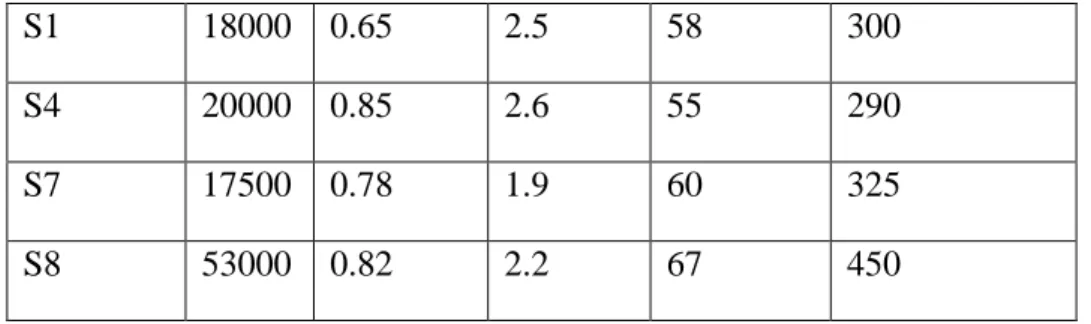
This paper comprises and used the G.A. technique in selecting suppliers by considering multi objective factors like defective factor, late delivery factor, cost factor,order quantity factor , financial status. The result of this paper is obtained by studying quantitative factors and incentive & penalty system by using genetic algorithm. This approach provides the best suppliers on which the organization can rely and hence very helpful to the manager for selecting suppliers From this study suppliers from each category are selected and by analyzing this study, it gives four suppliers which are most reliable and best from the group. It is evident from the study and result that four suppliers i.e. S1, S4, S7, S8 are the best suppliers.
Suppliers Order Qty.
%
Defective
% Late Delivery
Table 5. Selected Suppliers
CONCLUSION & FUTURE SCOPE
:
This research provide solution to the selection and rating of suppliers by using genetic algorithm by considering multi objective criteria with incentive & penalty system, this is one of the unique approach proposed in this model, in the existing scenario, the firms basically not consider the large no. of objectives, they select the suppliers by considering two or three most common criteria but they are not enough for appropriate selection. With the result of this study, we went to the manufacturing firm again the manager showed interest in the study and was satisfied with the approach and result, and said this study will help them to select supplier by considering multi objective criteria and to improve the customer satisfaction and reduce the no. of complaints from customer.
There are various possible extension to this study, like costing of each activity can be done so that unnecessary activities can be remove, time and cost can be saved which improve the profit of organization. Number of factors can be increase for more accurate selection of suppliers.
REFERENCES:
(1) N. Arunkumar, L.Karunamurthy & N. Uma Makeshwara, 2007, An Optimization technique for vendor selection with quantity discount using G.A. International Journal of industrial engineering. Vol 3, No.4, pp 1-13.
(2)N. Arunkumar, L.Karunamoorthy & S.Anand and T. Ramesh Babu, 2006, Linear Approach for solving a piecewise linear vendor selection problem of quantity Discounts using lexicographic method. International Journal of Advanced Manufacturing Technology. (3)K.Bhutta, 2003, Supplier selection problem: A classification of methodology Literature . Proceedings, Southwest Decision Sciences Institue, Houston TX.
(4)K. Bhutta and F.Huq, 2002, Supplier selection problem: A comparision of the Total cost of ownership and analytic hierarchy process. Supply chain management: An International Journal.
S1 18000 0.65 2.5 58 300
S4 20000 0.85 2.6 55 290
S7 17500 0.78 1.9 60 325
(5)K.Cengiz, C. Ufuk and U.Ziya, 2003, Multi criteria supply selection using fuzzy, AHP. Logistics Information Management.
(6)S.S. Chaudhry, F.G.Forst and L.J. Zydiak, 1993, Vendor selection with price breaks. European Journal of Operational Research.
(7)C.M.Fonseca and P.J.Fleming, 1993, Genetic Algorithms for Multi-objective Otimization: Formulation , Discussion and Generalization.
(8)T.Gary and J.Hector, 2005, A model for evaluation and selection of suppliers in global Textile and apparel supply chains. International Journal of physical distribution & Logistics management.
(9)M.E. Gonzalez, G. Quesada and Monge Mora, C.A, 2004, Determining the importance Of the supplier selection process in manufacturing: A case study. International Journal of Physical Distribution and logistics management.
(10)Kalyanmoy Deb,2002, Optimization for Engineering Design: Algorithm and examples. Prentice- Hall of India pvt ltd. New Delhi.ISBN-81-203-0943-X.
(11)B.Karpak, E.Kumcu and R.Kasuganti, 1999, An application of visual interactive goal programming: A case in vendor selection decisions. Journal of Multi-Criteria Decision Analysis.
(12)Shahadat Khan, 2003, Supplier choice criteria of executing agencies in developing countries. The International Journal of public sector management.
(13)W.E.Patton, 1996, Use of human judgement models in industrial buyers Vendor selection decisions, Industrial marketing management.
(14) Weber C. A., Current J. R. and Benton W. C., 1991 “Vendor Selection Criteria and Methods”, European Journal of Operational Research.Vol. 50, No. 1, pp. 2-18.
(15.) Ding H., Benyoucef L. and Xie X.,2005 “A Simulation Optimization Methodology for Supplier Selection Problem”, International Journal Computer Integrated Manufacturing. Vol.18, No. 2/3, pp. 210-224.
(16)Shen Chun-Ying and Yu Kun-Tzu,2009 “Enhancing the Efficacy of Supplier Selection Decision-Making on the Initial Stage of New Product Development: A Hybrid Fuzzy Approach Considering the Strategic and Operational Factors Simultaneously”, Expert Systems with Applications.Vol. 36 No. 8, pp. 11271-11281.
(18)Choy K. L. and Lee W. B., 2003“A Generic Supplier Management Tool for Outsourcing Manufacturing”, Supply Chain Management: An International Journal. Vol. 8, No. 2, pp. 140-154.
(19)Narasimhan R., Jayaram J. and Carter J. R., 2001“An Empirical Examination of the Underlying Dimensions of Purchasing Competence”, Production and Operations Management. Vol. 10, No.1, pp. 1-15.
(20)Talluri S. and Narasimhan R.,2004 “A Methodology for Strategic Sourcing”, European Journal of Operational Research.Vol. 154, No.1, pp. 236-250.
(21)Liu F. H. F. and Hai H. L.,2005 “The Voting Analytic Hierarchy Process Method for Selecting Supplier”, International Journal of Production Economics.Vol. 97, No. 3, pp. 308– 317.
(22)Sarfaraz Ahmad, 2011“An Integrated Multi-Objective Decision Making Process for Supplier Selection with Volume Discounts”, Proceedings of the International Conference on Industrial Engineering and Operations Management, Kuala Lumpur, Malaysia., January 22 – 24, pp. 978-983.
(23)Zohrehbandian Majid and Saen Reza Farzipoor, 2010“A Mathematical Model for Supplier Selection in Quantity Discount Environments”, International Journal of Mathematics in Operational Research.Vol. 2, No. 4, pp. 456-466.
(24)Ho William, Xu Xiaowei and Dey Prasanta K.,2010 “Multi-Criteria Decision Making Approaches For Supplier Evaluation And Selection: A Literature Review”, European Journal of Operational Research. Vol. 202, No. 1, pp. 16-24.
(25)Lau H. C. W., Lee C. K .M., Ho G. T. S., Pun K. F. and Choy K. L.,2006 “A Performance Benchmarking System to Support Supplier Selection” , International Journal of Business Performance Management.Vol. 8, No. 2/3, pp. 132–151.
(26)Liao Z. and Rittscher J.,2007 “A Multi-Objective Supplier Selection Model under Stochastic Demand Conditions”, International Journal of Production Economics.Vol. 105, No.1, pp. 150-159.
(27)Weber C. A. and Current J. R.,1993 “A Multiobjective Approach To Vendor Selection”, European Journal of Operational Research.Vol. 68, pp. 173-184.