The Asian Journal of Technology Management Vol. 8 No. 2 (2015): 75-82
*Corresponding author. Email: [email protected]
Received: May 13, 2015 ; Revised: June 30 2015, Accepted: November 05, 2015 DOI: http://dx.doi.org/10.12695/ajtm.2015.8.2.1
Print ISSN: 1978-6956; Online ISSN: 2089-791X.
Copyright@2015. Published by Unit Research and Knowledge
A Pilot Study On The Sustainability Of The Engineers’ Technical
Knowledge Repository (KR) Establishment: A Malaysian Case
Siti Arpah Noordin, Raja Faralita Raja Mohamad* and Shamila Mohamed Shuhidan
Faculty of Information Management, UiTM, Shah Alam, Malaysia
Abstract. Knowledge is an important resource in this current economic condition where organizations are competing in creating more innovation in order to maintain their business in the marketplace. Thus, it is important for an establishment to continue their capitalizing their knowledge asset as knowledge is vital to gain competitive advantage in this current epoch. With regards to that, an organization needs to plan and design the most appropriate approach which enable the organizational knowledge asset to be captured, stored and utilized its valuable benefits. Establishing a knowledge repository (KR) is one of the approaches organizations adapt in maintaining organizational knowledge asset and promoting knowledge reuse. The focal point of this research is on the sustainability of knowledge repository establishment in sharing, transferring, storing the technical knowledge of the key personnel from the Malaysian public sector. The study adopted the qualitative research approach as its aim is to look into the sustainability of KR in an in-depth manner which concerned with the societal facet of that particular system. Therefore, the paper discusses the outcomes from the pilot study on which elements that sustain the significant impact in contributing to the process of knowledge repository sustainability in an organization.
Keywords: Engineers, Knowledge Repository, Knowledge Management, Malaysia, Public Sector, Sustainability, Technical Knowledge
1. Introduction
Knowledge Management (KM) initiatives in the Malaysian public sector currently lead by the Malaysian Administrative Modernization & Management Planning Unit (MAMPU). As a government agency under the Prime Minister’s Department, MAMPU is responsible in helping the Malaysian public sectors by providing consultation services and helping the government agencies and ministries with their KM strategic plan. Although the development of KM initiatives in the Malaysian public sector is quite slow, MAMPU is committed to ensure that the KM implementation is continuously growing every year. The KM initiatives lead by MAMPU are linked the Government Transformation Plan (GTP), whereby KM is placed under the Economic Transformation Programme (ETP).
The objectives of having KM in the Malaysian public sector among all are as follows:
• Managing knowledge systematically in the public sector;
• Creating a learning organization; • Establishing an organized knowledge
repository shared by everyone and usable by all;
• Establishing a lifecycle of knowledge production, integration and validation (creation, share and innovate);
• Creating an ongoing and adaptive interaction with the knowledge base; • Allowing for organized and proactive
transfer of skills, know-how and expertise;
• Instituting support through
integrative technological means (e.g. knowledge management systems); and
Apart from the objectives stated above, KM implementation in the Malaysian public sector is aiming to equip the public sector to be an innovative entity aligned with the GTP’s agenda. On the other hand, as published by the Performance Management & Delivery Unit (PEMANDU) 2010, in the roadmap of ETP, it has been stated that towards vision 2020 the government will be the driving force which responsible in the transition state of a knowledge-based economy. Among their agendas are to enhance more knowledge workers in various industries as well as to upgrade all government’s workforce and services align with the rapid changes of technology. With this kind of effort, KM will become one of the important management tools in executing the entire Master Plan of ETP.
Organizations which promote KM initiatives; known as knowledge-based organizations, managed their knowledge assets in a systematic way. As what's been discussed by Martina, Hana and Jiri (2012), a knowledge-based organization uses knowledge for the purpose of development, sharing, preservation, integration and application of the whole knowledge. Therefore, a knowledge-based organization perceives knowledge as valuable assets to the organization which act as a main source for gaining competitive advantage. In the case of the Malaysian Public Sector, the government realizes among the strategies for Malaysia to move forth in achieving its vision 2020, is to transform to a knowledge-based economic system. A knowledge-based economy sees that intellectual capital act as a prime mover (Ramlee & Abu, 2004).
So, KM is seen as an approach that will aid the organization to leverage its intellectual capital to enable them to be more competitive in the market space. In fact, in providing a more effective service to the citizens, the Malaysian government believes that having KM in the public sector and government agency will enhance and drive the organizations’ competitiveness. In parliamentary law in Malaysia to implement KM which currently in the growing phase, it is so important for them to initiate the KM
best practices or initiatives that will push their business operations align with their core aims. Stated by Badruddin & Mohd Noor (2009), in their study in a Malaysian context, indicated that KM initiatives consist of three core parts: the creation, diffusion and application. It will commence once the arrangement has already determined their organization’s objectives hence the existing knowledge is assessed, from there the relevant knowledge strategy will be produced.
In the context of the Malaysian public sector, the government is fronting with a very high demand of public services as easy as handling various government projects that necessitate to be provided to the citizens. With the rising needs of the public services whereby the citizens are seeking for an efficient deliverable from the government, it is important for the public sector to have a good system to enable the process of service transactions with the public are delivered in a good way. This is where KR is seen as the appropriate approach, to enable the smooth process of the public service transactions as well as government project execution.
sector to recognize the importance of this knowledge assets as it comprise all forms of codified knowledge, including those technical tacit knowledge initially embedded in various expert reports, labor stories, procedures as well as a technical manual.
Thus the objective of this paper is to reveal the findings, derived from the pilot study of the research which its objectives are: a) to investigate the sustainability of KR in continuously promoting the sharing process of technical knowledge in the organization; b) to study the dynamic of KR which act as a platform for the engineers in contributing their technical knowledge. The pilot study was conducted in one of the Malaysian public sector, which their core business engaged with the drain and irrigation issues. Engineers and technicians were the primary focus of the study as they are the front liners who deal directly with the Malaysian public. They are also the main users of the knowledge repository for storing, transferring, sharing as well as other KM activities on their daily jobs. The solutions of this pilot study discussed further on the elements which contributed to the sustainability of knowledge repository establishment in their particular authority.
2. Methodology
This study adopted the qualitative research approach as its aim is to look into the sustainability of KR in an in-depth manner which concerned with the societal facet of that particular system. According to Hancock (2002), qualitative research is concern with developing explanations of social phenomena. That is to articulate, it purports to help us to see the universe in which we exist and why things are the way they are. In carrying the pilot study a face to face interview was conducted to assure that the questions addressed are fully realized by the informant. The pilot study helps to ensure terms and themes used in the interviews were understood by the interviewee. Not only the pilot study would draw new possible themes, it may also help the researcher to refine and strengthen the research questions, conceptual framework and the interview guides of the
main study. Likewise, as discussed by Lee, Tong and Lim (2012) that pilot study, which was run out by selected employees is to ensure that questions are clear and easy to understand before proceed to the actual data collection activity. As this study adapts and modify the framework from Nejati, Amirul and Azlan (2010), the interview questions were constructed based on the factors discussed in the framework.
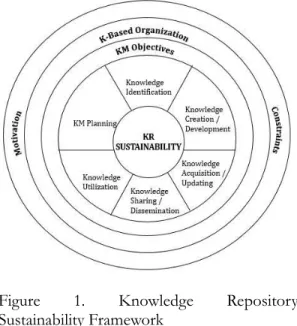
Figure 1. Knowledge Repository Sustainability Framework
3. Analysis
In general, the result shows that the knowledge repository is a resourceful platform to facilitate engineers' knowledge activities. Based on the research framework, emerging themes were explored.
3.1.Knowledge Identification and Knowledge Creation The pilot study shows that the execution of every task involves identification of knowledge in order to master the situation. The informant explained that:
“…identification is needed in ensuring the next steps of action”
As the projects involved the participation of engineers as well as other technical personnel, the continuing discussion on certain matters, sometimes involved the creation of new ideas. One informant stated;
“….creation of new knowledge is important and usually happens during meetings and discussions………it gave us more choices in choosing the best method to use”
In fact, most of the time suggestions were recommended while handling certain projects. This particular treatment which required the recognition of cognition as well as creation of newfangled thoughts and knowledge were transferred into the technical reports upon conducting the progress of the tasks. In the case of this organization, it is mandatory for every technical team to develop the expert reports demonstrating the progress of the projects which involved all discussions, working methods, hints or even recommendations which then uploaded into the knowledge repository.
3.2. Knowledge Updating
The findings also reveal that to sustain the KR establishment, the KMS committee consistently monitoring the progress of the transferring of documents into the repository every three months as exposed by one informant;
“…we have to consistently update the progress reports once a month………. the KMS committee will monitor our progress reports every 3 months with the top managements”.
The top management also monitors and evaluate the update reports of the technical documents upon finishing and closing any particular projects. Letters were sent to the engineers as reminder to finish the process of transmitting and sharing their technical documents.
3.3. Knowledge Sharing and Knowledge Utilization The informants were asked on the knowledge sharing activities among engineers. From the interviews, the informants explained that they are totally encouraged to share their knowledge through the KR as to enhance future knowledge-use. One informant revealed:
“…engineers were fully encouraged on sharing out their knowledge into KR. … We shared all technical reports, research (reports) conducted in improving processes, outcomes reports for our future reference”
Despite that the sharing activity was yet at the beginning level; nevertheless, it was continuously promoted from time to time. They have their own knowledge bank whereby certain rewards and recognition were given to those who shared the most of their ideas, suggestions or even research through a comprehensive write-up. On the other hand, upon asking on the utilization of the existing knowledge in the KR; the informant agreed that the repository does contribute some benefits in conducting the engineers’ tasks. For example, projects with similar requirements or nature may benefit in solving the particular matters. The informant highlighted:
“… We did refer to a few similar projects from the repository. We will utilize few steps that are suitable with our projects”.
In a way, the KR helps the engineers in executing their everyday tasks. As a result of utilizing the KR, teams which are geographically disperse in other districts, may also benefit. In fact, networks of experts or committee of practice (CoP) may naturally be created.
3.4. Knowledge Protection
acceptance of the engineers on their knowledge used by others, the level of willingness on participating in the transferring and sharing out their knowledge despite of the engineers being aware of the risk that their knowledge will be manipulated by others for their own benefits. However, the explanation given by the informant was quite astonishing, as knowledge protection is not an issue with this particular agency. The informant explained:
“…we were aware of our knowledge may be used by others….we are willing to share our technical knowledge into the repository and we have no issues about it”.
They were bound by rules and regulations, whereby every document circulated in the KR is tagged with their particulars, thus has enhanced the engineers willingness in sharing and transferring their knowledge to others in the organization.
3.5. KM Drivers
KM drivers in an organization play an important role as part of the KM team members. Thus, from the pilot study conducted, when the informants were asked about the KM drivers that involved in sustaining the KR; the motivation factors which contribute to the sustainability process include (a) the push factor by top management (b) self-acceptance by the engineers itself. These two components are considered as the strongest elements which aid in keeping up the establishment of the KR. The informant revealed:
“ …the top management does encourage us to contribute to the repository and we are aware that they are monitoring our contribution”
The informant acknowledged that certain rewards and recognitions were introduced as to yield a good feeling among engineers. They believe that the top management establishes a positive attitude in encouraging the engineers to actively take part and contributing to the KR. Apart from that, the engineers were fully understood that KR did give them a lot of benefits in managing their task, that is why they continually used the KR in their daily routines. This was also explained by the informant that;
“…we are willing to share the outcomes of our progress reports because we are aware on the benefits that we get from the repository”
3.6. KM Planning
In assuring that the repository will continuously use by all engineers, certain planning need to be managed. The informants agreed that a proper KM planning is required to encourage its continuous use as it is all scattered. The informant explained:
“…at this point of time the information in the k-repository are all mixed-up everywhere (scattered), therefore the KM team needs to have a proper planning to get it organize”
Still, at this stage, planning on getting the repository more user-friendly are still in progress. But the informant explains that the committee was continuously having discussions to find ways in ensuring that the knowledge repository gave the most of its users. Hence, the usage of the repository can be enhanced from time to time.
3.7. Motivation and Constraints
“…every year during our quality day, those who contributed the most will be announced and given a certificate as to acknowledge their effort”.
Apart from that, from the interviews, it shows that culture in the organization contributes in nurturing the KM cycle among employees. The positive acceptance from the engineers on the usage of the KR, shows that they have the culture of willingness to change as they believe that the new initiative will benefit them in the future. In fact, they revealed that sharing knowledge is a rewarding experience. Thus, it can be understood that motivation elements are important in promoting and enhancing the continued usage of the KR.
In contrast, it is important for the organization to aware of the constraints that will set back the implementation of any KM initiatives. Among the common barriers or constraints that have been talked about in many literatures is lack of trust in sharing and transmitting knowledge. However, from the pilot study conducted, the main constraint as explained by the informant was the enforcement of the proper KM team who handle their 5 core business separately. At the current stage, although the contribution of technical knowledge of the engineers was overwhelming, the technical knowledge that has been uploaded to the KR are not fully organized and scattered in 5 separate files which represent the 5 core businesses.
It was explained by the informant that at the current stage, there is no enforcement on dividing the repository into our 5 main core businesses. Therefore, it is hoped that when the appropriate committee has already been set up, the capturing and organizing the technical knowledge will be more organized and manageable. Aside from that it is easier for the engineers to search for the knowledge that they need when the technical knowledge is divided into the 5 different core businesses. This was also been highlighted by the informant that it is much easier for them to do locate the information if they are organized appropriately.
4. Findings and Discussions
In general the findings reveal that the usability of KR in this organization is encouraging and it leads to the sustainability of the system as a platform that facilitates knowledge activities. In this provision, Wu and Wang (2006) pointed out that KR is established in order to sustain as well as enhance the organizational process of knowledge generation, computer memory and retrieval, transport and sharing application. Furthermore, Wu and Wang (2006) also explained that KR is seen as a form of an integrated, user-machine system which offers information or knowledge for the purpose of bearing out the operations, management, analysis and decision making in the formation.
The views were also supported by Aggestam & Perrson (2010), that the nature of KR which requires the body process of capturing, packaging and storing, updating, disseminating the relevant knowledge for the use of the employees will later contribute in a continuous process of knowledge creation that enhance sustainability, similar to that, from the explanation by the informant, knowledge updating is a must which later lead to the continuous use of the knowledge repository. In their situations, all engineers need to update their current status of their ongoing projects. Neglecting to do so will affect the reputation of the engineers on their allegiance as well as their performance in conducting the tasks.
in which their knowledge is being spread and utilized.
From the findings, it was also highlighted that the culture of sharing is important for KM to flourish. Knowledge culture in the formation is a precondition and must also be set in place before successful KM initiatives can be accomplished and building a positive knowledge culture is indeed critical (Muhammad Najib & Juanil, 2011; Davenport & Prusak, 1998). An organization should motivate a conducive environment for to encourage employee knowledge sharing and transfer. However, cultivating a positive knowledge culture is not an easy process. Hence, in doing so, certain reward and recognition programs need to be designed as to inculcate the knowledge culture among employees. Similarly, Bishop et. al. (2008) stated that, whoever contributes knowledge that proves useful for someone else as to improve their work, should be rewarded for doing so in order for them to see where and how their contributions have been useful. On the other hand, the attitude of the people in the organization is also one of the main constraints in achieving the sustainability of KR.
This was clearly discussed by Rosmaini & Yap (2010), one of the reasons why KM in Malaysia is not that successful is due to the fact that most Malaysian are self-centered in which they are loath to teach their skills and expertise to others as they felt that they will miss their specialty advantage. The attitude of reluctance to share is difficult to treat. Maholtra (2002) stated that often individual may not willing to share information with others as they believed their knowledge is power..
5. Conclusion
The establishment of the Knowledge Repository in organization is essential as it acknowledged the potential of organizational knowledge assets. Organizational KR promotes the codification and reuse of knowledge. Based on the pilot study conducted, few changes were made to the research framework and interview guides.
The refined research frameworks shown in Figure 1, shall be used to govern the main research and the new version of the interview guide is generated based on the framework. Therefore, the actual data collection process will lead into a more in depth results on the most significant elements towards helping the public sector in sustaining any KM initiatives in their respective agencies.
References
Aggestam, L., and Persson, A. (2010). Increasing The Quality in IT-supported Knowledge Repositories: Critical Success
Factors For Identifying Knowledge. in
Proceeding of the 43rd Hawaii International Conference on System Sciences, : 1-9.
Badruddin, A.R., and Mohd Noor M. S. (2009). Knowledge Management Initiatives, Innovation And GLC Performance. Journal of ICT, 8 :15-27 Bock, G., Sabherwal, R., and Qian, Z. (2008).
The Effect Of Social Context On The Success Of Knowledge Repository Systems. IEEE Transactions On
Engineering Management, 55(4):536-551.
Cong, X., and Pandya, K. V. (2003). Issues Of Knowledge Management In The Public Sector. Electronic Journal of
Knowledge Management, 1(2):25-33
Davenport, T. H., DeLong, D. W. and Beers, M.C. (1998). Successful Knowledge Management Projects. Sloan
Management Review: 43-57.
Davenport, T. H. and Prusak, L. (1998). Working Knowledge : How Organizations
Manage What They Know, Harvard
Business School Press : USA.
Franco, M., and Mariano, S. (2007). Information Technology Repositories And Knowledge Management Processes: A Qualitative Analysis. VINE, 37(4): 440 – 451.
Hancock, B. (2002). An Introduction of Qualitative Research. Trent Focus Group :1-27.
Management, 14(3):303–321.
Lee, A. S. H, Tong, Ming L., and Lim, J. R. A. (2012). A Pilot Study on Knowledge Sharing using Knowledge Management System in IT Shared Services Companies. in 2012 International Conference on Information and Knowledge Management, Singapore.
Malaysian Administrative and Modenization Planning Unit. (2011). Inisiatif Pengurusan Pengetahuan Dalam Sektor
Swasta. retrieved on October 9, 2012
from http://www.
mampu.gov.my/c/document_library/get_file? uuid=ebe67abb-7c45-44d2-bdff-
46c9e7ca044f&groupId=10136
Malhotra, Y. (2002). Why Knowledge Management Systems Fail? : Enablers and Constratints in Knowledge Management in Human Enterprise. Handbook of Knowledge Management, Springer : Heidelberg.
Martina, K., Hana, U., and Jiri, F. (2012). Identification of Managerial Competencies in Knowledge-based Organizations. Journal of Competitiveness, 4(1):129-142.
McKelvie, G., Dotsika, F., and Patrick, K. (2007). Interactive Business Development, Capturing Business Knowledge And Practice: A Case Study. The Learning Organization, 14(5): 407 – 422.
Migdadi, M. (2009). Knowledge Management Enablers And Outcomes In The Small-And-Medium Sized Enterprises.
Industrial Management & DataSystems,
109(6): 840–858.
Mustafa, R., and Abdullah, A. (2004). Malaysia Transitions Toward a Knowledge-Based Economy. The Journal of Technology Studies, 3:51-61 Nejati, M., Amirul Shah, M. S. and Amran,
A. (2010). Putting Sustainability at The Core Of Knowledge Management Performance Evaluation System. Journal of
Knowledge Management, 1-13.
Razak. M.N., and Juanil, D. M. (2011). A Study On Knowledge Management Implementation In Property Companies In Malaysia. Facilities, 29(9/10):368-390.
Rowley, J. (2001). Knowledge Management In Pursuit Of Learning: The Learning With Knowledge Cycle.
Journal of Information Science, 27(4):
227-237.
Swanson, L. A. and. Zhang, D. D. (2012). Perspectives On Corporate Responsibility And Sustainable
Development. Management of
Environmental Quality: An International Journal 23(6): 630–639.
Tasmin, R., and Yap, L.S. (2010). Determining Factors of Knowledge Management Implementation in Knowledge-based
Organization. In International
Conference, Kuala Terengganu From 25-27 May 2010.
Velasguez, N.F., Sabherwal, R., and Durcikova, A. (2011). Adoption of an Electronic Knowledge Repository: A
Feature-Based Approach. in Proceedings
of the 44th Hawaii International Conference on System Sciences :1-10.
Wu, C.C. , Wu, C.S., Li, Chang C. and Huang, T.H. (2011). Drivers Of
Organizational Knowledge Management. African Journal of
Business Management 5(11) :4388-4402.
Wu, J., and Wang, Y. (2006). Measuring KMS Success: A Respecification Of The Delone and Mclean’s Model.
Information and Management, 43: