Optimizing documentation of HIV testing and counseling practices in the emergency department and inpatient wards of the Muhimbili National Hospital in Dar es Salaam,
Tanzania: A program and evaluation plan
By
Michael S. Runyon
A Master’s Paper submitted to the faculty at the University of North Carolina at Chapel Hill
in partial fulfillment of the requirements for the degree of Master in Public Health in
the Public Health Leadership Program
Chapel Hill
Fall 2015
Approved by:
______________________________
______________________________
Date
ABSTRACT
While the impact of the HIV epidemic is felt worldwide, Africa is disproportionately
affected, accounting for 70% of people living with the disease. Early diagnosis and viral
suppression are critical to controlling the disease. According to UNAIDS, children with HIV
are less likely to receive treatment than are infected adults (24% vs 38%). This is true in
Tanzania, a sub-Saharan country where less than 30% of those 14 years old and under living
with HIV are receiving treatment, compared with 30-50% of infected adults. The first step
towards receiving treatment is HIV testing, counseling, and referral. Prior analysis of the
physician documentation patterns specific to HIV testing, counseling, and referral patients
for children < 18 years old presenting to the Muhimbili National Hospital Emergency
Department in Dar es Salaam, Tanzania revealed several opportunities for improvement. Of
1632 children testing during the one-year study period, the test result was documented for
only 74%, counseling was documented for 17%, and referral for follow-up care was
documented for 38% of those testing positive and surviving to discharge. The goal of this
hospital-based program and evaluation plan is to increase documentation of HIV test results,
counseling of patients and/or their parent(s) or guardian(s), and referral of those testing
positive to follow-up care. This will be accomplished by engaging key stakeholders to inform
the development, implementation, and refinement of the program and encourage
participation. The program will be built around the WHO consolidated guidelines on HIV
testing services and their “5Cs: Consent, Confidentiality, Counseling, Correct Results, and
Connection.” The evaluation plan will measure the program inputs, outputs, and outcomes
to other hospitals and recommended for inclusion in undergraduate and graduate physician
training programs.
TABLE OF CONTENTS
ABSTRACT ………... iii
LIST OF FIGURES & TABLES ……… vii
LIST OF ABBREVIATIONS ……… viii
Introduction ……… 1
Literature Review ……….. 3
Search Strategy ……….. 3
Findings ……….. 4
Discussion ……….. 8
Program Plan ………. 9
Theoretical Framework ……….. 9
Program Context ……… 11
Overview ……… 11
Setting & Stakeholders...………. 13
Anticipated Challenges & Proposed Solutions ………... 14
Goals and Objectives ……….. 16
Implementation (strategy, timeline, budget) ..………. 16
Evaluation Plan ………... 18
Rationale for Evaluation ………. 18
Evaluation Study Design & Methods……….. 18
Logic Model ………... 19
Outcomes and metrics (short-, mid- and long-term) ………. 20
Outcomes-based Program Refinement ………... 21
Recommendation for Public Health Leaders………...
Conclusion………...
22
22
REFERENCES ………... 24
LIST OF FIGURES & TABLES
Table 1: Gantt chart depicting the year 1 program activities
Table 2: Program budget
Figure 1: Logic model depicting the program inputs, outputs, and outcomes
LIST OF ABBREVIATIONS
AIDS Acquired Immune Deficiency Syndrome
ART Antiretroviral Therapy
ED Emergency Department
EID Early Infant [HIV] Diagnosis
HIV Human Immunodeficiency Virus
HCT HIV Counseling and Testing
HTS HIV Testing Services
ISP Immunization Service Points
MNH
MUHAS
Muhimbili National Hospital
Muhimbili University of Health and Allied Sciences
PITC Provider-Initiated Testing and Counselling
PMTCT Prevention of Mother-To-Child Transmission QA Quality Assurance
UNAIDS Joint United Nations Programme on HIV/AIDS
VCT Voluntary Counseling and Testing
Introduction
According to WHO estimates, worldwide there were 35 million people living with
HIV in 2013. Africa has been disproportionately impacted by the epidemic, accounting for an
estimated 24.6 million (70%) of those living with the disease. (WHO, 2013) In an attempt to
slow the spread of HIV, the Joint United Nations Programme on HIV/AIDS (UNAIDS)
proposed an ambitious approach to controlling the epidemic, including the “90-90-90
targets.” (UNAIDS, 2014)
The goal of these targets is that by 2020:
90% of people living with HIV know their HIV status. 90% of people who know their status receive treatment.
90% of people on HIV treatment have a suppressed viral load so their immune system remains strong and they are no longer infectious.
The follow-up goal is to further increase the proportion of people meeting each of these metrics to 95% by 2030, the so-called,”95-95-95 targets.”
(UNAIDS, 2014)
While UNAIDS estimates that 15 million people will be receiving HIV treatment by
the end of 2015, they note that children with HIV are less likely to receive treatment than are
infected adults (24% vs 38%). (UNAIDS, 2014) This is true in Tanzania, one of the 30
countries that account for nearly 90% of all new HIV infections, where 30-50% of adults
living with HIV are receiving anti-retroviral therapy compared with less than 30% of those
14 years old and under.(UNAIDS, 2014) The first step towards receiving treatment is HIV
testing, counseling, and referral. In the setting of a generalized HIV epidemic, such as is the
case in Tanzania, the World Health Organization (WHO) recommends provider-initiated
testing and counselling (PITC) for all patients. This practice is not consistently employed in
populations and in areas with a high burden of disease. (WHO, 2015) Possible reasons for
this disparity include limitations on time, testing supplies, and human resources in a busy
acute care setting.
While it is understandable that other immediate patient care considerations often take
priority, when rapid HIV testing is performed in the course of caring for acutely ill and
injured patients, it is imperative that the results be documented, the patients counseled in the
findings, and those testing positive are referred for follow-up care once the acute medical
event has stabilized. Unfortunately, this is not always the case. Prior analysis conducted by
Dr. Sawe and colleagues (that included this author) of a retrospective review of all pediatric
visits (< 18 years of age) to the Muhimbili National Hospital (MNH) Emergency Department
(ED) during 2012 (N=5540) found:
1632 (30%) were tested for HIV, in the ED or inpatient wards. The test result was documented for 1213/1632 (74%).
Of 418 patients tested in the ED, counseling, or deferral of counseling, was documented for 70 (17%).
When documented as deferred to the ward, the ward clinician documented counseling for 15/42 (36%).
Overall, counseling was documented in 33% of patients testing positive versus 1.1% patients testing negative (odds ratio 43 [95% CI = 23 – 83]).
Of 199 patients who tested positive and survived to hospital discharge, referral for outpatient HIV clinic follow-up was documented for 76 (38%).
(Sawe, 2015)
This study concluded that though nearly one third of patients were tested for HIV, “. .
. physicians documented the provision, or deferral, of counseling in less than 20% of cases.
When deferred to the inpatient setting, subsequent counseling was documented in just over a
third of cases. Counseling was much more likely to be documented when the test result was
positive. Of those patients testing positive, referral to CTC follow-up after discharge was
undocumented counseling and referral, these data suggest that there is ample opportunity for
optimization of documenting of HIV counseling and testing practices in the emergency and
acute care setting at Muhimbili National Hospital. (Sawe, 2015)
The goal of this paper is to design a hospital-based program and evaluation plan to
increase documentation the following in the medical record:
Results of HIV tests performed in the ED and inpatient setting.
Counseling of patients and/or their parent(s) or guardian(s).
Referral of patients testing positive to follow-up care and HIV treatment.
The first section of the paper will summarize the existing literature on the topic of
documentation of HIV testing and counseling in low- and middle-income countries. The
second section will describe the program plan, implementation strategy, and timeline.
Finally, the third section will describe the evaluation plan by which we will assess the impact
of the program plan.
Literature Review
A literature review was performed to identify previously published data on
documentation practices for HIV test results, counseling and referral for follow-up care.
Search Strategy
The PubMed MEDLINE database was searched for English language articles using
the terms: ("Documentation"[Mesh] OR documentation) AND ("HIV"[Mesh] OR HIV) AND
("test result" OR "test results" OR "Counseling"[Mesh] OR counseling OR "Referral and
Consultation"[Mesh] OR referral OR counseling) AND ("Africa"[Mesh] OR africa OR
african OR Tanzania OR sub-Saharan OR sub-Sahara). This search returned 36
al., 2013; Blair et al., 2014; Butt, Chindia, Vaghela, & Mandalia, 2001; Chakaya et al., 2002;
Chibanda et al., 2010; Corneli et al., 2008; Duncan et al., 1995; Emmett et al., 2010;
Geldmacher et al., 2007; Goar, Obembe, Audu, & Agbir, 2012; Hoke et al., 2014; Jewkes,
2000; Kambashi et al., 2001; Kevany et al., 2012; Kilonzo et al., 2009; Kolesnitchenko et al.,
1993; Kraft et al., 2012; Leshabari, Blystad, & Moland, 2007; Makinde, Ezomike, Lehmann,
& Ibanga, 2011; Mburu, Iorpenda, & Muwanga, 2012; Monyatsi et al., 2012; Muchedzi et
al., 2010; Ndubuka & Ehlers, 2011; Njeru, Blystad, Shayo, Nyamongo, & Fylkesnes, 2011;
Oluoch et al., 2015; Orem, Mbidde, & Weiderpass, 2008; Page-Shipp et al., 2012; Painter,
2001; S. J. Reynolds et al., 2012; Rusine et al., 2013; Sigaloff et al., 2012; Stoeckli,
Steffen-Klopfstein, Erb, Brown, & Kalish, 2000; Woldesenbet et al., 2015) Next, the CINAHL
database and Google Scholar were search using the same terms, yielding an additional 9
results. (Alvarez, 2006; Baiden et al., 2005; Dahoma, 2011; Isaacs, 2004; Kakoko, Astrom,
Lugoe, & Lie, 2006; Kotze, 2010; Matovu, 2005; Msuya et al., 2008; Obermeyer & Osborn,
2007) The searches were not limited by year, study methodology, or peer-review status.
Findings
The titles and abstracts of each of the 45 articles were reviewed (appendix). The full
text version of each potentially applicable article was retrieved and reviewed. Those found to
be relevant to the program and monitoring plan are summarized.
A mixed methods analysis of PITC practices in Kenya, Tanzania, and Zambia
conducted by Njeru, et al. in 2011 reported several pertinent findings. (Njeru et al., 2011)
First, is the importance of counseling, both to educate and empower those testing negative
diminish feelings of fear, worry, and guilt. This is an important aspect to consider in that in
some of the study sites it was apparent that counseling was performed only for those testing
positive, resulting in a missed opportunity for prevention education. Another key finding was
the importance of allowing sufficient time such that the counseling session is not rushed and
the patient is given information at the rate at which they can accept and process it. There was
also concern expressed about the fact that at some sites PITC was considered a mandatory
before other health care services were rendered, especially among pregnant women
attempting to access prenatal and perinatal care. The authors conclude that “…there is an
urgent need to reconsider the manner in which the opt-out approach to HIV testing is
presently being implemented in order to protect each client’s autonomy, protect the right to
access HIV prevention, and to protect pregnant women from an unreasonable additional
burden.” (Njeru et al., 2011)
A cross-sectional study of 100 physicians and 97 nurse prescribers caring for HIV
positive patients at a pediatric referral center in Botswana compared documentation rates for
a random sample of 100 doctor-patient encounters and 96 nurse prescriber-patient
encounters. (Monyatsi et al., 2012) The investigators found no significant differences
between the two cadres in the rates of documentation of 8 specific clinical variables, with a
cumulative total documentation rate for the 8 items of 96% among the nurse providers and
94.9% among the physicians (p = 0.335). While this study involved providers caring for
patients already diagnosed with HIV, it is similar to the background work for this program
plan in that it used documentation of specific clinical variables as a surrogate marker to rate
the quality of care. Also, the study data support the concept of “task-shifting,” whereby
specially trained nursing personnel, while preserving the standard of care. It is reasonable to
assume that nursing personnel at the Muhimbili National Hospital ED and inpatient wards
can be trained to perform and document HIV testing, counseling, and referral for follow-up
care, a practice supported by the WHO guidelines. (WHO, 2015) In fact, these guidelines go
even further, supporting the use of lay providers to perform HIV counseling and referral.
From these data, we can conclude that increasing the number of personnel available to
perform a given task should, in theory, increase the likelihood that task is completed.
However, clear communication and coordination among the patient care is required to ensure
that each member does not simply assume that one of the others will complete the task.
In another study, the authors report the results of two national surveys of 625
randomly selected public health care facilities in South Africa to describe early infant [HIV]
diagnosis (EID) practices. (Woldesenbet et al., 2015) While greater than 95% of facilities
provided EID services, including 72% at immunization service points (ISP). While just over
two thirds of ISP provide EID services to infants with an HIV exposure documented in their
medical record, these services were provided to only 9% of infants whose exposure status
was unknown or undocumented. The authors also found that in nearly half of cases where the
mother was HIV positive, their HIV status was not documented in the child’s chart. Reasons
for non-reporting of HIV positive by the mothers included fear of discrimination and limited
knowledge of disease transmission. When provider initiated counseling and testing was
offered at the infant’s 6-week immunization visit, 95% of mothers accepted. These findings
highlight the importance of PICT, with emphasis on counseling to address fears of
discrimination and modes of HIV transmission to optimize early detection and treatment
A chart review of 19,168 patients receiving HIV testing at a voluntary counseling and
testing (VCT) center in Ethiopia found that one quarter tested positive. (Alemie & Balcha,
2012) However, of the 4298 referred for follow-up care at the HIV chronic care clinic, only
27% subsequently registered at the clinic. These data suggest the need for strategies to
increase compliance with follow-up recommendations after HIV diagnosis.
In a cross-sectional study of factors associated with access to antiretroviral therapy
(ART) among 147 HIV-positive women in urban Zimbabwe, the investigators found that
while 65% registered with the ART clinic, documentation of the referral was found in only
16% of cases. (Muchedzi et al., 2010) Of those registered, only 37% were on ART. The data
analysis revealed that patients were more likely to access care and treatment if they
understood the referral process (odds ratio [OR] = 3.21; 95% confidence interval [CI] = 1.89
– 11.65) and were enrolled in an HIV support group (OR = 2.34; 95% CI = 1.13 – 4.88).
These data underscore the importance of the clarity of counseling and the availability of a
psychosocial support network in optimizing HIV care.
A report on the implementation of an HIV Counseling and Testing (HCT)
information management system in Nigeria reported on several “lessons learned” during the
process. (Makinde et al., 2011) The authors report that team cohesion and open
communication were critical in identifying and resolving gaps in the system. They further
note that the initial documentation practices were lacking, with several significant data entry
errors that improved significantly with re-training and ongoing data monitoring. Finally,
automation of the data archiving and reporting process enhanced the program and made it
Difficulties with HCT in the ED are not limited to low- and middle-income countries.
A review of the medical literature from the United States examining the reasons why
physicians do not offer HIV testing identified three studies from the ED setting. Of 20 testing
barriers identified by the authors, six were noted in more than one study: patient follow-up
concerns, time required for testing, patient confidentiality issues, counseling requirements,
and language/cultural barriers. (Burke et al., 2007)
In a large prospective trial performed at an urban ED in the United States, 4855
patients were randomized to have HIV testing and counseling offered by either dedicated
counselor without other clinical responsibilities (2446 patients) or by a member of the
existing clinical staff (2409 patients). (Walensky et al., 2011) Among those randomized to
the HIV counselor arm, 80% were offered testing as compared to only 36% of those
randomized to the clinical staff arm. The authors acknowledge, “In demonstrating that a
counselor-based model will lead to the testing of more patients, we recognize that this model
requires the addition of upfront resources.” While this study addressed testing and counseling
rates rather than documentation of same, it does highlight the challenge of relying on clinical
staff, with competing patient care responsibilities, to perform these tasks in a busy ED.
Discussion
It is not unexpected that none of the identified literature was from the ED setting,
given that emergency medicine is a nascent specialty in sub-Saharan Africa. However, there
were several findings that will be useful in designing this program plan. Specifically, the
importance of adequate counseling, for both those testing positive and those testing negative
Additionally, the data demonstrate that there may be gaps in documentation that do not
directly correlate to gaps in the quality of care or referral provided. Even so, there seem to be
significant obstacles to care even once the referral is made and the program plan will need to
provide a mechanism to address these issues in order to optimize patient care. Finally, data
from the United States experience reveal that the challenges are not unique to low- and
middle-income settings. However, to ensure acceptability and sustainability of the program,
the program plan must take into account the local resource limitations and cultural
considerations.
There is much work needed to optimize HCT practices. While this program will focus
on documentation practices, the education component will be informed by the lessons
learned from the available literature to increase the likelihood of success in improving HIV
care.
Program Plan
Theoretical Framework
The ultimate success of this program will be largely determined by the degree to
which the stakeholders are engaged, individually and collectively, in the program and
whether they are willing and able to adapt their behavior toward a common goal. Given the
stakeholders diversity, multiple theoretical models will influence the program.
The “Theory of Planned Behavior” will provide the conceptual framework for the
physician intervention, aimed at increasing documentation of HIV test results, counseling,
and referral. This model emphasizes the impact of the perception of control over the
subsequent behavior (in our case, the physician’s). (Rainburger, 2014) This approach also
incorporates, from the “Theory of Reasoned Action,” the physician’s attitudes toward the
intervention and their belief regarding the extent to which others (in this case, fellow
emergency physicians, pediatrician colleagues, hospital administrators, and patients) support
the intervention. (Rainburger, 2014) These factors are particularly important in a busy
emergency department where physicians appropriately prioritize interventions that have an
immediate impact on saving life and limb. Further, some emergency physicians may feel that
HIV counseling and referral are not within the scope of their training or responsibility. As
such, they may feel ill prepared to fill this roll and assume that downstream providers will
accomplish these tasks. Likewise, the inpatient pediatricians may similarly, and
appropriately, feel that the follow-up and chronic management of HIV infection is best
accomplished in an outpatient setting. They may or may not realize that HIV testing was
ordered, especially when the result is not recorded in the medical record. In other instances,
they may assume that the provider ordering the test performed the counseling and referral. It
is a reasonable assumption that all providers, regardless of specialty, understand and agree
with the importance of HIV testing, recording test results, and ensuring the appropriate
counseling and referral. If this is true, then an intervention aimed at providing structure
around the process, enhancing communication, and emphasizing control over the
opportunities, resources, and skills necessary to complete these tasks, combined with
reinforcing the importance of this behavior to themselves and others, should help optimize
practice and improve patient care.
To help inform the counseling of the patients and/or their parent(s) or guardian(s), we
provide a conceptual framework for nursing health education and promotion practice.
(Whitehead, 2001) The initial step in this model is to decide which of two approaches is most
appropriate for the activity: empowerment or prevention. The former will be the focus for
counseling of those testing positive and the latter emphasized for those testing negative. The
rationale for this dichotomy is that those testing positive will need significant education,
encouragement, and support to ensure that they are empowered to understand the health
consequences of HIV and the available resources for care. Conversely, those testing negative
will need education on prevention and an understanding of the fact that avoiding infection is
an ongoing lifelong process. Certainly, there is overlap, as those testing positive will require
education on prevention of disease transmission. Likewise, those testing negative should be
empowered to understand behaviors associated with avoiding infection so they may act
accordingly. Either approach begins in Whitehead’s “preparatory phase” with an assessment
of the patient’s needs, priorities, and available resources. This is followed by the “program
development and implementation phase” and finally the “diffusion phase.” (Whitehead,
2001)
Program Context and Overview
The overarching aim of this program plan is to improve the care of children tested for
HIV in the ED or inpatients wards of Muhimbili National Hospital by increasing
documentation of test results, counseling of patients and/or their parent(s) or guardian(s), and
referral of patients testing positive to follow-up care and HIV treatment. Successful
implementation of this program plan will require buy-in and support of the respective
an advisory board to inform the development, implementation, and refinement of the
program and encourage participation. The program will be built around the WHO
consolidated guidelines on HIV testing services (HTS) and their “5Cs: Consent,
Confidentiality, Counseling, Correct Results, and Connection.” The WHO defines each of
these elements as follows [from the consolidated guidelines on HIV testing services, page
10]:
• Consent: People receiving HTS must give informed consent to be tested and counselled. (Verbal consent is sufficient; written consent is not required.) They should be informed of the process for HIV testing and counselling and of their right to decline testing.
• Confidentiality: HTS must be confidential, meaning that what the HTS provider and the client discuss will not be disclosed to anyone else without the expressed consent of the person being tested. Confidentiality should be respected, but it should not be allowed to reinforce secrecy, stigma or shame. Counsellors should discuss, among other issues, whom the person may wish to inform and how they would like this to be done. Shared confidentiality with a partner or family members – trusted others – and healthcare providers is often highly beneficial.
• Counselling: Pre-test information can be provided in a group setting, but all people should have the opportunity to ask questions in a private setting if they request it. All HIV testing must be accompanied by appropriate and high-quality post-test counselling, based on the specific HIV test result and HIV status reported. Quality assurance (QA) mechanisms as well as supportive supervision and mentoring systems should be in place to ensure the provision of high-quality counselling.
• Correct: Providers of HIV testing should strive to provide high-quality testing services, and QA mechanisms should ensure that people receive a correct diagnosis. QA may include both internal and external measures and should receive support from the national reference laboratory. All people who receive a positive HIV diagnosis should be retested to verify their diagnosis before initiation of HIV care or treatment.
• Connection: Linkage to prevention, treatment and care services should include effective and appropriate follow-up, including long-term prevention and treatment support.
Providing HTS where there is no access to care, or poor linkage to care, including ART, has limited benefit for those with HIV.
(WHO, 2015)
While these elements comprise the best practices, which our program will strive to
may need to be monitored to ensure feasibility. The absolute minimum requirements will be
the providers document the test result, perform and document counselling of the patient
and/or parent(s) or guardian(s), and ensure and document referral to follow-up HIV care.
Setting and Stakeholders
Located in Dar es Salaam, Muhimbili National Hospital (MNH) is the largest public
hospital in Tanzania and one of four top-level referral hospitals. The 1500-bed facility
receives referrals from all over the country. As such, MNH serves a large number of patients,
many of whom have a complex illness or injury that could not be adequately cared for at a
lower level facility.
The MNH ED opened in 2010 and is the result of a public-private partnership
between the Ministry of Health and Social Welfare and Abbott Fund Tanzania. The ED
serves also as the primary clinical training site for the Muhimbili University of Health and
Allied Sciences (MUHAS) 3-year Master of Medicine in Emergency Medicine residency
training program. Both the ED and residency program are the first of their kind in Tanzania
and among only a few such departments and training programs in sub-Saharan Africa. Since
opening in January 2010, the ED has been staffed by interns (fresh medical school graduates)
and registrars (registered medical practitioners who are 1 to 3 years post internship). The
emergency medicine residency program was founded in late 2010 and the first class of
emergency medicine resident physicians (all of whom worked as registrars before joining the
3-year residency program) began staffing the department in February of 2011. ( Reynolds, et
al, 2012) Locally-trained emergency physicians provide clinical supervision, with support
department serves a high acuity patient population from within Dar es Salaam and receives
referral patients from throughout the country. Of the 36,000 patients seen each year, only
20% are discharged home from the ED. The top five categories of complaints seen in the
department are trauma, infection, mental health, neoplasm and pregnancy-related issues.
Among patients under 18, infectious diseases are the most common. ( Reynolds, et al., 2012)
There are several stakeholder groups that will be engaged in this program plan. They
include the patients and their families, community leaders, public health officials, doctors
and nurses working in the emergency department, and staff in the pediatric inpatients wards
and the pediatric intensive care unit. We will also engage the providers who run the local
HIV follow-up clinic to help ensure a smooth transition to follow-up care for those patients
testing positive.
Anticipated challenges and Planned Solutions
The emergency and acute care setting provides many challenges to the proposed
program plan. First, the acuity of the patient’s presentation and the typical overcrowding of
the ED with multiple children and their parents often in a single resuscitation room could
likely threaten the consent and confidentiality aspects of the rapid HIV testing, counseling
and referral performed in the ED. The proposed solution is to designate a private consultation
area in the ED for these sensitive activities and to ask the nurse to document the test result
and counseling in real time. Likewise, available space and patient volume could hinder
counseling efforts or impose suboptimal time constraints on the patient encounter and
documentation effort. The proposed solution is to develop a streamlined minimum acceptable
nurses as well as identifying other cadres capable of competently completing these tasks.
This will be facilitated by creating an ED counseling logbook comprising standardized
counseling checklists to be included in the chart of every patient who undergoes HIV testing
in the ED. Due to the sensitive nature of this information, the test book will contain only
patient initials and the medical record number and will be stored in a secure area of the
emergency department. The emergency nurse will use the logbook to document the test
result, counseling, and referral to the outpatient HIV follow-up clinic (for those testing
positive). There will be a place on the form for both the nurse and the patient (or
parent/guardian) to sign to acknowledge completion of the process. The form will be created
in triplicate, with the original placed on the patient’s chart, copy given to the patient (or
parent/guardian), and the final copy remaining in the counseling booklet to be reviewed for
quality assurance purposes. This approach will be familiar to the ED staff as it is similar to
the standardized documentation currently used for all trauma patients. Finally, as previously
mentioned, while task shifting will increase the number of providers available to document
results, counseling, and follow-up care, it could also result in everyone assuming that
someone else will take responsibility for these tasks. The proposed solution to this risk is to
reinforce that the ED nurse caring for the patient and performing the HIV test bears primary
responsibility for documenting the test result, counseling, and referring those testing positive
to the outpatient HIV follow-up clinic. While these tasks may be delegated to other qualified
personnel, the responsibility for oversight and ensuring task completion remains with the ED
nurse. The program manager will review the counseling logbook daily and reconcile it with
manager will contact the clinical staff caring for the patients on the wards to prompt them to
provide and document the counseling.
Goals and Objectives
Program goals: increase documentation of the following in the medical record:
Results of HIV tests performed in the ED and inpatient setting.
Counseling of patients and/or their parent(s) or guardian(s).
Referral of patients testing positive to follow-up care and HIV treatment.
Program objectives: we will achieve the above goals by:
Delivering a brief educational intervention to the ED and inpatient clinical staff to
review the WHO consolidated guidelines on HIV testing services, with particular
emphasis on the “5Cs.”
Identifying and attempting to mitigate barriers to realizing the program goals.
Developing an implementation checklist to be included in the medical record of all
children who undergo HIV testing in the ED to prompt documentation of test results,
counseling of patients and/or parent(s) or guardian(s), and referral of those testing
positive for follow-up and HIV treatment.
Implementation strategy and timeline
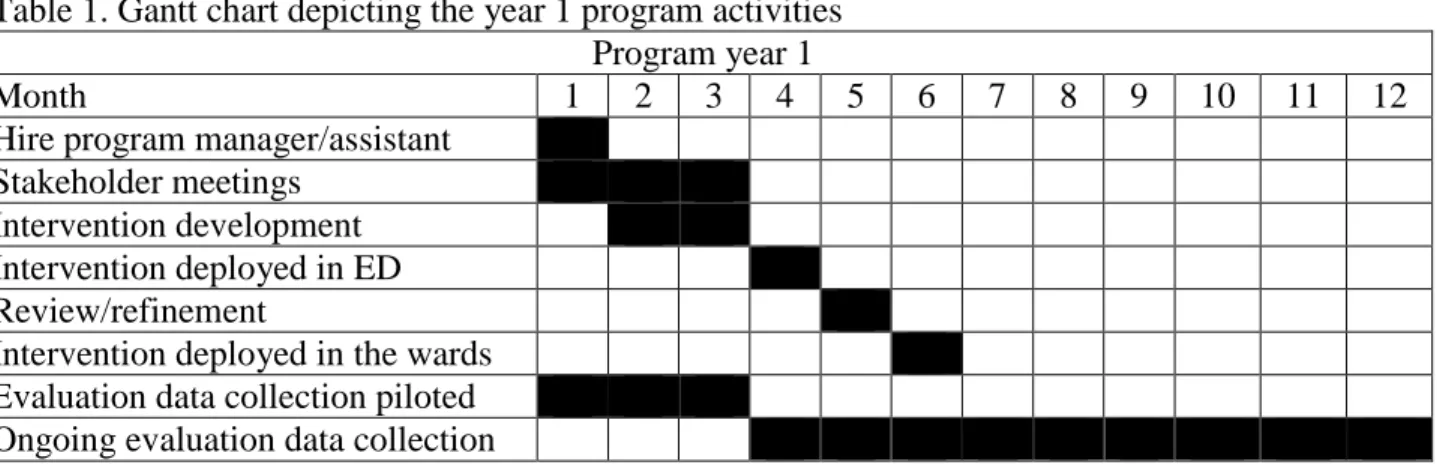
The year 1 program activities are shown in Table 1. Implementation will begin with
the hiring of a program manager and assistant to provide support for scheduling and
conducting of the stakeholder meetings, creation and testing of the ED HIV counseling
program evaluation data. Initial stakeholder meetings will occur within 3 months of project
initiation and will include specific discussions around cultural considerations; and the
intervention development will be completed by the end of that time period (month 3). The
intervention will then be deployed in the ED over the following month. One month after ED
deployment, the stakeholders will meet gain to review the initial results and consider the
need for refinement of the intervention before deployment in the wards. During the first 3
months of the program, the evaluation data collection will be piloted to establish a baseline
and allow for refinement of the data collection process as needed. When the intervention is
deployed in the ED the post-intervention data collection will begin. Evaluation data will be
distributed to the stakeholder groups quarterly for review and refinement if the intervention
as needed.
Table 1. Gantt chart depicting the year 1 program activities Program year 1
Month 1 2 3 4 5 6 7 8 9 10 11 12
Hire program manager/assistant Stakeholder meetings
Intervention development Intervention deployed in ED Review/refinement
Intervention deployed in the wards Evaluation data collection piloted Ongoing evaluation data collection
Budget
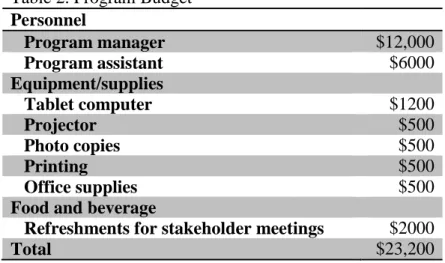
The annual program budget detail is presented in Table 2. The total annual expenditures will
be $23,200. Personnel costs will comprise the bulk of the expenditures, followed by food and
Table 2. Program Budget Personnel
Program manager $12,000
Program assistant $6000
Equipment/supplies
Tablet computer $1200
Projector $500
Photo copies $500
Printing $500
Office supplies $500
Food and beverage
Refreshments for stakeholder meetings $2000
Total $23,200
Evaluation Plan
Rationale for Evaluation
The evaluation plan helps to characterize the implementation of the program and it’s effects
on the targeted behavior. This process provides program participants, administrators, funders,
and other stakeholders with a clear view of the program’s inputs, outputs, and outcomes.
Furthermore, it can provide data that can be used to refine the program to optimize the
results.
Evaluation Design and Methods
The first three months of program development and implementation will be assessed by
implementation documentation, simply noting whether or not tasks were completed
according to the program plan and timeline. Deployment of the intervention will be evaluated
by daily program monitoring, allowing for oversight and refinement of the process. The data
for the measuring the outputs and short-term outcomes will be obtained through medical
mid-term outcome data will be obtained from the MNH pediatric outpatient HIV follow-up clinic.
The long-term outcome data will be obtained from the MNH pediatric outpatient HIV
follow-up clinic as well as regional and national data on the progress towards the UNAIDS
90-90-90 targets.
Logic Model
The logic model (Figure 1) depicts the program inputs, outputs, and outcomes.
Program Inputs
The program inputs include the money to support the program budget, the program manager
and assistant, and the stakeholders (the patients and their families, community leaders, public
health officials, doctors and nurses working in the emergency department, and staff in the
Program Outputs
The program outputs include the stakeholder meetings and initial and refined
interventions, as well as an increase in documentation of testing and results, counseling of
patients/guardians, referral for follow-up care.
Program Outcomes and Metrics
Short-term outcomes include the rates of documentation of test results, counseling, and
referral for follow-up care for children tested for HIV in the MNH ED. These outcomes will
be measured by medical record audit of all children with an order for an HIV test in the ED.
Each variable will be classified as documented or not documented. The target rate for
documentation of the HIV result will be 85% initially and 95% by the end of year 1. The
target rates of ED counseling and referral (for those testing positive) will be 80% initially (a
four-fold increase from the baseline documented by Sawe, et al., 2005) and 90% by the end
of year 1.
Mid-term outcomes include the proportion of (1) children testing positive for HIV in the
MNH ED who are referred for confirmatory testing, (2) those with a positive confirmatory
test who attend the MNH pediatric outpatient HIV follow-up clinic, and the (3) proportion
placed on ART. These variables are currently available from the standard MNH pediatric
outpatient HIV clinical records, recorded in real time by the clinical staff, and will be
measured by monthly audit of these records by the program assistant and overseen by the
program manager. Each variable will be classified as present or absent. The target rate for
Long-term outcomes include the proportion of (1) children testing positive for HIV in
the MNH ED who maintain a suppressed viral load, (2) the proportion who progress to
clinical AIDS, and (3) the progress towards the UNAIDS “90-90-90” and “95-95-95” targets.
These variables will be classified according to the MNH pediatric outpatient HIV clinic, the
Tanzania Ministry of Health, and the UNAIDS categorization. The target values for the end
of year 1 will be improvement in each of the above metrics by 10%, a more conservative
target given the multi-disciplinary effort required and factors affecting these outcomes that
are beyond the control of the ED and inpatient staff.
Outcomes-based program refinement
During the first 3 months of the program, the evaluation data will be piloted to
establish a baseline and allow for refinement of the data collection process as needed. When
the intervention is deployed in the ED the post-intervention data collection will begin.
Evaluation data will be distributed to the stakeholder groups quarterly for review and
refinement of the intervention as needed to optimize the opportunity to meet or exceed the
pre-specified metrics for the short-, mid-, and long-term outcomes.
Dissemination plan
Given that the MNH ED is the first full service ED in Tanzania and has more staff
and resources than the acute care areas of the other public hospitals, it is likely that similar
deficiencies in documentation are prevalent throughout the national public hospital system.
As such, if the evaluation results demonstrate success of this program then the intervention
throughout the country. This would begin at the three other top-level referral centers in
Western (Bugando Medical Center in Mwanza), Southern (Mbeya Medical Center), and
Northern (Kilimanjaro Christian Medical Canter) Tanzania followed by diffusion to the
district hospitals and health centers within each referral region.
Recommendation for Public Health Leaders
Optimal care of patients infected with HIV and prevention of disease transmission
depend upon early diagnosis. This can be accomplished by PITC of patients presented to the
ED for medical care. However, if the test results and post-test counseling are not conveyed to
the patient and/or their parent(s) or guardian(s) and referral to follow-up care is not made
then the potential gains of early diagnosis are lost. Not only is the patient deprived of the
opportunity to seek treatment, resulting in deterioration of their immune function and
increased susceptibility to opportunistic infections and development of clinical AIDS, but
this missed opportunity also constitutes a public health threat as patients with untreated HIV
infection have higher viral loads and can more easily transmit the disease to others. This
program plan aims to engage stakeholders to discuss these issues and develop an intervention
to increase documentation (and performance) patterns around HIV testing of children in the
ED. This approach will maximize the likelihood of identifying the barriers to improvement,
so that they may be adequately addressed and patient care optimized.
Conclusion
There is ample opportunity to improve documentation of HIV test results, counseling,
program plan is intended to develop and evaluate an intervention aimed at addressing this
deficiency. The hope is that the intervention and attention to documentation will help bolster
Tanzania’s progress towards the UNAIDS “90-90-90” and “95-95-95” targets. If so, we will
advocate to the Ministry of Health for support for widespread dissemination of this initiative
REFERENCES
Aderaye, A. G., Melaku, B. K., & Zenebe, C. G. (1996). Pleural tuberculosis in patients infected with HIV in Addis Ababa. Cent Afr J Med, 42(12), 337-340.
Ajuwon, A. J. (2006). Ethical issues in HIV/AIDS research, counselling and testing in Nigeria. Afr J Med Med Sci, 35 Suppl, 137-141.
Alemie, G. A., & Balcha, S. A. (2012). VCT clinic HIV burden and its link with HIV care clinic at the University of Gondar hospital. BMC Public Health, 12, 1010.
doi:10.1186/1471-2458-12-1010
Alvarez, R. A., Vasquez, E; Mayorga, C.C, Feaster, D.J. & Mitriani, V.B. (2006). Increasing Minority Research Participation Through Community Organization Outreach. West J Nurs Res, 28(5), 20.
Audet, C. M., Salato, J., Blevins, M., Amsalem, D., Vermund, S. H., & Gaspar, F. (2013). Educational intervention increased referrals to allopathic care by traditional healers in three high HIV-prevalence rural districts in Mozambique. PLoS One, 8(8), e70326.
Baiden, F., Remes, P., Baiden, R., Williams, J., Hodgson, A., Boelaert, M., & Buve, A. (2005). Voluntary counseling and HIV testing for pregnant women in the Kassena-Nankana district of northern Ghana: is couple counseling the way forward? AIDS Care, 17(5), 648-657.
Blair, J. M., Fagan, J. L., Frazier, E. L., Do, A., Bradley, H., Valverde, E. E., . . . Skarbinski, J. (2014). Behavioral and clinical characteristics of persons receiving medical care for HIV infection - Medical Monitoring Project, United States, 2009. MMWR Surveill Summ, 63 Suppl 5, 1-22.
Burke RC, S. K., Bernstein K.T., Karpati A.M., Myers J.E., Tsoi B.W., & Begier E.M.. (2007). Why don’t physicians test for HIV? A review of the US literature. Aids, 21(12), 1617-24.
Butt, F. M., Chindia, M. L., Vaghela, V. P., & Mandalia, K. (2001). Oral manifestations of HIV/AIDS in a Kenyan provincial hospital. East Afr Med J, 78(8), 398-401.
Chakaya, J. M., Kibuga, D., Ng'ang'a, L., Githui, W. A., Mansoer, J. R., Gakiria, G., . . . Maende, J. (2002). Tuberculosis re-treatment outcomes within the public service in Nairobi, Kenya. East Afr Med J, 79(1), 11-15.
Chibanda, D., Mangezi, W., Tshimanga, M., Woelk, G., Rusakaniko, S., Stranix-Chibanda, L., . . .Shetty, A. K. (2010). Postnatal depression by HIV status among women in Zimbabwe. J Womens Health (Larchmt), 19(11), 2071-2077.
counseling and testing for patients with TB. Int J Tuberc Lung Dis, 12(3 Suppl 1), 79-84.
Dahoma, M., Johnston, L.G., Holman, A., Miller, L.A., Mussa, M., Othman, A., Khatib, A., Issa, R., Kendall, C., & Kim, A.A. (2011). HIV and related risk behavior among men who have sex with men in Zanzibar, Tanzania: results of a behavioral surveillance survey. AIDS Behav, 15(1), 6.
Duncan, L. E., Elliott, A. M., Hayes, R. J., Hira, S. K., Tembo, G., Mumba, G. T., . . . McAdam, K. P. (1995). Tuberculin sensitivity and HIV-1 status of patients attending a sexually transmitted diseases clinic in Lusaka, Zambia: a cross-sectional study. Trans R Soc Trop Med Hyg, 89(1), 37-40.
Emmett, S. D., Cunningham, C. K., Mmbaga, B. T., Kinabo, G. D., Schimana, W., Swai, M. E., & Reddy, E. A. (2010). Predicting virologic failure among HIV-1-infected
children receiving antiretroviral therapy in Tanzania: a cross-sectional study. J Acquir Immune Defic Syndr, 54(4), 368-375.
Geldmacher, C., Currier, J. R., Gerhardt, M., Haule, A., Maboko, L., Birx, D., . . . Hoelscher, M. (2007). In a mixed subtype epidemic, the HIV-1 Gag-specific T-cell response is biased towards the infecting subtype. Aids, 21(2), 135-143.
Goar, S. G., Obembe, A., Audu, M. D., & Agbir, M. T. (2012). Utilization of health care services by depressed patients attending the general out-patients department of the Jos University Teaching Hospital, Jos, Nigeria. Niger J Clin Pract, 15(1), 59-62.
Hoke, T., Harries, J., Crede, S., Green, M., Constant, D., Petruney, T., & Moodley, J. (2014). Expanding contraceptive options for PMTCT clients: a mixed methods
implementation study in Cape Town, South Africa. Reprod Health, 11(1), 3.
Isaacs, D. Jooste, K. (2004). The managerial duties of the nurse in charge of a unit combatting the spreading of HIV/AIDS. Curationis, 27(3), 13.
Jewkes, R. (2000). Violence against women: an emerging health problem. Int Clin Psychopharmacol, 15 Suppl 3, S37-45.
Kakoko, D. C., Astrom, A. N., Lugoe, W. L., & Lie, G. T. (2006). Predicting intended use of voluntary HIV counselling and testing services among Tanzanian teachers using the theory of planned behaviour. Soc Sci Med, 63(4), 991-999.
Kambashi, B., Mbulo, G., McNerney, R., Tembwe, R., Kambashi, A., Tihon, V., & Godfrey-Faussett, P. (2001). Utility of nucleic acid amplification techniques for the diagnosis of pulmonary tuberculosis in sub-Saharan Africa. Int J Tuberc Lung Dis, 5(4), 364-369.
interventions to local needs in sub-Saharan Africa and Thailand: evaluating findings from Project Accept (HPTN 043). BMC Public Health, 12, 459.
Kilonzo, N., Theobald, S. J., Nyamato, E., Ajema, C., Muchela, H., Kibaru, J., . . .
Taegtmeyer, M. (2009). Delivering post-rape care services: Kenya's experience in developing integrated services. Bull World Health Organ, 87(7), 555-559.
Kolesnitchenko, V., Agius, G., Zagury, J. F., Laaroubi, K., Achour, A., Castets, M., & Zagury, D. (1993). Polymerase chain reaction amplified HTLV-I, HIV-1 and HIV-2 DNA fragments in subjects with mixed retroviral infections. J Med Microbiol, 38(5),
Kotze, J. E. McDonald., T. (2010). An information system to manage the rollout of the antiretroviral treatment programme in the Free State. Curationis, 33(2), 9.
Kraft, C. S., Basu, D., Hawkins, P. A., Hraber, P. T., Chomba, E., Mulenga, J., . . . Hunter, E. (2012). Timing and source of subtype-C HIV-1 superinfection in the newly infected partner of Zambian couples with disparate viruses. Retrovirology, 9, 22.
Leshabari, S. C., Blystad, A., & Moland, K. M. (2007). Difficult choices: infant feeding experiences of HIV-positive mothers in northern Tanzania. Sahara J, 4(1), 544-555.
Makinde, O. A., Ezomike, C. F., Lehmann, H. P., & Ibanga, I. J. (2011). Lessons learned in the deployment of a HIV counseling and testing management information system on a new project. Aids, 25(18), 2289-2293.
Matovu, J. K. B. G., R.H.; Makumbi, F.; Wawer, M.J., Serwadda, D.; Kigozi, G.; Sewankambo, N.K.; Nalugoda, F. (2005). Voluntary HIV counseling and testing acceptance, sexual risk behavior and HIV incidence in Rakai, Uganda. Aids, 19(5), 9.
Mburu, G., Iorpenda, K., & Muwanga, F. (2012). Expanding the role of community mobilization to accelerate progress towards ending vertical transmission of HIV in Uganda: the Networks model. J Int AIDS Soc, 15 Suppl 2, 17386.
Monyatsi, G., Mullan, P. C., Phelps, B. R., Tolle, M. A., Machine, E. M., Gennari, F. F., . . . Anabwani, G. M. (2012). HIV management by nurse prescribers compared with doctors at a paediatric centre in Gaborone, Botswana. S Afr Med J, 102(1), 34-37.
Msuya, S. E., Mbizvo, E. M., Hussain, A., Uriyo, J., Sam, N. E., & Stray-Pedersen, B. (2008). Low male partner participation in antenatal HIV counselling and testing in northern Tanzania: implications for preventive programs. AIDS Care, 20(6), 700-709.
Ndubuka, N. O., & Ehlers, V. J. (2011). Adult patients' adherence to anti-retroviral treatment: a survey correlating pharmacy refill records and pill counts with immunological and virological indices. Int J Nurs Stud, 48(11), 1323-1329.
Njeru, M. K., Blystad, A., Shayo, E. H., Nyamongo, I. K., & Fylkesnes, K. (2011). Practicing provider-initiated HIV testing in high prevalence settings: consent concerns and missed preventive opportunities. BMC Health Serv Res, 11, 87. doi:10.1186/1472-6963-11-87
Obermeyer, C. M., & Osborn, M. (2007). The utilization of testing and counseling for HIV: a review of the social and behavioral evidence. Am J Public Health, 97(10), 1762-1774.
Oluoch, T., de Keizer, N., Langat, P., Alaska, I., Ochieng, K., Okeyo, N., . . . Cornet, R. (2015). A structured approach to recording AIDS-defining illnesses in Kenya: A SNOMED CT based solution. J Biomed Inform, 56, 387-394.
Orem, J., Mbidde, E. K., & Weiderpass, E. (2008). Current investigations and treatment of Burkitt's lymphoma in Africa. Trop Doct, 38(1), 7-11.
Page-Shipp, L., Voss De Lima, Y., Clouse, K., de Vos, J., Evarts, L., Bassett, J., . . . Van Rie, A. (2012). TB/HIV integration at primary care level: A quantitative assessment at 3 clinics in Johannesburg, South Africa. South Afr J HIV Med, 13(3), 138-143.
Painter, T. M. (2001). Voluntary counseling and testing for couples: a high-leverage intervention for HIV/AIDS prevention in sub-Saharan Africa. Soc Sci Med, 53(11), 1397-1411.
Rainburger, B. (2014). Health Promotion Theories. In B. Rainburger (Ed.), Contemporary Health Promotion in Nursing Practice (pp. 42). Burlington, MA: Jones & Bartlett Learning, LLC.
Reynolds, S. J., Laeyendecker, O., Nakigozi, G., Gallant, J. E., Huang, W., Hudelson, S. E., . . . Eshleman, S. H. (2012). Antiretroviral drug susceptibility among HIV-infected adults failing antiretroviral therapy in Rakai, Uganda. AIDS Res Hum Retroviruses, 28(12), 1739-1744.
Reynolds, T. A., Mfinanga, J. A., Sawe, H. R., Runyon, M. S., & Mwafongo, V. (2012a). Emergency care capacity in Africa: a clinical and educational initiative in Tanzania. J Public Health Policy, 33 Suppl 1, S126-137.
Reynolds, T. S., H.R.; Lobue, N.; Mwafongo, V. . (2012b). Most Frequent Adult and Pediatric Diagnoses Among 60,000 Patients Seen in a New Urban Emergency Department in Dar Es Salaam, Tanzania. Annals of Emergency Medicine. 2012;60(4):S39., 60(4), 1.
months of antiretroviral therapy in human immune-deficiency virus type 1 (HIV-1)-infected individuals from Kigali, Rwanda. PLoS One, 8(8), e64345.
Sawe, H. R. M., J.A.; Ringo, F.H.; Mwafongo, V.; Reynolds, T.A.; & Runyon, M.S. (2015). HIV counseling and testing practices for children seen in an urban emergency
department of a tertiary referral hospital in Dar es Salaam, Tanzania. Submitted for publication.
Sigaloff, K. C., Mandaliya, K., Hamers, R. L., Otieno, F., Jao, I. M., Lyagoba, F., . . . Rinke de Wit, T. F. (2012). Short communication: High prevalence of transmitted
antiretroviral drug resistance among newly HIV type 1 diagnosed adults in Mombasa, Kenya. AIDS Res Hum Retroviruses, 28(9), 1033-1037.
Stoeckli, T. C., Steffen-Klopfstein, I., Erb, P., Brown, T. M., & Kalish, M. L. (2000). Molecular epidemiology of HIV-1 in Switzerland: evidence for a silent mutation in the C2V3 region distinguishing intravenous drug users from homosexual men. Swiss HIV Cohort Study. J Acquir Immune Defic Syndr, 23(1), 58-67.
UNAIDS Report (2014) Fast-Track: Ending the AIDS epidemic by 2030. Retrieved from www.unaids.org/sites/default/files/media_asset/JC2686_WAD2014report_en.pdf.
Walensky, R. P., Reichmann, W. M., Arbelaez, C., Wright, E., Katz, J. N., Seage, G. R., 3rd, . . . Losina, E. (2011). Counselor- versus provider-based HIV screening in the
emergency department: results from the universal screening for HIV infection in the emergency room (USHER) randomized controlled trial. Ann Emerg Med, 58(1 Suppl 1), S126-132 e121-124.
Whitehead, D. (2001). A stage planning programme model for health education-health promotion practice. J Adv Nurs, 36(2), 10.
WHO (2015). Consolidated guidelines on HIV testing services 5Cs: Consent,
Confidentiality, Counselling, Correct Results and Connection. Retrieved from: http://apps.who.int/iris/bitstream/10665/179870/1/9789241508926_eng.pdf?ua=1
WHO (2013). Number of people (all ages) living with HIV - Estimates by WHO region. Retrieved from http://apps.who.int/gho/data/view.main.22100WHO?lang=en
APPENDIX
Appendix. Summary table of all studies identified in the literature search.
Author Year Study Summary Included?
Oluoch, et al. 2015 This Kenyan study used a structured approach
to define a reference set of concepts and terms to describe AIDS defining illnesses to enhance the quality of data used to inform clinical decision-making.
No
Woldesenbet, et
al. 2015 The study used data from 2 cross-sectional surveys from South Africa to identify factors associated with missed opportunities for EID at the 6-week immunization visit.
Yes
Blair, et al. 2014 The report from the United States (US)
examined data from an ongoing surveillance system from 16 states and Puerto Rico to identify unmet needs and guide program planning the optimize HIV care and minimize disease transmission.
No
Hoke, et al. 2014 The authors describe a program to increase
contraception options, especially long-term and permanent methods, among woman accessing prevention of mother-to-child transmission (PMTCT) services in South Africa.
No
Audet, et al. 2013 The authors evaluated HIV knowledge among
traditional healers in Mozambique before and after an educational intervention.
No
Rusine, et al. 2013 This prospective cohort study, conducted in
Rwanda, reports the 12-month viral load (VL) and HIV drug-resistance outcomes (HIVDR) among patients receiving first-line
antiretroviral therapy (ART).
No
Reynolds, et al. 2012 The authors of this study, conducted in
Uganda, report the rates of ART susceptibility among HIV-infected adults experiencing first- and second-line ART treatment failure.
No
Alemie and
Balcha 2012 The authors of this retrospective record review report the prevalence of disease and linkage to the HIV chronic care clinic for a voluntary testing and counseling (VCT) clinic in Ethiopia.
Author Year Study Summary Included?
Sigaloff, et al. 2012 The authors of this cross-sectional survey
report the prevalence of ART resistance
among adults with a new diagnosis of HIV-1 in Kenya.
No
Page-Shipp, et
al. 2012 The authors reviewed data from 3 primary care clinics in South Africa to quantify TB/HIV
integration. No
Mburu, et al. 2012 This retrospective review analyzes a model of
community mobilization and engagement of people living with HIV and it’s potential impact on efforts to prevent vertical transmission.
No
Kevany, et al. 2012 The authors describe the development and
implementation of the local adaptation of an HIV counseling, testing, and support services intervention in Thailand and sub-Saharan Africa
No
Kraft, et al. 2012 The authors investigate the incidence and
origin of 1 superinfection among HIV-discordant couples in Zambia
No
Goar, et al. 2012 This cross-sectional study describes the effect
of depression on health care utilization in an outpatient department in Nigeria
No
Monyatsi, et al. 2011 This cross-sectional study compared the
performance of nurses and physicians caring for HIV positive children in Botswana
Yes
Makinde, et al. 2011 The authors describe the factors associated
with success and lessons learned from implementing a new HIV counseling and testing information management system in Nigeria
Yes
Ndubuka and
Ehlers 2011 This study examined the predictive ability of pharmacy records and pill counts to characterize HIV treatment response
No
Njeru, et al. 2011 Mixed methods of analysis of PITC practices
and lessons learned from 3 districts in Kenya, Tanzania, and Zambia
Yes
Chibanda, et al. 2010 This study screened a random sample of
women attending routine 6-week postnatal clinic in Zimbabwe to document the
prevalence and risk factors for postnatal depression, including the association with HIV status
Author Year Study Summary Included?
Muchedzi, et al. 2010 This cross-sectional study examined factors
associated with access to care for HIV-infected women in a PMTCT program in Zimbabwe
Yes
Emmett, et al. 2010 This cross-sectional study examined factors
associated with virologic failure among HIV-infected Tanzanian children receiving ART
No
Kilonzo, et al. 2009 This paper reports efforts to establish and
sustain health service delivery to survivors of sexual violence
No
Cornelia, et al. 2008 This qualitative study compared 3 models of
PITC in the Democratic Republic of Congo No
Orem, et al. 2008 The authors of this review describe the
current status of clinical care and research challenges of Burkitt’s lymphoma in Africa
No
Leshabari, et al. 2007 This interview-based study describes the
infant feeding practices of HIV-positive mothers in Northern Tanzania
No
Geldmacher, et
al. 2007 This investigation characterizes the T lymphocyte response to various HIV-1 subtypes in Southwest Tanzania
No
Ajuwon 2006 The authors provides an overview of the
bioethical issues in HIV/AIDS research, testing, and counseling in Nigeria.
No
Chakaya, et al. 2002 This retrospective record review reports the
outcomes of a TB retreatment program in Kenya, including the association with HIV status
No
Painter 2001 The authors of this review paper proposes the
couples-focused VCT represents a high leverage HIV prevention strategy for African countries
No
Butt, et al. 2001 The authors report the spectrum of oral
lesions among Kenyan patients hospitalized with HIV
No
Kambashi, et al. 2001 The authors describe the comparative utility
of nucleic acid amplification techniques for the detection of pulmonary TB in a Zambian population with a high prevalence of HIV
No
Jewkes 2000 The author describes data, largely from South
Africa, on the epidemiology and health impact of violence against women, including the association with HIV infection
Author Year Study Summary Included?
Stoeckli, et al. 2000 This cross-sectional study reports the
molecular epidemiology of HIV-1 in Switzerland
No
Aderaye, et al. 1996 This prospective study examined the
prevalence of HIV among Ethiopian patients with pleural TB and compared clinical characteristics and outcomes by HIV status
No
Duncan, et al. 1995 This cross-sectional analysis reported the
prevalence of latent TB among Zambians at high risk of HIV infection
No
Kolesnitchenko, et al.
1993 The authors performed in depth serological analyses on 8 Ivory Coast patients who screened positive for retroviral infection
No
Kotze and
McDonald 2010 The authors report on the evolution of a clinical information system used to manage the rollout of ART in South Africa
No
Alvarez, et al. 2006 The authors discuss a model to increase
minority participation in research in the US No
Isaacs, et al. 2004 The authors report on the role of the charge
nurse in preventing the in-hospital spread of HIV in South Africa
No
Dahoma, et al. 2009 The authors report the estimated HIV
prevalence and risk behavior among men who have sex with men in Zanzibar
No
Msuya, et al. 2008 The authors report on the rates and factors
associated with male partner participation in VCT in Northern Tanzania
No
Kakoko, et al. 2006 The authors used the Theory of Planned
Behavior to examine the use of VCT services among Tanzanian teachers
No
Obermeyer and Osborn
2007 The authors examine the influence of social and behavioral factors on HTC
No
Baiden, et al. 2005 This cross-sectional survey reports the
perceptions and attitudes of respondents attending an antenatal clinic in Ghana
No
Matovu, et al. 2005 The authors report the VCT acceptance, risk
profile, and HIV prevalence of an adult cohort in rural Uganda