Factors Influencing Choice of Treatment in Idiopathic Membranous Nephropathy
By
Shannon Mahoney
A Master’s Paper submitted to the faculty of
the University of North Carolina at Chapel Hill
in partial fulfillment of the requirements for
the degree of Master of Public Health in
the Public Health Leadership Program.
Chapel Hill
2011
________________________________
First Reader:
________________________________
Date
________________________________
Second Reader:
2
Table of Contents
Abstract
3
Manuscript
Introduction
4
Methods
7
Results
11
Discussion
13
References
17
Tables and figures
19
Systematic Review
Introduction
27
Methods
28
Results
29
Discussion
32
Tables and figures
37
3
Abstract
Background
The treatment of patients with IMN may include immunomodulation in patients resistant to
conservative therapy alone, or perceived at high risk of progression. This study assesses the factors influencing the decision to treat with immunomodulators and the choice of treatment between alkylating agents and calcineurin inhibitors (CNI).
Methods
An inception cohort of 720 adults with biopsy-proven IMN (from 1976-2005) was derived from the Glomerular Disease Collaborative Network (N=328) and the Toronto Glomerulonephritis Registry (N=392). Subjects were allocated to groups based on initial treatment: no immunotherapy, alkylating agents, CNI, glucocorticoids (GC) only, or other immunosuppressant. The second treatment was considered in patients who initially received GC alone. Factors influencing decision to treat were analyzed using logistic regression, and those influencing choice of treatment by multinomial logit.
Results
Serum albumin and proteinuria were significantly different between those treated (66.3%) and those not treated (33.7%). Patients with a serum albumin of <2.5 mg/dL were more likely to be treated (OR 1.88, p=0.007, 95% CI [1.19,2.98]), as were those with greater 24 hour proteinuria (OR 1.12 for each 1g/day increase,p=<0.001, 95% CI [1.06,1.18]). Patients in the TGNR were less likely to be treated than those in the GDCN (OR 0.45, p=0.001, 95% CI [0.28,0.72]). Of the factors analyzed with regards to choice of treatment, only sex was significant. Females were 3.49 times more likely to receive a calcineurin inhibitor than an alkylating agent (p=0.011, 95% CI [1.33,9.20]). Changes in choice of first therapy were observed over time. GC alone was the predominant approach until about 1994, at which time alkylating agents became the predominant choice. CNI were used in a minority of patients.
Discussion
4
Factors Influencing Choice of Treatment in Idiopathic Membranous
Nephropathy
Introduction
Idiopathic membranous nephropathy (IMN) is the most common cause of nephrotic syndrome in adults. The course of the disease is variable, with approximately equal numbers of patients experiencing
spontaneous remission, having persistent proteinuria but stable renal function, or progressing to end-stage renal disease (ESRD). A recent study found that 32% of patients receiving only conservative therapy (no immunosuppression) achieved spontaneous remission over a mean follow-up time of 6.2 years.1 Though some prognostic factors have been identified that can help predict the likelihood of progression and stratify risk1,2 - thus identifying some patients as low-risk and not likely to benefit from treatment- there are still a number of patients at moderate to high risk of progressive disease.
Immunomodulatory treatment can significantly decrease the rate of progression to ESRD,3-6 and those at increased risk for progression may derive substantial benefit from immunomodulatory therapy. However, the potential adverse effects associated with immunomodulatory treatment are significant, and thus the decision of whether to treat an individual patient and with what regimen is an important one.
5 difference between groups in creatinine clearance or proteinuria.8 Thus, other agents have replaced steroids as first line treatment for IMN.
The combination of an alkylating agent (cyclophosphamide or chlorambucil) and glucocorticoids given alternately for 6 months has been shown to be effective in increasing the remission rate and renal survival in patients with IMN. Also known as the Ponticelli protocol, this regimen is commonly used as first line choice for patients with IMN receiving immunosuppressive therapy. Two randomized
controlled trials demonstrated the efficacy of a 6-month regimen alternating an alkylating agent and steroids.3,4 The first, by Ponticelli et al. in 1995, found that after 10 years patients who received the immunosuppressive treatment had significantly lower rates of ESRD (60% with chlorambucil/steroids vs. 92% for conservative treatment).3 The second study also followed patients for 10 years and found a similar reduction in the proportion who progressed to ESRD: 65% of those taking
cyclophosphamide/steroids vs. 89% of those receiving conservative treatment.4 In 1998, another randomized trial by Ponticelli et al. demonstrated that cyclophosphamide plus steroids had equivalent efficacy to chlorambucil plus steroids.9
Cyclosporine (a calcineurin inhibitor) is another immunosuppressive drug that has been used to treat IMN; several studies point toward its efficacy in treatment of IMN.5,6 Cattran et al. in 1995 randomized patients with progressive disease to cyclosporine or placebo. They found that treatment slowed the decline in renal function and decreased proteinuria in these patients.5 In 2001, Cattran at al.
6 the steroids-only group), though there was no difference in renal function between the two groups.6 However, these studies lack long-term follow-up and did not compare renal survival.
Although both are commonly used as immunomodulatory treatment for IMN, there is little high quality evidence to guide the choice between cyclophosphamide- and cyclosporine-based regimens. A single head-to-head RCT comparing the two was done by Chen et al. in 2010.10 They found no significant difference in remission rates or change in eGFR between groups; however, their follow-up period was relatively short (1 year), and quality of the study was poor. Thus, the question remains unresolved and more studies will need to be done before it can be answered.
The choice of treatment depends upon a number of factors, yet which of these factors predicts the decision to treat or the choice of treatment is unknown and likely varies significantly between clinicians. Further, the relative efficacy of each treatment is unknown; though both provide a significant potential benefit, they also have substantial side effects and adverse events associated with their use. Comparing outcomes retrospectively between patients receiving different treatments would be valuable.
7
Methods
We conducted a retrospective analysis of a pooled cohort of patients with IMN drawn from two large glomerular disease registries: GDCN and TGNR. Patients were assigned to one of four groups based on initial treatment: no treatment, alkylating agents (cyclophosphamide or chlorambucil), calcineurin inhibitors (cyclosporine or tacrolimus), or steroids alone. A number of patient factors thought to be related to the decision to treat and/or choice of treatment were identified a priori and analyzed using logistic regression techniques. We first analyzed the decision of whether to treat with an
immunomodulatory agent (treated vs. untreated). Next, among patients who were treated, we determined the likelihood of receiving each agent based on various patient factors using multinomial logistic regression (Figure 1). We felt that the 2-step analysis was appropriate for two reasons. First, this is the logical sequence of decision-making in a clinical setting. Second, the factors influencing the decision of whether to treat may be different than those influencing the choice of treatment. We suspect the decision to treat depends upon prognostic factors, whereas the choice of treatment might be related more to side effect profile (e.g. sex, comorbidities, BMI). All patients enrolled in their respective registries did so with IRB approved informed consent. The current analysis study was approved by the University of North Carolina institutional review board.
Study population
8 from time of initial biopsy diagnosis or from time of clinical presentation. Inclusion criteria were age >16 years old, biopsy-proven IMN, and follow up after biopsy. Patients were excluded if they had evidence of a secondary cause of membranous nephropathy (MN), including hepatitis B, hepatitis C, human immunodeficiency virus (HIV), syphilis, lupus (SLE), or if they had other autoimmune disease requiring immunosuppression.
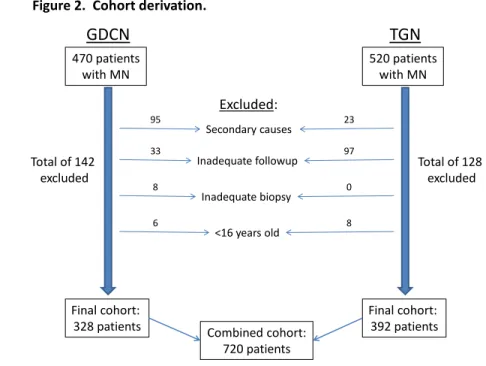
Of an original 470 patients with MN identified from the GDCN and 520 from the TGNR, 118 were excluded for secondary causes or incomplete data, 130 for inadequate follow-up, 8 for inadequate biopsy, and 14 for age <16 years old (see Figure 2). This yielded a final cohort of 720 subjects.
Variables
All registry data to be reviewed and analyzed were specified prior to collection. A comprehensive list of variables thought to influence treatment choice was considered; these included age, sex, body mass index (BMI), estimated glomerular filtration rate (eGFR), blood pressure, time from biopsy to treatment initiation, pathologic stage, degree of interstitial fibrosis, baseline proteinuria, baseline serum albumin, insurance status, race, and education level. The presence of hypertension, diabetes, hyperlipidemia, as well as any history of cardiovascular disease, malignancy, venous thromboembolism (VTE) or pulmonary embolus (PE), or psychiatric disease were also considered. Site (GDCN or TGNR) was analyzed to
determine whether there were systematic differences in choice of treatment. Factors were chosen if they were known or suspected to influence the clinical decision to treat with an immunomodulatory agent and/or the choice of which type of agent to use. Variables of interest included those that predict prognosis, as well as patient factors that might influence the choice of one agent over another,
9 considerations when using steroids, and low GFR or hypertension are relevant when choosing to use a calcineurin inhibitor.
Variables were later excluded if no data was available in the registry, if there was a large proportion of missing data (see Table 1), or if there was an insignificant relationship with outcome of interest. The final analysis of decision to treat included the covariates site, sex, age, race, serum albumin, 24-hour proteinuria, eGFR, and mean arterial pressure (MAP); the analysis of choice of treatment included site, sex, age, serum albumin, eGFR, and MAP. When including eGFR in the model, we tried analyzing it in two different ways- as a continuous variable and as a categorical variable, grouped into clinically
meaningful ranges. The latter corresponded to levels at which decision making was predicted/expected to change - i.e. very low such that there might be a relative contraindication for calcineurin inhibitors or that treatment might be considered futile, intermediate such that the patient would be more likely to merit and benefit from treatment, and higher where the patient has a better prognosis and is less likely to be treated (since they are more likely have a benign course even if untreated).
Statistical analysis
10 and felt that this method of classification would more appropriately categorize patients like this.
Patients were included in a treatment group if treatment was initiated, regardless of whether it was discontinued early and regardless of outcome, as our objective was to analyze the variables affecting choice to treat. Logistic regression was used to calculate odds ratios for the likelihood of receiving treatment for each of the patient factors listed above.
The second step of the analysis investigated choice of treatment among those patients who received immunosuppressive therapy. The three treatment groups were alkylating agents (chlorambucil and cyclophosphamide), calcineurin inhibitors (cyclosporine and tacrolimus), and steroids only. Patients were included in the alkylating agent or calcineurin inhibitor group if they received either type of drug, regardless of concomitant steroids use. For patients who initially received steroids alone, the second treatment was considered. Patients receiving other immunosuppressant therapy (azathioprine, rituximab, mycophenolate mofetil, or methotrexate) were excluded from this analysis. Although some of these treatments have begun to be used more frequently (e.g. rituximab, mycophenolate mofetil), they remain relatively new and have not been well-studied yet; we had few subjects who received these medications as first-line therapy (n= 41). As in the first step of the analysis, group allocation was made if treatment was initiated, regardless of duration. We used multinomial logistic regression to model the relationship between the previously-specified patient factors and choice of immunosuppressive agent.
Results were expressed as adjusted odds ratios with 95% CIs, and were considered significant if
11
Results
Characteristics of Sample
The cohort was comprised of 720 adults with biopsy-proven membranous nephropathy, drawn from 2 glomerular disease registries. Approximately 62% of subjects were male and 78% were white, with a mean age at biopsy of 49.1 years (Table 2). The mean eGFR at biopsy was 75.8 mL/min, mean serum albumin was 2.6 mg/dL, and mean 24-hour proteinuria was 8.1 g/day.
Factors Associated with Decision to Treat
The logistic regression model compared the 477 patients (66.3%) who received treatment to the 243 who did not (33.7%). Serum albumin, 24 hour proteinuria, and site (registry) were found to be
significantly different between treated and untreated patients (Table 3). Patients with a serum albumin of <2.5 mg/dL had 1.88 times the odds of being treated than those with a serum albumin >2.5mg/dL (p=0.007, 95% CI [1.19,2.98]). For each 1 g/day increase in 24 hour proteinuria, patients had 1.12 times the odds of being treated (p=<0.001, 95% CI [1.06,1.18]).
12 of TGNR patients. The proportion of patients receiving alkylating agents, calcineurin inhibitors, and other immunosuppressants was comparable between sites (Table 4).
Time from biopsy to treatment initiation was calculated for treated patients. Among treated patients, 56.3% received treatment within 1 month, 68.9% within 3 months, 77.1% within 6 months, and 84.0% within 1 year.
Factors Associated with Choice of Treatment
The multinomial logit model compared patients receiving alkylating agents, calcineurin inhibitors, and steroids. Patients receiving other immunomodulators (mycophenolate mofetil, azathioprine, rituximab, or methotrexate) were included in the analysis of decision to treat but excluded from this comparison as the group was small and comprised of patients taking different types of agents. Of the 477 patients who were treated with immunomodulators, 159 (33.3%) received alkylating agents, 41 (8.6%) received calcineurin inhibitors, and 255 (53.5%) received steroids only (Table 3). For the comparison of factors affecting choice of treatment, we only included patients who were treated in 1983 or later, as this was when use of alkylating agents and calcineurin inhibitors began (Figure 3).
13 We also compared the choice of treatment by year to assess what trends existed in the use of different agents over time (Figure 3). Years of treatment initiation for this cohort ranged from 1963 to 2006. Prior to 1983 there was no use of calcineurin inhibitors and almost no use of alkylating agents; treatment was almost entirely with steroids alone. Use of calcineurin inhibitors and alkylating agents increased
beginning in 1983, and by 1994 alkylating agents surpassed steroids alone as the predominant choice of treatment.
Discussion
14 Serum albumin level, proteinuria, and site were independent predictors of the decision to treat with immunomodulators; an albumin level of <2.5 mg/dL, higher 24 hour proteinuria levels, and being in the GDCN (vs. TGNR) were associated with an increased likelihood of being treated. The association of albumin and proteinuria with decision to treat is consistent with current evidence and
recommendations, as these correlate with prognosis and likelihood of progression, and the decision to treat is based largely upon expected risk of progression.
The reason for the significant difference in likelihood of treatment between sites is not clear. However, the difference in treatment rates between sites is accounted for by a substantial difference in the use of steroids; both sites had similar rates of use of alkylating agents, calcineurin inhibitors, and other
immunosuppressants. One potential explanation for the difference in rates of treatment is a difference in composition of the two registries, in terms of proportion of clinicians or subjects in an academic setting versus a private practice setting, and the relationship of the individual nephrologists and the university program. We did not pursue this question here, but it remains an interesting issue for future investigation. Sex, age at biopsy, race, eGFR, and blood pressure were not found have a significant independent association with the decision to treat.
For patients receiving treatment, we also analyzed factors thought to influence the choice of therapy- alkylating agent-based, calcineurin inhibitor-based, or steroids alone. In this analysis, females were significantly less likely to receive an alkylating agent as compared to a calcineurin inhibitor or steroids alone. This makes sense clinically, as alkylating agents are generally avoided in women of childbearing potential. Site, age, albumin level, proteinuria, eGFR, and blood pressure were not found to be
15 there to be differences in more factors between groups (e.g. eGFR and BP relevant to choice to use calcineurin inhibitor, as described earlier). However, our sample size was likely too small to detect significant differences that may exist. Though the cohort was quite large, the number of patients who received alkylating agents and especially calcineurin inhibitors was surprisingly small. The limited numbers in these groups, as well as missing data, decreased the number of observations in the multinomial logit model and thus its power to detect differences.
In addition to identifying the factors predictive of treatment decision, we also characterized some of the temporal patterns of treatment in this cohort. Specifically, we looked at the choice of treatment over time (by year of treatment) as well as the time from biopsy to treatment. The trends in choice of treatment during the observation period were interesting. Use of alkylating agents and calcineurin inhibitors did not emerge until 1983; prior to this almost all immunomodulatory treatment was with steroids alone. We expected to find these different ‘eras’ of treatment, given that calcineurin inhibitors were not available earlier and data supporting the use of alkylating agents did not begin to accumulate until the 1980s. Use of alkylating agents increased over time, and in 1994 they became the most common choice of treatment, surpassing steroids alone. However, the choice of steroids alone as a first line agent continued to be common, which was surprising, given the available evidence that this is not an effective treatment option for IMN.7,8
The distribution of time from biopsy to treatment was also surprising. The majority of patients who received immunomodulatory treatment were treated within the first few months of biopsy. For
16 understand the clinical course and obtain more prognostic information, which is important, as the natural history of IMN can vary, from stable and benign in some to progression to ESRD in others. Though numerous prognostic factors have been identified, many of these are not very strong predictors of progression, and often are unable to predict patients’ course or progression with much certainty. It was surprising to find that most patients received treatment early in their course, rather than after an observation period to better assess their course and risk of progression. The reasons for early treatment in a majority of patients are unclear, but the finding highlights a discrepancy between perceived or recommended practice and actual practice which would be worth pursuing.
Our combined cohort, the product of a collaboration that utilized 2 major glomerular disease registries, provided a sample far larger than prior studies of MN have been able to achieve, yet was still limited in its power to identify and analyze differences between treatment groups. In order to begin investigating and answering some of the important questions about treatment of this disease, such as the
comparative effectiveness of different treatment choices, more data and even greater collaboration will be needed. Though the design of retrospective studies is limited and on their own are generally not adequate to answer clinical questions with certainty, they are a very important part of clinical outcomes research. Good quality retrospective analyses can identify important issues for further investigation and can prompt further prospective research, and are therefore a necessary first step in pursuing better clinical information and evidence to guide decision-making.
18
REFERENCES
1. Polanco N, Gutierrez E, Covarsi A, Ariza F, Carreno A, Vigil A, et al. Spontaneous remission of nephrotic syndrome in idiopathic membranous nephropathy. J Am Soc Nephrol. 2010;21:697-704.
2. Cattran D. Management of membranous nephropathy: When and what for treatment. J Am Soc Nephrol. 2005;16:1188-94.
3. Ponticelli C, Zucchelli P, Passerini P, Cesana B, Locatelli F, Pasquali S, et al. A 10-year follow-up of a randomized study with methylprednisolone and chlorambucil in membranous nephropathy. Kidney International. 1995 June 12, 1995;48:1600-4.
4. Jha V, Ganguli A, Saha TK, Kohli HS, Sud K, Gupta KL, et al. A randomized, controlled trial of steroids and cyclophosphamide in adults with nephrotic syndrome caused by idiopathic membranous nephropathy. J Am Soc Nephrol. 2007;18:1899-904.
5. Cattran DC, Greenwood C, Ritchie S, Bernstein K, Churchill DN, Clark WF, et al. A controlled trial of cyclosporine in patients with progressive membranous nephropathy. Kidney International. 1995;47:1130-5.
6. Cattran DC, Appel GB, Hebert LA, Hunsicker LG, Pohl MA, Hoy WE, et al. Cyclosporine in patients with steroid-resistant membranous nephropathy: A randomized trial. Kidney International. 2001;59:1484-90.
7. Cattran DC, Delmore T, Roscoe J, Cole E, Cardella C, Charron R, et al. A randomized controlled trial of prednisone in patients with idiopathic membranous nephropathy. N Engl J Med. 1989;320(4):210-5.
8. Cameron JS, Healy MJ, Adu D. The Medical Research Council trial of short-term high-dose alternate day prednisolone in idiopathic membranous nephropathy with nephrotic syndrome in adults. The MRC Glomerulonephritis Working Party. Q J Med. 1990;74:133-56.
9. Ponticelli C, Altieri P, Scolari F, Passerini P, Roccatello D, Cesana B, et al. A randomized study comparing methylprednisolone plus chlorambucil versus methylprednisolone plus
cyclophosphamide in idiopathic membranous nephropathy. J Am Soc Nephrol. 1998;9:444-50. 10. Chen M, Li H, Li XY, Lu FM, Ni ZH, Xu FF, et al. Tacrolimus Combined with Corticosteroids in
Treatment of Idiopathic Membranous Nephropathy: A Multicenter Randomized Controlled Trial. Am J Med Sci. 2010;339(3):233-8.
19
Table 1. Number of subjects with missing values for covariates considered
Variable
Number of subjects with missing data
(%)
Sex 0 (0)
Age at biopsy 0 (0)
BMI 356 (49.4)
Serum albumin 112 (15.6) 24 hr proteinuria 83 (11.5)
eGFR 74 (10.3)
MAP 71 (9.9)
20
Table 2. Cohort Characteristics
Combined
Cohort
(n=720)
GDCN
(n=328)
TGNR
(n=392)
Gender
Female 272 (37.8%) 138 134
Male 448 (62.2%) 190 258
Mean age at biopsy (SD) 49.1 (15.6) 51.0 (15.3) 47.5 (15.6)
Race
White 490 (77.5%) 219 271
Black 80 (12.7%) 61 19
Other 62 (9.8%) 6 56
Smoking
Never 162 (37.0%) 56 106
Ex 131 (29.9%) 43 88
Current 145 (33.1%) 52 93
Mean BMI at biopsy (SD) 27.3 (5.5) 29.7 (6.9) 26.8 (5.0) Mean serum albumin at
biopsy (SD), mg/dL
2.6 (0.7) 2.5 (0.8) 2.7 (0.7)
Mean 24 hour proteinuria at biopsy (SD), g/day
8.1 (7.2) 9.3 (9.0) 7.0 (4.5)
Mean eGFR at biopsy (SD), mL/min
75.8 (34.4) 78.4 (37.6) 73.6 (31.3)
Blood pressure (MAP) 102.2 (14.0) 102.4 (14.6) 102.1 (13.5)
21
Table 3. Factors influencing decision to treat.
Adjusted
Odds Ratio
P-value 95% CI
Site/registry
GDCN 1
TGN 0.45 0.001 [0.28,0.72]
Gender
Male 1
Female 0.73 0.18 [0.46,1.16]
Age at biopsy 0.99 0.11 [0.97,1.00]
Race
White 1
Other 0.86 0.57 [0.51,1.46]
Serum albumin <2.5 mg/dL
1.88 0.007 [1.19,2.98] 24 hour proteinuria
(g/day)
1.12 <0.001 [1.06,1.18] eGFR (per 10 mL/min) 0.97 0.45 [0.89,1.05] Blood pressure (MAP) 1 0.72 [0.98,1.01]
22
Table 4. Distribution of different treatments among cohort.
Combined
Cohort
GDCN TGN
n=720 n=328 n=392
Treated 477 (66.3%) 253 (77.1%) 224 (57.1%)
Alkylating agent 106 (14.7%) 50 (15.2%) 56 (14.3%)
With steroids 76 45 31
Without steroids 30 5 25
Calcineurin inhibitor 30 (4.2%) 11 (3.4%) 19 (4.8%)
With steroids 8 5 3
Without steroids 22 6 16
Other immunosuppressant 12 (1.7%) 5 (1.5%) 7 (1.8%)
With steroids 8 2 6
Without steroids 4 3 1
Steroids only 329 (45.7%) 186 (56.7%) 143 (36.5%) 2nd treatment- alkylating agent 53 31 22
2nd treatment- calcineurin inhibitor 11 3 8 2nd treatment- other immunosuppressant 8 5 3
No other treatment 255 147 110
23
Table 5. Factors influencing choice of treatment.
Alkylating agent vs. Steroids only
Calcineurin inhibitor vs. Steroids only
Calcineurin inhibitor vs. Alkylating agent
RRR
p-value 95% CI RRR
p-value 95% CI RRR
p-value 95% CI
site= TGNR 0.51 0.359 [0.123,2.14] 0.235 0.262 [0.019,2.94] 0.46 0.561 [0.034,6.31]
sex= female 0.38 0.001 [0.207,0.685] 1.32 0.551 [0.534,3.24] 3.49 0.011 [1.33,9.20]
age at biopsy 1.01 0.416 [0.988,1.03] 0.991 0.606 [0.959,1.02] 0.983 0.329 [0.949,1.02]
albumin 0.78 0.282 [0.500,1.22] 0.487 0.147 [0.184,1.29] 0.622 0.358 [0.226,1.71]
24 hr proteinuria 1.05 0.284 [0.960,1.15] 1.13 0.039 [1.01,1.27] 1.08 0.193 [0.963,1.21]
eGFR, per 10 mL/min 0.98 0.608 [0.898,1.07] 0.985 0.852 [0.843,1.15] 1.01 0.926 [0.859,1.18] MAP 1.01 0.222 [0.993,1.03] 0.984 0.382 [0.950,1.02] 0.973 0.14 [0.939,1.01]
24 Adult patients with IMN
Treated
(with immunosuppression)
Untreated
(no immunosuppression)
Alkylating agent-based regimen
(cyclophosphamide or chlorambucil)
Calcineurin inhibitor-based regimen
(cyclosporine or tacrolimus)
25
GDCN TGN
470 patients with MN
520 patients with MN
Excluded:
Final cohort: 328 patients
Final cohort: 392 patients Secondary causes
Inadequate followup
Inadequate biopsy
<16 years old
Combined cohort: 720 patients 95
33 8 6
23 97 0 8 Figure 2. Cohort derivation.
Total of 142 excluded
26
Figure 3. Choice of treatment over time.
0 5 10 15 20 25 30
1963 1965 1967 1969 1971 1973 1975 1977 1979 1981 1983 1985 1987 1989 1991 1993 1995 1997 1999 2001 2003 2005
Alkylating agent
Calcineurin inhibitor
Other
immunosuppressant
27
Systematic Review
Introduction
Idiopathic membranous nephropathy (IMN) is the most common cause of nephrotic syndrome in adults. The course of the disease is variable, with approximately equal numbers of patients experiencing
spontaneous remission, having persistent proteinuria but stable renal function, or progressing to end-stage renal disease (ESRD). Untreated, some patients will do well, whereas a significant number will progress to ESRD. Some prognostic factors can help predict the likelihood of progression and stratify risk- thus identifying some low-risk patients who are not likely to benefit from treatment- a significant number are at moderate to high risk of progressive disease. In these patients, there is a significant potential to benefit from treatment, but this must be weighed against the risks of treatment.
Alkylating agents and calcineurin inhibitors are both accepted options for first-line treatment of IMN. Unfortunately, these treatment options have a number of associated side effects and risks. Examples of important risks include potential infertility in women with cyclophosphamide, increased risk of
malignancy with long-term use of cyclophosphamide, risk of renal failure with calcineurin inhibitors, and risks of weight gain, glucose intolerance or diabetes, among many others, with glucocorticoid (steroid) use.
28 the efficacy of these agents. Further, it would be valuable to determine what is known about the comparative effectiveness of these two agents and what work remains to be done in this area.
The purpose of this systematic review was to synthesize and describe the existing evidence regarding the effectiveness of calcineurin inhibitors and alkylating agents for the treatment of IMN, and to determine whether one is more effective than the other for initial treatment.
Methods
Data sources and Searches
The search strategy included a search of MEDLINE. PubMed was searched using the MeSH terms (“membranous glomerulonephritis”) AND *(“cyclosporine” or “tacrolimus) OR (“cyclophosphamide” OR “chlorambucil”)+, with results limited to those in English, as well as those in humans and adults (ages 19+), published in any year. Related articles and bibliographies of relevant articles were also reviewed.
Study Selection
29 could be measured or defined in several ways: mortality, renal survival (or time to ESRD/renal
replacement/transplant), remission rate (partial and complete), and renal function (eGFR). Other inclusion criteria are that articles be available through the University of North Carolina Health Sciences Library and be in English.
Data Extraction and Quality Assessment
Articles were reviewed and their methodology appraised using predetermined quality criteria. To evaluate the methodologic rigor and quality of the studies a single author (SM) assessed the potential for selection bias, measurement bias, magnitude of effect, and overall internal validity. External validity, or generalizability, was also evaluated. Articles were assigned an overall grade based on design and quality. The grade was based on the overall assessment of the internal validity of the study, taking into account potential bias and how significantly it might affect the results found in the study. Data to be compared between studies was extracted and summarized in a table (Table 1).
Results
Search Results
30
Study Characteristics
Table 1 summarizes the characteristics of included studies. There were six RCTs,3-8 two prospective cohort studies,9,10 one non-randomized controlled trial,11 and one retrospective cohort study.12 The sample size of included studies ranged from 17 to 93 subjects. The study population in all cases included patients with IMN, and most studies required that subjects also have nephrotic range proteinuria. Three were directed at patients with progressive disease or renal insufficiency.
Study Quality
Table 2 summarizes the appraisal and grading of the studies.
Three studies received a grade of ‘good,’ three were ‘fair,’ and four studies were ‘poor.’ The major limitation to quality was selection bias, as well as some measurement bias. Problems with selection bias included significant levels of dropout or loss to follow-up and baseline differences between groups. External validity was generally good- most of the RCTs were not too limiting in their exclusion criteria- but many of the studies were limited by short follow-up time, as well as use of intermediate outcomes.
Findings
Alkylating agents vs. calcineurin inhibitors
Only one study directly compared alkylating agents to calcineurin inhibitors.3 This study found no difference in remission rates at one year between patients treated with one agent or the other. However, this study was of poor quality overall and had a relatively short followup of one year.
31 available to address the question of whether alkylating agents or calcineurin inhibitors are more
effective in treating IMN.
Alkylating agents vs. control
Five studies compared the efficacy of alkylating agent-based regimens to control- conservative treatment or steroids.6-8,10,12 There were three RCTs,8-10 one prospective cohort study,10 and one retrospective cohort study.12 Four of the five studies found that treatment with an alkylating agent improved outcomes, though primary outcomes and endpoints varied between studies.6,7,10,12 The 1992 study by Falk et al. failed to find a difference in renal survival between patients treated with
cyclophosphamide + steroids and those treated with steroids alone.8 This study was relatively small (n=26) and of fair quality. Taken together, the bulk of the evidence regarding alkylating agent-based regimens supports an improvement in outcomes with their use. The most convincing evidence comes from the two large RCTs- by Jha et al. in 2007 and Ponticelli et al. in 1995- both of which have 10 years of follow-up.6,7
32 A later study by the same group demonstrated that using cyclophosphamide in place of chlorambucil was equally efficacious but resulted in fewer side effects;13 chlorambucil is no longer used in alkylating agent-based regimens.
In 2007, Jha et al. published the results of a similar RCT comparing cyclophosphamide and steroids to conservative therapy.6 Their study was slightly larger (n=93), and also followed patients for 10 years. They compared the percentage of patients achieving remission, the percentage with ESRD-free survival, and the percentage not reaching any endpoints (death, ESRD, or doubling of serum creatinine) at 10 years, and found significant differences between experimental and control groups for each. This study had some loss to followup, though not as much as in the Ponticelli study7 described above. Further, there was some crossover from control to treatment (control subjects had the option to be treated with an alkylating agent 24 months or more after randomization if they wished). With an intention-to-treat (ITT) analysis, such crossover would bias toward the null and underestimate the effect size.
33 In 1992, Jindal et al. published the findings of a small prospective cohort of patients (n=9) with IMN that had been treated with cyclophosphamide.10 They compared the cohort to a matched control (n=17) that had never been treated with cyclophosphamide, drawn from a glomerular disease registry in Toronto. The controls were matched on five factors, and appeared similar for these variables, but there were a number of other potentially confounding factors that were not matched. As with the above study by Torres et al.,12 this potential bias limits internal validity, though the longer follow-up and minimal exclusion criteria make this observational study a valuable complement to RCTs.
Calcineurin inhibitors vs. control
Four studies compared the efficacy of calcineurin inhibitor-based regimens to control- conservative treatment, placebo, or steroids.4,5,9,11 The quality of the studies varied, as did the endpoints measured, but the evidence pointed toward an overall benefit associated with use of calcineurin inhibitors. The 1995 study by Cattran et al. found that treatment of IMN with cyclosporine slowed the rate of decline in creatinine clearance significantly, as compared with a placebo group.11 This study was relatively small and the endpoint was an intermediate outcome, but demonstrated a clinically important effect and served as a starting point for other investigations of cyclosporine’s efficacy. This study included only patients with worsening renal function (progressive disease).
34 In 2007, Praga et al. conducted an RCT evaluating a different calcineurin inhibitor, tacrolimus, as
treatment for IMN.4 Their study was of fair quality, limited by higher dropout rates and some baseline differences between tacrolimus and control groups. The outcome of interest in this study was remission rate after treatment, at 12 and 18 months. They also found a significant magnitude of effect, which would likely outweigh the effect of any selection bias.
The 2001 study by Yao et al. found similar results, with significantly different rates of remission following treatment with cyclosporine (versus conservative treatment with captopril).9 However, the internal validity of their study wasn’t as good, and its applicability to North American populations may be limited.
Discussion
A number of studies have addressed the efficacy of calcineurin inhibitors and alkylating agents in treatment of IMN. These range from small, uncontrolled observational studies (excluded from this review) to larger, controlled and/or randomized ones. There is some good quality evidence demonstrating an association between each agent and intermediate outcomes or indicators of
effectiveness. The existing evidence for calcineurin inhibitors demonstrates their role in increasing the likelihood of remission (both partial and complete) as well as decreasing the rate of decline in renal function (as measured by creatinine clearance). Both cyclosporine and tacrolimus have been evaluated in prospective trials and appear to be effective. The evidence for alkylating agents is somewhat
35 found significant differences in renal survival between patients treated with alkylating agents and controls. To date, just one study has addressed the comparative effectiveness of alkylating agents and calcineurin inhibitors. Alone, it does not constitute good evidence for clinical decision-making or recommendations; more studies are needed to compare these agents head-to-head.
The four studies comparing calcineurin inhibitors to a control all had similar findings that pointed toward the efficacy of calcineurin inhibitor-based regimens for treatment of IMN. The consistency of these findings supports this hypothesis, and it is important to note that the results were found in different populations of patients with IMN- some with progressive disease, some steroid-resistant, and some with persistent (though not necessarily progressive) disease. One important limitation of these studies is the relatively short follow-up. The longest follow-up was in the prospective study by Yao et al.,9 but the RCTs were limited in the duration of their follow-up. Also, these studies evaluated intermediate
outcomes, such as creatinine clearance and remission rates (partial and complete), but did not measure more meaningful and patient-centered outcomes such as renal survival or mortality. Doing so would likely require significantly greater followup time, which is difficult with an RCT.
Implications for research
36 survival. This is partly due to the small number of good-quality studies with long-term follow-up, since these outcomes take longer to develop than remission or changes in renal function.
The studies summarized above used varying doses of medications and durations of treatment, and consequently, there is not any clear evidence regarding the lowest effective dose or shortest effective duration of treatment. Some studies have tested low-dose regimens (particularly of calcineurin inhibitors) in an attempt to address this, but further studies are needed.
Finally, more research is needed to directly compare the effectiveness of calcineurin inhibitors and alkylating agents. A large RCT with long-term follow-up would be expensive and time consuming, and is impractical, especially as a first step. Efforts should be directed at designing good quality observational studies, which are an important complement to RCTs. Observational studies are far more inclusive and generalizable, and so can help expand the more rigorous findings of RCTs to a broader patient
37 Figure. Results of literature search and article selection.
Titles and abstracts identified through searches:
n = 140
Citations excluded: n = 108
Not in English: n = 4
Unable to retrieve: n = 14
Full-text articles retrieved: n = 14
Full-text articles excluded: n = 4
- 1 wrong intervention
- 1 wrong control/comparison group - 2 wrong population
38
Table 1
Study Study design Treatment studied Comparison/control # of subjects Calcineurin inhibitor vs.
alkylating agent
Chen et al. 2010 RCT Tacrolimus + steroid
Cyclophosphamide +
steroid 73
Calcineurin inhibitor vs. conservative/placebo
Praga et al. 2007 RCT Tacrolimus Conservative 48
Yao et al. 2001
Prospective cohort
with control Cyclosporine
Conservative
(Captopril) 30
Cattran et al.
2001 RCT Cyclosporine + steroid Steroid 51
Cattran et al. 1995
Controlled trial
(non-randomized) Cyclosporine Placebo 17 Alkylating agent vs.
conservative/placebo
Jha et al. 2007 RCT
Cyclophosphamide +
steroid Conservative 93
Torres et al. 2002
Retrospective cohort (comparison of 2
historical cohorts) Chlorambucil + steroid Conservative 39
Ponticelli et al.
1995 RCT Chlorambucil + steroid Conservative 81
Falk et al. 1992 RCT
Cyclophosphamide +
steroid Steroid 26
Jindal et al. 1992
Prospective cohort with control
Cyclophosphamide +/-
39
Table 1, continued
Study Population characteristics Regimen/dose Followup duration Calcineurin inhibitor vs.
alkylating agent
Chen et al. 2010
IMN + nephrotic syndrome; Chinese, drawn from 6 centers
Tacrolimus 0.1mg/kg/day adjusted to trough level of 5-10ng/mL for 6 months, then decreased to trough level of 2-5ng/mL
for 3 months 12 months Calcineurin inhibitor vs.
conservative/placebo
Praga et al. 2007
IMN + nephrotic syndrome lasting >9 months; conducted from 13 centers in Spain
Tacrolimus 0.05mg/kg/day divided BID, adjusted to trough level of 3-5ng/mL, increased to trough level of 5-8ng/mL if no remission at 2 months, continued for 12 mos; then tapered for 6 months (months
12-18) 18 months
Yao et al.
2001 IMN
Cyclosporin A 5mg/kg/day, tapered over first 3 months then maintained at 2mg/kg/day for 12 months (total 15 months treatment)
Average followup was 44.4 +/- 9.6 months in
cyclosporine group, 45.1 +/- 5.6 months in control group
Cattran et al. 2001
IMN + nephrotic syndrome, steroid resistant (failed to achieve remission after >8 weeks of prednisone treatment)
Cyclosporine 3.5mg/kg/day divided, adjusted to trough levels of 125-225 micrograms/L for 26 weeks, then tapered for 4 weeks; Prednisone 0.15mg/kg/day for
26 weeks, then tapered for 8 weeks 78 weeks
Cattran et al. 1995
IMN + nephrotic syndrome, worsening creatinine clearance over 12 months
Cyclosporine 3.5 mg/kg/day divided BID, adjusted to achieve trough level of 110-170 micrograms/L, continued for 12 months
Average followup was 49 months in cyclosporine group and 48 months in control group Alkylating agent vs.
conservative/placebo
Jha et al. 2007
IMN + nephrotic syndrome; excluded if systemic illness, DM, cancer, RVT, or
immunosuppressants for >2months
IV methylprednisolone 1g/day x3 days followed by 27 days PO prednisolone 0.5mg/kg/day in months 1,3,5; PO cyclophosphamide 2mg/kg/day in months
2,4,6 10 years
Torres et al. 2002
IMN + renal insufficiency, from single hospital in Spain
Prednisone 1 mg/kg/day for 1st month, 0.5mg/kg/day for 2nd month, 0.5mg/kg QOD for 3rd-6th month; 0.15 mg/kg day Chlorambucil PO for 1st 14 weeks
Average followup was 51.8 +/- 36.5 months in chlorambucil group, 46.8 +/- 37.5 months in control group
Ponticelli et
al. 1995 IMN + nephrotic syndrome
1g IV methylprednisone daily x3days followed by 0.5mg/kg/day PO prednisone for 27 days in months 1,3,5; chlorambucil
0.2mg/kg/day in months 2,4,6 10 years
Falk et al. 1992
IMN + progressive disease (deteriorating renal function or persistent nephrotic syndrome with morbid complications)
IV cyclophosphamide 0.5g/m2 with 3 days of pulse methylprednisolone, followed by 1 mg/kg prednisone
Average followup was 29.2 +/- 17.1 months
Jindal et al.
1992 IMN + nephrotic syndrome Cyclophosphamide given >2 months
40
Table 2
Authors, year Comparability of groups Dropouts, adherence, crossovers
Selection bias Measurement bias
Calcineurin inhibitor vs. alkylating agent
Chen et al. 2010
Good randomization strategy; groups comparable in table 1
Relatively high dropout rate: in tacrolimus group 6/39 withdrew, in control group 3/34 withdrew and 4/34 lost to followup; ITT analysis done
Dropouts concerning- 15% of tacrolimus group, 21% of control group
Patients and physicians aware of assignment, but endpoints judged at central location by masked investigators, histopathologists blinded Calcineurin inhibitor
vs.
conservative/placebo
Praga et al. 2007
Appropriate randomization strategy; baseline differences between groups in age, proteinuria, eGFR, BP- would bias away from null
Relatively high dropout rate: 2/25 withrew from tacrolimus group and 1/23 from control; 2/25 from tacrolimus group and 3/23 from control group lost to followup; ITT analysis done
Dropouts concerning- 16% of tacrolimus group, 17% of control group
Patients and physicians aware of assignment, not specified whether investigators measuring outcomes blinded
Yao et al. 2001
Don't describe how group assignment was made; groups mostly comparable in Table 1 (younger in cyclosporine group, but serum creatinine higher in
control group) Not described
Non-randomized; generally comparable on listed characteristics, but could be differences in unmeasured characteristics
Objective definitions of endpoints provided, but not clear how measured or whether blinded
Cattran et al. 2001
Good randomization strategy; groups similar in Table 1- greater proportion of males in cyclosporine group, but this would bias toward null
Monitored adherence and found to be >90%; 4 dropped out prior to final endpoint (78 weeks)- data from last followup assessment used
Dropout rates
acceptable, no significant source of selection bias apparent
Patients masked but physicians were not, endpoints measured by central lab blinded to patient assignment
Cattran et al. 1995
Appropriate randomization strategy; groups generally similar- some differences in age, gender, and creatinine clearance, but bias toward
null None
No significant source of selection bias apparent
41
Table 2, continued
Authors, year Comparability of groups Dropouts, adherence, crossovers
Selection bias Measurement bias
Alkylating agent vs. conservative/placebo
Jha et al. 2007
Appropriate randomization strategy, comparable in table 1
7/53 from control and 4/51 from experimental group lost to followup (excluded from analysis); 15 of 46 control patients were treated (2-4.5yrs later)- crossover; ITT analysis done
Some dropout/loss to followup; only crossover was from control to treatment, which would bias toward null
Clearly defined endpoints but don't describe how/who measured, no blinding
Torres et al. 2002
Not randomized (2 historical cohorts); generally similar in Table 1- difference in gender would bias away from null and difference in proteinuria would
bias toward null None
Non-randomized; generally comparable groups at baseline but different treatment periods/'eras' may be associated with other difference(s) in treatment or outcomes
Use of medical records- effect of missing data could be non-differential; investigators not blinded to patient group
Ponticelli et al. 1995
Described in Ponticelli et al., N Engl J Med, 1989;320:8-13- unavailable from UNC. Patients reported to be similar on a number of important
variables/prognostic factors.
10/39 from control and 9/42 from chlorambucil group lost to followup, 3/39 from control and 1/42 from chlorambucil group died; for these patients, data from last observation used in analysis; ITT analysis done
Randomized, groups reported to be comparable; significant loss to followup creates significant selection bias
Clearly defined endpoints, but unclear how/who measured, whether blinded
Falk et al. 1992
Appropriate randomization strategy; groups comparable in Table 1 except for race
1 patient in
cyclophosphamide group lost to followup after 1 yr, 1 patient in control group dropped out
Randomization and comparability generally ok, unclear whether race would have differential
effect Not described
Jindal et al. 1992
17 control patients (never received cyclophosphamide) matched for time period of biopsy, age at biopsy, nephrotic syndrome, and 2 peak serum creatinine concentrations to 9 treated patients in cohort; comparable in Table 1 (more thromboembolic events in treated group, but bias toward null)
1 patient in
cyclophosphamide group dropped out after 13 months
Non-randomized; controlled for some important variables/prognostic factors, but may be others that are different between treated subjects and controls
42
Table 2, continued
Authors, year Potential confounders
Results- magnitude and direction Overall internal validity,
quality grade
External validity Other
Chen et al. 2010
Possibly differential dropout/loss to followup
After 12 mos, remission rates similar- 79% in tacrolimus group and 69% in control group; eGFR without significant change in either group and without significant difference between groups
poor No significant differences between groups at 1 year, but relatively high dropout rate limits validity of findings
Done in China, limits applicability to North American or Western populations
Relatively short followup period (1 yr)
Praga et al. 2007 Some baseline differences in prognostic factors (age, proteinuria, eGFR, BP), favoring better outcome in tacrolimus group
After 12 mos (end of full dose course), 72% of tacrolimus group and 22% of control group in remission (p<0.001); after 18 mos (end of taper), 76% of tacrolimus group and 30% of control group in remission (p=0.003)
fair Baseline differences between groups and dropouts may confound findings, but large magnitude of effect found
Requirement of >9 mos of nephrotic syndrome and eGFR >50mL/min limits some of the population to whom this might be applied
Relatively short followup (especially after stopping tacrolimus)- only followed patients through end of taper (18 mos)
Yao et al. 2001
Indication for choosing whether to treat- may be differences between those treated and not
After 15 mos (end of treatment course), 80% of cyclosporine group had achieved remission and 13% of control group had achieved remission (p<0.05). At time of last visit, there was no significant difference in remission between groups- 60% of cyclosporine group and 33% of control group were in remission (p=NS).
poor Non-randomized and group assignment not described, measurement not described
Inclusion criteria not too limiting. Performed in China, limits applicability to North American or Western populations.
Longer followup than some other studies
Cattran et al. 2001
After 26 wks, 75% of cyclosporine group and 22% of control group in remission (p<0.001); after 52 wks, 46% of cyclosporine group and 13% of control group in remission (p=0.004); after 78 wks, 39% of cyclosporine group and 13% of control group in remission (p=0.007)
good Good study design intended to reduce potential sources of bias, clearly described, no major areas of concern; large magnitude of effect
Inclusion criteria make findings applicable to smaller population- failed 8 weeks of prednisone treatment, creatinine clearance >42mL/min, BP <135/85
Cattran et al.
1995
12 mos after treatment initiation, rate of decline of Cr clearance in treated group improved from -2.43 to -0.73 mL/min/month (p<0.02), and in control group remained stable at -2.18 to -2.05 mL/min/month
good Overall good design, no bias apparent that would threaten findings
43
Table 2, continued
Authors, year Potential confounders
Results- magnitude and direction Overall internal validity,
quality grade
External validity Other
Jha et al. 2007
At 10 years' followup, 16 control and 34 experimental pts achieved remission (p<0.0001); 65% of control and 89% of experimental pts achieved dialysis-free survival (p=0.016); 44% of control and 79% of experimental did not reach any of endpoints (death, ESRD, doubling of Cr) (p=0.0006).
good Some loss to followup is potential source of selection bias, but crossovers bias toward null and thus may result in
underestimation of magnitude of effect
Performed in India, may limit applicability of findings to North American or Western populations, though consistent with other large RCT
Long followup of RCT provides valuable data not available in other studies; evaluation of ESRD, death, renal failure, and quality of life as endpoints is more meaningful
Torres et al. 2002 Differences between historical cohorts- different overall treatment/care due to historical effect
At last followup, no significant change in serum creatinine in treated group, significant increase in control group (p<0.001). Probability of renal survival after 7 yrs was 90% in treated group, 20% in control group (p<0.01); no significant difference between groups in patient survival at 4 or 7 years of followup.
poor Limited by
retrospective design and use of 2 historical cohorts from different time periods, though relatively large magnitude of effect may reflect true differences
Longer followup is a strength, but small study. Measured more meaningful/patient-centered outcomes (renal survival, patient survival) Ponticelli et al. 1995 Possibly differential loss to followup
92% of treated did not progress to ESRD vs. 60% of controls did not progress to ESRD, p=0.0038; by 10 years 88% of treated had a remission as first event vs. 47% of controls (p=0.0000)
fair Significant selection bias due to relatively high dropout/loss to followup. Large magnitude of effect indicates real findings in spite of any biases (though magnitude could be smaller)
Long followup of RCT provides valuable data not available in other studies; evaluation of ESRD as an endpoint is more meaningful
Falk et al. 1992
No significant difference in renal survival between groups
fair Measurement not clear or well-described, selection bias appears limited
Measured a more meaningful outcome- renal survival.
Jindal et al. 1992 Possibly sex, proteinuria, location/site of treatment (e.g. university hospital versus private nephrologist), other factors not controlled for
At final followup, 12.5% of cyclophosphamide group had reached ESRD, compared to 58.8% of controls (p<0.05).
poor Significant potential for selection bias,
44
REFERENCES
1. Cattran DC, Delmore T, Roscoe J, Cole E, Cardella C, Charron R, et al. A randomized controlled trial of prednisone in patients with idiopathic membranous nephropathy. N Engl J Med. 1989;320(4):210-5.
2. Cameron JS, Healy MJ, Adu D. The Medical Research Council trial of short-term high-dose alternate day prednisolone in idiopathic membranous nephropathy with nephrotic syndrome in adults. The MRC Glomerulonephritis Working Party. Q J Med. 1990;74:133-56.
3. Chen M, Li H, Li XY, Lu FM, Ni ZH, Xu FF, et al. Tacrolimus Combined with Corticosteroids in Treatment of Idiopathic Membranous Nephropathy: A Multicenter Randomized Controlled Trial. Am J Med Sci. 2010;339(3):233-8.
4. Praga M, Barrio V, Fernandez Juarez G, Luno J. Tacrolimus monotherapy in membranous nephropathy: A randomized controlled trial. Kidney International. 2007;71:924-30.
5. Cattran DC, Appel GB, Hebert LA, Hunsicker LG, Pohl MA, Hoy WE, et al. Cyclosporine in patients with steroid-resistant membranous nephropathy: A randomized trial. Kidney International. 2001;59:1484-90.
6. Jha V, Ganguli A, Saha TK, Kohli HS, Sud K, Gupta KL, et al. A randomized, controlled trial of steroids and cyclophosphamide in adults with nephrotic syndrome caused by idiopathic membranous nephropathy. J Am Soc Nephrol. 2007;18:1899-904.
7. Ponticelli C, Zucchelli P, Passerini P, Cesana B, Locatelli F, Pasquali S, et al. A 10-year follow-up of a randomized study with methylprednisolone and chlorambucil in membranous nephropathy. Kidney International. 1995 June 12, 1995;48:1600-4.
8. Falk RJ, Hogan SL, Muller KE, Jennette JC. Treatment of Progressive Membranous
Glomerulopathy: A Randomized Trial Comparing Cyclophosphamide and Corticosteroids with Corticosteroids Alone. Ann Internal Med. 1992;116:438-45.
9. Yao X, Chen H, Wang Q, Tang Z, Hu W, Yin G, et al. Cyclosporin A treatment for idiopathic membranous nephropathy. Chinese Medical Journal. 2001;114(12):1305-8.
10. Jindal K, West M, Bear R, Goldstein M. Long-Term Benefits of Therapy With Cyclophosphamide and Prednisone in Patients With Membranous Glomerulonephritis and Impaired Renal Function. Am J Kidney Dis. 1992;19(1):61-7.
45 12. Torres A, Dominguez-Gil B, Carreno A, Hernandez E, Morales E, Segura J, et al. Conservative
versus immunosuppressive treatment of patients with idiopathic membranous nephropathy. Kidney International. 2002;61:219-27.
13. Ponticelli C, Altieri P, Scolari F, Passerini P, Roccatello D, Cesana B, et al. A randomized study comparing methylprednisolone plus chlorambucil versus methylprednisolone plus