How Predictability and Givenness Produce Activation, and Acoustic
Reduction
Jason Kahn
A thesis submitted to the faculty of the University of North Carolina at Chapel Hill in partial fulfillment of the requirements for the degree of Master of Arts in the Department
of Psychology.
Chapel Hill 2011
ii Abstract
Speakers tend to use reduced pronunciation, e.g. shorter duration, when words are previously mentioned (i.e. “given”; Fowler & Housum, 1987), or predictable in context (Bell et al, 2009; Watson et al., 2007). Existing accounts of this phenomenon
underspecify whether both giveness and predictability make independent contributions, and say little about the underlying cognitive mechanism. I propose and test the Activation Reduction Hypothesis (ARH), which states that any stimulus that activates
iii Acknowledgements
Many thanks to Kellen Carpenter, Samantha Handel, Leighanne McGill, Giulia Pancani, Jennifer Tate, and Alyssa Ventimiglia, who served as addressees and helped run experiments. Thanks to Florian Jaeger for comments on an earlier version of this paper.
iv
Table of Contents
Introduction ... 8
What is acoustic reduction? ... 5
Givenness effects on reduction ... 6
Predictability effects on reduction ... 9
Speaker-centric versus Addressee-Oriented Reduction ... 12
Testing the Activation Reduction Hypothesis ... 12
Experiment 1: Linguistic vs. Non-Linguistic Givenness ... 19
Experiment 2: The Independence of Givenness and Predictability ... 35
Experiment 3: A Further Test of the Independent of Conceptual Priming and Predictability ... 45
General Discussion. ... 54
Appendix: List of object names... 67
v
List of Figures
Figure 1 – The stages of speech planning (adapted from Levelt 1989) ... 13
Figure 2 – An Example Object Array ... 17
Figure 3 - The layout of Experiment 1, with conditions listed on the left and factors of interest listed across the top. Relevant comparisons are between 1) the Non-linguistic and control conditions, which differ on givenness and predictability 2) the Linguistic and Non-linguistic condition, which differ on Non-linguistic givenness ... 19
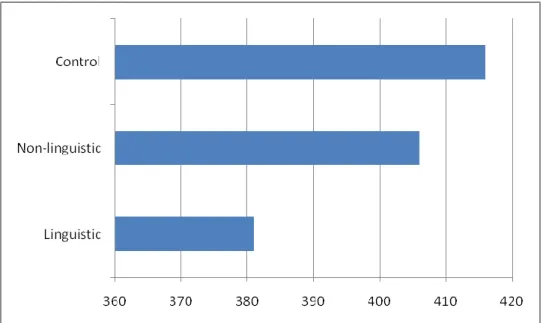
Figure 4- An example of the list design in Experiment 1. The three sets of words were randomized within each condition-set pairing. No condition could appear twice in a row, and a condition could repeat only after all three conditions had been seen the same number of times. (Ctrl = control condition, Ling = linguistic condition, Non-ling = non-linguistic condition) 21 Figure 5- Experiment 1 - Graph of the onset to speak latency of the third instructions, in milliseconds ... 29
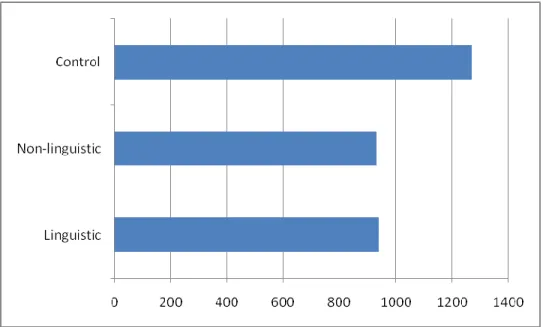
Figure 6 - Experiment 1 - Graph of the object word durations of the third instructions, in milliseconds ... 30
Figure 7– Experiment 1 - Means of the object word duration for all three mentions in milliseconds ... 31
Figure 8– Experiment 2 - Means of the Onset Duration in milliseconds ... 42
Figure 9– Experiment 2 – Means of the object word in milliseconds ... 42
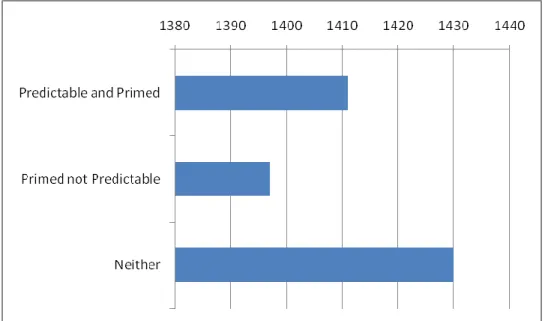
Figure 10 – Experiment 3 – Means of the onset duration in milliseconds ... 49
Figure 11– Experiment 3 – Means of the object word in milliseconds ... 50
Figure 12– Eye movements from Experiment 3, ranging from 600-1500ms after the participant clicked on the 2nd object. ... 52
vi
List of Tables
Introduction
Suppose a psycholinguistics teacher wants to give a lecture on phoneme
restoration. In doing so, she will have to use the word “phoneme” several times. On the
first utterance, she will most likely pronounce it quite intelligibly, with extended
duration, well-defined vowel targets, and relatively high pitch (Brown, 1983; Lindblom 1990; Terken 1985). Acoustically speaking, her pronunciation contains a great deal of information (Jaeger, 2006; Aylett & Turk 2004). The word “phoneme” itself, as well as its associated concept, is new and relatively unpredictable at the beginning of the lecture. But because any good lecture has a consistent topic and contiguous structure, she will most likely talk about phonemes again, and use the same word form, “phoneme.” On these subsequent pronunciations, the acoustic properties of the word will change: the duration and pitch will decrease (Bell et al., 2003, 2009; Gregory et al., 1999, Jurafsky et al., 2001), the vowel targets will become less distinct (Aylett & Turk 2006), among other things, and the word‟s overall intelligibility will go down. Both the concept [phoneme] and the word “phoneme” have become given and predictable by the second time she
mentions them. The current paper investigates why her pronunciation changes between the first and the second mention by focusing on how the predictability and givenness of phoneme and “phoneme” change.
2
enters the conversation, or discourse, with new status, but thereafter the word and the concept are both given as a part of the shared discourse. Similarly, the use of “phoneme” increases the predictability of both the word “phoneme” and the associated concept.
Social expectation of the structure of a lecture suggests that the teacher will continue discussing phonemes. Many studies demonstrate that speakers tend to use reduced expressions to refer to given entities (Brown 1983; Fowler & Housom 1987; Fowler 1988) as well as predictable entities (Bell, Brenier, Gregory, Girand & Jurafsky, 2009; Gregory, Raymond, Bell, Fosler-Lussier & Jurafsky, 1999; Lieberman 1963; Jurafsky, Bell, Gregory & Raymond, 2001). Yet the mechanism that produces these effects remains obscure. The experiments reported here thus have two goals: the proposal of a cognitive mechanism for acoustic form variation, and the investigation of the possibility of
separating predictability and givenness as determiners of that variation.
3
Although many existing explanations for reduction include measures that attempt to account for the effects of both givenness and predictability, a fully satisfactory account will have to address several unanswered questions: 1) What is the common cognitive substrate or mechanism, if any, for the effects of givenness and predictability? 2) To what extent do givenness and predictability operate independently? 3) What sorts of
information “count” for givenness and predictability, and therefore for reduction? Several
proposals have been made in answer to question 1 (see Bell et al., 2009), and some recent work has addressed both question 2 (Lam & Watson 2010) and the portion of question 3 that deals with what I will call predictability source monitoring (Aylett & Turk 2006; Bell et al., 2009; Levy & Jaeger, 2007; Tily & Piantodosi, 2009, inter alia). 1
As a step toward uniting and answering these three questions under a common framework, I propose the hypothesis that activation of the conceptual and linguistic representations associated with a word makes it a good candidate for acoustic reduction. I call this the Activation Reduction Hypothesis (ARH). More specifically, I claim that any stimulus or processing that activates representations associated with a to-be-produced word should lead to some measurable amount of reduction. Givenness and predictability in any form fall under this definition as potentiators of activation, as do anticipatory processing and simple associative priming as forms of facilitation. Importantly, this proposal effectively unites givenness and predictability under a single cognitive substrate. It also predicts that distinct sources of information should lead to additive reduction to the extent that they activate distinct representations in the production system, or increase the activation of already-activated representations. This graded-reduction aspect of the
1By predictability source monitoring, I mean the establishment of relationships among the various possible
4
proposal will allow me to provide at least partial answers to questions 2 and 3, with the answer to question 1 as a guide.
Linguistic forms can vary along several dimensions, including lexical form
(Arnold 1998), morphological form (Frank & Jaeger 2007), vowel quality (Aylett & Turk 2006), word duration (both shortening and lengthening; e.g. Bell et al., 2009), consonant inclusion/deletion (Jurafsky et al., 2001), and others (for a review, see Bell et al., 2009). I focus on word-level durational reduction, which lends itself well to simple but powerful manipulations. The experiments described below hold syntactic, morphological, and phonological information constant while manipulating predictability and givenness. This approach has two primary advantages: holding higher-level linguistic variables constant allows for a direct comparison of the effects of only the factors of interest on reduction, without compromising the naturalness of the task too far (see Aylett & Turk, 2004 for a good example of an analysis restricted to particular syntactic environments); also, the use of duration as a dependent variable allows for indirect comparisons to a robust literature on these effects.
Here I report the results of three instruction-giving tasks designed to test the predictions of the ARH. In the first two tasks, one of a pair of participants (the speaker) told the other about the movement of objects on the speaker‟s computer screen, where I manipulated the givenness and predictability of these objects. In the third task, a single participant issued instructions with the ostensible goal of having them used in a future experiment, because the listener in the first two tasks was deemed irrelevant.2 Overall, the experimental designs focused on creating tokens of the same utterance under different
5
predictability and givenness conditions, to allow for a comparison of acoustic duration. Before explaining the manipulations in more detail, however, I will discuss the nature of acoustic reduction, theoretical accounts of the relationship between givenness,
predictability, and acoustic reduction, and proposals for the underlying mechanisms.
What is acoustic reduction?
Speakers‟ pronunciation of a word falls along a continuum, acoustically speaking.
Acoustically reduced (as contrasted with acoustically prominent) expressions tend to have shorter duration, lower pitch and vowel-target articulation, less pitch variation, and/or incomplete segmentation (Aylett & Turk 2004, 2006; Bell et al. 2003, 2009; Jurafsky et al. 2001, inter alia). The reduction of pitch height and pitch movement may be related to choices about whether to accent a word or not, but it has been demonstrated that variations on acoustic clarity do not depend entirely on accenting (Aylett & Turk, 2004; Bard & Aylett, 2004; Watson , Arnold, & Tanenhaus, 2007). All of these prosodic metrics contribute to an utterance‟s overall intelligibility (Bard, Anderson, Sotillo, Aylett,
6 Givenness effects on reduction
There is substantial evidence that speakers‟ references to given information tend
to have reduced forms, relative to references to new information. This research builds on theories of discourse structure, which emphasize the difference between given
information, i.e. information that has already been mentioned or otherwise evoked, and new, or unmentioned information (e.g., Chafe 1976; 1994; Prince 1981; 1992). The
given/new distinction is one way of characterizing the information status of discourse elements, which itself correlates with linguistic phenomena such as accenting (Venditti & Hirschberg, 2003), pronoun use (Chafe, 1976; Gundel, Hirschberg & Zacharski, 1993), and word order (Birner & Ward, 1998). Canonically, anything mentioned in the discourse counts as given information, precisely because it has been mentioned and is presumably in the participants‟ memory of the conversation. The teacher‟s introduction of phonemes to her students makes that information given, arguably for the remainder of the lecture. The word form “phoneme” thus becomes a good candidate for reduction,
ceteris paribus.
7
Altmann 1989; Fowler 1988). Comprehension experiments also demonstrate that listeners tend to prefer reduced forms for given information, and tend to associate reduced forms with given information (Arnold 2008; Baumann & Grice 2006; Bauman & Hadelich 2003; Dahan, Tanenhaus & Chambers 2002).
Many accounts of givenness have a strong textual or spoken dialogue focus, which allows them to make useful predictions about linguistic phenomena such as anaphoric reference (Gordon, Grosz, & Gillom, 1993), accent placement (Halliday, 1963), and choice of referring expression (Ariel, 1990; Gundel et al., 1993). Givenness leads to a greater number of pronouns as opposed to full lexical noun phrases for
purposes of reference (Arnold, 2008), to deaccenting as opposed to accenting in prosody (Halliday, 1963), and to less explicitly specified referring expressions (Ariel, 1990; Gundel et al., 1993). Broadly speaking, the importance of givenness for these accounts lies in its contribution to the meaning or form (especially the prosodic form) of a text or utterance. The reverse also holds: accent placement and form, as well as choice of referring expression, lead to a partial determination of givenness, and therefore meaning (Pierrehumbert & Hirschberg, 1990; though see Terken & Hirschberg, 1994).
Other accounts have more to say about how givenness affects cognition and vice-versa. Chafe (1976, 1994; see also Ariel, 1990; Gundel et al., 1993), for example, distinguishes among types of givenness by referring to mental states: new information lies outside of the speaker‟s current attention, and is inactive in his or her mind, while
8
explicitly states that givenness activates the processes and representations involved in language production, which has acoustic reduction as a behavioral outcome. Of course, I do not mean to imply that meaning-based accounts cannot inform processing.
Givenness accounts also make a distinction between linguistic and non-linguistic givenness. Most researchers claim that information can become given via explicit linguistic mention (i.e. linguistic givenness) and situational evocation (i.e. non-linguistic givenness; Clark & Marshall 1981; Lambrecht 1994; Prince 1981, 1992), where
situationally evoked information becomes salient in an environment through whatever means (e.g. visual salience, task relevance). Whether these two types of givenness differ in their behavioral outcomes is a question left implicit in these theories. A framing pair of answers comes from comprehension work (Baumann & Hadelich, 1994) and from corpus work (Bard & Anderson, 1994). Baumann & Hadelich show that listeners prefer one type of accenting for linguistically given information and another type for non-linguistically given information. Bard & Anderson show that an entity‟s physical presence suffices to elicit a significant reduction in intelligibility.3 Listeners distinguish between the two types of givenness, while speakers appear not to do.
The ARH takes inquiry about the contribution of givenness to reduction a step further. Among other things, it provides a framework for asking about the relationship between linguistic and non-linguistic givenness. The ARH predicts (along with other accounts) that non-linguistic information should matter for reduction, but it departs from earlier work in specifying both how and why. A discourse-status account, where an entity either counts as given or not, would say that both linguistic and non-linguistic
9
information lead to givenness, because both place an entity within a discourse as given. A processing-based account like the ARH says that non-linguistic information should lead to reduction to the extent that it activates representations associated with language production, which means that explicit evocation of an entity should elicit more reduction relative to a simple appearance as part of an environment. The ARH also predicts that linguistic and non-linguistic givenness should differ to the extent that the former activates more processes or representations than the latter, with the observable effect of a
difference in reduction. It thus creates a principled, psychologically plausible explanation for why givenness creates reduction.
Predictability effects on reduction
As with givenness, speakers tend to use reduced forms to refer to predictable information. For example, a classic experiment by Lieberman (1963) demonstrated that the word “nine” has a longer and clearer articulation in the context “The next number is nine” than in a context that makes it more predictable, e.g., “A stitch in time saves nine”.
A priori, a frequent word like cat is more predictable than an infrequent one like
10
Predictability-based accounts of reduction use probabilistic relationships among linguistic variables to predict form variation. At the word form level, the predictability of a word in the context of the surrounding words leads to acoustic reduction (e.g., Bell et al., 2009; Jurafsky et al., 2001, 2003).. Reduction due to probability may occur via the activation of the word form representations, at least at the lemma level, and possibly phonological, and articulatory levels as well (see Jurafsky et al., 2001). These effects are not limited to predictability in the traditional sense, where words become probable because of prior events; words are also reduced when the following context makes them predictable (e.g., Bell et al., 2009). This is likely to occur because utterances are at least partially pre-planned (Ford, 1982). These effects suggest that co-occurrence probability matters because planning is facilitated when utterances are statistically consistent (i.e. redundant).
11
context. Although the probability calculations in these accounts differ, the differences do not bear on my purpose here, and I collapse across them below.
In addition to the word level, the predictability of a referent also appears to affect acoustic reduction. Arnold (1998) demonstrated that certain discourse contexts
correspond with an increased likelihood that a particular entity will be mentioned, irrespective of the lexical form used to refer (e.g., pronoun, name, description, etc.; see also Tily & Piantodosi, 2009). These are the same discourse contexts that are often proposed to make entities accessible in the discourse, e.g. grammatical subject position, or recency of mention (Arnold, 1998; 2008, in press). Arnold labeled this kind of predictability expectancy, which is critically different from word predictability in that it calculates the predictability of the referential event, not the word. This kind of discourse context has also been shown to influence acoustic reduction; for example, recency of mention (Bard & Aylett, 2004; Fowler & Housom, 1987), or grammatical subjecthood / parallel function (Terken & Hirschberg, 1994). Watson, Arnold, and Tanenhaus (2008) also found that task constraints on referential predictability influenced word durations.
As it did with accounts of givenness, the ARH unites and extends the predictions of predictability-based accounts. The probabilistic relationships within a language should create activation for representations associated information in a discourse (see Balota et al. 1989 for an account along these lines). Stronger relationships should create more activation, and thus lead to greater reduction. The ARH also makes three novel
12
extent that the two sources of information activate different representations. Third, predictability should arise from relevant non-linguistic information, in addition to
linguistic information. Predictability-based accounts can plausibly extend to include these predictions (that is, nothing I say here contradicts existing claims), but to my knowledge the ARH is the first hypothesis to make this set of predictions.
Speaker-centric versus Addressee-Oriented Reduction
Another candidate explanation for reduction, addressee-based accounts, focuses on the speaker-listener interaction (Bard et al., 2000; Halliday, 1963; Lindblom, 1990). Addressees can identify given and predictable referents more easily than new or
unpredictable ones, with the consequence that the speaker can produce a less explicit linguistic form and still expect the addressee to identify the correct referent. In this case, the production system might include representations of the addressee‟s knowledge,
perhaps in parallel with each of the levels of representation outlined above. Speakers and addressees often share a considerable amount of information during a conversation, such that speaker-centric and addressee-oriented processes make similar predictions in many situations. Indeed, in these experiments both speakers and addressees receive the same information about the objects on a trial, and I will not attempt to distinguish between these two routes to reduction (but see Bard & Aylett, 2004; Bard et al., 2000).
Testing the Activation Reduction Hypothesis
13
levels has the potential to affect the production of the utterance, either via facilitation, anticipatory processing, or a monitoring mechanism that assesses the state of activation of the system. The ARH combines givenness and probabilistic information into a single metric that permits a comparison of their relative contribution. It also places no
restrictions on the source of activation, such that linguistic and non-linguistic information, as well as givenness and predictability, can all play a role.
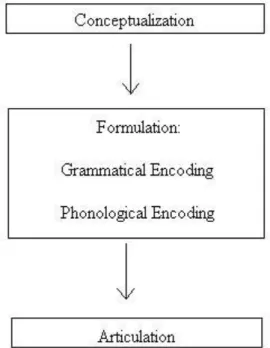
Figure 1 – The stages of speech planning (adapted from Levelt 1989)
Experiment 1 tests three major predictions of the ARH: 1) Does referential-event predictability and/or givenness „count‟ for the purposes of reduction? 2) Does linguistic information „count‟ for the purposes of reduction? 3) Do linguistic and
14
Experiment 2 asks two questions that further clarify the relationship between givenness and predictability: 4) Does givenness operate independently of predictability for the purpose of producing reduction? 5) Does the same relationship between givenness and predictability hold for linguistic and non-linguistic information?
Experiment 3 sharpens the focus of question 4 and uses eye-tracking to address a final pair of questions: 6) Is simply conceptual givenness sufficient for reduction, or is predictability necessary also? 7) Can eye-tracking provide a finer-grained measure of how speakers use non-linguistic information for reduction?
I will begin by explaining how Experiment 1 addresses the first three questions, before describing the experiment itself and its results. I will revisit Experiment 2 and 3‟s questions in light of the results from each other experiment.
15
evidence that task-relevant information that increases the likelihood of reference to an object decreases the duration of the head noun in a reference to that object, and
potentially other parts of the phrase. The experiments reported here are all designed to replicate and potentially extend these findings. In particular, Experiment 1 provides evidence that givenness affects not only the duration of the word for the referent, but also the latency to begin speaking and other words in the carrier phrase.
The question of whether non-linguistic information counts for reduction matters because the answer seems obvious – of course non-linguistic information should count. Unfortunately, much linguistic theory and psycholinguistic experimentation that relates givenness and predictability to reduction focuses on the text itself. Corpora, for example, typically contain very little information about the environment the participants occupy, and so cannot use non-linguistic information predictively. The notable exception of the HCRC map task (Anderson et al., 1991) includes information about the state of each participant‟s map, which allows for comparisons between visually-available and entirely
new material (see Bard & Anderson, 1994). Indeed, they find a difference between visually-present and entirely new material, which confirms the intuition that non-linguistic information matters.
16
with linguistic priming information. My tasks and the map task exhibit two different types of naturalness, both of which are relevant for understanding how non-linguistic information gets integrated into processing. The map task featured a rich environment with several objects, which became relevant as the subjects chose to use them in descriptive utterances. In my tasks, objects have relevance because of task demands, where their sheer presence does not count unless they get primed. Both types of conversational topic structure occur in everyday conversations.
The third question Experiment 1 addresses is whether linguistic and non-linguistic information differ in the amount of reduction they elicit. Taken strictly, meaning-based theories of givenness do not make a principled distinction between the two – given counts as given, regardless of the source. Existing processing-based accounts do not put forth any explicit claims about the possibility of behavioral differences based on types of givenness, but could plausibly be extended to include such a distinction. The mental states associated with partially active versus active states on Chafe‟s theory, for example,
might map onto the difference between linguistic and non-linguistic information, to the extent that one activates an entity more than the other. The ARH makes this claim explicitly, and says that linguistic and non-linguistic information should differ in the amount of reduction they produce because they activate a different proportion of the representations associated with language production processes.
17
airplane). Speakers issued instructions to listeners about the movements of three different pictured objects from an array, as in Figure 2. For example, after seeing a picture of an airplane shrinking, the speaker would tell the listener “the airplane shrinks.” The listener
would then make the airplane shrink on his or her screen. A second and then a third object movement and an instruction would follow, with the same movement-utterance-execution sequence performed for a different object. The critical manipulation was whether the objects were a) linguistically given (by having their name previously mentioned), b) visually given (i.e. non-linguistically given, by having their picture flashed), or c) completely new (as a control condition). Both experimental conditions also made the given entities predictable (c.f. Arnold 1998), but as a referential event.
18
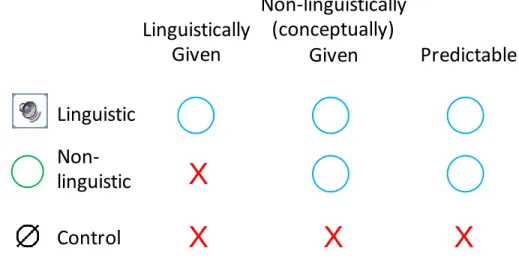
The set of manipulations in Experiment 1 thus allows me to answer three of my questions. The priming information makes entities given, and reference to particular entities predictable, such that any observed reduction should revolve around referential events. Two comparisons between conditions, outlined in Figure 3 would provide answers to the second and third questions: 1) a comparison between utterances in the control and non-linguistic conditions will address whether non-linguistic information counts for durational reduction; 2) a comparison between the linguistic and non-linguistic conditions will address whether linguistic and non-linguistic information differ in
producing reduction.
Any durational difference between the control and non-linguistic conditions should reflect the non-linguistic information‟s having primed representations that go unprimed in the control condition, which would allow for ease of activation or preplanning. The comparison between the linguistic and non-linguistic conditions is slightly more complex. The priming information provided in both of these conditions has two functions: it makes the three target objects given, either linguistically or
19
the two should in principle come only from the difference in givenness, because predictability is held constant.
Linguistically
Given
Non-linguistically
(conceptually)
Given
Predictable
Linguistic
Non-linguistic
Control
X
Experimental Layout (Exp 1)
X
X
X
Figure 3 - The layout of Experiment 1, with conditions listed on the left and factors of interest listed across the top. Relevant comparisons are between 1) the Non-linguistic and control conditions, which differ on givenness and predictability 2) the Linguistic and
Non-linguistic condition, which differ on linguistic givenness
Experiment 1: Linguistic vs. Non-Linguistic Givenness
20
experiment as listeners for course credit. The remaining 6 speakers were paired with a lab assistant.
Materials and Design. 221 colorized versions of the Snodgrass & Vanderwart (1980) line drawings served as the stimuli (Rossion & Pourtois, 2001). These drawings were normed by native French speakers for imageability, visual complexity, familiarity, as well as name agreement in French, although this latter measure was not used here. The appendix lists the names of the 221 experimental items. The English name of each picture, as reported in Rossion and Pourtois (2001), was recorded by the first author for use in the linguistic priming condition. All recordings were made on a Marantz
professional solid-state recorder over an Audio Technica professional microphone headset, using citation format (i.e. no distinguishing inflection and clear pronunciation).
On each trial, participants saw an array of 8 objects. Three of these objects were the target objects, i.e. those that were to be mentioned by the speaker in spoken
instructions (e.g., The windmill shrinks, the tomato rotates left, the candle fades). The third (last) object to be mentioned was termed the experimental target (here: the candle). A total of 24 objects served as experimental targets. These were divided into three 8-item lists (see Figure 4), which had approximately equivalent average values of log frequency, syllables, imageability, familiarity, and visual complexity. The
21
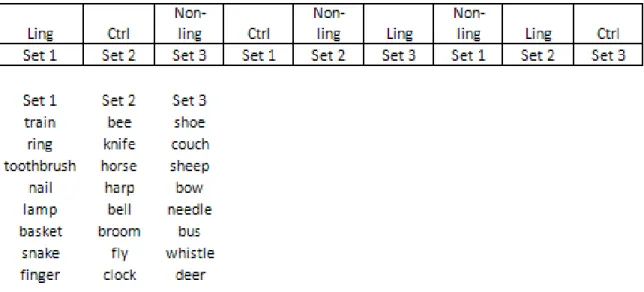
Figure 4- An example of the list design in Experiment 1. The three sets of words were randomized within each condition-set pairing. No condition could appear twice in a row,
and a condition could repeat only after all three conditions had been seen the same number of times. (Ctrl = control condition, Ling = linguistic condition, Non-ling =
non-linguistic condition)
The critical manipulation in the experiment was whether within the trial the target objects were linguistically given, non-linguistically given, or not given at all. On
linguistic trials, the target objects‟ names were spoken aloud in random order, at a
volume both participants could hear, before the instruction-giving portion of the trial. On
non-linguistic trials, all three target objects flashed twice, simultaneously, on both participants‟ screens, before the instruction-giving portion of the trial. On control trials, nothing distinguished the target objects from the other objects, all of which stayed on the screen for 2.5 seconds (the approximate time required to say the objects‟ names, or make
22
The experimental target (i.e., the last to be mentioned) had a special status
because its status as the experimental target was completely predictable at this point in a
trial, but only in the two priming conditions. In the control condition it was not especially
predictable, beyond the expectation that one of the pictured objects would be mentioned.
Following Arnold & Griffin (2007) and Watson, Arnold & Tanenhaus (2007), the experiments used a modified Latin Square design, in which each participant saw each item in all three conditions. This allowed us to directly compare the production of a word across givenness conditions for each participant. The 24 experimental target items were organized into list of 8 items each, and each list occurred three times, once in each condition. Thus, the first three blocks represented a standard Latin Square design, where each item was only viewed once. A separate analysis of these blocks alone was
performed to test that the effects are not the result of repeated experience with an item over the experiment.
23
A customized Python script written by the first author controlled the experiment. The speaker‟s stimuli were presented on a laptop PC, and the listener‟s were presented on
a desktop PC.
Procedure. Both the speaker and the listener sat in front of a computer, at a distance that permitted them to communicate but not see the other‟s screen. Both
participants saw task instructions on their own screen. Participants were instructed that they would see arrays of objects, and were given an example of such an array (Figure 2). The speaker was told that she would be issuing instructions about the objects‟ actions to her partner, who would mimic those actions on his or her computer. Examples of the possible actions (expand, rotate left, rotate right, shrink, and fade) were then shown with random stimuli, and a sentence frame was provided. For example, the speaker‟s
instructions might have said “You might see [an airplane rotating left], and you might say „The airplane rotates left.‟” The listener would have simultaneously seen “You might hear „The airplane rotates left,‟ and you would click the airplane and then the „Rotates Left‟ button.”
The participants were told that the experiment would be divided into sets of trials, and that before each set they would know whether they would receive linguistic, non-linguistic, or no information about the target items. 6 practice trials followed these instructions, 2 from each information condition. The objects on these practice trials were randomly selected, and did not include any experimental items.
24
onset), as well as the onset and offset of the determiner the, the object word, and the action phrase. Two measures of duration are presented here: latency to begin speaking (time from the onset of the beep to the onset of speech), and the duration of the noun. The latency to speak for each instruction reflects planning time, where shorter latencies indicate less complex and/or demanding plans. The duration of the object word most accurately reflects the effect of the manipulation, i.e. whether the primed object had in fact become a good candidate for reduction. Utterances were excluded if they were disfluent in any way (e.g. pauses longer than approximately a second, false starts, disfluent „the‟) or if the speaker used the wrong object or action word.
For both of the duration measures, multilevel models were constructed to assess the contribution of givenness and predictability. All quantitative predictors were centered to reduce collinearity. Collinearity is a measure of the degree to which two variables in a regression correlate with each other, in addition to the relationship they share with the dependent variable. The primary problem with collinearity is that it increases the standard error associated with the affected variables. Reducing it thus cleans up the relationship between the independent variables and the dependent variable. The logarithm of each duration was taken to increase its linear relationship with the predictors. Subject-wise outlier exclusion was not necessary after this transformation. Models were constructed with the lmer function from R‟s lme4 package, which uses a Restricted Maximum Likelihood Estimator to obtain parameter estimates. Markov Chain Monte Carlo (MCMC) simulations were performed with R‟s pvals.fnc function, which runs 10,000
25
the chance a parameter differs from zero, based on the observed distribution of possible parameters, and is functionally equivalent to a standard z-test.
All results reported here reflect the entire dataset. A potential problem with this design is that each object was mentioned 3 times, raising potential practice effects. Nevertheless, analyses on the first three blocks (i.e., the first mention of each object) produced the same pattern of effects, except where noted. See
http://www.unc.edu/~jmkahn/models.html for reports of these additional models. Two analyses were performed. The primary analysis examined the critical third instruction across the three conditions (linguistic, non-linguistic, control). This analysis afforded two comparisons: (1) between the linguistic and nonlinguistic conditions, to quantify any contribution of linguistic givenness over and above non-linguistic givenness and referential predictability, and (2) between the non-linguistic and control conditions, to test whether reduction occurred for non-linguistically given/predictable referents, even in the absence of linguistic givenness. The primary analysis was restricted to only the experimental target items, which were fully determined as of the third mention, with predictability held constant across the two given conditions. Nevertheless, analysis of all three instructions generally revealed the same pattern as the 3rd-instruction analysis.
26
instructions, in order to determine the cumulative effect of predictability, but the objects in these instructions were not experimentally controlled to any degree. These results should thus be interpreted with caution.
For both segments reported here, I first constructed a baseline model to identify the significant control variables. Each model included random intercepts for subject and item, as well as all of the following control variables: log frequency (based on the original Snodgrass & Vanderwart (1980) English names), imageability, visual complexity, and familiarity of the experiment target (taken from Rossion & Purtois (2001)), the number of syllables of the experimental target and of the action word, and the trial number (to control for practice effects). Each of the control variables was centered on its mean. Only variables that approached significance in this baseline analysis (a t value approximately greater than 1.5) were included in the final models. Final models consisted of the significant control variables as well as the predictors of interest.
In order to fully assess the effects of the experimental conditions, two sets of final models were fit in the primary analysis. Both included a pair of Helmert contrasts that tested for significant differences between conditions. The first pair compared the
27
the first to a combination of the second and third. Only the final models are reported here. Reported effects are based on the p values that emerged from the MCMC simulations of the final models. Only p values are reported, because the parameter estimates correspond with log-unit changes in the dependent variables. For reports of the baseline models, and full information about the parameter estimates of the final models, please visit http://www.unc.edu/~jmkahn/models/.
Predictable Targets
Onset to Speak
the Object Word
Action Word
Total
1st 1118 94 419 778 2409
Linguistic 2nd 1066 96 416 795 2374
3rd 940 96 381 764 2181
1st 1160 100 448 809 2517
Non-linguistic 2nd 1090 105 448 803 2446
3rd 932 102 406 795 2235
1st 1441 105 451 795 2793
Control 2nd 1314 107 440 805 2666
3rd 1269 102 416 789 2576
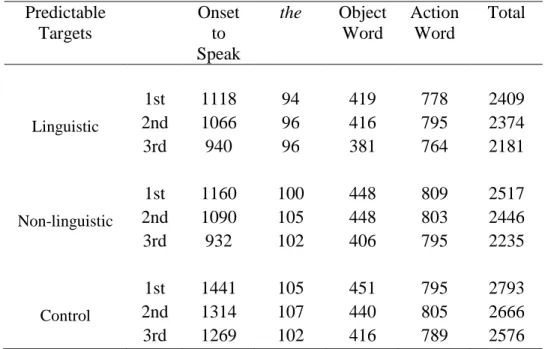
Table 1. Experiment 1 - Mean durations of each segment from all blocks, in milliseconds.
28
Two models tested the significance of these patterns, as described above. The first model included Helmert contrasts between the non-linguistic condition and the control condition, and also between the linguistic condition and the other two conditions. This model revealed that both contrasts were significant. The parameter estimates
indicated that the non-linguistic condition had a significantly smaller duration than the control condition (t = 3.07, p < .002, pMCMC < .002), and the linguistic condition had a significantly smaller duration than the other conditions (t = -5.2, p <. 0.0001, pMCMC < 0.0001). A second model included the opposite set of contrasts, namely between the linguistic and non-linguistic condition, and between the control condition and the other two conditions. Again, both contrasts were again significant. This model‟s results, coupled with the previous model‟s, indicated a three-way contrast between the
conditions. The estimate for the difference between the linguistic and non-linguistic condition was significant (t = 2.91, p < .002, pMCMC < .003), as was the estimate for the difference between the control condition and the other conditions (t = 5.2, p < 0.0001,
29
Figure 5- Experiment 1 - Graph of the onset to speak latency of the third instructions, in milliseconds
The onset to speak latency displayed a different pattern. Table 1 shows that the linguistic and non-linguistic condition were both shorter than the control condition, but did not differ from each other. This bore itself out in the statistical analysis, where the difference between the control condition and the other two conditions was significant (t = 17.39, p < 0.0001, pMCMC < 0.0001), while the difference between the linguistic and non-linguistic conditions was not (t = -.24, p > .80, pMCMC > .79). A notable difference emerged between the first-blocks-only analysis and the full complement of
third-mentions. Despite the smaller number of observations, the first-blocks-only analysis revealed a significant difference between the linguistic and non-linguistic condition (t = 2.35, p < .01, pMCMC < .01), and a significant difference between the non-linguistic condition and the control condition in the model with the other set of contrasts (t = 2.26,
30
Figure 6 - Experiment 1 - Graph of the object word durations of the third instructions, in milliseconds
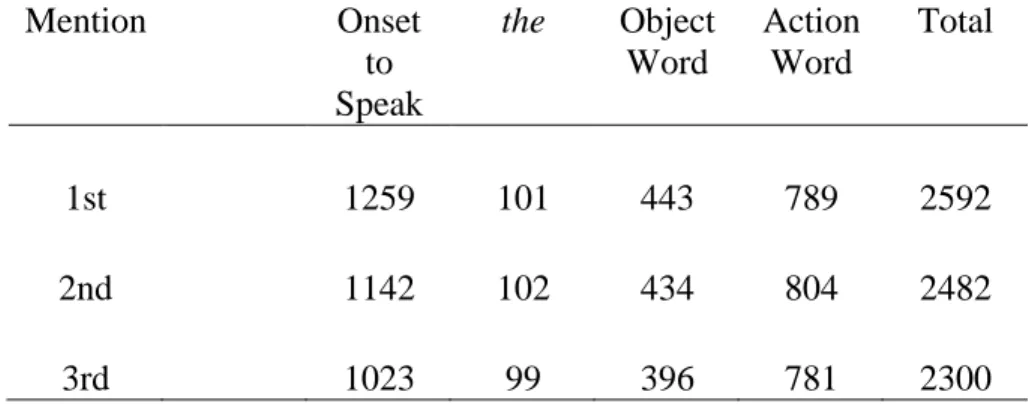
Results: Secondary Analysis. As a secondary analysis, I sought evidence for the role of predictability by measuring the duration of the latencies and object words across the three instructions, within each condition. The means for each segment are shown in Table 2, and graphically in Figures 6 and 7. In the two experimental conditions, all three objects were predictable at the beginning of the item, but their order of mention was not known. This means that the target of the first instruction was 33% predictable, the target of the second instruction was 50% predictable, and the target of the third was 100% predictable. If predictability effects map onto acoustic reduction in a gradient fashion, reduction should increase over the three trials. One caveat attends these results, however: the non-experimental targets (i.e. the first and second instruction objects) were not experimentally controlled.
31
Mention Onset
to Speak
the Object Word
Action Word
Total
1st 1259 101 443 789 2592
2nd 1142 102 434 804 2482
3rd 1023 99 396 781 2300
Table 2: Experiment 1 - Means from all blocks for all three mentions
Figure 7– Experiment 1 - Means of the object word duration for all three mentions in milliseconds
32
pMCMC < .02). An examination of the means for the object duration reveals that the first and second mentions elicited nearly equivalent durations, while the third mention was shorter. The difference between the third mention and the other two mentions most likely reflects a difference in planning that allowed for greater activation of representations. That is, with a fully predictable object, speakers could begin planning their whole utterance, or portions of it, sooner than with less-predictable objects.
This view is supported by the onset duration data, where second mentions had shorter onsets than first mentions, and third mentions had shorter onsets than second mentions. All of the parameter estimates for the differences between conditions were significant at or beyond the .0001 level. The three-way contrast between the mentions suggests that speakers were using the information in the experimental conditions to begin planning their utterances sooner when that information made the entities increasingly predictable.
A somewhat puzzling result emerges from an analysis of the control condition. Because it included no explicit priming information, no reduction should emerge across mention number, barring a slight decrease due to the fewer number of items remaining after each mention. That is, after the first mention, only 7 of the objects on screen could serve as targets. However, an analysis of mention number revealed a significant
33
Analysis of Speaking Rate. An additional analysis was performed as a follow-up to the primary analysis to determine the extent to which the effects were driven by overall speaking rate. For these models, the durations of the other segments in the instruction were included. The model for object duration included the onset, article, and action word duration, for example. The test of interest then became whether the original condition contrasts remained significant even after controlling for the effect of speaking rate. Indeed, after including the additional parameters in the model, all of the previously-reported effects remained significant. The manipulation appears to have had an effect over and above speaking rate.
Discussion. The results demonstrated that referential events can serve as a locus for givenness and predictability information, as evidenced by the sheer presence of reduction in this experiment. This allowed for a manipulation of both linguistic and non-linguistic givenness with predictability held constant, and, to a lesser extent,
34
The most general result to emerge from the first experiment, the efficacy of referential events as determiners of reduction, experimentally verifies both theoretical claims (Arnold, 1998, 2001) and findings from corpus studies (Arnold 1998; Tily & Piantodosi, 2009). The design here directly manipulated whether participants construed reference to particular objects as given and/or predictable, as opposed to construing a particular referential form as given and/or predictable. The instructions themselves contained very little structure that would have allowed word-level probability
measurements to take hold. That is, although they were complete sentences, utterances like “The airplane rotates right” do not vary systematically enough from utterances like “The accordion rotates left” to observe effects of word-level predictability. My point is
not to claim that word -level probability is unimportant. Rather, this result establishes that referential events can stand among the various predictability measures used to predict reduction.
The second major result of these manipulations is the effect of non-linguistic givenness on reduction. Both the onset to speak latency and the object duration displayed reduction in the non-linguistic condition, suggesting that this type of information, even though it comes from outside of the discourse itself, counts along many, if not all, of the same dimensions as linguistic information. Non-linguistic information produces
35
The result of greatest theoretical interest, however, is the increased reduction in the linguistic condition relative to the non-linguistic condition. This effect appeared on the object duration, but not the onset duration, suggesting that it was not an effect of planning. The inclusion of speech rate as a predictor also did not eliminate the effect. Reduction most likely came about due to the activation of representations and/or
facilitation of processing throughout the production system. The difference between the linguistic and non-linguistic condition emerged because linguistic givenness affected a greater proportion of the language production process, which resulted in a greater degree of reduction on the object word.
The predictability manipulation, although the weaker of the two, also produced interesting results. Within the two experimental conditions, predictability had a gradient effect on the onset duration, but not the object duration. This suggests that referential predictability in this task had its primary effect on planning the utterance, while
givenness had its primary effect on the object word duration. The second experiment will attempt to further delineate the effects of givenness and predictability.
Experiment 2: The Independence of Givenness and Predictability
36
invites asking whether they can also work separately. This question has two parts: does predictability elicit reduction even in the absence of givenness, and does givenness elicit reduction even in the absence of predictability? Corpus analyses give an affirmative answer to the first part of the question; highly predictable word forms (e.g. Bell et al., 2009) and structural forms (e.g. Levy & Jaeger, 2007) both lead to reduction, even though none of the influential linguistic material appears in the text.
The second question remains unanswered, and is important for understanding the dynamics of reduction for two reasons. Givenness and predictability very frequently co-occur, which makes it possible that one factor simply cashes out in terms of the other. Because predictability has been shown to have an independent effect, the most likely direction for this relationship is that givenness merely makes entities predictable in context, as opposed to having an effect of its own. An independent effect of givenness would thus invite an alternative explanation, perhaps one that related givenness and predictability to some third factor like activation. The second reason comes out of general interest about reduction, but more specifically from the results of Experiment 1.
37
Up to this point, “givenness” has referred to both linguistic and non-linguistic
information, and has glossed over the theoretical history of the term. Accounts of givenness often allow non-linguistic information to make entities given in a discourse, but none provides a principled account of why it should, or whether it counts in the same way as linguistic information. In order to distinguish the typical use of “givenness” from
the type of information processing the subsequent experiments induce, I will use the term “conceptual priming” to refer to what I have previously called non-linguistic givenness. Similarly, I will use “priming” to refer to situations where either linguistic or non-linguistic “givenness” would have previously been appropriate. The new terminology
captures the fact that linguistic and non-linguistic information seem to differ, both intuitively and empirically, based on the first experiment. It also highlights the
psychological, as opposed to linguistic, focus of this paper. The manipulations in these experiments prime the representations associated with language production, and those primed representations count as given and/or predictable. Here, the psychological phenomenon takes precedence over the linguistic phenomena.
Experiment 2 investigates two questions in particular: 1) Does priming operate independently of predictability for the purpose of producing reduction? 2) Do non-linguistic and non-linguistic information differ, as they did in Experiment 1, in their
38
Predictions. This experiment tests the prediction that priming should matter even in the absence of strong predictability. According to the Activation-Based Reduction Hypothesis, priming activates the representations that are relevant to word production, which results in facilitation of the production process. Even without strong predictability, some activation should take place. The interpretation offered for the results from
Experiment 1 placed the activation due to conceptual priming lower than that due to linguistic priming. Reducing or eliminating the effect of predictability in Experiment Two may thus reduce the detectability of an effect due to conceptual priming. In
principle, however, both types of priming should result in reduction if the ARH is correct. The manipulation also permits asking whether priming affects both word
reduction and latency to begin speaking, as it did in Experiment 1. In particular, the results from Experiment 1 suggested that predictability operated primarily on reducing the onset to speak latency, and to the same extent in both the linguistic and non-linguistic conditions. Priming, by contrast, operated primarily on the object duration, and produced a difference between the linguistic and non-linguistic conditions. This suggested that predictability might affect planning while priming affects word duration more directly. Experiment Two will put that conjecture to the test.
Participants. 24 undergraduates participated in an instruction-giving cooperation task very similar to the task in Experiment 1, and were offered course credit or $10 an hour for their participation. 4 were excluded due to technical difficulties, for a total of 20 speakers. A lab assistant served as the listener in this task.
39
16 two-syllable target words from Experiment 1 that elicited the greatest amount of reduction in the linguistic condition, relative to the control condition. This method was used partly to control for the number of syllables in the object words and partly to give speakers the greatest opportunity to reduce, all while controlling the reduction
environment.
Design and Procedure. The design was the same as in Experiment 1, with the following exceptions. Each trial consisted of only one instruction, and either a linguistic or conceptual prime. The prime was either the name of one of the objects on the screen or the flashing of one of the objects on the screen. Only the speaker saw the flashing object, while both the speaker and listener heard the name of the primed object played over the speakers. I will return to this difference in the discussion. The prime itself thus had the possibility of being valid or invalid. A valid prime served as both the prime object and the target object in the trial, such that the speaker either saw an object flash, or heard an object named, and then saw that same object complete an action. An invalid prime did not serve as the target object on a trial, such that the speaker saw an object flash or heard an object named, and then some other object performed an action. After the prime and the object‟s action, the speaker issued an instruction, which the listener executed.
40
again as half linguistically primed and half conceptually primed. Half of the experimental items that appeared in the first half of the experiment were validly primed, while the other half were invalidly primed. Across all lists, each experimental item appeared an equal number of times in each of the cells formed by the 2x2 condition pairings. Each participant saw items twice, once in each half of the experiment. If an item appeared in one condition pairing in the first half (e.g. linguistically and validly primed), it appeared in the exact opposite pairing in the second half (i.e. non-linguistically and invalidly primed).
The only valid primes participants saw were for experimental items. The large number of invalid trials (7/8th of each block) made pre-activation of any particular object a poor strategy, one that would pay off on only 1/8th of trials. In other words, valid primes had little predictive value on any particular trial, such that any reduction on the object word should come about primarily because of conceptual or linguistic priming.
Participants completed 12 practice trials prior to the experimental trials. These were designed to familiarize them to a greater extent with the action words, which several subjects in Experiment 1 struggled with. No experimental items appeared as moving objects in the practice trials. Participants were offered an opportunity to take a break halfway through the experiment. The entire process took approximately 45 minutes.
Analysis. The analysis took the same general form as in Experiment 1, with two exceptions. No secondary analysis across instruction numbers within a trial was
non-41
linguistic conditions were first examined separately, and then pooled to test the overall effect of the prime.
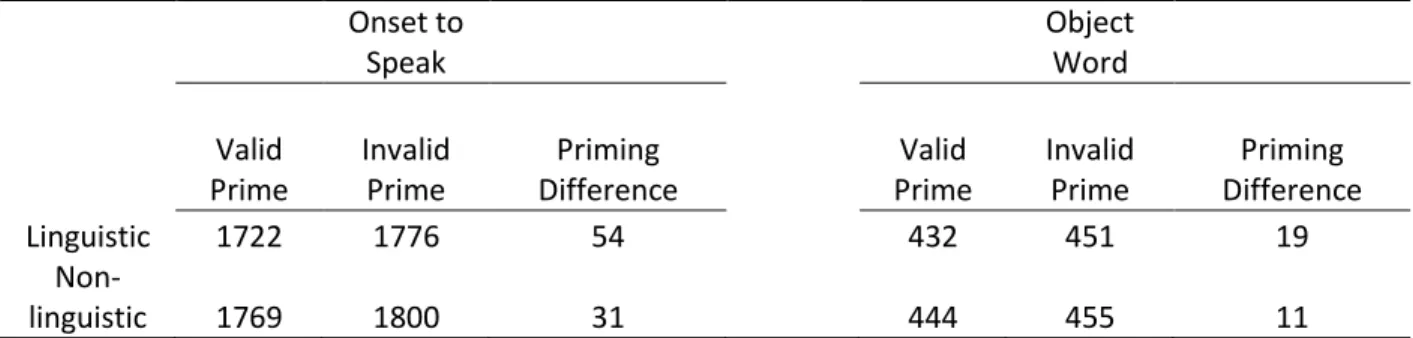
Results. Means of the onset to speak latency and the object word can be found in Table 3, and graphically in Figures 8 and 9. Examination of the table reveals that the prime effect (i.e., the difference between the valid and invalid prime conditions) was numerically greater for both linguistic and conceptual primes, for both latency and object word duration. However, the model revealed that only the object duration differed significantly, and only for the linguistic prime.
The analysis bore out this trend, and revealed no significant difference due to validity of the prime (t = -.48, p > .63, pMCMC > .65). None of the other parameters of interest approached significance, either.
42
Figure 8– Experiment 2 - Means of the Onset Duration in milliseconds
43
Onset to
Speak
Object
Word
Valid Prime
Invalid Prime
Priming Difference
Valid Prime
Invalid Prime
Priming Difference
Linguistic 1722 1776 54 432 451 19
Non-linguistic 1769 1800 31 444 455 11
44
Discussion. The results provided two positive answers to the questions: priming and predictability do appear to have separable effects, and linguistic and conceptual priming once again differ in their capacity to produce reduction. The valid primes elicited reduction even though they did not make the referential event particularly predictable. This effect only appeared on the object word durations, however, and not the onset to speak durations, suggesting that this facilitation effect resulted from activation, rather than planning. Mitigating the usefulness of the prime as a cue to the upcoming referential event appears to have eliminated speakers‟ ability to plan the utterance quickly.
The effect of valid priming also appeared only in the linguistic condition, not the non-linguistic condition. This may reflect a true null result, in that it is possible that conceptual priming does not elicit reduction without strong predictability. However, the manipulation may simply have lacked the power necessary to detect a subtle effect. The numerical trend for the non-linguistic condition was small, but in the right direction. Conceptual priming may simply activate fewer of the necessary representations than linguistic priming, watering down its effect.
One difference between the experimental design in these two experiments may have had an influence on the results. In Experiment 1, both the speaker and the listener had access to the priming information, which was either spoken aloud for both to hear, or flashed on both participants‟ screens. In Experiment 2, the priming information was
45
did not share it with their listener. At the very least, this works against the manipulation, and the presence of an effect due to the linguistic priming shows its robustness. On the other hand, a separate (unreported) experiment that was designed to explicitly test whether speakers in this task paid attention to whether their listener also received the same priming information showed that only the speakers‟ primes mattered. That is, speakers reduced when and only when they had the priming information, and paid no attention the listener‟s state.
Experiment 3: A Further Test of the Independent of Conceptual Priming and Predictability
46
Predictability may matter for conceptual priming more simply because it would allow speakers to capitalize on the (presumably) minimal activation that arises due to the prime.
Experiment 3 is designed as a more direct test of the effect of conceptual on reduction, independent of the effect of predictability. More specifically, it asks two questions: 1) Is conceptual sufficient to produce reduction by itself, in the absence of strong predictability? 2) Do eye movements reveal anything about whether participants actually use the priming information? Another possible difference between the linguistic and conceptual primes in the first two experiments is that the linguistic primes have a much greater capacity to permit prior naming. That is, speakers could simply have repeated the names of the primed objects silently to themselves, and this rehearsal could have produced the effect. Presumably, such rehearsal would have had less of an effect on conceptually primed objects, simply because of the diminished initial activation. Eye-tracking will permit Experiment 3 to investigate whether participants actively seek out information throughout the course of a trial, or whether they simply absorb the priming information wholesale and use it implicitly.
Participants. 20 undergraduates participated in an instruction-giving task similar to the tasks in the prior experiments, and were offered course credit for their
participation. 2 were excluded due to technical difficulties, for a total of 15 speakers.
47
consideration given to objects that had poor naming agreement from the first two experiments.
Design. A trial consisted of two parts: a judgment task and an instruction-giving task. For the judgment task, 3 pictures of objects appeared on a computer screen, centered vertically and spaced horizontally to discourage grouping. Under each picture were a Yes and a No button, which the speaker used to answer one of three questions: 1) “Would this object fit in a drawer?” 2) “Is this an object you would find around the house?” 3) “Is this object a living thing?” The question appeared at the top of the screen. Questions were
randomized, such that no question appeared twice in a row. All three of the objects from the judgment portion of a trial appeared as objects in the instruction-giving portion.
The instruction-giving task took the same form as in Experiment 1, with the exceptions that no priming information was provided, and no listener was present. 8 objects appeared on the screen, and after 2.5 seconds, one object moved. The speaker described this movement, and then clicked on the object to advance the trial. A second object moved, then the speaker issued a second instruction then clicked to advance the trial to the third object.
The experiment consisted of three conditions: predictable-and-primed, only-primed, and neither. In the predictable-and-primed condition, the three objects that featured in the judgment task were the three objects that moved for the instruction-giving task. The order of movement was constrained such that the leftmost object in the
non-48
judgment task objects, while the third was always the rightmost judged object, which was always an experimental item. In the neither trials, none of the judged objects served as instruction-giving task objects, although the third object to move was always an
experimental item. The entire experiment consisted of 80 trials, 32 of which were fillers. The filler trials resembled the neither condition trials, in that none of the judgment objects moved in the instruction-giving task.
Procedure. Speakers were seated in front of a computer and had their eyes tracked with an Eyelink II (X). After calibration of the eye-tracker, they were given instructions about the judgment and instruction-giving tasks. They were told to answer questions about the judged objects from the leftmost object to the rightmost object, in order to facilitate the predictability manipulation. The instructions emphasized that they should make their best guess about each object. Speakers then completed 5 practice trials, where they were familiarized with the instruction-giving task, as well as the details of each question. For the drawer question, for example, they were told to answer whether a typical example of the object would fit in one of the filing cabinet drawers in the lab.
Experimental items appeared in a constrained random order, where each item had to appear once and only once in each condition, and could not appear twice in a row.
Judgment and instruction-giving portions of the trial alternated, with the judgment task giving way to the instruction-giving task upon answering all three questions. During the instruction-giving task, objects appeared on the screen for 2.5s before the first
49
Acoustic Analysis. The analysis took the same form as Experiment 1.
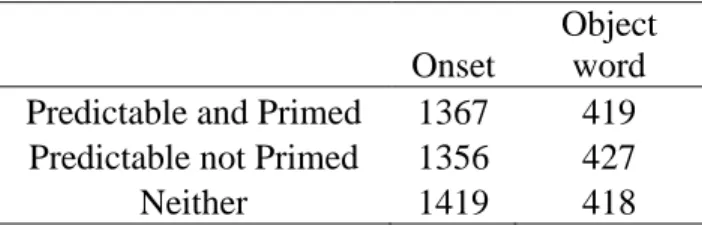
Results. Means of the onset to speak latency and the object word can be found in Table 4, and graphically in Figures 10 and 11. The table shows that the predictable-and-primed condition had a shorter object duration on average than the only-predictable-and-primed
condition, which suggests that the predictability manipulation worked. The shortest average duration overall, however, is in the not-primed condition, suggesting that the priming manipulation did not take hold.
50
Onset
Object word Predictable and Primed 1367 419 Predictable not Primed 1356 427
Neither 1419 418
Table 4: Experiment 3 – Means of the onset to speak and object word durations in milliseconds
The statistical analysis of the duration of the object word shows that the
predictable-and-primed condition differs significantly from the only-primed condition (t
= 1.97, p < .04, pMCMC < .04), but does not differ significantly from the not-primed condition (t = -11, p > .9, pMCMC > .89). The analysis of the onset duration data revealed no significant differences among the predictors of interest (all t‟s < 1).
51
Eyetracking analysis. The purpose of the eyetracking analysis was to determine the extent to which participants used the predictability manipulation provided by the judgment task. If their eye movements anticipated the third object in the predictable-and-primed condition relative to the other two conditions, that would serve as evidence that, even in the absence of acoustic data reflecting activation, the participants were still attending to the manipulation.
The region of interest was thus between the end of the second object‟s portion of
52
Figure 12– Eye movements from Experiment 3, ranging from 600-1500ms after the participant clicked on the 2nd object.
A statistical analysis revealed the same result. Looks to the target in the time region were aggregated first by subjects, then by items. These aggregated data were placed into 300ms bins (i.e. 600-900, 900-1200, 1200-1500) in order to permit
calculation of an empirical logit. The empirical logit in this case is a rough measure of the number of looks to the target over the total number of potential looks to anywhere on the screen. It thus reflects a proportion, but has mathematical properties that make it a better candidate for serving as a dependent regression variable (see Barr, 2008 for a more detailed explanation). The empirical logits, calculated by subjects and then items, were submitted to a multilevel logistic regression. No significant effect of condition emerged in either analysis (all t‟s < .05).
53
ARH may have been too bold, and should be scaled back to include only certain types of activation. The difference between the non-linguistic and control condition in Experiment 1 suggests otherwise, however. That is, conceptual priming appears to have an effect, even though it does not achieve discourse status in any proper sense. Of course, in Experiment 1, conceptually primed information also thus became predictable. Further research, discussed below, will address this issue in more detail. Another possibility is that the effect was too small for this sample size to detect. An effort was made to create sample size parity among the experiments reported in order to facilitate a comparison among the effects, albeit an imperfect one. Because conceptual primes should activate fewer representations, conceptual priming may simply have a smaller effect on the production system, even when paired with predictability. Doubling the number of subjects might reveal an effect of this size.
A more theoretically (as opposed to methodologically) motivated possibility is that priming, especially conceptual priming, must feature in the same task as the relevant utterance. The judgment task and instruction-giving task always shared objects, but at no point did any of the information in the judgment task bear explicitly on the information in the instruction-giving task. Participants could simply perform the tasks completely
separately, ignoring the implicit priming of the objects in the judgment task. Similarly, the predictability manipulation might not have worked as well as it did in Experiment 1, or for the linguistic primes in Experiment Two, simply because the domain of