PREVENTING AGGRESSIVE BEHAVIOR
BY PROMOTING SOCIAL INFORMATION-PROCESSING SKILLS: A THEORY-BASED EVALUATION OF THE MAKING CHOICES PROGRAM
Mary Arminé Terzian
A dissertation submitted to the faculty of the University of North Carolina at Chapel Hill in partial fulfillment of the requirements for the degree of Doctor of Philosophy
in the School of Social Work.
Chapel Hill 2007
ii
ABSTRACT
MARY TERZIAN: Preventing Aggressive Behavior by Promoting SIP Skills: A Theory-based Evaluation of the Making Choices Program
[Under the direction of Mark Fraser, Chair, and Natasha Bowen, Advisor]
This theory-based evaluation was conducted on pretest-posttest data collected from an efficacy trial of the Making Choices (MC) program, a universal intervention designed to prevent conduct problems. This study examined three areas of inquiry. First, program effects on social information-processing (SIP) skills and overt aggression were evaluated. Next, program-by-gender interactions were tested. Lastly, indirect effects were tested to evaluate whether effects on theoretical mediators, in part, explained program success. MC and MC+ were expected to result in decreased overt aggression and improved SIP skills, and gender was expected to moderate these effects. SIP skills were expected to partially mediate program effects on overt aggression.
The study utilized a non-randomized, cohort design with treatment withdrawal. The sample consists of three ethnically-diverse cohorts of third graders (N=480; 50% female) from two rural elementary schools. The 2001-02 cohort (n=156) participated in MC, the 2002-03 cohort (n=193) participated in MC+, an augmented version of MC. After a one-year treatment withdrawal period, data were collected from a routine-services cohort (2004-05; n=131).
response selection. MC+ students had less hostile attribution bias and better emotion regulation and response selection. MC and MC+ boys had less overt aggression and more benign social goals than comparison boys. MC+ girls also experienced improvements on these outcomes, though improvements were modest. Effect sizes for SIP skills varied in magnitude from small to medium, and large effects on overt aggression were obtained for boys. Three out of five SIP skills (i.e., goal clarification, response selection, and emotion regulation) appeared to explain program effects on overt aggression.
iv
DEDICATION
To my parents, Makrouhi and Carnig, and to my sister Arpi.
Your encouragement and support have helped make this achievement possible. To my faculty mentors: Professors Fraser, Galinsky, Smokowski, Bowen, and Guo.
ACKNOWLEDGEMENTS
vi
TABLE OF CONTENTS
Page
LIST OF TABLES….……….………...x
LIST OF FIGURES….……….………...xi
LIST OF SYMBOLS AND ABBREVIATIONS….………...……….xii-xiv Chapter: I. INTRODUCTION ...1
Statement of the Problem...5
Defining Aggression ...6
The Prevalence of Childhood Overt Aggression ...8
Childhood Aggression as a Precursor to Later Maladjustment...9
Significance of Problem to Social Work Practice...11
II. AGGRESSION FROM A SOCIAL-COGNITIVE PERSPECTIVE ...14
The Reformulated Social Information-Processing (SIP) Model...15
Defining Key Constructs...17
The Role of SIP Skills in Aggressogenic Processes ...19
The Role of Emotion Regulation in Aggressogenic Processes...23
SIP Skills and the Role of Emotion ...24
SIP Skills, Emotion Regulation, and Gender...27
Evaluating the SIP Model ...27
III. SCHOOL-BASED VIOLENCE PREVENTION WITH SOCIAL-COGNITIVE
FOUNDATIONS...32
Do School-based Programs Modify Social-Emotional Skills and Reduce Aggression?... 34
Social-Cognitive Outcomes ... 35
Emotional Outcomes... 38
Behavioral Outcomes... 39
Mediating and Moderating Effects ... 42
Discussion and Limitations of Intervention Research Findings ... 44
Summary of Program Effects... 45
Limitations of Reviewed Studies ... 46
IV. THE MAKING CHOICES PROGRAM ...48
Intervention Strategies ... 48
Implementation Characteristics ... 50
Prior Research... 50
V. RESEARCH METHODS...54
Research Hypotheses ... 54
Sample and Population ... 55
Human Subjects Considerations ... 57
Data Collection ... 57
Statistical Power Analysis... 58
Instrumentation ... 60
SIP Skills... 64
viii
Overt Aggression ... 68
Data Analysis ... 69
Estimating Intraclass Correlations ... 71
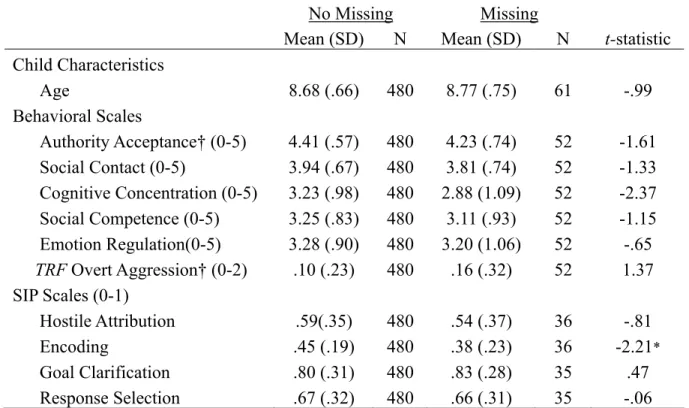
Attrition Analysis... 73
Selection Bias Analysis... 75
Multilevel Structural Equation Modeling (MSEM) Analysis... 78
VI. RESULTS ...84
Bivariate Correlations ... 84
Do MC and MC+ Result in Greater SIP Skill and Decreased Overt Aggression? ... 87
Does Gender Moderate Program Effects? ... 92
Do Theoretical Mediators Explain Program Effects on Overt Aggression?... 95
Conclusion ... 102
VII. DISCUSSION ...104
Overview... 104
Strengths ... 107
Limitations ... 110
Research Design...111
Measurement... 113
Statistical Models... 114
Model Specification and Significance Testing Issues... 115
Implications for Practice ... 116
Recommendations for Developmental Psychopathological Research... 119
Recommendations for Intervention Research... 121
APPENDICES ...126
x
LIST OF TABLES
Table 1: Social-cognitive Interventions ... 33
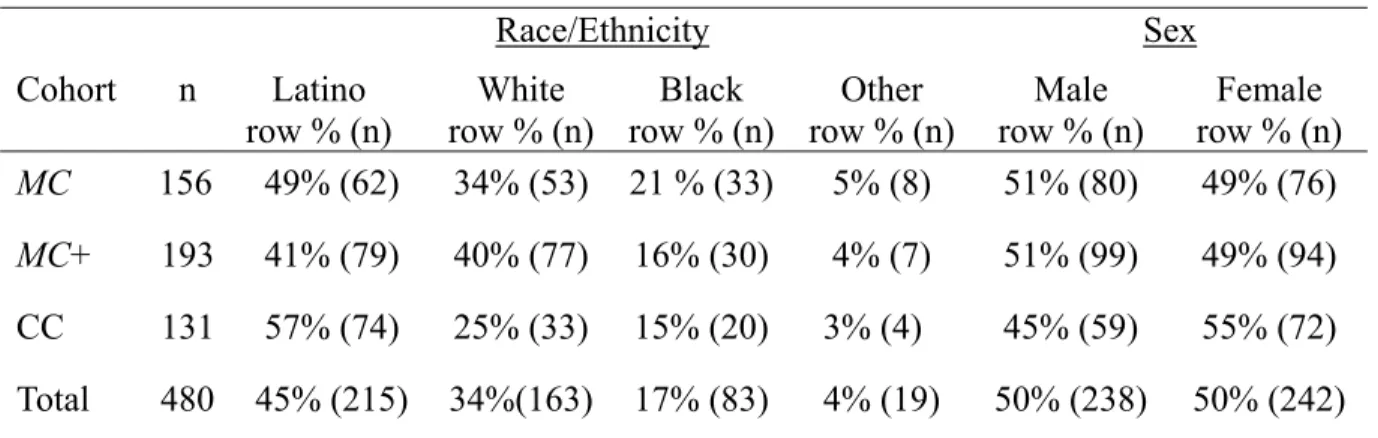
Table 2: Sociodemographic Characteristics of the Analytic Sample ... 56
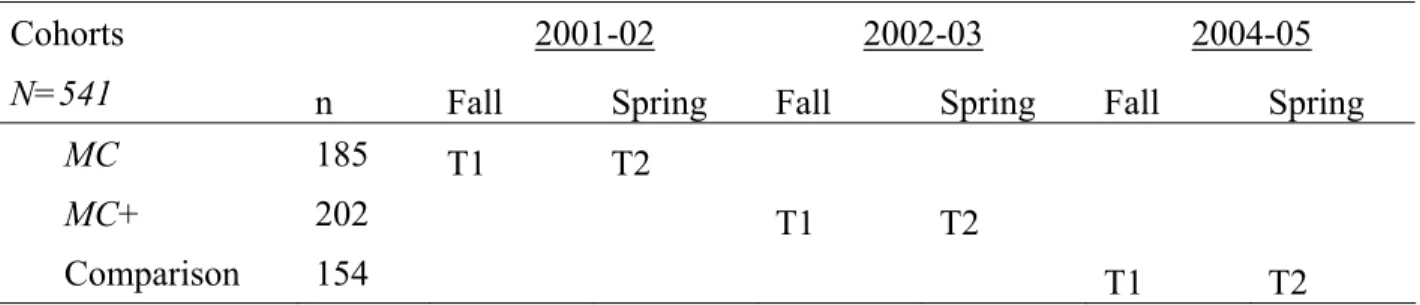
Table 3: Study Design ... 57
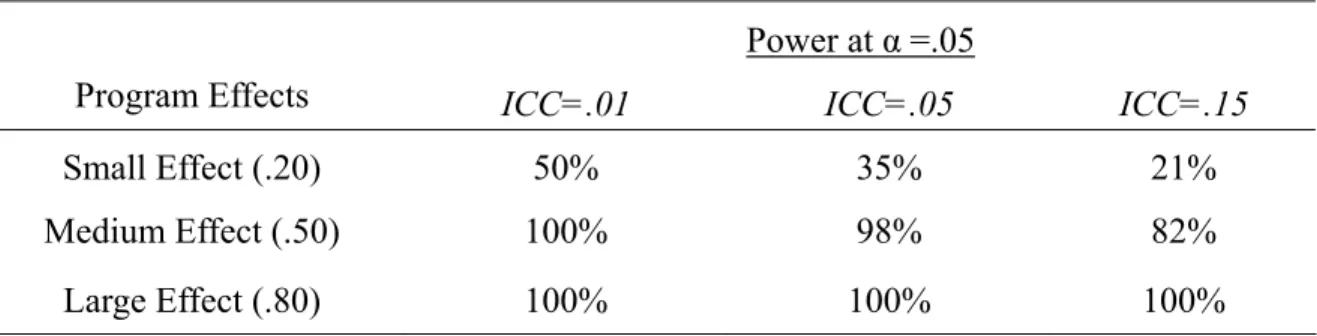
Table 4: Power Analysis Information ... 59
Table 5: Description of Outcome Measures... 61
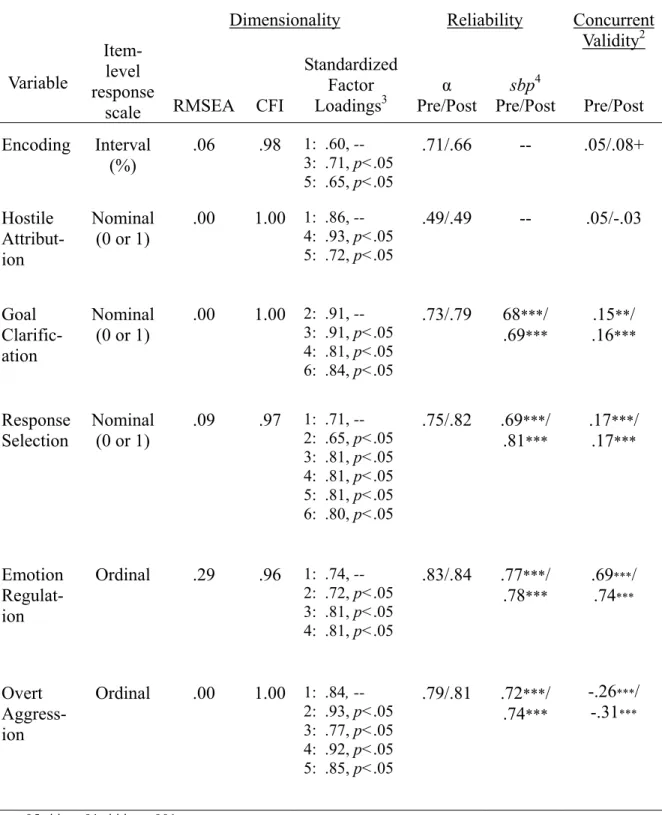
Table 6: Dimensionality, Reliability, and Validity of Measures... 63
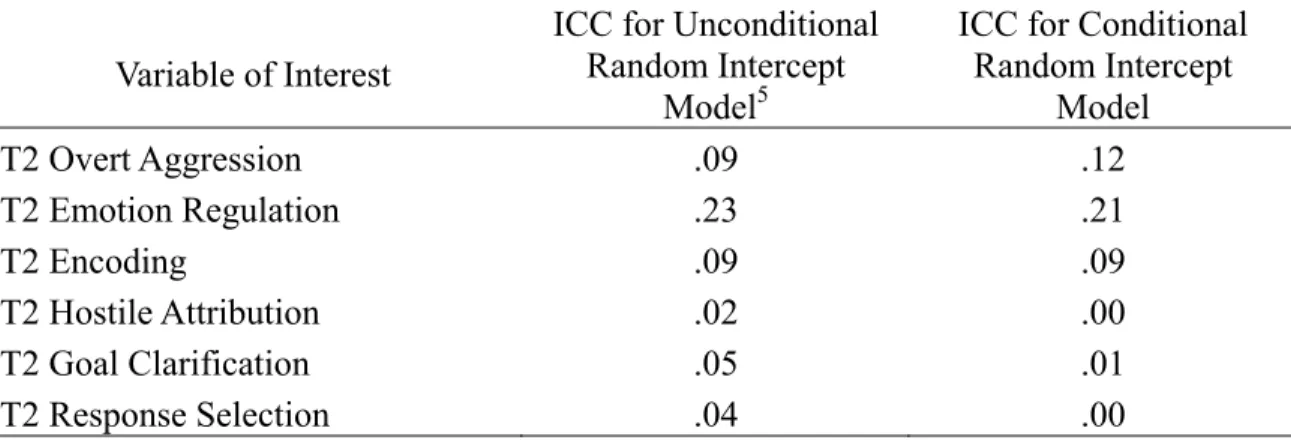
Table 7: Intraclass Correlations ... 71
Table 8: Data Attrition by Time and Cohort ... 73
Table 9: Attrition Analysis of Pretest Measures... 74
Table 10: Attrition Analysis of Race/Ethnicity and Sex ... 74
Table 11: Selection Bias Analysis of Pretest Measures ... 76
Table 12: Pairwise Multiple Comparison Tests for Pretest Differences ... 76
Table 13: Selection Bias Analysis: Sociodemographic Characteristics... 77
Table 14: Correlation Matrix with Selected Study Variables... 86
LIST OF FIGURES
Figure 1: Prevalence of Aggressive Behavior by Age and Gender... 9
Figure 2: Crick and Dodge (1994) Reformulated SIP Model... 16
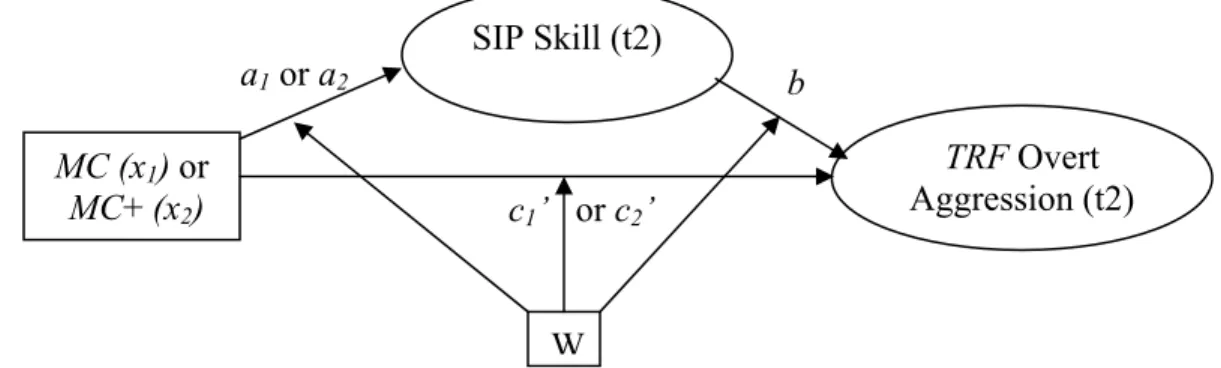
Figure 3: Hypothesized Mediating and Moderating Effects... 55
Figure 4: Baseline Multilevel Equation to Test Main Effects... 79
Figure 5: Multilevel Structural Equation Model... 82
Figure 6: System of Equations to Test Mediation... 82
Figure 7: Effect Sizes for MC and MC+ Programs ... 92
Figure 8: Program-by-Gender Interaction Effects for Overt Aggression ... 94
Figure 9: Program-by-Gender Interaction Effects for Goal Clarification ... 94
xii
LIST OF SYMBOLS AND ABBREVIATIONS
AA African American
α Alpha
ACP Anger Coping Program ANOVA Analysis of Variance β Standardized beta coefficient B Unstandardized beta coefficient CBCL Child Behavior Checklist
CC Comparison Condition
CCC-TF Carolina Child Checklist – Teacher Form
χ2 Chi-square
CFA Confirmatory Factor Analysis CFI Comparative Fit Index
CPPRG Conduct Problems Prevention Research Group
δ Standardized Delta
df Degrees of Freedom
DHHS Department of Health and Human Services EBD Emotional and Behavioral Disturbance
ES Effect Size
IEP Individualized Education Program IOM Institute of Medicine
κ Kappa
LSD Least Significant Difference MANOVA Multiple Analysis of Variance MC Making Choices
MC+ Making Choices Plus
MC+SF Making Choices plus Strong Families
ML Maximum Likelihood
MSEM Multilevel Structural Equation Modeling
NICHD National Institute of Child Health and Human Development
ω Omega
OLS Ordinary Least Squares
π Pi
PATHS Promoting Alternate Thinking Strategies REML Restricted Maximum Likelihood ρ Rho
RMSEA Root Mean Square Error of Approximation SAS Statistical Analysis System
sbp Spearman Brown Prophecy SHP Social Health Profile
σ Sigma
xiv SLA Skill Level Activity
SEM Structural Equation Modeling SES Socioeconomic status SPS Social Problem Solving
√ Square Root
t t statistic τ Tau T1 Time 1 (pretest) T2 Time 2 (posttest) TLI Tucker-Lewis Index
TOCA-R Teacher Observation of Classroom Adaptation - Revised TRF Teacher Report Form
U.S. United States
Chapter I
Introduction
Among the constellation of individual-, familial-, and peer-level risk factors
implicated in the development of problem behavior in youth, childhood overt aggression may be the most commonly identified (Coie, Lochman, Terry, & Hyman, 1992; Loeber,
Farrington, Stouthamer-Loeber, & Van Kammen, 1998). Overt aggression relates to
confrontational verbal and/or physical behavior that adversely affects others and often leads to rejection by same-age peers and an increased vulnerability to peer victimization (Hanish & Guerra, 2000; Kochenderfer-Ladd, 2003). Aggressive-rejected children appear to have a higher risk of poor developmental outcomes than aggressive-nonrejected children (Bierman & Wargo, 1995; Miller-Johnson, Coie, Maumary-Gremaud, & Bierman, 2002; Prinstein & LaGreca, 2004). Nonetheless, regardless of a child’s rejection-status, overt aggression in childhood appears to uniquely predict later conduct problems, academic failure, teenage pregnancy, drug abuse, and juvenile delinquency (Coie et al., 1992; Coie, Malone, &
Lochman, 2004; Nagin & Tremblay, 1999; Schwartz, McFayden-Ketchum, Dodge, Pettit, & Bates, 1999).
2
Bierman, & Mumma, 1989). They are also at heightened risk for embarking on a life-course-persistent trajectory of criminal offending (Moffit, 2003; Patterson, Forgatch, Yoerger, & Stoolmiller, 1998). These youths represent about 6% of the general population, but they perpetrate nearly half of all adolescent crimes (Conduct Problems Prevention Research Group [CPPRG], 1999a).
In the last few decades, much progress has been made toward the understanding, prevention, and treatment of aggressive behavior in children and adolescents. Research in developmental psychopathology and psychiatric epidemiology has suggested multiple points of intervention for youth of different ages, risk levels, and symptom profiles (Kellam & Rebok, 1992; Lochman & Wells, 2002; Miller-Johnson et al., 2002; Moffit & Caspi, 2001; Vitaro, Brendgen, Pagani, Tremblay, & McDuff, 1999).
Rooted in a risk and resilience perspective, which conceives human development as on ongoing interaction between personal and environmental resources and deficits (Rutter, 1997; Sameroff, 1985), multi-element violence prevention programs attempt to reduce
aggression by targeting malleable aspects of the person (e.g., cognitive, social-emotional, and academic skills) and environment (e.g., classroom management, peer norms, school climate, parental discipline and monitoring) (CPPRG, 1999a; O'Donnell, Hawkins, Catalano, Abbott, & Day; 1995; Reid, Eddy, Fetrow, & Stoolmiller, 1999). Encouraged by the success of classroom-based skills training programs such as Second Step (Grossman et al., 1997), I Can Problem Solve (ICPS; Spivack & Shure, 1985), and Promoting Alternative Thinking
1999). By and large, these programs have been effective at deterring aggression in elementary school children and several have led to long-term social and behavioral improvements (Losel & Beelman, 2003; Terzian & Fraser, 2005).
Indeed, youth development programs such as these have contributed to our knowledge about what is effective for normative, at-risk, and indicated samples of youth. First, we have learned that interventions conducted with homogeneous groups of aggressive children are likely increase problem behavior (Poulin, Dishion, & Burraston, 2001; Tolan, 2001), unless combined with a multi-element approach that engages children with prosocial peers in the classroom context (CPPRG, 1999a). Second, we have learned that involving families in school-based programs is a challenging but worthwhile task (Farrington & Welsh, 1999; Tremblay, Pagani-Kurtz, Mâsse, Vitaro, & Pihl, 1995). Third, we have learned that implementation issues such as service intensity, duration, dosage, and treatment fidelity make a difference and must be monitored and evaluated for programs to be effective (Abbot, O’Donnell, Hawkins, Hill, Kosterman & Catalano, 1998; Mihalic, Irwin, Fagan, Ballard, & Elliot, 2004). And fourth, we have learned that organizational and system-level factors are vital to the implementation, evaluation, and sustainability of the program (Greenberg et al., 2003; Ozer, 2006).
But there is still more to learn. To date, few intervention research studies have
4
community-based intervention research. School-based intervention research can be expensive and difficult to implement. Lacking knowledge of program mechanisms, schools attempting to implement ‘effective’ interventions in good faith may unintentionally alter critical
ingredients necessary for program success. As a result, programs that have been deemed ‘evidence-based’ may yield null effects when brought to scale. Theory-based evaluations that test the effects of theoretical mediators can facilitate the identification of mechanisms
responsible for social and behavioral improvements (Birckmayer & Weiss, 2000; Howe, et al., 2002).
This dissertation is a theory-based evaluation of the Making Choices (MC) program, a universal preventive intervention designed to reduce aggression in elementary school-age children (Fraser, Nash, Galinsky, & Darwin, 2000). A recently published study (Fraser et al., 2005) found that the MC program had effects on posttest overt aggression. The current study seeks to re-evaluate main effects on posttest outcomes, determine whether gender moderates these effects, and determine whether theory-based constructs account for program effects on overt aggression. Five social information-processing (SIP) variables were tested as potential mediators: a) encoding; b) hostile attribution (interpretation); c) goal clarification; d)
response selection (i.e., a component of response decision); and e) emotion regulation. These mediators were hypothesized to partially explain program effects on posttest ratings of overt aggression.
In summary, this dissertation sought to answer the following research questions: • Does MC and MC+ have effects on overt aggression and SIP Skill?
• Do direct and indirect effects vary by gender? and
Answering these questions may yield relevant and valuable information for social work practice. For example, testing indirect program effects via social-cognitive skills may help to validate the promotion of social-cognitive skills as an intervention strategy for reducing aggression in elementary-school children. Also, these mediational tests can offer information about whether certain social-cognitive skills have more relevance than others at this age. Testing the moderating effects of gender allows researchers to estimate differential effects of the program on boys’ and girls’ social cognition and behavior and discern the relative importance of different SIP skills and processes in the enactment of aggression. Finally, studies that more fully examine the moderating role of gender on aggressogenic (i.e., aggression-causing) processes can assist social work practitioners in the design and
development of gender-specific delinquency prevention programs.
Statement of the Problem
6
studies of clinical and non-referred samples. To be sure, preventing youth violence in the U.S. has become a national priority.
This chapter will examine the epidemiology of childhood aggression. First, the prevalence of overt aggression in the U.S. is described, according to subtype, age, gender, and risk-status. Second, developmental outcomes associated with overt aggression in early and middle childhood are considered. Finally, the chapter will discuss the significance of overt aggression for social work practice. In order to fully understand the problem of overt aggression, the definition of this problem must first be clarified.
Defining Aggression
The study of childhood aggression has led to the conceptualization of aggression as a multifaceted construct that is composed of multiple, yet overlapping, subtypes, each posited to relate to a distinct etiology and developmental trajectory (Dubow, Huesmann, & Boxer, 2003; Vitaro, Gendreau, Tremblay, & Oligny, 1998). Subtypes of aggression have been characterized by function (instrumental-relational), intention (reactive-proactive), and behavior type (direct-indirect; overt-covert; physical-verbal-social) (Dodge & Coie, 1987; Little, Jones, & Henrich., 2003). Common to all forms of aggression is behavior that inflicts aggravation, injury, and/or harm to others.
Reactive overt aggression is characterized by behaviors such as displaying outbursts of anger, overreacting easily to situations, and blaming others in fights. Dodge and Coie (1987)
constructed a scale measuring reactive and proactive aggression. Items on this scale loaded onto two factors which were strongly correlated with each other (r=.76). These factors had convergent validity with direct observational measures and their reported internal
consistencies were high (i.e., r =.91 for proactive aggression and r =.90 for reactive aggression). More recent studies have replicated the finding that proactive and reactive aggression comprises two distinct but highly related constructs (r=.82; Poulin & Boivin, 2000). The strength of the correlation between these two subtypes may vary depending the function of the behavior (e.g., overt or indirect; Prinstein & Cilessen, 2003).
Overt aggression in children is typically measured using teacher-rated and parent-rated questionnaires, often as a subscale within a broader measure of problem behavior, such as the externalizing scale of the Child Behavior Checklist (CBCL; Achenbach & Edelbrock, 1991), or within a measure of disruptive behavior that includes hyperactive, impulsive behavior, such as the School Social Behavior Scales (SSBS; Merrell, Sanders, & Popinga, 1993) and the Breyer’s Behavior Observation Schedule for Pupils and Teachers (BOSPT; Breyer & Calchera, 1971). The Modified Overt Aggression Scale (MOAS; Kay et al., 1988) assesses the nature and prevalence of aggression in the psychiatric population. Overt aggression is also measured using peer nominations, self reports, and behavioral
8
child report. Peer nominations of aggression are also known to be highly reliable (Asher & Hymel, 1981). Ideally, multiple methods and informants for measuring aggression are used.
The Prevalence of Childhood Overt Aggression
Few epidemiological studies of overt aggression in U.S. youth exist, however estimates obtained from a collection of studies indicate that prevalence rates of overt aggression are high (Nansel, Overpeck, Pilla, Ruan, Simons-Morton, & Scheidt, 2001). In the largest epidemiological survey of bullying conducted thus far in the U.S. (conducted with 15,868 sixth-through-tenth grade youth), approximately 30% of youth reported having involvement in bullying (Nansel et al., 2001). Clinical forms of aggressive, antisocial behavior in youth tend to have lower estimates. Prevalence rates for disruptive behavior disorders in U.S. youth (ages 6 to 18; N=1641) were estimated using parent-rated data
collected over three decades (Achenbach, Dumenci, & Rescorla, 2003). In 1999, about 9% of the study sample reached clinical thresholds for oppositional behavior and 7% reached clinical thresholds of conduct problems, on the CBCL (Achenbach et al., 2003).
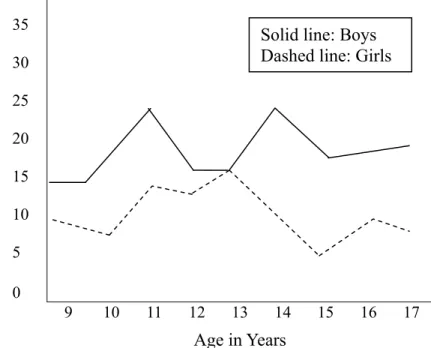
the percentage of boys and girls who, according to combined parent and youth reports, engaged in at least one aggressive behavior in the past 12 months.
Figure 1: Prevalence of Aggressive Behavior by Age and Gender
These findings suggest that, without intervention, the prevalence of aggression in boys is likely to escalate until age 14 and the prevalence of aggression in girls is likely to escalate until age 13. Intervening before this point may lower risk of maladjustment in adolescence.
Childhood Aggression as a Precursor to Later Maladjustment
Childhood aggression is a developmental risk factor that appears to exert crosscutting effects on girls and boys from diverse racial and cultural backgrounds (Coie et al., 1992; Côté, Zoccolillo, Tremblay, Nagin, & Vitaro, 2001; Moffit & Caspi, 20001; Prinstein & LaGrecam, 2004; Shaeffer, Petras, Ialongo, Poduska, & Kellam, 2003). Moffit and Caspi (2001) examined gender differences in the developmental trajectories of a predominantly Caucasian sample of children in Great Britain (N=1,037) and found that overt aggression at
35 30 25 20 15 10 5
%Prevalence in Past 12 months
0
9 10 11 12 13 14 15 16 17
Age in Years
10
age 3 characterized the risk profile of the life course persistent (LCP) trajectory for both genders. This finding was replicated in a study conducted with an ethnically diverse sample of 146 elementary school youth located in a large urban metropolitan area in the U.S. (Prinstein & LaGreca, 2004). Though peer acceptance moderated the predictive power of teacher-rated overt aggression, girls and boys who displayed overt aggression in the fourth-, fifth-, or -sixth grades were at greater risk of externalizing problems six years later. A
longitudinal study by Côté et al. (2001) in Quebec grouped 820 females (ages 14 to 17; 97% White) by their level of childhood disruptive behavior (i.e., low, medium, medium-high, and high) and tracked these four groups over ten years. Gender-specific cut-offs were used to categorize levels of aggression; girls rated as having high aggression in kindergarten had to score above the 80th percentile on 13 items from the Social Behavior Questionnaire (SBQ; Tremblay et al., 1991), a measure of antisocial, aggressive, and disruptive/hyperactive behavior. Girls in the medium-high and high groups were 4.5 times more likely than girls in the low group to have a diagnosis of Conduct Disorder (CD) and 64.3% (18 out of 28) of girls with a CD diagnosis in adolescence had medium-high to high levels of disruptive behavior during elementary school.
Indeed, overt aggression in early and middle childhood is a major risk factor that appears to negatively impact the developmental outcomes of girls and boys from diverse racial, ethnic, and cultural backgrounds. Moreover, its prevalence rate among normative samples of youth is relatively high. In light of its prevalence and widespread effects, overt aggression is an excellent target for primary prevention programs.
Significance of Problem to Social Work Practice
Childhood aggression is associated with a range of problems that often require the coordinated response of service systems – child welfare, education, juvenile justice, mental health, public health, social services, and substance abuse. As we have seen, bullying and chronic peer victimization can lead to dangerous school climates that can spark violence and even traumatic events such as school shootings and suicides that affect everyone involved. As a result of heightened public awareness and a corresponding wave of state and federal
initiatives to tackle the problem of youth violence, many school systems are now beginning to implement anti-bullying campaigns that support a zero-tolerance policy for aggression (Department of Health and Human Services, 2004). These campaigns often utilize principles of character education (e.g., respecting others and being a good friend) and strategies for social development (e.g., calming down and evaluating potential responses to social
problems) (Pelham, Massetti, & Waschbusch, 2005). School social workers are beginning to play an important role in delinquency prevention (Lindsay & Kurtz, 1987). Equipped with knowledge and skills about how to effectively intervene with aggressive youth, these social work professionals have the potential to play an important role in this nation-wide response.
12
delivery of mental health services to youth (Burns, et al., 1995). Individualized Education Programs (IEPs) for youth with emotional and behavioral disturbance (EBD) commonly involve school social workers and community-based mental health agencies, and aggressive children make up a significant proportion of these youth. Social work service professionals may be involved in the development of the IEP or be asked to join the IEP team as a person "with knowledge or special expertise about the child" (Office of Special Education and Rehabilitative Services, 2000).
Frequently, aggressive youth who do not respond to school- and community-based interventions, and youth who lack needed services, become involved in delinquent and/or criminal behavior, and after repeated violations, become adjudicated as wards of the state. Youth under the age of 18 are responsible for 15% of all arrests for violent crime (Federal Bureau of Investigation, 2002) and youth with conduct problems comprise a significant portion of the juvenile justice population (Vermeiren, Jespers, & Moffitt, 2006). The six-month prevalence of Conduct Disorder was estimated at 32%, in one sample of 320 Illinois and New Jersey youth (Wasserman, Ko, & McReynolds, 2004). Another report, conducted on detained Virginia youth, estimated prevalence rates of up to 52% for Disruptive Behavior Disorders (Policy Design Team, 1994).
these youth and reduce stress on biological and foster families, child welfare providers must refer children to in-home and outpatient social work services.
Without a doubt, the development and design of preventive interventions to reduce childhood aggression is a critical task for social work research and practice. To effectively prevent and treat antisocial behavior, social workers must have an adequate understanding of the epidemiology and etiology aggression. Theories of aggression have emerged from
Chapter II
Aggression from a Social-Cognitive Perspective
Research examining the correlates and precursors of aggression has implicated the role of malleable, social-cognitive and emotional structures and processes, such attitudes and beliefs, problem solving skill, emotional understanding, and emotion regulation in the
initiation of aggression (Crick and Dodge, 1994; Hubbard, 2001; Huesmann, 1998). Social-cognitive frameworks for aggressive behavior have tended to concentrate on particular aspects of social cognition, by highlighting the role of knowledge structures (Burks, Laird, Dodge, Pettit, & Bates., 1999; Huesmann, 1988), attribution (Graham, Hudley, & Williams, 1992), emotion-related processes (Eisenberg et al., 2001), or problem solving skills
(D'Zurilla & Goldfried, 1971). Recently, scholars have begun to develop more unified
theories that integrate multiple aspects of social cognition (Crick & Dodge, 1994; Huesmann, 1998; Lemerise & Arsenio, 2000).
One such theoretical framework is the social-information processing (SIP) model (Dodge, 1986; Crick & Dodge, 2004). This model has been applied to other problem
al., 2005; Grossman et al., 1997; Hudley & Graham, 1993; Lochman & Wells, 2002). The following section discusses the reformulated SIP model and reviews its empirical support.
The Reformulated Social Information-Processing Model (SIP)
The Making Choices program is guided by an emotion-integrated, social cognitive perspective, which is based on a body of research that links peer rejection and aggression to the way in which children perceive, interpret, evaluate, and respond to social situations (Fraser, 1996). This conceptualization of aggression is called the social information-processing model. Central to the SIP model is the idea that one’s ability to enact socially-appropriate behavior depends on a complex interaction between social knowledge, arousal regulation, and processing skill. Because social knowledge is formulated as a result of past experiences, which cannot be modified by environmental changes, interventions have focused on helping children manage feelings of anger and frustration, process social information accurately, and generate appropriate solutions to problems.
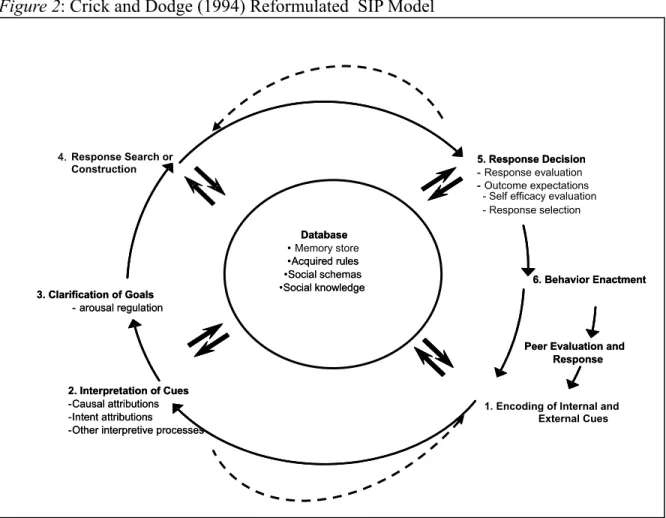
Successful problem solving occurs with the skillful completion of six SIP steps: a) encoding social cues; b) interpreting cues; c) formulating goals; d) generating responses; e) evaluating and selecting responses; and f) enacting a response (see Figure 2; Crick & Dodge, 1994; Lemerise & Arsenio, 2000). Affective processes such as emotional understanding and emotion regulation facilitate this process. Alternately, difficulty processing social information and difficulty identifying, expressing, and coping with strong emotions increases the
likelihood of an aggressive response (Crick & Dodge, 1996; Crick & Werner, 1998;
16
The SIP model was originally developed in the mid-1980s (Dodge, 1986). Elaborating on D’Zurilla and Goldfried’s (1971) social problem-solving model (SPS), it posited that children encode and interpret social cues during the problem-solving process. In the mid-1990s, the model was reformulated to better account for the role of affective
processes, latent mental structures, and reciprocal effects (Crick & Dodge, 1994). Over the past twenty years, dozens of studies have focused on understanding social information processing in children (Courtney & Cohen, 1996; Milich & Dodge, 1984; Richard & Dodge, 1982; Dodge et al., 2003).
Figure 2: Crick and Dodge (1994) Reformulated SIP Model
In the reformulated model, latent mental structures and affective processes interact with a series of six SIP steps to affect behavior (Crick & Dodge, 1994). Social knowledge
4. Response Search or
Construction 5. Response Decision- Response evaluation - Outcome expectations
- Self efficacy evaluation
Database • Memory store •Acquired rules •Social schemas
•Social knowledge 6. Behavior Enactment
1. Encoding of Internal and External Cues 2. Interpretation of Cues
-Causal attributions -Intent attributions
-Other interpretive processes
Peer Evaluation and Response 3. Clarification of Goals
-arousal regulation 3. Clarification of Goals
-arousal regulation
4. 5. Response Decision
-- Response selection
Database •
•Acquired rules •Social schemas
•Social knowledge 6. Behavior Enactment
2. Interpretation of Cues -Causal attributions -Intent attributions
-Other interpretive processes
and emotional arousal, for instance, affect SIP processing; and, conversely, the way in which social information is processed influences social knowledge and emotional arousal. Latent mental structures include emotional and behavioral scripts (i.e., automatic emotional and behavioral responses), schemas (i.e., mental patterns that organize and simplify complex experiences), heuristics (i.e., rules of thumb that guide behavior in specific social situations), as well as moral concepts such as values and beliefs. Whereas these mental structures are seen as stable, experience-based patterns of cognition that are stored in memory, social information processing is conceptualized as online (in the moment), preconscious cognitions that are more dependent upon situational and contextual contingencies (Dodge, Laird, Lochman, Zelli, & Conduct Problems Prevention Research Group, 2002). Although these knowledge structures play an important role in children’s social cognitions, a discussion of latent mental structures lies beyond the scope of this paper; for a discussion, see Burks et al. (1999).
Defining Key Constructs
The crux of the SIP model lies in the articulation of six steps: (a) encoding (b) interpretation; c) goal clarification; d) response search; e) response decision; and f)
18
Once an attribution of intent is made, one is able to formulate a desired goal. This occurs during the goal clarification phase. Once a goal is formulated, one must generate an array of responses. This process of generating alternative responses is called response search.
In the response decision phase, children make means-end and outcome-based judgments – response valuation and outcome expectancies – about the solutions they generated (Fontaine, Burks, & Dodge, 2002) and make self-efficacy evaluations about their ability to execute various responses and assess which responses will help them to obtain desired goals. In response valuation, children evaluate the appropriateness of various
responses. When children produce outcome expectancies, they anticipate the consequences of each response and decide whether they would be favorable or unfavorable. Self-efficacy evaluations involve children assessing how confident they feel about their ability to
successfully execute a particular response. Consistent with a social learning model, children’s confidence in enacting aggressive behavior relates to how often the child has engaged in this behavior and how frequently the behavior has been reinforced. Finally, enactment occurs once children act upon the response they have chosen.
Behavioral regulation includes functional aspects such as behavioral self-control, the use of display rules (i.e., an age-appropriate display of affect that is consistent with social norms), and appropriate speech volume.
The Role of SIP Skills in Aggressogenic Processes
Empirical support for the social information-processing model (Crick and Dodge, 1994; Lemerise & Arsenio, 2000) as a framework for understanding childhood aggression has grown substantially over the past decade (Camodeca, Goossens, Schuengel, & Terwogt, 2003; Dodge, 2003; Dodge & Coie, 1987; Hughes et al., 2004; Lochman & Wells, 2002). The generalizability of the model is supported by the diversity of study samples, which represent a range of ethnic and socioeconomic backgrounds (Cortney & Cohen, 1996; Dodge et al., 2002, 2003; Hughes et al., 2004; Lochman & Dodge, 1994; Musher-Eizenman, Boxer, Danner, Dubow, Goldstein, & Heretick, 2004; Zelli, Dodge, Lochman, Laird, & CPPRG, 1999a; 1999b) and nationalities (Camodeca et al., 2003; Matthys, Cuperus, & Van Engeland, 1999; Orobio de Castro et al., 2005). Several studies have been conducted with African American samples (Hubbard, Dodge, Cillessen, & Schwartz., 2001; Schwartz et al., 1998; Shure & Spivack, 1980). Findings from these studies support similar patterns of SIP deficits in children who display above-average levels of overt aggression.
20
with processing errors in the earlier phases of SIP (e.g., encoding and interpretation) and that proactive aggression is more highly associated with processing errors during the later phases – goal clarification and response decision (Arsenio & Lemerise, 2001; Smithmyer et al., 2000). During the encoding phase, reactively aggressive (RA) children exhibit a “social-perceptual bias,” in that they tend to notice fewer cues in the environment and are more likely to encode negative cues (Courtney & Cohen, 1996; Waldman, 1996). In addition, they are more likely to lack emotional understanding – lacking awareness of their own feelings and misperceiving the emotions of others (Denham et al., 2002; Dodge et al., 2002). Alternately, children who are able to accurately process emotional cues in themselves and others (e.g., emotion-processing skills) are more likely to have higher levels of emotional understanding and a greater ability to experience empathy towards others (Schultz, Izard, & Bear, 2004).
posttest than aggressive children in the comparison (n=22) and no-treatment (n=24) conditions.
Children generate alternative solutions during the response search or response access phase. There is some evidence to suggest that RA children generate fewer alternative
solutions in response to different social situations (Richard & Dodge, 1982). A test of the mediational role of problem solving variables targeted by the I Can Problem Solve program supports this finding; African American, 4- to 5-year old children (N=219) who had
improved ratings of behavioral adjustment (measured as a composite of impulsivity,
emotionality, and overt aggression) were significantly more likely than unimproved children to exhibit improved alternative solution thinking skills (Shure & Spivack, 1980). Another study, conducted with a sample of 585 predominantly White (82% European American) elementary school children, suggests that improving response search skills may help to reduce the risk of aggression in peer-rejected children (Dodge et al., 2003). Exploring the mechanisms by which social preference in kindergarten predicted later aggression, this study found that response generation in Grade 2 explained 16% of the total effect of kindergarten social preference on Grade 3 teacher-rated aggression (Dodge et al., 2003).
22
During the response decision phase, PA children exhibit biased processing patterns.
Additional research suggests that youth who are aggressive evaluate aggressive responses in positive or normative ways (Crick & Werner, 1998; Fontaine, et al., 2002; Vernberg, Jacobs, & Hershberger, 1999; Zelli et al., 1999), whereas prosocial children do not (Nelson & Crick, 1999).
Children who are aggressive commonly hold attitudes and beliefs that favor or validate the use of aggression (Tapper & Boulton, 2004). Studies indicate that children’s response valuations may be related to provocation type and gender. A study of 1,166
predominantly White third-through-sixth grade children found that girls had more favorable evaluations of relational aggression, whereas boys had more favorable evaluations of overt aggression (Crick & Werner, 1998). In contrast, in a study examining children’s responses to hypothetical scenarios, conducted with an ethnically-diverse sample of 387 third- through fifth- graders (approximately 50% White and 50% Black), response valuations were not moderated by gender or ethnicity (Zelli et al., 1999).
Indeed, a variety of potential aggressogenic risk mechanisms may be derived the SIP model. As this review has suggested, different SIP skills may be implicated in the
development of different types of aggression (proactive/reactive; overt/relational). For instance, faulty encoding and interpretation and accompanying feelings of anger appear to trigger the use of reactive aggression. Alternately, setting a social dominance goal and having positive outcome expectations for aggression appear to be associated with proactive
aggression.
Studies that attempt to differentiate the relationship between different SIP skills and problem behavior provide more useful knowledge for intervention. For example, if the above examples were true, then one would expect (a) interventions altering children’s aggression-related attitudes and beliefs to reduce proactive aggression, and (b) interventions seeking to reduce emotional reactivity and hostile intent attributions to reduce reactive aggression. However, even this more careful approach to intervention design does not involve enough complexity. The ways in which multiple factors, such as race/ethnicity, SES, gender, culture, and family context, moderate risk mechanisms must be tested, in order to ensure that this model can be translated properly in the design and development of interventions for aggressive youth.
The Role of Emotion Regulation in Aggressogenic Processes
24
difficulties are more likely to display strong negative (or positive) affect, which makes them more likely to induce negative peer responses (Eisenberg & Fabes, 1992; Hubbard, 2001), more prone to peer rejection and victimization (Schwartz et al., 1999), and more likely to experience negative adjustment outcomes (Lengua, 2003). Conversely, children who are able to understand and manage feelings are more likely to demonstrate skill in solving social problems, display appropriate levels of affect, enact prosocial behavior, and induce positive peer responses (Lemerise & Arsenio, 2000; Rydell, Berlin, & Bohlin, 2003).
SIP Skills and the Role of Emotion
when evaluating potential ways to respond to a social situation and weighing the consequences of their behavior.
Psychologists are beginning to investigate the interaction between SIP skills and emotional processes (Lochman & Wells, 2002; Orobio de Castro, Bosch, Veerman, & Koops, 2003; Orobio de Castro, et al., 2005). For example, findings from a study utilizing delay prompts to assess the effects of emotion regulation on anger and intent attribution suggest that children’s intent attributions may be influenced by emotion (Orobio de Castro et al., 2003). Aggressive boys who were asked to monitor their feelings and generate emotion regulation strategies prior to responding to a hypothetical vignette involving a peer provocation had lower rates of biased intent attribution than aggressive boys in the
comparison conditions. Murphy and Eisenberg (2002) conducted a study of social goals and emotionality, with a predominantly White sample of 118, 7- to 11-year-old children. During individual interviews, children were asked to think about three actual conflicts with peers they had recently had and then were asked a series of questions related to each conflict. Aggressive children were more likely than non-aggressive children to experience anger and set hostile social goals (e.g., ‘I wanted to annoy him’), controlling for child’s age, the gender of the peer involved in the conflict, friendship with peer involved in the conflict, and the nature of the provoking event. Nonaggressive children reported less anger and were more likely to set friendly social goals (e.g., ‘I wanted her to be happy’).
Attribution-26
Emotion-Action model of aggression. According to this model, biased intent attributions
produce feelings of anger which, in turn, trigger an aggressive response (Graham et al., 1992). At posttest, students who participated in an intervention designed to decrease hostile
attribution were rated by teachers as displaying less anger than non-program participants [t(19)=5.75, p<.001]. In addition, participants with lower levels of hostile attribution also had lower ratings of anger and aggression. Second, Schultz et al. (2004) sought to assess whether encoding skills related to emotion processing (the encoding of emotions in others) explained the relationship between anger and aggression. The study was conducted with a
predominantly White sample of 182 first- and second-grade children. Findings indicated direct effects between anger and aggression and direct effects between emotion processing skill and aggression, but did not support a significant indirect effect between anger and aggression via emotion processing skill. Third, Musher-Eizenman and colleagues (2004) tested the relationships between response decision, anger control, and aggression, with 778 fourth-through-sixth grade children, from nine schools – four urban and five suburban. Principals from each school randomly selected six classrooms (two classrooms per grade) to participate in the study. This study found that retaliation approval beliefs mediated the relations between anger control and aggressive behavior but not between impulsivity and aggression. One possible implication of this finding is that altering attitudes and beliefs may not an effective tactic for reducing reactive aggression.
SIP Skills, Emotion Regulation, and Gender
The literature suggests that, on average, girls and boys process and respond to social information in different ways (Crick, Grotpeter, & Bigbee, 2002; Murphy & Eisenberg, 2002). For example, girls and boys’ social cognitions have been found to differ by provocation type. Girls tend to rate direct aggression less favorably than boys and rate indirect aggression more favorably (Crick & Werner, 1998). At the same time, girls rate relational victimization as being more hurtful and hostile than boys (Crick, 1995). Girls also tend to report friendlier goals and response selection than boys (Murphy & Eisenberg, 2002). In addition, studies also suggest that girls have higher levels of emotion regulation than boys (Gross & John, 2003). Eisenberg et al. (2001) stated that improving emotion regulatory processes may do more to promote behavioral improvement for boys than for girls. In light of gender differences in SIP skill and emotion regulation, and preliminary evidence to suggest that relationships between emotion and aggression to vary by gender, greater exploration of the SIP model as a framework for aggression in females is needed.
Evaluating the SIP Model
28
Problem Solving Assessment Measure – Revised (SPSAM-R; Butler & Meichenbaum, 1981), appear to be valid and reliable across diverse populations.
Several limitations of this framework must also be acknowledged. One problem concerns the measurement of SIP skill. Unlike measures of social competence – which can be rated by parents, teachers, and peers – measures of social cognition primarily rely on child report. Therefore, a multi-informant approach to assessing SIP skill is often not possible. This may result in issues relating to the validity of the measurement. In addition, SIP measures are often administered by trained staff members. As a result, variables associated with the
administration of the measure (e.g., videotaped versus audiotaped vignettes; individual versus group interviews) could introduce some degree of measurement error. Moreover, SIP measures have not been validated with English-as-a-Second Language (ESL) students. As a result, language comprehension difficulties could affect the interpretation of situations presented in the vignettes and the meaning of response items.
via critical mediators. Also, further examination of the interrelationships between SIP skills is needed. For example, few studies have tested whether there are reciprocal relationships between SIP skills (e.g., between encoding and interpretation), as posited by the SIP model.
Moreover, few studies have examined the relationship between SIP skills and other components of the SIP model, such as arousal regulation and latent mental structures. Those that have tested these relationships often test bivariate relationships, rather than conducting multiple regression analyses to estimate the relationship between two variables, while controlling for a third variable (Camodeca & Goosens, 2004; Crick et al., 2002; Dearing et al., 2002; Denham et al., 2002; Eisenberg et al., 2001). Lacking multivariate analyses that include both SIP and emotion-related variables as predictors, it is difficult to discern whether SIP and emotion have unique effects on overt aggression. Examining the systems of
relationships between SIP, emotion, and social knowledge and between different SIP skills (and how they relate to aggression) would facilitate the identification of SIP-related risk mechanisms specific enough to inform the design of preventive interventions.
Third, few studies have attempted to examine the mediating effect of SIP skills on developmental trajectories or antisocial behavior. For instance, a study by Dodge and his colleagues (2003) suggests that response generation (i.e., the number of responses children can generate to solve a social problem) may mediate the negative effects of childhood peer rejection on later externalizing problems (Dodge, Lansford, Burks, Bates, Pettit, Fontaine, & Price, 2003). Until more analyses like these are implemented, the specific mechanisms by which SIP skills enable or deter the development of aggressive behavior will remain unclear.
30
support for the SIP model derives from studies conducted with all-male samples of
elementary school children (Bierman, Smoot, & Aumiller, 1993; Courtney & Cohen, 1996; Cuddy & Frame, 1991; Hubbard et al., 2001; Lochman & Dodge, 1994, 1998; Matthys et al., 1999; Orobio de Castro et al., 2005; Schwartz et al., 1998; Trachtenberg & Viken, 1994; Waldman, 1996). Although several studies on mixed-sex samples have supported the role of SIP in females (Crick & Dodge, 1996; Dodge et al., 2002, 2003; Zelli et al., 1999), a greater number of exploratory studies examining the etiology of overt aggression (and the causal role of SIP deficits) in all-female samples are needed.
Finally, given preliminary evidence that certain SIP skills are more predictive of aggression in boys than in girls (Musher-Eizenman et al., 2004; Schultz et al., 2004), more research on the moderating role of gender is needed. Moderating effects for gender have been reported in several studies. A study by Schultz et al. (2004) found that emotion-processing variables (i.e., emotion attribution accuracy, anger attribution bias, and empathy) were more strongly associated with teacher-rated overt aggression for girls than for boys. Musher-Eizenman et al. (2004), in a study of social-cognitive mediators of aggression (with 778 fourth-through-sixth grade children), found that retaliation approval beliefs were stronger mediators for girls and self-efficacy evaluations were stronger mediators for boys. In
mechanisms that are not only specific to the problem but also relevant to the target population (Coie et al., 1993).
Conclusion
Despite the wealth of support for the SIP model, the majority of social-cognitive interventions for aggressive behavior are based on a conventional social problem solving (SPS) model that involves: a) problem definition and formulation, b) generating alternative solutions, c) decision-making based on means-end thinking, and d) solution implementation and verification (D'Zurilla & Goldfried, 1971; Shure & Spivack, 1980). The SIP model includes these SPS skills and adds at least six additional components (i.e., encoding,
Chapter III
School-based Violence Prevention with Social-Cognitive Foundations
Considering the evidence relating SIP to aggression in childhood, one would expect elementary school-based violence-prevention programs with social-cognitive foundations to have positive effects on aggressive and disruptive classroom behavior. This chapter reviews universal and indicated interventions informed by emotion-integrated, SIP-related models and evaluates effects on social-cognitive, emotional, and behavioral outcomes. Mediating and moderating effects are described. Three key questions guide this review: a) do programs affect theoretical mediators (social-cognitive and emotional skills); b) do programs reduce aggression; c) are effects moderated by gender; and d) do social-cognitive and emotional processes explain effects on aggression? Following this review of study findings, study limitations and implications for future research will be discussed
According to the Institute of Medicine (IOM) classifications, universal programs are activities targeted to the general population. Alternately, indicated programs are activities “targeted to individuals in high-risk environments, identified as having minimal but detectable signs or symptoms foreshadowing disorder” (Mrazek & Haggerty, 1994). In indicated violence prevention research, children are typically selected on the basis of having above-average levels of teacher-rated aggressive or disruptive behavior.
Table 1: Social-cognitive Interventions
Program Sample Program Content Duration/ Intensity
PATHS (Promotin g Alternate Thinking Strategies) *Universal Ages 5-12; regular ed., special ed., & hearing-impaired; boys and girls
Targeted skills: a) self-control; b) emotional understanding; c) verbal and nonverbal
communication skills; and d) problem-solving skills. Children learn to identify and label feelings, engage in perspective-taking, monitor and manage emotions, and express feelings appropriately to others. Children receive instruction on how to cope with stress,
control impulses, and manage emotions.
SIP-related: Encoding of internal and external cues. Emotion-related: Emotional understanding,
emotional expressiveness, self-regulation.
Duration: 5 years Service Intensity: 60 lessons; 20-30 min/lesson; 3x/week Second Step Program *Universal Ages 4-14; boys and girls
Targeted skills: a) empathy; b) impulse control; c) problem solving; and d) anger management. Children learn how to identify and understand their own and others’ emotions. They also learn how to choose positive goals, control impulsivity, manage emotional arousal, and evaluate consequences of behavior. SIP-related: Encoding of internal cues; goal clarification; and response decision.
Emotion-related: Impulse and anger management.
Duration: 16-20 weeks Service Intensity: 30-32 lessons; 35 min/lesson; 1-2x/week Attribution -al Program *Indicated Ages 8-12; boys only
Targeted skills: a) search for clues; b) interpret clues; c) generate possible attributions; and d) generate decision rules for behavior in ambiguous situations. Children identify intentions, generate possible causes in situations where intent is ambiguous, and generate decision rules about how to respond in ambiguous situations.
SIP-related: Encoding external emotional cues; interpretation of cues; response search.
Emotion-related: None. Duration: 1 year Service Intensity: 12 lessons Anger Coping Program *Indicated Ages 8-12; boys only
Targeted skills: a) emotion regulation; b) emotional understanding; c) perspective-taking; d) alternative solution thinking; and e) means-end thinking.
SIP-related: Encoding internal cues; response search; and response decision - outcome expectancy
component.
Emotion-related: Emotional awareness and understanding; anger management.
34
problem solving framework; b) are school-based; and c) are classroom-focused. Programs were not considered if they: a) included training unrelated to social problem solving and emotion – such as friendship skills, tutoring, or mentoring; b) targeted multiple social domains; c) had never been tested with elementary-school children; and d) had never been evaluated with at least one randomized, controlled trial. Curriculum content, sample
characteristics, study design, and service duration and intensity for these programs are noted in Appendix A.
Sixteen studies measuring the impact of these programs were identified and evaluated. Seven out of sixteen studies utilized randomized controlled designs and the majority of the remaining studies utilized quasi-experimental designs. Follow-up data
collection ranged from three months to two years after intervention completion. Main effects on posttest and follow-up outcomes are summarized for each program, and, where possible, mediating effects of targeted skills and moderating effects of gender and risk status are noted (see Appendix A). Reported findings are limited to social-cognitive, emotional, and
behavioral outcomes, and effect sizes are noted wherever possible. Appendix B contains a summary of findings for randomized, controlled studies.
Do School-based Programs Modify Social-Emotional Skills and Reduce Aggression? By and large, the programs reviewed were effective at promoting social-emotional competence and decreasing aggression in both indicated and universal samples (see
Social-Cognitive Outcomes
All four programs measured social-cognitive outcomes. Measured outcomes included SIP-related outcomes such as response search, outcome expectancies, self-efficacy
evaluation, response selection, and attitudes toward aggression, as well as non-SIP outcomes such self-esteem and knowledge and skill acquisition.
SIP-related skills were measured primarily by presenting children with hypothetical vignettes and then asking them to respond to a series of questions. Vignettes were most often read aloud to students and accompanied by illustrations. For example, Greenberg and Kusché (1998) used the Social Problem Solving Assessment Measure – Revised (SPSAM-R; Elias, Larcen, Zlotlow, & Chinsky, 1978) to assess social and emotional understanding in 32 hearing-impaired children. This instrument consists of six written stories which describe three different types social situations that elementary school children commonly encounter (i.e., wanting something another peer has; being unjustly blamed for misbehavior; and being excluded by a group of peers). The stories were presented on story cards and accompanied by illustrations; research staff signed the stories to the children and asked a series of questions related to perspective-taking (e.g., “How do you think X is feeling?”), response generation (e.g., “What could X do?), outcome expectancies (e.g., “What do you think will happen next?”), and means-end thinking (e.g., “What happened here?”).
36
angry would you feel if this happened to you?). To measure response selection, they were then asked ‘What would you do if this happened to you?’ and were told to select one out of six possible responses.
Effects on social cognitive outcomes are discussed in this section. Study findings indicated that the interventions had varied effects on SIP-related skills (see Appendix A for a brief overview of these effects.
Universal programs. The effects of the PATHS program on social problem-solving skills were reported in two studies (Greenberg & Kusché, 1998; Kam, Greenberg, & Kusché, 2004). Kam et al. 2004, in a study of 133 first- to third-grade students with disabilities, studied program effects on response search and response decision skills (i.e., outcome
expectancy, self-efficacy evaluation, and response selection). Marginal effects were found for response search skills (i.e., the treatment group had a 22.5% reduction in aggressive solutions and control group had a 15.5% reduction in aggressive solutions); and no significant changes in outcome expectancies and self-efficacy evaluations were found.
Greenberg and Kusché (1998), in their study of 57 elementary school children with profound hearing loss (83% European American; 17% other; ages 5 to 12), obtained significant treatment effects for SIP outcomes at posttest. Findings suggested increased perspective-taking (F(1,52)= 5.7, p<.05), outcome expectancies (F(1,52)= 9.7, p<.001), means-end thinking (F(1,52)= 20.1, p<.001), response generation (F(1,52)= 8.1, p<.05), and generation of prosocial solutions (F(1,52)= 34.0, p<.001). Decreases in the generation of neutral (F(1,52)= 4.4, p<.05) and negative solutions (F(1,52)= 4.9, p<.05) were also found.
p<.05) in response valuation (measured as “attitudes toward provoked violence”) and a marginally significant increase (F(2,221)=2.71, p<.10) in violence-related knowledge and skills. Another study of this program conducted with 714 preadolescents (grades six through eight) found significant reductions in aggression, with an omnibus multivariate test indicating a significant time by group interactions for physical aggression (F(1,252)=37.03, p<.001, ES=77), verbal derogation (F(1,252)=26.42, p<.001, ES=65, and social exclusion
(F(1,252)=23.36, p<.001, ES=61). The group variable was a dichotomous variable indicating whether a child was in his or her first or second year of school. Effect sizes for participants in the Year 2 group were stronger than those for participants in the Year 1 group. Compared to Year 2 controls, Year 2 program participants had a significantly lower endorsement of physical aggression (t(291)=-4.29, p<.001; ES=-.50), verbal derogation (t(289)=-5.07, p<.001; ES=-.60), and social exclusion (t(292)=-6.29, p<.001; ES=-.73). (Van Schoiack-Edstrom, Frey, & Beland, 2002).
38 Emotional Outcomes
Three out of four programs examined emotional outcomes. Significant effects of outcomes such as emotional expressiveness (e.g., feelings vocabulary), emotional
understanding (e.g., empathy), mood (e.g., self-reported depression or anger), and emotion regulation were reported (see Appendix A). Emotional outcomes were primarily measured through child self-report questionnaires, such as the Kusché Emotional Inventory (KEI; Kusché, 1984), and child interviews (Greenberg et al., 1995); in one study, a teacher-rated instrument was used (Greenberg & Kusché, 1998).
Universal Programs. Most findings relating to emotional arousal and emotion processing skill were reported by studies conducted on universal programs. Evaluations of the PATHS program found the program led to increased feelings vocabulary and emotional understanding (Greenberg et al., 1995), improved emotional recognition skills (Greenberg & Kusché, 1998), decreased self-reported depression, and increased negative feelings
vocabulary (Kam et al., 2004).
In a randomized, controlled evaluation of the PATHS program, Greenberg et al. (1995) reported the emotional outcomes of second- and third-grade students (N=286; 53% European American, 32% African American, and 10% other). This study found students in the PATHS program had an increased vocabulary for positive emotion words (F(1,282)= 21.5, p<.001) and negative emotion words (F(1,282)= 49.9, p<.001). Although there were no increases in emotional awareness, PATHS participants had greater emotional understanding (i.e., knowing how others feel) (F(1,268)= 7.5, p<.01) and greater emotional control (F(1,280)= 33.1, p<.001) than students in the comparison group at posttest. Another
negative feelings vocabulary two years after program completion, in a predominantly African American, low-income sample (N=350) of six- to eight-year-old students with disabilities (t= 2.83, p<.05; Cohen’s d = .54). This study also found small to moderate effects on teacher- and child-rated internalizing behavior (t=2.48, p<.05; Cohen’s d=.22) and depression (t = 3.13, p<.05; Cohen’s d = .49).
The Second Step program also promoted emotional understanding. A study of this program was conducted with a predominantly African American sample (N=149; 64% female; ages 11 to 14), recruited from two schools (McMahon & Washburn, 2003). No comparison group was used. A repeated-measures ANOVA found significant main effects for time (from pretest to posttest) on self-reported empathy (F(1,90)= 4.13, p<.05) ,
controlling for gender, grade level, and school. A significant time by school interaction was also found (F(1,90)= 6.69, p<.05), with students in School B having larger average effects than students in School A.
Indicated Programs. Out of the two indicated programs, only one program, the Attributional Program, studied emotion-related outcomes. This program was evaluated in one study, conducted with 101 9- to 11-year-old African American boys. The study found that aggressive intervention participants had significantly lower self-reported anger at posttest compared to pretest (t(19)= 5.75, p<.001), and aggressive boys in the other two conditions did not (Hudley & Graham, 1993).
Behavioral Outcomes
40
to physical aggression, disruptive behavior, externalizing behavior, prosocial behavior, and social competence (see Appendix B). Study outcomes were assessed by a variety of
informants and methods – i.e., teacher- and parent-rated surveys, peer nominations, and behavioral observations.
Universal programs. A study of the PATHS program with 57 children with profound hearing loss from 11 classrooms (Greenberg & Kusché, 1998) found intervention students to have significant improvements on teacher-rated emotional adjustment (F(1,53)= 5.1, p < .05; Cohen’s d = .25) and on parent-rated social competence (F(1,41)=4.5, p<.05; Cohen’s d = .71), but not for externalizing or internalizing symptoms. A more recent study of the PATHS program, delivered to 133 children from 7 schools in the Northwest region of the U.S., examined posttest effects utilizing individual growth curve analysis (Raudenbush & Bryk, 2002). Level 1 (time) included four observations per child; level 2 (child) contained 133 subjects. A small program effect was found on the rate of teacher-rated externalizing behavior on the Teacher Report Form (TRF; t= 2.03, p<.05; Cohen’s d=.18); intervention participants had lower rates of externalizing behavior than non-participants (Kam et al., 2004).
increased at a rate of 3.96 events per hour (p<.05). Effects for observer-rated, classroom physical aggression were maintained at the six-month follow-up evaluation.
Effects were only obtained for observer-rated (and not parent- or teacher-rated) aggression. Observers were trained research staff and were not blind to treatment assignment. Behavioral observations were conducted on a random selection of 12 children from each participating classroom. A total of 60 minutes of behavioral observation was conducted on each student with 10% of the observations conducted by two raters. The interrater reliability was strong for prosocial/neutral behavior (κ =.92) and fair for physical behavior (κ=.50).
Three additional evaluations of the Second Step program reported effects on behavior – one study with 109 preschool children (McMahon, Washburn, Felix, Yaking, & Childrey, 2000), another study with 70 elementary-age children (Taub, 2001), one study with 223 pre-adolescent children (Orpinas, Parcel, McAlister, & Frankowski, 1995). McMahon et al. (2000) found no effect on teacher-rated aggression, but did find a significant effect for time (time 2, and time 3) on three types of observer-rated aggression (i.e., verbal aggression, physical aggression, and disruptive behavior). However, the findings of this study are weakened by the use of a time-series sample design with no comparison group. Taub (2001) found the reverse to be true, finding significant effects at posttest for teacher-rated antisocial behavior and social competence and failing to find observer-rated effects for five different types of problem behavior in the classroom. Finally, Orpinas et al. (1995) found significantly lower levels of physical aggression for boys in two out of six intervention classrooms, but not for the intervention group overall and not for intervention group girls.
42
Anger Coping Program (ACP), Goal Setting (GS), Anger Coping Plus Goal Setting (ACGS), or a no-treatment control group. Boys randomly assigned to the Anger Coping conditions had less observer-rated, disruptive off-task behavior – F(1,72) = 5.37, p<.05 – and less parent-rated aggression – F(1,68) = 6.42, p<.05 – than boys in the non-Anger Coping conditions (e.g., goal setting and control group) over time. Lochman et al. (1989) replicated this finding with another high-risk sample (n=32) of boys. Boys in the ACP displayed lower levels of disruptive off-task behavior – U(11,8)=22.0, p<.05 – and marginally lower levels of parent-rated aggression – U(11,8)=25.0, p<.10 – than untreated children (Lochman et al.,1989). These findings are mitigated, however, by the small sample sizes in each study and the lack of random assignment in the second study. In addition, because the principal investigator (and program developer) was involved in all evaluations of this program, the influence of investigator bias must be considered.
An evaluation of the Attributional Program (AP) found that, compared to aggressive boys in the two other conditions (i.e., attribution training: n=22; control: n=24), aggressive boys in the AP condition (n=20) had: (a) less observed negative verbal behavior in a peer provocation task – F(2,64)=5.01, p<.01; and (b) less teacher-rated reactive aggression – F(2, 126) = 3.76, p<.05 (Hudley & Graham, 1993). The authors hypothesized that the positive findings of the peer provocation task suggest generalization to actual situations involving ambiguous peer provocations. Because standard deviations were not provided, effect sizes for these outcomes could not be estimated.
Mediating and Moderating Effects
aggression and depression, and two studies tested the mediating effects of social-cognitive and emotional skills such as anger, hostile attribution, and empathy.
Program-by-gender moderating effects were tested in evaluations of the universal programs, PATHS and Second Step. In an evaluation of the PATHS program, Greenberg et al. (1995) conducted a four-way, repeated-measures ANOVA, with three between-subjects factors (Intervention Status, Educational Placement, and Gender) and one within-subject factor (Time). No significant interactions were found. Gender moderated the effect of the Second Step program in two studies conducted with preadolescent youth (Orpinas, Parcel, McAlister, & Frankowski, 1995; Van Schoiack-Edstrom et al., 2002). This program emphasized the development of emotional understanding and impulse control. In the first study (n=223), the program reduced boys’ self-reported aggression, but had no effect on girls’ aggression (Orpinas et al., 1995); in the second study (n=714), the program improved girls’ attitudes towards aggression, but did not improve boys’ attitudes (Van Schoiack-Edstrom et al., 2002).
Finally, risk status moderated the effects of the PATHS and the Attributional Program. The PATHS program, implemented with 286 7- to 9-year-old youth, was found to have a protective effect for two subgroups of children – those with special needs and those rated by teachers as having high levels of internalizing problems at pretest. Special education students participating in PATHS demonstrated better understanding of the strategies others use to mask feelings than those who did not receive the intervention. Children with high levels of