The Aquila Digital Community
The Aquila Digital Community
DissertationsSummer 8-1-2015
School Connectedness and Racial-Ethnic Identity Among Alaska
School Connectedness and Racial-Ethnic Identity Among Alaska
Native Students: An Explanatory Sequential Mixed Methods Study
Native Students: An Explanatory Sequential Mixed Methods Study
Robert J. Picou
University of Southern Mississippi
Follow this and additional works at: https://aquila.usm.edu/dissertations
Part of the Educational Administration and Supervision Commons
Recommended Citation Recommended Citation
Picou, Robert J., "School Connectedness and Racial-Ethnic Identity Among Alaska Native Students: An Explanatory Sequential Mixed Methods Study" (2015). Dissertations. 137.
https://aquila.usm.edu/dissertations/137
This Dissertation is brought to you for free and open access by The Aquila Digital Community. It has been accepted for inclusion in Dissertations by an authorized administrator of The Aquila Digital Community. For more
SCHOOL CONNECTEDNESS AND RACIAL-ETHNIC IDENTITY AMONG ALASKA NATIVE STUDENTS:
AN EXPLANATORY SEQUENTIAL MIXED METHODS STUDY
by Robert Picou
Abstract of a Dissertation Submitted to the Graduate School of The University of Southern Mississippi in Partial Fulfillment of the Requirements for the Degree of Doctor of Philosophy
ii
SCHOOL CONNECTEDNESS AND RACIAL-ETHNIC IDENTITY AMONG ALASKA NATIVE STUDENTS:
AN EXPLANATORY SEQUENTIAL MIXED METHODS STUDY by Robert Picou
August 2015
This study was conducted from a theoretical foundation of Feagin’s (2010) racial framing and Brayboy’s (2005) tribal critical race theory. The purpose of this study was to examine perceptions of school connectedness as those perceptions relate to racial-ethnic identity among Alaska Native students in a large, predominately White school district. A quantitative phase in which School Climate and Connectedness Survey data were used to evaluate perceptions of school connectedness was followed up by a qualitative phase in which two focus group interviews were conducted to evaluate the degree to which Alaska Native students attributed their perceptions of school
connectedness to racial-ethnic identity. The scope of the study involved Alaska Native students (N = 325) and Alaska non-Native students (N = 4059) in the quantitative phase
and 13 Alaska Native students in the qualitative phase. The quantitative results indicated there are differences in the seven dimensions purportedly measured by the SCCS that are based upon ethnicity but that those differences are small. The qualitative results
indicated that the Alaska Native students in this study did not attribute their perceptions of school connectedness to racial-ethnic identity. The Alaska Native students in this study attributed their perceptions of school connectedness to some teachers who provide encouragement, peers who accept them as Alaska Native students, extra-curricular
iii
families who encourage them to do well in school. Programs that target Alaska Native students, encouragement from some teachers, a lack of exposure to and education about racial-ethnic identity and racism, and effective anti-racist counter frames contributed to positive perceptions of school connectedness among the Alaska Native students in this study. It is recommended that school districts provide opportunities for all students of color to learn about racial-ethnic identity in addition to opportunities for all students to discuss and learn from each other about racial and cultural differences. It is further recommended that educators are mindful of processes and structures within the context of the school and classroom that contribute to racial opportunity costs among students of color and provide greater perceptions of school connectedness for all students.
COPYRIGHT BY ROBERT PICOU
SCHOOL CONNECTEDNESS AND RACIAL-ETHNIC IDENTITY AMONG ALASKA NATIVE STUDENTS
AN EXPLANATORY SEQUENTIAL MIXED METHODS STUDY
by Robert Picou
A Dissertation
Submitted to the Graduate School of The University of Southern Mississippi in Partial Fulfillment of the Requirements for the Degree of Doctor of Philosophy
Approved:
______________________________________ Dr. Thelma J. Roberson, Committee Chair
Associate Professor, Educational Leadership and School Counseling ______________________________________
Dr. Leslie A. Locke, Committee Member
Assistant Professor, Educational Leadership and School Counseling ______________________________________
Dr. Forrest C. Lane, Committee Member
Assistant Professor, Educational Studies and Research ______________________________________ Dr. David E. Lee, Committee Member
Associate Professor, Educational Leadership and School Counseling ______________________________________
Dr. Karen S. Coats
Dean of the Graduate School
iv
It is fair to say that earning this doctoral degree is not the accomplishment of one person alone in the night or the early morning typing away at a computer in the dark. While there were certainly times when I felt like the darkness was overwhelming, my family provided the support I needed to complete this goal. My wife provided the encouragement to continue during those times when I felt like giving up, the care for my two young sons on those long weekends when I was at the office working, and the love necessary to sustain my efforts. Thank you for your encouragement and patience. My wife also provided my two young sons. Those boys are most definitely “Too hot for the police and the fireman. Too hot, make a dragon want to retire man” (Ronson, 2014). They bring laughter, joy, and celebration to my life. I am blessed to have such a fun and supportive family.
v
I would like to acknowledge the American Institute of Research and the Alaska Association of School Boards for providing the student level data from the School Climate and Connectedness Survey that was used in this study. I would also like to acknowledge the Mat-Su Borough School District for allowing me to conduct the study. My committee provided me with incredible feedback and insight throughout the course of conducting this study. I would like to thank Dr. Lee for always being a kind voice of encouragement. I would like to thank Dr. Locke for introducing me to Tribal Critical Race Theory, racial framing, and other research on race and racism in America. It has definitely changed the way I perceive the world through my own white racial frame. I would like to thank Dr. Lane for the many Skype meetings, his timely feedback, and for introducing me to and helping me understand a descriptive discriminate analysis. And finally, I would like to thank Dr. Roberson for helping me choose such a fantastic committee and for keeping my writing focused on the task, not whatever it was that was wandering around in my head during that moment in time. There were many rewrites and I am thankful for her honest feedback. I don’t mind saying it has been a long road and a little wheel. It has taken a lot of turns to get here, and my committee helped every step of the journey. Finally, I would like to thank the students who agreed to participate in the interviews during the qualitative phase of the study. As one progresses in his or her career in education, it is not uncommon to forget the purpose of education. I had more fun and learned more in those focus group interviews than I have had and learned in a very long time. Thank you for reminding me why we have schools and for inspiring me with your infectious humor and optimistic perspective on the future.
vi
ABSTRACT ... ii
DEDICATION ... .iv
ACKNOWLEDGMENTS ...v
LIST OF TABLES ... viii
CHAPTER I. INTRODUCTION ...1
Statement of the Problem Purpose of the Study Research Questions Philosophical and Theoretical Foundations Definitions Delimitations Assumptions Justifications Summary II. LITERATURE REVIEW ...17
Historical Context Geographic and Demographic Context Theoretical Foundations Suggested Obstacles to Academic Achievement Racial-Ethnic Identity Development School Connectedness Summary III. METHODOLOGY ...81 Introduction Research Design Quantitative Phase Qualitative Phase Mixed Methods Phase
vii Introduction Quantitative Results Qualitative Results Participant Profiles Thematic Overview Mixed Methods Results
V. Discussion ...161 Quantitative Discussion
Qualitative Discussion Mixed Methods Discussion
APPENDICES ...212 REFERENCES ...220
viii Table
1. Scale Definitions of School Climate and Connectedness ...83
2. Cronbach's Alpha 2014 School Climate and Connectedness Survey ...87
3. Correlations, 2014 School-Level SCCS Scores and Student Academic Achievement (N = 275) ...88
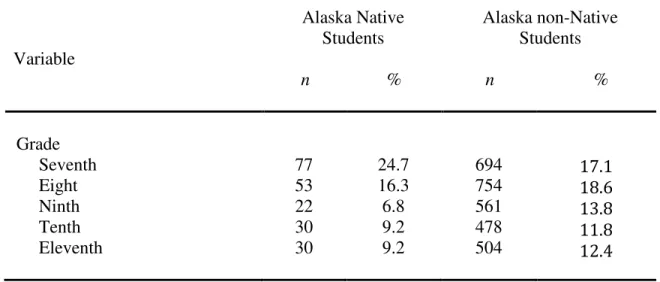
4. Demographic Statistics for Alaska Native and Alaska non-Native Students ...104
5. Means and Standard Deviations on the Seven Factors of School Climate and Connectedness by Group ...107
6. Wilk's Lambda and Canonical Correlation for Two Groups ...109
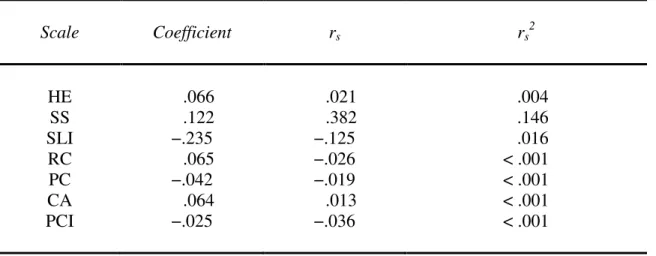
7. Standardized Discriminant Function and Structure Coefficients for Two Groups ...110
8. An Overview of Qualitative Participant Demographics ...118
9. Overview of Main Themes and Subordinate Themes ...133
CHAPTER I INTRODUCTION
“After watching children enter school at ages five or six and leave between 16 and 18, our experience indicates we are doing serious harm to many if not most of Alaska’s Native school children” (Bates & Oleksa, 2007, p. 16). Father Micheal Oleksa, a Russian Orthodox priest, who has spent his entire life studying the interaction between Alaska Native culture and school as an institutional process, suggested that too many Alaska Native school children “leave school damaged, hurt, wounded, depressed, angry and tragically suicidal” (Bates & Oleksa, 2007, p. 16). According to Father Michael Oleksa, there is a disconnect between the culture of Alaska Native students and the expectations of schools in Alaska. Is it possible that the well-intended efforts of the educational community to provide schools for Alaska Native children are actually doing more harm than good? John Goodlad (1985) discussed the findings of a study involving several hundred schools in different areas of the country, schools that served minority students. Results of the study demonstrated that the schools were organized according to White, middle-class cultural expectations and that by fourth grade many students from minority populations were tracked into remedial classes with limited expectations for their success (Goodlad, 1985). Many contemporary researchers and current studies agree that John Goodlad’s description of schools across the United States in 1985 could be an appropriate description of many schools in Alaska that currently serve Alaska Native students
(Barnhardt, 2001; Barnhardt & Kawagley, 2010; Bates & Oleksa, 2007; Tippeconnic & Faircloth, 2010; U.S. Department of Education, Institute of Education Sciences [IES], 2011).
Statement of the Problem
Although many Alaska Native students do well in school as represented by academic achievement in reading, writing, and math, graduating from high school, and going on to college or other training programs, a persistent problem facing the
educational community and the community of Alaska Natives is that a large number of Alaska Native students are unsuccessful in school (Bates & Oleksa, 2007; Tippeconnic & Faircloth, 2010). According to a 2013 standards-based skill assessment (SBA)
administered by the Department of Education and Early Development (DEED) in the State of Alaska, an average of 44.7% of Alaska Native students in grades three through eight scored below proficient in reading. In writing, an average of 51.2% of Alaska Native students in grades three through eight scored below proficient. In math, an average of 49.4% of Alaska Native students in grades three through eight scored below proficient. According to the High School Graduating Qualifying Exam (HSGQE), 32.4% of Alaska Native students in grade 10 scored below proficient in reading, 43.6% scored below proficient in writing, and 39.4% scored below proficient in math. The 2012-2013 cohort graduation rate for Alaska Native students was 53.9% (Alaska Department of Education and Early Development, 2013).
There are other minority populations of students who share similar results in educational outcomes. For example, African American students in Mississippi also experience low levels of academic achievement in language arts and in math. According to the 2012-2013 Mississippi Curriculum Test in Language Arts, an average of 66% of African American students in grades three through eight scored below proficient. In math, an average of 48% of African American students in grades three through eight
scored below proficient. On the high school subject area tests, 58% of African American students scored below proficient in Biology I and in English II. In U.S. History, 61% of African American students scored below proficient. In Algebra, 35% of African
American students scored below proficient (Mississippi Department of Education, 2013). The 2012-2013 graduation rate for African American students was 65% percent
(Mississippi Department of Education, 2013).
This present study aligns with current research that suggests school connectedness and racial-ethnic identity play an important role in academic achievement for minority students. A strong sense of school connectedness and racial-ethnic identity function as cultural resources that support positive academic outcomes in school (Chavous et al., 2003; Sellers & Shelton, 2003). However, a part of the problem of low academic achievement among minority students has been that research on the influence of school connectedness and racial-ethnic identity among minority students has been scarce and one dimensional. Early research on low levels of academic achievement among minority students focused on structural factors such as socioeconomic status and parental
education levels (Bereiter & Engleman, 1966; Deutsch, 1963; Hess & Shipman, 1965). Only in the last two decades has research taken into account social-psychological variables such as school connectedness and racial-ethnic identity (Chavous et al., 2003). The research that is available on school connectedness and racial-ethnic identity for minority students has largely focused on the African American population prompting criticism of that research as one dimensional (Brayboy, 2005). At present, there is an absence of research on the influence of school connectedness and racial-ethnic identity on academic achievement among Alaska Native students.
In addition to being scarce and one dimensional, the research available on the influence of school connectedness and racial-ethnic identity for minority students has been inconsistent and focused on deficit explanations for low levels of academic
achievement. For example, some studies have demonstrated the protective role of racial-ethnic identity development (Arroyo & Ziegler, 1994), whereas other studies have demonstrated that high racial identification and the awareness of racism and
discrimination lead to mental health risks and poor academic achievement (Caldwell, Zimmerman, Bernat, Sellers, & Notaro, 2002; Sellers & Shelton, 2003). Besides being inconsistent, research on the academic achievement of minority students has been primarily focused on deficit model explanations for low levels of academic achievement (Garbarino, 1995; Kozol, 1991; Perry, Steele, & Hilliard, 2003). However, the trend has moved away from deficit model explanations toward more progressive model
explanations when confronting the persistent problem of low academic achievement among minority students. The conversation has changed from “what is wrong with those kids or that community?” (a deficit model explanation) to a conversation and analysis of the ways race is present and active in society, and the ways that institutional structures such as schools influence the unique academic needs of minority students (Bartlett & Brayboy, 2006).
Low levels of academic achievement among Alaska Native students is a problem for all members of the educational community and of society in Alaska (Tippeconnic & Faircloth, 2010); however, it is particularly problematic for Alaska Native families and students who are being denied access to economic privilege as a result of low levels of academic achievement (Bates & Oleksa, 2007; Tippeconnic & Faircloth, 2010). If this
problem is not addressed, many more Alaska Native students will continue to experience failure in school, Native communities will continue to feel unsatisfied with the level of educational services that are being provided by schools, and tax dollars will continue to be wasted well-intended but misdirected educational efforts (Barnhart, 2001; Bates & Oleksa, 2007; Tippeconnic & Faircloth, 2010). All members of society benefit with a better educated population, a more inclusive population, one that celebrates diversity, but the biggest benefit will come for those Alaska Native students who experience greater levels of academic achievement and consequently higher levels of educational attainment as a result of an increased sense of school connectedness and a positive perspective on racial-ethnic identity (Delpit, 1995; Tatum, 1997; Wright, 2009).
Purpose of the Study
The intent of this mixed methods study was to examine Alaska Native students’ perspectives on school connectedness and racial-ethnic identity in a large, urban school district in Alaska. An explanatory sequential mixed methods design was used, and it involved analyzing quantitative data first and then explaining the quantitative results with in-depth qualitative data. In the first, quantitative phase of the study, School Climate and Connectedness Survey (SCCS) data was analyzed from the Matanuska-Susitna Borough School District to study perceptions of school connectedness as those perceptions relate to the following dimensions: high expectations (HE), school safety (SS), student
leadership and student involvement (SLI), respectful climate (RC), peer climate (PC), caring adults (CA), and parent and community involvement (PCI). In the second phase, qualitative semi-structured focus group interviews were used in a phenomenological study to explore school connectedness as it relates to racial-ethnic identity among 13
Alaska Native adolescents from a traditional high school and an alternative high school in the Matanuska-Susitna Borough School District. The two strands of data were mixed during interpretation in an effort to provide a more complete understanding of the Alaska Native experience in the Matanuska-Susitna Borough School District.
Research Questions
Research questions in a mixed methods study should include a quantitative
research question, a qualitative research question, and a mixed methods research question (Creswell & Plano Clark, 2011). The mixed methods research question “should address the mixing or integration of the quantitative and qualitative data (Creswell & Plano Clark, 2011, p. 27). The following research questions guided this study:
RQ 1: What dimensions correlate with statistical differences in Alaska Native students’ perceptions of school connectedness?
RQ 2: Are there statistically significant differences in the perceptions of school connectedness between Alaska Native students and Alaska non-Native students?
RQ 3: How do Alaska Native students perceive and experience school connectedness as it relates to racial-ethnic identity?
RQ 4: In what ways do the interview data from Alaska Native students
concerning their perceptions of school connectedness help explain the quantitative results reported on the School Climate and Connectedness Survey?
Philosophical and Theoretical Foundations
Mixed methods studies are guided by philosophical assumptions. A philosophical assumption is defined as a basic set of beliefs or assumptions that guide inquiries (Guba & Lincoln, 2005). Creswell and Plano Clark (2011) described a philosophical
assumption as a worldview and suggested that more than one worldview might be used in a mixed methods study. In the explanatory sequential mixed methods study, the
quantitative phase of the study is guided by post positivism as a philosophical assumption (Creswell & Plano Clark, 2011). The characteristics of post positivism in a mixed
methods study are: (a) determinism or cause and effect thinking; (b) reductionism by narrowing and focusing on select variables to interrelate; (c) detailed observations and measures of variables; (d) the testing of theories that are continually refined (Creswell & Plano Clark, 2011). In the qualitative phase of the explanatory sequential design mixed methods study, constructivism is used as a philosophical assumption (Creswell & Plano Clark, 2011). The characteristics of constructivism in a mixed methods study are: (a) understanding the meaning of phenomena; (b) multiple participant perspectives; (c) social interaction with others through personal histories; and (d) generation of theory to explain phenomenon (Creswell & Plano Clark, 2011).
Philosophical assumptions serve as the foundation for the theoretical lens (Creswell & Plano Clark, 2011). In this study, the theoretical lens was Tribal Critical Race Theory (TribalCrit) because it is currently the only known critical race theory specific to Native American people and therefore more accurately represents the culture of Native American communities. TribalCrit is an emerging theory that was developed by Brayboy (2005) to more completely address the issues of Native Americans in the United States. There are nine tenets of TribalCrit that will be discussed in more depth later in this study, but the primary tenet is the proposition that colonization is endemic to society. Brayboy (2005) defined colonization as both explicit and implicit efforts in societal processes and functions to change or civilize Native Americans to be more like those who
hold the power in the dominate society. Another central tenet of TribalCrit is the importance of story as a source of data to make connections between traditional community values and those of larger societal institutions such as the criminal justice system and the various educational systems that serve Native American communities (Brayboy, 2005). The goal of TribalCrit is to provide a lens through which to gain a better understanding of the needs of Native American communities and to initiate changes in the educational system and society at large that will benefit Native American communities. A further goal is to change the ways that Native students think about schools and the ways that school officials and educational policy makers think about Native American students (Brayboy, 2005).
Definitions
Academic Achievement: For the purposes of this study, proficient or higher on the
Measures of Academic Progress (MAP) assessment.
Academic Self Efficacy: A student’s sense of competence and confidence in the
performance of academic tasks (Eccles & Wigfield, 2002).
Adolescence: For the purposes of this study, individuals between ages 12 years
and 17 years.
Alaska Native Racial-Ethnic Identity: For the purposes of this study, cognitions
and attitudes related to an individual’s ability to understand his or her status as member of a racial-ethnic minority.
Colonialism: Implicit and explicit effort within the processes and structures of the
Deficit Thinking: An endogenous theory positing that the student who fails in
school does so because of his/her internal deficits or deficiencies (Valencia, 2010).
Dominate Culture: Represented by the majority of individuals in a setting
typically influencing the language, religion, behavior, values, rituals, and social customs of the group (Gollnick & Chinn, 2002).
Ethnic: A socially defined group based on cultural criteria that is commonly used
as a euphemism for race (Helms, 1990). For the purposes of this study, ethnicity and race are used interchangeably.
First Generation Urban Alaska Natives:As used in U.S. Census report (2006),
those Alaska Native students who were born, or who have lived a significant portion of their lives in rural Alaska but have recently moved to urban Alaska.
Full Alaska Native: As used in U.S. Census report (2006), those students who are
the children of two Alaska Native parents.
Minority: For the purposes of this study, a student differing in race or ethnic
background from the majority of a student population. Minority students are those students of color, and those students who identify with a particular racial-ethnic that is different from the White cultural norm of the school context.
Mixed Methods Research: Research that uses both quantitative and qualitative
methodologies within a single study and integrates the results to increase understanding of the research problem (Creswell & Plano Clark, 2011).
Part Alaska Native: As used in U.S. Census report (2006), those students who are
Private Regard: Refers to the positive or negative feelings an individual has about
being a member of a particular racial-ethnic group (Phinney & Ong, 2007).
Public Regard: Refers to how the individual perceives the racial-ethnic group is
perceived within a larger social context by individuals who are not members of the racial-ethnic group (Phinney & Ong, 2007).
Qualitative Research: Research conducted to learn the participants’ views on a
phenomenon (Creswell & Plano Clark, 2011). “Qualitative research is a situated activity that locates the observer in the world, consisting of a set of interpretive, material practices that make the world visible” (Creswell & Plano Clark, 2011, p. 32). Qualitative research looks for the meaning within the perceptions of the participants.
Quantitative Research: Research conducted to determine how participant data fits
an existing theory (Creswell & Plano Clark, 2011). Defined as “the systematic empirical investigation of social phenomenon via statistical, mathematical, or computational techniques” (Creswell & Plano Clark, 2011, p. 53).
Race: A socially defined group based on physical criteria such as skin color or
facial features (Tatum, 1997). For the purposes of this study, a social construction that attempts to categorize people into large and distinct populations or groups by anatomical, cultural, ethnic, or genetic affiliations.
Racial Centrality: The extent to which individuals view their racial group as a
defining part of their self-concepts (Phinney & Ong, 2007).
Racial Frames: Contextual perspectives through which individuals make sense of
School Belonging: For the purposes of this study, school belonging and school
connectedness will be used interchangeably. The degree to which students feel personally accepted, respected, included, and supported by others in the school environment (Finn & Voelkl, 1989).
School Connectedness: Student perceptions about “the people at school, which
includes feeling like they are a part of the school, that adults care about them personally, and that their learning is a high priority” (Oscher, Spier, Kendizora, & Cai, 2009, p. 3).
School Connectedness as it Relates to Racial-Ethnic Identity: For the purposes of
this study, the degree to which students perceive that they are a significant part of their school and the degree to which they perceive racial-ethnic identity as influencing school connectedness.
Second/Third Generation Urban Alaska Natives: As used in U.S. Census report
(2006), those Alaska Native students who have minimal lived experience in rural Alaska, who were born in urban Alaska, and who have lived a significant portion of their lives in urban Alaska.
Sequential Design: A two-phase mixed methods design in which the quantitative
data is explored in greater depth by the qualitative data (Creswell & Plano Clark, 2011). Delimitations
This study is delimited to Alaska Native and Alaska non-Native students who attend the Matanuska-Susitna Borough School District and who participated in the 2014 School Climate and Connectedness Survey (N = 4,059). The study is further delimited
by the use of an explanatory sequential mixed methods design and a time parameter of one school year. In the quantitative phase, the study is delimited by the use of only one
source of data from the School Climate and Connectedness Survey to measure school connectedness. In the qualitative phase, the study is delimited by the use of only one source of data from the interview protocol used with 13 Alaska Native students to measure perceptions of school connectedness as those perceptions relate to racial-ethnic identity. The study is also delimited by the convenience sampling strategy used in the quantitative phase and the purposeful criterion sampling strategy used in the qualitative phase. Only those Alaska Native students who volunteered to take the SCCS and who had permission from their parents were included in the data analysis for the quantitative phase (N = 325). Only those Alaska Native students who completed the School Climate
and Connectedness Survey were included in the data collection and analysis for the qualitative phase of the study. The study is further delimited by the selection of participants who represent both Title I and non-Title I schools with an equal
representation of females and males. The sample population for the qualitative phase of the study is further delimited because participants were chosen from schools in the same state and school district to provide consistency in student experiences with school.
Assumptions The assumptions of this study are as follows:
• Racism Exists.
• Experiences with racism are risk factors for Alaska Native students.
• Colonialism and racial hegemony as defined by Brayboy (2005) have had considerable historic and current impact on Alaska Natives.
• Participants answered the survey questions in the School Climate and
• The School Climate and Connectedness Survey measures aspects of climate and connectedness relevant to the school experiences of Alaska Native students and consistent with the research on school climate and connectedness.
• The racial-ethnic identity of students was accurately reported on the SCCS.
• An increased sense of school connectedness and a positive perspective on racial-ethnic identity leads to greater academic achievement among minority students (Haslam, Jetten, Postmes, & Haslam, 2009; Rowley, Sellers, Chavous, & Smith, 1996).
Justification
Over a decade after the well-intended No Child Left Behind Act, school districts continue to struggle with the racial achievement gap. In research conducted by Cohen, Garcia, Apfel, and Master (2006), it was suggested that the racial achievement gap, which includes Alaska Native students, remains one of the most challenging problems facing the educational community and society at large in the United States. Cohen et al. (2006) stressed that although there have been continuous efforts throughout the United States to close the achievement gap between minority and White students, those efforts have been largely unsuccessful. Despite many reform efforts in the last two decades, the academic performance of minority students continues to be persistently lower than White students (Harris, 2011). The current study is justified by the possibility that what is discovered in relation to school connectedness as it relates to racial-ethnic identity among Alaska Native students could be instrumental in assisting other school districts as they contend with the persistent achievement gap among other minority populations.
This study is further justified by the promising research concerning school connectedness and racial-ethnic identity. Racial-ethnic identity (REI) among African American students as a construct has been studied by many researchers (Chavous et al., 2003; Fordham & Ogbu, 1986; Sellers, Linder, Martin, & Lewis, 2006; Steel & Aronson, 1995). REI is defined as the degree to which an individual is aware of and able to
negotiate racism and discrimination positively while demonstrating ethnic pride in oneself and one’s ethnic group (Wright, 2009). Even though the research on REI among African American students is inconsistent, there is a substantial body of research
claiming that a positive REI can promote high academic success among African
American students (Wright, 2009). Oyserman, Harrison, and Bybee (2001) conducted a study of REI among African American, Hispanic, Native American, and Israeli students to discover whether or not REI contributes to grades, school attendance, and persistence on complex mathematical tasks. Their findings suggested that some forms of a positive REI do promote strong feelings of engagement in school and an increased ability to be successful at academic tasks. Research suggests that there is a possibility of increased academic achievement among minority students when families and schools promote positive racial-ethnic identity development (Oyserman et al., 2001; Wright, 2009).
The construct of school connectedness has also been studied by many researchers and refers to the degree students feel connected to their schools (Booker, 2004; Faircloth & Hamm, 2005; Goodenow, 1993; Goodenow & Grady, 1995). This includes feeling like they are a part of the school, that adults care about them personally, that their learning matters and is a high priority, and that teachers and other school staff consistently treat them with respect. Faircloth and Hamm (2005) focused on the
relationship between a sense of school connectedness and academic achievement. They concluded that a sense of school connectedness best explains the relationship between motivation and academic achievement among high school students representing four different ethnic groups. Furthermore, Faircloth and Hamm (2005) suggested that the degree of racial integration in a school’s student population and the faculty instilled a strong sense of school connectedness for minority students. Faircloth and Hamm’s study demonstrated that racial-ethnic identification is significant in the degree to which
students feel like they belong to their schools which as research has suggested leads to greater academic achievement for minority students (Booker, 2004; Goodenow & Grady, 1995).
This study of school connectedness and racial-ethnic identity among Alaska Native students will contribute to the limited research on Alaska Native students and may provide insights into the dilemma of low academic achievement among other minority populations of students. Large percentages of Alaska Native students, like other minority populations of students, have not been successful in school and are being denied access to opportunities that would come from increased academic achievement (Tippeconnic & Faircloth, 2010). There is compelling research on the influence of school connectedness and racial-ethnic identity on the academic achievement among minority students
(Oyserman et al., 2001). However, there is a need for research on various social, cultural, and individual factors that influence academic achievement among Alaska Native
students. This study may provide additional information to Alaska Natives and Alaska Native organizations as they develop and implement a plan of advocacy that challenges injustices and well-intended but misguided efforts to provide educational services to
Alaska Native students. This study may also provide educators and policymakers insight and understanding into school connectedness and racial-ethnic identity as those
constructs relate to academic achievement among other minority students. Summary
Father Michael Oleksa (2007) suggested that in an effort to do good by providing schools to Alaska Native children, the educational community might just be doing harm to Alaska’s Native children. Too many Alaska Native students are not experiencing success in school (Alaska Native Tribal Health Consortium, 2009; U.S. Commission on Civil Rights, 2002). Communities are frustrated and children are left without access to economic opportunity that comes with greater academic achievement. There is research that suggests a positive sense of racial-ethnic identity leads to greater academic
achievement among minority students (Chavous et al., 2003; Sellers & Shelton, 2003). There is also research that suggests an increased sense of school connectedness leads to greater academic achievement among minority students (Booker, 2004; Faircloth & Hamm, 2005; Goodenow, 1993). However, there is a need for research that is specific to Alaska Native students and that focuses on the connection between perceptions of school connectedness and racial-ethnic identity. The purpose of this study is to advance
knowledge about the connection between school connectedness and racial-ethnic identity among Alaska Native students.
CHAPTER II LITERATURE REVIEW
This chapter will present a review of the literature on the theoretical foundation of this study. In addition, this chapter will present a review of the literature on the
suggested obstacles to academic achievement among minority students, the validity of racial-ethnic identity development, and the importance of school connectedness. However, this chapter will begin with a review of literature on the historic, geographic, and demographic context of attempts to provide schools to Alaska Native children.
Historical Context
The Russian Orthodox Church in conjunction with the Russian-American Company was the first to provide formal schooling to Alaska Natives in Kodiak,
Southeast Alaska, and in the Aleutians (Dauenhauer, 1982). Attempts to provide western education to Alaska Natives began in 1784 when a Russian fur trader, Gregorii
Shelikhov, established a trading post at Three Saints Bay on the southwest coast of Kodiak Island. After killing a large number of Alaska Natives and taking others hostage, Shelikhov opened a school for Native children. He taught them arithmetic, the Russian language, and the precepts of Christianity (Darnell, 1979). Shelikhov’s school for young Native children was the first of many mission schools that would soon be operated by the Russian Orthodox Church in a partnership with the Russian-American Company
(Darnell, 1979; Dauenhauer, 1982).
The Russian-American Company was a private enterprise that received a monopoly from the Tsar of Russia in 1799 to exploit natural resources in Alaska. The Russian-American Company provided some technical training for a few Native students
and students of mixed Russian and Native parents in return for indentured service
(Darnell, 1979). In the Aleutians, many Aleut people became literate in both the Russian and the Aleut languages (Getches, 1977). Russian schooling of Alaska Native children had three goals: to Christianize, to civilize, and to create more useful servants for the Russian-American Company (Darnell, 1979). The Russian-American Company closed all of its vocational schools in Alaska in 1867 during ceremonies that transferred Alaska from Russia to the United States (Darnell, 1979).
At the signing of the purchase agreement between Russia and the United States government in 1867, various religious mission schools from the United States replaced the Russian Orthodox mission schools, and the American Commercial Company replaced the Russian-American Company (Darnell, 1979). The American Commercial Company received an exclusive lease from the United States government to harvest the fur seals of the Pribilof Islands (Darnell, 1979). In 1873, the Bureau of Indian Affairs divided Alaska into geographical sections and appropriated each section to a specific religious
denomination that included Catholic, Congregational, Episcopal, Methodist, Moravian, Presbyterian, and Swedish-Evangelical (Barnhart, 2001). These schools were referred to as contract schools and received very little if any federal oversight or funding (Barnhart, 2001). The conditions for Alaska Native children in school remained much the same as they had been in the Russian era. The goal of educational services was such that “the White man can use these men for things that are useful for his civilization” (Darnell, 1979, p. 177).
The missionary contract schools were K-6 day schools. Instruction was provided in basic reading, writing, math, industrial skills, patriotic citizenship, and the precepts of Christianity (Barnhart, 2001). There was a strict English only policy, and the primary mission of the schools was to spread the gospel and civilize the Natives (Barnhart, 2001; Bates & Oleksa, 2007). According to Barnhart (2001), this policy of contracting schools to religious denominations continued to influence the federal provision of schools in Alaska long after it was discontinued with Native Americans in the rest of the nation. Alaska Native children were never fully considered in federal education policy until 1865 after the Civil War (Barnhart, 2001). Prior to the Civil War, Native American people in the United States were subjected to annihilation and displacement. After the Civil War, this practice of annihilation and displacement was replaced by a seemingly more humane practice of assimilation (Barnhart, 2001; Bates & Oleksa, 2007;Getches, 1977; Prucha, 1984).
In 1884, the Organic Act was passed, establishing the first civil government in Alaska and providing the legal basis for federal provision of K-8 schools in Alaska to children of all races (Barnhart, 2001; Case, 1984; Darnell, 1979). The goal of federal education policy evolved from a process of civilization and exploitation to a process of assimilation. According to Reyhner, (1994), assimilation is a process of absorbing one group of people into the culture and social norms of another group of people and in the process destroying and eradicating the culture and social norms of the group of people that are to be assimilated. The process of providing schools to Alaska Native children has historically been “a process of imposed imperialism designed to assimilate
It took another 63 years after the signing of the Organic Act for federal provision of schools to high school students in Alaska. In 1947, the Bureau of Indian Affairs (BIA) opened Mt. Edgecumb boarding school in Sitka, Alaska (Barnhart, 2001). When Mt. Edgecumb was full, high school students were sent to boarding schools throughout the Northwest (Barnhart, 2001). Barnhart (2001) contended that this policy of sending Alaska Native high school students to boarding schools was an attempt to educate and assimilate Alaska Native students and resulted in an erosion of the cultural foundation within Native communities by removing the most intellectually advanced students from their villages. Alaska gained statehood in 1959, which is when the responsibility for education transferred from the federal government to the state government. However, it was not until 1972 in a class action lawsuit against the state of Alaska known colloquially as Molly Hootch (Hootch v Alaska State-Operated School System) that local high
schools were provided for Alaska Natives in their home villages (Getches, 1977; Reyhner, 1994). The plaintiffs claimed that the state was in violation of Alaska’s constitution that requires the state maintain a public school system open to all children. The plaintiffs argued that a system requiring children to leave their homes for nine months is not truly open and that the dislocation and drop-out rates produced negative consequences for children in boarding school programs (Getches, 1977).
Several authors have suggested (Barnhart, 2001; Bates & Oleska, 2007), that while there were pockets of educational success, in general, Alaska Native children were treated very poorly in both the missionary schools and the boarding schools. Based on their review of available information, they contend that a systemic and intentional destruction of the Native culture occurred in these schools (Barnhart, 2001; Bates &
Oleksa, 2007;Darnell, 1979; Prucha, 1984). Bates and Oleska (2007) suggested that one does not have to be in rural Alaska long before hearing stories from elders of children routinely beaten with canes for speaking their Native language and of adults who have permanent hearing loss in one ear because they were routinely beaten on the side of their heads for not paying attention, resisting the process of civilization (Bates & Oleksa, 2007). As reported by Hopfinger in Newsweek (2008, Jan 13), in the village of St
Michael, an entire generation of children were sexually abused by Roman Catholic priests. Historically, the efforts of schooling perpetrated on the Alaska Native
communities in an attempt to civilize and assimilate have been destructive to the Alaska Native culture and hold ramifications for current educational practice (Barnhart, 2001; Bates & Oleksa, 2007; Reyhner, 1994). In his book, Conflicting Landscapes: American
Schooling/Alaska Natives, Father Michael Oleksa stated:
I am indignant that after witnessing the destructive impact of public schooling for nearly four decades, and researching its tragic history, our educational system can continue to ignore the damage that has been done and continues to be done to children in the sacred Name of Education. (Bates & Oleksa, 2007, p. 90)
Geographic and Demographic Context
Alaska is a large state with a small population. At 663,300 square miles and 6,640 miles of coastline, there are approximately 731,449 people of all races living in Alaska. Approximately half of the population of Alaska lives in Anchorage with the rest spread out over the Matanuska-Susitna Borough (93,925), Juneau (32,832),
rural Alaska (U.S. Census, 2006). There are approximately 138,000 Alaska Natives living in Alaska with 36,000 of those Alaska Natives living in Anchorage which represents 12% of the total population in Anchorage (U.S. Census, 2006).
There are four distinct Alaska Native populations. The term Alaska Native refers to Alaska’s original inhabitants and commonly refers to those Alaskans who identify as either whole or part Native (U.S. Census, 2006). The tribal affiliations can be divided into four groups: (a) the Inupiat and Yupik Eskimos, who inhabit the northern and western coasts and to some degree inland from the coastline; (b) the Aleuts, who inhabit the Aleutian Islands; (c) the Tlingits and Haidas, who inhabit the southeast portion of the state; and (d) the Athapascan Indians, who inhabit the interior portion of the state
(Barnhardt, 2001). Native communities range from the large, heterogeneous populations of urban Alaska with a mix of Native cultural groups to the small homogenous
communities of rural Alaska with representatives typically of only one Native cultural group (Barnhardt, 2001). It is important to establish the variation within and between tribal affiliations in order to understand that there is no stereotypical Alaska Native.
According to a study on rural populations in Alaska, there has been a growing migration from rural Alaska to urban Alaska which has been attributed to the high cost of living in rural Alaska and the availability of jobs in urban Alaska (U.S. Commission on Civil Rights, 2002). There is a multidimensional division within Alaska based on race, culture, and location that is referred to as the urban/rural divide (U.S. Commission on Civil Rights, 2002). In public testimony, it was stated by Bonnie Jo Savland, statewide director of the Alaska Native Coalition for Employment Training:
The past decade has seen state policy, controlled by the urban non-Native majority, turn against Natives with a vengeance. Under a banner of fiscal austerity, the state is making political war on the poorest and most vulnerable of its citizens defined by race. (U.S. Commission on Civil Rights,2002, p.131) Many Native people who make the migration from rural to urban Alaska do not have an easy transition. A representative from the Alaska AIDS Assistance Association testified to the U.S. Commission on Civil Rights that each year approximately 30 people freeze to death on the streets of Anchorage, primarily Alaska Natives who have moved in from rural communities (U.S. Commission on Civil Rights, 2002).
The existing data taken from census reports and other reports on Alaska Natives does not provide a complete and accurate description of living conditions for Alaska Natives. Alaska Natives have high mobility rates and often do not participate in surveys due to distrust of outsiders who are collecting information for census surveys and other reports (Tippeconnic & Faircloth, 2010). Alaska Natives are often characterized by researchers as statistically insignificant (Tippeconnic & Faircloth, 2010). Being
characterized as statistically insignificant has been described as an example of structural and institutional racism that places Alaska Natives at a disadvantage (Tippeconnic & Faircloth, 2010).
There are numerous examples of conflicting or inaccurate census and other report data. For example, a report completed by the Alaska Native Tribal Health Consortium (2009) reported that 40% of Alaska Natives live below the poverty level; however, the U.S. Census data suggest that only 20 percent of Alaska Natives live below the poverty level (U.S. Census, 2006). The Alaska Native Tribal Health Consortium (2009) reported
that the proportion of Alaska Native children under age 18 living below the poverty level exceeded 22%, triple the Alaska White proportion and that the proportion of Alaska Native adults over age 18 living below the poverty level exceeded 18%, also triple the Alaska White proportion (Alaska Native Tribal Health Consortium, 2009). Poverty level is defined for Alaska as $26,500 for a family of four (Alaska Native Tribal Health
Consortium, 2009). Poverty level data taken from the U.S. Census report does not give a complete and accurate description of life for many Alaska Native people who often live below the poverty level and struggle on a day to day basis to provide the basic necessities for their families. (U.S. Commission on Civil Rights, 2002).
Additional areas where existing data does not provide a complete and accurate description of living conditions for Alaska Natives is participation in the labor force and educational attainment. Although the U.S. Census Report (2006) suggested that 62% of Alaska Natives participate in the labor force, there is compelling evidence to suggest these findings are inaccurate. One reason may be that due to the scarcity of employment opportunities in rural Alaska, many Alaska Natives do not meet the official definition of unemployed because they are not conducting active job searches (Alaska Native Tribal Health Consortium, 2009). In rural Alaska, Native populations often rely on both a cash based economy and subsistence, or non-cash based economy (U.S. Commission on Civil Rights, 2002). In many communities, the unemployment rate actually exceeds 80% as reported by the U.S. Commission on Civil Rights (2002). One more area where existing data does not provide a complete and accurate description of living conditions for Alaska
Natives is educational attainment. The U.S. Census (2006) reported that 75% of Alaska Natives have at least a high school diploma. However, the Alaska Native Tribal Health Consortium (2009) found that just over one in four (28.2%) Alaska Natives reported not completing high school as compared to U.S. Whites with less than one in twelve (7.5%).
Both the U.S. Census Report and the Alaska Native Tribal Health Report agree that there is an increasing population of Alaska Native children. Approximately 26% of the total Alaska population is under the age of eighteen, whereas approximately 37% of the total Alaska Native population is under the age of eighteen (U.S. Census, 2006). Approximately 4 out of 10 (41%) Alaska Native people are under the age of 20 years, and the number of youth under the age of 20 are projected to increase by almost 13,000 between 2000 and 2030 from 47,909 to 60,703 (Alaska Native Tribal Health Consortium, 2009). Bates and Oleksa (2007) asserted that the relatively young age of Alaska’s Native population increases the urgency for finding solutions for the problem of low levels of academic achievement for Alaska Natives.
The evidence suggests that Alaska Natives are particularly vulnerable to risk factors such as high levels of drug and alcohol abuse, high levels of incarceration, and high levels of suicide. Substance abuse among adolescents is defined as having used alcohol, marijuana, or cocaine in the past 30 days (Alaska Native Tribal Health
Consortium, 2009). Among Alaska Native high school students, 41% report having at least one drink of alcohol on one or more of the past 30 days (Alaska Native Tribal Health Consortium, 2009). Almost one third (32%) of Alaska Native high school students report using marijuana during one or more of the past 30 days compared to
17% of Alaska non-Native high school students (Alaska Native Tribal Health
Consortium, 2009). Such high levels of alcohol and marijuana use among Alaska Native adolescents may help explain their high levels of incarceration. Alaska Native males represent just 8% of the population in Alaska, yet they represent 37% of the prison population (U.S. Commission on Civil Rights, 2002).
According to a study by the Alaska Bureau of Vital Statistics, Alaska has the highest rate of suicide per capita in the United States (Alaska Department of Health and Social Services, 2010). In 2007, the rate of suicide in the United States was 11.5 suicides per 100,000 people. In Alaska, during the same year, that rate was 21.8 suicides per 100,000 people of all races. The rate of suicide among the Alaska Native population was 35 per 100,000 people in 2007 (Alaska Department of Health and Social Services, 2010). However, the rate of suicide among Alaska Native men between the ages of 15 to 24 was the highest rate of suicide among any demographic in the country, with an average of 141.6 suicides per 100,000 each year between 2000 and 2009 (Alaska Department of Health and Social Services, 2010).
In summary, high rates of incarceration and suicide among young Alaska Natives can be linked to other factors such as alcoholism and poverty, but they could also be attributed to low levels of academic achievement and high dropout rates in Alaskan schools (Bates & Oleksa, 2007). Young people who do not achieve sufficient levels of literacy in reading and math, who are not able to navigate the expectations in schools, often find themselves at risk of self-affliction and in trouble with law enforcement (U.S. Commission on Civil Rights, 2002). Many Alaska Natives live below the poverty line, and there is an increasing population of children. It is important to establish the
demographic context among Alaska Native students in order to understand that current academic results as measured by standardized assessments do not necessarily represent true ability or a willingness to learn on behalf of Alaska Native students (Bates & Oleksa, 2007). Academic results as measured by standardized assessments and levels of
educational attainment are influenced by demographic context such as levels of poverty and other societal factors beyond the control of Alaska Native children (Bates & Oleksa, 2007).
Theoretical Foundations
Race has been and continues to be important in discourse concerning the
provision of schools to minority students. The racial achievement gap has been explained as a result of intellectual deficits, cultural deficits, cultural differences, institutional racism, and resistance (Bartlett & Brayboy, 2006). Several researchers have emphasized the need to examine the ways that race manifests itself in society and the ways that institutional structures such as schools influence the academic achievement of minority students (Fine, 1991; Ladson-Billings, 1992). Even though there are other perspectives on the issue of race and academic achievement, for the purposes of this study there are three theoretical approaches that have greatly influenced research and that hold potential for future research in the field: (a) cultural ecological theory; (b) racial formation theory; and (c) tribal critical race theory (Bartlett & Brayboy, 2006).
John Ogbu’s cultural ecological theory is “arguably the most influential and controversial approach in sociocultural studies of race and schooling in the last 25 years” (Bartlett & Brayboy, 2006, p. 362). Ogbu (1991) separated the broad category of
defined voluntary minority groups as those who have chosen to immigrate to the United States and involuntary minority groups as those who have been brought to the United States against their will as a result of enslavement or conquest. Ogbu (1991) suggested that voluntary minority groups are pragmatic and perceive challenges such as
discrimination as obstacles to overcome on the road to eventual success; whereas, involuntary minority groups choose opposition and perceive society’s institutions such as schools as a threat to their cultural identity. Ogbu (1991) argued that members of
involuntary minority groups often develop self-affirming norms and values that
undermine academic success in an effort to maintain boundaries between their cultural identities and the majority group-norms. According to Ogbu, there are two factors that influence minority school performance: (a) how the system and society at large treat minorities; and (b) how different minority groups respond to the system and society’s treatment. Differences in academic outcomes among minority populations are partly due to differences in cultural adaptations (Ogbu, 1991).
Researchers and scholars have pointed out the problems in Ogbu’s theory of dysfunctional cultural adaptation (Bartlett & Brayboy, 2006). Researchers claimed that Ogbu’s theory was a deficit model explanation for poor academic achievement that blamed minorities for discrimination (Harris, 2011). Researchers also claimed that his work did not recognize contemporary theories of race and ethnicity that frame
racialization as a cultural process as opposed to an inherited and predetermined, fixed classification (Harris, 2011). In addition, researchers claimed that Ogbu’s work was too deterministic (Harris, 2011) and ahistorical in its treatment of American Indians
race and ethnicity with his emphasis on the significance of historical context and the interaction between system forces and community responses (Bartlett & Brayboy, 2006). Ogbu’s theory of oppositional cultural adaptation is relevant to the current study because Alaska Native students are obviously the descendants of a conquered people, which makes them members of an involuntary minority group. In addition, Ogbu’s theory is relevant to the current study because many Alaska Native students in the Mat Su Borough School District must struggle with cultural adaptation in their efforts to fit into a
predominately White, non-Native society.
A second theory that has influenced the study of race and ethnicity is racial formation theory. In racial formation theory, race is not perceived as fixed or inherent. Race is not a biological essence or an ideological construct. Race is instead perceived as a process that is the result of “historical contingencies, racially defined experiences, and political relationships” (Bartlett & Brayboy, 2006, p. 364). Racial formation is defined as a simultaneous process that involves cultural and social initiative to define the meaning of race in addition to a political and economic initiative that distributes power according to racial classification (Brayboy, 2005). Racial formation theory has been used to analyze the ways that race and racialization manifest within the context of the school experience (Brayboy, 2005). Racial formation theory requires that researchers analyze the intersection of race with other social factors such as class and gender and with social institutions such as schools while emphasizing the significance of race within the context of institutional practice (Bartlett & Brayboy, 2006). Racial formation theory is relevant to the current study because Alaska Native students in a
mostly White, non-Native community do not share similar racial experiences; therefore, race is not fixed or inherent for Alaska Native students. Race is instead a complex and dynamic process of racial and cultural adaptation.
A third theory that has influenced the study of race and ethnicity is critical race theory (CRT). Critical race theory suggests that racism is endemic in society and that racism has become so deeply engrained that it has become invisible (Delgado & Stefancic, 2000). Established in the mid-1970s, CRT was developed as an attempt to critique and change societal structures and institutions by exposing the relationship between race, racism, and power (Haynes Writer, 2008). The basic assumption of CRT is that racism is more than individual acts of discrimination. Racism is the historical,
systemic, and ideological manifestation of power intended to maintain and protect a racial hegemony in favor of the White race (Delgado & Stefancic, 2000). It was not until the mid-1990’s that CRT was applied to research in education as a framework within which to analyze educational practice and the challenges facing people of color within educational institutions (Ladson-Billings & Tate, 1995). Haynes-Writer (2008) suggested that the goal of CRT is to construct an alternative reality through the
identification of one’s personal, racial circumstance by the process of storytelling. The process of storytelling provides writers and researchers the ability to analyze “myths, presuppositions, and received wisdoms that make up the common culture about race and that invariably render… minorities one-down” (Delgado & Stefancic, 2000, p. xiv).
Theoretical approaches specific to the experiences of particular racial or ethnic groups have evolved out of the original premise of critical race theory. Such theoretical approaches include Latino critical race theory (LatCrit), Asian critical race theory
(AsianCrit), and tribal critical race theory (TribalCrit). Brayboy (2005) introduced tribal critical race theory to specifically address the experiences of Native American people. Brayboy (2005) recognized CRT as a legitimate framework from which to examine issues of race but felt CRT was limited in its ability to address the needs of Indigenous populations because it did not address the liminality inherent within the Native American experience or the presence of colonization. The original intent of CRT was to address the Civil Rights issues of African American populations; therefore, it was oriented toward a black-white binary examination of race and racial discrimination (Brayboy, 2005). Brayboy’s intent in developing TribalCrit was to provide an analytical lens that is a more “culturally nuanced way of examining the lives and experiences of tribal peoples since contact with Europeans over 500 years ago” (Brayboy, 2005, p. 430).
A major distinction between CRT and TribCrit is the existence of colonization. The basic premise of CRT is that racism is endemic in society. In contrast, the basic premise and first tenet of TribalCrit is that colonization is endemic in society (Brayboy, 2005). Colonization was defined as a historical and systemic effort to colonize or civilize Native Americans to be “more like those who hold power in the dominant society” (Brayboy, 2005, p. 430). In her book, Decolonizing Methodologies: Research and
Indigenous Peoples, Linda Tuhiwai Smith (1999) challenged traditional Western ways of
conducting research and called for the decolonization of methodologies that attempt to understand the Native American experience. Many other researchers have highlighted the negative influence of colonization to the Native American experience. Hodge, Limb, & Cross (2009) linked colonization to mental health within the Native American
healing processes that rely on Indigenous knowledge foundations. Lomawaima & McCarty (2006) linked colonization to the school experience for Native American students and suggested that Native American communities need to regain the
responsibility of educating their children. Lomawaima & McCarty (2006) linked the process of decolonization and the education of Native children to tribal sovereignty. Brayboy (2005) established colonization as the heart of TribalCrit and all other tenets of TribalCrit byproducts of this vital premise.
The second tenet of TribalCrit is that “the policies of the United States are rooted in imperialism, White supremacy, and a desire for material gain” (Brayboy, 2005, p. 431). Other researcher have suggested that the United States is built on 350 years of aggressive extermination and displacement of Native Americans and that understanding our past is critical to understanding “our present racial situation, with its dominant racial hierarchy and rationalizing racial frame” (Feagin, 2010, p. 22). Deloria and Wildcat (2001) extended the idea of imperialistic rationalization with a discussion of what they referred to as the European Truth which is the mistaken belief that Europeans possessed the only legitimate claim to history, rationalizing the large scale subjugation of non-European, Indigenous people wherever they were met on all continents. Brayboy (2005) used as an example of present day White supremacy in the educational setting the
emphasis placed on White authors such as Shakespeare and Dickinson as opposed to authors such as Louis Owens and Zitkala-Sa, both Native American authors, by curriculum departments in school districts across the United States.
The third tenet of TribalCrit is that Native Americans “occupy a liminal space that accounts for both the political and racialized natures of our identities” (Brayboy, 2005, p. 429). Brayboy used the concept of liminal to describe a place in-between. Brayboy argued that Native Americans are both legal/political and racialized entities but that society rarely considers the legal/political aspect of Native American presence choosing instead to concentrate on the racialization of Native Americans. He further argued that Native Americans “must struggle for the right to be defined as both a legal/political group and a racial group” (Brayboy, 2005, p. 433). Deloria and Lytle (1984) referred to the legal/political aspect of Native American presence as the extra constitutionality of non-recognized people and also suggested that Native Americans be treated as a legal and political presence in addition to a racial presence. For example, Wilkens (1997) argued that Native Americans were organized as tribal nations long before there was a U.S. Constitution and therefore should be treated as sovereign nations.
The fourth tenet of TribalCrit “is rooted in a belief and desire to obtain and forge tribal autonomy, self-determination, self-identification, and ultimately tribal sovereignty” (Brayboy, 2005, p. 433). Brayboy defined tribal autonomy as the ability to control natural resources, which includes education systems on tribal land, and the ability to control and legally protect tribal boundaries. Brayboy (2005) referred to
self-determination as the ability to break free of the guardian/ward relationship that has existed between the U.S. government and tribal nations and to discontinue the practice of tribes having to ask for permission from the U.S. government on all matters relative to Native American life. Self-identification was defined by Brayboy (2005) as the ability for tribal groups to decide what it means to be a Native American without prejudicial
influence from the dominate society. Others have defined sovereignty as “the inherent right of a people to self-government, self-determination, and self-education”
(Lomawaima & McCarty, 2006, p. 9). However, Wilkins and Lomawaima (2001) emphasized that sovereignty does not necessarily imply complete political independence. Wilkins and Lomawaima (2001) used the balance between federal sovereignty and the sovereignty of the states as an example of an ideal relationship that should exist between the U.S. federal government and tribal nations. This concept of sovereignty is relative to all aspects of Native American life but is particularly important to Native American researchers, scholars, and by extension Native American communities, to the process of providing educational services to Native American children (Barnhart & Kawagley, 2010; Brayboy, 2005; Deloria & Wildcat, 2001; Lomawaima & McCarty, 2006).
The fifth tenet of TribalCrit deals exclusively with education. In relation to educating Native American children “concepts of culture, knowledge, and power take on new meaning when examined through an Indigenous lens” (Brayboy, 2005, p. 429). In TribalCrit knowledge is defined as “the ability to recognize change, adapt, and move forward with change” (Brayboy, 2005, p.434). Brayboy defined three different types of knowledge that are essential to a productive and worthwhile education vital to the survival of Native American communities: (a) cultural knowledge which is the ability to know what it means to be a member of a particular tribal nation; (b) knowledge of
survival which includes the ability and willingness to adapt when change is required; and (c) and academic knowledge which does not necessarily have to be diametrically opposed to Indigenous ways of knowing. Many scholars have advocated for a migration away from traditional Western concepts of knowledge and a shift toward more Indigenous