The Psychopharmacology Algorithm Project at
the Harvard South Shore Program: An Update
on Posttraumatic Stress Disorder
Laura A. Bajor, DO, Ana Nectara Ticlea, MD, and David N. Osser, MDBackground:This project aimed to provide an organized, sequential, and evidence-supported ap-proach to the pharmacotherapy of posttraumatic stress disorder (PTSD), following the format of previous efforts of the Psychopharmacology Algorithm Project at the Harvard South Shore Program.
Method:A comprehensive literature review was conducted to determine the best pharmacological choices for PTSD patients and to update the last published version (1999) of the algorithm. We fo-cused on optimal pharmacological interventions to address the prominent symptoms of PTSD, with additional attention to the impact that common comorbidities have on treatment choices.Results:
We found that SSRIs and SNRIs are not as effective as previously thought, and that awareness of their long-term side effects has increased. New evidence suggests that addressing fragmented sleep and nightmares can improve symptoms (in addition to insomnia) that are frequently seen with PTSD (e.g., hyperarousal, reexperiencing). Prazosin and trazodone are emphasized at this initial step; if significant PTSD symptoms remain, an antidepressant may be tried. For PTSD-related psychosis, an antipsychotic may be added. In resistant cases, two or three antidepressants may be used in sequence. Following that, or with partial improvement and residual symptomatology, augmentation may be tried; the best options are antipsychotics, clonidine, topiramate, and lamotrigine.Conclusion:This heuristic may be helpful in producing faster symptom resolution, fewer side effects, and increased compliance. (HARVREVPSYCHIATRY2011;19:240–258.)
Keywords: algorithms, posttraumatic stress disorder, psychopharmacology, stress disorders
From Harvard Medical School; Harvard South Shore Psychiatry Residency Training Program, Brockton, MA (Drs. Bajor and Ticlea); VA Boston Healthcare System, Brockton Division, Brockton, MA (Dr. Osser)
Original manuscript received 29 November 2010, accepted for publi-cation subject to revision 28 April 2011; revised manuscript received 16 May 2011.
Correspondence: David N. Osser, MD, VA Boston Healthcare System, Brockton Division, 940 Belmont St., Brockton, MA 02301. Email: [email protected]
c 2011 President and Fellows of Harvard College
DOI: 10.3109/10673229.2011.614483
INTRODUCTION
There has been considerable interest in finding effective psy-chopharmacological strategies for treating posttraumatic stress disorder (PTSD). It is assumed that biological treat-ment may have an important role, given the abnormalities in neurotransmitter, neuroendocrine, and neuroanatomical systems that have been identified in patients with PTSD.1−3
In this article the authors present a heuristic for select-ing medication treatments for PTSD. This version updates a previous PTSD algorithm from the Psychopharmacology Algorithm Project at the Harvard South Shore Program
(PAPHSS).4 It was also influenced by the International
Psychopharmacology Algorithm Project PTSD algorithm, to which one of the authors (DNO) contributed as a consultant.5
Although psychosocial interventions are effective for
many patients with PTSD,6 this algorithm focuses on
medication usage and is meant to be applied if and when the prescribing clinician and patient determine that medi-cation may be appropriate. We did not evaluate the efficacy of psychotherapy and when it should be offered, though we acknowledge that some guidelines consider psychosocial in-terventions as a first-line treatment for PTSD.7−9
At present, the only medications that the Food and Drug Administration (FDA) has approved for PTSD are the se-lective serotonin reuptake inhibitors (SSRIs) sertraline and paroxetine. These medications are widely recommended and used in clinical practice. In this review, we focus on the quality of the evidence for the efficacy of SSRIs and other medications used to treat PTSD. Recent systematic reviews have questioned whether standard medication treatments (e.g., SSRIs) produce results that are clinically robust and whether it is time to revisit the usual sequence of medica-tion choices. A novel approach may be justifiable, at least for certain subpopulations of PTSD patients.7,10,11
Method
The PAPHSS method of algorithm development has been described in previous publications.12−14 These algorithms
model the cognitive process involved in a psychopharmacol-ogy consultation, with focus on the evidence base. Each is structured as a series of questions about the patient’s di-agnosis and past treatment history. If the patient has not been tried on one of the medications that is best supported by the evidence pertaining to the clinical circumstances, the algorithm suggests trying that medication. The evidence is cited and appraised, and other options that might be con-sidered are also discussed. When the evidence for treat-ment at a “node” is inadequate or contradictory, this situa-tion is acknowledged, and any recommendasitua-tions offered are more tentative and flexible. For more treatment-resistant patients (higher-numbered nodes), there is greater uncer-tainty, more focus on treatment of residual symptoms, and more deference to the prescriber’s clinical experience. The PAPHSS proposes that, as a core value, consideration of the scientific evidence is necessary, but not sufficient, for clinical decision making. The prescriber’s clinical experience can support or contradict the research data and should con-tribute to treatment decisions.
Since PTSD is a chronic illness, and the treatment se-lected is likely to be continued over an extended period, factors such as short- and long-term side-effect profiles and the risks for drug/drug interactions are weighed strongly in deciding whether and at what point in treatment to include a medication.
After reviewing the previous (1999) PAPHSS algorithm, as well as other algorithms and guidelines, the authors con-ducted literature searches in PubMed to identify studies and reviews published since 1999. Proposed psychopharma-cological agents for PTSD were entered in Boolean (AND)
searches with the keywords “posttraumatic stress disorder.” Resultant studies in English were selected. Other studies or reviews referenced in the selected articles were also exam-ined. The algorithm was updated based on 103 studies and reviews published since 1999 identified in this manner.
Demographics, Symptom Clusters, and Tailoring of Treatment Approaches
The criteria for PTSD in the Diagnostic and Statistical
Manual of Mental Disorders (4th ed.) (DSM-IV) include the symptom clusters of reexperiencing, avoidance, and
hyperarousal.15These symptom clusters may differ in their
responses to psychopharmacological treatment. It is less clear whether these differences depend on the nature of the trauma—for example, combat veterans versus survivors of rape or domestic abuse. Recently traumatized individuals may respond better than those with distant trauma, such as Vietnam veterans.16,17 The evidence also suggests that
SSRIs may be more effective with female civilian survivors of sexual or domestic violence.16,17 It is not clear, however,
whether these differences are due to gender, age at initial traumatization, possible influence of compensation for com-bat veterans with PTSD, or other characteristics. Unfortu-nately, the available evidence is insufficient to support tar-geting treatments based on these variables. The evidence base on psychopharmacological treatment of child and ado-lescent PTSD is also scant and devoid of positive controlled studies.18
Flowchart for the Algorithm
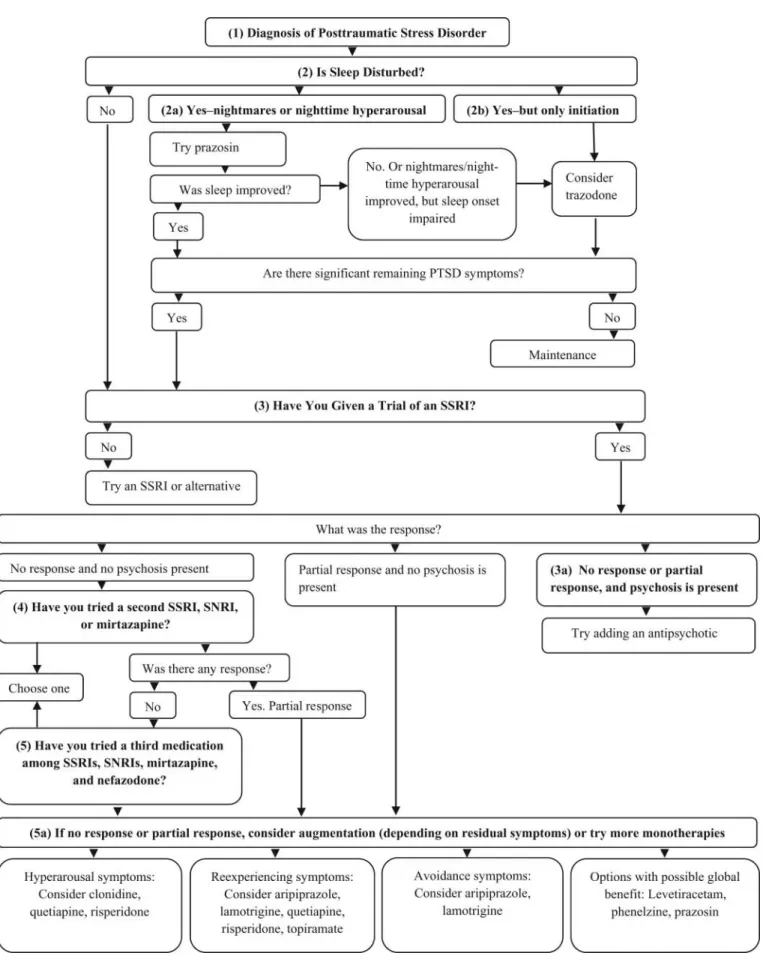
A summary and overview of the algorithm appears in Fig-ure 1. Each numbered “node” represents a decision point delineating patient populations ranging from treatment naive to highly resistant. The questions, evidence analysis, and reasoning that support the recommendations at each node will be presented below.
NODE 1: DOES THE PATIENT MEET DSM-IV CRITERIA FOR POSTTRAUMATIC STRESS DISORDER?
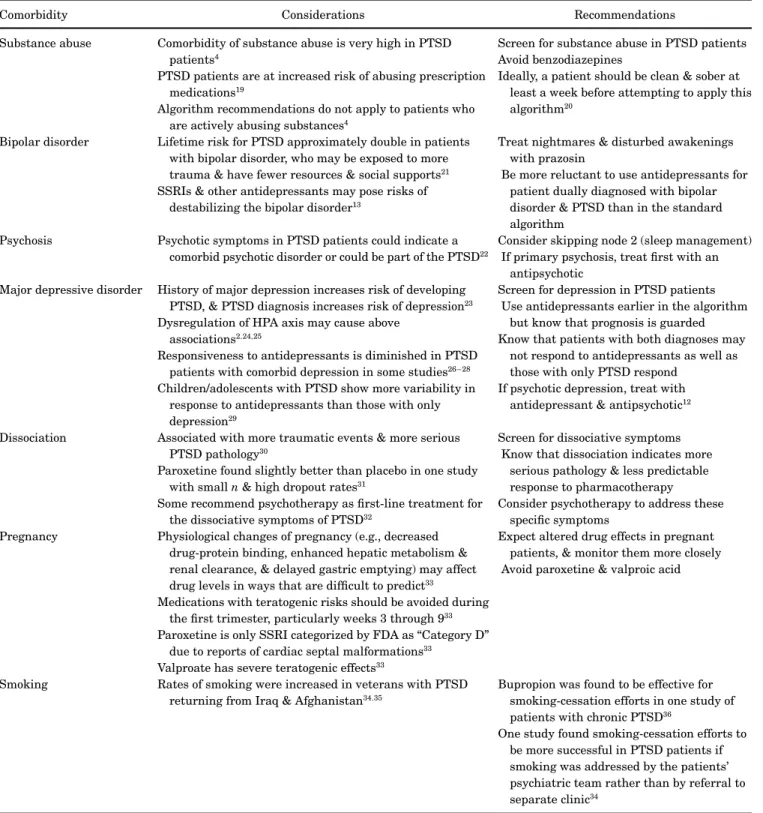
First, confirm a diagnosis based on DSM-IV criteria, and note any co-occurring psychiatric and medical symptoms and diagnoses that may be important, including substance abuse, depression, bipolar disorder, dissociative symptoms, anger, impulsivity, and psychosis. In treating female pa-tients of childbearing age, the potential impact of medication on pregnancy should also be considered. Table 1 provides a brief overview of treatment considerations for these situa-tions. A more thorough description of this important ma-terial is beyond the scope of this review, but the reader is encouraged to consult the associated references.
Table 1. Comorbidity and Other Features in PTSD and How They Affect the Algorithm
Comorbidity Considerations Recommendations
Substance abuse Comorbidity of substance abuse is very high in PTSD patients4
PTSD patients are at increased risk of abusing prescription medications19
Algorithm recommendations do not apply to patients who are actively abusing substances4
Screen for substance abuse in PTSD patients Avoid benzodiazepines
Ideally, a patient should be clean & sober at least a week before attempting to apply this algorithm20
Bipolar disorder Lifetime risk for PTSD approximately double in patients with bipolar disorder, who may be exposed to more trauma & have fewer resources & social supports21
SSRIs & other antidepressants may pose risks of destabilizing the bipolar disorder13
Treat nightmares & disturbed awakenings with prazosin
Be more reluctant to use antidepressants for patient dually diagnosed with bipolar disorder & PTSD than in the standard algorithm
Psychosis Psychotic symptoms in PTSD patients could indicate a comorbid psychotic disorder or could be part of the PTSD22
Consider skipping node 2 (sleep management) If primary psychosis, treat first with an
antipsychotic Major depressive disorder History of major depression increases risk of developing
PTSD, & PTSD diagnosis increases risk of depression23
Dysregulation of HPA axis may cause above associations2,24,25
Responsiveness to antidepressants is diminished in PTSD patients with comorbid depression in some studies26−28
Children/adolescents with PTSD show more variability in response to antidepressants than those with only depression29
Screen for depression in PTSD patients Use antidepressants earlier in the algorithm
but know that prognosis is guarded Know that patients with both diagnoses may
not respond to antidepressants as well as those with only PTSD respond
If psychotic depression, treat with antidepressant & antipsychotic12
Dissociation Associated with more traumatic events & more serious PTSD pathology30
Paroxetine found slightly better than placebo in one study with smalln& high dropout rates31
Some recommend psychotherapy as first-line treatment for the dissociative symptoms of PTSD32
Screen for dissociative symptoms Know that dissociation indicates more
serious pathology & less predictable response to pharmacotherapy Consider psychotherapy to address these
specific symptoms Pregnancy Physiological changes of pregnancy (e.g., decreased
drug-protein binding, enhanced hepatic metabolism & renal clearance, & delayed gastric emptying) may affect drug levels in ways that are difficult to predict33
Medications with teratogenic risks should be avoided during the first trimester, particularly weeks 3 through 933
Paroxetine is only SSRI categorized by FDA as “Category D” due to reports of cardiac septal malformations33
Valproate has severe teratogenic effects33
Expect altered drug effects in pregnant patients, & monitor them more closely Avoid paroxetine & valproic acid
Smoking Rates of smoking were increased in veterans with PTSD returning from Iraq & Afghanistan34,35
Bupropion was found to be effective for smoking-cessation efforts in one study of patients with chronic PTSD36
One study found smoking-cessation efforts to be more successful in PTSD patients if smoking was addressed by the patients’ psychiatric team rather than by referral to separate clinic34
FDA, Food and Drug Administration; SSRI, selective serotonin reuptake inhibitor; VA, Department of Veterans Affairs.
NODE 2: IS SLEEP DISTURBED?
Mounting evidence has implicated sleep impairment as a core symptom in PTSD and a primary source of distress and
dysfunction for patients with this disorder.37,38 It is
there-fore proposed that sleep problems be assessed initially and reassessed after each algorithm step if they persist and
sleep deprivation may exacerbate core daytime PTSD symptoms (hypervigilance, avoidance, reexperiencing), and
these symptoms may improve when sleep improves.39
An-other justification for treating sleep difficulties first is the availability of prazosin, a psychopharmacology option that targets impaired sleep in PTSD patients and that has demonstrated substantially larger effect sizes than medica-tions commonly thought to be effective for the general symp-tom profile in PTSD (SSRIs and serotonin-norepinephrine reuptake inhibitors [SNRIs]). To our knowledge, none of the previous guidelines or algorithms has placed sleep evaluation and treatment first, before the use of an SSRI.
Sleep disturbances common in PTSD include the fol-lowing: hyperarousal linked to difficulties initiating or maintaining sleep; trauma-related nightmares; awaken-ings without nightmare recollection; and prolonged sleep latency.40,41 Increased noradrenergic activity during sleep
and while trying to fall asleep is thought to be an important
mechanism.41−43Notably, SSRIs can sometimes exacerbate
these symptoms.39,44,45
Other causes of insomnia may contribute to the sleep difficulties of patients with PTSD. These include sleep ap-nea, restless leg syndrome, periodic limb movements of sleep, sleep hygiene issues, nicotine withdrawal, and medi-cal problems associated with sleep fragmentation (e.g., pain and nocturia). Caffeine, though frequently employed as a method of coping with daytime symptoms of sleep depriva-tion secondary to PTSD and other causes of insomnia, can at times become a major independent contributor. Assessment of these factors is essential in the sleep evaluation before applying the algorithm recommendations.
Node 2a
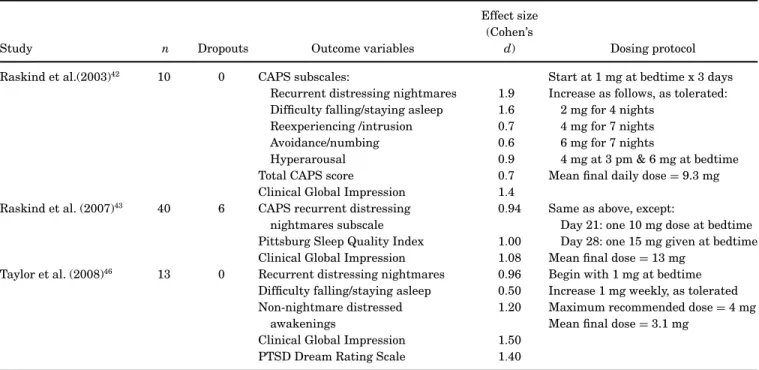
If the patient has PTSD-related nightmares or disturbed arousals, we recommend consideration of a trial of prazosin as the first-line medication treatment. Prazosin is a generic alpha-1 adrenergic antagonist previously used to treat hy-pertension and symptoms of benign prostatic hyperplasia. Murray Raskind and colleagues at the University of Wash-ington reasoned that alpha antagonists might be effective for the hyperarousal symptoms of PTSD. They selected prazosin for study as it is the only commercially available alpha-1 agent that crosses the blood-brain barrier, with the consequence that it would be the most likely to have activity in the brain. To date, they have conducted three randomized, placebo-controlled studies.42,43,46Efficacy was demonstrated
for trauma-related nightmares, overall quality of sleep, and, to some extent, general PTSD symptoms in patients with either military and civilian trauma. All studies found large effect sizes (Cohen’sd>1.0) on the various measures
of sleep impairment.These results are summarized in Table 2.
Prazosin was well tolerated in these studies. Hypotension risks were minimized by slowly titrating the dose upward over several weeks, allowing tolerance to the blood pressure effects to develop. Details of the dosing protocols are pro-vided in Table 2 and may be used as guidelines for clinical use. In the largest study, 2 of 20 (10%) dropped out due to subjective dizziness possibly related to blood pressure. Both studies by Raskind and colleagues42,43involved male
veter-ans, whereas the study by Taylor and colleagues46involved
civilian females. Though the reason is unclear, the dosage requirements for men and women differed, with the male veterans often requiring 10 mg or more, compared to the mean of 3 mg needed by women.
In a more recent observational study with mostly male veterans in a Department of Veterans Affairs (VA) setting (n =62), the mean dose of prazosin after initial titration was 3 mg, which increased to 6 mg after up to six years of
follow-up.47 This dose is much lower than in the two controlled
studies and may reflect clinicians’ unawareness of the doses used in those studies. The rate of dropout due to hypotension at these doses was less than 2%.
Infrequent side effects include dizziness, drowsiness, headache, constipation, loss of appetite, fatigue, nasal con-gestion, dry eyes, and priapism. Noncardiac chest pain has
occurred, but cardiac ischemia must be ruled out.48 If the
patient is hypertensive, coordination with the primary care clinician is advised.
Thompson and colleagues39 showed in a small
chart-review study of 22 combat veterans that disturbed awaken-ings without nightmare recollection were also significantly reduced (p<0.01) following treatment with prazosin. Al-though this finding needs to be confirmed in randomized, controlled trials (RCTs), the study suggests that it would be reasonable to employ prazosin in patients with these awak-enings.
The study data currently available for prazosin are lim-ited. It should be emphasized that the studies were mostly small, that they were done mostly by one group, and that the RCTs did not use monotherapy in previously untreated patients. Furthermore, dosing with prazosin is somewhat complex. Though the effect sizes with prazosin were large, it has been observed that small studies can generate higher ef-fect sizes; such results should be interpreted with caution.49
Nevertheless, we are proposing the consideration of prazosin for first-line use for patients with prominent nightmares and related sleep disturbances.
In support of this recommendation, we would first cite again the exceptional effect size relative to placebo of around 1.0 for significant improvement in sleep. As we will be showing later, all other medications, whether used as first-line (e.g., SSRIs) or as add-on interventions for
Table 2. Effect of Prazosin on Sleep and PTSD Symptoms in Three Placebo-Controlled, Randomized Trials
Study n Dropouts Outcome variables
Effect size (Cohen’s
d) Dosing protocol Raskind et al.(2003)42 10 0 CAPS subscales: Start at 1 mg at bedtime x 3 days
Recurrent distressing nightmares 1.9 Increase as follows, as tolerated: Difficulty falling/staying asleep 1.6 2 mg for 4 nights
Reexperiencing /intrusion 0.7 4 mg for 7 nights Avoidance/numbing 0.6 6 mg for 7 nights
Hyperarousal 0.9 4 mg at 3 pm & 6 mg at bedtime Total CAPS score 0.7 Mean final daily dose=9.3 mg Clinical Global Impression 1.4
Raskind et al. (2007)43 40 6 CAPS recurrent distressing 0.94 Same as above, except:
nightmares subscale Day 21: one 10 mg dose at bedtime Pittsburg Sleep Quality Index 1.00 Day 28: one 15 mg given at bedtime Clinical Global Impression 1.08 Mean final dose=13 mg
Taylor et al. (2008)46 13 0 Recurrent distressing nightmares 0.96 Begin with 1 mg at bedtime
Difficulty falling/staying asleep 0.50 Increase 1 mg weekly, as tolerated Non-nightmare distressed 1.20 Maximum recommended dose=4 mg
awakenings Mean final dose=3.1 mg
Clinical Global Impression 1.50 PTSD Dream Rating Scale 1.40 CAPS, Clinician-Administered PTSD Scale.
treatment-resistant patients, fail to achieve even close to this effect size for PTSD symptoms. Next, we have em-phasized the importance of sleep impairment in PTSD and the central role that it may have in the pathology of this disorder—and to that may be added the medical risks of leaving sleep problems untreated.50Finally, the acceptable
side-effect profile of prazosin and low dropout rate that has been found in the studies to date have a favorable appear-ance compared to the SSRIs, with their common unaccept-able sexual side effects and the high dropout rates that meta-analyses have noted.
Clearly, we need larger studies with prazosin, and we need to know if alpha-1 adrenergic agents can be ef-fective for the full spectrum of PTSD symptoms. Some studies are under way: one involving 320 veterans across 13 VA medical centers, and another studying 120 active-duty soldiers at Fort Lewis, Washington. These studies are expected to be completed in late 2012. In the in-terim, our view is that the current evidence is sufficiently strong to consider employing this agent as a first-line intervention.
Other alpha-1 blocking agents such as doxazosin (4–8 mg/day) and terazosin (3–7 mg/day) may have similar ef-fects on PTSD symptoms, according to brief reports of 12 and 20 patients, respectively.51,52 Although these products
apparently do not cross the blood-brain barrier, the inves-tigators propose that reduction of peripheral adrenergic
activity, including tachycardia, may secondarily attenuate central nervous system manifestations of hyperarousal. This hypothesis requires further investigation.
If sleep has improved to an acceptable level, the patient may be maintained on prazosin. The long-term observa-tional follow-up study of prazosin use in 62 patients for up to six years mentioned above found that almost 50% of pa-tients took prazosin until the end of the study period, usually
without adding other medications for PTSD.47
Node 2a, Continued: The Use of Trazodone
If prazosin fails to improve insomnia, or if it improves nightmares but without eliminating problems with sleep onset—and if other causes unrelated to PTSD have been addressed—then it may be worth considering a trial of low-dose trazodone (see Figure 1). It can be added or substituted, depending on whether prazosin is perceived to offer benefit. Trazodone, a sedating antidepressant, has shown some effectiveness for sleep difficulties in PTSD patients in
open-label studies.53 It was the most widely prescribed
medi-cation used for hypnotic purposes in the United States in 2005.54Excess sedation, dizziness, and orthostasis occur
fre-quently, and syncope occasionally. In males, priapism is a
more common; before the advent of medications such as sildenafil, trazodone was recommended for patients with erectile dysfunction.56
Trazodone has recently been described as an “ideal hyp-notic agent.” It has triple sleep-promoting actions (at the 5-HT2A, alpha-1, and H1 receptors), a short half-life, and a
low risk of dependence.57Although it has not received FDA
approval for primary insomnia, in a placebo-controlled RCT of trazodone 50 mg and zolpidem 10 mg in 278 patients with primary insomnia, the two medications had similar ef-ficacy at two weeks, and both had a low incidence of adverse effects. The study was sponsored by the manufacturer of zolpidem.58
If trazodone is used, side effects should be actively re-viewed and monitored. Since other medications can cause priapism, including prazosin and phosphodiesterase in-hibitors (e.g., sildenafil), combining trazodone with these agents demands extra caution regarding this side effect. The combination of trazodone and prazosin may also pro-duce additive problems with blood pressure. Trazodone is usually started at 50 mg at bedtime, with instructions to reduce to 25 mg if too sedating. The dosage of trazodone for sleep has ranged from 12.5 to 300 mg.
Node 2b
If the patient presents with difficulty falling asleep but not with nightmares or nocturnal hyperarousal, trazodone may again be considered after identifying and managing other contributing factors. Since prazosin is generally non-sedating, it may be less useful in this situation. At this early point in the algorithm, trazodone might work well enough to eliminate the need for further pharmacotherapy for a pa-tient with sleep-onset difficulties, but the evidence for its use in these circumstances is much less compelling than for the use of prazosin in patients with nightmares.
Trazodone may also be a good choice for patients who request a sleep aid for the short term while waiting for medications (e.g., SSRIs) targeting general symptoms of PTSD to take effect. Trazodone does appear to have effi-cacy for SSRI-induced insomnia and nightmares, as demon-strated in two small, placebo-controlled RCTs and some open-label studies.53,55,59,60If, during any subsequent steps
of the algorithm when SSRIs and SNRIs are employed, in-somnia/nightmares either fail to improve or emerge de novo, the addition of trazodone should be considered.
Other Medications for Insomnia?
If prazosin and trazodone are not effective or not tolerated in nodes 2, 2a, and 2b, other medications with hypnotic prop-erties may be considered—and are often used in clinical
practice. The authors did not find sufficient evidence to sup-port their use at this early point in the algorithm. We will comment briefly on several.
The tricyclic antidepressants (TCAs) imipramine and amitriptyline have some evidence of usefulness in PTSD.61,62
However, their side effects, especially at full doses, include anticholinergic, cardiac, and seizure risks. TCAs are also un-desirable in suicidal patients, who might overdose on them. Doxepin is a TCA that has recently been studied in large, placebo-controlled RCTs as a treatment for primary insom-nia in very low doses of 1–6 mg; one study included geriatric patients.63It was found to be safe and effective for transient
or chronic insomnia and received FDA approval as a hyp-notic in March 2010. It has been marketed at these doses under the new brand name Silenor, but it will still be avail-able as a generic capsule in doses as low as 10 mg. Its mech-anism of action at these doses appears to be histamine H1
blockade.63It may not provide any advantage over sedating
antihistamines such as diphenhydramine or hydroxyzine. Tolerance to the sedative effects of antihistamines has been shown to occur quickly, making them impractical for the
long-term use usually required in PTSD.64
Benzodiazepines (BZs) are frequently used by clinicians for sleep problems in PTSD. However, in the only
placebo-controlled RCT with a BZ (n=10), alprazolam demonstrated
no efficacy for core PTSD symptoms.65When used in PTSD
patients who have problems with substance use, BZs have
a high potential for abuse.19 As with the use of
antide-pressants in bipolar disorder, the use of BZs in patients with PTSD (with or without substance abuse) represents an area of significant difference between common practice and guideline recommendations.5,8,66 In both cases,
clini-cians may perceive that patients improve in the short term while not suspecting placebo effects and without anticipat-ing the potential for harm over the long term. BZs might be considered when a past history of clear response without significant abuse or misuse is present.4If the patient has a
history of substance abuse, one possibility is to prescribe a small quantity to test the patient’s ability to use appropri-ately.
Recently, eszopiclone, a GABA-A/benzodiazepine recep-tor agonist, was administered for insomnia associated with PTSD in 24 patients, mostly women with civilian trauma and no history of substance abuse. Efficacy was demon-strated over three weeks in this placebo-controlled RCT. Further research on the use of this class of agents is warranted.67
Quetiapine is also widely prescribed for sleep in PTSD. However, a review of reports of using quetiapine for sleep in various patient populations concluded that the benefits did not justify the risks and that it should not be used as a first-line treatment for insomnia.68Notably, the weight gain
doses.69,70 A recent observational study mentioned earlier
compared results with quetiapine and prazosin for PTSD in
a VA setting between 2002 and 2005 (n=62 on prazosin;
n = 175 on quetiapine).47 Quetiapine at a low mean dose
of 64 mg was much more likely than low-dose prazosin (3 mg) to be discontinued due to intolerable side effects (35%
vs. 18%, p= 0.008). Sedation and metabolic effects were
the most common reasons for discontinuing quetiapine. The authors’ concluding recommendation was that “prazosin be used first-line for treating nighttime PTSD symptoms in veterans.” One RCT of low to moderate doses of quetiapine monotherapy versus placebo for PTSD with prominent
in-somnia has been presented in poster format.71Some
uncon-trolled evidence also suggests that quetiapine be added to SSRI therapy after the latter has proved unsatisfactory.47,72
These reports will be discussed at a later node in the algorithm—in particular, when we consider augmentation strategies for SSRIs.
Other hypnotics (e.g., zolpidem) and other sedating psy-chotropic agents (e.g., gabapentin) are occasionally used in clinical practice for PTSD-related sleep problems, but the evidence base for them is too small to consider them in this algorithm as options for initial treatment.
NODE 3: HAVE YOU GIVEN A TRIAL OF AN SSRI?
If the patient does not have prominent sleep disturbance, or if prazosin or trazodone was not tolerated or only partially effective for residual PTSD symptoms such as hyperarousal, reexperiencing, and avoidance, the next step in the algo-rithm would generally be to consider an SSRI trial. The evi-dence supporting the use of SSRIs is weak, however, which is one reason that they are not at the top of this algorithm for patients with prominent insomnia. Also, as noted earlier, SSRIs often fail to treat insomnia associated with PTSD,
can sometimes aggravate it,59and can produce intolerable
sexual dysfunction.73
Several recent comprehensive reviews and
meta-analyses focus on using SSRIs for PTSD. The first was
a Cochrane Review.74 Overall, the authors found a
num-ber needed to treat (NNT) of about 5, which is reasonable. The calculated NNT was based on the number of patients across all studies found to be “responders” to medication. “Response” was defined for purposes of that review as hav-ing either a final rathav-ing of “much improved” or “improved” as measured by the Clinical Global Impression of Improvement (CGI-I) or, for a small number of studies, similar outcomes on the Duke Global Rating for PTSD or on other validated scales. The authors noted, however, that many of the stud-ies were flawed because of relatively small numbers, low ef-fect sizes, and short trial periods. Positive clinical outcomes were less convincing because of high dropout rates (27% to
40%).26,28,75,76Also, problems were also noted with
tolerabil-ity. A separate concern was that many trial subjects came from primary care populations that are “less sick” than pa-tients seen in a psychiatric setting.
Another major review of PTSD treatment data, published in 2008, was commissioned by the VA and conducted by an eight-expert panel from the Institute of Medicine of the U.S.
National Academy of Sciences.11This review examined data
from 14 SSRI studies conducted between 1991 and 2007. Seven of these studies were deemed to be “weakly informa-tive with respect to efficacy because of study limitations.” The committee reached the overall conclusion that “the ev-idence is inadequate to determine the efficacy of SSRIs in PTSD.”
Another detailed meta-analysis was conducted by the National Institute for Clinical Excellence (NICE), part of
the British National Health Service.7 That review, which
employed a more intensive and statistically rigorous anal-ysis than many qualitative reviews of this literature, also raised concern that SSRIs might be significantly less ef-fective than commonly thought for the treatment of PTSD. The NICE analysis examined data for the SSRIs citalo-pram, fluoxetine, paroxetine, and sertraline, as well as for amitriptyline, brofaromine, imipramine, mirtazapine, olan-zapine, phenelzine, risperidone, and venlafaxine. Data from unpublished studies were included when obtainable from pharmaceutical companies.
The NICE guidelines proposed definitions of levels of ef-ficacy that could be considered “clinically meaningful” or “clinically important.” Setting a conservative standard, an effect size compared to placebo of a standard mean differ-ence (SMD) of 0.5 or better was considered “clinically mean-ingful,” and an SMD of 0.8 or more was considered “clinically important.” They found that none of the SSRIs were bene-ficial for PTSD symptoms at an effect size of 0.5 and thus that the benefits were not clinically meaningful. Further-more, reported effect sizes were considered to be overesti-mated because of the use of intent-to-treat analyses with last-observation-carried-forward in studies that had high dropout rates.
Some details of the NICE data on individual SSRIs will be briefly reviewed.
Paroxetinewas evaluated in four RCTs, two of which were unpublished. One was a placebo-controlled study by Mar-shall and colleagues in 2001 that reported positive outcomes
using the Clinician-Administered PTSD Scale (CAPS).28
The specific PTSD symptom clusters of reexperiencing, hy-perarousal, and numbing/avoidance were included. Mar-shall and colleagues replicated those results in a second RCT in 2007.31
The NICE meta-analysis of these paroxetine studies
found that efficacy on the CAPS (effect size = 0.42) and
the 0.5 benchmark for clinical meaningfulness. In one
unpublished study, however—a maintenance trial carried out in patients who responded to paroxetine in a 12-week acute study and then were assigned to either placebo or con-tinuation of paroxetine for 24 weeks—there was no efficacy and actually a trend in favor of placebo on the CAPS (effect size=0.19). This surprising result suggests that something may have been irregular about the patient sample of this unpublished study.
Sertraline, the other FDA-approved SSRI, was studied in four large RCTs, two with positive results and two show-ing no efficacy. Three are published. Brady and colleagues75
showed positive drug-versus-placebo differences for three of four primary outcome measures (CAPS, CGI of change, and CGI of severity) in a population of mostly women with
sex-ual and other civilian trauma. Davidson and colleagues26
used a similar design and population, and found sertraline to be statistically superior to placebo using four primary
out-come measures. In the RCT by Friedman and colleagues,17
however, which involved chronically ill combat veterans, ser-traline produced no efficacy versus placebo as measured by the CAPS, CGI, or Impact of Event Scale. The fourth study, which is unpublished but was included in the NICE meta-analysis discussed earlier,7 found no efficacy—possibly
re-lated, it was specure-lated, to the chronicity of symptoms, gen-der, or the type of trauma that subjects endured.
In the NICE meta-analysis of these sertraline data,7 it
was found that sertraline was “unlikely” to be beneficial by self-report measures of the DTS or the Impact of Event Scale, because of very small effect sizes of 0.18 and 0.06, respectively. The effect size on the CAPS (0.26) was rated as “inconclusive.”
After evaluating the sertraline studies, licensing author-ities in England approved sertraline only for women with PTSD. In the United States the FDA approved sertraline for PTSD patients of both genders. However, the FDA imposed a fine on the corporate sponsor of the trial by Friedman and
colleagues17 for withholding the study’s negative data for
almost ten years.
Fluoxetinewas the subject of three major studies, with mixed results.77−79Two of the studies, which involved RCTs
of 12 weeks followed by a 24-week maintenance phase, showed fluoxetine to be effective and well tolerated for the initial 12-week period and for the relapse-prevention phase. Subjects were mostly combat veterans, though some had civilian trauma, and the overall effect size for fluoxetine was about 0.4. The largest study, however—involving 411 civil-ian women—found fluoxetine to be equivalent to placebo
on the CAPS.79An earlier, smaller study found no efficacy
for fluoxetine in older, chronically ill combat veterans.16The
NICE meta-analysis of fluoxetine, which looked at the above studies and some unpublished data, found the overall evi-dence for fluoxetine “inconclusive” on the DTS or CAPS
(ef-fect size=0.28). They found no efficacy (effect size=0.02) on the self-report measure of the Treatment Outcome PTSD Scale.7
Citalopram has been employed in one published RCT
and several open-label studies. In an open trial (n = 38,
mostly children and adolescents), citalopram improved to-tal CAPS-2 scores and subscale ratings for reexperiencing,
hyperarousal, and avoidance.80 English and colleagues81
conducted an eight-week, open-label study of citalopram in eight combat veterans. They found improvement on the CAPS, Hamilton Rating Scale for Anxiety, and CGI (among others) at week 4 but not at week 8. Tucker and colleagues76
conducted a double-blind study of citalopram versus
sertra-line versus placebo for PTSD patients (n=25, 23, and 10,
respectively). Using an intent-to-treat analysis, the authors found significant improvement in total symptoms of PTSD measured by the CAPS, as well as for all three symptom clus-ters and sleep time, in all three groups, including placebo.
Robert and colleagues82 published an open-label study
with escitalopram in 25 patients, finding significant im-provement for the C (avoidance/numbing) and CAPS-D (hyperarousal) subscales, but only trend improvement for the CAPS-B (reexperiencing) subscale.
Alternatives to SSRIs at Node 3
As noted, side effects such as sexual dysfunction may make SSRIs unacceptable to some patients. Options that might be considered at node 3 include bupropion, mirtazapine, and certain antipsychotics. Nefazodone also has few sexual side effects and some evidence of efficacy in PTSD, but due to the risk of liver toxicity, it is not considered until later in the algorithm. Venlafaxine has efficacy for PTSD, but it has sexual side effects, and for other reasons (to be discussed) it seems better as a second-line option.
Bupropion showed some promise in an open-label trial in 17 combat veterans, but those results were not confirmed in an eight-week, placebo-controlled RCT in 30 patients with mixed civilian and military trauma.83,84Some patients had
bupropion added to an SSRI. A trend toward better outcomes was evident in younger patients and those on monotherapy. More research is needed to determine if bupropion is effec-tive for PTSD.
The evidence for using mirtazapine is more favorable, al-though its desirability is limited by the risk of weight gain.
Bahk and colleagues85 published a small study (n = 15)
of the effectiveness and tolerability of mirtazapine in an eight-week trial in Korean patients with chronic PTSD. The dosing regimen was flexible, and patients were evaluated at four and eight weeks on several rating scales. At eight weeks, scores on all scales showed significant improvement. The medication was well tolerated. An open-label study by
Chung and colleagues in 2004,86 also in Korean veterans,
compared mirtazapine to sertraline. Both were well toler-ated and seemed effective.
Davidson and colleagues87 conducted a
placebo-controlled, double-blind RCT of mirtazapine in 29 patients, with impressive results. The dose ranged up to 45 mg per day for eight weeks, with the DTS used as the primary outcome measure. Rates of response were 65% and 20% for
mirtaza-pine and placebo, respectively (NNT=2.2). The medication
was well tolerated.
A long-term (24-week) study of mirtazapine was
pub-lished by Kim and colleagues in 2005.88Twelve of 15
par-ticipants completed the study. The results suggested that mirtazapine might be effective for continuation treatment.
Certain antipsychotics are another alternative to SSRIs at node 3. For example, as noted at node 2, some clinicians use quetiapine as a monotherapy, first-line treatment for the global symptoms of PTSD, although the published evidence to support this practice is minimal. As noted earlier, the side-effect risks are considerable, making the product appear unsuitable for early selection in the algorithm.
Node 3 Conclusion
The FDA has approved the SSRIs sertraline and paroxe-tine for the treatment of PTSD. Paroxeparoxe-tine has the best evi-dence of efficacy but has more problems with sexual dysfunc-tion, constipadysfunc-tion, sedadysfunc-tion, drug interactions, withdrawal
syndrome, and weight gain than the other SSRIs.66 The
pregnancy risk rating of D is an issue with women of child-bearing potential. Though the evidence supporting sertra-line is weaker, especially in male combat veterans, it has fewer side effects than paroxetine. It may be reasonable to consider non-FDA-approved citalopram: although the sub-ject of fewer and less rigorous studies in relation to PTSD, citalopram’s efficacy in other anxiety disorders and in major depression suggests that its benefit in treating PTSD might be comparable to that of other SSRIs. It was thought to have the fewest side effects within the SSRI class.89However, the
FDA just issued a Drug Safety Communication saying that the dose should not exceed 40 mg daily due to QTc prolon-gation risks.
According to most sources, an adequate trial of an SSRI for treating a PTSD patient would run 4 to 6 weeks, although sometimes up to 12 weeks are required.
Some patients show a partial response to SSRIs or a response that is limited to certain symptom domains in PTSD. Patients who partially respond but are still improv-ing should be continued until the benefits reach a plateau. If improvement stalls for two or three weeks, consider raising the dose or switching to another option (see node 4). Aug-mentation may be considered (see nodes 3a and 5a) if both clinician and patient are convinced that the partial
improve-ment was not a placebo effect and not attributable to other aspects of the treatment such as psychotherapy—which can be difficult to evaluate. Before proceeding with augmenta-tion, keep in mind the preceding discussion indicating that SSRIs outperform placebo in controlled trials much less than generally assumed. “Augmenting” a likely placebo ef-fect with another medication should be avoided. Also, aug-mentation introduces risks of increased side effects and drug interactions, reduced compliance due to complexity of regi-mens, and increased cost. In this algorithm, augmentation for partial response is considered most appropriate at nodes 3a and 5a. A switch is considered at node 4. See Figure 1.
Node 3a: Does the Patient Have PTSD-Related Psychosis?
PTSD-related psychotic symptoms are often present in
PTSD patients.90 Symptoms include phenomena referable
to the original trauma—for example, hearing soldiers scream, experiencing visual hallucinations of an enemy, or other combat-related themes. Unrelated—for example, paranoid—delusions can also occur. Delusions related to PTSD are non-bizarre and not associated with disorganized thought or flat or inappropriate affect, and are not related to substance abuse or withdrawal. They do not occur only
during dissociative flashbacks.91 Patients with these
psy-chotic symptoms can be considered one subgroup of PTSD patients for whom early augmentation may be justified. For this purpose, atypical antipsychotics are the medication of choice.
A preliminary study of risperidone (mean dose=2.5±
1.25 mg/day) as an augmentation of antidepressants in 40 combat veterans with chronic PTSD-related psychotic toms demonstrated a significant decrease in psychotic
symp-toms and an improvement in reexperiencing sympsymp-toms.92
A more recent, placebo-controlled RCT of risperidone aug-mentation for SSRI-resistant civilians with psychotic PTSD found improvement in the positive symptoms and paranoia
subscales of the Positive and Negative Symptom Scale.93
Open-label studies support the addition of quetiapine and olanzapine, but not the first-generation neuroleptic fluphenazine, for antidepressant-resistant psychotic com-bat veterans with PTSD.22,94,95 The quetiapine study
in-volved patients resistant to SSRIs and other medications who were admitted to an inpatient unit for the trial.22
With-out a placebo control it is impossible to exclude that the positive outcome (on all three dimensions of PTSD symp-toms) was due to the effects of hospitalization. We could not find any reports of aripiprazole augmentation in patients with PTSD-related psychosis.
Thus, if the patient does not respond satisfactorily to an antidepressant and has PTSD-related psychosis, it seems reasonable to add an antipsychotic. The evidence base points
to risperidone since it has one published, placebo-controlled RCT with favorable results. Quetiapine is widely used, has
some evidence as an augmentation in nonpsychotic PTSD,96
and might also be tried here. If the patient responds well to addition of an antipsychotic, and the SSRI had minimal benefit, gradually removing the SSRI should be considered to determine if it was necessary for the improvement.
NODE 4: HAVE YOU TRIED A SECOND SSRI, SNRI, OR MIRTAZAPINE?
If the patient is not psychotic and was nonresponsive to the initial SSRI chosen in node 3, several prime options are available: trying a different SSRI, an SNRI (especially ven-lafaxine), or an antidepressant with different dual actions (mirtazapine, evidence for which was discussed under node 3).
Venlafaxine was initially thought less likely to be ef-fective in PTSD because of its noradrenergic component, given that PTSD is characterized by excessive noradrener-gic activity.97,98An early RCT in combat veterans employing
the strong norepinephrine reuptake-blocking tricyclic de-sipramine (n=18) found no efficacy.99However, two large,
placebo-controlled RCTs have been conducted to evaluate the efficacy of venlafaxine ER in PTSD, and both demon-strated some efficacy.
One of these venlafaxine studies involved 329 outpa-tients, mostly female, from international sites.100Only 12%
had combat-related trauma. In this 24-week trial, CAPS scores improved five points more on venlafaxine than on
placebo (p=0.06). Mean daily maximum dose of
venlafax-ine ER was 222 mg. Reexperiencing and avoidance symp-toms improved, but hyperarousal did not, possibly due to the impact of the noradrenergic component of venlafaxine. Overall effect sizes were small and similar to those found in the short-term SSRI studies even after almost six months of treatment.
The second study was a 12-week comparison of venlafax-ine ER, sertralvenlafax-ine, and placebo in a similar population of 538 patients, with CAPS scores again used as the primary
out-come measure.101Remission rates at week 12 were 30% with
venlafaxine, 24% with sertraline, and 20% with placebo. Mean daily maximum doses with venlafaxine and sertra-line were 225 mg and 151 mg, respectively. Venlafaxine demonstrated statistically significant benefits over placebo (p<0.05), but again, effect sizes were generally small on secondary outcome measures (particularly patient satisfac-tion and quality of life). Sertraline response did not differ from placebo on most measures, consistent with the unim-pressive results with sertraline discussed earlier, in node 3. Both medications were similarly tolerated, with 10% attri-tion from side effects.
In a separate pooled analysis, the authors of these two studies attempted to differentiate response by gender and
by trauma type.102No consistent predictors were found
de-spite the opportunity presented by the large number of subjects. Venlafaxine offered no benefit for insomnia or nightmares.103
Thus, venlafaxine is a reasonable option as a second-choice pharmacotherapy, but the evidence base (despite the better response rate than sertraline in one study) seems to suggest no reason to prefer it to SSRIs for first-line use. It was ineffective for hyperarousal and sleep disturbance. Cardiovascular safety issues might affect certain vulnerable patients.101
NODE 5: HAVE YOU TRIED A THIRD MEDICATION AMONG SSRIs, SNRIs, MIRTAZAPINE, OR NEFAZODONE?
If two adequate monotherapy regimens among the SSRIs, SNRIs, or mirtazapine have been tried with no response to either, a third trial seems reasonable. The options may now include nefazodone, which is limited to third-line due to its liver toxicity. Fatal hepatotoxicity has been estimated
to occur in about one in 250,000 patients.104 Despite the
rarity of this complication, nefazodone was removed from European formularies in 2003 but remains available in the United States as a generic. The usual side-effect profile of nefazodone actually makes it rather desirable, given the lack of weight gain or sexual side effects, less sedation than trazodone, and low risk of priapism.
Evidence to support the efficacy of nefazodone for PTSD includes two RCTs (one placebo-controlled) and several open-label trials.105−107The placebo-controlled RCT, with 41
patients, found benefits on the CAPS, with an impressive effect size of 0.6 (p=0.04).107The other RCT was less
im-pressive: it was a comparator study of the effectiveness of ne-fazodone and sertraline in a 12-week, randomized, double-blind study involving 37 patients, using the CAPS, CGI, and DTS measures.108It found no significant difference between
groups on any outcome measure, including PTSD cluster symptoms, depression, sleep, and quality of life over time. In an analysis of six open-label trials involving 105 patients,
Hidalgo and colleagues109found that 46% had an
improve-ment of at least 30% on the CAPS.
Although small (n=10), a nefazodone study conducted
by Hertzberg and colleagues110,111 is of interest because
subjects were followed for three to four years. Originally
conducted as a 12-week study,110 long-term follow-up was
described in 2002.111 The dose was 400–600 mg, and ten
of ten participants were rated as “much improved” on the CGI at 12 weeks. After three years of monitoring, seven of ten were still “much improved,” while two were
minimally improved and one was worse than his original baseline.
Another interesting nefazodone case series involved 19 treatment-resistant combat veterans with PTSD. Zisook and
colleagues112administered doses of 100–600 mg per day for
12 weeks to patients who had failed three previous medica-tion trials. Improvements were noted in intrusive thoughts, avoidance, hyperarousal, sleep, sexual function, and depres-sion. The reduction in PTSD symptoms, as measured by the CAPS, was 32%. Side effects were typically mild and in-cluded headaches, dry mouth, and gastrointestinal distur-bance.
Node 5a: If No Response or Partial Response, Consider Augmentation (Depending on Residual Symptoms) or Try Other Monotherapies
If the patient failed to respond to the previous interven-tions, or if the response was partial, not explained by placebo effect, and still unsatisfactory in some respects, various options are available: mood stabilizers (gabapentin, lamotrigine, levetiracetam, tiagabine, topiramate, and val-proate), antipsychotics (aripiprazole, olanzapine, quetiap-ine, risperidone, and ziprasidone), anti-adrenergic agents (alpha-1 antagonists, alpha-2 blockers, and beta-blockers), and monoamine oxidase inhibitors (MAOIs). The supporting evidence ranges from unconvincing to fairly robust.
Some of these treatments appear useful for all of the symptom clusters of PTSD (avoidance, hyperarousal, reex-periencing), whereas others have evidence that they target one or more clusters. As noted earlier, the general principle is that one should try to minimize polypharmacy by crit-ically evaluating partial response and determining if im-provement was due to real effects of the medication or to a nonspecific response to other concomitantly administered treatments (including psychotherapy) or to changed circum-stances (including hospitalization). If either of the latter is suspected, consider switching rather than augmenting. It must be kept in mind, however, that the constellation of PTSD manifestations is currently thought to include multi-ple symptom domains with potentially different responses to medication, suggesting that some patients will need more than one agent. We will briefly review some of the options, considering strength of evidence and how the choice might be influenced by comorbid psychiatric or medical problems. Patient preference and formulary availability/cost will also affect choice. Medications are not listed in order of prefer-ence, and the list is not complete. The flowchart in Figure 1 organizes these medications by their target symptom clus-ters, consistent with the evidence to be described below.
Anticonvulsants. In a 1991, open-label trial ofvalproic acid
conducted at the Seattle Veterans Affairs Medical Center
involving 16 Vietnam veterans with PTSD, 10 improved,
mainly in symptoms of hyperarousal.113More recently, two
placebo-controlled RCTs of divalproex have been reported. The larger study, published in 2008, involved 85 U.S. mili-tary veterans. It was conducted at the Tuscaloosa Veterans Affairs Medical Center and supported by the manufacturer. The subjects received a mean dose of 2,300 mg daily, which produced a mean average plasma level of 82 mg/L.114For
to-tal CAPS scores and for two of the CAPS symptom clusters (reexperiencing, avoidance), the divalproex group showed slightly less improvement than the placebo group. For the hyperarousal cluster, the study and control groups had the same final scores. Depression, anxiety, and CGI of severity likewise showed no differentiation between the study and control groups, with the quantity of improvement similar to that seen in the open-label trial. The other RCT, pub-lished in 2009 and conducted at the Ralph A. Johnson VA Medical Center in Charleston, South Carolina, randomized 29 combat veterans to divalproex or placebo and also found no advantages for divalproex. In fact, the placebo group did significantly better for the avoidance symptom cluster and on changes in CGI of severity. Given that all three of these studies involved monotherapy with male combat veterans, it remains to be seen whether this drug might prove more effective for use with veterans in an adjunctive role or when used either as monotherapy or adjunctive therapy for civil-ian males or for females.
In a double-blind, placebo-controlled study of
lamotrig-inefor PTSD, 14 patients with different kinds of trauma
were randomized 2:1 to either lamotrigine or placebo.115
Over eight weeks the medication was titrated to a maximum of 500 mg per day (as tolerated). The study found nonsignif-icant, but possibly promising, improvement in reexperienc-ing and avoidance/numbreexperienc-ing symptoms with lamotrigine in comparison to placebo.
Two negative studies oftopiramatefor PTSD have been
published. In a double-blind, placebo-controlled RCT, 38 subjects with non-combat-related PTSD were studied on
doses up to 400 mg per day.116 Overall results showed a
nonsignificant decrease in total CAPS scores. However, the treatment group did have significant reductions in symp-toms of reexperiencing and on a secondary global outcome measure. The second study was a seven-week, double-blind, placebo-controlled RCT in 40 subjects, all male veterans in
a residential PTSD treatment program.117The
experimen-tal group received flexible-dose topiramate and had a high dropout rate (40% vs. 10% for placebo recipients). The au-thors found no significant treatment effects, but the high dropout rate may have been a factor in this outcome.
In an observational study, levetiracetam was
adminis-tered to 23 civilian patients with treatment-resistant PTSD, with the medication used adjunctively in 19 of those cases.118
instruments, including the CGI. At a mean dose of 2000 mg for 10 weeks, patients improved significantly on all mea-sures. Fifty-six percent responded, 26% remitted, and the medication was well tolerated.
One small, open-label study and one large, multicenter,
double-blind RCT oftiagabinehave been published. In the
former, 29 outpatients were treated for 12 weeks.119
Respon-ders (n=18) were later entered into a double-blind mainte-nance study and randomly assigned to continue on tiagabine or placebo. During the extension phase, the placebo-treated patients did not relapse, but the tiagabine patients made further improvements. In the RCT, 232 patients were ran-domized to tiagabine or placebo for 12 weeks.120The
exper-imental group received up to 16 mg daily of tiagabine. No efficacy was found for the anticonvulsant.
Antipsychotics. Risperidone has been evaluated in four small, placebo-controlled RCTs in nonpsychotic patients (civilians and veterans) with PTSD121,122 and in a recent,
larger-scale, placebo-controlled RCT studying 247 veterans
who had served in combat zones.123Many of these patients
were “treatment-resistant,” and in most, the risperidone was added to other medications. It seemed to have some efficacy on the reexperiencing and hyperarousal symptom clusters, although the effects were small. There was no effect shown for avoidance.
In two open-label trials, quetiapineadministered as an
adjuvant was shown to improve all three clusters of PTSD
symptoms and also sleep disturbance.72,124 One
double-blind, placebo-controlled RCT of quetiapine monotherapy in 80 patients with “chronic PTSD” (94% male, mean age
= 52) has been completed and is under review, but some
results were provided in a poster.96 Patients were all U.S.
combat veterans, and 30% had PTSD-related psychotic fea-tures. The doses ranged from 50 to 800 mg per day, with a mean of 258 mg. Reexperiencing and hyperarousal im-proved significantly (p=0.002 andp=0.03, respectively), but as with risperidone, the avoidance symptom cluster did not (p=0.56). A separate analysis was not provided for the psychotic and nonpsychotic patients. Thus, it is unclear if these results best apply here or at node 3a.
Aripiprazolehas been investigated in three uncontrolled studies of PTSD patients from mixed populations, including civilians and veterans. Medication was used as monother-apy in two of these studies125,126and as an adjunct to various
other treatments in the third.95Aripiprazole monotherapy
was found effective over 12 weeks in an open-label trial in 22
combat veterans at a mean dose of 13 mg.125 CAPS scores
improved (p= .01). Another case series of 32 civilian
pa-tients from Brazil experienced good results at a mean dose
of 10 mg daily.126 CAPS scores improved from a mean of
83 at baseline to 51 at the endpoint 16 weeks later (p =
.001). All studies reported significant improvement in
reex-periencing and avoidance/numbing, but marginal benefit for hyperarousal. Doses generally started at 5 mg.
Based on two small studies, the use of olanzapinehas
minimal support.127,128In a case seriesziprasidonewas
re-ported to be effective in nonpsychotic PTSD.129
The benefits of atypical antipsychotics must be weighed against their side effects, including weight gain, metabolic
syndrome, and cardiac risk.69 Ray and colleagues,130 in a
large epidemiological survey, found that patients treated with antipsychotics had about double the rate of sudden car-diac death compared to non-treated controls who had similar psychiatric diagnoses and metabolic syndrome symptoms. The relative risk ratio of death was 2.26 (95% CI, 1.88–2.72) with atypical antipsychotics, and it was dose related.130The
mechanism of death was thought likely to be arrhythmias, perhaps involving QTc prolongations. The authors of this study advised a “sharp reduction” in using these agents in populations for which the evidence of efficacy is limited. There is growing concern that antipsychotics should not be used as primary or adjunctive agents in treating PTSD un-less other options with comparable effectiveness and better safety have already been tried.131
Medications Targeting Central Noradrenergic Dysregluation.
Studies with the alpha-1 adrenergic antagonist prazosin were reviewed earlier. Alpha-2 agonists (clonidine and guan-facine) and beta-adrenergic antagonists have also been used for PTSD, with mixed results.
Two studies, one a placebo-controlled RCT, investigated
clonidine. Kinzie132studied the combination of imipramine
and clonidine in 9 traumatized Cambodian refugees with concurrent PTSD and major depression. PTSD global symp-toms (CAPS) improved in 6 patients, nightmares improved in 7 patients, and hyperarousal in 4 patients. Avoidance be-havior showed no improvement. In the RCT, 18 patients (17 female) with borderline personality disorder, all of whom had prominent hyperarousal symptoms on the CAPS, were treated with clonidine, up to 0.45 mg in divided doses, for
two weeks.133Most were on other medications, which were
maintained, but benzodiazepines were not allowed. Hyper-arousal improved significantly versus placebo (p=0.003), ir-respective of PTSD comorbidity. Sleep also improved across all subjects.
Guanfacine, a longer-acting alpha-2 agonist, was admin-istered in two recent RCTs, both with negative outcomes. Neylan and colleagues134treated 63 chronically ill U.S.
vet-erans with guanfacine at a mean daily dose of 2.4 mg at bed-time (achieved with weekly 0.5 mg increases) or placebo for eight weeks. Most were on one or more other medications. Analysis showed no separation of guanfacine and placebo on the CAPS, the Impact of Events Scale, general mood, or subjective quality of sleep. In a smaller study, Davis and
veterans for eight weeks while continuing their antidepres-sants. No improvement was shown on the CAPS or DTS.
Beta-blockers have not received substantial study in chronic PTSD. Several studies have explored the use of pro-pranolol immediately after a trauma to prevent the onset of PTSD.136−139 The findings are variable, and more research
is needed before this treatment can be recommended. Four RCTs have examined the short-term benefits of
monoamine-oxidase inhibitorsin PTSD due to a variety of traumas. Two involved phenelzine.62,140In the first, a
com-parison of phenelzine (n= 19), imipramine (n = 23), and
placebo (n =18), there was significant improvement with
both antidepressants compared to placebo, but more so with
the MAOI.62The dropout rate was about 50%, however,
mak-ing interpretation difficult. The other phenelzine study was
small and showed no benefit.140The other two MAOI trials
involved brofaromine, a non-selective MAOI not available in the United States.141,142Both found no efficacy.
COMPARISON TO OTHER ALGORITHMS AND GUIDELINE RECOMMENDATIONS:
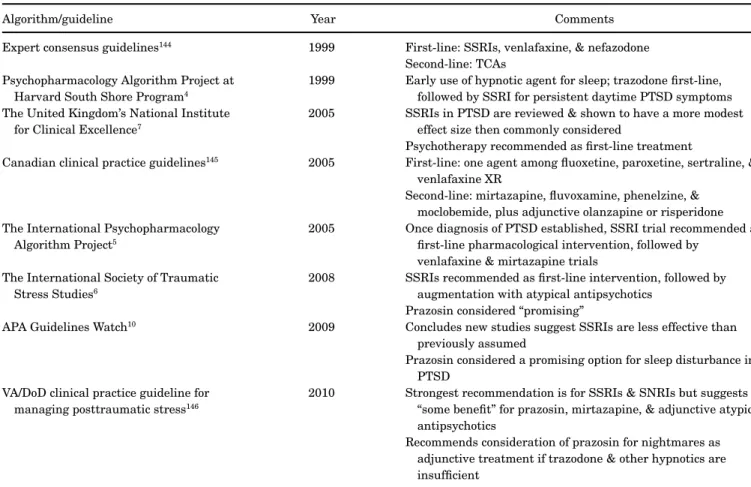
The present algorithm for selecting psychopharmacology treatment for PTSD differs in some respects from earlier versions of the PAPHSS algorithm and other published al-gorithms and guidelines. The 1999 version of the PAPHSS algorithm recommended initial use of trazodone for manag-ing sleep disturbance, includmanag-ing nightmares, with low-dose doxepin a second choice for patients not at high risk for
suicide, seizures, or cardiac events.4 That algorithm was
similar to the present version (and different from other guidelines at that time) in proposing efforts to manage PTSD-related sleep problems before the introduction of an SSRI or other antidepressants. The most recent (2005) NICE guidelines recommended paroxetine and mirtazapine
as first-line pharmacotherapy and discouraged sertraline.7
Similarly, the International Psychopharmacology Algorithm
Table 3. Characteristics of Other Algorithms and Guidelines for the Treatment of PTSD
Algorithm/guideline Year Comments
Expert consensus guidelines144 1999 First-line: SSRIs, venlafaxine, & nefazodone
Second-line: TCAs Psychopharmacology Algorithm Project at
Harvard South Shore Program4
1999 Early use of hypnotic agent for sleep; trazodone first-line, followed by SSRI for persistent daytime PTSD symptoms The United Kingdom’s National Institute
for Clinical Excellence7
2005 SSRIs in PTSD are reviewed & shown to have a more modest effect size then commonly considered
Psychotherapy recommended as first-line treatment
Canadian clinical practice guidelines145 2005 First-line: one agent among fluoxetine, paroxetine, sertraline, &
venlafaxine XR
Second-line: mirtazapine, fluvoxamine, phenelzine, & moclobemide, plus adjunctive olanzapine or risperidone The International Psychopharmacology
Algorithm Project5
2005 Once diagnosis of PTSD established, SSRI trial recommended as first-line pharmacological intervention, followed by
venlafaxine & mirtazapine trials The International Society of Traumatic
Stress Studies6
2008 SSRIs recommended as first-line intervention, followed by augmentation with atypical antipsychotics
Prazosin considered “promising”
APA Guidelines Watch10 2009 Concludes new studies suggest SSRIs are less effective than
previously assumed
Prazosin considered a promising option for sleep disturbance in PTSD
VA/DoD clinical practice guideline for managing posttraumatic stress146
2010 Strongest recommendation is for SSRIs & SNRIs but suggests “some benefit” for prazosin, mirtazapine, & adjunctive atypical antipsychotics
Recommends consideration of prazosin for nightmares as adjunctive treatment if trazodone & other hypnotics are insufficient
APA, American Psychiatric Association; DoD, Department of Defense; SNRI, serotonin-norepinephrine reuptake inhibitor; SSRI, selective serotonin reuptake inhibitor; TCA, tricyclic antidepressant; VA, Veterans Administration.
Project’s 2005 algorithm recommended an SSRI, SNRI, or mirtazapine, whereas the American Psychiatric Asso-ciation practice guideline (2004) also endorsed SSRIs as first-line treatment.5,143 However, the association’s March
2009 “Guideline Watch” for PTSD noted that more recent studies “suggest that SSRIs may no longer be recommended with the same level of confidence for veterans with
combat-related PTSD.”10It was also noted that prazosin is “among
the most promising advances,” though without any indica-tion as to when it should be used.
The 2008 assessment by the National Academy of Sci-ences made no psychopharmacology recommendations; it found the evidence “inadequate to determine efficacy” for all
classes of drugs reviewed.11 See Table 3 for a summary of
these and other algorithms and guidelines, with comments on their essential features.
FINAL COMMENT
This heuristic will serve clinicians by offering a summary and interpretation of the current evidence base pertinent to psychopharmacological practice. Nevertheless, despite de-velopment of this and other algorithms and guidelines, the treatment of PTSD remains a challenge for physicians and patients. More needs to be learned about the pathophysi-ology of this chronic, disabling condition and about the co-morbidities with which it often presents. Improvements in our understanding of genetics, the neurobiological under-pinnings of PTSD, and mechanisms related to each symptom cluster promise to add refinements to the current treatment strategy.
Declaration of interest:The authors report no conflicts of interest. The authors alone are responsible for the content and writing of the article.
REFERENCES
1. Germain A, Buysse DJ, Nofzinger E. Sleep-specific mech-anisms underlying posttraumatic stress disorder: integra-tive review and neurobiological hypotheses. Sleep Med Rev 2008;12:185–95.
2. Rasmusson AM, Vythilingam M, Morgan CA 3rd. The neu-roendocrinology of posttraumatic stress disorder: new direc-tions. CNS Spectr 2003;8:651–6, 665–7.
3. Wang Z, Neylan TC, Mueller SG, et al. Magnetic resonance imaging of hippocampal subfields in posttraumatic stress dis-order. Arch Gen Psychiatry 2010;67:296–303.
4. Osser DN, Renner JA, Bayog R. Algorithms for the pharma-cotherapy of anxiety disorders in patients with chemical abuse and dependence. Psychiatr Ann 1999;29:285–301.
5. Davidson J, Bernik M, Connor KM, Friedman MJ, Jobson KO, Yoshiharo K. A new treatment algorithm for posttraumatic stress disorder. Psychiatr Ann 2005;35:887–98.
6. Foa EB, Keane TM, Friedman MJ, Cohen JA. Effective treat-ments for PTSD: practice guidelines from the International Society for Traumatic Stress Studies. 2nd ed. New York: Guil-ford, 2008.
7. National Collaborating Centre for Mental Health. Post-traumatic stress disorder: the management of PTSD in adults and children in primary and secondary care. London; Leices-ter, UK: Gaskell and the British Psychological Society, 2005. 8. Bisson JI. Post-traumatic stress disorder. Clin Evid (Online).
2007 Aug 1; 2007. pii:1005.
9. Bisson J, Andrew M. Psychological treatment of post-traumatic stress disorder (PTSD). Cochrane Database Syst Rev 2005;(2):CD003388.
10. Benedek DM, Friedman MJ, Zatzick D, Ursano RJ. Practice guideline for the treatment of patients with acute stress dis-order and posttraumatic stress disdis-order. Arlington, VA: Amer-ican Psychiatric Publishing, 2009.
11. Committee on Treatment of Posttraumatic Stress Disorder, In-stitute of Medicine. Treatment of posttraumatic stress disor-der: an assessment of the evidence. Washington, DC: National Academies, 2008.
12. Hamoda HM, Osser DN. The Psychopharmacology Algo-rithm Project at the Harvard South Shore Program: an up-date on psychotic depression. Harv Rev Psychiatry 2008;16: 235–47.
13. Ansari A, Osser DN. The Psychopharmacology Algorithm Project at the Harvard South Shore Program: an update on bipolar depression. Harv Rev Psychiatry 2010;18:36–55. 14. Osser DN, Dunlop LR. The Psychopharmacology Algorithm
Project at the Harvard South Shore Program: an update on generalized social anxiety disorder. Psychopharm Rev 2010;45:91–8.
15. American Psychiatric Association. Diagnostic and statistical manual of mental disorders. 4th ed., text rev. Washington, DC: American Psychiatric Press, 2000.
16. van der Kolk BA, Dreyfuss D, Michaels M, et al. Fluox-etine in posttraumatic stress disorder. J Clin Psychiatry 1994;55:517–22.
17. Friedman MJ, Marmar CR, Baker DG, Sikes CR, Farfel GM. Randomized, double-blind comparison of sertraline and placebo for posttraumatic stress disorder in a Department of Veterans Affairs setting. J Clin Psychiatry 2007;68:711–20. 18. Strawn JR, Geracioti TD Jr. Noradrenergic dysfunction and
the psychopharmacology of posttraumatic stress disorder. De-press Anxiety 2008;25:260–71.
19. Chilcoat HD, Breslau N. Posttraumatic stress disorder and drug disorders: testing causal pathways. Arch Gen Psychiatry 1998;55:913–7.
20. Mason BJ, Kocsis JH, Ritvo EC, Cutler RB. A double-blind, placebo-controlled trial of desipramine for primary alcohol pendence stratified on the presence or absence of major de-pression. JAMA 1996;275:761–7.
21. Otto MW, Perlman CA, Wernicke R, Reese HE, Bauer MS, Pollack MH. Posttraumatic stress disorder in patients with