Completed projects final reports Farming Systems and Production Management
2010
Final report - SRDC project BSS286 :
Improved sugarcane farming systems
Salter, B
http://hdl.handle.net/11079/14062
FINAL REPORT – SRDC PROJECT BSS286
IMPROVED SUGARCANE FARMING SYSTEMS
by
B SALTER, MJ BELL, GR STIRLING, AL GARSIDE and PJ MOODY
SD10005
Contact:
Dr Barry Salter
Senior Research Agronomist
BSES Limited
PMB 57, Mackay Mail Centre. QLD. 4741. AUSTRALIA
Phone: +61 (0)7 4963 6802
Fax: +61 (0)7 4954 5167
BSES is not a partner, joint venturer, employee or agent of
SRDC and has no authority to legally bind SRDC, in any
publication of substantive details or results of this Project.
BSES Limited Publication
Copyright © 2010 by BSES Limited
All rights reserved. No part of this publication may be reproduced, stored in a retrieval system, or transmitted in any form or by any means, electronic, mechanical, photocopying, recording, or otherwise, without the prior permission of BSES Limited.
Warning: Our tests, inspections and recommendations should not be relied on without further, independent inquiries. They may not be accurate, complete or applicable for your particular needs for many reasons, including (for example) BSES Limited being unaware of other matters relevant to individual crops, the analysis of unrepresentative samples or the influence of environmental, managerial or other factors on production.
CONTENTS
Page No
SUMMARY ... i
1.0 BACKGROUND ... 1
2.0 OBJECTIVES ... 2
3.0 METHODOLOGY ... 3
3.1 Research ... 3
3.2 Extension and development ... 3
3.3 Quantification of adoption ... 4
4.0 RESULTS ... 4
4.1 Comparison of zero and conventional tillage on different row spacings (Tillage x Row spacing) ... 4
4.2 Determining Cultivar x Tillage effects ... 5
4.3 Exploring Cultivar x Row configuration interactions ... 6
4.4 Species x Tillage x Nitrogen trials at Bundaberg and Ingham ... 6
4.5 Soil biology experiments ... 7
4.5.1 Free-living nematodes as biological indicators ... 7
4.5.2 Impact of cropping history, tillage and nitrogen on the nematode community ... 7
4.5.3 Impact of management practices on suppressiveness to plant-parasitic nematodes ... 8
4.5.4 Crop rotation as a tool for managing lesion nematode (Pratylenchus zeae) ... 9
4.5.5 Chemical and biological properties of soils under different management systems ... 9
4.6 Extension and development ... 10
4.6.1 Co-ordination of farming system projects ... 10
4.6.2 Grower reference panel ... 10
4.6.3 Industry wide meetings May 2010 ... 11
4.7 Adoption of farming systems ... 11
4.8 Successes and lessons ... 13
5.0 OUTPUTS ... 14
6.0 EXPECTED OUTCOMES ... 14
7.0 FUTURE NEEDS AND RECOMMENDATIONS ... 15
8.0 PUBLICATIONS ARISING FROM THE PROJECT... 18
8.1 Scientific papers published from BSS286 ... 18
8.2 Additional papers published from SYDJV Phase 2 ... 18
9.0 ACKNOWLEDGMENTS ... 20
10.0 REFERENCES ... 20
11.0 APPENDICES ... 22
APPENDIX 1 – SOIL BIOLOGY STUDIES ... 23
APPENDIX 2 – COMMENTS FROM GROWER REFERENCE GROUP ... 54
SUMMARY
This project – Improved Sugarcane Farming Systems (BSS286) - was designed to build on the outcomes of Phase 1 and 2 of the Sugar Yield Decline Joint Venture (SYDJV). Thus its main focus was on issues that had been identified in the SYDJV that were not fully researched in the earlier programs and/or required further development.
In Phase 2 of the SYDJV it was demonstrated that a ‘new’ sugarcane farming system based around legume breaks, controlled traffic, minimum tillage and residue retention could be developed. However, the impact of the ‘new’ farming system, although very likely to be positive in terms of productivity, profitability and sustainability, had not been fully quantified. Further, there needed to be a more robust demonstration of it’s suitability across different environments and some of the components required further research. For example, although it had been shown that the contribution of legume nitrogen was likely to be substantial, and permit a reduction in the amount of inorganic nitrogen applied to sugarcane, there was little information on nitrogen accumulation and loss mechanisms under different management systems. In addition, soil compaction was likely to be a major issue when heavy machinery (> 20 t) was used with non-matched wheel and row spacing, yet compaction was not necessarily accepted by the farming community as detrimental to productivity. The significance of soil compaction needed to be demonstrated. Further, if compaction was demonstrated to adversely affect cane yields it would be necessary to match wheel spacing on heavy machinery with row spacing which would likely mean the widening of row spacing to match wheel and row spacing. Concerns were raised that productivity would be reduced if row spacing was widened. Finally, recent research in soil biology during Phase 2 had indicated that the return of sugarcane trash, an inherent component of the green cane trash blanket (GCTB) harvesting system, was providing substantial biological benefits to the farming system and this needed to be further explored. Notwithstanding the above research initiatives, one of the major activities of the current project was the development and extension of the SYDJV Phase 1 and 2 outputs. T he research team was very much involved with BSES extension officers and FutureCane staff in extending these outputs.
Species x Tillage x Nitrogen Experiments
In tackling the issue of the robustness of the ‘new’ farming system and quantification of the effect of individual components, two major experiments were established in the southern (Bundaberg) and northern (Ingham) cane growing regions. These involved taking long-term sugarcane land that was under matched wheel and row spacing and applying three basic break treatments for a period of 6-8 months. The break treatments involved sugarcane monoculture, maize and soybean. When cane was re-planted, the break treatments were split to two tillage treatments (tilled and direct planted), which were further split to two nitrogen rates (0 and 150 kg/ha in the plant crop followed by a further split to 0 and 150 kg/ha in the first ratoon).
ratoon crops compared with 20 and 0 kg/ha, respectively, produced first ratoon yields of 105 and 75 t/ha, respectively.
The results from the Bundaberg experiment were less clear, as they were confounded by poor cane establishment of the direct drilled plots in the continual sugarcane treatment. Further, there were indications that large populations of parasitic nematodes across the entire experiment may well have masked potential responses.
The main point to emerge from both experiments was the fragility of mineral nitrogen to environmental conditions. There seems little doubt that de-nitrification under flooded conditions during the wet season at Ingham and leaching at Bundaberg resulted in considerable losses of mineral nitrogen. The nitrogen dynamics from these experiments are discussed in detail in Bell et al. (2010). Overall, these experiments have emphasized the complexities of the sugarcane farming system and, in particular, the interaction between the environment and the usefulness of large stores of mineral nitrogen. It is now obvious that the realization of benefits of large quantities of N contributed by legumes and/or N fertilizer will be very environment dependent. This area warrants further research and development of strategies to best manage N in different environments.
Tillage and Compaction Experiments
Experiments involving row spacing and tillage that were established in Mackay and Ingham in SYDJV Phase 2 in 2001 were continued into this project where they were modified to quantify the adverse effects of soil compaction on productivity. In each experiment sugarcane growth on recently prepared land was compared with growth on land that had not been cultivated for the previous 5 years. During that 5-year period the land had been traversed some 20 times with harvesting and haul-out vehicles that were not fitted with guidance.
Tillage (removing compaction) increased cane yield in the plant crops by 57% (141 vs 90 t/ha) at Ingham and 14% (128 vs 112 t/ha) at Mackay. Measurements of soil strength at Ingham with the hydraulic cone penetrometer showed more severe compaction that could be related to the greater difference in yields. Interestingly, there were no yield differences between the tillage treatments in the first and second ratoons in either experiment, indicating that compaction returned to the tilled treatment after the first passage of the harvester and haul-out. Tillage treatments were also implemented in three other trials. No difference between tilled and un-tilled treatments were found in two of these trials (Bundaberg and Ingham Species x tillage x N) and in the third there was a significant advantage in not tilling (Ingham variety x tillage trial). Overall this leaves a variable outcome to tillage treatments most likely associated with different environments (soil, climate, etc.) at each site. This highlights why the principle of reduced tillage was recommended rather than a specific ‘recipe’.
Row Spacing Experiments
Row spacing experiments were necessary to show whether moving to 1.8 m row spacing (the minimum for controlled traffic) was likely to result in yield penalties. A considerable amount of row spacing research was carried out in Phase 2 of SYDJV and has been reported in Garside and Bell (2009a, b) and Garside et al. (2009b). This research indicated that there was substantial flexibility in row spacing and that a movement from the traditional 1.5 m spacing to 1.8 or greater would not adversely affect yield providing dual rows were adopted. In high input situations 1.8 m single rows would also be quite suitable.
Trials in this project confirmed the response found during SYDJV Phase 2. Three trials (Bundaberg variety by row spacing; Mackay tillage x row spacing; Ingham tillage x row spacing) contained a row spacing treatment and no significant difference among yields on the different row spacings was present at any of the three sites.
Research in this project also focused on whether variety influenced the response to row spacing. No interaction was found and this work was reported in detail in Garside and Bell (2009b) and Bell et al. (2007). A further SRDC project BSS296 was also initiated to explore this issue further.
Soil Biology Experiments
The soil biology program was largely based around the use of nematodes (both parasitic and beneficial) as biological indicators and their response to various breaks, organic matter inputs, nutrients and tillage. Identifying the host status of different crop species was also investigated. Some of the major findings included:
Populations of free-living nematodes increase rapidly when high levels of soybean
residue are incorporated into soil.
There seems to be a close relationship between the population of free living
nematodes and nitrogen mineralization. Possibly further development of this relationship could lead to free-living nematodes being used as an indicator of N mineralization.
There were general indications from the two large scale species x tillage x nitrogen
experiments that nematode responses were similar at both Bundaberg and Ingham with some specific exceptions. In particular, populations of Xiphenima (dagger nematode) at Bundaberg were substantially enhanced by a soybean break and it is thought that the high population of these may have masked break, tillage and N effects in the plant cane crop. Conversely, Xiphenima was not recorded in the Ingham experiment. Although soybean tended to substantially reduce the populations of lesion and root knot nematode, their populations tended to resurge more rapidly following soybean than following sugarcane. Free-living nematodes were enhanced by tillage and initially by soybean as opposed to sugarcane, although this latter effect was later reversed.
Multiplication of lesion nematode (Pratylenchus zeae – the most important in
sugarcane system) is enhanced by tillage and suppressed in non-disturbed soils. The exact mechanisms by which this occurs are not known and require further research.
Mulching with sugarcane trash was shown to reduce the populations of both root
Development and Extension
A very important aspect of this project was the enhanced development, extension and communication initiatives that were continually in focus. Through publications, field days and group meetings we were able to effectively promote the outcomes of the SYDJV which are of major significance to the future of a sustainable sugarcane cropping system. In particular the collaboration developed with the QDPIF/BSES FutureCane program was a major positive aspect. The annual meetings that permitted frank and open discussion of issues helped focus both groups. We were able to report on the advances in the research program, while they could advise us on what was happening in the industry, and most importantly, where we needed to focus to better facilitate adoption of the ‘new’ system.
The grower reference group attached to this project also provided valuable input into the program. All members contributed very openly and precisely and clearly told us if they thought we were going in the wrong direction. They provided useful reports after every meeting and always displayed enthusiasm for their role.
Final Overview
1.0 BACKGROUND
The Australian sugar industry was on a productivity (sugar yield per harvested hectare) plateau, known commonly as yield decline, for at least a 20 year period from 1970. The Sugar Yield Decline Joint Venture (SYDJV) was established in 1993 as a multi-organisational (SRDC, BSES, CSIRO, Qld Government Departments of Primary Industries and Natural Resources) and multi-disciplinary (agronomy, soil chemistry, soil physics, soil biology and agricultural engineering) research and development program to identify the cause/s of and develop solutions to the problem of yield decline. Prior to the establishment of the SYDJV, BSES was the sole research and development organisation tackling the issue of Yield Decline in the Australian sugar industry. BSES believed that Yield Decline was caused by root pathogens and had focussed their research efforts on identifying the pathogens with the ultimate aim of breeding resistant cultivars. Although there was little doubt that root pathogens were involved in yield decline, researchers in the SYDJV suspected that their effects were being exacerbated by other deficiencies in the sugarcane farming system and, therefore, took a much broader approach to researching the issue.
The SYDJV consisted of 2 phases. Phase 1 from 1993 – 1999 (summarised by Garside 1999) was primarily an identification and understanding period. Research showed that sites under long-term sugarcane monoculture had a range of degraded soil properties (chemical, physical and biological). The monoculture and how it was practised contributed greatly to the degraded condition of the soil. Phase 2 (summarised by Garside and Bell 2006) focussed on how these soil deficiencies (poor soil health) may be improved. The approach taken was to look at how farming practices may be changed and thus create an environment that would result in improved soil health. Practices such as including legume breaks (which reduced sugarcane-specific pathogens and replaced at least some inorganic nitrogen fertiliser), controlling traffic (which removed compaction caused by heavy machinery from the cropping zone by isolating traffic and crop zones) and minimum/zero tillage (which reduced soil disturbance and limited the loss of organic matter by keeping the green cane trash blanket (GCTB) in place) became main research initiatives. Although some research had been carried out on all of these issues during Phase 1, little attempt had been made to integrate them in the farming system. In Phase 2 they were researched more thoroughly and integrated to form a ‘new’ sugarcane farming system. The second phase of the SYDJV ended in June 2006.
During the second phase of the SYDJV various planned extension activities were commenced to demonstrate the benefits and encourage adoption of the principles of the ‘new’ farming system. These extension initiatives included the FutureCane program, SRDC/QDPIF funded projects such as the Central region farming systems projects (BSS269 and BSS306) and general extension activities by BSES. BSS286 (the current project) followed the second phase of the SYDJV. It allowed the core participants in the SYDJV to continue the development of the new farming system as well as provide technical support for the various extension programs that were underway.
2.0 OBJECTIVES
The project sought to:
1. Promote further development and adoption of the new farming system developed by the SYDJV.
2. Provide technical support to related extension/development projects such as FutureCane, Back on Track, New Farming systems for Central Queensland (BSS269), and Canegrub management in the new sugarcane farming systems (BSS266)
3. Co-ordinate activities of these groups.
4. Continue research activities to fill knowledge gaps necessary for better adoption of the new farming system.
5. Continue large-scale, commercially orientated, farming-system experiments underway in SYDJV Phase 2.
As detailed below, progress was made with all the objectives through a number of specific activities in research, development and extension.
A continuation of trials from SYDJV phase 2 allowed experiments to be continued at sites where treatments had been in place for a number of years. A continuation of long-term experiments is the only way that changes to farming systems can be validated. Improvements to the soil’s condition occur over a much longer time frame than the average three year project cycle and the long term funding commitment to the SYDJV has been integral in its ability to explore soil processes.
Within objectives 1, 2 and 3 the following activities were carried out:
Reporting of research results from experiments in Phases 1 and 2 was continued
with a substantial number of papers being published. These are detailed later in the report.
The project co-ordination role was carried out through regular meetings,
teleconferences and e-mail exchange with BSES and QDPIF extension staff, FutureCane, grower meetings, and publications in the BSES Bulletin and Australian Canegrower magazine. The project also had a grower advisory group which met five times to review progress and advise on any changes that needed to be made to enhance the project’s relevance to cane growers. A high priority of BSS286 was interaction with projects and operatives listed in objective 2 above. In particular the project made a significant contribution to the FutureCane program with 2-3 day meetings every year to discuss results, obtain feedback and plan future activities. The FutureCane program was a major extension vehicle for the SYDJV outputs.
Within objectives 4 and 5 the following activities were carried out:
Two large scale multi-disciplinary experiments combining all aspects of the ‘new’
manage nitrogen cycling in sugarcane farming systems. The main results are available in Bell et al. (2010).
Two large scale long-term farming system experiments established during Phase 2 at
Ingham and Mackay were continued and modified, mainly to demonstrate the adverse effects of soil compaction on productivity. Results for the plant and first ratoon crops are presented in Garside et al. (2009a)
Further studies into changes in soil biology with different cropping practices were
carried out in a number of experiments. These were stand alone experiments on specific soil biology issues in addition to data collected from the large scale field experiments discussed above. Some of results of this work have been formally published or are in press viz. Stirling et al. (2010a,b). Further, a review paper on the impact of farming systems on soil biology and soil borne diseases which covered much of the soil biology work carried out during Phase 1 and 2 of the SYDJV was published in 2008 (Stirling 2008).
Some initial studies into cultivar x row spacing were carried out as it was essential
that if controlled traffic was to be adopted, current machinery dictated that it had to be on row spacings of 1.8-1.9 m. It was necessary to ensure that a widening of row spacing from 1.5-1.8 m did not come with a yield penalty (Bell et al., 2007) and that current cultivars were suitable for these spacings. This research was later expanded in a subsequent SRDC/QDPIF project (BSS296).
3.0 METHODOLOGY
3.1 Research
A number of agronomic, farming system and soil biology experiments were conducted. These were designed to further the understanding of the impact of the new farming system on cane production and soil physical, chemical and biological properties. In many cases trial sites with a history of controlled traffic either from SYDJV Stage 2 or from early adopters of the new system were used. These experiments were detailed above under objectives 4 and 5.
3.2 Extension and development
The project group contributed to the extension and development of the new farming system by interacting and guiding the focus of the FutureCane group as well as other new farming system projects. Formal meetings were held with QDPIF/BSES FutureCane and industry extension officers on a number of occasions. These meetings were used to keep the extension teams updated on the projects latest results and also allow the extension groups to provide feedback to the researchers on potential issues of concern with the new farming system.
A grower reference panel was formed at the beginning of the project. The members of this panel were from different cane production regions and were chosen as they were innovative early adopters of the new system. Meetings were held with this group throughout the project. This was a valuable process where researchers were able to gain grower feedback on new farming system issues.
Further, the project team participated in numerous local industry meetings throughout the duration of the project where trial results were discussed.
The research staff published much of the research conducted in the project. This included peer reviewed scientific journals (see section 8) as well as general industry publications (newsletters, etc.).
3.3 Quantification of adoption
Adoption of the new farming system components were quantified during SYDJV Phase 2. This process was continued as part of BSS286. Data consisted of estimates obtained from FutureCane agronomists, local productivity boards and extension officers located in each region.
4.0 RESULTS
In this section a brief description of each experiment is provided as well as a summary of the major outputs. Detailed accounts of the work conducted can be found in the appendices.
4.1 Comparison of zero and conventional tillage on different row spacings (Tillage x Row spacing)
Two experiments were established on sites previously used during SYDJV Stage 2. At both sites, cane was either planted back into permanent beds or was planted into newly formed beds following multiple tillage operations. This occurred on three row configurations at each site (1.5 m single, 1.8 m single and 1.8 m dual row). Differences in growth, yield and soil properties were assessed.
The results from these experiments were presented at the Australian Society of Sugar Cane Technologist (ASSCT) conference in 2009 (Garside et al. 2009a). This paper is included as an appendix to this report.
Additional yield data from second ratoon crops, not reported in Garside et al. (2009a), was collected during 2009. These data (Tables 1 and 2) did not change the conclusions presented in the paper. No significant difference was found between tillage treatments and row configurations in the second-ratoon crop at either site.
Table 1 - Effect of tillage on second ratoon yield components at Ingham and Mackay
Tillage
Ingham
Mackay
Cane
yield
CCS
Sugar
yield
Cane
yield
CCS
Sugar
yield
No Till
124.9 16.7 20.8 102.6 17.2 17.7
Till
117.8 16.5 19.5 108.3 17.1 18.5
Level of
signif.
Lsd 5%
nsd nsd nsd nsd nsd nsd
Table 2 - Effect of row spacing on second ratoon yield components at Ingham and Mackay
Tillage
Ingham
Mackay
Cane
yield
CCS
Sugar
yield
Cane
yield
CCS
Sugar
yield
1.5 S
121.6 16.7 20.3 104.3 17.2 17.9
1.8 S
120.6 16.6 19.9 105.1 17.2 18.1
1.8 D
121.9 16.6 20.2 107.0 17.0 18.2
Level of
signif.
Lsd 5%
nsd nsd nsd nsd nsd nsd
nsd – no statistically significant difference (P>0.05)
Conclusions
Compaction reduces sugarcane yield
GPS guidance systems will improve the effectiveness of widening row spacings
Planting sugarcane using zero-tillage resulted in a yield reduction in the plant crop
largely because of compaction caused during the previous experiments at these sites when no GPS guidance was available. However, in the following ratoon crops yields were the same for both zero and conventional tillage
Despite the yield reduction zero-tillage treatments were more profitable for the
grower
Reducing tillage is a viable option for the industry but minimum tillage options need
further investigation
Cane yield was maintained on different row configurations
4.2 Determining Cultivar x Tillage effects
An experiment was established near Ingham to determine whether tillage had an effect on cane yield and to determine whether the response was variety dependant. This work was conducted in order to gain further information on the effect of zero-till farming systems on cane growth. The experiment was located on a heavier textured soil than the two experiments described in section 4.1.
Results from this work are to be presented at ASSCT in 2010 (Park et al. 2010). This paper is included as an appendix to this report.
Conclusions
The zero-tillage treatment produced significantly more yield and was more profitable
than a treatment that was tilled twice
Tillage reduced soil moisture in dry conditions but also exacerbated waterlogging
during wet conditions
Tillage promoted stool tipping, due to the loss of soil structure
Varieties KQ228A and Q208A responded to tillage in a similar manner
4.3 Exploring Cultivar x Row configuration interactions
Initial research work conducted during SYDJV Phase 2 (Garside et al. 2006a) showed that the performance of a cultivar changed significantly when it was grown on different row configurations. Potentially, this could have created an issue with adoption of the new farming system as selection of cultivars was taking place on the ‘old’ conventional farming system and performance of cultivars on wider row configurations was mostly unknown. In response to this issue, an experiment was established at Bundaberg where four cultivars with differing growth habits were grown on five row configurations. A SRDC/QDPIF funded project was also established to investigate this issue further (BSS296).
Results from this work were presented at ASSCT in 2007 (Bell et al. 2007). This paper is included as an appendix to this report.
Conclusions
Sugarcane has the ability to produce similar yields on a wide range of row
spacings/configurations
Cultivar performance did not change significantly on different row configurations
Cultivars achieve their final yield via different growth pathways (stalk numbers, size,
growth rates)
Cultivars are unlikely to constrain adoption of the new farming system
4.4 Species x Tillage x Nitrogen trials at Bundaberg and Ingham
Research by the SYDJV has shown the benefits of introducing a legume break into the crop cycle, reducing tillage and controlling traffic. A legume rotation crop reduces the need for fertiliser nitrogen, provides some control of sugarcane pathogens and improves crop yields. However, the longevity of these effects required further work. More recent studies of new farming systems combining the elements of reduced tillage, controlled traffic and fallow cropping have highlighted the interactions of these system changes on different soil properties that impact crop performance. For example, soil N dynamics are significantly altered as the amount of tillage is reduced (Bell et al. 2006a; Garside et al. 2006b), with significant implications for N management. In a similar fashion, pathogen incidence and biological pathogen suppression can be influenced by different combinations of crop rotation and residue management (Bell et al. 2006b; Pankhurst et al. 2005; Stirling et al. 2005).
Field experiments at Ingham and Bundaberg in which combinations of rotation crops (ploughout-replant versus a short fallow of soybeans or maize), tillage prior to cane re-establishment and N fertiliser applications were assessed in plant and first ratoon cane crops. The experiments were established to further investigate the interaction of the various cropping system components, with particular emphasis on crop yields and soil and crop N dynamics. The effects of the cropping system on soil biology are reported in section 4.5.2.
Results from this work are to be presented at ASSCT in 2010 (Bell et al. 2010). This paper is included as an appendix to this report.
Conclusions
There was a positive response to soybeans at Ingham but not at Bundaberg, perhaps
because the latter site had a wider range of pathogenic nematode species, not all of which declined during the soybean fallow period
There was no residual benefit of the legume break beyond the plant crop at either
site
High soil mineral N (fertilizer or legumes) is vulnerable to loss. The major loss pathway at Ingham was denitrification whereas leaching occurred at Bundaberg
Denitrification reduced the residual nitrogen benefit after the soybean fallow at
Ingham
Despite large difference in crop nitrogen uptake at the two sites, yields were similar
4.5 Soil biology experiments
4.5.1 Free-living nematodes as biological indicators
Since free-living nematodes feed on bacteria, fungi, protozoa, algae or small invertebrates and their populations respond to changes in the availability of their food sources, the number and type of nematodes in soil provides a good indication of what is happening within the soil food web. Nematodes also contribute to the mineralisation of nitrogen and other nutrients, as they feed on the bacteria and fungi that decompose organic matter. Their numbers may therefore provide a good surrogate measurement of the rates of mineralisation in soil.
The results of three studies conducted to investigate this issue are summarised below and detailed in Appendix 1.
Conclusions
Fungal-feeding nematode populations predominate in bare or weedy fallows because
in the absence of organic inputs, recalcitrant carbon compounds (which are primarily utilised by fungi) are the main food source available to soil microorganisms
Bacterial feeding nematodes increase to very high levels after legume residues are
incorporated, indicating an intense period of biological activity as residues decompose and nitrogen is mineralised from the legume
The proportion of bacterial-feeding enrichment opportunists in the nematode
community is a potentially useful indicator of N mineralisation
4.5.2 Impact of cropping history, tillage and nitrogen on the nematode community
Nematode numbers and species were measured sequentially in the experiments involving species x tillage x nitrogen at Ingham and Bundaberg detailed in section 4.4. The results of these studies are summarised below and detailed in Appendix 1.
Conclusions
A soybean fallow reduces populations of some pathogenic nematode species but has
little effect on others
Pathogenic nematode species can resurge following legumes crops to numbers
similar to a sugarcane monoculture by the time the plant crop is harvested
Lesion nematode (Pratylenchus) populations are initially reduced by conventional
tillage but then resurge strongly and tend to be higher than in reduced tillage treatments later in the season
4.5.3 Impact of management practices on suppressiveness to plant-parasitic nematodes
Plant-parasitic nematodes and other soil-borne pathogens do not multiply to the same level or cause the same amount of disease in all soils. Pathogens will cause crop losses in a conducive soil but may cause little or no damage in a suppressive soil. Suppressiveness is due to the action of soil organisms that compete with, prey on or in some way disrupt the pathogen, and is therefore broadly related to total soil microbial biomass. Soils with high levels of microbial activity and diversity are more suppressive than sterilised soils, fumigated soils or soils where the biology has been markedly modified by the practices used to grow crops. A number of studies were conducted to determine whether disturbing soil or adding crop residues as an amendment or mulch had an impact on the suppressiveness of sugarcane soils to plant-parasitic nematodes (see Appendix 1).
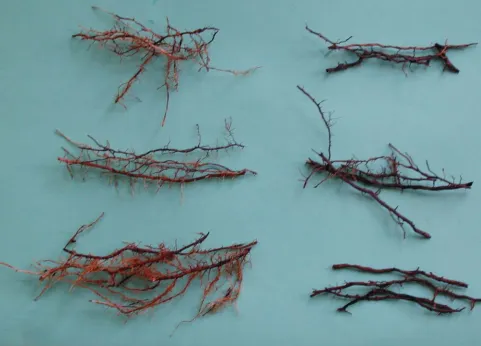
Figure 1 - Sugarcane roots from the region (0-2 cm) immediately below the trash blanket (left) and from 15 cm below the soil surface (right), showing the
pathogen-suppressive nature of the surface soil
Conclusions
Pathogenic nematode species multiply faster in disturbed soil, with greatest
multiplication in the most disturbed soils
A sugarcane trash mulch enhances suppression of pathogenic nematode species
The region immediately below the trash blanket contains a large percentage of the sugarcane root biomass and these roots are much healthier than those further down the profile. Soil from this region is strongly suppressive to plant parasitic nematodes
The most likely reason for the suppressiveness of surface soils is that root exudates,
turnover of roots and labile carbon inputs from the trash blanket are sufficient to support an active and diverse soil food web capable of limiting the multiplication of Pratylenchus and other plant-parasitic nematodes
4.5.4 Crop rotation as a tool for managing lesion nematode (Pratylenchus zeae)
Legumes such as soybean and peanut are relatively poor hosts of lesion nematode (Pratylenchus zeae) and, when used as rotation crops in a sugarcane farming system, they markedly reduce populations of the nematode. However, there were limited data on the host status of other rotation crops that might have a place in the sugarcane farming system, while the capacity of common weeds to host P. zeae was also not known. The effect of the inclusion of a winter rotation crop following a summer legume on the level of nematode control obtained with the legume crop was also assessed (see Appendix 1).
Conclusions
Pratylenchus multiplies rapidly on sorghum and sugarcane
Some cultivars of wheat, oats and Rhodes grass support low nematode multiplication
and three crops (Setaria cv. Splenda, barley cv. Grimmett and cowpea cv. Red Caloona) are non-hosts of Pratylenchus
Breaking the sugarcane monoculture with a summer legume followed by a winter
crop (e.g. wheat, barley, oats, linseed, canola, field pea or chickpea) will not markedly affect the level of nematode control that is achievable with a legume crop alone
4.5.5 Chemical and biological properties of soils under different management systems
Although there is a strong body of evidence from farming systems used for other crops to suggest that soil health will improve under the new sugarcane farming system, any improvements are expected to take many years to manifest themselves. This study therefore measured a range of properties of conventionally managed cane-growing soils with the aim of providing baseline data for future comparisons with soils managed in other ways. However, the data obtained also provided an indication of short-term changes that had taken place since the new farming system was introduced. Soil properties were measured at 11 sites where sugarcane had been grown for 5-7 years using at least some components of the new farming system. Measurements were compared with nearby examples of soil managed under the conventional sugarcane farming system or maintained as a permanent grass pasture. Perennial pasture was included in the comparison because it is often used as a standard reference when monitoring the ecological condition of soils used for agriculture (see Appendix 1).
Conclusions
Biological and chemical differences between soils under the new and conventional
sugarcane farming system were not significant. However, trends for improved soil condition under the new farming system were evident
Pasture soils had nearly twice as much total C, total N, labile C and water-soluble C
Significant changes to a soil’s condition are unlikely to occur in the short term following integration of legume break crops, minimum tillage and controlled traffic into the farming system
4.6 Extension and development
4.6.1 Co-ordination of farming system projects
Combined meetings were held with staff from FutureCane and other farming system projects on 7-9 March 2006, 6-8 March 2007 and 26-28 March 2008 in Bundaberg, Mackay and Cairns, respectively. There were also many informal interactions between members of BSS286 and these groups. These meetings and interactions were used to discuss results and identify problems associated with the new farming system. There was a mutual benefit from these interactions. BSS286 participants assisted extension officers and FutureCane Agronomists with implementing trials, discussing trial designs, treatments, and analysis. Many of these are reported in FurtureCane publications. Ultimately the success of these activities will be based on the adoption of the new farming system. Access to the Farm Economic Assessment Tool (FEAT) developed by the FutureCane team contributed to the economic analysis of experiment results (eg Garside et al. 2009a). Demonstrating a lower cost of production has been a valuable tool for encouraging adoption of the new farming system.
Evidence of these collaborations can be seen in ASSCT publications by participants in both BSS286 and FutureCane as demonstrated below:
Dougall AJ; Halpin NV (2008) The influence of depth and method of cane planting on stool tipping and yield on a red-ferrosol at Bundaberg. Proceedings of the Australian Society of Sugar Cane Technologists 30: 241-250
Halpin NV; Cameron T; Rosso PF (2008) Economic evaluation of precision controlled traffic farming in the Australian sugar industry: A case study of an early adopter. Proceedings of the Australian Society of Sugar Cane Technologists 30: 34-42
Garside AL; Poggio MJ; Park G; Salter B; Perna J (2009) Long-term Ingham and Mackay farming system experiments: Comparison between permanent non-tilled beds and re-formed
beds. Proceedings of the Australian Society of Sugar Cane Technologists 31: 282-295
Stirling GR; Halpin NV; Dougall A; Bell MJ (2010) Status of winter cereals, other rotation crops and common weeds as hosts of lesion nematode (Pratylenchus zeae). Proceedings of the Australian Society of Sugar Cane Technologists 32: 62-70
4.6.2 Grower reference panel
A grower reference panel was established for the project. It initially consisted of George Henry (Tully), Robert Quirk (NSW), Terry Granshaw (Burdekin) and Roy Price (Bundaberg). Peter Russo (Bundaberg) joined the group following the resignation of Roy Price when he sold his farm.
reference group up to date with research results, extension of these results back to each region, by the grower reference group, took place.
The success of the grower reference group concept is heavily dependant on the participant’s interest and knowledge of the topic. This grower reference group’s enthusiasm and understanding of the major issues involved in the project is to be commended. Each grower provided a report on their assessment of progress after each reference group meeting. These reports were included in Milestone reports. In addition, the growers in the reference group were asked to comment about their experience as part of the project. These comments can be found in the Appendix 2 of this report.
4.6.3 Industry wide meetings May 2010
Meetings were held at Mackay, Ayr, Ingham and Innisfail on 24-28 May 2010. Four presentations were delivered:
Salter Varieties for wide row spacings: BSS296 Evaluation of genotypes for a
controlled traffic farming system
Garside Soil compaction in sugarcane cropping systems: Soil type has important
implications
Stirling Improving the biological status of sugarcane soils – what are our options?
Bell The new farming system – it’s not a foolproof recipe
The meetings were attended by growers and extension staff. Feedback during the meetings has been included in the Future needs and Recommendations section.
4.7 Adoption of farming systems
Estimates of the level of adoption of fallow cropping, zonal tillage and controlled traffic were obtained after discussions with local extension officers, productivity services and FutureCane agronomists. Adoption of legume fallow crops is represented as a percentage of the total area of fallow ground in each region. Adoption of zonal tillage and controlled traffic is represented as the percentage of area established using these practises compared to the total area of sugarcane land under production (it includes all crop classes). Zonal tillage represents a range of different options other than the traditional offset, rip and hoe of the entire paddock.
Season
03/04 04/05 05/06 06/07 07/08 08/09 09/10
% fallow le
gume
0 20 40 60 80 100
FNQ Herbert Burdekin Central South
Figure 2 - Percentage of fallow land planted with a legume crop
The adoption of reduced tillage practises such as zonal or zero tillage has been slow (Figure 3). However, it is increasing as the cost of tillage is becoming more apparent to growers. The availability of equipment is also an issue and only recently has commercial zonal tillage equipment become available. Many growers have also accessed zonal tillage equipment through federal government ReefRescue funding. A SRDC/QDPIF project BSS306 is also making zonal tillage equipment available to growers in the Central region. This should see
greater adoption of this practise in the future. Some changes to farming practises not
captured in this figure have also occurred. In the Burdekin there is widespread adoption of planting into pre-formed beds. Tillage is used prior to forming the bed but not thereafter.
Time (year)
2003 2004 2005 2006 2007 2008 2009
% area (zonal
tillage)
0 5 10 15 20
FNQ Herbert Burdekin Central South
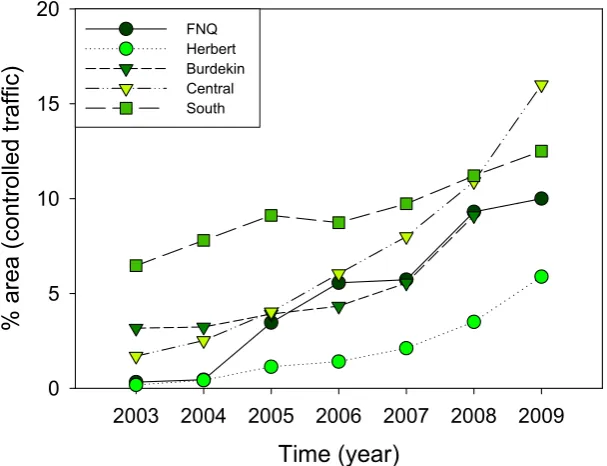
Controlled traffic is being adopted in all regions (Figure 4). It should be noted that these data represent the adoption of row spacings of 1.8 m or wider, GPS guidance systems may be required for true controlled traffic. The data from FNQ are slightly distorted as there has been large scale adoption of controlled traffic in Tully but very limited adoption in some of the other areas (Innisfail, Babinda, etc.). There is evidence that the increase in adoption of controlled traffic will continue for a number of years. A survey by the Agriserv Mackay revealed that 34% of plant cane to be harvested in 2010 in the Mackay area was planted on 1.8 m spacings or wider. If this value is extrapolated one could assume that at least 34% of the area will be using wide row spacings in 4-5 years. Similarly, over 13% of the 2009-2010 plant cane crop in the Herbert region was planted on spacings wider than 1.8 m.
Time (year)
2003 2004 2005 2006 2007 2008 2009
% area (controlled t
raffic)
0 5 10 15 20
FNQ Herbert Burdekin Central South
Figure 4 - Percentage of total area (including all crop classes) using controlled traffic farming systems
4.8 Successes and lessons
Successes
Widespread acceptance of legume break crop rotation with the added benefit of
no ‘N’ application in following plant crop and possibly reduced N in the first ratoon.
Controlling the movement of machinery in the field as a means of reducing yield
losses due to compaction. Guidance has also become more affordable and has been widely adopted in the past 3 years.
Minimum tillage via double-disk opener planters has made it possible to plant
sugarcane and legumes through heavy cane trash.
Researches and farmers have a better understanding about soil biology and the
benefits of a healthy soil.
FutureCane (involving both BSES and QDPIF) improved extension services for
growers.
Lowering inputs have been the bonus with the new farming system when fully
Profitability via economic analysis has become the driver for change. Previously productivity was used as the benchmark.
While adoption of the system is not 100%, most Australian farmers, and in fact
many around the world, have adopted parts of this BMP for sustainability.
Lessons
Legumes provide many benefits to the sugarcane farming system, including a
degree of nematode control for about 6 months after planting. However, results from the Species x Tillage x Nitrogen trials have shown that a legume rotation crop does not necessarily reduce the impact of nematodes later in the cropping cycle. Nematode populations were relatively high following soybean in both the Bundaberg and Ingham trials and even when a soybean rotation crop was combined with minimum tillage and trash retention, at least four nematodes
species (Meloidogyne, Pratylenchus, Paratrichodorus and Xiphinema) caused
significant damage in the Bundaberg trial
Nematode populations were relatively high throughout most of the soil profile, but
were much lower in the zone immediately under the trash blanket. Also, an unexpectedly high proportion of the crop’s roots were found in this zone, and they were much healthier than roots further down the soil profile. Indicative of a positive effect of trash blanketing on nematode management.
Compaction can cause significant yield losses. It is likely to do this by reducing
moisture and nutrient availability and restricting tillering.
Without guidance (and possibly even with guidance) there will still be a need for
some tillage in the system to alleviate compaction from un-controlled traffic, alleviate potential nutrient stratification and allow for the use of traditional mouldboard style planters.
Controlled traffic and tillage experiments should be conducted with the use of
guidance systems on all machinery. Harvesters specifically designed to cut particular row configurations should be used. Currently a standard machine is used to cut all row configurations, possibly creating a bias in the following crops due to varying degrees of harvester damage.
Current cultivars have an ability to be productive over a range of row spacings.
No system can be all things to all people.
Without well co-ordinated research by groups like the SYDJV, production in
Australia would be much lower.
5.0 OUTPUTS
Outputs are highlighted in bold in the Results section. These were brought together as the successes and lessons and in the summary.
6.0 EXPECTED OUTCOMES
There is little doubt that production costs are substantially reduced when legume fallows, reduced tillage and controlled traffic are adopted. This has been demonstrated in a number of studies in recent years (Poggio et al. 2007; Schroeder et al. 2009). Lowering the cost of production is a critical part of maintaining the industry’s sustainability.
Adoption of new farming system principles will ultimately lead to improved soil health (chemical, physical and biological properties). While a survey of soil properties throughout the industry found that there were no significant changes compared to the old conventional farming system as yet, there were some signs of improvement. Ultimately the envisaged improvements to soil health should result in yield increases and also a farming system that is more robust and resilient to climate variability.
While research data on the changes to water quality leaving the farm after the adoption of new farming systems is only now being collected, it is expected that adoption of the new farming system will assist the industry in meeting the environmental requirements for agriculture in the Great Barrier Reef catchments. The research conducted by the SYDJV has allowed the industry to respond to the environmental challenges that have occurred in recent years. In many ways it has been used as the blue-print for responding to these challenges and one wonders what position the industry would be in if the outputs of the SYDJV were not available.
Environmental and social impacts of the new farming system have not changed significantly since SYDJV Phase 2 was completed. Garside and Bell (2006) outlined the likely impacts in the final report of Phase 2.
While many things have been achieved and adoption of the new farming systems is increasing, there are issues that require further work.
7.0 FUTURE NEEDS AND RECOMMENDATIONS
There are a number of issues that still require further investigation. At this stage some of these issues are often used as reasons for not embracing the principles of the new farming system. This will probably remain the case until work is done to address these issues. There is also a tendency for blanket adoption of a new farming system recipe without thinking about the issues and how they may best be applied in different situations. In general the Australian cane grower has been used to recipe farming. The new farming system requires a change to principle thinking. Continued reliance on recipes is likely to result in some adverse responses following adoption leading to doubt about the effectiveness of the new farming system.
GPS Guidance
Water Management
Work is required to determine whether reduced tillage practises and fallow cropping result in changes to water holding capacity, infiltration rates, management of water/irrigation and changes to water quality leaving the farm. These issues are being addressed in a recently funded SRDC/QDPIF project (BSS329). The outcomes are critical given the current environmental issues being faced by the industry. New farming system practises are also receiving significant funding from the federal government Reef Rescue program. It remains to be seen whether there is a significant improvement in water quality leaving the farm following the adoption of the new farming system, although intuitively it seems likely. Further, it is likely that the amount of water required to sustain yields at current levels can be substantially reduced with the new farming system. If so, this will also be an environmental benefit.
Nitrogen management
Although significant improvements to nitrogen management in the sugarcane industry have occurred with the ‘Six Easy Steps’ program (Schroder et al. 2005), the understanding of processes and management of nitrogen in sugarcane farming systems needs to be improved. Particularly, practical cost-effective methods to reduce the potentially large losses of nitrogen from soils are required. This needs to be done by timing nitrogen availability with the main period of crop demand. Currently, split fertiliser applications are not practical due to access issues around and following the wet season, polymer coated fertiliser and urease inhibitors are either too expensive or needing further work, and using formed beds to reduce losses associated with waterlogging are not popular in some regions due to an almost equal chance of both wet and dry years. New investment is required to address these issues given the environmental constraints that will continue to be imposed on any agriculture that adjoins the Great Barrier Reef.
Management of the interface between cycles (fallow crops and cane)
The SYDJV showed the benefit of fallow crops to the sugarcane farming system. These benefits will only be fully realised if the two crops are grown in a complimentary manner. This issue is being dealt with by a recently funded project in the southern region and the likely funding of similar work in the Burdekin region.
Machinery
Although problems with double-disc opener planters have been relatively minor, some issues remain (Hurney and Skocaj 2010). Planting depth, soil-sett contact and harvester damage are the main concern.
Nutrient Stratification
Row configuration
Dual row configurations are unpopular in some regions. Farmers are more likely to adopt controlled traffic if they are confident that single row systems will maintain yield. Despite the large amount of work conducted on row spacing, large scale demonstration trials are still required in some regions to convince growers that yield reduction is not an issue. This is particularly the case in the Wet Tropics.
Weed control on wide single rows is also a perceived problem and is often cited as a reason for not adopting wide single row configurations. Growers believe that the extra time it takes for a wide single row to reach canopy closure (especially erect cultivars) will result in more weed growth in the interrow space and increase management costs. Work is required to determine whether this is a ‘real’ issue.
Biological suppression of pathogens
One of the main outputs of this project was that sugarcane trash and the region of soil immediately below it is highly suppressive to sugarcane pathogens. Understanding the mechanisms of suppression is required as it may allow improvements to be made to farming systems in the future.
Resurgence of nematodes following legumes
Although legume breaks markedly reduce populations of key nematode pests, nematodes resurge strongly when sugarcane is planted. Since the residue remaining following a legume crop decomposes readily (due to its high quality and relatively low biomass) it is possible that there is insufficient organic carbon late in the season to maintain the soil food web required to suppress nematodes and other pathogens. This hypothesis should be tested and options explored for increasing residue inputs during breaks.
Value of crop residues
The finding that crop residues on the soil surface are important for maintaining a soil food web that is suppressive to pathogens provides further support for the practise of trash blanketing. Given this result, the value of trash as a mulch on a sugarcane field needs to be re-assessed. This could then be weighed up against its value as a garden mulch, a source of energy for the production of electricity, or any other product.
Group to respond to emerging issues
8.0 PUBLICATIONS ARISING FROM THE PROJECT
8.1 Scientific papers published from BSS286
Bell MJ; Halpin NV; Garside AL (2007) Performance of sugarcane varieties with contrasting growth habit in different row spacings and configurations. Proceedings of the Australian Society of Sugar Cane Technologists 29: 215-225
Stirling GR; Moody P; Stirling AM (2007) The potential of nematodes as an indicator of the biological status of sugarcane soils. Proceedings of the Australian Society of Sugar Cane Technologists 29: 339-351
Garside, A.L., Salter, B., and Kidd, J. (2008). Soil compaction is a major issue operating against the development of sustainable sugarcane cropping systems. Proceedings of the
14th Australian Society of Agronomy Conference, Adelaide S.A. 21-25 September 2008
Garside AL; Poggio MJ; Park G; Salter B; Perna J (2009) Long-term Ingham and Mackay farming system experiments: Comparison between permanent non-tilled beds and re-formed
beds. Proceedings of the Australian Society of Sugar Cane Technologists 31: 282-295
Bell MJ; Garside AL; Halpin N; Salter B; Moody PW; Park G (2010) Interactions between rotation breaks, tillage and N management on sugarcane grown at Bundaberg and Ingham. Proceedings of the Australian Society of Sugar Cane Technologists 31: 119-139
Park G; Garside AL; Salter B; Perna JM (2010) Effect of zero and zonal tillage on cane growth and yield on a heavy cracking clay soil in the Herbert valley. Proceedings of the Australian Society of Sugar Cane Technologists 31: 97-109
Stirling GR; Halpin NV; Bell MJ; Moody PM (2010) Impact of tillage and residues from rotation crops on the nematode community in soil and surface mulch during the following
sugarcane crop. Proceedings of the Australian Society of Sugar Cane Technologists 31:
152-168
Stirling GR; Halpin NV; Dougall A; Bell MJ (2010) Status of winter cereals, other rotation crops and common weeds as hosts of lesion nematode (Pratylenchus zeae). Proceedings of the Australian Society of Sugar Cane Technologists 31: 62-70
8.2 Additional papers published from SYDJV Phase 2
This project has allowed the members of the SYDJV to continue working together within the sugarcane industry. One of the outcomes of this continued collaboration is the publication of further scientific papers from work that was conducted as part of SYDJV Phase 2 and also other farming systems work not directly funded by this project.
Garside, A.L., Robotham, B.G., and Bell, M.J. (2006). Management of the interface between sugarcane cycles in a permanent bed, controlled traffic farming system. Proceedings of the
13th Australian Society of Agronomy Conference, Perth, W.A. 10-14 September, 2006
Stirling GR; Berthelson JE; Garside AL; James AT (2006) The reaction of soybean and other legume crops to root knot nematodes (Meloidogyne spp.), and implications for growing these
crops in rotation with sugarcane. Australasian Plant Pathology 35: 707-714
Bell MJ; Stirling GR; Pankhurst CE (2007) Management impacts on health of soils
Garside, A.L. and Bell, M.J. (2007). The value of legume breaks to the sugarcane cropping system – cumulative yields for the next cycle, potential cash returns from the legume, and duration of the break effect. Proceedings of the Australian Society of Sugar Cane Technologists 29: 299-308
Garside, A.L., Bell, M.J. and Moody, P.W. (2007). High input sugarcane production systems can mask the adverse effects of poor soil health. Proceedings of the Australian Society of Sugar Cane Technologists 29: 204-214
Hurney, A.P., Grace, D., and Garside, A.L. (2007). Effect of direct drill planting onto raised beds on cane growth and yield under rainfed conditions in north Queensland. Proceedings of the Australian Society of Sugar Cane Technologists 29: 290-298
Stirling GR (2007). The potential for nematode problems in Australia’s developing soybean industry. 14th Australian Soybean Industry Conference, Bundaberg, March 2007
Stirling GR (2008) The impact of farming systems on soil biology and soilborne diseases: examples from the Australian sugar and vegetable industries – the case for better integration of sugarcane and vegetable production and implications for future research. Australasian Plant Pathology 37: 1 - 18
Garside AL; Bell MJ (2009) Row spacing and planting density effects on the growth and yield of sugarcane. 1. Responses in fumigated and non-fumigated soil. Crop & Pasture Science
60: 532-543
Garside AL; Bell MJ; Robotham BG (2009) Row spacing and planting density effects on the growth and yield of sugarcane. 2. Strategies for the adoption of controlled traffic. Crop & Pasture Science 60: 544-554
Garside AL; Bell MJ (2009) Row spacing and planting density effects on the growth and yield
of sugarcane. 3. Responses with different cultivars. Crop & Pasture Science 60: 555-565
8.3 Topical articles
Garside, A. 2006. Joint venture passes into history. BSES Bulletin 12: 10-12.
Garside, A. 2006. Non-tilled permanent beds improve soil structure and water holding capacity – but it takes time! BSES Bulletin 12: 18-19.
Kidd, J. 2006. Stay on track to minimise soil compaction. BSES Bulletin 12: 28-30.
Salter, B. 2006. Activities of the Sugar Yield Decline Joint Venture. BSES Central Field Day Newsletter
Stirling, G. 2006. Nematodes: the unseen enemy. Australian Sugarcane 10(1): 11-13.
Salter, B. 2008. Zero till fights back in the first ratoon. Mackay Cane News (November)
Salter, B. 2009. Calculating the nitrogen delivered by a legume crop. Mackay Cane News (February)
9.0 ACKNOWLEDGMENTS
A number of people have contributed to the success of BSS286. Neil Halpin, Glen Park and Jason Perna are thanked for significant effort conducting much of the trial work associated with the project. Bruce Compton and laboratory staff at the Queensland Department of Environment and Resource Management are thanked for contributing to the analysis of plant and soil samples. Charlie McLennan, Ed Morris, Louie Raiteri, Morris Raiteri, Don Halpin, Charlie Halpin and Jeff Plath are thanked for volunteering land on their properties for research trials (for many years) and assisting with the management of trial plots. Previous members of the SYDJV, Brain Robotham and Clive Pankhurst, are thanked for their constructive advice. Members of FutureCane are thanked for their efforts in delivering the extension message to the industry and their constructive approach to the new farming system. Finally the grower reference group, Robert Quirk, George Henry, Peter Russo and Terry Granshaw, are thanked for their enthusiasm and ability to provide practical advice to the research group.
10.0 REFERENCES
Bell MJ; Garside AL; Halpin N; Salter B; Moody PW; Park G (2010) Interactions between rotation breaks, tillage and N management on sugarcane grown at Bundaberg and Ingham. Proceedings of the Australian Society of Sugar Cane Technologists 31: 119-139
Bell MJ, Garside AL, Stirling G, Magarey R, Moody PW, Halpin NV, Berthelsen JE, Bull J (2006b) Impact of fallow length, organic amendments, break crops and tillage on soil biota and sugarcane growth. Proceedings of the Australian Society of Sugarcane Technologists
28: 273-290.
Bell MJ; Halpin NV; Garside AL (2007) Performance of sugarcane varieties with contrasting growth habit in different row spacings and configurations. Proceedings of the Australian Society of Sugar Cane Technologists 29: 215-225
Bell MJ, Moody PW, Halpin NV, Garside AL (2006a) Impact of management of cane trash and legume residues on N mineralisation and crop N uptake. Proceedings of the Australian Society of Sugarcane Technologists 28: 129-141.
Garside AL (1999) Sugar Yield Decline Joint Venture Technical Summary Report Phase 1 (July 1993 – June 1999). BSES Publication SD00007.
Garside AL; Bell MJ (2006) Sugar Yield Decline Joint Venture Phase 2 (July 1999 – June 2006). SRDC Final Report SD06011.
Garside AL; Bell MJ (2009a) Row spacing and planting density effects on the growth and yield of sugarcane. 1. Responses in fumigated and non-fumigated soil. Crop & Pasture Science 60: 532-543
Garside AL; Bell MJ (2009b) Row spacing and planting density effects on the growth and
yield of sugarcane. 3. Responses with different cultivars. Crop & Pasture Science 60:
555-565
Garside AL; Berthelsen JE; Robotham BG; Bell MJ (2006b) Management of the interface between sugarcane cycles in a permanent bed, controlled traffic farming system. Proceedings of the Australian Society of Sugarcane Technologists 28: 118-128
Garside AL; Berthelsen JE; Robotham BG; Berding N (2006a) Row spacing effect on the growth and yield of several sugarcane cultivars in north Queensland. Proceedings of the Australian Society of Sugar Cane Technologists 28: 298-309
Garside AL; Poggio MJ; Park G; Salter B; Perna J (2009a) Long-term Ingham and Mackay farming system experiments: Comparison between permanent non-tilled beds and re-formed
beds. Proceedings of the Australian Society of Sugar Cane Technologists 31: 282-295
Hurney AP; Skocaj DM (2010) Assessment and possible adaption of the double-disc opener planter technique in the wet tropics. Proceedings of the Australian Society of Sugar Cane Technologists 32: 110-118
Pankhurst CE, Stirling GR, Magarey RC, Blair BL, Holt JA, Bell MJ, Garside AL (2005) Quantification of the effects of rotation breaks on soil biological properties and their impact on yield decline in sugarcane. Soil Biology & Biochemistry 37: 1121-1130
Park G; Garside AL; Salter B; Perna JM (2010) Effect of zero and zonal tillage on cane growth and yield on a heavy cracking clay soil in the Herbert valley. Proceedings of the Australian Society of Sugar Cane Technologists 31: 97-109
Poggio M; Morris E; Reid N; Di Bella L (2007) Grower group case study on new farming practices in the Herbert. Proceedings of the Australian Society of Sugar Cane Technologists
29: 64-70.
Schroeder BL, Cameron T, Linedale AI, Allsopp PG (2009) Realised value of RD&E in the Australian sugar industry: Economic benefits of the changing farming system. Proceedings of the Australian Society of Sugar Cane Technologists 31: 221-229
Schroeder BL, Wood AW, Moody PW, Bell MJ, Garside AL (2005) Nitrogen fertiliser guidelines in perspective. Proceedings of the Australian Society of Sugar Cane Technologists 27: 291-304.
Stirling GR (2008) The impact of farming systems on soil biology and soilborne diseases: examples from the Australian sugar and vegetable industries – the case for better integration of sugarcane and vegetable production and implications for future research. Australasian Plant Pathology 37: 1-18
Stirling GR, Wilson EJ, Stirling AM, Pankhurst CE, Moody PW, Bell MJ, Halpin NV (2005) Amendments of sugarcane trash induce suppressiveness to plant parasitic nematodes in
11.0 APPENDICES
Appendix 1. Soil biology studies
Appendix 2. Comments from grower reference group
APPENDIX 1 – SOIL BIOLOGY STUDIES
SYDJV PHASE 3: FINAL REPORT (SOIL BIOLOGY)
Graham Stirling
This report covers the soil biology work done in project BSS286. It is subdivided into five sections as follows:
1. Free-living nematodes as biological indicators
2. Impact of cropping history, tillage and nitrogen on the nematode community 3. Impact of management practices on suppressiveness to plant-parasitic nematodes 4. Crop rotation as a tool for managing lesion nematode (Pratylenchus zeae)
5. Chemical and biological properties of soils under different management systems
1. FREE-LIVING NEMATODES AS BIOLOGICAL INDICATORS
Although many different tests are available to assess a soil’s physical and chemical status, there is a paucity of information on the biological status of various soils. One reason for this is that there are a myriad of organisms in soil, they vary in size from bacteria to earthworms. Since the smallest and most numerous inhabitants (bacteria, fungi and protozoa) are difficult to enumerate and their populations may change rapidly with time, many ecological studies over the last 20 years have been done with larger soil organisms. This work has shown that nematodes are perhaps the most useful biological indicator for a number of reasons: 1) they are relatively easy to extract from soil, 2) they are readily identified using morphological characters and 3)their feeding habits can be inferred from the structure of their mouth parts. Since free-living species feed on bacteria, fungi, protozoa, algae or small invertebrates and their populations respond to changes in the availability of their food sources, the number and type of nematodes in soil provides a good indication of what is happening within the soil food web.
Another reason for studying free-living nematodes is that they contribute to the mineralisation of nitrogen and other nutrients. When nematodes feed on the bacteria and fungi involved in the decomposition of organic matter, the excess N that is assimilated nematodes during growth or is used to meet the C needs of respiration is excreted in mineral form as NH4+. It is therefore possible that free-living nematodes are a useful indicator of N mineralisation rates in sugarcane soils.
The following work is the first serious attempt to fully assess the nematode communities in sugarcane soils. The objectives were to determine the impact of practices such as crop rotation, tillage and incorporation of crop residues on the biological status of soil and rates of N mineralisation.
Impact of rotation, tillage and fallowing on the nematode community
This work was published in the following paper, and a copy is included in the appendix to this report.
Stirling GR, Moody P, Stirling AM (2007) The potential of nematodes as an indicator of the
biological status of sugarcane soils. Proceedings of the Australian Society of Sugarcane
Technologists
29
, 339-351.
Impact of tillage following soybean
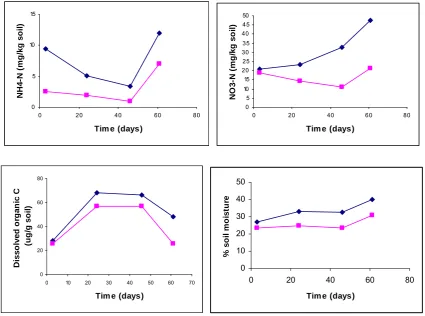
This study utilised three trials in the Bundaberg/Maryborough area that were established by Andrew Dougall as part of the Future Cane program. The aim was to examine relationships between the nematode community and N mineralisation from soybean residue when sugarcane was planted into tilled or non-tilled soil.
Methods
direct drill (DD). Soil samples (10-15 soil cores to a depth of 15 cm) were collected from 3 or 4 replicate plots of each treatment in the first 10 weeks after soybeans were incorporated in the DD treatment (Table 1). Nematodes were extracted from 200 mL soil samples using a standard nematode extraction tray for 2 days, separated into major trophic groups[enrichment bacterial feeders (mainly Rhabditida), other bacterial feeders (mainly Cephalobidae), fungal-feeders (Aphelenchus, Aphelenchoides and fine-tailed Tylenchidae)], and counted. Soil N was measured at W. Glass site
using standard methods.
Table 1. Details of sites and sampling dates (in 2005) for comparisons of conventional tillage (CT) and direct drill (DD) treatments
Site Location Date soybeans
incorporated in DD treatment
Date sugarcane
planted
Sampling dates No. days after soybeans were incorporated
W. Glass Bundaberg 19 August 19 August 22 August 3
12 September 24
4 October 46
19 October 61
Bundaberg RS Bundaberg 13 September 5 October 23 November 71
Coutts-Smith Maryborough 6 September 16 September 6 October 30
Results
0 1000 2000 3000 4000 5000
0 20 40 60 80
Tim e (days)
N o . F L N /2 0 0 m L s o il 0 400 800 1200 1600 2000
0 20 40 60 80
Tim e (days)
N o . F F /20 0 m