46
ENHANCEMENT OF THE PERFORMANCE PARAMETERS
OF
3
−
φ
INDUCTION MOTOR USING MULTILEVEL
CONVERTERS: A LITERATURE SURVEY
BINDESHWAR SINGH1, PADMA CHATURVEDI2, S.K. SINHA1, A.S.PANDEY1, S.P. SINGH1
1EED, Kamla Nehru Institute of Technology, Sultanpur-228118(U.P.), India
2M.Tech. Student, EED, Kamla Nehru Institute of Technology, Sultanpur-228118(U.P.), India
Email: [email protected], [email protected], [email protected]
ABSTRACT
This paper presents reviews on enhancement of the performance parameters such as voltage, current, power, sensor less control of three phase Induction Motor using multilevel converters. Authors strongly believe that this survey article will be very much useful to the researchers for finding out the relevant references in the field of enhancement of the performance parameters of control strategy of multilevel converters.
Keywords: Multilevel Converters, Three Phase Induction Motor, Voltage Control, Current Control, Power Control, sensor less Control and PWM Control.
1.INTRODUCTION
Multilevel cascaded H-bridge (CHB) converters
have been a focus of research, since they were first presented in 1975. This interest is due to their advantages as compared to other multilevel-converter topologies in terms of minimum number of devices, modularity, reliability, and fault tolerance. CHBs have been successfully applied in applications where a high number of levels are required. A multilevel CHB is composed of a series connection of H-bridges, also called cells. The dc-link voltage ratio of a CHB is defined as the relation between the dc-link voltages of the cells of the converter. Note that a converter with dc voltage ratio k : 1 in a two-cell CHB means that VC1 =
kVC2. Depending on the number of cells in the power converter and the dc voltage ratio between the cells, the number of possible output-voltage levels changes. In previous works, dc voltage ratios 1: 1, 2: 1, and 3: 1 have been studied, and the number of levels achieved by these power converter topologies has been determined in this literature.
Multilevel power conversion has found wide
acceptance in various applications for its capability of high-voltage and high-efficiency operation. The
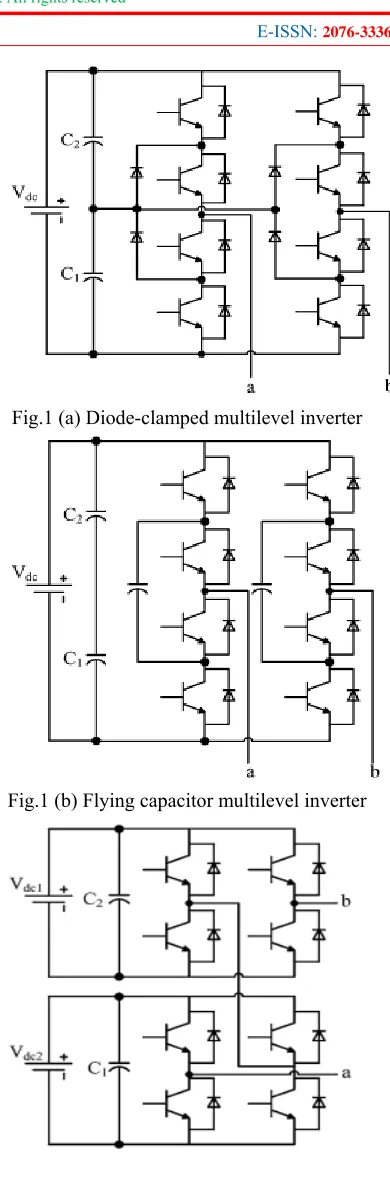
advantages of the multilevel inverter compared with the traditional two-level voltage-source inverter are high-power-quality waveforms with lower distortion and low blocking voltage by switching devices. Three well-known multilevel topologies are shown in Fig. 1. (a), (b) &(c). an extensive comparison between multilevel topologies have been performed in terms of their applications, circuit modeling, modulation techniques, and other technical issues. Typically, different types of multilevel converters are utilized by the same rating for the capacitors and power devices due to the modularity and simplicity of control strategy.
47 inverters with different dc-link voltages. Hybrid inverters Fig. 1(c) have been considered advantageous for the asymmetrical configuration of multilevel inverters, as they have shown to be more effective. A diode-clamped converter is the common converter type widely used in renewable energy and power systems due to its dc-link structure. An n-level diode-clamped multilevel inverter with n-leg voltage levels and (2n − 1) output voltage levels consists of (n −1) capacitors on the dc link, 2(n − 1) switching devices, and 2(n− 2) clamping diodes per phase. Therefore, an increase in the number of levels in this type of converter will result in substantial increase in the number of switching components, as well as the complexity of its structure. In order to address this issue, the general idea of asymmetrical multilevel inverters in the diode-clamped topology to increase the number of output voltage levels with a minimum number of power components has been proposed in Increasing the number of levels while adjacent switching vectors are available for modulation between levels with only one switch change is an important issue to minimize switching losses.
For the different switching states of the diode-clamped inverters, different controlled/ non-controlled current loops may be provided through dc-link capacitors, switching components, and load. Due to the existence of dc currents in the midpoints of the dc links, capacitors are either charged during some intervals or discharged during some other intervals. These charging and discharging operations put a limit on the practical implementation of high-level diode-clamped converters, especially when the power factor of the load is close to unity. The current loops may charge or discharge the dc-link capacitor voltages depending on the direction of the load current. According to, large input capacitors are necessary to keep the ripple of the dc link voltages at tolerable levels. In addition, there is a substantial dependency between modulation index, power factor, and possibility of dc-link capacitor voltage balancing. The modulation index is restricted by the load current angle.
Fig.1 (a) Diode-clamped multilevel inverter
Fig.1 (b) Flying capacitor multilevel inverter
Fig. 1 (c) Hybrid multi level inverter
48 based method[29]-[33], pulse train control based method [34]-[35], pulse width modulation control [36]-[39],and from other controlling methods [40]-[59].
This paper is organized as follows: Section II discusses a literature survey regarding with multilevel converters applied to
3
−
φ
induction motor drives from different performance parameters point of view. Section III presents the summary of the paper. Section IV presents the conclusions of the paper.2. GENERALIZED MATHEMATICAL
MODELING OF
3
−
φ
INDUCTIONMOTOR
A. Fundamentals of Three-phase Induction
Motor
An induction or asynchronous motor is a type of AC motor where power is supplied to the rotor by means of electromagnetic induction, rather than by slip rings and commutators as in slip-ring AC motors. These motors are widely used in industrial drives, particularly polyphase induction motors, because they are robust, have no friction caused by brushes, and their speed can be easily controlled.
In a synchronous AC motor, the rotating magnetic field of the stator imposes a torque on the magnetic field of the rotor, causing it to rotate steadily. It is called synchronous because at steady state, the speed of the rotor matches the speed of the rotating magnetic field in the stator. By contrast, an induction motor has a current induced in the rotor; to do this, stator windings are arranged so that when energised with a polyphase supply they create a rotating magnetic field that induces current in the rotor conductors. These currents interact with the rotating magnetic field, causing rotational motion of the rotor.
For these currents to be induced, the speed of the physical rotor must be less than that of the stator's rotating magnetic field (ns), or else the magnetic field will not be moving relative to the rotor conductors and no currents will be induced. If this happens while the motor is operating, the rotor slows slightly until a current is re-induced, and it continues as before. The ratio between the speed of the magnetic field as seen by the rotor (slip speed) to the speed of the rotating stator field is unitless and is called the slip; due to this, induction motors
are sometimes referred to as asynchronous machines. As well as generating rotary motion, induction motors may be used as induction generators or unrolled to form the linear induction motor which can directly generate linear motion.
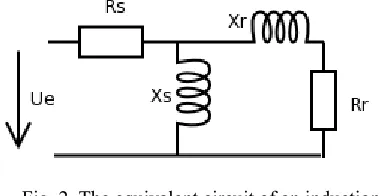
Fig. 2. The equivalent circuit of an induction motor.
B. Mathematical Modeling of
φ
−
3
Induction MotorAs it is well known, the generalized model of the induction machine, in terms of space vectors, can be expressed by the following set of instantaneous complex equations.
0
s s
s s s
s s s
r r
r r
r r r
di
d
v
r i
l
dt
dt
di
d
r i
l
dt
dt
φ
φ
=
+
+
=
+
+
(1)
With
s
i
= space vector of the stator current;r
i
=space vector of the rotor current;r
l
= rotor leakage inductance;s
l
= stator leakage inductance;r
r
= rotor resistance;s
r
= stator resistance;t
= time;v
= space vector of the feeding voltage;φ
= space vector of the air-gap flux.And where the superscripts
s
andr
the stator and the rotor reference frames respectively denote. For the following, it is useful to detail both for linear and nonlinear condition of the main magnetic path.1. A Mathematical Model under Flux Linearity
Condition
49 mathematically described by the system
(
)
' ' ' ' ' ' ' ( ) ( ) s s s s s rm s m s s
s s
s s s
s r
m m r r m s m r r r r
di di
L l L v r i
dt dt
di di
L L l jp L i L l i r i
dt dt ω
+ + = −
⎡ ⎤
+ + = ⎣ + + ⎦−
(2)
where the apostrophe denotes the quantities referred to the stator by means of the well known relations and where
j
Imaginary unit;p
Pole pairs;m
L
Air gap inductance;r
ω
Motor speed.2. Mathematical Model under Flux Saturation Condition
If the saturation of the main magnetic path has to be taken into account inside the model, the air gap inductance
L
m can’t be assumed as a constant parameter. In fact, the saturation determines a variation of the flux over magnetic current ratio, i.e., the relationship between the amplitude of the air gap fluxφ
and the one of the magnetizing currentI
µ is nonlinear. For solving this problemwith a generalized approach, it is useful to adopt the induction machines model developed by Kovacs [9]. It consists in defining two coefficients for the air gap inductance, the dynamic inductance, defined as d m
d
L
dI
µφ
=
(3)Which represent the derivative of the magnetizing curve, and the static inductance, defined as
.
s mL
I
µφ
=
(4)By indicating with the argument of
φ
s , it yields
( ) s
j j
j
d s j
m m
d d e d j d e
dt dt dt dt
dI
d j d e
dI dt dt
dI d
L jL I e
dt dt γ γ µ γ µ µ γ µ φ φ φ φ γ φ φ γ γ ⎛ ⎞ = =⎜ + ⎟ ⎝ ⎠ ⎛ ⎞ =⎜⎜ + ⎟⎟ ⎝ ⎠ ⎛ ⎞ =⎜ + ⎟ ⎝ ⎠ (5) and ( ) r
d s j p
m m r
dI
d d
L jL I p e
dt dt dt
µ γ θ
µ
φ =⎡ + ⎛ γ − ω ⎞⎤ −
⎜ ⎟
⎢ ⎝ ⎠⎥
⎣ ⎦ (6)
Where
φ
the angle between the stator and rotor frames denotes. With this assumption, the set of simultaneous complex equations describing the induction motor under saturation conditions of the main magnetic path becomes.( )
0 .
s
s s s d s j
s s s m m
r
r r d s j p
r r r m m r
dI
di d
v ri l L jL I e
dt dt dt
dI
di d
r i l L jL I p e
dt dt dt
µ γ µ µ γ θ µ γ γ ω − ⎛ ⎞ = + +⎜ + ⎟ ⎝ ⎠ ⎡ ⎛ ⎞⎤ = + +⎢ + ⎜ − ⎟⎥ ⎝ ⎠ ⎣ ⎦ (7)
3. FUNDAMENTALS OF MULTILEVEL
INVERTER
Multilevel inverters have drawn tremendous interest in the power industry. They present a new set of features that are well suited for use in reactive power compensation. Multilevel inverters will significantly reduce the magnitude of harmonics and increases the output voltage and power without the use of step-up transformer. A multilevel inverter consists of a series of H-bridge inverter units connected to three phase induction motor. The general function of this multilevel inverter is to synthesize a desired voltage from several DC sources. The AC terminal voltages of each bridge are connected in series. Unlike the diode clamp or flying-capacitors inverter, the cascaded inverter does not require any voltage clamping diodes or voltage balancing capacitors (Somashekhar et al., 2003). This configuration is useful for constant frequency applications such as active front-end rectifiers, active power filters, and reactive power compensation. In this case, one of the very efficiently used control strategies is the space vector based control, which can be implemented using digital signal processor.
Fig. 3a Three phase multilevel inverter -fed
50
Fig. 3b. Circuit for one phase.
4. PERFORMANCE OFVOLTAGE SOURCE
MULTILEVEL INVERTER- FED
INDUCTIONMOTORDRIVE
A. Flying Capacitor Multilevel Inverter
(Fcmli)
The FCMLI requires a large number of capacitors to clamp the device voltage to one capacitor voltage level, provided all the capacitors are equal values. The size of the voltage increases between two consecutive legs of the clamping capacitors. Hence the size of voltage steps in the output waveform.
B. Features of Fcmli
• Voltage stresses across the devices are equal.
• Reduce the redundancy of switching combinations.
• Only single capacitor voltage regulating circuit is required.
C. Basic Configuration of Fcmli
The voltage of the main dc-link capacitor Vdc. The
voltage of the capacitor clamping of the innermost
two devices are
1
−
n
Vdc
(8)
The voltage of the next innermost capacitor will be
1
−
n
Vdc
+
1
−
n
Vdc
=2
1
−
n
Vdc
(9)
Each next clamping capacitor will have the voltage
increment of
1
−
n
Vdc
from its immediate inner one.
The voltage levels and the arrangements of the
flying capacitor in the FCMLI structure assure the voltage stress across each main device is same. It is
equal to
1
−
n
Vdc
for an n- level inverter. Three phase
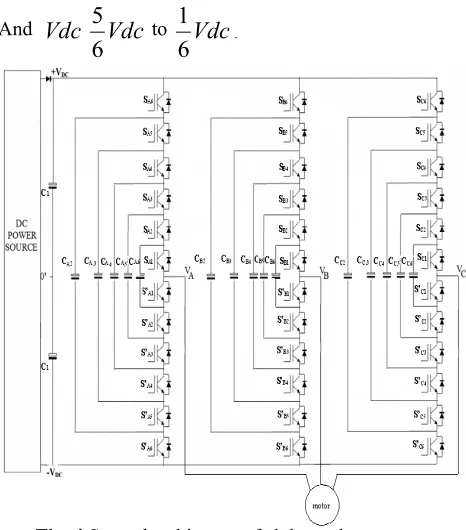
of a seven-level inverter fed induction motor as shown in figure 4. Three out of one phase leg of a seven-level inverter shown in figure and likewise others two are coupled to the same dc-link battery Vdc. In figure 3each switch SA1 to SA6 and S’A1 to
S’A6consist of a power semiconductor device (e.g.
MOSFET, GTO and IGBT etc) connected in anti parallel. The capacitor voltages are VC1, VC2 to VC6.
And
Vdc
Vdc
6
5
toVdc
6
1
.
Fig. 4 Seven level inverter fed three phase
Induction motor.
5. A LITERATURE SURVEY REGARDING WITH MULTILEVEL CONVERTERS
APPLIED TO
3
−
φ
INDUCTION MOTORDRIVES FROM DIFFERENT PERFORMANCE PARAMETERS POINT OF VIEW
There are several broad categories on basis of different performance parameters point of view of
φ
−
3
induction motor drives using multilevel converters are as follows.5.1. Voltage Ratio Control Based Methods
51 analysis of the steady state working limits of this type of converter is presented in this literature. Limits of the maximum output voltage and the minimum and maximum loading conditions for stable operation of the converter are addressed in this literature. In this literature, a way to achieve any dc voltage ratio (inside the stable operation area of the converter) between the H-bridges of the single-dc-source cascaded H-bridge converter is presented. The proposed dc-voltage-ratio control is based on a time-domain modulation strategy that avoids the use of inappropriate states to achieve the dc-voltage-ratio control. The proposed technique is a feed forward-modulation technique which takes into account the actual dc voltage of each H-bridge of the converter, leading to output waveforms with low distortions is presented in this literature. In this way, the dc voltage of the floating H-bridge can be controlled while the output voltage has low distortion results from a two-cell cascaded converter are presented in order to validate the proposed in this literature.
Jose I. Leon et al. [2], a hybrid flying-capacitor based active-neutral point- clamped converter is a recent multilevel converter topology with interesting properties such as high quality output voltage and easy extension to achieve a high number of levels with reduced number of power devices. The control of the flying capacitors of the three-phase converter has been previously carried out by an elaborate control technique taking advantage of the large number of redundant switching states. This literature is focused on the introduction of a simple single-phase modulator for the single-phase five-level hybrid flying-capacitor based active neutral- point-clamped converter. The single-phase modulator can be applied to each phase of a three-phase converter without losing generality. Using this modulation technique, the dc-link capacitors and the floating capacitor voltages are controlled to their desired values.
Sergio Busquets et al.[3], in the previous open literature, it has been reported that it is not possible to guarantee the balance of the dc-link capacitor voltages of multilevel three-phase diode-clamped dc–ac converters with passive front-ends for high modulation indices, especially for more than three levels. This literature proposes a novel closed-loop control approach capable of guaranteeing such balance for all operating conditions of the converters without the need for additional hardware. Three different phase duty-ratio perturbation schemes are proposed in this
literature. They are compared through simulation for the case of a four-level three-phase diode-clamped dc–ac converter operated with a virtual-vector-based modulation. The most simple and effective perturbation scheme, only requiring the sensing of all dc-link capacitor voltages, is tested experimentally in the same four-level converter.The results demonstrate the feasibility of guaranteeing the dc-link capacitor voltage balance for all converter operating conditions.
Diego E. Soto-Sanchez et al.[4], The neutral-point-clamped multilevel converter is an attractive implementation of the unified power flow controller because it facilitates back to back operation, high voltage operation (without direct series connection of devices) and low distortion (without the use of multi-pulse transformers). A UPFC using three converters is proposed. Two phase-shifted converters are required to provide a full range of voltage control of the series connection while ensuring low distortion and a balanced DC link. A single shunt converter is used. A commutation angle solution that balances the voltages of the multiple DC link capacitors is analyzed in terms of the active power balance at each node. Control of shunt reactive power requires a variable DC link voltage. Control schemes for both shunt and series converters are developed and verified in terms of voltage balancing and power flow control on a micro-scale experimental system using 5-level converters.
Robert Stala et al. [5], this literature presents the results of an investigation of the multilevel multicell converters with a passive RLC balancing circuit applied for the maintenance of the voltage sharing on the capacitive sources of the converters. The topologies of dc/dc, ac/ac, dc/ac, and ac/dc multicell converters were analyzed. For the purposed of multilevel modulation, a multicell converter employs several capacitors that are connected to every cell—the flying capacitors, charged to a given level of voltage. An inadequate relation between the voltages across the flying capacitors (the unbalance state) results in the increase of the voltages above their rated values across the switches. An RLC series circuit (a balancing circuit) with the properly selected resonance frequency is connected in parallel to the load in order to eliminate the unbalance. The balancing process with the use of passive RLC
52 literature also discuss the mathematical description of both the converter and the balancing process, the balancing circuit approach in the different topologies of the multicell converters, a selection of the balancing circuit parameters, and the analysis of the improper control conditions.
J. Dionísio Barros et al. [6], has been suggested an optimal predictive controller for a multilevel converter-based dynamic voltage restorer (DVR), which is able to improve the voltage quality of sensitive loads connected to the electrical power network. The optimal predictive controlled multilevel DVR can restore sags and short interruptions while reducing the total harmonic distortion (THD) of the ac line voltages to values lower than 1%. The DVR is based on a three-phase neutral point clamped converter to dynamically inject a compensation voltage vector in series with the line voltage, through series-connected transformer secondary windings. To assure high-quality voltages for sensitive loads, we devise optimal predictive control laws for the injected compensation ac voltages. A suitable quadratic weighed cost functional is used to choose the voltage vector, minimizing both the ac voltage errors through current injection and the dc side capacitor voltage unbalancing. The performance of the proposed predictive controller is compared to classical proportional integral (PI): synchronous frame and stationary frame (P+ resonant) controllers. The line-side filter capacitor topology is compared to the regular converter-side filter capacitor. Obtained experimental results show that the ac voltages are almost sinusoidal in steady-state operation when facing balanced and unbalanced sags and short interruptions with unbalanced loads. Voltage THD is reduced to values lower than 1%; the DVR is behaving also as a series active power filter for the ac voltages.
Sergio Busquets-Monge et al. [7], has been discussed in regarding with photovoltaic (PV) power systems where a set of series-connected PV arrays (PVAs) is connected to a conventional two-level inverter, the occurrence of partial shades and/or the mismatching of PVAs leads to a reduction of the power generated from its potential maximum. To overcome these problems, the connection of the PVAs to a multilevel diode-clamped converter is considered in this literature. A control and pulse width-modulation scheme is proposed in this literature, capable of independently controlling the operating voltage of each PVA. Compared to a conventional two-level
inverter system, the proposed system configuration allows one to extract maximum power, to reduce the devices voltage rating (with the subsequent benefits in device-performance characteristics), to reduce the output-voltage distortion, and to increase the system efficiency. Simulation and experimental tests have been conducted with three PVAs connected to a four-level three-phase diode-clamped converter to verify the good performance of the proposed system configuration and control strategy.
Jih-Sheng Lai, et al. [8], has been addressed a multilevel voltage source converters are emerging as a new breed of power converter options for high-power applications. The multilevel voltage source converters typically synthesize the staircase voltage wave from several levels of dc capacitor voltages. One of the major limitations of the multilevel converters is the voltage unbalance between different levels. The techniques to balance the voltage between different levels normally involve voltage clamping or capacitor charge control. There are several ways of implementing voltage balance in multilevel converters. Without considering the traditional magnetic coupled converters, this literature presents three recently developed multilevel voltage source converters: 1) diode-clamp, 2) flying capacitors, and 3) cascaded-inverters with separate dc sources. The operating principle, features, constraints, and potential applications of these converters will be discussed in this literature.
José Rodríguez, Luis Morán et al. [9], has been addressed a multilevel converter with regeneration capability. The converter uses several power cells connected in series, each working with reduced voltage and with an active front end at the line side. This literature presents the following: 1) the control method of each cell; 2) the use of phase-shifting techniques to reduce the current and voltage distortion; and 3) criteria to select the connection of the cells. The converter generates almost sinusoidal currents at the load and at the input and works with very high power factor.
53 this literature, a way to achieve any dc voltage ratio (inside the stable operation area of the converter) between the H-bridges of the single-dc-source cascaded H-bridge converter is presented. The proposed dc-voltage-ratio control is based on a time-domain modulation strategy that avoids the use of inappropriate states to achieve the dc-voltage-ratio control. The proposed technique is a feed forward-modulation technique which takes into account the actual dc voltage of each H-bridge of the converter, leading to output waveforms with low distortion. In this way, the dc voltage of the floating H-bridge can be controlled while the output voltage has low distortion independently of the desired dc voltage ratio. Experimental results from a two-cell cascaded converter are presented in order to validate the proposed dc-voltage-ratio control strategy and the introduced concepts.
Shoji Fukuda et al. [11], has been proposed a new arrangement and new control strategies for a hybrid multilevel converter, aiming at a power high-efficiency converter system being free from harmonic distortion. The strategies enable one to expand the adjustable output voltage range up to 100% by keeping a very low harmonic distortion of the output voltage. The triangular-carrier based pulse width modulation (PWM) and space-vector-based PWM strategies are applied to voltage control. The effectiveness is verified by simulation and experimental results. The proposed hybrid multilevel converter is applicable to medium-voltage networks as a high-power grid-interface converter.
John N. Chiasson et al. [12], has been discussed a method is given to compute the switching angles in a multilevel converter to produce the required fundamental voltage while at the same time cancel out specified higher order harmonics. Specifically, a complete analysis is given for a seven-level converter (three dc sources), where it is shown that for a range of the modulation index mi, the
switching angles can be chosen to produce the desired fundamental V1 =mi (s4 Vdc/π ) while
making the fifth and seventh harmonics identically zero.
Shuai Lu et al. [13], has been discussed in regarding with asymmetrical cascade multilevel inverters offer a high number of voltage levels with a given switch count. For a given topology, the number of levels depends on the configuration of the dc voltage (ratios). This literature deals with the design and control of such converters with non
integer dc voltage ratio, which leads to unevenly distributed space vectors. It describes how to select the dc voltage ratio configurations that yield space vectors as evenly distributed as possible. It describes how to produce an effective PWM modulation that allows generating undistorted current even in the presence of (some) unevenly distributed space vectors.
Ronny Sternberger et al. [14], the aim of this literature is to present an analytical, state space model of an indirect, voltage-controlled cascaded-type multilevel static synchronous compensator (STATCOM) with “square wave control.” The multilevel converter model is segmented into a dynamic and static part in order to accurately represent all internal feedback connections. Each voltage component is analyzed in detail and described mathematically by an averaged expression with an equivalent capacitance. The STATCOM model is linearized and linked with a DQ frame ac system model and the controller model, and implemented in MATLAB. The controller gains are selected by analyzing the root locus of the analytical model to give optimum responses. The validity and accuracy of the proposed model are verified against non-linear digital simulation PSCAD/EMTDC in the time and frequency domain. The model is very accurate in the sub synchronous range, and it is adequate for most control design applications and practical stability issues below 100 Hz. Furthermore, the developed model can be used for multilevel cascaded converters which exchange real power.
54 also presented in this literature. The salient feature of the proposed strategy is that it enables voltage balancing of the dc capacitors with no requirements for additional controls or auxiliary-power circuitry, within the specified range of operation. The performance of a DCC under various operating conditions, based on time-domain simulation studies in the MATLAB/SIMULINK environment, is evaluated. This literature demonstrates capability of the proposed SVM strategy to control and maintain voltage balance of dc capacitors.
Jose Ignacio Leon et al. [16], has been presented a multilevel cascaded H-bridge converters have found industrial application in the medium-voltage high-power range. In this literature, a generalized modulation technique for this type of converter based on a multidimensional control region is presented. Using the multidimensional control region, it is shown that all previous modulation techniques are particularized versions of the proposed method. Several possible solutions to develop a specific implementation of the modulation method are addressed in order to show the potential possibilities and the flexibility of the proposed technique. In addition, a feed forward version of this technique is also introduced to determine the switching sequence and the switching times, avoiding low harmonic distortion with unbalanced dc voltages. Experimental results are shown in order to validate the proposed concepts.
Zhong Du et al. [17], has been addressed a cascaded H-bridge multilevel boost inverter for electric vehicle (EV) and hybrid EV (HEV) applications implemented without the use of inductors. Currently available power inverter systems for HEVs use a dc–dc boost converter to boost the battery voltage for a traditional three-phase inverter. The present HEV traction drive inverters have low power density, are expensive, and have low efficiency because they need a bulky inductor. A cascaded H-bridge multilevel boost inverter design for EV and HEV applications implemented without the use of inductors is proposed in this literature. Traditionally, each H-bridge needs a dc power supply. The proposed design uses a standard three-leg inverter (one leg for each phase) and an H-bridge in series with each inverter leg which uses a capacitor as the dc power source. A fundamental switching scheme is used to do modulation control and to produce a five-level phase voltage. Experiments show that the proposed dc–ac cascaded H-bridge multilevel boost inverter
can output a boosted ac voltage without the use of inductors.
Zhong Du, Leon M. Tolbert et al. [18], has been presented a cascaded H-bridge multilevel inverter that can be implemented using only a single dc power source and capacitors. Standard cascaded multilevel inverters require n dc sources for 2n + 1 levels. Without requiring transformers, the scheme proposed here allows the use of a single dc power source (e.g., a battery or a fuel cell stack) with the remaining n−1 dc sources being capacitors, which is referred to as hybrid cascaded H-bridge multilevel inverter (HCMLI) in this literature. It is shown that the inverter can simultaneously maintain the dc voltage level of the capacitors and choose a fundamental frequency switching pattern to produce a nearly sinusoidal output. HCMLI using only a single dc source for each phase is promising for high-power motor drive applications as it significantly decreases the number of required dc power supplies, provides high-quality output power due to its high number of output levels, and results in high conversion efficiency and low thermal stress as it uses a fundamental frequency switching scheme. This literature mainly discusses control of seven-level HCMLI with fundamental frequency switching control and how its modulation index range can be extended using triplen harmonic compensation.
55
5.2. Current Control Based Methods
César A.Silva et al. [20], multilevel converters offer advantages in terms of the output waveform quality due to the increased number of levels used in the output voltage modulation. This advantage is particularly true for cascade H-bridge (CHB) converters that can be built to produce a large number of levels owing to their modular structure. Nevertheless, this advantage comes at the cost of multiple dc links supplied by independent rectifiers through the use of a multi-output transformer for inverters. This front end complicates the implementation of converters that have a high number of levels. An alternative method of using lower voltage cells with floating dc links to compensate only for the voltage distortion of a neutral-point-clamped (NPC) converter is considered for active rectifier applications. The analogy between the floating HBs and the series active filters is used to develop a strategy for the harmonic compensation of the NPC output voltage and the control of the floating dc-link voltages. This simplifies the current control scheme and increases its bandwidth. The experimental results with a low power prototype that show the good performance of the proposed modulation technique and the resulting improvement in the output waveform are provided in this literature.
Shuai Lu et al. [21], this literature introduces new controls for the cascaded multilevel power converter. This converter is also sometimes referred to as a “hybrid converter” since it splits high-voltage/low-frequency and low-voltage pulse width-modulation (PWM)-frequency power production between “bulk” and “conditioning” converters respectively. Cascaded multilevel converters achieve higher power quality with a given switch count when compared to traditional multilevel converters. This is a particularly favorable option for high power and high performance applications such as Naval ship propulsion. This literature first presents a new control method for the topology using three-level bulk and conditioning inverters connected in series through a three-phase load. This control avoids PWM frequency switching in the bulk inverter. The conditioning inverter uses a capacitor source and its control is based on compensating the real and reactive (P-Q) power difference between the bulk inverter and the load. The new control explicitly commands power into the conditioning inverter so that its capacitor voltage remains constant. A unique space vector analysis of hybrid
converter modulation is introduced to quantitatively determine operating limitations. The conclusion is then generalized for all types of controls of the hybrid multilevel converters (involving three-level converter cells). The proposed control methods and analytical conclusions are verified by simulation and laboratory measurements in this literature.
Nimrod Vázquez et al. [22], DC/AC converters are widely used in several applications; traditionally, they can be classified in two types: the voltage-source inverters (VSIs) and the current-voltage-source inverters (CSIs). Their use depends on their application; however, some of them are common for both types of converters. Another possibility for the dc/ac conversion is the multilevel configuration, and the most analyzed is the VSI. In this literature, a different multilevel CSI is proposed: the paralleled configuration. To control the converter, a different sinusoidal pulse with modulation is employed; it consists of modifying the reference signal instead of using multiple carriers. Additionally, a balancing method for the inductor currents is given. The operation, analysis, and implementation are presented; moreover, simulation and experimental results are shown in this literature.
5.3. Sensor less Control Based Methods
Joachim Holtz et al. [23], the anisotropy of a cage rotor is utilized to determine the angular position of the rotor in an induction machine. The switching transients generated by a pulse width-controlled inverter serve as test signals. The response of the three-inverter terminal currents is exploited to derive a quasi-instantaneous rotor position signal. The position is sensed at the inverter through the three-phase motor cable by measuring the current derivatives. The method does not require additional wire connections. It is applicable to induction motors having stator windings connected either in wye or in delta. The results are supported by measurements from an experimental setup in this literature.
width-56 modulation process, thus making the injection of additional high-frequency carriers obsolete. The acquired position signal exhibits high spatial resolution and high dynamic bandwidth. Magnetic saturation also influences the total leakage inductances and, hence, constitutes a disturbance for position identification. This literature presents a detailed analysis of the saturation effects and proposes methods to eliminate their undesired impact on the position signal. Experimental results of closed-loop sensor less position control at full load and high dynamic performance are presented.
Patrick L. Jansen et al. [25],has been presented a viable transducer less rotor position and velocity estimation scheme for PWM inverter driven induction, synchronous, and reluctance machines with the capability of providing robust and accurate dynamic estimation independent of operating point, including zero and very high speeds, light and heavy loading. The injection of a balanced three-phase high frequency signal (500 to 2 kHz) generated by the inverter, followed by appropriate signal demodulation and processing combined with a closed-loop observer, enable the tracking of rotor magnetic saliencies from the machine terminals. Although rotor magnetic saliency is inherent within reluctance machines, and most synchronous machines, saliency in the induction machine is introduced via a modulation of the rotor slot leakage with minimal detrimental effects on the machine performance. Experimental verification for the induction machine is included in this literature.
Robert D. Lorenz et al. [26], a common issue in ac servo drives is the desire to use the position feedback transducer required for field orientation as the sole transducer for full closed-loop velocity and position control. Because the position transducers commonly used (optical encoders and electromagnetic resolvers) do not inherently produce a true, instantaneous velocity measurement, some signal processing technique is generally used to estimate the velocity at each sample instant. This estimated signal is then used as the velocity feedback signal for the velocity loop control. This literature presents an analysis of the limitations of such approaches and offers an approach that optimally estimates the velocity at each sample instant. The approach is shown to offer a significant improvement in command driven systems and to reduce the effect of quanitized angular resolution, which limits the ultimate performance of all digital servo drives.
The noise reduction is especially relevant for ac servo drives due to the high current loop bandwidths required for their correct operation. The approach is further shown to demonstrate improved measurement performance over a classical dc tachometer.
José Rodríguez et al. [27], Multilevel inverter technology has emerged recently as a very important alternative in the area of high-power medium-voltage energy control. This literature presents the most important topologies like diode-clamped inverter (neutral-point diode-clamped), capacitor-clamped (flying capacitor), and cascaded multicell with separate dc sources. Emerging topologies like asymmetric hybrid cells and soft-switched multilevel inverters are also discussed. This literature also presents the most relevant control and modulation methods developed for this family of converters: multilevel sinusoidal pulse width modulation, multilevel selective harmonic elimination, and space-vector modulation. Special attention is dedicated to the latest and more relevant applications of these converters such as laminators, conveyor belts, and unified power-flow controllers. The need of an active front end at the input side for those inverters supplying regenerative loads is also discussed, and the circuit topology options are also presented. Finally, the peripherally developing areas such as high-voltage high-power devices and optical sensors and other opportunities for future development are addressed.
R. W. Menzies et al. [28], has been suggested in
57 need for independent voltage supplies for the five levels. It is shown that a combination of several PWM techniques offers the best solution for the drives application. The conclusions indicate that large induction motors with ratings up to 22 MVA, 7.46 kVmay be supplied by the five-level inverter using presently available 4.5 kV, 3.0 kA GTO
thyristors. The recommended supply for such an inverter with full regenerative operation over the complete speed range is four, four-quadrant
converters in a quasi-24-pulse configuration.
5.4. Direct power Control Based Methods
J. Dionísio Barros et al. [29], the optimal control of the ac currents, the dc voltage regulation, and the dc capacitor voltage balancing in a three-level three-phase neutral point clamped multilevel converter for use in power quality applications as an active power filter. The ac output currents and the dc capacitor voltages are sampled and predicted for the next sampling time using linearized models and considering all the 27 output voltage vectors. A suitable quadratic weighed cost function is used to choose the voltage vector that minimizes the ac current tracking errors, the dc voltage steady-state error, and the input dc capacitor voltage unbalancing. The obtained experimental results in this literature shows that the output ac currents track their references showing small ripple, a total harmonic distortion (THD) of less than 1%, harmonic contents that are 46 dB below the fundamental, and almost no steady-state error (0.3%). The capacitor voltages are balanced within 0.05%, and the balancing is assured even when redundant vectors are not chosen. Near-perfect capacitor dc voltage balancing is obtained while reducing current harmonic distortion. Some experimental evidence of robustness concerning a parameter variation was also found, with the optimum controller withstanding parameter deviations from +100% to −50%. Compared to a robust sliding mode controller, the optimal controller can reduce the THD of the ac currents or reduce the switching frequency at the same THD, being a suitable controller for power quality in medium-voltage applications.
Yiqiang Chen et al. [30], the feasibility of a dc link made up of multi modular, diode clamped multilevel converters to form the rectifier and the inverter has been studied in this literature. Equalization of the dc capacitor voltages is accomplished by auxiliary dc choppers sued at 10% of the current ratings. Real power control
makes use of voltage angles as the control levers. Independent reactive power control on both sides makes use of voltage magnitude control Digital simulations demonstrate the success of local controls. As the rectifier inverter link plays a pivotal role in the Unified Power Flow Controller (UPFC) and the asynchronous dc link, the study has shown that multi modular multilevel versions of these FACTS controllers are feasible.
Leonardo et al. [31], has been introduced a novel approach to adapt a conventional direct power control (DPC) for high-power applications, where a third-order LCL filter is frequently required. The
LCL filter can cause a strong resonance and requires additional effort for system control. The application of a DPC for the control of a three-phase voltage source inverter that is connected to the grid through an filter has not yet been considered. The addition of an active damping strategy, together with a harmonic rejection control loop, to the conventional DPC is proposed and analyzed in this literature. The steady-state, as well as the dynamic performance of the proposed system, is verified with simulation results and experimental measurements in this literature.
Mariusz Malinowski, et al. [32], has been introduced a direct power control (DPC) of three-phase pulse width-modulated rectifiers without line voltage sensors is presented. The new system is based on virtual flux (VF) estimation. Theoretical principles of this method are discussed. The steady-state and dynamic behavior of VF-DPC are presented that illustrate the operation and performance of the proposed system compared to a conventional DPC method. Both strategies are also investigated under unbalance and pre distorted grid. It is shown that the VF-DPC exhibits several advantages, particularly providing sinusoidal line current when the supply voltage is not ideal. Test results show the excellent performance of the proposed system.
58 switching state of the converter. The other feature is an estimation technique of the power-source voltages, which can be performed by calculating the active and reactive power for each switching state of the converter from the line currents. A digital signal- processor-based experimental system was developed, and experimental tests were conducted to examine the controllability. As a result, it was confirmed that the total power factor and efficiency were more than 97% and 93% over the load power range from 200 to 1400 W, respectively. These results have proven the excellent performance of the proposed system.
5.5. Pulse train Control Based Methods
Mark Telefus et al. [34], has been presented a Pulse Train™ control technique and applied to flyback converter operating in discontinuous conduction mode (DCM). In contrast to the conventional pulse width modulation (PWM) control scheme, the principal idea of Pulse Train is to achieve output voltage regulation using high and low power pulses. The proposed technique is applicable to any converter operating in DCM. However, this work mainly focuses on Flyback topology. In this literature, the main mathematical concept of the new control algorithm is introduced and simulations as well as experimental results are presented.
Jaber Abu-Qahouq et al. [35], today’s on-board high-density, low-output-voltage, high-output-current, fast transient point-of-load (POL) dc–dc converters design requirements for the new generation of integrated circuits, digital signal processors, and microprocessors are increasingly becoming stricter than ever. This is due to the demand for high dynamic performance dc–dc conversion with tight dynamic tolerances for supply voltages coupled with very high power density. In this paper, a multiphase voltage-mode hysteretic controlled POL dc–dc converter with new current sharing is presented. Theoretical analysis is provided for multiphase and interleaved dc–dc converters with new current sharing method. The simulation and experimental results are compared based on a specific design example.
5.6 .Pulse Width Modulation control
Lie Xu et al. [36], has been introduced a high-voltage direct current (HVDC) transmission system based on three-level flying capacitor (FC)
multilevel converters with hybrid pulse-width modulation (PWM) is presented in this literature. Selective harmonic elimination PWM (SHE– PWM) is used during normal operating conditions and is switched to phase-shifted sinusoidal PWM (PS–SPWM) during an asymmetric network fault. The generation of the switching patterns under SHE–PWM control for each power device is described taking into account the natural balancing of the FC voltages. A new and simple control method for balancing the FC voltages when using SHE–PWM is proposed which is based on the small change of the firing angle according to the polarity of the load current. The FC voltage ripple under SHE–PWM control is estimated and compared to that under PS–SPWM. A method to implement the proposed hybrid PWM with capacitor voltage balancing is also provided. Simulation studies on a 300-MW/ 150 kV voltage source converter transmission system are presented to confirm the satisfactory performance of the proposed system under active and reactive power variations and single-phase fault conditions.
Chunmei Feng, et al. [37], has been discussed in regarding with the issue of voltage imbalance remains a challenge for the flying capacitor multilevel converter. The phase-shifted pulse width modulation (PS–PWM) method has a certain degree of self-balancing properties. However, the method alone is not sufficient to maintain balanced capacitor voltages in practical applications. This literature proposes a closed-loop modified PS– PWM control method by incorporating a novel balancing algorithm. The algorithm takes advantage of switching redundancies to adjust the switching times of selected switching states and thus maintaining the capacitor voltages balanced without adversely affecting the system’s performance. Key techniques of the proposed control method, including selection of switching states, calculation of adjusting times for the selected states, and determination of new switching instants of the modified PS–PWM are described and analyzed. Simulation and experimental results are presented to confirm the feasibility of the proposed method.
59 signal. However previous natural sampled PWM implementations have generally been analog. For a modular multilevel converter, a digital implementation has advantages of accuracy and flexibility. Re-sampled uniform PWM is a novel digital modulation technique which approaches the performance of natural PWM. Both hardware and software implementations for a five level multilevel converter phase are presented, demonstrating the improvement over uniform PWM .
Fu-San Shyu et al. [39], has been presented a new pulse-width modulation (PWM) technique for multilevel inverter/converter control, which provides more degrees of freedom for specifying the cost function than that for step modulation technique for a given hardware. Therefore, the presented technique eliminates more specified low order harmonics without resorting to the increase of hardware. In comparison with the selective harmonic elimination PWM technique for the same number of eliminated low order harmonics, the presented technique provides the advantages of both lower total harmonic distortion (THD) and
less switching. Simulation and experimental results are presented to confirm the above-mentioned claims.
5.7. Other Controlling Methods
Mansour Hashad et al. [40], has been presented a novel proposal of developing converter output voltage waveforms and novel converter topologies. The main idea is based on the assumption that the total converter output space vector is composed of two orthogonal space vectors. Two basic proposals are discussed. The first one is related to a converter built of two standard inverters: a main inverter (MI) and an auxiliary one. The converter output voltage space vector is composed of two orthogonal vectors generated by the respective inverters. The total power of the auxiliary inverter does not exceed 20% of the MI power. Thanks to the presented control method, the harmonic content of the output voltage is significantly reduced. The second proposal is related to a novel converter topology denoted as OVT-IHC. The converter is built of one two-level inverter and three isolated H-bridge circuit units. The structure and its performance are also discussed in this literature. The converter in question is able to generate 133 different output space vectors and permits achievement of a stepped adjustment of the rms output voltage. Both topologies presented in the
literature indicate some characteristics and advantages of multilevel inverters. The converters acting on the base of the orthogonal vectors idea possess promising properties and are suitable to applications in medium-power converters. The literature presents main features and contribution to the theory.
Jose I. Leon et al. [41], has been introduced a simple and low-computational cost modulation technique for multilevel cascaded H-bridge converters. The technique is based on geometrical considerations considering a unidimensional control region to determine the switching sequence and the corresponding switching times. In addition, a simple strategy to control the dc-voltage ratio between the H-bridges of the multilevel cascaded converter is presented. Examples for the two-cell topology are shown, but the proposed technique can be applied to develop modulation methods for a higher number of H-bridges. Experimental results are presented to validate the proposed technique.
Yiqiang Chen et al. [42], has been described a STATCOM based on diode clamped multilevel converters. The current rating is increased by parallel connections of multiple converter modules. The gate turn- off thyristor (GTO) switching angles of the fundamental switching strategy are exploited in the design to accomplish three objectives: 1) low total harmonic distortion (THD) in voltages and currents; 2) equal sharing of the currents in the individual modules; and 3) direct control of ac voltage magnitude. Three proportional–integral (P– I) feedback loops are employed for the purposes of: 1) regulating the total dc voltages and ensuring the quadrature relationship of the ac currents and voltages; 2) regulating the reactive power drawn by the STATCOM; and 3) equalizing the dc capacitor voltages in all the levels.
60 formulated. Furthermore, a new sinusoidal pulse width-modulation strategy that features constant and controllable current injection at the dc-bus terminals while maintaining output voltage waveform quality is introduced. The proposed strategy is general enough to be applied to converters with an even number of levels and an odd number of levels. Analytical results comparing the performance of the proposed modulator with a conventional multiple carrier modulator are presented for example multilevel converters with four and five levels. Computer simulation results verifying the analytical results are presented for a four-level converter.
Diego Soto et al. [44], has been discussed in regarding with a two internal nonlinear control strategies based on the feedback linearization technique for cascaded multilevel static compensators (STATCOMs) are presented. The strategies depend on the control capability of the converter output voltage and are suitable for line frequency-switched converters. The first strategy considers a STATCOM where the voltage is set independently of the dc link voltage. Fast reactive power control within subcycle time response is achieved. The second strategy is constrained to a voltage whose amplitude remains proportional to the dc link voltage. Despite this limitation, the proposed strategy allows full stabilization of the STATCOM dynamics and relatively fast control of the reactive current (within one cycle). This may be adequate for most STATCOM applications. Simulation results, using power system computer-aided design/electromagnetic transient program (PSCAD/EMTP), presented for both strategies confirm the effectiveness of the control schemes to impose linear STATCOM dynamics. Preliminary experimental results from a five-level prototype are presented for a converter using fixed control angles.
Khalid Ambusaidi et al. [45], has been presented a new design for a fault tolerant H-bridge dc–dc converter. Fault tolerance is achieved using a multilevel converter topology in combination with a pulse width modulation control strategy allowing a large set of converter switching states to produce bidirectional power flows at any required output voltage. For a given converter open-circuit or short-circuit fault, all potential switch combinations are compared in terms of converter losses and output voltage harmonics to identify the most suitable switching combinations to achieve the prefault output voltage level. The fault tolerant
ability of the proposed converter to recover the required output voltage is verified by both computer simulations and experimentally using a 1 kW laboratory set.
Jose Ignacio Leon et al. [46],has been introduced a multilevel cascaded H-bridge converters have found industrial application in the medium-voltage high-power range. In this literature, a generalized modulation technique for this type of converter based on a multidimensional control region is presented. Using the multidimensional control region, it is shown that all previous modulation techniques are particularized versions of the proposed method. Several possible solutions to develop a specific implementation of the modulation method are addressed in order to show the potential possibilities and the flexibility of the proposed technique. In addition, a feed forward version of this technique is also introduced to determine the switching sequence and the switching times, avoiding low harmonic distortion with unbalanced dc voltages. Experimental results are shown in order to validate the proposed concepts.
61 Madhav D. Manjrekar et al. [48], use of multilevel inverters has become popular in recent years for high-power applications. Various topologies and modulation strategies have been investigated for utility and drive applications in the literature. Trends in power semiconductor technology indicate a tradeoff in the selection of power devices in terms of switching frequency and voltage-sustaining capability. New power converter topologies permit modular realization of multilevel inverters using a hybrid approach involving integrated gate commutated thyristors (IGCT’s) and insulated gate bipolar transistors (IGBT’s) operating in synergism. This literature is devoted to the investigation of a hybrid multilevel power conversion system typically suitable for high-performance high-power applications. This system, designed for a 4.16-kV 100-hp load is comprised of a hybrid seven level inverter, a diode bridge rectifier, and an IGBT rectifier per phase. The IGBT rectifier is used on the utility side as a real power flow regulator to the low-voltage converter and as a harmonic compensator for the high-voltage converter. The hybrid seven-level inverter on the load side consists of a high-voltage slow-switching IGCT inverter and a low-voltage fast-switching IGBT inverter. By employing different devices under different operating conditions, it is shown that one can optimize the power conversion capability of the entire system. A detailed analysis of a novel hybrid modulation technique for the inverter, which incorporates stepped synthesis in conjunction with variable pulse width of the consecutive steps is included. In addition, performance of a multilevel current-regulated delta modulator as applied to the single-phase full-bridge IGBT rectifier is discussed. Detailed computer simulations accompanied with experimental verification are presented in the literature.
Dan C. Ludois et al. [49], has been addressed a multilevel converters are among the members of the family of power-converter topologies for realizing higher power levels and better waveform quality. In addition to the established topologies of neutral-point-clamped three-level and cascaded H-bridge converters, novel topologies that offer attractive features, such as ease of modularity and functionality, continue to be introduced. Among these, the bridge-of-bridge multilevel converters have the potential for realizing multi megawatt systems with ease. This literature is aimed at presenting a systematic approach to developing their dynamic and steady-state models, leading to a hierarchical-control approach that is intuitive to
realize and versatile in application. This literature presents the dynamic and steady-state models and computer simulations that demonstrate the approach in dc–1φ/ac and 3φ/ac–3φ/ac power-conversion applications. An experimental validation of the models using a dc–1φ/ac asymmetrical-half-bridge converter is presented.
Pablo Barriuso et al. [50], has been introduced a asymmetric multilevel converters can optimize the number of levels by using H-bridges scaled in the power of three. The shortcoming of this topology is that the H-bridges are not interchangeable, and then, under certain faulty conditions, the converter cannot operate. A reconfiguration system based on bidirectional electronic valves has been designed for three-phase cascaded H-bridge inverters. Once a fault is detected in any of the insulated gate bipolar transistors of any H-bridge, the control is capable to reconfigure the hardware keeping the higher power bridges in operation. In this way, the faulty phase can continue working at the same voltage level by adjusting its gating signals. Some simulations and experiments with a 27-level inverter, to show the operation of the system under a faulty condition, are displayed.
Laxman Maharjan et al. [51], has been focused on fault tolerant control for a battery-energy-storage system based on a multilevel cascade pulse width-modulation (PWM) converter with star configuration. During the occurrence of a single-converter-cell or single-battery unit fault, the fault-tolerant control enables continuous operation and maintains state-of-charge balancing of the remaining healthy battery units. This enhances both system reliability and availability. A 200-V, 10-kW, 3.6-kW·h laboratory system combining a three phase cascade PWM converter with nine nickel-metal-hydride battery units is designed, constructed, and tested to verify the validity and effectiveness of the proposed fault-tolerant control.
62 and discussed. The controller design consideration for the fault-tolerant STATCOM is presented. The proposed fault-tolerant control strategy is implemented on a seven-level CHMC-based STATCOM simulation platform and a five-level CHMC-based STATCOM hardware prototype. Simulation and experimental results are illustrated to verify the feasibility of the proposed fault-tolerant design with the HBBB redundancy.
Atousa Yazdani et al. [53], has been discussed in regarding with a many static synchronous compensators (STATCOMs) utilize multilevel converters due to the following: 1) lower harmonic injection into the power system; 2) decreased stress on the electronic components due to decreased voltages; and 3) lower switching losses. One disadvantage, however, is the increased likelihood of a switch failure due to the increased number of switches in a multilevel converter. A single switch failure, however, does not necessarily force an (2n
+ 1)-level STATCOM offline. Even with a reduced number of switches, a STATCOM can still provide a significant range of control by removing the module of the faulted switch and continuing with (2n − 1) levels. This literature introduces an approach to detect the existence of the faulted switch, identify which switch is faulty, and reconfigure the STATCOM. This approach is illustrated on an eleven-level STATCOM and the effect on the dynamic performance and the total harmonic distortion (THD) is analyzed.
Mansour Hashad et al. [54], has been presented a novel proposal of developing converter output voltage waveforms and novel converter topologies. The main idea is based on the assumption that the total converter output space vector is composed of two orthogonal space vectors. Two basic proposals are discussed. The first one is related to a converter built of two standard inverters: a main inverter (MI) and an auxiliary one. The converter output voltage space vector is composed of two orthogonal vectors generated by the respective inverters. The total power of the auxiliary inverter does not exceed 20% of the MI power. Thanks to the presented control method, the harmonic content of the output voltage is significantly reduced. The second proposal is related to a novel converter topology denoted as OVT-IHC. The converter is built of one two-level inverter and three isolated H-bridge circuit units. The structure and its performance are also discussed in this literature. The converter in question is able to generate 133 different output space vectors and permits
achievement of a stepped adjustment of the rms output voltage. Both topologies presented in this literature indicate some characteristics and advantages of multilevel inverters. The converters acting on the base of the orthogonal vectors idea possess promising properties and are suitable to applications in medium-power converters. The literature presents main features and contribution to the theory.
MªÁngeles Martín Prats et al. [55], has been proposed a three-dimensional (3-D) space vector algorithm of multilevel converters for compensating harmonics and zero sequence in three-phase four-wire systems with neutral is presented. The low computational cost of the proposed method is always the same and it is independent of the number of levels of the converter. The conventional two-dimensional (2-D) space vector algorithms are particular cases of the proposed generalized modulation algorithm. In general, the presented algorithm is useful in systems with or without neutral, unbalanced load, triple harmonics and for generating 3-D control vectors.
Meng Yeong Lee et al. [56], has been proposed a matrix converter is an ac–ac power converter topology that has received extensive research attention as an alternative to traditional ac–dc–ac converter. A matrix converter is able to convert energy from an ac source to an ac load without the need of a bulky and limited-lifetime energy-storage elements.The indirect three-level sparse matrix converter (I3SMC) is a new topology from this family that can synthesize three-level voltage in order to improve the output performance in terms of reduced harmonic content. This literature discusses the operating principles and a space-vector-modulation scheme for this topology. Simulation and experimental results are shown to prove the ability of this topology to generate multilevel output voltages as well as to maintain a set of sinusoidal balanced input currents. The performance of the converter is compared with the conventional matrix converter and an alternative multilevel matrix-converter topology in order to demonstrate the advantages and disadvantages of the I3SMC.
63 many new contributions and new commercial topologies have been reported in the last few years. The aim of this literature is to group and review these recent contributions, in order to establish the current state of the art and trends of the technology, to provide readers with a comprehensive and insightful review of where multilevel converter technology stands and is heading. This literature first presents a brief overview of well-established multilevel converters strongly oriented to their current state in industrial applications to then center the discussion on the new converters that have made their way into the industry. In addition, new promising topologies are discussed. Recent advances made in modulation and control of multilevel converters are also addressed. A great part of this literature is devoted to show nontraditional applications powered by multilevel converters and how multilevel converters are becoming an enabling technology in many industrial sectors. Finally, some future trends and challenges in the further development of this technology are discussed to motivate future contributions that address open problems and explore new possibilities.
Zhong Du et al. [58], has been presented an active harmonic elimination method to eliminate any number of specific higher order harmonics of multilevel converters with equal or unequal dc voltages. First, resultant theory is applied to transcendental equations characterizing the harmonic content to eliminate low order harmonics and to determine switching angles for the fundamental frequency switching scheme and a unipolar switching scheme. Next, the residual higher order harmonics are computed and subtracted from the original voltage waveform to eliminate them. The simulation results show that the method can effectively eliminate the specific harmonics, and a low total harmonic distortion (THD) near sine wave is produced. An experimental 11-level H-bridge multilevel converter with a field programmable gate array controller is employed to implement the method. The experimental results show that the method does effectively eliminate any number of specific harmonics, and the output voltage waveform has low THD.
Gautam Sinha et al. [59], has been addressed a multilevel inverters are suited for high power drive applications due to their increased voltage capability. Specifically, as compared to three level inverters, for a given dc bus voltage, a four-level
inverter is able to synthesize better waveforms with reduced device ratings. In a medium voltage drive, a conventional diode bridge rectifier is a low cost multilevel solution if the dc bus voltages can be balanced from the inverter side alone. In this literature, operation of four-level drive with a passive rectifier is investigated, and modulation constraints of the inverter, arising from the capacitor voltage balancing requirements are examined. Simulation and experimental results are presented to demonstrate the link voltage balancing strategy and the performance of the four-level drive.
M. R. Banaei et al. [60], this literature presents a new group for multilevel converter that operates as symmetric and asymmetric state. The proposed multilevel converter generates DC voltage levels similar to other topologies with less number of semiconductor switches. It results in the reduction of the number of switches, losses, installation area, and converter cost. To verify the voltage injection capabilities of the proposed inverter, the proposed topology is used in dynamic voltage restorer (DVR) to restore load voltage. The operation and performance of the proposed multilevel converters are verified by simulation using SIMULINK/MATLAB and experimental results.
6. SUMMARYOFPAPER
The summary of the paper is discussed in table .1. As below.
Table.1. Summary of Paper
Sr.
No. Performance Parameters No. of Literatures out of 60
% of Literatures out of 60 1 Voltage ratio
control
19 31.67
2 Current
Control 03 5.00 3 Sensorless
Control 06 10.00 4 Direct power
Control 05 8.33 5 Pulse train
control
02 3.33
6 PWM control 04 6.67 7 Other Control
methods 20 33.33