International Journal of Advanced Technology in Engineering and Science www.ijates.com
Volume No 03, Special Issue No. 01, March 2015 ISSN (online): 2348 – 7550
1077 |
P a g e
A STANDARDIZED QUANTIFICATION TECHNIQUE
FOR EVALUATION, INTERPRETATION OF DE-MRI
SCANS
Nasreen Sulthana.D
1,
Asif Hussain.S
21
M.Tech Scholar,
2Associate Professor, E.C.E, AITS, Rajampet, Andhra Pradesh, (India)
ABSTRACT
Delayed-enhancement magnetic resonance imaging (DE-MRI) is an effective technique for detecting left atrial (LA) fibrosis both pre and postradiofrequency ablation for the treatment of atrialfibrillation. Fixed thresholding models are frequently utilized clinically to segment and quantify scar in DE-MRI due to their simplicity. These methods fail to provide a standardized quantification due to inter- observer variability. Quantification of scar can be used as an endpoint in clinical studies and therefore standardization is important. In this paper, we propose a segmentation algorithm for LA fibrosis quantification and investigate its performance. The algorithm was validated using numerical phantoms and 15 clinical data sets from patients undergoing LA ablation. We demonstrate that the approach produces good concordance with expert manual delineations. The method offers a standardized quantification technique for evaluation and interpretation of DE-MRI scans.
Keywords: Delayed-Enhancement MRI, Left Atrium, Image Segmentation, Fibrosis.
I. INTRODUCTION
Atrial fibrillation (AF) affects approximately 2.3 million people in the USA with significant co morbidity and
mortality[1], [2]. It is a condition that increases the risk of stroke by a factor of six-fold and doubles the
mortality rate of patients when compared to age-matched controls. Since it was shown that ectopic beats from
the pulmonary veins (PV) give rise to AF [3] the treatment of AF using radiofrequency catheter ablation
(RFCA) has become an important and common procedure. In this procedure, ablation lesions are created in a
circular fashion around the PV Ostia to electrically isolate the PVs, and thus the ectopic focal points, from the
rest of the left atrium (LA). This treatment can provide a cure for the majority of patients and prevent the
requirement for long-term pharmacotherapy. However, for a high proportion of patients (15%_46%) [4]_[6],
there is recurrence of AF. This normally requires a second or third re-do ablation procedure and thus has a high
burden on health care. It is important to select patients who will respond better to RFCA to reduce recurrence
rates. Several studies have shown that it is possible to predict the outcome of RFCA procedures from the fibrosis
extent in LA [7]_[10]. A scoring system based on the degree of fibrosis has been developed, leading to
treatment stratification [8]. Other recent studies have also highlighted the significance of the extent of fibrosis or
scar in LA post-ablation for predicting outcome [11], evaluate effectiveness of ablation technologies [12] and
helping to gain a better understanding of the left atrial substrate [13].In this context, magnetic resonance
imaging (MRI) has been shown to be effective for non-invasive imaging of the LA .In particular, Gadolinium
post-International Journal of Advanced Technology in Engineering and Science www.ijates.com
Volume No 03, Special Issue No. 01, March 2015 ISSN (online): 2348 – 7550
1078 |
P a g e
ablation and recent studies have shown that it could potentially be useful for selecting suitable candidates forRFCA [8]. DE-MRI is acquired with an inversion recovery gradient echo sequence performed after
administration of Gadolinium yielding an image at an inversion time which is chosen to null the signal from
healthy myocardium. Due to the differential washout kinetics of Gadolinium, scar or fibrotic areas are
differentiated from healthy tissue. Fibrotic or scar tissues in the myocardium appear with a signal intensity (SI)
above normal myocardium. Fig. 1 shows some examples of DE-MRI with intensities significantly higher than
myocardium.
Fig 1
.
DE-MRI images from three separate patients taken 3 months post-ablation. Arrows
indicate areas of enhancement. Abbreviations: AO - aorta, LA - left atrium
.
Quantification of scar or fibrosis from DE-MRI is challenging due to various reasons [14]. The thin myocardium
of the LA wall leads to low signal-to-noise ratio. Contrast variation in these images can be an issue due to
choice of inversion time. Also the complex geometry of the LA results in some transverse slices where a very
small section of the anatomy is visible, making manual quantification in these areas highly observer dependent.
Finally, patients suffering from AF often have an irregular heart rate and breathing making it hard to
acquire good quality respiratory- and cardiac-gated images. Quantification from such images become difficult to
auto-mate and manual quantification tends to be highly observer- dependent. In this work, a scar quantification
approach is proposed and investigated. The method exploits a well-known image segmentation approach known
as graph-cuts [15]. Segmentation is achieved using a combination of scar intensity model priors and
Gaussian-tting to tissues in the unseen image to be segmented. The final labelling is achieved by optimizing a cost
function using graph-cuts.
1.1 Previous Works
Quantification and segmentation of ventricular scar from DE-MRI images have been studied in several
investigations. Refer to Table 1 for a brief summary. A common method for detecting scar or fibrosis is to use a
fixed model of thresholding between two and six standard deviations (SD) above the mean intensity of healthy
myocardium [16]_[19]. This requires the user to manually outline remote or healthy myocardium. Another
common method is the Full-Width- At-Half-Maximum (FWHM) which sets scar to be intensities greater than
50% of manually outlined hyper-enhanced myocardium [19]. Other approaches exist to compute the threshold
International Journal of Advanced Technology in Engineering and Science www.ijates.com
Volume No 03, Special Issue No. 01, March 2015 ISSN (online): 2348 – 7550
1079 |
P a g e
primarily developed for the left ventricle. For the LA, methods have been proposed for endocardialsurface-based segmentation [23] and threshold- surface-based volumetric segmentation [7], [14], [24]. In [23], the maximum
intensity projection (MIP) of the DE-MRI SI on the segmented LA shell is used to visualize enhancing
intensities on the surface. This technique has an important drawback: it is only a visualization of intensities and
thus not a segmentation technique with no volumetric segmentation as output. In [7], a volumetric segmentation
of pre-ablation LA fibrosisis proposed by obtaining suitable measurements from the intensity histogram within
atrial wall. This has a disadvantage that the LA wall is thin and thus its manual segmentation can have
significant inter-observer variation. Other methods have employed fixed models for pre-ablation fibrosis [24]
and post-ablation scar [25] with variable thresholding. In summary, a fixed thresholding model cannot handle all
the different variabilities encountered in LA DE-MRI and these are both from the varied internal factors (size,
distribution and heterogeneity of scar) and varied external factors (resolution, image noise, inversion time,
surface coil intensity variation). The inversion time choice can generate the appearance of more or less scar, and
change the appropriate scar threshold. Motion blurring also reduces the appearance of scar.
1.2 Contributions
In this work, we present a method for segmenting and thus quantifying LA fibrosis in DE-MRI. It is based on a
probabilistic tissue intensity model of DE-MRI data, which is derived from both training and the unseen data. It
offers two advantages: 1) It does not require manual outlining of base-line healthy myocardium, and 2) It
provides greater accuracy than fixed models with no inter-observer variation. The algorithm was evaluated and
compared with existing clinically-used methods using local pixel overlap measures. Performance was analyzed
by exploring various scar contrast levels. An abbreviated version of this work was published in
[31] and [32]. In this current version, we present the approach with more details including additional
experiments and validation. We also include an automated adaptive step that allows for variation in the scar
signal level and avoids sub optimal scar intensity models. Furthermore, we present a much more comprehensive
validation of the algorithm on a larger clinical cohort. The algorithm was also used recently in a segmentation
challenge [33], segmenting sixty DE-MRI datasets from three imaging centres.
II. CLINICAL AND IMAGING PROTOCOLS
2.1 Patients
15 patients were followed up at 6 months following their first ablation for the treatment of paroxysmal AF. The
procedures were carried out in the cardiac catheterization laboratory at St. Thomas Hospital, London, U.K. All
patients gave writ- ten permission to take part in this local ethics committee
Approved study.
2.2 Ablation Procedure
A catheter was placed in the coronary sinus to provide a reference for electro anatomic mapping and to enable
LA pacing. Two transept punctures were made to access the LA using standard long sheaths (St. Jude Medical,
International Journal of Advanced Technology in Engineering and Science www.ijates.com
Volume No 03, Special Issue No. 01, March 2015 ISSN (online): 2348 – 7550
1080 |
P a g e
MN, USA) or CARTO (Biosense Webster, Diamond Bar, CA, USA). A circular mapping catheter was thenplaced in each PV in turn while the corresponding LA-PV ostium was targeted with wide area circumferential
ablation. Energy was delivered through a 3.5 mm irrigated tip catheter with _ow limited to 17 ml/min, power
limited to 30 W on the anterior wall and 20 W on the posterior wall and temperature limited to 50_C. Ablation
lesions were marked on the LA geometry when there had been an 80% reduction in the local electrogram
voltage or after 30 seconds of energy delivery. The clinical endpoint was electrical isolation of all PVs.
2.3 MRI Scanning Procedure
MRI scanning was performed before and after the ablation procedure. Pre-ablation scanning was performed 24
hours prior to the procedure and post-ablation scanning was per- formed 6 months after the procedure. The
proposed algorithm in this work was developed and evaluated primarily for post ablation images. All scanning
was performed on a 1.5T Achieva scanner (Philips Healthcare, The Netherlands). The examination began with a
survey and reference scans, and an interactive scan to determine the four-chamber orientation of the heart. For
anatomical information, a 3D magnetic resonance angiography (MRA) scan with whole-heart coverage
(1_1_2mm3 acquired, 1_1_1mm3 reconstructed, 20 secs duration) was acquired following the injection of 0.4
ml/kg double dose of a gadolinium-diethylenetriaminepentaacetate (Gd-DTPA) contrast agent. This scan was
not cardiac-gated. This scan was followed by a 3D respiratory navigated and cardiac-gated, 3D balanced
steady-state free precession (b-SSFP) acquisition in a sagittal orientation with whole- heart coverage (1:3 _ 1:3 _
2:6mm3 acquired, 1:3 _ 1:3 _ 1:3mm3 reconstructed, 6 mins duration). The scan for the visualization of
delayed-enhancement was a 3D ECG-triggered, free breathing inversion recovery (IR) turbo eldecho (TFE) with
respiratory-navigated and cardiac-gated with whole heart coverage (0:6 _ 0:6 _ 4mm3 acquired, 0:6_0:6_ 2mm3
reconstructed, 3 mins duration). Data were acquired within a window of 150 ms every one RR interval, with a
low-high k-space ordering and spatial pre-saturation
with inversion recovery (SPIR) fat suppression. The IR time delay was determined from the Look Locker
sequence, and was set at an inversion time (TI) intermediate between the optimal TIs to null myocardium and
blood. This scan was performed approximately 20 mins after contrast administration. The slices were set for
complete coverage of both left and right atria. Slice orientation was in the four-chamber view for AF ablation to
optimize visualization of the pulmonary veins.Note that the scan times quoted above are actual scan times.
Typical respiratory gating efficiency is 50% but this varies considerably in this particular patient population.
2.4 Segmentation Algorithm
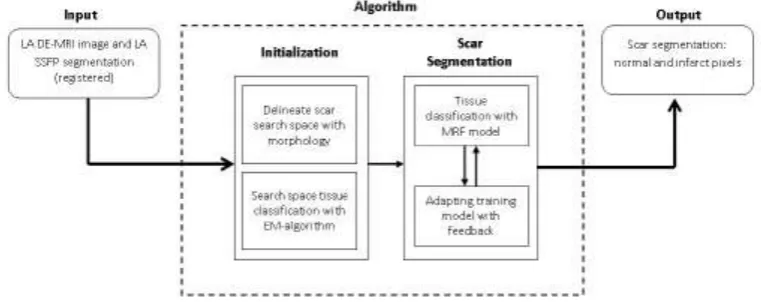
Fig. 2 shows an overview of the algorithm. The inputs were a DE-MRI image and a segmentation of the LA
from an anatomical scan. The LA segmentation was obtained from the b-SSFP whole-heart scan by an
automatic approach based on a statistical shape model [34], and was followed where necessary by manual
correction by a human rater (throughout this paper, the terms human rater or observer refer to someone who has
experience viewing tomographic images and can correctly identify the LA endocardium and fibrosis in the LA
myocardium). The b-SSFP image was chosen over MRA as it was acquired at the same phase in the cardiac
International Journal of Advanced Technology in Engineering and Science www.ijates.com
Volume No 03, Special Issue No. 01, March 2015 ISSN (online): 2348 – 7550
1081 |
P a g e
can be dif_cult to resolve the differences between this and the DE-MRI with registration. The anatomical imageswere registered to the DE images using the DICOM header data, and then refined by rigid and affine registration
steps [35]. Affine registration was necessary to account for the differing PV angles in the scans. This defined the
endocardial LA boundary in the DE images.
FIGURE 2
.
An overview of the steps involved in the segmentation process. The pipeline takes as
input MRI images and outputs binary segmentations (rounded boxes). The processing pipeline
is illustrated here with each separate stage in the algorithm. Smaller boxes represent sub-stages.
The scar segmentation stage is iterative as indicated by the bi-directional arrows.
2.5 Scar Segmentation
Segmentation of scars from DE-MRI images can be defined as assigning a label fp €{non-scar; scar} for every voxel p in the search space of the image. The search space is defined as a region _3 mm from the endocardial border obtained from the atrial geometry extraction. This is within the limits of atrial wall [23]. Given the
observed intensities in the atrial wall and prior knowledge of scars, the segmentation problem is solved using a
probabilistic framework where the maximum a posteriori (MAP) estimate is computed using Bayes' theorem:
Arg max p(f/I)=(p(I/f) p(f))/p(I)
F
where f is the total label configuration and I are all observed intensities in the image. The image likelihood
p(I/f) describes how likely is the observed image given a label configuration f. The prior p(f) encodes any prior knowledge of the healthy and scar tissue classes.
2.6 Intensity Models
International Journal of Advanced Technology in Engineering and Science www.ijates.com
Volume No 03, Special Issue No. 01, March 2015 ISSN (online): 2348 – 7550
1082 |
P a g e
The negative logarithm or the log-likelihood gives the total intensity energy contributed by each voxel:We first consider the intensity energy contribution from the scar tissue class, i.e. for the function p(I/fp = 1) and then for the non-scar class.
2.7 Smoothness Constraint
To ensure smoothness and avoid discontinuities in the final segmentation, the Eprior term of the MRF energy function in Eq. 3 penalised for assigning different labels to neighbouring voxels sharing similar intensity levels.
The Lorentzian error norm was employed, which is a robust metric for measuring intensity differences within a
neighbourhood
The scale _ can be estimated from the DE-MRI image and depends on the variance of the actual scar and
non-scar tissue class intensity distributions. With decreasing scale, the algorithm becomes less forgiving to small
differences in intensities. Given that it is technically challenging to acquire high quality DE-MRI scans that
show a clear distinction between scar and non-scar tissue, a larger value for the scale is almost always preferred
2.8 Optimization
The optimization of the MRF energy function in Eq. 2 yields the desired image segmentation for scar. In [15], it
was shown that it is possible to _nd the global optimum of functions of this type using the graph-cut method. In
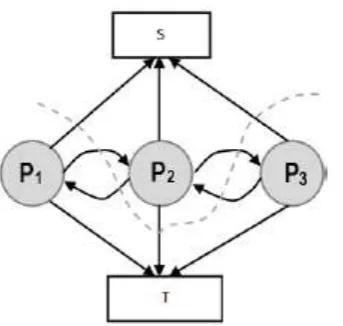
the graph-cut method, the MRF energy function is converted to a directional graph and the minimum s-t cut gives the desired segmenta- tion. A graph G D hV; Ei with two terminal nodes s and t representing the scar and healthy segmentation labels. The graph has a set of nodes V for every voxel in the image and E is the set of edges connecting these nodes (see Fig. 3). There are edges connecting every voxel to the two terminal nodes
International Journal of Advanced Technology in Engineering and Science www.ijates.com
Volume No 03, Special Issue No. 01, March 2015 ISSN (online): 2348 – 7550
1083 |
P a g e
Fig 3
. An illustration of an s-t cut through a simple graph that represents the energy functional of animage containing only 3 voxels.
The total cost of an s-t cut is equivalent to the sum of the edge weights the cut passes through. Fig. 3 graph of an image with only 3 voxels computes a possible segmentation. Note how the t-links are assigned a value based on the affinity of the node to the particular class label. In a similar way, the n-links represent affinity for neighbouring voxels, holding nodes with similar intensities together and resisting to a cut passing through them
resulting in a labeling of neighbouring voxels into two separate tissue classes.
III. EXPERIMENTS
The algorithm was evaluated on both numerical phantom andreal patient MRI datasets as described below.
3.1 Numerical Phantom Data
In the rest of the paper, the true location of scar is referred to as the ground-truth for scar. The extent of scarring
during ablation is non-deterministic and there is also confounding pre-ablation fibrosis. Therefore, identifying
locations where ablations were made is not sufficient to be a surrogate for the ground truth for scar. Moreover,
there is a high degree of inter- and intra-observer variability in manual segmentations of scar. These make
evaluating algorithms more difficult and challenging. To overcome these issues, numerical phantoms were
employed to extensively validate the algorithm.
3.1.1 Phantom Construction
The phantom was constructed in a four step process. The result of some steps is shown in Fig. 4. In the _rst step
the LA geometry was extracted from a typical patient dataset. In the second step, a 2.5 mm wall was constructed
around the LA. This represented LA wall. In a third step, regions were manually drawn within the constructed
LA wall; these regions represented scar. In the final fourth step, intensities were sampled randomly from
pre-determined distributions. These distributions belong to LA wall and blood-pool, and are measured and obtained
from real MRI data. This ensured likeness of the phantoms to real MRI. Scar was filled with intensities from
International Journal of Advanced Technology in Engineering and Science www.ijates.com
Volume No 03, Special Issue No. 01, March 2015 ISSN (online): 2348 – 7550
1084 |
P a g e
This ratio emulated the selection of different inversion times for nulling the blood pool and was varied inexperiments that follow. It is important to simulate partial voluming, anisotropic voxel sizes and noise in the
phantoms. An anisotropic blur was applied with a kernel size of 2 mm in the through-plane direction and 1 mm
in the in-plane direction. Gaussian white noise (_ D 0; _ D 1) was added to the image.
Fig 4
. Images of a single-slice through a phantom taken at each stage of its construction process: (a) the phantom template with blood pool (BP) and atrial wall (AW) outlined semi-automatically usingmorphological dilation; scar (SC) drawn manually. (b) Assignment of intensity levels drawn randomly
from pre-defined Gaussian distributions, with separate distributions for each tissue class. (c) In-plane and
through-plane blurring followed by the addition of Gaussian white noise. Abbreviations: L - left side, R -
right side.
3.1.2 Phantom Experiments
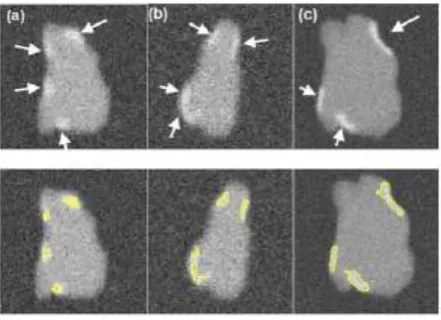
Numerical phantoms were generated by varying the SC-BP contrast ratio between 1.0 to 3.0. Some instances of
these phantoms can be seen in Fig. 5. This evaluated the algorithm's performance on scar with varying contrast
in relation to blood pool. The noise in the phantoms was maintained at signal-to-noise (SNR) of 9.0. This was
the average SNR observed on a cohort of clinical datasets. Training (n D 50) and testing (n D 50) data sets were generated accordingly. To make training as realistic as possible, it was separately trained on SC-BP ratios:
1.5_1.8 and 1.8_2.1. The algorithm was compared to ground-truth using the Dice overlap co-efficient [37].
FIGURE 5
.
Single slices through three different phantoms with numerically generated scars
indicated by the arrows (Top row). BP contrast is varied keeping SNR constant at 9.0.
SC-BP: (a) 1.4, (b) 1.6 and (c) 1.8. The segmentations from the algorithm are also shown (Bottom
row). In a separate experiment, the SNR was varied from 4 to 16 along with the SC-BP contrast
International Journal of Advanced Technology in Engineering and Science www.ijates.com
Volume No 03, Special Issue No. 01, March 2015 ISSN (online): 2348 – 7550
1085 |
P a g e
the above experiments on scar enhancement and noise variation, the performance of the
algorithm and fixed models (FWHM and n-SD) were compared on the same dataset. Five
separate phantoms were used from which 200 different scarred regions were identified and
their SC-BP contrast ratio noted. The accuracy with each method segmented each of the 200
regions was measured with Dice and reported.
3.1.3 Clinical Data
A total of 15 clinical human datasets were available. In these set of experiments, segmentations from the
algorithm were compared to the combined manual segmentations of three observers. In addition to this, the
algorithm was also compared to fixed models: FWHM and n-SD methods. Training for the algorithm was accomplished using the leave-one-out principle, where 14/15 datasets were used for training and 1/15 used for
testing. In the test scan, segmentation performance was measured both locally and globally for the image. For
local comparison, performance on individual sections of scar was measured (a total of 155 regions were
considered) and for a global comparison, total scar volume was measured. The pre-processing (left atrium
geometry extraction and registration) was the same for each approach. Three experienced observers manually
segmented scars in each DE-MRI scan. They were combined to generate a consensus segmentation or pseudo
-ground truth for each scan. This is necessary in order to consolidate inter-observer variability’s. Segmentations
were combined using the STAPLE algorithm described in [38]. For each voxel, a probability estimate for the
scar label could be computed. The STAPLE ground-truth was then be obtained by considering voxels to be scar
if their probability is greater than 0.7, or 70%. This is a reasonable threshold capable of generating a strong
consensus segmentation (In [38] the authors chose a lower consensus at 50%). To explore this threshold further,
an experiment was performed by varying the threshold. Segmentations were available from five experienced
observers on a random subset of the clinical datasets. The segmentations were combined using STAPLE and
three thresholds were considered:1) < 20%, 2) _ 20% and 3) _ 70%. This generated different consensus
segmentations with varying degrees of consensus against which the algorithm's performance was measured.
Finally, to further explore whether better training of the algorithm leads to better segmentations and thus better
performance, different instances of the algorithm are evaluated by incrementing the number of training set.
It is important to note that segmentations from the proposed algorithm were obtained without any user interact-
tion necessary at any step of the algorithm. The most com putationally demanding step was that of graph-cuts.
On images of the resolution described above, there are typically 50 000_100 000 nodes that require processing.
However, each step of the iterative process took less than a minute. The total running time of the proposed
approach is less than a minute on a 2.5 GHz PC.
3.2 Evaluation Metrics
To our experience, there is no single metric which works best for comparing segmentation overlaps. We chose
two different metrics to quantify segmentation overlap.
3.2.1 Regional Overlap
International Journal of Advanced Technology in Engineering and Science www.ijates.com
Volume No 03, Special Issue No. 01, March 2015 ISSN (online): 2348 – 7550
1086 |
P a g e
where X is the region in ground-truth and Y is the region in the algorithm. jX \ Y j is total overlapping pixels and jXj; jY j are total number of pixels in each region. A Dice of 100 denotes perfect overlap.3.2.1
Sensitivity And Specificity
The proportion of true positives and true negatives in the detection process was analyzed by means of Receiver
Operating Characteristic (ROC) curves where possible.
3.2.3 Total Scar Volume
Segmentations were also compared by measuring the total scar volume. This is mostly how scar is quantified
and inter preted in clinical studies [39] and also serves as an important indicator for the total scar burden on the
atrium.
IV. RESULTS
4.1 Numerical Phantoms
4.1.1 Scar Contrast
Fig. 6 show results from testing the algorithm on phantoms generated by varying the SC-BP contrast.
Segmentation overlap with known true location of scarwas measured using Dice.The algorithm performs well
within its training range with median Dice _ 80 in both ranges: 1:5 _ SC-BP _ 1:8 [Fig. 6(a)] and 1:8 _ SC-BP _
2:2 [Fig. 6(b)]. Outside its training area, the algorithm showed that it is able to adapt to excellent SC-BP contrast
(_ 2:2) and good segmentations were achieved. Values of SC-BP explored in this experiment included realistic
DE-MRI values but SC-BP _ 3:0 is very difficult to achieve in practice. To summarise, this experiment
evaluated the algorithm across a wide dynamic SC-BP con- trast range and the algorithm's approximation of
ground truth was found to be good.
4.1.2 Noise Variation
Fig. 7 show results from testing the algorithm on phantoms generated by varying SNR. The SNR is varied
between 4 and 16. The algorithm is trained on datasets generated with SC-BP ranging between 1:8 _ SC-BP _
2:1. Results show that SC-BP dictates over SNR for achieving good segmentations. Note segmentations are poor
with SC-BP D 1:2 when SNR D 4 and with SNR D 16. But this is improved when SC-BP _ 1:8 demonstrating
that the algorithm is robust to noise. SNR in actual DE-MRI is typically around 9.0 and the
International Journal of Advanced Technology in Engineering and Science www.ijates.com
Volume No 03, Special Issue No. 01, March 2015 ISSN (online): 2348 – 7550
1087 |
P a g e
Fig 6
.
Performance of algorithm on numerical phantoms with increasing SC-BP contrast and
SNR fixed at 9.0. Each graph is an instance of the algorithm: (a) trained on 1.5 to 1.8, and (b)
trained on 1.8 to 2.1. The trend-lines show the median. Boxes in the plot indicate the 9th, 25th,
50th, 75th and 91st percentiles
Fig 7. Performance of algorithm on numerical phantoms with varying SNR. The SNR is varied
between 4 to 16. The median Dice segmentation overlap is plotted for the trend line shown.
4.1.3 Comparison With Fixed Models
Fig. 8 show how the algorithm and fixed models per- formed on the same datasets. A total of 200 scarred
International Journal of Advanced Technology in Engineering and Science www.ijates.com
Volume No 03, Special Issue No. 01, March 2015 ISSN (online): 2348 – 7550
1088 |
P a g e
overlap accuracy noted for each method. This allowed each method to be evaluated on specific SC-BP ratiosand the plots in Fig. 8 show the segmentation accuracy trend. Fixed models 3,4,6-SD generated better
segmentations than FWHM when scar contrast is between 1.2 to 2.2. However, FWHM improved substantially
with higher scar contrast (SC-BP > 2:2 in Fig. 8), which is when the 50 percent cut-off was more reasonable.
Overall, as illustrated in Fig. 8, the algorithm maintained good accuracy when compared to fixed models in
numerical phantoms.
Fig 8.
Comparing performance of algorithm with fixed models on numerical phantoms. Fixed
models namely 3-SD, 4-SD, 6-SD and FWHM were evaluated. The trend-lines show the median
Dice computed from 200 different scarred regions obtained from 5 separate phantoms
The failure of FWHM revealed in this experiment is further illustrated in Fig. 9 (see columns 1 and 2). When the
contrast in scar is not high, 50 percent of maximal signal as considered in FWHM, is not optimal and leaks in
segmentation are inevitable [Fig. 9 (row 3)].
Fig 9. Instances where 50% cut-off in FWHM is not optimal. First row: Original images of
phantom with variable scar contrast. Second row: Algorithm's segmentation. Third row:
International Journal of Advanced Technology in Engineering and Science www.ijates.com
Volume No 03, Special Issue No. 01, March 2015 ISSN (online): 2348 – 7550
1089 |
P a g e
4.2 Clinical Data
4.2.1 Comparison With Fixed Models Using Overlap Metric
In the clinical datasets, performance of algorithm and fixed models were tested by measuring overlap with
pseudo ground-truth (STAPLE) and comparing segmentation outputs in terms of scar volumes. For assessing
performance based on overlap, each method was tested on individual SC-BP contrast levels: 1.0, 1.4, 1.8, 2.2,
2.6 and 3.0. This was possible by sampling 155 individual scarred regions from the clinical scans, measuring
their SC-BP contrast ratio and testing how well each method segmented it. Results are given in Fig. 10.
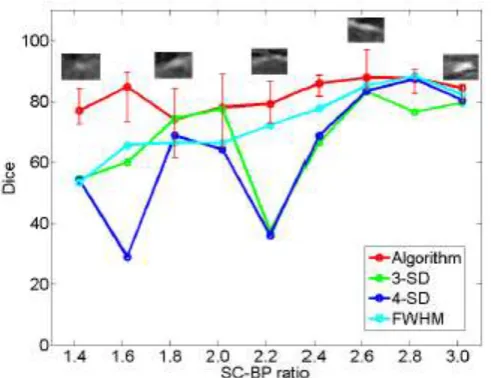
FIGURE 10
.
Comparing performance of fixed models with algorithm on patient scans. The
performance over a total of 155 scarred regions are shown here. The trend-lines show the
median. Five example snapshots of scar are also given to illustrate SC-BP contrast levels. Note
SC-BP ratios analysed range from 1.4 to 3.0. Fixed models perform less accurately than the
algorithm when SC-BP is less than 2.5. At excellent and rarely attainable SC-BP levels (>> 2:5),
this trend changes and all models perform equally well. FWHM and the algorithm perform
consistently across the entire SC-BP range used in this experiment, with 3- and 4-SD models
outputting less accurate segmentations on scar at certain SC-BP contrast levels (1.6,2.2). This is
because scar is not adequately segmented by 3- or4-SD due to non-overlapping intensities
between model and actual. These results highlight that the algorithm performs consistently on
actual DE-MRI and across realistic SC-BP levels. Performance of fixed models is found to be
variable
.
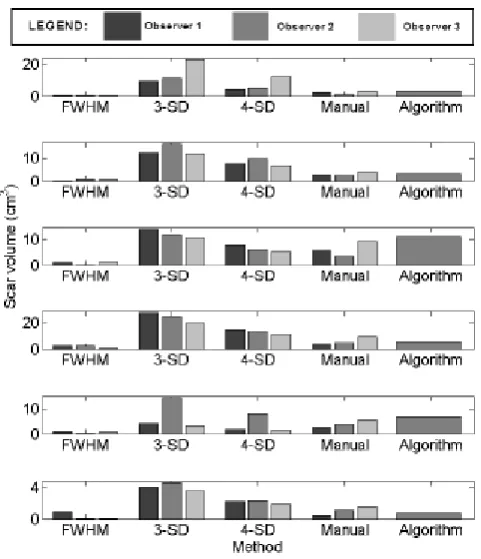
4.2.2 Comparison with Fixed Models Using Quantified Volume
Assessment of performance using total scar volume reported by each method is important as this is mostly how
scar is quantified and interpreted for clinical studies. Results obtained from scar volume quantified by each run
of method are given in Fig. 11 for six clinical datasets. Each method was run three separate times with inputs
International Journal of Advanced Technology in Engineering and Science www.ijates.com
Volume No 03, Special Issue No. 01, March 2015 ISSN (online): 2348 – 7550
1090 |
P a g e
method was compared to the volume reported by three independent experienced observers (see Manual method
in Fig. 11).
Fig 11. Assessment of inter-observer variation in fixed models, manual segmentation and
algorithm. Six clinical cases are illustrated here
The algorithm correlated well with manual scar volumes. All three runs of the algorithm produced the same
result as depicted by the single bar in Fig. 11. All other methods showed vari- ations in the quantified volume.
This variation was primarily due to observer variability in selecting normal or hyper-enhanced tissue required
for _xed models. This high- lights that a standardized quantification for scar using a fixed model approach
(FWHM and SD) can be difficult to achieve.
4.2.3 Qualitative Comparison On De-Mri Scans
Segmentation quality was assessed by overlaying region contours over the original DE-MRI slices. It was
generally observed that in images with excellent SC-BP contrast, contours followed scar boundaries accurately
in both algorithm and fixed models. Fixed models 3 and 6-SD were less accurate. An example is shown in Fig.
15 where segmentations similar to the consensus segmentation [Fig. 15(b)] could be obtained. Fixed models
showed poor correlation when the SC-BP contrast is not sufficiently high. An example is shown in Fig. 16
where FWHM and the algorithm fared well with the algorithm providing a better approximation to the
consensus segmentation. Fixed models 3 and 6-SD have gross errors in their segmentations due to a large
overlap of intensities between their scar model and actual healthy tissue. Such segmentations are not usable for
International Journal of Advanced Technology in Engineering and Science www.ijates.com
Volume No 03, Special Issue No. 01, March 2015 ISSN (online): 2348 – 7550
1091 |
P a g e
4.2.4 Analyzing Algorithm Performance By Varying Consensus Levels Of Pseudo Ground
Truth
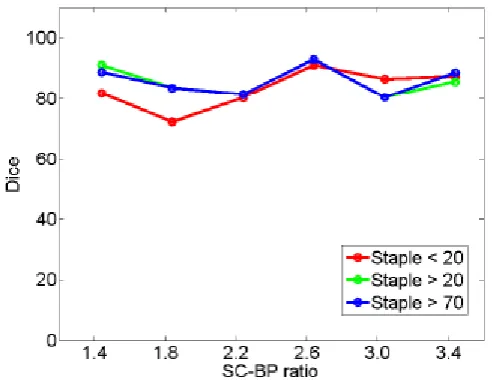
The algorithm's performance on a subset of clinical datasets was evaluated by varying the STAPLE threshold
and thus the level or strength of the consensus segmentation. Results are plotted in Fig. 12 showing
segmentation overlap on three consensus levels. There was a small difference in the algorithm's performance
noted when BP contrast levels were low. With higher BP the performance was nearly similar. When
SC-BP contrast is poor, the consensus or agreement between observers can be low. By lowering the acceptable
consensus threshold (to 20%), dubious pixels are included in the ground truth where 2/10 observers would agree
that it is scar. As the algorithm generally selects pixels which have close affinity to its models and priors,
dubious pixels are omitted by the algorithm. There is a decrease in performance when segmentations with low
consensus are presented.
Fig 12
.
Performance trends of the algorithm on STAPLE consensus ground truths. Each curve
represents performance on consensus segmentations, with consensus varied from 20% (weak) to
70% (strong).
4.2.5 Analyzing Algorithm Performance By Varying Strength Of The Training Set
The algorithm's training set was incrementally increased and its segmentation overlap performance was noted.
There was little notable difference in the performance. Results are plotted in Fig. 13. Training had an impact on
performance only when the training set and test set had similar SC-BP contrast levels. If these vastly differ,
initial iterations of the algorithm generate poor segmentations and these progressively become better in later
iterations when the scar intensity model is continuously adapted with feedback from previous iterations (refer to
'adapting training step' in Fig. 2).
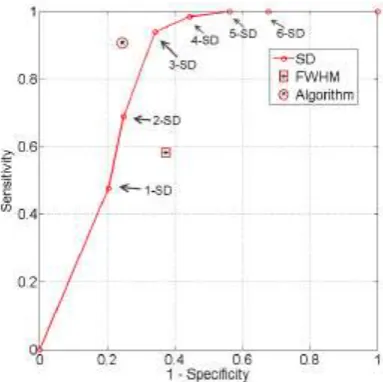
4.2.6 Roc Analysis
The true positive and true negatives rates were analyzed by looking at sensitivity and specifity of the algorithm
and the fixed-models. A ROC curve between sensitivity and specificity was only plotted, where each point on
International Journal of Advanced Technology in Engineering and Science www.ijates.com
Volume No 03, Special Issue No. 01, March 2015 ISSN (online): 2348 – 7550
1092 |
P a g e
where the decision threshold was varied between n D 1 to n D 6. Since both the algorithm and FWHM do not
require a decision threshold for obtaining segmentations, their overall sensitivity and specificity on all datasets
was plotted
Fig 13.
Performance trends of the algorithm by increasing the training set. Each curve
represents an instance of the algorithm trained on n D 9; 7; 5 datasets
.
Fig 14.
ROC analysis of the algorithm, FWHM and n-SD method. The ROC curve is only
plotted for the n-SD method and the overall sensitivity and specificity is plotted for the
parameter-less proposed algorithm and FWHM.
The n-SD fixed model approach has low specificity for n D 1; 2; 3 and increasingly mislabelled healthy tissues as scar. However, its higher sensitivity indicated that scar tissues are mostly labelled correctly. This reversed
International Journal of Advanced Technology in Engineering and Science www.ijates.com
Volume No 03, Special Issue No. 01, March 2015 ISSN (online): 2348 – 7550
1093 |
P a g e
the ROC plot. The FWHM fell behind in this global ROC analysis and this is in-line with earlier tests onindividual regions where it was shown that its 50% cut-off is too low for scar with low SC-BP, but more suitable
for high SC-BP ratios.
FIGURE 15.Segmentations on clinical scans I: (a) original scan, (b) consensus STAPLE segmentation, (c)
Algorithm, (d) FWHM, (e) 3-SD, (f) 6-SD. Arrows show enhancement. This scan has excellent SC-BP
contrast and all methods except 3-SD and 6-SD demonstrate good accuracy. Abbreviations: AO - Aorta,
LA - Left atrium, R - Right side, L - left side.
Fig 16.
Segmentations on clinical scans II: (a) original scan, (b) consensus STAPLE
International Journal of Advanced Technology in Engineering and Science www.ijates.com
Volume No 03, Special Issue No. 01, March 2015 ISSN (online): 2348 – 7550
1094 |
P a g e
V. DISCUSSION
In this work a segmentation algorithm was investigated for fast quantification of fibrosis in DE-MRI scans. The
proposed algorithm offers the following advantages: 1) Segments fibrosis without requiring a manual outline of
remote or healthy myocardium. This is beneficial since remote myocardium tends to have low SNR and manual
selection suffers from\ high observer variability. 2) The algorithm does not routinely generate false positives as
was observed in existing fixed model methods: FWHM and n-SD. 3) The algorithm is developed particularly for
left atrial fibrosis segmentation and all present approaches were developed for ventricle scans. 4) Analysis of
DE-MRI scans was shortened to an average of 30 seconds when compared to existing semi-automatic
approaches requiring 2 minutes per scan on average. The algorithm along with existing approaches was tested
on both numerical phantoms and clinical datasets. Numerical phantoms provided with a wide dynamic range of
variation.
VI. CONCLUSION
DE-MRI is becoming a preferred method for non-invasive imaging of myocardial scar. The amount of scar
predicts whether a patient will respond to RFCA procedures. Thus accurately quantifying scar is important and
has implications in patient selection for RFCA. Currently, SD and FWHM fixed thresholding models are
frequently utilized clinically to quantify scar due to their simplicity. Present literature has only evaluated these
methods using global image measures and thus their deficiencies could not be noted. In this work, there are two
important contributions: 1) SD and FWHM fixed models are evaluated on individual regions of scar and thus
various scar contrast ratios are examined to show they fail when some contrast levels do not suit the selected
threshold in SD or 50% cut-off in FWHM. This is further confirmed and validated in numerical phantoms. 2)
the proposed algorithm has the potential to standardize quantification of scar from routine clinical scans; it
requires no threshold selection and is shown to be more sensitive and specific than SD and FWHM in scar
detection. Accurate and standardized quantification will allow appropriate selection of patient candidates for
RFCA. This could considerably reduce the recurrence rates, procedure risk and high financial burden associated
with unsuccessful RFCA treatment. Patients not deemed appropriate for RFCA based on their scar assessment
could be treated far less invasively using drug therapy. A standardized quantification of scar in DE-MRI is thus
necessary.
ACKNOWLEDGMENT
Dandu Nasreen Sulthana born in kalakada, chittoor dist, A.P, India in 1992. He received B.Tech Degree in
Electronics & Communication Engg. From JNT University, Anantapur, India. Presently he is pursuing M.Tech(DECS) from Annamacharya Institute of Technology & Sciences, Rajampet, A.P., India.
S. Asif Hussain
did his B. Tech and M.Tech,P.hd in Electronics&Communication Engineering (ECE) fromJNT University,Anantapur, India. He is an associative professor in the Department of ECE at the
Annamacharya Institute of Technology & Sciences (an Autonomous Institute), in Rajampet, Andhra Pradesh.
International Journal of Advanced Technology in Engineering and Science www.ijates.com
Volume No 03, Special Issue No. 01, March 2015 ISSN (online): 2348 – 7550
1095 |
P a g e
series analysis, and biomedical image processing. He is a life member of professional bodies like ISTE,BMESI,IACSIT, IAENG etc. He has presented many research papers at national and international conferences.
REFERENCES
[1] A. Go et al., ``Prevalence of diagnosed atrial fibrillation in adults,'' J. Amer. Med. Assoc., vol. 285, no. 18, pp. 2370_2375, 2001.
[2] J. P. Piccini et al., ``Incidence and prevalence of atrial fibrillation and associated mortality among medicare beneficiaries: 1993_2007,'' Circulat., Cardiovascular Qual. Outcomes, vol. 5, no. 1, pp. 85_93, 2012. [3] M. Haissaguerre et al., ``Spontaneous initiation of atrial fibrillation by ectopic beats originating in the
pulmonary veins,'' New England J. Med., vol. 339, no. 10, pp. 659_666, 1998.
[4] C. Pappone et al., ``Circumferential radiofrequency ablation of pulmonary vein ostia: A new anatomic approach for curing atrial fibrillation,'' Circulation, vol. 102, no. 21, pp. 2619_2628, 2000.
[5] H. Oral et al., ``Circumferential pulmonary-vein ablation for chronic atrial fibrillation,'' New England J. Med., vol. 354, no. 9, pp. 934_41, 2006.