Therapeutics and Clinical Risk Management
Dovepress
R e v i e w
open access to scientific and medical research
Open Access Full Text Article
Treatment of acute otitis externa with
ciprofloxacin otic 0.2% antibiotic ear solution
R Mösges
M Nematian-Samani A eichel
institute of Medical Statistics, informatics and epidemiology, Faculty of Medicine, University of Cologne, Germany
Correspondence: Ralph Mösges institute of Medical Statistics, informatics and epidemiology, Faculty of Medicine, University of Cologne, Lindenburger Allee 42, 50931 Cologne, Germany Tel +49 221 478 3456
Fax +49 221 478 3465 email [email protected]
Background/objective: An inflammation of the cutis and subcutis of the external auditory
canal is a primary symptom in cases of acute otitis externa. It is usually treated locally, since this type of therapy ensures a high concentration of the drug and interacts at the site of inflammation with no systemic effects. This systematic review compares the efficacy of treatment using a ciprofloxacin 0.2% solution with other therapeutic options.
Methods: After compiling a catalog of search terms, medical databases were searched systemati cally for randomized, controlled studies. This search initially yielded a total of 38 studies which were then evaluated by three independent reviewers. The number of studies was subsequently reduced to 14: six studies using a ciprofloxacin 0.2% solution, and eight studies using both 0.2% and 0.3% solutions.
Results: The studies included in the review demonstrate the statistical equivalence between the ciprofloxacin solution (0.2%) and the reference products PNH (a combination of polymyxin B, neomycin sulfate and hydrocortisone), auriculum powder, and a ciprofloxacin foam with respect to the cure rate. The research groups consistently observed high in vitro activity of ciprofloxacin against Pseudomonas aeruginosa.
Conclusion: This systematic review confirms the hypothesis of ciprofloxacin’s noninferiority in the treatment of otitis externa, in terms of the cure rate and microbiological eradication.
Keywords: otitis externa, ciprofloxacin, antibiotic, ear solution, efficacy
Introduction
Otitis externa
Inflammation of the cutis and subcutis of the external auditory canal is a primary symptom in acute otitis externa. An affected pinna can be a secondary symptom. Occasionally, the eardrum can also be inflamed.1 Inflammation of the ear can occur in
an acute and a chronic form. In some cases, the clinical picture develops to a necrotizing stage. Statistically, one in ten people suffers at least once in his life from otitis externa. In 10% of cases, the inflammation is bilateral.2 Currently, many different therapies are
applied to ease the symptoms. The purpose of this review is to compare the efficacy of ciprofloxacin 0.2% antibiotic ear solution with other treatment options.
General etiology
An intact auditory canal possesses the ability to cleanse itself by migrating the sloughed epithelia cells outwards with cerumen. The main function of cerumen is to protect the membrane that lines the auditory canal against inflammation. Cerumen maintains the soft consistency of the membrane and also ensures water resistance. Whether it also
Therapeutics and Clinical Risk Management downloaded from https://www.dovepress.com/ by 118.70.13.36 on 27-Aug-2020
For personal use only.
Number of times this article has been viewed
This article was published in the following Dove Press journal: Therapeutics and Clinical Risk Management
Dovepress Mösges et al
has an antimicrobial effect has not yet been clarified. If the cerumen is pushed from the outer part of the auditory canal toward the eardrum using a cotton swab, its effectiveness is lowered. Should bacteria then enter the ear canal, the risk of progressive bacterial growth increases. This can occur particularly in swimming pools, which is why the term “swimmer’s ear” is commonly used.3
Likewise, congenital or acquired anatomical anomalies (eg, narrow passages), the use of hearing aids, or the aforementioned radical ear and ear canal hygiene with the complete removal of cerumen or drainage can destabilize the sensitive environment and thus predispose the external auditory canal to inflammation.1
Pathogens
The pH of the external auditory canal varies between 5.0 and 5.7 and is therefore slightly acidic. Such conditions inhibit bacterial growth.1 In 1981, Brook examined the physiological,
normal flora of the external auditory canal in pediatric patients. In descending order of concentration, colonization with aerobes such as Staphylococcus epidermidis, diphthe roid species, and ahemolyzing streptococci as well as anaerobes such as propionibacterium acnes, was observed.
Pseudomonas aeruginosa and Staphylococcus aureus act
pathogenically against such flora and are cited in the technical literature as the main causative organisms. Sporadically, viruses and fungi can also cause otitis externa.1,4
Clinical picture
Bacterial otitis externa in its mild form can be accompanied by only minor pain and subdued swelling. In its severe form, however, the symptoms are associated with excruciating pain, otorrhea, and the complete closure of the external auditory canal. The result is conductive deafness.1
Apart from the typical acute form of otitis externa, special forms can appear such as otitis externa circumscripta, which emanates from a hair follicle inflammation, or otitis externa necroticans (“maligna”), which can take a fulminant course and therefore requires maximum, usually intravenous treatment.1,5
In the majority of published clinical studies on the treatment of otitis externa, pain, swelling, otorrhea, and redness are evaluated as typical parameters for rating the clinical signs.
Therapy
Otitis externa is usually treated locally.1 Ototoxic antibiotics
such as aminoglycosides should not be applied in patients
with a perforated tympanic membrane. If an antibiogram has been made, the optimum antibiotic otologic drug can be determined. If none is available, “calculated antibiosis” is recommended, ie, a drug is used that is effective against the two most common pathogens S. aureus and P. aeruginosa.6
Individual decisions must be made in case of resistance. Often, an antiseptic ingredient such as aluminium acetate/ acetic acid is added to the antibiotic. Due to their acidic properties, these substances are especially suitable for lowering the pH value in the auditory canal, so that the main pathogens P. aeruginosa and S. aureus, which reach their optimal pH between 6.5 and 7.3, do not obtain perfect growing conditions or, in an ideal case, are killed.1,7
For years, glucosteroids had the reputation of primarily reducing the swelling of the auditory canal. Newer studies, however, also ascribe to them antibacterial and antifungal effects in otitis externa. Yet the number of available studies on steroidal monotherapies is still rather low.5
Nonsteroidal antiinflammatory drugs should also be administered for pain relief.1
Ciprofloxacin
Ciprofloxacin is a synthetic antibiotic with a broad spectrum of activity and has the chemical formula C17H18FN3O3. Belonging to the group of fluoroquinolones (gyrase inhibitors), it acts as a bactericide particularly against gramnegative pathogens by inhibiting DNA replication (topoisomerase II) and interfering in the enzymatic activity of topoisomerase IV, both of which are required for the bacteria’s cell division, transcription, repair, and recombination. It is moderately effective against gram positive pathogens, while it shows no relevant activity against fungi or parasites.8
In 75% of cases, ciprofloxacin is eliminated unchanged by renal excretion. It is also metabolized through the liver and eliminated through bile and is thus subject to enterohepatic circulation.8 Ciprofloxacin ranks among the most effective
fluoroquinolones against P. aeruginosa and can also show very high in vitro activity against enterobacteria and Haemophilus influenzae. Being the only antibiotic available for oral treatment of infections caused by P. aeruginosa, it is administered in particular to treat chronic purulent otitis media, and can be applied locally and systemically to treat acute otitis externa.9
Ciprofloxacin constitutes the drug of choice for treating severe otitis externa in children and adolescents as it has been the subject of extensive investigation and is available in syrup form.10
Therapeutics and Clinical Risk Management downloaded from https://www.dovepress.com/ by 118.70.13.36 on 27-Aug-2020
Dovepress Acute otitis externa and ciprofloxacin otic
Besides its systemic effect, ciprofloxacin is used more often topically for its local effects in the form of eye or ear drops. This fluoroquinolone thereby possesses a very broad spectrum of indications which range from complicated uri nary tract infections, infections of the respiratory system, skin and bones, to severe typhoid salmonella infections, or bacterial conjunctivitis. Known side effects include gastro intestinal complaints (nausea, diarrhea, dyspepsia), disorders of the central nervous system (headache, nervousness/rest lessness, dizziness, tremor, hyposmia), and skin irritations and eosinophilia.11
The undesirable effects of systemic treatment can be largely avoided through topical administration, however. A high local concentration is in fact attained, yet resorption does not occur. Therefore, itching or burning at the applica tion site or superinfections of the ear can arise due to robust pathogens. Allergic reactions occur very rarely.10 Systemic
side effects of local application occasionally include dizzi ness and headache.
Materials and methods
Search methods used to identify studies
The electronic databases Cochrane Ear, Nose and Throat Dis orders Group Trials Register, The Cochrane Central Register of Controlled Trials (CENTRAL), PubMed, MEDLINE, EMBASE, and Web of Science were systematically searched for randomized, controlled studies. Using MeSH, a search term catalog was compiled with the following terms that were then entered in combinations: external ear,
inflam-mation of the external ear, acute otitis externa, quinolone, ciprofloxacin 0.2%, ciprofloxacin, solution, ear drops, drug therapy, anti-bacterial agents, antifungal, antibiotics.
Restrictions with respect to language, publication date, or publication status were not initially made. This review was also limited to published work. The last search was started on 1 March 2011.
Patients
Patients (both children and adults) with the diagnosis of acute otitis externa were included in the review. Not included were patients who suffered from a chronic form of external otitis or otitis media.
Parameters
Symptom improvement and microbiological eradication were defined as primary outcome parameters. Time to com plete disappearance of symptoms and any side effects were observed as further aspects.
Results
Search results
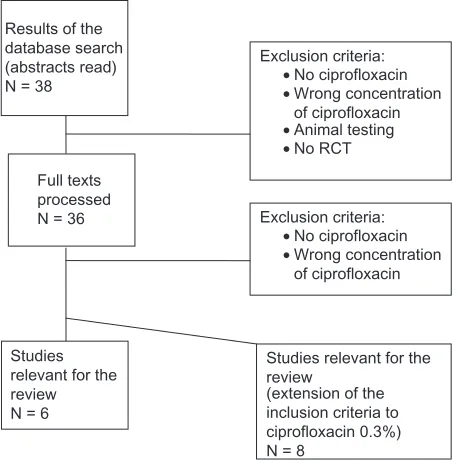
Thirtyeight studies satisfied our search criteria, and we examined the abstracts of these. When this process was completed, the number of suitable studies decreased to 36; we then worked through their full texts (Figure 1). After three reviewers came to a consensus concerning further elimina tions, six and eight studies, respectively, were available for this systematic review (Table 1).12–19
We were denied access to the full text of two of these eight randomized controlled trials. The comprehensive publication by Lildholdt et al15 and the text by Psifidis et al18 could not be
requested, which is why detailed data are missing.
Unpublished studies were not considered in this systematic review.
Background (included studies)
Treatment doses
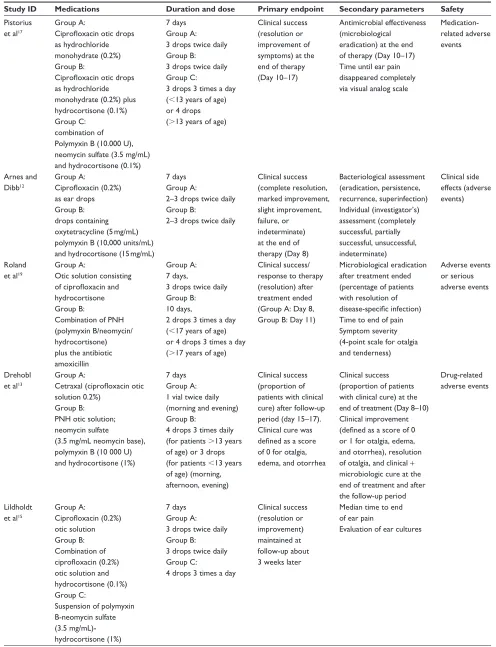
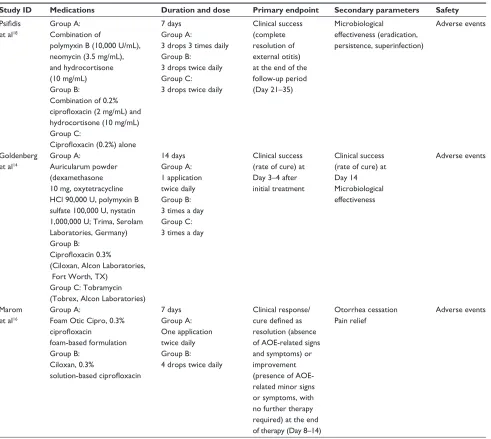
Besides six studies that investigated a 0.2% ciprofloxacin drug, we also included two more studies that used a 0.3% ciprofloxacin product (Table 2).14,16
The ciprofloxacin dose of the ear solutions used in the individual studies was comparable. The majority planned a 7day application phase, during which the study participants applied three drops to each ear twice daily. Marom et al16
raised the dose to four drops (0.3% ciprofloxacin), and Goldenberg et al14 doubled the application period to 2 weeks.
The exact dose remains unclear in the study by Drehobl et al13
in which the study period was also 7 days, with applications twice daily, but the study specified the dose as ampoule (“vial”) rather than stating the number of drops.
Outcomes assessed
Clinical response
Clinical success was, in part, classified differently and measured at various points in times (Table 2). In addition, the definition of treatment success varied slightly among the studies. Some studies defined clinical success as complete recovery (resolution) with complete freedom from symptoms. In others, it included mild symptoms, but a distinct improvement from the initial value. In principle, the symptoms and signs typical for the disease and used in the evaluation were similar. They included edemas, pain, or hypersensitivity of the ear, and otorrhea.
Time to recovery – time to end of pain
Time to end of pain constituted a relevant target value for three of the studies included:15,17,19 Pistorius et al17 determined
Therapeutics and Clinical Risk Management downloaded from https://www.dovepress.com/ by 118.70.13.36 on 27-Aug-2020
Dovepress Mösges et al
Table 1
e
ligibility criteria (included studies)
Study ID Study type Blinding Randomization groups # Participants Inclusion criteria Exclusion criteria
Pistorius et al
17
equivalence study
No blinding
3-arm study; Group A (ciprofloxacin), Group B (ciprofloxacin
+
hydrocortisone), Group C (PNH) 842; 702 available for analysis (Group A: n
=
2
39
,
Group B: n
=
236,
Group C: n
=
228)
Patients
.
1 year
Clinical signs and symptoms of external otitis within 2 days of study entry, including edema of the external auditory canal on otoscopic examination, tenderness with movement of the pinna, and ostalgia
Perf
orated tympanic membrane;
acute otitis media;
in
vasiv
e malignant chr
onic otitis externa;
dermatitis
in the ar
ea of the aff
ected ear
; r
ecent diagnosis
and tr
eatment of otitis externa (within 30 da
ys
of study entr
y);
kno
wn fungal inf
ection of the ear
; furuncles; mastoiditis; stenosis; exostosis; tumors
of the ear
; significant underl
ying disease
, including
diabetes mellitus,
or other imm
unocompr
omised
conditions;
pr
egnancy or lactation;
allerg y to carbo xyquinolones, pol ym
yxin B sulfate
, neom
ycin
sulfate
, or h
ydr
ocor
tisone;
administration of
another in
vestigational drug within 30 da
ys of study
enr
olment;
or pr
evious enr
olment in this study
Arnes and Dibb
12
equivalence study 2-arm study; Group A (ciprofloxacin), Group B (Terra-Cortril polymyxin B) 30 Group A: n
=
16
Group B: n
=
14
Patients
$
18 years of age
Diagnosis of otitis externa by an otorhinolaryngological practice
Pr
egnancy
, use of systemic antimicr
obial thera
py
,
ov
er
t fungal ear inf
ection,
perf
orated ear
drum,
histor
y of mid
dle ear surger
y, allerg
y to
quinolone derivativ
es.
Roland et al
19
equivalence study (statistical noninferiority) Observer blinded 2-arm study; Group A (ciprofloxacin
+
hydrocortisone), Group B (PNH
+
amoxicillin)
206 Group A: n
=
106
Group B: n
=
100
Patients
.
1 year
Diagnosis of mild, moderate or severe AO
e
Severity of symptoms at least “mild” AO
e symptoms present
.
2 days
Refrain from water immersion of ear during study Give informed consent Agree to comply with protocol requirements
AO
e symptoms present
,
2 days
Non-intact tympanic membrane
, with
or without otor
rhea
Acute otitis media,
malignant otitis externa,
CSOM,
mastoiditis,
sebor
rheic dermatitis of the external
auditor
y canal,
or other suppurativ
e noninf
ectious
disease disor
ders
Kno
wn or suspected fungal,
viral, or m ycobacterium ear inf ection Diabetes, imm unosuppr essiv e disor der , renal disease , hepatitis, monon ucleosis, chr onic diar rhea, nar cotic abuse C
oncomitant use of ear washes,
systemic antibiotic
agents,
ster
oids,
analgesics other than acetaminophen,
an d an y pr ep ar at io n th at m ig ht o bs cu re s tu dy d es ig n Kno
wn or suspected allerg
y to an
y component of
study medication(s).
Drehobl et al
13
Non-inferiority
evaluator- blind 2-arm study; Group A: ciprofloxacin Group B: PNH 628 Group A: n
=
319
Group B: n
=
309
Patients
.
1 year,
diagnosis of acute diffuse otitis externa of
,
3 weeks’
duration, at least a score of 2 (moderate severity) for the symptoms otalgia, edema of the external auditory canal on otoscopic examination, and a score of at least 1 (mild severity) for the symptom otorrhea Treatment with any investigational drug or quinolone antibiotic in the preceding 30 days; use of topical or systemic antibiotics in the preceding 7 da
ys;
use of an
y medication f
or tr
eatment of otitis
externa or otitis media in the pr
eceding 36 hours;
sebor
rheic dermatitis of the external auditor
y canal;
chr
onic otitis externa or otor
rhea of 3 w
eeks’
duration;
kno
wn fungal inf
ection of the ear
; mastoid
disease or mastoid surger
y (within 60 da
ys of study
entr
y);
tympanostom
y tubes cur
rentl
y in place or
remo
ved within 3 months of
Therapeutics and Clinical Risk Management downloaded from https://www.dovepress.com/ by 118.70.13.36 on 27-Aug-2020
Dovepress Acute otitis externa and ciprofloxacin otic
Table 1
e
ligibility criteria (included studies)
Study ID Study type Blinding Randomization groups # Participants Inclusion criteria Exclusion criteria
Pistorius et al
17
equivalence study
No blinding
3-arm study; Group A (ciprofloxacin), Group B (ciprofloxacin
+
hydrocortisone), Group C (PNH) 842; 702 available for analysis (Group A: n
=
2
39
,
Group B: n
=
236,
Group C: n
=
228)
Patients
.
1 year
Clinical signs and symptoms of external otitis within 2 days of study entry, including edema of the external auditory canal on otoscopic examination, tenderness with movement of the pinna, and ostalgia
Perf
orated tympanic membrane;
acute otitis media;
in
vasiv
e malignant chr
onic otitis externa;
dermatitis
in the ar
ea of the aff
ected ear
; r
ecent diagnosis
and tr
eatment of otitis externa (within 30 da
ys
of study entr
y);
kno
wn fungal inf
ection of the ear
; furuncles; mastoiditis; stenosis; exostosis; tumors
of the ear
; significant underl
ying disease
, including
diabetes mellitus,
or other imm
unocompr
omised
conditions;
pr
egnancy or lactation;
allerg y to carbo xyquinolones, pol ym
yxin B sulfate
, neom
ycin
sulfate
, or h
ydr
ocor
tisone;
administration of
another in
vestigational drug within 30 da
ys of study
enr
olment;
or pr
evious enr
olment in this study
Arnes and Dibb
12
equivalence study 2-arm study; Group A (ciprofloxacin), Group B (Terra-Cortril polymyxin B) 30 Group A: n
=
16
Group B: n
=
14
Patients
$
18 years of age
Diagnosis of otitis externa by an otorhinolaryngological practice
Pr
egnancy
, use of systemic antimicr
obial thera
py
,
ov
er
t fungal ear inf
ection,
perf
orated ear
drum,
histor
y of mid
dle ear surger
y, allerg
y to
quinolone derivativ
es.
Roland et al
19
equivalence study (statistical noninferiority) Observer blinded 2-arm study; Group A (ciprofloxacin
+
hydrocortisone), Group B (PNH
+
amoxicillin)
206 Group A: n
=
106
Group B: n
=
100
Patients
.
1 year
Diagnosis of mild, moderate or severe AO
e
Severity of symptoms at least “mild” AO
e symptoms present
.
2 days
Refrain from water immersion of ear during study Give informed consent Agree to comply with protocol requirements
AO
e symptoms present
,
2 days
Non-intact tympanic membrane
, with
or without otor
rhea
Acute otitis media,
malignant otitis externa,
CSOM,
mastoiditis,
sebor
rheic dermatitis of the external
auditor
y canal,
or other suppurativ
e noninf
ectious
disease disor
ders
Kno
wn or suspected fungal,
viral, or m ycobacterium ear inf ection Diabetes, imm unosuppr essiv e disor der , renal disease , hepatitis, monon ucleosis, chr onic diar rhea, nar cotic abuse C
oncomitant use of ear washes,
systemic antibiotic
agents,
ster
oids,
analgesics other than acetaminophen,
an d an y pr ep ar at io n th at m ig ht o bs cu re s tu dy d es ig n Kno
wn or suspected allerg
y to an
y component of
study medication(s).
Drehobl et al
13
Non-inferiority
evaluator- blind 2-arm study; Group A: ciprofloxacin Group B: PNH 628 Group A: n
=
319
Group B: n
=
309
Patients
.
1 year,
diagnosis of acute diffuse otitis externa of
,
3 weeks’
duration, at least a score of 2 (moderate severity) for the symptoms otalgia, edema of the external auditory canal on otoscopic examination, and a score of at least 1 (mild severity) for the symptom otorrhea Treatment with any investigational drug or quinolone antibiotic in the preceding 30 days; use of topical or systemic antibiotics in the preceding 7 da
ys;
use of an
y medication f
or tr
eatment of otitis
externa or otitis media in the pr
eceding 36 hours;
sebor
rheic dermatitis of the external auditor
y canal;
chr
onic otitis externa or otor
rhea of 3 w
eeks’
duration;
kno
wn fungal inf
ection of the ear
; mastoid
disease or mastoid surger
y (within 60 da
ys of study
entr
y);
tympanostom
y tubes cur
rentl
y in place or
remo
ved within 3 months of
study entry; known perforation of the eardrum or perforation within 6 months of study entry; known significant underlying disease, including diabetes mellitus, human immunodeficiency virus infection or other immunocompromised conditions; known hypersensitivity to any component of the study medications; pregnancy or lactation; previous enrolment in this study; or any other condition that might interfere with participation in the study.
Lildholdt et al
15
equivalence study
No blinding
3-arm study; Group A: ciprofloxacin Group B: ciprofloxacin
+
hydrocortisone Group C: PNH
838
Patients with clinical signs and symptoms of acute, diffuse external otitis
Psifidis et al
18
equivalence study
No blinding
3-arm study; Group A: PNH Group B: ciprofloxacin
+
hydrocortisone Group C: ciprofloxacin 91 Group A: 32 Group B: 29 Group C: 30
Patients
$
18 years,
external otitis for a duration of
#
3 weeks
Goldenberg et al
14
equivalence study
No blinding
3-arm study; Group A (auricularum powder), Group B (ciprofloxacin), Group C (tobramycin) 120 Group A: n
=
40
Group B: n
=
40
Group C: n
= 40 Patients $ 18 years, A
eO diagnosed by an otolaryngologist,
signed informed consent
Prior tr
eatment with other dr
ops or systemic
antibiotics,
sensitivity to an
y of the drugs used
or their contents,
or perf
oration of the tympanic
membrane
. All patients w
er
e instructed to a
void
moistur
e and w
etness of the ear during the course
of their tr
eatment.
Marom et al
16
equivalence study
Open-label
2-arm study; Group A: ciprofloxacin as foam Group B: ciprofloxacin as solution 63 Group A: n
=
32
Group B: n
=
31
Adult men and nonpregnant, nonlactating women (
$
18 years)
diagnosed with unilateral AO
e lasting
,
3 weeks of presumably bacterial origin
(on the basis of otoscopy findings), pinna or tragal tenderness and an intact tympanic membrane
K no w n al le rg y to q ui no lo ne s; to pi ca l o r or al an tib io tic th er ap y tr ea tm en t u p to 3 d ay s be fo re en ro lm en t o r tr ea tm en t w ith lo ng -a ct in g an tib io tic s up to 7 d ay s be fo re e nr ol m en t; A O e fr om p re su m ed fungal origin; $ 80 % o cc lu sio n of th e EA C ; c on cu rr en t in fe ct io n re qu iri ng s ys te m ic a nt im ic ro bi al th er ap y; hi st or y of d ia be te s m el lit us o r im m un e dy sf un ct io n or c ur re nt im m un os up pr es siv e th er ap y; s eb or rh ei c de rm at iti s or o th er d er m at ol og ic al d iso rd er s of th e eA C ; c on ge ni ta l a bn or m al iti es o f t he e A C or o bs tr uc tiv e bo ny e xo st os is, m as to id , o r ot he r su pp ur at iv e no ni nf ec tio us e ar d iso rd er ; p re se nc e of m id dl e ea r ef fu sio n; E A C a bn or m al o to sc op y fin di ng s (s uc h as a bs ce ss , p ol yp , o r gr an ul at io n tis su e) ; a ny se rio us u nd er ly in g di se as e; p re vi ou s A O e w ith in
30 days before enrolment; and participation in
a st ud y w ith in ve st ig at io na l d ru g or d ev ic e w ith in 30 d ay s be fo re e nr ol m en t. D at a w er e co lle ct ed o n
age, gender, and medical and surgical history.
Abbreviations:
AO
e, acute otis externa;
eAC, external auditory canal; CSOM, chronic suppurative otitis media.
Therapeutics and Clinical Risk Management downloaded from https://www.dovepress.com/ by 118.70.13.36 on 27-Aug-2020
Dovepress Mösges et al
Table 2 Study design (included studies)
Study ID Medications Duration and dose Primary endpoint Secondary parameters Safety
Pistorius et al17
Group A:
Ciprofloxacin otic drops as hydrochloride monohydrate (0.2%) Group B:
Ciprofloxacin otic drops as hydrochloride monohydrate (0.2%) plus hydrocortisone (0.1%) Group C:
combination of Polymyxin B (10.000 U), neomycin sulfate (3.5 mg/mL) and hydrocortisone (0.1%)
7 days Group A: 3 drops twice daily Group B: 3 drops twice daily Group C:
3 drops 3 times a day (,13 years of age) or 4 drops (.13 years of age)
Clinical success (resolution or improvement of symptoms) at the end of therapy (Day 10–17)
Antimicrobial effectiveness (microbiological eradication) at the end of therapy (Day 10–17) Time until ear pain disappeared completely via visual analog scale
Medication-related adverse events
Arnes and Dibb12
Group A:
Ciprofloxacin (0.2%) as ear drops Group B: drops containing oxytetracycline (5 mg/mL) polymyxin B (10,000 units/mL) and hydrocortisone (15 mg/mL)
7 days Group A:
2–3 drops twice daily Group B:
2–3 drops twice daily
Clinical success (complete resolution, marked improvement, slight improvement, failure, or indeterminate) at the end of therapy (Day 8)
Bacteriological assessment (eradication, persistence, recurrence, superinfection) individual (investigator’s) assessment (completely successful, partially successful, unsuccessful, indeterminate)
Clinical side effects (adverse events)
Roland et al19
Group A:
Otic solution consisting of ciprofloxacin and hydrocortisone Group B:
Combination of PNH (polymyxin B/neomycin/ hydrocortisone) plus the antibiotic amoxicillin
Group A: 7 days,
3 drops twice daily Group B: 10 days,
2 drops 3 times a day (,17 years of age) or 4 drops 3 times a day (.17 years of age)
Clinical success/ response to therapy (resolution) after treatment ended (Group A: Day 8, Group B: Day 11)
Microbiological eradication after treatment ended (percentage of patients with resolution of disease-specific infection) Time to end of pain Symptom severity (4-point scale for otalgia and tenderness)
Adverse events or serious adverse events
Drehobl et al13
Group A:
Cetraxal (ciprofloxacin otic solution 0.2%)
Group B: PNH otic solution; neomycin sulfate
(3.5 mg/mL neomycin base), polymyxin B (10 000 U) and hydrocortisone (1%)
7 days Group A: 1 vial twice daily (morning and evening) Group B:
4 drops 3 times daily (for patients .13 years of age) or 3 drops (for patients ,13 years of age) (morning, afternoon, evening)
Clinical success (proportion of patients with clinical cure) after follow-up period (day 15–17). Clinical cure was defined as a score of 0 for otalgia, edema, and otorrhea
Clinical success (proportion of patients with clinical cure) at the end of treatment (Day 8–10) Clinical improvement (defined as a score of 0 or 1 for otalgia, edema, and otorrhea), resolution of otalgia, and clinical +
microbiologic cure at the end of treatment and after the follow-up period
Drug-related adverse events
Lildholdt et al15
Group A:
Ciprofloxacin (0.2%) otic solution Group B: Combination of ciprofloxacin (0.2%) otic solution and hydrocortisone (0.1%) Group C:
Suspension of polymyxin B-neomycin sulfate (3.5 mg/mL)- hydrocortisone (1%)
7 days Group A: 3 drops twice daily Group B: 3 drops twice daily Group C:
4 drops 3 times a day
Clinical success (resolution or improvement) maintained at follow-up about 3 weeks later
Median time to end of ear pain
evaluation of ear cultures
(Continued)
Therapeutics and Clinical Risk Management downloaded from https://www.dovepress.com/ by 118.70.13.36 on 27-Aug-2020
Dovepress Acute otitis externa and ciprofloxacin otic
this parameter via the Visual Analog Scale; Lildholdt et al15
and Roland et al19 rated pain perception in diary entries on
a scale of 0–4.
Goldenberg et al14 evaluated pain intensity at two set
times: Day 3–4 and Day 14.
An alternative approach to analyzing pain was chosen by Marom et al16 who, instead of the time to end of pain,
evaluated the basic development of pain perception based on daily entries via the visual analog scale.
Microbiological response
With the exception of one study, the microbiological effectiveness of the study medication, among others, was measured as the secondary outcome measure.16
Upon inclusion of the patients, samples were taken to determine the causative organisms. This procedure was repeated at the end of treatment (or alternatively after a followup period). The classification scheme was defined differently in the individual studies:
Drehobl et al13 divided the samples into “no exudates
observed”, “exudate was present, but there was no growth on culture”, “exudate was present, and culture showed some patho gen growth at baseline or patient’s response was clinical failure”, or “exudate was present, and culture showed one or more new pathogens” and assessed them at the end of treatment and also after a followup period. Patients who tested positive for bacteria at the beginning of the study and then tested negative later during the study came into the category “microbial cure.”
Table 2 (Continued)
Study ID Medications Duration and dose Primary endpoint Secondary parameters Safety
Psifidis et al18
Group A: Combination of
polymyxin B (10,000 U/mL), neomycin (3.5 mg/mL), and hydrocortisone (10 mg/mL) Group B:
Combination of 0.2% ciprofloxacin (2 mg/mL) and hydrocortisone (10 mg/mL) Group C:
Ciprofloxacin (0.2%) alone
7 days Group A:
3 drops 3 times daily Group B:
3 drops twice daily Group C: 3 drops twice daily
Clinical success (complete resolution of external otitis) at the end of the follow-up period (Day 21–35)
Microbiological effectiveness (eradication, persistence, superinfection)
Adverse events
Goldenberg et al14
Group A:
Auricularum powder (dexamethasone 10 mg, oxytetracycline HCl 90,000 U, polymyxin B sulfate 100,000 U, nystatin 1,000,000 U; Trima, Serolam Laboratories, Germany) Group B:
Ciprofloxacin 0.3% (Ciloxan, Alcon Laboratories, Fort worth, TX)
Group C: Tobramycin (Tobrex, Alcon Laboratories)
14 days Group A: 1 application twice daily Group B: 3 times a day Group C: 3 times a day
Clinical success (rate of cure) at Day 3–4 after initial treatment
Clinical success (rate of cure) at Day 14 Microbiological effectiveness
Adverse events
Marom et al16
Group A:
Foam Otic Cipro, 0.3% ciprofloxacin
foam-based formulation Group B:
Ciloxan, 0.3%
solution-based ciprofloxacin
7 days Group A: One application twice daily Group B: 4 drops twice daily
Clinical response/ cure defined as resolution (absence of AOe-related signs and symptoms) or improvement (presence of AOe-related minor signs or symptoms, with no further therapy required) at the end of therapy (Day 8–14)
Otorrhea cessation Pain relief
Adverse events
Abbreviation: AOe, acute otis externa.
Therapeutics and Clinical Risk Management downloaded from https://www.dovepress.com/ by 118.70.13.36 on 27-Aug-2020
Dovepress Mösges et al
Table 3 Results
Study ID Clinical response Time to
end of pain
Microbiological response
Definition Numbers Bacteriological
assessment
Effectiveness
Pistorius et al17 Clinical resolution
or improvement
Group A: 93% Group B: 90% Group C: 87%
Group A: 4.7 days Group B: 3.8 days Group C: 4.1 days
Pseudomonas
aeruginosa: 67%
Bacteriological eradication (including presumed eradication) Group A: 92% Group B: 95% Group C: 87% Arnes and Dibb12 Complete success,
partial success, unsuccessful, indeterminate
Complete success Group A: 14 (87.5%) Group B: 5 (35.7%) Partial success Group A: 2 (12.5%) Group B: 4 (28.6%) Unsuccessful or indeterminate Group A: 0 Group B: 5 (35.7%)
P. aeruginosa
Group A: 6 (37.5%) Group B: 7 (50%)
eradication Group A: 15 (93.75%) Group B: 7 (50%) Persistence Group A: 1 (6.25%) Group B: 7 (50%) Superinfection Group A: 1 (6.25%) Group B: 0
Roland et al19 Cured or
improved 7 days after treatment ended
Group A: 94.3% Group B: 89.8%
Group A: 6 days Group B: 6 days
eradication Group A: 67 (95.7%) Group B: 53 (89.8%) Superinfection Group A: 1 (1.4%) Group B: 2 (3.4%) Failure
Group A: 2 (2.9%) Group B: 4 (6.8%) Drehobl et al13 Clinical cure of
otitis symptoms after follow-up (score 0 for otalgia, edema, and otorrhea)
Group A. 86.6% Group B: 81.1%
P. aeruginosa
Group A: 87.5% Group B: 78.6%
Staphylococcus aureus
Group A: 72.7% Group B: 75.9% Lildholdt et al15 Resolution or
improvement after follow- up period (3 weeks later)
Group A: ∼95% Group B: ∼95%
Median: 4.8 days (no statistically significant difference)
P. aeruginosa: 64% Persisting P. aeruginosa
Group A: 9 (8.7%) Group B: 11 (9.4%) Group C: 22 (21.4%)
Psifidis et al18 Complete resolution
of external otitis
Group A: 84.4% Group B: 100% Group C: 96.7%
P, aeruginosa
Group A: 18 (56.3%) Group B: 13 (44.8%) Group C: 11 (36.7%)
eradication Group A: 72% Group B: 83.3% Group C: 93.8% Persistence Group A: 12% Group B: 5.6% Group C: 6.3% Superinfection Group A: 16% Group B: 11.1% Group C: 0% Goldenberg et al14 Cured at day
3–4 after initial treatment
Group A: 86% Group B: 77% Group C: 56%
P.: 86 (72%)
S. aureus: 22 (18%)
Proteus mirabilis: 6 (5%)
Coagulase-negative
Staphylococcus: 6 (5%)
P. aeruginosa
Group A: 0 Group B: 0 Group C: 10%
(Continued)
Therapeutics and Clinical Risk Management downloaded from https://www.dovepress.com/ by 118.70.13.36 on 27-Aug-2020
Dovepress Acute otitis externa and ciprofloxacin otic
Table 3 (Continued)
Study ID Clinical response Time to
end of pain
Microbiological response
Definition Numbers Bacteriological
assessment
Effectiveness
S. aureus
Group A: 0 Group B: 2.5% Group C: 0 Staphylococcus coagulase-negative Group A: 0 Group B: 5% Group C: 10% Marom et al16 Resolution (absence
of signs and symptoms) or improvement (presence of symptoms with no further therapy required)
1) PP population Resolution Group A: 25 (86.2%) Group B: 22 (78.6%) improvement Group A: 4 (13.8%) Group B: 6 (21.4%) 2) iTT population
Resolution +
improvement Group A: 93.6% Group B: 93.8%
Abbreviations: iTT, intention-to-treat; PP; per-protocol.
Arnes et al12 Pistorius et al17, and Psifidis et al18 defined
outcome critaria from “eradication” to “superinfection” or “reinfection” and examined the microbiological activity at the end of treatment and after followup. The change or the reduction of pathogenic infections could be determined in this way for each group and each pathogen.
In contrast, Lildholdt et al15 in their study evaluated the
number of persisting cultures after the end of treatment, which was also relevant for Goldenberg et al14 that is, whether
and to what extent bacterial proliferation still existed after therapy was completed.
Adverse events
In the majority of the studies, adverse events were evaluated as an expression of safety. Four studies specified such events additionally13,16,17,19 by explicitly analyzing medication
related adverse events; three studies evaluated clinical side effects/adverse events in general.12,14,18 Whether adverse
events were of relevance in the study by Lildholdt et al remains unclear.
Timing of outcome assessment
The relevant point in time at which the primary and second ary outcome measures were assessed differed among the studies. Whereas in some studies the data were included in the
analysis directly after the application phase was completed, others defined the time after a followup phase as decisive for the analysis. In only one case, the data from Day 3–4 formed the basis of the analysis.14
In the studies that conducted an analysis with data directly after treatment had ended, the point in time varied between Day 8 and Day 17. In the studies that collected data relevant to the target value after a followup phase, the time span ranged from Day 15 to Day 35.
Study results
Clinical cure
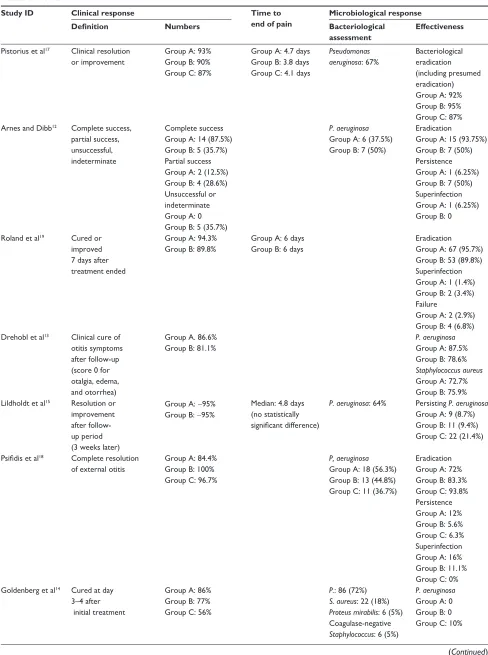
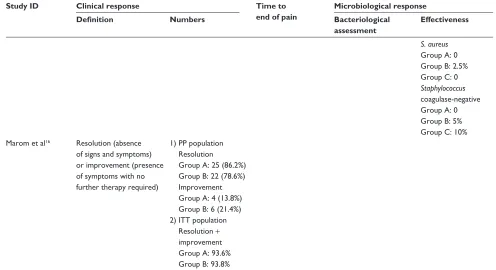
The included studies demonstrate the statistical equivalence between ciprofloxacin (0.2%) and the reference product PNH (Table 3). Some studies investigated the cure rate after completion of treatment.12,17,19 Here, the rate for patients
whose condition fell into the category “clinical resolution” or “improvement” ranged between 93% and 100%. Studies that evaluated the outcome parameters after a followup period showed cure or improvement rates between 86.6% and 96.7%.13,15,18 Consequently, comparably high success
rates for the ciprofloxacin 0.2% drug were determined in these studies.
Similar results were ascertained in the studies that inves tigated a higher concentration of ciprofloxacin (0.3%).14,16 In
Therapeutics and Clinical Risk Management downloaded from https://www.dovepress.com/ by 118.70.13.36 on 27-Aug-2020
Dovepress Mösges et al
Table 4 Adverse events
Study ID Adverse events Medication-related AE Type and severity Premature
discontinuation
Pistorius et al17 Group A: 66
(23%) Group B: 70 (25%) Group C: 55 (20%)
Group A: 6% Group B: 5% Group C: 5%
Headache, ear pain, pruritus mainly mild or moderate in severity
Group A: 1 Group B: 4 Group C: 3
Arnes and Dibb12 None
Roland et al19 Group A: 6
(5.7%) Group B: 5 (5%)
Group A: 0 Group B: 1 (1.0%)
Mostly not serious (1 breast cancer)
11 (in most cases otitis media)
Drehobl et al13 Group A: 11
(3.8%) Group B: 11 (3.6%)
ear pruritus, headache, ear discomfort, application site pain/burning mostly of mild intensity
Group A: 3 Group B: 3
Lildholdt et al15
Psifidis et al18 None
Goldenberg et al14 None
Marom et al16 Group A: 7
(21%) Group B: 5 (16%)
Group A: 4 (12%) + 1 serious Ae Group B: 1 (3%)
Otalgia, tinnitus, pruritus, diarrhea, headache, throat pain
Group A: 1 Group B: 0
Full texts processed N = 36
Exclusion criteria: •No ciprofloxacin •Wrong concentration
of ciprofloxacin •Animal testing •No RCT
Exclusion criteria: •No ciprofloxacin •Wrong concentration
of ciprofloxacin Results of the
database search (abstracts read) N = 38
Studies relevant for the review N = 6
Studies relevant for the review
(extension of the inclusion criteria to ciprofloxacin 0.3%) N = 8
Figure 1 Flow chart.
the study by Goldenberg et al14 about 77% of patients who
were treated with ciprofloxacin fulfilled the definition of cure on Day 3–4. After 14 days, the rate reached 100%. Marom et al16 found study participants in the perprotocol population
to be 100% symptomfree at the end of a 7day treatment phase. In the intenttotreat population, complete resolution
was observed in 93.6% of the patients in the ciprofloxacin group at the same point in time.
Microbial cure
The authors consistently identified high in vitro activity of ciprofloxacin against P. aeruginosa with high eradication rates of 83.3% to 95.7% and rare cases of persisting organ isms or superinfections (Table 3).
Psifidis et al18 and Pistorius et al17 who, besides cipro
floxacin 0.2%, also tested a combination of ciprofloxacin 0.2% and hydrocortisone 0.1%, observed that the addition of hydrocortisone raised the eradication rate even further.
In the treatment of patients who had an infection with
S. aureus bacteria, ciprofloxacin proved effective in 72.7%
of patients.
Adverse events
No adverse events occurred in some studies,12,18,19 but in oth
ers, incidents that could be attributed to the medication took place at a rate of 3%–6% in the groups treated with cipro floxacin (Table 4). The majority of studies spoke exclusively of mild sideeffects, with similar frequencies in the individual groups; premature discontinuation was rarely reported. Drehobl et al13 and Pistorius et al17 name headache, earache,
and itching at the site of application as the main symptoms that could be linked to the trial medication.
Therapeutics and Clinical Risk Management downloaded from https://www.dovepress.com/ by 118.70.13.36 on 27-Aug-2020
Dovepress Acute otitis externa and ciprofloxacin otic
Risk of bias
The greatest susceptibility to systematic distortions of the study results constituted the insufficient blinding of the included studies. While two study groups explicitly men tioned using nonblinding,16,18 four other authors made no
comment whatsoever in this regard.12,14,15,18 Based on the fact
that blinding was not addressed, however, it is to be assumed that blinding did not occur and the studies were openlabel. In the study by Drehobl et al13 the evaluator at least was blinded,
and only Roland et al19 conducted an observer/investigator
blinded study.
In addition, the randomization procedure remained unclear in a large proportion of the studies. Although all were randomized, controlled studies according to the pub lications, the randomization process was mentioned in only three studies.12,16,19
Another deficit with reference to the included studies was the absence of two full texts. We could only draw on the information from the abstracts by Lildholdt et al15 and
Psifidis et al18 because we were denied access to the complete,
comprehensive material.
Discussion
The outcome measure “clinical success” consistently shows higher success rates in patients treated with the fluoro quinolone, than in the control groups. At the same time, the authors point out – in addition to the effectiveness of the active ingredient – the absence of any ototoxicity and the low systemic exposure caused by ciprofloxacin.
In summary, clinical equivalence can be determined for both of the treatment possibilities ciprofloxacin/ hydrocortisone and PNH plus amoxicillin in adults and children. However, low systemic exposure, the absence of ototoxicity, and the smaller dose speak clearly for treatment with ciprofloxacin.
Ciprofloxacin stands out due to its low rate of side effects. Adequate safety is thereby given with this fluoroquinolone.
For this reason, ciprofloxacin is not only noninferior to other classes of antibiotics but also to antibiotic drugs that are combined with glucocorticoids.
Studies that evaluated microbiological activity come to the conclusion that the organism P. aeruginosa represents the main pathogen in the investigated population having acute otitis externa. The authors consistently ascertained high in vitro activity of ciprofloxacin against P. aeruginosa.
Special attention must be paid to patient compliance in the included studies. The lower the required application rate of the otologic drug, the more probable it is that the
patients adhere to therapy and apply the medicine regularly. Thus we can conclude that patients requiring fewer daily drug administrations will comply more closely with the treatment plan.
When considering the bias, and consequently the results, we should pay particular attention to a certain distortion: due to the different daily application rates of the otologic drugs used, doubleblinding of the study could not always be achieved.
The possibility of including a much larger number of clinical studies in this review would have existed if the question at hand had also applied to ciprofloxacin 0.3% solution.
Other studies not included in this review combined cipro floxacin 0.2% solution with the glucosteroid dexamethasone, which can be categorized as a glucocorticoid belonging to the active substance class two to three analogous to the clas sification of therapeutic index of topical dermatotherapy, and is thus to be considered potent.20
These combination drugs were in turn tested against “conventional” combination drugs such as PNH. The efficacy of ciprofloxacin could be therefore increased.
Conclusion
The studies included in this review demonstrate the statistical equivalence of ciprofloxacin (0.2%) and the reference product PNH, and thereby confirm the hypothesis of noninferiority in terms of the cure rate and microbiological eradication. The efficacy of ciprofloxacin 0.2% antibiotic ear solution can be acknowledged.
Disclosure
The authors report no conflicts of interest.
References
1. Neher A, Nagl M, Scholtz AW. Otitis externa: etiology, diagnostic and therapy. Hno. 2008;56(10):1067–1079.
2. Hajioff D, Mackeith S. Otitis externa. Clin Evid. 2010. pii: 0510. 3. Kaushik T, Malik T, Saeed S. Interventions for a acute otits externa.
Cochrane Database Syst Rev. 2010;(1):CD004740.
4. Brook I. Microbiological studies of the bacterial flora of the external auditory canal in children. Acta Otolaryngol. 1981;91(3–4):285–287. 5. Berghaus A, Rettinger G, Böhme G. Hals-Nasen-Ohren-Heilkunde.
Stuttgart: Hippokrates Verlag GmbH, 1996.
6. Osguthorpe JD, Nielsen DR. Otitis externa: review and clinical update.
Am Fam Physician. 2006;74(9):1510–1516.
7. Sander R. Otitis externa: a practical guide to treatment and prevention.
Am Fam Physician. 2001;63(5):927–936.
8. Scholz H, Schwabe U, (Hrsg.). Taschenbuch der arzneibehandlung –
angewandte pharmakologie. Berlin Heidelberg: Springer Verlag; 2005.
9. Lemmer B, Brune K, (Hrsg.). Pharmakotherapie – klinische
pharma-kologie. Heidelberg: Springer Medizin Verlag; 2007.
Therapeutics and Clinical Risk Management downloaded from https://www.dovepress.com/ by 118.70.13.36 on 27-Aug-2020
Therapeutics and Clinical Risk Management
Publish your work in this journal
Submit your manuscript here: http://www.dovepress.com/therapeutics-and-clinical-risk-management-journal
Therapeutics and Clinical Risk Management is an international, peer reviewed journal of clinical therapeutics and risk management, focusing on concise rapid reporting of clinical studies in all therapeutic areas, outcomes, safety, and programs for the effective, safe, and sustained use of medicines. This journal is indexed on PubMed Central, CAS,
EMBase, Scopus and the Elsevier Bibliographic databases. The manuscript management system is completely online and includes a very quick and fair peerreview system, which is all easy to use. Visit http://www.dovepress.com/testimonials.php to read real quotes from published authors.
Dovepress
Dovepress
Mösges et al
10. AWMF. Leitlinie: Antibiotikatherapie der Infektionen an Kopf und Hals.
Leitlinien der Deutschen Gesellschaft für Hals-Nasen-Ohren-Heilkunde, Kopf- und Hals-Chirurgie; 2008.
11. Shah PM. Ciprofloxacin. Int J Antimicrob Agents. 1991;1(2–3): 75–96.
12. Arnes E, Dibb WL. Otitis externa: clinical comparison of local ciprofloxacin versus local oxytetracycline, polymyxin B, hydrocortisone combination treatment. Curr Med Res Opin. 1993;13(3):182–186. 13. Drehobl M, Guerrero JL, Lacarte PR, Goldstein G, Mata FS, Luber S.
Comparison of efficacy and safety of ciprofloxacin otic solution 0.2% versus polymyxin Bneomycinhydrocortisone in the treatment of acute diffuse otitis externa*. Curr Med Res Opin. 2008;24(12): 3531–3542.
14. Goldenberg D, Golz A, Netzer A, Joachims HZ. The use of otic powder in the treatment of acute external otitis. Am J Otolaryngol. 2002;23(3): 142–147.
15. Lildholdt T, Gehanno P, Kehrl W, Leiberman A. Otitis externa treated by topical antibiotics. Otolaryngol Head Neck Surg. 1997; 117(2):P116.
16. Marom T, Yelin R, Goldfarb A, et al. Comparison of safety and efficacy of foambased versus solutionbased ciprofloxacin for acute otitis externa. Otolaryngol Head Neck Surg. 2010;143(4):492–499. 17. Pistorius B, Westberry K, Drehobl M, et al; Otitis Externa Study
Group. Prospective, randomized, comparative trial of ciprofloxacin otic drops, with or without hydrocortisone, vs polymyxin Bneomycin hydrocortisone otic suspension in the treatment of acute diffuse otitis externa. Infect Dis Clin Pract. 1999:8(8):387–395.
18. Psifidis A, Nikolaidis P, Tsona A, et al. The efficacy and safety of local ciprofloxacin in patients with external otitis: a randomized comparative study. Mediterranean Journal of Otology. 2005;1(1):20–23.
19. Roland PS, Belcher BP, Bettis R, et al; Cipro Study Group. A single topical agent is clinically equivalent to the combination of topical and oral antibiotic treatment for otitis externa. Am J Otolaryngol. 2008; 29(4):255–261.
20. Neurodermitis, Kontakekzem. Stiftung Warentest. http://www.test.de/ themen/gesundheitkosmetik/medikamente/vom_arzt/a_haut_haare/a_ ekzem_neurodermitis/a_ekzem_neurodermitis/bespr.med/. Accessed April 25, 2011.
Therapeutics and Clinical Risk Management downloaded from https://www.dovepress.com/ by 118.70.13.36 on 27-Aug-2020