173 Volume and Issues Obtainable at Center for Sustainability Research and Consultancy
Journal of Business and Social Review in Emerging Economies ISSN: 2519-089X (E): 2519-0326
Volume 4: Issue 2 December 2018 Journal homepage: publishing.globalcsrc.org/jbsee
An Empirical Study of Managers’ Intention to Hire Older Workers
1
Claudia Laua, 2Choong Chee Keongb, 3Wong Kee Luenc
1
Faculty of Business and Finance, Universiti Tunku Abdul Rahman, Malaysia, Email: [email protected]
2
Faculty of Business and Finance, Universiti Tunku Abdul Rahman, Malaysia, Email: [email protected]
3
Faculty of Business and Finance, Universiti Tunku Abdul Rahman, Malaysia, Email: [email protected]
ARTICLE DETAILS ABSTRACT
History
Revised format: Nov 2018 Available Online: Dec 2018
The study tested a modified Theory of Planned Behaviour model with an added variable of past experience to predict managers’ intention to hire older workers. Surveyed locations were the western coast of Peninsular Malaysia. A cross-sectional data was collected via personal administered questionnaires surveys (n=468). A response rate of 78% (M=59.6%; F=40.4%) was recorded. Models and hypotheses testing were performed using SEM-PLS.
Values from internal consistency reliability tests indicated all values were accepted and demonstrated a high level of reliability. Convergent and discriminant validities were well established. Both tolerance and VIF values suggested no potential collinearity problem. The modified model accounted R2=0.377. The findings suggested that the antecedents and intention were related and that the 3 hypotheses (H1, H2, and H3) were supported.
The empirical result derived is expected to bring awareness to business organizations on the benefits of a diversified workforce, a better understanding on the effects of attitudes, subjective norms and past experience on managers’ intention when hiring older workers. Relevant public policy makers are able to, from the outcome of the study, formulate and implement workplace good practices to help prolong older workers work life, which in turn would greatly relief the Government from financial burden due to unemployed older workers. In addition, the result further encourages more future research to enrich the body of knowledge of Malaysian research literature on ageing workforce.
© 2018 The authors, under a Creative Commons Attribution-NonCommercial 4.0 Keywords
Older Workers, Intention, Attitudes, Subjective Norms, Past Experience, Theory Of Planned Behaviour.
JEL Classification:
J69, C90, C92
Corresponding author’s email address: [email protected]
Recommended citation: 1Laua, C., 2Keongb, C.C., 3Luenc, W.K., (2018). The An Empirical Study of Managers’
Intention to Hire Older Workers. Journal of Business and Social Review in Emerging Economies, 4(2)173-184
DOI: 10.26710/jbsee.v4i2.506
1. Introduction
Plan). The labour gap continued to expand due to low fertility rate and reduced younger workforce added difficulties to the existing labour shortage problems. The labour shortage situation was further aggravated with some 80,000 private sector workers retired yearly (Oh, 2010).
Recruitment problems continued to surface, and organizations were compelled to fill their vacancies with foreign workers. There were 2.07 million legally registered foreign workers as at 31 December, 2014, and this number excluded the estimated 2.2 million illegal and undocumented foreign workers (Chu, 2015). This suggested heavy reliance of foreign workers by employers mainly due to local labour shortage. On the other hand, older workers’ labour force participation rate was noticeably low as they aged. The implemented Minimum Retirement Age Act 2012 (MRAA 2012) did not seem to help raise the labour participation rate, instead the rate on workers aged between 55 and 64 was reduced from 69.5% in 2013 to 67.6% in 2014 (Malaysia Labour Force Survey Report (MLFSR), 2014). This data indicated the gradual reduced labour force once workers passed the age of 55. However, due to expected 1.5 million new jobs to be created by 2020, skilled older workers are still much needed to fill the vacancies (Eleventh Malaysia Plan; Saieed, 2016). As part of the solution to labour shortage, Malaysia needs older workers to increase their labour force participation and to extend these workers’ working lives.
Older population emerged as an important market segment due to the fact that they are much healthier, better educated and lived longer compared to their predecessors. However, older workforce and age-related issues could only be overcome with employers’ understanding of older workers’ workplace attributes, and that this valuable older human resource could only be of great utilization with the willingness of employers to hire them.
This research investigated the relationships between managers’ attitude towards older workers, their social subjective norm and personal past experience with older workers and their intention to hire older workers. The present study aimed at predicting managers’ intention to hire older workers only and not their actual behavior in hiring older workers. Previous research identified older employees as those aged 50 and above since employment opportunity became low once they aged 50 and above (Abrams, Swift, Lamont & Drury, 2015; Chui, Chan, Snape & Redman, 2001; Earl, Taylor & McLoughlin, 2017; Kluge & Krings, 2008; Lu & Kao, 2010; Poulston & Jenkins, 2013; Vansteenkiste, Deschacht & Sels, 2015). Such identification supported Malaysian’s statistic which indicated the substantial reduction of labour participation rate for those aged 50 and above (MLFSR, 2010). Older workers in the present study referred to Malaysian workers, both males and females, of all ethnicity under non-managerial employment status or active job seekers aged 50 and above.
2. Literature Review
We identified the Theory of Planned Behaviour (TPB) with modification as the foundation of our study. TPB has been widely used in various studies and had proven its versatility in its application, such as in intention to quit smoking or alcohol (Paswan, Gai, & Sua, 2015; Soulakova, Li & Crokett, 2017), on online purchase intention (Lim, Yap & Lee, 2011); on crisis planning intention (Wang & Ritchie, 2012) or on fertility intention (Dommermuth, Klobas & Lappegard, 2011). Fraser, Ajzen, Johnson, Hebert & Chan (2011) had proven the usefulness of TPB to predict intention with a success rate of 67% of the variance and it provided greater understanding on respondents’ behavioral intent. The study concluded that TPB was one of the best-supported social psychological theories in predicting human behaviour. Ang, Ramayah & Amin (2015) on the employment of persons with disabilities in East Malaysia also proved the usefulness of TPB in predicting behevioural intention. The study applied a modified TPB model with attitude as a mediator to subjective norm and perceived behavioral control. Ang et al’s modified model reflected the flexibility of TPB model where the predictor of attitude to intention can be modified to serve as a mediator to other predictors of the original model; which shown that TPB was versatile in its usage and application to test behavioural intention.
175 immediate cause to his behaviour. Hence, attitude, subjective norm and perceived behavioural control were predictive functions of behavioural intention, and behavioural intention in turn predicted an overt behaviour (Ajzen & Fishbein, 1980). Therefore, it was appropriate to assume that intentions predict individual’s actual behaviour (Fichten et al., 2014).
Behavioural intention was defined as a measure of relationships between an individual and some actions, and how hard he was willing to perform the actions, and that behavioral intention was an individual’s decision or commitment to perform a given behavior (Ajzen & Fishbein, 1980). When an intention to perform a particular act was high, the likelihood of such action was equally high. In this study, intention referred to a measure of relationships between managers and their willingness to perform the actions of hiring older workers.
The assumption in TPB was that an individual’s attitude had a direct effect on his behavior. Therefore, when the individual evaluated a certain act which resulted in a positive outcome; he formed an attitude towards that particular action in the sense that his attitude led his intention to perform that particular act (Ajzen, 1991). Attitude was found to be the most important predictor of intention and there was a strong relationship between them (Hansen, Jensen & Solgaard, 2004; Lu et al, 2010; Lu, Kao & Hsieh, 2011). Likewise, managers’ attitudes towards ageism also affected older workers’ employment opportunity (Abrams et al, 2015).
In the present study, attitude was defined to include favourable and unfavourable consequences of managers in their hiring of older workers. Hypothesis 1 was formulated on an existence of a relationship between attitude and managers intention to hire older workers.
TPB presumed that subjective norm predicted a person’s intention to certain performances, as such subjective norm referred to an individual’s intention to perform a certain behavior if he perceived that people important to him think that he should or should not perform the behavior in question (Ajzen, 1991; Chang, 1998). In a workplace, subjective norm was supported in cases where employees’ responsiveness to their management and peers’ reaction or opinions and as such, they were found likely to behave in the direction of these reactions or opinions (Rousseau & Tijoriwala, 1999), hence, various studies found subjective norm strongly related to intention (Hansen et al., 2004; Lim et al., 2011; Lu et al., 2011). Therefore, in this study, subjective norm was defined to include a hiring manager’s perception that the important reference groups he valued, their beliefs on whether he ought to hire older workers or otherwise. Hypothesis 2 was formulated on the existence of a relationship between subjective norm and managers’ intention to hire older workers.
respectively were included in this present study as a direct predictor. Hypothesis 3 was formulated to test the relationship of past experience on managers’ intention to hire older workers.
3. Method 3.1 Samples
Respondents were targeted at managers from various types of industries classified under Malaysia Standard Industrial Classification (2008) and located in the West Coast of Peninsular Malaysia due to reasonably high density and high percentage of persons in the employable age groups (Saleh & Ndubisi, 2006). Criterion set for managers were that they must be one in managerial level responsible or involved in hiring employees or a supervisory staff who identified workers for project teams. The questionnaires were distributed personally to respondents who accepted to participate in the survey, and were collected within the same day after completion.
The sample size was 468 with no missing data. A total of 600 sets of questionnaires were distributed, there was a response rate of 78% (M=59.6%; F=40.4%). The largest number of respondents came from the ages between 30 and 50 years category. Among the 468 participants, 19% completed their secondary school level, 35.5% with certificates or diplomas, and 28% with bachelor degrees. The highest numbers of managers were from human resource (26.7%), company director (23.9%), production/operating (21.8%), finance/accounts (9.8%), and the balance 17.7% came from other mixed positions. On the employment tenure of these managers, there was 59.5% with less than 10 years while 14.3% were between the 10 to 15 years category.
Local companies made up 93.6% whereas only 6.4% were from multinational companies. Highest number of respondents at 124 (26.5%) came from wholesale/retail trade, accommodation/foods service activities at 62 (13.2%), followed by manufacturing at 56 (12%), financial and insurance/Takaful activities at 54 (11.5%), education at 41 (8.8%), transport and storage at 33 (7.1%), human health activities at 29 (6.2%), construction at 27 (5.8%). A balance 42 (8.9%) shared by various other industries.
Compare the above with other studies, for example, in Fraser et al. (2011) on hiring of workers with disabilities, the respondents were very limited as they were members from one single business chamber. In Chan, Paim, Masud and Jariah Hamid (2010) on the age of older workers, the study referred to between age 55 and 75, and retired workers. The study used secondary data, and focused on older workers’ financial aspects and their management of retirement fund. The respondents were older workers themselves. In Lu et al. (2011), the older workers were those aged 60 and above. Whereas in this present study, respondents were hiring managers from more than 10 industries in the major states of West Malaysia, and older workers were those aged 50 and above.
On the total labour force of workers from all ages, there were 46.2% of companies have no more than 20 workers, and 23.5% have 56 or more workers. The balance companies have between 21 and 55 workers. On the total number of older workers in the organization, 27.8% of companies did not have any older worker in their organizations, 40.4% have between 1 and 5 older workers, 14.1% have between 6 and 10 older workers; 9.2% reported that they have 21 or more older workers in their companies, and that the balance 8.5% have between 11 and 20 older workers. There were 56.8% (N=266) of companies experienced difficulties in recruiting suitable Malaysian workers who meets their needs in the last 12 months prior to the date of survey, whereas 43.2% (N=202) did not have such difficulties. This suggested that to a large extent, labour shortage was a problem.
3.2 Instruments 3.2.1 Attitude
177 Semantic differential scales were used to assess managers’ attitude toward their hiring intention. Each of these 4 scales appeared after the following statement:” I think the activity of hiring older workers is: …………” The bipolar adjectives of the semantic differential scales contained separable components beneficial----harmful; useful----useless; wise---foolish; and valuable----worthless. Respondents were asked to assess and rate on each of the items in all the questions on 7-point ranged from positive (1) to negative (7).
For item ATT1, response on the beneficial of hiring activity, from scales 1 up to 4, there were 380 respondents from Age groups 30 to 50, selected the positive end of the continuum. For item ATT2 on the usefulness of hiring activity, from scales 1 up to 4, there were 375 managers from all 4 age groups chosen the usefulness of hiring activity. For ATT3 on whether the hiring activity was wise; there were 390 managers from all 4 age groups selected scales 1 to 4 indicated the hiring of older workers’ activity was wise. On ATT4, there were 382 managers, mainly from Age group 30 to 50 and above. The above suggested that majority of managers; especially from younger age groups were showing their positive attitudes toward the hiring activity of older workers.
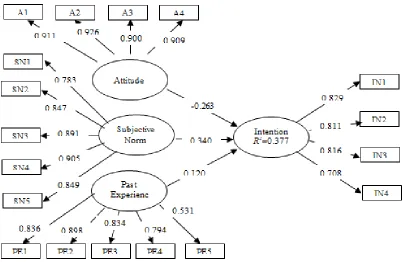
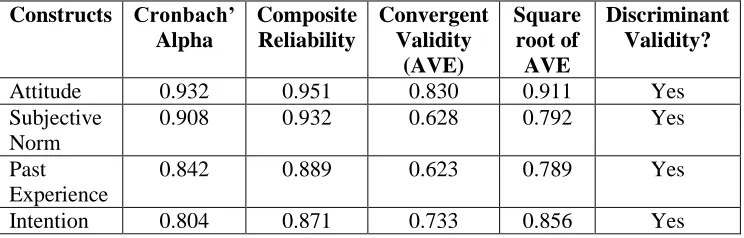
For the variables of attitude, the values of Cronbach’s alpha (0.932), composite reliability (0.951) and AVE (0.830) were all above the acceptable levels (Bagozzi & Yi, 1988; Fornell & Larcker, 1981). The standardized factor loadings shown unidimensional evidence ranged from 0.900 to 0.926, and these loadings were way above the minimum criterion of 0.40 (Hair, Hult, Ringle & Sarstedt, 2014). (Refer to Figure 1 and Table 1).
3.2.2 Subjective Norm
The predictor variable of subjective norm and hiring intention were assessed and rated by respondents on each of the items on a 7-point Likert scale ranged from strongly disagree (1) to strongly agree (7). Five questions were adapted from Ajzen (2002). In SN1 on people who are important to the responding managers think these managers should hire older workers; there were 156 managers from Age groups below 50’s category indicated their disagreement, the balance 145 managers who agreed were mainly from Age groups between 30 and 50. On SN2, there were 220 managers from Age groups between 30 and 50 selected their agreement to hire older workers. On SN3, the support from important people to hire older workers, those selected agreed (180), neutral (160) and disagreed (128) were fairly distributed among all the age groups. SN4 received an overwhelmed 210 managers from Age groups between 30 and 50 who agreed with the statement. On SN5, the responses of agree, neutral and disagree were fairly distributed in all the age groups.
For the variables in subjective norm, the values of Cronbach’s alpha (0.908), composite reliability (0.932) and AVE (0.733), all were above the acceptable levels (Bagozzi & Yi, 1988; Fornell & Larcker, 1981). The standardized factor loadings shown unidimensional evidence ranged from 0.783 to 0.905, and these loadings were way above the minimum criterion of 0.40 (Hair et al, 2014). (Refer to Figure 1 and Table 1).
3.2.3 Past Experience
PE5, there were 450 managers from all the 4 age groups in agreement of no difficulty in their interaction with older persons.
For the variable of past experience, the values of Cronbach’s alpha (0.842), composite reliability (0.889) and AVE (0.623), all were above the acceptable levels (Bagozzi & Yi, 1988; Fornell & Larcker, 1981). The standardized factor loadings shown unidimensional evidence ranged from 0.531 to 0.898, and these loadings were above the minimum criterion of 0.40 (Hair et al., 2014). (Refer to Figure 1 and Table 1).
3.2.4 Intention to Hire
Four questions on managers’ intention to hire older workers were developed specifically for the study. The predictor variables of attitudes, subjective norms and past experience and hiring intention were assessed by respondents on each of the items on a 7-point Likert scale ranged from strongly disagree (1) to strongly agree (7). On INT1, there were 252 managers from all the 4 age groups indicated their intention to hire older workers because they had positive attitudes towards older workers. On INT2, there were 254 managers from Age groups below 50 years agreed that their intention to hire older workers was due to their good past experience with older workers. On INT3, a total of 220 managers from Age groups 2 and 3 agreed that their intention to hire older workers was due to they had strong support from their management and peers. On INT4, there were 155 managers from Age groups below 50 disagreed that the MRAA 2012 motivated them to hire older workers, however, 164 managers from all the 4 age groups agreed on the motivation provided by MRAA 2012.
On the variables for intention to hire, the values of Cronbach’s alpha (0.804), composite reliability (0.871) and AVE (0.628), all were above the acceptable levels (Bagozzi & Yi, 1988; Fornell & Larcker, 1981). The standardized factor loadings shown unidimensional evidence ranged from 0.708 to 0.829, and these loadings were way above the minimum criterion of 0.40 (Hair et al, 2014). The relationship between attitude, subjective norm, past experience and intention to hire was moderated at R=0.377. (Refer to Table 1 and Figure 1).
Figure 1: Structural Model Presenting Indicators Loadings and Path Coefficient
179 4. Results
The analysis of results was commenced by assessing the kurtosis of all variables. For attitude, the z-value was 0.52 and for past experience, the z-value was 1.45. Both z-values were within the -1.96 to +1.96 ranges significance @ p<.05 and that indicated normal distribution of data signified a positive normal distribution. Hence, this suggested that attitude and past experience were within acceptable univariate normality (Field, 2009). For subjective norm, the z-value was 4.85; this z-value was far more than the +1.96 threshold. However, for a sample size of 468, it was possible to give rise to a standard error whenever a small deviation from normality. Even though kurtosis was above the 3.29 threshold, significance @ p<.001, since the normal curve line in the histogram did not deviate substantially to make a difference in the analysis. Hence, it suggested that subjective norm was within acceptable univariate normality.
All VIF values were above 0.20 and below the 5.00 threshold. This suggested that both tolerance and VIF values had no potential collinearity problem, and there was no biasness among the constructs. As such, no multicollinearity issue. R2 INT (0.377) is considered moderate (Hair et al., 2014). This effectively meant that the latent variables of attitude, subjective norm and past experience had substantially explained 37.7% in managers’ hiring intention.
The significance of the path coefficients of the inner model was tested by PLS algorithm and bootstrapping. Based on the sizes, the results shown that attitude, subjective norm and past experience predicted the intention. The strongest effect came from subjective norm on intention (0.340), indicated strong relationships and significance. Moderate relationship was attitude on intention (-0.263). However, past experience on intention (0.120) suggested a weak relationship.
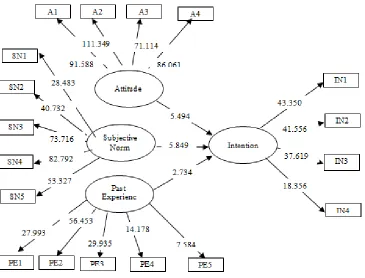
Figure 2 presents the structural model represents the paths, path relationships and hypotheses between the latent variables.
Constructs Cronbach’ Alpha
Composite Reliability
Convergent Validity
(AVE)
Square root of
AVE
Discriminant Validity?
Attitude 0.932 0.951 0.830 0.911 Yes
Subjective Norm
0.908 0.932 0.628 0.792 Yes
Past Experience
0.842 0.889 0.623 0.789 Yes
Figure 2: Structural Model Presenting t-values
Hypothesis 1: There is a relationship between attitude and managers’ intention to hire older workers.
The β value (-0.263) indicated a moderate relationship. The empirical t-value =-0.263/0.048=5.494 was significance @p<.01 confidence level (Chin, 1998; Hair et al, 2014). Hence, there was significant evidence that attitude had a relationship with intention. Hypothesis 1 was supported and significance at p<.01 level. Intention to hire was formed based on attitude (β=-0.263; t=5.494). As the relationship was established between attitude and intention to hire, this also signified that the research question no. 1 on whether attitude is related to managers’ intention to hire older workers was answered.
Hypothesis 2: There is a relationship between subjective norm and managers’ intention to hire older workers.
The path coefficient β value for subjective norm and intention was 0.340 indicated a strong relationship, d the empirical t-value =0.340/0.058=5.849 indicated that the relation between subjective norm and intention was significance @p<.01 confidence level (Hair et al., 2014). Therefore, H2 was supported and a relationship was established between subjective norm and intention to hire. Intention to hire was formed based on subjective norm (β=0.340; t=5.849; p<0.01). The establishment of the relationship in H2 signified that the research question no. 2 on whether subjective norm is related to managers’ intention to hire older workers was answered.
Hypothesis 3: There is a relationship between past experience and managers’ intention to hire older workers.
181 intention was still significance at a level of 1% confidence level (Hair et al., 2014). Thus, it was concluded that there was a significance relationship between past experience and intention to hire older workers. As such, H3 was supported. Intention to hire was formed based on past experience (β=0.120; t=2.734; p=0.006). Furthermore, research question no.3 on whether past experience is related to managers’ intention to hire older workers was answered.
5. Discussion
Intention to hire was supportive of Fraser et al. (2011) on employers’ intention to hire qualified workers with disability, and Lu et al. (2011) on employers’ intention to hire older workers. In this present study, a great contribution for the prediction of intention came from attitude, as managers from older age groups had more positive attitude toward older workers as opposed to managers from young age group, and the influence of such positivity on the intention to hire also supported earlier studies (eg. Abrams et al., 2015; Chiu et al., 2001; Lu et al., 2011). In that sense, managers are likely to hire or retain older workers in their organizations. Additionally, older managers’ positive attitude also supported the in-group’s bias behaviour where high percentage of older age managers responded positively towards hiring older workers. Furthermore, Hypothesis 1 supported Karpinska, Henkens & Schippers (2013) that managers’ discriminatory attitudes toward older workers affected their hiring decision.
In Hypothesis 2, subjective norm was found to have relationships to managers’ intention to hire older workers. The results were supportive of Ang et al. (2015), Fraser et al. (2011), and Lu et al. (2011) respectively where subjective norm was a great contributor to intention.
From the test result in hypothesis 3, past experience has significant relationship on managers’ intention to hire older workers and that the more positive past experiences managers had with older people built a strong relationship with their intention to hire older workers. In that sense, past experience as a strong predictor beyond the traditional constructs in TPB. The result was supportive of Lu et al. (2011) and Kidwell and Jewell (2008) which explained that a manager who had positive past experience dealt or worked with older people, he was likely to be more aware of the attributes of older workers than someone with negative past experience. Based on these positive experiences, managers developed a good understanding on older workers and utilize these good understanding to manage older workers. From the test result, there was no strong indication of in-group biasness detected as the overwhelmed responses on agreement to the 5 questions came from the 4 age groups.
This study offered an insight into labour shortage in business organizations could be overcome with managers’ intention to hire older workers to fill the labour gap. The empirical result suggested one important point, i.e. TPB was an appropriate model to predict managers’ intention to hire older workers (Ajzen, 1991; Chang, 1998). The research findings corroborated with Ang et al (2015) and Kluge and Krings (2008) in that attitudes and subjective norm were strong predictors in TPB. Furthermore, the present findings were in line with and supported Lu et al. (2011) and Fraser et al. (2011) in that attitude was significance contributor to the prediction of hiring. Subjective norm and past experience also supported Lu et al. (2011) where they were found to be significant to the intention prediction.
The empirical results demonstrated that there were relationships between attitude, subjective norm, and past experience and managers’ hiring intention, however, these do not diminish the problem of overcoming negative attitude of managers which if left unattended to, would affect managers’ hiring intention of older workers and would certainly face the ageing issues of the organizations’ current workforce, as all these would render the management of a diversified workforce even more difficult.
in managers’ beliefs system and their general attitude toward older workers. With larger degree of managers’ intention, the more likelihood of hiring can be expected.
The empirical result found relationships between attitude, subjective norm, past experience and hiring intention served to inform public policy makers to formulate laws and policies to confront discrimination at workplace, to promote publicity program on age stereotypes and ageism campaigns aim to reduce negative attitudes towards older persons.
Although this study provided some interesting insights into factors that influenced managers’ hiring intention, however, there were some theoretical and methodological limitations. This study did not measure respondents’ actual hiring behaviour. Due to limited amount of longitudinal research on managers’ actual hiring behaviour in academic study, a longitudinal research to study the specific hiring intention into actual hiring behaviour would be most recommended. This study surveyed only the hiring managers but older workers’ perception on hiring was not included, thus, the hiring intention may have been over generalised. Future research is recommended to include older workers. Future research is further recommended on a qualitative method where an in-depth data obtained could supplement the findings of this research. Additionally, the modified model can be used as a starting point for future research on the issues on or related to the employment of older workers and its impact on Malaysian employment practices.
In conclusion, this current research has in a way bridged the literature gaps in the prediction of hiring older workers. It is hoped that the findings in this study will inform all parties concerned to provide supporting policies and practices to older workers to improve the employment prospects of older workers, and not forgetting all younger workers too, as they will all be aged eventually.
References
Abrams, D., Swift, H. J., Lamont, R. A., & Drury, L. (2015). The barriers to and enablers of positive attitudes to ageing and older people, at the societal and individual level. Technical report. Government Office for Science, Kent, UK. http://kar.kent.ac.uk/57832/
Ajzen, I. (1991). The theory of planned behavior. Organizational Behavior and Human Decision Process, 50, 179-211.
Ajzen, I. (2002). Constructing a TPB questionnaire: Conceptual and methodological considerations.
(Revised January, 2006). Retrieved June 5, 2014, from
http://www.uni-bielefeld.de/ikg/zick/ajzen%20construction%20a%20tpb%20questionnaire.pdf
Ajzen, I., & Fishbein, M. (1980). Understanding attitudes and predicting social behavior. Upper Saddle River, NJ: Prentice-Hall.
Ang, M. C. H., Ramayah, T., & Amin, H. (2015). Efficacy of the theory of planned behaviour in the context of hiring Malaysian with disabilities. The Journal of Developing Areas, 49(3), 3-25. Bagozzi, R. P., & Yi, Y. (1988). On the evaluation of structural equation models. Journal of the Academy
of Marketing Science, 16(1), 74–94.
Bysheim, K., & Nyrud, A. Q. (2009). Using a predictive model to analyze architects’ intentions of using wood in urban construction. Forest Products Journal, 59, 65-74.
Chan, Y. F., Paim, L., Masud, J., & Hamid, T. A. (2010). The future of the Malaysian older employees: An exploratory study. International Journal of Business and Management, 5(4), 125-132.
Chang, M. K. (1998). Predicting unethical behavior: A comparison of the theory of reasoned action and the theory of planned behavior. Journal of Business Ethics, 17(16), 1825-1834.
Chin, W. W. (1998). The partial least squares approach to structural equation modelling. In Marcoulides, G. A. (Ed.), Modern Methods for Business Research (pp. 295-358). Mahwah, NJ: Erlbaum. Chiu, W. C. K., Chan, A. W., Snape, E., & Redman, T. (2001). Age stereotypes and discriminatory
183 of these nations. Retrieved Mar 26, 2017, from: http://says.com/my/news/the-number-of-foreign-workers-in-malaysia-is-greater-than-the-population-of-these-nations
Dommermuth, L., Klobas, J., & Lappegard, T. (2011). Now or later? The theory of planned behavior and timing of fertility intentions. Advances in Life Course Research, 16(1), 42-53.
Earl, C., Taylor, P., & McLoughlin, C. (2017). Recruitment and selection of older workers. Encyclopedia of Geropsychology, 2017, 2009-2015. Springer Singapore. DOI 10.1007/978-981-287-082-7. Eleventh Malaysia Plan (2016-2020). Putrajaya, Malaysia.
Emmitt, S., & Yeomans, D. T. (2008). Specifying buildings: a design management perspective (2nd ed.). Boston: Elsevier Butterworth-Heinemann.
Fichten, C. S., Nguyen, M. N., Amsel, R., Jorgensen, S., Budd, J., Jorgensen, M., Asuncion, J., & Barile, M. (2014). How well does the Theory of Planned Behavior predict graduation among college and university students with disabilities? Soc Psychol Educ, 17, 657–685. DOI 10.1007/s11218-014-9272-8.
Field, A., (2009). Discovering statistics using SPSS, (3rd ed.). London: SAGE Publications Ltd.
Fornell, C., & Larcker, D. F. (1981). Evaluating structural equation models with unobservable variables and measurement error. Journal of Marketing Research, 18(1), 39-50.
Fraser, R., Ajzen, I., Johnson, K., Hebert, J., & Chan, F. (2011). Understanding employers’ hiring intention in relation to qualified workers with disabilities. Journal of Vocational Rehabilitation, 35, 1-11.
Hair, J. F., Hult, G. T. M., Ringle, C. M., & Sarstedt, M. (2014). A primer on partial least squares structural equation modeling (PLS-SEM). (1st ed.). California: Sage.
Hansen, T., Jensen, J. M., & Solgaard, H. S. (2004). Predicting online grocery buying intention: a comparison of the theory of reasoned action and the theory of planned behaviour. International Journal of Information Management, 24, 539-550.
Karpinska, K., Henkens, K., & Schippers, J. (2013). Retention of older workers: Impact of managers’ age norms and stereotypes. European Sociological Review, 29(6), 1323-1335.
Kidwell, B., & Jewell, R. D. (2008). The influence of past behavior on behavioral intent: An informational processing explanation. Psychology & Marketing, 25(12), 1151-1166.
Kluge, A., & Krings, F. (2008). Attitudes toward older workers and human resource practices. Swiss Journal of Psychology, 67, 61-64.
Lim, Y. M., Yap, C. S., & Lee, T. H. (2011). Intention to shop online: A study of Malaysian baby boomers. African Journal of Business Management, 5(5), 1711-1717.
Lohmoller, J. B. (1989). Latent variable path modeling with partial least squares. Physica-Verlag HD. Lu, L., & Kao, S. F. (2010). Attitudes towards old people and their relation to career choices among
Taiwanese university students. Journal of Education and Psychology, 33, 33-54.
Lu, L., Kao, S. F., & Hsieh, Y. H. (2011). Attitudes towards older people and Managers’ intention to hire older workers: A Taiwanese study. Educational Gerontology, 37(10), 835-853.
Malaysia Labour Force Survey Report 2010. Department of Statistics Malaysia, Putrajaya. Malaysia Labour Force Survey Report 2014. Department of Statistics Malaysia, Putrajaya.
Malaysia Standard Industrial Classification, 2008. (Ver.1.0). Department of Statistics Malaysia. Putrajaya. Minimum Retirement Age Act, 2012. Kuala Lumpur: Percetakan Nasional Malaysia Berhad.
Oh, E. (Sept, 2010). Coming to grips with an ageing society. The Star, Sept 4, 2010.
Oh, H., & Hsu, C. H. C. (2001). Volitional degrees of gambling behaviors. Annals of Tourism Research, 28(3), 618-637.
Paswan, A. K., Gai, L., & Jeon, Sua. (2015). Alcohol and college students: Reasons, realization and intention to quit. Journal of Business Research, 68, 2075–2083.
Poulston, J., & Jenkins, A. (2013). The persistent paradigm: Older worker stereotypes in the New Zealand hotel industry. Journal of Human Resources in Hospitality & Tourism, 12(1), 1-25. doi:10.1080/15332845.2013.723252.
Rousseau, D. M., & Tijoriwala, S. A. (1999). What’s a good reason to change? Motivated reasoning and social accounts in organizational change. Journal of Applied Psychology, 84, 514-528.
http://www.mef.org.my/news/mefitn_article.aspx?ID=577&article=Star161126a.
Saleh, A. S., & Ndubisi, N. O. (2006). An evaluation of SME development in Malaysia. International Review of Business Research Papers, 2(1), 1-14.
Sommer, L. (2011). The theory of planned behaviour and the impact of past behaviour. International Business & Economics Research Journal, 10(1), 91-110.
Soulakova, J. N., Li, J., & Crokett, L. J. (2017). Race/ethnicity and intention to quit cigarette smoking. Preventive Medicine Reports, 5, 160-165.
Tenth Malaysia Plan (2011-2015). Putrajaya, Malaysia.
Vansteenkiste, S., Deschacht, N., & Sels, L. (2015). Why are unemployed aged fifty and over less likely to find a job? A decomposition analysis. Journal of Vocational Behavior, 90, 55-65.