Structure-Modulated Sparse Representation
to Improve the Performance of Sparsity-Based
Image Super-Resolution
D. Sivaiah1, Krishna Naik. D2, S.Ravi Kumar 3
M.Tech, Dept. of ECE, PVKK Institute of Technology, Affiliated to JNTUA, AP, India1
Associate Professor, Dept. of ECE, PVKK Institute of Technology, Affiliated to JNTUA, AP, India2
Associate Professor, Dept. of ECE, PVKK Institute of Technology, Affiliated to JNTUA, AP, India3
ABSTRACT: The resolution of images is limited by the image acquisition devices, the optics, the hardware storage and
other constraints in digital imaging systems. However, high-resolution (HR) images or videos are usually desired for subsequent image processing and analysis in most real applications. As an effective way to solve this problem, super-resolution (SR) techniques aim to reconstruct HR images from the observed LR images. The super-super-resolution reconstruction
increases high-frequency components and removes the undesirable effects, e.g., the resolution degradation, blur and noise.
Many SR techniques have been proposed over the last three decades. Early SR studies mainly focus on exploring the shift and aliasing properties of the Fourier transform. Although these approaches are computationally efficient, they have limited abilities to model the complicated image degradation and various image priors. Due to these drawbacks of frequency domain approaches, the spatial domain approaches are very popular recently for their flexibility to model all kinds of image degradations. In this paper, we propose a joint super-resolution framework of structure-modulated sparse representations to improve the performance of sparsity-based image super-resolution. The proposed algorithm formulates the constrained optimization problem for high-resolution image recovery. The multistep magnification scheme with the ridge regression is first used to exploit the multiscale redundancy for the initial estimation of the high-resolution image. Finally, the numerical solution is provided to solve the super-high-resolution problem of model parameter estimation and sparse representation.
KEYWORDS: Super-resolution, ridge regression, sparserepresentation, dictionary learning, gradient histogram.
I. INTRODUCTION
II. RELATED WORK
The example learning-based methods exploit the information from training images or example images to learn the mapping between the LR and HR image patches for super-resolution reconstruction. Recently, numerous SR methods have appeared to estimate the relationship between the LR and HR image patches with promising results. Some typical methods usually need a large and representative database of the LR and HR image pairs to encompass various images as much as possible that leads to a heavy computational load in the mapping learning process. Glasner et al. implies that if the structural patterns of the input LR image do not appear in a general image database, the mapping learned from the database may not be able to restore the faithful high-frequency details in the HR image. Yang et al. employed sparse dictionary learning on the LR and HR image patches from a general image database, and then utilized sparse representations of the LR input to generate the output HR image. Dong et al. ] proposed a deep learning method that learns an end-to-end mapping between the LR and HR images for single image super-resolution. Michaeli and Irani exploited the inherent recurrence property of small natural image patches to estimate the optimal blur kernel for blind super-resolution. Timofte et al. introduced the anchored neighborhood regression (ANR) that learns sparse dictionaries and regressors anchored to the dictionary atoms for fast super-resolution. Subsequently, they proposed an improved variant of ANR that achieves substantially less complexity and better performance. Similarly, Perez-Pellitero et al. presented an improved training strategy for SR linear regressors and an inverse-search approach for the speedup of the regression-based SR method. In this paper, we mainly focus on the study of the example learning-based SR methods with multiple image priors for further improvements of single image super-resolution. The optimized example learning-based SR method will build a suitable training set and make full use of image priors to reduce edge halos, blurring and aliasing artifacts effectively.
The task of single image super-resolution is to recover a HR image from an input LR image. For an observed image y, the problem of image super-resolution is generally modeled as y = Hx + υ.
where the degradation matrix H is a composite operator of blurring and down-sampling, x is the original image, and υ is the noise term. In the past decades, many works havebeen reported on single image super-resolution. Due to the ill-posed nature of the SR inverse problem, the regularization is introduced to eliminate the uncertainty of recovery. Several regularization-based techniques have been extensively studied in the recent literatures. The typical regularization models include the total variation (TV), the nonlocal similarity and the sparsity-based regularization. The TV regularization was introduced in image processing and successfully applied to inverse problems. Since its piecewise constant assumption, the TV regularization tends to over-smooth the images. To recover solutions which have discontinuities or are spatially inhomogeneous, the sparsity-based regularization has appeared and attracted great attention for image super-resolution problems in recent years.
III. EXISTING SYSTEM
In real world scenarios, the low-resolution (LR) images are generally captured in many imaging applications, such as surveillance video, consumer photographs remote sensing, magnetic resonance (MR) imaging and video standard conversion.
The resolution of images is limited by the image acquisition devices, the optics, the hardware storage and other constraints in digital imaging systems. However, high-resolution (HR) images or videos are usually desired for subsequent image processing and analysis in most real applications. As an effective way to solve this problem, super-resolution (SR) techniques aim to reconstruct HR images from the observed LR images. The super-super-resolution reconstruction increases high-frequency components and removes the undesirable effects, e.g., the resolution degradation, blur and noise.Recently, numerous SR methods have appeared to estimate the relationship between the LR and HR image patches with promising results. Some typical methods usually need a large and representative database of the LR and HR image pairs.
IV. PROPOSED SYSTEM
sparsity to design the constrained optimization problem for dictionary training and HR image reconstruction. The main contributions of our work can be summarized as follows:
The multi-step magnification scheme with the ridge regression is proposed to initialize the target HR image for the solution of image SR problem;
The novel sparsity-based super-resolution model is proposed with the combination of multiple image priors on the structural self-similarity, the gradient histogram and the nonlocal sparsity;
The gradient histogram preservation (GHP) is theoretically deduced for image SR reconstruction and also incorporated as the regularization term for the sparse modeling of HR image recovery.
V. SYSTEM ARCHITECTURE
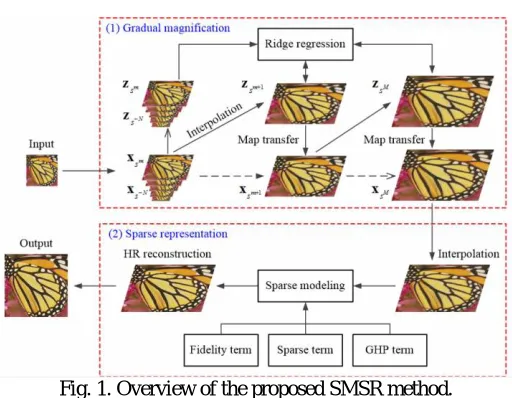
Fig. 1. Overview of the proposed SMSR method.
The subgraphs with the solid boxes denote the specific techniques. The subgraph with the dashed box is the algorithm modules: gradual magnification, and sparse representation.
The flowchart of our proposed SMSR method is shown in Fig. 1. Given an input LR image, our goal is to produce
a suitable HR image such that its underlying high-frequency details are recovered while preserving the intrinsic geometrical structures of original HR image. In brief, our SMSR algorithm consists of two stages: the gradual magnification and the structured sparse representation.
VI. IMPLEMENTATION
A. PREPROCESSING
Create LR image by down sampling method. Firstly, for an input LR image y, the HR database Dx and its corresponding LR database Dz are separately built for the gradual magnification. Then, the LR image z sm at the m-th
is estimated from the HR image x s m−1.
B. RIDGE REGRESSION
The ridge regression is applied to both each query patch of z sm and its kn nearest patches, which are found from the LR
database Dz by the approximate nearest-neighbor (ANN) searches. Therefore the corresponding HR image xsm is
reconstructed from the fitted coefficients and its kn HR nearest patches in the HR database Dx.
C. GRADIENT HISTOGRAM PRESERVATION
D. GRADIENT HISTOGRAM PRESERVATION (GHP)
A novel gradient histogram preservation (GHP) algorithm is developed to enhance the texture structures. Target HR image enhanced or sharped by gradient histogram preservation.
VII. SIMULATION RESULTS
VIII. CONCLUSION
that exploits the snapshot neighborhood and nonlocal redundancy is also integrated to give a boost to the performance of the picture sparse illustration. To approximate the worldwide optimization result, which is nonconvex and hard to resolve straight, an alternating minimization procedure with an iteratively reweighted regularization parameter is used to clear up the constitution-confined optimization predicament of single photo tremendous-decision. The sparse coefficients of the estimated HR photograph are extra corrected via an efficient iterative shrinkage perform. Now we have performed huge experiments on photograph super-resolution and evaluated the results of each the proposed algorithm and the well known SR methods.
REFERENCES
[1] P. Milanfar, Ed., Super-resolution Imaging (Digital Imaging and Computer Vision). New York, NY, USA: CRC Press, Sep. 2010.
[2] R. Y. Tsai and T. S. Huang, “Multiple frame image restoration and registration,” in Advances in Computer Vision and Image Processing, vol. 1. Greenwich, CT, USA: JAI Press, 1984.
[3] W.-C. Siu and K.-W. Hung, “Review of image interpolation and super resolution,” in Proc. Asia-Pacific Signal Inf. Process. Assoc. Annu. Summit Conf., Dec. 2012, pp. 1–10.
[4] M. Irani and S. Peleg, “Improving resolution by image registration,” CVGIP, Graph. Models Image Process., vol. 53, no. 3, pp. 231–239, 1991. [5] R. C. Hardie, K. J. Barnard, and E. E. Armstrong, “Joint MAP registration and high-resolution image estimation using a sequence of undersampled images,” IEEE Trans. Image Process., vol. 6, no. 12, pp. 1621–1633, Dec. 1997.
[6] S. Farsiu, M. Elad, and P. Milanfar, “Video-to-video dynamic super-resolution for grayscale and color sequences,” EURASIP J. Appl. Signal Process., vol. 2006, pp. 1–15, Feb. 2006, Art. ID 061859.
[7] A. Marquina and S. J. Osher, “Image super-resolution by TV-regularization and Bregman iteration,”J. Sci. Comput., vol. 37, no. 3, pp. 367–382, 2008.
[8] X. Zhang, J. Jiang, and S. Peng, “Commutability of blur and affine warping in super-resolution with application to joint estimation of triple-coupled variables,” IEEE Trans. Image Process., vol. 21, no. 4, pp. 1796–1808, Apr. 2012.
[9] W. T. Freeman, T. R. Jones, and E. C. Pasztor, “Example-based super resolution,” IEEE Comput. Graph. Appl., vol. 22, no. 2, pp. 56–65, Mar./Apr. 2002.
[10] D. Glasner, S. Bagon, and M. Irani, “Super-resolution from a sin-gle image,” in Proc. IEEE Int. Conf. Comput. Vis., Sep./Oct. 2009, pp. 349– 356.
BIOGRAPHY
D. SIVAIAH. He received B.Tech degree in Electronics and Communication Engineering from Narayana Engineering College, Gudur Affiliated to JNTUA Anantapur, A.P..He is pursuing M.Tech degree in Electronics and Communication Engineering, specialization of Digital Electronics and Communication Systems at PVKK Institute of Technology, Anantapur.
Mr. Krishna Naik D. He received B.Tech degree in Electronics and Communication Engineering from Sri Venkateswara University, Tirupati, Andhra Pradesh, India. M.E, degree in Digital Systems Engineering from University College of Engineering (A), Osmania University, Hyderabad, India and Pursuing PhD at R&D cell Pondicherry Engineering College, Affiliated to Pondicherry Central University, Puducherry, India, in the area of Low power VLSI. He is currently working as Associate Professor in Department of Electronics & Communication Engineering at P.V.K.K Institute of Technology, Anantapur, Andhra Pradesh, India. His research areas are VLSI Design, Digital Systems, Wireless Communication and Optical Communication.