ABSTRACT
BARNES, SPENCER RYAN. The Effects of Worked Examples on CAD Performance and Learning Efficiency. (Under the direction of Dr. Eric N. Wiebe.)
The purpose of this study was to gain an understanding of how undergraduate engineering students use constraint-based solid modeling (SM) software to successfully engage in computer-aided design (CAD) tasks charged to them in the context of an introductory engineering graphics course. Several designers, educators, and practitioners have suggested that CAD education needs reformation in order to better support learners’ application of SM software to the engineering design problems they encounter, and to adequately prepare them for the engineering workforce (Ault & Giolas, 2005; Branoff, Hartman, & Wiebe, 2003; Hamade & Artail, 2008; Ye, Peng, Chen, & Cai, 2004). It was these sentiments that provided impetus for the dissertation presented here—the central aspects of how SM is practiced and how SM instruction can be formulated and delivered are considered in the manuscripts of this study.
cognitive load experienced by participants and the amount of positive transfer that they achieved. These findings draw attention to the tacit relationship that underlies the aforementioned determinants in instructional contexts and it is evident that this synergy needs to be studied further.
The Effects of Worked Examples on CAD Performance and Learning Efficiency
by Spencer Barnes
A dissertation submitted to the Graduate Faculty of North Carolina State University
in partial fulfillment of the requirements for the Degree of
Doctor of Education
Technology Education
Raleigh, North Carolina 2011
APPROVED BY:
__________________________________ __________________________________ Eric N. Wiebe, Ph.D.
Chair of Advisory Committee
William J. Haynie III, Ph.D.
Biography
Spencer Barnes grew up in Raleigh, NC and attended Enloe High School where he first gained exposure to the field of graphic design by taking courses in design, printmaking, photography, and visual communications. Upon graduation he attended North Carolina State University (NCSU) and there he attained a Bachelor of Graphic Design and a Master of Industrial Design. NCSU was also the institution where Spencer began his pursuit of a Doctorate of Education in Technology Education in the Department of Science, Technology, Engineering, and Mathematics Education.
After spending more than a decade at NCSU, Spencer’s appreciation of the
Acknowledgements
First of all, I would like to thank my mother, father, sister, and other family members for their advice, support, and encouragement throughout the process of pursuing my doctoral degree. I would also like to express gratitude to all four members of my committee for their time and feedback on the comprehensive research project and journal articles presented within my dissertation. I would like to thank Dr. Eric Wiebe for his assistance and the direction that he provided for my dissertation, Dr. Jim Haynie for his thought provoking questions and candor, Dr. Ted Branoff for his technical guidance and for teaching me how to use solid modeling software effectively, and Bryan Laffitte for inspiring me to pursue
graduate work in the fields of Industrial Design and Technology Education, and providing me with opportunities to teach.
I am also appreciative for all of the other people that made this experience very enjoyable and meaningful: Mrs. Cheryl Eatmon, who preached discipline and motivated me; Dr. Barbi Honeycutt, who taught me how to deliver quality instruction to my students; Dr. Kathleen Mapson and Dr. Tracie Addy, who provided me with camaraderie as they
Table of Contents
List of Tables ... vi
List of Figures ... vii
Introduction...1
Manuscript: The Effects of Worked Examples on CAD Performance: An Exploratory Investigation...4
Abstract...5
Introduction...6
Purpose and Research Questions ...17
Methods...18
Results...23
Discussion and Conclusion...30
References...38
Manuscript: The Application of a Functional Interaction Model for Solid Modeling Processes...45
Abstract...46
Introduction...47
Summary and Research Questions...55
FIM Framework...55
Methods...60
Results...63
Discussion and Conclusion...69
References...72
Conclusion ...79
Appendix...82
Prospectus ...83
9-pt Cognitive Load Scale ...245
List of Tables Manuscript: The Effects of Worked Examples on CAD Performance: An Exploratory Investigation
Table 1 Experimental design ...22
Table 2 Near and far transfer SM exercise scores ...25
Table 3 Amount of transfer...25
Table 4 Instructional and learning efficiencies...29
List of Figures Manuscript: The Effects of Worked Examples on CAD Performance: An Exploratory Investigation
Figure 1 Transfer formula...26
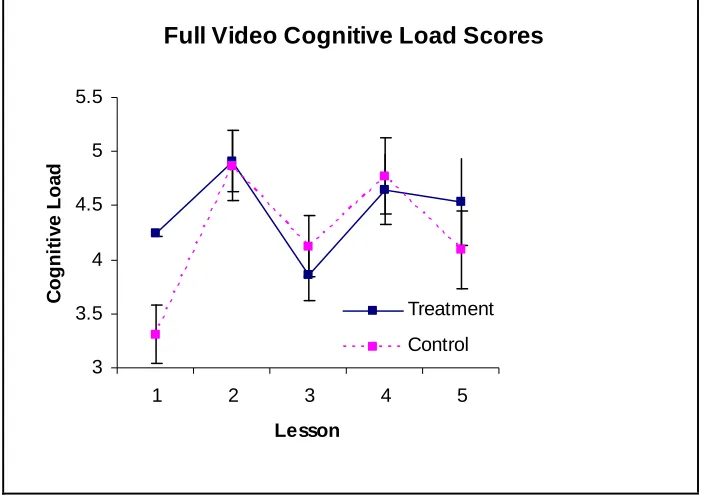
Figure 2 Full video cognitive load scores ...28
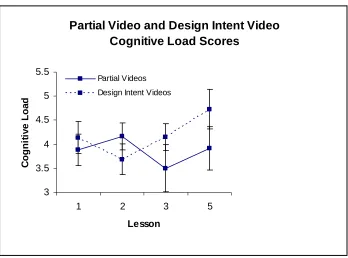
Figure 3 Partial video and design intent video cognitive load scores...29
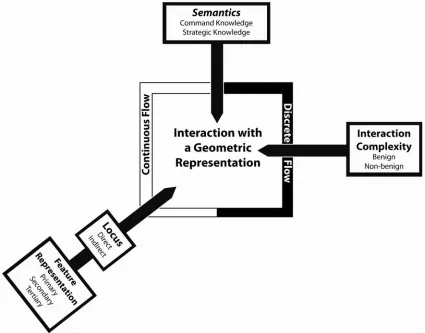
Manuscript: The Application of a Functional Interaction Model for Solid Modeling Processes Figure 1 FIM framework ...58
Figure 2 Pictorials for Part 1 and Part 2...62
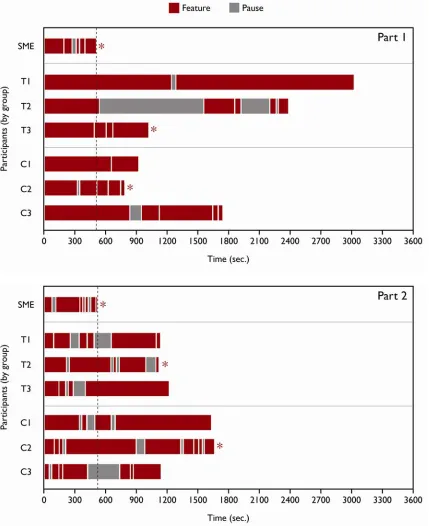
Figure 3 Gantt process charts for Part 1 and Part 2 ...65
Introduction
The US Bureau of Labor Statistics (2010) projects that employment opportunities for engineers will increase by at least 11% within the next ten years. There are several reasons why this is likely to occur: a) engineers tend to engage in research endeavors and long-term projects, b) many senior engineers with years of experience are retiring, c) engineers generate the ideas that form the basis for product and process improvements, and d) the continued globalization of the engineering profession. Although the job demands of engineers are increasing in complexity and continue to expand, employers “expect their newly hired engineers or scientists to be able to ‘hit the ground running’”, thus students pursuing engineering degrees need more training in tools such as CAD to be competitive hires (Rodrigues, 2001, p. 181).
Several CAD educators and practitioners have suggested that CAD education needs reformation in order to better support learners’ application of SM software to engineering design problems and to adequately prepare them for entry into the engineering workforce. (Ahmed, 2007; Ault & Giolas, 2005; Hamade, 2009; Hamade & Artail, 2008; Branoff, Hartman, & Wiebe, 2003;Ye, Peng, Chen, & Cai, 2004). They have concluded that many graduates do not have the skills that are necessary for meeting the demands of the
The purpose of this dissertation was to present a foray into these issues and advance a comprehensive inquiry into how introductory SM instruction and practices could be
enhanced. The following research questions were addressed by this study:
1. Do interactive videos for SM tasks that incorporate worked examples and instructional feedback alter participants’ instructional efficiency and learning efficiency?
2. Do interactive videos for SM tasks that incorporate worked examples and instructional feedback facilitate near and far transfer (i.e., the flexible translation and generalization of previously learned SM skills to novel SM tasks)?
3. Through this instructional regimen, do the participants’ mental models reflect an understanding of design intent?
To answer the research questions, two studies involving two sections of an
introductory engineering graphics course were conducted during the Spring 2010 semester. The first study sought to investigate the efficacy of a novel SM instructional regimen and the second one attempted to explore how a student’s mental model of design intent might be revealed by how they practiced SM and interacted with geometric representations of mechanical parts. The students from each section of the course served as participants in the treatment and control conditions of the first study with a subset of them participating in the second study.
Abstract
Introduction
The use of worked examples (WEs) has been gaining traction in a variety of disciplines (e.g., algebra, statistics, physics, etc.; Smith, Mestre, & Ross, 2010), and it is evident that the utilization of WEs in engineering education is effective. Several researchers have investigated how WEs influence the ways in which students learn complex engineering concepts and procedures. Reisslein, Atkinson, Seeling, and Reisslein (2006) observed how WEs employed in the context of electrical circuit analysis were able to enhance the learning of both intermediate as well as novice engineering students. Similarly, the research of Reisslein, Reisslein, and Seeling (2006) as well as Moreno, Reisslein, and Delgoda (2006), and Moreno, Reisslein, and Ozogul (2009) all indicated that WEs corresponding to the levels of proficiency that learners are attempting to attain were effective in promoting superior performance on engineering tasks. Although each of the preceding articles investigated WEs in the context of engineering education, none of them explicitly considered how CAD
instruction, in particular solid modeling (SM) instruction, could benefit from the inclusion of WEs.
Branoff and Wiebe (2009) elaborated upon the use of tutorial videos as WEs in online learning for CAD instruction by integrating them into hybrid (i.e., blended learning) sections of an engineering graphics course that taught solid modeling. Here, some of the course instruction was presented face-to-face while the remaining content was delivered in a web-based format via an online learning management system. They assessed whether any learning gains occurred in the hybrid sections compared to sections of the same engineering graphics course taught in a traditional (face-to-face) manner. They recommended the application of hybrid learning for CAD instruction due to the flexibility of hybrid arrangements and the fact that student engagement is given consideration because instructional materials (e.g., tutorial videos) can be designed to encourage good study habits.
While all of the aforementioned studies have examined the application and delivery of WEs relative to CAD education, these explorations—however substantive in nature— possess a deficiency: no clear instructional strategy or regimen has been designed to address the incorporation of WEs into CAD education or solid modeling instruction. These inquiries offer little to no insight into the application or evaluation of the efficacy of such an
cognitive effort imposed by the regimen and the type and amount of transfer that the regimen facilitates.
Worked example-based learning and the 4C/ID Model
knowledge required to complete them (i.e., knowledge of the modeling process and the solid modeling software package; Wiebe, 2003).
According to VanLehn (1996) a cognitive skill is a skill that is applied to intellectual, “knowledge-intensive” (p. 514), and rich learning tasks such as problem solving in a specific domain or realm of subject matter. Cognitive skills take domain-specific knowledge and translate this information into responses and behaviors that manifest themselves during the execution of tasks within the domain and this translation process occurs because of the acquisition of schemata (Colley & Beech, 1989). The schemata contained within a cognitive skill are built from domain knowledge and principles, and get further developed as an individual executes tasks within that domain (Renkl & Atkinson, 2007). The 4C/ID model is an instructional design framework that addresses the usage and structuring of WEs for the attainment and application of cognitive skills. The premise behind the 4C/ID model is that the design of instructional regimens can be structured in a way that helps trainees engage in learning that requires the integration and coordination of cognitive skills in order to execute complex tasks and reach competency. The 4C/ID model does so by partitioning instruction into four components: whole-task practice, part-task practice, supportive information, and just-in-time information (van Merriënboer, 1997; van Merriënboer, Clark, & de Croock, 2002; van Merriënboer, Jelsma, & Paas, 1992). Whole-task practice occurs within task classes where each task class contains several learning tasks arranged in increasing
learner gradually fades so that the learner can perform the entire cognitive skill without any guidance. Part-task practice is separate from whole-task practice and focuses on developing the automaticity (e.g., speed and accuracy) of a cognitive skill and task performance. The just-in-time (JIT) information comes in the form of rules, step-by-step directions, and feedback for the execution of the cognitive skill and can be presented during whole-task practice and part-task practice. When the 4C/ID is applied to training, whole-task practice (in the context of a task class) occurs first and then part-task practice occurs subsequently. The whole-task practice includes supportive information and JIT information, and the part-task practice only includes JIT information. This workflow proceeds until all of the learning tasks in the task class are completed and the cognitive skill(s) are acquired (van Merriënboer, 1997).
Efficiency
they are independent or dependent upon each other to be understood) WM capacity can be consumed in processing these elements and consequently depleted. This phenomena is called element interactivity, it can vary between two extremes (low and high), and interacts with an individual’s prior knowledge. Low element interactivity occurs when only a few elements need to be held in WM and these elements are processed in succession whereas high
capacity. Many times this type of cognitive load adversely affects learning because ECL is being imposed simultaneously with ICL, leaving little WM remaining to dedicate toward learning since the capacity of WM is fixed and cannot be exceeded (Mayer & Moreno, 2010). In scenarios where WM is not exhausted by the other forms of cognitive load, GCL can be induced. GCL is cognitive load that is solely associated with learning, that is, cognitive load imposed by the formation of schemata. Kalyuga (2010) suggested that “the sources of germane cognitive load are auxiliary cognitive activities designed to enhance learning outcomes or increase levels of learner motivation” (p. 53). Knowledge elaboration, the process of using prior knowledge to expand and refine new information on a perpetual basis and assimilate it with information contained in long-term memory, underlies the construction and automation of schemata (Kalyuga, 2009) which, in turn, actuates GCL. Once schemata have been constructed, their likelihood of usage can be strengthened and automated by constantly engaging in tasks that require their utilization. After a schema is automated it no longer causes GCL because it is does not require conscious maintenance and processing in WM. A synergy exists within the trilateral relationship between ICL, ECL, and GCL—free WM capacity can be dedicated to any of the three types of cognitive load and both ICL and ECL can actuate GCL, although ICL is a greater determinant for GCL. Sweller (2010) was well aware of this insight and expressed an intuitive understanding of this
connections between the interacting elements and to aggregate them into schemata and then automate the schemata) which are the fundamental sources of GCL.
amount of cognitive load incurred is high. The baseline for both kinds of efficiencies is an efficiency of zero (E=0) where performance is equal to cognitive load. Instructional
efficiency is indicative of the effects of GCL on learners because it stands to reason that if a learner has acquired, assimilated, and automated more schemata (i.e., gained more
knowledge due to effective instruction) during learning, prior to taking a test, they will experience a smaller amount of cognitive load during testing, in contrast to learners who were not able to construct and elaborate upon schemata (i.e., gained less knowledge as a result of inadequate instruction) before taking the test (Paas & van Gog, 2006). Learning efficiency, on the other hand, is indicative of the ECL caused by instructional designs (van Gog & Paas, 2008). If an instructional condition has been designed to appropriately promote learning and deliver instruction then learners should experience a low amount of cognitive load during learning and should therefore have high test performance. If instruction has been designed inadequately, then learners will incur a high amount of cognitive load during learning and have low test performance. Accordingly, high learning efficiency implies that a certain instructional design is more effective than another because it imposes less ECL than an instructional design having low learning efficiency.
Transfer of Learning
Transfer of learning (transfer) concerns “how previous learning influences current and future learning, and how past or current learning is applied to similar or novel situations” (Haskell, 2001, p. 23) i.e., transfer is indicative of how well one is able to abstract,
correspondence (i.e., similarity or difference) to the training task (Sternberg, 2009). The correspondence between two tasks primarily depends on two factors, the surface features and the deep structures of the tasks, and how learners represent these factors (Sloutsky & Yarlas, 2000; Yarlas & Sloutsky, 2000). A task’s surface features include the way(s) in which the task is presented to learners (e.g., cover story and context) and its deep structure pertains to the organization of the task and the procedures necessary to successfully complete it. The more that a learner accumulates experience with a task during training, the more likely it is that they will critically examine the task’s deep structure and look past the task’s surface features and perform better on transfer tasks. With regard to the correspondence between training tasks and transfer tasks, two types of transfer exist: near transfer and far transfer. Near transfer occurs when knowledge acquired from one task is applied to a new task containing a deep structure and surface features similar to the original task, whereas far transfer refers to the application of previous knowledge to a new task that is markedly different (e.g., different deep structure) from the training task (Gray & Orasanu, 1987).
Although rarely applied in studies assessing transfer, Gagné, Foster, and Crowley (1948) proposed several formulae that measure the magnitude of positive and negative transfer that gets instantiated as a result of an instructional regimen. These formulae, which were designed for experimental and learning contexts, take into account the percentage of positive or
negative transfer occurring by comparing the performance of treatment and control
conditions on the same near transfer or far transfer task, thereby “giving direct expression to [the] amount and direction of transfer” (p. 102). In particular, formula no. 5 quantifies the amount of transfer that an experiment’s treatment condition experiences when exposed to an instructional regimen provided that the treatment condition’s performance is compared to the performance of a control condition that did not receive the instructional regimen (Gagné, Foster, & Crowley, 1948, p. 103).
Summary
enabled by WEs especially when WEs with varying surface features and deep structures are presented to learners during instruction. Both the whole-task practice and part-task practice are components of the 4C/ID model in which WEs can be integrated in order to increase cognitive skill acquisition and if properly utilized over the course of learning they can reduce cognitive load and promote effective transfer (Lim, Reiser, & Olina, 2009).
Purpose and Research Questions
This study sought to investigate how WEs, in the form of tutorial videos
demonstrating solid modeling processes, could be structured according to an adaptation of the 4C/ID model. This design approach should facilitate increased performance and transfer exhibited by undergraduate engineering students on solid modeling tasks, along with an observed reduction in their associated cognitive load. The 4C/ID model adaptation enacted in this study was based upon practical considerations relative to the ways in which instruction was delivered to the participants via a course website. Two experimental conditions, a treatment condition and a control condition, were incorporated into the study – the treatment condition engaged in both whole-task practice and part-task practice of solid modeling tasks whereas the control condition only engaged in whole-task practice of the solid modeling tasks. The following research questions attempt to determine the efficacy of the instructional regimen and guide the authors’ investigation:
1. What is the effect of the adapted 4C/ID instructional regimen for solid
2. How is the amount of and type of cognitive load imposed upon participants affected during their engagement with the adapted 4C/ID instructional regimen?
Methods
Participants. The sampling frame consisted of 105 undergraduate students enrolled in two sections of an introductory engineering graphics course at a large Southeastern university. The students represented the following majors: aerospace engineering, civil engineering, mechanical engineering, landscape architecture, technology education, and textile engineering. The average age of the participants was 20 (SD = 3.33) with freshmen,
sophomores, juniors, and seniors engaging in the study. Over 85% of the sample was male. Due to attrition the number of participants that fully completed the study differed from those originally included in the sampling frame – the treatment condition had n=13 and the control condition had n=8.
Materials. A questionnaire designed by one of the researchers was used to collect
modeling software. Partial videos focused on refining the participants’ procedural skills for SM tasks e.g., a task may have involved multiple extrusions and it is necessary that the process of creating an extrusion becomes intuitive to the learners. Design intent videos
emphasized design intent by presenting and demonstrating brief SM activities that reinforced the process of embedding intelligence and functionality into a model. These videos presented ways in which the application of design intent could be conceptualized (e.g., one of the videos demonstrated how to aggregate sketch elements in order make multiple ribs as one feature). The full videos were intended to assist the participants with learning the SM
process, the partial videos provided participants with the opportunity to automatize aspects of their SM process, and the design intent videos offered a means of abstracting the skills learned in the full videos and partial videos so that they could be executed with accuracy, precision, and efficiency.
There were five SM lessons in the study and each lesson was accompanied by two SM exercises, a near transfer SM exercise and a far transfer SMexercise, that the
participants had to complete at the end of the lesson. Lesson 1 covered basic sketching and the creation of simple base features (e.g., geometry), Lessons 2 and 3 discussed the creation of multiple orthographic sketches and their corresponding base and secondary features, Lesson 4 introduced the participants to ribs as structural elements as well as draft, and Lesson 5 presented circular and linear sketch patterns and feature patterns. The near transfer SM exercises had surface features and deep structures similar to the tasks presented in the videos (e.g., the revolve tool would be applicable to the video task and the near transfer SM
with the video tasks. All of the near transfer SM exercises and far transfer SM exercises were scored as a proportion of 100 total points per exercise. Lesson overviews preceded each tutorial video and SM exercise, displaying a picture of the goal state of the SM exercises (i.e., what the finished model was supposed to look like), indicating the units that the SM exercise needed to be constructed in (e.g., inches or millimeters), and presenting the objectives that the tutorial video was attempting to accomplish. The lesson overviews that were solely associated with near transfer SM exercises and far transfer SM exercises presented a schematic of each exercise and its associated metric.
Paas’ (1992) unidimensional 9-point Cognitive Load scale (referred to as 9-point CL Scale from here on) was used to measure the cognitive load imposed on participants by the tutorial videos and the SM exercises. The 9-point CL Scale is symmetrical and adaptable, and asked participants about the amount of perceived mental effort they have experienced while completing a task. According to van Gog and Paas (2008, p. 18) this instrument has
maintained a Cronbach’s Alpha ranging between .82 and .90 over the course of several cognitive load studies. It is an unobtrusive instrument in the sense that it requires a minimal amount of time to complete and does not have the propensity to disrupt participants’
low nor high mental effort” (5) serving as the instrument’s baseline at the center of the scale. As participants’ responses on the 9-point CL Scale were utilized in determining the amount of instructional efficiency and learning efficiency that they experienced, the responses were coded from 1 to 9 during analysis.
Apparatus. All of the study’s materials were delivered via course websites (one for the treatment condition and one for the control condition) that were housed on the university’s learning management system and the participants gained access to all of the aforementioned materials via the websites. The course websites arranged each of the lessons associated with the study in a hierarchical manner where all of the materials associated with a particular lesson were grouped together. All of the tutorial videos (e.g., full videos, part videos, and design intent videos) were produced using Dassault SolidWorks™ as the SM software and Techsmith Camtasia™ as the screen capture recorder. The lesson overviews were made using Microsoft PowerPoint and Adobe Presenter. All of the data submitted from the demographic information questionnaire and the 9-pt CL Scales was collected through Acrobat.com.
Study Design and Procedure
The study spanned five lessons of an introductory engineering graphics course and used a quasi-experimental design with participants nested within two sections of the course. The two sections of the course that participated in the study were randomly assigned to each of the experimental conditions, treatment and control. A 2 X 5 mixed design was
investigation were: near transfer SM score, far transfer SM score, and cognitive load –
learning efficiency, instructional efficiency, and amount of positive or negative transfer
(amount of transfer)all served as ad hoc outcome measures as they all required the primary dependent variables in their calculations.
Table 1. The experimental design utilized by the study. Participants’ engagement with the adapted 4C/ID instructional regimen during each lesson constituted an application of the treatment (X) and each observation (OX) represents the participants’ completion of the near transfer SM exercises and the far
transfer SM exercises associated with each lesson.
Experimental Design
Treatment NR X O1 X O2 X O3 X O4 X O5
Control NR O1 O2 O3 O4 O5
The study’s duration was five weeks with one lesson covered per week. The sections of the engineering graphics course in which the participants were enrolled met once a week. One week prior to the study, the researchers administered the questionnaire in order to collect demographic information about the participants and the study began the following week.
Treatment Condition: The instructional regimen for the treatment condition consisted of lesson overviews, one full video, one partial video, and one design intent video per lesson as well as one near transfer SM exercise and one far transfer SM exercise that had to be
transfer SM exercise and far transfer SM exercise and a 9-pt CL Scale for each exercise, respectively. This workflow proceeded until the end of the study.1
Control Condition: The participants in this condition followed the exact same procedure as the participants in the treatment condition except the only videos viewed with each lesson were the same full videos viewed by the treatment participants. The control participants also submitted 9-pt CL Scales corresponding to the cognitive load that they experienced while viewing the full videos and completing the near transfer SM exercises and far transfer SM exercises, respectively.
Results
The statistical tests conducted utilized a significance criterion of .05 unless otherwise noted with Bonferroni corrections administered as post hoc procedures for all multivariate tests. Table 2 displays the treatment and control participants’ scores on each lesson’s near transfer SM exercise and far transfer SM exercise, along with the amount of cognitive load that they experienced during their completion of the exercises. Figures 2 and 3 display the amount of cognitive load that was imposed upon participants as they viewed the full videos, the partial videos, and the design intent videos.
Research Question 1: What is the effect of the adapted 4C/ID instructional regimen
for solid modeling instruction on the performance and transfer (near and far) exhibited by
the participants? A 2 X 5 mixed MANOVA was conducted with experimental condition as the between subjects factor, lesson as the within subjects factor, and the near transfer SM
1 Due to the novelty of the subject matter addressed by the Lesson 4, full videos and near and far
exercise scores and far transfer SM exercise scores from each lesson as dependent measures. Pillai’s Trace (V) was used as the multivariate coefficient for the MANOVA. Also, the amount of positive and negative transfer facilitated for each transfer SM exercise was considered using transfer formula no. 5 (see Figure 1). Although there was not a significant interaction between experimental condition and lesson, the MANOVA did reveal that a significant multivariate main effect for experimental condition existed with V=.386, F(2, 18)=5.655, p=.012, partial η2=.386. Follow-up univariate ANOVAs revealed the treatment condition and control condition significantly differed on the near transfer SM exercises F(1, 19)=11.739, p=.003, partial η2=.382 with the treatment condition generally scoring higher on the exercises than the control condition. Further post-hoc analyses indicated that these significant differences between the groups on the near transfer SM exercises occurred on the Lesson 4 near transfer SM exercise and Lesson 5 near transfer SM exercise, where
participants in the treatment condition achieved higher scores on the exercises than participants in the control condition. As can be seen in Table 3 it is evident that the
Table 2. The mean scores and corresponding standard deviations for all of the performance scores and cognitive load scores for all of the near transfer SM exercises and far transfer SM exercises.
Near and Far Transfer SM Exercise Performance and Cognitive Load Scores
Near Transfer SM
Ex. Score
Near Transfer
SM Ex. CL
Far Transfer
SM Ex. Score
Far Transfer
SM Exercise CL
Lesson M SD M SD M SD M SD
1 .76 .16 4.57 1.54 .59 .12 4.61 1.69
2 .81 .22 4.68 1.64 .78 .26 5.33 1.35
3 .76 .08 4.56 1.42 .65 .14 6.19 1.18
4 .81 .16 5.59 1.28 .83 .16 6.31 1.19
Treatment
5 .81 .22 4.64 2.09 .80 .21 5.71 1.77
1 .72 .19 4.0 1.98 .58 .13 4.63 2.14
2 .69 .31 4.88 1.71 .72 .26 5.0 1.69
3 .73 .16 3.58 1.62 .63 .25 6.30 1.42
4 .72 .17 4.94 1.59 .70 .20 6.0 1.73
Control
5 .64 .26 4.95 2.21 .79 .17 4.83 2.33
Table 3. The respective amounts of positive or negative transfer occurring due to the treatment condition’s instructional regimen.
The Amount of Transfer Occurring with SM Exercises
Percent of Positive (+) or Negative Transfer (-)
Lesson 1 Near Transfer
SM Exercise +13.73%
Lesson 1 Far Transfer SM
Exercise -0.6%
Lesson 2 Near Transfer
SM Exercise +4%
Lesson 2 Far Transfer SM
Exercise +21.89%
Lesson 3 Near Transfer
Table 3 Continued
Lesson 3 Far Transfer SM
Exercise +5.75%
Lesson 4 Near Transfer
SM Exercise +32.44%
Lesson 4 Far Transfer SM
Exercise +44.43%
Lesson 5 Near Transfer
SM Exercise +46.64%
Lesson 5 Far Transfer SM
Exercise +3.89%
Transfer formula
Treatment Group Score – Control Group Score Transfer =
Total Possible Score – Control Group Score X 100
Figure 1. Transfer formula no. 5 discussed in Gagné, Foster, and Crowley (1948).
Research Question 2: How is the amount of and type of cognitive load imposed upon
participants affected during their engagement with the adapted 4C/ID instructional regimen?
The answer to this question required an examination of the cognitive load levied upon the participants by the full videos, partial videos (treatment condition only), design intent videos (treatment condition only), near transfer SM exercises, and far transfer SM exercises
experienced fairly low amounts cognitive load while viewing the full videos albeit the full videos for Lessons 1, 2, and 5 caused the treatment condition participants to experience a little more cognitive load than the participants in the control condition. This effect was reversed for Lessons 3 and 4. The partial videos caused relatively low levels of cognitive load, whereas the design intent videos caused a moderate amount of cognitive load during Lesson 3 and 5. The performance and cognitive load of both condition’s participants were examined in an aggregate fashion using instructional efficiency and learning efficiency where the source of cognitive load for instructional efficiency came from the near transfer SM exercises and far transfer SM exercises, respectively, and the source of cognitive load for learning efficiency came from the participants’ experience viewing and following along with the full videos. Therefore, there were a set of efficiencies (instructional and learning)
weak positive correlation with the amount of transfer (r=.351). Although the far transfer SM exercise instructional efficiency was not correlated with the amount of far transfer achieved (r=-.008), the far transfer SM exercise learning efficiency and the amount of transfer shared a weak positive correlation (r=.421).
Full Video Cognitive Load Scores
3 3.5 4 4.5 5 5.5
1 2 3 4 5
Lesson
C
o
g
n
it
ive L
o
ad
Treatment
Control
Partial Video and Design Intent Video Cognitive Load Scores
3 3.5 4 4.5 5 5.5
1 2 3 5
Lesson C o g n it ive L o ad Partial Videos Design Intent Videos
Figure 3. Graph of the cognitive load scores from each lesson’s partial videos and design intent videos (treatment condition only).
Table 4. The instructional efficiencies (IE) and learning efficiencies (LE) associated with each lesson’s near transfer SM exercise and far transfer SM exercise displayed by condition.
Instructional Efficiencies and Learning Efficiencies
Near Transfer SM Exercise Far Transfer SM Exercise
Lesson IE LE IE LE
1 -.07 .17 .16 -.11
2 .17 .29 -.07 .45
3 -.09 -.21 -.09 -.14
4 -.06 .10 .08 .37
Treatment
5 .47 .37 .03 .58
1 -.25 .38 .10 .58
2 -.96 .09 -.54 .18
3 -.24 .33 -.70 .27
4 -.03 -.04 -.39 -.24
Control
Discussion and Conclusion
The purpose of this study was to investigate the efficacy of an instructional regimen for SM instruction adapted from the 4C/ID model that structured WEs in manner that attempted to reduce ECL, actuate GCL, and facilitate near and far transfer for SM tasks. In order to address the research questions posed by this investigation, the performance of two experimental conditions was compared over the course of five consecutive lessons—the treatment condition that viewed full videos, partial videos, and design intent videos was assessed against the control condition which only viewed the full videos. The performance of both conditions on the near transfer SM exercises and far transfer SM exercises of each lesson as well as the cognitive load, instructional efficiency, learning efficiency, and the amount and type of transfer experienced by the participants was evaluated.
Throughout the study, the participants in the treatment condition maintained better performance than the control condition on all of the near transfer SM exercises and far transfer SM exercises, although the treatment condition maintained only slightly higher scores than the control condition on the Lesson 1 and Lesson 5 far transfer SM exercises. The instructional regimen (i.e., the treatment) facilitated varying amounts of positive transfer on the near transfer SM exercises with greater levels of positive transfer being observed for the treatment group’s performance on the Lesson 4 and 5 near transfer SM exercises. There was also a substantial amount of positive transfer present for the treatment condition’s
condition with generalizing the knowledge that they had acquired in near transfer SM exercises. Regarding the instructional regimen’s capability to influence far transfer, the results were more mixed.
While viewing the full videos, each condition reported low levels of cognitive load. In addition, the treatment group reported low levels of cognitive load while viewing the partial videos and design intent videos. Both conditions experienced relatively low levels of cognitive load (e.g., “rather low mental effort” and “low mental effort”) while completing the near transfer SM exercises but a spike in the treatment condition’s cognitive load was
disparate elements of the SM task in WM leading to an increased amount of cognitive load. In the case of the treatment condition’s performance on the Lesson 4 and Lesson 5 far
transfer SM exercises the participants were required to execute tasks that had unfamiliar deep structures and when this was combined with their lack of cursory schemata application the amount of cognitive load that they experienced increased.
phenomenon because both types of videos offered the treatment condition participants the opportunity to continue learning and refining SM techniques whereas the control condition did not have the option to further elaborate upon the knowledge that they had gained from the full videos. Colley and Beech (1989) alluded to this elaboration phenomenon when they suggested that cognitive skills were predicated upon prior knowledge acquired during domain learning. As the instructional regimen proceeded the SM knowledge that the treatment participants had acquired in previous lessons helped to organize the newer knowledge that they were gaining from the full videos, partial videos, and design intent videos into robust schemata that could be applied during the execution of their cognitive skills.
By inspecting the correlations between each near transfer SM exercise’s efficiencies and the amount of transfer attained for the corresponding lesson, and the correlations between each far transfer SM exercise’s efficiencies and the amount of transfer attained it becomes evident that several relationships exists between treatment condition’s efficiencies and the amount of positive transfer that was achieved with respect to efficacy of the
instructional regimen (treatment). A strong correlation was present between the near transfer SM exercise instructional efficiency and the quantity of transfer achieved on the near transfer SM exercises and a weak correlation existed between the near SM exercise learning
efficiency and transfer. A weak correlation also occurred between the far transfer SM exercise learning efficiency and the amount of transfer achieved on the far transfer SM exercises. These findings are important because they indicate something about the
place in the context of this study – as instructional efficiency increased the amount of positive transfer increased possibly indicating that GCL was actuated and that the treatment condition’s participants were able to acquire schemata during their engagement with the instructional regimen and then appropriately apply the schemata while engaging in the near transfer SM exercises. This finding is reminiscent of the relationship expressed by van Merriënboer, Kester, and Paas (2006) regarding the ability of WEs to promote GCL. The positive relationship shared between the far transfer SM exercise learning efficiency and amount of transfer demonstrates that the reduced amount of ECL experienced by the treatment condition participants during learning may have allowed them to focus more on acquiring and abstracting schemata such that they could approach novel solid modeling tasks but since there was no relationship between the far transfer SM exercise instructional
efficiency and amount of transfer this assertion remains inconclusive.
exercise. Exposure to the whole-task practice and part-task practice included in each lesson may have allowed the treatment condition participants to experience this effect. The earlier lessons were less complex than Lessons 4 and 5, and required less sophisticated SM
procedures meaning that participants in the experimental condition and the control condition may have been able to adequately recognize the deep structures of the lessons’ near transfer SM exercises but as the complexity of the exercises and their respective SM procedures increased, the distinction between both groups’ performance increased. The full videos provided all of the participants with whole-task practice which caused them to consider the controlled and automatic aspects of each lesson’s SM demonstrations and tasks. The part-task practice of the partial videos enabled the treatment condition to perform certain aspects of their cognitive skills in a perfunctory manner facilitating more accurate and precise
performance on the complex tasks included in the Lesson 4 and 5 near transfer SM exercises. Also, the amount of GCL experienced by the treatment condition may have reflected the level of complexity present in the near transfer SM exercises and led to better performance because the participants were acquiring the appropriate schemata to recognize the deep structures of the problems.
This study was limited by sample size and duration, with a larger sample size having the potential to increase the detection of effects or differences between the participants involved in this investigation. Administering this study within a longer duration of time would have provided more opportunities to explore learning trends relative to the
variations of the way in which the full videos, partial videos, and design intent videos were administered and arranged were not investigated.
When the results of this study are considered in their entirety, it is evident that the instructional regimen adapted from the 4C/ID model was capable of enabling the treatment participants to develop and successfully apply the cognitive skills associated with solid modeling i.e., they were able to take the domain-specific information about solid modeling that they had encountered during their engagement with the instructional regimen and translate it into schemata that guided their performance(s) while completing the near and far transfer SM exercises presented within each lesson. The instructional efficiencies associated with each lesson indicated that learning conditions were prime for the participants to
experience GCL, leading to the translation mentioned previously. The positive transfer achieved on a majority of the lessons by the treatment condition is highly suggestive that cognitive skill acquisition took place during the administration of the instructional regimen. Thus, the instructional regimen was effective for SM instruction. The next course of action would be to administer the regimen during a whole academic term with more participants as well as manipulate the regimen in the context of other engineering coursework and
References
Barnett, S. M., & Ceci, S. J. (2002). When and where do we apply what we learn?: A taxonomy for far transfer. Psychological Bulletin, 128(4), 612-637.
Belland, B. R., Glazewski, K. D., & Richardson, J. C. (2008). A scaffolding framework to support the construction of evidence-based arguments among middle school students.
Educational Technology Research and Development, 56(4), 401-422.
Branoff, T. J., & Wiebe, E. N. (2009). Face-to-face, hybrid, or online?: Issues faculty face redesigning an introductory engineering graphics course. Engineering Design Graphics Journal, 73(1), 25-31.
Clark, R. C., & Mayer, R. E. (2008). E-Learning and the Science of Instruction: Proven Guidelines for Consumers Designers of Multimedia Learning (2nd ed.). San Francisco: John Wiley & Sons, Inc.
Colley, A. M., & Beech, J. R. (1989). Acquiring and performing cognitive skills. In A. M. Colley & J. R. Beech (Eds.), Acquisition and performance of cognitive skills (pp. 1-16). New York: Wiley.
Connolly, P. E., & Maicher, K. R. (2005). Continuing evolution of a web-based engineering graphics tutorial: Interactive input and response. Engineering Design Graphics Journal, 69(1), 26-43.
Folkestad, J. E., & De Miranda, M. A. (2001). Impact of screen-capture based instruction on student comprehension of computer aided design (CAD) software principles. Journal of Industrial Technology, 18(1), 2-7.
Gagné, R. M., Foster, H., & Crowley, M. E. (1948). The measurement of transfer of training.
Psychological Bulletin, 45(2), 97-130.
Gray, W. D., & Orasanu, J. M. (1987). Transfer of cognitive skills. In S. Cormier & J. D. Hagman (Eds.), Transfer of Learning: Contemporary Research and Applications (pp. 183-215). San Diego, CA 92101: Academic Press.
Haskell, R. E. (2001). Transfer of Learning: Cognition, Instruction, and Reasoning. Orlando, FL 32887-6777: Academic Press.
Kalyuga, S. (2009). Knowledge elaboration: A cognitive load perspective. Learning and Instruction, 19(5), 402-410.
Kalyuga, S. (2010). Schema acquisition and sources of cognitive load. In J. L. Plass, R. Moreno & R. Brünken (Eds.), Cognitive Load Theory: Theory and Application (pp. 48-64). New York City, NY 10013-2473: Cambridge University Press.
Kimball, D. R., & Holyoak, K. J. (2000). Transfer and expertise. In F. I. M. Craik & E. Tulving (Eds.), The Oxford handbook of memory (pp. 109-122). New York: Oxford University Press.
Lim, J., Reiser, R. A., & Olina, Z. (2009). The effects of part-task and whole-task instructional approaches on acquisition and transfer of a complex cognitive skill.
Marshall, S. P. (1995). Schemas in Problem Solving. New York City, NY 10011-4211: Cambridge University Press.
Mayer, R. E., & Moreno, R. (2010). Techniques that reduce extraneous cognitive load and manage intrinsic cognitive load during multimedia learning. In J. L. Plass, R. Moreno & R. Brünken (Eds.), Cognitive Load Theory: Theory and Application (pp. 131-152). New York City, NY 10013-2473: Cambridge University Press.
Moreno, R. (2010). Cognitive load theory: More food for thought. Instructional Science, 38(2), 135-141.
Moreno, R., & Park, B. (2010). Cognitive load theory: Historical development and relation to other theories. In J. L. Plass, R. Moreno & R. Brünken (Eds.), Cognitive Load
Theory: Theory and Application (pp. 9-28). New York City, NY 10013-2473: Cambridge University Press.
Moreno, R., Reisslein, M., & Delgoda, G. M. (2006). Toward a fundamental understanding of worked example instruction: Impact of means-ends practice, backward/forward fading, and adaptivity. In Proceedings of IEEE Frontiers in Education Conference. San Diego, CA.
Moreno, R., Reisslein, M., & Ozogul, G. (2009). Optimizing worked-example instruction in electrical engineering: The role of fading and feedback during problem-solving practice. Journal of Engineering Education, 98(1), 83-92.
Paas, F., Renkl, A., & Sweller, J. (2003). Cognitive load theory and instructional design: Recent developments. Educational Psychologist, 38(1), 1-4.
Paas, F., Tuovinen, J. E., Tabbers, H., & van Gerven, P. W. M. (2003). Cognitive load measurement as a means to advance cognitive load theory. Educational Psychologist, 38(1), 63-71.
Paas, F., & van Gog, T. (2006). Optimising worked example instruction: Different ways to increase germane cognitive load. Learning and Instruction, 16(2), 87-91.
Paas, F., & van Merriënboer, J. J. G. (1993). The efficiency of instructional conditions: An approach to combine mental effort and performance measures. Human Factors, 35(4), 737-743.
Paas, F., & van Merriënboer, J. J. G. (1994). Variability of worked examples and transfer of geometrical problem-solving skills: A cognitive-load approach. Journal of
Educational Psychology, 86(1), 122-133.
Reigeluth, C. M. (2007). Order, first step to mastery: An introduction to sequencing in instructional design. In F. E. Ritter, J. Nerb, E. Lehtinen & T. M. O'Shea (Eds.), In order to learn: How the sequence of topics influences learning (pp. 19-40). New York City, NY 10016: Oxford University Press.
Reisslein, J., Atkinson, R. K., Seeling, P., & Reisslein, M. (2006). Encountering the expertise reversal effct with a computer-based environment on electrical circuit analysis.
Learning and Instruction, 16(2), 92-103.
of high school students learning electrical circuit analysis. Journal of Engineering Education, 95(3), 217-226.
Renkl, A., & Atkinson, R. K. (2007). An example order for cognitive skill acquisition. In F. E. Ritter, J. Nerb, E. Lehtinen & T. M. O'Shea (Eds.), In order to learn: How the sequence of topics influences learning (pp. 95-105). New York City, NY 10016: Oxford University Press.
Renkl, A., & Atkinson, R. K. (2010). Learning from worked-out examples and problem solving. In J. L. Plass, R. Moreno & R. Brünken (Eds.), Cognitive Load Theory: Theory and Application (pp. 91-108). New York City, NY 10013-2473: Cambridge University Press.
Schnotz, W., & Kürschner, C. (2007). A reconsideration of cognitive load theory.
Educational Psychology Review, 19(4), 469-508.
Sloutsky, V. M., & Yarlas, A. S. (2000). Problem representation in experts and novices: Part 2. Underlying processing mechanisms. In L. R. Gleitman & A. K. Joshi (Eds.),
Proceedings of the Twenty-Second Annual Conference of the Cognitive Science
Society (pp. 1006-1011). Philadelphia, PA Institute for Research in Cognitive Science.
Smith, A. D., Mestre, J. P., & Ross, B. H. (2010). Eye-gaze patterns as students study worked-out examples in mechanics. Physical Review Special Topics - Physics Education Research, 6(2), 1-9.
Sweller, J. (2010). Cognitive load theory: Recent theoretical advances. In J. L. Plass, R. Moreno & R. Brünken (Eds.), Cognitive Load Theory: Theory and Application (pp. 29-47). New York City, NY 10013-2473: Cambridge University Press.
Sweller, J., & Cooper, G. A. (1985). The use of worked examples as a substitute for problem solving in learning algebra. Cognition and Instruction, 2(1), 59-89.
Sweller, J., van Merriënboer, J. J. G., & Paas, F. (1998). Cognitive architecture and instructional design. Educational Psychology Review, 10(3), 251-296.
Tuovinen, J. E., & Paas, F. (2004). Exploring multidimensional approaches to the efficiency of instructional conditions. Instructional Science, 32(1-2), 133-152.
van Gog, T., & Paas, F. (2008). Instructional efficiency: Revisiting the original construct in educational research. Educational Psychologist, 43(1), 16-26.
van Gog, T., Paas, F., & van Merriënboer, J. J. G. (2006). Effects of process-oriented worked examples on troubleshooting transfer performance. Learning and Instruction, 16(2), 154-164.
van Merriënboer, J. J. G. (1997). Training Complex Cognitive Skills: A Four-Component Instructional Design Model for Technical Training. Englewood Cliffs, NJ 07632: Educational Technology Publications.
van Merriënboer, J. J. G., Jelsma, O., & Paas, F. (1992). Training for reflexive expertise: A Four-Component Instructional Design model for complex cognitive skills.
Educational Technology Research and Development, 40(2), 23-43.
van Merriënboer, J. J. G., Kester, L., & Paas, F. (2006). Teaching complex rather than simple tasks: Balancing intrinsic and germane load to enhance transfer of learning. Applied Cognitive Psychology, 20(3), 343-352.
VanLehn, K. (1996). Cognitive skill acquisition. Annual Review of Psychology, 47, 513-539. Wiebe, E. N. (2003). Transfer of learning between 3D modeling systems. Engineering
Design Graphics Journal, 67(3), 15-28.
Yarlas, A. S., & Sloutsky, V. M. (2000). Problem representation in experts and novices: Part 1. Differences in the content of representation. In L. R. Gleitman & A. K. Joshi (Eds.), Proceedings of the Twenty-Second Annual Conference of the Cognitive
Abstract
This paper aims to examine how CAD users attempt to model mechanical parts during the engineering design process by proposing the Functional Interaction Model (FIM) as a means of exploring how CAD users interact with the geometric representation of a part during design modeling. The FIM framework is subsequently applied to a study of
Introduction
This paper presents a model from which to explore how individuals practicing engineering design interact with geometric representations (e.g., a solid model) in constraint-based solid modeling computer-aided design (CAD) software and how these interactions characterize the individuals’ understanding of design intent and its application(s) to modeled mechanical or engineering parts. The Functional Interaction Model for Solid Modeling Processes (FIM) originated from a synthesis of themes and postulates appropriated from the existing literature on internal representations and human-computer interaction, and the FIM framework attempts to offer an understanding of how the constituent elements of one’s execution of a (CAD) task results in differing levels of performance on the task and impacts the quality of the resulting solid model and ultimately influences the engineering design process. The robustness of a solid model is important because the engineering design process in industry is very iterative in nature with designers typically creating new, redesigned models on the basis of preexisting models (Bai, Gao, Tang, Liu, & Guo, 2011; Gerritsen, Gielingh, Dankwort, & Anderl, 2011). If a model is designed poorly then it will not be reusable, but if it is well designed then its existing features can be designated as part of a newly created model.
2009). The advent of behavioral modeling technology within CAD programs has required that a greater understanding of how designers conceptualize CAD tasks be gained. This type of technology is capable of supporting engineering design by “capturing design intent and automating the iteration procedure necessary to find an optimum design solution” (Xu & Galloway, 2005, p. 397), thus markedly increasing the productivity of the engineering design process. Behavioral modeling technology also is able to recognize a designer’s modeling patterns (i.e., a series of interactions with the model) during the execution of a CAD task and aggregate this data such that the technology can better support the use of the CAD program (Moss, Cagan, & Kotovsky, 2004; Modi, Tiwari, Lin, & Zhang, 2011). This suggests that a consideration of how the designer manipulates and transforms the model (i.e., interacts with the model) becomes warranted. From this brief discussion about the status of engineering design practices in industry relative to CAD, it is clear that the creation of a part involves more than the mere execution of the CAD modeling task. It incorporates the designer’s mental model of the part as well as the embedding of this knowledge into the part itself.
Design Intent
A solid model is an external representation, which according to Ertl, Kopp, and Mandl (2008) is a structure “displayed by physical symbols, objects or dimensions” (p. 1599) – specifically, a solid model can be considered an external representation of geometry or a geometric representation composed of a specific structure (e.g., fasciae, vertices, edges, etc.; Hoffman, 2005). According to Kim, Pratt, Iyer, and Sririam (2008) most, if not all,
engineered parts that are created using CAD software have several things in common: construction history, parameters, constraints, and features. Construction history is defined as “the procedure used to construct the…model” (p. 760) and CAD programs such as Dassault SolidWorks (SW) display construction history in a linear and sequential format (e.g., SW’s FeatureManager Design Tree). Parameters and constraints are complimentary to each other and are integral to the construction of features – parameters are the dimensional variables that dictate what aspects of a solid model are permissible to update and constraints establish relationships with and between the geometric elements and the parameters of a model. A feature defines the shape and form of a part, and an engineered part consists of several features that incorporate parameters and constraints (Bertoline & Wiebe, 2007). Usually the creation of a part begins with defining the base feature, the initial geometry of the part, and a part’s subsequent features are either added to or subtracted from the base feature geometry.
product, constraints, technique information and geometric information and it represents the decision of designers” (p. 783). Design intent governs how a part and the relationships between its features behave and maintain stability when subjected to the iterative modifications characteristic of the engineering design process used by many firms and manufacturers (Kimura & Suzuki, 1989). For example, if a part requires alterations after being reviewed by an engineer, that part’s features should update in a predictable fashion relative to its construction history, parameters, and constraints.
The application of design intent during the solid modeling process not only demands that an individual understands how to model a part, it also requires that they envision how a part will behave upon future alteration (Johnson & Diwakaran, 2011). As the constituent elements (e.g., constraints and parameters) of a part work in unison to maintain the part’s stability throughout iteration, the designer has to be able to conceptualize and anticipate the effects of changes to the part’s geometry and implicit structure.
Mental Models
Rynne and Gaughran (2007) have suggested that an associated cognitive or mental model was an absolute necessity for effectively using CAD as a design tool, and that the robustness of this internal representation could lead to the accurate and efficient application of design intent. Mental models are dynamic and elaborate internal representations informed by prior knowledge, perception, memory, and reasoning that initiate one’s approach to and performance on tasks (deVega & Marschark, 1996). They are capable of representing
Schnotz, Bannert, and Seufert (2002) noted that mental models have inherent structural features in common with the objects, relations, and scenarios that they depict and represent. These analogical properties allow a mental model to be robust in the sense that both general and specific information can be retrieved from the mental model – it can produce prototypes of an object or situation as well as provide generalizations about objects or situations, and has the capability to compensate for a lack of external sources of information (Johnson-Laird, 2005; Peirce, 1985).
In order to examine mental models, knowledge elicitation (KE) techniques have been employed. Cooke (1994) classified KE methods into three categories: 1) observations and interviews, 2) process tracing, and 3) conceptual techniques. The methods that fall into the observations and interview category are unobtrusive because the techniques do not adversely influence or bias the behavior of the participants under study. Process tracing methodologies produce inferential data about the cognitive processes and knowledge underlying task performance. Usually process tracing techniques are employed alongside a participant’s execution of a task and this methodology produces two types of data: performance scores (e.g., accuracy, error, or latency on the task) and verbal expressions from the participant about their behavior. Chester (2002) suggested that in the case of tasks that involve software usage (e.g., CAD tasks), process tracing methods may incorporate the recording of
participants’ performance using screen recording software such as Techsmith Camtasia™. Due to the nature of this study emphasis will be placed upon process tracing methods
techniques are indirect and generate graphical representations of the structure of a domain, the relationships between the concepts in that domain, and the strength of those associations (e.g., cognitive mapping and multidimensional scaling).
Cognitive task analysis (CTA) utilizes a combination of KE methods (e.g., task analysis with interviews) determined at the researcher’s discretion to “uncover the cognitive activities that are required for task performance in a domain to identify opportunities to improve performance through support of these cognitive activities” (Potter, Roth, Woods, & Elm, 2000, p. 317). A CTA begins with bootstrapping which has the goal of identifying the nature and structure of the knowledge used during task performance and gaining familiarity with the nomenclature, knowledge base, and procedures of the task (Annett, 2000; Bonaceto & Burns, 2007; Chipman, Schraagen, & Shalin, 2000; Hoffman & Militello, 2009). Next, KE methods are administered and information about cognition and task execution is extracted
elicitation and acquisition has taken place the data, which can be both qualitative and quantitative in nature, is examined and structured so that inferences about the underlying cognitive skills of the task can be made.
Interaction
Human-computer interaction (HCI) researchers have always been aware of the impact that mental models have on learners’ or users’ performance when they are using software and hardware (Carroll, 1997, 2003; Shackel, 2009), and Payne (2003) noted that “to use such artifacts requires some representation of the domain application of the artifact – the concepts the artifact allows you to represent and process” (p. 147), which suggests that one’s
underlying cognition can be manifested via their interactions with computer programs. Interaction has typically been examined from instructional (e.g., multimedia learning) and visual representation perspectives where interactivity consists of a set of properties of the interactions in which learners engage. Instructional interactions are characterized by multi-directional communication (two-way communication at a minimum) between a learner and an instructional system, allowing learners to structure and adapt an information presentation (e.g., multimedia; Moreno & Mayer, 2007). Conversely, interactions with visual
The work of Liang and his colleagues investigated how learners interacted with visual representations in the form of complex geometric primitives in order to understand their properties and their research has led to the identification of some general attributes of those types of interactions (Liang & Sedig, 2009; Liang, Parsons, Wu, & Sedig, 2010; Sedig & Liang, 2006; Sedig & Liang, 2008). In their most recent study they suggested that
interactions have a temporal nature, proposing the concept of flow which is “concerned with the duration of interaction with a representation…[and] is equally about the action performed on the representation, as well as the reaction given by the representation” (Liang, Parsons, Wu, & Sedig, 2010, p. 141). Flow can be continuous or discrete – continuous flow arises from uninterrupted action over a period of time while discrete flow occurs as multiple
instances of actions within a time span. They found that participants who engaged in discrete interactions while using a geometric visualization computer program experienced better performance on posttests than participants who engaged in continuous interactions, and that these results were due to the ability of discrete interactions to foster deep, reflective thinking. This finding coincides with the interactivity paradox presented by Bucy & Tao (2007) and according to this phenomenon interactivity, and by extension interactions, has the potential to be beneficial or detrimental to learning and performance depending on its complexity.
Interaction complexity relies on the purpose for which the interaction took place initially and is determined by the subsequent effects of engaging in the interaction (e.g., did the
context of mathematics education, it seems appropriate to translate some of their concepts to geometric representations in the context of CAD.
Summary and Research Questions
From this consideration of mental models and interactions with respect to CAD, it is apparent that an underlying relationship is shared by all three areas. One’s mental model conceptualizes how a part may be modeled, governing the actions that the user performs during the CAD process and their ability to anticipate a part’s behavior with regard to the constraints, parameters, and features that they have created. This design intent (or set of functional relationships) that is present within a part is dictated by how the user interacts with the geometric representation of the part (i.e., how they manipulate and transform the part) during its development. The design intent, therefore, determines the overall quality and stability of the part (Liang & Sedig, 2009; Roy & Bharadwaj, 2002). It stands to reason that if a user’s mental model of a part influences how they attempt to embed design intent when they model the part, then their interactions with the part could be examined in order to ascertain how they envisage the CAD process and effectively engage in it to fulfill these task goals. The following research questions on CAD and design intent emerge from this
rationale: 1) How can the FIM framework be used to evaluate the interactions learners have with geometric representations in the context of CAD? and 2) Can the FIM framework effectively characterize those interactions?
FIM Framework