E-Mail Spam Detection with Speech Tagging
Hiral Agravat1, Rinku Kapdi2, Ashutosh Abhangi3
M.E. Student, Dept. of Computer Engineering, Noble Group of Institutions, Junagadh, Gujarat, India1
M.E. Student, Dept. of Computer Engineering, Noble Group of Institutions, Junagadh, Gujarat, India2
Assistant Professor, Dept. of Computer Engineering, Noble Group of Institutions, Junagadh, Gujarat, India3
ABSTRACT: E-mails are the fastest way to send information from one place to another. Email is also cheap communication. Email spam, also known as junk or unsolicited bulk email is the unwanted emails that have created major problem for such communication. According to the latest estimates, spam consists of around 70% of the total emails being sent or received. It is utmost necessary to stop these unwanted and harmful emails as they contain different kinds of viruses and threats which may adversely affect the computer and its functioning. Another aspect of the problem is that due to very high number of incoming emails, it is very difficult to find one. In the inbox is a maximum number of e-mails so these spam emails not only consume the user’s time but also the energy to know the unimportant messages, it is wasting the network bandwidth. So here it is necessary that how spam emails avoidable. In other terms we can identify mainly two types of e-mail like spam mail or ham (non-spam) mail. But here we are not only finding either mail is spam or ham but also focused on different types of e-mail categories. Here we say that To support easiness of access, emails are needed to be categorized based on the type of information they contain which will help a person to know the content before even opening it. To categorized email into different categories for examples like Finance, Sports, Job/Occupation, Travel and Geography as the categories as they are the most common part of an e-mail. In this study, we are also calculating the accuracy and time.
KEYWORDS: Spam Mail, Non-Spam, Head Word, Filter
I. INTRODUCTION
In recent years, internet has become an important part of our life. With increased use of internet, numbers of email users are increasing day by day. It is probable that 294 billion emails are sent every day. This increasing use of email has created problems caused by unwanted mass email messages commonly referred to as Spam. It is assumed that around 90% of emails sent everyday are spam or viruses[2].
when handling zero-day spams in the classification process. Many studies these days heavily focus on spam E-mails detection [2].
We proposed to create a system which not only identifies email as a spam or non-spam (also known as Ham) but also which can find a concept present in the e-mail along with the category it falls the most into.
To improve the performance of system, we have removed all the unnecessary parts from the email like html tags and stop words. Again, to further increase the performance.
To categorize email into different categories we have selected Finance, Sports, Job/Occupation, Travel and Geography as the categories as they are the most common part of an e-mail. To categorize into these categories, we have selected few important keywords from the internet. We have created an algorithm which self-trains itself using the Wordnet database and the keywords provided in the file. The output of this algorithm is a database consisting of each word’s definition along with its examples. These databases are used to find the matching keywords from the test e-mail which provides output for each category.
II. LITERATURE SURVEY
In the spam mail filtering, a new approach based on this strategy that how frequently words in the evidence are found by usage of their repetition number(frequency).The key sentences, those with the key words, of the incoming e-mails have to be tagged and thereafter the grammatical roles of the entire words in the sentence need to be determined, finally they will be put together in a vector in order to indicate the similarity between the received emails. So it takes advantage of an extraordinary algorithm called k-Mean algorithm to classify the received e-mails. It is Worthwhile to note that the so-called K-Mean algorithm follows some simple and understandable rules which are too easy to work with it. This method is executed on 189 e-mails.142 of these e-mails were non-spam e-mails and 49 spam e-mails were available among them. After repeating above steps for a repeated number of times the final precision for this method is obtained 83 percent [4].In other thingthey have integrated the content based spam detection using Bayesian Classifier and phishing URLs detection using Decision Tree C4.5. Thus They found that performance evaluated for combination approach of Bayesian classifier and Decision Tree C4.5 are improved as compared to implementation using content based spam detection by Bayesian Classifier[14].
In this spam there prime aim is to detect text as well as image based spam emails. To achieve the objective we applied three algorithms namely: KNN algorithm, Nai·ve Bayes algorithm and reverse DB SCAN algorithm. Pre-processing of email text before executing the algorithms is used to make them predict better. This paper uses Enron corpus's dataset of spam and ham emails. In this research paper, we provide comparison performance of all three algorithms based on four measuring factors namely: precision, sensitivity, specificity and accuracy. We are able to attain good accuracy by all the three algorithms. The results have shown comparison of all three algorithms applied on same data set. Although methods used by us have many advantages, it certainly does come with some disadvantages. The disadvantage of text filtering is that they are time consuming. The OCR based detection also has disadvantages like, the recognition is not always perfect, and works for certain fonts only, cannot predict for CAPTCHA images and obviously are expensive. In future, as it is an adaptable and scalable project thus we would like to detect threats found in emails that are viruses[5].
III.RELATED WORK
infections and phishing emails. There are also user-specific filters, which can overrule any network filter. Mail that might otherwise go to the bulk folder will be delivered to the inbox [3].
K-means clustering algorithm:
k-means is one of the simplest unsupervised learning algorithms that solve the well known clustering problem. The procedure follows a simple and easy way to classify a given data set through a certain number of clusters (assume k clusters) fixed apriori. The main idea is to define k centers, one for each cluster. These centers should be placed in a cunning way because of different location causes different result. So, the better choice is to place them as much as possible far away from each other. The next step is to take each point belonging to a given data set and associate it to the nearest center. When no point is pending, the first step is completed and an early group age is done. At this point we need to re-calculate k new centroids as barycenter of the clusters resulting from the previous step. After we have these k new centroids, a new binding has to be done between the same data set points and the nearest new center. A loop has been generated. As a result of this loop we may notice that the k centers change their location step by step until no more changes are done or in other words centers do not move any more. Finally, this algorithm aims at minimizing an objective function knows as squared error function given by[13]:
( ) = ( x v )
where,
‘||xi - vj||’ is the Euclidean distance between xi and vj. ‘ci’ is the number of data points in ith cluster. ‘c’ is the number of cluster centers.
Algorithmic steps for k-means clustering:
Let X = {x1,x2,x3,……..,xn} be the set of data points and V = {v1,v2,…….,vc} be the set of centers. 1) Randomly select ‘c’ cluster centers.
2) Calculate the distance between each data point and cluster centers.
3) Assign the data point to the cluster center whose distance from the cluster center is minimum of all the cluster centers.
4) Recalculate the new cluster center using:
= (1
)
(X )
Where, ‘ci’ represents the number of data points in ith cluster.
5) Recalculate the distance between each data point and new obtained cluster centers. 6) If no data point was reassigned then stop, otherwise repeat from step 3)[13]. Following Steps are:-
step 1 : All of the Existed e-mails are labelled by means of the Gate Soft Ware.
step 2 : Doing some pre-analysis functions in order to eliminate the extra character and find unnecessarywords step 3: Making Si vector as follow:
Si = {Wi1,Wi2,….Wim}
Where Wij=weighted of the jth word in the e-mail Calculate the value of Wij from the equation:
TF*IDF
Where TF = repetition word
IDF = e-mails (find from logarithm form)
Where POSTiq = the grammatical role of qth word from Si e-mail.
step 5: Similarity criterion will be measured by COS method. SIM_1 = COS (Si,Sj) SIM_2 = COS (Pi,Pj)
Find the total similarity criterion of both the Si and Sj e-mails will be computed by the following formula:
SIM (Si,Sj) = SIM_1 * SIM_2
step 6: E-mails will be divided into two categories by means of K-Mean algorithm[4].
IV.PROPOSED ALGORITHM
In this proposed system, We have tried to create a system which not only identifies email as a spam or non-spam (also known as Ham) but also which can find a concept present in the e-mail along with the category it falls the most into. We have used Naïve Bayes and Manhattan distance in order to create the system. We have created a database of emails. Using this, we have trained our system to find the words and its count in each database. To get better the performance of system, we have removed all the unwanted parts from the email like html tags and stop words. Again, to further increase the performance, we have used bag of words database to just keep the most important words in the database. We have used the concept of probability in order to identify email as a spam or ham. To categorize email into different categories we have selected Promotion, Adult, Insurance, Health, Website, Software, Cosmetics, Travel, and Business as the categories as they are the most common part of an e-mail. To categorize into these categories, we have selected few important keywords from the internet. We have created an algorithm which self-trains itself using the database and the keywords provided in the file. The output of this algorithm is a database consisting of each word’s definition along with its examples. These databases are used to find the matching keywords from the test e-mail which provides output for each category [29].
FOLLOWING STEPS ARE:-
step 1 : Collect the test emails.
step 2 : Remove the following from emails: 1) Html tags
2) Symbols
3) Unimportant word and remaining are converted in dictionary File. step 3 : Making Si vector as follow:
Si = {Wi1, Wi2,….Wim}
Where Wij = weighted of the jth word in the e-mail Calculate the value of Wij from the equation:
TF * IDF
Where TF = repetition word IDF = e-mails (find from logarithm form)
W = n log (n
nj)
Where Wij is weighted of repetition word nij = number of repetition word
n= total number of email
nj = total number of repetition word in ith email
step 5 : Similarity criterion will be measured by Manhattan distance method.
step 6 : Total number of word count we use Naive Bayes classification which defined Categories like Promotion, Adult, Insurance, Health, Website, Software, Travel, Business.
V. RESULTS
Here we will analyze the results of proposed approach. Then we will compare the results of proposed mechanism with the existing approach. In our tool, we have submitted various emails to detect the spam mails.
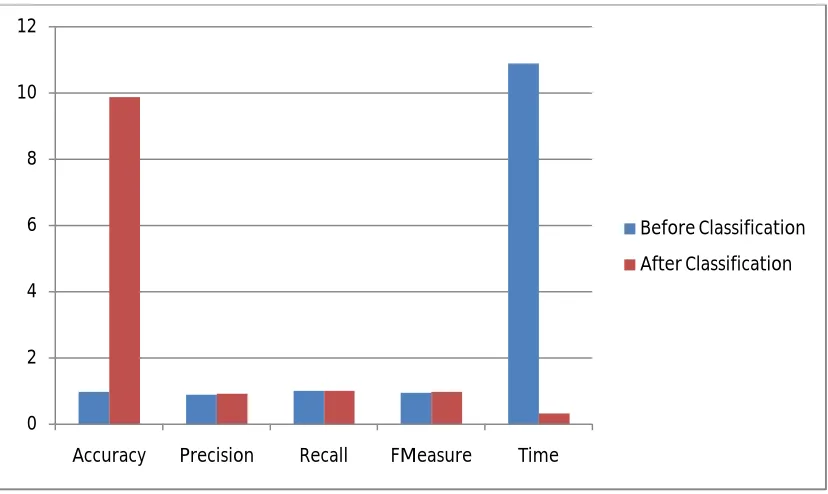
Table 5.1 Classification Result of Before Classification and After Classification
Dataset Field Accuracy Precision Recall F-measure Time
Before Classification 0.975 0.88888888888 88888
1.0 0.941176470588 2353
10.883 seconds
After Classification 9.874321 0.91208755523 1.0 0.9716640734 0.313 seconds
Here we show the comparison results of the proposed mechanism with the existing approach. In below figure we show the results of Accuracy, Precision, Recall, FMeasure, Time for both exiting approach and proposed approch.
Figure 5.15: Comparison for Exiting and Proposed System of Parameters
VI.CONCLUSION AND FUTURE WORK
In this paper, we analysing on Naive Bayes for classification and Manhattan distance method for Several Data sets and Separating data are use in training and testing sets. Separated data are identifying whether it is spam or ham mail.
0 2 4 6 8 10 12
Accuracy Precision Recall FMeasure Time
Before Classification
Identified data is gives the different categories of the mails like Promotion, Adult, Insurance, Health, Website, Software, Cosmetics, Travel, Business. These classify categories help to evaluate more precise accuracy and these categories are useful for give result in less time. Naïve Bayes also used four parameters such as Accuracy, Precision, Recall, F-Measure; these parameters are used in classification for find out final result of spam mail filtering.
REFERENCES
1. Rekha, Sandeep Negi, “A Review on Different Spam Detection Approaches” , International Journal of Engineering Trends and Technology (IJETT) – Volume 11 Number 6 - May 2014
2. Ammar Almomani, Atef Obeidat, Karim Alsaedi, M. Al-Hazaimeh Obaida and Mohammed Al-Betar, “Spam E-mail Filtering using ECOS Algorithms” , Indian Journal of Science and Technology, Vol 8(S9), 260–272, May 2015
3. https://wordtothewise.com/wp-content/uploads/2014/02/WttW_SpamFiltering.pdf
4. Mohammand Reza Parsaei & Mohammad Salehi. “E-Mail Spam Detection Based on Part of Speech Tagging”, 2015 2nd Internation Conference on Knowledge-Based Engineering and Innvovation(KBEI),November 5-6,2015.
5. Anirudh Harisinghaney, Arnan Dixit, Saurabh Gupta, Anuja Arora, “Text and Image Based Spam Email Classification using KNN, NaIve Bayes and Reverse DBSCAN Algorithm” , 2014 International Conference on Reliability, Optimization and Information Technology ICROIT 2014, India, Feb 6-8 2014
6. Siti-Hajar-Aminah Ali & Seiichi Ozawa, Junji Nakazato & Tao Ban, Jumpei Shimamur, “An Autonomous Online Malicious Spam Email Detection System Using Extended RBF Network”, 978-1-4799-1959-8/15/$31.00 @2015 IEEE
7. Yang Gao, Guyue Mi and Ying Tan,” Variable Length Concentration based Feature Construction Method for Spam Detection”, 978-1-4799-1959-8/15/$31.00 @2015 IEEE
8. Arie Wahyu Wijayanto ,Takdir, ” Fighting Cyber Crime in Email Spamming: An Evaluation of Fuzzy Clustering Approach to Classify Spam Messages”, International Conference on Information Technology Systems and Innovation (ICITSI) 2014 Bandung-Bali, 24-27 November 2014 ISBN: 978-1-4799-6526-7
9. https://www.tutorialspoint.com/data_mining/dm_overview.htm
10. https://en.wikipedia.org/wiki/Spam
11. http://www.webopedia.com/TERM/S/spam.html
12. http://www.computational-logic.org/iccl/master/lectures/summer06/nlp/part-of-speech-tagging.pdf
13. https://sites.google.com/site/dataclusteringalgorithms/k-means-clustering-algorithm
14. Sunil B. Rathod, Tareek M. Pattewar,“A Comparative Performance Evaluation of Content Based Spam and Malicious URL Detection in E-mail”, 2015 IEEE International Conference on Computer Graphics, Vision and Information Security (CGVIS), 978-1-4673-7437-8/15/$31.00 ©2015 IEEE
BIOGRAPHY