Scholarship@Western
Scholarship@Western
Electronic Thesis and Dissertation Repository
11-9-2012 12:00 AM
Preparation and formulation of powder coating for application of
Preparation and formulation of powder coating for application of
enamelled wire
enamelled wire
Liuyin Xia
The University of Western Ontario Supervisor
Dr. Jesse Zhu
The University of Western Ontario Joint Supervisor Dr. Hui Zhang
The University of Western Ontario
Graduate Program in Chemical and Biochemical Engineering
A thesis submitted in partial fulfillment of the requirements for the degree in Master of Engineering Science
© Liuyin Xia 2012
Follow this and additional works at: https://ir.lib.uwo.ca/etd Part of the Other Chemical Engineering Commons
Recommended Citation Recommended Citation
Xia, Liuyin, "Preparation and formulation of powder coating for application of enamelled wire" (2012). Electronic Thesis and Dissertation Repository. 940.
https://ir.lib.uwo.ca/etd/940
This Dissertation/Thesis is brought to you for free and open access by Scholarship@Western. It has been accepted for inclusion in Electronic Thesis and Dissertation Repository by an authorized administrator of
application of enamelled wire
(Thesis format: Monograph-article)
by
Liuyin Xia
Graduate Program in Engineering Science Department of Chemical and Biochemical Engineering
A thesis submitted in partial fulfillment of the requirements for the degree of
Master of Engineering Science
The School of Graduate and Postdoctoral Studies The University of Western Ontario
London, Ontario, Canada
II
THE UNIVERSITY OF WESTERN ONTARIO School of Graduate and Postdoctoral Studies
CERTIFICATE OF EXAMINATION
Supervisor
______________________________ Dr. Jesse Zhu
Co-Supervisor
______________________________ Dr. Hui Zhang
Examiners
______________________________ Dr. Dimitre Karamanev
______________________________ Dr. Hassan Gomaa
______________________________ Dr. Jun Yang
The thesis by
Liuyin Xia
entitled:
Preparation and formulation of powder coating for application of
enamelled wire
is accepted in partial fulfillment of the requirements for the degree of Master of Engineering Science
______________________ _______________________________
III
ABSTRACT
Enamelled wire is a conductive wire coated with a very thin layer of insulation, widely used in the
field that requires tight coils of wire. The traditional enamelled wire is produced by liquid paint,
which consists of resins, solvents, pigments, and additives. Organic solvent takes a relatively high
content, normally of 75% to 90% by weight. Many efforts have been made to decrease the
percentage of solvent in the insulation paint. On the other hand, increasing the solids content of given
enamel results in the viscosity rises significantly, making it harder to flow. Therefore, powder
coating technology as an alternative is developed in the production of enamelled wire, not only
benefits the environment but also cuts cost of solvent.
Mechanical and chemical methods to prepare the fine powder of PVF type enamelled wire coating
are reported in this thesis. For gradual solvent evaporation method, kinetics and thermodynamics of
the fabrication of microspheres are adopted from reference to predict the operating parameters, such
as the solidification time. Factors affecting average particle size and particle size distribution are
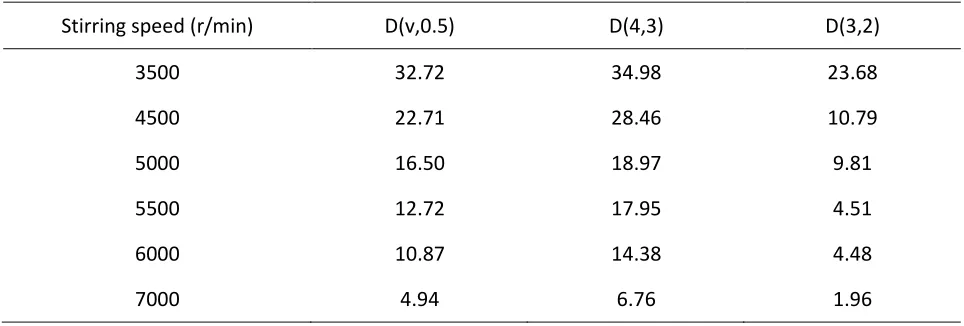
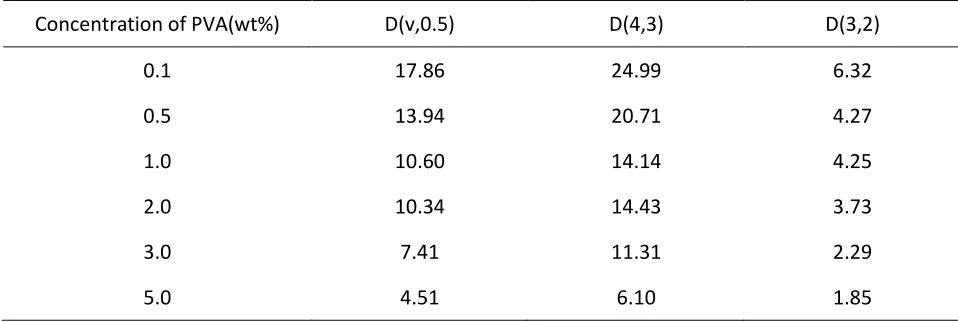
investigated as well. Phase ratio of emulsion system (DP/CP), emulsion agitation speed, types and
dosage of emulsifier, co-solvent and stabilizer are all taken into account. When the DP/CP was 1/15,
the resins percentage in DP was 12wt%, the stirring speed was 6000 r/min, 1wt% SDS was used as
emulsifier, 1wt% N-octanol and 0.5wt% PVA were employed as co-solvent and stabilizer, the
powder of average particle size at around 12 micron can be obtained.
Initial PVF enamelled wire coating formulation, as adopted from references of liquid insulation paint,
which consists of PVF-E resin, novolac epoxy resin and melamine resin, produced a non-continuous
IV
properties of PVF-E resin or the inappropriate ratio among the different components in the
formulation. After that BPA epoxy and its hardener were introduced to the initial formulation to
improve the surface quality of coating finish. Then, the paint formulation, powder spraying and
curing conditions are optimized. The recommended formulation is with mole ratio of PVF-K,
OCFER and melamine resin at 100:375:119, and with proper dosage of degassing and flow agent.
The best spraying condition is gun voltage of 30 kV and air stream of 3.0 m/s. When the curing
temperature ranged from 215 to 225℃, and the substrates were pre-treated, the number of defects on
coating film was reduced.
V
ACKNOWLEDGEMENTS
I would like to express my deep gratitude to my supervisor, Dr. Jesse Zhu, who provided a chance for
me to study in U.W.O. and to live together with my husband. During the past two years, his guidance
and encouragement ensured the finish of this study, and his management capacity brought me a great
improvement of comprehensive skill, which I will enjoy forever.
I am also very grateful to my co-supervisor, Dr. Hui Zhang. He helped me overcome many problems
and difficulties during this program. With his professional experience, I was benefited so much from
each conversation with him.
Much appreciation is extended to Dr. Brian Hart in Surface Science Western at U.W.O. for allowing
me to access the facilities in his lab.
I wish to take this opportunity to thank my husband, Yong for his love and support. Each dinner that
he prepared gave me energy to finish this study.
Liuyin Xia
London Ontario, Canada
VI
TABLE OF CONTENT
CERTIFICATE OF EXAMINATION ... II ABSTRACT……….III ACKNOWLEDGEMENTS ... V TABLE OF CONTENT ... VI LIST OF TABLES ... IX LIST OF FIGURES ... XI LIST OF ABBREVIATIONS AND SYMBOLS ... XIII
Chapter 1 General Introduction ... 1
1.1 Introduction ... 1
1.2 Objectives ……….2
1.3 Thesis structure ... 3
1.4 Major contributions ... 5
References……….5
Chapter 2 Background and Literature Review ... 6
2.1 Enamelled wire ... 6
2.2 Composition of flow-able insulating paint ... 7
2.2.1 Resin ... 7
2.2.2 Solvent ... 15
2.3 Powder coating ... 17
2.3.1 Particle size limitation ... 18
2.3.2 Powder material limitation ... 19
2.4 Preparation of ultra-fine particles ... 20
2.4.1 Mechanical pulverization and milling ... 21
2.4.2 Chemical methods for preparation of polymeric powder ... 21
VII
2.4.4 Spray drying ... 23
2.5 Summary and concluding remarks... 23
References……….24
Chapter 3 Experimental Methodologies ... 28
3.1 Experimental materials ... 28
3.2 Experimental equipment ... 29
3.3 Methods………. 30
3.3.1 Fine powder preparation ... 30
3.3.2 Measurement of particle size ... 31
3.3.3 Evaluation of surface quality ... 32
3.3.4 Spraying of powder ... 34
3.3.5 Curing of powder coating... 34
Chapter 4 Preparation of PVF Ultra-fine Powder ... 35
4.1 Physical properties of PVF resin ... 35
4.2 Powder coating formulation ... 36
4.3 Mechanical method ... 37
4.3.1 Mixing and extruding ... 37
4.3.2 Grinding or milling ... 39
4.4 Gradual solvent evaporation ... 40
4.4.1 Types of solvents ... 41
4.4.2 Kinetic and thermodynamic prediction ... 42
4.4.3 Preparation temperature Vs emulsion stability ... 46
4.4.4 Determination of microsphere solidification time ... 48
4.5 Conclusions ... 50
References……….51
Chapter 5 Particle Size Distribution and Coating Finish Quality ... 53
5.1 Factors affecting particle size distribution by solvent evaporation method ... 53
5.1.1 Ratio of DP/CP ... 53
5.1.2 Agitation speed ... 54
5.1.3 Surfactants and co-solvent ... 57
VIII
5.2 Coating finish quality as a function of particle size ... 61
5.3 Effect of particle size distribution ... 63
5.4 Conclusions ... 65
References……….66
Chapter 6 Formulation of PVF Powder Coating ... 68
6.1 Initial formulation ... 68
6.2 Epoxy resin and its curing agent ... 69
6.2 Types of PVF resin ... 71
6.3 Optimization of PVF-K formulation and preparation conditions ... 74
6.3.1 Novolac epoxy ... 74
6.3.2 Dosage of melamine ... 78
6.3.3 Additives ... 79
6.3.4 Gun voltage and air flow ... 79
6.3.5 Curing temperature and time ... 80
6.4 Pre-treatment ... 82
6.5 Conclusions ... 83
References……….85
Chapter 7 Conclusions and Recommendations ... 86
7.1 General conclusions ... 86
7.1.1 Preparation of the fine powder ... 86
7.1.2 Factors on average particle size and particle size distribution ... 87
7.1.3 Optimization of the formulation and operating conditions ... 88
7.2 Recommendations ... 89
IX
LIST OF TABLES
Table 2.1 Thermal rating of enamelled wire with different insulation resin ... 14
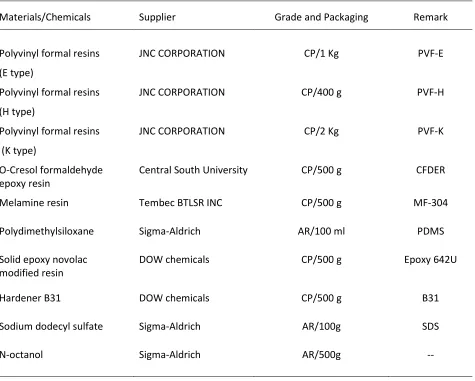
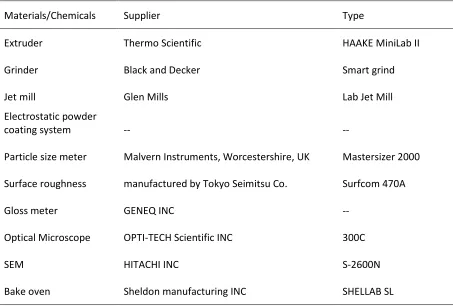
Table 3.1 Materials used in the tests ... 28
Table 3.2 Equipment and instruments used in the tests ... 30
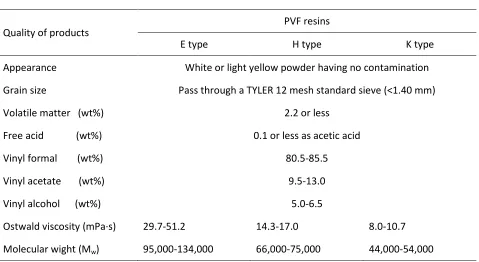
Table 4.1 Types of PVF resin used in this work ... 35
Table 4.2 Thermal gravimetric properties ... 36
Table 4.3 Initial formulation of PVF-E type enamelled wire ... 36
Table 4.4 Physical properties of PVF and some resins ... 38
Table 4.5 Extruding of resin mix pre-treated by organic peroxide ... 39
Table 4.6 Particle size distribution (Fine powder after jet milling) ... 39
Table 4.7 Particle size distribution (Powder after grinding) ... 39
Table 4.8 Particle size distribution (Powder after grinding at -45~-50℃) ... 40
Table 4.9 Possible solvents for PVF, novolac epoxy and melamine resin... 41
Table 4.10 Effects of operating temperature on emulsion stability (1) ... 46
Table 4.11 Effects of operating temperature on emulsion stability (2) ... 47
Table 5.1 The effect of DP/CP ratio on the particle size of microsphere ... 54
Table 5.2 The effect of stirring speed on the particle size of microsphere ... 55
Table 5.3 The effect of stirring speed on yield of preparation ... 56
Table 5.4 The effect of dosage of SDS on yield of free flow powder ... 57
Table 5.5 The effect of co-solvent (n-octanol) on the particle size of microspheres ... 59
Table 5.6 The effect of concentration of stabilizers on the particle size distribution ... 60
X
Table 5.8 The first pass transfer efficiency of powder that were prepared with different PSD ... 64
Table 6.1 Formulation of PVF-H type enamelled wire coating ... 72
Table 6.2 Formulation of PVF-K type enamelled wire coating ... 73
Table 6.3 Formulation of enamelled wire coating with OCFER ... 75
Table 6.4 Optimization of enamelled wire coating formulation (Class. mol) ... 76
Table 6.5 Surface quality of finish film as a function of OCFER resin dosage ... 77
Table 6.6 Optimization of enamelled wire coating formulation (Class. mol) ... 78
Table 6.7 Coating thickness as a function of spraying condition... 80
XI
LIST OF FIGURES
Figure 2.1 Conventional preparation procedures for enamelled wire ... 6
Figure 2.2 General structure of PVF resin ... 8
Figure 2.3 General structure of polyimide ... 11
Figure 2.4 General structure of a kind of polyester ... 13
Figure 2.5 Schematics of coating film thickness for the definition of effective thickness factor ... 19
Figure 3.1 The template for measuring defects on coating film ... 32
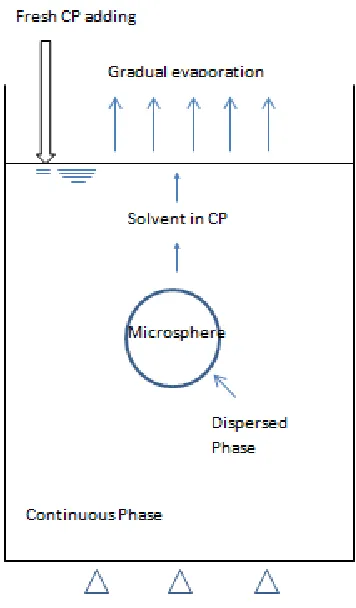
Figure 4.1 Schematic diagram of microsphere formation ... 43
Figure 4.2 Experimental and calculated CH2CI 2 removal profile ... 44
Figure 4.3 Effects of DP/CP ratio on the removal of CH2Cl2 in the DP ... 45
Figure 4.4 The effect of temperature on the volume fractions of oil, cream, and water phases ... 47
Figure 4.5 Micrographs of microspheres made by gradual solvent evaporation method ... 48
Figure 4.6 Solidification time of microsphere by gradual solvent evaporation method. ... 49
Figure 4.7 The morphology of powder prepared by gradual evaporation method ... 49
Figure 5.1 The effect of stirring speed on the particle size distribution ... 56
Figure 5.2 The effect of types of stabilizers on the particle size distribution ... 59
Figure 5.3 The effect of concentration of stabilizers on the particle size distribution ... 60
Figure 5.4 Film gloss as a function of average particle size of powder production ... 62
Figure 5.5 Surface roughness as a function of particle size ... 62
Figure 5.6 Particle size distribution of ultra-fine powder separated by sedimentation as a function of process time ... 63
XII
Figure 6.1 Optical microscope photographs of curing film prepared by initial formulation. ... 68
Figure 6.2 Optical microscope photographs of curing film prepared by formulations with epoxy. .... 70
Figure 6.3 Film gloss as a function of epoxy content in formulation ... 71
Figure 6.4 Surface roughness of coating finish as a function of epoxy content ... 72
Figure 6.5 Film gloss of different types of PVF resin... 73
Figure 6.6 Chemical structure of the novolac epoxy (D.E.N.438)... 74
Figure 6.7 The chemical structure of the o-cresol formaldehyde epoxy resin (OCFER) ... 75
Figure 6.8 The defects on the coating layer ... 77
Figure 6.9 Pictures of panels after bending or lashing tests ... 78
Figure 6.10 Gloss of each panel curing at different temperature with different curing time ... 82
XIII
LIST OF ABBREVIATIONS AND SYMBOLS
Abbreviations
VOCs Volatile Organic Compounds
D50 Particle diameter, 50% (by volume) of the powder smaller than this size
D(4, 3) The volume mean diameter
D(3, 2) The surface mean diameter
TDI Diisocyanate
HDI Hexamethylene diisocyanate
IPDI Isophorone diisocyanate
MDI Methylenediphenyl diisocyanate
HMDI 1,1-methylenebis (4-isocyanato) cyclohexane
TPE Ratio of the powder deposited on the coating part to the amount of powder sprayed from the powder spray gun, it yields higher effective film thickness
HAPs Hazardous air pollutants
MEK Methyl ethyl ketone
THEIC Tris(2-hydroxyethyl) isocyanurate
FRP Fiberglass reinforced plastic
PAI Polyamide-imides
DP Dispersed phase
CP Continuous phase
SDS Sodium dodecyl sulphate
PVA Polyvinyl alcohol
OCFER o-cresol formaldehyde epoxy resin
XIV BPA Bisphenol A
Symbols
Cross-section area of microsphere formation vessel
Surface area of microsphere
Concentration of component i
Mutual diffusion coefficient (m2s-1)
Volume flux of component i
Mass transfer coefficient of component i between the DP and CP
Evaporation constant for component i
Weight of component i
Number of sampling points for residual solvent
Radius of microsphere
Gas constant
Time
Adding rate of continuous phase
Volume of continuous phase
Chemical potential component i
Normalized radial position in the DP
Chapter 1 General Introduction
1.1 Introduction
Enamelled wire is a conductive wire coated with a very thin layer of insulation, widely used in the
construction of transformers, inductors, motors, speakers, hard disk head actuators, potentiometers,
electromagnets, and other applications which require tight coils of wire. The traditional enamelled
wire is produced by using liquid paint, which consists of resins, solvents, pigments, and some
additives. Organic solvents take a relatively high content, normally of 75% to 90% by weight.
Solvents are a major source of environmental concern because they evaporate at normal temperatures
and pressures. In the workplace, solvent vapors can result in a number of human health risks, and
also can pose fire/explosion hazards. Many efforts have been made to decrease the solvent content of
the enamel. However, when one increases the solids content of given enamel the viscosity rises
significantly[1]. Therefore, powder coating technology as an alternative that not only benefits the
environment but also cuts the cost of solvent, if it can be used in the production of enamelled wire.
Powder coating is a technology which powdered paint is directly coated onto targets without using
any solvent. In comparison to traditional liquid coating, it is environmentally friendly, as the process
emits negligible, if any, polluting volatile organic compounds into the atmosphere. Furthermore, the
processes used for powder coating do not require venting, filtering, or solvent recovery as is
necessary with liquid finishing. Costs are saved because there is less need for heating outside air to
supply oven exhaust air, and most of the powder coating over-spray can be collected and re-used[2].
Since the early days of powder coating, powder coaters and application equipment manufacturers
The appearance of the coating finish is closely related to the particle size. Conventionally, powder
with mean particle size between 30 to 60 µm which are commonly used and produce a relatively
thick film with thickness of 50 to 150 µm, and creating roughness represented by texture of “orange
peels”. It is noted that smaller particle sizes with mean diameter between 10 to 30 µm are capable of
forming a quite uniform layer of paint[3]. However, the finer that powder, the poorer fluidization and
flow ability, because of the increase of inter-particle forces[4].
Another significant factor affecting the finish quality is the formulation of powder coating including
the types of resins, the coupling or curing agents and the additives. Due to formulation limitation, so
far the most commonly used commercial powder coating products are only polyester, polyurethane,
polyester-epoxy (known as hybrid), straight epoxy (fusion bonded epoxy) and acrylics.
For electro magnet or transformer applications, the coating for electrical insulation should have
properties including: high dielectric strength to avoid electrical shorts; uniformity, as measured by a
minimum number of faults or defects; good mechanical strength (toughness) and/or structural
integrity (hardness); flexibility to permit working on the coated wire; and good heat resistance to
prevent decomposition and/or melting from exposure to elevated temperatures. To replace the
traditional liquid paint by powder coating for enamelled wire, we have to develop new resin
formulations in which the resin must fulfill all the requirements of electrical insulation application. A
comprehensive study on the new types of powder coating is undoubtedly desired.
1.2 Objectives
Corresponding to the profuction mentioned above, this study focuses on an invention of a new
powder coating formulation and its preparation method, which can be used as enamelled wire paint.
The objectives of this research are outlined as following.
• To prepare the ultrafine powder by a mechanical method
• To prepare the ultrafine powder by a gradual solvent evaporation method, including the type
and dosage of organic solvents, kinetic and thermodynamic study on the formation of
polymeric microspheres
• To investigate the factors having influence on particle size distribution, including operating
temperature, agitation rate, type and dosage of surfactant, the presence or absence of
stabilizer etc.
(2) Optimization of the types and dosage of each component in this formulation.
• To optimize the dosage of epoxy that improves flow ability of PVF enamel paint during
curing stage and thus enhances the finish quality; to optimize the curing temperature and
curing time.
• To theoretically and experimentally study the effects of each component in this powder
formulation, and the effects of additives on film.
• To develop a new formulation with the PVF resin functioned by trimethoxysiliane.
1.3 Thesis structure
This thesis contains seven chapters and follows the “Monograph-Article” format as outlined in the
Thesis regulation Guide by the School of Graduate and Postdoctoral Studies of The University of
Western Ontario. It is organized in the following structure.
• Chapter 1 gives a brief introduction to the background of this study and raises the need of the
work. Research objectives, thesis structure and the major contributions of the present study
are stated as well.
• Chapter 2 provides a detailed review of enamel insulation materials and powder coating. The
the conventional liquid coating, and the preparation methods for ultrafine particles are
reviewed as well.
• Chapter 3 summarizes the experimental materials and methods that were used. Physical
properties of all chemicals including resins, solvents, and additives are revealed in material
section. The operation and equipment of all the powder preparation, powder characterization
and film quality techniques employed in the present study are detailed in the experimental
method section.
• Chapter 4 reports the preparation of the ultrafine powder by mechanical method and by
gradual solvent evaporation method. Extruding temperature, residence time in extruder and
grinding methods are included for mechanical grinding. The type and dosage of organic
solvent, kinetic and thermodynamic properties are studied during the formation of polymeric
microspheres by solvent evaporation method.
• Chapter 5 discusses the effects of some operation factors on particle size distribution,
including the volume ratio of dispersed phase and continuous phase, agitation speed, type and
dosage of surfactant and co-solvent, in the presence or absence of stabilizer.
• Chapter 6 reports an optimized formulation of PVF resin powder coating. The type and
dosage of each component in this formulation has been determined, including the dosage of
epoxy that improves flow ability of PVF enamel paint during curing stage, the additives such
as flow agent, degassing agent. A pre-treatment of substrate to improve the finish quality has
been included.
• Chapter 7 summarizes this work, provides general conclusionss and gives a list of
1.4 Major contributions
The present study explored the use of powder coating technology in enamelled wire insulation
coating, and a powder coating formulation and its fabrication method has been developed.
References
[1] Francois, A. L., High solids enamel, 1989. Essex Group, Inc., United States Pat, No. 4,839,444.
[2] Misev, T. A., Powder coating: Chemistry and Technology, 1991. New York, John Wiley and
Sons.
[3] Visser, J., Van der Waals and other cohesive forces affecting powder fluidization, 1989.
Powder technology, 58(1), 1-10.
Chapter 2 Background and Literature Review
2.1 Enamelled wire
Enameled wire or magnet wire is a copper or aluminium wire coated with a very thin layer of
insulation. It is widely used in the construction of transformers, inductors, motors, speakers, hard
disk head actuators, potentiometers, electromagnets, and other applications which require tight coils
of wire. Since 1980s, demand for magnet wire has been dramatically increasing with the total growth
of industries in Europe, North America and Japan [6]. After that, China started its increasing demand
and manufacturing bloom. At 2005, the total output of magnet wire in China has reached 1.1 million
tons, accounting for 60 percent of the global production.
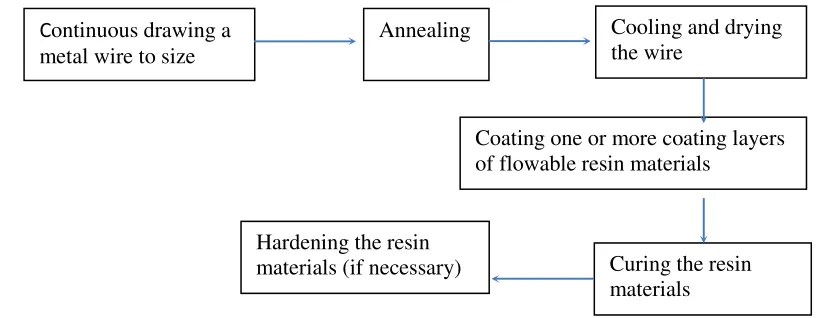
A magnet wire is conventionally prepared by the following procedure (Fig.2.1):
Fig. 2.1 Conventional preparation procedures for enamelled wire
Insulation coating on conductive wire may be any one of a wide variety of natural and synthetic
organic polymers. The selection of the types of each component depends on the requested properties
Annealing Cooling and drying the wire
Hardening the resin
materials (if necessary) Curing the resin materials
Coating one or more coating layers of flowable resin materials
and environmental concerns. Beginning with organic based synthetic polymer substituted for natural
resins, wire enamels have been developed for added toughness, flexibility, heat stability, and
resistance to a variety of environments including moisture, solvents, other resins and contaminants.
Modern magnet wire typically uses one to four layers (in the case of quad-film type wire) of polymer
film insulation, often of two different compositions, to provide a tough, continuous insulating film.
2.2 Composition of flowable insulating paint
The flowable resin material used in the manufacturing of magnet wire usually consists of resins,
solvents, pigments, and some additives.
2.2.1 Resin
Resins or binders are the main component of a coating formulation. The curing properties, adhesion
to the substrate and mechanical characters are related to them. For magnet or transformer
applications, the coating for electrical insulation should have properties including: high dielectric
strength to avoid electrical shorts; uniformity, as measured by a minimum number of faults or defects;
good mechanical strength (toughness) and/or structural integrity (hardness); flexibility to permit
working of the coated wire; and good heat resistance to prevent decomposition and/or melting from
exposure to elevated temperatures and temperature cycling during, for example, ballast production
and/or end use applications (current flow). Good mechanical strength is especially important in
connection with magnet wires that are wound repeatedly around a mandrel. It is also important that
such wires be non-tacky and smooth and that they possess good slip qualities to improve handling
during winding operations [7].
Magnet wire insulating films normally use (in order of increasing temperature range) polyvinyl
formal (Formvar), polyurethane, polyamide, polyester, polyester-polyimide, polyamide-polyimide
(1) Polyvinyl formal [1, 8]
Polyvinyl formal (PVF) resins are a family of high molecular weight polyvinyl methylal polymers
prepared by polyvinyl alcohol and formaldehyde. The chemistry of preparation is outlined in
Equation 2.1, where R can be H or any of a wide variety of organic radicals, but for PVF resins, R is
H; the polymer is formal[1-3].
( Eq 2.1 )
The generalized structure of the PVF molecule is shown in Fig 2.2. The average molecular weight
range from about 25,000 to 150,000 depending on grade[4]. The three chemical moieties are
distributed along the polymer chain as a percentage of 80~85% for formal unit, 5~6.5% for acetate
and about 10% for alcohol unit. While simple in concept, the actual commercial preparation of these
polymers is quite complex, requiring many processing steps. Worldwide production of polyvinyl
formal resin is estimated at 3500 to 4500 metric tons annually and used mainly in insulating enamels
and other coatings[5-7].
Fig. 2.2 General structure of PVF resin
In general, the PVF are characterized by toughness and excellent adhesion to a wide variety of
surfaces. They are resistant to most nonpolar solvents and to attack by both acids and bases, although
they are slowly attacked by strong aqueous acids. Their resistance to hydrocarbons and mineral oils
are readily cross-linked with a variety of widely available cross-linking reagents that react with
hydroxyl. Examples of the more common cross-linking reagents are di-aldehydes and phenolic,
amino, isocyanate and epoxy functional resins [8]. The formal is fully compatible with most common
isocyanate and epoxy resins, and shows limited compatibility with alkyd, phenolic, melamine- and
urea-formaldehyde resins and silicones. Plasticizers are often used to soften the films prepared from
PVF. Di-ethyldiphenyl and dicyclohexyl phthalates, butyl benzyl phthalate and phosphate ester
including 2-ethylhexyl diphenyl phosphate polyester, chlorinated naphthalenic, and adipate diesters
are useful. By proper choice of plasticizer type and level, the physical–mechanical, chemical and
adhesion properties of these resins can be tailored for a wide variety of applications. [9]
(2) Polyurethane [10]
The term urethane originally comes from the reaction of isocyanate groups with hydroxyl groups.
However, this term now contain a large variety of resins. Paint films made of polyurethane have a
polymer structure with urethane, urea or biuret coupling groups. During paint curing coupling can
occur because of poly addition of relatively low molecular mass starting products. Otherwise the
paints may include high molecule polymers that are synthesized by coupling of suiTable monomers.
Also, adducts in which curing occurs via oxidation of conjugated double bonds or high molecular
mass adducts with excess isocyanate groups are used as polyurethane paints. Equation 2.2 shows the
reaction of polyester (hydroxyl group) with isocyanate.
Eq ( 2.2 )
Other type of polyurethane resins include blocked reactive groups that can be activated by heat or
polyurethane paints are formulated as two-component (two-pack) or one-component (one-pack)
mixtures depending on their chemical composition.
Two-component polyurethane can be made from different diisocyanates. However, only toluene
diisocyanate (TDI), hexamethylene diisocyanate (HDI), isophorone diisocyanate (IPDI),
methylenediphenyl diisocyanate (MDI), and 1,1-methylenebis (4-isocyanato) cyclohexane (HMDI)
are used as commercial products. The basis of most polyurethane paint formulations are from high
molecular mass polyisocyanates or prepolymer derived from such products. Polyisocyanates may
differ according to their reactivity, chemical structure, functionality and isocyanate content. They are
the main curing component of two-pack polyurethane paints. Two-pack polyurethane paints can be
applied by different methods apart from dipping because the shelf life of two component resins is
usually between 4 to 6 hours and after this time they will be cured. Curing is done at room
temperature, but it can be accelerated by heat. If two components are mixed in stoichiometric ratio,
the reaction causes 100% cross-linking. If aliphatic polyisocynate is used as hardener, a small
amount of catalyst or accelerator is used.
One-pack polyurethane coatings are cured in different ways. They may be cured with atmospheric
oxygen and are formed from the reaction of diisocyanates with polyols-modified drying oils. One
example of this group is urethane oil that is cured oxidatively and do not contain free isocyanate
groups. Another type is cured with atmospheric moisture. They contain high molecular polyols with
excess diisocyanate including reactive isocyanates groups. They are used to make paints with
excellent resistance to chemical and mechanical attack by cross-linking with the formation of urea
group under the effect of atmospheric moisture. The curing temperature varies from 120 to 220º C
that this range is related to blocking agent. The blocked polyurethane coatings have a good
mechanical resistance and can be used for coil coating, high quality industrial goods and electrical
(3) Polyamide, polyimide and polyamide
A polyamide is a polymer containing
both naturally and artificially, examples being
artificially through step-growth polymerization
aramids, and sodium poly (aspartate)
and sportswear due to their extreme durability and strength. The amide link is produced from the
condensation reaction of an amino
molecule, usually water, or hydrogen chloride
acid group can be on the same monomer, or the polymer can be constituted of two different
bifunctional monomers, one with two amino groups, the other with two carboxylic a
chloride groups. Amino acids can be taken as examples of single monomer (if the difference between
R groups is ignored) reacting with identical molecules to form a polyamide (Equation
A polyimide is a polymer of imide
Polyimides have been in mass production since 1955. Typical monomers include pyromellitic
dianhydride and 4,4'-oxydianiline.
Fig.
, polyimide and polyamide-imide
containing monomers of amides joined by peptide bonds
both naturally and artificially, examples being proteins, such as wool and silk, and can be made
growth polymerization or solid-phase synthesis, examples being
sodium poly (aspartate). Polyamides are commonly used in textiles, automotives, carpet
and sportswear due to their extreme durability and strength. The amide link is produced from the
amino group and a carboxylic acid or acid chloride
hydrogen chloride, is eliminated. The amino group and the
acid group can be on the same monomer, or the polymer can be constituted of two different
monomers, one with two amino groups, the other with two carboxylic a
can be taken as examples of single monomer (if the difference between
ored) reacting with identical molecules to form a polyamide (Equation
imide monomers. The structure of imide is as shown in Fig
Polyimides have been in mass production since 1955. Typical monomers include pyromellitic
.
2.3 General structures of polyimide
peptide bonds. They can occur
, and can be made
, examples being nylons,
used in textiles, automotives, carpet
and sportswear due to their extreme durability and strength. The amide link is produced from the
d chloride group. A small
, is eliminated. The amino group and the carboxylic
acid group can be on the same monomer, or the polymer can be constituted of two different
monomers, one with two amino groups, the other with two carboxylic acid or acid
can be taken as examples of single monomer (if the difference between
ored) reacting with identical molecules to form a polyamide (Equation 2.3)
Eq ( 2.3 )
monomers. The structure of imide is as shown in Fig 2.3.
Thermosetting polyimides are known for thermal stability, good chemical resistance, excellent
mechanical properties, and characteristic orange/yellow color. Polyimides compounded with graphite
or glass fiber reinforcements have flexural strengths of up to 50,000 p.s.i. (345 MPa) and flexural
moduli of 3 million p.s.i. (20,684 MPa). Thermoset polyimides exhibit very low creep and high
tensile strength. These properties are maintained during continuous use to temperatures of 232 °C
and for short excursions, as high as 482 °C. Molded polyimide parts and laminates have very good
heat resistance. Normal operating temperatures for such parts and laminates range from cryogenic to
those exceeding 260 °C. Polyimides are also inherently resistant to flame combustion and do not
usually need to be mixed with flame retardants.
Polyamide-imides (PAI) are thermoplastic amorphous polymers that have exceptional mechanical,
thermal and chemical resistant properties. These properties put polyamide-imides at the top of the
price and performance pyramid. Polyamide-imides are produced by Solvay Advanced Polymers
under the trademark Torlon. Other high-performance polymers in this same realm are
polyetheretherketones and polyimides.
Polyamide-imides hold, as the name suggests, a positive synergy of properties from both polyamides
and polyimides, such as high strength, melt processibility, exceptional high heat capability, and broad
chemical resistance. Polyamide-imide polymers can be processed into a wide variety of forms – from
injection or compression molded parts and ingots- to coatings, films, fibers and adhesives. The
product used mainly for coatings is sold in a powdered form and is roughly 50% imidized. One of the
major uses is as the magnet wire enamel. The magnet wire enamel is made by dissolving the PAI
powder in a strong, aprotic solvent such as N-methyl pyrrolidone. Diluents and other additives can be
added to provide the correct viscosity for application to the copper or aluminum conductor.
Application is typically done by drawing the conductor through a bath of enamel and then through a
cure the coating. The wire usually passes through the process several times to achieve the desired
coating thickness. The PAI enamel is very thermally stable as well as abrasion and chemical resistant.
PAI is often used over polyester wire enamels to achieve higher thermal ratings.[11]
(4) Polyester and polyester-imide [12]
Polyester resins are unsaturated resins formed by the reaction of dibasic organic acids and polyhydric
alcohols. Polyester resins are used in sheet moulding compound, bulk moulding compound and the
toner of laser printers. Wall panels fabricated from polyester resins reinforced with fiberglass —
so-called fiberglass reinforced plastic (FRP) - are typically used in restaurants, kitchens, restrooms and
other areas that require washable low-maintenance walls.
Polyester enamel is essentially the same material used as plastic and its coatings could meet most
general purpose requirements. Tris(hydroxy-ethylisocyanurate) is the tri-functional alcohol have
been successfully used as magnet wire coatings for many years, which is essentially the reaction
products of terephthalic or isophthalic acid with a mixture of 30% to 70% by weight of a polyhydric
alcohol. In making the polyester there preferably should be an excess of alcoholic groups over acid
groups. Normally the number of hydroxyl groups on the alcohol component is 1 to 1.6 times the total
number of carboxyl groups on the acid component. Another type of polyester resin which may be
used successfully is illustrated by the recurring structural unit of the general formula (Fig. 2.4),
where R is an aromatic or an alkyl-substituted aromatic radical containing from 6 to 16 carbon atoms
with not more than 6 of them in the alkyl groups, and n is between 1 and 8 [13]. Polyester resins can
be modified with other resins to meet specific performance requirements.
The polyester wire enamel is usually modified by incorporation of 1 to 25% of a polyisocyanate
based on the weight of the total of the polyisocyanate and polyester. John et al. [14] prepared a
polyester-polyimide from tris(2-hydroxyethyl) isocyanurate(THEIC), a polycarboxylic acid, an
aromatic diamine and an aromatic carboxylic anhydride containing at least one additional carboxyl
group. The enamel products have good flexibility aging and heat shock at 200℃ as compared to
polyester wire enamels. Later, Schmidt et al. [15] invented a new type of polyester-imide resins
containing 5-membered imide rings between the ester groups. The resins are soluble in cresol, and
cresol solutions are useful as enameling lacquers for wire conductors. This polyester-imide resin
having ester groups of acid and alcohol moieties in the chain which are condensation products of at
least difunctional carboxylic acid or a derivative thereof which is a functionally active equivalent,
and at least difunctional alcohol or a derivative thereof which is a functionally active equivalent, and,
between ester groups, an amount effective to improve the thermal stability of the resin without
rendering the resin insoluble to the extent which would make it unsuiTable for use in a wire lacquer
composed of the resin dissolved in cresol and solvent naphtha.
(5) Summary of resins used in enamelled wire
Wire enamel are classified based on either (a) Chemical base, such as Polyester, Polyester-imide,
Polyamide-imide, Polyurethane, etc. or (b) Thermal rating of the wire, such as Class 155, Class 200
etc. Table 2.1 concludes the insulation resins introduced above in the terms of thermal rating.
Table 2.1 Thermal rating of enamelled wire with different insulation resin
Insulation resin Class of wire/°C Special properties of magnet wire
Polyvinyl formal 105 Compatible with transformer oils
Polyester 130
Modified Polyester 130-155
Polyester Nylon 155-180
Polyurethane 155-180 Fast solderability & good cut through
Polyesterimide 155-180 Excellent heat shock
THEIC modified polyesterimide 180-200 Resistance to Styrene
Polyamide-imide 220
Aromatic polyimide 220 Cresol soluble
Polyester Polyamid-imide 220
Polyesterimide polyamide-imide 220
2.2.2 Solvents
Generally, coatings depending on its solvent type can be divided into two different systems that are
solvent base (borne) and water base (borne).
Solvent borne: This type of coatings includes organic solvents. Organic solvents are used to dissolve
resins and additives and to disperse pigment in coatings. Also, solvents can adjust the viscosity of
final coatings and affect drying of paints. The dissolution behavior and solvent release during and
after application are two important factors for choosing solvents. Moreover, the evaporation of the
solvents can affect surface smoothness and mechanical properties of the film. Small amount of
solvents may remain in these coatings after curing that can reduce internal tension and linear
shrinkage behavior of final films.
Waterborne: Water borne (water-thinnable) coatings were found in the 1950s to replace the common
solvent base paints. Water is used as solvent in the production and applications of these coatings.
Waterborne paints are different from solvent borne because of the nature of their stabilization in
water; the polymer molecules should be in the form of polymer dispersion or emulsion to be
dissolved or dispersed in water. Now, however, water-based acrylics, epoxies, polyurethanes and
The most common solvents that are used in magnet wire coatings are aromatic like toluene or xylene,
aliphatic hydrocarbon like naphtha, esters of acetic acid like butyl acetate, glycol ethers, alcohols,
and some ketones like methyl ethyl ketone (MEK). They can improve pigment wetting and
dispersion, control the viscosity of coatings and control the drying behavior of coatings. Since the
beginning of the 1980s environmental requirements have become considerably important, the use of
solvent born paints has decreased. Solvent-free and low-solvent are also made to comply with
increasingly strict environmental requirements. However, liquid paints with high content of solvent
have not been replaced by other coating systems in the production of enamelled wire. Many efforts
have been done to increase the solid proportion in enamel paint.
The majority of conventional coatings are solvent borne, traditionally containing about 10% to 25%
solids by weight and a relatively high organic solvent content. The enamel coating designers are
facing a problem that when one increases the solids content of given enamel the viscosity rises
significantly. This makes the application of the enamel to the wire substrate difficult to maintain a
uniform thickness and concentricity. In U.S. patent No.4,578,312 [16], a higher molecular weight
polyether are used to formulate an enamel. However, it has been found that such a resin system, once
applied to the wire, undergoes crazing and is dielectrically instable. In U.S. Pat. No. 4,839,444 [17],
the high solids magnet wire enamel formulation was reported, which was a mixture of high
molecular weight and low molecular weight linear hydroxy polyether. The particular invention
utilizes linear hydroxyl polyether having a molecular weight range from about 5000 to 35000 for the
high molecular weight material while the low one has a molecular weight of about 1800 to 2500. The
resulting enamel had a solid content of 37.1% [2]. With the presence of high molecular weight
polymer, the ability to increase the solids is limited by the final viscosity resulting from these resins.
Solvents are a major source of environmental concern because at room temperatures and ambient
workplace, solvent vapors can result in a number of human health risks, and solvent vapors can also
pose fire/explosion hazards, necessitating careful storage and handling procedures. When solvent
vapors are released, they emit volatile organic compounds (VOCs) and hazardous air pollutants
(HAPs) into the atmosphere. VOCs combine with nitrogen oxides in the presence of sunlight to form
ground-level ozone, which is a precursor to smog, a major pollutant in urban and industrial areas.
Smog poses a number of human health risks to respiratory function, particularly among persons with
asthma or allergies. In addition, due to the low solids content of conventional solvent-borne paints, a
high volume of paint is required to supply a small amount of coverage. An alternative coating has to
be found.
2.3 Powder coating
Powder coating is a technology that coats powdered paint directly onto an object without using any
solvents. In comparison with traditional liquid coating, powder coating is environmentally friendly,
as powder coating contains no solvent, and thereby the process emits negligible, if any, polluting
volatile organic compounds into the atmosphere. Furthermore, the processes employed for powder
coating do not require venting, filtering, or solvent recovery as is necessary with liquid finishing.
Costs are saved because there is less need for heating outside air to supply oven exhaust air, and most
of the powder coating over-spray can be retrieved and re-used.
The technology for coating products with dry powder rather than conventional liquids has been
available since the 1950s. The powder used for the process is finely ground particles of homogenized
polymeric resin, pigment, filler and additives. The powder is either sprayed electrostatically onto a
surface to be coated, or the substrate is dipped into a fluidized bed of suspended powder. The powder
adheres to a preheated substrate surface in the fluidized bed process, or they adhere electrostatically
in the spray process. When heated further in a curing oven, the particles flow and fuse into a strong,
The growth of powder coatings has been dramatic during the last two decades with new applications
continually being developed for both industrial and consumer related markets. The continuing
success of powder coatings is not only due to their known ecological and economic advantages, but
also due to the powder coating industry meeting customers' demands with a two-pronged attack, one
is the development of new formulations and another is the development of advanced equipment and
application processes [1]. It helped overcome finishing obstacles that were common in the early days
of the powder coating industry. These developments have created many new market opportunities.
Now the powder coating has already been applied to coat appliances, furniture, architectural,
building materials, the automotive under hood parts and primer coats in the automotive industry.
2.3.1 Particle size limitation
Although in some markets, traditional liquid coating has been fully or partially replaced by powder
coating because of the advantages mentioned above. Powder coating, however, generally has a
thicker and rougher film than liquid coating.
Normally powdercoatings consist of particles of various shapes and sizes and so may be
characterised by particle size distributions. In terms of size, powder coating materials can be divided
as coarse powder and fine powder. Difference of behaviours in electrostatic spraying can be found
between them. As particles are conveyed to and from a powder gun by air, particle trajectories are
governed by aerodynamic forces, which depend on particle aerodynamic diameter.
The relatively poor surface quality of powder coating is mainly attributed to the coarse powder
employed. Currently, the median particle size of current powder coatings is normally between 30 and
60 µm. This results in a rough surface as shown by the surface profiles in Fig. 2.5 [1], on the other
hand, the film built with the coarse powder is normally over 60 µm, much thicker than that of liquid
coating. In contrast, finer powder allows a much smoother surface and a thinner film as illustrated by
generally defined as the ratio of the powder deposited on the coating part to the amount of powder
sprayed from the powder spray gun, it yields higher effective film thickness. On the other hand,
coarse powder provide high PTE (high average film thickness, shown in Fig.2.5), but the effective
film thickness is lower than that with fine powder [18]. Yanagida et al. [19] report that high-quality
clear coatings for the automotive industry are attainable with mean paint particle diameter of
approximately 10 µm rather than 30 µm.
The consistency and uniformity of the powder coating layer tends to be better as smaller particle
sizes are used and the width of the distribution function narrows. However, major problems with the
handling of fine powder are liable to occur due to poor fluidization and flowability, with fines
tending to be more cohesive and likely to form aggregates. These negative properties of fine powder
were described and reported in some studies [20-23].
2.3.2 Powder material limitation
Powder coatings generally comprise the solid film-forming resins, sometimes with one or more
pigments, fillers and some additives. Film-forming resins can be thermoplastic but are more usually Fig. 2.5 Schematics of coating film thickness for the definition of effective thickness factor:
thermosetting, incorporating two co-reactive film-forming resins or incorporating a curing agent for
the film-forming resin in the powder particles. The earliest powder coating resin were comprised of
nylon, cellulose acetate butyrate, polyethylene, plasticized PVC, polyester and chlorinated polyether
between 1958 and 1965. After that, Wingler et al. published a review article entitled “Thermosetting
coating based on acrylate-styrene copolymers for the electrostatic powder spray application”[24].
Labana et al. described various powder coating compositions based on ethylenically unsaturated
glycidyl esters and dicarboxylic acids in U.S. patent [25]. Arlt et al. presented a powder composition
in U.S. Pat No.3,752,793 [26] which consisted of a mixture of copolymer based on acrylic resin
having an average molecular weight ranges from 3,000 to 20,000.
The resin component in the formulation will largely determine the processing and end-use
performance properties of powder coatings. Resins, however, are generally not used alone as they
must be chemically hardened after application to the substrate to make high molecule mass
cross-linked polymers. The increasing relative molecular mass of the resin leads to higher solution
viscosity of the binder and also improves properties such as elasticity, hardness and impact
deformation. Therefore, not all formulation in theory and in lab was prepared as commercial products.
Now, the most common polymers used are polyester, polyurethane, polyester-epoxy (known as
hybrid), straight epoxy (fusion bonded epoxy) and acrylics.
2.4 Preparation of ultra-fine particles
Powder coating are generally prepared by intimately mixing the ingredients, for example in an
extruder at a temperature above the softening point of the resins but below the softening point of the
composition. And the coatings are usually prepared as a flaky, resinous sheet of material. The sheet is
then broken up into smaller pieces which, in turn, need to be ground, preferably in a small laboratory
Great efforts have been devoted to making ultra-fine powder, with average particle size below
micron scale, and even nanometer scale.
2.4.1 Mechanical pulverization and milling
Mechanical pulverization and milling are initial approaches to obtain ultra-fine powder. Powder
coatings do present a challenge to the grinding process since, by design, the material will melt at a
given temperature, making it difficult to grind to a fine powder due to the naturally produced
frictional heat generated during grinding. With the high speed and the new grinding forces involved,
the material stays is in the grinding chamber for a very short time, which reduces any likelihood of
the material overheating and melting.
More and more improvements on the milling equipment were reported. For example, PE pellets can
be pulverized to powder of particle size in the range of 20-10 micron by a new designed mill [27].
Particle size of PTFE can be reduced from original 20 to 2.4 micron (D 50) after being milled by a
Jet-O-Mizer jet mill [28]; Khait wt al. [29]developed a solid-state shear pulverization method to
prepare polypropylene, polyethylene and polystyrene fine powder at temperature below the melt
transition or glass transition. Smith et al.[30] studied the pulverization and compounding of
polymethyl methacrylate(PMMA) and polyisoamylene through high-energy ball milling. Zhe et al.
[31] pulverized an engineering plastic polyamide 6 (PA 6) to ultrafine powder through a kind of
pan-type milling equipment. After 15 milling cycles, the average particle size was reduced to micron
scale. However, for most existing pulverization and milling equipment, the high-energy consumption
and low efficiency of the preparation of polymer powder are still problems
2.4.2 Chemical methods for preparation of polymeric powder
Chemical methods for preparation of polymeric powder include emulsion polymerization, dispersion
radical polymerization that usually starts with an emulsion incorporating water, monomer, and
surfactant. The most common type of emulsion polymerization is an oil-in-water emulsion, in which
droplets of monomer (the oil) are emulsified (with surfactants) in a continuous phase of water.
PMMA ultra-fine powder with particle size of 2 micron has been produced by non-soap emulsion
polymerization. Ugelstad et al [32] also synthesized polystyrene monodisperse ultra-fine powder at
the micrometer scale through seed emulsion polymerization. Dispersion polymerization is a versatile
method for the preparation of monodisperse polymer particles in the 0.5-10 micron size range.
Especially the polymerization of styrene and methyl methacrylate in polar media has been
extensively studied. To disperse particles stably, a suiTable steric stabilizer was used, such as
polyethylene oxide [33, 34], poly(vinylpyrrolidone) [35-37], poly(2-ethyl-2-oxazoline) [38],
hydroxypropyl cellulose [39-41] and poly(acrylic acid) [42]. For the solution crystallization
technique, the polymer is crystallized from its solution and the crystals grow epitaxially on the
surfaces of the carbon nanotubes, generally leading to the formation of nanohybrid shishkebab
(NHSKs) structures consisting of a long nanotube in the core (shish) with crystals grown on its
surface as kebabs. However, these methods encounter difficulties in dealing with ready-made
polymers or polymers having no facile solvents.
2.4.3 Emulsion-solvent evaporation
Emulsion solvent extraction/evaporation technique is the most commonly used method to produce
microspheres, especially for preparation of polymeric drug nanoparticles. This method uses oil in
water (O/W) emulsion system, the drug is dissolved, dispersed or emulsified in an organic polymer
solution, which is then emulsified in an external aqueous or oil phase. As the organic solvent is
removed by evaporation, the drug and polymer are precipitated in the droplets, thus forming the
nano-sphere or nano-capsules. The emulsion solvent evaporation technique was fully developed at
several biocompatible polymers [43-45]. The technique of emulsion solvent evaporation offers
several advantages; it is preferred to other preparation methods such as spray drying, sonication and
homogenisation, etc., because it requires only mild conditions such as ambient temperature and
constant stirring. Thus, a stable emulsion can be formed without compromising the activity of the
drug. The general emulsification solvent evaporation method used to produce nanoparticles involves
a number of processing and materials parameters: power and duration of energy applied, aqueous
phase volume, polymer and drug concentration in the organic phase, polymer molecular weight,
polymer end groups, solvent volume and surfactant concentration.
2.4.4 Spray drying
Spray drying is a method of producing a dry powder from a liquid or slurry by rapidly drying with a
hot gas. A spray dryer is a device used in spray drying, and it takes a liquid stream and separates the
solute or suspension as a solid and the solvent into a vapor. The liquid input stream is sprayed
through a nozzle into a hot vapor stream and vaporized. Solids form as moisture quickly leaves the
droplets. The solid is usually collected in a drum or cyclone. A nozzle is usually used to make the
droplets as small as possible, maximizing heat transfer and the rate of water vaporization. Droplet
sizes can range from 20 to 180 µm depending on the nozzle. This is the preferred method of drying of
many thermally-sensitive materials such as foods and pharmaceuticals.
2.5
Summary and concluding remarks
A background review of enamel insulation materials and powder coating has been finished in this
chapter. It is noted that the traditional magnet wire is produced by liquid paint, which contains both
resin and solvent. The normally resin are polyvinyl formal (Formvar), polyurethane, polyamide,
polyester, polyester-polyimide, polyamide-polyimide (or amide-imide), and polyimide; the most
commonly solvents are aromatic like toluene or xylene, aliphatic hydrocarbon like naphtha, esters of
Powder coating is a possible alternative coating technology to take the place of liquid paint in
enamelled wire production. The advantages and challenges of powder coating technology are
discussed and the preparation methods for ultrafine particles are reviewed as well. In comparison
with traditional liquid coating, powder coating is environmentally friendly and the processes used for
powder coating is simplified. The challenges of powder coating are including the competition
between particle sizes and flow ability and the formulation limitation. So far, the most common
commercial powder coating products are polyester, polyurethane, polyester-epoxy (known as hybrid),
straight epoxy (fusion bonded epoxy) and acrylics, all with the particle size above 30 micron. A
comprehensive study about the powder coating used in the field of enamel coating is undoubtedly
important and desired.
References
[1] Harold C., Beachell, P.F., Janet H., A study of the oxidative degradation of polyvinyl formal.
Journal of Polymer Science, 1951. 7(4), 353-376.
[2] Francois, A.L., High solids enamel, 1989, Essex Group, Inc., Fort, Wayne, Ind.: United
States Pat. 4,839,444.
[3] Misev, T.A., Powder coating: Chemistry and Technology. 1991, New York: John Wiley and
Sons.
[4] Zhu, J., Zhang, H., Ultrafine powder coatings: an innovation. Powder coating, 2005. 16(7),
39-47.
[5] Visser, J., Van der Waals and other cohesive forces affecting powder fluidization. Powder
technology, 1989. 58(1), 1-10.
[6] Ueda, K., Progress of magnet wire technology in Japan. IEEE Electrical Insulation Magazine,
1989. 5(3), 18-26.
[7] Frihart, Charles R., Conductive wire coating, 1996. Union Camp Corporation, United States
Pat.5,786,086.
[9] Fitzhugh, A.F., Crozier, R.N., Relation of composition of polyvinyl acetals to their physical
properties, Journal of Polymer Science, 1952. 8, 225-241.
[10] Swaraj P., Surface coating science and technology. Jonn wiley and sons, 1985.
[11] Norman, J.G., Polyamide-imide electrical insulation, 1969. United States Pat. 3,457,212.
[12] Jordan, Edmund J., Zalewski, J., Edmund J. Z., Thermosetting polyester and polyester-imide
resins for electrical insulation, 1972. Schenectady Chemicals Inc., United States Pat.
[13] Longrneadow, Edward L., Kass, Robert E., Markhart, Albert, H., Process for coating a wire
with super imposed layer of polyester enamel and polyvinyl acental enamel and article, 1965,
Shawinigan Resins Corporation, United States Pat.3,207,626.
[14] John, F.M., Howard, E., Sheffer, B. Hills, Edmund, J. Zalewski, Polyester-polyimide wire
enamel, 1969, Schenectady chemicals Inc. United States Pat.3,426,098.
[15] Schmidt, K., Rombrecht, H.F., Hans-mallte, B., Conductors having insulation of polyester
imide resin,1979, Dr.Beck&Co.A.G., United States Pat.4,170,684.
[16] Luciano B., Carlo M., Phenoxy resins and use thereof in electric insulation, 1986, The P. D.
George Co., United States Pat.4,578,312.
[17] Lavallee, F. A., High Solid enamel, 1989, Essex Group, Inc: United States Pat.4,476,279.
[18] Shah, U., Zhang, C., Zhu, J., Comparison of electrostatic fine powder coating and coarse
powder coating by numerical simulations. Journal of Electrostatics, 2006.64(6), 345–354.
[19] Yanagida, Application equipment for high quality appearance powder coatings, especially for
automotive clear topcoats. 1996.
[20] Zhu, J., Fluidization of fine powder. In Advances in Grannular materials: fundamentals and
applications. 2003.
[21] Geldart, D., Types of gas fluidization. Powder technology 1973. 7(5), 285-292.
[22] Pacek, W. and Nienow, A. W., Fluidization of fine and very dense hardmetal powder.
Powder technology, 1990. 60(2), 145-158.
[23] Wang, Z. K., Fluidization of fine particles. Chemical Engineering science, 1998. 53(3): p.
[24] Wingler et al., Thermosetting coating based on acrylate-styrene copolymers for the
electrostatic powder spray application. Farbe Und Lack/Nr, 1972.
[25] Sabtokh S. Labana et al., Powder coating compositions compresising a blend of coreactive
polymers,1973. Ford Motor Company, United States Pat.3,976,718.
[26] Cologne, D.A., et al., Powdered coating materails, 1973. United States Pat.
[27] Feder and Friedhelm, R., Disc mill for working of the thermoplastic metaerial, 1971. Wedco,
Inc., United States Pat. 3,584,799.
[28] Lu, S. C., Powder processing technology, 1999, Qinggongye press, Beijing
[29] Furgiuele, N., Lebovitz, A.H., Khait, K., et al., Novel Strategy for Polymer Blend
Compatibilization: Solid-State Shear Pulverization, 2000. Macromolecules, 33, 255-258
[30] Smith, A.P., et al., High-Energy Cryogenic Blending and Compatibilization of Immiscible
Polymers, Advanced Materials, 1999. 11, 1227.
[31] Chen, Z., Liu, C., Wang, Q., Solid- Phase Preparation of Ultra- Fine PA6 Powder Through
Pan-Milling. Polymer Engineering and Science, 2001. 41(7),1187-1195.
[32] Ugelstad, J., et al., Swelling of oligomer-polymer particles, Adv. in Colloid and Interface Sci.,
1980. 13, 101-140.
[33] Lacroix-Desmazes, P., Guyot, A., Macromolecules, 1996. 29,4508.
[34] Capek, I., Riza, M., and Akashi, M., J. Polym. Sci., Part A:Polym. Chem., 1997. 35, 3131.
[35] Tseng, M.S., Aasser, EI. and Vanderhoff, J.W., Optimization of Polymer Solvent Interaction
in a Multisolvent System by the UNIFAC Group Contribution Method, J. Polym. Sci., Part A:
Polym. Chem., 1986. 32, 5007 5019.
[36] Bamnolker, H. and Margel, S., Dispersion polymerization of styrene in polar solvents: Effect
of reaction parameters on microsphere surface composition and surface properties, size and
size distribution, and molecular weight, J. Polym. Sci., Part A:Polym. Chem., 1996. 34(10),
1857-1871.
[37] Paine, A. J., Luymes, W. and McNulty, J., Dispersion polymerization of styrene in polar
solvents. 6. Influence of reaction parameters on particle size and molecular weight in


![Fig. 4.3 Effects of DP/CP ratio on the removal of CH2Cl2 in the DP(From Reference [10])](https://thumb-us.123doks.com/thumbv2/123dok_us/7753725.1271481/60.612.175.436.326.544/fig-effects-dp-cp-ratio-removal-ch-reference.webp)