University of South Carolina
Scholar Commons
Theses and Dissertations
5-2017
Speaking of Qualia: Examining a Craft Beer
Microcommunity's Membership Identity Through
Speech
Anna Hamer
University of South Carolina
Follow this and additional works at:https://scholarcommons.sc.edu/etd
Part of theArts and Humanities Commons, and theLinguistics Commons
This Open Access Thesis is brought to you by Scholar Commons. It has been accepted for inclusion in Theses and Dissertations by an authorized administrator of Scholar Commons. For more information, please [email protected].
Recommended Citation
SPEAKING OF QUALIA:
EXAMINING A CRAFT BEER
MICROCOMMUNITY’S MEMBERSHIP IDENTITY THROUGH SPEECH
by
Anna Hamer
Bachelor of Arts
Queens University of Charlotte, 2012
Submitted in Partial Fulfillment of the Requirements
For the Degree of Master of Arts in
Linguistics
College of Arts and Sciences
University of South Carolina
2017
Accepted by:
Jennifer Reynolds, Director of Thesis
Elaine Chun, Reader
ii
iii
DEDICATION
iv
ACKNOWLEDGEMENTS
I would like to thank first and foremost the staff and owners at “City Brews” for
their openness to my observations and research. In particular, thank you the staff and
owners for their guided explanations of complex beer processes and flavors that are much
more fun to learn about with friends. This thesis would not have been possible without
the inspiration, direction, and feedback of Jennifer Reynolds. Thank you, also, to Elaine
Chun whose thoughtful comments helped clarify my thoughts. And last, but not least,
thank you to my partner, friends, and family for their constant support and love
v
ABSTRACT
This ethnography examines a locally owned craft beer store in South Carolina,
where craft beer connoisseurs and enthusiasts come together to elevate their beer drinking
experience. Many members of this microcommunity use ‘beer talk’, a technical register
of speech (Agha 2007; Manning 2008; Silverstein 2006, 2016), to point to, or index, a
part of their beer connoisseur identity. The ‘beer talk’ register used to describe craft beer
is enacted at various scales of speech (Carr and Lempert 2016), ranging from Cicerone
Certification and mobile applications, to online forums, beer festivals, beer magazines,
brewery visits, and face-to-face interaction. The CofP model (Lave and Wegner 1991;
Eckert and McConnell-Ginet 1992) was used to identify recurrent activities of ‘beer talk’,
including beer tastings, beverage distribution sales meetings, and keyed frames of
cultivating beer knowledge. For an eight month period, these activities were video and
audio recorded; ethnographic interviews were then conducted with core members to
analyze member conceptions of ‘beer talk’. CA (Sacks, et al. 1974; Goodwin and
Goodwin 1992) and Goffman’s frame analysis (1955, 1966, 1974) are used to analyze
interactions to contribute to a better understanding of how larger scales of speech
influence the keyed frames of ‘beer talk’ and qualia analyses reflective of connoisseur
vi
TABLE OF CONTENTS
DEDICATION ... iii
ACKNOWLEDGEMENTS ... iv
ABSTRACT ... v
LIST OF FIGURES ... viii
LIST OF ABBREVIATIONS ... ix
CHAPTER 1:INTRODUCTION ... 1
1.1LITERATURE ... 4
1.2METHODOLOGY ... 11
CHAPTER 2:ATECHNICAL REGISTER ... 33
2.1SCALES OF QUALIA ANALYSIS ... 34
2.2SEQUENCING OF NAMES ... 38
CHAPTER 3:ACCESSING/ASSESSING BRANDED FLAVORS ... 46
3.1ASSESSING BRANDS ... 49
3.2ACCESSING BRANDS ... 55
CHAPTER 4:IDENTITY REPLICATIONS ... 64
4.1IDENTITY AS STATUS ... 65
4.2IDENTITY ALIGNMENT ... 70
CONCLUSION ... 83
BIBLIOGRAPHY ... 87
vii
viii
LIST OF FIGURES
Figure 1.1 City Brews Front Door ... 31
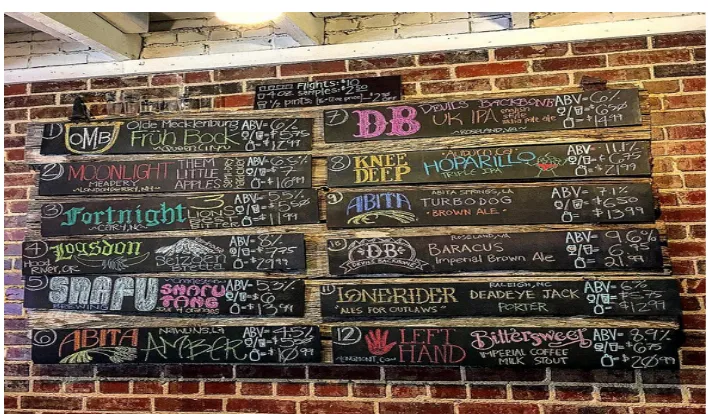
Figure 1.2 Tap Board at City Brews ... 31
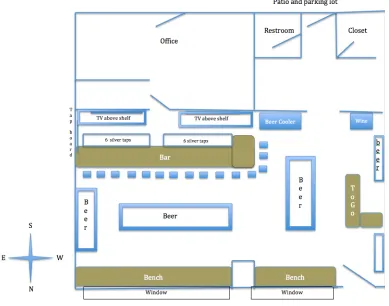
Figure 1.3 Map of the Store ... 32
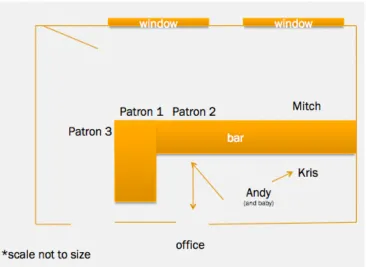
Figure 3.1Participants in Examples 2 & 3 ... 63
Figure 4.1 Robert’s Relational Self ... 82
ix
LIST OF ABBREVIATIONS
ABV ... Alcohol by Volume
CA ... Conversation Analysis
1
CHAPTER
1
INTRODUCTION
Consumer culture in the United States has aided in the creation of large-scale
niche industries in which consumers invest time, money, and sometimes even their
careers, in the resulting niche products. The paradox of attracting a customer-base while
also maintaining an exclusive sensibility would seem to present barriers to expansion, but
industries like organic food, designer coffee, and, more recently, craft beer, have seen
exponential growth, despite their exclusive nature. Typically a niche industry begins with
a national franchise, leading to small-scale reinterpretations of the niche model by local
business owners. Consider the rapid rise of Starbucks in the 1990s; this designer coffee
franchise based in Seattle, Washington led to the subsequent rise in locally owned coffee
shops aiming to join the fad. This ethnography examines one small-scale reinterpretation
of the nationally-scaled craft beer industry as it is reenacted at a craft beer store in a
South Carolina city.
Niche industries often embrace institutionalized forms of speaking to maintain
their exclusivity. While the institutionalized speech may not be accessible to all members
in a community, they preserve the industry’s ‘insider’ versus ‘outsider’ structure, which
supports the industry’s prestige for consumer marketing. The commodity register, a term
introduced by Agha (2011), characterizes the forms of speech acquired (or lost) through
2
to formulate and then disseminate speech around a commodity (Agha 2011, 27). These
registers are not only reflective of the commodity; the people and groups that consume
the products play just as large a role in how these registers are dispersed, reinterpreted,
and presented in “activity frames that recontextualize and transform them” (Agha 2011,
25). The commodity register of ‘beer talk’ is replicated at local levels thanks to
participants’ access to national scales of craft beer culture available through travel, mass
media, and semiotic interactions.
‘Beer talk’ is characterized as a technical register of speech in this thesis; the term
‘technical’ is adapted from Paul Manning’s work on Starbucks ‘barista talk’ (2008,
2012). Manning describes technical to mean “a sphere defined by interaction with nature,
virtually identical to the sphere of ‘work’ or ‘production’, a sphere where human
invention and art is constrained by nature and seeks to overcome those constraints” (113).
The primary participants discussed in this ethnography are those beer professionals and
connoisseurs who attempt to replicate the ‘beer talk’ register’s technical speech to index
their craft beer membership identities.
Larger scales of the craft beer industry attempt to institutionalize the perceivable
qualia, or sensory qualities, of beer. This presents anthropologists with a perplexing
paradox of an exclusive consumer industry in which language plays a central role. Beer
associations, scholastic endeavors for beer professionals, books, magazines, and websites
all devoted to the cultivation of beer knowledge are central aspects of ‘beer talk’
enregisterment for craft beer marketers and connoisseurs at City Brews. These scales of
speech are then transferred via face-to-face interaction among City Brews’ connoisseur
3
Upon walking into City Brews, customers find themselves overwhelmed by
hundreds of beers, all with their own complex production processes, flavor nodes,
colorful labels, and brewery histories. Although City Brews strays away from the dark
and outdated styles of typical drinking establishments to create a trendy ‘place to be seen’
space for the consumption of craft beer, the space in not inviting if you do not have a
craft beer habitus, or background. When a new customer approaches the bar to ask for
guidance, the server might ask, “What type of beer do you like?” This question alone is
enough to provoke anxiety for fear of naming a beer that the beer professionals would
judge as lacking in a refined tasting palate. Although this is not the case at City Brews, it
is easy to understand how this niche store is difficult for outsiders to maneuver.
Recent work on technical registers of speech solely examine the larger semiotic
frameworks found in printed texts (Silverstein 2016), ads (Agha 2011), and internet
forums of imagined reenactments (Manning 2008), but how are larger scales of ‘beer
talk’ interpreted and reenacted in a microcommunity? These are some of the questions
that this ethnographic and interactional sociolinguistic study takes up: How are these
technical registers enregistered via face-to-face interaction? How does the knowledge, or
lack thereof, of the register’s qualia terms, influence membership identity at this local
craft beer store? In what follows, this thesis aims to examine how qualia assessments are
reenacted by sales reps from beverage distribution companies, and other beer
professional/connoisseurs, in order to market or discuss beer. The speech used in these
sales and beer knowledge cultivation frames will also be examined to conceptualize how
technical qualia interpretations can become reconceptualized or reinterpreted based on
4
and beer connoisseurs/professionals index their craft beer identities through their access
to larger scales of speech, and how those larger scales and the store’s power dynamic
shape member understanding of taste.
1.1 Literature
Theoretical Frameworks
Linguistic anthropology is one of the four subfields of anthropology established
by Franz Boas at the beginning of the 20th century (Duranti 1997, 13). In 1964, Gumperz
and Hymes’ collection of works produced the term ethnography of communication, the
study of community culture and society through speech activities. Around the same time,
in an effort to create a more interdisciplinary approach to linguistic cultural research,
Charles Frake pioneered cognitive anthropology and ethnoscience as a subfield to the
ethnography of communication. Ethnoscience was largely influenced by the structural
study of language and attempted to create taxonomies to specify relationships through
scientific models denoted and guided by insider interviews. Following in the
ethnosemantic tradition, James Spradley’s 1970 ethnography of urban nomads used
participant observation, interviews, and surveys to create ethnosemantic tables to
categorize the identity terms of alcoholic men facing jail time and/or state-run
rehabilitation programs. Despite these methodologies foundational underpinnings for
current linguistic ethnography, the cognitive methods of Frake and Spradley relied too
heavily on the “ideal speaker” in an effort to create a monolithic overview of groups’
language identity.
Gumperz’ term “linguistic community” (1962), later coined “speech community”
5
ethnography of communication. This early definition “avoided norms and expectations
and concentrated on social contact” (Duranti 1997, 81). Gumperz’ model acknowledged
the complexity of language variation, and the fact that language communities can be
“bound together by face-to-face contact or […] large regions” (Gumperz 1962, 463). His
verification that a community can possess linguistic range accounted for code switching,
diglossia (language varieties corresponding to specific social contexts), as well as
multilingual communities whose language practices cannot be simplified to just one
language, one set of denotations, or one set of language norms- something the cognitive
anthropologists failed to evaluate. Although sociolinguists and linguistic anthropologists
used this model for decades, it too faced judgment for essentializing in-situ community
language practices.
Interactional sociolinguists, evolving out of the discipline of linguistic
anthropology and sociology, further extended the idea that language cannot be simplified
to decontextualized “ideal-speaker” conventions. Charles and Marjorie Harness (M.H.)
Goodwin’s 1992 article on assessment in context includes reflections on M.H.
Goodwin’s He Said She Said (1990) ethnographic work with urban black children. Her
observations of participant gossip and play were tape recorded, and then analyzed using
CA (Sack, Schegloff, and Jefferson 1974) and frame analysis (Goffman 1974) to make
qualitative observations about participant identity and community norms. The Goodwins
conclude that the assessment processes, often observed during youth gossip, can “emerge,
develop, and die within the boundaries of a single turn, while also having the potential to
6
The analysis of assessment, through M.H. Goodwin’s research, effectively pairs
culturally salient observations, from an anthropological point of view, by utilizing the
techniques of early conversation analysts (Sacks, Schegloff, and Jefferson 1974) and
Goffman’s frame analysis (1974). Sacks’ work with Emanuel Schegloff and Gail
Jefferson (1974) still stands as the most classic work for analyzing mircointeractions of
community participants, which talk-in-interactionists like the Goodwins and others have
used as a foundation for microinteractional analysis in ethnographic work. The aspects of
frame analysis (Goffman 1974) allow language activities be defined by frames, or
interactions requiring obvious transition. Frame analysis' broader theoretical approach to
microinteraction pairs nicely with Sacks, et al.’s micro interactional analyses of turns,
openings, and closings. M.H. Goodwin’s approach remedies the contextualization
problem of CA (Duranti 1997, 265) by also incorporating frame analysis to analyze
participant interaction. These methodologies of microanalysis contribute to this
research’s attempt at defining even broader understanding of how spatiotemporal scales
of speech are influencing a microcommunity’s membership identity.
The theoretical frameworks described above, along with many not mentioned,
have led to the current approaches to observation and analysis used in linguistic
anthropology and sociolinguistics. The aim of the modern ethnography of communication
is not only to analyze language through observation of insider social practices and
activities, but also to question how and why these language practices have been
7
Community of Practice
The community of practice model (CoP), an activity-based approach to identity,
power, and gender analysis, was popularized in the 1990s by sociolinguists Penelope
Eckert and Sally McConnell-Ginet (1992). This model was seen as an alternative to
Gumperz’ (1968) speech community model. Linguistic anthropologists and sociolinguists
have used the CofP model to study recurrent activities among participants to address
issues of stereotyped groups in mostly primary and secondary school environments
(Bucholtz 2000; Mendoza-Denton 2008). For this research, the recurrent activities
surrounding beer connoisseurship can be analyzed to determine in what ways the
recurring social and linguistic discourses are influencing this new community’s identity
formations.
Qualia
The semiotics of craft beer assessment mark the importance of qualia, or the
embodiment of sensory experience (Chumley & Harkness 2013, 5). This term was first
introduced by Charles S. Peirce in his 1896 papers on semiotics. The central qualia to
drinkable commodities are generally those of taste and sight, but they can also be the
feelings evoked by the consumption of a product. A refined palate for flavor is shaped by
one’s past experiences; Silverstein (2006) argues that one’s ability to index
connoisseurship or expertise “in the realm of technical knowledge” depends on the
positions taken against some “communicating other” with expertise (Manning 2008).
This is part of one’s communicative competence, directly linking identity formations and
maintenance (Gumperz 1982, 490). Bourdieu (1984) theorized that taste is acquired
8
of a society, giving rise to a hierarchy of taste within society (those with access to more
cultural capital will demonstrate to those with lower cultural capital what is “taste”).
Bourdieu’s habitus is defined as how socialization practices shape a person or people’s
behavioral disposition. The habitus of a person reflects their understanding of qualia.
One’s ability to identify and replicate flavor descriptions, after taste or through memory,
in the correct contexts and linguistic structures, can be used to improve one’s relational
self, “a figure of identity that depends on the ability of persons to assign personae to each
other by attending to matters of appearance and conduct” (Agha 2007, 238). This study
aims to determine how metasemiotic practices surrounding the senses are attained and
reenacted in order to establish membership identity.
Scales
These qualia interpretations are central to the recurrent activities to reflect
different scaled hierarchies that can be examined through in-situ occurrences to sort,
group, and categorize the things, people, and qualities that elevate or centralize certain
practices (Carr and Lempert 2016, 18). Language is used by community members to
negotiate, and sometimes reproduce, preexisting scalar formations. In this research, scales
are seen as overlapping dimensions that make up a community’s collective identity (Carr
and Lempert, 14). Institutionalized business models, and the technical register used to
key craft beer knowledge are the larger scales that overlap with smaller scales of local
history, and practices, to create a unique identity among members in a community. It is
also possible that the qualia of craft beer are influenced by local scales of interpretation
of craft beer reenacted by sales reps, brewers, and retailers marketing the product in their
9
Registers
Identity formations can be achievable via registers, or discourses associated “with
particular social practices and categories of persons” (Agha 2007, 79). These specialized
speech forms are indexical ways of speaking, which are representative of a community’s
cultural practices and values. The processes through which registers are replicated and
reinterpreted through speech scales contribute to register competence, “which can be
linked to asymmetries in power, socioeconomic class, [and] position within hierarchies”
(Agha 2007, 146). Registers can range from larger scales of linguistic repertoires,
evoking national identity like Britain’s Received Pronunciation (RP) (Agha 2007), to
smaller scales of register usage within technical trades, like oinglossic “wine talk”
(Silverstein 2006) and Starbuck’s “barista talk” (Manning 2008). Registers are
semiotically reproduced at different scales of interaction- what Agha has termed
enregisterment (2003). Central to this thesis is the interpretation of craft beer qualia, as it
has been institutionalized, by the representatives of the craft beer industry through their
usage of ‘beer talk’.
The study of nondurable commodities in relation to prestigious product technical
registers has been popularized in recent years within sociolinguistics and linguistic
anthropology (Agha 2011; Manning 2008, 2012; Silverstein 2006, 2016). These recent
works have primarily focused on technical registers of speech as they are used, or
imagined in the case of Manning’s work, in broader formats like the Internet, magazines,
advertisements, and the like. Agha’s 2011 article on commodity registers examines how
consumer goods have influenced the rise in institutionalized product registers. The
10
recontextualization and reanalysis- in various social-interpersonal routines” (50). The
registers associated with a nondurable commodity are just as much institutionalized by
the people that consume the product as by the institutions producing them.
Starbucks’ ‘barista-talk’ register, an institutionalized formula for ordering and
calling out drinks, blurs the traditional lines separating sales associates and customers.
Manning (2008) analyzed “barista rants” posted on an online forum specifically for
Starbucks’ baristas to commiserate over customers’ inability to reenact the Starbucks’
technical register. Imagined threats to face created in the baristas’ transcriptions of
interaction incited by this technical register can also speak to class anxieties of
accessibility to prestige registers; both Starbucks’ ‘barista-talk’, oinoglossic ‘wine talk’,
and ‘beer talk’ are only accessible if the consumer has previously been able to consume
and cultivate their knowledge of the commodity.
Silverstein examines the oinglossic ‘wine talk’ register by observing the
denotations of semiotic transfer from cultivation to production to marketing to selling
(2006). In 2016, Silverstein contributed to Carr and Lempert’s book on the scales of
speech to examine the ways that ‘wine talk’ indexes social identity, which is attained
through “the cultural order of institutionalized standardization” of judging and consuming
wine (196). The most central contribution, in the context of this research, is Silverstein’s
analysis of the “’biographical’ trajectories of wine, institutional factors associate with one
or more of the phases of its life apply to it according to, and determinative of, its various
11
The cultural order of ‘beer talk’ enregisterment is also attained through
institutional frameworks, which have been set through the Brewer’s Association and
Cicerone Certification, along with more widely available speech chains (Agha 2003, 247)
available via the Internet, magazines, and books. The indexical stereotypes associated
with the knowledge of beer verify member positioning as middle-class members of
society, who have the time and money to devote to a past time of ‘lifestyle’ consumption
and cultivation. The task of this thesis is to examine how the scales of speech are
reenacted in a microcommunity of craft beer connoisseurs using the methodologies and
broader semiotic frameworks outlined above. Below, is an introduction to the City Brews
community, and an overview of the methodologies used to examine the research
questions outlined in the introduction.
1.2 Methodology
City Brews is a neighborhood craft beer shop, where I had gathered with friends
and family before beginning my observations to socialize and experience new beer. There
was a core group of regular patrons, and I felt like it was a concept store that spoke to this
small Southern city’s evolution from sleepy town to 21st century gentrified community
reenacting the spatial scales of craft beer centers in New England and on the West Coast.
City Brews’ staff and core clientele consistently point to the South’s growing craft
beer industry, and, sometimes, the explanations for its lagging start. Although temperance
and religion were generally the theme behind these conversations about South Carolina’s
late arrival to the craft beer scene, I found it important to look back on local histories to
discover the roots behind the state’s peculiar regulations on beer production and
12
colonial customs of beer production and consumption and ending with an evaluation of
modern day laws regulating the beer industry. This history is important to give readers a
better understanding of the sociopolitical environment contributing to current regulations
of beer sales and marketing, which also helps understand the complex make up of how
City Brews’ member accesses and assesses craft beer qualia.
Beer Culture in South Carolina
Beer has a somewhat ‘low profile’ in South Carolina history. It has been
documented that barley crops for beer brewing were grown in colonial South Carolina,
but cultivation soon declined due to unpredictable barley harvests (Hammond Moore
1990, 16). Other historical analyses claim, “Antebellum southerners never made beer or
ale in large quantities […] Some beer was brewed, of course, and some was imported, but
it was not a popular drink. In fact, it seems to have been thought of as more medicinal
than refreshing” (Taylor 1982, 44-45). Unlike the American Mid-West, the Southeast had
few German immigrants to introduce the art of home brewing. Early South Carolinians
preferred to drink locally distilled peach brandy, imported rums, and later, upon the
arrival of Scotch-Irish, corn whiskey (Taylor 1982, 46). In the 19th Century, South
Carolina’s capital was known for “its religious faith and emphasis on morality,” this was
in opposition to its colonial attitude of “hedonistic, live-and-let live” (Hammond Moore
1990, 148). Most members of society upheld the new, strict moral code with exception to
“Irish laborer, college students, sand hillers, some merchants (especially purveyors of
spirits), many blacks, and even a few women of secure social standing” (Hammond
Moore 1990, 149). Following the economic downturn of Reconstruction, taverns, or
13
which spoke out against hard liquor, but most likely saw beer and wine as a healthful
beverage (Taylor 1982, 46).
There were two German families who brewed a popular lager beer in mid-19th
century South Carolina. Christopher Habernicht, the son of a German-born saloon owner
in Charleston, moved to the South Carolina capital in the 1850s, where he worked at
native-German John Conrad Seegers’ saloon on Main Street. Following the burning of
certain Southern cities in 1865, many saloons and taverns were never rebuilt, but Seeger
and a few other families of German descent continued to brew and sell beer. In the late
19th century, a series of religiously inspired laws were passed in South Carolina,
including a state monopoly on the sale and distribution of alcohol.1 In 1917, the sale of
alcohol was banned in South Carolina, and in 1920 the 18th amendment outlawed alcohol
sales altogether in the United States. According to Robert, a pseudonym for one of the
employees at City Brews:
We [the United States] are still dealing with Prohibition’s effects everyday here, which is absurd- it was almost a hundred years ago. When I say beer is taking off, I mean we are possibly getting back to where we were pre-Prohibition.
South Carolina’s late start in the craft beer industry is often attributed to the state’s strict
laws on alcohol production, distribution, and sales that still remained up until the
beginning of the 21st century.
1Beginning in the 1850s, local ordinances, called blue laws, prohibited the sale of beer on
14
Before 2007, South Carolina had only one nationally recognized craft beer
brewery: Palmetto Brewing in Charleston, South Carolina. State law prohibited the sale
of beer with an alcohol by volume (ABV) above 6%. In 2006, the South Carolina
legislature raised legal beer’s ABV limits from 6% to 17.5%, which meant brewers could
finally produce quality beer to compete at a national level (Petty 2016). Breweries still
face some economic hurdles, since they must sell their beers to market via beverage
distributors. This leaves microbreweries at odds with more established breweries that
have the capital to afford the 15%-20% taken by their distribution company. In a 2016
article on South Carolina’s craft beer industry, the head of a craft beer supporters group
said, “Self-distribution is the next fight for some in South Carolina’s craft brew industry”
(Petty 2016).
Beverage distribution sales representatives, or sales reps, played a large role in my
participant observations; through them, City Brews can stock the shelves of their store.
Within the City Brews community, there were times in which core patrons, e.g. beer
enthusiasts, brewery staff or service workers (bartenders, servers), would comment on
their annoyance with beverage distributor’s role as middlemen in the beer industry
(Chapter 4), but for the most part, sales reps, customers, and City Brews employees had a
cordial relationship. Many breweries are thankful that distributors do the heavy lifting of
marketing, selling, and distributing their product around the state, while others feel a
brewery’s autonomy to market and distribute their beer would improve retailers’
understanding of the product. This argument is made, because some sales reps are
15
difficult for some reps to familiarize themselves with the numerous products they must
market.
During my observations, there were a few brewery reps that visited City Brews to
ensure that their distribution sales reps were pulling their weight in distributing their
product. If retailers are not ordering a brewery’s product, it appears that some brewers do
not know if it is due to their products’ quality or the distribution company’s failure to
effectively market their product. When these brewery representatives visit retailers like
City Brews, it is illegal for them to bring samples of their beer, since beverage
distributors are the sole actor legally able to provide product samples to retailers. This
complicated relationship is important to describe early on in this ethnography, since, as
mentioned before, distribution sales reps and brewery staff are a large part of the City
Brews community.
City Brews
The shop has over two hundred varieties of craft beer available for sale, which are
separated based on flavor, production, and temporal profiles. The beer sections change
from time to time, but the set up for the majority of my eight-months of observation was
as follows: tart and acidic sour beers; German-style wheats; sweet, full-bodied ales; and
light lagers. Flavor profiles can be used to define taste as well as the temporal production
processes from European brewing traditions.
Generally, ale and lager are at the top of the beer taxonomy; an ale undergoes
yeast fermentation at the top of a beer vat, at higher temperatures, while a lager’s yeast is
fermented at the bottom of a beer vat at cooler temperatures (Moser 2008). Over time,
16
the U.S. have experimented with in production. Posted around the store are various
diagrams to conceptualize the evolution of beer, depicting the styles of beer, their origin,
and sometimes flavor notes.
City Brews employees and beer connoisseurs often discuss European beer making
traditions in order to express their respect for the industry’s roots, or index their own beer
knowledge. The spatiotemporal history of brewing tradition is still heavily enforced in
Europe. Germany’s “Beer Purity Laws” date back to the 1500s and regulate the
ingredients permissible in German beer. In Belgium, a beer cannot take the name of a
traditional style, if it is produced in another region. These European laws can explain the
craft beer industry’s lackluster performance in Europe. Since American brewers have
fewer restrictions on maintaining traditional ingredient profiles and production styles,
they have more freedom to experiment by adding subtle flavor additions like coffee,
peanut butter, chocolate, or exotic fruits. Laws attempting to maintain the cultural
tradition of beer styles have never been federally mandated in the U.S., since the beer
styles are not culturally rooted here, but the Brewer’s Association attempts to enforce
craft beer cultural norms of economic independence and natural ingredients. Although
American beer connoisseurs do not judge a beer style’s legitimacy based on the region it
is made, the City Brews staff attempts to market local and regional beers above all others.
At City Brews, local beers are always placed at eye-level, while national brews
are on top or bottom shelves. This is a testament to the store’s goal of creating a local
market for state and regional craft brewers. The brightly colored cans and catchy
marketing phrases are typically observed and part of conversation for patrons when the
17
also a corner for those who are craving something other than beer while at the store; this
corner contains a refrigerator and a tall, skinny, shelf with over twenty varieties of wine.
At the entrance to the store, you can find a small shelf with discounted beers, and a
checkout counter made from wood salvaged from one of the owner’s family farm. This
checkout counter is for those buying beer to go, and has a selection of locally-made beef
jerky, hemp lollipops, and the store’s t-shirts in a variety of colors. The placement of
these products is not coincidental. In recent years, locally owned businesses in South
Carolina, and the regional South, have aimed to support other local businesses by
carrying locally made merchandise. The front door has multiple stickers encouraging
customers to Buy Local and Drink Local, these minor details reveal the store owners
pride in their state and local community. Even though most customers walk straight past
the local products straight back to the bar, a typical question from customers is “what’s a
good local beer?”
The bar stands in front of an electric green wall; it is in perfect position to be
observed through the four large windows lining the storefront. The windows have built-in
wooden benches with stylish, brightly colored pillows for back support against the glass.
The 30-foot long, L-shaped, wooden bar (Figure 1.4) was hand-stained the owners. The
bar is also made from salvaged wood, just like the checkout counter and other shelves at
the store. There are twelve wooden bar chairs lining the bar to give customers a comfy
place to sit while they either examine the servers pouring beer from sleek, silver taps or
watching the two, 60-inch TV screens tuned to sports or news. The televisions are bolted
to the bright green back wall, above the wooden shelves that hold beer glasses, City
18
There are always at least twelve craft beers on tap; the beers are featured to
customers on a tap board (Figure 1.2) made out of an old barn door. There are small
chalkboards ordered from 1 to 12; various information is chalked on the board: the draft’s
name, the brewery, and from time to time, tasting notes or the beer style. The signs have
bright, eye-catching chalk drawings to emulate the brewery’s logo, drawn by the staff.
The signs, featured in the back left corner of the bar are normally the first place patrons
go to find a beer to enjoy in the store or to take home in a large bottle featuring the City
Brews’ logo, this bottle is referred to as a Growler by those familiar with ‘beer talk’.
The space is bright and has large windows facing a heavily trafficked
neighborhood road. The space was described to me by the head of a local branch of a
beverage distribution company (and regular customer) as “the best man cave ever. It
looks like it was decorated by my wife- comfy pillows, all the beer I could want, and two
big-screen TVs.” This comment was not uncommon amongst core clientele, which again
underscores the space’s affinity as a male-dominated space. The store is a perfect
example of the gentrified spaces most professional, white, Southern males aim to inhabit
for socialization with girlfriends, wives, friends, family, colleagues, or even business
partners.
Participants
The owners of City Brews, Andy and Kris, are from small towns in South
Carolina. The two thirty-something owners met at a state university in South Carolina,
where they studied engineering. Kris will sometimes reminisce about the two of them
sitting in the back of their college classes talking about their dream of opening a beer
19
went back to his family’s hometown to work at his father’s company. The two stayed in
touch, and continued to save money, while tweaking their entrepreneurial skills. In
September 2014, they opened their craft beer store, City Brews. The two men did the
majority of the construction and decoration of the store, which they will proudly point out
to anyone who asks. The store has a consistent clientele, which is apparent when passing
by the packed store any evening of the week; the store’s success reveals the city’s
openness to new concepts of socialization, like craft beer connoisseurship.
The store employs three part-time beer servers, often called bartenders by the
patrons (Chapter 4). Robert, who served as my ‘beer talk’ translator, is a native of
Maryland and a recent graduate from the Business School at a university in South
Carolina. He has taken two levels of the Cicerone Certification, a scholastic endeavor for
beer professionals, not too different from Sommelier certification for wine experts.
Robert is a proud and knowledgeable beer professional who plans to work in beer for as
long as possible. He is young and can often be seen at the bar, even on his days off,
reading or talking about beer. Blair is the sister to co-owner Andy, and also recently
graduated from a South Carolina university, she is a young and vivacious Southern
woman who enjoys playing and watching soccer, traveling, and entertaining patrons and
staff with funny stories. Blair typically works on weekends and in the evenings (times
that I was typically not at the store), so she is not widely represented in this ethnography.
The third employee, Kyle, was a server at a local restaurant with the owner Kris’ wife. In
2016, he turned in his server’s apron to join the more laid back environment at City
Brews. When I first began my observations, Kyle was the brunt of staff and other core
20
with a smile on his face, and would be the first to admit his novice-level of beer
expertise. Towards the end of my observations, Kyle was able to give customers
overviews of beer styles and flavors in the same way many sales reps do. Kyle’s
evolution proves that competence in the ‘beer talk’ register is attainable with a few
months of exposure. There were a few servers who stopped working over the course of
my eight months of observation. They were either in school or had other professional
goals in mind. The environment among the servers and owners is amiable and
reminiscent of a close-knit family.
The beer servers work various hours throughout the week. Kris and Andy
typically tend bar on their own during the day before three or four, unless there is new
inventory to stock, in which case a server will come in to help. On a typical day during
my observation, the servers would arrive after three to help tend bar, before the post-work
crowds began to stream in. The storeowners are at the store Monday through Saturday,
and can be seen recommending, pouring, and serving beer at the same pace as the other
servers, even on busy nights. The owners are the central figures who meet with
distribution sales reps to taste and order beer to stock the store’s retail space with
national, regional, and local craft brews. The store typically goes through thirty to
thirty-five kegs of beer each week, which underscores its popularity in this small Southern city.
The store’s front door, which provides customers with an explanation of the store’s come
as we please attitude is an homage to the owners’ and the beer industry’s playful, laid
back approach to business (Figure 1.1).
This store has a core clientele that includes local microbrewery staff, brewery
21
university students, young professionals, and neighborhood regulars; many of those
labels overlap, depending on the patron. I consider core patrons to be those who come to
the bar on a weekly basis and have personal/professional relationships with the store’s
staff; many of those core members happen to also be beer professionals or beer
connoisseurs. Since this is a small city, social connections are not uncommon between
core members and new patrons. I have seen interactions take place between ex’s, former
coworkers, college buddies, elementary school friends, and beverage distribution rivals.
The majority of clients are heterosexual, middle-class whites, although there are at least
three African American male distributors and patrons who are regulars at the store. City
Brews, for the most part, is a white collar-drinking establishment, whose clientele
typically reflects the space’s trendy aesthetic and middle-class neighborhood.
Scale and Scope
My observations first began in August 2016 as a semester-long project for my
ethnography of communication class. This ethnographic study was exempted from IRB
committee approval due to the unobtrusive nature of the research. I received a CITI
Certificate during Jennifer Reynold’s ethnography of communication class, which
indicates my understanding of how to conduct moral and ethical research with human
subjects. During the CITI training, I learned the strategies I aimed to implement while
researching and writing my thesis. For example, the names of subjects and the store have
been changed so as conceal participant identities, since the information in this research
could potentially affect their professional or personal lives. All data material is secure on
both an external hard drive and my personal computer. Informed consent was obtained
22
reviewed the research objectives (Appendix A) and agreed to the terms of the study
(recording, potential presentation, and publication of their ideas).
In the Fall of 2016, I was observing on Tuesdays and Thursdays, at varying times
between twelve and four. At first, most of my observations were taking place when
beverage distribution sales reps were in the store conducting inventory updates and new
product tastings- a fascinating activity to observe for an ethnographer and linguist. The
distributors came armed with technical, or tech, sheets, a brewery and/or beverage
distributor’s description of the formalized name, flavor, and style of each beer, giving
distributors a “cheat sheet” to introduce new products to their clients. In January of 2017,
my teaching schedule changed, which also changed my observation schedule. I began
observing on Tuesdays and Thursdays for two-hour periods between the hours of two and
six, which marked a change in the clientele and participants. There were more business
professionals getting off early from work, or college professors meeting up for a beer to
discuss classes and upcoming deadlines. The beverage distributors were still around as
well as the regulars I had observed in the Fall, but the participants became more
professionally diverse than before. It is also important to mention that after four o’clock
on Thursdays, the bar would typically get very busy. This affected the ordering styles and
depth of beer analysis taking place. When the store is busy, employees do not have much
time for chitchat. The change in observation time revealed a transformation in
patron-staff interaction. Daytime customers were treated with personal, sometimes quite
amiable, greetings and guided explanations of beer, even if they were not core members.
23
speed up customer service. Both observation times, in the Fall and Spring, resulted in the
analyses below of this mircocommunity’s craft beer qualia understanding.
In my ethnography of communication coursework, readings and discussions
examined the effects an ethnographic researcher can have on data collection, analysis,
and cultural overview of a group (Heider 1988; Duranti 1997; Emerson, Fretz and Shaw
1995). One of these effects, particularly for me in a community of mostly males, was the
theoretical orientation of myself as a young, white, female graduate student. My ability to
orient myself as an insider was obviously not possible, even after months of observation,
because of my gender and positioning as a researcher. Another downfall to this research,
in terms of an ethnographic analysis, was the time constraint. The length of stay (Heider
1988) as an observer was less than ideal; eight months of (bi)weekly visits for just two to
three hours is not enough time to make concrete conclusions about all aspects of this
community’s understanding of craft beer qualia. Despite the time constraints, the goals of
ethnographic fieldwork were my guide: “(1) How is social order constituted, that is, what
makes this group a functioning unit of sorts? and (2) how do individuals make sense of
their way of living, that is, how do they explain why they live the way they do and
differently from others?” (Duranti 1997, 90).
One subject that is not discussed in-depth in this thesis is that of male masculinity
and race, both of which play a significant role in this community. Since the aim of this
study is to examine the replication of technical registers of speech and its qualia analyses
of taste, these topics could be examined in a later ethnography of craft beer culture. The
24
deeply rooted in the larger scales of qualia understanding being replicated by beer
professionals and connoisseurs in this microcommunity.
As I reflect on the observations and data collection in these past eight months, I
wish I had been less self-conscious about my positioning as a researcher. If this has been
the case, I would have been willing to spend more time recording face-to-face interaction.
I now realize why audio/video recordings are so important to ethnographic fieldwork.
Having video recordings, in addition to field notes, in order to observe gestures
accompanying linguistic interaction are vital to an in-depth analysis of recurrent
activities. The side activities taking place during an interaction, along with the gestures of
the participants involved in communication, can reveal how members react to certain
topics or cues; video recordings make this analysis much more accessible
post-observation. In the future, I will take more time to photograph and record even the most
monotonous interactions and events.
Data Collection and Analysis
The primary methods of data collection consisted of participant observation
(Spradley 1980), ethnographic interviews (Levy & Hollan 1998), and audio-visual
recordings of recurrent activities surrounding craft beer consumption and discussion.
After a few months of observation, I decided which activities were the most relevant to
the scales of ‘beer talk’ contributing to membership identity and qualia understanding.
These included ordering and tasting of beer, beverage distribution sales rep meetings with
the owners, and keyed social frames of cultivating beer knowledge. These recurrent
activities between core members, those most frequently at the store, and peripheral
25
characteristics of this community’s membership identity in the context of ‘beer talk’
reenactments of qualia analysis.
The activities outlined above were chosen over other activities like sports talk,
member gossip, and performative acts of storytelling, because they were when ‘beer talk’
was used to assess beer flavors. Although the other activities have contributed to my
understanding of members’ personal lives and past times, apart from craft beer
connoisseurship, they detract from an understanding of how the technical register is
influenced by the various scales of the craft beer world.
Previous research on technical registers of speech in linguistic anthropology and
sociolinguistics have observed how larger scales influence technical register speech
chains, but none of the previous research has analyzed in-situ reenactments of these
register’s usage through ethnographic observation. Silverstein’s work on ‘wine talk’
(2006, 2016) focuses on broader scales of textual analysis performed by wine
professionals that lead to the emergence of a commodity-based technical register.
Manning’s work on ‘barista talk’ examines the imagined face-threatening acts posted by
Starbuck’s employees in the context of ordering. This research examines an
institutionalized technical register of speech as it is reenacted in-situ, while also
acknowledging the broader speech chains (Agha 2007, 67) and spatiotemporal scales
(Silverstein 2016, 206-207) influencing the ‘beer talk’ register. The observation of in-situ
‘beer talk’ interactions, along with focused member interviews, can lead to a better
26
Interview techniques adapted from methodologies rooted in ethnographic field
work (Levy & Hollan 1998) and cognitive anthropology (Frake 1964; Spradley 1970)
attempt to gain a more insider, or emic, view of member understanding of ‘beer talk’
reenactments. After three months of participant observation and in-situ microanalyses,
member interviews aimed at receiving guided explanations of how participants
understand the spatiotemporal influences on ‘beer talk’.
Although eight months is not an ideal amount of time for ethnographic research, I
was able to grasp certain characteristics of the ‘beer talk’ register, including the speech
chains influencing reenactments, and the importance of both branding and historical
understandings of craft beer flavor palates. Ritualistic tastings of beer take place between
beverage distributors, patrons (core, peripheral, and marginal members), and bar
employees. Sales meetings take place between beverage distributors and the storeowners
(occasionally with other staff or patrons on the periphery). These meetings reveal larger
scales of ‘beer talk’, in the case that distribution sales reps bring up technical, or tech,
sheets (provided by breweries) on their tablets, along with beer knowledge collected from
other scales of speech found on the internet, in books, or through semiotic interaction
with other beer connoisseurs/professionals. It became apparent that introductions to beer
tastings between patrons versus beverage distributors and beer professionals varied based
on the interlocutor’s experience and knowledge of beer and brewery history. Sales reps,
as mentioned before, represent beverage distribution companies; each company has a
different mission or specialty they pride themselves on. For some companies, the goal is
product variety, for others it is quality, and for a few, it is all about personal relationships.
27
their reps to be well-versed on the technicalities of craft beer production as well as the
temporal history of each beer style and brewery; this way the reps are prepared to market
an expensive beer that would fail to sell without a retailer’s back story encouraging the
customer to try the product. Other distribution companies are as invested in this
knowledge of beer as they are in forming solid relationships with the retailers they sell to.
One rep, who is not represented in the analysis sections, would consistently point out his
friendly relationships with those he sold to and argue that “not being a dick” was the
main way to beat the competitor. That is another sociolinguistic study that could receive
attention in the future. In more casual situations than sales meetings, patrons, staff, and
reps would engage in conversations about the newest product at the store or on the
national market; these sales meetings and casual conversations were keyed in the frame
of ‘beer talk’ cultivation.
Methodologies to analyze these interactions include transcription techniques
adapted from Elinor Ochs’ approach to transcription (1979) (Appendix B: Transcription
Key), along with traditional CA transcriptions techniques popularized by Goodwin and
Goodwin (1992) and Sacks, et al. (1974). Micro analytical tools, including certain aspects
of frame analysis (Goffman 1974) and CA (Sacks et al. 1974) are used to analyze the
recordings and transcriptions of City Brews members. These analyses contribute to
broader understandings of membership identity, like Bucholtz and Hall’s (2004, 383-387)
tactics of intersubjectivity (explained below), along with the broader theoretical
frameworks popularized by those studying the speech scales of commodity registers
28
aspects of frame analysis, CA, and broader identity tactics that are used in my qualitative
analysis sections.
Face is defined by Goffman (1955, 1967) as, “the social value a person effectively
claims for himself by the line others assume he has taken during a particular contact”
(1967, 5). Facework can be used to examine how participants maintain their ritual
positioning in a conversation through a “ritually organized system of social activity”
(1955, 342). The ideas of threats to face and face saving acts are used throughout the
analysis sections to characterize situations in which a member is contested with other
repair (Levison 1983, 341) and reacts by attempting to recover their positioning in the
conversation. The keyed social frames of activity (Goffman 1967) also help distinguish
the variety of goal-oriented activities taking place at the store.
CA is used to examine turn taking of participant interaction’s sequentality of
speech (Sacks, et al. 1974), while also paying particular attention to the openings and
closings of recurrent activities (Schegloff and Sacks 1973). Sacks, Schegloff, and
Jefferson, the founders of CA, also introduced the concept of repair in interaction to
define how participants resolve problems or trouble during an interaction (Duranti 1997,
261). Charles and Marjorie Goodwin’s (1992) interpretation of assessments in context
plays a large role in how CA is utilized in this research. The Goodwins differentiate the
interactional sociolinguistic approach to linguistic analysis in comparison to those
traditions adopted by linguistic anthropologists:
29
The activities of performative assessments and instigating are two relevant aspects of the
City Brews data. Assessment is defined as “the activity of performing evaluations of
events being discussed within talk,” while instigation is defined as “the process situated
within a gossip-dispute activity” (Goodwin and Goodwin 1992, 151-152). The interactive
nature of assessment, be it through the fawning over a child, describing a beer’s flavor, or
negotiating meaning of a beer’s production process, were at play throughout my
observations. Marjorie and Charles Goodwin define these collaborative assessments,
sometimes realized as overlap, as “cognitive operations that can be analyzed as processes
embedded within particular modes of social practice” (164). A recipient’s ability to
project the next phase of a conversation based on gesture, gaze, intonation, and language
reveal an interactive activity structure which can be used to evaluate cultural features of
turn-taking in both collaborative assessments and disjunctive instigations. These
analyses shows how membership identity is formulated through the close observation and
analysis of recurring in-situ activities.
In order to look at broader sociolinguistic definitions of identity through power
positioning, Bucholtz and Hall’s (2004) tactics of intersubjectivity are used to examine
how binary axes of social distinction are enacted through linguistic choices and/or
physical gestures (Goodwin, C. 1981; Goodwin, M. & Alim 2010) made by members to
reveal in what ways indexical identities are accepted or rejected. One tactic,
authentication, appears when a member attempts to assert the realness of their identity in
a community. The binary term for this tactic is denaturalization, when a member’s
identity is highlighted for “artificiality and non-essentialism” (386). Adequation is
30
beer connoisseurs- this is when a member pursues socially recognizable sameness (383).
This tactic lies in juxtaposition to distinction, in which a member’s identity is aimed at
differentiating themselves from others (384).
As described above, the methodologies of CA and frame analysis, popularized by
interactional sociolinguistics, are used to analyze in-situ participant observation and
interviews to make qualitative assessments about how the broader theoretical frameworks
of technical speech enregisterment influence a microcommunity’s membership identity in
the context of flavor assessments. The pairing of interactional sociolinguistic traditions
and ethnosemantic interviews popularized by cognitive anthropologists, helps ground this
research in less of an idealized world-view analysis of community membership, which
cognitive anthropologists like Frake sought, and instead focuses on analyzing the effects
speech scales have on technical register reenactments and taste understanding within a
33
CHAPTER 2
A TECHNICAL REGISTER
A register is a form of speech that can index aspects of one’s social identity; its
application can indicate membership with a category of people (Halliday and Hasan
1976; Halliday 1983; Silverstein 2016, 195). These registers can be indexical of training
in a certain field (Ferguson 1977; Manning 2008, Silverstein 2006, 2016) or social class,
as is the case with RP British English (Agha 2007, 206-215). In order for a technical
register to effectively spread and circulate, there must be speakers with competence and
understanding of the lexical and other linguistic elements of its utterances in context.
Ochs and Schiefflein’s 1984 article outlines a comparison of how communicative
development is cultivated in children in North American (the United States), Kaluli, and
Samoan cultures. American caregivers tended to over accommodate and take active roles
in cultivating linguistic competence with infants by using a specialized speech register
‘child directed speech’, or ‘baby talk’ (Ferguson 1977), while Samoan caregivers only
speak with children once they have gained some language competency. My research
finds parallels between the ways registers are cultivated among adults in a community
enacting technical registers and American children’s acquisition of language, contributing
to member understanding of flavor and description.
At City Brews, staff and other beer connoisseurs accommodate and guide novice
34
the customer is curious and willing to learn. Through guided explanations of the
technicalities behind craft beer concepts, more members will have the knowledge
necessary to understand and replicate the ‘beer talk’ register. This next section analyzes
how City Brews’ staff attempts to replicate ‘beer talk’ qualia descriptors in their
community through an introduction to its scales of speech and a guided explanation of
beer brand naming sequences from the perspective of Andy, one owner of City Brews.
2.1 Scales of Qualia Analysis
Chumley and Harkness (2013) examine qualia from the perspective of C.S.
Peirce’s writings on semiotics. Qualia are the embodiment of taste and are unique to each
individual, in coordination with past sensory experiences, and cultural background. Niche
industries aim to institutionalize qualia experiences in a myriad of ways. Consider the
uniformity of the Starbucks franchise, its product flavors and spatial atmosphere provide
customers with a consistent sensory experience at any location in the world. Chumley and
Harkness refer to Pierre Bourdieu’s (1984) work on habitusto explain the coordination of
sensory experience. The authors claim that, “habitus involves the sociological structure of
qualia according to stratified categories of likeness and difference (e.g. ‘taste’ [1984])”
(5). Institutionalized industries aim to structure consistent interpretations of niche product
qualia to inspire a collective qualia experience that contributes to community building.
This section aims to analyze the speech scales contributing to the enregisterment of ‘beer
talk’s’ qualia descriptors in a microcommunity.
One way ‘beer talk’ is spread, as well as restricted, is through national scales of
beer knowledge cultivation. One example is the Cicerone Certification, an online course
35
the products they market (Chapter 4). This type of scholastic endeavor is a clear case of
the way flavor denotations and the historiography of production processes are transferred
in a community. As mentioned previously, there are also beer magazines, books, mobile
applications (Untappd being a favorite of City Brews members), online forums, and
websites devoted solely to the analysis of craft beer, which also act as reference points for
craft beer connoisseurs when they enter some type of disagreement about a process,
description, or brand. At City Brews, patrons and staff gain access to these larger scales
of speech through their relationships with other connoisseurs/professionals, social media
sites, and brewery websites. If a customer is unfamiliar with the complexity of these
larger scales, they could find themselves wondering how such technical terms are
learned. So how is this technical register of qualia descriptions transferred and
understood by the community at City Brews?
‘Beer talk’ is distinguishable from everyday speech due to its complex range of
flavor denotations, style names, and technical terminology. The register is in many ways
inspired by ‘wine talk’, which has a deep connection to the chemistry behind the
processes contributing to alcoholization. Silverstein’s 2016 article on wine talk describes
wine marketing as relating to “organic chemistry of esters, aldehydes, and alcohols, and
human psycho-physiology, sciences of olfactory and gustatory perception” (Silverstein
2016: 198). Among connoisseurs, these chemical technicalities are also relevant to the
‘beer talk’ qualia experience.
Another aspect of the register includes the temporal history of style names, along
with knowledge of branding and appropriate flavor descriptors. The complexity of the
36
newcomers. While a basic knowledge of beer is sufficient to enjoy a drink at City Brews,
core members often discuss these technicalities of production and flavor during
marketing and consumption.
Each beer has its own flavor description; some flavors are overlapping while
others are unique to specific beer ingredients. The qualia descriptors for certain
ingredients are enregistered via face-to-face interaction or through the larger scales of
speech described above. While some tastes are easily accessible like fruity and spicy,
other flavors are not so easily found in past tasting experiences. For example, if a beer is
described as hoppy,the beer must contain fermented hop herbs; another less well-known
term is the core flavor denotation of tart, often associated with an almost vinegar-like
taste. Vinegar, which would typically hold a negative connotation, has been replaced with
a gourmet term in like tart, since this flavor is typically intentional among aged styles of
beer. Some negative qualia connotations include yeasty, this is a beer that has been sitting
for too long. Bacterial is another negative term, indicating a beer’s off flavors of moldy,
musty, or woody. Less common descriptions that Cicerone Certified beer professionals,
like Robert, will refer to include catty, a term used to refer to “tom-cat urine or
blackcurrant leaves,” one website selling flavor additions for home brewers describes the
catty flavor as, “generally unpleasant due to its association with tom cat urine. Sensory
panelist will over come this challenge with further exposure and training with this flavor”
(flavoractiv.com). This is one example of how the judgment of taste has been delegated to
experts with a trained palate; further exposure will lead to a more developed
37
The scientific terms adapted by ‘beer talk’ typically describe production
processes of the beverage. Pasteurization, when beer undergoes heat exposure during
production, and fermentation, the chemical breakdown of bacteria, yeast, and sugar,are
two important terms beer connoisseurs at City Brews will bring up when a beer’s
production process is a selling point or addition to a beer’s uniqueness. The technical
terms used for descriptions of production are vast, which point to the multiple layers
contributing to ‘beer talk’s’ qualia analysis.
A regular patron and sales rep described how he cultivates his knowledge of the
products he sells, “[it’s] a collaboration […] a friend went to the brewery, you know what
they were told, or this is what is written about it online […] you can only put so much on
a [beer] label.” In other words, the cultivation of beer knowledge is a semiotic practice
involving various scales of replication. A participant’s ability to reenact, or perform, the
specialized speech form elevates their identity’s status as a beer connoisseur within the
craft beer community; by demonstrating communicative competence, members also
reveal their agency as a potential educator and/or student of the craft beer culture.
As Agha argues in his 2005 article on voice and enregisterment, “we cannot
understand macro-level changes in registers without attending to micro-level processes of
register use in interaction” (38). The participants at City Brews replicating ‘beer talk’ are
aligning their speech patterns, or as Bakhtin refers to it, social voice, in order to index
what Agha calls a “social type of person” (38). Agha uses Bakhtin’s definition of voice to
represent the ways utterances index a typified speaking personae (39). Voice can
represent speech forms that index a widely recognizable register distinction. ‘Beer talk’ is