NAME : N.C. Maatjes
STUDENT NUMBER : S0040495
PERIOD : 4-12-2006 until 13-7-2007
DATE : 13-7-2007
SUPERVISOR : L. Ferreira Pires GRADUATION COMMITTEE : L. Ferreira Pires P. Dockhorn Costa M.J. van Sinderen
Automated transformations
Abstract
Context-awareness is the phenomenon in computer science in which portable devices are able to keep track of their context, of the user’s surroundings, in order to supply the user with relevant services. Applications using context and delivering such services are called “context-aware applications”.
The Event-Control-Action (ECA) architectural pattern can be used to give structure to such context-aware applications by specifying a way for them to process their data and act upon it by means of simple if-then constructs.
In order to specify such if-then constructs, which are also called rules, the ECA Domain-specific Language (ECA-DL) has been developed. Currently, there exists no interpreter for this language.
The Java Expert System Shell (Jess) is a rule engine for Java. A rule engine is a program that tries to match rules against information and then triggers one or more actions. This rule engine supports the Jess language, which is a declarative language. This means commands in the Jess language state only what the computer should do, and not exactly how it should do this.
Preface
This master’s thesis is the result of the research done for the master’s assignment at the Architecture and Services of Network Applications (ASNA) group at the University of Twente. The research has been carried out from December 2006 until July 2007.
I would like to express my gratitude to my supervisors, L. Ferreira Pires, M. van Sinderen and P. Dockhorn Costa, for their help, suggestions and comments on my work, as well as their appreciation of my work.
I would also like to thank my family, friends and colleagues for the time they spent reading and reviewing my work.
Lastly, I would like to thank I. Kurtev and A. Goknil, whose help during the project is highly appreciated.
Acknowledgement
Table of contents
1. INTRODUCTION ... 7
1.1. MOTIVATION 7
1.2. GOALS 8
1.3. APPROACH 9
1.4. RELATED WORK 9
1.5. STRUCTURE 10
2. TECHNOLOGICAL BACKGROUND AND APPROACH ... 11
2.1. ECA-DL 11
2.2. JESS 13
2.3. MDA 15
2.4. DEVELOPMENT ENVIRONMENT 18
2.5. ATLASTRANSFORMATION LANGUAGE 18
3. METAMODELS ... 20
3.1. ECA-DL METAMODEL 20
3.1.1. Event, Condition and Action 20
3.1.2. Basic ECA-DL metamodel 21
3.1.3. Extended ECA-DL metamodel 23
3.2. JESS METAMODEL 24
3.2.1. Left-Hand Side and Right-Hand Side 24
3.2.2. Jess metamodel 25
4. MAPPING ECA-DL TO JESS ... 27
4.1. BASIC ECA-DL SYNTAX 27
4.1.1. Rules without conditions 27
4.1.2. Rules with conditions 27
4.1.3. Transitions 30
4.1.4. Compound transitions and conditions 31
4.2. ADDITIONAL CONSTRUCTS 32
4.2.1. Lifetime 32
4.2.2. Scope and Select 34
5. TRANSFORMATION SPECIFICATION ... 36
5.1. BASIC MAPPING 36
5.1.1. Event and Action only 36
5.1.2. Event, Condition and Action 38
5.2. DETAILED MAPPING 39
5.2.1. Scope and Select to Condition 40
5.2.2. Select to Function 40
5.2.3. Lifetime to Condition and Function 41
5.2.4. CompoundTransition to Expression 42
5.2.5. Transition to Expression 43
6. USE CASE: PETE AND MARY ... 44
6.1. ECA-DL MODEL 44
6.2. TRANSFORMING THE MODEL 45
7. CONCLUSIONS ... 48
7.1. MAPPING FROM ECA-DL TO JESS 48 7.2. ATL TRANSFORMATION ENVIRONMENT 48 7.3. ATL TRANSFORMATION PROCESS 49 7.4. AUTOMATED TRANSFORMATIONS 49 7.5. FUTURE WORK 50 REFERENCES ... 51
APPENDIX A – KM3 METAMODELS ... 53
APPENDIX B – ECORE MODELS ... 55
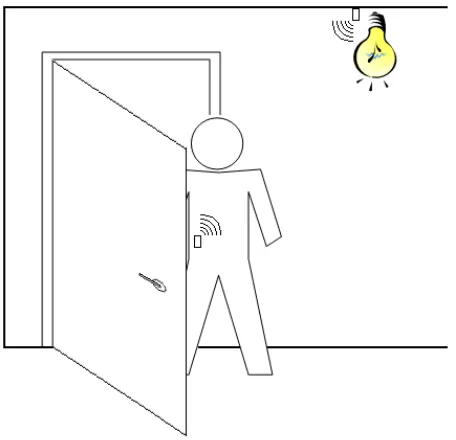
Figure 1: The light turns on when the user enters his office
1.
Introduction
In this chapter, we present the motivation, the goals, the approach and the structure of this thesis. We introduce context-awareness and some problems that are addressed in this project. We also present some research initiatives related to this project.
1.1.
Motivation
In recent years, computing devices have become small and powerful enough to be taken with at all times. This opens up new possibilities, because the context of the device has moved from static (i.e., computers remained in the office) to dynamic (a laptop or PDA, or even smaller devices, can easily be taken with).
Context-awareness is the phenomenon in computer science in which such portable devices are able to keep track of their context, of the user’s surroundings, in order to supply the user with relevant services.
A context-aware application can keep track of relevant information about the situation of the user, the application itself, or other entities relevant to the interaction between the user and the application, and then act upon this information.
In an office setting, e.g., when an employee enters his office, his PDA could signal the lights to turn on. This situation is displayed in Figure 1. When the employee is traveling, it could give the local weather forecast when he enters another region.
In order for a context-aware application to respond properly to the various inputs and to be able to cope with new or different rules and information, and in order to avoid having to invent the wheel over and over again, we need a general architectural pattern that can be used in several context-aware applications.
One such pattern is the Event-Control-Action (ECA) pattern [1, 2]. This pattern specifies a way for a context-aware application to process its data and act upon it by means of simple if-then constructs. These if-if-then constructs are called rules. A rule in the ECA pattern consists of three parts. The first part, the Event, models a change of situation, e.g., someone entering a room. The second part, the Control, makes sure additional conditions are satisfied, e.g., the room is dark. The third part, the Action, executes a command, e.g., the light is turned on. Following this pattern, a specification language has been defined to specify ECA rules, called ECA Domain-specific Language (ECA-DL) [1, 3], which is thus especially suitable for the domain of context-awareness. However, there is currently no interpreter for ECA-DL rules, which means the rules cannot be directly executed by an application. This problem can be solved by transforming ECA-DL rules to another language, for which there is an interpreter available.
1.2.
Goals
The overall goal of this project is to facilitate the implementation of context-aware applications that implement the ECA pattern, by providing a means for using ECA-DL rules in an already existing interpreter. In this sense, we refer to ECA-DL rules as abstract and to rules that can be executed directly as concrete.
The transformation of ECA-DL rules to concrete rules can be implemented by developing a mapping between ECA-DL rules and concrete rules. Such a mapping can then be used in a transformation tool, which performs the actual transformation.
In [4] a start has already been made towards this goal. It uses the rule engine Jess, which is “a fast and powerful rule engine for the Java platform”. It also provides a few examples of manual mappings from ECA-DL models to Jess rules.
The main goal of this master’s project is to formalize the transformation process from ECA-DL rules to Jess rules and implement this transformation in such a way that it can be automatically executed by a transformation engine.
For the development of this transformation process, we make use of the Model Driven Architecture (MDA) [5] approach. This means rules are expressed using models, which allows us to use a variety of modeling and transformation tools. MDA also allows for a higher level of abstraction, making it easier to create, e.g., another transformation from or to ECA-DL or Jess.
The main goal of this project consists of three subgoals:
• Investigate how ECA-DL can be mapped to Jess and evaluate the alternatives; • Implement and test some of these alternatives;
1.3.
Approach
In order to realize these goals, we have taken the following approach:
• We have studied ECA-DL and the Jess language and described their workings and
syntax;
• We have studied the MDA approach and have described how this approach works
and why it is useful for this project;
• We have set up a modeling environment, which allowed us to create models and
transformation specifications;
• We have constructed the ECA-DL and Jess metamodels;
• We have investigated what mappings from the ECA-DL metamodel to the Jess
metamodel are possible, and have evaluated their usefulness;
• Following the MDA approach, we have implemented and tested some of these
alternatives using a transformation tool and corresponding transformation language;
• We have evaluated the use of automated transformation for rules. Because the transformation is only semi-automated, some manual activities are also required. We have investigated why and to what extent manual activities are necessary.
1.4.
Related work
In this project, we continue the work started in [4]. Below we mention a few other research initiatives, also addressing this topic.
A good example of a thesis about context-awareness is [6]. This thesis introduces some of the problems with context-aware applications, and proposes “a software architecture to support the building of context-aware applications”. This framework makes it easier for context-aware applications to process their data. This framework relates to the ECA pattern, since it also proposes to give structure to context-aware applications. Our project, on the contrary, mainly focuses on the transformation of rules used in a context-aware application, to another language.
The work presented in [7] introduces a “framework for the knowledge-based support of context-awareness in complex systems”. This framework uses a knowledge base to integrate information models in order to obtain higher-level information. This integration is performed using rule-based transformation of these information models. As opposed to our project, it focuses on extracting information from several models, instead of transforming these models to another language. Also, the transformation process makes use of multiset transformation, whereas our project uses model transformation as specified by the MDA approach.
transformation process itself, and on how it can be improved. Our project, however, focuses on using model transformation as a way to transform an ECA-DL rule to a Jess rule.
The work presented in [9] focuses on different model transformation techniques and shows examples of a transformation between models using the Tefkat transformation language in an Eclipse plugin. Similar to our project, this thesis uses Ecore, the Eclipse variant of MOF. In our project, we have decided to use another transformation language, namely ATL, which offers better documentation and support. Also, our project focuses on ECA-DL and Jess, neither of which are addressed in [9].
The work presented in [10] closely relates to our work. It focuses on a model-driven design trajectory for context-aware and mobile services. A part of this trajectory is the transformation of models from the service specification using ECA-DL, to the platform-independent service design using the A-MUSE abstract platform. This platform-independent service design is then transformed to form the platform-specific realization using Web Services or CORBA. This part of the trajectory is quite similar to our project. Both approaches use ECA-DL as their source language, and use model-driven development to transform source models to a target language. The main difference with our project lies in the fact that this thesis describes the trajectory to be used, while we use a similar trajectory and develop an actual transformation specification.
1.5.
Structure
The structure of this thesis is as follows:
• In chapter 2 we present the technological background of this project, ECA-DL and
the Jess language used, as well as the MDA approach. Also, we present the general transformation process and the environment that is being used.
• In chapter 3 we present the ECA-DL and Jess metamodels and we show how they are
constructed;
• In chapter 4 we present several mappings between the ECA-DL and Jess metamodels
and we evaluate the alternatives;
• In chapter 5 we present the transformation specification and implementation of some of the alternatives, using a transformation tool and language;
• In chapter 6 we present a use case. This use case shows how we can use the
developed transformation specification to transform an ECA-DL rule to a Jess rule;
• In chapter 7 we discuss the use of automated transformation rules, present the
2.
Technological background and approach
In this chapter we present the workings and the syntax of ECA-DL and the Jess language, in order to make the reader more acquainted with these languages. The focus is on the general workings of the languages and on those parts that are used in the transformation process. We also present the MDA approach, as a prelude to the transformation process itself, as well as the development environment used in this project.
2.1.
ECA-DL
In order to address general problems in the field of computer applications, we can make use of architectural patterns, which provide a general structure for an application and defines how it should behave. In the field of context-awareness, one such architectural pattern is the Event-Control-Action (ECA) pattern, which specifies how a context-aware application should react to changes in its context. Take the following example:
When Pete enters his office, his computer should turn on if it wasn’t turned on already.
The ECA pattern divides this process into three parts, the Event, the Control and the Action.
• The Event part monitors the application’s context and generates events when the
context changes. In this case, the context change is denoted by Pete entering his office, so the event “Pete enters his office” is generated.
• The Control part receives this event and looks for rules that match the event. It
iterates over all these rules, checking if any additional conditions are satisfied. If so, the Action part is given a signal to trigger the action specified in the rule. In this case, the Control receives the event and it finds the rule “When Pete enters his office, his computer should turn on if it wasn’t turned on already.” If Pete’s computer is indeed not turned on already, the signal “turn on Pete’s computer” is sent to the Action part.
• The Action part, when it receives such a signal, triggers the actions. In this case, it
simply turns Pete’s computer on.
In the scope of the AWARENESS project [11] the ECA Domain-specific Language (ECA-DL) has been defined, which can be used to specify ECA rules.
ECA-DL Syntax
ECA-DL rules consist of three parts, namely Event, Condition and Action. Each of these parts are represented in the syntax on a separate line by so-called tokens (a “primitive block of structured text”, usually a single word) and their arguments. Syntax is denoted using the
Courier New font, non-literal tokens are placed between angle brackets. The three parts are:
• Event: Upon <event>
• Condition: When <condition>
Each token here has a different argument:
• <event>: This argument contains an event, which consists of one or more state transitions. There are three possible states: true, false and unknown. A transition is denoted using functions like
EnterTrue(inOffice) or FalseToUnknown(lightOn), i.e., it indicates change. Multiple transitions can be tied by logical operators like AND, OR and NOT to create a compound transition. Only when the entire compound expression has evaluated to true, i.e., when the required transitions have happened, is the event generated and can a number of actions get triggered.
While transitions can contain expressions, they cannot contain other transitions. Also, it is important to stress that a transition merely indicates the change of a state, while an event actually triggers an action.
• <condition>: This argument contains a condition that has to be fulfilled in order for the actions to be triggered. Whereas transitions occur at a certain point in time, conditions hold for certain periods. Examples of conditions are Pete.height < Mary.height and
isTurnedOff (computer) AND belongsTo(computer, Pete). Conditions (which are expressions) can contain other expressions.
• <action>: This argument contains one or more actions to be triggered when an event takes place and the condition is satisfied. In context-awareness, an action is often a notification, which, e.g., can be sent to a student’s supervisor to notify him/her that the student has arrived at university. An example action would be
Notify(Supervisor, “Student x has entered the building!”).
A simple ECA-DL rule, based on the example given above, would thus be:
Upon EnterTrue(isInRoom(Pete, office))
When isTurnedOff(computer) AND belongsTo(computer, Pete) Do turnOn(computer)
This example ECA-DL rule states, that when Pete enters his office, and the computer that belongs to Pete is turned off, that his computer should be turned on.
Besides this basic syntax, ECA-DL supports a few other constructs. These are:
• <Lifetime>: An additional statement can be used to indicate the lifetime of the rule. The following lifetimes are supported:
o always => activate the rule and keep it active. This is the default;
o once => activate the rule and deactivate the rule after it has been used;
o from <start> to <end> => activate the rule at <start> and deactivate it at <end>. <start> and <end> are moments in time, e.g. “May 1st, 2007”;
o to <end> => activate the rule, and deactivate the rule at <end>;
o frequency <n> times per <period> => activate the rule, and keep it active as long as it has been used fewer than <n> times during <period>. Deactivate and keep the rule inactive as long as it has been used <n> times during <period>.
• Scope(<collection>, <variable>) { <Basic ECA-DL rule> }: This clause is used for parameterization, i.e., for defining multiple rules at once. <variable> can then be used in the <Basic ECA-DL rule> as a reference to each entry in <collection>. Scope constructs cannot be nested.
• Select(<collection>, <variable>, <condition>):
This clause is used for selecting a set of entities matching a condition. For example, select all the people in a certain room using Select(people.*, person, inRoom(person, office)). This clause is often used in combination with the Scope clause above.
An ECA-DL rule containing these extra constructs could be:
Scope(Select(people.*, person, person.age > 30), p) {
Upon EnterTrue(isInRoom(p, office))
isTurnedOff(computer) AND belongsTo(computer, p) Do turnOn(computer)
once }
This creates rules for all people older than 30 years. When such a person enters his office, his computer turns on, but only once. After this, the rule is deactivated only for this person. For a more detailed description of the ECA pattern and ECA-DL, we refer to [4].
2.2.
Jess
As our target system we use the Java Expert System Shell [12] (Jess), a rule engine for Java, which supports the Jess language. A rule engine (also called inference engine) is a program that tries to match rules against information and then triggers one or more actions.
Unlike programs written in an imperative language like C or Java, Jess programs do not specify how the computer should behave (e.g., read input, print output, etc.), they only specify what the computer should do. It is then the responsibility of the Jess engine to find out how to do best what is declared. Jess is therefore known as a declarative language.
A Jess program itself can contain two kinds of declarations, namely facts and rules.
• A fact contains basic information, e.g. “Pete is male” or “Mary is the mother of
• A rule contains a simple if-then construct containing statements about facts, e.g. “If Pete is male AND Pete has a child, then Pete is father”. This information is stored in the knowledge base.
The if-part of a rule is called Left-Hand Side (LHS), the then-part is called Right-Hand Side (RHS).
When the Jess engine runs, it looks for matches between the rules and the facts. When such a match has been found, the rule is fired and one or more actions are triggered. This process is repeated as long as changes occur in the working memory or knowledge base, because:
• At a given time, more than one rule may match. Other rules also have to be fired;
• The RHS of a rule can declare new facts or rules, or destroy old ones. New rules also
have to be evaluated.
The default strategy for deciding which rules to fire next is the depth strategy, which works on a Last In First Out (LIFO) basis. This means newer rules are activated before older rules. The user can define other strategies, either globally or on a per-rule basis.
Besides supporting facts and rules, the Jess language has much more functionality, like arithmetic or interactions with Java. For a more detailed description of the Jess language, we refer to [4] and [12].
Jess Syntax
When it comes to syntax, Jess is very similar to Lisp. All code in Jess is written using function calls, which are always surrounded by parentheses. After the command, one or more arguments can be given.
In Jess, there are three kind of facts: ordered facts, unordered facts and shadow facts. In this project, we use only ordered and unordered facts.
An unordered fact is created using two function calls. First, we need to create a template for a fact, much like we need to create a Java class before we can instantiate it. A template has a name and a number of slots for information. A basic template looks as follows:
(deftemplate Ball (slot size) (slot color))
This defines a template called “Ball” with two properties, namely size and color. The following command declares (i.e., instantiates and adds) a fact:
(assert (Ball (size 3) (color blue)))
Ordered facts are created using only one function call. We do not need to define a template for ordered facts, because Jess does this implicitly. Ordered facts are useful when we do not want to bother with attribute names, or want the attributes to have a fixed order. Declaring an ordered fact looks as follows:
(assert (List 3 5 7))
means that facts that do not change, also do not trigger rules. The LHS can also contain a few options, like giving higher or lower priority to a rule. The RHS must contain zero or more function calls. The following rule looks for new or changed Balls and prints their properties. The variables ?size and ?color contain the actual properties:
(defrule printBalls
(Ball (size ?size) (color ?color)) =>
(printout t “Found Ball (“ ?size “, “ ?color “)” crlf) )
As mentioned before, it is also possible to have a rule declare new facts:
(defrule makeMoreBalls
(Ball (size ?size) (color ?color)) =>
(assert (Ball (size (+ ?size 1)) (color ?color))) )
The problem with this rule is that it creates a new Ball, which immediately fires the same rule, ad infinitum.
2.3.
MDA
During the last decades, new technologies and programming languages have been designed and old ones have faded away. This has resulted in a lot of so-called legacy code, written in languages or on systems that are no longer supported. Converting this legacy code to a newer technology platform is often very costly, if not impossible. This poses serious problems when legacy code has to work together with newer applications. Even if it is possible to make such a conversion, a few years later an even better technology platform may come along, requiring yet another conversion.
To cope with these problems, the Object Management Group (OMG) has created the Model Driven Architecture [5] (MDA). The main idea behind MDA is that applications, middleware, etc. are no longer directly written in a programming language like Java or C#, but are instead specified as Platform-Independent Models (PIM). This introduces a separation of concerns between the design of an application, and the architecture on which the application will run. Such a design model can then be transformed to a Platform-Specific Model (PSM), which makes use of specific features of a platform. This PSM can then be transformed to code, to an actual implementation.
When a newer, better technology platform becomes available, we need only regenerate the PSM and actual implementation, avoiding a costly manual conversion.
Model transformation
From the section above, it should be clear that model transformation plays an important role in MDA. It is this kind of model transformation that we can use in this project.
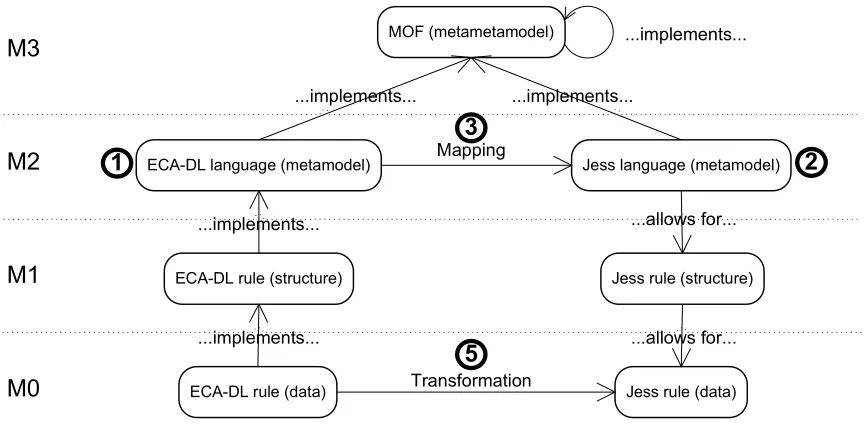
Figure 2: Model hierarchy
Instead, we take a different approach. Rules are no longer treated as text, but they are converted to models. Such a model may, e.g., contain the entities Pete and Computer, linked by the association belongsTo. In this project we use XML Metadata Interchange (XMI) [13] as our modeling language, an integration of the data standards XML, UML and MOF.
So instead of transforming the rules themselves, the models are transformed instead. Although this is similar to textual transformation, there is the advantage of separation of concerns. First we transform the structure of the language, and only later do we deal with the specific syntax. In this project, we follow the Meta-Object Facility (MOF) [14] standard as specified by the OMG, which specifies the modeling architecture as shown in Figure 2. In this architecture, the first step towards the model-based transformation process is defining what models are allowed to contain, and how entities in a model are related.
In this project, we use the Unified Modeling Language (UML) [15] to create the so-called metamodels. Such a metamodel acts as a mold for models. Just as a rule is written using a language as its mold, a model is written using a metamodel as its mold. Another good analogy here is a natural language. A sentence like “Pete owns this computer” is written using the language English, which compares to a model being written using a metamodel.
Although the English language from this example is self-describing (it defines what is allowed and what is not by using itself), metamodels are not. We thus need one more level for a metametamodel. This metametamodel not only specifies what metamodels are allowed to contain, but is also self-describing (self-conforming). Another level is thus not needed. The OMG has specified the Meta-Object Facility (MOF) as their metametamodel.
This structure of models, metamodels and metametamodels is clarified in the diagram shown in Figure 2.
ECA-DL rule (data) Jess rule (data)
ECA-DL rule (structure) Jess rule (structure)
Transformation
ECA-DL language (metamodel) Jess language (metamodel)
...implements...
...implements... ...allows for...
...allows for... Mapping
MOF (metametamodel)
...implements... ...implements...
M3
M2
M1
M0
1
5 3
2
...implements...
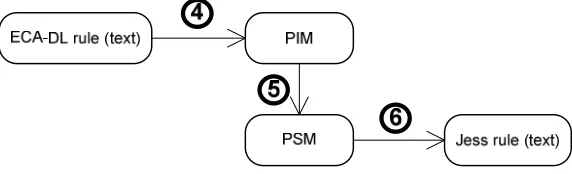
Figure 3: Transformation process
because we do not have to take typing of entities into account (i.e., “Pete” is a Person, or “Computer” is an Object). Also, this is the way our transformation language works by default. The transformation process itself then consists of two main parts. The first part consists of steps 1, 2 and 3 in Figure 2 and deals with the mapping between ECA-DL and the Jess language. The second part consists of steps 4, 5 and 6 and deals with the transformation of actual rules. Because steps 4 and 6 deal with textual rules, they are not included in Figure 2. Instead, they can be found in the diagram shown in Figure 3.
In steps 1 and 2, we create the ECA-DL and Jess metamodels. These models describe the structure of ECA-DL and Jess rules.
In step 3 we create a mapping between the ECA-DL and Jess metamodels. An analogy to natural language would be the translation from English to Dutch. In English, simple sentences follow the structure <noun> <verb> <space> <time>, e.g., “I am at school now”. In Dutch, <noun> <verb> <time> <space> is often preferred, e.g., “Ik ben nu op school”. This mapping is specified using a transformation language.
Once steps 1, 2 and 3 have been completed, we can start with the transformation of actual rules. This process is shown in Figure 3.
In step 4 we start with the transformation of actual rules. We make a model of an ECA-DL rule, which can, e.g., contain a Person (in the case of the example from Section 2.1 the person Pete) with a link to a Computer (e.g., Pentium IV) called belongsTo. This conforms to the entity Condition from the ECA-DL metamodel. This step is performed using model-to-text transformation. In MDA terminology, we now have our PIM model, because ECA-DL is a platform-independent language.
In step 5 the actual transformation takes place, which is done (semi)-automatically by a transformation tool. In case this transformation is not completely automated, some manual activities are also required in this step.
For the automated part of this model-to-model transformation, the OMG has specified the Queries/Views/Transformations (QVT) standard [16]. Queries can be used to access the source model and extract information from it, Views can be used to focus on specific aspects, and Transformations can be used to take the information from the Queries and produce a target model.
After this step, we now have our PSM model, because Jess is a platform-specific language. In step 6 the transformed Jess model is transformed back to its textual form, ready for execution in the context-aware application. This step is performed using model-to-text transformation.
2.4.
Development environment
In this project, we have mainly used the Eclipse framework, which supports most of the necessary steps to be taken in the proposed transformation process by means of plugins. One of the plugins we have used is EMF, the Eclipse Modeling Framework [17]. This plugin provides a framework for “building tools and other applications based on a structured data model”. It has support for Ecore, the Eclipse variant of OMG’s Meta-Object Facility (MOF), which we have used in this project.
The second plugin we have used is ADT, the ATL Development Tools [18]. This plugin provides an integrated development environment (IDE) for developing ATL transformation specifications and executing transformations. It uses the Atlas Transformation Language [18] (ATL), an early implementation of the QVT standard mentioned above. Instead of UML, ADT uses the so-called Kernel Meta Meta Model (KM3) [19] language to specify metamodels.
Besides Eclipse, we have used the StarUML program [20] to create UML models. StarUML supports a plugin for the automated transformation of UML models to KM3, the language used for specifying metamodels in ADT.
In order to test the outcomes of the transformation, we have used the Jess rule engine [12].
2.5.
ATLAS Transformation Language
The ATLAS Transformation Language (ATL) [21, 22] is a model transformation language, developed as an early implementation of the OMG’s QVT standard. It is supported by Eclipse’s ADT plugin, mentioned above. We present here the basics of ATL, which plays an important role in this project.
ATL is a way for developers to specify how a set of source models should be transformed to create a set of target models. This is realized through rules, which can be either declarative or imperative. Besides rules, an ATL transformation specification can also contain helpers, queries and other constructs.
It is important to note that ATL rules are very different from ECA-DL rules and Jess rules. ATL rules describe how other rules, like ECA-DL or Jess rules, should be transformed. In this project, we use only declarative ATL rules. These can be divided into two types, namely matched rules and lazy rules.
A matched rule is called for every element in the source model that conforms to the header of the rule. It does not need to be called explicitly. A matched rule may look as follows:
rule Input2Output {
from in_variable : MMInput!Person to
out_variable : MMOutput!Citizen (
name <- in_variable.name, nationality <- 'Dutch',
}
When the input model is transformed, this rule is called for every element in the source model that belongs to the class “Person” in the input metamodel “MMInput”. Each such element is then transformed to the class “Citizen” in the output metamodel “MMOutput”. The
out_variable is called the target model element.
In this example, the attributes “name” and “nationality”, and the references “father” and “mother” are filled in. An attribute is a basic value, belonging to a class. Such values do not need further processing. A reference points to another element, possibly of another class, e.g. by means of a composition link. A reference can be filled in by another target model element. It is also possible to only have this rule fired when the element in the source model matches certain criteria. These criteria can be mentioned in the from-part of the rule:
rule Input2Output {
from in_variable : MMInput!Person (in_variable.name = 'Pete') ...
In this case, only those persons called “Pete” are transformed.
Lazy rules, on the other hand, are not called automatically, but are called explicitly. The syntax of a lazy rule looks much like the syntax of a matched rule, except for the keyword “lazy”:
lazy rule Input2Output
{
from in_variable : MMInput!Person to
out_variable : MMOutput!Citizen (
name <- in_variable.name, nationality <- 'Dutch',
father <- in_variable.father, mother <- in_variable.mother )
}
This rule works the same as the matched rule above, but it has to be called explicitly. This can be done in another rule as follows:
...
to
out_variable : MMOutput!City (
citizen <- thisModule.Input2Output(in_variable.person), ...
The main reason to use lazy rules is to transform certain parts of the source model multiple times. A matched rule is called only once per element, but a lazy rule can be called as many times as necessary, because it is called explicitly.
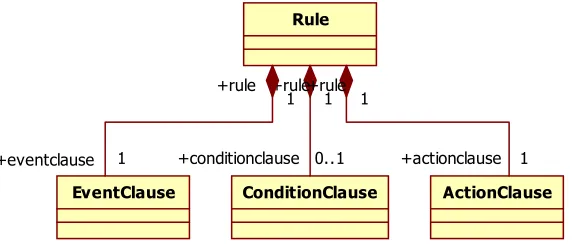
Figure 4: The main elements of an ECA-DL rule
3.
Metamodels
In this chapter we present the metamodels of ECA-DL and Jess and we show how they have been constructed.
We have first specified these metamodels using UML. This allowed us to make a graphical representation of the metamodels for easier understanding. When a metamodel had to be used in the ATL environment, it was transformed to the textual KM3 format. The KM3 versions of our metamodels can be found in Appendix A.
3.1.
ECA-DL metamodel
Because the complete ECA-DL metamodel is rather extensive, we have decided to introduce the constructs in three steps. The first, very simple metamodel shows only the main ECA-DL parts. The second metamodel shows related classes, which show what the ECA-DL parts consist of. The third and final metamodels also shows the extended constructs Lifetime, Select and Scope.
3.1.1. Event, Condition and Action
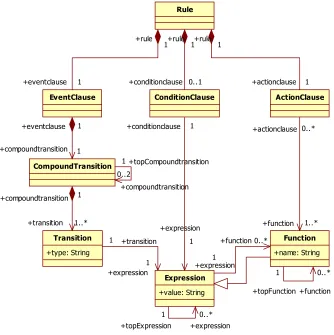
The main elements of an ECA-DL rule are Event, Condition and Action. This can be modeled as shown in Figure 4.
Rule
EventClause ConditionClause ActionClause
+rule
+conditionclause 1
0..1 +rule
+eventclause
1
1
+rule
+actionclause 1
1
Figure 4 shows that a Rule is composed of the three parts EventClause, ConditionClause and ActionClause. By using composition, we indicate that the parts cannot exist outside of a Rule. The cardinalities indicate that an ECA-DL rule always has an EventClause and an ActionClause, and may also have a ConditionClause.
3.1.2. Basic ECA-DL metamodel
Figure 5 shows the model in more detail by showing related classes and how all classes relate to each other. EventClause can contain only one CompoundTransition. As the name implies, this CompoundTransition can contain other CompoundTransitions, and ultimately Transitions themselves (hence the one-to-many cardinality to Transition). CompoundTransitions are built using the AND and OR operators. These are binary operators, hence the cardinality of at most 2. The logical NOT operator is not allowed here, as this would model the absence of a transition. This operator is only allowed in expressions.
Figure 5 shows that, unlike Expressions, Transitions cannot be nested. A Transition describes a change, but cannot change itself. A Transition describing another Transition therefore does not make sense.
Similarly to a Transition, a ConditionClause can have only one expression. Expression has an association to itself, indicating that it can be composed of multiple expressions, e.g., by means of the AND, OR and NOT operators. In this way, multiple conditions can be checked. It can also contain functions.
Figure 6: An example ECA-DL model
A special case of Expression is Function. Because a Function is defined outside a Rule, it can be used in several ActionClauses. An ActionClause can also contain several Functions. As in most programming languages, functions take a number of arguments (zero or more), which are expressions. Similarly to Expression, Function has a link to itself, so a Function can also contain other Functions. This link acts as a refinement.
The model above allows the following rule:
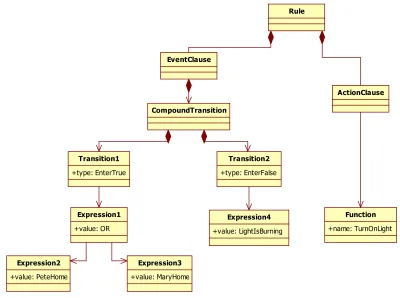
Upon EnterTrue(PeteHome OR MaryHome) AND EnterFalse(LightIsBurning) Do TurnOnLight()
In this example, Transitions only contain Expressions, but not other Transitions. All the Transitions together form a CompoundTransition. Figure 6 shows how this example rule relates to the metamodel.
Rule
EventClause
ActionClause
CompoundTransition
Transition1
+type: EnterTrue
Expression1
+value: OR
Function
+name: TurnOnLight
Expression2
+value: PeteHome
Expression3
+value: MaryHome
Transition2
+type: EnterFalse
Expression4
+value: LightIsBurning
However, the following would not be possible:
EnterTrue(PeteHome OR EnterTrue(Notify(Mary)))
Figure 7: The extended ECA-DL metamodel
3.1.3. Extended ECA-DL metamodel
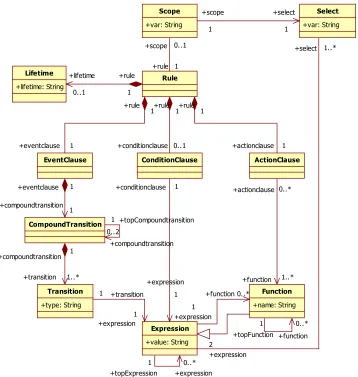
Introducing the Lifetime, Scope and Select constructs of ECA-DL, we get the final metamodel of ECA-DL, as shown in Figure 7.
Rule
A rule can possibly be surrounded by a Scope block, which also contains a Select expression and a variable. The bidirectional navigability indicates that a Rule may access the Scope it is in. This is necessary when the Scope’s attribute var is used in a Rule.
A Select expression also contains such an attribute, as well as two expressions for the collection of entities and a condition that has to be fulfilled for each of these entities. An Expression can contain a number of Selects. This is comparable to CompoundTransition, which also has a one-to-many link to Transition.
3.2.
Jess metamodel
Because the complete Jess metamodel is simpler than the complete ECA-DL metamodel, we need only two steps to introduce it. As in Section 3.1.1, the first metamodel shows only the main Jess parts. The second and final metamodel shows related classes and shows how all classes relate to each other.
3.2.1. Left-Hand Side and Right-Hand Side
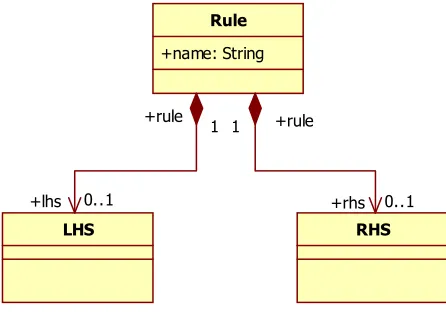
The basic structure of a Jess rule can be modeled as shown in Figure 8.
Rule
+name: String
LHS RHS
+rule
+lhs
1
0..1
+rule
+rhs 1
0..1
We see here a clear distinction between ECA-DL rules and Jess rules. Whereas an ECA-DL rule contains three parts, a Jess rule consists of only two. Also, these parts are optional. In practice this means that a rule without an LHS never is fired, and rules without an RHS do not do anything. However, on the syntactic level it is possible to construct such rules, so the metamodel should reflect this.
Unlike the ECA-DL metamodel, navigability is only towards the parts, because during the transformation of either part, the transformation engine does not need access to the other.
3.2.2. Jess metamodel
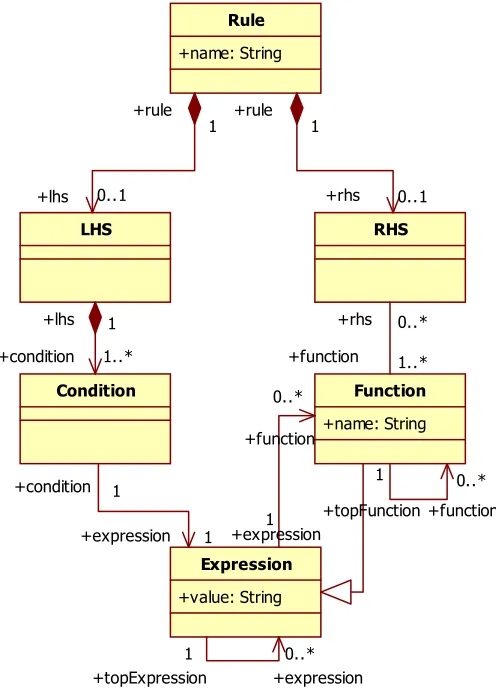
The diagram shown in Figure 9 shows the metamodel in more detail. The figure shows related classes and how all classes relate to each other. This is also the final Jess metamodel.
Rule compound statement using the AND operator. In this way, it is rather similar to the Condition in ECA-DL. The Expression part is equal in both metamodels.
The RHS is even more like its ECA-DL counterpart. As in ECA-DL, Functions can be defined outside rules and used in several RHS’s. A Function can contain zero or more Expressions and zero or more other Functions, just like Expression.
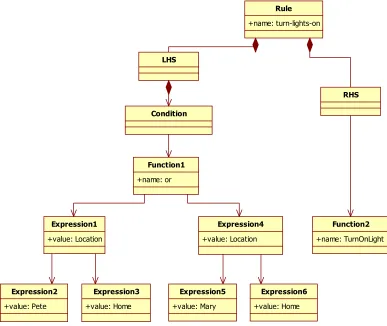
The metamodel above allows the following rule:
(defrule turn-lights-on
(or (Location Pete Home) (Location Mary Home)) =>
(turnOnLights) )
Figure 10: An example Jess model Figure 10 shows how this example rule relates to the metamodel.
Rule
+name: turn-lights-on
LHS
RHS
Condition
Function1
+name: or
Expression1
+value: Location
Function2
+name: TurnOnLight
Expression2
+value: Pete
Expression3
+value: Home
Expression4
+value: Location
Expression5
+value: Mary
Expression6
4.
Mapping ECA-DL to Jess
In this chapter we discuss how ECA-DL constructs can be mapped to Jess constructs and we evaluate several alternatives for doing so. This mapping is specified in an informal way, using textual rules instead of models. Chapter 5 is devoted to specifying this mapping in a more systematic way using the ATLAS Transformation Language (ATL).
4.1.
Basic ECA-DL syntax
Because the desired transformation is one-way from ECA-DL to Jess, our focus is completely on mapping ECA-DL constructs to Jess constructs. Initially, we restrict ourselves to just the basic ECA-DL syntax. Later on, we deal with ECA-DL’s additional constructs.
4.1.1. Rules without conditions
If an ECA-DL rule only contains an Event and an Action part, then the mapping to Jess is very straightforward. Take the following ECA-DL rule:
Upon EnterTrue(inRoom(Mary)) Do startWorking()
The Event part states that the rule should be triggered when Mary is in the room. This part is mapped to Jess’ LHS. The Action part states that when the event occurs, she should start working. This part is mapped to Jess’ RHS. In Jess, this solution would be represented as follows:
(defrule rule-1 (inRoom Mary) =>
(startWorking) )
4.1.2. Rules with conditions
When an ECA-DL rule also contains a Condition part, the mapping is more complex. In an ECA-DL rule, the Event part describes when the rule should be fired and contains one or more state transitions. A possible Condition part specifies additional constraints that should hold before the rule is fired. This implies that an event is thus very different from a condition. Whereas a condition just describes constraints that should hold, an event actually models a change. This is clarified by the following examples:
• EnterTrue(inOffice)
This event describes a change, which happens at a specific point in time;
• inOffice
This condition describes a situation, which holds over a period of time.
conditions in the LHS evaluate to true. A naïve way to map the Event and Conditions part to Jess would be to simply place both in the LHS. Take the following example:
When Mary enters the room, and Pete is already there, act surprised.
In ECA-DL, this can be represented as follows:
Upon EnterTrue(inRoom(Mary)) When inRoom(Pete)
Do actSurprised()
Because Jess rules only get fired as soon as all conditions hold, the EnterTrue function is implicit. The Jess counterpart would be:
(defrule rule-1 (inRoom Mary) (inRoom Pete) =>
(actSurprised) )
Although this solution is quite straightforward, it does not behave correctly according to the ECA-DL semantics. Suppose Pete enters the room first, and then Mary enters the room. Both conditions now hold, and the rule is fired, as it should. However, in case Mary enters first, and then Pete enters, the Jess rule still is fired, contrary to the ECA-DL semantics. Jess behaves in this way because it makes no distinction between the different conditions in the LHS.
Instead, we want Jess to only fire the rule when the event occurs (Mary enters the room) and the condition already holds (Pete is in the room). A possible solution is to introduce an auxiliary fact, which exists as long as the condition holds, and is removed when the condition no longer holds. Only when this fact exists, can the rule be fired. This ensures that at the moment the event occurs, the conditions hold. In order for this to work, we need three rules instead of one:
1. Rule 1 is fired as soon as the condition holds. This adds the fact fact-cond-holds. 2. Rule 2 is fired when the event occurs and the fact mentioned above holds. This
triggers the actual actions.
3. Rule 3 is fired as soon as the condition does not hold anymore. This removes the fact mentioned above, and thus prevents rule 2 from firing.
However, this solution is not yet complete. Suppose Mary enters the room, and then Pete enters the room. Rule 1 is fired and it adds the fact fact-cond-holds. Rule 2 also immediately is fired, because Mary is also in the room. In order to solve this problem, we need to modify rule 1 to include the negation of the event. This negation models the absence of a fact instead of its existence. This way, rule 1 only is fired when Pete is in the room and Mary is not yet in the room.
In Jess, this first solution would be represented as follows:
(defrule rule-1
(inRoom Pete) ; condition
(not (inRoom Mary)) ; negation of event =>
(assert (fact-cond-holds)) )
(defrule rule-2
(inRoom Mary) ; event
(fact-cond-holds) ; fact from above =>
(actSurprised) )
(defrule rule-3
(declare (salience 1)) ; give priority to this rule (not (inRoom Pete)) ; negation of condition =>
(retract-string “(fact-cond-holds)”) )
The main drawback of this solution is the need for an auxiliary fact. Such a fact may interfere with already existing facts, causing a name clash.
It is possible to drastically reduce the chance of auxiliary facts interfering with already existing facts by introducing a separate namespace for these facts. We call this namespace “ECADL2Jess”. The following code is placed at the top of the first solution:
(defmodule ECADL2Jess)
(set-current-module MAIN) ; switch back to default module (assert (ECADL2Jess::fact))
It is also possible to remove the need for an auxiliary fact. Instead of using an auxiliary fact as a link between rule 1 and rule 2, rule 1 now creates rule 2. Without the condition holding, rule 2 simply does not exist. The mapping is then as follows:
1. Rule 1 is fired as soon as the condition holds. This adds rule 2 below. 2. Rule 2 is fired when the event occurs. This triggers the actual actions.
3. Rule 3 is fired as soon as the condition does not hold anymore. This removes rule 2. In Jess, this second solution would be represented as follows:
(defrule rule-1
(inRoom Pete) ; condition
(not (inRoom Mary)) ; negation of event =>
(build (str-cat "(defrule rule-2 (inRoom Mary) =>
(actSurprised) )"
(defrule rule-3
(declare (salience 1)) ; give priority to this rule (not (inRoom Pete)) ; negation of condition =>
(undefrule rule-2) )
However, this solution brings an even greater drawback. In the rule above, we notice the use of the (build) function. This function takes its argument as a string and then evaluates it as if it were normal code. This is usually seen as bad programming, because the programmer has little control over the code that is executed by such a function.
Furthermore, in this case the rule created by this (build) function cannot be checked with respect to the metamodel for conformance, because it is treated as plain text. This also means that we have Jess code in the mapping itself, as an argument to the (build) function.
Because we believe the drawback of the second solution is more severe than the drawback of the first solution, we choose to use the first solution for our mapping.
We do not elaborate on the mapping of the Action part from ECA-DL to Jess, because it is a trivial one-to-one mapping.
4.1.3. Transitions
In Section 4.1.1 we have seen that transition functions, as used in ECA-DL, are implicit in Jess. The ECA-DL event EnterTrue(inRoom(Mary)), transformed to Jess, is thus simply
(inRoom Mary).
However, ECA-DL supports more transitions than just EnterTrue. Because a state can have three possible values (true, false or unknown), there are six different transitions. These can be denoted using thirteen different functions (e.g., Changed(), FalseToTrue() or
ExitUnknown()) [4].
Unfortunately, not all of these functions can be mapped to Jess. In Jess, there is no “unknown” value, since conditions always evaluate to either true or false. Because of this, there is also no distinction anymore between EnterTrue and FalseToTrue, since a transition to state true must have come from state false. The functions that can be mapped to Jess are thus: EnterTrue(), FalseToTrue(), EnterFalse(), TrueToFalse() and
Changed(). Other transition functions are not supported. These functions can be mapped to Jess as follows:
• EnterTrue() and FalseToTrue()
These functions are simply ignored. EnterTrue(inRoom(Mary)) and
FalseToTrue(inRoom(Mary)) thus both become (inRoom Mary);
• EnterFalse() and TrueToFalse()
These functions are replaced by the negation of the event.
EnterFalse(inRoom(Mary)) and TrueToFalse(inRoom(Mary)) thus both become (not (inRoom Mary)).
• Changed()
This function is replaced by the combination (by means of the OR operator) of both the event and the negation of the event, i.e., when the event or the negation of the event happens, the rule is fired. Changed(inRoom(Mary)) thus becomes (or (inRoom Mary) (not (inRoom Mary))).
Although logically, this statement is always true, in Jess, rules are only triggered for those facts that have changed. Thus, when the fact (inRoom Mary) changes, only then is the rule always triggered. This is exactly the intended behavior.
4.1.4. Compound transitions and conditions
Until now, we have only worked with single events and conditions, like inRoom(Pete). However, both ECA-DL and Jess also support compound transitions and conditions. To illustrate this we change the example from Section 4.1.2 as follows:
Upon EnterTrue(inRoom(Mary)) AND EnterTrue(inRoom(Suze)) When inRoom(Pete) AND inRoom(Carl)
Do actSurprised()
In ECA-DL, this example is interpreted as follows:
The event occurs when both Mary and Suze have entered the room, i.e., before the event, either or both were not yet in the room. It does not matter who enters the room first. The condition states that the rule is fired only when Pete and Carl are already in the room the moment the event takes place. This may be counterintuitive, as can be seen from the following scenario:
• Pete enters the room; • Mary enters the room; • Carl enters the room;
• Suze enters the room. The event occurs (both Mary and Suze are in the room). The
condition holds (both Pete and Carl are in the room). The rule is fired and the action gets triggered.
Intuitively, one may expect the rule to only fire when first Pete and Carl enter the room, and after that Mary and Suze. However, ECA-DL states that the condition should only hold the moment the event occurs, not during every state transition in the event part. Fortunately, this easily translates to Jess. In Jess, this example would be represented as follows:
(defrule rule-1
(and (inRoom Pete) (inRoom Carl)) ; condition
(not (and (inRoom Mary) (inRoom Suze))) ; negation of event =>
(assert (fact-cond-holds) )
(defrule rule-2
(and (inRoom Mary) (inRoom Suze)) ; event
(fact-cond-holds) ; fact from above =>
(defrule rule-3
(declare (salience 1)) ; give priority
(not (and (inRoom Pete) (inRoom Carl))) ; negation of condition =>
(retract-string “(fact-cond-holds)”) )
The mappings of the event and condition are quite straightforward, as they are the same as in Section 4.1.1 and Section 4.1.2. We show here that the mapping of the negations of the events and conditions are also correct.
The negation of the event states: “if not (Mary is in the room and Suze is in the room)”. This is equivalent to: “if Mary is not in the room, or Suze is not in the room”, or “if either Mary, or Suze, or both are not in the room”. If this is the case, then either Mary, Suze or both still have to enter the room, and the event still has to happen.
The reasoning for the negation of the condition is similar. If either Pete or Carl is not in the room (yet or anymore), then the condition evaluates to false, and the action can no longer get triggered.
There is however one constraint we have to keep in mind. Jess supports multiple conditions in its LHS, but our Jess metamodel states that these conditions, unlike ECA-DL’s transitions, cannot be nested. In our metamodel, nested Jess Conditions are represented by Expressions instead.
We can overcome this problem by always mapping Transitions and Conditions to Expressions. These Expressions are then placed in a single Jess Condition. This is possible, because:
• The ECA-DL Transitions and Conditions are still mapped to Jess Conditions as in
Section 4.1.1 and Section 4.1.2;
• Section 4.1.3 shows that Transitions and Conditions are already mapped to
Expressions;
• Expressions in Jess can be nested.
4.2.
Additional constructs
4.2.1. Lifetime
ECA-DL rules can have a lifetime, indicating when the rule should be active. There are six different lifetimes:
• always
This lifetime indicates that the rule is always active. Because Jess rules are always active by default, this lifetime can be ignored in the transformation.
• once
o The Jess rule can remove itself:
(reset)
(defrule rule-1
(inRoom Mary) ; event =>
(startWorking) ; action (undefrule rule-1) ; “once” )
o The Jess rule can assert a new fact in the action part which prevents it from firing again:
(defmodule ECADL2Jess) (set-current-module MAIN) (defrule rule-1
(inRoom Mary) ; event (not (ECADL2Jess::rule-1-fired)) ; “once” =>
(startWorking) ; action (assert (ECADL2Jess::rule-1-fired)) ; “once” )
In the second solution, the rule stays in the knowledge base and can later be activated again. Because of this possibility, we choose to use the second solution for our mapping.
• <n>
This lifetime indicates that the rule should be deactivated when it has been triggered <n> times. In Jess, this can be implemented by introducing a counter variable. When the counter reaches zero, the rule can no longer be triggered. In the example below, we use ‘5’ as our value for <n>:
(bind ?*rule-1-count* 5) (defrule rule-1
(inRoom Mary)
(test (> ?*rule-1-count* 0)) =>
(startWorking)
(-- ?*rule-1-count*) )
For our counter we use the variable ?*rule-1-count*. The asterisks around the name of the variable indicate that this is a global variable. A normal variable (e.g.
?rule-1-count) cannot be used here, because it is not visible within the rule.
• from <start> to <end>
Although Jess has a (time) function, which returns the number of seconds since 12:00 AM, Jan 1, 1970 (Unix epoch), it cannot be used in a rule. In order for a rule to start firing as soon as the lifetime permits this, the time needs to be checked in the LHS of the rule.
However, the (time) function is never evaluated, so the rule does not match. The reason for this is the way Jess works internally. It would be too costly to evaluate the
(seconds since Unix epoch) would have been supported, because Jess has no method of working with textual dates, like “September 23rd, 1997”.
It is thus not possible to map this lifetime to Jess, so this lifetime is not supported.
• to <end>
The same reasoning as above applies.
• frequency <n> times per <period>
The same reasoning as above applies.
4.2.2. Scope and Select
The Scope construct of ECA-DL allows multiple, similar rules to be defined at once. This is called “parameterization”.
The Select construct is used to select a number of entities from a collection. The metamodel allows a Select to be used wherever an Expression can be used, but ECA-DL only allows a Select construct in a Scope construct or in the Action part of a rule.
Because Select constructs are often used in Scope constructs, we do not discuss them separately. After that, we discuss the use of the Select construct in the Action part of a rule. Although Jess does not support parameterization as ECA-DL does, it is relatively easy to develop a mapping that obtains the same result. Jess rules are fired every time one of the parts of the LHS changes, and as many times as there are facts that match the rule. Take the following example:
When a manager enters his office, turn on his computer.
In ECA-DL, this can be represented as follows:
Scope(Select(Employees.*, Employee, Employee.isManager); emp) {
Upon EnterTrue(inOffice(emp)) Do TurnOn(emp.computer)
}
For example, if manager1 and manager2 enter their offices, the rule is fired for both. In Jess, we can write this as follows:
(defrule rule-1
(Employees ?emp ?function&:(eq ?function “manager”)) (inOffice ?emp)
=>
(turnOn computer(?emp)) )
On the first line of the LHS we see the references to Employees and Employee.isManager
Thus, the Scope and Select constructs are mapped to a single Condition in Jess. It is important to mention that this Condition should be the first one, so that the variable ?emp introduced here is available to all the other Conditions in the Jess rule, as in the case of the ECA-DL rule. This mapping introduces a problem when used in conjunction with a Lifetime. In ECA-DL, a Lifetime is bound to a single Rule. When a Scope is placed around such a Rule, each Rule still has its own Lifetime. However, when mapped to Jess, Scope and Rule merge, so that the Lifetime now works over the single created rule, instead of over the original set of rules. Besides this, the Select construct can also occur in the Action part of an ECA-DL rule. In this case it is simply a list of entities that can be passed to a function. Because a Select expression works with facts, we need a Jess function that can return a number of facts that satisfy the given condition. We can use the (defquery) construct for this. Take the following example: When Pete enters the office, alert all his colleagues.
In ECA-DL, this can be represented as follows:
Upon EnterTrue(inOffice(Pete))
Do Notify(Select(Employees.*, Emp, Emp.isColleagueOf(Pete)), “Pete entered the building.”)
Using the (defquery) construct, we get the following Jess code:
(defquery query-1
(declare variables ?Emp) (Employees ?Emp)
(Colleague ?Emp ?Col) )
(defrule rule-1 (InOffice Pete) =>
(Notify (run-query* query-1 Pete), “Pete entered the building.”) )
5.
Transformation specification
In this chapter we present how the mappings from Chapter 4 can be formalized so that they can be used in a transformation tool. While in Chapter 4 we focused on mappings using text, ECA-DL and Jess code, in this chapter we present these mappings using the ATLAS Transformation Language (ATL).
We also present how these mappings relate to the metamodels from Chapter 3.
5.1.
Basic mapping
In Chapter 4 we introduced two basic mappings from ECA-DL to Jess. One does not consider the Condition part of the ECA-DL rule, yielding a rather simple mapping. This mapping is shown in Section 4.1.1. The other does include the Condition part, yielding a rather complex mapping. This mapping is shown in Section 4.1.2.
These two mappings are more important than the other mapping, because the other mappings are nested in these two mappings. Therefore, first one of these two mappings has to be performed for the others to be meaningful.
5.1.1. Event and Action only
When a rule does not contain a Condition part, then the mapping is very straightforward; one ECA-DL rule is mapped to one Jess rule. This is shown in Figure 11.
Rule +name: String
LHS RHS
+rule
+lhs
1
0..1
+rule
+rhs 1
0..1
Rule
EventClause ConditionClause ActionClause
+rule
+conditionclause 1
0..1 +rule
+eventclause
1
1
+rule
+actionclause 1
1
Below we present the specification of this mapping in ATL.
The header below defines that only those rules that do not contain a Condition part are transformed using this transformation rule. Those rules that do contain a Condition part are transformed in another transformation rule.
rule Rule2RuleSimple {
from
ecadl_rule : MMECADL!Rule
(not ecadl_rule.hasCondition)
The code below defines the basic structure of the Jess rule. It creates the name of the rule, and the LHS and RHS. The LHS and RHS are assigned a target model element generated by the current transformation rule. In the case of lhs, this target model element is jess_lhs.
jess_rule : MMJess!Rule (
name <- 'rule-1', lhs <- jess_lhs, rhs <- jess_rhs ),
In the target model element jess_lhs we first make use of a collection. Because collections can contain multiple elements, it is possible to assign multiple children to a reference. In this case, we make use of the Sequence{} construct, a type of collection. A Sequence is an ordered set of elements, in which duplicates are allowed. In the target model element below, the Sequence possibly contains one Condition representing the Scope of the ECA-DL rule, and it contains one or more Conditions representing the Transitions of the ECA-DL rule. Because the Condition generated by the Scope of the ECA-DL rule should be the first Condition in the LHS of the Jess rule, it is placed before the other Conditions.
The target model element below is also the first that explicitly calls a lazy rule. This lazy rule, called Scope2Condition, transforms the Scope part of an ECA-DL rule to a Jess Condition. This lazy rule is presented later on. Below, the use of lazy rules is necessary, because the Scope part is used in other transformation rules as well.
jess_lhs : MMJess!LHS (
condition <- Sequence {
-- Transform Scope.
if not ecadl_rule.scope.oclIsUndefined() then
thisModule.Scope2Condition(ecadl_rule.scope) else
Sequence{} endif,
-- Transform Conditions. jess_condition
} ),
jess_condition : MMJess!Condition (
expression <-
thisModule.CompoundTransition2Expression(ecadl_rule.eventclause.compo undtransition)
),
In some cases, the element to be copied is a collection. In this case, the ActionClause from the ECA-DL rule can contain multiple functions. Instead of passing the entire collection to a lazy rule, we call the transformation rule for each element e, and then collect all the results.
jess_rhs : MMJess!RHS (
function <- ecadl_rule.actionclause.function->collect(e|thisModule.Function2Function(e))
Finally, we introduce the lifetime. The code below calls two helper functions that add the necessary code to the LHS and RHS. These functions are presented later on.
do
5.1.2. Event, Condition and Action
When an ECA-DL rule does contain a Condition part, the rule is mapped to three Jess rules. This mapping relates to the metamodels as shown in Figure 12
Rule
The arrows here indicate which part of the ECA-DL rule is mapped to which part of the Jess rules. Figure 12 shows that the original ECA-DL rule is mapped to three Jess rules. Both the Event and Condition part are mapped to several LHS’s. Those parts in Jess not linked to the ECA-DL rule are filled in by the transformation process.
The specification of this mapping in ATL is rather long, because it has to take several properties of the mapping into account. Furthermore, it only contains constructs that have been explained before. Therefore, we do not elaborate on this mapping here. The complete mapping can be found in Appendix C.
Figure 13: Mappings for other constructs
5.2.
Detailed mapping
Below these basic mappings, there are a number of more detailed mappings. These mappings relate to the metamodels as shown in Figure 13.
Rule
The diagram in Figure 13 is based on the mapping from Section 5.1.1. The diagram based on the mapping from Section 5.1.2 would be similar. For example, because a CompoundTransition is part of an EventClause, and the EventClause is mapped to two LHS’s, the CompoundTransition is then mapped to the Condition parts of these two LHS’s. However, this more extensive diagram would become unreadable, so we constrain ourselves to this one. The mappings represented in Figure 13 are:
• Select to Condition and Function, denoted by the Select ellipse; • Scope to Condition, denoted by the Scope ellipse;
• Lifetime to Condition and Function, denoted by the Lifetime ellipse;
• CompoundTransition to Expression, denoted by the CompoundTransition ellipse; • Transition to Expression, denoted by the Transition ellipse;
• Expression to Expression, denoted by the Expression ellipse; • Function to Function, denoted by the Function ellipse.
5.2.1. Scope and Select to Condition
The lazy rule Scope2Condition can be called either once or three times. If the ECA-DL rule contains no Condition part, then the Scope part needs to be mapped to the LHS of a single Jess rule. If the ECA-DL rule does contain a Condition part, then the Scope part needs to be mapped to the LHS’s of all three Jess rules.
The following block of code is an imperative block of code, which can be used to declare variables. In this block, we declare the variable expressions. This variable contains the transformed versions of the Expressions belonging to the Select part. The Select part, in its turn, belongs to the Scope part.
using
{
expressions : MMJess!Expression =
ecadl_scope.select.expression->collect(e|thisModule.Expression2Expression(e)); }
In order to access an element in the collection above, we use the at() function. This function returns an element at a certain position in a collection. The Expression part below contains the first element of the collection, then the attribute var of Scope, and lastly the second element of the collection.
expression <- Sequence {
expressions->at(1), jess_expression_var, expressions->at(2) }
),
jess_expression_var : MMJess!Expression (
value <- ecadl_scope.var )