R E S E A R C H
Open Access
An intrusion detection method for internet
of things based on suppressed fuzzy
clustering
Liqun Liu
1, Bing Xu
2*, Xiaoping Zhang
3and Xianjun Wu
4Abstract
In order to improve the effectiveness of intrusion detection, an intrusion detection method of the Internet of Things (IoT) is proposed by suppressed fuzzy clustering (SFC) algorithm and principal component analysis (PCA) algorithm. In this method, the data are classified into high-risk data and low-risk data at first, which are detected by high frequency and low frequency, respectively. At the same time, the self-adjustment of the detection frequency is carried out according to the suppressed fuzzy clustering algorithm and the principal component analysis algorithm. Finally, the key factors influencing the algorithm are analyzed deeply by simulation experiment. The results shows that, compared to traditional method, this method has better adaptability.
Keywords:Internet of things, Intrusion detection, Suppressed fuzzy clustering algorithm, Principal component analysis algorithm
1 Introduction
Owing to the rapid development and wide applications of the Internet of Things (IoT) techniques, security of IoT has attracted increasing attentions. IoT is a sensor network consisting of various sensor nodes, which are readily exposed to attacks as they are usually located in sites with no monitoring [1, 2]. To make it worse, at-tacks on IoT may lead to huge damages in a wide range, compared with computer networks. Hence, security risks in all aspects of IoT and strategies should be analyzed as a whole and the simplification of end security set-up is
of IoT great significance [3]. The detection systems
should be further optimized based on analysis of risk categories and security structures of IoT [4].
The intrusion detection method judges attacks based on data collected by multiple collection points in a com-puter network [5,6]. The intrusion detection is an active protection technique that can intercept and respond to intrusions before they reach the network. However, the huge network data traffic is a huge challenge to intru-sion detection systems as it induces high requirements
on the detection efficiency so that attacks can be de-tected in real time. The restricted Boltzmann machine (RBM) network was trained using the greedy algorithm, and low dimension expressions of the RBM network output were classified downwards using the back propa-gation algorithm [7]. The results indicated that the pro-posed model shows improved accuracy of intrusion detections, thus suitable for information extractions in high-dimension space. For data compression and low clustering efficiency issues, a modified self-adjustment clustering method is established based on direct correl-ation to samples close to cluster center [8]. This method effectively reduced clustering sample size and clustering time-space consumption and improves the effectiveness of intrusion detection. Aimed at feature optimization and selection in intrusion detections, a support vector machine (SVM) based two-stage feature selection method was proposed based on feature evaluations of the ratio of detection rate and false alarm rate [9]. In this method, filter noises and irrelevant features were filtered using Fisher classification and information gain in the filtering mode, respectively, to obtain overlapping feature subsets and effectively reduce modeling and detection time. For intrusion detections of internal nodes in wire-less sensor networks (WSN), a layer-clustered intrusion
* Correspondence:[email protected]
2School Of Computer And Electronic Information, Guangdong University Of
Petrochemical Technology, Maoming, China
Full list of author information is available at the end of the article
detection method for trust value of node a based on the Beta distribution theory and outlier factor was proposed
[10]. This method identifies abnormal nodes based on
the Mahalanobis distance and exhibits low false alarm rates. Based on classification methods in data mining, optimized solutions were identified by direction calcula-tions of relevant matrices and multi-category network attacks are analyzed by multi-objective mathematical
programming model [11]. This method exhibits
advan-tages such as low complexity, effective detections of multi-category attacks, and low false alarm rates. A fuzzy clustering intrusion model based on genetic algorithm
and hierarchical algorithm was proposed [12]. Herein,
the feature volume was determined by deletion of data set features using the Youden index, the susceptibility to initial cluster centers was relieved, and the local optimization issues in iteration were overcome. Experi-mental results demonstrated excellent detection per-formance of the proposed model for network attacks. For Kernel restriction issues in minimum enclosing ball algorithm, an intrusion detection method based on mini-mum enclosing ball with extensive Kernel was proposed
[13]. This method can obtain the minimum enclosing
ball of the sample set according to updates of the center and the radius of sphere and categorize network intru-sions according to distributions of support vectors. To enhance the accuracy of intrusion detections, an intru-sion detection method combining artificial immunity and rough set was proposed for vaccine injections [14]. This method can achieve real time detections of un-known attacks with improved effectiveness and effi-ciency. Also, a network intrusion detection model was proposed and an alarm system combining multiple proof techniques was established to filter false alarms [15]. An improved multi-objective genetic algorithm-based intru-sion detection integrated method has been proposed [16]. This algorithm can effectively solve feature selec-tion issues in intrusion detecselec-tions, and the method based on this algorithm exhibited excellent detection accuracy and wide applicability to different categories of attacks.
Although intrusion detection technology has been widely used, there are still many problems, such as large number of alerts, high false alarm rate, poor generality, and false report. In this article, an intrusion detection method for IoT was proposed based on suppressed fuzzy clustering (SFC) algorithm [17,18] and principal
compo-nent analysis (PCA) algorithm [19, 20]. Simulations
demonstrated high detection efficiency and significantly reduced detection time of the proposed method. Section 2describes the objective prejudgment model of intrusion detections, Section 3 proposes solution of intrusion
de-tections, Section 4 involves simulations, and Section 5
includes a conclusion.
2 Objective prejudgment model
IoT consists of multiple sensor nodes with low commu-nication traffic and short commucommu-nication range. All nodes are identical and abnormal data packets can be detected by monitoring of wireless ports at all nodes. An intrusion detection system (IDS) for IoT is a solid sys-tem consisting of six closely related parts, including data packet monitoring, boundary identification, key manage-ment, local detection, voting, and local responses [21].
As the sensor nodes in IoT are readily exposed to attacks, IDS proxy was designed for each node in IoT to realize network monitoring, group decision, and other operations. However, current algorithms are limited by drawbacks such as late alarms, high false alarm rate, and
low detection efficiency [22]. This study focuses on
optimization of efficiency and effectiveness of intrusion detections. Owing to the rapidly increasing data trans-mission size in IoT, feature extraction can be extremely time consuming and its efficiency has a severe effect on detections. To guarantee good efficiency and effective-ness of intrusion detections, extractions of feature vec-tors of the data obtained were achieved by the PCA algorithm. In this way, the efficiency and effectiveness
intrusion detection algorithm were significantly
improved.
With one sample size, pvariables of ngroups of data
were monitored (e.g., abnormal request data packets, missing data packets). The sample monitoring data matrixXcan be described by:
X¼
whereX is a matrix consisting ofpcolumn vectors,nis the size of data to be monitored, and each data is a co-ordinate in the nth dimension. The monitoring data of original samples were standardized:
xij¼ xij
Then, X was projected to the low dimension space
vector (T), as follows:
T ¼WTX ð4Þ
V xj ¼
where the covariance matrix (Wi) is located in the ith column ofW, and W!i is the feature vector correspond-ing to one specific feature (λi) ofV. To achieve rapid de-tections, features with ambiguous values were eliminated to enhance the detection efficiency. The feature vectors with relatively large values were selected. Herein, an ob-jective prejudgment-based intrusion detection, frequency self-adjustment algorithm for IoT was proposed. In this algorithm, the huge data flow is integrated and analyzed. More specifically, the data is classified using the cluster-ing algorithm: the data sent to potential objectives to be attacked is classified as high-risk data, while other data is classified as low-risk data. The high-risk data and the low-risk data are detected under high frequency and low frequency, respectively.
Define the data set to be clustered as X= {x1, x2, …,
xn}, where each sample xk (1, 2, …, n) has several fea-tures, including data transmission rate, average length of data packets, and intervals of data emission. xk= (xk1,
xk2, …, xkj)T ∈ Rj is the corresponding feature vector, which represents a point in the data feature space, and
xkjis the feature vector in thejth dimension. In this way,
data in X is categorized as high-risk data or low-risk
data. The result is denoted as a matrix in order of c*n (U = [uij]c*n), which satisfies
∀i;j;uij¼½0;1 ð7Þ
The weight distances from samples to the cluster cen-ter are defined as objective functions, which can be cal-culated by
where U= [uij]2*n is fuzzy classification matrix (uij∈ [0, 1]),mis the weighed index,m∈[1,∞],dijis the Euclid-ean distance (dij) between xj, and the ith cluster center
vi(i= 1, 2,…, c).dijcan be calculated by Eq. (11).
3 Intrusion detection method
To ensure rapid and effective detections of attacks, an objective prejudgment-based intrusion detection, frequency self-adjustment method for IoT is pro-posed. With no distortions of original data guaran-teed, the PCA algorithm can reduce the number of variables and eliminate features with low discrimina-tions. The dimension reduced data was divided by SFC algorithm as high-risk and low-risk data, which are detected using different frequencies to achieve enhanced detection efficiency and accuracy. The pro-cedures are as follows:
(a) Data initialization: define fuzzy clustering set as
c = 2and optimized classification threshold as
ε= 0.3, initialized detection machine number asn, minimum detection frequency of low-risk data as lmin, maximum detection frequency of high-risk data aslmax, time intervals asΔt.
(b) Data pre-processing: randomly initialize the affili-ation matrix U = [uij]c*n(uij∈[0,1]) and Eq. (9) was satisfied. The cluster centersvi(i= 1, 2,…, c) were determined and the Euclidean distance (dij) between thejth sample data and theith cluster cen-ter.dijcan be calculated by
vi¼
The objective function was calculated using Eq. (10). If the value of objective function was no lower than the given optimized classification threshold, the process was repeated; if the value of objective function was lower than the given optimized classification threshold and no changes of any cluster was observed, the process ends.
Due to the slow converging rates of conventional fuzzy clustering algorithms, a suppressorλij(0 <λij< 1) was in-troduced todij for the purpose of correction. Define the corrected distance asd0ij
d0ij¼1−λij X
i≠j dij
ð14Þ
dij−
(c) First, classified data was analyzed using the PCA algorithm and features with low discriminations were eliminated to accelerate the detection process. (d) Then, data was detected with self-adjustment of de-tection frequency according to the dede-tection results. Assume that the quantity of objective machines that can be effectively detected by objective prejudgment based methods is
n¼n0þΔn ð16Þ
wherenis the quantity of monitored objective machines,
n′ is the quantity of monitored objective machines before application of objective prejudgment, and Δn is the quantity of monitored objective machines after application of objective prejudgment.
The total number (N) of data packets that can be de-tected per second can be obtained by:
N¼nlminþ lmax−lmin
lmin
t−n0 ð17Þ
wherelminrefers to the minimum detection frequency of low-risk data,lmaxrefers to the maximum detection fre-quency of high-risk data, and t (0≤t≤n) refers to the total number of objective data under attack. In cases of no attacks to the IoT system, the detection frequency of low-risk data (P′) to each objective with detection effect-iveness guaranteed is defined as
P0¼N
n ð18Þ
The detection frequency can be neither over-adjusted (high-risk data is identified as low-risk data) nor under-adjusted (high-risk data cannot be detected) and an ap-propriate frequency difference is of great significance. With detection effectiveness and accuracy guaranteed, the adjustable data detection frequency difference is defined as
Δf ¼X
n−k
i¼1
P0−lmin ð19Þ
In this way, detection frequencies of high-risk data (Pimax) and low-risk data (Pilow) of the ith objective machine by the NIDS system can be obtained
Pimax¼P0þηiΔf jective machine inΔt,Airefers to the detected abnormal data sent toith potential target inΔt, andCirefers to all detected abnormal data sent toith potential target inΔt. In detections, the detection frequency of the objective was adjusted in real time according toηito optimize the detection accuracy.
4 Simulations
In this study, the objective prejudgment-based intrusion detection system for IoT was employed. The data was pre-processed using SFC algorithm and PCA algorithm and then detected by frequency self-adjustment. The re-sults indicated that the proposed algorithm can not only enhance the detection efficiency but also reduce the false alarm rate. The accuracy index is the most important performance index of the intrusion detection system, and its value depends on the sample set and the test environment used in the test. The three parameters of detection duration, accuracy rate, and false alarm rate are usually used as evaluation indexes. Therefore, in this study, detection duration (T), accuracy (P), and false alarm rate (F) were employed as evaluation parameters:
P¼Nt
N0100% ð23Þ
F¼Nf
N 100% ð24Þ
whereNtis the size of attack samples that are accurately detected,Nfis the size of false alarms, andN′is the size of overall attacks identified by the system, and Nis the size of overall real attacks.
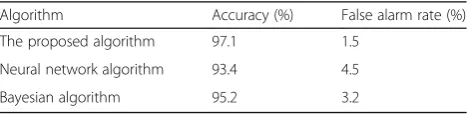
Table 1 summarizes detection results of the proposed
algorithm, the neural network algorithm, and the Bayes-ian algorithm. As observed, the accuracy of the proposed algorithm is higher than those of the other two algo-rithms. This can be attributed to data dimension reduc-tion by PCA algorithm, which eliminates interferences
Table 1Properties of raw materials
Algorithm Accuracy (%) False alarm rate (%) The proposed algorithm 97.1 1.5
Neural network algorithm 93.4 4.5
by irrelevant factors. Additionally, the false alarm rate of the proposed algorithm is lower than those of the other two algorithms. Hence, it can be concluded that the pro-posed algorithm is viable.
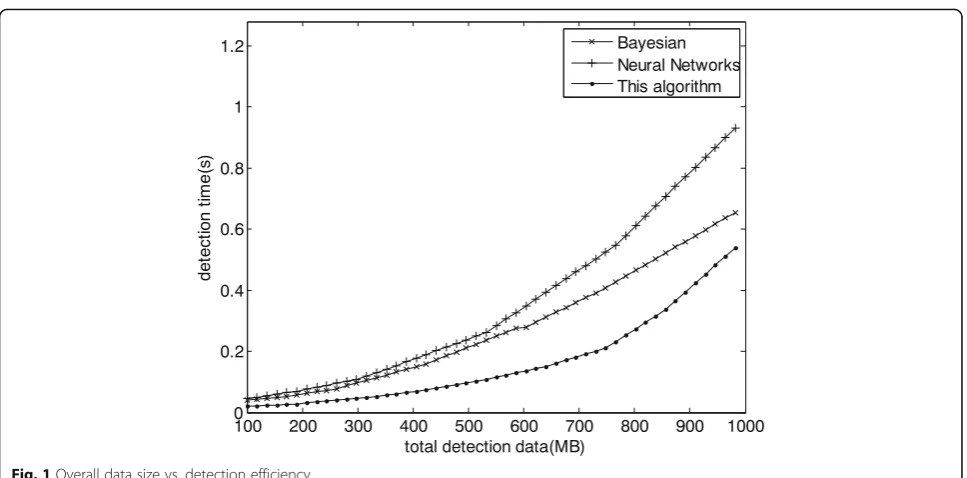
Figure1summarizes the effects of the overall data size on the detection efficiency using different algorithms. As observed, detection efficiencies of the three algorithms decreased as the data size increased, while the detection efficiency of the proposed algorithm is lower than those of the other two algorithms. The detection efficiency of the proposed algorithm is higher than those of the other two algorithms, regardless of the overall data size. Therefore, it can be concluded that the proposed algo-rithm can enhance detection efficiency.
Table 2 summarizes detection results of the proposed
algorithm. As observed, the detection rate of abnormal data increased as the time increased. This can be attrib-uted to the continuous self-adjustment of detection fre-quency according to the responses received.
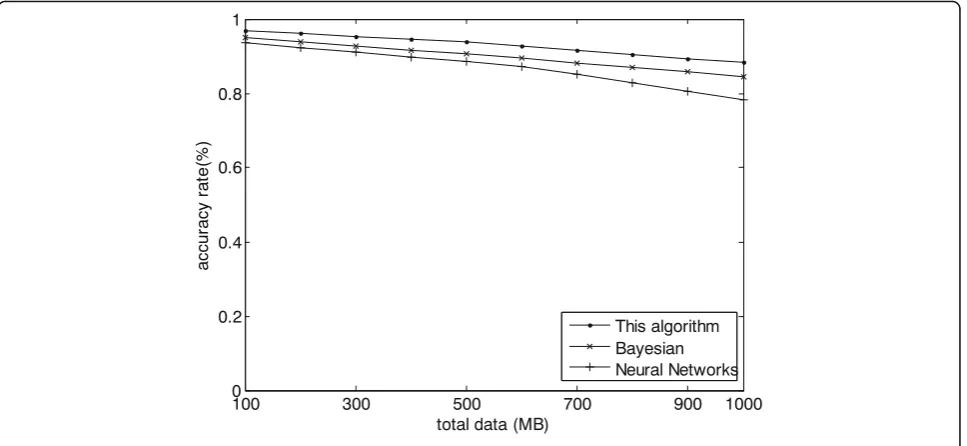
The accuracy is a key indicator for intrusion detec-tions. The effects of overall data size on the detection accuracy were investigated using different algorithm models, and the results are shown in Fig.2. As observed,
the detection accuracy degraded as the data size increased in all three cases, as the increasing data size leads to decreasing detection efficiency. However, the decreasing rate of the proposed algorithm model was lower than those of the other two algorithms and the accuracy of the proposed algorithm model was higher than those of the other two algorithms in all cases. Therefore, the proposed algorithm model is viable.
5 Results
With the rapid development of the IoT technology, the security problem is becoming more and more serious. All sensor nodes in IoT are vulnerable to external attacks. The huge network data traffic is a huge chal-lenge to intrusion detection systems as it induces high requirements on the detection efficiency so that attacks can be detected in real time. However, current algo-rithms are limited by drawbacks such as late alarms, high false alarm rate, and low detection efficiency. Aimed at low effectiveness of intrusion detections for IoT, an intrusion detection method for IoT based on SFC algorithm and PCA algorithm is proposed. In this method, the data obtained are classified by objective pre-judgment into high-risk data and low-risk data, which are detected at high frequency and low frequency, respectively. Meanwhile, the self-adjustment of detection frequency is achieved by employing the SFC algorithm and the PCA algorithm. Experimental results revealed improved applicability of the proposed method, com-pared with conventional methods (e.g., neural network algorithm, Bayesian algorithm). The innovation of this paper is to propose an objective prejudgment-based
Fig. 1Overall data size vs. detection efficiency
Table 2Detection results of the proposed algorithm
Time (s)
Actual abnormal data packet
Detected abnormal data packet
Detection rate (%)
0–10 3290 3175 96.5
10–20 4367 4227 96.8
20–30 3632 3534 97.3
intrusion detection, frequency self-adjustment method for IoT. With no distortions of original data guaranteed, the PCA algorithm can reduce the number of variables and eliminate features with low discriminations. The dimension reduced data was divided as high-risk and low-risk data, and then tested at different frequencies, which are detected using different frequencies to achieve
enhanced detection efficiency and accuracy. This
method can quickly improve the effectiveness and accur-acy of intrusion detection.
6 Discussion
In this study, the number of samples and the detection time are several important factors that affect the efficiency of the algorithm. The key factors affecting this algorithm are analyzed by simulations. Experimental results show that with the increase of data volume, the efficiency and accuracy of intrusion detection algorithm will gradually decrease. Compared with Bayesian algorithm and neural network algorithm, the new algorithm in this paper still has better detection efficiency.
With the continuous development of related research, new intrusion detection models of IOT will be more and more, and the evaluation index will also continue to ex-pand. In subsequent research, we can consider the com-bination of other indicators and new features of IOT to improve the intrusion detection model.
Abbreviation
IDS:Intrusion detection system; IoT: Internet of things; PCA: Principal component analysis; RBM: Restricted Boltzmann machine; SFC: Suppressed fuzzy clustering; SVM: Support vector machine; WSN: Wireless sensor networks
Acknowledgements
The research presented in this paper was supported by the Funds of Science & Technology Research of Guangdong Province and the Natural Science Foundation of Guangdong Province, China.
Funding
The authors acknowledge the Funds of Science & Technology Research of Guangdong Province, China (Grants: 2015B010128015 and 2017A040403070) and the Natural Science Foundation of Guangdong Province (Grant: 2017A030307027),China.
Authors’contributions
LL is the main writer of this paper. She proposed the main idea, deduced the performance of the algorithm detection, completed the simulation, and analyzed the result. BX introduced the suppressed fuzzy clustering algorithm and principal component analysis algorithm and analyzed the data of the simulation experiment. XZ analyzed the key factors influencing the algorithm. XW gave some important suggestions for intrusion detection. All authors read and approved the final manuscript.
Competing interests
The authors declare that they have no competing interests.
Publisher’s Note
Springer Nature remains neutral with regard to jurisdictional claims in published maps and institutional affiliations.
Author details
1School Of Mathematics And Computer, Guangdong Ocean University,
Zhanjiang, China.2School Of Computer And Electronic Information,
Guangdong University Of Petrochemical Technology, Maoming, China.
3
School Of Mathematics And Statistics, The University Of Sheffield, Sheffield S3 7rh, UK.4School Of Computing Center, Guangdong University Of
Petrochemical Technology, Maoming, China.
Received: 3 February 2018 Accepted: 25 April 2018
References
1. XD Hu, ZM Jia, A method of lightweight intrusion detection for the Internet of things. J. Chongqing Univ. Posts Telecommun.2(27), 255–259 (2015) 2. GY Tang, Network intrusion detection method based on constraint fuzzy
clustering thought. Natl. Sci. J. Xiangtan Univ.3(39), 61–64 (2017)
3. F Jia, LZ Kong, Intrusion detection algorithm based on convolutional neural network. Trans. Beijing Inst. Technol.12(37), 1271–1275 (2017)
4. XC Liu, SF Lu, W Zhao, et al., A cloud computing intrusion detection with objective function optimization based on fuzzy C-means clustering algorithm. J. Cent. South Univ.7(47), 2320–2325 (2016)
5. GD Li, JP Hu, KW Xia, Intrusion detection using relevance vector machine based on cloud particle swarm optimization. Control Decision.30(4), 698–702 (2015)
6. YH Yang, HZ Huang, QN Shen, et al., Research on intrusion detection based on incremental GHSOM. Chin. J. Comput..37(5), 1216–1224 (2014) 7. N Gao, L Gao, YY He, Deep belief nets model oriented to intrusion
detection system. Syst. Eng. Electron.38(9), 2201–2207 (2016)
8. J Jiang, ZF Wang, TM Chen, et al., Adaptive AP clustering algorithm and its application on intrusion detection. J. Commun.36(11), 118–126 (2015) 9. XN Wu, XJ Peng, YY Yang, et al., Two-level feature selection method based
on SVM for intrusion detection. J. Commun.36(4), 2015127-1–2015127-8 (2015)
10. WM Tong, JQ Liang, L Lu, et al., Intrusion detection scheme based node trust value in WSNs. Syst. Eng. Electron37(7), 1644–1649 (2015) 11. B Wang, XW Nie, Multi-criteria mathematical programming based method
on network intrusion detection. J. Comput. Res. Dev.52(10), 2239–2246 (2015)
12. CH Tang, PC Liu, SS Tang, et al., Anomaly intrusion behavior detection based on fuzzy clustering and features selection. J. Comput. Res. Dev.52(3), 718–728 (2015)
13. QA Wang, B Chen, Intrusion detection system using CVM algorithm with extensive kernel methods. J. Comput. Res. Dev.49(5), 974–982 (2012) 14. L Zhang, ZY Bai, SS Luo, et al., Integrated intrusion detection model based
on rough set and artificial immune. J. Commun.34(9), 166–176 (2013) 15. ZH Tian, BL Wang, WZ Zhang, et al., Network intrusion detection model
based on context verification. J. Comput. Res. Dev.50(3), 498–508 (2013) 16. Y Yu, H Huang, An ensemble approach to intrusion detection based on
improved multi-objective genetic algorithm. J. Softw.18(6), 1369–1378 (2007)
17. B Liu, SX Xia, Y Zhou, et al., A sample-weighted possibilistic fuzzy clustering algorithm. Acta Electron. Sin.40(2), 371–375 (2012)
18. AG Chen, ST Wang, Fuzzy clustering algorithm based on multiple medoids for large-scale data. Control Decision.31(12), 2122–2130 (2016)
19. ZZ Liang, Y Li, SX Xia, et al., Principal component analysis based on L1-norm maximization with Lp-norm constraints. PR AI26(2), 211–217 (2013) 20. Y Ruan, HW Chen, ZH Liu, et al., Quantum principal component analysis
algorithm. Chin. J. Comput37(3), 666–676 (2014)
21. M Ahmed, AN Mahmood, J Hu, A survey of network anomaly detection techniques. J. Netw. Comput. Appl.60, 19–31 (2016)