REVIEW AND ANALYSIS OF VARIOUS
CATEGORIES OF NOISE AND CORRESPONDING
NOISE MODELS FOR PROCESSING DIGITAL
IMAGES
Ripudamanjot Kaur
M.Tech Scholar Department of Computer Engineering
Punjabi University, Patiala, (India)
ABSTRACT
Image processing includes the operations that process the digital image for improving its contrast and visibility.
The image processing operations is carried out on the image pixels/points to remove the degraded pixels from
the image or to make the image free from the noise or the unwanted background details. Sometimes image
pixels contain the unnecessary background details mixed with the foreground details, which makes the image
quality gets degraded below the level. Hence, we are not able to extract the sufficient details from the image
pixels. We need to carry out the certain denoising/deblurring operations. Real time digital images can impose
several type of noise, Gaussian Noise, Laplacian Noise etc. In our paper, we have discussed the basic types of
noise that can be present in the image and the corresponding noise models.
Keywords— Noise model, Digital images. Gaussian noise, impulsive noise, salt and pepper noise.
I.
INTRODUCTION
Noise is basically the additional information that gets added to the image pixels due to the impurities or the dirt particles in the environment. The additional noise or artefacts that are present in the image makes the image pixels distorted or update the original values of the pixels. As the result, the image quality gets degraded. It also adds the blurring effect in the image and image produced is having very low contrast. So, to remove these artefacts we need to implement image restoration techniques. Image restoration aims to recover the actual/original values for the modified image pixels during the transmission process. Value of some of the pixels in original image gets changed due to the error in transmission and hence, the original values for the pixels need to be restored. To fulfil the purpose we need to carry the various filtering or denoising operations. Presence of noise/artefacts is the main cause that prompts to carry out the various image processing operations on the object pixels. Both, the linear and nonlinear filters can be used to remove the noise from the digital images. In case of the linear filter output changes in uniform fashion as the input progresses and hence the resultant effect gives the straight line when plotted graphically[3]. On the other hand the effect of the nonlinear filter when plotted graphically , gives the curved line or shape, because the output does not varies linearly with the given input values.
II.
NOISE
A. What Is Noise?
Noise is the the mixture of the some background details with the required foreground details in the graphical digital image description. When we transfer the images from the on medium to the another, it generally suffers from the artefacts and noise. The different types of noises that makes the image quality degrade are the Gaussian Noise, Laplacian noise, Butterworth noise etc[3]. We need to apply some noise removing techniques/filters such as frequency domain and spatial domain filtering techniques to remove the noise present in the various real time digital images.
The quality of the digitally captured images are affected/degraded due to the following factors:
1. Noise: It is the measure of, how easily we can get the required details from the image. It is the measure of features specification and extraction from digital images.
2. Blur: The blur images generally imposes low quality with in-sufficient details. we need to implement the deblurring in order to make all the required details accessible.
Noise in the images generally occur due to the environment in which the image is being captured. For example in the environment having low lighting conditions, the images generally have poor contrast, low quality, low level details.
Noise is basically the extra or additional details which is present with the required image pixel details, and hence degrades the actual required quality of the image. The de-noising algorithms can be used can be used to remove the additional noise from the image.
B. Parameters to calculate noise
The various mathematical formulas/equations can be used to find out the noise present in the images. All these include the mean square error value and the peak signal to noise ratio. These are measure of difference on the basis of the average intensity values of the input and output images.
The mean square error formula for digital image is:
Where M,N is the maximum resolution that can be defined for the image(rows*columns) I(x,y); is the intensity of the input image
I‟(x,y); is the intensity of the output image(after applying the required filtering operation)
The ratio of noise present in the actual image to the enhanced image is calculated using the measure „summation of square of the difference between actual intensity values to the enhanced image intensity value‟.
C. Denoising
When we are processing the digital images, we generally need to apply certain filtering/denoising algorithms, to remove the additional blurry effect in the image due to presence of various artefacts[7].
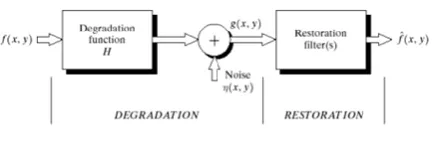
Figure 2: The basic image degradation/restoration process model for an digital image
The above image depicts the functioning of the basic degradation/restoration process model for an digital image. The above model defines the degradation function H(x,y) which adds noise(artefacts or background information) to the original input image f(x,y). The affected image is now required to be subjected to the required filtering process to remove the effect of the noise i.e. de-noising[8].
The restoration function conserves the actual details of the image, by removing the extra noise and artefacts. The denoising algorithm that can be used here can the gaussian noise filter, laplacian noise filter, butterworth noise filter etc.
III.
TYPES
OF
NOISE/NOISE
MODELS
A. Gaussian Noise
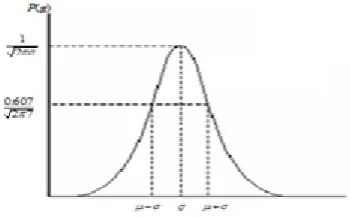
The gaussian noise in the digital image can be found with the help of the corresponding gray levels details, when the histogram of the required image is plotted. The gaussian noise metric/measure can be obtained from the probability density function(PDF) of the plotted histogram. The formula for the probability density function of the given histogram is:
The image histogram‟s whole intensity range is divided into certain bins and intensity levels. These intensity levels the particular classes. For example in case of students, we have class of students have number in the interval range [0,10], another range of students have the marks range varies in the interval [10,20] and so on. The probability density function[PDF] for a particular histogram is the proportion of the data elements that lies in the particular bin/intensity level. The probability density function is the probability of the particular bin is the range of pixels lies in the given intensity level to the the total number of pixels in the image.
The formula/mathematical representation for the gaussian noise present in the image is:
Where g is the „gray levels/intensity levels‟ present in the image
is the mean value of the pixels present at the intensity level/bins of the particular image
is the standard deviationThe gaussian noise is the homogeneous form of the noise present in the image. The gaussian noise generally have the normal distribution function.
The gaussian noise model, for approximating the noise present in the image, always gives the better results as compared to the other noise models due to its randomness/homogeneous nature.
The gaussian noise the elaborated form of the noise that adds the needful information of the image pixels to the histogram of the image.
Figure 3: Original image without noise
Figure 4: Amplified image with the gaussian noise
Figure 5: Histogram representation of gaussian noise, measure of PDF
B. Impulse Value Noise
degrading the pixels, is called as the impulse noise or transmission noise[6]. This type of noise multiplicates on the retransmission of the data. So, the modified pixels need to be rectified before the next transmission takes place, to reduce the error due to noise. As similar to the Gaussian noise, the impulse value noise affects the quality of the image due to the deviation from the actual pixel values, during the course of transmission of image data[9].
Figure 6: Corrupted image due to presence of Impulse (Salt & Pepper) Noise
Figure 7: The pixel value changed in course of transmission due to presence of impulse(pepper) noise
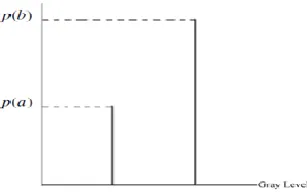
Figure 8: Histogram representing the probability density function(PDF) of Impulse Noise
Where;
respectively. The proportion white(0) and black(1) pixels present in the image approximates the amount of Salt and Pepper noise present in the resultant image.
C. Structured Noise
The structured noise is the interval based noise. This form of noise can be uniform or non-uniform. The uniform noise is also called as the quantization noise. This type of noise model divides the image pixels into the number of the distinct homogeneous intervals. The uniform noise generally imposes normal uniform distribution. The structured noise is due to the inter-relation between the different components/pixels of the digital image. The structured noise is also called as the low level noise in concern, when we are processing the digital images and carrying various filtering/denoising operations over it. The structured noise model is the self-operating static model for processing the digital images for noise.
It involves the various steps to be carried out on the input image:
1. Apply the Gaussian mean noise filter on the image to extract the disintegrate the image into the separate image components, in order to replace the degraded noisy pixels for the purpose of denoising.
2. Apply low pass and high pass filters on the obtained components to achieve the frequency distribution for the pixels.
3. Now identify the degraded and the original pixels in the image, with the pixel values „0‟ and „1‟ respectively. 4. Apply the suitable filtering algorithm to replace the degraded/corrupted pixels in the image.
The mathematical formulae representation of the structured noise model is as follows:
IV. CONCLUSION
The principal area of the image processing deals with carrying out various image processing operations on the acquired digital image for the purpose of making it free from the noise. Generally the images captured in the real time environment contain large amount of noise/artefacts due to low-lighting conditions and presence of the impurities or unwanted particles. In our paper we represented the various types of noise models, structured and unstructured. In order to implement the filtering algorithm to remove the noise in the image, the pre-processing step is to have the knowledge about the types of noise present in the digital image and respective noise models. Also we also discussed, how different types of noise present in the image affects the pixels of the image. In future, many other types of noise can be explored and concerned measures for the de-noising in the area of digital image processing.
REFERENCES
[2.] Patil Jyotsna, and Sunita Jadhav, "A comparative study of image denoising techniques." International
Journal of Innovative Research in Science, Engineering and Technology, Volume 2, Issue 3, pp. 787-794,
March 2013.
[3.] Boyat Ajay, and Brijendra Kumar Joshi, "Image denoising using wavelet transform and median filtering."
Nirma University International Conference onEngineering (NUiCONE), pp. 1-6, IEEE, November 2013.
[4.] Bhattacharya J. K., Chakraborty D., & Samanta H. S., “Brownian Motion - Past and Present,”Cornall university library, 2005.
[5.] Radenovic Aleksandra. "Brownian motion and single particle tracking." Advanced Bioengineering methods
laboratory, Ecole polyteachenique federal de Lausanne, 2014.
[6.] Salivahanan S., Vallavaraj A. & Gnanapriya C. (2008) “Digital Signal Processing,” Tata Mcgraw-Hill, Vol. 23, New Delhi.
[7.] Zhang Lei, Weisheng Dong, David Zhang, and Guangming Shi. "Two-stage image denoising by principal
component analysis with local pixel grouping." Pattern Recognition, Volume 43, Issue 04 ,pp. 1531-1549,
April 2010.
[8.] Chhabra T., G. Dua, and T. Malhotra. "Comparative analysis of denoising methods in CT
images." International Journal of Emerging Trends in Electrical and Electronics, Volume 3, Issue 2, May
2013
[9.] Joshi Arpita, Ajay Kumar Boyat, and Brijendra Kumar Joshi. "Impact of wavelet transform and median
filtering on removal of salt and pepper noise in digital images." International Conference on Issues and
Challenges in Intelligent Computing Techniques (ICICT), pp. 838-843, IEEE, February 2014.
[10.] Vetriselvan V., Pravin R. Patil, and M. Mahendran, "Survey on the RIP, OSPF, EIGRP Routing Protocols." IJCSIT) International Journal of Computer Science and Information Technologies, Volume 5,