128 | P a g e
BIG DATA ANALYTICS AND ITS APPLICATIONS
Neeru Mago
Dept. of Computer Science and Applications,
Panjab University Swami Sarvanand Giri Regional Centre, Hoshiarpur, (India)
ABSTRACT
In this era of datafication, everything revolves around data which makes us possible to view, monitor, record and analyze everything as quantifiable data. Every day, we create 2.5 quintillion bytes of data. This data comes from everywhere: sensors used to gather climate information, posts to social media sites, digital pictures and videos, purchase transaction records, and cell phone GPS signals etc. Such colossal amount of data that is being produced continuously is what can be coined as Big Data. The term "Big Data" refers to the use of various advanced data analytics methods that extract value from data. Big data is a blanket term for the non-traditional strategies and technologies needed to gather, organize, process, and gather insights from large datasets. Hence it is a broad term for data sets which are extremely large or complex for which traditional data processing applications are inadequate. It includes various challenges like data analysis, capture, search, sharing, storage, transfer, visualization, and information privacy. In this paper, The 3V’s of Big Data, Big Data Analytics, Application of Big Data analytics, Big Data Technology and various Big Data Case Studies are presented. In the end, future scope and developments are also discussed
.
Keywords: Big Data, Big Data analytics, Variety, Velocity, Volume,.
I INTRODUCTION
'Big Data' is a term used to describe collection of data that is huge in size and yet growing exponentially with
129 | P a g e
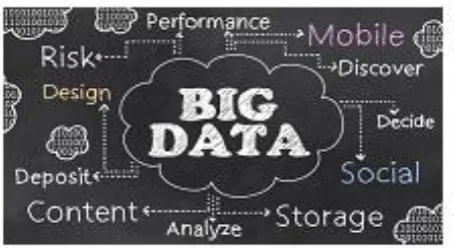
Fig 1: Big Data for decision and strategy making
The basic requirements for working with big data are the same as the requirements for working with datasets of
any size. However, the massive scale, the speed of ingesting and processing, and the characteristics of the data
that must be dealt with at each stage of the process present significant new challenges when designing solutions.
The goal of most big data systems is to surface insights and connections from large volumes of heterogeneous
data that would not be possible using conventional methods. In 2001, Gartner's Doug Laney first presented what
became known as the "three Vs of big data" to describe some of the characteristics that make big data different
from other data processing.
II CHARACTERISTICS OF BIG DATA
1.
The 3V’s of Big Data:
Volume – The quantity of data that is generated is very important in this context. It is the size
of the data which determines the value and potential of the data under consideration and
whether it can actually be considered Big Data or not. The name ‘Big Data’ itself contains a
term which is related to size and hence the characteristic.
Variety – Big Data isn't just numbers, dates, and strings. Big Data is structured &
unstructured geospatial data, 3D data, audio and video, sequences, time series, multi-dim
arrays and unstructured text, including log files and social media, etc. To extract knowledge
all these types of data need to linked together.
Velocity – The term ‘velocity’ in the context refers to the speed of generation of data or how
fast the data is generated and processed to meet the demands and the challenges which lie
ahead in the path of growth and development. Data is begin generated fast and need to be
processed fast. Late decisions lead to missing opportunities
2.
Other important characteristics of big data
Variability - This is a factor which can be a problem for those who analyse the data. This
refers to the inconsistency which can be shown by the data at times, thus hampering the
130 | P a g e
Veracity - The quality of the data being captured can vary greatly. Accuracy of analysis
depends on the veracity of the source data.
Complexity - Data management can become a very complex process, especially when large
volumes of data come from multiple sources. These data need to be linked, connected and
correlated in order to be able to grasp the information that is supposed to be conveyed by these
data. This situation, is therefore, termed as the ‘complexity’ of Big Data.
I.
BIG DATA ANALYTICS
Big Data analytics is the process of collecting, organizing and analyzing large sets of data (Big Data) to discover
patterns and other useful information. Big Data analytics can help organizations to better understand the
information contained within the data and will also help identify the data that is most important to the business
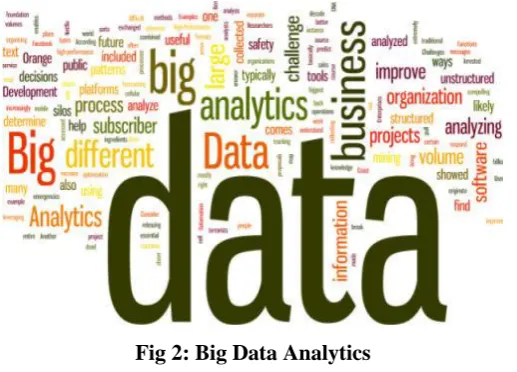
and future business decisions as shown in Fig 2. Analysts working with Big Data typically want
the knowledge that comes from analyzing the data.
Fig 2: Big Data Analytics
1.
Why Big Data Analytics important?
Big data analytics helps organizations harness their data and use it to identify new opportunities. That, in turn,
leads to smarter business moves, more efficient operations, higher profits and happier customers. In his
report "Big Data in Big Companies", IIA Director of Research Tom Davenport interviewed more than 50
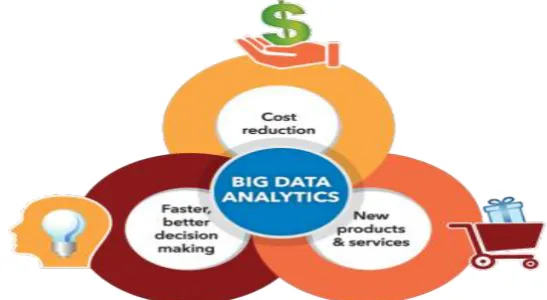
businesses to understand how they used big data. He found they got value as shown in Fig 3 in the following
ways:
Cost reduction. Big data technologies such as Hadoop and cloud-based analytics bring significant cost
advantages when it comes to storing large amounts of data – plus they can identify more efficient ways
131 | P a g e
Faster, better decision making. With the speed of Hadoop and in-memory analytics, combined with
the ability to analyze new sources of data, businesses are able to analyze information immediately –
and make decisions based on what they’ve learned.
New products and services. With the ability to gauge customer needs and satisfaction through
analytics comes the power to give customers what they want. Davenport points out that with big data
analytics, more companies are creating new products to meet customers’ needs.
Fig 3: Advantages of Big Data Analytics
III APPLICATION OF BIG DATA ANALYTICS
Government: The use and adoption of big data within governmental processes allows efficiencies
in terms of cost, productivity, and innovation.
International development: Research on the effective usage of information and communication
technologies for development (also known as ICT4D) suggests that big data technology can make
important contributions but also present unique challenges to International development.
Advancements in big data analysis offer cost-effective opportunities to improve decision-making
in critical development areas such as health care, employment, economic productivity, crime,
security, and natural disaster and resource management.
Manufacturing: Based on TCS 2013 Global Trend Study, improvements in supply planning and
product quality provide the greatest benefit of big data for manufacturing. Big data provides an
infrastructure for transparency in manufacturing industry, which is the ability to unravel
uncertainties such as inconsistent component performance and availability. Predictive
manufacturing as an applicable approach toward near-zero downtime and transparency requires
vast amount of data and advanced prediction tools for a systematic process of data into useful
information.
Healthcare : Big data analytics has helped healthcare improve by providing personalized
132 | P a g e
care variability reduction, automated external and internal reporting of patient data, standardizedmedical terms and patient registries and fragmented point solutions.
Education: A McKinsey Global Institute study found a shortage of 1.5 million highly trained data
professionals and managers and a number of universities including University of Tennessee and
UC Berkeley, have created masters programs to meet this demand. Private bootcamps have also
developed programs to meet that demand, including free programs like The Data Incubator or paid
programs like General Assembly.
Internet of Things (IoT):Big data and the IoT work in conjunction. Data extracted from IoT
devices provides a mapping of device interconnectivity. Such mappings have been used by the
media industry, companies and governments to more accurately target their audience and increase
media efficiency. IoT is also increasingly adopted as a means of gathering sensory data, and this
sensory data has been used in medical and manufacturing contexts.
Information Technology : Especially since 2015, big data has come to prominence within
Business Operations as a tool to help employees work more efficiently and streamline the
collection and distribution of Information Technology (IT). The use of big data to resolve IT and
data collection issues within an enterprise is called IT Operations Analytics (ITOA). By applying
big data principles into the concepts of machine intelligence and deep computing, IT departments
can predict potential issues and move to provide solutions before the problems even happen.
IV BIG DATA CASE STUDIES
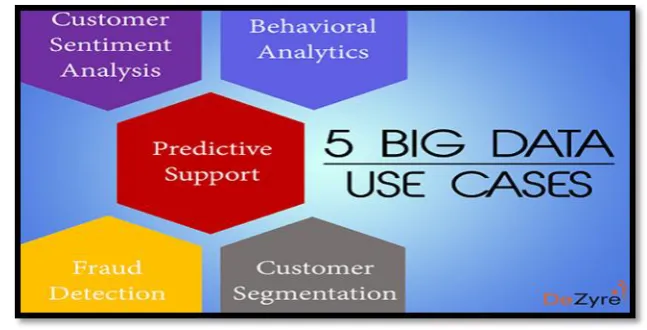
The case studies or Use cases of Big Data are as follows as shown in Fig 4.
Fig 4: Use cases of Big Data
1.
Big Data for Customer Sentiment Analysis
How Delta Airlines uses Big Data for Customer Sentiment Analysis-
133 | P a g e
Large airlines like Delta, monitors tweets to find out how their customers feel about delays, upgrades ,
in-flight entertainment , and more.
For example, when a customer tweets negatively about his lost baggage with the airline prior to
boarding his connecting flight. The airline identifies such negative tweets and forwards to their support
team.
The support team sends a representative to the passengers destination presenting him a free first class
upgrade ticket on his return along with the information about the tracked baggage promising to deliver
it as soon as he or she steps out of the plane.
The customer tweets like a happy camper rest of his trip helping the airlines build positive brand
recognition.
2.
Big Data for Behavioural analytics
How McDonald’s uses big data for behavioural analytics -
With more than 34K local restaurants serving 69 million customers across 118 countries , 62 million
daily customer traffic, selling 75 burgers every second, $27 billion annual revenue- McDonald's is
using big data analytics to gain lot more insight to improve operations at its various stores and enhance
customer experience.
McDonald’s analytics system analyse data about various factors such as wait times, information on the
menu, the size of the orders, ordering patterns of the customers to optimize the operations of its
restaurants at specific locations.
3.
Big Data for Fraud Detection
How JPMorgan Chase uses Big Data for Fraud Detection –
JPMorgan Chase analyses emails, phone calls, transaction data to detect the possibilities of frauds
which would otherwise be difficult to detect.
JPMorgan uses analytics software developed by Palantirto keep a track of employee communications to
identify any indications of internal fraud.
4.
Big Data for Customer Segmentation
How Amazon uses big data for Customer Segmentation-
Just have a look at Amazon and see what products it recommends you to buy. The products
134 | P a g e
How do they do it? Every time a user logs into his or her Amazon account and makes purchases or browses various products on the site, Amazon collects this data and the next time the customer’s
returns, they offer them products based on their previous purchase and browsing history.
This also helps Amazon identify various trends amongst people who make similar purchases. For
instance, if 75% of the people who buy an Apple iPhone 6s also buy a power bank, then Amazon offers
power bank as a recommendation whenever somebody purchases an iPhone 6s.
By segmenting the customers based on their interests and purchase patterns, Amazon provides people with more choices even if they are not looking to buy other products, thereby tempting them to makeadditional purchases.
5.
Big Data for Predictive Support
How Ayasdi uses Big Data for Predictive Support-
Ayasdi is using 20 year old breast cancer data by running it through its IRIS product that combines
machine learning and topology.
Ayasdi is leveraging big data analytics to discover new relationships and new questions that can be
answered with the help of the 20 year old dataset.
Ayasdi developed topologies for leukaemia and breast cancer patients’ data by analysing the data to find similarities which can help in predicting and finding novel cancer treatments and therapies.V FUTURE SCOPE AND DEVELOPMENT
As far as the future of big data is concerned it is for certain that data volumes will continue to grow and
the prime reason for that would be the drastic increment in the number of hand held devices and
internet connected devices, which is expected to grow in an exponential order.
Data are becoming the new raw material of business . Thus world is becoming data driven . Each and
every decision are now taken on data from stock markets to machines that stalk you.
VI CONCLUSION
To handle big data and to work with it and obtaining benefits from it, a branch of science has come up and is
evolving , called Data Science. Data Science is the branch of science that deals with discovering knowledge
from huge sets of data, mostly unstructured and semi structured, by virtue of data inference and exploration. It’s a revolution that’s changing the world and finds application across various industries like finance, retail,
healthcare, manufacturing, sports and communication. Search engine and digital marketing companies like
Google, networking companies like Facebook and finance and e-commerce companies like Amazon are
requiring and will require a lots of data scientists. As far as security is concerned the existing technologies are
135 | P a g e
REFERENCES
[1] Mukherjee et. al. " Big Data – Concepts, Applications, Challenges and Future Scope", International Journal
of Advanced Research in Computer and Communication Engineering Vol. 5, Issue 2, February 2016.
[2]https://www.dezyre.com/article/5-big-data-use-cases-how-companies-use-big-data/155
[3]http://whatis.techtarget.com/definition/fast-data
[4] Arif et.al. "Challenges and Security Issues in Big Data Analysis", IJIRSET. Volume: 5. Issue: 1. January
2016.
[5] Arthur et.al. "Grand Challenge: Applying Regulatory Science and Big Data to Improve Medical Device
Innovation", IEEE TRANSACTIONS ON BIOMEDICAL ENGINEERING, VOL. 60, NO. 3, MARCH
2013
[6] Big Data Survey Research Brief‖, SAS, The power to know, 2013
[7] David Loshin, "Addressing Five Emerging Challenges Of Big Data", Progress Software, 2014
[8] "Data Connectivity Outlook paper", Progress Software, January 2014.
[9] Puneet Singh Duggal, Sanchita Paul ,― Big Data Analysis: Challenges and Solutions‖, International
Conference on Cloud, Big Data and Trust 2013, Nov 13-15, RGPV.
[10] S. Ghemawat, H. Gobioff, and S. Leung, "The Google File System" in ACM Symposium on Operating
Systems Principles, Lake George, NY, Oct 2003, pp. 29 – 43.
[11] Jefry Dean and Sanjay Ghemwat, "MapReduce: A Flexible Data Processing Tool", Communications of the