NGURE GRACE NANCY NJOKI
REG. NO E83/13831/2009
DEPARTMENT OF EARLY CHILDHOOD STUDIES
A THESIS SUBMITTED FOR THE AWARD OF THE
DEGREE OF DOCTOR OF PHILOSOPHY IN
EARLY CHILDHOOD STUDIES IN THE SCHOOL
OF EDUCATION, KENYATTA UNIVERSITY
DECLARATION
I confirm that this Thesis report is my original work and has not been
presented in any other university/institution for consideration. The thesis has
been complemented by referenced sources duly acknowledged. Where text,
data, graphics, pictures or tables have been borrowed from other sources,
including the internet, these are specifically accredited and references cited in
accordance with anti-plagiarism regulations.
--- ---
Grace N. N. Ngure Date
E83/13831/09
We confirm that the work reported in this thesis was carried out by the
candidate under our supervision as university supervisors.
--- --- Dr. Nyakwara Begi Date
Department of Early Childhood Studies
Kenyatta University
--- --- Prof. Elishiba N. Kimani Date
Department of Gender and Development
Kenyatta University
--- --- Dr. Maureen Mweru Date
Department of Early Childhood Studies
DEDICATION
To my children; John, Brian and David.
I wish to acknowledge Kenyatta University for giving me the opportunity to
pursue a Doctorate Degree in Early Childhood Studies. I am particularly
indebted to Mount Kenya University Management for allowing me time off to
carry out this research out of the busy schedules as departmental head. I would
like to sincerely acknowledge my three supervisors, Dr. Nyakwara Begi,
Professor Elishiba Kimani and Dr. Maureen Mweru, who reduced the intensity
of my feelings of inadequacy and despair and assisted me in conceptualizing
and eventually coming up with a well-articulated study.
I also wish to sincerely thank the staff in the Early Childhood Studies
Department in Kenyatta and Mount Kenya Universities for valuable insights
that helped shape this thesis. Equally I must acknowledge all the Early
Childhood staff at the Kenya Institute of Curriculum Development, Ministry of
Education Headquarters and Nairobi County who facilitated my access to
libraries and pre-primary school teacher training colleges for earlier
preparation for the study and data collection. I am also grateful to my friends
and relatives for their great support throughout the study.
Equally appreciated are my children John, Brian and David who in equal
measure gave moral support throughout the period of my study. They indeed
took my studies as a challenge that inspired their performance. Above all I
thank God for the inner drive that kept me going amidst lots of life challenges
that at times left me gaping.
DECLARATION... ... ii
DEDICATION.... ... iii
ACKNOWLEDGEMENT ... iii
TABLE OF CONTENTS ...iv
LIST OF TABLES ... ... ix
LISTOFFIGURES...xi
ABBREVIATIONS AND ACRONYMS... ...xii
ABSTRACT...xiii
CHAPTER ONE ... 1
INTRODUCTION ... 1
1.1 Background to the Study ... 1
1.2 Statement of the Problem ... 6
1.3 Purpose of the Study ... 7
1.4 Objectives of the Study ... 7
1.5 Research Hypotheses ... 8
1.6 Assumptions of the Study ... 8
1.7 Limitations ... 9
1.8 Delimitation of the Study... 9
1.9 Significance of the Study ... 9
1.10 Theoretical and Conceptual Framework ... 10
1.11 Conceptual Framework ... 11
1.12 Operational Definition of Terms ... 13
CHAPTER TWO ... 14
REVIEW OF RELATED LITERATURE ... 15
2.1 Introduction... 15
2.2 Types of Instructional Media ... 15
2.2.1 Chalkboard ... 15
2.2.2 Flip Charts ... 16
2.2.3 Improvised Slides ... 16
2.2.4 Print media ... 17
2.3 Tutors‟ Utilization of Instructional Media in Teaching ... 18
2.4 Factors Influencing the Use of Instructional Media ... 20
2.4.1 Teaching Experience ... 20
2.4.2 Tutor Motivation ... 21
2.4.3 Availability of Instructional Media ... 23
2.4.4 Attitude towards Instructional Media ... 25
2.4.5 Attitude change ... 26
2.5 Strategies That Could Enhance Utilization of Instructional Media ... 27
2.6 Summary of Reviewed Literature ... 30
CHAPTER THREE ... 31
RESEARCH METHODOLOGY ... 31
3.1 Introduction... 31
3.2 Research Design ... 31
3.3 Variables of the Study ... 36
3.4 Location of the Study... 37
3.5 Target Population of the Study ... 37
3.6 Sampling Techniques and Sample size determination ... 38
3.6.1 Sampling Techniques... 38
3.6.2 Sample Size ... 38
3.7 Research Instruments ... 39
3.7.1 Questionnaire ... 40
3.7.2 Interview Schedule ... 42
3.7.3 Observation Checklist ... 43
3.8 Pilot Study ... 43
3.8.1 Tutors‟ questionnaire ... 44
3.8.2 Managers/Programme Officers Structured Interview ... 44
3.8.3 Observation Schedule ... 44
3.8.4 Validity of the Instruments ... 45
3.8.5 Reliability of the Instruments ... 46
3.9 Data Collection Procedure ... 48
3.10 Trustworthiness of Qualitative Data ... 54
3.12 Logistical and Ethical Considerations ... 56
CHAPTER FOUR ... 58
FINDINGS, INTERPRETATIONS AND DISCUSSIONS ... 58
4.1 Introduction... 59
4.2 Demographic Information of the Respondents ... 59
4.2.1 Teaching Experience ... 60
4.2.2 Professional Qualifications ... 62
4.4 Utilization of Instructional Media in Teaching by Type of College ... 73
4.4.1 Observed use of instructional media ... 76
4.5 Factors found to Influence the Utilization of Instructional Media. ... 89
4.6.0 Strategies to Enhance the Utilisation of Instructional Media ... 108
4.6.1 Time... ... 110
4.6.2 Training... 111
4.6.3 Supervision and Recognition ... 111
4.6.4 Storage.. ... 112
4.6.5 Management Support ... 112
CHAPTER FIVE ... 113
SUMMARY, CONCLUSIONS AND RECOMMENDATIONS ... 113
5.1 Introduction... 113
5.2 Summary of the Findings ... 113
5.3 Conclusion ... 115
5.4 Recommendations... 117
5.5 Suggestions for Further Research ... 119
References... 120
Appendices... ... ....131
Appendix A.... ...132
Appendix B.... ...141
Appendix D...154
Appendix E...155
Appendix F...156
Appendix G...157
Appendix H...158
Appendix I...159
Table Page Table 3.1 Sampling frame….………...40
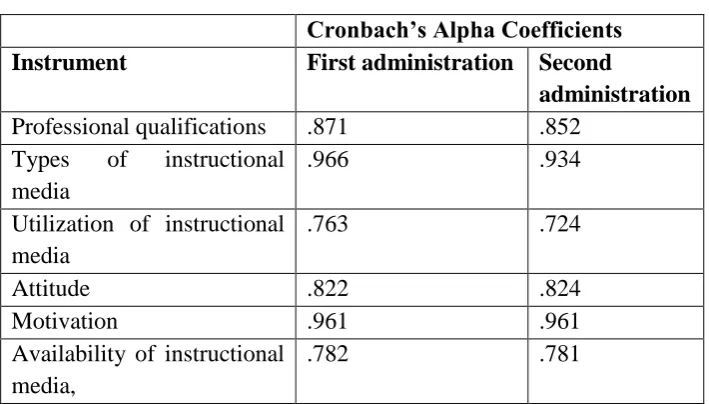
Table 3.2 Reliability TestResults…….……….49
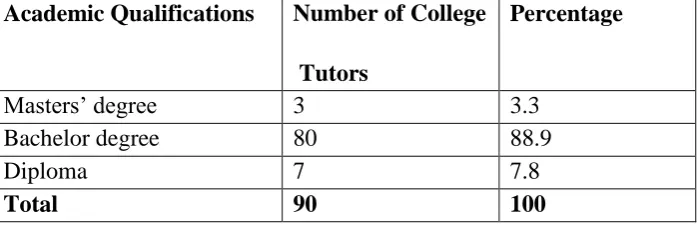
Table 4.1 Professional Qualifications of the Pre-Primary School
College Tutors………...61
Table 4.2: Types of Instructional Media for Teaching
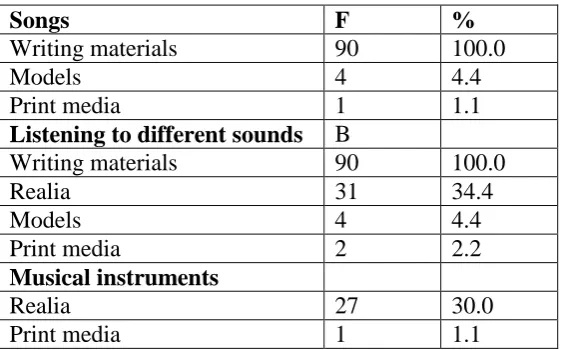
Language Activities………...65
Table 4.3: Types of Instructional Media for Teaching
Mathematics Activities………...67
Table 4.4: Types of Instructional Media for Teaching
Science Activities………...68
Table 4.5: Instructional Media for Teaching Creative Activities...69
Table 4.6: Types of InstructionalMediafor Teaching Social
Studies Activities…...70
Table 4.7: Types of Instructional Media for TeachingMusic and
Movement Activities……...71
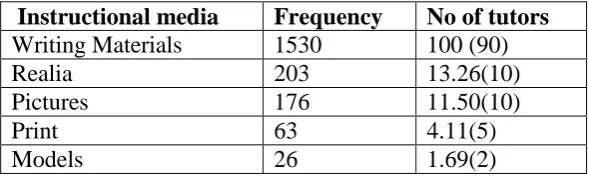
Table 4.8: Overall Frequencies of Instructional Media………... ....72
Table 4.10: Observed Instructional Media for Teaching of Language...79
Table 4.11: Observed Instructional Media for Teaching
Mathematic Activities...80
Table 4.12: Observed Instructional Media for Teaching
Science Activities...82
Table 4.13: Observed Instructional Media for Teaching Creative
Activities...82
Table 4.14: Observed Instructional Media for Teaching Social
Studies Activities...83
Table 4.15: Observed Instructional Media for Teaching Music
Table 4.16 Overall Mean Scores in the Utilization of
Instructional Media...85
Table 4.17: T-test Statistics for Comparison of Utilization of Instructional Media between Private and Public Pre-Primary School College Tutors...87
Table 4.18: Availability of Instructional Media ... 90
Table 4.19: Regression Coefficients for the Availability and Utilization of Instructional Media in teaching...91
Table 4.20 Mean Scores on Attitude towards Instructional Media ... 93
Table 4.21: Tutors Beliefs about Instructional Media ... 95
Table 4.22: Tutors‟ Feelings towards Instructional Media ... 98
Table 4.23: Tutors‟ Behaviour Towards of Instructional Media ... 99
Table 4.24: Regression Coefficients for Utilization of instructional Media and Attitude towards Instructional Media...101
Table 4.25 Mean Scores on Tutor‟s Level of Motivation to Utilisation of Instructional Media... ...103
Table 4.26: Overall Scores on Level of Motivation among Tutors ... 104
Table 4.27: Regression Coefficients for Motivation and utilization of Instructional Media... 105
Table 4.28: Regression Coefficients ... 107
LIST OF FIGURES
Figure 1.1 Scaling the utilization of instructional media in
Pre-primary school teacher training colleges……...13 Figure 3.1 Triangulation Design: Convergence Model ...33
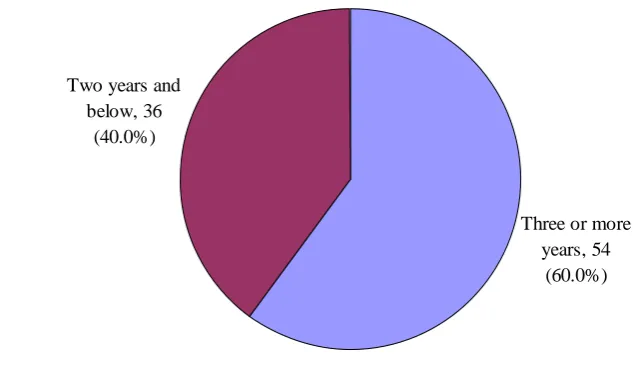
Figure 4.1: Teaching Experience of Pre-Primary School
ABBREVIATIONS AND ACRONYMS
CAI Computer Assisted Instruction
CPE Certificate of Primary Education
DICECE District Centre for Early Childhood Education
EAACE East Africa Advanced Certificate of Education
EACE East Africa Certificate of Education
ECDE Early Childhood Development and Education
ECE Early Childhood Education
ECTE Early Childhood Teacher Education
IM Instructional Media
KACE Kenya Advanced Certificate of Education
KCE Kenya Certificate of Education
KCPE Kenya Certificate of Primary Education
KCSE Kenya Certificate of Secondary Education
K ICD Kenya Institute of Curriculum Development
KJSE Kenya Junior Secondary Education
KNEC Kenya National Examinations Council
KPE Kenya Primary Education
MOE Ministry of Education
NACECE National Centre for Early Childhood Education
SPSS Statistical Package for Social Sciences
ABSTRACT
CHAPTER ONE
INTRODUCTION AND CONTEXT
1.1 Background to the Study
It is widely recognized that qualified and competent teachers are an essential
component of school programmes that result in improved outcomes for
learners at all levels of education (Barnett, 2004). Early childhood teacher
training in particular requires the use of appropriate skills and attitude by tutors
so as to produce learners with adequate skills to teach young children. For this
to happen the curriculum in place for both public and private institutions that
train pre-primary school (PPS) teachers should enable the trainers to instill the
necessary content and pedagogical skills to help them bring out the expected
outcomes among the learners. An important aspect in pre-primary school
teacher training is the use of instructional media (IM) by the tutors to reinforce
learning. Such instructional media include three dimensional objects, for
example realia, specimens, models, television boxes, audio-visuals, projectors,
graphic designs, template maps, chalk boards, digital equipment among others.
Ogunranti and Ihongbe (1981), define visual aids as any picture, model, object
or device which provides tangible visual experience to the learner purposely
for introducing, building up and enriching ideas. They add that it clarifies
difficult notions which could otherwise be difficult to explain. However, the
time for both the teacher and the learner. Therefore, during the training of
pre-primary school teachers it is important to equip them with all skills,
knowledge, pedagogy and rudiments about how instructional media can help
the teacher make the delivery of instruction successful with learners.
The inclusion of instructional media by tutors during training enable
pre-primary school teacher trainees to access new ideas such as ways to study
themes, how to access information that is difficult to find and how to present
information using different instructional media. Besides, instructional media
can provide continuing support for trainee teachers during and after courses end
(USA Congress Office of Technology Assessment, 1995). Many teachers who
use instructional media find that it can help them improve motivation and
learning, address students with different learning abilities, expose students to a
wider world of information and experts and implement new teaching
techniques. Case studies on pre-service teachers showed that the use of
instructional media could capture reality in the classroom (Kadzera, 2006)
According to Means (1994), the use of instructional media by teacher trainers
helps trainee teachers develop new models of teaching the required content
areas. As observed by Zhao and Frank (2001), instructional media helps
teachers put together different aspects of the curriculum, direct student
learning, model an idea or activity or connect curriculum to real world tasks.
Confirming the same, Worth (1986) notes that for every hour a teacher speaks
only 8-10 minutes of the information given is retained in the leaner‟s mind.
People acquire much of their knowledge by use of their senses (Narayan,
1995). Psychologists have matched human senses with the respective
percentages of learning that takes place. According to Mwololo (2009), the
sense of taste accounts for 1%, touch 1½ %, smell 3½ %, hearing 11% and
sight 83% of the total learning. Most learners engage the sense of sight in
communicating and gaining learning experiences. It is suggested that teachers
need to engage use of instructional media during teaching as these will prompt
learners to use their eyes during instruction. Berndt (1977) suggests that
teachers should stimulate leaner‟s sense for attention to what can be seen. This
relates closely to early childhood teacher training since it would arouse the
interest of learners and improve learning outcomes. Learners acquire a greater
part of their knowledge by way of exploration. According to Seefeld (1984),
students learn best when allowed to manipulate and interact with instructional
media. Thus, the use of instructional media in pre-primary school teacher
training increases retention and enhance production of teachers with a
hands-on teaching experience.
Researchers have called for and emphasized the importance of inclusion of
instructional media in teacher training (Barbara, 1993; Craig 2005). This
inclusion would enhance imitation by teacher trainees and has the potential for
future teachers to improve their teaching practices in classroom situations
(Mangal & Mangal, 2010).In a doctoral thesis on four design courses taught at
the Language Centres of two Finnish Universities, Alssen (2012) noted that
by using a learning method which encourages students to design and produce
instructional media. The studies contend that instructional media form a focal
point and attract attention, arouse interest hence promoting a desire to learn
and supplement description. This helps to explain words and processes,
stimulate the learners‟ imagination, illustrate relationships, and promote
retention and memory besides saving teaching time.
In a study of primary school teacher training colleges in Nigeria, Onasanya
(2008) confirmed that instructional materials stimulate learning because firstly,
student teachers get more attentive and secondly, student teachers‟ positive
attitude generates more interest for lessons they learn or teach. This enhances
student teachers participation in class activities, promotes their performance in
trainee teacher examinations and improves their teaching process (Adeyanju,
2003; Kadzera, 2006; Onasanya, 2002).
The vital role of instructional media (I.M) in the successful implementation of
PPS teacher training curriculum cannot be over emphasized. Jimo (2009) noted
that the use of I.M. in teaching is a necessary practice for effecting learners‟
behaviour change in all fields of learning and especially in pre-primary school
teacher training since they are being prepared to handle children who are in
their formative years. With a variety of these in the classroom, both teaching
and learning becomes pleasant experiences where learners enjoy to the
maximum. The tutor goes through less stressful moments since instructional
Studies in Kenya on pre-primary school performance have established that
there is low use of instructional media in pre-primary school centres (Aila,
2006; Begi, 2007; Ikumi, 1985; Mwololo, 2009). In a survey of pre-school
teachers‟ knowledge and use of instructional media in some selected primary
schools in Kibwezi district, Mwololo (2009) established that primary school
teachers had minimal knowledge of instructional media. This confirms a study
by Ikumi (1985) on resources for teaching and learning Kiswahili in some
schools in Machakos district. This raised pertinent questions such as whether
pre-primary school college tutors in public and private pre-primary teacher
training institutions in Nairobi County use instructional media during teaching.
Other issues in question included factors that influenced the use of
instructional media, if tutors were motivated to use instructional media and if
they were equipped with the inherent skills to prepare the appropriate
instructional media. It is this gap that the current study intended to fill.
In addition, a study on the influence of instructional media in trainee teacher
classroom performance conducted for P1 teacher trainees established that the
use of instructional media promotes a desire to learn, supplement description
hence helping to explain words and processes, stimulates the learners
imagination, promotes retention and memory besides improving learning
outcomes (Ngaroga, 1996). These studies suggested that most pre-primary
school teachers in Kenya are afraid of failure in their attempt to use unfamiliar
current study was conducted in Nairobi County and established different types
of instructional media for use in teaching by pre-primary school college tutors.
As observed, studies on teachers‟ use of instructional media during teaching in
Kenya had been done in other institutions of learning (Aila, 2005; Begi, 2007;
Ikumi, 1985; Mwololo, 2009; Ngaroga, 1996) but not in pre-primary school
teacher training colleges. Some of the challenges impeding utilization of
instructional media in these institutions were found to be inadequate training,
availability of time for teachers to prepare materials, personal knowledge about
instructional media and administrative support. They did not shed light on the
dynamics of the utilization of instructional media by pre-primary school
college tutors generally in Kenya and in particular, Nairobi County. It is this
gap that the current study intended to fill. The study also investigated the
strategies recommended by tutors in pre-primary school colleges in Nairobi
County in their endeavour to use instructional media. This was an existing gap.
1.2 Statement of the Problem
Utilization of instructional media in early childhood teacher training, makes
learning interesting. This is because it helps the trainee teacher clarify abstract
concepts to the young children who are in their formative years. However,
studies show that pre-primary school teachers exhibit low utilization of
instructional media during teaching possibly emanating from their pre-primary
school teacher learning experience (Aila, 2005, Mwololo,2009) . On the other
confident and competent utilizers of different instructional media in their own
classes, then they need to have witnessed their tutors using the instructional
media in training them.
Further, the studies conducted in Kenya on the use of instructional media were
in pre-primary schools (Mwololo, 2009, Waigera, 2013), primary schools
(Ikumi,1985) and primary school teacher colleges (Ngaroga, 1996, Kairu,2000,
Wambua, 1988). From these studies, it is clear that no study focused on
pre-primary school teacher training colleges and the utilization of instructional
media in, which was the gap that this study focused on. The mandate of this
study was to establish the dynamics of utilization of instructional media in
public and private pre-primary school teacher training colleges.
1.3 Purpose of the Study
The purpose of this study was to establish the utilization of instructional media
by pre-primary school colleges tutors to provide quality training. The study
also determined the weighting of the availability of instructional media,
attitude towards instructional media and tutor motivation on utilization of
instructional media by pre-primary school college tutors.
1.4 Objectives of the Study
The objectives of the study were to:
i) Determine the instructional media used in teaching by pre-primary school
ii) Assess the utilization of instructional media in teaching by public and
private pre-primary school college tutors.
iii) Explore the extent to which the availability of instructional media,
iv) attitude towards instructional media and
v) tutor motivation
all together predict pre-primary school college tutors‟ utilization of
instructional media in teaching.
vi) Identify strategies that could enhance tutor utilization of instructional
media.
1.5 Research Hypotheses
The research hypotheses of the study were:
H1: There is a difference in the utilization of instructional media between
private and public pre- primary school college tutors.
H2: The availability of instructional media, attitude towards instructional media
and tutor motivation together has a predictive value for determining the
utilization of instructional media.
1.6 Assumptions of the Study
The study assumed that all tutors in different counties make use of
instructional media of one kind or another to reinforce teaching and learning. It
also assumed that pre-primary school college tutors‟ attitude towards
tutors‟ utilization of instructional media in teaching. Also assumed is that if
they use IM, they influence their trainees with positive attitudes to use them.
1.7 Limitations
The main limitation of the study was that the findings of the study can only be
generalized to pre-primary school teacher training colleges in Nairobi County
and colleges in other counties with similar conditions.
1.8 Delimitation of the Study
The study was done in Nairobi County and delimited to public and private
pre-primary school teacher training colleges. There are many factors which may be
contributing to the utilization of instructional media in pre-primary school
colleges; this study was delimited to only availability of instructional media,
tutors attitude towards instructional media and tutor motivation.
1.9 Significance of the Study
It is hoped that the outcome of this study will provide information on the
utilization of instructional media by pre-primary school college tutors. A
description of the factors influencing utilization of instructional media in
teaching may serve as a basis for recommendations of policies and practices to
be put in place by the Ministry of Education to enhance the tutors‟ use of
instructional media in teaching. Determining tutors‟ attitude and usage levels
of instructional media in the classrooms may also help pre-primary school
college managers deliver effective in-service education programmes to
National Centre for Early Childhood Education in planning for further
development of modern instructional media for pre-primary school teacher
training colleges. National and institutional libraries will be enabled to source
and stock appropriate and relevant instructional media. It is further expected
that the study enriched pre-primary school college tutors‟ skills in selection
and integration of instructional media in teaching PPS teachers. Finally the
study added valued data to the existing literature in teacher education.
1.10 Theoretical and Conceptual Framework
This study was guided by the Two Factor Theory by Frederick Herzberg
(1968). The theory suggests that people are influenced by two factors which
motivate their performance namely motivators and hygiene factors. The theory
is based on factors that motivate workers to perform in order to achieve set
objectives. In this study the interplay of factors which influenced pre-primary
school college tutors use of instructional media included availability of
instructional media, attitude towards instructional media, and the motivation
they received from the college management.
Further, the theory stipulates that motivation may be extrinsic or intrinsic. In
this study extrinsic factors include the availability of instructional media, and
the tutors‟ motivation from the college management. The tutors‟ attitude
towards instructional media was the intrinsic factor. Motivators like promotion,
recognition for and support in the use of instructional media may encourage
hygiene factors that would influence tutors to use instructional media would
include working conditions and the quality of the facilities for storage of
instructional media. Added to this would be quality of supervision of the tutors
by the programme officers or managers of the pre-primary school colleges.
This theory is relevant to this study because motivation which is a very
important variable in this study plays an essential role in every human behavior
and influences human conduct. How pre-primary school college tutors would
use instructional media in teaching may also depend on the motivation they
receive from the managers of the colleges which may be in form of time,
support, encouragement, appreciation, rewards during graduation, provision of
instructional media, and provision of technical support to help tutors when
problems occur while using instructional media like computers.
1.11 Conceptual Framework
Reviewed literature, points to variables, significant in understanding the factors
that influence pre-primary school college tutors‟ use of instructional media in
teaching. The conceptualized variables of this study that influenced the
utilization of instructional media included availability of instructional media,
motivation and attitude toward instructional media. Figure 1.1 shows the
variables which influence the utilization of instructional media in public and
private pre-primary school teacher training colleges. When these factors are
inadequate, the situation leads to underutilization of instructional media.
Various strategies were recommended by several studies including the current
improved storage, increased training time, offloaded syllabus, recognition of
staff and frequent supervision. The utilization of instructional media in
instruction in turn improves the quality of teacher training, teaching skills
besides improving quality of teaching of young children.
Figure shows the variables which influence the utilization of instructional
media in teaching. Availability of instructional media, tutor motivation,
attitude towards instructional media and extraneous variables like improved
storage, increased training time, offloaded syllabus, recognition of tutors
and frequent supervision by college management influence the utilization of
instructional media which in turn impacts on the quality of teacher training.
Independent variable
Fig. 1.1 Scaling the utilization of instructional media in Pre-primary school teacher training colleges
Instructional media - Teaching and learning aids used by pre-primary school college tutors for instruction which include print media, chalk
board, flipchart, computers, slide projectors, and locally
available resources.
Motivation - This will refer to the factors that drive pre-primary school college tutors to use instructional media which include time, support,
encouragement, appreciation, rewards during graduation,
provision of instructional media, and provision of technical
support to help tutors when problems occur while using
instructional media.
Time Support - Time availed in the syllabus to be used by Pre-primary
School college tutors to facilitate production and use of
instructional media
Training Time - The three school holidays of April, August and December when pre-primary school teacher trainees attend training
sessions.
Utilization of instructional media - Refers to the frequency with which pre- primary school college tutors use instructional media when
teaching
Pre-Primary school teachers- Teachers who take teaching classes in Pre-primary school
REVIEW OF RELATED LITERATURE 2.1 Introduction
This chapter presents the reviewed literature related to this study. The specific
areas discussed include: Types of instructional media, tutors‟ use of
instructional media in teaching, factors influencing the use of instructional
media and summary of related literature.
2.2 Types of Instructional Media
Instructional media is designed to provide realistic images and substitute
experience to reach curriculum experiences. The media is considered the most
efficient facilitators in the education set up. This media is not a substitute for
the teacher. Its utilization however, calls for an imaginative approach by the
teacher who needs to constantly be on the alert for new ideas and techniques to
make the lessons presented with different instructional media achieve effective
outcomes (Talabi, 2001).
2.2.1 Chalkboard
Literature reviewed in this study noted various instructional media identified by
other scholars that have been used in teacher training. Such media include
Chalkboards, Flip Charts, Computers, Slides, Real objects, Print media
including Books and Charts (Aila, 2005; Begi 2007; Blythe – Lord, 1991;
Oreovicz, 2001; Williams, 2003). The studies further elaborated the advantages
of using the chalkboard. For example, it enhances teachers‟ classroom
presentation in all subjects, it is freely available in most classrooms, it needs no
power (apart from electronic white boards), it is user friendly, it can use a
variety of colour and can be used with a variety of other materials for a broad
range of teaching strategies (Kadzera, 2006).
2.2.2 Flip Charts
Flip Charts are certainly one of the most popular instructional media though
not the most sophisticated visual aids available today. They are simple,
inexpensive, versatile and when used with thoughtful creativity, they are
highly effective (Naimova, 2008). Although materials for flipcharts production
in the Kenyan context are inexpensive, readily available and can be easily
improvised from old calendars and other plain papers, teachers do not exploit
their knowledge and creativity to improvise them as trained (Ngaroga, 1996).
The study was done in primary teacher training colleges whose results cannot
be generalized to pre-primary teacher colleges. This is a gap that the current
study was set to fill.
2.2.3 Improvised Slides
Another set of instructional media include improvised Slides which are
prepared on strips of paper rolls that are divided into sections to tell parts of a
story. Sequenced pictures of stories are drawn on the long rolls which are
use slide projectors and improvised slides to enrich their instruction
(Onasanya, 2008).
2.2.4 Print media
Onasanya, (2008) explains that Print Media is one of the oldest and most
widely used media in education. Such media are useful for informational or
motivational purposes. They include textbooks, syllabuses, course books,
pre-school guidelines, periodicals, encyclopedia, newspapers and magazines, file
records and minutes of meetings. They can provide a good resource for
pre-primary school college tutors to structure their schemes of work, lesson plans
and notes. This can be emulated by the pre-primary school teacher trainees in
their classroom practice. Sometimes print media organizes instructional
content and they can be used as basic instructional guide.
2.2.5 Local resources
The use of local resources is usually associated with improvisation where the
teachers devise a substitute when the original material is not available.
Kadzera (2006) gave an example of a globe made from clay and articulated by
a bamboo, which can be used to illustrate rotation of the earth. Improvisation
here emphasizes the ability to make the item look like and function in the
same way as the original material. This helps students to have a true picture of
the situation. Pre-primary school college tutors need creativity and skills to
enable them use available materials to produce instructional media. Realia
2003; Onasanya, 2001). The current study considered availability and use of
these instructional media in pre-primary school teacher training colleges. Any
other instructional media found being used by the tutors in pre-primary school
teacher training colleges was given the necessary regard in this study.
2.3 Tutors’ Utilization of Instructional Media in Teaching
Instructional media is perceived as very important in the teaching-learning
process (Kadzera, 2006). The use of instructional media in teaching stimulates
learning because students become more attentive. It also rouses students‟
interest and enhances their participation in class activities. Consequently it
improves the teaching process since it promotes performance in classroom
situations. This is confirmed in a study by Alssen (2012) which investigated
university students‟ perceptions of learning English for Specific Purposes
(ESP). The study conducted on 53 students gives a report about four design
courses taught at the Language Centres. Instead of teacher-centred methods,
the courses used a student-centred method where by small groups of students
designed ICT-enhanced instructional materials for learning English for
specific purposes (ESP). The materials were published on the internet where
they were available for all students. The students reported improved skills
especially in speaking, reading and writing, as well as in domain-specific
vocabulary. This supposes that student teachers who are exposed to
preparation and utilization of instructional media would post improved
performance and hence tutors are called upon to use instructional media to
The utilization of media in instruction can provide tutors‟ access to new ideas
such as ways to study themes, how to access information that is difficult to
find, clarification of difficult terms or concepts and how to present information
using different instructional media. Besides, media can provide continuing
support after courses end (USA Congress Office of Technology Assessment,
1995). Many teachers who use instructional media find that it can help them
improve student learning and motivation, address students with different
learning abilities, expose students to a wider world of information and experts
and implement new teaching techniques in all levels of learning including
teacher training colleges.
Means (1994), reports that the use of instructional media in teacher training
colleges helps trainees to develop new models of teaching the learning content
areas. Many researchers have therefore called for, and emphasized, the
importance of utilization of instructional media in teacher training (Beggs,
2000; Clark et al, 2006). This inclusion has the potential for future pre-primary
school teachers to improve their teaching practices.
Interactive instructional media has been used with pre-service teachers to
improve their training and hence the quality of elementary education (Bitner
&Bitner, 2002; Clark et al 2006). The potential of interactive multimedia for
teaching has been discussed extensively. Falk and Carlson (1991) in a study of
a group of pre-service teachers using multimedia program, found multimedia to
observational experiences. This would also benefit pre-primary school teacher
trainees if their tutors would effectively utilize them during training.
A study conducted by Begi (2007) revealed that the difference between
pre-school and lower primary pre-school male and female teachers‟ instructional
computer use was not significant. Clark and Wiebe (2001) found that there was
no significant difference in computer usage by gender and race. Reinen &
Plomp (1997) reported that males were using computers more than females. A
study by Becker (2000) also revealed that male teachers were using computers
more than female teachers. This was because male teachers used school
computers twice as many hours per week as the female teachers did.
2.4 Factors Influencing the Use of Instructional Media
Some of the factors which appear to influence the use of instructional media
are tutor motivation, availability of instructional media, and attitude towards
instructional media as discussed.
2.4.1 Teaching Experience
The number of a tutor‟s years of teaching experience influences the use of
instructional media. In a study on how personal familiarity with instructional
media influences its implementation, Barnard (2007) found that “acquisition of
computer skills is neither smooth, nor linear; it takes time and aspiration”.
form of instructional media, the more he or she will appreciate it and
implement it in his/ her field.
A study done by Moore, Morales & Carel (2004) found that more than 50% of
the 298 teachers with zero to two years of experience in teaching received high
scores on the section concerning implementation of instructional media. The
authors assert that the factor could be attributed to recent graduation from
teacher training and exposure to instructional media than their senior
colleagues. The current study set to establish whether the use of IM during
training of pre-primary school teachers has any influences on their utilization
of instructional media.
2.4.2 Tutor Motivation
Tutor motivation refers to the application of certain measures that tend to
energize the tutor in the work place and which in turn encourages the use of
instructional media. Motivators are the factors that energize workers to
perform in order to achieve set objectives (Herzberg 1968). For instance how
interesting it is, how much opportunities does it avail for success, how much
does it yield to recognition and promotion of the worker.
In a survey to establish how many teachers prefer to remain in the teaching
profession, Moore, Harrison, and Donaldson (2005), report that teachers, who
already have too much class work and school responsibilities, may find that
using in the classroom. The study which involved 276 respondents found
teachers confirming that they may feel they have no adequate time to use
instructional media. Sammons (1994) reports that lack of time for teachers to
learn about computers and plan for computer instruction in schools may
demotivate them from computer use. This was supported by Nantz and
Lundgreel (1998) in the observation that it calls for adequate time allocation
for teacher trainees to learn computer technology and to utilize this
instructional media in the classroom. Pre-primary school college tutors in
Kenya need time to prepare and plan to teach with instructional media. When
adequate time is availed to them, they will consequently use instructional
media in teaching. Hence this study intended to look at whether the time
allocated for pre-primary school teacher training impedes the use of
instructional media by college tutors.
In Kenya a study was conducted by Mwololo (2009) on pre-school teachers‟
knowledge and attitude towards use of visual media in instruction in Kibwezi
district. The sample consisted of 120 pre-school teachers. A questionnaire was
used to collect the required data. Results revealed that neither the schools nor
the parents supported pre-primary school teachers with any instructional media
for teaching. This implies that teachers who lack creativity, motivation and
initiative would find it imperative to teach using the most common media at
their disposal; that is, chalk and chalkboard to the detriment of learners‟
performance. This lack of support therefore demotivates tutors in the use of
reason that the current study was found necessary in order to establish whether
a similar factor impeded the use of instructional media in pre-primary school
teacher training colleges.
Since the successful performance of a pre-primary school teacher trainee is the
result of various factors, this study investigated whether the tutors receive
motivation to enhance sourcing, production, use and storage of instructional
media, intended to promote performance of trainees in pre-primary school
teacher colleges.
2.4.3 Availability of Instructional Media
Availability of instructional media encourages its usage. According to Majed
(1996), for technology to be exploited in an environment, it must first exist.
This means that if college tutors are to use instructional media in their
teaching, then the resources should be made available in the college
environment. The qualitative study which was conducted on 143 student
teachers on their use of instructional media found that more than half of the
respondents indicated unavailability of instructional media in classrooms. This
was echoed by Kadzera (2006) in a survey on use of instructional technologies
in five teacher training colleges in Malawi” where classroom facilities like
power sockets were vandalized or were not there at all for use with
instructional media. Kadzera (2006) further reports that lack of instructional
media resources is one of the reasons contributing to minimal use of
confirmed by Asegedom (1998) observation in an earlier study in Ethiopia
which noted the lack of required instructional media resources is one of the
reasons for teachers‟ limited use of instructional media.
When instructional media is available and the management is committed to
implementation, change effects can be seen. This would exhibit the
administration‟s commitment and hence facilitate the change process making it
easily acceptable by the subordinates (Kadzera, 2006). Even when the
resources are available or the management shows commitment and the
implementers (pre-primary School College tutors) do not see the need for these
instructional media, no use can possibly occur.
A study conducted by Ginsberg and McCormick (1998) in which 1163
secondary school teachers were asked what factors prevented technology
implementation in their classes, the most popular response given was lack of
access to technology. Bitner & Bitner (2002) also found that availability of and
access to instructional technology resources and technical support were
important factors that determine the frequency in which teachers use
instructional materials. Holloway (1996) reaffirms that the frequency in which
elementary school teachers use instructional technology is related to the
availability of technical hardware in the classrooms. Further, Flick (2007) in a
study on math teachers and instructional media which focused on 60 high
school and middle school teachers in some selected states in USA found that
impede their utilization. Forty-five percent of respondents indicated that access
to and unavailability of a computer and projector were real hurdles to their use
This study intended to establish whether similar circumstances influence the
use of instructional media in pre-primary school teacher colleges in Nairobi
County, Kenya.
2.4.4 Attitude towards Instructional Media
According to Yaghi (1996) in a survey to establish the role of the computer in
schools, he confirmed that well trained teachers tend to be more comfortable
and efficient with instructional media while poorly trained teachers may model
bad experience that could cause negative attitude towards instructional media
among students. Tutors in pre-primary school colleges need properly organized
micro-teaching lessons, workshops and seminars with several presenters for
hands-on experiences. The mandate of this study was to find out the tutors
level of utilization of instructional media.
In addition to the initial training on use of instructional media in the classroom
in Orange County, California which increased teachers‟ instructional skills and
assisted them in meeting their own individual learning goals, teachers were
also responsible for attending any additional technology workshops or
seminars provided by the district or any organization (Ivers, 2002). The study
more likely they will apply what they have learned in the classroom, as well as
pursue additional learning opportunities”.
2.4.5 Attitude change
To embrace the use of instructional media in teacher training, preschool
college tutors would have to appreciate the importance of these media to
themselves and the students. This appreciation and desire to start using
instructional media calls for teachers‟ change of attitude towards use of
instructional media. Positive attitude and values towards instructional media by
the change agents who are the pre-primary school college tutors would
influence their use of instructional media in their preschool teacher training
(Hope, 1997). Weller (1996) viewed this change as a process of transforming
peoples‟ knowledge, behaviour and attitude about the value of embracing
something more beneficial. Onasanya (2008) observes that this change of
attitude and behavior from the tutors would be beneficial to the learners.
The attitude of pre-primary school college tutors towards instructional media
would influence them directly to prepare and use them. The innovative tutors
would spend time to prepare and use instructional media in their instruction
while those with negative attitude towards instructional media might not make
any effort to prepare and use the instructional media during instruction (Begi,
In a study on pre-school teacher‟s knowledge and attitude towards use of
visual media in instruction in Kibwezi district, Mwololo (2009) found that
despite trained pre-school teachers positive attitude towards visual media the
use of these for instruction was low and insignificant at alpha value of 0.046.
This study however did not factor the importance and use of instructional
media by pre-primary college tutors. This was an existing gap that the current
study intended to fill.
2.5 Strategies That Could Enhance Utilization of Instructional Media The literature reviewed has revealed very articulate strategies that were
recommended by scholars in other regions of the world for application to
enhance utilization of IM and technology by teachers. In a study on the
concept of teacher-directed instruction regarding motion media and how it can
help learners in practicing the visualization of a problem, Flick, J. (2012)
recommended that since teachers reported limitation of planning time, ways to
make media resources known to teachers should be put in place so that they do
not have to keep searching for them. This called for equipping them with skills
which are acquired during training and refresher courses. The study concluded
that some important strategies that should promote the use of media for
instruction in high school math classes included provision of appropriate
resources, ease of use of IM and accessibility of the IM.
Secondly, the management of institutions should find ways to engage teachers
learning outcomes are regarded. Further, an equal effort need to be made to
provide more resources in the classrooms like computers and other electronic
technology to support teacher‟s utilization of motion media. A similar view
was held by Abdo & Semela (2010) in a study onIM use in primary schools in
Gedeo zone, Ethiopia who recommended that management should provide
media resources to teachers because they do not have time to search them on
their own. Fuller, (2000) in a study on supporting teachers in technology and
computer use in academic subjects concluded that availability of learning
materials and their accessibility to them determined the frequency with which
teachers use IM.
Thirdly, teachers viewed the level of administrative support and
encouragement by the college management as key factor in implementing IM
use. Fuller (2000) reported that teachers are encouraged to use technology in
the classroom if they are given technical support. In this connection, if
management adjusts the nature of teaching tasks which include assigning
manageable work load and number of students in class, adequate planning time
would encourage teachers to use IM (Tearle-2003). Earlier works from western
culture give considerable support to this finding (Betz -2000). In the study,
teacher‟s perception of the level of management support was negative and
hence related to their frequency of IM use.
Considering the inherent complexity of technology integration in teaching,
teachers views when planning to integrate I.T in schools. This view, the author
feels, together with an intertwine relationship between research and practice
would inform teachers and college administrators about utilization of IM.
There‟s evidence to suggest that school leadership is an important strategy that
influence successful integration of IM. Afshari et al (2008), in a baseline data
gathered from 30 secondary school Principals in Tehran, Iran, the use of
computers for instructional and administrative purposes has a transformational
effect that enhances computer use in schools. In another survey on the
influence of principals‟ technology training on the integration of technology in
schools by Dawson & Rakes (2003), it was established that the principal‟s own
knowledge of computer technology influenced the levels of integration in the
rest of school curricular. This then would be an effective strategy for
application in PPS colleges to encourage tutor utilization of IM since the
principals would provide leadership for tutors to follow and impart the same on
the PPS teacher trainees. This was further confirmed by a study conducted in
British school system by Tearle (2003) which found that the principals‟ strong
leadership is important in ICT implementation in schools. This strategy
encourages teachers to use technology in the classroom. Abdo & Semela
(2010) also concluded that teacher‟s ability to integrate IM is affected by the
2.6 Summary of Reviewed Literature
Instructional media is utilized in teaching to make learning interesting and
improve the quality of training among other benefits. The reviewed literature
has shown the types of instructional media used in instruction which include
chalkboards, flip charts, computers, slides, real objects, and print media. In
Kenya the studies conducted on the use of instructional media were in
primary schools, primary schools, and primary school colleges and not in
pre-primary school teacher colleges. The mandate of this study was to fill this gap.
Secondly, several factors appear to influence the use of instructional media in
other levels of learning like the availability of instructional media, attitude
toward instructional media, access to instructional media, motivation, teacher
training, teachers‟ teaching experiences, time and technical support.
This study was set to establish whether some of these factors influenced
instructional media utilization by tutors in pre-primary school teacher training
colleges. It was also within the mandate of this study to establish the types of
instructional media available for use in pre-primary school colleges and how
they are utilized in the teaching and learning process by tutors. The extent to
which the utilization of IM, availability of IM and tutors attitude to IM
predicted pre-primary school college tutors‟ use of instructional media in
instruction was also be investigated.
CHAPTER THREE RESEARCH METHODOLOGY
3.1 Introduction
This chapter outlines the methodology of the study which includes, research
design, location of the study, target population, sampling techniques, sample
size, research instruments, pilot study, data collection, data analysis procedure,
statistical hypotheses, logistical and ethical considerations. These are discussed
in the following sub-sections.
3.2 Research Design
The study adopted a mixed method approach where Triangulation design and
the convergence model to encompass both a qualitative and quantitative data
were adopted. Creswell (2003) observes that recognizing that all methods
have limitations, research agrees that biases inherent in any single method
could neutralize or cancel the biases of other methods. It has been argued
that the two paradigms, qualitative and quantitative, only constitute different
perspectives on the most appropriate method to adopt for a particular research
question (Davood & Mohsen, 2001). Chaudron (1983) points out that the two
paradigms are mutually dependent and can therefore be used in combination.
It is efficient in that both types of data are collected in a single phase at the
same time. Each type of data was collected and analysed independently for
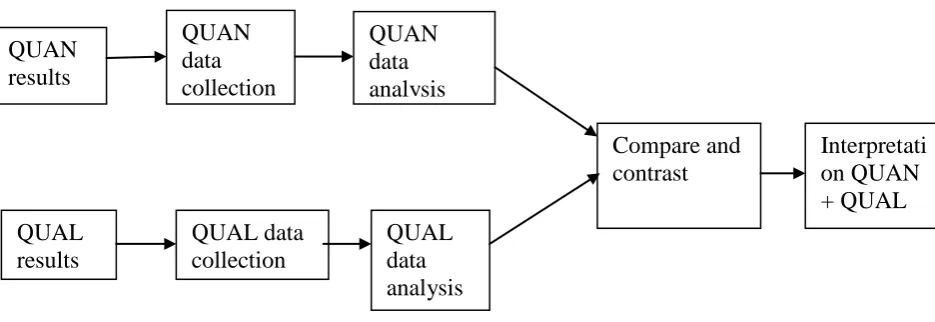
“convergence model (Figure 3.1) represents the traditional model of a mixed
methods triangulation design” (Creswell, 1999). In this model, the researcher
collects and analyzes quantitative and qualitative data separately on the same
phenomenon and then the different results are converged by comparing and
contrasting the different results during the interpretation. Researchers use this
model when they want to compare results or to validate, confirm, or
corroborate quantitative results with qualitative findings. The purpose of this
model is to end up with valid and well-substantiated conclusions about a single
phenomenon. This view was adapted in this study.
Fig. 3.1 Triangulation Design: Convergence Model
To enhance convergence of data, both qualitative and quantitative data
addressed similar concepts. For example, data collected by the questionnaire
on types of instructional media, availability and utilisation had the same
observation checklist. The purpose of this model is to end up with valid and
well-substantiated conclusions about a single phenomenon.
Qualitative data are generally non-numeric and categorized as verbal and
nonverbal. Verbal data are words such as written personal diaries, letters, press
reports, surveys or interviews, and field notes. Within the group of interviews,
the data can come from in-depth/unstructured interviews, semi-structured
interviews, structured interviews, and questionnaires containing substantial
open comments. Qualitative research includes measures and techniques that
produce non-statistical data. Such data includes words, symbols, pictures and
other non-numerical records (McNabb, 2004; Mugenda & Mugenda, 2009).
This kind of data is useful for describing, creating understanding for subjective
interpretation as well as for critically analyzing the subjects under study. In
the qualitative research design, a descriptive method that described the
pedagogic process of acquiring, utilizing and storing instructional media was
examined. A descriptive method is concerned with describing the
characteristics of a particular group or individual. A descriptive research
method determines and reports the way things are (Mugenda & Mugenda;
2009, Kothari, 2004). McNabb (2004), further points out that a descriptive
research method has the following steps; formulating objectives, designing
data collection methods, selecting a sample, data collection, data analysis and
The qualitative approach was useful for this study because some of the data
was non-numerical, in form of sentences and observations regarding resource
availability and utilization, motivation and support from the college
administration. This data was critically analyzed and interpreted in the light of
the study objectives.
Quantitative approach entails interacting with data that focuses on nominal (no
numbers), ordinal, interval and ratio measurement. The first level of
measurement is nominal. A nominal scale is simply a categorization or label.
The most defining attribute of nominal data is the fact that no numbers are
associated with nominal data, just a label. For example, in this study number
values were assigned to level of utilization of instructional media thus;
Always-1, sometimes-2, Never-3.Number 1 to 5 was also assigned to denote tutors
attitude, feelings and behaviour towards instructional media. This is not a
description of better or worse by a higher or lower number; it is simply an
assignment to ease some analyses in which this research was interested.
Ordinal scale measurements can be thought of as a rank in which
measurements are put in a certain order to enhance assessing it for example
categorising respondents according to level of education. In this study, PPS
tutors were grouped according to their academic qualifications, a phenomenon
that helped to understand their levels of utilizing IM. Although Percentile
ranks are quite common in education because they are easy to explain to
in research leads to loss of a great deal of information. Mixing this with the
qualitative approach allowed for compensation of such a weakness in this
study.
The mixed method approach was used on selected pre-primary school colleges
in Nairobi County to collect data from respondents since this was a descriptive
study that intended to describe record and analyze conditions as they existed
(Kothari, 2004). The descriptive aspect was purposively used to enable probing
deep and intensively analyze the multifarious aspects of the utilization of
instructional media by pre-primary school college tutors. It allowed for
collection and presentation of information in a way that gave insights as to
why the aspects under study took place in the direction they did.
The assumption has been that the implementation of curriculum in pre-primary
school teacher colleges is uniform, and is motivated by nearly the same factors
such as tutor qualifications, curriculum and resource materials throughout the
country. This study looked at the dynamics of utilization of instructional media
in varied pre-primary school teacher training colleges with locations in
different economic set ups and with varied sponsorship (Government and
private sponsored). The intensive investigation of the issue of instructional
media based on different and isolated public and private pre-primary school
teacher training colleges in this study was meant to give a true picture through
with similar aspects as mentioned above was collected from tutors and the
managers and was also confirmed by the observation checklist.
Qualitative research approach which is concerned with understanding why
people behave as they do in terms of their knowledge, attitude and beliefs, was
used in this study to allow the respondents to give much richer answers to
questions put to them by the researcher and gave valuable insights which might
be missed by any other method. Secondly, qualitative research helped to
understand the findings of the quantitative data for example to discover the
tutors‟ attitude, feelings and behaviour towards the use of different types of
instructional media in teacher training.
This representation was provided by interviews with the actual college tutors
in their respective pre-primary school college institutions where they work.
3.3 Variables of the Study
The independent variables in this study were: tutor motivation, availability of
instructional media and attitude towards instructional media. On the other hand
the dependent variable was utilization of instructional media in teaching by
primary school college tutors. It included instructional media used by
pre-primary school college tutors like print media, chalk board, flipchart,
computers, slide, projectors, and locally available resources like fruits,
3.4 Location of the Study
This study was conducted in public and private pre-primary school teacher
training colleges in Nairobi County where implementation of The Kenya
Institute of Curriculum Development Curriculum for Early Childhood
Education teacher training takes place. Nairobi County is the home to a highly
heterogeneous population with large disparities in their social and economic
profiles. It was selected because there are several pre-primary school teacher
training colleges both public and private unlike other counties that have either
one or none of these colleges. The County has 2 public and 19 registered
private pre-primary school teacher training colleges which are located in both
high and low income areas. The varied economic profile determined provision
and availability of IM. This dynamic enabled collection of adequate qualitative
data that was representative of the study population to help achieve acceptable
generalizations.
3.5 Target Population of the Study
The study targeted two public and 19 private pre-primary school teacher
training colleges and tutors who taught the diploma classes in these colleges.
These tutors were selected because a lot of instructional media is expected to
be utilized during the teaching of mathematics, science, language, social
studies and music and movement. There were 168tutors. The total number of
targeted classes was 84. Each college has 4 diploma classes, two in first year