DOI: 10.1534/genetics.107.073650
Multiple-Copy Cluster-Type Organization and Evolution of Genes
Encoding
O
-Methyltransferases in the Apple
Yuepeng Han, Ksenija Gasic and Schuyler S. Korban
1Department of Natural Resources and Environmental Sciences, University of Illinois, Urbana, Illinois 61801 Manuscript received March 20, 2007
Accepted for publication June 1, 2007
ABSTRACT
PlantO-methyltransferases (OMTs) play important roles in secondary metabolism. Two clusters of genes coding for caffeic acid OMT (COMT) have been identified in the apple genome. Three genes from one cluster and two genes from another cluster were isolated. These five genes encoding COMT, designated Mdomt1–Mdomt5 (GenBank accession nos. DQ886018–DQ886022), were distinguished by a (CT)n micro-satellite in the 59-UTR and two transposon-like sequences present in the promoter region and intron 1, respectively. The transposon-like sequence in intron 1 unambiguously traced the fiveMdomtgenes in the apple to a common ancestor. The ancestor must have undergone an initial duplication generating two progenitors, and this was followed by further duplication of these progenitors resulting in the two clusters identified in this study. The distal regions of the transposon-like sequences in promoter regions ofMdomt genes are capable of forming palindromic hairpin-like structures. The hairpin formation is likely respon-sible for nucleotide sequence differences observed in the promoter regions of these genes as it plays a destabilizing role in eukaryotic chromosomes. In addition, the possible mechanism of amplification ofMdomt genes in the apple genome is also discussed.
S
ECONDARY metabolites such as lignin, flavonoids, anthocyanins, suberin, and isoflavonoids are abun-dant in plants and they play various roles in plant growth and development as well as in plant interactions with the environment, including defense responses against microorganisms and herbivores (Schwab2003). PlantO-methyltransferases (OMTs) play important roles in sec-ondary metabolism, and many OMTs have been iden-tified in plants. To date, the most thoroughly studied OMTs are caffeic acid OMT (COMT) and caffeoyl CoA OMT (CCOMT). While both are involved in lignin bio-synthesis, COMT methylates caffeic acid/5-hydroxyferulic acid, whereas, CCOMT methylates CoA ester (Ye and
Varner1995; Liet al.1997; Inoueet al.1998; Mauryet al.
1999). Flavonoid and isoflavone OMTs involved in the biosynthesis of phytoalexins have also been identified (Christensenet al.1998; Heet al.1998). More recently,
various OMTs involved in the biosynthetic pathways of floral scent components have been identified and char-acterized.Forexample,S-adenosyl-l
-methionine(iso)euge-nol OMT (IEMT), which catalyzes euge-methionine(iso)euge-nol and isoeuge-methionine(iso)euge-nol to form volatile methyleugenol and isomethyleugenol, was isolated fromClarkia breweri(Wanget al.1997).
Eu-genol OMT (EOMT) and chavicol OMT (CVOMT), which convert eugenol and chavicol to methyleugenol and
methylchavicol, respectively, have been identified inOcimun basilicum (Gang et al. 2002). Also, two orcinol OMTs
(OOMT), OOMT1 and OOMT2, have been isolated from
Rosa hybrida, and these efficiently methylate orcinol to produce 3,5-dimethoxytoluene (Lavidet al.2002).
More-over, two OMTs involved in scent biosynthesis, RcOMT1 and RcOMT2, have also been isolated fromR. chinensis
(Wuet al.2003).
Although some OMT members have multiple func-tions (Liet al.1997; Gauthieretal.1998), most
gen-erally exhibit high substrate specificity (Ibrahimet al.
1998). Recent studies have demonstrated that this sub-strate specificity can be altered by mutations of either a single or a few amino acid(s), thus suggesting that func-tionally distinct genes encoding OMTs may have evolved from a common ancestral gene via duplication and mu-tation (Gang2005). For example, although two genes
encoding EOMT1 and CVOMT1 fromO. basilicumshare 90% amino acid identity, a single-amino-acid difference is responsible for the substrate discrimination between CVOMT1 and EOMT1 (Ganget al.2002). This key amino
acid difference arose from a C–T transition, which is the most common form of observed DNA mutation. There-fore, CVOMT1 is likely to have evolved from EOMT1. Moreover, two genes encoding IEMT and COMT from
C. brewerishare 83% identity at the amino acid level, and their encoded proteins can be functionally interchange-able by mutually replacing seven amino acids (Wangand
Pichersky 1998). A phylogenetic analysis has further
1Corresponding author:Department of Natural Resources and Environ-mental Sciences, University of Illinois, Urbana, IL 61801.
E-mail: [email protected]
indicated that C. breweri IEMT must have evolved re-cently from COMT. On the basis of an evolutionary study, Gang(2005) has reported that different genes
encod-ing OMTs inR. hybrida have probably originated from duplication of a gene encoding COMT.
Duplicated genes are often found as tandem repeats in genomes (Ober2005). Recently, several gene clusters
involved in secondary metabolism have been identified and characterized. InLotus japonicus, a cluster of four genes encoding chalcone isomerases has been identi-fied on the short arm of chromosome V (Shimadaet al.
2003). A three-gene cluster encoding terpene synthase on chromosome 3 of Arabidopsis has been shown to contain two genes that are identical in their coding and promoter sequences (Chenet al.2004). However, no gene
clusters encoding OMTs have been reported so far al-though OMTs are believed to have evolved via gene du-plication followed by divergence. In addition, although cDNAs encoding OMTs have been isolated from various plants, there are few reports on genomic cloning of OMTs. To facilitate studies investigating regulation mechanism and evolution of genes encoding OMTs, it is necessary to isolate genomic clones of OMTs from different plants.
The domestic apple, Malus 3 domestica Borkh., be-longs to the Rosaceae family. The analysis of expressed sequence tags (ESTs) from the apple has recently revealed that many genes involved in secondary metabolism are present in the apple genome (Newcombet al.2006). These
presumably evolved by segmental duplication events and therefore are likely to be clustered (Newcombet al.2006).
In our recent work on developing a genomewide physi-cal map for the apple genome, we have come across some gene clusters encoding flavanone 3-hydroxylase, antho-cyanidin reductase, and COMT. To date, no gene encod-ing COMT has been isolated from the apple. Here, we report on identifying gene clusters encoding COMT in the apple and provide evidence to support the hypoth-esis that plant OMTs have evolved via gene duplication followed by divergence. The evolution and duplication mechanism of genes encoding COMT in the apple are also discussed.
MATERIALS AND METHODS
Plant material and apple BAC library: Genomic DNA, cDNA, and BAC library were all derived from the apple cul-tivar GoldRush. The apple BAC library was constructed using BamHI, and representing53haploid apple genome equiv-alents (Xuet al.2002).
Cloning of genomic and cDNA sequences encoding COMTs in the apple:An expressed sequence tag (EST) database from the apple was previously constructed in our lab (http://titan. biotec.uiuc.edu/cgi-bin/ESTWebsite/estima_blastui?seqSet¼
apple). A BLASTN search of our apple EST database for po-tential OMTs revealed an EST contig (ID: Apple_0223.2449. C1.Contig4283, see also Figure 1) very similar to COMT se-quences fromR. chinensis andPrunus dulcis; however, no se-quences similar to other OMTs such as EOMT1 and CVOMT1 fromO. basilicumand OOMT1 and OOMT2 fromR. hybrida
were identified. Several primers were designed on the basis of the contig sequence. These primers were first used to amplify genomic DNA. The authenticity of generated PCR products was first assessed by gel electrophoresis and then by sequence analysis. After a series of tests, a pair of primers, pCF (59-GGC TGACCACTCTACCATTACC-39) and pCR (59-TCGAACTCCT TCTCCGTCCTC-39) was successfully generated and used to screen the apple BAC library.
BAC library screening was carried out according to a PCR-based screening protocol previously described by Xu et al.
(2002). The PCR program consisted of 34 cycles of 30 sec at 94°, 40 sec at 65°, 1 min at 72°, and a final extension for 10 min at 72°. Positive BAC clones were then selected for subcloning. BAC DNA was extracted from a 300-ml culture using the Plas-mid Midi kit (QIAGEN, Valencia, CA). Purified BAC DNA was partially digested with the restriction enzymeSau3Al. Digested fragments of10 kb in size were harvested from a 1% agarose gel using a QIAEX II gel extraction kit (QIAGEN), and then ligated into aBamHI-digested pBlueScript-SK(1) vector. Trans-formation was conducted by electroporation using a Bio-Rad (Hercules, CA) gene pulser. The sequencing of positive sub-clones was performed according to the primer-walking method. To obtain cDNA sequences missing from 59ends of genes, rapid amplification of cDNA ends (RACE) was carried out using the BD SMART RACE cDNA Amplification Kit (BD Bio-sciences). A gene-specific primer (59-TCAAGCAATGC TCGT CACTCCAGTC-39) was designed on the basis of conserved se-quences of the last exon. cDNA amplification was conducted according to the manufacturer’s instructions using apple flower RNA as a template. Amplification products were separated on 1% agarose. cDNA fragments were excised from the gel, purified using a QIAEX II gel extraction kit (QIAGEN), and then cloned into a pCRII-TOPO vector using a TOPO TA clon-ing kit (Invitrogen, Carlsbad, CA).
Investigating physical map relationships of multiple copies of COMT genes in the apple: Physical map relationships among the positive BAC clones were first identified using the following BAC fingerprinting method. BAC clones were grown overnight at 37°in a 3.0-ml LB medium containing chloram-phenicol (12.5ml/ml). The BAC DNA was extracted using a mini-alkaline lysis procedure. Each DNA sample was digested with 2 unitsBamHI for 3 hr at 37°. Restriction fragments were separated by agarose gel electrophoresis on custom Latitude HT 121-well precast gels (Cambrex) at 60 V for 15.5 hr with buffer recirculation at 4°. DNA fragments were stained using SYBR Green I (Invitrogen), and visualized by fluorescence us-ing a Typhoon 8600 Imager (Amersham Biosciences, Piscataway, NJ). Captured gel images were analyzed using IMAGE V3.10b (http://www.sanger.ac.uk/Software/Image/). Fingerprint data were used to assemble contigs using the program FPC v7.2 (Nelsonet al.2005, http://www.agcol.arizona.edu/software/
fpc). To further verify the reliability of contigs and further merge contigs, PCR-based probes derived from BAC end se-quences were tested against all clones within these contigs.
Southern blot analysis for genomic DNA and BAC DNA: Genomic DNA was extracted from young apple (cv. GoldRush) leaves using a CTAB-based protocol (Dellaportaet al.1983).
BAC DNA was extracted as described above. Five micrograms genomic DNA and20 ng BAC DNA per clone were digested withBamHI and separated on 0.8% agarose gels. After treating the gel with 0.25mHCl for 10 min and rinsing it with dd H
2O, DNA was transferred to positively charged nylon membranes (Hybond-N, Amersham, UK) using the capillary transfer method. The membrane containing the transferred DNA was briefly soaked in a neutralization solution (0.2mTris-Cl, pH 7.5, 23
DNA probes were prepared using the PCR DIG Probe Syn-thesis Kit (Roche) according to the manufacturer’s instruc-tions. The primers were the same as those used above for BAC library screening. Template DNA was isolated from cDNA clones ofMdomt1. The probe used was 467 bp in size and correspond-ing to the 39region of the cDNA sequence (Figure 1). The labeled probe was added to the prehybridization solution and incubated at 42°for 16 hr. Blots were washed once with a low-stringency buffer (23SSC containing 0.1% SDS) for 10 min at room temperature and twice with a high-stringency buffer (0.53SSC containing 0.1% SDS) for 15 min at 65°. Then, blots were exposed to a Lumi-Film X-ray film (Hyperfilm, Amer-sham) at room temperature for 20 min.
RT–PCR analysis:Genes encoding COMT in the apple ge-nome were given the designationMdomt.cDNA sequences of Mdomt1 andMdomt3 were highly similar to each other. More-over, their transcription termination sites were different from three otherMdomt’s, includingMdomt2,Mdomt4, andMdomt5. On the basis of this latter difference, a pair of primers (for-ward, 59-CGACTGGAGTGACGAGCATTG-39; reverse, 59-CAC ACAACAATACAAAGAGTCATAATTC-39) was designed to study the collective expression of the pairMdomt1/Mdomt3. Likewise, cDNA sequences ofMdomt2 andMdomt4 were nearly identical, and their collective expression was investigated. The primers (forward, 59-CTCCCTCTCTCCCCCCACCA-39; reverse, 59-CAG AGAGAACCAATGGAAGCAC-39) were designed on the basis of the difference in the 59-UTR between the two pairsMdomt2/ Mdomt4 andMdomt1/Mdomt3. In addition, a 12-bp deletion in exon 2 ofMdomt5 was observed. Forward (59-GATTCTTCCAC TGCCACAGG-39) and reverse (59-CACTCCAGCAACTTACGT TCC-39) primers covering the deletion site were designed for studying the expression ofMdomt5. RT–PCR analysis was per-formed using a two-step procedure as previously described (Hanet al.2007). The PCR program consisted of 34 cycles (30
sec at 94°, 30 sec at 60°, 1 min at 72°, and a final extension at 72°for 10 min).
Phylogenetic analyses: Nucleotide sequences of coding re-gions were aligned using CLUSTAL X ( Jeanmouginet al.1998)
and adjusted manually, as necessary. The resulting data matrix was analyzed using equally weighted maximum parsimony (MP). MP trees were sought using the heuristic search strategies of PAUP* v. 4.0 (Swofford2003). Heuristic MP searches were
replicated 1000 times with random stepwise addition of taxa, tree-bisection-reconnection (TBR) branch swapping, and sav-ing multiple trees (MulTrees). Bootstrap values (Felsenstein
1985) were calculated from 100 replicate analyses using TBR branch swapping and 500 times with stepwise addition of taxa. Only those values compatible with the 50% majority-rule con-sensus tree were recorded.
RESULTS
Gene clusters encoding COMT in the apple:A total of 11 positive BAC clones, designated C1–C11, were iden-tified from the BAC library. These BAC clones were sub-jected to fingerprinting analysis, and three small BAC contigs were assembled from the fingerprinting data. The first contig was280 kb in size, consisting of seven clones, C1, C5, C7, C8, C9, C10, and C11 (Figure 1). The second contig consisted of two BAC clones, C2 and C6. The remaining two clones, C3 and C4, belonged to the third contig. To verify the reliability of these contigs, both ends of BAC clones, C1, C5, C9, and C3 were se-quenced using T7 and SP6 primers. Of the eight BAC end sequences, one T7 end sequence from the C5 clone
was highly similar to cDNA sequences of COMTs from bothR. chinensisandP. dulcis, suggesting that one copy of an apple COMT encoding gene was located at this BAC end. Thus, a total of seven PCR probes were de-signed on the basis of these BAC end sequences and were tested against all the 11 BAC clones. The results not only clearly indicated that the contigs were correctly as-sembled, but also revealed a potential for merging of the second and third contigs (Table 1). As a result, two clusters encoding COMT were identified in the apple genome (Figure 1).
Southern blot analysis showed that all BAC clones yielded seven different bands, designated A–G (Figure 2). PCR products amplified from genomic DNA of cv. GoldRush and all positive BAC clones using the same primers as described for probe preparation cannot be digested with BamHI (data not shown). Meanwhile, none of the five apple COMT genes,Mdomt1–Mdomt5, contained the recognition site forBamHI in the region covering the probe sequence (Figure 3). These results demonstrated that a single band on the Southern blot likely corresponded to a gene copy, thus suggesting these BAC clones contained seven copies of genes en-coding COMT. In one cluster, consisting of BAC clones C1, C5, C7, C8, C9, C10, and C11, there were four copies of COMT; while, in another cluster, consisting of BAC clones C2, C3, C4, and C6, there were three copies of COMT (Figure 1). The gene copy number of each BAC clone ranged from 1 to 3 (Figure 2). Moreover, these Southern blot results were consistent with the order of BAC clones in each of the two clusters. For example, each of the overlapping BAC clones C8, C9, and C10 (Figure 1) contained an ‘‘A’’ band (Figure 2); while, each of the overlapping BAC clones C1, C5, C7, C8, C10, and C11 (Figure 1) contained an ‘‘F’’ band (Figure 2). As a result, blotted bands of BAC clones, A, B C, D, and F, putatively corresponded to COMT genes 1, 4, 2, 7, and 3 noted in Figure 1; while blot bands E and G corre-sponded to COMT genes 5 and 6 noted in Figure 1. In addition, the apple genomic DNA exhibited three ad-ditional bands to those identified in positive BAC clones (Figure 2), thus suggesting that there might be more than seven copies of genes encoding COMT in apple.
Classification of genes encoding COMT in the apple: Sequence alignments of clones of PCR products ampli-fied from cv. GoldRush using primers pCF/pCR revealed
Figure 1.—Two clusters of apple genes encoding COMT
two single-nucleotide polymorphisms (SNPs), includ-ing a T/A SNP in intron 2 and a T/G SNP in exon 4. The two SNPs disrupted theTaqI recognition site, TCGA, to either ACGA or GCGA. Thus, PCR products amplified from all 11 positive BAC clones using primers pCF/pCR were subjected to digestion with TaqI and then sepa-rated on a 1% agarose gel. Three different sizes of DNA bands were observed and were designated 3T, 3M, and 3B
corresponding to top (596 bp), middle (510 bp), and bottom (453 bp) bands, respectively (data not shown). The numerical 39indicated that the cleaved amplified polymorphic sequence (CAPS) marker was developed from the 39 region of genes encoding COMT. Seven BAC clones, C1, C5, C7, C8, C9, C10, and C11, gen-erated a single 3Bband. Two BAC clones, C3 and C4,
generated a single 3M band, while the remaining two
BAC clones, C2 and C6, generated all three bands, 3T, 3M
and 3B. The middle-sized band, 3M, of C2 and C6 was
later proved to be a PCR artifact using the following methods. First, Southern blotting indicated that both C2 and C5 contained two copies of COMT genes as they exhibited two strong bands (Figure 2). Second, no sub-clone of C2 corresponding to the middle-sized band was identified. Third, when PCR products generated from the two subclones of C2, corresponding to high and low bands, respectively, were mixed, denatured, and annealed, using the same PCR program previously used to identify positive BAC clones, and digested withTaqI, following electrophoresis, three bands, including the middle-sized band, were detected (data not shown).
Meanwhile, 59-cDNA sequences of apple genes encod-ing COMT were recovered usencod-ing 59-end RACE analysis, and a (CT)nrepeat in the 59-UTR region was found. A
pair of primers flanking the repeat sequence (forward, 59-CCACTTAGCACACACCATCTC-39; reverse, 59-CAGAG
AGAACCAATGGAAGCAC-39) was then designed. The
primers were used to amplify all positive BAC clones, and three different sizes of bands were displayed (data not shown). Since the repeat sequence was located in the
Figure2.—Southern blot analysis of genomic DNA isolated
from apple leaf tissues. M, standard DNA marker; G, apple ge-nomic DNA; and C1–C11 correspond to 11 positive BAC clones. The faint bands are indicated by arrows. Letters on the left indicate hybridizing bands of different sizes. A, B C, D, and F bands of BACs correspond to nos. 1, 4, 2, 7, and 3 of COMT genes in Figure 1. E or G bands of BACs corre-spond to no. 5 or 6 of COMT genes in Figure 1. F band of C8, D band of C3, F band of C5, E band of C2, and G band of C2 correspond toMdomt1,Mdomt2,Mdomt3,Mdomt4, and Mdomt5, respectively.
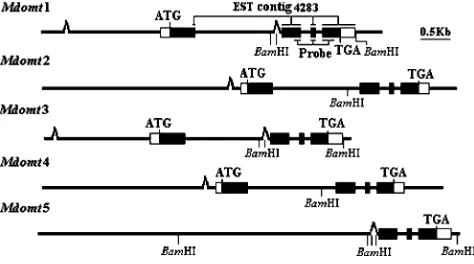
Figure3.—Structure of the appleMdomtgenes. Solid boxes
indicate exons and open boxes represent 59- and 39-UTRs. The transposon-like elements are indicated by open triangles. TABLE 1
Presence/absence of PCR products of BAC clones related to COMT using PCR probes derived from BAC end sequences
BAC clone
PCR probe C1 C2 C3 C4 C5 C6 C7 C8 C9 C10 C11
C1-T7 1 1 1 1
C1-SP6 1 1 1 1
C3-SP6 1 1
C3-T7 1 1 1 1
C5-SP6 1
C9-SP6 1
C9-T7 1 1 1
59-UTR, the top-, middle-, and bottom-sized bands were designated as 5T, 5M, and 5B, respectively. Therefore,
re-sults of both microsatellite polymorphism and CAPS marker analysis indicated that there were five types of
Comtgenes in the apple genome. BAC clones C1, C8, C9, C10, and C11 contained type I (5M3B); C3 and C4
com-prised type II (5B3M); C5 and C7 had type III (5T3B);
while, C2 and C6 consisted of types IV (5B3T) and V
(5B3B), respectively.
Genomic structure and sequence characteristics of the apple genes encoding COMT: To isolate the five identified types of genes encoding COMT, BAC clones C2, C3, C5, and C8 were selected and subcloned. Full genomic DNA sequences for four genes encoding COMT were successfully recovered. They were designated as
Mdomt1,Mdomt2,Mdomt3, andMdomt4, corresponding to types I, II, III, and IV, respectively. Alignment of ge-nomic DNA sequences with cDNA sequences revealed that apple Mdomt genes consisted of four exons and three introns (Figure 3). Border sequences of all three introns conformed to the GT-AG rule. All four copies of
Mdomt genes contained a microsatellite repeat at the 59-UTR located immediately upstream of the start codon (Figure 4). The coding sequences ofMdomt1,Mdomt2,
Mdomt3, andMdomt4 were all 1095 bp in size, and the putative protein consisted of 365-amino-acid residues.
A genomic DNA sequence of7.2 kb in size corre-sponding to a type VMdomtgene was also isolated from the end of BAC clone C2 and designated as Mdomt5. When the genomic sequence ofMdomt5 was aligned with cDNA sequences of other copies ofMdomtgenes, it cov-ered exons 2–4, but did not include exon 1. A long fragment of6 kb in size, from the beginning of the genomic DNA sequence to the putative exon 2, had no match toMdomtcDNA sequences. However, as a part of this fragment was highly similar to intron 1 of otherMdomt
genes, this was designated as intron 1 inMdomt5.
Interestingly, comparisons of genomic DNA sequen-ces of the five Mdomtgenes revealed two transposable element-like sequences. The first transposon-like se-quence was located in the promoter region and was present in all fourMdomtgenes,Mdomt1–Mdomt4 (Fig-ure 5). The transposon-like sequence among the four genes showed .85% identity and contained a 21-nucleotide terminal inverted repeat sequence, 59-GGG GTGTGATATCCACACACC—GGTGTGTGGATAGCAC ACCCC-39. Target site sequences of the transposon in the two pairsMdomt1/Mdomt3 andMdomt2/Mdomt4 were TAATACAA and TAAATAAAA, respectively (Figure 5). The second transposon-like sequence was inserted in intron 1 ofMdomtgenes and was very close, by 49 nucle-otides, to exon 2 (Figure 6). This second transposon-like sequence was clearly present in Mdomt5. It also gener-ated a 9-nucleotide direct repeat sequence, TTGTAG ATT, at the target insertion site, and contained a 10-nucleotide inverted repeat sequence 59-GGAAATGGAT— ATCCCTTTCC-39(Figure 6). This second transposon-like sequence was also identified in both Mdomt1 and
Mdomt3 although this sequence showed slight variations between the pairMdomt1/Mdomt3 andMdomt5 (Figure 6). However, this sequence was not detected in either
Mdomt2 or Mdomt4 although the transposon-target insertion site TTGTAGATT was found in these two genes. These results strongly demonstrated that the second transposon-like sequence was actually a posable element although it was not clear if the trans-poson was present earlier inMdomt2 andMdomt4, but was excised at some later time leaving the footprint se-quence TTGTAGATT behind.
Expression ofMdomtgenes:Expression of allMdomt
genes was investigated by RT–PCR analysis although the complete cDNA sequence ofMdomt5was not avail-able. As cDNA sequences ofMdomt1 andMdomt3 showed 98% identity, it was difficult to individually study their
Figure 4.—Repeat sequences at the
59-UTR of appleMdomtgenes. The start codons are shaded. Dashes indicate se-quence gap. Sese-quences different from those of the top line are indicated in lowercase letters.
Figure 5.—Transposon-like sequences in the
expression profiles. Therefore, their collective expression was investigated. Similarly, cDNA sequences ofMdomt2 andMdomt4 showed 99% identity, and therefore, their collective expression was analyzed as well.
The collective transcripts ofMdomt1/Mdomt3 were de-tected in buds, flowers, and fruits, but not in leaves, while the collective transcripts ofMdomt2/Mdomt4 accumu-lated in all tissues, including leaves, buds, flowers, and fruits (Figure 7). Moreover,Mdomt5 was expressed in all tissues analyzed (Figure 7).
Evolution of Mdomt genes in the apple genome:
Mdomt2,Mdomt4, andMdomt5 were isolated from BAC clones C3, C2, and C2, respectively, and they were clus-tered as described above (Figure 1). Southern blots of genomic DNA indicated that the hybridizing fragment of C3 was different in size from those of C2 (Figure 2). Meanwhile, sequences from 59- and 39-flanking regions ofMdomt2 andMdomt4 had no significant matches. These results suggested thatMdomt2 andMdomt4 were indeed two independent genes. However, sequence alignment ofMdomt2 and Mdomt4 revealed presence of a nearly identical region ranging from 2761 bp upstream of the putative start codon to 219 bp downstream of the puta-tive end codon. This region showed 98% nucleotide se-quence identity between the two clustered genesMdomt2 andMdomt4, suggesting these were derived from a re-cent duplication event. Sequence comparisons ofMdomt5 and the nearly identical pairMdomt2/Mdomt4 also showed two common homologous regions (.96% identity). The
first homologous region spanned from the transposon target site in intron 1 ofMdomt2/Mdomt4 to 219 bp down-stream of the putative end codon. It was apparent that a sequence divergence point at the 39 end of Mdomt2,
Mdomt4, andMdomt5 was located 219 bp downstream of the putative end codon. The second homologous re-gion was identified in intron 1. A small fragment of 143 bp in size upstream of the transposable element-like se-quence in intron 1 ofMdomt5 almost matched exactly against sequences upstream of the target insertion site TTGTAGATT in intron 1 of bothMdomt2 andMdomt4 (Figure 6). The two homologous regions identified in
Mdomt2,Mdomt4, andMdomt5 suggested that these three clustered genes were derived from a common ancestor.
Mdomt1 andMdomt3 were derived from the two over-lapped BAC clones C8 and C5, respectively (Figure 1). Complete DNA sequences ofMdomt1 andMdomt3 showed 97% identity. Sequence variations were mainly caused by short stretches of duplication/deletion that were ob-served in both 59-UTR and intron 1. When the two ge-nomic clones ofMdomt1 andMdomt3 were digestedin silicowithBamHI, they yielded an equal fragment of 1.4 kb in size at the 39end. Genomic DNA and BAC DNA were digested with BamHI for Southern blot analysis and were hybridized with probes corresponding to the 39-cDNA end. Genomic DNA and six overlapping BAC clones, including C1, C5, C7, C8, C10, and C11 showed the same 1.4-kb band (Figures 1 and 2). These results, along with the fact that the apple is heterozygous due to
Figure
self-incompatibility, indicated thatMdomt1 andMdomt3 were allelic. When DNA sequences of these two alleles were further compared with those of the three other
Mdomtgenes, several striking similar features were ob-served. First, coding region sequences of all fiveMdomt
genes shared.97% identity. Second, introns 2 and 3 among the fiveMdomtgenes shared.96 and 97% iden-tities, respectively. The first intron showed71% sequence identity between the two pairs ofMdomt1/Mdomt3 and
Mdomt2/Mdomt4. Third, intron 1 ofMdomt5 was larger than that found in the remaining fourMdomtgenes, but a small fragment of 143 bp in size upstream of the trans-posable element-like sequence was nearly equal in size to those found in all other fourMdomtgenes (Figure 6). Finally, the transposon-like sequence in intron 1 ofMdomt5 was also present at the same location as that found in bothMdomt1 andMdomt3 in spite of a deleted sequence observed in bothMdomt1 andMdomt3 (Figure 6). These striking similar features unambiguously suggested that the five genes,Mdomt1–Mdomt5, were derived from a com-mon ancestor.
Phylogenetic analysis using the maximum-parsimony method revealed that all five sequences encoding COMT in the apple are most closely related to those from other Rosaceae species such as P. dulcis, R. chinensis, and
Fragaria3ananassa(Figure 8). This supported the fact thatMdomt1–Mdomt5 in the apple are clearly members of the COMT family. Sequences ofMdomt1,Mdomt3, and
Mdomt5 are grouped together as a sister clade to the other two sequences of Mdomt2 and Mdomt4, further confirming that all fiveMdomtgenes in the apple were derived from a common ancestor. Moreover, the two transponson-like sequences inMdomtgenes were blasted against NCBI database (http://www.ncbi.nlm.nih.gov/), and significant hits were detected only in the apple genes. In addition, microsatellite repeats in the 59-UTR ofMdomt
genes were not detected in any genes encoding COMT from other plant species. The two transposon-like se-quences and microsatellite sese-quences were uniquely found in the appleMdomtgenes, suggesting the
dupli-cation ofMdomtgenes likely occurred during and after the speciation of apple.
DISCUSSION
cDNA sequences of genes encoding COMT have been isolated from a variety of species, and COMTs were pre-viously reported to be encoded by a small gene family in plants. For example, Hayakawaet al.(1996) reported that
the copy number of genes encoding COMT inPopulus kitakamiensis was less than three; while two copies of COMTencoding genes were isolated inZea mays(Guillet
-Claudeet al.2004). However, two clusters, consisting of
seven copies of genes encoding COMT, were identified in the present study. In addition to the multiple copies of COMT, two alleles,Mdomt1 andMdomt3, were also identi-fied in apple. The presence of multiple copies and alleles suggested that genes encoding COMT in the apple ge-nome did not belong to a small gene family. This conclu-sion was consistent with recent findings, based on analysis of apple ESTs, that high copy numbers of genes involved in secondary metabolism were frequent in the apple genome (Newcombet al.2006). Moreover, our Southern blot
anal-ysis clearly indicated that there were more than seven copies of genes encoding COMT in the apple. Failure in capturing all members of the COMT gene family in apple might be attributed to genome coverage of the apple BAC library, representing53haploid apple ge-nome equivalents, used for screening of positive BAC clones. On the other hand, positive BAC clones showed presence of several faint bands likely corresponding to additional genomic DNA bands (Figure 2). However, the possibility that these additional bands might be nonspecific bands cannot be completely ruled out.
In this study, five clones encoding COMT in the apple have been isolated. Of these five clones, four contain full-coding sequences. The four genes,Mdomt1–Mdomt4, show significant sequence identities. It is well known that only minor changes in sequences of genes encoding COMT are often sufficient to completely alter their sub-strate and product specificities (Wangand Pichersky
1998; Ganget al.2002). Thus, sequence identity is
in-sufficient to predict the function of each of these newly identified genes coding for COMT, and further studies are needed to determine the functions of these various COMT genes in the apple genome.
Genes encoding COMT in the apple are expanded by segmental duplication:Gene duplication is assumed to be a major driving force for recruitment of genes for secondary metabolism (Picherskyand Gang2000).
Poly-ploidy (genome duplication) is a significant evolutionary process in higher organisms, and genomes of flowering plants are reported to have incurred one or more poly-ploidization events during evolution (Masterson1994).
Therefore, gene duplication in plants may arise from polyploidization (genome duplication) and/or segmental duplication. In this study, two clusters encoding COMT
Figure 7.—Analysis of expression profiles of the Mdomt
have been identified in the apple genome. One cluster contains three copies, and all have been isolated; while another cluster consists of four copies, and two alleles have been isolated. The analysis of genomic DNA se-quences revealed that the five genes encoding COMT in the apple are distinguished by a (CT)n
microsatel-lite in the 59-UTR and two transposon-like sequences in the promoter region and intron 1. Discovery of the transposon-like sequence in intron 1 unambiguously traced the fiveMdomtgenes back to a common ancestor. Moreover, introns also showed several similar features among the fiveMdomtgenes. First, both introns 2 and 3 showed.96% nucleotide sequence identities among the five genes. Second, nucleotide sequences of intron 1 showed70% identity between the two pairsMdomt1/
Mdomt3 andMdomt2/Mdomt4. Finally, a small fragment upstream of the transposon in intron 1 ofMdomt5 was almost identical to that of the two pairsMdomt1/Mdomt3 and Mdomt2/Mdomt4. These similarities in intron se-quences further supported the hypothesis that duplica-tion ofMdomtgenes must have occurred more recently and within a relatively short time period during evolu-tion of the apple.
Although only a single pair of alleles was isolated from one cluster, consisting of four copies of genes encoding COMT, analysis of a CAPS marker used to classify pos-itive BAC clones showed that all four copies within this cluster were of the same genotype (Figure 3). This result coupled with the fact that these four copies were clus-tered suggested that all four copies were also generated from a common progenitor.
All the above results suggest that an initial duplication of anMdomtancestor has resulted in the generation of two progenitors of the two clusters, although further studies are needed to address the physical relationship between the two clusters encoding COMT. The two pro-genitors must have subsequently undergone further du-plication, resulting in the two clusters identified in this study.
The two transposon-like sequences found in Mdomt
genes in this study have not been identified in previously reported genes encoding COMT in other closely related tree species such as Populus and Prunus or any other plants. In addition, the microsatellite sequence found in the 59-UTR ofMdomtgenes has also not been found in previously reported COMT cDNA sequences in plants.
Figure8.—Phylogenetic tree of
Therefore, these results along with the finding that clus-ters are derived from a common ancestor all suggest that multiple copies of COMT in the apple genome are likely derived from segmental duplication during and after speciation of the apple rather than from polyploidiza-tion of the apple. In Arabidopsis, gene copies encoding regulatory proteins such as transcription factors and signal transduction proteins tend to retain when gener-ated by polyploidization; whereas these genes are rapidly lost when derived from segmental duplication (Maere
et al.2005). By contrast, gene copies involved in second-ary metabolism or abiotic stress are likely to be retained when derived from segmental duplication; whereas du-plicated gene copies following whole-genome duplica-tions are more rapidly lost (Maereet al.2005). Thus, the
pattern of evolution in Arabidopsis seems to also be conserved in the apple. In addition, the discovery of the evolutionary pathway of appleMdomtgenes provides, for the first time, direct molecular evidence supporting pre-vious speculations that functionally distinct OMTs may have evolved from a common ancestral gene through gene duplication and subsequent divergence (Gang
2005).
Possible mechanism of gene amplification:To inves-tigate the possible mechanism responsible for duplica-tion of appleMdomtgenes, we focused on the 59-flanking sequences of the two recently duplicated and clustered genesMdomt2 andMdomt4. The 59-flanking regions, of 3.7 and 3.3 kb in size upstream of the putative start co-don ofMdomt2 andMdomt4, respectively, were sequenced. Sequence comparisons revealed that the sequence di-vergence point betweenMdomt2 andMdomt4 was located 2655 bp upstream of the putative start codon. A DNA fragment 675 bp in size, downstream of the divergence point fromMdomt2 orMdomt4, shared.90% nucleotide sequence identity with a dispersed repeat sequence pre-viously reported in the apple. The repeat sequence was deposited in the NCBI database with the accession no. AM167520. Therefore, the duplication of appleMdomt
genes might have resulted from unequal recombination due to the presence of homologous sequences flanking these genes.
DNA secondary structures and sequence variations in the promoter region of Mdomt genes: Overall, the genomic DNA sequence, except for the promoter re-gion, shows.80% identity between the two pairsAmot1/
Mdomt3 andAmot2/Mdomt4. However, alignment of the promoter region sequences of the two pairs Amot1/
Mdomt3 andAmot2/Mdomt4 has revealed a small homol-ogous region covering the transposon-like sequence. Meanwhile, location of the transposon-like sequence was not comparable between the two pairs Amot1/Mdomt3 andAmot2/Mdomt4. The transposon-like sequences in the promoter region of the two pairsAmot1/Mdomt3 and
Amot2/Mdomt4 were inserted 1639 and 297 bp, respec-tively, upstream of the putative start codon. Although the two pairs are derived from a common ancestor, as
documented above, significant sequence variations must have occurred in the promoter region since the early generation of the two pairsAmot1/Mdomt3 andAmot2/
Mdomt4. It has been reported that slippage caused by strand mispairing often occurred during DNA replica-tion, and DNA regions capable of assuming hairpin-like secondary structures are particularly prone to this error (Levinson and Gutman 1987). Thus, hairpin
forma-tion may play a destabilizing role in eukaryotic genomes (Sinden 2001). Interestingly, we have identified that
distal regions of the transposon-like sequence in the promoter region ofMdomtgenes are capable of forming palindromic, hairpin-like structures. For example, the
sequence AAAAGGGGTGTGATATCCACACACCCCT
TTT at the left end of the transposon-like sequence in
Amot2 andMdomt4 possesses a 12-bp terminal inverted repeat (Figure 7). Two sequences, GGGGTGTGATATC CACACACCCC and GGGGTGTGTGGATAGCACACCCC at left and right ends, respectively, of the transposon-like sequence in bothMdomt1 andMdomt3 consist of an 8-bp terminal inverted repeat (Figure 5). Thus, it is reason-able to speculate that sequence variations in the pro-moter regions of the two pairsAmot1/Mdomt3 andAmot2/
Mdomt4 are mainly due to replication slippage, which is enhanced and facilitated by the hairpin-like structures present in the promoter region.
Previously, two genes encoding COMT, homt1 and
homt2, were isolated from P. kitakamiensis (Hayakawa
et al.1996). Transcripts ofhomt1did not accumulate in young leaves; whilehomt2transcripts accumulated in all tissues analyzed (Hayakawaet al.1996). These observed
differences in gene expression were also observed in the appleAmotgenes in the present study. RT–PCR analysis showed that Amot1 and Mdomt3 are not expressed in young leaves; whereas Amot2 and/or Mdomt4 are ex-pressed in all different tissues analyzed. As the promoter region is known to play an important role in gene pression, the influence of promoter sequences on ex-pression of genes encoding COMT has been reported in tobacco (Toquinet al.2003). Therefore, differences in
expression profiles of genes encoding COMT in the ap-ple might be due to sequence variations in the promoter region of the two pairsAmot1/Mdomt3 andAmot2/Mdomt4. It is worthwhile to note that a (CT)nmicrosatellite was
found in the 59- UTR ofAmotgenes. Whether this repeat is actually involved in Amot gene expression must be further investigated. However, two genes encoding COMT in P. kitakamiensis exhibited different expression pro-files although no repeat sequence was identified in the 59-UTR of these two genes. This suggested that the (CT)n
repeat found in the 59-UTR ofAmotgenes might have little influence on expression of these genes in the apple.
transposon-like sequence matched against sequences of intron 1 of the other fourMdomtgenes,Mdomt1–Mdomt4 (Figure 6). The remainder of this sequence,5.6 kb in size, was uniquely present inMdomt5. This unique se-quence was aligned and blasted against the NCBI database. Three short sequences (100 bp each) from different sites of intron 1 ofMdomt5 showed.85% identities to the apple retrotransposon dem1 (GenBank accession no. AJ291492). Overall, this unique sequence of5.6 kb in size showed 60% identity to that of dem1. The dem1 retrotransposon, .9 kb in size, was identified in the intron of a gene responsible for the development of floral organs in the apple (Yaoet al.2001). Therefore, it
is likely that the observed variation in intron 1 ofMdomt5 may have arisen from an insertion of a large transposon, although further investigation is warranted. Moreover, a repeat sequence, (AT)27, was found in intron 1 ofMdomt5. This repeat sequence has the potential to form a sec-ondary structure, leading to DNA variation. However, it has been reported that (TA)nrepeats are widely
distrib-uted in eukaryotic genomes, and they are not likely associated with DNA instability (Kost-Alimova et al.
2003). Thus, it is likely that the (AT)nrepeat plays only a
small role, if any, in destabilizing intron 1 ofMdomt5. The transposon-like sequence in intron 1 ofMdomt5 was identified at the same location as those inMdomt1 and Mdomt3. Moreover, the CAPS marker analysis re-vealed thatMdomt5 shared the same genotype with the pairMdomt1/Mdomt3 (Figure 3). These results indicated thatMdomt5 and the pairMdomt1/Mdomt3 were derived from a common progenitor. On the other hand, a 148-bp sequence upstream of the transposon-like sequence and its target site sequence for insertion in intron 1 of
Mdomt5 were exactly matched against those of the pair
Mdomt2/Mdomt4 (Figure 6). This suggested thatMdomt5 and the pairMdomt2/Mdomt4 were also derived from a common progenitor. Taken together, these results dem-onstrated thatMdomt5 was an intermediary between the two pairsMdomt1/Mdomt3 andMdomt2/Mdomt4 during the process of evolution of genes encoding COMT in the apple. To determine which pair was generated earlier, putative amino acid sequences of the two pairsMdomt1/
Mdomt3 andMdomt2/Mdomt4 were compared with those of COMTs from species closely related to the apple. Putative amino acid sequences of Mdomt1/Mdomt3 showed 91, 89, 86, and 84% identities to those of COMTs fromR. hybrida,F.3ananassa,P. kitakamiensis, and Eu-calyptus globules, respectively. Moreover, putative amino acid sequences ofMdomt2/Mdomt4 showed 87, 86, 83, and 80% identities to those genes encoding COMTs fromR. hybrida,F. 3 ananassa, P. kitakamiensis, and E. globules, respectively. As the pairMdomt1/Mdomt3 showed slightly higher amino acid sequence identities than the pairMdomt2/Mdomt4 to genes encoding COMTs from related species, this suggested thatMdomt2/Mdomt4 might have undergone duplication afterMdomt1/Mdomt3. Thus, it is likely thatMdomt5 corresponded to the progenitor,
whose duplication generated the parent of the pair
Mdomt2/Mdomt4, and this parent in turn underwent recent duplication resulting in the generation ofMdomt2 andMdomt4. These results indicated that the observed variation in intron 1 ofMdomt5 must have occurred since the early generation of the parent for the pairMdomt2/
Mdomt4. Moreover, the transposon-like sequence was likely excised from intron 1 of the parent for the pair
Mdomt2/Mdomt4 prior to its duplication and leaving the footprint TTGTAGATT intact (Figure 6).
When the partial coding sequence of Mdomt5 was aligned with those of the other fourMdomtgenes, two mutations were identified inMdomt5. The first was a 12-bp deletion in exon 2, which did not cause a frameshift. The second was an addition of a single base pair 66 bp upstream of the original putative stop codon, resulting in a new stop codon 48 bp downstream of the insertion site and a six-amino-acid deletion at the peptide ter-minal. RT–PCR analysis revealed that Mdomt5 was ex-pressed in all tissues analyzed. Therefore, for the future, it is worthwhile to investigate whether Mdomt5 repre-sents a functionally distinct gene encoding OMT.
This project was supported by the U.S. Department of Agriculture Cooperative State Research, Education and Extension Service– National Research Initiative–Plant Genome Program grant 2005-35300-15538.
LITERATURE CITED
Chen, F., D. Ro, J. Petri, J. Gershenzon, J. Bohlmann et al.,
2004 Characterization of a root-specificArabidopsisterpene syn-thase responsible for the formation of the volatile monoterpene 1,8-cineole. Plant Physiol.135:1956–1966.
Christensen, A. B., P. L. Gregersen, C. E. Olsenand D. B. Collinge,
1998 A flavonoid 7-O-methyltransferase is expressed in barley leaves in response to pathogen attack. Plant Mol. Biol.36:219– 227.
Dellaporta, S. L., J. Woodand J. B. Hicks, 1983 A plant DNA
mini-preparation, Version II. Plant Mol. Biol. Rep.1:19–21. Felsenstein, J., 1985 Confidence limits on phylogenies: an
ap-proach using the bootstrap. Evolution39:783–791.
Gang, D. R., 2005 Evolution of flavors and scents. Annu. Rev. Plant
Biol.56:301–325.
Gang, D. R., N. Lavid, C. Zubieta, F. Chen, T. Beuerleet al.,
2002 Characterization of phenylpropeneO-methyltransferases from sweet basil: facil change of substrate specificity and conver-gent evolution within a plant O-methyltrasferase family. Plant Cell14:505–519.
Gauthier, A., P. J. Gulick and R. K. Ibrahim, 1998
Char-acterization of two cDNA clones which encodeO -methyltrans-ferases for the methylation of both flavonoid and phenylpro panoid compounds. Arch. Biochem. Biophys.351:243–249. Guillet-Claude, C., C. Birolleau-Touchard, D. Manicacci, M.
Fourmann, S. Barraudet al., 2004 Genetic diversity associated
with variation in silage corn digestibility for threeO -methyltrans-ferase genes involved in lignin biosynthesis. Theor. Appl. Genet.
110:126–135.
Han, Y., K. Gasic, F. Sun, M. Xuand S. S. Korban, 2007 A gene
en-coding starch branching enzyme I (SBEI) in the apple (Malus3
domestica, Rosaceae) and its phylogenetic relationship to Sbe
genes from other angiosperms. Mol. Phylogenet. Evol.43:852– 863.
Hayakawa, T., K. Nanto, S. Kawai, Y. Katayamaand N. Morohoshi,
He, X., J. T. Reddyand R. A. Dixon, 1998 Stress responses in alfalfa
(Medicago sativaL.). XXII. cDNA cloning and characterization of an elicitor-inducible isoflavone 7-O-methyltransferase. Plant Mol. Biol.36:43–54.
Ibrahim, R. K., A. Bruneauand B. Bantignies, 1998 PlantO
-methyl-transferases: molecular analysis, common signature and classifica-tion. Plant Mol. Biol.36:1–10.
Inoue, K., V. J. Sewalt, G. B. Murray, W. Ni, C. Sturzeret al.,
1998 Developmental expression and substrate specificities of al-falfa caffeic acid 3-O-methyltransferase and caffeoyl coenzyme A 3-O-methyltransferase in relation to lignification. Plant Physiol.
117:761–770.
Jeanmougin, F., J. D. Thompson, M. Gouy, D. G. Higginsand T. J.
Gibson, 1998 Multiple sequence alignment with Clustal X.
Trends Biochem. Sci.23:403–405.
Kost-Alimova, M., H. Kiss, L. Fedorova, Y. Yang, J. P. Dumanski
et al., 2003 Coincidence of synteny breakpoints with malig-nancy-related deletions on human chromosome 3. Proc. Natl. Acad. Sci. USA100:6622–6627.
Lavid, N., J. Wang, M. Shalit, I. Guterman, E. Baret al., 2002 O
-Methyltransferases involved in the biosynthesis of volatile pheno-lic derivatives in rose petals. Plant Physiol.129:1899–1907. Levinson, G., and G. A. Gutman, 1987 Slipped-strand mispairing: a
major mechanism for DNA sequence evolution. Mol. Biol. Evol.
4:203–221.
Li, L., J. Popko, X. Zhang, K. Osakabe, C. J. Tsaiet al., 1997 A novel
multifunctional O-methyltransferase implicated in a dual meth-ylation pathway associated with lignin biosynthesis in loblolly pine. Proc. Natl. Acad. Sci. USA94:5461–5466.
Maere, S., S. DeBodt, J. Raes, T. Casneuf, M. VanMontaguet al.,
2005 Modeling gene and genome duplications in eukaryotes. Proc. Natl. Acad. Sci. USA102:5454–5459.
Masterson, J., 1994 Stomatal size in fossil plants: Evidence for
poly-ploid in majority of angiosperms. Science264:421–424. Maury, S., P. Geoffroyand M. Legrand, 1999 TobaccoO
-methyl-transferases involved in phenylpropanoid metabolism: The dif-ferent caffeoyl-coenzyme A/5-hydroxyferuloyl-coenzyme A
3/5-O-methyltransferase and caffeic acid/5-hydroxyferulic acid 3/5-O-methyltransferase classes have distinct substrate specific-ities and expression patterns. Plant Physiol.121:215–223. Nelson, W. M., A. K. Bharti, E. Butler, F. Wei, G. Fuks et al.,
2005 Whole-genome validation of high-information-content fingerprinting. Plant Physiol.139:27–38.
Newcomb, R. D., R. N. Crowhurst, A. P. Gleave, E. H. A. Rikkerink,
A. C. Allanet al., 2006 Analyses of expressed sequence tags
from apple. Plant Physiol.141:147–166.
Ober, D., 2005 Seeing double: gene duplication and diversification
in plant secondary metabolism. Trends Plant Sci.10:444–449. Pichersky, E., and D. R. Gang, 2000 Genetics and biochemistry of
sec-ondary metabolites in plants: an evolutionary perspective. Trends Plant Sci.5:439–445.
Schwab, W., 2003 Metabolome diversity: Too few genes, too many
metabolites? Phytochemistry62:837–849.
Shimada, N., T. Aoki, S. Sato, Y. Nakamura, S. Tabataet al., 2003 A
cluster of genes encodes the two types of chalcone isomerase involved in the biosynthesis of general flavonoids and legume-specific 5-deoxy(iso)flavonoids inLotus japonicus.Plant Physiol.
131:941–951.
Sinden, R. R., 2001 Neurodegenerative diseases. Origins of instability.
Nature411:757–758.
Swofford, D. L., 2003 PAUP*. Phylogenetic Analysis Using Parsimony
(*and Other Methods), Version 4. Sinauer Associates, Sunderland, MA.
Toquin, V., B. Grausem, P. Geoffroyand M. Legrand, 2003
Struc-ture of the tobacco caffeic acid O-methyltransferase (COMT) II gene: identification of promoter sequences involved in gene in-ducibility by various stimuli. Plant Mol. Biol.52:495–509. Wang, J., and E. Pichersky, 1998 Characterization ofS
-adenosyl-L-methionine: (iso)eugenol O-methyltransferase involved in flo-ral scent production inClarkia breweri.Arch. Biochem. Biophys.
349:153–160.
Wang, J., N. Dudareva, S. Bhakta, R. A. Ragusoand E. Pichersky,
1997 Floral scent production inClarkia breweri(onagraceae). II. Localization and developmental modulation of the enzymeS -adenosyl-L-methionine: (iso)eugenol O-methyltransferase and phenylpropanoid emission. Plant Physiol.114:213–221. Wu, S., N. Watanabe, S. Mita, Y. Ueda, M. Shibuyaet al., 2003 Two
O-Methyltransferases isolated from flower petals ofRosa chinensis
var.spontaneainvolved in scent biosynthesis. J. Biosci. Bioeng.96:
119–128.
Xu, M., S. S. Korban, J. Songand J. Jiang, 2002 Constructing a
bac-terial artificial chromosome library of the apple cultivar Gold-rush. Acta Hortic.595:103–112.
Yao, J., Y. Dongand B. A. Morris, 2001 Parthenocarpic apple fruit
production conferred by transposon insertion mutations in a MADS-box transcription factor. Proc. Natl. Acad. Sci. USA98:
1306–1311.
Ye, Z., and J. Varner, 1995 Differential expression of twoO
-methyl-transferases in lignin biosynthesis inZinnia elegans.Plant Physiol.
108:459–467.