Aus dem Institut für Gesundheits- und Rehabilitationswissenschaften der Ludwig-Maximilians-Universität München
ehem. Vorstand: Direktor Professor Dr. med. G. Stucki
Validation of the Comprehensive ICF Core Set for Rheumatoid Arthritis: The Perspective of Physicians
Dissertation
zum Erwerb des Doktorgrades der Medizin an der medizinischen Fakultät der Ludwig-Maximilians-Universität zu München
vorgelegt von
Christina Sibylle Alexandra Gebhardt
aus München
Mit Genehmigung der medizinischen Fakultät
der Universität München
Berichterstatter: Prof. Dr. Gerold Stucki
Mitberichterstatter: Prof. Dr. Hendrik Schulze-Koops
Mitbetreuung durch den
promovierten Mitarbeiter: Dr. Inge Kirchberger
Dekan: Prof. Dr. med. Dr. h. c. M. Reiser FACR, FRCR
Danksagung
Mein Dank gilt Herrn Professor Stucki für die Möglichkeit diese Arbeit übernehmen zu dürfen und somit zu einem internationalen und lehrreichen Projekt beitragen zu
können.
Weiterhin bedanke ich mich sehr bei Frau Dr. Alarcos Cieza für die freundliche Aufnahme in das Team und die Leitung des ICF Research Branch.
Ein herzliches Dankeschön an meine Betreuerin Frau Dr. Inge Kirchberger für ihre Unterstützung während der gesamten Studie, der Bereitschaft mir immer mit Rat und Tat zur Seite zu stehen und der hervorragenden Zusammenarbeit.
Außerdem möchte ich dem gesamten Team für seine außerordentliche Hilfsbereitschaft in allen Belangen danken.
Table of contents (Inhaltsverzeichnis)
1. German Abstract (Deutsche Zusammenfassung) 6
2. Abstract 8
3. Introduction 9
3.1 Pathogenesis and clinical picture of rheumatoid arthritis 9
3.2 Treatment of rheumatoid arthritis with a focus on the role 13 of physicians
3.3 The International Classification of Functioning, Disability 14 and Health
3.4 Objective 19
4. Methods 21
4.1 The Delphi Method 21
4.2 Recruitment of participants 22
4.3 Delphi Process 22
4.4 Linking 25
4.5 Statistical methods 27
5. Results 28
5.1 Recruitment and participants 28
5.2 Delphi process 30
5.3 Linking of the responses to the ICF 31 5.4 Representation of the physicians` responses in the 32 Comprehensive Core Set for RA
5.4.1 Body Functions 32
5.4.2 Body Structures 37
5.4.3 Activities and Participation 39
5.4.5 Personal Factors 48
5.4.6 Not covered 50
6. Discussion 52
6.1 Body Functions 52
6.2 Body Structures 57
6.3 Activities and Participation 58
6.4 Environmental Factors 59
6.5 Personal Factors 59
6.6 The problem of side-effects of rheumatologic treatment 61
7. Conclusion 62
8. References 63
9. Attachments 77
9.1 ICF Comprehensive Core Set for rheumatoid arthritis 77
9.2 Complete results 81
9.3 First round questionnaire 97
9.4 Second round questionnaire 98
9.5 Abbreviations 99
9.6 Curriculum vitae 100
1. Deutsche Zusammenfassung
Hintergrund: Das umfassende ICF Core Set für Rheumatoide Arthritis ist eine klinische Anwendung der Internationalen Klassifikation für Funktionsfähigkeit, Behinderung und Gesundheit (ICF) und stellt das typische Spektrum an Funktionsproblemen von Patienten mit Rheumatoider Arthritis dar.
Ziel: Das Ziel der Studie besteht in der Validierung dieses Core Sets aus der Perspektive von Ärzten.
Methoden: In der Behandlung der Rheumatoiden Arthritis erfahrene Ärzte wurden zu den Problemen und Ressourcen der Patienten, sowie den Umweltfaktoren auf die Ärzte in der Behandlung Einfluss nehmen, befragt. Die Befragung erfolgte in drei Runden nach der Delphi Methode per elektronischer Postzustellung (E-Mail). Die Antworten wurden nach definierten Übersetzungsregeln von zwei darin erfahrenen Mitarbeiterinnen in die Sprache der ICF übersetzt. Der Grad der Übereinstimmung dieser Ergebnisse wurde anhand des statistischen Wertes nach Kappa berechnet.
Schlussfolgerung: Die Validität der Komponenten „Körperstrukturen“, „Aktivitäten und Teilnahme“ und „Umweltfaktoren“ wurde nahezu vollständig von den Ärzten bestätigt, wohingegen die Validität der Komponente
2. Abstract
Objective:The “Comprehensive ICF Core Set for Rheumatoid Arthritis (RA)” is an application of the International Classification of Functioning, Disability and Health (ICF) and represents the typical spectrum of problems in functioning of patients with RA. The objective of this study was to validate this ICF Core Set from the perspective of physicians.
Methods: Physicians experienced in RA treatment were asked about the patients’ problems, patients’ resources and aspects of environment from their scope of practice. This survey was conducted via e-mail in three rounds using the Delphi technique. The responses were linked to the ICF by two trained individuals according to empirically tested linking rules. Consensus of the results was calculated
statistically by the statistical Kappa coefficient.
Results: 79 physicians in 41 countries named 512 patients’ problems spanning all ICF components. 227 ICF categories were linked to the physicians’ responses. 16 ICF categories were not represented in the Comprehensive ICF Core Set for RA although at least 75% of the participants have rated them as important. 19 issues were not covered by the ICF classification and 26 answers were linked to the not yet developed ICF component Personal factors.
3. INTRODUCTION
3.1 Pathogenesis and clinical picture of rheumatoid arthritis
The first cases of rheumatoid arthritis (RA) seem to go back to 4500 A.C., dated by bone findings of native American inhabitants in Tennessee
(www.bms.ch/cps/rde/xchg/SID-3E93EC07-EE3470C5/bmsch_de/hs.xsl/2935.htm). RA represents the most common rheumatic disease with a worldwide prevalence of 1% and mostly affects women. In comparison to men women run a risk twice as high for RA with middle incidence rates of approximately 54/100.00 per year for women respectively 24.5/100.000 per year for men. These prevalence rates are based on estimates of a five-year period from the first onset and with regular assessment of RA criteria. Age-related trends show that there is a significant rise in RA incidence for women above the age of 45 with up to 90/100.000 per year (Klippel, 2001; Ruddy, Harris & Sledge, 2001; Wiles et al., 1999).
Rheumatoid arthritis aetiology is not yet fully resolved. So far specific environmental factors could not be demonstrated to precipitate and cause the
development and first time onset of the disease decisively, although heavy cigarette smoking seems to be an influencing factor. Likewise no relevant infectious agents could be identified (Hutchinson et al., 2001). Certain gene polymorphisms, in
particular allelic polymorphisms of the HLA-DRB1 gene, reoccur in many studies and their interactions seem to play an important role in the susceptibility for RA as well as the course of the disease (Klippel, 2001).
IL-8, IL-18 and TNF-α and chemokine CCL18 in particular were demonstrated to have
a significantly higher circulation in RA patients compared to healthy controls. On the other hand antagonistic and anti-inflammatory proteins, like IL-18 binding protein and IL-4, show lower levels in RA patients. A similar observation can be made regarding patients with active RA and inactive disease (Klippel, 2001; Lieshout et al., 2007; Sivalingam et al., 2007; Sivalingam et al., 2007). Additionally, the polyclonal B-cell activation triggered production of the rheumatoid factor (RF), an autoantibody
specifically interacting with the Fc fragment of IgG, may not be underestimated. One must keep in mind that it can also be found in other conditions than RA, for example chronic bacterial infections, and the healthy population. Rheumatoid factor positive patients, which include approximately 85% of all RA cases, are inclined to show more severe courses and extra-articular manifestation in contrast to RF negative patients. Indeed RF immune complexes can be detected in RA patients’ tissues and they may act as contributing agents in the activation of synovial inflammation. The same diagnostic and prognostic value is true for other antibodies, like anti-cyclic citrullinated peptide antibodies (anti-CCP) (Klippel, 2001; Lindqvist et al., 2005).
All of these factors lead to histological changes in articular structures, most important neoangiogenesis of the synovial membrane and an abnormal, probably p53 mutation influenced proliferation of synovial fibroblasts. This effects in the destruction of extracellular matrix forming substances, namely collagen, proteoglycans and others, by proteinases of fibroblastic origin or by synovial
The course of RA typically manifests itself first by inflammation of the small hand and foot joints resulting in destruction of joints and consecutive deformity, such as buttonhole deformity and swan neck deformity (Eberhardt, Johnson & Rydgren, 1991). However, the characteristic symmetry of joint manifestations is often missing in the early stages of the disease and appears only after several months. With that in mind and an initial lack of pathological serologic parameters, the first diagnosis of RA is often based on exclusion of other causes for synovitis. With the exception of
laboratory parameters, diagnostic tools for this condition generally include: clinical examination, joint aspiration for a detection of synovial leucocytosis and radiological imaging. After several weeks of the disease course results of such a diagnostic strategy usually lead to an accurate diagnosis of the condition (Klippel, 2001).
The course of the disease varies from relapsing-remitting pattern to persistent and even rapidly progressive disease activity (Eberhardt & Fex, 1998). The latter group especially shows damage of larger joints at an early stage of the disease, in particular regarding the hip joint, reaching a degree that often necessitates joint replacement (Eberhardt, 1994). These pathologies result in pain, morning stiffness and functional impairment for the patients. Eventually, this leads to severe difficulties in everyday life, affecting leisure time activity as well as work ability and the general performance of different social roles (Fex, Larsson, Nived & Eberhardt,1998;
Geuskens, Burdorf & Hazes, 2007). In 1987 the most frequent of these clinical findings were summarized by the American College of Rheumatology (ACR) in a Classification of Acute Arthritis of Rheumatoid Arthritis which includes the following criteria:
1. Morning stiffness
4. Symmetric arthritis 5. Rheumatoid nodules 6. Serum rheumatoid factor 7. Radiographic changes
According to the ACR, fulfilment of four out of these seven categories and the
persistence of the first four categories for at least six weeks suggest the diagnosis of rheumatoid arthritis (Arnett et al., 1988).
Besides the classic joint manifestations patients suffering from rheumatoid arthritis often show Sjögren Syndrome (keratoconjunctivitis sicca, xerostomia, deficient exocrine secretion) and other comorbidities, like Osteoporosis and
3.2 Treatment of rheumatoid arthritis with a focus on the role of physicians The wide scope of life areas influenced by rheumatoid arthritis necessitates a multidisciplinary approach. Psychologists, physical and occupational therapists should be involved in rehabilitation in addition to medical care by rheumatologists and general practitioners to achieve the best physical, psychological, social and economic outcomes of the disease (Uhlig & Christie, 2007; Malcus-Johnson et al., 2005). The cornerstone of both early staged and established rheumatoid arthritis care is pharmacotherapy. Treatment goals are clinical remission for newly onset illness or a disease activity as low as possible for longer courses. Essential substances are NSAIDs and especially disease-modifying anti-rheumatic drugs (DMARDs) like methotrexate, which should be applied as early in the course of illness as possible to guarantee maximum effectiveness. The NSAIDs and DMARDs are used as a
monotherapy or in combination with biologicals or steroids. Such a combination was demonstrated to induce clinical remission and to slow down radiological progression in a higher number of patients compared to DMARDs alone. Steroids act on a short-term basis by relieving pain and swelling. Biologic agents like tumor necrosis factor-α
inhibitors adalimumab, etanercept and infliximab contribute to long-term effects of the therapy and are especially suitable for refractory conditions (Blom & van Riel, 2007; Chen et al., 2006; Combe, 2007). Surgical interventions, namely arthroscopic debridement, synovectomy, arthrodesis and total joint replacement, constitute an important part of the treatment in addition to the pharmacological approach and physical medicine (Gallo et al., 2008; Simmen et al., 2008). New therapeutical
options such as minimal invasive photodynamic treatment of arthritic joints are under investigation (Hansch et al., 2008).
outcome and patients’ subjective situation. One of these studies investigated the effectiveness of an interdisciplinary therapy based on the International Classification of Functioning, Disability and Health (ICF). It demonstrated that such an approach modestly improved patients’ satisfaction with care, which is an important factor considering the influence of patients’ psyche on their overall status (Verhoef et al., 2007). In certain settings, multidisciplinary team practice could be enhanced by the introduction of such an ICF-based rehabilitation model, as it was demonstrated for day-patient care (Verhoef et al., 2008).
3.3 The International Classification of Functioning, Disability and Health
The International Classification of Functioning, Disability and Health (ICF) was introduced by the World Health Organization (WHO) in 2001. It is based on a revision of the International Classification of Impairments, Disability and Handicaps (ICIDH), which was published in 1980 and in the following years continuously further
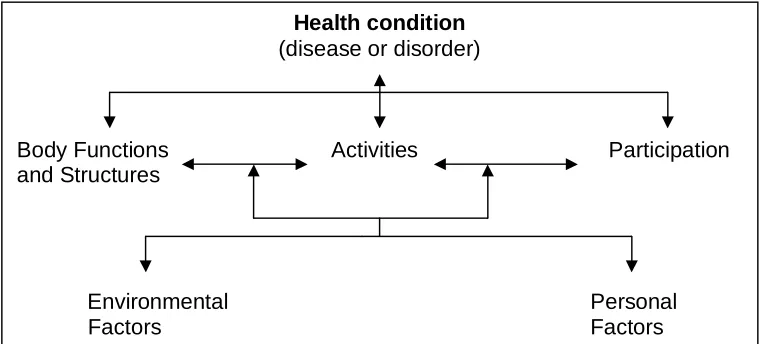
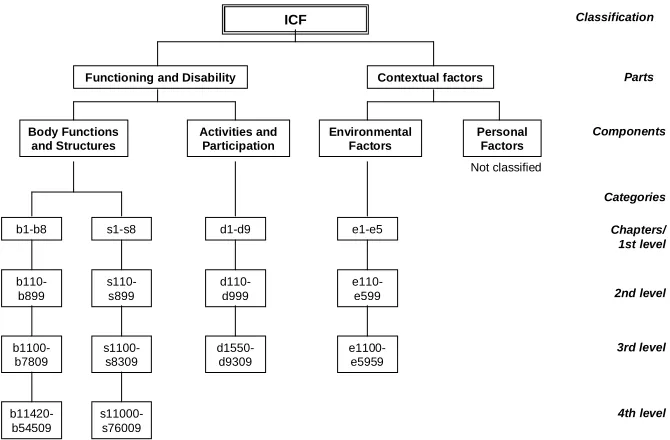
The theoretical approach for the ICF is a biopsychosocial model. An illness, according to the ICF, affects and can be affected by body structures and body functions and the patient’s activities and participation in everyday life. The patient’s status is also influenced by two contextual factors, namely personal factors as well as environmental factors. All of these factors are divided according to the classification into two main parts, Functioning and Disability and Contextual Factors. Each of these parts consists of two components, the former one of Body Functions (b) and Body Structures (s) as well as Activities and Participation (d) , the latter one of
Environmental Factors (e) and Personal Factors, which are not classified due to their
Figure 1: Biopsychosocial model
Each of the classified components consists of consecutively numbered chapters, representing the first level of classification. Within every chapter second, third and fourth levelled classification can be reached, gaining a higher precision the higher the classification. That means that a more detailed higher levelled category covers all the aspects applicable for the lower levelled category, of which it is a
member, but not vice versa. To assess the severity of the condition a number ranging from “zero” to “four”, meaning “no” to “complete” problem, is added to the relevant category.
Health condition
(disease or disorder)
Body Functions Activities Participation and Structures
Environmental Personal
ICF
Functioning and Disability Contextual factors
Body Functions and Structures Activities and Participation Environmental Factors Personal Factors
b1-b8 s1-s8 d1-d9 e1-e5 b110-b899 s110-s899 d110-d999 e110-e599 b1100-b7809 s1100-s8309 d1550-d9309 e1100-e5959 b11420-b54509 s11000-s76009 Not classified Classification Parts Components Chapters/ 1st level 2nd level 3rd level 4th level Categories
Figure 2: Structure of the International Classification of Functioning, Disability and Health
Since the classification as a whole is composed of more than 1400 different categories an application in clinical routine is not however feasible. Categories
relevant and more specific to certain, mostly chronic conditions needed identification. The resulting categories finally formed the ICF Core Sets; one brief version and another comprehensive one, for a variety of diseases, including rheumatoid arthritis (Cieza et al., 2004, Stucki et al., 2004).
The Comprehensive, as well as the Brief Core Set for rheumatoid arthritis was established following a formal decision-making and consensus process on the basis of preliminary studies conducted by health professionals experienced in
rheumatology (Stucki et al., 2004). Among these studies, a Delphi exercise was performed, which identified categories typical for rheumatoid arthritis in all ICF components (Weigl et al., 2004). An analysis of outcome measures of 382
randomized trials on rheumatoid arthritis as well as of 48 health status questionnaires concerning rheumatoid arthritis was carried out and the results, namely the extracted concepts, were linked to the ICF (Brockow et al., 2004). Thirdly a multi-centre, cross-sectional study involving samples of rheumatoid arthritis patients was conducted, in which patients’ problems were evaluated according to the ICF (Ewert et al., 2004). All in all these studies produced 530 ICF categories covering issues affected by this disease, composed of 203 categories on Body Functions, 76 on Body Structures, 188 on Activities and Participation and 63 on Environmental Factors. Based on these findings 17 rheumatology experts, among them seven physicians experienced in rehabilitation and physical medicine and seven rheumatologists, from 12 nations attended a consensus conference to define the final set of categories relevant for RA. In the end 96 categories were included in the Comprehensive Core Set for
as 21 from Environmental Factors. Almost 80% are second level categories, only 20% are third and fourth levelled ones. The brief version of the Core Set comprises 39 categories, all of them second levelled (Stucki et al., 2004).
0 5 10 15 20 25 30 35
number of categories
Body Functions
Body Structures
Activities and Participation
Environmental Factors
2nd level 3rd level 4th level
Figure 3: Comprehensive Core Set for rheumatoid arthritis
3.4 Objective
4. METHODS
4.1 Delphi Method
We conducted a three-round electronic-mail survey of physicians using the Delphi technique (Duffield, 1993; Goodman, 1987; Linstone & Turoff, 1975). The Delphi technique was developed in the 1950s and is of common use in health
scientific research since the mid 1970s. Its principal aim is to gain consensus from a panel of individuals, who have knowledge of the topic being investigated (Crisp et al., 1999; McKenna, 1994; Snyder-Halpern et al., 2000). These informed persons are commonly titled ‘experts’. The Delphi method is a multi-stage process where each stage builds on the results of the previous one. In a series of rounds, in this case three rounds, information about a particular participant is both gathered and provided using a questionnaire. The technique is characterized by its anonymity, thus avoiding group dominance and therefore allowing the individual to express freely his or her opinion. It is an iterative process which allows panel members to reconsider and possibly change their opinions in subsequent rounds. Thirdly it represents a
4.2 Recruitment of participants
The potential participants of the study were selected from of a pool of more than 6000 physicians listed by the EULAR, ACR and other rheumatology associations, as well as international congress participants, cooperation partners of the ICF research branch and personal contacts. Only persons with available email and/or fax number were included. In the first step, if there were more than 10 addresses available for one country in the pool, 10% of these were picked at random, whereas only one physician was selected for countries which showed less than 10 addresses. The United States of America represented a special case since only one participant for every single state was selected to avoid an overrepresentation. Every participant was contacted by e-mail.
To ensure that the participants of the study had sufficient expertise or content knowledge concerning RA treatment, the initial letter noted that participants should be “physicians experienced in the treatment of RA”.
The first contact included an invitation to participate and a detailed description of the projects targets, the Delphi process and the timeline. In case the selected person could not be contacted (e.g. due to wrong address/number), did not reply within one week or declined the participation, in a second step, a similar number of persons was picked at random from the pool and contacted.
Only persons who agreed to participate were included into the expert sample and received the questionnaire of the first Delphi round.
4.3 Delphi Process
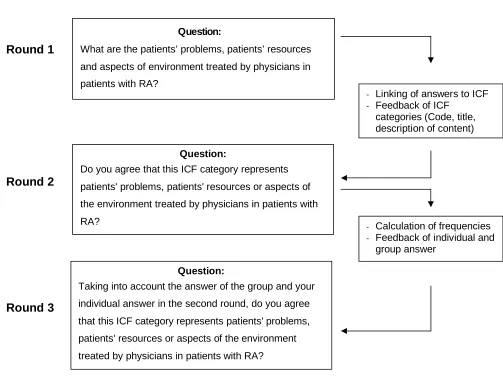
Question:
What are the patients’ problems, patients’ resources
and aspects of environment treated by physicians in
patients with RA?
their responses for each round. Reminders were sent in average three days before deadline and one week after the predetermined date.
Figure 4: Description of the Delphi-exercise
In round 1 of the Delphi exercise an information letter including instructions and an Excel file containing an open-ended questionnaire was sent to all experts. In the questionnaire the participants were requested to list all the patients’ problems, patients’ resources and aspects of environment treated by physicians in patients with RA. Additionally, the participants were asked to complete questions on demographic characteristics like age and gender and professional experience as well as
Question:
Do you agree that this ICF category represents
patients' problems, patients' resources or aspects of
the environment treated by physicians in patients with
RA?
Question:
Taking into account the answer of the group and your
individual answer in the second round, do you agree
that this ICF category represents patients' problems,
patients' resources or aspects of the environment
treated by physicians in patients with RA? Round 1
Round 2
Round 3
- Linking of answers to ICF - Feedback of ICF
categories (Code, title, description of content)
- Calculation of frequencies - Feedback of individual and
experience with RA and their self-rated expertise regarding this disease. Responses were collected, the basic concepts identified and linked to the ICF.
In the second Delphi round, the participants received a list of the ICF categories linked to the responses of the first round. The categories were ordered according to the structure of the ICF. The responses that could not be linked to an existing ICF category were categorized by the research team and listed as personal factors, health conditions or categories not yet covered by the ICF. The participants were instructed to agree or disagree as to whether the respective ICF category represented patients’ problems, patients’ resources or aspects of environment treated by physicians in patients with RA.
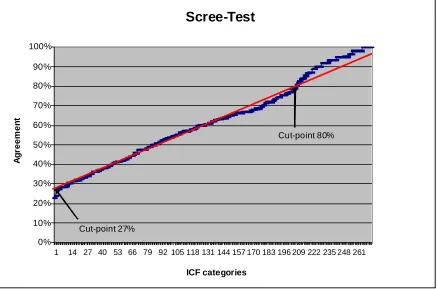
In order to prevent study dropout the participants of the third Delphi round received only a selection of the ICF categories included in the second round. Scree test was used to identify the categories which did not reach an adequate consensus. The Scree test includes an examination of a graph of the percentage of agreement among the participants plotted along the ordinate against the ICF categories plotted along the abscissa. A straight edge is placed along the points to see where they form an approximately straight line, the scree line. The points above and below the scree line indicate high consensus regarding the relevance or irrelevance of the
corresponding ICF categories whereas points near the scree line indicate missing consensus (Zoski & Jurs, 1990; Zoski & Jurs, 1991).
In the third Delphi round the participants received a list of the ICF categories including the proportion and the identification numbers of the participants who did agree that the categoriesrepresent patients’ problems, patients’ resources or aspects of environment treated by physicians in patients with RA. The participants were
4.4 Linking
An ICF category is coded by the component letter and a suffix of one to five digits. The letters b, s, d and e refer to the components Body Functions (b), Body Structures (s), Activities and Participation (d) and Environmental Factors (e) (see
figure 1). This letter is followed by a one digit number indicating the chapter, the code for the second level (two digits) and the third and fourth levels (one digit each). A higher level (more detailed) category shares the lower level categories of which it is the member, i.e. the use of a higher-level category implies that the lower level category is applicable, but the inverse is not true. The coding of a category
concerning alterations of the hand joints, which is included in the Comprehensive Core Set for RA, is coded as follows below:
Component s Body Structures
Chapter (1st level) s7 Structures related to movement
2nd level s730 Structure of upper extremity
3rd level s7302 Structure of hand
4th level s73021 Joints of hand and fingers
included in the ICF as a category, but defined as a personal factor by the
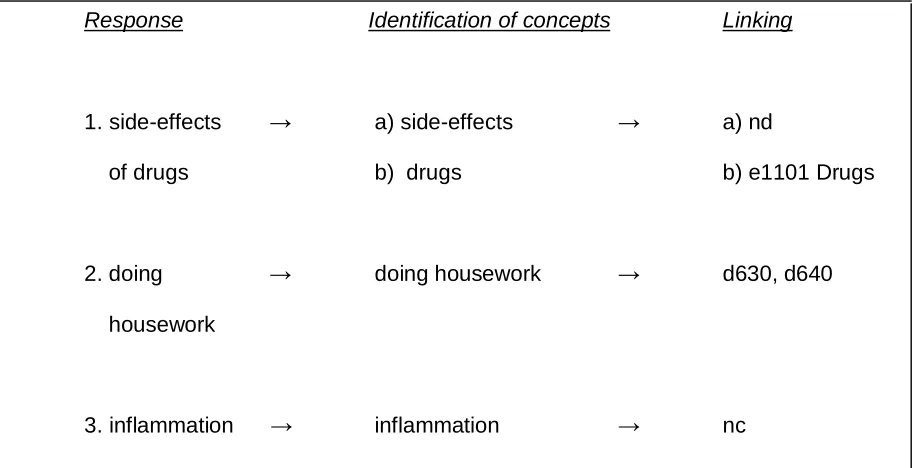
classification were listed by “pf”. If the concept contained a diagnosis or health state, “hc” (=health condition”) was assigned to it. Lastly, concepts neither included in the ICF nor describing a personal factor were declared “nc” (= not covered). The linkage was performed separately by two trained individuals (linkers), one medical school student and one member of the Institute for Health and Rehabilitation Sciences, according to the linking rules. Every response can contain one or more meaningful concepts and several ICF categories can be linked to each concept. A meaningful concept is a specific part of a text relating to one particular meaning without any interpretation. Consensus between the linkers was used to decide which ICF
categories should be linked to each response. In case of disagreements between the two linkers, the suggested categories were discussed by a team consisting of the two linkers and another experienced psychologist. Based on this discussion, a joint
decision was made.
Response Identification of concepts Linking
1. side-effects → a) side-effects → a) nd
of drugs b) drugs b) e1101 Drugs
2. doing → doing housework → d630, d640 housework
3. inflammation → inflammation → nc
4.5 Statistical methods
5. RESULTS
5.1 Recruitment and participants
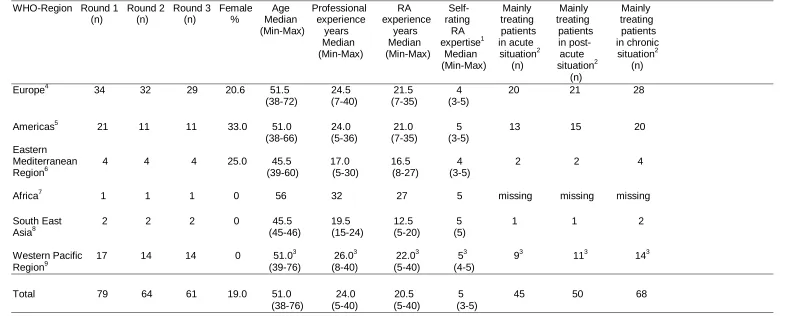
In the first random selection from the expert pool 141 physicians were contacted. Within one week 45 agreed to participate in the study, while 19 refused their participation and 34 e-mail or fax transmissions were declared undeliverable. The second round resulted in another 45 participants, 13 physicians turned down their involvement in the study and 15 could not be contacted due to technical
reasons. At the end of these two rounds 90 physicians agreed to provide information for the research on the Comprehensive ICF Core Set for rheumatoid arthritis.
Table 1: Attrition of participants between the Delphi rounds, demographics and professional experience of the round 1 participants
WHO-Region Round 1 Round 2 Round 3 Female Age Professional RA Self- Mainly Mainly Mainly (n) (n) (n) % Median experience experience rating treating treating treating (Min-Max) years years RA patients patients patients Median Median expertise1 in acute in post- in chronic (Min-Max) (Min-Max) Median situation2 acute situation2 (Min-Max) (n) situation2 (n)
(n)
Europe4 34 32 29 20.6 51.5 24.5 21.5 4 20 21 28 (38-72) (7-40) (7-35) (3-5)
Americas5 21 11 11 33.0 51.0 24.0 21.0 5 13 15 20 (38-66) (5-36) (7-35) (3-5)
Eastern
Mediterranean 4 4 4 25.0 45.5 17.0 16.5 4 2 2 4 Region6 (39-60) (5-30) (8-27) (3-5)
Africa7 1 1 1 0 56 32 27 5 missing missing missing South East 2 2 2 0 45.5 19.5 12.5 5 1 1 2 Asia8 (45-46) (15-24) (5-20) (5)
Western Pacific 17 14 14 0 51.03 26.03 22.03 53 93 113 143 Region9 (39-76) (8-40) (5-40) (4-5)
Total 79 64 61 19.0 51.0 24.0 20.5 5 45 50 68 (38-76) (5-40) (5-40) (3-5)
1
1= low 5=excellent 5 Argentina, Brazil, Canada, Chile, Cuba, Equador, Mexico, Peru, Uruguay, USA
2
more answers possible 6Egypt, Lebanon, Morocco, Qatar
3
data of two participants missing 7 South Africa
4
Armenia, Austria, Belgium, Czech Republic, Denmark, Germany, Finland, 8 India
5.2 Delphi process
In the first Delphi round 512 patients’ problems, patients’ resources and aspects of environment treated by physicians in patients with rheumatoid arthritis were named by 79 out of 90 participants (87.8%). Sixty-four out of 79 (81.0%) participants filled in the second round questionnaire. Of the 272 ICF categories, personal factors and aspects not classified in the ICF, which were part of the second round questionnaire, 193 categories with an agreement between 27% and 80% were selected using Scree test methodology (see figure 5) and presented to the
participants in the third round. Sixty-one out of 64 (95.3%) physicians returned the third round questionnaire.
The results including the percentage of agreement among the participants are shown in tables 3-8.
Scree-Test
0% 10% 20% 30% 40% 50% 60% 70% 80% 90% 100%
1 14 27 40 53 66 79 92105118131144157170183196209222235248261
ICF categories
A
g
re
e
m
e
n
t
Cut-point 27%
Cut-point 80%
5.3 Linking of the responses to the ICF
All components of the ICF were represented in the participants’ responses (see tables 2-6). Seven fourth level categories, 19 third level categories and 42 second level categories were linked to the component Body Functions. Four fourth level categories, eight third level categories and eight second level categories were linked to the component Body Structures. Fifty-seven third level categories and 37 second level categories were linked to the component Activities and Participation and 19 third level categories as well as 26 second level categories were linked to the component Environmental Factors. Twenty-six issues were named that could be attributed to the not yet developed component Personal Factors. Nineteen responses were declared not covered by the ICF.
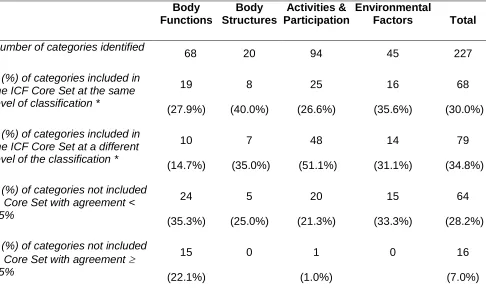
Table 2: Representation of identified ICF categories in the Comprehensive ICF Core Sets for rheumatoid arthritis: summary of results
Body Functions Body Structures Activities & Participation Environmental Factors Total
Number of categories identified
68 20 94 45 227
n (%) of categories included in the ICF Core Set at the same level of classification *
19 (27.9%) 8 (40.0%) 25 (26.6%) 16 (35.6%) 68 (30.0%) n (%) of categories included in
the ICF Core Set at a different level of the classification *
10 (14.7%) 7 (35.0%) 48 (51.1%) 14 (31.1%) 79 (34.8%) n (%) of categories not included
in Core Set with agreement < 75% 24 (35.3%) 5 (25.0%) 20 (21.3%) 15 (33.3%) 64 (28.2%) n (%) of categories not included
in Core Set with agreement 75%
15 (22.1%)
0 1
(1.0%)
0 16
(7.0%)
* The use of a more detailed ICF category (e.g. b1343 Quality of sleep) implies that the less detailed (lower level) ICF category is applicable.
5.4 Representation of the physicians` responses in the Comprehensive ICF Core Set for RA
5.4.1 Body Functions
categories that are included in the Core Set could not be linked to the responses (see table 3). Half of the latter categories could be linked at a different, namely at a higher level of classification to the issues named by the physicians; these were b130 Energy and drive functions, b180 Experience of self and time functions and b2801 Pain in
body part. On the other hand side b7102 Mobility of joints generalized and b28013
Pain in back were only represented by lower level categories in the participants’
responses and b740 Muscle endurance functions could not be found at all in the data provided by the study population. Eight categories that were linked to the responses were represented at a higher level of classification in the Core Set, which could be linked to the responses as well, for example b280 Sensation of pain and b2802 Pain in multiple body parts. Thirty-nine of the participants’ categories were found not to be
covered at all by the Comprehensive ICF Core Set for RA. Among these 15, namely six categories covering the functions of the cardiovascular and respiratory system (b410, b415, b420, b4200, b440, b460), b220 Sensations associated with the eye and adjoining structures, b435 Immunological system functions, b515 Digestive
functions, b530 Weight maintenance functions, b6601 Functions related to
pregnancy, b6700 Discomfort associated with sexual intercourse, b720 Mobility of
bone functions as well as b7200 Mobility of scapula and b840 Sensations associated
with the skin, showed an agreement among the participants of over 75%. On the
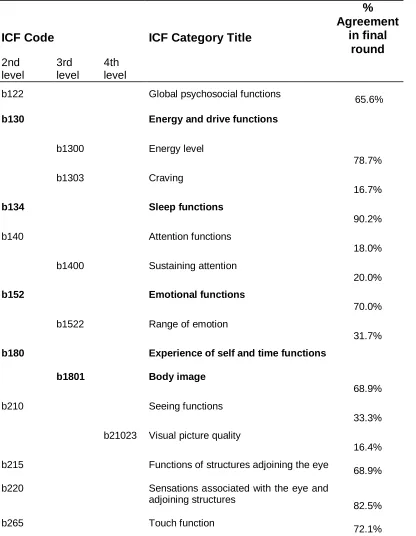
Table 3: ICF component Body Functions: ICF categories included in the ICF Comprehensive Core Set (bold-face letters) and ICF categories linked to participants’ responses, but not included in the ICF Comprehensive Core Set (light-face letters).
Percentage of participants who considered the respective ICF category as relevant in the last round.
ICF Code ICF Category Title
% Agreement
in final round 2nd
level
3rd level
4th level
b122 Global psychosocial functions
65.6%
b130 Energy and drive functions
b1300 Energy level
78.7%
b1303 Craving
16.7%
b134 Sleep functions
90.2%
b140 Attention functions
18.0%
b1400 Sustaining attention
20.0%
b152 Emotional functions
70.0%
b1522 Range of emotion
31.7%
b180 Experience of self and time functions
b1801 Body image
68.9%
b210 Seeing functions
33.3%
b21023 Visual picture quality
16.4%
b215 Functions of structures adjoining the eye
68.9%
b220 Sensations associated with the eye and adjoining structures
82.5%
b265 Touch function
2nd level 3rd level 4th level
b2702 Sensitivity to pressure
72.1%
b280 Sensation of pain
90.5%
b2800 Generalized pain
92.1%
b2801 Pain in body part
b28010 Pain in head and neck
96.8%
b28011 Pain in chest
83.9%
b28012 Pain in stomach or abdomen
88.9%
b28013 Pain in back b28014 Pain in upper limb
98.4%
b28015 Pain in lower limb
98.4%
b28016 Pain in joints
100.0%
b2802 Pain in multiple body parts
91.9%
b410 Heart functions
90.2%
b415 Blood vessel functions
86.9%
b420 Blood pressure functions
93.4%
b4200 Increased blood pressure
94.9%
b430 Haematological system functions
93.3%
b435 Immunological system functions
90.5%
b440 Respiration functions
91.7%
b445 Respiratory muscle functions
65.0%
b450 Additional respiratory functions
41.0%
b455 Exercise tolerance functions
86.9%
b4551 Aerobic capacity
65.6%
b4552 Fatiguability
85.7%
b460 Sensations associated with
cardiovascular and respiratory functions
78.3%
b510 Ingestion functions
78.7%
b5104 Salivation
93.5%
b515 Digestive functions
2nd level 3rd level 4th level
b520 Assimilation functions
24.6%
b525 Defecation functions
42.6%
b530 Weight maintenance functions
87.3%
b535 Sensations associated with the digestive system
42.6%
b540 General metabolic functions
50.8%
b545 Water, mineral and electrolyte balance functions
63.9%
b555 Endocrine gland functions
67.2%
b640 Sexual functions
75.0%
b650 Menstruation functions
58.3%
b6600 Functions related to fertility
68.9%
b6601 Functions related to pregnancy
88.5%
b6603 Lactation
58.3%
b6700 Discomfort associated with sexual intercourse
78.3%
b710 Mobility of joint functions
93.5%
b7102 Mobility of joints generalized
b715 Stability of joint functions
91.9%
b720 Mobility of bone functions 90.3%
b7200 Mobility of scapula
88.3%
b730 Muscle power functions
82.0%
b7300 Power of isolated muscles and muscle groups
88.5%
b740 Muscle endurance functions
b750 Motor reflex functions
36.1%
b755 Involuntary movement reaction functions
31.1%
b760 Control of voluntary movement functions
60.7%
b765 Involuntary movement functions
20.0%
b770 Gait pattern functions
2nd level
3rd level
4th level
b780 Sensations related to muscles and
movement functions
82.0%
b7800 Sensation of muscle stiffness
86.9%
b810 Protective functions of the skin
50.8%
b840 Sensation related to the skin
80.3%
5.4.2 Body Structures
Of the component Body Structures 20 ICF categories could be linked to the participants’ responses. Among these, eight categories were also represented in the Comprehensive ICF Core Set for RA at the same level of classification. Ten
categories, which are part of the Core Set, were found not to be named by the
physicians (see table 4); these were very detailed fourth level categories like s75011 Knee joint but also more general second level categories, for example s710 Structure
of head and neck region. The former category, as well as s73001 Elbow joint and
s75001 Hip joint, were represented by lower level categories in the issues raised by
the experts. Five categories, that were deemed important by a percentage of 13.3% to 65.6% of the participants, are not part at all of the Comprehensive ICF Core Set for RA, not even as lower levelled categories. However, none of these reached an
Table 4: ICF component Body Structures: ICF categories included in the ICF Comprehensive Core Set (bold-face letters) and ICF categories linked to participants’ responses, but not included in the ICF Comprehensive Core Set (light-face letters).
Percentage of participants who considered the respective ICF category as relevant in the last round.
ICF Code ICF Category Title
% Agreement in final round 2nd level 3rd level 4th level
s110 Structure of brain
13.3%
s120 Spinal cord and related structures
57.4%
s140 Structure of sympathetic nervous system
25.0%
s150 Structure of parasympathetic nervous system
23.7%
s299 Eye, ear and related structures,
unspecified
s430 Structure of respiratory system
65.6%
s710 Structure of head and neck region
s7103 Joints of head and neck region
100.0%
s720 Structure of shoulder region
s730 Structure of upper extremity
95.1%
s73001 Elbow joint s73011 Wrist joint
100.0%
s7302 Structure of hand
95.1%
s73021 Joints of hand and fingers
100.0%
s750 Structure of lower extremity
95.1%
s75001 Hip joint
s7502 Structure of ankle and foot
96.7%
s75021 Ankle joint and joints of foot and toes
100.0%
2nd level
3rd level
4th level
s7600 Structure of vertebral column s76000 Cervical vertebral column
96.7%
s770 Additional musculoskeletal
structures related to movement
s7700 Bones
98.4%
s7701 Joints
100.0%
s7703 Extra-articular ligaments, fasciae, extramuscular aponeuroses, retinacula, septa, bursae, unspecified
96.7%
s810 Structure of areas of skin
78.7%
s8102 Skin of upper extremity
78.7%
s8104 Skin of lower extremity
78.7%
5.4.3 Activities and Participation
Activities and Participation was considered the most important field in which
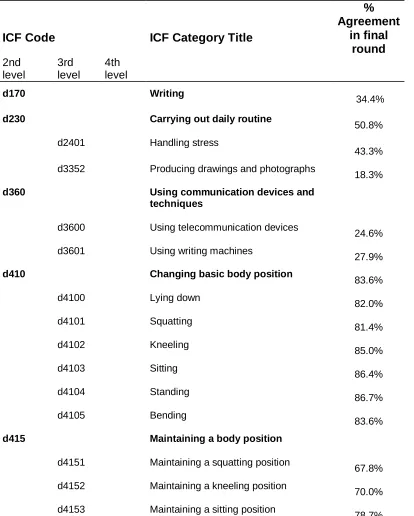
patients experienced problems as far as disability, since 94 categories were linked. The 32 categories of this component that are included in the Comprehensive ICF Core Set for RA were largely supported by the experts whose responses could be linked to 25 categories at the same level of classification (see table 5). Of the remaining seven categories of the ICF Core Set five could be linked at a different level of classification, namely at a higher level, whereas two were not found to be mentioned by the physicians, namely d449 Carrying, moving and handling objects. other specified and unspecified and d859 Work and employment. other specified and
unspecified. Twenty-one categories that were adressed by the participants’
Table 5: ICF component Activities and Participation: ICF categories included in the ICF Comprehensive Core Set (bold-face letters) and ICF categories linked to participants’ responses, but not included in the ICF Comprehensive Core Set (light-face letters).
Percentage of participants who considered the respective ICF category as relevant in the last round
ICF Code ICF Category Title
% Agreement in final round 2nd level 3rd level 4th level
d170 Writing
34.4%
d230 Carrying out daily routine
50.8%
d2401 Handling stress
43.3%
d3352 Producing drawings and photographs
18.3%
d360 Using communication devices and
techniques
d3600 Using telecommunication devices
24.6%
d3601 Using writing machines
27.9%
d410 Changing basic body position
83.6%
d4100 Lying down
82.0%
d4101 Squatting
81.4%
d4102 Kneeling
85.0%
d4103 Sitting
86.4%
d4104 Standing
86.7%
d4105 Bending
83.6%
d415 Maintaining a body position
d4151 Maintaining a squatting position
67.8%
d4152 Maintaining a kneeling position
70.0%
d4153 Maintaining a sitting position
2nd level 3rd level 4th level
d4154 Maintaining a standing position
83.3%
d430 Lifting and carrying objects
d4300 Lifting
86.7%
d4301 Carrying in the hands
83.3%
d4302 Carrying in the arms
83.3%
d4303 Carrying on shoulders, hip and back
79.7%
d435 Moving objects with lower extremities
78.0%
d440 Fine hand use
85.0%
d4400 Picking up
83.3%
d4401 Grasping
85.0%
d4402 Manipulating
83.3%
d445 Hand and arm use
84.7%
d4452 Reaching
83.1%
d4453 Turning or twisting the hands or arms
85.0%
d449 Carrying, moving and handling
objects. other specified and unspecified
d450 Walking
84.7%
d4500 Walking short distances
81.4%
d4502 Walking on different surfaces
76.7%
d455 Moving around
76.7%
d4551 Climbing
78.3%
d460 Moving around in different locations
80.0%
d465 Moving around using equipment
75.9%
d470 Using transportation
70.0%
d4701 Using private motorized transportation
60.3%
d4702 Using public motorized transportation
59.3%
d475 Driving
73.3%
d4750 Driving human-powered
transportation
2nd level 3rd level 4th level
d4751 Driving motorized vehicles
66.7%
d510 Washing oneself
83.3%
d5101 Washing whole body
81.4%
d520 Caring for body parts
81.4%
d5202 Caring for hair
80.0%
d530 Toileting
81.4%
d540 Dressing
87.9%
d5400 Putting on clothes
79.7%
d5401 Taking off clothes
81.4%
d5403 Taking off footwear
83.1%
d550 Eating
78.0%
d560 Drinking
83.3%
d570 Looking after one`s health
d5701 Managing diet and fitness
59.3%
d5702 Maintaining one's health
78.0%
d620 Acquisition of goods and services
d6200 Shopping
25.4%
d630 Preparing meals
40.7%
d640 Doing housework
61.0%
d6400 Washing and drying clothes and garments
37.3%
d6401 Cleaning cooking area and utensils
33.9%
d6402 Cleaning living area
47.5%
d6403 Using household appliances
33.9%
d6404 Storing daily necessities
23.7%
d6405 Disposing of garbage
25.4%
d6501 Maintaining dwelling and furnishings
16.9%
d6505 Taking care of plants, indoors and outdoors
15.3%
d660 Assisting others
2nd level 3rd level 4th level
d740 Formal relationships
13.3%
d750 Informal social relationships
13.3%
d7500 Informal relationships with friends
11.9%
d7501 Informal relationships with neighbours
11.9%
d760 Family relationships
16.7%
d770 Intimate relationships
23.3%
d7702 Sexual relationships
41.7%
d825 Vocational training
25.4%
d830 Higher education
16.7%
d840 Apprenticeship (work preparation)
23.3%
d845 Acquiring, keeping and terminating a job
32.2%
d8450 Seeking employment
22.0%
d8451 Maintaining a job
67.8%
d850 Remunerative employment
67.2%
d855 Non-remunerative employment
33.9%
d859 Work and employment, other
specified and unspecified
d860 Basic economic transactions
11.7%
d870 Economic self-sufficiency
13.3%
d8700 Personal economic resources
15.0%
d910 Community life
25.0%
d920 Recreation and leisure
63.8%
d9201 Sports
55.9%
d9202 Arts and culture
31.6%
d9203 Crafts
37.9%
d9204 Hobbies
23.7%
d9205 Socializing
28.3%
d930 Religion and spirituality
13.3%
d950 Political life and citizenship
5.4.4 Environmental Factors
Table 6: ICF component Environmental Factors: ICF categories included in the ICF Comprehensive Core Set (bold-face letters) and ICF categories linked to participants’ responses, but not included in the ICF Comprehensive Core Set (light-face letters).
Percentage of participants who considered the respective ICF category as relevant in the last round.
ICF Code ICF Category Title
% Agreement in final round 2nd level 3rd level 4th level
e110 Products or substances for personal
consumption
e1100 Food
21.7%
e1101 Drugs
76.7%
e115 Products and technology for
personal use in daily living
61.0%
e1151 Assistive products and technology for personal use in daily living
85.0%
e120 Products and technology for
personal indoor and outdoor mobility and transportation
75.0%
e1201 Assistive products and technology for personal indoor and outdoor mobility and transportation
75.0%
e125 Products and technology for
communication
e1251 Assistive products and technology for communication
49.2%
e135 Products and technology for
employment
25.0%
e1351 Assistive products and technology for employment
26.7%
e140 Products and technology for culture, recreation and sport
21.7%
e150 Design, construction and building
products and technology of buildings for public use
2nd level 3rd level 4th level
e155 Design, construction and building
products and technology of buildings for private use
23.3%
e1650 Financial assets
23.0%
e225 Climate
24.2%
e2250 Temperature
11.7%
e310 Immediate family
32.2%
e315 Extended family
16.7%
e320 Friends
18.3%
e325 Acquaintances, peers, colleagues, neighbours and community members
18.3%
e330 People in positions of authority
8.3%
e335 People in subordinate positions
8.3%
e340 Personal care providers and personal
assistants
65.0%
e355 Health professionals
96.7%
e360 Other professionals
e410 Individual attitudes of immediate family members
71.7%
e415 Individual attitudes of extended family members
23.7%
e420 Individual attitudes of friends
26.7%
e425 Individual attitudes of acquaintances, peers, colleagues, neighbours and community members
21.1%
e450 Individual attitudes of health
professionals
70.0%
e460 Societal attitudes
40.7%
e540 Transportation services, systems and
policies
28.8%
e5400 Transportation services
25.0%
e5401 Transportation systems
23.3%
e5550 Associations and organizational services
2nd level
3rd level
4th level
e5600 Media services
35.0%
e565 Economic services, systems and
policies
16.9%
e570 Social security services, systems and policies
42.4%
e5700 Social security services
56.7%
e5702 Social security policies
61.7%
e575 General social support services, systems and policies
56.7%
e5750 General social support services
56.7%
e580 Health services, systems and policies
e5800 Health services
90.0%
e5801 Health systems
83.3%
e5802 Health policies
77.6%
e5850 Education and training services
51.7%
e595 Political services, systems and policies
5.4.5 Personal Factors
Twenty-six responses were linked to the not yet developed ICF component Personal Factors (see table 7). All of these issues addressed comorbid health
problems often associated with RA, like Sjögren syndrome, Osteoporosis and Cardiovascular diseases, or factors that influence patients in a negative or positive
way or describe the way they deal with their condition like Coping and Knowledge of disease/treatment. Except for Intellectual background, Resignation and
Coccydiomycosis, the participants agreed on the importance of the mentioned factors
by a percentage of at least 78%.
Table 7: Responses that were linked to the ICF component Personal Factors.
Percentage of participants who considered the respective responses as relevant in the last round.
Answer %
Agreement in final round Knowledge of
disease/treatment
98.4%
Osteoporosis
98.4%
Sjögren Syndrome
98.4%
Amyloidosis
95.2%
Feltys Syndrome
95.2%
Other articular manifestations
95.2%
Pulmonary diseases
95.2%
Cardiovascular diseases
93.7%
Gastrointestinal diseases
93.7%
Comorbidities
Answer % Agreement in final round Pleural manifestations
92.1%
Fever
90.5%
Neuropathies
90.5%
Risk factors
88.9%
Depression
87.3%
Fibromyalgia
87.3%
Eye-related diseases
85.7%
Coping 84.2%
Sepsis
84.1%
Sexual Health
81.4%
Stamina
81.4%
Diabetes
81.0%
Self-esteem
78.0%
Coccydiomycosis
59.6%
Resignation
59.3%
Intellectual background
5.4.6 Not covered
Nineteen responses of the experts were declared “not covered” since they address issues that are not classified by the ICF (see table 8). Among these, some were considered too vague to be linkable to the ICF like Inflammation, Infections, Deformities and Exacerbation, whereas others regarded interventions aimed at the
patient’s environment like Counselling of occupational environment and Family
counselling. However, all aspects but one, namely Incubation, reached an agreement
of over 78%.
Table 8: Responses that could not be linked to a specific ICF category since the concept is not covered by ICF.
Percentage of participants who considered the respective responses as relevant in the last round.
Answer %
Agreement in final round Inflammation
100.0%
Treatments
100.0%
Deformities
98.4%
Swelling
98.4%
Diagnosis
95.2%
Prognosis
95.2%
Skin nodules
95.2%
Exacerbation
93.7%
Infections
93.7%
Educating health professionals
Answer % Agreement in final round Patients’ Education
92.1%
Monitoring
88.7%
Family counselling
86.4%
Aetiology
84.7%
Prevention
84.7%
Edema
82.5%
Counselling of occupational environment
79.7%
Risk for family members
78.0%
Incubation
17.2%
6. DISCUSSION
6. 1 Body Functions
The current version of the Comprehensive ICF Core Set for RA was supported to a large extent by the panel of experts, especially regarding the components Body Structures, Environmental Factors and Activities and Participation. However, with
regard to the component Body Functions some aspects of the disease are not represented in the Core Set.
In particular the involvement of cardiovascular functions may be useful to be considered in the Core Set, since five categories, namely b410 Heart functions, b415 Blood vessel functions, b420 Blood pressure functions, b4200 Increased blood
pressure and b460 Sensations associated with cardiovascular and respiratory
functions, reached an agreement over 75% among the experts. This association was
the subject of many studies. It was demonstrated that patients affected by
inflammatory diseases like RA have an increased risk for cardiovascular morbidity and mortality and should therefore be closely monitored and treated (Chung et al., 2007; Snow & Mikuls, 2005). Among many others, positivity of HLA-DRB1*04 shared epitope alleles and elevated anticardiolipin antibodies in RA patients are currently discussed as causal factors for this higher risk (Gonzales-Gay et al., 2007; Sherer et al., 2007). Glucocorticoids, one of the main substances used in RA therapy,
and treatment of RA patients aiming at a highest possible control of this excessive burden of cardiovascular morbidity (Pham et al., 2006). Consequently an introduction of the cardiovascular aspect of the disease into the Core Set for RA could be
advantageous.
Closely connected with the cardiovascular aspect of the disease is another category that was considered relevant, namely b530 Weight maintenance functions. Indeed, it was demonstrated that patients with RA show a higher prevalence of the metabolic syndrome, as it is defined by the WHO and the NCEPIII criteria, than healthy controls which by itself again predisposes patients to cardiovascular events (Chung et al., 2007). A possible reason for struggle in weight maintenance is, amongst other factors, the adipokine resistin which represents an important connection between insulin resistance and obesity and contributes to the inflammatory reactions in rheumatoid arthritis (Bokarewa et al., 2005). The intake of glucocorticoids is highly predispositional for weight gain.
A lack of physical activity can be a contributor as well as a consequence of rheumatic cachexia, a cell loss predominantly affecting skeletal muscle cells (Walsmith &
Roubenoff, 2002).
Respiration functions and associated sensations, dealt with in the categories b440 Respiration functions as well as the already mentioned b460 Sensations
associated with cardiovascular and respiratory functions, represent another issue
potentially interesting for an introduction into the Core Set for RA. A number of studies demonstrated that rheumatoid arthritis is often accompanied by impairments of the airways. These range from morphological changes noticeable in high-
resolution computed tomography, like air trapping and bronchiectasis, to functional impairments, like reduced respiratory muscle strength and endurance. This results in a lower aerobic capacity compared to healthy controls (Cimen et al., 2001; Perez et al., 1998). Pulmonary function tests in RA patients frequently show decreases in the forced expiratory fraction (FEF 25%/50%/75%/25-75%) indicating an involvement of the small airways (Cortet et al., 1997). However, the Core Set does not provide any reference to this aspect of the disease.
Over 80% of the experts in this study agreed that b220 Sensations associated with the eye and adjoining structures is neglected in the current Core Set although it
is one of the targets of interventions. Literature clearly supports a close relationship between RA and ocular symptoms. Particularly a feeling of dryness resulting from secondary Sjogren’s Syndrome, a condition that especially correlates with higher titers of rheumatoid factor (Matsuo et al., 1997), is a common problem. Other complications include episcleritis and involvement of the cornea as well as an elevated risk for the development of a cataract due to glucocorticoid side effects. Even in patients not affected by Sjogren’s disease microscopical changes of the eye can be observed, which correlate with disease activity. These are the number of activated keratocytes as well as beadlike formations.
patients (Piper et al., 2007; Reddy & Rao, 1996; Shaw et al., 2003; Villani et al., 2008).
A significantly important patients’ problem physicians are confronted with is represented by the category b435 Immunological system functions according to over 90% of the participants. Considering the autoimmune pathogenesis of RA a general impairment of the patients’ immunological system is obvious and thus, a higher susceptibility to infections than the healthy population. Amongst other theories, a deficiency in the functioning of neutrophils is discussed as a contributor to increased risk for bacterial infections (Fairhurst et al., 2007). Beyond this, there is consensus that RA therapy, namely the application of immunosuppressive glucocorticoids and especially TNFα antagonists, is a main risk factor by itself in the development of
severe infections, like for example pneumonia caused by opportunistic pathogen pneumocystis carinii (Curtis et al., 2007; Kalyoncu et al., 2007; Kroesen et al., 2003; Strangfeld & Listing, 2006). Efforts are made in clinical practice to diagnose and treat infectious complications and an inclusion of this category in the Comprehensive Core Set for rheumatoid arthritis would be appropriate from the perspective of physicians.
The current Core Set takes into account b510 Ingestion functions as an outcome of interventions by rheumatologists, but not b515 Digestive functions which was considered relevant by the experts in this study. It is of interest to keep in mind the gastrointestinal tract of patients since a number of substances used in RA therapy have gastrointestinal side effects. Most important are NSAIDs of which dyspepsia and ulcers are main complications. For this reason physicians often
As the majority of rheumatoid arthritis patients are female and the disease represents no contraindication to pregnancy, 88.5% of participants deemed the category b6601 Functions related to pregnancy to be relevant for the Core Set. Recent studies show that women with RA have a higher risk for complications like hypertensive disorder and caesarean section. If a continuation of drug therapy is required, potential adverse outcomes have to be considered and a change in therapy might be necessary. A multidisciplinary approach is recommended to monitor both pregnancy and rheumatoid arthritis and treat problems immediately (Chakravarty et al., 2006; Saar et al., 2006). Thus, it could be useful if the Core Set provides a reference to this aspect since the ICF and the Core Sets are also intended to serve as a tool for the planning of treatment.
The category b6700 Discomfort associated with sexual intercourse also reflects a patients’ problem that may be addressed by clinical interventions, like a large number of the experts believed. According to several researchers sexual dissatisfaction and a lack of sexual desire is quite common among RA patients. One study estimated that more than 60% of women affected by rheumatoid arthritis suffer from these problems. The reasons are pain, stiffness and also psychological
problems like depression and anxiety because of a negatively perceived body image and concerns about health. In men problems with orgasm can additionally appear, triggered by substances influencing the ejaculation function or impotence, which can be a side-effect of methotrexate. Consequently rheumatologists are requested to intervene in this area. In severe cases a consultation of psychologists might be discussed (Abdel-Nasser & Ali, 2006; Aguirre et al., 2002; Gutweniger et al., 1999; van Berlo et al., 2007).
arthritis, namely articulations and the individual associated structures. However, the panel of experts identified b720 Mobility of bone functions and the more specific category b7200 Mobility of the scapula, which are not yet included. Actually, changes in bone structure and by that function play an important role for physicians in the management of RA. Bone abnormalities have to be considered and if possible treated for their increased risk of fracture and potential complications in the surgical reconstruction of affected joints (Bogoch & Moran, 1999). It has been demonstrated that patients profit from surgical interventions aimed at the shoulder, if conservative management, like range-of-motion exercises, fails (Clayton & Ferlic, 1975).
Lastly, a large number of physicians named the category b840 Sensation related to the skin an area that required their interventions. Pruritus is the main
reason for complaints. In most cases it is caused by dryness of the skin due to Sjogren comorbidity (Provost & Watson, 1992). On the other hand pruritus can be a side-effect of oral gold salts, a substance used especially in the past in RA therapy (Bonnetblanc, 1996). The elevated risk for skin cancers, particularly melanoma, caused by biologic therapy and methotrexate, should not be neglected. A
dermatological assessment may be part of the treatment and therefore an inclusion in the Core Set might be useful (Buchbinder et al., 2008; Wolfe & Michaud, 2007).
6.2 Body Structures
The main finding in this component is that two categories contained in the
Comprehensive Core Set for RA were not mentioned at all by the experts who took part in this study. This is interesting because categories of the component Body Functions related with these structures were found to be of particular relevance and