CHOMBA M. WA MUNYI
E83/27305/2014
A RESEARCHTHESIS SUBMITTED IN PARTIAL
FULFILLMENT OF THE DEGREE OF DOCTOR OF
PHILOSOPHY IN THE SCHOOL OF EDUCATION
SPECIAL NEEDS EDUCATION
KENYATTA UNIVERSITY
DECLARATION
I hereby declare that this submission is my own work and that, to the best of my knowledge and belief, it contains no material previously published or written by another person nor material which to a substantial extent has been accepted for the award of any other degree or diploma of the university or other institute of higher learning, except where due acknowledgment has been made in the text.
Signature _________________________ Date ______________________
Chomba M. WaMunyi E83/27305/2014
Supervisors: This dissertation has been submitted for appraisal with our/my approval as University supervisor(s).
Signature _________________________ Date ______________________
Dr. Margaret Murugami
Department of Special Needs Education, Kenyatta University
Signature _________________________ Date ______________________
Dr. Stephen Nzoka
Department of Special Needs Education, Kenyatta University
Signature ________________________ Date ______________________
Prof. Desmond Ozoji
DEDICATION
TABLE OF CONTENTS
DECLARATION ... ii
DEDICATION ... iii
TABLE OF CONTENTS ... iv
LIST OF TABLES ... vii
LIST OF FIGURES ... ix
ACKNOWLEDGEMENTS ... x
LIST OF ABBREVIATIONS ... xi
ABSTRACT ... xii
CHAPTER ONE: INTRODUCTION ... xi
1.1 Introduction ... 1
1.2 Background to the Study ... 1
1.3 Statement of the Problem ... 11
1.4 Purpose of the Study ... 13
1.5 Objectives of the Study ... 13
1.6 Research Questions ... 14
1.7 Significance of the Study ... 15
1.8 Limitations and De-limitations of the Study ... 16
1.8.1 Limitations... 16
1.8.2 De-limitations ... 17
1.9 Assumptions of the Study ... 17
1.10 Theoretical and Conceptual Framework ... 17
1.11 Operational Definition of Terms ... 22
CHAPTER TWO: LITERATURE REVIEW ... 24
2.1 Introduction ... 24
2.2 Factors Influencing Braille Literacy ... 24
2.3 Phonological Training and Reading Activities ... 27
2.4 Professional Preparation for Teaching Braille Literacy... 35
2.5 Perceptions on Uncontracted and Contracted Braille ... 42
2.5.1 Hand Movements in Contracted and Uncontracted Braille ... 45
2.6 Print and Braille Literacy for the Low Vision ... 50
2.7 Perceptions on Teaching Literacy through Braille and Assistive Technology ... 54
2.8 Summary ... 59
CHAPTER THREE: RESEARCH DESIGN AND METHODOLOGY ... 61
3.1 Introduction ... 61
3.3 Variables ... 63
3.3.1 Independent Variables... 64
3.3.2 Dependent Variable ... 64
3.4 Location of the Study ... 64
3.5 Target Population ... 66
3.6 Sampling Techniques and Sample Size ... 67
3.6.1 Sampling Techniques ... 67
3.7 Research Instruments ... 74
3.8 Pilot Study ... 76
3.8.1 Validity ... 78
3.8.2 Reliability ... 79
3.9 Data Collection Techniques ... 81
3.10 Data Analysis... 82
3.11 Logistical and Ethical Considerations ... 84
CHAPTER FOUR: FINDINGS, INTERPRETATION AND DISCUSSION ... 86
4.1 Introduction. ... 86
4.2 Demographic Information of the Teachers ... 87
4.3Teachers‟ Perceptions on Factors Influencing Braille Literacy (Objective One) ... 86
4.4Teachers‟ Perceptions on Phonological Training and Reading Activities forYoung Children with Visual Impairment (Objective Two) ... 95
4.5 Perception of Teachers on their Professional Preparation (Objective Three) ... 107
4.5.1 Teachers‟ perceptions on their professional preparation in Braille literacy... 109
4.5.2 Teachers‟ Opinion after Completion of Braille Literacy Training ... 110
Learnerswith Low Vision (Objective Five) ... 125
4.8 Teachers‟ Perceptions on the Use of Braille and Assistive Technology in Teaching Literacy Skills (Objective Six)... 133
4.9 Analysis of Teachers‟ Suggestions / Recommendations ... 138
4.10 Interview with Headteachers of Schools for Learners with Visual Impairment on the Situation of Braille Literacy in their Schools ... 141
CHAPTER FIVE: SUMMARY, CONCLUSIONS AND RECOMMENDATIONS ... 164
5.1 Introduction ... 164
5.2 Summary of the Main Findings ... 164
5.3 Conclusions ... 169
5.4 Recommendations... 171
REFERENCES ... 175
APPENDIX A: LETTER OF INTRODUCTION ... 187
APPENDIX B:RESEARCH QUESTIONNAIRE ... 188
APPENDIX C:INFORMED CONSENT FORM FOR TEACHERS ... 197
APPENDIX D:INTERVIEW GUIDE FOR HEADTEACHERS ... 198
APPENDIX E:INFORMED CONSENT FORM FOR THE HEADTEACHERS .... 200
APPENDIX F:RESEARCH AUTHORIZATION LETTER ... 201
APPENDIX G:RESEARCH AUTHORIZATION PERMIT ... 202
LIST OF TABLES
Table 3.1: The distribution of target population of headteachers and teachers ... 67
Table 3.2: Distribution of Sample Population ... 72
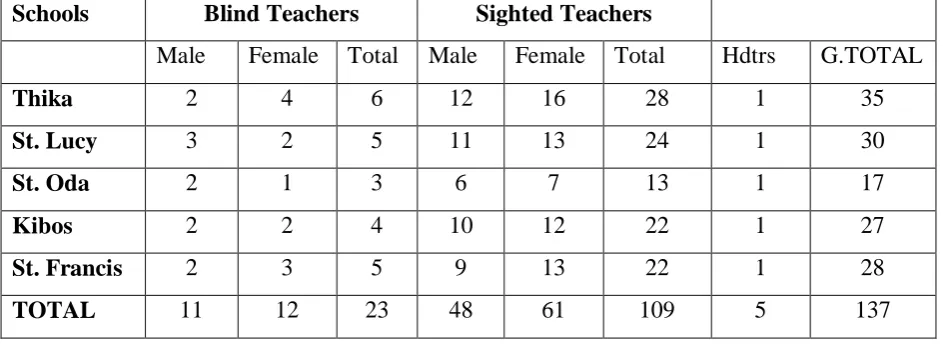
Table 4.1: Teachers‟ demographic information ... 88
Table 4.2: Teachers‟ perceptions on factors influencing Braille instruction ... 92
Table 4.3: Teachers‟ perceptions on the decline in Braille literacy ... 92
Table 4.4: Teachers‟ own feelings regarding factors influencing Braille teaching ... 93
Table 4.5: Teachers‟ perception on phonological training and reading for young Braille beginners... 96
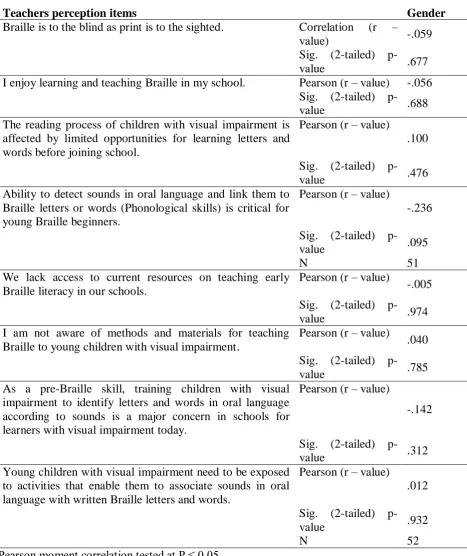
Table 4.6: Correlation matrix showing teachers‟ perception in relation toteachers‟ gender ... 98
Table 4.7: Correlation matrix showing teachers‟ perception in relation to teachers' Braille teaching experience ... 100
Table 4.8: Correlation matrix showing teachers‟ perceptions in relation to theirageError! Bookmark not defined. Table 4.9: Activities used by teachers to promote sound-letter and sound-word Association skills ... 104
Table 4.10: Teachers‟ perception on their professional preparation to teachBraille.. 107
Table 4.11: Teachers‟ perception on their Braille proficiency ... 108
Table 4.12: Teachers‟ opinion on profession preparation on Braille literacy instruction ... 110
Table 4.13: Correlation matrix showing teachers‟ opinions on professional preparation for Braille literacy in relation to teachers‟ age ... 112
Table 4.14: Correlation matrix showing teachers‟ opinions on professional preparation in Braille literacy in relation to their experience ... 113
Table 4.15: Teachers‟ perception on teaching contracted and uncontractedEnglish Braille code ... 116
Table 4.17: Correlation matrix showing teachers‟ perception on teachingcontracted and uncontracted English Braille in relation to teachers‟Braille teaching
experience ... 120 Table 4.18: Perceptions on provision of print and Braille literacy to learners with low vision ... 126 Table 4.19: Correlation matrix showing teachers‟ perceptions on provision of
print and Braille in relation to the age of the teacher ... 129 Table 4.20: Correlation matrix showing teachers‟ perceptions on provision of
print and Braille in relation to Braille teaching experience………131
Table 4.21: Teachers‟ perception on Braille and assistive technology ... 133 Table 4.21: Teachers‟ perception on Braille and assistive technology ... 133 Table 4.22: Correlation analysis showing teachers‟ perceptions on the use ofBraille and assistive technology ... 134 Table 4.23: Correlation matrix on teachers‟ perceptions on the use of Braille and assistive technology in teaching literacy skills in relation to Braille
teaching experience ... 135 Table 4.24: Teacher‟s suggestions on Braille training curriculum, students‟
LIST OF FIGURES
Figure 1.1: Braille Alphabet... 89
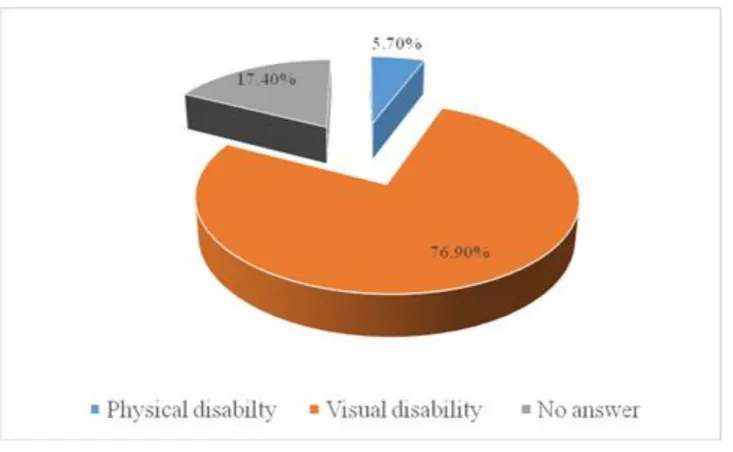
Figure 4.1: Teachers with disabilities ... 89
Figure 4.2: Nature of disability of the teachers ... 90
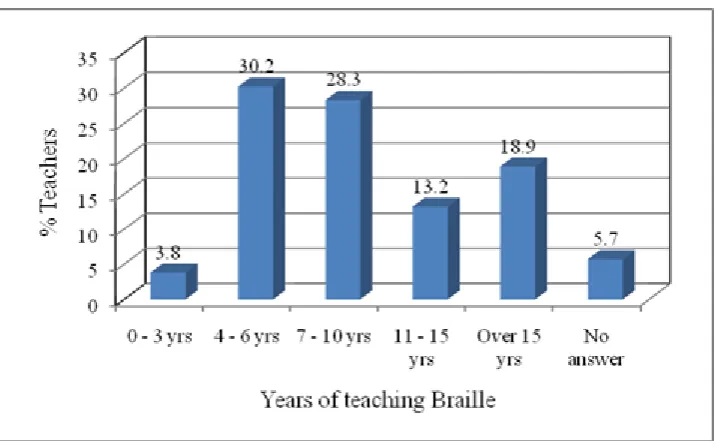
Figure 4.3: Number of years of teaching Braille ... 905
ACKNOWLEDGEMENTS
The completion of this dissertation was made possible through the grace of God. Special thanks to my supervisors: Dr. Margaret Murugami and Dr. Stephen Nzoka of Kenyatta University and Prof Desmond Ozoji of University of Jos for their advice, support and patience in guiding me throughout this work. They helped me conceptualize my initial ideas and ultimately assisted me in developing those ideas into a strong piece of research work. Special thanks go to Dr. Felix Kwame Kumedzro for his untiring assistance in reading and re-reading the drafts, checking references, and making many constructive criticisms. His faith in my ability to produce this work was indispensable. Besides, his critical eyes and major influence shaped this dissertation and will forever be remembered. I also convey my appreciation to Dr Lawrence Alaro for technical assistance during the data analysis for this dissertation.
I am indebted to Samuel Maina, my research assistant who also served as my sighted guide during the research period. His invaluable service, support and warm encouragement will long be remembered. Special tribute to my dear sister, Sophia Chomba for her prayers and financial support extended to me throughout the research period. God bless you sister. You sacrificed tremendously towards my success.
LIST OF ABBREVIATIONS
ECD Early Childhood Development
KICD Kenya Institute of Curriculum Development KISE Kenya Institute of Special Education
KNEC Kenya National Examination Council SNE Special Needs Education
TSC Teachers Service Commission TTC Teacher Training College
ABSTRACT
CHAPTER ONE
INTRODUCTION
1.1 Introduction
This chapter outlines the following sections: background to the study, statement of the problem, purpose of the study, objectives of the study, research questions, significance of the study, limitations and de-limitations of the study. Other sections discussed in this chapter are: assumptions, theoretical framework, conceptual framework and operational definition of terms.
1.2 Background to the Study
All over the world, the essence of excellent literacy skills for all individuals is demonstrated by the value placed on reading and writing in schools and in the society as a whole. In fact, literacy skills can rightly be considered as the cornerstone of education. Achievement in all academic subjects such as mathematics, science and social studies is impossible without reading and writing skills and the ability to gather, use and convey information.
The history of education for students with visual impairment is relatively short but impressive. For almost two centuries, people who are blind have benefited from Braille as a communication skill in various aspects of life. Students and professionals with visual impairment alike unequivocably acknowledge and testify to the impact that Braille literacy has had on their academic, social and economic life. Indeed, the indispensability of Braille is only comparable to orientation and mobility, social living skills and activities of daily living for children, youth and adults with visual impairment.
Invented in 1829, Braille is a tactile code that replaces printed characters with simplified patterns of raised dots adapted to the tactile sensitivity of the fingertip. Each Braille cell is formed of a 2 by 3 matrix of dots that encodes a character or group of characters. Today,Braille proficiency has notably been associated with higher employment rates and educational levels, self-sufficiency, independence, self-esteem and feelings of competence. In schools for learners with visual impairment in Kenya and indeed in English-speaking countries, children learn Grade One and Two Braille. "Grade One Braille" is Uncontracted Braille while "Grade Two Braille" is Contracted Braille. Grade One Braille is similar to print in the sense that Braille alphabet is put together to create words.
Many teachers think that their Braille-reading students should learn grade one Braille before learning grade two contracted Braille.However, all Braille-reading students need to learn their alphabet although some skip the grade one Braille and start learning to form words using contracted Braille. Most of the Braille contractions are also sight words, such as but, can, do, every, from and many more.
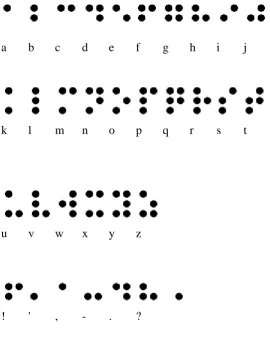
Figure 1.1: Braille Alphabet
a b c d e f g h i j
k l m n o p q r s t
u v w x y z
! ' , - . ?
Several teaching methods that work for sighted children may also work for children with visual impairment,but generally, a number of modifications are required for use with children with visual impairment. Choosing the strategy or combination of ways that most accurately fits the student‟s desires is critical for the student‟s success in learning to read (Holbrook &Nannen, 1997).
According to World Health Organization (2009), there are an estimated 9 million people who are blind in sub-Saharan Africa and a further 27 million people who have low vision. This represents 18.4% of the world‟s people who are blind despite the region having only 11% of global population and the highest regional burden of blindness ratio in the world.
Ndung‟u (2011) argues that, Braille will always be more than a medium of literacy for persons with visual impairment. It seeks to represent competence, independence and equality. Since its invention as a communication skill, Braille codes have been developed for many languages, covering a range of subject areas such as mathematics, music, computing, science, chess and knitting patterns. Braille is also incorporated into products such as clocks, watches and timers, games and maps. It is the primary tool for literacy available to people who are blind, deafblind, or who have severe vision impairment.
A number of researchers point out that the excessive usage of assistive technology may serve people with severe visual impairment tremendously, but on the other hand, the cultivation of literacy skills may be delayed significantly (Argyropoulos, 2005&Spungin, 1996). At present, research seems to confirm that the issue of Braille usage or Braille illiteracy is more complex and should be investigated within the larger context of all the concerns in the field of blindness (Layton, 2000; Amato, 2002). Research has shown that there has been a growing concern throughout the English-speaking countries over a perceived decline in Braille literacy skills (Australian Braille Authority, 1999; Rex, Koenig, Wormsley, & Baker, 1994; Allman &Holbrook, 1999).
In Canada, the “BrailleLiteracy Canada (BLC)” is concerned with the Braille literacy decline in the country and is actively involved in promotion of Braille. It supports the development of Braille as the primary medium of literacy for persons with visual impairment in Canada. Three vital goals that Braille literacy Canada seeks to achieve are:-
1. Encouraging and participating in research related to all aspects of Braille; 2. Establishing, adopting and monitoring standards for the production and
teaching of both English and French Braille; and
In East Africa, decline in Braille literacy has been noted.As a result, the Kilimanjaro Blind Trust has invested in projects aimed at equipping children who are blind or visually impaired with knowledge, skills and attitudes for independent and fruitful life. They focus on increasing educational opportunities for learners with visual impairment by supporting Braille literacy programmes operated by Perkins in Tanzania, Uganda and Kenya. This partnership reaches thousands of children through:-
Teaching Braille literacy;
Distributing new Perkins Braillers, pencils and papers for people who are blind;
Training teachers to work with students who are blind; and
Offering Brailler repairworkshops and spare parts to repair Perkins Braillers.
Together, the Kilimanjaro Blind Trust and Perkins are creating a new day for children who are blind or visually impaired in East Africa. All this is done in collaboration with the governments in the respectiveCountries
(http://www.perkins.org/international/kilimanjaro-blind-trust).
Thus, the main question that the present study sought to answer was: what are the teachers‟ perceived opinions about Braille literacy instruction of learners with visual impairment in Kenya? This issue deserved urgent attention since research studies have not yet been conducted to fill this knowledge gap.
Limited literature is available in the research database about Braille teaching issues and teachers‟ perspectives on Braille literacy instruction. In particular, for the last ten years, researchers in Kenya have concentrated on issues revolving around inclusive education and case-studies on Braille in various special schools for learners with visual impairment. The deficiency of research on Braille literacy in Kenya may be the result of many factors, but not due to the insignificance of this study. Individuals with visual impairment in Kenya face a similar “Braille Literacy Crisis” as do their counterparts in various countries where Braille literacy decrease has been reported (National Federation for the Blind, 2009).
As a matter of fact, researchers and educators have debated over the teaching of Braille literacy through the medium of Braille for many years. Nonetheless, the extent to which evidence from psychological and educational research has reached teachers and improved their practice remains to be established (Steve, Mike & Graeme, 2011).
There is also a wealth of information and resources on developing Children‟sBraille reading skills, but there has been little research into the efficacy of these approaches and teachers‟ perspectives about Braille literacy (Steve,et al., 2011).
The present study was therefore conceptualized to analyze teachers‟ perceptions on six key Braille literacy issues including: phonological training and reading activities for young children with visual impairment, professional preparation, factors influencing Braille literacy, contracted and uncontracted Braille, Braille and print literacy for learners with low vision (dual media) and relationship between Braille and technology. Since learners who are blind achieve their literacy through Braille, knowledge of what teachers think and feel about Braille literacy in schools for learners with visual impairment is of paramount importance in addressing concerns about the decline in Braille in Kenya and beyond.
As Nemeth (1988) observed, Braille makes it possible for a blind person to assume a role of equality in modern society, as it seeks to unlock the potential within an individual making him or her become a contributing member of one‟s community. Nemeth points out that Braille literacy as an integrated view of literacy not only encompasses the conventional notions of reading, writing, speaking and listening, but also greatly develops these abilities to integrate meaningfully with life skills.
1.3 Statement of the Problem
recognize teachers‟ thoughts regarding Braille and Braille instruction, none of which has been conducted in Kenya. Despite their training as specialist teachers for students with visual impairment, many teachers in primary schools for learners with visual impairment are reluctant to learn and teach Brailleas a resultofwhich they are now soliciting assistance from their blind colleagues and students to read for them Brailled class assignments and examinations. Consequently, students have taken advantage of this reluctance of their teachers and have resulted in writing unconventional Braille, where they are now using their own Braille contractions contrary to accepted Braille rules and standards of Universal English Braille Code. This state of affairs poses a big challenge to the development of Braille literacy instruction in primary schools for learners with visual impairmentin Kenya. Unless this worrying and dangerous trend receives urgent attention, the usage of the Braille code as the source of empowerment for learners who are blind will be seriously compromised.
Nzoka (2011) investigated proficiency of primary school teachers in English and Kiswahili Braille literacy, targeting teachers in special schools for the blind and integrated programmes in Kenya. The study revealed that, teachers were not interested in learning Braille and demonstrated lack of Braille skills in guiding their learners. This is a clear indication of decline of Braille literacy in special primary schools.
The researcher, himselfvisually impaired and a consumer of Braille, felt that necessary intervention measures could be taken once a systematic investigation of teachers‟ perceptions towards Braille literacy is conducted and clearly documented, hence the essence of the current study to fill this knowledge gap. Knowing teachers‟ views and feelings about the status of Braille literacy instruction in schools for learners with visual impairment is likely to enhance the quality of literacy through Braille and promise higher prospects for persons with visual impairment.
1.4 Purpose of the Study
The purpose of the study was to investigate and analyze teachers‟ perceptions on instruction of Braille literacy in special primary schools for learners with visual impairment in Kenya.
1.5 Objectives of the Study
The following objectives were formulated for the study:
1. To determine teachers‟ perceptions on factors influencing Braille literacy in schools for learners with visual impairment in Kenya;
2. To determine teachers‟ perceptions on phonological training and reading activities for young Braille learnersin Kenya;
3. To examine teachers‟ perceptions on their professional preparation in Braille literacy instruction in Kenya;
5. To determine teachers‟ perceptions on provision of print and Braille literacy for learners with low vision in Kenya;
6. To find out teachers' perceptions on the use of Braille and assistive technology in teaching literacy skills to learners with visual impairment in Kenya;
7. To find out views and feelings of headteachers of schools for learners with visual impairment on the situation of Braille literacy instruction in their respective schools.
1.6 Research Questions
1. What views do teachers hold about factors influencing Braille literacy instruction in schools for learners with visual impairment?
2. What are the teachers‟ perceptions on phonological training and reading activities for young Braille beginners?
3. What are teachers‟ perceptions on their professional preparation for teaching literacy through Braille?
4. What are teachers‟ perceptions on teaching contracted and uncontracted English Braille code in schools for learners with visual impairment?
5. What do teachers think regarding teaching of both Braille and print to students with low vision in schools for learners with visual impairment?
6. What are the teachers‟ perceptions on the use of Braille and assistive technology in instruction of literacy skills to learners with visual impairment?
1.7 Significance of the Study
Braille literacy is critical to the success of learners with visual impairment. It is for this reason that the present study was conceptualized to analyze and establish teachers‟ perceptions on Braille literacy in primary schools for learners with visual impairment in Kenya. This was the first time this kind of study was being conducted. With teachers being viewed as the primary agents in the education of learners with visual impairment, their perceptions towards Braille must be borne in mind.
The study was undertaken at a time when there was a lot of concern being expressed about “Braille literacy crisis” in both developed and developing countries. This meant that Braille standards were declining for reasons that had not yet been established, hence the importance of this study. The universities, education ministries, school headteachers, education officers and other administrative and supervisory personnel may virtually benefit from this study. The survey was intended to make a significant and valuable contribution to knowledge and understanding particularly in the following areas:
Factors influencing teachers‟ perceptions and attitudes towards Braille literacy.
The preparation and training of specialist teachers for learners with visual impairment.
The organization of short in-service courses and seminars on Braille literacy for headteachers and other educational personnel.
The survey instrument used, the findings and the conclusion of the study may help provide information and basis required in the formulation of policies related to the delivery system of education for learners with visual impairment. The results may assist school system administrators with ways to provide strategies to ensure that teachers develop positive perceptions on instruction of Braille literacy. When teachers‟ perceptions towards seven key Braille literacy issues identified for the present study are addressed, students with visual impairment will stand to gain as their education will not be compromised.
1.8 Limitations and De-limitations of the Study
1.8.1 Limitations
1.8.2 De-limitations
The present study did not investigate perceptions of teachers towards Braille literacy in integrated units for learners with visual impairment due to lack of logistical support to carry out a study of this magnitude. Parents‟ perceived opinions about Braille literacy of their children in schools for learners with visual impairment were not determined in the present study.
1.9 Assumptions of the Study
This study was conducted under the following assumptions:
1. Participants were Braille literate in both Grade 1 and Grade 2 English Braille. 2. Participants were teaching or had taught Braille or print to learners with visual
impairment.
3. The participants would give honest responses and volunteer to participate during the data collection.
4. Participants were specially trained to teach learners with visual impairment.
1.10 Theoretical and Conceptual Framework
1.10.1 Theoretical Framework
At this stage, Bruner points out that the cues become less open and selective. In the process of trying to search for more cues that confirm the categorization of the target, we ignore the cues that violate our initial perceptions. As our perception becomes more selective, we finally paint a consistent picture of the target. In their interpretation of the above model, Sacks &Johns (1993) identified three components of perception:
1. The perceiver– This is a person who becomes aware about something and comes to a final understanding of it. His or her perceptions can be influenced by three factors: motivational state, experience and finally emotional state. In different emotional or motivational states the perceiver will react to or perceive something in different ways. Besides, in different situations he or she might employ a “perceptual defense” where they tend to “see what they want to see".
2. The target - This is the object or the person who is being perceived or judged. 3. The situation also greatly influences perceptions because different situations
may call for additional information about the target.
of Braille literacy. In school however, their perception will be influenced by their personal experiences, emotions, motives and basic understanding of the Braille Code. The availability of teaching/learning Braille materials, facilities in schools for learners with visual impairment and technological advancements may also influence teachers‟ perceptions on instruction of Braille literacy.
1.10.2 Conceptual Framework
Independent variables Intervening variables
Teacher factor
Professional training Experience
Phonological training
Detecting the sounds in oral language
Linking sounds with written Braille letters and words
Listening skills
Professional preparation Braille training
curriculum Teaching Braille code
Contracted and uncontracted Braille Provision of Print and Braille
Braille Large print
Braille and Assistive technology
Computers
Talking Calculators
Administrative support
Advent of ICT Stakeholders‟
views Inadequate
Braille instruction
Dependent Variables
On the other hand, negative perceptions may imply inadequate training in Braille as a communication skill, Braille code complexity (difficult to understand), inability of the teacher to develop his/her own instructional methods and inability to facilitate learning.
1.11 Operational Definition of Terms
Braille literacy: Ability to read, write and communicate in Braille.
Contracted Braille: It is often referred to as „Grade 2‟ Braille and involves the use of the traditional alphabet, along with 189 different signs and contractions that represent groups of letters or whole words (Steve et al., 2011).
CVC Words: Consonant-Vowel-Consonant (CVC) words such as „mum‟, „hat‟. Grapheme: A written symbol, letter, or combination of letters that represents a single sound. Most commonly, a letter of the alphabet e.g. „f‟ although it can also refer to the combinations of letters that can make the same sound as the letter e.g. „ph‟ for (photograph) or „gh‟ (cough) (Steve et al., 2011).
Morpheme: An individual unit of meaning in a word. For example, the word unbreakable may be analyzed as consisting of three morphemes: un, break, and able. Nemeth Code: A special type of Braille used for mathematics and science notations. Nemeth code is the accepted standard code for representing mathematics and science expressions in Braille.
Perception: A particular way of understanding or thinking about something; the ability to understand and make good judgment about something; a personal opinion or belief about a particular situation or subject.In this study, the terms perception, view and opinion will be used interchangeably.
Phoneme: The smallest unit of speech distinguishing one word (or word element) from another (e.g., the sound /p/ in „tap‟, which differentiates that word from „tab‟ and „tag‟). (Steve et al., 2011).
Phonological awareness: The ability to detect, manipulate and analyze the sounds in oral language, including the ability to distinguish, segment and blend syllables, rhymes and phonemes (NELP, 2008).
Students with low vision: Students who use residual vision in print reading and writing.
Uncontracted Braille: Uncontracted Braille, often referred to as „Grade 1‟ or „alphabetic‟ Braille, uses no contractions and maintains a letter-for-letter
CHAPTER TWO
LITERATURE REVIEW
2.1 Introduction
This chapter is presented and discussed under the following sections: perceptions on factors influencing Braille literacy instruction, teachers‟ perceptions on phonological training and reading activities for young children with visual impairment, perceptions on professional preparation and Braille training curriculum, perceptions on teaching contracted and uncontracted Braille, perceptions on Braille and print literacy for learners with low vision (dual media) and perceptions on teaching literacy through Braille and assistive technology.
2.2 Factors Influencing BrailleLiteracy
However, due to their limited number, only class seven and eight pupils have access to them. She further observes that learners lack necessary Braille textbooks while teachers share the Braille primer. This compels the learners to solely depend on the teacher for all Braille instruction, mainly conveyed through dictation.
Njue (2009) supports this view arguing that regardless of the type of reading materials, a child with visual impairment must have all books and reading materials necessary to learn Braille as well as basal readers, literature anthologies or novels. The National Federation of the Blind (NFB) (2009) identified five factors attributed to the low Braille literacy in the United States of America. They are:
Shortage of teachers who are qualified to teach Braille.
Misconceptions about the Braille system, for example, “reading Braille isolates and stigmatizes students from peers who read print,” or “Braille is always slower than reading print and difficult to learn” (NFB, 2009). However, studies have found that Braille is an efficient and effective reading medium with students demonstrating a reading speed exceeding 200 words per minute (NFB, 2009).
Insistence on teaching print reading to a majority of children with Low Vision who could benefit from Braille literacy.
Replacement of Braille with technology: Most teachers agree that technology should be used as a supplement to Braille rather than a replacement.
On the other hand, NFB (2009) asserts that the key to success for the blind is the ability to read and write Braille competently and efficiently. In this context, NFB believes that Braille literacy can be improved by:-
Researching on new methods of teaching and learning Braille.
Increasing access to Braille instruction and reading materials in every community nationwide.
Putting a requirementon national certification in literary Braille among all special education teachers.
Advancing the use of Braille in current and emerging technologies.
Making Braille resources more available through online sharing of materials, enhanced production methods and improved distribution
Requiring all Braille teachers to pass the National Certification in Literary Braille in order to assure their competency and fluency in the literary code.
Expanding Braille mentoring, reading-readiness and outreach programmes.
Consumer groups in USA have placed partial blame for the decline of Braille literacy on teachers' poor attitudes towards Braille and lack of proficiency in Braille (Wittenstein, 1994). According to Mwangi (2009) Brailleteachers must of necessity know all the symbols and rules on Braille code as these determine the quality of Braille reading and writing.
learningBrailleliteracy and to demonstrate instances when Braille may be used in everyday living in addition to looking for interesting Braille books (Njue, 2009).
Ndung‟u (2011) advances the view that increasing use of technology for access to print for both learners with low vision and those who are blind affects the attitude towards Braille use. This claim warrantsfurther research. On the other hand, Mwangi (2009) maintains that it is logical for one to demonstrate lack of interest in an area of deficiency. If more training and more emphasis is put on the qualification of teachers in Braille, then, their confidence and self-worth would be boosted, hence improving the teachers‟ attitude positively. Quality Braille literacy does not only depend on teacher‟s positive attitude but also on teacher‟s education, availability of support materials, teacher-pupil ratio and workload. In view of the literature reviewed in this section, the present study sought to determine what teachers considered as critical factors influencing the teaching of literacy through Braille in schools for learners with visual impairment in Kenya. Since an analysis of teachers‟ perceptions on factors influencing instruction of Braille literacyin special primary schools had not been conducted and documented, the present study filled this gap.
2.3 Phonological Training and Reading Activities
USA did not demonstrate Braille tactile proficiency skills that enable visually impaired learners to read fluently as is the case with young print readers. A study conducted by Monson and Bowen (2008) on the development of phonological awareness by Braille readers found that, the relationship between Braille and phonological awareness was not certain due to the following: lack of similarity among the studies, the extent of conflicting findings, the limited number of studies involving beginning Braille readers and the absence of common characteristics among the studies. The conflicting findings are particularly obvious in relation to children between seven and twelve years.
In another study, Greaney and Reason (1999) used a sample of Braille readers ranging between seven to twelve years to assess their phonological performance. The study revealed that the scores obtained for each test on phonological awareness were higher than those expected from the norms of their sighted peers. In spite of this linguistic advantage, the Braillists did not read as well as sighted children. The study concluded that children with visual impairment found it extremely difficult to progress from phonological to orthographic awareness.
those of the younger sighted children.
Moreover, a study by Dodd and Conn (2000) in the UK required children with visual impairment to identify contracted and uncontracted words according to their sounds. They established that Braillists performed below the level of sighted children on reading tests and were relatively poor on linguistic awareness skills in comparison with a matched group of sighted children. In particular, they found that „the participants who were blind scored lower on separating words that contained Braille contractions, concluding that, “the fact that contracted Braille symbols such as „the‟ in the word „further‟ can cut across phonological boundaries” affects a reader‟s ability to segment words phonemically and that some phonological problems may be as a result of „the nature of contractions in Braille orthography‟ (p. 9).
As far as young pre-school children are concerned, Barlow-Brown and Connelly (2002) noted that children who are born blind do not receive exposure to environmental print and therefore do not generally learn to recognize written letters of the alphabet until they join school where they learn Braille.‟ (p. 259).
The authors observed that letter learning is a major contributor to the development of linguistic skills in children who are blind, and that these critical skills develop only after children who are blind experience a written form of language. They argued that „learning to recognize Braille letters provides the impetus for improvements in phonological awareness‟ (p. 267). Finally, they concluded that, whereas for sighted children knowledge of letter names goes hand-in-hand with knowing what the letter name refers to, „until children with visual impairment learn Braille letters they can‟t make this connection and the development of phonic awareness is stifled as a consequence (p. 267).
recommended practices in early literacy such as encouraging phonological awareness and the function of writing. The authors suggested that this may be due to lack of access to current resources on teaching literacy. Theyconcluded that there was a need for the development of resources that address linguistic development skills.
According to Steve, Mike and Graeme (2011) teachers should focus on the development of activities with children who are visually impaired to promote their linguistic and Braille literacy development at an early age. Children who are blind need to be exposed to activities that encourage them to manipulate, detect and analyze the sounds in oral language and more importantly to activities that are intended to help them make the link between these sounds and written Braille letters and words. They stressed that, as children progress, phonological instruction needs to continue with particular emphasis and attention given to the development of higher level linguistic skills and their application to Braille text.
research gap yet phonological training for children with visual impairment is critical for learning Braille.
Crawford and Elliott (2007) in their research on phonological methods for learning to read Braille involving six Australian Braille readers in primary schools, found out that teaching Braille letters as phonemes resulted in higher performance than teaching Braille letters as graphemes. They concluded that their findings confirmed results from a previous study with children with visual impairment (Crawford, Elliott &Hoekman, 2006) which found out that introducing Braille words as onset- rimes „produced statistically significant better performance in comparison to instruction in Braille words as whole words‟ (p. 542). The results were consistent with the findings of Vik and Fellenius (2007) involving six primary school Braille readers in Norway which implied that some contractions may interfere with a style of teaching that emphasizes phonic analysis, for example, simple upper word signs (such as „p‟ for people), or where contractions do not align with phonic boundaries (such as „the‟ in „other‟ and „of‟ in „roof‟).
linking letters to sounds. By first grade, the children had developed seven or eight of the eight basic reading skills, including substituting initial or final consonants and blends in the final position. Children‟s results were much less consistent when it came to applying these phonological skills to acquire higher level skills such as recognizing CVC words with a „Magic E‟ (e.g. mate), or other simple CVC words such as „cat‟. However, previously, Erickson and Hatton (2007) had identified distinct strategies including direct instruction in phonics, repeated readings and big word decoding that emphasizes morphemes, as being of great benefit to school-aged children with visual impairment and blindness.
In another study, Hatton, Erickson and Lee (2010) examined the linguistic development of twenty-two (22) young children with visual impairment and with no additional disabilities aged four to six (average age 5.4).
Hatton et al., (2010) conclusions are consistent with earlier findings of Millar (1997, p. 219) who found that „the phonological skills and preferences of young children with visual impairment should make it easier for them to learn the phonemic detection and segmentation skills that are needed for learning Braille‟. In what appears to be a fitting summary of findings from the above studies, Steve et al.,(2011) have made the following observations regarding phonological training for young children with visual impairment:-
i. There is general support in the literature for the view that phonological instruction is beneficial for beginning Braille readers.
ii. Regardless of whether or not a child is using Braille there are no significant differences in the processes of reading development.
iii. There is some evidence to suggest that children with visual impairment who undergo normal development compare well to children who are fully sighted in acquisition of early linguistic skills.
iv. Children who are blind take longer to develop higher level linguistic skills and applying them to reading.
2.4 Professional Preparation for Teaching Braille Literacy
The status of special education in Kenya has been enhanced by the provision of diploma and degree courses in public and private universities including: Kenyatta University, Maseno University, Kenya Methodist University and Mount Kenya University (Kimeto, 2010). However, Frieman (2004) reports that principals and administrators are faced with the challenge of finding competent teachers who have the expertise in Braille to teach children who are blind and visually impaired. These teachers need to be equipped with other skills besides Braille in order to be successful. They include:-
The ability to teach compensatory skills;
Preparation of special learning materials;
Assessing students‟ learning;
Collaboration and consultation with other professionals;
Understanding the physiology of the eye and the medical implications of visual impairment; and
Teaching orientation and mobility as well as other teaching skills.
An early study by Allman (1998) observes that if teachers teaching students with visual impairment are expected to teach Braille and other related skills, they must learn these skills in their pre-service training. Further, Knowlton and Berger (1999) points out that, teachers not only need to know Braille, but also to use the new computer technologies that enhance a teacher‟s ability to produce Braille materials.
on the teacher‟s academic qualification, professional training, commitment and dedication. Schools can only be effective if teachers are professionally trained and continuously in-serviced to improve their knowledge, pedagogical skills and competency. The training should go hand in hand with recognition, the lack of which may have adverse effects on teacher-learner relationship. Kimeto (2010) argues that lack of adequate trained personnel for pupils with visual impairment presents a challenge to reading and writing inBraille. Despite the government efforts to train teachers, the area of special education remains in need of trained professionals.
Njue (2009) reported that the Canadian Braille Authority (CBA) has recommended that Braille teachers must have a university degree and basic teacher certification for students with visual impairment.
Similarly, some countries have made a commitment to provide ongoing training for the teaching staff; a commitment that lacks in the Kenyan schools for learners with visual impairment. She further adds that only 57.14% of the teachers had a Diploma in special needs education, 14.28% were bachelor degree holders, while a massive 28.57% had only taken a three months‟ training.
emphasize on literacy skills and Braille teaching methods. They are of the opinion that training teachers only in the Braille code is tantamount to training of print readers by only teaching them the alphabet, expecting that this minimum ability will prepare them for the difficult task of passing knowledge to their students. This view is supported by Rex (1994) who contends that Braille must be taught by teachers who understand both the mechanisms of reading by touch and the additional challenges posed by the Braille code. Without this knowledge there may be a risk of attributing reading errors to a child‟s literacy difficulties rather than to incorrect finger positioning.
Further, Wittenstein and Pardee (1996) conducted a nationwide study on teachers who work with students who are visually impaired. The majority of the respondents reported that they enjoyed teaching Braille, were confident of their ability to make decisions about the learning media of their students and thought that Braille is an important learning medium. When asked about their Braille skills, however, a large percentage failed to rate them either negatively or positively. Also when asked if they believed that Braille refresher courses should be required for teachers who teach students with visual impairment, slightly less than half agreed. Thus, the teachers seemed to be reluctant to support the idea of required Braille refresher courses.
instruction more readily in skills that they feel proficient in.A more recent study in the UK by Bindman and Greenaway (2011) collected data through questionnaires from 133 qualified teachers of children with visual impairment who worked with 197 Braille readers in England and Wales. The study sought to find outBraille teaching methods, models of Braille literacy acquisition and models of service delivery mostly used by specialist teachers in the UK. The findings revealed that few respondents felt they were well prepared to teach Braille literacy and most admitted to having difficulty maintaining Braille skills with only 11% regarding their own level of proficiency as „very efficient‟ and 70% feeling it would be important to improve their Braille skills to teach the children they were working with.
Further, the results revealed that there was a significant difference in the training and qualifications of those teaching Braille in the classroom, a wide variation in children‟s Braille attainments and a big difference in the amount of Braille instruction they received.
increase their ability to teach learners who are blind, thereby improving their academic performance.
In another study, Hui-Yu Hung (2008) investigated the state of Braille literacy in Taiwan. The research focused on teachers‟ attitudes and perspectives about Braille instruction including, reading medium selection, personnel training, teachers' Braille training experiences and their competencies, Nemeth Code, assistive technology and primary Braille for young children with visual impairment. Hung observes that scanty literature exists in Taiwan onBraille teaching issues particularly, in teachers‟ competencies on Braille literacy and their perceptions on teaching literacy through Braille.
Mixed methods were used to collect qualitative and quantitative data from 76 in-service teachers in Taiwan who taught kindergarten, first and second grade levels andBraille beginners in different environments. The findings revealed that, the respondents agreed that Braille was an important reading medium and recognized the need for Braille knowledge in literary Braille codes especially, Nemeth Code and English Braille.
devices to teach young Braille beginners. Lamb (1996) reported that in order for one to become a specialist teacher for learners with visual impairment in the UK, a postgraduate teaching qualification is a pre-requisite for the entry to the specialist programmes. She argues that teaching literacy through Braille should be considered as a language based skill as opposed to physical perception skills and the mechanical aspects of reading by touch. She also strongly supports the opinion that children who learn to read and write using Braille ought to be taught by teachers who have experience inBraille and they should not only befamiliar with the special skills required for reading by touch, but also be able to implement these particular skills within the whole language approach to literacy.
Spungin (1989), without citing empirical data, asserts that teachers who teach learners who are blind or visually impaired are “less-than-proficient” Braille instructors and this has contributed to the illiteracy among those who are Blind or visually impaired. She concedes that part of the blame for this situation lies with the university training programmes for these teachers. According to Spungin, there are teacher preparation programmes which incorporate the instruction of Braille with the process of teaching reading and mathematics. Still, some teacher preparation programmes present Braille as a code, viewing the level of knowledge required by a Braille transcriber as sufficient for teachers‟ literacy.
the content of teacher preparation programmes relevant to Braille literacy. It served two important purposes. First, the study refuted many of the premises made by Spungin (1989) which have unfortunately been used as factual reports on the status of Braille literacy preparation in teacher education programmes. Secondly, recommendations relevant to Braille literacy instruction were made for professional preparation programme specialists. The recommendations were aimed at assisting the specialists to develop
teacher preparation courses which would provide comprehensive knowledge and skill development in the area of literacy.
According to Mwangi (2009), every teacher teaching learners with visual impairment must know that children are heterogeneous though visually impaired. Braille teaching methodology must therefore recognize their uniqueness and address it accordingly. Mwangi further adds that there is need for teachers of Braille to undergo in-service courses to enrich their skills in teaching Braille. Indeed, professional preparation for teachers of students with visual impairment is of paramount importance. However, literature reviewed in this section presents a knowledge gap that needs to be filled due to limited local studies on teachers‟ perceived competencies in Braille with reference to Braille training curriculum in academic institutions in Kenya.
learners with visual impairment in special schools and integrated programmes for children with visual impairment.
2.5 Perceptions on Uncontracted and Contracted Braille
It is generally believed that contracted Braille does not only enable Braille readers to process information faster, but also to take in large amounts of text at a time (Emerson et al., 2009). It can limit the unnecessary teaching of familiar words in both Grade
One and Grade Two Braille. Hong and Erin (2004) compared the reading and spelling skills of two groups of students who were taught to read Braille. The first group of students was taught to read using uncontracted Braille whereas the second group of students was taught reading using contracted Braille.
The authors reported that there were no significant differences found in performance over a variety of skills such as: comprehension, reading accuracy, reading speed and spelling ability between first instructions in the two types of Braille nor was there any evidence that „changing to contracted Braille later in school would impede the speed and proficiency reading‟ (p. 335). While recognizing that contracted Braille takes up about a quarter less space, they did not agree with the assumption that it increases reading rates.
generally regarded as an additional option rather than a substitute for contracted Braille and that it is usually introduced on the assumption that learners will make the transition from uncontracted to contracted Braille at some stage in their future learning. Clunies-Ross (2005) notes the concern in Canada about the lack of books in uncontracted Braille for early learners.
As Steve et al., (2011) observed, ordinary Braille learners gradually move from uncontracted Braille to contracted Braille at some point and at different rates. However, sometimes teachers may report using „uncontracted‟ Braille throughout, but it is unlikely that no contractions get into the child‟s reading and writing. This has a perplexing effect on research in this area because of the difficulties of identifying a group or cases of Braille learners who can read uncontracted English or American Braille fluently without knowledge of contractions. This perplexing effect was reflected in a five year longitudinal ABC Braille Study (Alphabetic Braille and Contracted‟ Braille) which followed the progress of 42 children in Canada and the USA who were introduced to literacy through Braille (Emerson et al., 2009).
The children‟s teachers had settled for their approach at the beginning of the study as „contracted‟ or „uncontracted‟. Most students in the „uncontracted‟ group learned contractions but not as many as those in the „contracted‟ group. What differentiated the two groups was the degree of „contractivity‟ involved in their instruction. The progress of five children who had learnt less than 25 contractions was compared with the five children who had been taught all the 189 contractions (Emerson et al., 2009).
their fluency in oral reading. At a glance, one would be tempted to unquestionably support the use of contracted Braille from the start. But, it is worth noting that the two sample groups were not matched in the study. It would therefore be difficult to conclude definitively that the differences obtained between the groups were as a result of the introduction or non-introduction of Braille contractions. As the findings suggested, it could be that the students in the „high contractivity‟ group were introduced quite early to contractions on account of their early aptitude for reading.
Until the current study was conducted, a study of this nature had not been undertaken in Kenya, hence the need to seek teachers‟ perceptions on this issue. Should we teach Grade one Braille (uncontracted Braille) or Grade two Braille (contracted Braille)? Using a mixed qualitative and quantitative design, Sacks, Kamei-Hannan, Erin, Barclay and Sitar (2009) compared the social experiences of beginning Braille readers in literacy activities. The study reported that there were no significant differences in both the quality and quantity of social experiences over time between students who read and wrote in Grade one English Braille and those who were introduced to Grade twoEnglishBraille. However, children‟s level of achievement in obtaining literacy skills was strongly correlated with the frequency and quality of their interactions with their sighted peers.
2.5.1 Hand Movements in Contracted and Uncontracted Braille
Nor is there evidence from the literature in support of the view that the introduction of the additional complexity of contractions has a negative effect making hand movements less efficient for Braille beginners. There is also no evidence to support the view that uncontracted Braille improves efficiency of hand movements (Steve et al., 2011).
2.5.2 Reading Fluency and Spelling in Contracted and Uncontracted Braille
The view that spelling is more difficult for children who are blind is common among teachers. This perception is often attributed to the belief or a misconception that children who are taught to read Grade two English Braille are rarely exposed to words in their uncontracted form (e.g. „quite‟ and „people‟ in contracted Braille is simply written as the letters „Q‟ and „P‟, respectively). Steve et al., (2011) are of the view that there is a vast knowledge of research evidence into the spelling of children who use Grade two English Braille, despite the fact that research into the spelling of children who are introduced to reading and writing skills through uncontracted Braille is scarce and limited.
A distinction was made between spelling errors that were the result of „Braille errors such as missing dots, cell reversals and spelling errors that did not result from Braille errors.
The authors observed that correction of spelling errors depends on identifying a pattern on the errors and analyzing them. They also noted that improved linguistic skills facilitate reduction in misspellings. The study makes reference to an earlier study by Clark and Stoner (2008) which found that the ability to identify and rectify Braille errors increases children‟s accuracy in spelling and argued that proofreading should be encouraged from an early age. The previous study also found no significant difference in spelling ability for words in isolation between print and Braille users and sheds useful light on the issue of spelling and contracted/uncontracted Braille. Out of the twenty-three students studied, five students who used uncontracted Braille had „spelling assessments that were comparable to those of the 18 students who used contracted Braille‟ (p.559).
While the findings support the view that contractions do not hinder the development of good spelling skills, the puzzling difficulties of the sampling discussed do not allow for conclusions to be drawn about the relative effects of learning through contracted and uncontracted Braille on spelling performance.
Although some teachers and supporters of uncontracted Braille criticize contracted Braille on the basis that contractions have an adverse effect on reading fluency, efficiency of hand movements or spelling when reading, the findings of the ABC study appear to counter these criticisms. Steve et al., (2011) argue that, there is no evidence that uncontracted Braille has significant benefits in reducing pauses, regressions or scrubbing on Braille readers. Further, they maintain that use of contractions does not seem to affect fluency in oral reading and there is no clear evidence that children who use contracted Braille are likely to be poor spellers than children who use uncontracted Braille.
2.6 Print and Braille Literacy for the Low Vision
The degree of vision loss, efficiency of vision use, parental preference and prognosis influences decisions about which format to use in developing and maintaining literacy skills for children with severe visual impairment (Corn & Koenig, 2002). Koenig and Holbrook (1995) designed the Learning Media Assessment (LMA) procedure to help teachers determine whether children should receive literacy instruction through a combination of Braille and print (dual media), Braille or through print. Stressing that the results of the LMA should not be regarded as the only basis, they recommended that the continued appropriateness of the child‟s literacy medium should be assessed and determined on regular basis.
2.6.1 Assessment of Reading
It is generally accepted that the accurate assessment of literacy performance is important in informing literacy teaching. Assessment provides teachers with an insight into pupils‟ progress and the particular problems they may be experiencing. This applies to the teaching of literacy through Braille as it does to teaching literacy through print. Such assessment tools can also be used in arriving at decisions about appropriate literacy media for children with visual impairment (Steve et al., 2011).
The authors‟ aim was to generate norm scores for Braille and low vision print readers respectively. Douglas et al., (2002) tested the reading of 476 children with low vision using an unmodified print version of the NARA.
The data revealed that the average reading ages for accuracy, comprehension and speed for children with low vision fall below their chronological age. Greaney et al., (1998) also measured the reading of 317 Braille readers (in the UK and Ireland)
using a Braille version of the NARA. The data revealed that the average reading ages for accuracy, speed and comprehension for the sample were not only below those of their fully sighted peers but more importantly, they were below the reading ages of the low vision readers in Douglas et al.,‟s sample.
In the USA, the assessment of Braille literacy skills is commonly based upon reading measures developed for children who are fully sighted. For example the ABC project adopted annual literacy assessments that included the following: the Texas Primary Reading Inventory (TPRI, 2003), the Brigance Comprehensive Inventory of Basic Skills (BRI, Brigance 1999) the Johns Basic Reading Inventory (Johns, 2003), since they are commonly used in elementary classrooms and are easily available in Braille (Emerson, Holbrook &D‟Andrea 2009 p. 613).
If these tools existed, were they compatible with contracted or uncontracted Braille use or both? The Braille version of the NARA appears to be unique in that it has been standardized for Braille readers and print readers as well. This helps the user to make meaningful comparisons with sighted children. It gives a sense of what might be anticipated as a reading speed for a Braille reader of a given age. This is necessary when carrying out a meaningful diagnostic analysis of a child‟s reading.
The study also sought teachers‟ thoughts on a standardized Braille Assessment since a study to investigate such perceptions had not yet been conducted in Kenya. Clearly a major decision in future debates concerning the assessment of literacy is whether tools that are developed for the assessment of Braille reading should be designed to permit comparisons with the reading performance of children who are fully sighted or with the performance of other Braille readers. Another consideration was whether they should be compatible with contracted or uncontracted Braille use or both.
2.6.2 Reading Media Choice
For children who are print users and who experience deteriorating vision, the question often becomes one of “when and how” rather than “whether” to introduce Braille and the decision can be a “profoundly emotional one” (Wormsley&D‟Andrea 1997). A relatively small percentage of children will require access to both Braille and print, however, most of them will focus on one medium.
It was reported that positive attitude to Braille among parents, class teachers and learning assistants was essential if Braille was to be introduced successfully. The present study sought teachers‟ perceptions on dual media and at the same time to find out whether children with low vision were exposed to Braille literacy in special schools. Lusk and Corn (2006a) observed that a single-medium policy was common in the United States in the 1970s but currently, dual media is regarded as a positive advantage for some children. They examined dual-media learners in the United States and investigated the instructional approaches and curricular decisions in teaching dual media to students with low vision, reporting the teachers‟ expectations for future levels of literacy, the students‟ present literacy levels and reading rates. The study not only found a generally positive attitude towards both print and Braille among the students, but also that the most common factor in teachers‟ decision to introduce dual media instruction was a major concern among teachers and parents owing to the progressive nature of the child‟s eye condition. Concerns about print reading stamina and speed were also expressed.
2.7 Perceptions on Teaching Literacy through Braille and Assistive Technology