Connectivism: a network theory for
teaching and learning in a connected
world
Bell, F
Title Connectivism: a network theory for teaching and learning in a connected world
Authors Bell, F
Type Article
URL This version is available at: http://usir.salford.ac.uk/2569/
Published Date 2009
USIR is a digital collection of the research output of the University of Salford. Where copyright permits, full text material held in the repository is made freely available online and can be read, downloaded and copied for noncommercial private study or research purposes. Please check the manuscript for any further copyright restrictions.
Connectivism: a network theory for teaching and
learning in a connected world
Introduction
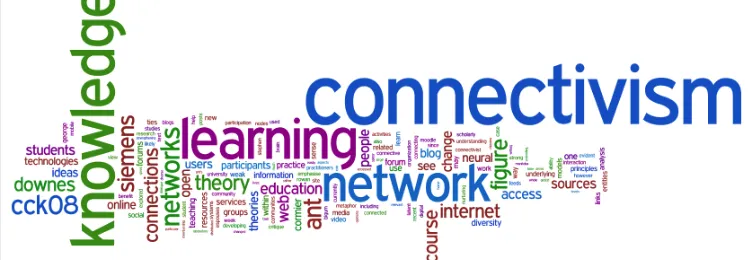
Connecting to people and resources online is no longer something that takes place mainly in our place of study or work: we are also ‘connected’ in our homes and even on our journey on the way to and from university. In 1998, 9% of UK homes had access to the Internet, compared with 61% in 2007 (84% of which had broadband access)1. In higher education, we have moved in little more than 10 years from a situation where most students and staff gained Internet access through their institution to one where it is commonplace at home, at work and on the move. In 2007, 40 % of recent Internet users had used mobile access to the Internet, 22% of them using handheld devices or mobile phones2. Sales of the iPhone alone generated over 1 million mobile Internet users by February 20093. The implications of this for learning and teaching are that Internet devices are becoming on hand during teaching and learning activities giving students and teachers access to global resources and online tools and services. Web 2.0 is often seen as a hype term 4 but can most simply be thought of a read/write web where users produce web content ( in the form of text, images, sound and video) as well as consume it, through online services. An example of such a service is a Wordle, see Figure 1, created by the online service at
[image:2.595.90.467.393.523.2]http://www.wordle.net/ where text input is visualized with word size being related to its prominence within the text. Although composed of words, this gives a visual representation of the ideas within the text of this article.
Figure 1 - Wordle of text of this article http://www.wordle.net/gallery/wrdl/752365/Connectivism_article
Genres of media tools such as blogs and wikis are freely available as online services, enabling individuals and groups to share and publish media, connected by links and ‘feeds’ that allow us to monitor sources that interest us rather than rely solely on Internet searches. If we watch out for the orange buttons (that signify RSS feeds) on pages that interest us we can follow the content as it changes. A good way to start is to experiment with news feeds from the BBC web site5
The video “A Vision of Students Today” that Mike Wesch created in collaboration with 200 of his students gives us an insight into the role that Internet connection plays
1http://www.statistics.gov.uk/StatBase/Product.asp?vlnk=5672 2http://www.statistics.gov.uk/pdfdir/inta0807.pdf
3http://www.computerweekly.com/Articles/2009/02/26/235050/iphone-sales-boost-o2s-uk-results.htm 4http://www.oreillynet.com/pub/a/oreilly/tim/news/2005/09/30/what-is-web-20.html
5http://news.bbc.co.uk/1/hi/help/rss/3223484.stm
in the work and social lives of students6. Internet use has escaped from the laboratory into the classroom and our daily lives. The ubiquity of Internet access has
implications for students and staff – our challenge is how to work and learn effectively in the changed environment in which we find ourselves.
Connectivism – the theory
There are two key proponents of the theory of connectivism. The first of these is Stephen Downes, who works in the areas of online learning, content syndication, and new media for the National Research Council, Institute for Information Technology, in Moncton, New Brunswick, Canada7. Downes has studied connective knowledge that he characterizes as interactive, knowledge of a connection within a network (Downes, 2005). George Siemens is Associate Director of the Learning Technologies Centre at the University of Manitoba: he has worked with learners and employees in global business and education environments8. Both are exponents of the openness and interpretive nature of knowledge and the connectedness of learning online, and model connected online learning and knowledge sharing through their blogs and web sites (see page 6).
Siemens proposes connectivism as a learning theory for the digital age, a successor to behaviourism, cognitivism and constructivism (Siemens, 2004). He identifies as limitations of these theories: their intrapersonal view of learning; their failure to address the learning that is located within technology and organizations; and their lack of contribution to the value judgments that need to be made in knowledge-rich
environments. The concept of network is prominent in the theory of connectivism that characterizes knowledge as a flow through a network of humans and non-humans (artifacts). A network comprises connections between entities (nodes), where the nodes can be individuals, groups, systems, fields, ideas, resources or communities. Siemens sets a bold research agenda around the sharing of cognitive tasks between people and technology; coping with rapid change in the ‘information ecology’; and the impact of theories of networks, complexity and chaos. He established a set of principles for connectivism, broad guiding statements, see Figure 3.
Figure 3 - Principles of Connectivism (Siemens, 2004)
6http://www.youtube.com/watch?v=dGCJ46vyR9o 7http://downes.ca/
8http://www.umanitoba.ca/learning_technologies/connectivisim/bio_george.php Principles of connectivism:
• Learning and knowledge rests in diversity of opinions.
• Learning is a process of connecting specialized nodes or information sources.
• Learning may reside in non-human appliances.
• Capacity to know more is more critical than what is currently known • Nurturing and maintaining connections is needed to facilitate continual
learning.
• Ability to see connections between fields, ideas, and concepts is a core skill.
• Currency (accurate, up-to-date knowledge) is the intent of all connectivist learning activities.
In 2006 Downes outlined a controversial distinction between groups and networks in a moving blog post http://halfanhour.blogspot.com/2006/10/that-group-feeling.html , and presented this in a more formal way in this presentation in New Zealand
http://www.downes.ca/post/42521 . His distinctions between groups and networks are summarized in Figure 4.
Group emphasises Network emphasises
Sameness Diversity
Order and control Autonomy Borders and membership Openness
[image:4.595.93.487.263.468.2]Additive, cumulative knowledge Emergent knowledge
Figure 4 - Downes' Dimensions of Difference between Groups and Networks
This distinction can present a difficulty to those used to immersed in social
constructivism9 but is interpreted liberally by many, including Siemens. In fact, the term community is often used in discussions of connectivism, and it is clear
sometimes it is social networks that are being discussed rather than the networks of human and non-human appliances of the theory.
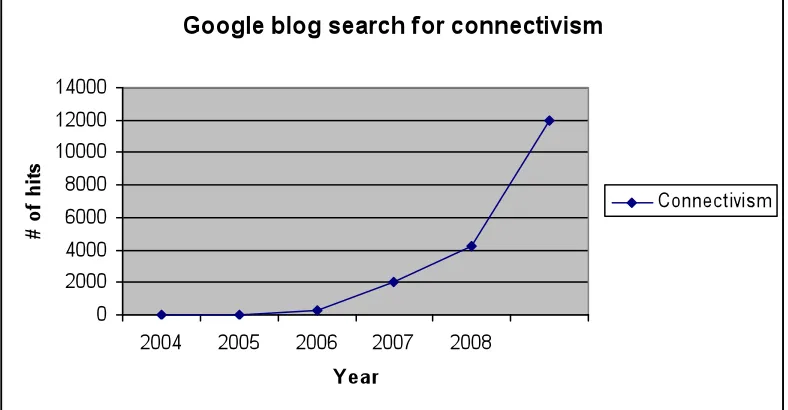
Figure 5 - Growth of interest in Connectivism
Figure 5 indicates the growing interest in connectivism in the blogosphere, further underlined by participation in a free online course in 2008, see next section.
Learning about Connectivism
Connectivism and Connective Knowledge (CCK08) was an online course offered by the University of Manitoba from September 8, 2008 - November 30, 2008 to “outline a connectivist understanding of educational systems of the future”. The course details stress the transformational aspects of learning technologies and the need to explore the underlying reasons for change
http://ltc.umanitoba.ca/wiki/Connectivism#Course_Details.
A novel aspect of the course was that only a very small minority of those participating were enrolled for credit. The course was free to all comers, some but not all of whom were assessed. In the event, 2200 students enrolled, of whom hundreds were active participants, 24 were graded by the University of Manitoba and 1 by their own institution. The course materials were presented and participants contributed through a range of channels including wiki, forums on Moodle (an Open Source Virtual
9 Social constructivism emphasizes the role of culture and context in the construction of knowledge
Learning Enviroment), blogs, Elluminate (an online classroom with video chat, and shared interactive board), a channel on UStream.tv, Second Life, and a variety of web resources. All of these were integrated via a daily newsletter, and aggregation
conducted via the CCK08 tag. Siemens and Downes have provided their own analysis of technologies and other aspects, see
http://www.elearnspace.org/blog/2009/02/23/cck08-wrapup-recording/ and
http://halfanhour.blogspot.com/2009/02/access2oer-cck08-solution.html
Based on my own participation, I can say that I encountered creative dialogue and
people strengthening their links with resources, but more importantly with each other, as they cited each other’s contributions and included fellow students on their blog rolls.
“At its heart, connectivism is the thesis that knowledge is distributed across a network of connections, and therefore that learning consists of the ability to construct and traverse those networks.”
http://halfanhour.blogspot.com/2007/02/what-connectivism-is.html. Most participants were involved in formal (across sectors from primary to higher education) and informal education. Participation was global though the intensity of the discussion on the forums must have been demanding of those for whom English was not a first language. There were pockets of participation in other languages and some of the resources have been translated into Spanish. The course will be open again in September 2009, and is an excellent way to learn about and experience
connectivism.
Connectivism for teaching and learning
The attractiveness and accessibility of the theory of connectivism makes it a good candidate for structuring innovation by educators in their practice. Participants on CCK08 had the opportunity to experiment with connecting their thoughts and ideas across blogs and discussion forums, reflecting and discussing on what worked and did not work for them. Effectively, they were modelling behaviours that they may wish to encourage in their students. They were participating in an extensive public
knowledge network of people, blogs, wikis and other activities and resources that they could use as examples for their students. In other words, educators used
connectivism to frame their own learning.
An interesting question arises of whether or not the theory would also be of use to learners in higher education. An excellent example is the video by Wendy Drexel, based on her high school students’ project on connectivism 10. This video is now being used by other educators and students, to help them learn about connectivism. An educator who wishes their students to make effective use of connected social media will be giving them models, examples and activities. Presented in an
appropriate form, a model of connectivism that puts the student in the network could be of great use to them.
Implications for Higher Education
Educators becoming critical experimenters with new tools and services
One of the benefits of experimentation with social media becoming more widespread is that pragmatic, critical users can identify what are effective and sound academic uses rather than using technology for its novelty value.
Extending the range of media in which students submit (and even publish) their work
Not only can students seek out sources on different media, they can also submit work in different formats. Even if we are not ready to replace essays with videos, we could use blogs or photo workbooks to record process for reflective reports or journals11. Encouraging and supporting students to move beyond institutional boundaries One implication of students becoming connected learners is that learning will neither be confined to the physical classroom nor to the virtual classroom, within the
[image:6.595.96.467.227.474.2]institutional Virtual Learning Environment. Students will be consuming and producing social media ‘in the wild’, whether we like it or not. Rather than seeing this as a problem, we can engage with students as they acquire the 21st Century Learning Skills that are needed to make effective use of technologies that emerging for use within classrooms and the workplace (Educause, 2008).
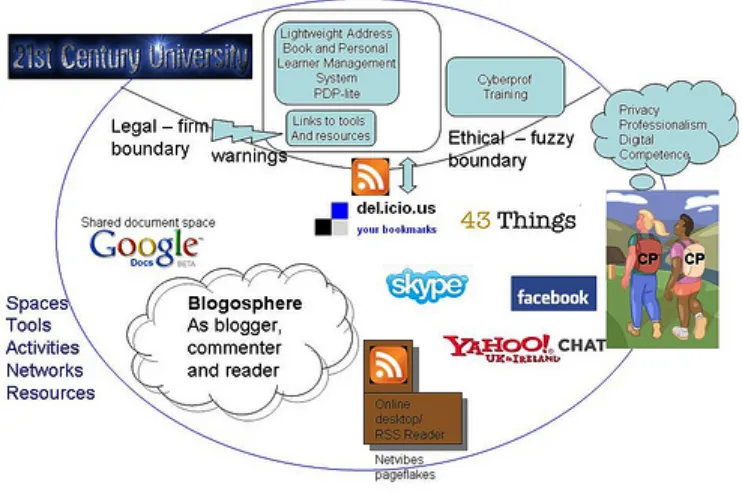
Figure 6 - Shifting boundaries in technology provision http://www.flickr.com/photos/francesbell/3441804650/
This boundary shift between institutional and external web services manifests itself to the University in two ways, see Figure 6. Conscious of legal issues and
responsibilities (as university Information Services departments often are), the university will want to make students aware as they cross the hard boundary between university provided resources and services and the World Wide Web. On the other hand, ethically, as educators we can regard that boundary as soft, and offer support (by way of digital literacy support activities) to students who, whilst responsible for their own actions, are becoming scholars and ultimately professionals who can act effectively online.
Making educational resources more openly available
Another implication of the connectivist approach is that we expect to find resources that are open and available to use, often with Creative Commons Licenses that let us share, create and remix media legally12. For example, I have published the image (created by me) on the photos sharing site http://www.flickr.com using a Creative
11 Different ways of recording project work
Commons License so that I (and you) can use it legally in any non-commercial publication.
Conclusions
A benefit of connectivism is that, as Cormier (2008) recommends, it is allowing a community of people (working with learning technologies) to legitimize what they are doing. Educators wishing to extend the use of social media within their practice can refine and spread knowledge more quickly through membership of multiple
communities.
So what are the steps that an educator who wishes to adopt connectivism can take? 1. Follow the blogs of those who innovate with educational technologies
2. Experiment (within your comfort zone) with web services and tools that might enrich teaching and learning in your practice.
3. Use, publish and share resources through blogs, wikis, photo and video sharing sites.
4. Encourage students to use the web for scholarly resources – being critical and selective, and attributing sources.
5. Assign student activities that enable effective use of media to report process and, where appropriate, outcomes.
6. Make explicit the concept of connectivism in student support activities so that they can exploit it in their own independent learning.
Some useful resources
Stephen Downes Online Daily – a daily newsletter of education technology resources
http://www.downes.ca/news/OLDaily.htm
George Siemens’s Connectivism site http://www.connectivism.ca/about.html Blogging for teachers and students, made easy http://edublogs.org/
Jane Hart’s e-learning pick of the day - http://janeknight.typepad.com/ Web services
Micro-blogging - http://twitter.com
Social networking - http://www.facebook.com
Social bookmarking - http://delicious.com Photo sharing – http://flickr.com
Video sharing – http://youtube.com
References
(2008) 2008 Horizon Report. EDUCAUSE
http://www.educause.edu/ELI/2008HorizonReport/162471
Cormier, D. (2008) Rhizomatic Education: Community as Curriculum. Innovate.
http://tinyurl.com/6axkez
Downes, S. (2005) An Introduction to Connective Knowledge.
http://www.downes.ca/cgi-bin/page.cgi?post=33034
Siemens, G. (2004) Connectivism: A Learning Theory for the Digital Age.